Dtac collects bid documents for February spectrum auction #ศาสตร์เกษตรดินปุ๋ย

#ศาสตร์เกษตรดินปุ๋ย : ขอบคุณแหล่งข้อมูล : หนังสือพิมพ์ The Nation

https://www.nationthailand.com/business/30380268?utm_source=category&utm_medium=internal_referral

Dtac collects bid documents for February spectrum auction

Jan 08. 2020
By THE NATION

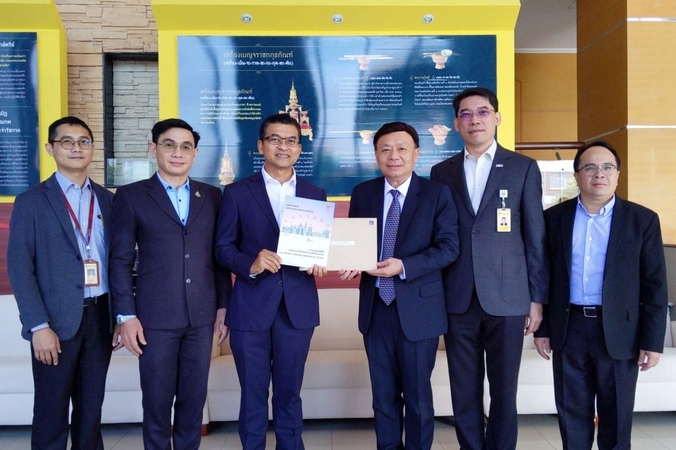
Total Access Communication (dtac) on Wednesday picked up the bid documents for the February 16 spectrum auction to be held by the National Broadcasting and Telecommunication Commission (NBTC).

The documents contain all relevant information regarding the upcomingmultiband auction.

Narupon Rattanasamaharn, senior vice president, head of regulatory division and Lertratana Ratananukul, senior vice president, head of government relations of dtac, on behalf of dtac TriNet Co Ltd picked up the bid documents for the multiband auction of the 700 megahertz, 1800MHz, 2600MHz and 26 gigahertz spectrum licences.

Dtac will now conduct a feasibility study of the criteria and procedure for the licence and will submit it to both the investment and full board meetings to make a decision on the auction.

TrueMove H Universal Communication, the mobile-phone unit of True Corp, was the first company to have picked up such documents to bid in next month’s 5G spectrum auction. It picked up the documents on January 3, a day after the NBTC made the documents available.

The documents will be available until February 3 and bids must be submitted on February 4.

Facebook exec says company was responsible for Trump’s victory and warns against policy changes #ศาสตร์เกษตรดินปุ๋ย

#ศาสตร์เกษตรดินปุ๋ย : ขอบคุณแหล่งข้อมูล : หนังสือพิมพ์ The Nation

https://www.nationthailand.com/business/30380262?utm_source=category&utm_medium=internal_referral

Facebook exec says company was responsible for Trump’s victory and warns against policy changes

Jan 08. 2020
File Photo: President Trump

File Photo: President Trump
By The Washington Post · Craig Timberg, Nitasha Tiku 

Longtime Facebook executive Andrew Bosworth said in a blunt internal post that the company’s advertising tools were crucial to the election of President Donald Trump in 2016 and may help him win again but that executives must resist the temptation to make policy changes that would alter the course of legitimate political debate.

The post, which appeared on the company’s internal systems last week and surfaced in news reports Tuesday, reflected the combination of anguish, defensiveness and brash self-confidence that many of the company’s employees have more privately expressed in the difficult aftermath of Trump’s unexpected victory.

Bosworth’s post also shed light on the thinking within the company’s highest levels as it heads into a new election year amid controversies over its reluctance to police lies by politicians or limit their ability to narrowly target small groups of voters. Critics have cited both issues as key to helping staunch the flood of disinformation on the platform.

“So was Facebook responsible for Donald Trump getting elected? I think the answer is yes, but not for the reasons anyone thinks,” wrote Bosworth, the company’s vice president for augmented and virtual reality and long considered close to Chief Executive Mark Zuckerberg.

Bosworth dismissed the idea that Russian efforts to manipulate U.S. voters over Facebook, a subject of extensive government investigation and journalistic scrutiny, was crucial to Trump’s victory. Bosworth, who shared his post publicly after The New York Times published it, also downplayed the importance of the use of Facebook data by political consultancy Cambridge Analytica, which worked for the Trump campaign and boasted of its ability to target ads based on psychological profiles of voters derived from their social media posts.

Rather, said Bosworth, who ran advertising at Facebook for several years, Trump “got elected because he ran the single best digital ad campaign I’ve ever seen from any advertiser. Period.”

Bosworth, a self-proclaimed liberal who donated heavily to defeated Democratic nominee Hillary Clinton, particularly praised Trump’s leading digital advertising adviser in 2016, Brad Parscale, who is now Trump’s campaign manager for the reelection campaign. Parscale has publicly cited Facebook’s ability to reach small numbers of voters with targeted messages, using tens of thousands of different versions of ads per day to maximize the campaign’s effectiveness, as essential to Trump’s victory.

“Parscale and Trump just did unbelievable work,” wrote Bosworth in his post. “They weren’t running misinformation or hoaxes. They weren’t microtargeting or saying different things to different people. They just used the tools we had to show the right creative to each person. The use of custom audiences, video, ecommerce, and fresh creative remains the high water mark of digital ad campaigns in my opinion.”

That comment and some others puzzled some who read the post. The term “microtargeting” is often understood to include the company’s powerful “Custom Audiences” tool, which Trump used and allows advertisers to identify targets by a wide range of factors – location, age, income, interests, education, or even for simply visiting a certain website or Facebook page.

Bosworth’s post generated significant commentary and debate in the comments section below it and on Twitter. Facebook employees also had more private conversations in which they questioned some of his assertions.

Sriram Krishnan, a former Facebook executive who worked on some of the Facebook ad platforms in question before leaving the company in 2016, wrote on Twitter that Bosworth’s post showed off the good aspects of Facebook’s company culture and its “ability to be self-critical and introspective and debate things internally.”

Krishnan concurred with the memo’s claim that Cambridge Analytica did not benefit Trump, calling the unauthorized use of data “a total non-event for the 2016 election.” However, in his Twitter posts, Krishnan also noted that Bosworth identified a common reaction inside tech companies, where media criticisms are rejected “because of one incorrect detail,” while ignoring the broader point.

Alex Stamos, Facebook’s former chief security officer, also weighed in on Twitter. Bosworth’s analysis of Facebook’s role in the 2016 election was correct, Stamos wrote, adding, “Where I disagree with Boz is that I think limits on targeting for political and issue ads are neutral and fair in the long-run and conducive to healthier democracy. Same with a tightly drawn standard on false claims about opponents. Neither are an attack on Trump.”

Bosworth’s post is reflective in sections. He urges the company to not overreact to criticism from the press – even when employees think all or part of news reports are wrong. And he cites American moral philosopher John Rawls, who died in 2002, who proposed a form of moral decision-making called “the veil of ignorance,” in which people are supposed to propose structures for a society without supposedly knowing their own race, income, education level, gender or other factors.

Citing the J.R.R. Tolkien epic “Lord of the Rings,” Bosworth also expresses serious concern about the possible corrupting influence of Facebook’s power, comparing it to the ring carried by the hobbit Frodo Baggins.

He says the current election season carries a similar moral risk, with regard to how Facebook sets advertising policies that could affect Trump and other politicians, who have vociferously opposed possible new restrictions.

“That brings me to the present moment, where we have maintained the same ad policies. It occurs to me that it very well may lead to the same result. As a committed liberal I find myself desperately wanting to pull any lever at my disposal to avoid the same result. So what stays my hand?” Bosworth asks in his post.

“I find myself thinking of the Lord of the Rings at this moment. Specifically when Frodo offers the ring to Galadrial and she imagines using the power righteously, at first, but knows it will eventually corrupt her. As tempting as it is to use the tools available to us to change the outcome, I am confident we must never do that or we will become that which we fear.”

One Facebook employee, speaking on the condition of anonymity, said in an interview that internal debate inside Facebook was limited to reasonable changes. “We could pull a lever, as in disallow political ads, disallow certain kinds of targeting, enforce stricter standards on racism in ads,” the employee said. “No one at any point has ever suggested we deliberately scuttle Trump’s campaign. That’s pretty inconceivable.”

Kasikornbank boosting online lending #ศาสตร์เกษตรดินปุ๋ย

#ศาสตร์เกษตรดินปุ๋ย : ขอบคุณแหล่งข้อมูล : หนังสือพิมพ์ The Nation

https://www.nationthailand.com/business/30380245?utm_source=category&utm_medium=internal_referral

Kasikornbank boosting online lending

Jan 08. 2020
Kattiya Indaravijaya

Kattiya Indaravijaya
By THE NATION

Kasikornbank aims to provide Bt60 billion in loans via its online channel this year, which is expected to boost its digital lending to Bt100 billion this year, president Kattiya Indaravijaya said.

The bank is using artificial intelligence to help it analyse customer data in order to help it find new segments of customers.

The bank is keen to tap freelancers, taxi-motorcycle drivers or Grab drivers as well as online merchants, she added.

Samsung aims for smart-home market with speaker, AR glasses #ศาสตร์เกษตรดินปุ๋ย

#ศาสตร์เกษตรดินปุ๋ย : ขอบคุณแหล่งข้อมูล : หนังสือพิมพ์ The Nation

https://www.nationthailand.com/business/30380255?utm_source=category&utm_medium=internal_referral

Samsung aims for smart-home market with speaker, AR glasses

Jan 08. 2020
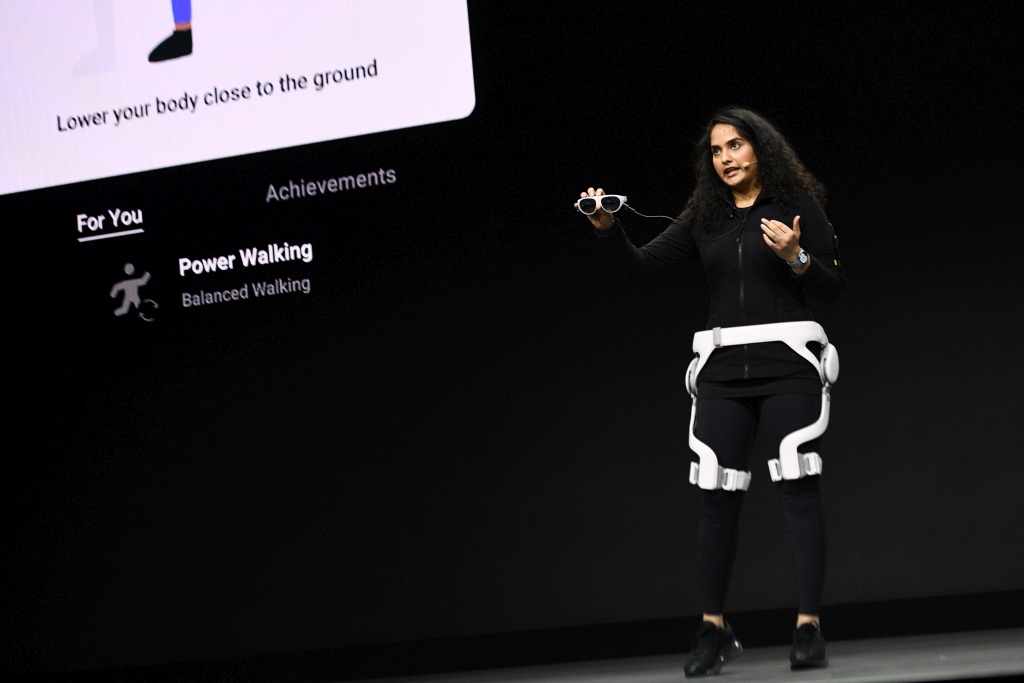
Hyun-Suk Kim, president and chief executive officer of Samsung Electronics, speaks at CES 2020 in Las Vegas, Nev., on Jan. 6, 2020. MUST CREDIT: Bloomberg photo by Bridget Bennett

Hyun-Suk Kim, president and chief executive officer of Samsung Electronics, speaks at CES 2020 in Las Vegas, Nev., on Jan. 6, 2020. MUST CREDIT: Bloomberg photo by Bridget Bennett
By Syndication Washington Post, Bloomberg · Sohee Kim

Samsung Electronics kicked off 2020 with an array of gadgets from prototype augmented-reality glasses to a new smart speaker that the company hopes will kickstart a fresh foray into the crowded smart home arena.

The world’s biggest home appliance maker set out its latest Internet of Things strategy, describing it as an “Age of Experience,” at the CES 2020 technology conference in Las Vegas. It will span everything from individual care to the connected home and smart cities in the next decade. At the heart of Samsung’s new smart home push will be the Galaxy Home Mini smart speaker, which the company plans to release in early 2020, said Hyunsuk Kim, chief executive officer of Samsung’s consumer electronics division.

“We need to rethink the space we have to accommodate our diverse and evolving lifestyles and generations,” said Kim during the opening CES keynote address. Along with artificial intelligence-driven concept products like the Ballie rolling bot, Samsung also showcased tech solutions for visually impaired and disabled people under the broad banner of technology enhancing people’s lives.

The Galaxy Home Mini comes years after Google’s Home and Amazon.com Inc.’s Echo smart speakers — and nearly 18 months after Samsung’s promised but never released Galaxy Home — but the Korean giant believes it can build a unique ecosystem around the Mini by making it the best controlling device for the home gadgets and appliances that bear its brand.

Hyun-Suk Kim, president and chief executive officer of Samsung Electronics, presents the Ballie at CES 2020 in Las Vegas, Nev., on Jan. 6, 2020. MUST CREDIT: Bloomberg photo by Bridget Bennett

Hyun-Suk Kim, president and chief executive officer of Samsung Electronics, presents the Ballie at CES 2020 in Las Vegas, Nev., on Jan. 6, 2020. MUST CREDIT: Bloomberg photo by Bridget Bennett

Powered by Bixby, Samsung’s answer to digital assistants like Apple Inc.’s Siri and Amazon’s Alexa, Samsung’s offering will focus on making home appliances execute voice commands rather than attempting a conversation based on artificial intelligence trained on reams of internet user data. Acknowledging negative chatter about Bixby lagging the field, Kim said orchestrating a smooth question-and-answer exchange wasn’t his priority, while the focus on hardware over user information means better consumer privacy.

“Samsung will remain a hardware company, forever,” said Kim, who is testing the Galaxy Home Mini in his own abode, connecting it to 63 devices that include his curtains, lighting and third-party gadgets. Appliances linked to the Mini will be able to carry out orders such as scheduling when the dishwasher should run or making sure the washer’s rinse cycle is complete before the user gets home. “It’s not about when we release the product, but it’s more crucial how much further we can evolve the technology. No other speaker in the world can control gadgets as much as Samsung can.”

Samsung's GEMS is demonstrated onstage during CES 2020 in Las Vegas, Nev., on Jan. 6, 2020. MUST CREDIT: Bloomberg photo by Bridget Bennett

Samsung’s GEMS is demonstrated onstage during CES 2020 in Las Vegas, Nev., on Jan. 6, 2020. MUST CREDIT: Bloomberg photo by Bridget Bennett

Amazon’s Alexa has a broad ecosystem of third-party Skills, which let you use Alexa to do things like control your Xbox, stream Apple Music, find your smartphone or play quizzes and other voice-based games. Samsung, which ships half a billion devices every year, lacks the same third-party support. However, it says it can muscle its way into the AI speaker market by virtue of its own product portfolio.

Like Amazon and Google’s home ecosystem ventures, Samsung sees the Mini acting as the hub connecting all its present and future AI-embedded hardware. That would encompass any devices connected through its SmartThings app as well as gadget rivals’ products linked via infrared hookups.

With plateauing smartphone and PC sales, voice-based computing is among the biggest growth opportunities remaining in the tech industry — and the home is where some of the earliest consumer adoption is happening. Forrester Research Inc. expects the market for smart home devices to expand 26% a year between 2018 and 2023. Samsung’s own home Internet of Things business grew 10-fold in 2019 from the previous year, mainly thanks to South Korea, the U.S. and Saudi Arabia, according to Sunggy Koo, head of the business at Samsung.

Wearable technology is another big area of focus for growth-starved companies, and Samsung’s latest effort is a teaser for its own AR glasses, seeking to succeed where Google Glass failed. The company is working to minimize dizziness, said Kim, which is the key to making the glasses as small as possible. Apple and Facebook Inc. are both working on AR glasses of their own, Bloomberg News has reported, and Microsoft Corp. offers the HoloLens headset.

The original Galaxy Home speaker that was announced in the middle of 2018 never materialized. Samsung has yet to make a final decision as to whether to sell the bigger smart speaker while it focuses on the more compact Mini. But it’s also working on peripheral gadgets in the interim, including the Ballie — a companion robot in the vein of Sony Corp.’s Aibo that rolls around like BB-8 in Star Wars. Kim expects both smart speakers and mobile robots will become major products in the consumer electronics market, offering a variety of services tailored to pet, child and elderly care.

“Eventually, I hope there is no interaction between humans and technology,” Samsung home IoT chief Koo said with respect to what the smart home may look like in 2030. Devices will anticipate people’s needs and offer services based on data collected from in-house appliances, he said. “At least within the boundary of smart homes, technology development will head toward touch-less and voice-less.”

One thing in Samsung’s favor in realizing that vision, Kim said, is a more hands-off approach to consumer data than internet-based rivals that have in past years hoovered up users’ personal information to improve their services. Facebook has earned criticism for this with its Portal teleconferencing cameras, as have Amazon and Google, each of which have exposed recordings of user interactions to human analyzers.

Kim said Samsung is putting an emphasis on safeguarding privacy by doing the necessary computations on the device itself — the so-called edge computing — removing the need for user information to ever leave the smart appliance or user’s home. Unlike advertising-reliant businesses like Facebook and Google, Samsung doesn’t need to build out intimately detailed user profiles to help it target ads. Consumers will get to choose whether to share data with the cloud to access additional services or just save data on their devices, Kim said.

“We will minimize data sharing. I mean, a hardware company like us is willing to do that,” said Kim, who also spearheads Samsung’s AI push. “We are a latecomer in the AI field, but we are catching up very fast.”

_ _ _

With assistance from Bloomberg’s Mark Gurman.

Lufthansa deploys Airbus A380 to increase capacity on flights to Thailand #ศาสตร์เกษตรดินปุ๋ย

#ศาสตร์เกษตรดินปุ๋ย : ขอบคุณแหล่งข้อมูล : หนังสือพิมพ์ The Nation

https://www.nationthailand.com/business/30380231?utm_source=category&utm_medium=internal_referral

Lufthansa deploys Airbus A380 to increase capacity on flights to Thailand

Jan 07. 2020
By THE NATION

Lufthansa Group is expanding its passenger capacity on its Bangkok to Frankfurt route by using the world’s largest aircraft, the Airbus A380.

It is the only European carrier operating the A380 to Thailand.

The airline said the expanded service targets both Thai customers and international visitors to Thailand seeking a unique flying experience on long-haul flights to and from Europe.

Stefan Molnar, Lufthansa Group’s general manager for Thailand, Philippines, Vietnam and the Mekong Region, said: “Lufthansa remains highly committed and confident about Thailand. It is a very important market for us. Last year we welcomed 800.000 passengers on flights to and from Thailand. We are certain outbound travel from Thailand will sustain good growth.” Currently, Lufthansa Group serves Thailand with four airlines: Austrian, Swiss, Eurowings and Lufthansa. Together they offer customers 31 weekly flights between Thailand and some of the most important cities in Europe: Frankfurt, Vienna, Zurich and Munich that has the only European five-star airport.

In First Class, the seat can be converted into a 2-metre-long bed with a comfortable mattress and a temperature-regulating duvet.

In First Class, the seat can be converted into a 2-metre-long bed with a comfortable mattress and a temperature-regulating duvet.

Lufthansa initially increased capacity by going from the Boeing 747-400 to the Airbus A380 during the 2017-18 winter schedule. This is the third season Lufthansa is operating an A380 on the Frankfurt-Bangkok route.

The airline said first class offers passengers exclusivity and privacy with only eight seats and premium features. The A380 business class offers 78 lie-flat seats stretching across the aircraft’s entire upper deck and unique inflight entertainment.

LHG First Class on A380

LHG First Class on A380

As one of the world’s leading airlines, Lufthansa offers more than 5,200 weekly flights and currently serves about 200 destinations in 74 countries operating from its hubs in Frankfurt and Munich.

Global insider-trading ring linked to trial of pharma CEO’s son #ศาสตร์เกษตรดินปุ๋ย

#ศาสตร์เกษตรดินปุ๋ย : ขอบคุณแหล่งข้อมูล : หนังสือพิมพ์ The Nation

https://www.nationthailand.com/business/30380222?utm_source=category&utm_medium=internal_referral

Global insider-trading ring linked to trial of pharma CEO’s son

Jan 07. 2020
By Syndication Washington Post, Bloomberg · Bob Van Voris 

The criminal trial of a New York man may help explain how tens of millions of dollars in illicit profits were allegedly generated by a global insider-trading network that included a Greek pharmaceutical executive, a Goldman Sachs banker, a Monaco poker player, a Swiss trader and a Manhattan restaurant owner.

Telemaque Lavidas is the first of the accused to go before a jury in the U.S., where prosecutors say he was one of the people feeding information into a network of traders on several continents. His trial starts Monday in federal court.

In a scheme that stretched for years and included dozens of trades, participants cultivated ties to bankers, made bets based on information gleaned from them and shared leaks in face-to-face meetings or over encrypted social media apps such as Signal or WhatsApp, the government claims. The network was based on location and affinity, with some of the European traders saying they hung out together in clubs and in posh locales.

“The investigation to date has identified over 50 deals where the subject traders have engaged in suspicious trading, as a result of which the participants in the scheme have collectively made over $100 million in profits,” an FBI agent said in a 2017 affidavit made public last month.

Lavidas allegedly played a small role in the wider plot. He is accused of providing non-public, market-moving tips about Ariad Pharmaceuticals Inc. that he got from his father, Athanase Lavidas, a former Ariad board member and the chief executive officer of the family-owned Lavipharm SA. The younger Lavidas passed the tips to Georgios Nikas, a Greek businessman who owns restaurants in New York and used the information to make trades before big share moves, prosecutors said.

In exchange, the U.S. claims Lavidas got a $500,000 investment from Nikas’s wife in his fruit-bar company, Mediterra Inc.

Lavidas was among six people charged in October, when the U.S. announced a series of cases alleging insider trading by a loosely organized network of bankers, traders and entrepreneurs. Links also emerged between suspects in probes in the U.K. and France.

A key witness in Lavidas’s trial is expected to be Marc Demane-Debih, a Geneva-based trader arrested in Serbia last year. He pleaded guilty to 38 counts in a secret hearing in October. Demane-Debih agreed to cooperate with prosecutors in hopes of leniency when he’s sentenced.

Demane-Debih claims that Nikas told him at a 2011 dinner party that he had inside information about Ariad that he got from Lavidas and his father, the government said. Nikas has also been charged, but he remains in Greece and is considered a fugitive.

Lavidas’s lawyer, Jonathan Streeter, didn’t respond to an email seeking comment on the trial.

At a hearing in December, Streeter told U.S. District Judge Denise Cote that one defense will be that the Ariad tips that Nikas allegedly used to make his trades didn’t come from Lavidas, but from Darina Windsor, a former Centerview Partners LLC investment banker in London who is charged but not in U.S. custody.

While Lavidas is charged only with giving tips to Nikas about Ariad, prosecutors claim Demane-Debih provided Nikas with inside information about many companies. That suggests the Swiss banker may be a link to others accused of being in the ring.

FBI Special Agent Shannon Bieniek said in the 2017 affidavit that the government has been investigating an insider-trading network that involved residents of the U.S., U.K., France, Switzerland, Israel, Cyprus, Greece and Hong Kong since 2013. Shares of pharmaceutical companies were bought and sold before important news releases were issued, Bieniek said. Some media reports were “manufactured by the participants in the scheme,” she said.

In addition to Lavidas, Nikas and Windsor, U.S. authorities have charged Goldman Sachs investment banker Bryan Cohen with passing confidential information. Cohen, who’s free on bail and on leave from the bank, is scheduled to go on trial in Manhattan Feb. 4. He denies wrongdoing.

The U.S. also charged Joseph El-Khouri, a securities trader and avid poker player who lives in London and Monaco. He’s free on bail in London while fighting extradition to the U.S. Another defendant is Benjamin Taylor, a former Moelis & Co. investment banker who lived with Windsor in London.

Lavidas, a U.S. citizen, has been in jail since his arrest. Cote considered him a flight risk and rejected an elaborate $26 million bail package.

Trading in Ariad was based around four stock-moving events, which helped generate the illicit profit for Nikas, according to the government.

In June 2013, Lavidas allegedly told Nikas that the Ariad board had learned that one of its drugs, Iclusig, was going to be approved by the European Commission. Nikas bought thousands of shares and profited when the news was made public and Ariad shares surged 12%.

In September and early October 2013, Lavidas told Nikas that the Food and Drug Administration had concerns about Iclusig’s safety, according to the government. The stock fell 67% when the FDA’s concerns were reported.

Then, in November or December 2013, Lavidas gave Nikas a heads-up on an FDA decision to let Iclusig back on the market, which touched off a 16% increase, the U.S. claims. In July 2015, Nikas traded before public reports of a potential acquisition of Ariad that sent its stock up 41%, prosecutors said.

The case is U.S. v. Lavidas, 19-cr-716, U.S. District Court, Southern District of New York (Manhattan).

Saudi Aramco faces tough test less than a month after IPO #ศาสตร์เกษตรดินปุ๋ย

#ศาสตร์เกษตรดินปุ๋ย : ขอบคุณแหล่งข้อมูล : หนังสือพิมพ์ The Nation

https://www.nationthailand.com/business/30380220?utm_source=category&utm_medium=internal_referral

Saudi Aramco faces tough test less than a month after IPO

Jan 07. 2020
Yasir Al-Rumayyan, chairman of Saudi Arabian Oil Co. (Aramco), speaks during a news conference in Dhahran, Saudi Arabia, on Nov. 3, 2019. MUST CREDIT: Bloomberg photo by Mohammed Al-Nemer.

Yasir Al-Rumayyan, chairman of Saudi Arabian Oil Co. (Aramco), speaks during a news conference in Dhahran, Saudi Arabia, on Nov. 3, 2019. MUST CREDIT: Bloomberg photo by Mohammed Al-Nemer.
By Syndication Washington Post, Bloomberg · Filipe Pacheco

Saudi Aramco’s status as an oil-producing behemoth located in one of the world’s most turbulent regions always marked it as likely to suffer bouts of volatility.

But few could have expected the stock to face so stern a test less than a month after the company’s historic $25.6 billion initial offering.

The world’s most profitable company extended declines Monday after dropping to its lowest closing price yet a day earlier, as the U.S. killing of Iran’s most prominent general last week triggered fresh concern of a wider conflict in the Gulf region. The move suggests that rising oil prices — Brent crude has climbed above $70 a barrel for the first time since May on a closing basis — aren’t necessarily a boon for the energy giant.

Aramco fell 0.1% to 34.50 riyals on Monday, narrowing its gain since it listed on Dec. 11 at 32 riyals to 7.8%. It tumbled 1.7% Sunday.

While Aramco has performed better than Saudi Arabia’s benchmark Tadawul index this week, the sudden rise in geopolitical tension comes just as the end of the stabilization period for the shares nears.

“The risks will remain over the near term as both the United States and Iran aim threats at one another,” said Jameel Ahmad, a markets analyst at FXTM in London. The drop in Aramco shares “is a natural reaction to the coordinated risk aversion that has swept global sentiment since the events at the end of last week.”

The missile attack that killed Iran’s General Qassem Soleimani in Iraq, ordered by U.S. President Donald Trump, was a reminder of the risks of investing in the region. In September, Saudi Arabia’s oil production was cut by half after a swarm of explosive drones struck some of its most important production facilities. The U.S. and Saudi Arabia blamed Iran for the attack, while Yemen’s Houthi rebels claimed responsibility.

Aramco was back pumping 9.9 million barrels a day just one month after the attacks and the company pressed ahead with what was to be the world’s biggest IPO.

At the time of the sale, many foreign investors cited geopolitical risk as reasons to stay away from the shares, and considered them too expensive. Even after this week’s fall, Aramco has a valuation of $1.8 trillion, easily the highest among listed companies.

Aramco still has some built-in protection because the shares are mostly in the hands of those used to regional politics, mitigating selling pressure at times of tension. Saudi government institutions invested almost $2.3 billion in the IPO. The government also relied heavily on ordinary Saudis and funds from neighboring Gulf Arab monarchies to ensure the success of the offering.

On top of that, Goldman Sachs Group Inc. is acting as share-stabilizing manager for the offering until the end of this week and can buy shares as part of that. It also has the right to exercise a so-called greenshoe option of 450 million shares, which would normally be used if the stock was rising too fast. No price-stabilization transactions had been executed as of Dec. 31, according to a statement from Aramco.

“Very few active managers are in the stock and most shareholders are either government-related entities, quasi-passive or passive,” said Marwan Haddad, senior portfolio manager at Emirates NBD Asset Management in Dubai. “Therefore volatility would be low unless an actual attack takes place, which we believe has a low probability. Moreover, as the oil price goes up, downside risk falls.”

Citi’s investment bank plans to hire 2,500 coders this year #ศาสตร์เกษตรดินปุ๋ย

#ศาสตร์เกษตรดินปุ๋ย : ขอบคุณแหล่งข้อมูล : หนังสือพิมพ์ The Nation

https://www.nationthailand.com/business/30380218?utm_source=category&utm_medium=internal_referral

Citi’s investment bank plans to hire 2,500 coders this year

Jan 06. 2020
Signage is displayed outside a Citigroup Citibank branch in Chicago on Oct. 12, 2019. MUST CREDIT: Bloomberg photo by Daniel Acker.

Signage is displayed outside a Citigroup Citibank branch in Chicago on Oct. 12, 2019. MUST CREDIT: Bloomberg photo by Daniel Acker.
By Syndication Washington Post, Bloomberg · Viren Vaghela, Jenny Surane 

Citigroup plans to recruit 2,500 programmers this year for the unit that houses its traders and investment bankers, bulking up on coders and data scientists as technology reshapes the business.

Roughly three-quarters of the company’s trade orders last year were electronic, according to Stuart Riley, global head of operations and technology for the bank’s Institutional Clients Group. The ICG arm will add programmers in locations from New York to Chennai, India.

The hires reflect “what we are building in technology and why we are focused on making salespeople and traders more effective at servicing our clients,” Riley said in an interview at Citigroup’s Canary Wharf office in London. “Technology is augmenting what humans do by making better use of data.”

Global banks are investing billions in a race to apply technologies that make front-office staff more efficient and keep clients trading. Goldman Sachs and JPMorgan Chase are among other firms that are hiring as computer specialists change the face of trading floors across Wall Street.

JPMorgan spends $11 billion on technology every year, while New York-based Citigroup budgets roughly $8.5 billion, or about 20% of total expenses. Bank of America Corp. has said it spends approximately $10 billion on technology, with about $3 billion of that going to new projects.

Citigroup has started reaping the benefits of those investments in recent years, saying they’ll help save as much as $600 million in 2020. The bank, which already has 23,000 technology specialists in its ICG business globally, said the new roles will be in London, New York, Shanghai, Toronto, Dublin, Tel Aviv, Pune and Chennai in India, and Tampa, Florida.

Tech giants are already waging a battle for talent in Citigroup’s hometown. Facebook Inc. said it’s planning to hire more than 3,000 people over the next three to five years in New York City, while Amazon.com Inc. announced plans to lease space in Manhattan that will house 1,500 workers.

Citigroup’s new recruits will work on projects including solutions in equities and fixed income, according to Riley. The bank has already used its tech teams to automate news, analytics, pricing and trade ideas for salespeople by drawing on their message exchanges with clients, Riley said.

About two years ago, the bank had 30 spaces for a Python coding class and was inundated with requests, according to Riley. It now has 1,600 front-office staff trained in the computer language.

Lalin looks to fifth consecutive year of outperforming market #ศาสตร์เกษตรดินปุ๋ย

#ศาสตร์เกษตรดินปุ๋ย : ขอบคุณแหล่งข้อมูล : หนังสือพิมพ์ The Nation

https://www.nationthailand.com/business/30380203?utm_source=category&utm_medium=internal_referral

Lalin looks to fifth consecutive year of outperforming market

Jan 06. 2020
Chaiyan Chakarakul, the company's executive chairman

Chaiyan Chakarakul, the company’s executive chairman
By THE NATION

Lalin Property announced today (January 6) its 2020 business plan, aiming to outgrow the industry’s average performance for the 5th consecutive year.

Lalin Property announced today (January 6) its 2020 business plan, aiming to outgrow the industry’s average performance for the 5th consecutive year.

The company plans to launch 9 to 11 projects this year with a total value of Bt5 billion to Bt5.5 billion.

Sales target is set at Bt6.2 billion with Bt5.25 billion in estimated revenue realisation, or a 13-per cent growth year on year.

In 2019, Lalin achieved revenue recognition of approximately Bt4.64 billion, a 13.2 per cent increase from the previous year.

Chaiyan Chakarakul, the company’s executive chairman, shared his views on the overall situation of the residential property market in Thailand last year, saying that the market, especially that of the vertical housing property, had been sluggish due to a slowdown of the global and local economies, high level of household debt, and the loan-to-value (LTV) measure of the Bank of Thailand to rein in speculation.

These factors negatively affected the vertical market of which demand came from investors and speculators, more than the horizontal market.

However, Lalin has always been assessing the market and has long foreseen this risk. The company, therefore, stopped developing condominium projects two years ago and is now focusing on horizontal projects which are a source of real demand.

This timely adaptation allows the company to grow amid the stagnant real estate market.

In 2020, it expected the Thai economy to expand by the same rate as last year or slightly better, or plus or minus 3 per cent.

The supporting factors are stable low interest rate, larger government investment after the delay in 2019, various measures to stimulate the property market, and policies to encourage Thai people to buy their residences through low-interest loans from government banks.

The company is hopeful that these factors will boost the residential property market in the first quarter of 2020 while entrepreneurs will stimulate purchases through intensive marketing activities.

It is estimated that the horizontal real estate market in 2020 will grow by 2-4 per cent.

The company’s business direction in 2020 will focus on ‘real demand’ of the residential horizontal market with plans to launch more projects in new high-potential locations and to replace existing projects that will gradually be closed down.

Churat Chakarakul, Deputy Managing Director, added that Lalin strives to be one of the top 3 brands in consumers’ mind when it comes to low-rise housing in the price range of Bt2–6 million.

The company has set a land acquisition budget of Bt1 billion to Bt1.2 billion, coming from company cash flow and accumulated profits. The working capital, aside from the cash flow, will come from the issuance of debentures and short-term loans from financial institutions.

Most CEOs downbeat on Thai economy 2020, survey finds #ศาสตร์เกษตรดินปุ๋ย

#ศาสตร์เกษตรดินปุ๋ย : ขอบคุณแหล่งข้อมูล : หนังสือพิมพ์ The Nation

https://www.nationthailand.com/business/30380196?utm_source=category&utm_medium=internal_referral

Most CEOs downbeat on Thai economy 2020, survey finds

Jan 06. 2020
By THE NATION

Many chief executive officers did not expect Thailand’s economy would improve this year, citing global economic uncertainties, according to the “CEO Survey” of 100 individuals, conducted by Krungthep Thurakit newspaper in December last year.

Around 68.4 per cent of the respondents did not expect the economy to improve this year, while 31.6 per cent was of the opinion that the economy would fare better this year.

Of those who did not expect an improvement, 29.6 per cent said the economy was expected to slow down, while 25.5 per cent expected flat growth.

Meanwhile, 40.2 per cent of the respondents said the digital disruption would pose a challenge to business this year.

Of the total, 81.6 per cent said they would go ahead with business plans while 51.5 per cent would focus on developing business platforms for new revenue sources.