THAI rejects reports it is cancelling flights to 4 Asean destinations

ศาสตร์เกษตรดินปุ๋ย : ขอบคุณแหล่งข้อมูล : หนังสือพิมพ์ The Nation

https://www.nationthailand.com/business/30377651

THAI rejects reports it is cancelling flights to 4 Asean destinations

Oct 22. 2019
THAI president Sumeth Damrongchaitham

THAI president Sumeth Damrongchaitham
By THE NATION

2,804 Viewed

Thai Airways International (THAI) has dismissed reports that it will stop flying to four Asean destinations, namely Laos, Cambodia, Vietnam and Myanmar.

In a statement from the airline on Tuesday (October 22), THAI president Sumeth Damrongchaitham iterated that there is no truth to reports that the airline will stop flights to these four destinations.

He said that as the company is preparing its corporate strategy, a thorough analysis must be conducted on all routes based on current market conditions. At present, the statement said, the carrier has not made any changes to its routes and there are no plans to cease any flights.

New artificial intelligence platform introduced to boost Thai healthcare sector

ศาสตร์เกษตรดินปุ๋ย : ขอบคุณแหล่งข้อมูล : หนังสือพิมพ์ The Nation

https://www.nationthailand.com/business/30377621

New artificial intelligence platform introduced to boost Thai healthcare sector

Oct 22. 2019
By Nophakhun Limsamarnphun
The Nation

1,159 Viewed

Enterprise software firm Infor is focusing on artificial intelligence (AI) platform as a service to help customers make quicker and better use of new features, with Thailand’s healthcare and food sector among the firm’s top potential markets.

Soma Somasundaram, chief technology officer for Infor, said at the recent Inforum 2019 summit that the healthcare sector, for example, will benefit from the AI platform in terms of better productivity, more patient satisfaction and enhanced security.

With this AI platform as a service, there is going to be a single-user experience as well as single sign-on for greater productivity and security.

The near real-time analytics also allows linkages with ride-hailing platforms such as Uber to partner with healthcare providers to facilitate patient follow-up appointments with doctors using data on the ride-hailing platform, Somasundaram said.

Helen Masters, senior vice president of Infor for Asia Pacific, said Thailand’s healthcare, food and beverage, fashion retail and logistic sectors figure prominently in Infor’s efforts to accelerate the digital transformation journey.

Over the past six months, Infor has launched a wide range of new solutions for hospital workforce measurements, doctor and nurse appointments, patient schedule processing for healthcare providers in Australia, New Zealand and Asean markets such as Singapore, Malaysia, Thailand and Philippines using the AI/cloud platform.

For public and private hospitals, they can benefit from better and faster processing of hundreds of thousands of patient, doctor and nurse schedules on daily, weekly and monthly basis as well as inventory and supply chain management for drugs, medical supplies and other resources.

Citing Queensland Health in Australia as an example, she said, productivity has been rising as a result of better people and process management using robotic and automation systems as well as housekeeping and other apps on hand-held devices.

Healthcare providers in the US such as Northern Light Health, which has about 900 doctors, also uses Infor’s cloud-based solutions for its supply chain and financial management, while Palos Health reports a 10 per cent reduction in drug stock using a more intelligent inventory system.

In addition, doctors and nurses can spend more time with patients due to a better scheduling system.

In Thailand, the healthcare sector is a major focus for Infor due to the good quality of Thailand’s healthcare system, which has been ranked as the world’s sixth best by US magazine CEOWorld whose 2019 index has Taiwan, South Korea and Japan in the top three slots followed by Denmark (5th), Spain (7th), France (8th) Belgium (9th) and Australia (10th).

In addition, Thailand also has a significant medical tourism sector with millions of foreign patients visiting the country annually for healthcare services.

Kevin Samuelson, CEO of Infor, said the firm aims to deliver better business value to customers with a new generation of predictive analytics, machine-learning software with new algorithms and new data-lake strategy for finance, human resources and asset management.

Better harnessing of datasets leads to better insights, contents and business outcomes.

Infor’s Somasundaram said better datasets as a single source of truth create better AI and machine-learning platforms for customers, while Infor and partners provide computing power, data training at scale, and model updates to deliver better results.

For example, Infor’s Coleman AI platform for embedded machine-learning models provides the speed, repeatability and personalisation needed for businesses and industries to use AI as an effective tool.

This has tackled the weaknesses resulting from developer-centric tools, which were designed previously for experimental projects, making it difficult to implement complete commercial projects with good quality and speed.

As a result, the practical use of AI and machine learning in the enterprise has been minimal, prompting Infor to launch the new AI platform as a service with industry-specific templates designed for use by “citizen developers”, so they don’t need extensive data modelling and other expertise.

Restructuring to have little effect in Asia Pacific: Deutsche Bank

ศาสตร์เกษตรดินปุ๋ย : ขอบคุณแหล่งข้อมูล : หนังสือพิมพ์ The Nation

https://www.nationthailand.com/business/30377617

Restructuring to have little effect in Asia Pacific: Deutsche Bank

Oct 22. 2019
Chief operating officer Asia Pacific Chandra Mallika

Chief operating officer Asia Pacific Chandra Mallika
By Wichit Chaitrong
The Nation

1,178 Viewed

Market volatility has partly contributed to Deutsche Bank’s Thailand’s outstanding performance, the bank’s executives said, and assured customers that the bank remains committed to the Asia-Pacific despite radical business restructuring globally.

The bank’s revenue in the year to date has risen by double digits as has its earnings, said Deutsche Bank’s chief country officer Thailand, Pimolpa Suntichok.

“Deutsche Bank Thailand’s bottom line earnings grew more than 50 per cent year to date,” Pimolpa said.

About 60 to 70 per cent of its clients in Thailand are multinational corporates and the bank has been getting more Thai corporates clients who seek to invest aboard and are looking for complex financial solutions for their businesses, she said.

Global and local market volatility has contributed to growing business as clients seek advice and hedge against financial risks. Others show interest in corporate bond issue to take advantage of low interest rates, she added, referring to the recent wave of central banks including the Bank of Thailand cutting key policy rates.

However, investors are cautious about new investment plans amid the global economic slowdown and the uncertainty of the trade war between the US and China, she noted.

The bank has also a growing trend of investors talking about relocating businesses out of China to Vietnam and even Thailand. She said German multinational firms, automotive and equipment are interested in investment opportunities in Eastern Economic Corridor (EEC), a flagship project of the Thai government. They are looking to expand their supply chains in Thailand and are interested in supplying equipment for high-speed rail projects linking the three international airports in Bangkok and Rayong province in the EEC, she said.

The bank considers Thailand important for its Asean region strategy and will invest more in people and technology, she added.

Chief operating officer Asia Pacific Chandra Mallika said the bank remains committed to Asia-Pacific despite its current restructuring that has seen job cuts and the closure of its equity business unit.

“Deutsche Bank remains committed to Asia Pacific and Thailand, where the impact of bank’s restructuring in Thailand is minimal,” she said.

“Asia Pacific is not just a growth engine for the bank but is also very important competitive differentiator for the bank globally.”

In July, Deutsche Bank announced a global restructure including 18,000 job cuts globally over three years to the end 2022, which will reduce the global workforce to 74,000 employees by 2022 globally.

There will be a substantial number of job cuts in Germany, as it is where by far the largest share of Deutsche Bank’s workforce is based. The total reduction of the workforce by 18,000 includes the job cuts already planned in connection with the Postbank integration.

Announced as part of first half result results, the bank on July 24 said 900 jobs had already been cut as part of the bank’s global exit from cash equities.

The job cuts will gradually happen in the next three years and not at one time. The bulk of this is the result of merger of Deutsche Bank and Post Bank in Germany that has some overlapping branches and operations. Those involved in the equities business will also be affected, according to the two executives.

The bank has sold its stakes in a joint equity business for which it had partnered with TISCO, Thailand’s financial institution, back to TISCO in September.

The bank’s new focus is on fixed income business under its investment banking, corporate banking, foreign exchange, asset management, and private banking, said Mallika. The only impact on the bank business in Asia Pacific is the move of its New Zealand branch to Australia, she noted. The bank currently is present in 14 markets in Asia Pacific. Revenue in Asia Pacific contributed to 12 per cent of its global revenue, and it plans to increase to 14 per cent by 2022. Last year revenue was 3.1 billion euro in Asia Pacific. The impact of the US-China trade war has actually been beneficial for the bank as more clients seek financial solutions from Deutsche Bank, she said.

Regarding impact of political violence in Hong Kong, Mallika said despite political violence in Hong Kong, the bank has not thought about moving business to its Singapore office.

Hong Kong will be remained as financial hub for Northeast Asia while Singapore is hub for South Asia and Southeast Asia, she said.

The bank also is well prepared for impact of Brexit and has solid financial strength. The biggest threat for the traditional banking business is the disintermediation caused by financial technology driven by information technology which help consumers to bypass financial intermediary such as banks, she said, noting that more fintech companies providing payment services such as Alipay and Apple Pay have emerged and are taking some financial businesses from traditional banks.

BANPU launches expansion plans with high-capacity plant in Suzhou

ศาสตร์เกษตรดินปุ๋ย : ขอบคุณแหล่งข้อมูล : หนังสือพิมพ์ The Nation

https://www.nationthailand.com/business/30377616

BANPU launches expansion plans with high-capacity plant in Suzhou

Oct 21. 2019
983 Viewed

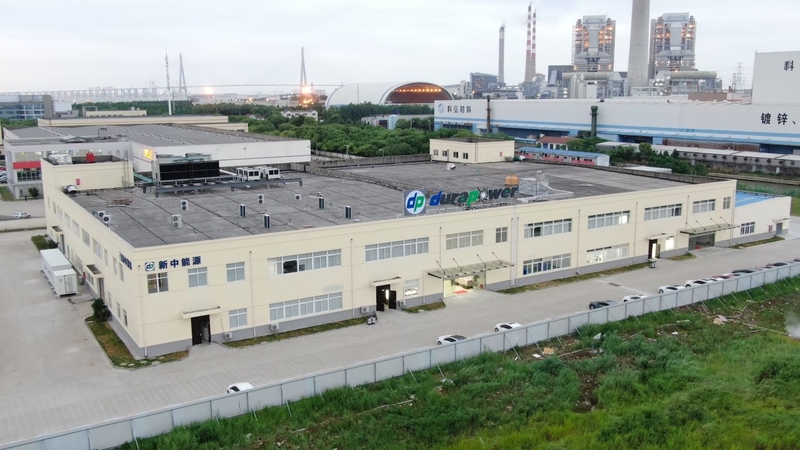
Banpu Public Company Limited (BANPU), a leading integrated energy solutions company in Asia-Pacific, is expanding by joining up with Durapower Holdings Pte Ltd, a high-tech enterprise specialising in research and development, manufacturing and installation of lithium-ion battery and battery systems for automotive and energy storage applications.

The two have jointly opened a world-class manufacturing unit for lithium-ion battery in Suzhou, China.

This battery plant has the highest production capacity in Asean, with annual output planned at 1gigawatt per hour, and highlights the strength of advanced technology utilisation along with more than 40 guarantee standards, including quality certificate and international patents.

The collaboration marks BANPU’s confidence to support proactive plans for expanding customer bases in more than 20 countries, including Europe, China, Japan, India, Thailand and Asean.

The new expansion corresponds to continuous growth in the lithium-ion battery market, as well as supporting rising demands for electric vehicles (EV), buses, trucks, energy-storage systems for households and large renewable power-generation projects.

Somruedee Chaimongkol, chief executive officer of Banpu Public Company Limited (BANPU), said: “BANPU is committed to expanding our business strictly in line with the environment, social and governance principles. We strive to continue the growth of our Energy Technology Business Group under a ‘greener and smarter’ strategy.

“By acquiring a 47 per cent stake in Durapower Holdings Pte Ltd, a leading energy storage operator with a presence in the world for almost 10 years, BANPU is able to respond to business opportunities that are in line with the growing trend of energy technology demand in the future.

“At the same time, this partnership also helps strengthen the business ecosystem of BANPU Group. With the investment in the battery business of such a world-class scale, we have achieved increased manufacturing capacity, creating a leap of growth for the Energy Technology Business Group, as well as driving the consistent and continual use of alternative energy in Thailand and in the international markets.”

She added that factory in Suzhou is aiming at greater efficiency and productivity using high-tech automation systems.

The annual production capacity from 80 megawatt-hours in 2018 has been beefed up to 1gigawatt per hour, which means the plant has the highest capacity to produce lithium-ion battery in Asean.

The factory was opened on October 18 and has commenced full production. Somruedee said with this expansion, BANPU is ready to take steps into the energy storage business and follow its customer expansion plans in Europe, America and Asia.

Kelvin Lim, group CEO for Durapower Holdings Pte Ltd, said: “The opening of our new and automated manufacturing facility is another significant milestone and commitment as Durapower continues to scale up our global presence to deliver high quality and performance products to our customers in different geographic regions and market segments.

“Having an Asia-leading energy company like BANPU as a strategic partner, it helps build confidence and increases the competitiveness of both organisations in order to grow together and to thrive in this highly competitive market sector,” he added.

“This partnership is an extension of production capacity for lithium-ion battery for automotive applications and energy storage systems. Apart from responding to the market trend in the future, this year’s capacity expansion also answers customer needs in the growing EV sector, along with plans to improve our Suzhou plant to support BANPU’s business development to tackle the Stationary Energy Storage System market from 2020. This factory will be able to extend the capacity of the production line up to a maximum of 3 gigawatt-hours,” Somruedee concluded.

Kasikornbank sees drop in nine-month net profit

ศาสตร์เกษตรดินปุ๋ย : ขอบคุณแหล่งข้อมูล : หนังสือพิมพ์ The Nation

https://www.nationthailand.com/business/30377607

Kasikornbank sees drop in nine-month net profit

Oct 21. 2019
The bank's president Kattiya Indaravijaya

The bank’s president Kattiya Indaravijaya
By THE NATION

1,704 Viewed

Kasikornbank and its subsidiaries reported a combined net profit of Bt29.924 billion for the first nine months of 2019, representing a decrease of 4.78 per cent over the same period last year.

Net interest income increased by Bt4.051 billion or 5.54 per cent  mainly due to a rise in interest income from loans to customers and investments.

Non-interest income decreased by Baht 2.753 billion or 6.20 per cent, mainly due to a decrease in net premiums earned – net and fees waive for money transfers through digital channels, while revenue from sale of securities increased.

KBank has set aside higher allowance for impairment loss on loans from the preceding quarter, with prudent consideration on factors in line with uncertainties from continued economic slowdown.

Net profit for the third quarter  amounted to Bt9.951 billion, an increase of Bt22 million or 0.23 per cent  from the previous quarter, attributing to an increase in net interest income by Bt 326 million or 1.27 per cent.

The bank’s president Kattiya Indaravijaya said Thai economic activity in the third quarter of 2019 continued to see few supports, after growing by 2.30 per cent in the second quarter of 2019.

The Thai economy showed signs of strength in the third quarter of 2019, due mostly to the low base effect of the same period last year, especially in the tourism sector. However, exports and private investment – two major economic drivers – continued to slow in line with the sluggish global economy and trade volume amid the protracted US-China trade negotiations and concerns over Brexit risks.

For the final quarter of this year, a brighter outlook seems to be in store for the Thai economy, thanks to the government’s stimulus measures.

Kasikornbank launches automated currency exchange machines

ศาสตร์เกษตรดินปุ๋ย : ขอบคุณแหล่งข้อมูล : หนังสือพิมพ์ The Nation

https://www.nationthailand.com/business/30377601

Kasikornbank launches automated currency exchange machines

Oct 21. 2019
By THE NATION

3,860 Viewed

Amorn Suvachittanont, left, KBank First Senior Vice President, and Manabu Shintani, right, chief executive of ActPro, recently introduced automated currency exchange machines that allow customers to exchange Thai Baht for US dollars, Euros and Japanese Yen or change US dollars, Euros, pounds sterling, Australian dollars, Singapore dollars, Chinese Yuan, Hong Kong dollars, Korean won, Taiwan dollars, Malaysian Ringgit and Swiss francs into Baht around the clock.

Transactions are limited to Bt30,000 Baht per transaction Bt9,999 day/person. The self-service currency exchange machines are now available at B1 Floor, Airport Rail Link, Suvarnabhumi Station.

Tesco Lotus signs agreement with Cleantech Solar on renewable energy

ศาสตร์เกษตรดินปุ๋ย : ขอบคุณแหล่งข้อมูล : หนังสือพิมพ์ The Nation

https://www.nationthailand.com/business/30377603

Tesco Lotus signs agreement with Cleantech Solar on renewable energy

Oct 21. 2019
By THE NATION

1,356 Viewed

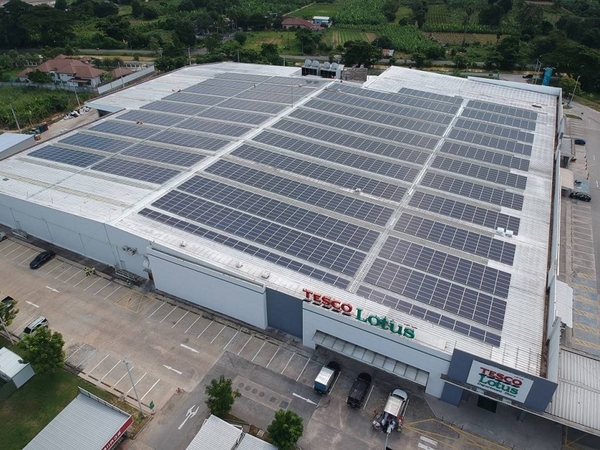
Tesco Lotus has entered into a power purchase agreement (PPA) with Cleantech Solar, a leading provider of renewable energy to corporations in Asia.

The partnership covers 19 Tesco Lotus stores across Thailand, and is part of Tesco’s effort to achieve its commitment of sourcing 100 per cent of its electricity from renewable sources by 2030, the company said in a statement.

The PPA is expected to generate more than 21.5 Gigawatt Hours (GWh) of clean energy, avoiding 12,515 tonnes of CO2 emissions in a year, the firm added.

The statement said Cleantech Solar will fully finance the design, installation, operation and maintenance of the system, providing Tesco Lotus renewable energy without any capital investment.

“Tesco Group has set a target to source 65 per cent of our electricity from renewable sources by 2020 and 100 per cent by 2030, as part of our larger commitment to become a zero-carbon business by 2050,” said Miroslav Friml, property director, Tesco Lotus.

“In 2016, we began installing rooftop solar panels at eight hypermarkets and five distribution centres. With the added capacity this year, Tesco Lotus will generate more than 36.5 GWh of clean electricity every year. Our partnership with Cleantech Solar is a significant milestone that will help us deliver on our commitment to renewable energy. Tesco Lotus is excited to be in this partnership with Cleantech Solar, which has a proven track record on delivering and operating high-performing PV [photovoltaic] systems across different geographies,” Miroslav added.

“We are delighted to be selected as the trusted long-term solar partner by a retail giant like Tesco Lotus to finance and operate solar projects at multiple sites across Thailand,” Cleantech Solar founder and executive chairman Raju Shukla said. “This partnership represents another success for our team in Thailand to deliver reliable solar solutions to leading corporations.”

Cleantech Solar is a leading provider of renewable energy to corporations in Southeast Asia and India.

CIMB Thailand gets new CEO

ศาสตร์เกษตรดินปุ๋ย : ขอบคุณแหล่งข้อมูล : หนังสือพิมพ์ The Nation

https://www.nationthailand.com/business/30377602

CIMB Thailand gets new CEO

Oct 21. 2019
By THE NATION

1,806 Viewed

CIMB Group has announced the appointment of Adisorn Sermchaiwong as president and chief executive officer for CIMB Thailand.

The appointment is part of CIMB’s long-term strategy to ensure that its franchise as a leading Asean multinational continues to remain strong against a fast-evolving and challenging operational landscape, a statement by the group said.

Adisorn succeeds Kittiphun Anutarasoti.

New CEO Adisorn has been with the group for seven years. He brings with him a strong track record in banking and finance, in the areas of asset/investment management, wealth management, channels and retail banking, across Thai and regional markets, the company said.

Prior to this appointment, Adisorn held the position of acting president/CEO.

He joined CIMB Thai as senior executive vice president, head of Consumer Banking.

The new appointment will help the group meet its strategic priorities going forward as laid out in its current growth plan, “Forward23”, for the 2019-2023 period, the group added.

Company orders 20,000 robots to serve tourism-related businesses

ศาสตร์เกษตรดินปุ๋ย : ขอบคุณแหล่งข้อมูล : หนังสือพิมพ์ The Nation

https://www.nationthailand.com/business/30377574

Company orders 20,000 robots to serve tourism-related businesses

Oct 20. 2019
By The Nation

2,670 Viewed

Robot Café Restaurant, a local tourism-related services company, has ordered 20,000 robots from UBTech Robotics, a Chinese AI and humanoid robotics for learning company, with the aim of expanding its learning centres in Thailand, the restaurant’s co-founder Saranpong Daengdej has said.

Chiang Mai and Silom are only two pilot branches at the moment but they will expand to 20 branches by the end of this year. Robot Café Restaurant is expected to expand to 1,000 branches in three years as the franchise is now eyed by many entrepreneurs.

The restaurant aims to serve as learning centres for families and it offers self-service with assistance from robotic cruisers. The robots can speak 30 languages and clear bills by themselves. They can also identify faces, collect data, and analyse clients’ behaviours, which will help to update the menu according to the preferences of the clients.

In 2020, robotic cruises may be able to provide information on tourism and make hotel reservations along with other services such as Tuk Tuk Pass, which will have a partnership with Booking.com. The system now is on trial with hotels in Bangkok and flight services.

The restaurant also has a learning centre for children with 30-40 robots working as playing partners. Their capability varies from teaching kids to build Lego sets to showing how to write command codes to control robots.

UBTech Robotics is also developing robots for Amazon Café and the prototype can be applied to various businesses from hotels to restaurants due to the multilanguage function, Saranpong said.

Many analysts have said that the market for robots for learning purposes will be worth US$1,700 billion in 2023 and it will target children aged 3-13 years old.

Provision for reserve fund cuts into KTB profits in third quarter

ศาสตร์เกษตรดินปุ๋ย : ขอบคุณแหล่งข้อมูล : หนังสือพิมพ์ The Nation

https://www.nationthailand.com/business/30377554

Provision for reserve fund cuts into KTB profits in third quarter

Oct 19. 2019
Payong Srivanich

Payong Srivanich
By THE NATION

131 Viewed

Krungthai Bank (KTB)’s third-quarter profits slumped by 18.9 per cent, the bank’s president and executive director Payong Srivanich said on Friday.

“KTB had a net profit of Bt6.35 billion, down 18.9 per cent from the same period last year,” he said. He explained that the reason for the lower net profit was the bank’s setting aside of Bt2.37 billion as reserve fund for employees who wished to retire early.”

Payong was referring to the latest State Enterprise Labour Committee’s announcement that requires state enterprises to pay early retirement package equal to 400 days of wages to employees who had been working more than 20 years. The regulation came into effect at the start of the third quarter.

“If we were to exclude the provision for the reserve fund, KTB’s profit actually increased by 5.3 per cent from last year,” said Payong. “Our operational revenue reached Bt94.02 billion, a 7.1 per cent increase over last year, while revenue from loans rose by 5.6 per cent over last year.”

Payong also added that as of September 30, KTB’s coverage ratio increased from 125.74 per cent as of the end of last year to 128.07 per cent. The nonperforming loans (NPL) gross ratio is at 4.58 per cent while NPLs ratio-net is at 1.92 per cent. “These numbers point to our strong standing in keeping with the standards set by the Bank of Thailand,” he said.


Related News:

Cashless bus fares hit the road

Rules limiting checkpoints cause ‘Eat, Shop, Spend’ registration problem: KTB