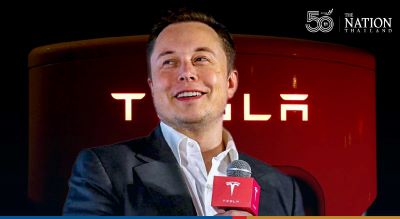
SAN FRANCISCO – Elon Musk launched a Twitter poll over the weekend asking users whether he should part with 10% of his shares in the electric vehicle company.
Twitter said yes. In a poll that amassed more than 3.5 million votes, 58% supported a sale.
Musk, the outspoken Tesla CEO who has gotten into regulatory trouble over some tweets, took the unusual step of crowdsourcing advice for his financial portfolio Saturday afternoon.
“I will abide by the results of this poll, whichever way it goes,” Musk wrote.
Such a sale would come as Tesla’s stock has ballooned past a trillion dollars in value, trading at more than $1,200 a share. Musk holds a more than 20% stake in the company, according to a regulatory filing from earlier this year.
Musk said such a move was motivated by legislative proposals to tax unrealized gains. He said he does not take a cash salary or bonus, so “the only way for me to pay taxes personally is to sell stock.”
It was not immediately clear if or when Musk would sell the stock. After the poll closed, he replied to a user saying, “I was prepared to accept either outcome.”
Tesla’s stock gains have propelled Musk to the title of world’s richest person, with an estimated net worth of $318 billion, according to Forbes. Musk launched his poll amid discussions around a billionaire tax in the U.S. Senate, which would tax unrealized gains of a handful of the richest Americans before such assets are sold.
Estimates have said Musk would pay as much as $50 billion over the tax’s first five years.
U.S. Sen. Ron Wyden, D-Ore., who proposed the tax in the U.S. Senate, criticized Musk’s poll Saturday on Twitter and said it only affirmed his proposal.
“Whether or not the world’s wealthiest man pays any taxes at all shouldn’t depend on the results of a Twitter poll,” his tweet read. “It’s time for the Billionaires Income Tax.”
Musk’s tweets have landed him in trouble in the past. The Securities and Exchange Commission fined Musk and Tesla $20 million each, and Musk was stripped of his Tesla board chairmanship, after Musk tweeted in 2018 he had “Funding secured” to take Tesla private at $420 a share.
An agreement with the regulatory body required Musk’s potentially market-moving tweets to be vetted by a securities lawyer.
Musk sent Tesla’s stock into a nosedive last May when he tweeted that he thought Tesla’s stock was overvalued, writing “Tesla stock price is too high imo,” shorthand for “in my opinion.”
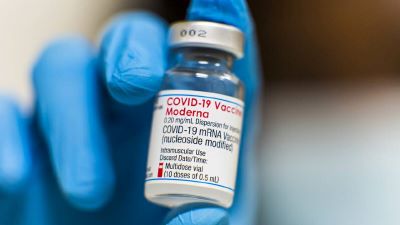
Moderna jolted the market with sales and earnings that badly missed analysts estimates as it lowered its forecast for 2021 Covid-19 vaccine sales, a third-quarter performance that put it further behind vaccine rivals Pfizer and BioNTech.
Moderna shares slid 14% as of 8:41 a.m. in premarket trading after it said vaccine sales would be between $15 billion and $18 billion in 2021. Previously, the company had said it had signed agreements for $20 billion in anticipated 2021 vaccine sales.
It also lowered its vaccine production forecast for this year to between 700 million and 800 million doses, at the full 100 microgram dose used for the initial two shots.
Moderna has struggled to shift from its mostly domestic vaccine business in the first half of the year, when U.S. goverment purchases gobbled up most of its initial vaccine supply, to delivering vaccines to far-flung international locales. Third-quarter vaccine barely rose to 208 million doses, as the bulk of deliveries went abroad, compared to 199 million doses in the second quarter, when almost two-thirds of the doses went to the U.S.
In a statement, Moderna said longer lead times for international orders may shift some deliveries into 2022. The company cited a “temporary impact” as it attempts to expand its capacity to fill and finish vaccine vials.
The subpar performance comes as Moderna is vying with Covid-19 vaccine rivals Pfizer and BioNTech in a race to lock in orders for booster shots for next year. Earlier this week, Pfizer raised its full-year 2021 forecast for Covid vaccine sales to $36 billion and said it expected to sell $29 billion worth of the partners’ vaccine in 2022.
Moderna also said its board of directors had authorized a share buyback program of up to $1 billion over a two-year period.
For the third quarter Moderna reported revenue of $5 billion and diluted earnings per share of $7.70, well below analyst expectations. Not all the news was bad. Moderna said it now has $17 billion of signed vaccine orders for 2022, and expects sales in the range of $17 billion to $22 billion.
While well below Pfizer’s Covid sales forecast, that would still make Moderna’s vaccine one of the best selling drug products in the world next year. The company also reported that a trial showed its vaccine for children 6 to 11 years old was 100% effective two weeks after the first 50 milligram dose was administered.
However, earlier this week, Moderna faced a setback in getting its vaccine for 12- to 17-year-olds to the U.S. market. Regulators said they needed more time to examine the risk of myocarditis, a rare form of heart inflammation linked to the vaccine, before deciding on clearing it for that age group. On a conference call, Moderna said its own safety database of 1.5 million individuals under 18 showed no increased heart inflammation risk.
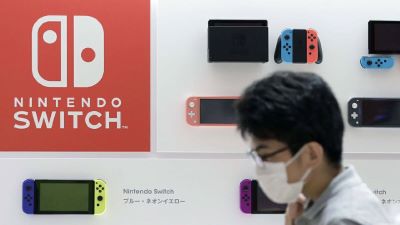
Nintendo cut its Switch sales target in the latest response to widespread component shortages and logistics bottlenecks, which it said show no signs of easing.
The Kyoto-based company is now aiming to sell 24 million units this fiscal year, down from the previous goal of 25.5 million units. Nintendo upgraded its full-year operating profit outlook to 520 billion yen ($4.6 billion) from 500 billion yen, though that is still well short of the analyst consensus estimate of 610 billion yen.
Nintendo, known for offering conservative forecasts that allow it to weather unexpected difficulties without having to lower expectations, cited currency exchange rates as a reason for the upgrade while showing some confidence that lucrative software sales and income from network services can prop up the bottom line. The company now sees Switch software sales of 200 million units, up from 190 million.
“The one big surprise to me is how well software sales held up year-on-year,” said Tokyo-based games industry analyst Serkan Toto. The Legend of Zelda: Skyward Sword HD was released in July and sold 3.6 million copies in the quarter. “The performance speaks for the strength of Nintendo’s first-party software catalog. People who own a Switch continued to buy games for it, a very important signal for Nintendo going forward.”
Switch console sales in the July-September period were 3.83 million units, down from the 4.45 million units sold a quarter earlier. Nintendo reported operating profit during the period of 100.2 billion yen, lower than the 121.9 billion yen average of analyst estimates.
“At this moment, I don’t see a sign of the component shortages recovering,” Nintendo President Shuntaro Furukawa said after the earnings release. The company will not be able to produce enough Switch units to satisfy demand and may need to revise its outlook again if the situation changes drastically, he added.
Nintendo has been struggling to boost output of its new OLED Switch as shortages of chips and other components hamper production of everything from automobiles to smartphones. Achieving the new hardware sales goal will depend on how heavily Nintendo prioritizes its recently launched model, Ace Research Institute analyst Hideki Yasuda said ahead of the earnings release. The original Switch and more affordable Switch Lite have seen their sales dwindle all year and the pricier new variant is what Nintendo will rely on to keep sales up heading into 2022.
“We have no plans to focus our supply resources only on the OLED model,” Furukawa said. “The three models each cater to different needs of customers. Sales of the original Switch as well as the Lite model remain firm even after the OLED model’s release.”
Nintendo shares have dropped 25% this year, while the benchmark Nikkei 225 has gained 8.5%.
The best-selling console in the U.S. in September was Sony Group Corp.’s PlayStation 5, ending the Switch’s 33 consecutive months at the top of that list, according to NPD.
Despite the impacts of Covid-19 outbreak that have affected several industries in Thailand, in the year 2021 the country still manages to see up to three startup companies becoming ‘unicorns’, a term dedicated to startups valued at more than $1 billion. These companies are Flash Group, Ascend Money and the newcomer Bitkub.
Flash Express: The first unicorn
Flash Express is a private logistics and courier service provider under the management of Komsan Lee, who in June closed the investment deals with Buer Capital Limited, SCB 10X and several others valued at $150 million or 4.7 billion baht. It is the first Thai startup to achieve this fundraising target in under three years and the company’s value therefore soared above $1 billion or over 30 billion baht. Flash is now Thailand’s no.1 private courier that handles more than 2 million parcels per day.
Ascend Money: A fintech unicorn
In September, Ascend Money, a flagship digital finance arm of CP Group has secured over $150 million from fundraising with Bow Wave Capital Management and Ant Group, which drove the company’s value to $1.5 billion. The company’s flagship service “True Money” is a leading e-wallet platform in Thailand with more than 20 million domestic users and recorded over 2.2 billion transactions in 2020 worth $14 billion. True Money has also expanded to six countries in Southeast Asia and has secured more than 50 million users by the end of 2020.
Bitkub: A crypto unicorn
SCBX, the ‘Mothership’ company of SCB Group recently announced that it will take over 51 per cent of ordinary shares of Bitkub Online Ltd., a leader in digital asset exchange well known for cryptocurrency trading. The shares worth 17.85 billion baht will be held by SCB Securities (SCBS) who will work with Bitkub to build a digital asset ecosystem, whereas the deal has made Bitkub Thailand’s third unicorn startup with estimated value of over 35 billion baht.
There are still two more months before the year ends. Keep a close eye on Thailand’s startups and do not be surprised if the fourth or fifth unicorns will emerge before 2022 arrives.
SCBX, the ‘Mothership’ company of SCB Group, to take over 51 per cent of ordinary shares of Bitkub Online Ltd., a leader in digital asset exchange, from Bitkub’s parent company Bitkub Capital Group Holdings Ltd. The value of shares to be obtained by SCBX is estimated at 17.85 billion baht.
The shares will be held by SCBX’s affiliate, SCB Securities (SCBS), who will work with Bitkub as business partner to build a digital asset ecosystem that has digital asset exchange as one of the infrastructures at national level.
“The transaction of shares will comply with the regulations of related agencies, such as the Bank of Thailand and the Securities and Exchange Commission,” said Arthid Nanthawithaya, CEO of SCBX Plc. “We expected the transaction will be complete within the first quarter of 2022.”
Arthid further added that the investment in Bitkub Online will enable SCBX to create new value that can expand in long term within the new world of digital asset exchange. “This investment aligns with SCBX’s strategy to become a regional financial technology group that fulfils customers’ needs and ready for the new forms of competition in the next 3-5 years,” he added.
Jirayut Srupsrisopa, founder and Group CEO of Bitkub Capital Group Holdings, said that the partnership also aims to develop new digital asset businesses to strengthen the country’s digital economy in the future. “From now on Bitkub is no longer just a startup, but we are becoming a key contributor to Thailand’s Finance 3.0 infrastructure,” he said. “SCBS will hold 51 per cent of Bitkub Online, a company with total value of 35 billion baht and is one of Thailand’s ‘Unicorn’ startups.”
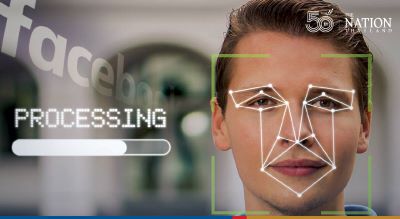
Facebook said Tuesday it will end its use of facial recognition software and delete facial data on more than a billion people, a sudden reversal for one of the Internets biggest face-scanning systems that could reinvigorate scrutiny about the softwares expanding prevalence around the world.
The social media giant, which has used the software to automatically tag people by name in photos since 2010, said in a blog post that it decided to drop the technology after carefully considering both its future promise and potential risks for surveillance and privacy.
“The many specific instances where facial recognition can be helpful need to be weighed against growing concerns about the use of this technology as a whole,” wrote Jerome Pesenti, the company’s vice president for artificial intelligence.
The change marks a dramatic shift for a controversial technology that the social network did more than anyone to normalize. In the more than a decade since Facebook showcased its usefulness, face-scanning systems have expanded widely across schools, airports, police investigations and worker-monitoring software.
Facebook’s reversal could further fuel skepticism about the largely unregulated technology and concerns about its potential for misuse. But some privacy experts suspect that Facebook’s promotion of the technology has already left an indelible imprint on the Internet. Companies such as Google and Apple use similar facial recognition features for photo tagging, though typically only in personal albums not available for public view.
Facebook “introduced this technology in a way that highlighted its utility while downplaying the negative downstream effects of making it ubiquitously available,” said Liz O’Sullivan, the chief executive of Parity, an algorithmic assessment start-up. “They had access to this unique and massive data-collection system – not just of people, but how people change over time. . . . We always said the world’s best facial recognition system is undoubtedly in the hands of Facebook.”
The move also showcases how Facebook, which for years pushed a self-proclaimed “move fast and break things” ethos, has historically pushed forward with products that have resulted in outcries from privacy experts and the public.
The social network, which last week changed the name of its parent company to Meta, is in the midst of a crisis over its public reputation after a whistleblower came forward with tens of thousands of pages of research documenting the company’s knowledge of extensive societal harms caused by its service.
The company’s leadership has appeared eager in recent weeks to show it takes potential negative consequences from its products into account. The company recently said, for example, that it was pausing the development of Instagram for children in response to allegations that the company’s internal research found that the product caused harm to the body image of some teen girls.
The company said last week that it will also develop a new suite of hardware products, including virtual reality, in concert with regulators and taking into account privacy and safety from “day one.” That could also include a smartwatch that can take biometric readings, The Washington Post and others have previously reported, potentially giving the company access to even more sensitive data.
In citing the technology’s legal uncertainty in a country where regulators have yet to provide a “clear set of rules governing its use,” Facebook will follow in the footsteps of other tech giants who have voiced concerns about the software’s legal uncertainty.
Amazon cited similar reasons in May, when it indefinitely extended a global ban of its own police facial recognition software, saying Congress had yet to implement appropriate laws. IBM and Microsoft also stopped selling their own facial recognition technology to police last year.
Pesenti said facial recognition software provided accessibility benefits for the visually impaired and noted that more than a third of Facebook users had chosen to use it. Until 2019, users were automatically opted into the service.
Facebook has faced questions in recent months of whether it would fold the technology into upcoming products, such as a pair of camera glasses the company is making with Ray-Ban or its broader shift toward the “metaverse.”
Company executives have said that feature is not included in its existing glasses. But Pesenti said in the blog post that, while the company is ending its existing Face Recognition system, it will continue to explore “potential future applications of technologies like this.”
Facebook’s facial recognition algorithms turned people’s photos into facial “templates” – mathematical representations of a person’s likeness that the software could compare to millions of other photos in an instant, experts said. But deleting those templates will not prevent the images from being used by companies such as Clearview AI, which pulled its photos without permission to build a vast facial recognition search tool that the company sells to police.
Deleting the templates will also not prevent other companies from running saved Facebook photos through their own facial recognition software. Companies such as PimEyes now allow anyone to scan for faces across billions of photos from around the Web.
Facebook’s reversal stands at odds with the federal government, which has moved aggressively to expand facial recognition use for tracking its own employees, criminal suspects or Americans at large. Ten federal agencies, including the Homeland Security and Justice departments, told government auditors this year that they intended to expand their face-scanning capabilities by 2023.
Members of Congress have proposed some federal regulations that would address facial recognition use by police and government authorities, though none have yet to pass. Last month, the European Parliament called for a ban on police use of facial recognition in public places.
More than a dozen cities and states have enacted their own laws banning or restricting the technology’s use, including Boston and San Francisco, but they mostly relate to use by governments, not companies.
In Illinois, one of three states to ban companies from collecting facial and other “biometric” data without a person’s consent, Facebook agreed last year to pay $650 million to settle a class-action lawsuit alleging it had broken the law. That settlement came one year after Facebook agreed to settle separate Federal Trade Commission allegations claiming it had misled consumers about how third-party apps could access their data during the Cambridge Analytica scandal.
The social network’s introduction of facial recognition in 2010 marked the early stage technology’s biggest debut yet on the global stage. The move was controversial at the time, because Facebook’s software automatically “tagged” people in photos, linking their online accounts and identities to images they may not have realized had been taken.
But company data scientists had discovered that notifying people they were tagged in photos was an excellent psychological tactic to lure people into engaging with the service, according to two people who engaged in the early conversations around the tech, who spoke on the condition of anonymity to discuss private matters.
At the time, Facebook’s leadership was obsessed with growing the amount of time that users spent on the platform and with reaching a billion users before going public, which happened in 2012. That same year the company purchased Instagram, and some early Instagram employees resisted adding Facebook’s photo-tagging to the app because they thought it was creepy and tacky, The Post previously reported. They were rebuffed because photo-tagging was so successful.
Early Facebook employees have said in interviews with The Post and other outlets that photo-tagging was one of the greatest “growth hacks” Facebook engineers had ever developed, because it was hard for users to resist notifications that they were showing up in other people’s pictures.
Unlike earlier facial recognition systems that relied on official photos from passports or jail mug shots, Facebook’s technology was supercharged by a sprawling and diverse set of facial images submitted by the users themselves.
Facial recognition technology has faced increasing resistance in recent years after researchers found that some algorithms performed more inaccurately for people with darker skin. The systems have been blamed for at least three wrongful arrests by U.S. police departments, all of which involved Black men.
Joy Buolamwini, an AI researcher who documented racial biases in facial recognition software, tweeted Tuesday: “Legislative action is as necessary as ever to continue to fight for algorithmic justice. We need an even bigger surge of FacePurges.”
The technology has more generally conjured dystopian fears of devastating surveillance, because it can be used to identify people from afar without their knowledge or consent. The technology has been used by Chinese police to track the general public, including Uyghurs, the largely Muslim minority group that has been detained in mass “reeducation” camps.
Jake Laperruque, a senior policy counsel at Project On Government Oversight, a Washington watchdog group, said he believes Facebook’s about-face could reinvigorate calls for new legal guardrails and further shift the debate from companies to lawmakers.
“This marks another sea change on the tech and how it’s regarded. It’s not just one company in isolation now; there are a number of companies who did this mass data collection who now say the technology has gone too far over the line,” he said. “The fact is that facial recognition is everywhere now. And the only way to take it on is not through voluntary measures. It’s through laws.”
Chief executive Elon Musk seemed to question the big jump in Tesla stock that followed his car companys announced deal with Hertz, saying in a tweet that “no contract has been signed yet.” But Hertz countered that deliveries have already started.
Musk had been responding to a tweet showing Tesla shares closed Monday up 8.5 percent. “You’re welcome!” he wrote, “If any of this is based on Hertz, I’d like to emphasize that no contract has been signed yet.”
He was referencing last week’s announcement that Hertz would buy 100,000 Teslas by the end of 2022 to help the rental car company build out its electric vehicle fleet – news that catapulted Tesla’s market capitalization above $1 trillion for the first time.
The deal had “zero effect on our economics,” he continued, noting that, “Tesla has far more demand than production, therefore we will only sell cars to Hertz for the same margin as to consumers.”
It’s unclear what, if anything, this means for deal. Hertz has already filmed a commercial with NFL star Tom Brady. And on Tuesday, its communications director, Lauren Luster, said that deliveries had begun for the company’s “initial order” and that it is similarly investing in electric vehicle-charging infrastructure.
In late October, Hertz CEO Mark Fields said that his company’s largest investors had been in touch with Tesla for months. Hertz, which also operates the Dollar and Thrifty brands, was hit hard in the early days of the pandemic, which gutted business travel and demand for rentals. It filed for bankruptcy in May 2020 and only recently emerged from it.
Fields says he wants to get a head start on a world where electric vehicles are the norm.
“We are going to become experts at managing large electrified fleets well before our competition,” Fields said on CNBC’s Squawk Box.
Tesla shares fell sharply Tuesday, closing near $1,172, down 3.0 percent. Hertz, meanwhile, spiked 5.9 percent to end the session above $36.
Analysts say it’s hard to imagine what Musk would gain from undermining a deal with Hertz. If it were to pay $43,990 for a Model 3, as listed Tesla’s website, the deal would be worth well over $4 billion to the carmaker. Gene Munster of Loup Ventures says it plays into a broader pattern of unpredictability that investors have learned to live with.
Last May, Musk tweeted that his company’s stock price was too high, sending the price diving. In 2018 he lost his chairman title after saying he had secured funding to take Tesla private at $420, an apparent marijuana joke, and seemed to later double down by smoking a joint on Joe Rogan’s podcast.
“What we’ve learned time and again ― from Joe Rogan, the 420 thing, from him saying the stock’s overvalued ― is Elon is a really difficult person to read because his mood plays into what he does,” said Gene Munster of Loup Ventures.
Musk’s broader approach “has always been a middle finger to Wall Street,” he said. “I don’t think there’s some master negotiator thing going on here, I think he just likes keeping investors on their toes.”
Musk put it differently in an April 2019 tweet: “My twitter is pretty much complete nonsense at this point.”
Separately, Tesla will recall 11,700 vehicles in relation to the latest version of Full Self Driving mode, a National Highway Traffic Safety Administration spokesperson confirmed Tuesday.
Tesla notified the agency of the software flaw after receiving reports of inadvertent activation of the cars’ braking system, an agency spokesperson told The Post on Tuesday. The NHTSA is separately investigating possible flaws in Tesla’s Autopilot system, spurred by a string of crashes involving emergency vehicles.
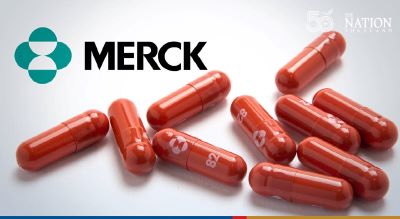
Merck & Co.s closely watched covid-19 antiviral molnupiravir could bring in as much as $7 billion in global sales through 2022, according to the drugmaker.
The figure includes up to $1 billion in revenue this year if the experimental drug is authorized in December, Chief Financial Officer Caroline Litchfield said early Thursday on a conference call. She projected at least $5 billion in sales by the end of next year, provided it’s cleared.
Molnupiravir has become one of the most highly anticipated coronavirus medications, as the pill is relatively cheap to make and easy to transport. Merck has taken steps to make sure that the drug will be distributed widely, including in low-income countries.
The drugmaker raised its annual forecast as it reported quarterly profit and revenue that beat Wall Street’s expectations. Adjusted earnings for the year will be $5.65 to $5.70 a share, up from the earlier guidance of $5.47 to $5.57, the drugmaker said in a statement. Revenue will be $47.4 billion to $47.9 billion, compared with the earlier guidance that topped out at $47.4 billion. The projections don’t include potential molnupiravir sales.
Quarterly adjusted earnings were $1.75 a share, beating analysts’ average estimate by 20 cents, according to a statement. Revenue was $13.2 billion, compared with Wall Street expectations of $12.3 billion.
Merck and partner Ridgeback Biotherapeutics LP are seeking U.S. authorization of molnupiravir, their covid antiviral. Merck said it plans to make at least 20 million treatment courses of the drug next year, on top of 10 million it expects to make by the end of 2021.
The drug may become one of Merck’s leading products. Merck’s blockbuster cancer drug Keytruda brought in more than $14 billion in sales last year, followed by the diabetes drug Januvia with around $5 billion and nearly $4 billion for HPV vaccine Gardasil.
Merck said vaccine revenue contributed to the third-quarter results. However, sales of its pneumococcal vaccine, Pneumovax 23, declined nearly 30%, “primarily driven by lower demand in the United States reflecting prioritization of the coronavirus vaccine.”
Sales of the papillomavirus vaccine Gardasil were $1.99 billion, topping estimates. Sales of blockbuster cancer drug Keytruda and the diabetes medications Januvia and Janumet also beat Wall Street projections. Animal health sales were $1.42 billion, in line with expectations.
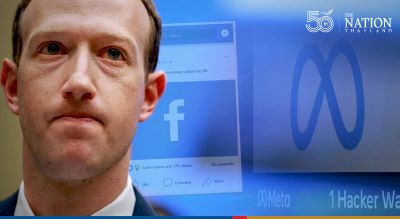
Facebook on Thursday announced it changed its name to Meta, part of a strategic shift to emphasize the development of its virtual world while its main social network business is in crisis.
Facebook CEO Mark Zuckerberg made the announcement at Connect, the company’s annual hardware event where it talks about products like the Portal video devices and Oculus headsets.
The rebranding – pegged to a virtual world and hardware known as the “metaverse” – comes amid a broader effort to shift attention away from revelations that it knew its platform was causing a litany of social harms. The Facebook social network is not changing its name.
“From now on, we’re going to be the metaverse first. Not Facebook first,” Zuckerberg said in his keynote. “Facebook is one of the most used products in the world. But increasingly, it doesn’t encompass everything that we do. Right now, our brand is so tightly linked to one product that it can’t possibly represent everything we are doing.”
A whistleblower has came forward with tens of thousands of documents demonstrating how the company was aware that it caused polarization in numerous countries, led people down rabbit holes of misinformation, and failed to stop a violent network that led to the Jan. 6 insurrection. In response, lawmakers around the world have threatened new regulation for the tech industry, as well as demanding more information from Facebook on what it knew and when.
The documents were obtained by a consortium of news organizations, including The Washington Post, and were provided to Congress and the Securities and Exchange Commission in response to a whistleblower lawsuit.
Facebook has said that the Facebook Papers are a “coordinated effort to selectively use leaked documents to paint a false picture of our company.”
Facebook was already trying to change the subject even before The Wall Street Journal first reported on the documents. Zuckerberg has told colleagues that he no longer wants to be the face of the company’s headaches in Washington and elsewhere, according to reporting by The Post, and is focused on transitioning Facebook to become a “metaverse.”
The term, which is derived from science fiction and has become popular among some venture capitalists in Silicon Valley, refers to tech services as virtual interconnected worlds.
Since starting as a social network in a college dorm room 17 years ago, Facebook has become a conglomerate encompassing Instagram, WhatsApp, and Messenger, as well as a nascent online payments and hardware businesses. That has led some in the tech industry, as well as employees, to speculate that the company was long overdue for a name change.
Zuckerberg’s keynote was filled with a dizzying array of scenes that showcased the company’s vision for the metaverse. It included Zuckerberg doing his favorite water sport, hydrofoiling, with friends in a virtual environment, and then jumping into work meetings from a virtual home office, boxing with virtual avatars, and working out on a virtual lily pad.
In a letter on the company’s website posted shortly after the keynote, Zuckerberg said that the future would be “an embodied internet where you’re in the experience, not just looking at it. We call this the metaverse, and it will touch every product we build.”
He said privacy and safety would be built into the new generation of products “from day one” – a clear nod to Facebook’s record of eroding trust.
Facebook isn’t the first Silicon Valley company to rebrand itself. Google changed its parent company name to Alphabet in 2015 in an attempt to unify a corporate behemoth that encompassed not only search and display advertising but also driverless cars and a life sciences division. Snapchat changed its name to Snap Inc. in an attempt to rebrand itself as a camera company.
Zuckerberg said this summer that the company would eventually become known as a metaverse, then later announced a smart glasses partnership with Ray-Ban and a plan to use its virtual reality headsets for work-related videoconferencing. He promoted a longtime friend who heads the hardware division, Andrew Bosworth, to become the company’s new chief technology officer.
Later, the company announced it would create 10,000 “metaverse-related” jobs. Zuckerberg said this week on the company’s earnings call that the hardware division would become a new line item in the company’s financial reports, and that investments in it would shave $10 billion from its profits in 2020.
In his blog post, Zuckerberg said that the name meta was inspired by his love of the classics, and that it comes from the Greek word “beyond.”
“For me, it symbolizes that there is always more to build, and there is always a next chapter to the story,” he wrote.
U.S. pharmaceutical giant Merck has agreed to share its license for its experimental covid-19 drug, molnupiravir, with a nonprofit organization so that it can be manufactured widely around the world in a deal that would expand access to the treatment in more than 100 countries.
The move could make the treatment, an easy-to-take pill shown to reduce the risk of hospitalization and death in some cases, available to millions in mostly low- and middle-income nations – if regulators authorize its use.
“At long last, the first public health license for a covid-19 treatment or vaccine has been signed, allowing this medicine to be produced by all capable producers, which will increase supply and drive down prices,” said Mohga Kamal-Yanni, senior health policy adviser to the People’s Vaccine Alliance, a coalition advocating rapid production and equitable deployment of covid drugs.
Merck announced in October that a global clinical trial showed molnupiravir, an antiviral pill, reduced hospitalizations and deaths by half among higher-risk coronavirus patients diagnosed with mild to moderate illness.
The company agreed to share its license with the United Nations-backed Medicines Patent Pool, or MPP, which in turn can sub-license it to manufacturers. The deal is designed to expand the drug’s availability, widen its manufacturing base and potentially push down the price.
The U.S. government is paying about $700 per course of the molnupiravir treatment, the New York Times reported. But, according to Brook Baker, a professor of law at Northeastern University who has tracked the negotiations over the drug, the price of a course of treatment could fall below $10 as competition increases among manufacturers and production scale grows.
When Merck began working on the drug, along with partners Ridgeback Biotherapeutics and Emory University, and learned that it could be administered as a pill, “we right away understood that this could be a game-changer,” said Jenelle Krishnamoorthy, the company’s vice president of global public policy.
“We had a responsibility,” she added. “You could not have a capsule and not be able to find a way to get it across the world.”
Molnupiravir has yet to receive approval from either U.S. or European regulators. Merck applied to the U.S. Food and Drug Agency for emergency use authorization this month, and the European Medicines Agency recently began a rolling review of the drug.
But experts say that it has huge potential to fight the pandemic. Pills are generally easy to make, transport, store and administer, making them a particularly attractive option for lower- to middle-income countries with weaker infrastructure and limited vaccine supplies.
Earlier this year, Merck struck deals with eight Indian pharmaceutical manufacturers to produce a generic version of molnupiravir. Last week, the Bill and Melinda Gates Foundation announced what it said was an initial investment of up to $120 million to incentivize those drugmakers to begin producing the treatment now – even before it has been approved by regulatory bodies.
About two dozen manufacturers around the world have also expressed interest in producing molnupiravir through the MPP license. Drugmakers will be able to apply to MPP for permission to produce the drug starting Wednesday.
Geneva-based MPP was founded in 2010 to enable low- and middle-income nations access to essential patented medicines during the HIV/AIDs epidemic. This is the first covid-related drug for which it has received a license.
Merck’s sharing of its intellectual property stands out in the pandemic as many other companies have lobbied to maintain rights to therapeutics or vaccines. There’s something else unusual, too: The terms and conditions of the deal are being posted online, a marked change from the veil of secrecy surrounding negotiations for coronavirus vaccines.
“Unlike the grotesquely unequal distribution of covid-19 vaccines, the poorest countries will not have to wait at the back of the queue for molnupiravir,” Kamal-Yanni said.
As long as covid-19 is classified as a public health emergency by the World Health Organization, neither Merck nor its partners will receive royalties from drug sales under the agreement, according to a company statement.
But some experts say that there is far more that needs to be done.
Baker, the law professor, said that he remains concerned about provisions in the license that could limit the sale of generic drugs outside of the 105 countries and that Merck would be unable to meet demand in these excluded countries. Countries such as Brazil, Russia and Turkey – upper-middle-income countries hit hard by the pandemic – would not be able to purchase generic versions under the new license, he says.
Paul Schaper, Merck’s director of global pharmaceutical public policy, said that the company looked at a “range of criteria” when deciding which countries to include on the list. Some countries, he said, didn’t make the cut because “they are more able to support their health system and their pandemic response.”
The license agreement could move the needle in ongoing negotiations over intellectual property during the pandemic. Member states at the World Trade Organization are still debating a proposal introduced by India and South Africa earlier this year to temporarily waive intellectual property rights on coronavirus vaccines and treatments.
Kamal-Yanni said that if Merck did not change its tack, excluded countries could issue compulsory licenses that would allow production of molnupiravir without the approval of the patent holder.
“This license will not solve everything, but it is a starting point and an example,” said Peter Maybarduk, director of Public Citizen, a consumer advocacy organization, and a member of the MPP board.