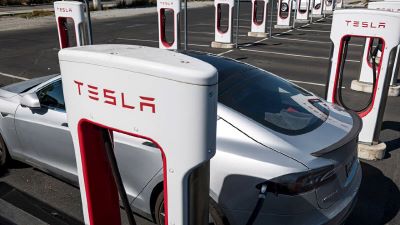
Tesla Inc. has joined the trillion-dollar-valuation club as the member with the lowest revenue.
The electric-vehicle maker’s shares have run past several milestones over the past couple weeks amid a rush of positive news, including reaching a rarefied $1 trillion in market value on Monday. That helped further bolster sentiment among investors, who are betting on Tesla’s potential for rapid future growth as EVs become mainstream and eventually replace gas-driven cars.
However, unlike its trillion-dollar peers, Tesla’s valuation touched that level before its revenue could reach the $50 billion mark.
Even though Tesla is the fifth-biggest company on the S&P 500 Index when ranked by market capitalization, it is in the 89th place when ranked by last year’s annual revenue. It is preceded by Capital One Financial Corp. — which had $31.6 billion in revenue last year versus Tesla’s $31.5 billion and is valued at $75 billion. The company with the biggest revenue on the index is Walmart Inc. — a mammoth $559.2 billion that dwarfs its own valuation of about $417 billion.
“If you look at Tesla’s revenue for the next year or so, valuation looks stretched,” Wedbush analyst Daniel Ives said by phone. However, Ives’ $1,100 price target on Tesla reflects the opportunity for the company to capture a major share of the EV market over the next five to 10 years, along with high margins, the analyst said.
Tesla’s valuation milestone came as car-rental company Hertz Global Holdings placed an order for 100,000 of its vehicles, a move that signals EVs are here to stay and gives bulls confidence that Tesla’s sky-high valuation is sustainable too.
“Wall Street is starting to believe the skyrocketing move with Tesla’s stock price is nowhere near over since Tesla has a massive lead in the EV space and improving growth potential as the U.S., European and Asian markets for electric cars grows,” Oanda analyst Edward Moya wrote in a note on Monday.
Tesla shares jumped as much as 6.1% on Tuesday, after closing up 13% on Monday. The company’s valuation now hovers around $1.1 trillion.
As the table shows, Tesla’s last annual revenue is considerably lower than that of Facebook Inc.’s, which entered the trillion club earlier this year before slipping back below that level. That also gives Tesla a very expensive price-to-sales multiple. The EV maker’s shares are currently trading at 21 times its sales, with the same ratio hovering at 8 times for Facebook and estimated to be around 6.6 times for the NYSE FANG+ Index.
Tesla also has a considerable debt load, that puts it in the 162nd place when ranked by 2020’s total debt. For the current year, Tesla reported total debt of $10.1 billion as of Sept. 30.
“Looking at current valuation multiples and market share for Tesla has been a loser’s game for years,” said Matt Weller, global head of market research at Forex.com & City Index. However, Weller noted that at some point, likely as more competition enters the market and interest rates start to rise, “investors will start to question whether the company will be able to deliver on its massive promises.”
Walt Disney Co. raised the price of a single admission to its California theme parks on the busiest days by 6.5% to $164, part of the companys shift to a system that ties admissions costs to demand.
As part of the move, the slowest days will remain at $104, the same as it has been since 2019, Disney said Monday. The company created a tiered format for ticket prices in 2016, with weekend, summer and holiday prices higher than other days. With this latest step, the company now has six tiers.
The changes suggest companies are feeling comfortable about raising prices as the pandemic ebbs and consumers start to spend again. Disney is confident that higher-end consumers are more willing to spend freely. The company’s second-highest-priced tier is increasing to $159 from $154.
The company’s two theme parks in California, Disneyland and California Adventure, last increased prices in February 2020, before the pandemic prompted an extended shutdown.
Disney said demand has been strong since its California resort reopened in April. The world’s largest theme-park operator has been using price increases, a new reservation system and other tools to help manage demand and maximize revenue.
The changes offer “guests more ticket choices to meet a variety of budgets as it moves closer to dynamic pricing designed to spread visitation throughout the weeks, months and year,” Disney said.
This month, the company began rolling out a new ride reservation system. Priced at $20 in California, it will allow purchasers to access shorter lines. The company said its highest-priced annual pass, which costs $1,399 for year-round access, is sold out.
Disney also has been introducing new attractions, such as the Avengers-themed campus that opened in June at the California Adventure park. The company’s parking-lot trams, closed since the coronavirus, will reopen next year.
Late last year, Mark Zuckerberg faced a choice: Comply with demands from Vietnams ruling Communist Party to censor anti-government dissidents or risk getting knocked offline in one of Facebooks most lucrative Asian markets.
In America, the tech CEO is a champion of free speech, reluctant to remove even malicious and misleading content from the platform. But in Vietnam, upholding the free speech rights of people who question government leaders could have come with a significant cost in a country where the social network earns more than $1 billion in annual revenue, according to a 2018 estimate by Amnesty International.
So Zuckerberg personally decided that Facebook would comply with Hanoi’s demands, according to three people familiar with the decision, speaking on the condition of anonymity to describe internal company discussions. Ahead of Vietnam’s party congress in January, Facebook significantly increased censorship of “anti-state” posts, giving the government near-total control over the platform, according to local activists and free speech advocates.
Zuckerberg’s role in the Vietnam decision, which has not been previously reported, exemplifies his relentless determination to ensure Facebook’s dominance, sometimes at the expense of his stated values, according to interviews with more than a dozen former employees. That ethos has come under fire in a series of whistleblower complaints filed with the U.S. Securities and Exchange Commission by former Facebook product manager Frances Haugen.
While it’s unclear whether the SEC will take the case or pursue action against the CEO personally, the allegations made by the whistleblower represent arguably the most profound challenge to Zuckerberg’s leadership of the most powerful social media company on Earth. Experts said the SEC – which has the power to seek depositions, fine him and even remove him as chairman – is likely to dig more deeply into what he knew and when. Though his direct perspective is rarely reflected in the documents, the people who worked with him say his fingerprints are everywhere in them.
In particular, Zuckerberg made countless decisions and remarks that demonstrated a hard-line devotion to free speech. Even in Vietnam, the company says that the choice to censor is justified “to ensure our services remain available for millions of people who rely on them every day,” according to a statement provided to The Post.
Haugen references Zuckerberg’s public statements at least 20 times in her SEC complaints, asserting that the CEO’s singular power and unique level of control over Facebook mean he bears ultimate responsibility for a litany of societal harms. Her documents appear to contradict the CEO on a host of issues, including the platform’s impact on children’s mental health, whether its algorithms contribute to polarization and how much hate speech it detects around the world.
For example, Zuckerberg testified last year before Congress that the company removes 94 percent of the hate speech it finds – but internal documents show that its researchers estimated that the company was removing less than 5 percent of hate speech on Facebook. In March, Zuckerberg told Congress that it was “not at all clear” that social networks polarize people, when Facebook’s own researchers had repeatedly found that they do.
The documents – disclosures made to the SEC and provided to Congress in redacted form by Haugen’s legal counsel – were obtained and reviewed by a consortium of news organizations, including The Washington Post.
In her congressional testimony, Haugen repeatedly accused Zuckerberg of choosing growth over the public good, an allegation echoed in interviews with the former employees.
“The specter of Zuckerberg looms in everything the company does,” said Brian Boland, a former vice president of partnerships and marketing who left in 2020 after coming to believe that the platform was polarizing society. “It is entirely driven by him.”
A Facebook spokeswoman, Dani Lever, denied that decisions made by Zuckerberg “cause harm,” saying the claim was based on “selected documents that are mischaracterized and devoid of any context.”
“We have no commercial or moral incentive to do anything other than give the maximum number of people as much of a positive experience as possible,” she said. “Like every platform, we are constantly making difficult decisions between free expressions and harmful speech, security and other issues, and we don’t make these decisions inside a vacuum – we rely on the input of our teams, as well as external subject matter experts to navigate them. But drawing these societal lines is always better left to elected leaders which is why we’ve spent many years advocating for Congress to pass updated Internet regulations.”
Facebook has previously fought efforts to hold Zuckerberg personally accountable. In 2019, as the company was facing a record-breaking $5 billion fine from the Federal Trade Commission for privacy violations related to Cambridge Analytica, a political consultancy that abused profile data from tens of millions of Facebook users, Facebook negotiated to protect Zuckerberg from direct liability. Internal Facebook briefing materials revealed the tech giant was willing to abandon settlement talks and duke it out in court if the agency insisted on pursuing the CEO.
The current chair of the SEC, Gary Gensler, has said he wants to go much harder on white-collar crime. Experts said Gensler is potentially likely to weigh the Haugen complaint as he looks toward a new era of corporate accountability.
Zuckerberg “has to be the driver of these decisions,” said Sean McKessy, the first chief of the SEC’s whistleblower office, now representing whistleblowers in private practice at Phillips & Cohen. “This is not a typical public company with checks and balances. This is not a democracy, it’s an authoritarian state. . . . And although the SEC doesn’t have the strongest track record of holding individuals accountable, I certainly could see this case as being a poster child for doing so.”
Zuckerberg, who is 37, founded Facebook 17 years ago in his college dorm room, envisioning a new way for classmates to connect with one another. Today, Facebook has become a conglomerate encompassing WhatsApp, Instagram and a hardware business. Zuckerberg is chairman of the board and controls 58 percent of the company’s voting shares, rendering his power virtually unchecked internally at the company and by the board.
An ownership structure that gives a single leader a lock on the board’s decision-making is “unprecedented at a company of this scale,” said Marc Goldstein, head of U.S. research for the proxy adviser Institutional Shareholder Services. “Facebook at this point is by far the largest company to have all this power concentrated in one person’s hands.”
Zuckerberg has long been obsessed with metrics, growth and neutralizing competitive threats, according to numerous people who have worked with him. The company’s use of “growth-hacking” tactics, such as tagging people in photos and buying lists of email addresses, was key to achieving its remarkable size – 3.51 billion monthly users, nearly half the planet. In Facebook’s early years, Zuckerberg set annual targets for the number of users the company wanted to gain. In 2014, he ordered teams at Facebook to grow “time spent,” or each user’s minutes spent on the service, by 10 percent a year, according to the documents and interviews.
In 2018, Zuckerberg defined a new metric that became his “north star,” according to a former executive. That metric was MSI – “meaningful social interactions” – named because the company wanted to emphasize the idea that engagement was more valuable than time spent passively scrolling through videos or other content. For example, the company’s algorithm would now weight posts that got a large number of comments as more “meaningful” than likes, and would use that information to inject the comment-filled posts into the news feeds of many more people who were not friends with the original poster, the documents said.
Even as the company has grown into a large conglomerate, Zuckerberg has maintained a reputation as a hands-on manager who goes deep on product and policy decisions, particularly when they involve critical trade-offs between preserving speech and protecting users from harm – or between safety and growth.
Politically, he has developed hard-line positions on free speech, announcing that he would allow politicians to lie in ads and at one time defending the rights of Holocaust denialists. He has publicly stated that he made the final call in the company’s most sensitive content decisions to date, including allowing President Donald Trump’s violence-inciting post during the George Floyd protests to stay up, despite objections from thousands of employees.
And his capacity for micromanagement is vast: He personally chose the colors and layout of the company’s “I got vaccinated” frames for user profile pictures, according to two of the people.
But the former employees who spoke with The Post said his influence goes far beyond what he has stated publicly, and is most felt in countless lesser-known decisions that shaped Facebook’s products to match Zuckerberg’s values – sometimes, critics say, at the expense of the personal safety of billions of users.
Ahead of the 2020 U.S. election, Facebook built a “voting information center” that promoted factual information about how to register to vote or sign up to be a poll worker. Teams at WhatsApp wanted to create a version of it in Spanish, pushing the information proactively through a chat bot or embedded link to millions of marginalized voters who communicate regularly through WhatsApp. But Zuckerberg raised objections to the idea, saying it was not “politically neutral,” or could make the company appear partisan, according to a person familiar with the project who spoke on the condition of anonymity to discuss internal matters, as well as documents reviewed by The Post.
Ultimately, the company implemented a whittled-down version: a partnership with outside groups that allowed WhatsApp users to text a chat bot if they saw potential misinformation or to text a bot built by the organization Vote.org to get voting info.
When considering whether to permit increased censorship in Vietnam, one former employee said, Zuckerberg’s line in the free speech sand seemed to be constantly shifting. Warned that catering to a repressive regime could harm Facebook’s global reputation, according to one of the people, Zuckerberg argued that going offline entirely in Vietnam would cause even greater harm to free speech in the country.
After Zuckerberg agreed to increase censorship of anti-government posts, Facebook’s transparency report shows that more than 2,200 posts by Vietnamese users were blocked between July and December 2020, compared with 834 in the previous six months. Pro-democracy and environmental groups, meanwhile, have become a target of government-led mass reporting campaigns, the documents and interviews show, landing people in jail for even mildly critical posts.
In April 2020, Zuckerberg appeared to shoot down or express reservations about researchers’ proposals to cut down on hate speech, nudity, graphic violence and misinformation, according to one of the documents. The pandemic was in its early days and coronavirus-related misinformation was spreading. The researchers proposed a limit to boosting content the news-feed algorithm predicts will be reshared, because serial “reshares” tended to correlate with misinformation. Early tests showed limiting this could reduce coronavirus-related misinformation by up to 38 percent, according to the document.
“Mark doesn’t think we could go broad,” said Anna Stepanov, the director giving the readout from the Zuckerberg meeting, about the CEO’s response to the proposal to change the algorithm. “We wouldn’t launch if there was a material trade-off with MSI.”
Zuckerberg was a bit more open to a proposal to allow algorithms to be slightly less precise in what the software deemed to be hate speech, nudity and other banned categories – enabling it to delete a broader array of “probable violating content” and potentially reducing such harmful material by as much as 17 percent. But he only supported it as a “break the glass” measure, to be used in emergency situations such as the Jan. 6 insurrection, the documents said. Account demotions – which would have preemptively limited accounts that algorithms predicted were most likely to promote misinformation or hate – were off the table.
Facebook’s Lever says “probable violating” proposals were not break the glass measures and the company did implement them across categories such as graphic violence, nudity and porn, and hostile speech. Later, it also implemented the algorithm change fully for political and health categories that are in place today.
The Wall Street Journal first reported on the document’s existence.
The document that finally reached Zuckerberg was carefully tailored to address objections that researchers anticipated he would raise. For each of the nine suggestions that made their way up the chain, the data scientists added one row to list how the proposals would affect three areas he was known to care about: free speech, how Facebook is viewed publicly and how the algorithm change might affect MSI.
One former employee involved in that proposal process said those who worked on it were deflated by Zuckerberg’s response. The researchers had gone back and forth with leadership for months on it, changing it many times to address concerns about clamping down on free speech.
Zuckerberg, said a former executive, “is extremely inquisitive about anything that impacts how content gets ranked in the feed – because that’s the secret sauce, that’s the way this whole thing keeps spinning and working and making profits.”
“People felt, it was Mark’s thing, so he needs it to be successful. It needs to work,” the person added.
In 2019, those in the company’s civic integrity division, a roughly 200-person team that focused on how to mitigate harms caused by the platform, began to hear that Zuckerberg himself was becoming very worried about “false positives” – or legitimate speech being taken down by mistake. They were soon asked to justify their work by providing estimates of how many “false positives” any integrity-related project was producing, according to one of the people.
“Our very existence is fundamentally opposed to the goals of the company, the goals of Mark Zuckerberg,” said another person who quit. “And it made it so we had to justify our existence when other teams didn’t.”
“Founder-CEOs have superpowers that allow them to do courageous things. Mark has done that time and again,” Samidh Chakrabarti, the former head of the company’s civic integrity unit, who quit recently, tweeted this month. “But the trust deficit is real and the FB family may now better prosper under distributed leadership.”
Even as Facebook is facing perhaps its most existential crisis to date over the whistleblower documents, lately Zuckerberg’s attention has been elsewhere, focused on a push toward virtual-reality hardware in what former executives said was an attempt to distance himself from the problems of the core Facebook, known internally as the Big Blue app. The company is reportedly even considering changing its name to align better with his vision of a virtual-reality-driven “metaverse.” Facebook has said it doesn’t comment on rumors or speculation.
The former employees said it was also not surprising that the document trove contains so few references to Zuckerberg’s thoughts. He has become more isolated in recent years, in the face of mounting scandals and leaks (Facebook disputes his isolation). He primarily communicates decisions through a small inner circle, known as the Small Team, and a slightly bigger group of company leaders known as M-Team, or Mark’s team. Information that gets to him is also tightly controlled, as well as information about him.
Even criticizing Zuckerberg personally can come with costs. An engineer who spoke with The Post, and whose story was reflected in the documents, says he was fired in 2020 after penning an open letter to Zuckerberg on the company’s chat system, accusing the CEO of responsibility for protecting conservatives whose accounts had been escalated for misinformation.
One document, a 2020 proposal that indicates it was sent to Zuckerberg for review – over whether to hide like counts on Instagram and Facebook – strongly suggests that Zuckerberg was directly aware of some of the research into harmful effects of the service. It included internal research from 2018 that found that 37 percent of teenagers said one reason that they stopped posting content was because wanting to get enough like counts caused them “stress or anxiety.”
(The like-hiding study, named Project Daisy, was also reported by the Journal. In 2021, the company ultimately did offer an option to hide likes on Instagram, but not on Facebook. Facebook says it didn’t implement Project Daisy because a test showed mixed results for people’s well-being and that the 2018 study used in the presentation “cannot be used to show that Instagram causes harm because the survey wasn’t designed to test that, nor does the data show it.”)
Over the summer, executives in Facebook’s Washington office heard that Zuckerberg was angry about President Biden charge that coronavirus misinformation on Facebook was “killing people.” Zuckerberg felt Biden had unfairly targeted the company and wanted to fight back, according to people who heard a key Zuckerberg adviser, Facebook Vice President for Global Affairs Nick Clegg, express the CEO’s viewpoint.
Zuckerberg is married to a physician, runs a foundation focused on health issues and had hoped that Facebook’s ability to help people during the pandemic would be legacy-making. Instead, the plan was going south.
In July, Guy Rosen, Facebook’s vice president for integrity, wrote a blog post noting that White House had missed its own vaccine goals, and asserting that Facebook wasn’t to blame for the large number of Americans who refused to get vaccinated.
Though Biden later backed off his comment, some former executives saw Facebook’s attack on the White House as unnecessary self-sabotage, an example of the company exercising poor judgment in an effort to please Zuckerberg.
But complaints about the brash action were met with a familiar response, three people said: It was meant to please the “audience of one.”
For three centuries, a handful of insurers have dominated the market from the City of London. The upstart intent on challenging them rents two floors just outside the district in an area known as Silicon Roundabout, where its employees work while lounging on cushioned windowsills.
Marshmallow, a car insurance app which recently became the U.K.’s second Black-founded firm to reach a billion-dollar valuation, won’t be working from its current Old Street digs for much longer. It’s moving to a nearby office with triple the space after headcount grew more than threefold during the pandemic and as it plows ahead with expansion plans into Europe.
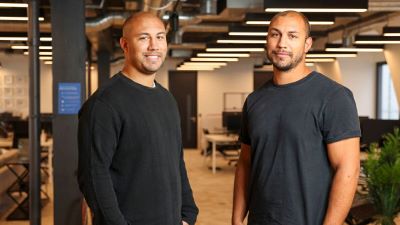
Founded by identical twins Oliver and Alexander Kent-Braham, the startup is the latest insurtech firm targeting a sector ripe for disruption. Investors have taken notice in the wake of Investec’s early backing after Oliver met the bank’s co-founder Bernard Kantor during an internship there. Since launching four years ago, Marshmallow’s valuation has leaped to $1.25 billion.
“It was really clear again and again that insurers play this hugely pivotal role in society, yet they probably weren’t digitizing fast enough,” Oliver Kent-Braham said in an interview. “We found that we were able to use data that other insurers aren’t using.”
Watching the ascent of app-based financial services like Monzo Bank, the 29-year-old brothers wondered if the insurance sector’s comparatively archaic underwriting methods was an opportunity waiting to happen. When a South African told them of the eye-watering amount he was forced to pay for motor insurance in the U.K., they asked around and found that was a common complaint from recently arrived foreign residents — regardless of their driving ability.
Initially working from the lounge of a Virgin Active gymnasium for nine months, the twins devised an algorithm aimed at lowering premiums for immigrants and expats. The startup attracted backers such as Investec and tech investor Passion Capital and has since sold more than 100,000 policies.
Those figures are of course nothing like the millions of drivers served by established rivals such as Admiral Group and Direct Line Group, but it’s early days. Indeed, much of Marshmallow’s recent growth was achieved amid the pandemic’s reduced traffic levels, and the end of U.K. lockdowns potentially poses another challenge for the firm.
“Insurers are spending big on tech so this won’t be the death of insurance,” said Bloomberg Intelligence insurance analyst Kevin Ryan. “The advantage insurtechs have is a lack of baggage — they don’t have legacy systems to digitize and they can be quick and agile.”
Marshmallow achieved its so-called unicorn status last month following a fresh round of fund-raising. The second of just two black-owned firms out of 48 U.K. startups that have become unicorns, it narrowly missed out on being the first when Zepz, a money transfer service that also targets immigrants, surpassed that valuation just weeks earlier.
Those mark important milestones for what has been an under-represented group of companies. Startups with black founders received just 0.24% of all venture capital invested in the U.K. in the past decade despite black people making up 3.5% of the population, according to an Extend Ventures report.
While Kent-Braham didn’t recall any major hurdles in Marshmallow’s fund raising, he said that connections via the university you attend can make all the difference when seeking investor attention. In the U.S., a dozen universities produce 42% of all venture capitalists with Harvard and Stanford topping the list, according to a report by Crunchbase.
“You go to one of these universities, and your network is automatically connected to them,” said Kent-Braham, who went to Bristol Business School in the U.K.
One of Marshmallow’s backers is London-based Impact X Capital, which seeks to invest in under represented firms. CEO Eric Collins has been vocal about the entrenched bias faced by start ups led by minorities.
“Networks are very school oriented, regionally oriented, some here in the U.K. would say class oriented,” Collins said in an interview. While Marshmallow currently covers “a small portion of the market, there is a lot of growth that can actually be done here.”
Investments in insurtech have more than tripled in the past six years, totaling $48 billion so far this year, according to insurance collaboration platform Sønr. The data also shows that merger and acquisition activity is booming, with the firm predicting that 2021 volumes will be more than double last year’s.
But Kent-Braham says Marshmallow has no interest in being swallowed up by one of the City’s behemoths, and is instead focused on continuing to chip away share from established competitors.
“Some insurers aren’t great run companies, some are better run, but I think that the industry could play its role a bit better in terms of trying to prevent people going through bad scenarios,” he said.
The lights stayed off for years after the 2013 closure of the Ormet Corp. aluminum plant near Hannibal, Ohio. Until someone finally noticed the valuable electrical infrastructure sitting alongside the mothballed smelting operation.
All that high-voltage wiring, and all those pipelines and barge docks on the Ohio River, looked like gold to Fortress Transportation & Infrastructure Investors. “It was the perfect spot for a power plant,” says Robert “Bo” Wholey, president of Long Ridge Energy Terminal, which is now a unit partly owned by Fortress. He bought General Electric Co.’s 7HA.02 turbine, a core component used in natural gas power plants, and set out to attract heavy-duty customers.
Then Wholey ran into a problem. He wanted to supply electricity to data centers in the region, but they didn’t want his kind of electricity. “What we found out pretty quickly is that most data center companies want carbon-free electricity,” he says. So he turned back to GE for help.
For much of its 129-year history, GE has been producing carbon dioxide emissions and selling equipment to companies that do the same. It was once among the top suppliers to coal-burning plants and provided gear and services to oil and gas drillers before largely withdrawing from both markets over the past few years. GE remains the biggest maker of jet engines, with at least 37,000 in the skies today. It’s also the top manufacturer of natural-gas-powered turbines, with more than 7,000 busy generating what the company says is about half of the world’s gas-fired electricity.
The full carbon footprint of GE’s businesses-something the company doesn’t yet disclose but independent analysts can try to estimate-is comparable to that of the Philippines, a nation of 108 million. It’s enough to put GE on the target list of 167 top emitters published by Climate Action 100+, a group coordinating climate-motivated investors with more than $55 trillion in assets. Among them: BlackRock Inc., GE’s fourth-largest shareholder, which has called for companies to figure out how they fit into a net-zero world.
Danielle Merfeld, chief technology officer of GE Renewable Energy, is seen speaking virtually during the Bloomberg Green Summit on April 26, 2021. MUST CREDIT: Bloomberg photo by Daniel Acker.
GE’s ability to move beyond its enormous legacy of greenhouse gas will likely define its future. Under pressure from climate activists and shareholders, in July it announced an aspiration to zero out CO₂ within three decades. Critically, its latest climate goal includes eliminating emissions created by the use of its products. Reaching net-zero will take more than putting some solar panels on its factories and offices. For GE to fulfill its promise, it must also prompt customers who form the backbone of today’s fossil fuel economy to ditch carbon. Success could put a company synonymous with the heyday of American manufacturing at the center of a new, cleaner industrial era.
This is where customers like Wholey come in. As it turned out, there was a fix for his problem. “What GE told us at the time was, really, with no modifications to the turbine, we could go up to a 20% hydrogen blend,” he says. Hydrogen’s major advantage over natural gas and other fossil fuels is that burning it produces water, rather than CO₂. When it’s created using renewable electricity, hydrogen is free from planet-warming emissions-making it extremely attractive to governments, industries, and investors. But it’s still difficult to produce hydrogen, especially the cleanest kind, at scale and without great expense.
The good news was that the less-clean hydrogen fuel readily available right now can blend into the natural gas used in Wholey’s power plant, slightly curbing its pollution. Eventually, GE assured him, the turbine he’d already purchased could be modified to handle 100% hydrogen.
Long Ridge plans to start with a 5% hydrogen mix when it commences operations in October, then quadruple that by 2023, on the way to producing carbon-free electricity by 2030. It’s the first U.S. power plant purpose-built to generate electricity by burning hydrogen, according to GE.
The project in Ohio is an example of how the company says it’s helping customers pivot to a cleaner future, even as much of its business remains firmly entrenched in fossil fuel. GE Chief Executive Officer Larry Culp says the energy transition is a challenge “no company is better positioned to help solve.”
He’s currently orchestrating a multiyear turnaround, partly organized around society’s lower-carbon shift. “You’ve got need, you’ve got demand, and you have, if you will, incumbency in certain places and access in others,” Culp says. “If we do our job, I think we’ve got a far better business than we have today.”
– – –
The concept of fueling natural gas turbines with hydrogen has been around for decades. Going back to the 1990s, GE has sold dozens of gas turbines operating on hydrogen blends, and all of its turbines can burn fuels that include at least some hydrogen. But that capability hasn’t been a major selling point until very recently, says Jeffrey Goldmeer, emergent technologies director at GE Gas Power and one of the company’s top hydrogen specialists. It helps that regulators are prodding utilities to slash emissions.
Overt preparation for a hydrogen future is evident in GE’s HA turbines, its newest and most advanced class of the hulking machines, which made their debut in 2014. They feature a combustion system with roots in a 2005 hydrogen push by the U.S. Department of Energy. While the HA is commercialized mostly for natural gas applications, GE tests have confirmed it can handle up to 50% hydrogen. That gives the company something to pitch to customers as a decarbonization option. The first turbine with that system began producing power last year. “Because of that legacy, now these HA machines have very high hydrogen capabilities that they can bring to the market very quickly,” Goldmeer says. “The amount of interest from our customers has grown massively in the last 18 to 24 months.”
GE has been tapped to supply Australia’s first power turbine capable of running on hydrogen and natural gas, which is set to come online by 2024. It also signed an agreement with Uniper to help curb emissions from the German company’s natural gas plants and storage facilities. Plus, there’s a hydrogen demonstration program planned on Long Island as part of a clean electricity effort by the state of New York.
Hydrogen-capable turbines are part of how GE turns its emissions-heavy power business into something that will one day be cleaner. But the company is also a large force in today’s clean energy boom. Equipment orders and revenue from GE Renewable Energy, which sells wind power turbines, have exceeded those from GE’s fossil power division for three years. GE was the top supplier of wind turbines globally last year, with installations totaling 13.5 gigawatts, according to clean energy researchers at BloombergNEF.
The company last year also secured its first orders for the Haliade-X offshore wind turbine, the largest and most powerful model to date, and it has more than 5GW of offshore orders in its pipeline. It anticipates annual offshore wind sales will reach $3 billion in 2024, in a market expected to grow rapidly over the next decade.
Within GE’s renewables unit is an electricity-grid business that, after years of restructuring, could also burst into prominence as trillions of dollars flow into upgrades of power networks. There are even greener prospects for GE Aviation, the prolific maker of jet engines, which in June announced a push alongside Safran SA of France to slash jet fuel consumption by more than 20% by 2035. The joint venture is working to incorporate biofuels and hydrogen for even deeper reductions in future designs.
Roughly half of GE’s sales today come from products that either eliminate greenhouse gases or prevent future emissions, according to estimates by Nick Heymann of investment bank William Blair & Co. That, he says, positions the company to become the largest green industrial manufacturer by the middle of the decade. “For their customer base,” Heymann says, “they’re going to want them to know that any asset they buy in this space is going to be able to be economically viable in the future.”
Still, there’s no getting around that the bulk of GE Power’s business-for now, even after rapidly shrinking-remains rooted in fossil fuels. The division reeled after former CEO Jeffrey Immelt made a gargantuan bet on fossil-generated power, acquiring parts of France’s Alstom for about $10 billion in 2015. The deal prompted a $22 billion write-down three years later, and the division ended up cutting costs and jobs as it sank from $17.1 billion of revenue in 2017 to $12.7 billion last year
In a not-unrelated development, GE Power must also contend with wind and solar emerging as the cheapest sources of new electricity in most of the world. The clearest sign of a limited future for natural gas came in May from the International Energy Agency’s road map for achieving net-zero emissions by 2050. The group called for unabated natural gas generation to peak by the end of this decade and then decline 90% by 2040. If the world doesn’t take these steps, the IEA warned, it risks blowing past climate goals and locking in majorly disruptive changes to the global climate.
Remaining natural gas plants in the IEA’s post-2040 scenarios would have to adopt low-carbon fuels such as hydrogen and carbon-capture technology. For customers interested in the latter, GE Power’s website offers both a webinar and form to contact its sales staff.
If it’s possible to squint over the horizon and imagine the green industrial supplier GE might become, it’s much harder to scrutinize the emissions that are its responsibility today. That’s because the company discloses only a tiny fraction of its total contribution to climate change-an omission that sets it apart from other big emitters, such as General Motors Co., and even some giant oil companies, like Royal Dutch Shell Plc.
It’s not just a disclosure issue; GE doesn’t know the size of its own pollution problem. The company reported to CDP, a nonprofit tracker of corporate emissions, that as of last year it had never completed a full assessment of emissions tied to its customers and supply chain. This is the category carbon accountants call Scope 3, which makes up the overwhelming majority of emissions for many large industrial companies.
GE is hardly alone in its limited approach to climate metrics and disclosures. Power turbine peers such as Siemens Energy and jet engine rival Pratt & Whitney, a part of Raytheon Technologies Corp., haven’t revealed their total emissions. And there’s no legal imperative for them to do so. But the practice violates a basic corporate sustainability principle: What isn’t measured can’t be cut. Perhaps that’s why GE also hasn’t set detailed targets for reducing customer and supplier emissions. The company has said it plans to adopt near-term targets and is working on additional climate disclosures, but there’s no timeline on either process.
For now, investors and the public can only triangulate GE’s full climate impact from bits and pieces of available information, so Bloomberg Green asked the experts at CDP to do just that. Their estimate put the 2019 emissions of GE’s suppliers and customers at 135 million metric tons of CO₂ equivalent. That means the emissions GE had disclosed-2.4 million metric tons from its own operations-account for less than 2% of its overall carbon footprint. Most of the discrepancy comes from customers that buy and use all of its planet-warming products. CDP’s analysis puts emissions from end users at about 97 million metric tons, comparable to the carbon dioxide output of Colombia or Bangladesh.
Yet GE’s true carbon footprint is almost certainly greater still. CDP derives estimates in part from a company’s revenue in a given year, and those calculations don’t account for previously sold products that remain in use. That means CDP’s estimate excludes tens of thousands of engines and turbines sold before 2019 and built for decades of action.
Disclosing emissions is just a first step. “For companies that are impacting climate change at the scale that GE is,” says Simon Fischweicher, head of corporations and supply chain at CDP, “we need to see intermediate or short-term targets.”
Naturally, GE has become a prime target for activists. Until 2019 the company remained involved in more than a dozen coal plant installations around the world, which led the Natural Resources Defense Council to call out its “coal plant profiteering.” Shareholders have weighed in, too, with 98% voting in May to approve a resolution demanding a net-zero commitment. GE’s board supported the measure.
That followed the company’s decision last year to drop the business of outfitting new coal-fired plants and work to zero out the sliver of emissions from its own operations by the end of the decade. The corporate accountability group As You Sow, which put the shareholder proposal before GE investors, called the company’s pledge this year to reach net-zero by 2050 a “major step.”
Daniel Stewart of As You Sow compares GE in the current moment to another American industrial icon: GM. The automaker has pledged to produce exclusively electric vehicles by 2035, even though the bulk of its sales and profits today come from gas-guzzling SUVs and pickups. Two of America’s long-lived corporate giants are caught between the carbon-intensive present and a cleaner future. “Before making these commitments, a lot of these companies want to have all the answers, which is impossible,” Stewart says. “So there’s a certain leap of faith.”
– – –
At GE headquarters, not everyone has made that leap with both feet. Executives frequently uphold the idea of natural gas power as a linchpin in the decarbonization process, since it tends to displace coal and provides a reliable backup for renewables that can go offline when the wind dies down. As Culp says, “We believe we’ve got to take a global view relative to gas, particularly vis-à-vis alternatives.”
The company’s gas turbines are currently being installed in Greece, Israel, and Poland, replacing 4GW of coal-fired electricity, GE Power CEO Scott Strazik told investors in March. Customers in Asia accounted for the largest share of orders for the HA-class turbines at the end of 2020, with 17 bound for Taiwan that will come online by mid-decade. A Colorado utility earlier this year purchased six of GE’s smaller gas turbines, derived from jet engines, to be a power backstop, putting a large coal plant into retirement 12 years ahead of schedule.
The executive tasked with translating GE’s net-zero ambitions for the future into action today is Roger Martella, the company’s first chief sustainability officer. He meets twice a month with the CEOs of the divisions-including Culp-and leads a working group of about two dozen people from each business charged with carrying out sustainability initiatives. “We’re going business by business to look at how we can achieve carbon neutrality,” he says.
Martella joined GE in 2017 as an environmental health and safety attorney and became the sustainability boss in June. A self-avowed environmentalist who’s active in international climate law, he co-authored a legal framework last year, published by the International Bar Association, outlining how citizens could use the courts to address government inaction on global warming. Martella was also the top lawyer at the Environmental Protection Agency in 2007, under George W. Bush, when the Supreme Court rebuked the agency for its refusal to regulate CO₂ from automobiles. Later, in private practice, he represented a coalition of industry groups that tried to stop Barack Obama’s Clean Power Plan to cut greenhouse gas from the electrical grid. The measure was eventually blocked by the Supreme Court and rescinded by Donald Trump.
Martella says his experiences should illustrate how climate progress can be undone if it rests on a shaky foundation. “If we put a lot of effort into something that’s not going to be legally sustainable,” he says, “we would lose time.”
Long Ridge’s natural-gas-to-hydrogen plant is starting to take shape. In October, Wholey will install tubes and valves used to mix 5% hydrogen into the fuel for the turbine. The hydrogen supply will come from a nearby chlorine plant, where it’s produced as a byproduct and trucked over. “It’s pretty minimal new infrastructure that needs to be built,” Wholey says. “To the extent we can use existing infrastructure to displace natural gas, that’s how this is going to move forward, at least initially.”
He’s planning to sell into the grid while working to line up customers for the part-hydrogen electricity. Although interest in low- and no-carbon power is high, cost remains a hurdle. Hydrogen is much more expensive than natural gas and expected to remain so for years. But Wholey is still all-in on the fuel because of its potential to provide continuous, carbon-free power.
Eventually he’ll need to produce hydrogen on-site, since transportation accounts for about half the cost of what he’s buying today. Wholey plans to host multiple pilot projects, trying his hand at “green hydrogen” produced with renewable energy and “blue hydrogen” derived from natural gas combined with carbon capture. H2Pro, an Israeli startup backed by New Fortress, plans to launch a zero-carbon hydrogen pilot project at Long Ridge in 2023.
By 2030, BNEF forecasts, green hydrogen will become the cheapest kind in all major markets. But Wholey wants to be ready for anything-just like GE. “There’s uncertainty. You could have said the same thing about wind and solar 10 or 15 years ago,” he says. “Do I have a concern that it will play out that way? No. Is there uncertainty around the timing involved? Of course.”
Microsoft said it will shut down its LinkedIn site inside of China, days after facing public criticism for censoring the posts of several U.S. journalists.
In announcing the decision Thursday, LinkedIn said it was facing “a significantly more challenging operating environment and greater compliance requirements in China.”
The news brings to an end the last major Western social-media site operating inside China, where the authorities have long blocked Facebook, WhatsApp, Twitter and other apps.
“Increased repression inside China, and greater criticism from Congress of going along with Chinese regulations, have made it unsustainable” for U.S. social-media companies, said Adam Segal, an expert on China and technology at the Council on Foreign Relations.
LinkedIn said it will “sunset” its current site later this year, but will launch a new site called InJobs that will not include a social-media feed or the ability to share posts or articles.
“Our new strategy for China is to put our focus on helping China-based professionals find jobs in China and Chinese companies find quality candidates,” LinkedIn said. It didn’t provide further details.
Chinese-owned social-media apps, such as WeChat and Weibo, are heavily censored to delete content that the authorities deem sensitive. And U.S. users of LinkedIn in recent weeks said they have faced similar censorship on their profiles inside China.
Those reports prompted Sen. Rick Scott, R-Fla., to write a letter to the chief executives of Microsoft and LinkedIn expressing concern that an “American company is actively censoring American journalists on behalf of the Chinese Communist Party.”
One of the journalists, Bethany Allen-Ebrahimian, an Axios reporter who focuses on China from Washington, D.C., reported on Sept. 30 that LinkedIn had blocked her own profile and those of other U.S. journalists in China.
In an interview Thursday, Allen-Ebrahimian said LinkedIn several weeks ago sent her a message informing her that her profile would no longer be viewable in China because it contained “prohibited” content.
Allen-Ebrahimian asked the company several times for more specifics but “they never told me what the prohibited content was,” she said. LinkedIn didn’t respond to questions about that on Thursday.
Even if LinkedIn’s new site lacks social-media features, the company will still be subjected to potentially invasive information requests from the Chinese authorities, Allen-Ebrahimian said.
“If the Chinese authorities want to know, has this person messaged with anybody, have they applied for any jobs? InJobs will have to provide that. If it’s a criminal matter, okay, but what if they’re doing it for political reasons?” she asked.
Melissa Chan, an American journalist who has reported for Vice and The Atlantic, also disclosed that LinkedIn had blocked her profile in China over “prohibited” content.
“There remains a lot more questions than answers,” Chan said by email on Thursday. “Did some Chinese authority reach out to LinkedIn with a list of people and posts they had a problem with? Or did LinkedIn take the initiative and do it themselves? Knowing what happened matters.”
Greg Bruno, a freelance journalist and author who focuses on Tibetan issues, said in an interview Thursday that LinkedIn told him he was blocked inside China due to “prohibited” content in the publications section of his profile. The only information in this section was about his three-year-old book, which he said details “China’s effort to marginalize and de-ligitimize Tibetan exiles.”
“I was pretty angry,” he said. “The biggest thing that bothered me about LinkedIn’s message was it was putting the onus on me to self-censor.”
Despite his troubles with LinkedIn, Bruno lamented the end of the last U.S. social-media holdout in China. “This is just going to continue to insulate us in our information bubbles and cut us off as people,” he said.
Three months after Richard Branson reached the edge of space, Virgin Galactic, his space tourism company, is postponing its next test flight to make what it calls enhancements to its space plane that would make it safer over the long-term, the company announced Thursday.
The decision means that a test flight scheduled for this month, which was to have flown members of the Italian Air Force and National Research Council, will be delayed until the second half of next year, and commercial service wouldn’t begin until the fourth quarter of that year, the company said.
The stand down is yet another sign of the complexities of human space flight and comes as a number of companies have been working on flying paying customers to either the edge of space or to orbit. Virgin Galactic has repeatedly delayed flying its paying customers, some of whom have waited years. After suspending ticket sales, which had been priced at $250,000 each, the company announced this year it was reopening tickets sales at $450,000 each.
In a statement, Virgin Galactic CEO Michael Colglazier said the company’s spacecraft “are designed with significant margins for safety, providing layers of protection that far exceed loads experienced and expected to occur on our flights.” The enhancement to the spacecraft “underscores our safety-first procedures, provides the most efficient path to commercial service and is the right approach for our business and our customers.”
Earlier this year, Branson, who had been itching to get to space for years, moved up his flight and was able to beat rival Jeff Bezos to space by less than two weeks. But Bezos’ Blue Origin just completed its second successful human spaceflight on Wednesday, carrying William Shatner and three others on a quick suborbital flight to an altitude of more than 66 miles.
It is planning one more flight by the end of the year and a half dozen or more next year.
A Virgin Galactic spokesperson said that there were no issues with the vehicle currently and that it would be cleared to fly in the next month or two. But as the company tested materials in the laboratory to determine how often parts and materials would need to be inspected and maintained, the data projected lower safety margins over the long-term.
The company had been planning to stand down for some time at the end of the year to perform maintenance on its mother ship, which hoists the spaceplane aloft so that it can be “air launched” from about 45,000 feet. It will now perform that work immediately and include the additional spacecraft materials in the review as well.
While the delay for the Italian Air Force mission is several months, the delay of commercial service from when it was originally foreseen should be only about a month or so, the person said.
The Italian Air Force flight had been delayed previously after the company noticed a potential defect in a component supplied by an outside contractor. The current delay is unrelated to that, the company said. The earlier issue has been resolved.
Virgin Galactic was also grounded by the Federal Aviation Administration this year after Branson’s flight went off course during its descent and controllers failed to inform the FAA it was flying outside of its restricted airspace. The FAA announced last month it was allowing the company to return to flight operations after the company made changes on how it would communicate with the FAA during flights.
Apple, the worlds most valuable company, has finally joined a growing list of household names from Toyota to Samsung forced to cut back on business because of a global shortage of semiconductors.
Apple is now likely to slash its projected iPhone 13 production targets for 2021 by as many as 10 million units, Bloomberg News reported Tuesday.
For months, while supply chain shocks rocked the electronic, automaking, and even commodities industries, Apple remained the one company that could secure the chips needed to keep selling its latest range of products, due to its well-managed supply chain and the prestige of meeting its exacting standards.
But the recent setback for Apple has dashed any hopes that the supply-chain crisis was easing.
“If this is happening to the most powerful company,” it could happen to anyone, said Neil Campling, an analyst at Mirabaud Securities. Given “they have huge power in terms of their ability to source semiconductors as such a key customer, then everyone else will be having greater issues than they are.”
Apple’s scaleback is a clear sign that the supply disruptions that have wreaked havoc around the world are worsening, which may jeopardize the outlook for the post-pandemic economic recovery. Almost all major manufacturers have been impacted both by a lack of key materials such as semiconductors, but also an inability to get finished goods into the hands of consumers.
President Joe Biden is set to focus on transportation bottlenecks on Wednesday, with the congested Port of Los Angeles planning a 24 hours a day, seven days a week effort to confront the squeeze on goods. A.P. Moller-Maersk said it had to divert some ships from the U.K.’s largest container port because of congestion tied to a trucker shortage.
“Recent rumblings from chip producers suggest that the problems are expected to persist,” Deutsche Bank strategists including Jim Reid, global head of fundamental credit strategy wrote in a note. That “will make central bank decisions even more complicated over the coming weeks as they grapple with increasing supply-side constraints that push up inflation whilst threatening to undermine the recovery.”
Apple had expected to produce 90 million new iPhone models this year, but is now telling manufacturing partners that the total will be lower because Broadcom and Texas Instruments are struggling to deliver enough components, said the people, who asked not to be identified because the situation is private.
Japan Display Inc., which gets more than half of its revenue from Apple, fell as much as 5.6%, joining U.S. suppliers that fell in postmarket trading.
The shortage of semiconductors stems mainly from years of under-investment coupled with a failure to gauge the explosion in demand for connected devices. Even industry insiders were caught by surprise. ASML Holding CEO Peter Wennink, whose company sells the machines that enable most cutting-edge chipmaking, said in July it has underestimated the growth of the semiconductor industry over the past 15 years.
The amount of time that companies need to wait for chip orders to get filled has set records for nine straight months, signaling that semiconductor shortages will continue to plague businesses well into 2022 and likely beyond. AlixPartners, a global consulting firm, estimated last month that the global automotive industry will lose about $210 billion in sales for 2021 alone.
Earlier this year, Apple had already warned that it would face supply constraints of the iPhone and iPad during the quarter that ended September. But it held off from reducing its internal projections at the time.
The timing couldn’t be worse. The year-end quarter was expected to be Apple’s biggest sales blitz yet, generating about $120 billion in revenue. That would be up about 7% from a year earlier — and more money than Apple made in an entire year a decade ago.
In addition to facing tight iPhone availability, the company has struggled to make enough of the Apple Watch Series 7 and other products.
Separately, a protracted energy crisis in China may add to the iPhone maker’s headaches. Apple supplier TPK Holding Co. said last week that subsidiaries in the southeastern Chinese province of Fujian are modifying their production schedule due to local government power restrictions. That comes less than two weeks after iPhone assembler Pegatron Corp. adopted energy-saving measures amid government-imposed power curbs.
Some analysts however spot an opportunity for Apple.
“If Apple can’t meet near-term demand, the shortfall is likely to be even greater at competitors, creating an opportunity for share gains,” Morgan Stanley analysts wrote after Bloomberg’s report.
Microsoft, which has faced pressure from employees and shareholders over contracts with governments and law enforcement agencies, agreed to commission an independent human rights review of some of those deals.
The move came in response to a June filing of a shareholder proposal asking the company to evaluate how well it sticks to its human rights statement and related policies. Microsoft committed to a review of any human rights impacts that its products have on those including communities of Black, Indigenous and People of Color in contracts for police, immigration enforcement and unspecified other government agencies, according to correspondence from the company viewed by Bloomberg.
Microsoft pledged to publish the report next year, and the shareholders, who include faith-based investors like Religious of the Sacred Heart of Mary, have withdrawn their proposal ahead of Microsoft’s annual shareholder meeting next month.
Microsoft spokesman Frank Shaw confirmed the company will undertake the review.
“In response to shareholder requests, Microsoft Corp. will commission an independent, third-party assessment to identify, understand, assess, and address actual or potential adverse human rights impacts of the company’s products and services and business relationships with regard to law enforcement, immigration enforcement, and other government contracts. The assessment will include consultation with BIPOC communities, including immigrants, and other groups representing communities most impacted by Microsoft’s surveillance products, law enforcement and government contracts,” the company said in a statement.
As government, military and police contracts have become targets of scrutiny and activism, Microsoft employees have circulated letters demanding the company abandon a deal to build versions of its HoloLens augmented reality headsets for the U.S. Army as well as raising concerns about business with U.S. Immigration and Customs Enforcement. Chief Executive Officer Satya Nadella has stood behind software sales to the U.S. military, but paused selling facial recognition technology to police departments, although the company sells other programs to law enforcement. The California-based religious order agreed to lead the shareholder proposal because it wanted to make sure the company’s products don’t “cause human rights harms, including perpetuating systemic racial inequities,” Sister Joanne Safian, said in a statement.
Microsoft told the investors the review will be conducted by the law firm Foley Hoag. The proposal was filed by Investor Advocates for Social Justice, a nonprofit representing faith-based institutional investors. Microsoft didn’t specify which contracts will be examined, but shareholders “expect” it will include what the group said are about 16 active contracts with ICE and U.S. Customs and Border Protection.
“This will be an ambitious and complicated process and we’re certainly putting our faith in Microsoft and Foley Hoag to be conscientious,” said Michael Connor, executive director of Open MIC, a nonprofit shareholder advocacy organization that worked with IASJ on the proposal. “They’re asking for input from affected rights holders, which was a very big request on our part and they agreed to that.”
Human rights concerns have been raised by shareholders in areas related to labor and in the apparel industry around manufacturing conditions but are newer to the technology companies, he said. Open MIC has also made similar requestsof Amazon.com Inc., related to its facial recognition technology, as well as Apple Inc., Facebook Inc. and Alphabet Inc., without a positive response from the companies or a win at shareholder meetings, Connor said.
Open MIC is also working on two other shareholder resolutions related to Microsoft, including one that asks the company to stop selling facial recognition software to all government agencies.
“Tech companies take the position that all tech is good, and while we as shareholders recognize that tech can be helpful, there are also many downsides,” Connor said.
Global Compact Network Thailand (GCNT) is determined to combat global warming, with the network’s members aiming to become net-zero emitters from 2050 to 2070 in a bid to urgently reduce greenhouse gas emissions.
Prime Minister Prayut Chan-o-cha emphasised that a zero-carbon economy will propel the country’s economy.
On Monday, the GCNT and the United Nations organised an online seminar titled GCNT Forum 2021: Thailand’s Climate Leadership Summit 2021 under the concept “A new era of accelerated actions” to prevent and solve problems emanating from climate change.
More than 800 leaders from various organisations and businesses attended the seminar.
Prayut, who was the keynote speaker, addressed the urgency to solve the escalating global climate crisis, setting net-zero greenhouse gas emission reduction targets and carbon-neutral goals.
The prime minister also said the government was in the process of drafting the Climate Change Act, and in November Thailand would attend the COP26 meeting in Glasgow, UK. Prayut hoped the meeting would reach a consensus on key issues, which would lead to actual implementation of the Paris Agreement.
Natural Resources and Environment Minister Varawut Silpa-acha said at the seminar that the new post-Covid-19 era should take into account environmental measures and apply them to every industrial and business process in order to move the economy forward.
But, Varawut added, this would require firm cooperation from the private sector.
Thailand network members set sights on net-zero emissions by 2070
GCNT president Suphachai Chearavanont said one-third of the network members have already proceeded with the Sustainable Development Goals by organising more than 500 projects valued at over THB4.2 billion.
Supachai said the projects would certainly help drive the country’s development.


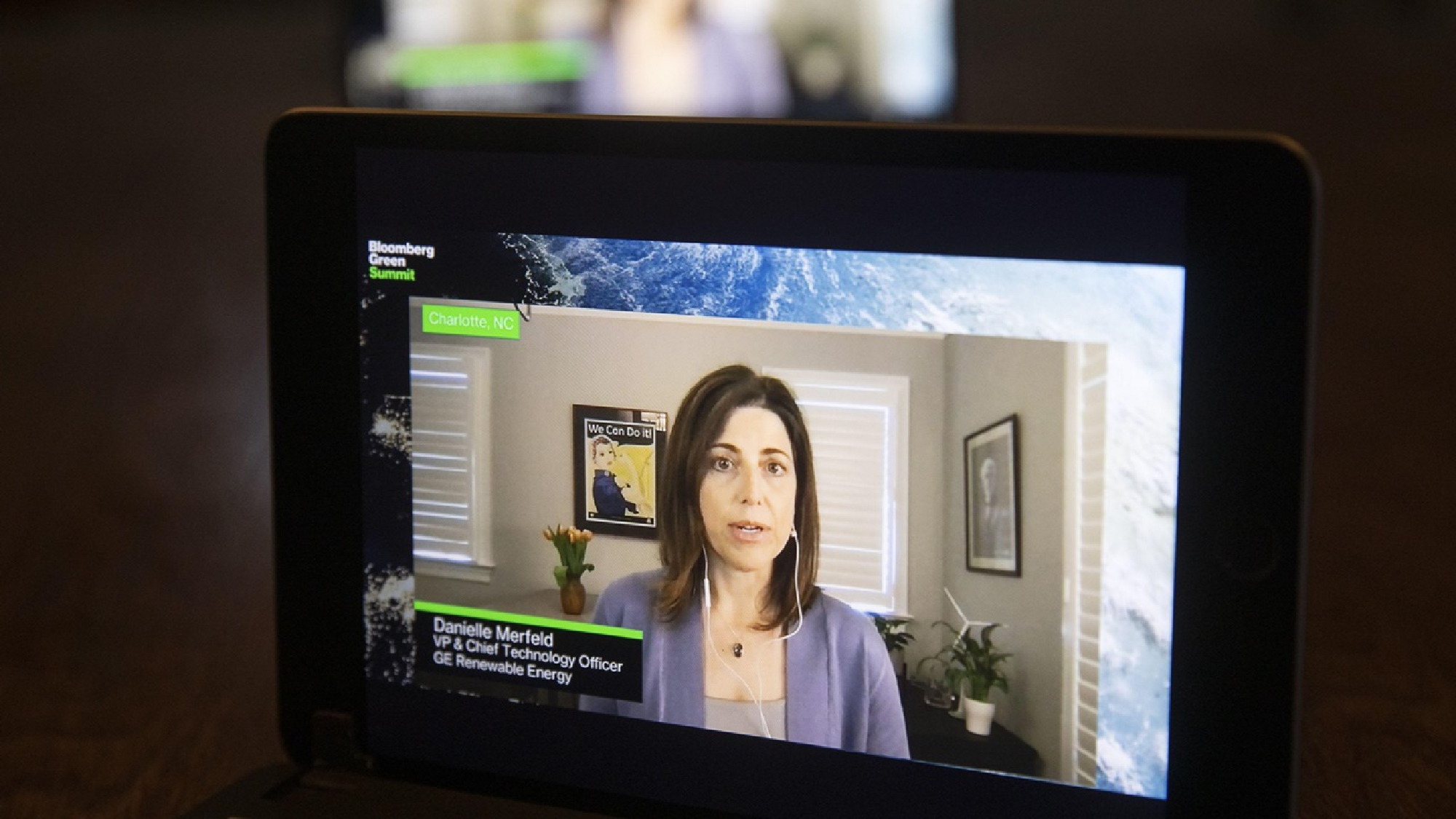 Danielle Merfeld, chief technology officer of GE Renewable Energy, is seen speaking virtually during the Bloomberg Green Summit on April 26, 2021. MUST CREDIT: Bloomberg photo by Daniel Acker.

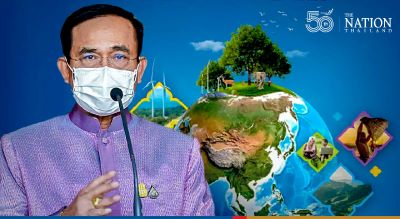
 Thailand network members set sights on net-zero emissions by 2070
