Inside Blue Origin: Employees say toxic, dysfunctional bro culture led to mistrust, low morale and delays at Jeff Bezoss space venture #SootinClaimon.Com

#SootinClaimon.Com : ขอบคุณแหล่งข้อมูล : หนังสือพิมพ์ The Nation.

https://www.nationthailand.com/business/40007379


SEATTLE – In 2019, a mid-level employee at Jeff Bezoss Blue Origin had grown fed up with the company, and as he left, he wrote a long memo that he sent to Bezos, chief executive Bob Smith and other senior leaders: “Our current culture is toxic to our success and many can see it spreading throughout the company.”
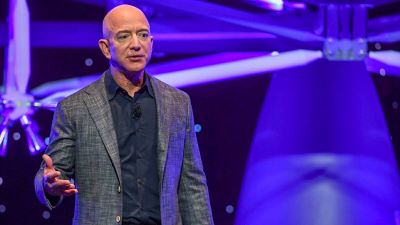
The problems at the spaceflight company were “systemic,” according to the memo, which was obtained by The Washington Post and verified by two former employees familiar with the matter, and “the loss of trust in Blue’s leadership is common.”

It was one of a number of warnings to Blue Origin’s leadership in recent years that the company’s culture had become dysfunctional, resulting in low morale and high turnover, significant delays across several major programs and a failure to successfully compete with Elon Musk’s venture SpaceX, current and former employees said.

ADVERTISEMENT

The new management’s “authoritarian bro culture,” as one former employee put it, affected how decisions were made and permeated the institution, translating into condescending, sometimes humiliating, comments and harassment toward some women and a stagnant top-down hierarchy that frustrated many employees.

As it quickly grew from a small start-up to a large corporation with nearly 4,000 employees, Blue Origin grappled with how to improve its culture. In 2019, the company fired its head of recruiting after employees complained of sexism. A consultant retained by Blue Origin conducted a review of the company’s leadership, finding that the primary challenge was Smith’s ineffective, micromanaging leadership style, said two former employees, including a top executive.

Bezos, who recently stepped down as chief executive of Amazon, also owns The Washington Post.

This account is based on interviews with more than 20 current and former Blue Origin employees and industry officials with close ties to the firm, who spoke on the condition of anonymity for fear of reprisal. The interviews and documents obtained by The Post reveal wide-ranging employee concerns about Smith’s leadership style, a bureaucracy that hampered innovation, and a lack of intervention from Bezos, who employees said was not giving the company enough attention during a crucial period.

“It’s bad,” said one former top executive. “I think it’s a complete lack of trust. Leadership has not engendered any trust in the employee base.”

Another said: “The C-suite is out of touch with the rank-and-file pretty severely. It’s very dysfunctional. It’s condescending. It’s demoralizing, and what happens is we can’t make progress and end up with huge delays.”

The company’s cultural issues came to light last month when Alexandra Abrams, the former head of Blue Origin’s employee communications, released an essay she said was written in conjunction with 20 other current and former Blue Origin employees. It said the company “turns a blind eye to sexism, is not sufficiently attuned to safety concerns and silences those who seek to correct wrongs.” The staffers were not identified in the essay, but three of them confirmed the allegations to The Post on the condition of anonymity for fear of reprisal.

In a statement to The Post, Mary Plunkett, Blue Origin’s senior vice president of human resources, said the company takes “all claims seriously and we have no tolerance for discrimination or harassment of any kind. Where we substantiate allegations of misconduct under our anti-harassment, anti-discrimination and anti-retaliation policy we take the appropriate action – up to and including termination of employment.”

Blue Origin, based in Kent, Wash., has an anonymous hotline that is staffed 24 hours a day, seven days a week for employees, “where any claims of this nature are registered and then investigated.” She said the company also encourages workers to contact human resources or senior leadership, ensuring that “these conversations are strictly confidential and we listen to any claims with empathy and concern.”

Bezos and Smith declined to comment for this story. Shailesh Prakash, The Post’s chief information officer who also sits on Blue Origin’s advisory board, declined to comment.

When Abrams’s essay was posted last month, Smith wrote in an email to the company, “It is particularly difficult and painful, for me, to hear claims being levied that attempt to characterize our entire team in a way that doesn’t align with the character and capability that I see at Blue Origin every day.”

After Blue Origin was notified that this story would publish soon, Bezos on Sunday night tweeted an image of Barron’s cover story from 1999 that was critical of Amazon, calling it “Amazon. Bomb.”

“Listen and be open, but don’t let anybody tell you who you are,” Bezos wrote. “This was just one of the many stories telling us all the ways we were going to fail. Today, Amazon is one of the world’s most successful companies and has revolutionized two entirely different industries.”

In response, Musk tweeted an emoji of a second-place medal.

– – –

Blue Origin, like many aerospace companies, has a male-dominated culture, and several current and former female employees said they faced condescending remarks and comments about their appearance.

“Two friends tried to talk me out of going to Blue because of how toxic it was,” one former employee said. There were “lots of comments on people’s bodies and appearance,” she said. “It was a dispiriting, chaotic experience working there. That behavior was modeled and not held accountable.” Younger men new to the company started to “mirror” this conduct, she added.

She said she reported the incidents multiple times to human resources but nothing was done.

In 2019, the company brought in the Perkins Coie law firm to investigate Walt McCleery, its vice president of recruiting, a longtime executive at the firm whose behavior had made several women uncomfortable. One former employee told The Post that in a meeting with an outside company, McCleery turned to the executives and said: “I apologize for [her] being emotional. It must be her time of the month.”

McCleery was terminated after the investigation, according to Blue Origin. In a brief interview with The Post last week, McCleery denied the allegations and said they were “not true as far as I’m concerned.”

Another top executive was coached by human resources on appropriate workplace behavior after he repeatedly referred to a group of female employees as “mean girls,” which continued even after they complained about it to management, according to multiple people familiar with the matter. (The comments ended eventually after counseling.)

These company problems took many new employees by surprise. One former engineer said that she was kneeling at a co-worker’s desk in 2016, while they went over engineering drawings together. She said her manager, an older man, walked by and said: “You’ve only been working here two weeks. You don’t have to get on your knees yet.”

The comment didn’t sink in immediately, the former employee said, partly because she expected Blue Origin to be a welcoming environment.

“I was naive and in denial, maybe,” she said. “It wasn’t until I thought about it later that it was obvious.”

Not everyone says the company culture has grown toxic. One employee who works outside the main headquarters said she has found the culture and leadership welcoming and respectful. Blue Origin’s human resources team took immediate action when she reported a claim of “highly inappropriate behavior” from another employee earlier this year, she said.

The company started investigating right away, and the other employee was terminated, further confirming her confidence in the company. “I’ve never felt like I couldn’t go to our leadership for support,” she said. “I’ve never felt like I couldn’t go to HR with a problem.”

The company said it has not had any inquiries from the U.S. Equal Employment Opportunity Commission (EEOC). (EEOC complaints are not made public unless the agency decides to file suit.) It also has not faced any lawsuits for harassment or hostile work environment. One senior manager said: “A lot of us put a lot of time into creating safe spaces for employees to share experiences and mentor each other. . . . We, I think, do the right thing every time we hear about a complaint. And when the claims have merit, we fire people.”

The company also has a diversity, equity and inclusion program, set up by Smith to help the company hire more women and minorities, and help support them once hired. It has nine groups designed to help specific populations, such as veterans and racial groups, feel welcome. One, called “New Ride,” is named for Sally Ride, the first female NASA astronaut to reach space, and is intended to help “create an authentic, inclusive, and equitable culture at Blue where LGBT+ employees and allies are empowered to become the greatest, truest version of themselves – both professionally and personally,” the company said.

If there is anyone who can get the company back on track, one industry official said, it’s Bezos. The company is his passion, the fulfillment of a lifelong dream. And now that he’s been to space and stepped down from Amazon, he’ll remain focused on Blue Origin: “I think Blue will be a phoenix here in a couple of years because Jeff will figure it out.”

– – –

When Bezos founded Blue Origin in 2000, it was to make real a science-fiction fantasy and to fulfill a dream of having “millions of people living and working in space.” For the first couple of years, it existed as a tiny start-up, more like a think tank than a space company, that would take a “step-by-step” approach to achieving its goal. For years, Bezos appeared content to move slowly and deliberately, like its mascot, the tortoise.

But in 2017, Bezos brought in Smith to be the company’s first CEO, taking over from Rob Meyerson, the company’s president, who had been running its day-to-day operations.

The selection of Smith, who has a PhD in aerospace engineering from the University of Texas and a master’s degree in business from the Massachusetts Institute of Technology, took many by surprise, especially because he served as a top executive at Honeywell Aerospace, a massive conglomerate with a corporate culture far different from Blue Origin’s small, intimate feel.

“When he was hired, everyone was asking, ‘Who’s Bob Smith?’ Nobody knew who he was,” one former Blue Origin executive said.

Under his leadership, the company has grown significantly, with facilities in Florida and Alabama, as it has pursued a number of ambitious projects, from building a massive rocket, called New Glenn, to a spacecraft that could land on the moon and even space stations.

The problems with the corporate culture have led to problems with performance, according to current and former employees, manifesting in the growing gap between SpaceX and Blue Origin. The latest defeat came in April, when Blue Origin lost a major NASA contract to build a spacecraft designed to land astronauts on the moon after bidding twice as much as SpaceX. It also lost out on a lucrative round of Pentagon launch contracts in 2019 that went to SpaceX and United Launch Alliance (ULA), a joint venture of Boeing and Lockheed Martin.

Blue Origin has yet to fly its New Glenn rocket, the massive vehicle Bezos originally vowed would reach orbit by last year. It has also suffered delays in the development of Blue Origin’s BE-4 engine, which would be used, too, in the new rocket under development by ULA. Because that rocket is to be used to fly national security satellites, the delay has caused concern in the Pentagon and among some members of Congress.

In late 2018, Blue Origin hired a consulting firm to assess why SpaceX was so successful and what it could do to catch up, according to multiple people. The resulting report led to a frank discussion among Blue Origin’s leadership regarding problems in the company’s culture, and work ethic, its lack of major customers and its presence on social media.

SpaceX “expects and gets more from their employees,” one executive concluded, according to minutes of a meeting to discuss the report, which were obtained by The Post. Another executive said Blue “is kind of lazy compared to SpaceX.” Musk’s venture had won several major government contracts by bidding low, another said. One executive noted: “We need an anchor [U.S. government] tenant to get us to profitability.”

There have been some notable successes, however. The company completed its first human spaceflight mission in July, with Bezos onboard, a testament to the safety of the spacecraft. On Wednesday morning, it plans another spaceflight mission, this time with actor William Shatner, best known for playing Captain Kirk on the original “Star Trek” series, Bezos’s favorite childhood TV show.

In another memo obtained by The Post, an employee complained about the company moving ahead with a rocket test launch last year at the beginning of the coronavirus pandemic. “I cannot in good conscience stand with an organization willing to consider putting its private mission ahead of the safety of the general community,” the person wrote. The issue was first reported by the Verge. A Blue Origin spokesperson told the publication at the time: “We hold safety as our highest value. Period.”

Smith and the executives he brought in, many from legacy aerospace companies, sat in an executive suite in a new office building, isolated from the rest of the staff. While that is not unusual for many large corporations, it was off-putting for many employees at Blue Origin who had been used to their leaders sitting and mingling among them.

“That wasn’t appreciated,” one former executive said. “It was an I’m-above-you message.”

This apparent aloofness persisted as the new management settled in. At a company town hall meeting, employees submitted a list of questions for Smith about the future of the company and his leadership style.

When he didn’t address any of them, one employee sarcastically submitted a softball, “What’s your favorite kind of ice cream?”

That one, Smith took. “Sorbet,” he said, according to multiple people at the meeting.

At one point, employees said they rebelled after the company announced it would end its long-standing practice of distributing free mission patches after launches, a cut made because the company was “trying to become profitable,” Abrams told The Post she was instructed to tell employees.

Since the days of NASA’s Apollo moon program, mission patches have been a way to commemorate spaceflight missions, and Blue Origin’s employees were angry, wondering how much could they really cost. Eventually the executives relented and agreed to distribute the patches, but the incident became known as “patchgate.”

Concerned about the company’s leadership, the head of human resources brought in an outside management consultant, who interviewed Smith and the members of his team in 2019 and concluded that Smith’s micromanaging style was often ineffective, according to a former senior executive and confirmed by another person familiar with the matter.

Smith bristled at the report, which was first reported by CNBC, and refused to meet on the subject again.

The troubles at Blue Origin happened to correspond with a period of personal upheaval for Bezos. “Jeff got divorced and he was distracted,” said one of the top former executives who left. “Blue’s workforce was going up and his net worth was going up, and there were a lot of things on his plate, like the climate fund that he wanted to do. Combined with his personal life . . . that gave Bob an opportunity to really turn Blue upside down. He was CEO, so Jeff gave him a lot of rope.”

The people interviewed for this story said Bezos was content to let Smith run the company. And Smith, one former executive said, “made it real clear the only conduit to Jeff was him. And so there was no check and balance.”

When Bezos did come in on Wednesdays, the day he set aside for Blue Origin, the visits and their aftermath could be “extremely disruptive,” a former executive said. Engineers at the company would pitch him ideas, and he would say they were good ones. Then, armed with Bezos’s tacit approval, they would try to make them reality.

“Jeff may have liked the idea, but guess what? We didn’t budget for it. It’s not in the schedule. It’s not in the design,” the person said. “He just said he liked an idea.”

One former machinist said he took Bezos up on his offer, made to the entire company, to approach with ideas to become more efficient. But after he pitched Bezos and returned to the factory floor, he said, “two of my managers chewed me out and said I was going behind their backs.”

In July, Bezos stepped down as CEO of Amazon and transitioned to a role as executive chair. That month, he also flew to the edge of space aboard Blue Origin’s first human spaceflight mission. It was a profound moment for him, he said at the time, and he vowed to spend more of his time focused on Blue Origin.

Over the past several months, he has and is also spending more of his own money to help the company compete, several people confirmed. He has been deeply involved in the fight over the NASA lunar lander contract that SpaceX won, those people said.

“He’s super jealous of SpaceX,” one industry official, who spoke anonymously to discuss private matters, said. “He’s really worried about them. That is very clear.”

One of the former Blue Origin executives said that even though Blue Origin teamed up with Lockheed Martin, Northrop Grumman and Draper on the lunar lander contract, it was no surprise that the company lost.

“We can’t manage ourselves,” the person said. “Not one of our programs is on cost and schedule. Yet you think we’re going to manage Lockheed Martin, Northrop Grumman and Draper? It’s just not going to happen.”

The industry official said his advice for Bezos would be to “start over. You should be the CEO if you really want to do something, but you basically need a new executive team and a totally new culture.”

Published : October 12, 2021

By : The Washington Post

Moderna plans to build vaccine plant in Africa to produce 500 million doses a year for lower-income nations #SootinClaimon.Com

#SootinClaimon.Com : ขอบคุณแหล่งข้อมูล : หนังสือพิมพ์ The Nation.

https://www.nationthailand.com/business/40007198


Biotechnology company Moderna, under intense pressure to send more of its coronavirus vaccine to lower-income countries, announced Thursday it would build a manufacturing plant in Africa capable of producing 500 million doses of messenger RNA vaccines a year.

The announcement follows tensions between the Biden administration and Moderna that boiled over in the last week, including at a contentious meeting Friday, as the U.S. government urges the biotechnology company to send more coronavirus vaccines to lower-income countries, according to multiple people familiar with the matter who spoke on the condition of anonymity to disclose private conversations.

For months, the U.S. government has pleaded with Moderna to boost its domestic and international production so it can ramp up donations to low- and middle-income countries. But in two meetings during the last week, Biden administration officials have grown exasperated over the biotechnology company’s refusal to commit to doing so, the people said.

ADVERTISEMENT

One senior U.S. official, who was not authorized to speak publicly, said the government pushed Moderna to commit to 1 billion doses for low- and middle-income countries by the end of 2022. But Moderna responded with a proposal that did not meet the Biden administration’s expectations, as the company said it does not have the capacity to ramp up production immediately.

The manufacturing facility Moderna pledged on Thursday to build in Africa will not have an immediate impact on the coronavirus pandemic because it will take two to four years to build. The new facility comes after the Biden administration asked Moderna months ago to boost its international production in Africa, the U.S. official said.

The Biden administration’s frustration with Moderna in recent months stems in part from the recognition that the company partnered with the National Institute of Allergy and Infectious Diseases to invent its vaccine, and that the U.S. government gave Moderna billions of taxpayer dollars to underwrite research and development of the vaccines, and for purchase of doses.

“We look forward to seeing exactly what they will do,” the senior Biden administration official said. “We are in intense discussions to expand capacity to increase the number of doses they are providing to low- and middle-income countries in the shorter term.”

U.S. officials feel the company has not done enough to boost production to send doses overseas, and instead, prioritized its own profits.

The White House declined to comment.

Moderna did not immediately respond to a request for comment about tensions with the Biden administration.

Just this week, three people associated with Moderna were among the 44 new billionaires on Forbes’s list of the 400 richest Americans. Making their debut on this year’s list: Moderna’s chairman, Noubar Afeyan, one of the U.S. biotech company’s founders; board member Robert S. Langer, also a co-founder; and early investor Timothy A. Springer.

“We played a lot of scenarios over the last couple of months and decided we should do something big in Africa. The only way to do it right, if you take a 5-to-10-year view, was to build our own plant like we’ve done in America, so that’s exactly the model,” Moderna chief executive Stéphane Bancel said in an interview.

Creating manufacturing capabilities in underserved areas of the world has become a major goal for public health advocates amid stark inequities in global access to coronavirus vaccines. A recent Kaiser Family Foundation analysis found that nearly two-thirds of people in wealthy countries have received at least one dose of a vaccine, compared with 2% in low-income countries.

The United States has already committed to donating more than 1.1 billion doses of coronavirus vaccine to the world, including two purchases of 500 million doses each of the Pfizer-BioNTech vaccine. Last month, President Joe Biden convened a virtual global summit focused on vaccinating the world’s population. The president called on global leaders to fully vaccinate 70% of the world’s population by next September.

“This is an all-hands-on-deck crisis,” Biden said. “And the good news is, we know how to beat this pandemic: vaccines, public health measures and collective action.”

Moving manufacturing into less-wealthy countries is one possible solution to the lack of global supply, but many advocates favor transferring the technology to local companies to ensure that countries have the ability to respond to new threats, and to ensure their doses do not end up exported elsewhere in the world.

“There’s this monopolistic grip of a few countries that really controls the narrative, and the availability and the access of lifesaving medical resources – and there’s enormous global resentment about that,” said Lawrence O. Gostin, a global health law expert at Georgetown Law. “Donations always seem to come too late, and be insufficient. . . . Opening up manufacturing plants in other countries is certainly a step forward, but it doesn’t really change the dynamic.”

Bancel said the company has not decided where the factory will be, but that the doses made there would remain in Africa, and Moderna would recruit and train a local workforce. He said the factory would manufacture the mRNA that goes into the vaccines and encase it in the protective lipid bubble that delivers the vaccine and keeps it stable. He said details were still being worked out about where the vaccines would go into vials.

Moderna has a large pipeline of mRNA vaccines in development beyond covid-19, including to protect against respiratory viruses, tropical viruses and HIV.

“We really want to get all the know-how and so on in Africa, so they can make vaccines, if there is an Ebola outbreak, they can use the plant for things like that,” Bancel said.

Gostin said building plants in lower-income countries was a step forward but emphasized that local control, ownership and expertise matters. He drew a comparison to China’s “belt and road initiative” in which the Chinese government built infrastructure in other countries.

“It’s helpful to have the shiny hospital or the shiny manufacturing plant or the shiny clinic, but what you really want is to have the infrastructure that belongs to the country, with trained, capable people running that infrastructure,” Gostin said.

Other efforts to create homegrown mRNA vaccines are already taking place.

University of Pennsylvania researcher Drew Weissman, one of the scientists whose work undergirds the coronavirus vaccines, has worked with Thailand to help design a mRNA vaccine.

GreenLight Biosciences, a start-up company that has been making RNA for agricultural applications, is working toward making mRNA vaccines with a different manufacturing process that could be easier to scale up. GreenLight plans to launch a clinical trial in Africa next year.

Published : October 08, 2021

CP to build tallest tower in Thailand on SRT’s Makkasan land #SootinClaimon.Com

#SootinClaimon.Com : ขอบคุณแหล่งข้อมูล : หนังสือพิมพ์ The Nation.

https://www.nationthailand.com/business/40006693


A 140-rai (22.4 hectares) land in Makkasan subdistrict of Bangkoks Ratchathewi district, which belongs to the State Railway of Thailand (SRT), will be the location for Thailand’s tallest tower.

The tower will be built by Asia Era One Ltd, a subsidiary of the Charoen Pokphand Group (CP), a news source revealed.

The CP-led consortium won the bid for the SRT’s high-speed train project connecting three airports (Don Mueang, Suvarnabhumi and U-Tapao) worth Bt224 billion in December 2018. The project also required the winner to develop the Makkasan land under a 50-year rent contract worth Bt50 billion, to paid in full to SRT upon area delivery.

“CP Group aims to turn the Makkasan land into a super tower. With a height of 550 metres — 120 storeys– it will be the tallest building in Thailand with up to 2 million square metres of usable space,” said the source.

“CP will also earmark at least 50 rai of land around the tower to be a green space to serve as a lung for surrounding communities. The rest of the land will be a location for hotels, office buildings, retail shops, service apartment and other facilities.”

CP Group has reportedly prepared an investment budget of Bt140 billion for this project .

Related Stories

ADVERTISEMENT

CP Group named one of world’s most ethical firms by Ethisphere institute

CP clan ranked 21st richest in the world

Why CP group got the nod for takeover of Tesco

According to a survey by Thansettakij newspaper, the current tallest building in Thailand is the Magnolias Waterfront Residences at Iconsiam on Charoen Nakhon Road in Bangkok’s Khlong San district. It is 317.95 metres high with 70 storeys. There are two buildings under construction that will surpass it when finished, namely the Asset World Tower at Asiatique The Riverfront, expected to be 450 metres tall with 100 storeys, and the Signature Tower at One Bangkok, expected to be 437.03 metres high with 92 storeys.

Published : September 27, 2021

Palace-run Golden Place supermarket opens new branch in Laksi #SootinClaimon.Com

#SootinClaimon.Com : ขอบคุณแหล่งข้อมูล : หนังสือพิมพ์ The Nation.

https://www.nationthailand.com/business/40006608


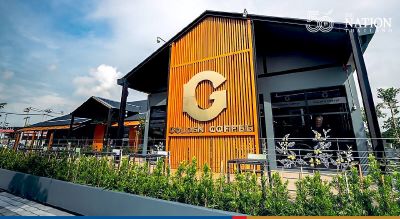
The 21st branch of the health-shop-cum-supermarket, Golden Place, opened its doors near the Wat Phra Sri Mahathat BTS station in Bangkok’s Laksi area on Friday.

The shop, operated under Royal patronage, was opened in a special ceremony presided over by His Majesty’s secretary. Also present were directors and executives of the Suvarnachad Company.

The supermarket, located inside the Battalion Infantryman 11th Palace Guard Division compound, is surrounded by a beautiful garden and sports a spacious 100-car-capacity parking lot.

Operating under the concept “Think Health, Think Golden Place”, the shop offers a variety of health products as well as organic vegetables, fruits and produce grown under Royal projects.

This branch has the largest seafood zone, as well as a Golden Kitchen and Golden Coffee zone that serves Arabic coffee from the Mae Salong Royal Project in Chiang Rai.

Shoppers can also pick up clothes and souvenirs from different Royal projects.

Palace-run Golden Place supermarket opens new branch in LaksiPalace-run Golden Place supermarket opens new branch in LaksiPalace-run Golden Place supermarket opens new branch in LaksiPalace-run Golden Place supermarket opens new branch in Laksi

This Golden Place branch is open every day from 7am to 7.30pm due to current curfew restrictions. Under normal circumstances, it operates from 7am to 11pm. Products can also be bought via its official Line account @goldenplace or via www.goldenplace.co.th. Golden Place can also be found on Facebook and Instagram.

Related news:

ADVERTISEMENT

Palace-run Golden Place supermarket opens new branch in LaksiPalace-run Golden Place supermarket opens new branch in Laksi

Palace-run Golden Place supermarket opens new branch in LaksiPalace-run Golden Place supermarket opens new branch in Laksi

Published : September 24, 2021

THAI’s sale of 10 aircraft awaits final Transport Ministry nod #SootinClaimon.Com

#SootinClaimon.Com : ขอบคุณแหล่งข้อมูล : หนังสือพิมพ์ The Nation.

https://www.nationthailand.com/business/40006443


Thai Airways International (THAI) announced on Monday that it has sold 10 Boeing B747 aircraft and is now putting three Airbus A330-300 airplanes and an Airbus A330 flight simulator up for sale.

The airline said the sale is waiting to be finalised by the Transport Ministry

However, Transport Minister Saksiam Chidchob, as chairman of the Civil Aviation Authority of Thailand (CAAT), said CAAT has yet to receive an approval request for the sale of the aircraft. He said CAAT requires airlines to seek permission from the Civil Aviation Board (CAB) before the ownership of aircraft registered in Thailand is changed.

THAI has so far sold 34 aircraft, namely:

  • One A300-600
  • Two B737-400
  • Three A340-500
  • Six A340-600
  • 10 B747-400
  • Six B777-200
  • Six B777-300

Related news:

ADVERTISEMENT

Published : September 21, 2021

Name change for company linking three airports with high-speed railway #SootinClaimon.Com

#SootinClaimon.Com : ขอบคุณแหล่งข้อมูล : หนังสือพิมพ์ The Nation.

https://www.nationthailand.com/business/40006127

Name change for company linking three airports with high-speed railway


The Eastern High-Speed Rail Linking Three Airports Co Ltd has changed its name to “Asia Era One”, pushing high-speed train routes connecting the three major airports.

Company president Sarit Jinsit said on Monday that the name change is a bid to reinforce the readiness of the railway project. The company is moving forward with the project to connect the three airports, Don Mueang-Suvarnabhumi-U-Tapao, with high-speed trains.

The project is established under the concept of “reimagining horizons” to elevate the travel experience with modern rail transportation, and to develop the country’s transportation service to become a world-class travel hub with international standards, he said.

“The name Asia Era One is in line with the company’s vision of being the central hub of Asia to connect people and nations for the brighter future. Meanwhile, the name also resonates with Erawan elephant, the vehicle of god Indra, which is a symbol of strength, good deeds and fertility. The company’s aim is to bring pride to the country with its elevated international standards,” said Sarit.

Related news:

ADVERTISEMENT

Published : September 14, 2021

Apple to hold Sept. 14 event for new iPhone line, other devices #SootinClaimon.Com

#SootinClaimon.Com : ขอบคุณแหล่งข้อมูล : หนังสือพิมพ์ The Nation.

https://www.nationthailand.com/business/40005845

Apple to hold Sept. 14 event for new iPhone line, other devices


Apple has set the date for its biggest product launch of the year: Sept. 14. Thats when the company is set to unveil its latest line of iPhones and other products ahead of a critical holiday season.

The presentation, which features the tag line “California streaming,” will take place at 10 a.m. Pacific time next Tuesday. Like all of Apple’s launches since 2020, the event will be held virtually due to the Covid-19 pandemic.

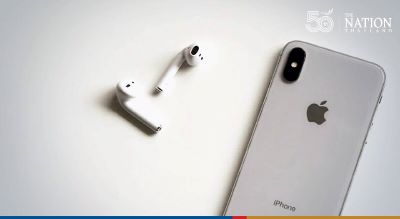
The Cupertino, California-based technology giant has been readying four new iPhones, as well as Apple Watches with larger screens, Bloomberg has reported. Apple has also been working on revamped entry-level AirPods earbuds and new MacBook Pros. Apple typically holds multiple launches in the fall, so not every new device for 2021 may appear next week. Last year, it held three events across two months.

The fall product season is critical for Apple, with analysts estimating that the company will generate $120 billion in revenue during the holiday quarter. That would be an all-time record.

The new iPhones are expected to have the same 5.4-inch, 6.1-inch and 6.7-inch screen sizes as last year’s iPhone 12, but the devices will include camera upgrades like a video version of Portrait mode, support for the higher-quality ProRes video recording resolution and more advanced filters system. Also coming to this year’s models are faster A15 processors, a smaller cutout at the top of the screen and display improvements like a faster refresh rate.

Apple has also been planning a slew of satellite features for emergencies, such as a mechanism for reaching first-responder services and texting key contacts. While the new iPhone hardware may support the features, they aren’t expected to become available until sometime next year.

The new Apple Watches will feature the first redesign to the product since the Series 4 in 2018. The new models will have flatter edges and displays, in addition to a sizable increase to the screen sizes. They’ll feature 41-millimeter and 45-millimeter cases, up from 40 and 44 millimeters.

The larger model will also have a screen of about 1.9 inches diagonally, up from 1.78 inches. And it will include a faster processor and updated wireless technology. But the watches have faced production snags, which could result in shortages.

Also coming this fall are the new MacBook Pros, iPads and AirPods. The MacBook Pros will be Apple’s first high-end computers to transition over to custom processors. And they’ll mark the first redesign to the MacBook Pro since 2016. The new models will include flatter edges and the removal of the Touch Bar strip on the keyboard. They also will offer MagSafe magnetic charging.

The new AirPods will look similar to the AirPods Pro, but lack pricier features like noise cancellation. Apple hasn’t refreshed the entry-level earbuds since early 2019, but it released AirPods Max headphones last December.

The company is planning two new iPads for this fall. First, an update to the base iPad geared toward schools. That version will get a faster processor and a thinner design. Second is the biggest overhaul to the iPad mini since the product first debuted in 2012. The new version will have a larger screen and thinner borders.

Alongside the new hardware, Apple will also roll out the previously announced iOS and iPadOS 15, watchOS 8, tvOS 15 and macOS Monterey software updates. Apple typically gives release timing for those updates at these types of product launches.

Published : September 08, 2021

Twitter plans new privacy features to get more people tweeting #SootinClaimon.Com

#SootinClaimon.Com : ขอบคุณแหล่งข้อมูล : หนังสือพิมพ์ The Nation.

https://www.nationthailand.com/business/40005639

Twitter plans new privacy features to get more people tweeting


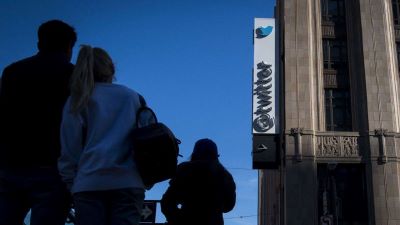
Twitter is planning to test new privacy-related features aimed at giving users greater control over their follower lists and who can see their posts and likes, an effort to make people more comfortable interacting and sharing on the social network.

The tools are related to what Twitter executives call “social privacy,” or how users manage their reputations and identities on the service. This includes information like a person’s list of followers, the tweets they like, and whether their accounts are public or private.

Among features being considered is the ability to edit follower lists, and a tool to archive old tweets so that they’re no longer visible to others after a specific amount of time designated by the user. Hiding past tweets could be a popular feature with people who don’t want their posts to exist online forever, offering an easier solution than manually deleting posts or combing through years-old messages to find those you wish you hadn’t sent.

Internal research found that many of Twitter’s users don’t understand the privacy basics, like whether their account is publicly visible, said Svetlana Pimkina, a staff researcher at the San Francisco-based company. Those users engage less on Twitter because they don’t know what other people will be able to see about them.

“When social privacy needs are not met, people limit their self-expression,” Pimkina said. “They withdraw from the conversation.” Twitter will start prompting people to review whether their accounts are public or private beginning in September.

The company’s privacy team is working on several products to assuage this user uncertainty. Some of them will be tested soon, and others are just in the concept stage right now, according to interviews with members of the team.

Included in the list of potential products:

– Archived tweets — Twitter may let users hide old tweets after a set amount of time. Tweets would be visible to the account holder, but not to anyone else. The company is considering a range of time options, including hiding posts after 30, 60, and 90 days, or hiding tweets after a full year. This product doesn’t have a launch date, and is still in the concept phase.

– Removing followers — Users will soon be able to remove followers. This is currently only possible by blocking someone. Twitter plans to test this feature starting this month.

– Hiding tweets you’ve liked — Users will soon be able to set who — everyone, just their followers, or select groups – can see which tweets they’ve liked. There is no timeline for testing this feature.

– Leaving conversations — Users will be given the option to remove themselves from a public conversation on Twitter. Today, only the person sending a tweet can choose who to mention. Twitter plans to test this before the end of the year.

Part of Twitter’s motivation is that employees often see users do creative workarounds because these features don’t exist, like blocking and then unblocking someone to remove them as a follower. Lots of other users manually delete old tweets, or toggle back and forth between public and private accounts depending on what they’re posting.

Archiving tweets, in particular, could help alleviate fears for people who worry their old posts will come back to haunt them in some way down the road, such as while looking for a new job, applying for college or running for political office. Rival companies like Snap Inc. and Instagram have had success with disappearing Stories products — a signal that users are drawn to apps where their posts won’t exist forever. Twitter’s own Stories feature didn’t catch on with users, but a feature that does the same with tweets would likely be popular among users.

Twitter has long been open about its product road map, and often tests features that aren’t fully launched. But the company also talks a lot about ideas in concept, some of which fail to materialize, or take much longer than expected.

Chief Executive Officer Jack Dorsey said in March that Twitter has moved too slowly in recent years to launch new products. He said that rolling out new tools more quickly was now a companywide goal, naming it alongside revenue and user growth targets. Specifically, Dorsey said he wanted to “double the number of features per employee that directly drive” either user growth or revenue. A company spokeswoman declined to share the company’s progress on that goal.

This public expectation has created a new mindset and culture internally, employees say. “We are becoming more metrics-driven in how we think about these things,” said Damien Kieran, Twitter’s chief privacy officer. “I think that’s helping us iterate and move quicker.”

Published : September 03, 2021

More companies are weighing penalties for unvaccinated workers #SootinClaimon.Com

#SootinClaimon.Com : ขอบคุณแหล่งข้อมูล : หนังสือพิมพ์ The Nation.

https://www.nationthailand.com/business/40005320

More companies are weighing penalties for unvaccinated workers


More companies are considering imposing financial penalties on workers who refuse to get the coronavirus vaccine – from added health-care costs to withholding gym access – potentially adding a financial cost in addition to the severe health risks facing the unvaccinated.

After Delta Air Lines grabbed headlines Wednesday for saying it will charge unvaccinated workers an additional $200 monthly health-care-plan fee, a growing number of companies have been making inquiries with their legal counsels about asking unvaccinated workers to pay more for their health plans.

Some companies are exploring whether they can withhold raises for unvaccinated workers, decline to cover those workers’ covid-19-related claims or restrict their access to workplace amenities such as gyms, lawyers and consultants who advise business say.

Employers are increasingly moving from luring workers to get their shots to using threats, workplace experts say, frustrated by vaccine holdouts and emboldened by the U.S. Food and Drug Administration’s full approval of the Pfizer-BioNTech vaccine this week.

“I think a lot of employers are seeing the limitations of incentives for folks who are on the fence or who are really digging their heels in and don’t want to get the vaccine,” said Jeffrey Smith, an employee benefits partner at the law firm Fisher Phillips. “Every day we see more questions about ‘Can we charge more for health-care participants if they don’t get the vaccine?’ “

ADVERTISEMENTx

Another employment lawyer, who spoke on the condition of anonymity to speak freely about an issue affecting clients, said: “I think what’s happening right now is people are mad. You’ve got decision-makers, people in boardrooms who’ve been vaccinated forever. They had their plan for hot conference room summer.”

Since the FDA’s full approval, more employers have been moving to vaccination mandates, with CVS Health, Deloitte, Walt Disney Co. and Goldman Sachs announcing or expanding requirements. Some employers that have mandates, including health systems and CNN, fired unvaccinated employees earlier in the summer.

Others, however, are stopping short of requirements, in part to avoid exacerbating worker shortages as the economy reopens.

Delta CEO Ed Bastian said Wednesday in a memo to employees that the surcharge is “necessary to address the financial risk the decision to not vaccinate is creating for our company,” noting the average covid-related hospital stay has cost the airline $40,000 per person. As of Sept. 30, unvaccinated employees will no longer be eligible for additional paid leave for covid-related absences.

The airline, which says it has a 75% vaccination rate and requires vaccinations from new employees, also said unvaccinated workers would have to wear masks and submit to weekly testing.

ADVERTISEMENT

Wade Symons, a partner with Mercer, said he’s had at least 50 clients ask about adding surcharges for unvaccinated employees.

“If you have an employer that’s just philosophically opposed to a vaccine mandate, and they want to continue to give employees at least an appearance of a choice, [surcharges] go beyond just the incentives,” he said.

Yet employment lawyers also caution that adding such surcharges is legally complicated, noting that they implicate the Affordable Care Act, the Americans With Disabilities Act, the Health Insurance Portability and Accountability Act (HIPAA) wellness rules and other laws.

Those rules place a limit on surcharges or incentives tied to health-care plans if they can be considered “health-contingent,” lawyers said.

As a result, more-modest surcharges are more likely, Symons suggested – in the range of $30 to $50 per paycheck, he said.

ADVERTISEMENT

“I’ve even had companies say, well, we’re just going to replace our tobacco surcharge with a vaccine surcharge,” he said. “This is the important thing of the moment.”

The rules may also require employers to offer a “reasonable alternative” for the rare employee who has a valid medical or religious reason not to be vaccinated, said Joseph Lazzarotti, an employee benefits lawyer at Jackson Lewis.

“The question then becomes, what’s the alternative?” he said. Unlike offering smokers the opportunity to take a course on quitting smoking, “there’s not a covid-cessation program.”

Many employers would rather position economic incentives as a financial perk or discount for vaccinated workers than call it a surcharge for the unvaccinated.

Henry Albrecht, CEO of Limeade, which administers corporate wellness programs, said some companies are installing mandates or adding surcharges, but the bulk of his clients are giving workers “points” for becoming vaccinated that they can combine with other healthy behaviors to win rewards such as a gift card.

“They want to keep it a little more positive but also get those numbers up,” said Albrecht.

Lawyers cautioned that just because employers are asking about other tactics does not mean they will be implemented. And not covering covid-related treatments carries substantial legal risk, said Lazzarotti.

Companies could in theory give notice they will cut pay or withhold raises if employees don’t meet certain conditions – unless they are governed by a contract or collective bargaining agreement, said Bob Lian, who leads the labor and employment practice at Akin Gump Strauss Hauer & Feld.

Other employers are considering limiting access to workplace gyms or transports for unvaccinated workers, according to research and advisory firm Gartner.

Brian Kropp, vice president of research for Gartner, said in an email that “what is most interesting about this approach is not the exact details of it – but the larger shift from encouraging vaccines for employees, to creating real costs for employees who don’t get vaccinated.”

Published : August 27, 2021

Corporate Americas $50 billion promise to confront racial justice shows limits of power to catalyze change #SootinClaimon.Com

#SootinClaimon.Com : ขอบคุณแหล่งข้อมูล : หนังสือพิมพ์ The Nation.

https://www.nationthailand.com/blogs/business/40005270

Corporate Americas $50 billion promise to confront racial justice shows limits of power to catalyze change


After the murder of George Floyd ignited nationwide protests, corporate America acknowledged it could no longer stay silent and promised to take an active role in confronting systemic racism.

From Silicon Valley to Wall Street, companies proclaimed “Black lives matter.” JPMorgan Chase CEO Jamie Dimon adopted the posture of former NFL quarterback Colin Kaepernick’s protests against police brutality and took a knee with bank employees. McDonald’s declared Floyd and other slain Black Americans “one of us.”

Now, more than a year after America’s leading businesses assured employees and consumers they would rise to the moment, a Washington Post analysis of unprecedented corporate commitments toward racial justice causes reveals the limits of their power to remedy structural problems.

Apple and AbbVie, Facebook and Pfizer, Johnson & Johnson and Procter & Gamble, and other top corporations made broad claims about what they would do, pledging to be a force for societal change and to fight racism and injustice, including violence against Black Americans.

Where and how they dedicated their money became the most visible signs of their priorities.

To date, America’s 50 biggest public companies and their foundations collectively committed at least $49.5 billion since Floyd’s murder last May to addressing racial inequality – an amount that appears unequaled in sheer scale.

Looking deeper, more than 90% of that amount – $45.2 billion – is allocated as loans or investments they could stand to profit from, more than half in the form of mortgages. Two banks – JPMorgan Chase and Bank of America – accounted for nearly all of those commitments.

Meanwhile, $4.2 billion of the total pledged is in the form of outright grants. Of that, companies reported just a tiny fraction – about $70 million – went to organizations focused specifically on criminal justice reform, the cause that sent millions into the streets protesting Floyd’s murder by a Minneapolis police officer.

The $4.2 billion in grants, to be disbursed over as long as a decade in some cases, represents less than 1% of the $525.6 billion in net income earned by the 50 companies in the most recent year, according to data from S&P Global Market Intelligence.

“Corporations are not set up to wield their power for the greater good as much as we give them credit for, a lot of times,” said Phillip Atiba Goff, a professor at Yale University who co-founded the Center for Policing Equity. “They are constrained by things they feel they need to do to manage their brand in a world where Black liberation does not have consensus.”

It will be difficult to assess whether corporations deliver measurable results. There is no single entity tracking the corporate promises. Nor are corporations required to report on where all of their money is going or its impact.

“Because these are pledges, there isn’t any one entity that will be holding these organizations accountable,” said Una Osili, an associate dean at Indiana University who leads the research and publication of Giving USA, the annual report of American philanthropy. While Osili is hopeful about the corporate efforts, she added: “I wonder about the follow-through – whether the will be there in three to four years to continue to lift up these issues.”

The Post analyzed data provided by 44 of the 50 most valuable companies, along with public statements and company reports, to track pledges made after May 2020 to charitable organizations as well as loans and investments.

So far, 37 companies have confirmed disbursing at least $1.7 billion of the $49.5 billion pledged. Seven of the companies that provided data on their racial justice commitments refused to outline how much they had already spent.

The analysis shows that public companies are devoting the most resources to promoting upward economic mobility for Black people, through increased opportunities for homeownership, entrepreneurship and education.

Among the investments aimed at narrowing the racial wealth gap is the $28 billion in housing and business loans in Black and Latino communities that JPMorgan Chase has pledged, with the goal of moving 40,000 families into homeownership over the next five years. PayPal is investing $500 million in Black and Latino financial institutions and venture capital funds. Google is donating $50 million to historically Black colleges and universities to increase Black representation in the tech sector.

“Education is a fairly noncontroversial, conservative impulse in terms of corporate donations,” said Robert E. Weems Jr., a professor of business history at Wichita State University, “when in fact George Floyd as a catalyst specifically had to do with criminal justice and policing.”

In the new commitments to racial justice since Floyd’s death, the companies are expanding beyond traditional philanthropy, incorporating racial justice initiatives in their regular course of business. In addition to the external financial commitments analyzed by The Post, the companies said they are diversifying their workforces up to the highest-paid C-suite jobs as well as increasing their purchases of goods and services from Black-owned businesses.

Profit-driven corporations will not propel transformational change with money alone, experts say. That will require corporate and government policy changes aimed at addressing the historic destruction of Black wealth, said Mehrsa Baradaran, a law professor at the University of California at Irvine whose research focuses on financial inclusion and the racial wealth gap.

“The answer to these massive problems is not in capitalism doing better or more. It’s not going to come from philanthropy. It’s not going to come from promises. It’s got to be a policy change,” said Baradaran, who has informally advised companies on impact investing.

“We don’t want just benevolent billionaires and nicer, softer, more-woke monopolies. We want an economic structure that allows for more mobility, and we don’t have that.”

Homeownership

At a new Chase branch in south Minneapolis, home lending advisers have begun scanning for-sale listings in Black and Latino neighborhoods, looking for properties where they could erect yard signs advertising $5,000 home buyer grants.

The grants, created to defray down payment and closing costs, are central to JPMorgan Chase’s $8 billion nationwide effort to boost Black homeownership by tens of thousands of families over the next five years in hopes of increasing generational wealth.

But the initiative by the United States’ largest bank would make only a tiny dent in a systemic problem fueled by the industry’s long history of lending discrimination. Some economists and civil rights advocates warn that it could even widen racial disparities because it explicitly targets place – not race.

That risk is especially salient in a city such as Minneapolis, which has the country’s biggest homeownership gap – 27% of Black families own homes compared to 76% of White families, according to an Urban Institute analysis of 2019 Census data.

Banks are allowed under federal civil rights law to create what’s known as Special Purpose Credit Programs to increase lending to Black consumers and other disadvantaged groups if their normal lending practices result in racial disparities.

But banks tend to craft such credit assistance programs very conservatively to avoid legal challenges – to the point where the intended beneficiaries may not always benefit the most, said Lisa Rice, president and chief executive of the National Fair Housing Alliance who serves on JPMorgan Chase’s consumer advisory council.

JPMorgan Chase’s home buyer grants are available to anyone who qualifies for a loan to buy a home in Black and Latino neighborhoods regardless of race, allowing White borrowers with more wealth than Black borrowers to access the same financial benefits. Civil rights experts say that could have the unintended effect of further increasing gentrification and displacement.

“If the problem that JPMorgan Chase is trying to solve is the wealth gap between Blacks and Whites, then they need to be aware of the fact that their strategy in Minneapolis might not get us where we need to go,” said Samuel L. Myers Jr., an economist at the University of Minnesota whose research examines the effectiveness of race-neutral remedies to racial inequality.

Bank officials say they are closely monitoring internal data on grant recipients for signs of gentrification and are prepared to adjust the program if necessary.

To make a significant difference, the homeownership grants should be tied to Black borrowers – not just majority-Black neighborhoods, some civil rights advocates and housing attorneys say.

JPMorgan Chase officials say matching financial incentives to census tracts that are predominantly Black or Latino – even if beneficiaries may be White – is the closest the bank could legally get to targeting race.

“The banks are being very judicious because they don’t want to be accused of reverse discrimination,” said Rice, who is pushing federal regulators to issue better guidance outlining how lenders can legally use race in special credit programs to boost Black homeownership. “I’ve had long conversations with JPMorgan Chase. They would like to do more. They need the regulatory framework in order to do that, and we are working to make that happen.”

The Consumer Financial Protection Bureau issued an advisory in December clarifying that banks could craft credit programs designed to specifically benefit Black consumers and encouraging lenders to do so given existing racial disparities in the credit market.

Expanding homeownership depends on a complicated mix of borrowers’ savings, income and credit scores combined with the availability of credit – all of which are affected by the practice of targeting Black borrowers for subprime loans and decades of redlining, when banks denied Black borrowers or charged them more to purchase homes in minority neighborhoods.

Rice and Myers recommend that banks analyze their own lending data to discover the top reasons for loan denials to Black borrowers – then devise credit programs that address issues such as racially biased credit scoring and appraisals that undervalue homes in Black neighborhoods.

Nationally, Black applicants were more than twice as likely as Whites to be denied conventional home-purchase loans in 2019, and Black borrowers who did receive loans were charged higher rates, according to the CFPB.

JPMorgan Chase’s racial equity commitment includes $8 billion for 40,000 new mortgages and $4 billion for 20,000 refinances over the next five years. The $12 billion combined would represent a 28% increase over the bank’s home lending to Black and Latino borrowers from 2019, when $8.7 billion of the nearly $85 billion in home loans it originated went to Black and Latino borrowers, according to JPMorgan Chase.

(The bank is also allotting $14 billion in financing for affordable rental housing, $2 billion in small-business loans and more than $1 billion for philanthropy.)

“This is our largest lending commitment to Black and Latino communities,” said Mark O’Donovan, chief executive officer of home lending at Chase who is overseeing the initiative. “When you look at household formation trends in the next 10 years, there are massive opportunities in these demographics.”

Bank of America, meanwhile, has pledged an additional $15 billion toward expanding homeownership to at least 60,000 low- and moderate-income families over the next five years. Borrowers will be eligible for below-market fixed interest rate mortgages with no down payments or closing costs and grants of up to $17,500. Neither the race of the borrower nor the neighborhood is taken into account – only the income levels for the person and area, but the bank expects Black borrowers to benefit substantially because many low- and moderate-income neighborhoods are also predominantly Black.

Nationally, the 30 percentage point difference between Black and White homeownership amounts to about 5 million households. JPMorgan Chase and Bank of America account for just over 6% of the market share for home mortgage originations. Combined, their initiatives would only reach about 100,000 households over five years.

Wells Fargo, which represents nearly 5% of the market share, had made a $60 billion lending commitment in 2017 to increase the number of Black homeowners by at least 250,000 over 10 years. So far, the bank says it has made $18.6 billion in mortgages to 72,758 Black borrowers.

“These are loans they were supposed to make if they didn’t discriminate,” William E. Spriggs, a Howard University economist and chief economist to the AFL-CIO, said of the Black homeownership commitments by the nation’s banking giants. “This is small by comparison given their moral deficit and given what they make.”

JPMorgan Chase, Bank of America and Wells Fargo have previously settled claims for charging Black and Latino home buyers higher rates than White borrowers with similar financial profiles. All three banks had denied the allegations of discrimination.

JPMorgan Chase officials said they decided to set 40,000 additional home loans to Black and Latino borrowers as a realistic target after an analysis of census tract demographics, credit scores and bank branch presence.

To help reach the goal, the bank has begun opening branches in lower-income communities where residents have traditionally relied on payday lenders, rendering themselves credit invisible even if they made timely payments.

At the Chase branch in south Minneapolis, which opened last fall two miles from where George Floyd was killed, community lending advisers market the $5,000 grants at free home-buying seminars and through local real estate agents and nonprofits.

Experts say the grants could help borrowers who have the income to cover monthly mortgage payments but not enough in savings for a down payment. But the availability and terms of the mortgage loans offered by JPMorgan Chase – especially interest rates – will be critical to determining the impact of the initiative.

JPMorgan Chase declined to outline how many Black families have already obtained mortgages, details about the types of loans being made or the demographics of home buyers receiving down payment grants, saying the bank plans to report on its progress in the fall.

“The nation has seen these commitments be made very publicly, and we are waiting to see what these commitments result in,” said Tawanna Black, founder and chief executive of the Center for Economic Inclusion, a Twin Cities-based nonprofit that has advised JPMorgan Chase on its Minneapolis expansion. “Because it was spurred by George Floyd’s murder, how will this community change because of it?

“How will life be different in five, 10 years as a result?”

– – –

ADVERTISEMENTx

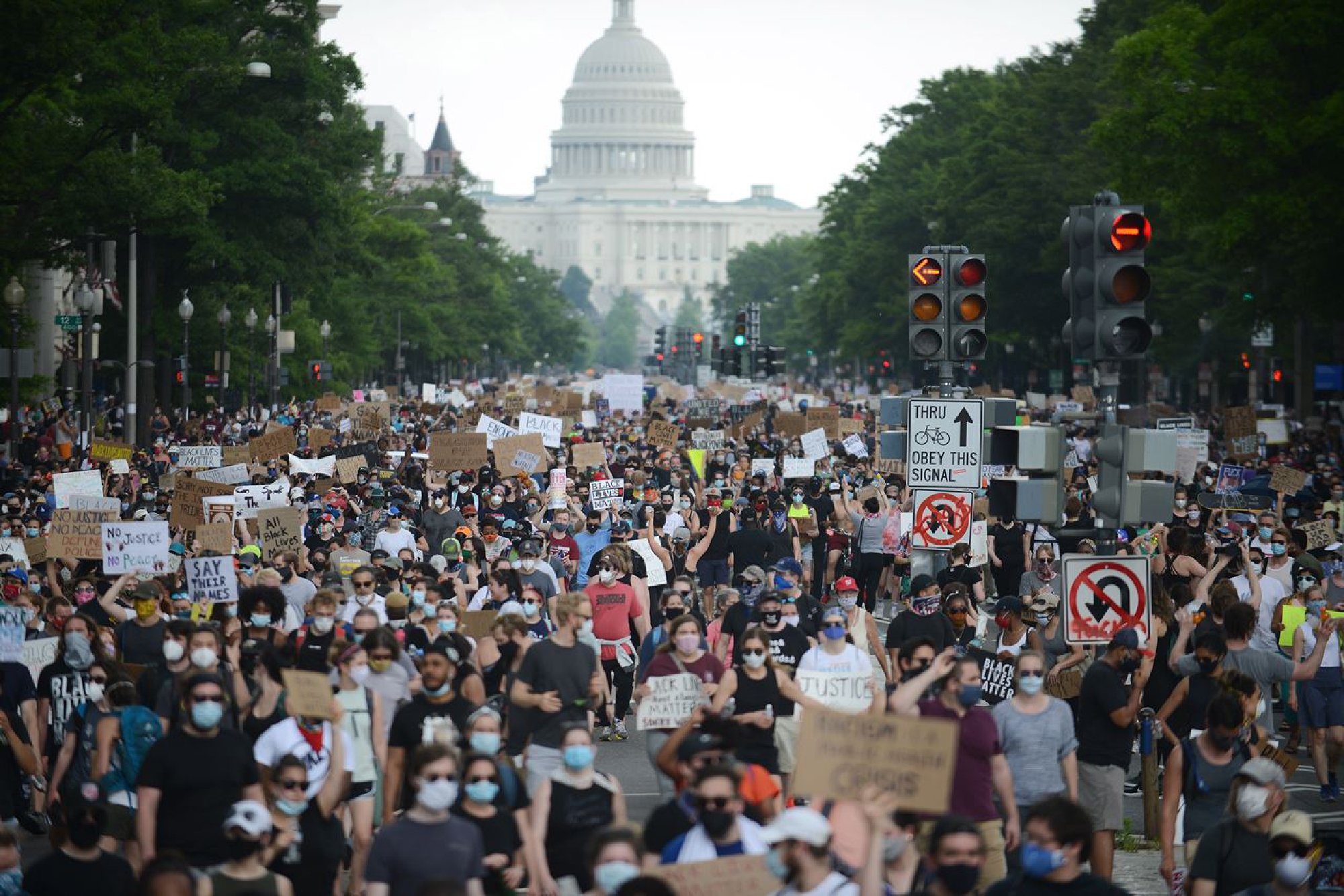
WASHINGTON, DC - JUNE 6: Civil rights advocates march in Washington, D.C., June 6, 2020, to mourn black lives taken by Police brutality. George Floyd, an unarmed black man was killed in police custody late May. His death prompted continuing and mostly peaceful mass demonstrations across the U.S. MUST CREDIT: Photo by Astrid Riecken for The Washington PostWASHINGTON, DC – JUNE 6: Civil rights advocates march in Washington, D.C., June 6, 2020, to mourn black lives taken by Police brutality. George Floyd, an unarmed black man was killed in police custody late May. His death prompted continuing and mostly peaceful mass demonstrations across the U.S. MUST CREDIT: Photo by Astrid Riecken for The Washington Post
Black banks

The deposits started soon after George Floyd’s death: tens of millions of dollars from some of America’s largest companies to a small Black-owned credit union in Mississippi.

First came $10 million from Netflix, followed this year by $10 million each from PayPal and Nike, along with smaller deposits from Thermo Fisher Scientific and other corporations.

“We pretty much went from $0 to $54 million in corporate deposits over the past year,” said Bill Bynum, chief executive and founder of Hope Credit Union.

ADVERTISEMENT

The influx of corporate deposits to Black-owned banks and other financial institutions – more than $1 billion in all from the 50 companies surveyed by The Post – is supposed to enable the undercapitalized banks, historically founded to serve Black people, to make more home and small-business loans in low-wealth communities.

But the cash and corporate goodwill come with complications. Some banks were unable to absorb all the money that corporations wanted to deposit. Many Black banks lack the shareholder equity required by regulators to cover potential losses and protect deposits, which customers can withdraw at any time.

So what these banks need most is equity – long-term investments that allow them to take on more deposits that they then use to make loans.

Without additional equity, Bynum said, Hope Credit Union is limited in its ability to lend to Black families across the Deep South who are shut out from the traditional banking system. Residents in communities without access to banks and credit unions – nearly a third of Black neighborhoods nationwide, compared to just a tenth of White ones – are instead more likely to rely on predatory lenders who charge exorbitant rates for mortgages, car notes and emergency loans, research shows.

“Deposits are great, but they should be matched by a 10% contribution of equity capital,” Bynum said. “That will enable Black banks and credit unions to absorb more deposits and put them to work.”

ADVERTISEMENT

Many companies remain reluctant to invest the equity that banks need to mitigate risk.

“That wasn’t going to work with what we were given authority to do and what works for our business,” Netflix treasurer Shannon Alwyn said. While she said Netflix has no plans to withdraw its deposits, having that option is important. “For us, liquidity was definitely a factor.”

Her colleague Aaron Mitchell, human resources director at Netflix Animation Studio, began researching the possibility of investing in Black banks last spring, before Floyd’s murder, when he saw the disproportionate impact of the coronavirus pandemic on Black-owned businesses. He and his colleagues read “The Color of Money: Black Banks and the Racial Wealth Gap,” and spoke with the author, UC-Irvine law professor Mehrsa Baradaran, about how Black banks have been systemically starved of the capital they needed to thrive.

Two days after Floyd was murdered, Mitchell emailed Netflix CEO Reed Hastings and proposed that the entertainment giant move $100 million – approximately 2% – of its cash holdings into Black banks.

“That sounded like a meaningful number,” Mitchell said. “And looking at the amount of cash we had, it was a small enough number not to cause too many alarm bells.”

Six weeks later, Netflix transferred $10 million to Hope in a rolling three-month certificate of deposit, the company’s first deposit into a Black bank. It has since expanded its efforts beyond Black banks, moving an additional $60 million into financial institutions that support Black communities.

Few companies outside major banks such as JPMorgan Chase, Bank of America and Wells Fargo are making equity investments in Black banks, Bynum said. The big banks are expected by law to meet the credit needs of underserved communities, and regulators consider their record of doing so when evaluating applications for mergers, acquisitions and branch openings.

And so Bynum is turning to a U.S. Treasury program launched this spring aimed at injecting $9 billion in capital into minority and community lenders.

Bynum said he plans to apply for $108 million in U.S. Treasury funds – which would quadruple Hope’s equity. That would allow Hope to expand lending in impoverished communities across the Black Belt, offering a more affordable alternative to subprime lenders.

“The role of government is closing opportunity gaps that market forces like corporations are not equipped to adequately serve,” Bynum said. “When the market fails, government should step in. And the market has historically failed – and continues to fail – communities of color.”

When CEOs began issuing public statements in response to Floyd’s murder, Bynum had reached out to Dan Schulman, president and chief executive of PayPal, with whom he had previously traveled the country promoting a documentary about the impact of payday lending.

PayPal ultimately committed $400 million to Black- and Latino-focused financial institutions, including deposits of $10 million in Hope and $50 million in Optus, a Black-owned bank in Columbia, S.C.

Franz Paasche, one of the PayPal executives who oversaw the initiative, said the company went out of its way to structure its deposits to be helpful to Black banks. For example, PayPal directly deposited only $10 million in Optus Bank last year, with the remaining $40 million temporarily deposited in $250,000 chunks in other banks – and earning interest for Optus – until Optus was able to raise enough equity to add another $20 million to its balance sheet in July.

Dominik Mjartan, Optus president and chief executive, said he used to spend at least an hour explaining the value of Black banks to potential investors – if they even bothered returning his calls.

“Post-George Floyd that conversation is 30 seconds. You now have enough enlightened White folks who at least pretend they believe in this work. And that’s awfully meaningful to us. I don’t even question their motives. I say, ‘Yes! We’re here,’ ” said Mjartan, a White longtime community banking executive who became an investor and CEO of Optus four years ago.

Now, some of the money even comes unsolicited. But he worries the newfound interest in Black banks won’t last.

“What happens in three years if everyone calls their money back and meanwhile I’ve made a bunch of 10-year loans to Black-owned businesses on Main Street?” he said. “What a bank like ours needs is patient investors. You cannot reverse a 400-year legacy of carefully constructed systemic racism with a two- or three-year deposit.”

– – –

Criminal justice

Corporate executives called out rogue officers for repeatedly perpetrating horrific crimes against Black Americans. They condemned excessive use of force by police in Black communities. And they committed to addressing disparities in the criminal justice system.

Despite their strong statements after George Floyd’s murder, companies hesitated to pour vast sums into the core issue that sparked last summer’s racial justice demonstrations.

Compared to their support for economic mobility, they pledged much lower amounts to groups focused on criminal justice and police reform, including those connected to Black Lives Matter, the most visible movement addressing police brutality.

The issue of criminal justice reform – governed by the public sector, with less clear paths for results – may simply be too new or too divisive for corporate America, experts said.

Companies that did contribute appear more willing to put money toward efforts to change habitual offender laws and reduce cash bail than police reform, said Darren Walker, president of the Ford Foundation and with whom CEOs have consulted widely on their responses to Floyd’s murder.

“Black Lives Matter involves more issues around policing,” Walker said. “It’s a more combustible issue.”

At least 36 companies gave to criminal justice or civil rights organizations, but the donations added up to a small proportion of the total grants.

Corporations pledged only 2%, or $70 million, of the grants identified in The Post’s analysis to organizations that focused specifically on criminal justice – such as the Equal Justice Initiative, a nonprofit focused on ending mass incarceration and wrongful convictions, which drew donations from at least 18 companies.

They pledged another 2% of their donations to broad civil rights groups such as the NAACP Legal Defense and Educational Fund and the National Urban League, which work on voting rights, economic opportunity and education, as well as criminal justice reform.

Just eight of the 50 companies – Apple, Microsoft, Amazon, Google, Oracle, Coca-Cola, PepsiCo and Qualcomm – disclosed contributions to nonprofits directly connected to the Black Lives Matter movement – a decentralized social movement that includes groups such as local Black Lives Matter chapters, the Movement for Black Lives and the Black Lives Matter Global Network Foundation.

Companies are saying “we understand the business piece, we understand the education piece, but we don’t understand the piece around criminal justice and police reform and we want to learn more,” said Bruce Haynes, whose communications firm, Sard Verbinnen & Co., advised companies after Floyd’s murder.

The issue may simply be too polarizing, he said. “There’s just much less of a consensus in our society about what police reform ought to look like and how far it should go.”

Cisco CEO Chuck Robbins tweeted in June last year that the tech company would be donating $5 million to a handful of racial justice groups, including Black Lives Matter. “We need ACTION to eradicate racism, inequality, and injustice,” Robbins wrote. “This is just the beginning.”

A year later, the company has yet to donate to Black Lives Matter.

“After further consideration and assessing where we’d have the biggest impact, Cisco committed funding to several social justice organizations including NAACP Legal Defense Fund and Equal Justice Initiative,” Shari Slate, Cisco’s chief inclusion and collaboration officer, said in a written statement.

Other companies said they chose to give to long-standing partners rather than groups specifically affiliated with the Black Lives Matter movement.

Leaders within the Movement for Black Lives, a national network of more than 150 organizations, said they did not seek corporate donations – and even declined some – because they did not want the movement to be used by corporations seeking to bolster their brands.

“Many of these companies pledging to give money to racial justice efforts exploit Black workers and extract wealth from Black communities, which goes directly into the pockets of their wealthy stakeholders,” said Charles Long, who helps oversee fundraising at Movement for Black Lives.

The Black Lives Matter Global Network Foundation, which has described itself as a fundraising and grantmaking entity of the movement, declined to comment for this story.

Melina Abdullah, a Pan-African studies professor at California State University at Los Angeles and co-founder of the Los Angeles chapter of Black Lives Matter, said she would have liked to see more corporations “push the envelope on racial justice.”

“Saying Black Lives Matter is one thing,” she said, “but saying we gave money to Black Lives Matter might mean something else.” She said that while Black Lives Matter is focused on transforming policing, it also gave out grants to Black-owned businesses and Black Americans impacted by covid-19. “What if corporations had said, ‘You know what, we’re going to team up with them?’ We could have given away far more,” Abdullah said.

Among the firms that detailed their donations toward criminal justice, Microsoft pledged $51 million – the most of any company – including $250,000 to the Black Lives Matter Global Network Foundation.

The company also expanded a 2017 criminal justice initiative to include funding for a national network of violence prevention offices. Microsoft’s efforts have grown to seven full-time employees and partnerships with nearly two dozen nonprofits.

“The technology community is keenly aware of the over-incarceration in this country, in part because they are younger, more libertarian, and they view the idea of incarceration with skepticism,” Walker said.

Google parent Alphabet donated $6 million toward criminal justice reform, including $1 million to the Movement for Black Lives and $1 million to the Center for Policing Equity.

Susan Burton, co-founder of the Formerly Incarcerated Convicted People and Families Movement, said her group received its largest corporate gift ever following Floyd’s murder – a $1 million unsolicited donation from Nike’s Jordan Brand and Michael Jordan that accounts for nearly a fifth of the group’s annual operating budget. The money helped to pay fines and fees for formerly incarcerated individuals as well as register them to vote.

Yet she often found the grant application process for racial justice pledges announced by other corporations unclear and says she believes causes like incarceration are still “too far of a reach” for some companies.

Some companies said donations do not account for all the ways they have advocated for criminal justice reform over the past year. The Business Roundtable, which represents the CEOs of more than 200 companies, has dedicated nearly 20% of its advocacy budget to pushing for bipartisan legislation on police reform, a BRT spokeswoman said.

The BRT in April also launched a coalition focused on giving adults with criminal records a chance at employment, with major employers such as Walmart and JPMorgan Chase starting to recruit formerly incarcerated workers.

At AT&T, which led the BRT’s police reform initiative launched last summer, efforts by legislative and public affairs staff members to advance police reform policy have become part of their performance evaluations. AT&T’s Western region president, Ken McNeely, said teams of employees and outside lobbyists testified in hearings, wrote letters and met with lawmakers in 21 states where legislation to reform policing has since passed.

“Our financial contributions to support police reform is but a slice of the pie,” McNeely said. “We actually took a more direct route: Filing testimony or a letter of support in our name – using our brand – is in many instances more impactful than giving money to a third party.”

– – –

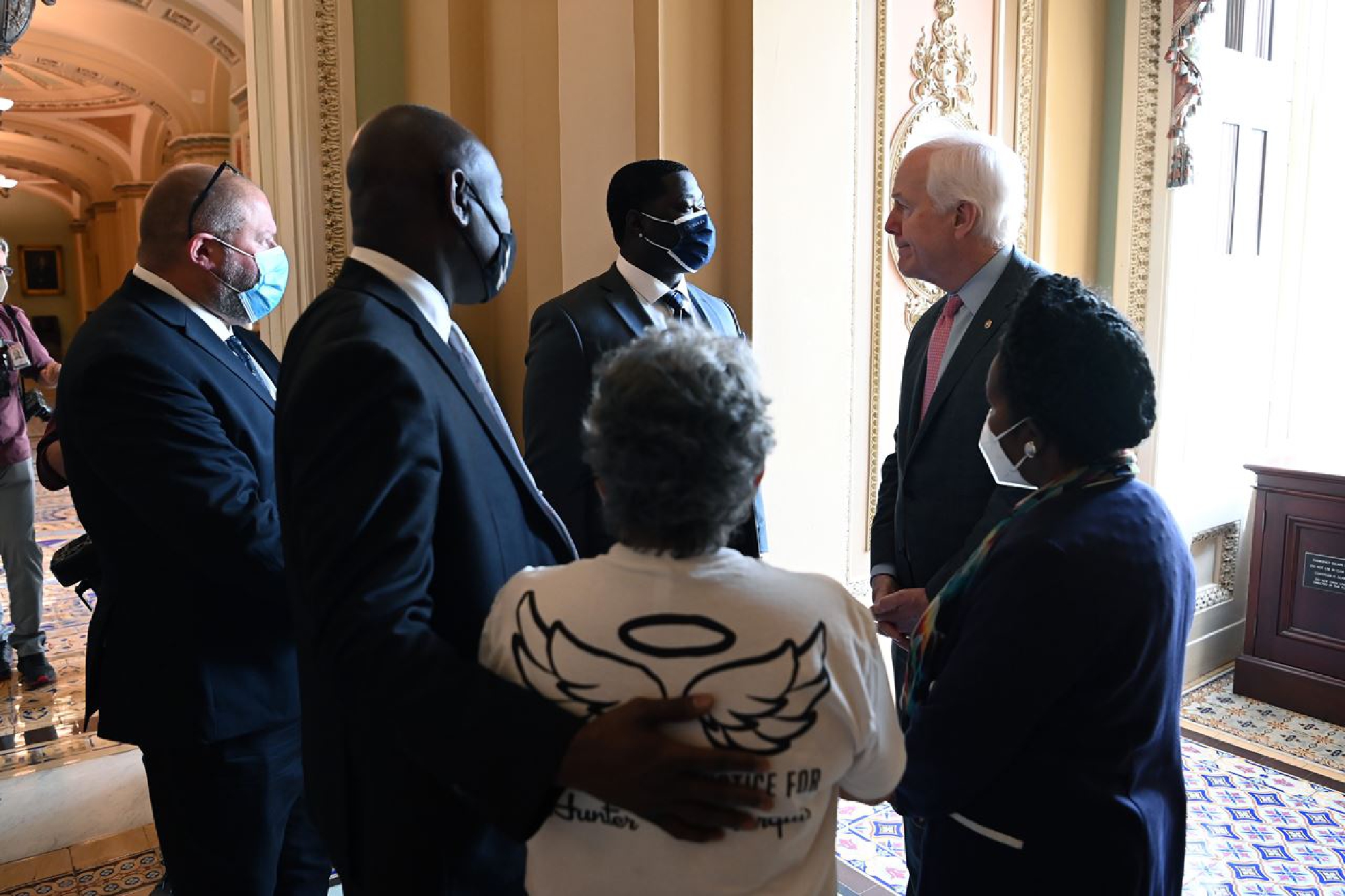
WASHINGTON, DC - AUGUST 03: Brandon Williams, center, who is the nephew of George Floyd speaks to Senator John Cornyn (R-TX) on Tuesday August 03, 2021 in Washington, DC. They were meeting with lawmakers for a police reform bill. MUST CREDIT: Photo by Matt McClain/The Washington PostWASHINGTON, DC – AUGUST 03: Brandon Williams, center, who is the nephew of George Floyd speaks to Senator John Cornyn (R-TX) on Tuesday August 03, 2021 in Washington, DC. They were meeting with lawmakers for a police reform bill. MUST CREDIT: Photo by Matt McClain/The Washington Post

Education

The elite historically Black colleges and universities in Atlanta attracted a corporate windfall after George Floyd’s murder, benefiting from more than $46 million of the nearly $345 million that America’s biggest companies pledged to HBCUs and other minority-serving institutions.

Bank of America gave $10 million to launch the Center for Black Entrepreneurship at Spelman and Morehouse colleges, along with other grants. Apple pledged $25 million for a 50,000-square-foot academic center and business incubator in the Atlanta University Center, whose virtual classes will be accessible to any HBCU student.

And Google in June announced a $50 million donation aimed at building the notoriously low Black representation in the tech industry, allotting $5 million each to Spelman and Clark Atlanta University.

The colleges in the Atlanta University Center weren’t the only high-profile Black institutions that drew outsize corporate attention. Companies surveyed by The Post pledged more than $8 million to Howard University, which is the wealthiest HBCU to report an endowment, at $712 million, to the National Association of College and University Business Officers. Other colleges whose endowments rank among the top 10 HBCUs – North Carolina A&T State University and Florida A&M University – drew at least $12 million and $7 million, respectively.

(Even the top HBCU endowments still trail the average 2019 university endowment of nearly $1.4 billion reported by U.S. News and World Report.)

The infusion of corporate dollars into well-known Black institutions deepens the long-standing gap between wealthier schools and lower-profile ones that have historically drawn little corporate support.

Companies identified grants to more than 50 of the 101 accredited HBCUs. At least 22 of those schools received less than $100,000 – mostly for campus improvements sponsored by Home Depot.

“Just like in all of higher education, those that are the most well-known with the largest endowments get the most money. It would be nice to have a little more parity,” said Walter Kimbrough, president of Dillard University, a small liberal arts HBCU in New Orleans.

Dillard received just under $500,000 in corporate gifts, including a $125,000 grant from PayPal to research and propose policy solutions to the racial wealth gap and a $200,000 grant from Verizon for esports development and scholarships.

Corporations look to invest in HBCUs with degree programs that fit their talent needs – often larger institutions with broad research infrastructure, said Terrell Strayhorn, provost at Virginia Union University, where he is also the director of the Center for the Study of HBCUs. He has fielded many calls from corporations over the past year seeking input on the top schools in certain research areas.

It can be challenging for corporations to build relationships with smaller schools that lack the resources to invest in marketing, Strayhorn said. “We’re going to have to think about that as a sector because it’s only going to continue to widen the gap between the haves and the have-nots among HBCUs.”

Corporate donations are often earmarked for specific programs, an understandable instinct for businesses, Strayhorn said. But he said it would help if more of the philanthropy suddenly flowing to HBCUs came without restrictions, such as the $560 million in grants that billionaire MacKenzie Scott, the former wife of Amazon founder and Washington Post owner Jeff Bezos, made to HBCUs last year. Schools are best positioned to know their students’ needs, whether that means building an on-campus child-care facility, overhauling the library or providing transportation for students, Strayhorn said.

HBCUs are engines of social mobility to the Black middle class. Although HBCUs represent only 3% of all U.S. universities, they confer 17% of bachelor’s degrees (and a quarter of the STEM degrees) earned by Black Americans, according to a recent McKinsey report crediting HBCUs for vaulting many low-income students into the top quintile of income earners.

At Dillard, three-quarters of the students are eligible for Pell Grants, federal aid reserved for the most low-income students.

Beyond direct aid to universities, companies also gave to several larger umbrella efforts to strengthen HBCUs: Cisco committed $100 million for networking, security and collaboration technology, Thermo Fisher Scientific dedicated $25 million to expand campus coronavirus testing, and Wells Fargo donated $5.6 million for financial literacy campaigns.

In addition, corporations contributed $29 million to scholarship programs directly benefiting HBCU students such as the United Negro College Fund.

Some institutions say they are starting to see their financial fortunes turn with donations that – while not on the scale of the money flowing to the big-name schools – are among the largest some have ever received from corporations, according to administrators who oversee fundraising.

The law school at North Carolina Central University in Durham received a $5 million pledge from Intel to fund a tech policy center. Intel is expected to help develop curriculum, establish certificate programs and a patent trademark boot camp, provide internships, and recruit from the law school, said Gia Soublet, vice chancellor of institutional advancement.

Fundraising from corporate donors more than tripled to $4.2 million in the second half of 2020 at Louisiana’s five-campus Southern University System, the only Black university system in the country, said Alfred Harrell, CEO of the Southern University System Foundation in Baton Rouge.

Anthony Holloman, the vice president of university advancement at Fort Valley State University in Georgia, said he believes that recent corporate pledges to HBCUs have encouraged private donors to give to lesser-known schools like his, where fundraising has doubled over the past year.

Chevron’s $1.1 million gift last fall amounts to more than double the company’s previous annual donations in its long-standing support for students pursuing careers in geosciences, Holloman said. Private donors followed with a $250,000 gift and another worth nearly half a million dollars, he said.

“When the corporate money starts to come,” he said, “that raises the ante for anyone of significant means.”

Published : August 26, 2021