Inclusion of 3500MHz sought in spectra auction

#ศาสตร์เกษตรดินปุ๋ย : ขอบคุณแหล่งข้อมูล : หนังสือพิมพ์ The Nation

https://www.nationthailand.com/business/30379000?utm_source=category&utm_medium=internal_referral

Inclusion of 3500MHz sought in spectra auction

Dec 02. 2019
Marcus Adaktusson, dtac's Chief Corporate Affairs Officer

Marcus Adaktusson, dtac’s Chief Corporate Affairs Officer
By Sirivish Toomgum
The Nation

1,401 Viewed

Total Access Communication (dtac) will propose to the National Broadcasting and Telecommunications Commission (NBTC) tomorrow (December 3) a postponement of the auction of four spectra to allow for the inclusion of 3500MHz.

The NBTC will tomorrow hold a public hearing on the plan toauction 700 MHz, 1800 MHz, 2600 MHz, and 26GHz together on February 16 next year.

Dtac will make a number of recommendations to NBTC regarding the multi-band spectrum auction, Marcus Adaktusson, dtac’s Chief Corporate Affairs Officer, said today (December 2).

“A well-designed and well-timed spectrum auction is critical to 5G deployment in Thailand. While we welcome the proposed multi-band auction model, we propose adjusting the timing of the auction to allow for inclusion of the 3500MHz band. This will allow bidders to acquire the most efficient spectrum portfolios for 5G deployment,”he said.


Source: dtac

Source: dtac

While the NBTC reportedly plans to auction 3500MHz in advance next year, he said dtac has yet to see a firm commitment as to when that auction will happen as well as details of the 3500MHz auction plan.

The 3500MHz band is currently being used by satellite operator Thaicom.

Technically, the 2600MHz and the 3500MHz bands could be substituted for each other for 5G since they have similar properties.

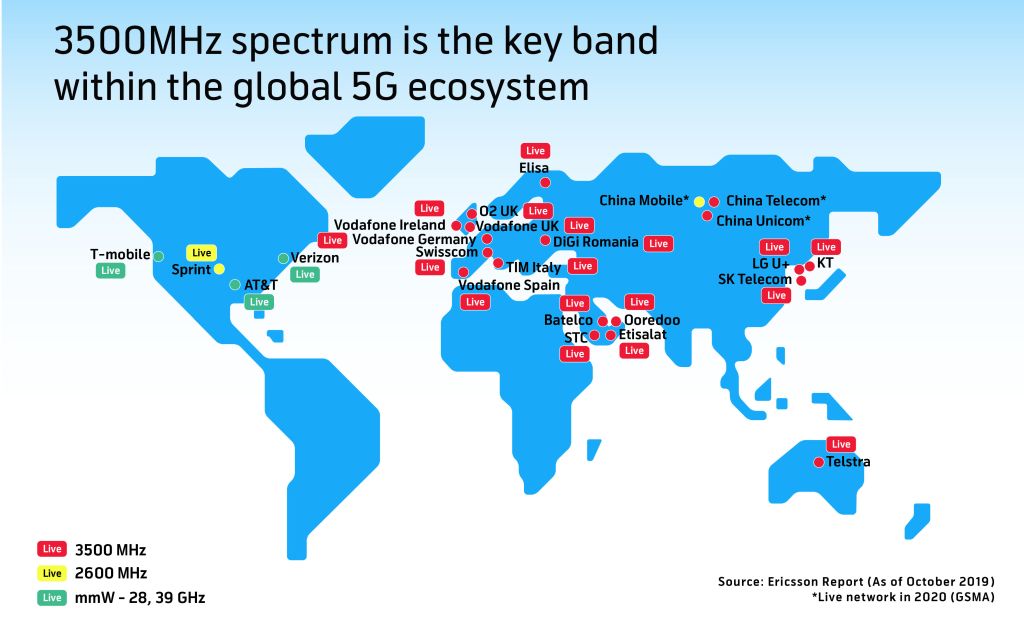
He noted that the 3500MHz spectrum is becoming the most-used band for 5G service across the world, which means more device and equipment will be available on a cost-effective basis.

Source: dtac

Source: dtac

Narupon Rattanasamaharn, dtac’s senior vice president, added that if NBTC could not auction 3500MHz in the upcoming auction on February, it should at least quickly provide full auction details of the band.

Given the 190MHz bandwidth of the 2600MHz spectrum will be allocated at the auction, dtac will suggest to NBTC that it impose spectrum caps in the 2600MHz spectrum band to avoid potential market distortion and allow sufficient number of operators to contribute to 5G development in Thailand.

The NBTC may want to make some caps flexible, based on the number of bidders, Adaktusson added.

Dtac will also ask the NBTC to provide clarifications on potential interference, usage restrictions and roll-out obligations of some spectra.

The company cited the NBTC draft term of licensing rules that 20MHz of the 2600MHz is currently being used and as such NBTC should provide relevant clarifications in terms of interference and usage restriction risks to enable proper valuation of the auctioned spectrum.

The NBTC should also set reserve prices at a level which support infrastructure investments.

The proposed reserve price for the 10MHz of spectrum in the 2600MHz band (Bt1.862 billion per licence) is at the higher end of international benchmark and there is a clear risk that much needed investments in network infrastructure will be impeded by the high spectrum prices.

The 1800MHz spectrum band (Bt12.486 billion per licence) is priced many times higher than the international benchmark and will definitely increase the risk of a failed auction.

Moreover, the NBTC should set significant financial guarantees to prevent unserious bidders from entering the race.

Deloitte Thailand launches new advisory service for family-run businesses

#ศาสตร์เกษตรดินปุ๋ย : ขอบคุณแหล่งข้อมูล : หนังสือพิมพ์ The Nation

https://www.nationthailand.com/business/30378994?utm_source=category&utm_medium=internal_referral

Deloitte Thailand launches new advisory service for family-run businesses

Dec 02. 2019
Deloitte Thailand  launches Deloitte Private, a dedicated practice that provides integrated advisory and assurance services to private entities.

Deloitte Thailand launches Deloitte Private, a dedicated practice that provides integrated advisory and assurance services to private entities.
By THE NATION

1,060 Viewed

Deloitte Thailand on Monday (December 2) announced the launch of Deloitte Private, a dedicated practice that provides integrated advisory and assurance services to private entities.

In Thailand, family businesses are growing stronger, as out of a total net worth of Bt42 trillion from all Thai businesses, approximately Bt30 trillion is family-run businesses, or 72 per cent of the total business value, and more than 50 per cent of listed companies are family owned, according to Deloitte.

Professionalising the business remains a key concern among family business owners.

Deloitte Private’s subject-matter experts and industry specialists within the Deloitte global network advise family and privately owned businesses, family offices and high net worth individuals, and private equity firms, helping them to grow in an increasingly complex, global and digital business world, the firm said.

“We see an increasing demand from privately owned businesses for professional advice to tackle their most complex challenges: from investing in emerging technologies, expanding in global markets, to navigating tax reforms, restyling the workforce and countering omnipresent risks such as cyberattacks,” said Richard Loi, Deloitte Private leader for Southeast Asia. “We have been advising privately owned organisations, and with Deloitte Private formally launched in Thailand, we aim to expand our network to reach more clients,” he added.

“Our in-depth knowledge, coupled with access to our Asia Pacific and global resources, gives us a unique value proposition to best serve the private market in the region,” said Philip Yuen, chief executive officer for Deloitte Southeast Asia. “Deloitte Private offers a single point of access that the decision-makers of family businesses and privately owned companies strive for.”

One of the service offerings in Deloitte Private is Family Enterprise Consulting, a highly customised service for business and wealth-owning families.

“The economic environment requires businesses to adapt quickly,” said Subhasakdi Krishnamra, country managing partner, Deloitte Thailand. “Family businesses are facing distinct challenges affecting their future success. Being agile and staying in the game will offer businesses growth opportunities and the ability to compete in today’s dynamic markets amid uncertainties.”

“One of the perennial challenges faced by almost every family is balancing the desire to preserve wealth through the generations with the income needs and ambitions of the current generation,” added Phansak Sethsathira, partner and leader of Deloitte Private Thailand. “Our suite of offerings has been designed specifically for this unique group of clients, and our aim is to address some of the fundamental questions and achieve clarity around priorities, wants and needs in order to help define and execute an effective strategy that preserves the family’s wealth and legacy for the future.”

The first Deloitte Private practice in Southeast Asia was launched in Singapore. Besides Indonesia, Deloitte Private will be launching in several other markets in Southeast Asia soon.

Deloitte Private will also launch Best Managed Companies in Indonesia – an awards programme recognising privately held companies for their organisation’s success and achievements.

Best Managed Companies Indonesia joins a global awards programme currently active in the Americas, Europe, Australia, China and now Southeast Asia. The designation is a well-regarded international stamp of quality for best managed private companies.

U.S. stocks sink on worrisome factory data and Trump’s renewed tariffs on steel, aluminum

#ศาสตร์เกษตรดินปุ๋ย : ขอบคุณแหล่งข้อมูล : หนังสือพิมพ์ The Nation

https://www.nationthailand.com/business/30379013?utm_source=category&utm_medium=internal_referral

U.S. stocks sink on worrisome factory data and Trump’s renewed tariffs on steel, aluminum

Dec 03. 2019
File Photo:U.S. Stocks Tumble As China Trade Talks Stall

NEW YORK, NEW YORK - NOVEMBER 20: Traders work on the floor of the New York Stock Exchange (NYSE) on November 20, 2019 in New York City. As trade talks with China continue to lack resolution, frustrating investors, the Dow Jones Industrial Average ended the day down over 100 points. (Photo by Spencer Platt/Getty Images)

File Photo:U.S. Stocks Tumble As China Trade Talks Stall NEW YORK, NEW YORK – NOVEMBER 20: Traders work on the floor of the New York Stock Exchange (NYSE) on November 20, 2019 in New York City. As trade talks with China continue to lack resolution, frustrating investors, the Dow Jones Industrial Average ended the day down over 100 points. (Photo by Spencer Platt/Getty Images)
By The Washington Post · Taylor Telford, Thomas Heath

337 Viewed

Stocks got off to a rocky December start on Monday amid disappointing manufacturing and construction data and renewed global trade tensions.

The record bull run of the past month flamed out, with the Dow Jones industrial average declining 268 points, or .95%, to close at 27,783. The Standard & Poor’s 500 index dropped 27 points, or .86%, to close at 3113. The tech-laden Nasdaq composite was hit particularly hard, finishing at 8,567, a 97-point drop of 1.1%.

“All this trade friction is weighing on the manufacturing sector, reminding us that protectionism is not a victimless crime,” said Kristina Hooper, chief global market strategist at Invesco.

Nine of 11 stock market sectors declined on Monday, with industrials, information technology and real estate leading the slide. All but seven of the Dow 30 blue chips finished in negative territory, with Boeing, American Express and United Technologies the biggest drags.

President Trump threw another curve ball into the trade picture Monday when he announced on Twitter that he would reinstate steel and aluminum tariffs on Brazil and Argentina. He accused the two nations of weakening their currencies to gain competitive advantage against the U.S., an oft-repeated rebuke that he’s cited in his ongoing push for lower or even negative interest rates from the Federal Reserve.

“Brazil and Argentina have been presiding over a massive devaluation of their currencies. which is not good for our farmers,” Trump said in Monday morning tweet. He then pivoted to the Federal Reserve, saying the central bank should “act so that countries, of which there are many, no longer take advantage of our strong dollar by further devaluing their currencies. This makes it very hard for our [manufacturers] & farmers to fairly export their goods. Lower Rates & Loosen – Fed!”

Stock futures had been trending up early Monday. Two surveys over the weekend showed that China’s manufacturing sector rallied to an eight-month high in November, and European manufacturing data showed a better-than-expected easing in the sector’s contraction. The strong data suggested that China’s economy could be stabilizing after months of a brutal slowdown, quieting some fears about the trade war’s toll on one of the world’s most powerful economic engines.

But Trump’s early morning announcement quickly cooled markets. By midday, all three market measures were in the red.

“The stock market’s early gains in the futures markets melted away after the President’s early morning tweet,” said Chris Rupkey, chief financial economist of MUFG Union Bank, in a note.

Then came Monday’s U.S. manufacturing report about a half-hour after trading began.

U.S. manufacturing disappointed in November, according to the Institute for Supply Management. Its manufacturing index dropped to 48.1% in November from 48.3% in October, coming in well below analyst expectations. Readings below 50% indicate business conditions are getting worse. Global trade “remains the most significant cross-industry issue,” Timothy Fiore, chair of the ISM’s manufacturing business survey committee, said in the report.

“With manufacturing being in deep trouble globally, today’s PMI reading of 48.1 could mean that the sector won’t avoid a recession, so the consumer economy would have to remain robust to sustain growth in the U.S.,” Ken Berman, a strategist with Gorilla Trades, wrote in commentary Monday.

Also on Monday, the Commerce Department reported a downward revision in September construction spending that showed a 0.3% decline instead of the 0.5% surge as originally reported.

November was a blockbuster month for Wall Street, as strong earnings and trade hopes yielded 10 record-breaking closes for U.S. indexes. The Standard & Poor’s 500 is still up nearly 25% for the year heading into a period that’s typically high-performing for stocks.

December could also bring progress on the trade front, as the terms of an agreement by the United States, Mexico and Canada could be finalized, while resolution on the first phase of a trade deal with China continues to flit in and out of reach.

Last week, Trump said that negotiators were in “the final throes” of sorting out a trade deal with China that would bring the first phase of resolution in the 16-month conflict. But over the weekend, China’s state-run newspaper, the Global Times, reported that negotiators are optimistic about a deal before the Lunar New Year in January, but that rollbacks of tariffs are essential if a deal is to be reached.


In an interview with Fox Business on Monday, Commerce Secretary Wilbur Ross said progress with China has been “one step forward, one step backward” and made it clear Trump was not looking to compromise on tariffs. Ross said Trump to move forward with the tariff increases slated for Dec. 15 if a phase one deal wasn’t inked by then.

“That won’t interfere with this year’s Christmas. Nobody’s reordering stuff after the 15th of December,” Ross said. “Retailers have stocked up. So, it’s a very good time, if we have to put more tariffs on.”

When Trump announced the reinstated the steel and aluminum tariffs, he pointed to the strength of the markets as evidence that his hard-line trade policies weren’t hurting the U.S. economy.

“U.S. markets are up as much as 21% since the announcement of Tariffs on 3/1/2018,” Trump tweeted Monday. “And the U.S. is taking in massive amounts of money (and giving some to our farmers, who have been targeted by China)!”

On Friday, a top Mexican trade negotiator said that terms of a replacement for the North American Free Trade Agreement – one of the Trump administration’s key goals – could be cemented early this week, fueling hopes that Congress could approve it before the end of 2019. The Trump administration reached an agreement with the governments in Canada and Mexico last year, but it must be approved by the House and the Senate before the changes can become official.

Trump’s renewed tariffs on steel and aluminum dealt a surprise blow to one of Brazil’s most crucial industries in a vulnerable moment for the economy, as unemployment hovers above 10% and growth continues to slow. Brazilian steel exports to the U.S. accounted for roughly $2.6 billion last year – making the U.S. one of Brazil’s biggest markets for steel – and analysts expected the tariffs to be painful.

In Argentina, where steel and aluminum exports represent roughly $700 million, the unexpected news comes as the nation is undergoing a transition of power. If the tariffs persist, they will be one of the earliest diplomatic tests to face the incoming presidency of Alberto Fernández, a leftist politician who will take office within a week.

Before leaving the White House for a trip to a NATO gathering in London, Trump told reporters he had given Brazil and Argentina “a big break on tariffs, but now I’m taking that break off.”

“It’s very unfair to our manufacturers and very unfair to our farmers,” Trump said. “Our steel companies will be very happy, and our farmers will be very happy.”

The flurry of potential trade activity is coalescing during what is typically a period of low volatility and high advances for stocks, said Sam Stovall, president of CFRA Research.

“Seasonal optimism typically gathers additional steam in the final month of the year as investors look to earnings projections for the coming year. Indeed, since 1945, the S&P 500 posted its best average return in December, along with the highest frequency of advance and lowest level of volatility,” Stovall wrote in a note to investors Monday. “Trade relations, earnings estimates and valuations will likely influence trading this month, while the angle of ascent for U.S. economic growth, along with the presidential primaries, will garner additional attention as the new year progresses.”

U.S. factories extend contraction as index misses forecasts

#ศาสตร์เกษตรดินปุ๋ย : ขอบคุณแหล่งข้อมูล : หนังสือพิมพ์ The Nation

https://www.nationthailand.com/business/30379007?utm_source=category&utm_medium=internal_referral

U.S. factories extend contraction as index misses forecasts

Dec 03. 2019
File Photo

File Photo
By Syndication Washington Post, Bloomberg · Vince Golle

910 Viewed

America’s industrial heartbeat remained faint in November as a measure of manufacturing contracted for a fourth straight month against a backdrop of weaker orders and subdued production. Stocks and the dollar fell, while Treasuries rallied.

The Institute for Supply Management data on Monday showed the factory purchasing managers’ index unexpectedly declined to 48.1, near the expansion’s low point, from 48.3. The median forecast in a Bloomberg survey of economists called for an improvement to 49.2. Readings below 50 indicate activity is shrinking.

The figures show the manufacturing sector, while no longer in freefall, lacks upward momentum in an environment of corporate investment cutbacks, subdued global demand and a still-simmering U.S.-China trade war. At the same time, factory gauges in China and Germany suggested the worst may be over for the sector.

Consumer spending continues to keep the U.S. expansion going, and other reports indicate American factory activity is gradually firming. A similar PMI issued Monday by IHS Markit rose to a seven-month high of 52.6 in November, after the government reported last week that business-equipment demand climbed in October by the most in nine months.

Still, the ISM’s measure of factory orders declined in November after consecutive gains and, at 47.2, matches the lowest readings of the expansion. While 20.5% of respondents — the same as in October — reported higher orders, the share indicating lower bookings increased by 2.7 points to 31.2%. These figures signal that the surprise jump in the government’s October reading for capital goods orders and shipments may not be sustained.

Thirteen industries, including wood products, furniture, textiles and fabricated metals, reported that business shrank in November.

The ISM’s survey indicated a deeper decline in factory employment, while the gauge of order backlogs dropped to its lowest level since January 2016. That helps explain why factories can operate with leaner staffing. The group’s gauge of production, while rising for the first time since June, contracted for a fourth month.

An ISM measure of exports, after expanding in October for the first time in four months, fell back into contraction. The imports gauge also signaled a contraction, albeit a milder one than a month earlier.

The gauge of supplier deliveries was the only component above 50, indicating shipments of inputs are slowing.

An index of prices paid contracted for a sixth straight month, a sign that weak demand is holding down inflation.

Confidence in manufacturing, employment drops

#ศาสตร์เกษตรดินปุ๋ย : ขอบคุณแหล่งข้อมูล : หนังสือพิมพ์ The Nation

https://www.nationthailand.com/business/30379005?utm_source=category&utm_medium=internal_referral

Confidence in manufacturing, employment drops

Dec 03. 2019
The Business Sentiment Index (BSI) dropped to 47.4 in November 2019, which was below the 50 threshold for eight consecutive months.

The Business Sentiment Index (BSI) dropped to 47.4 in November 2019, which was below the 50 threshold for eight consecutive months.
By The Nation

1,010 Viewed

The Business Sentiment Index (BSI) dropped to 47.4 in November 2019, which was below the 50 threshold for eight consecutive months due largely to weaker confidence in the manufacturing sector, according to a central bank report on Monday (December 2).

However, the confidence of respondents in the non-manufacturing sector held steady this month, the report said. Their order books and investment sentiment improved slightly, while the positive performance outlook edged down.

The three-month BSI fell to 52.7 due to a softened positive outlook in almost all sub-indices, especially in production and performance.

In November 2019, the BSI decreased from the previous month to 47.4, mainly driven by a pessimistic view of respondents in the manufacturing sector.

Automotive and petroleum-related sectors showed reductions in production, performance and orders because of a sluggish demand both domestic and external, as well as inconclusive trade negotiations between the US and China.

There was also a broad-based decrease in sub-indices, especially for production and performance.

In particular, respondents in the construction and machinery manufacturing sectors were less optimistic on future production and performance, in line with their investment conditions that have not recovered yet.

However, the expected BSI and almost all sub-indices remained above the 50 threshold, indicating that most respondents still expected an economic expansion in the future, the report said.

Weak domestic demand remained the most important constraint in doing business this month, consistent with the persistent deterioration of sentiment in domestic order books for six consecutive months.

Furthermore, more respondents expressed concern over economic uncertainty, which was also partly reflected by the downtrend of the performance sentiment index as well as the worsened business sentiment in employment over the last three months particularly in the manufacturing sector.

However, expected inflation in the next 12 months remained unchanged at 1.7 per cent, the report added.

Dow sinks after Trump resurrects steel, aluminum tariffs, renewing global trade worries

#ศาสตร์เกษตรดินปุ๋ย : ขอบคุณแหล่งข้อมูล : หนังสือพิมพ์ The Nation

https://www.nationthailand.com/business/30379006?utm_source=category&utm_medium=internal_referral

Dow sinks after Trump resurrects steel, aluminum tariffs, renewing global trade worries

Dec 02. 2019
By The Washington Post · Taylor Telford

859 Viewed

U.S. markets got a rocky start to December, with the Dow Jones industrial average down more than 170 points amid poor manufacturing data and renewed global trade tensions that threaten to fizzle out recent record-breaking runs.

November was a blockbuster month for Wall Street, as strong earnings and trade hopes yielded 10 record-breaking closes for U.S. indexes. The Standard & Poor’s 500 is now up 25% for the year heading into a period that’s typically high-performing for stocks. December could also bring progress on the trade front, as the terms of an agreement by the United States, Mexico and Canada could be finalized, while resolution on the first phase of a trade deal with China continues to flit in and out of reach.

The trade picture darkened Monday after President Donald Trump announced on Twitter that he would reinstate steel and aluminum tariffs on Brazil and Argentina. He accused the two nations of weakening their currencies to gain competitive advantage against the U.S., an oft-repeated rebuke that he’s cited in his ongoing push for lower or even negative interest rates from the Federal Reserve.

“Brazil and Argentina have been presiding over a massive devaluation of their currencies. which is not good for our farmers,” Trump said in Monday morning tweet. He then pivoted to the Federal Reserve, saying the central bank should “act so that countries, of which there are many, no longer take advantage of our strong dollar by further devaluing their currencies. This makes it very hard for our [manufacturers] & farmers to fairly export their goods. Lower Rates & Loosen – Fed!”

Stock futures had been trending up before Trump’s early morning announcement. By midmorning, the Dow Jones industrial average had shed more than 200 points, or 0.7%. The Standard & Poor’s 500 index was down 0.9% and the tech-heavy Nasdaq was down 1.4%.

“The President’s tweets slapping import tariffs back on steel from Argentina and Brazil gave markets the jitters however as it is a reminder that the trade war will not be solved overnight,” said Chris Rupkey, chief financial economist of MUFG Union Bank, in a note. “The stock market’s early gains in the futures markets melted away after the President’s early morning tweet. The President reminded us yet again he is a “Tariff Man” and this long trade battle with America’s trading partners isn’t over yet.”

Futures markets had swung higher on trade optimism and signs of recovery in global manufacturing. Two surveys over the weekend showed that China’s manufacturing sector rallied to an eight-month high in November, and European manufacturing data showed a better-than-expected easing in the sector’s contraction. The strong data suggested that China’s economy could be stabilizing after months of a brutal slowdown, quieting some fears about the trade war’s toll on one of the world’s most powerful economic engines.

Meanwhile, U.S. manufacturing disappointed in November, according to Monday’s report from the Institute for Supply Management. Its manufacturing index dropped to 48.1% in November from 48.3% in October, coming in well below analyst expectations. Readings below 50% indicate business conditions are getting worse.

“Global trade remains the most significant cross-industry issue,” Timothy Fiore, chair of the ISM’s manufacturing business survey committee, said in the report.

Last week, Trump said that negotiators were in “the final throes” of sorting out a trade deal with China that would bring the first phase of resolution in the 16-month conflict. But over the weekend, China’s state-run newspaper, the Global Times, reported that negotiators are optimistic about a deal before the Lunar New Year in January, but that rollbacks of tariffs are essential if a deal is to be reached,

On Friday, a top Mexican trade negotiator said that terms of a replacement for the North American Free Trade Agreement – one of the Trump administration’s key goals – could be cemented early this week, fueling hopes that Congress could approve it before the end of 2019. The Trump administration reached an agreement with the governments in Canada and Mexico last year, but it must be approved by the House and the Senate before the changes can become official.

Trump’s renewed tariffs on steel and aluminum dealt a surprise blow to one of Brazil’s most crucial industries in a vulnerable moment for the economy, as unemployment hovers above 10% and growth continues to slow. Brazilian steel exports to the U.S. accounted for roughly $2.6 billion last year – making the U.S. one of Brazil’s biggest markets for steel – and analysts expected the tariffs to be painful.

The flurry of potential trade activity is coalescing during what is typically a period of low volatility and high advances for stocks, said Sam Stovall, president of CFRA Research.

“Seasonal optimism typically gathers additional steam in the final month of the year as investors look to earnings projections for the coming year. Indeed, since 1945, the S&P 500 posted its best average return in December, along with the highest frequency of advance and lowest level of volatility,” Stovall wrote in a note to investors Monday. “Trade relations, earnings estimates and valuations will likely influence trading this month, while the angle of ascent for U.S. economic growth, along with the presidential primaries, will garner additional attention as the new year progresses.”

Ad-hoc panel for EVs on the cards

#ศาสตร์เกษตรดินปุ๋ย : ขอบคุณแหล่งข้อมูล : หนังสือพิมพ์ The Nation

https://www.nationthailand.com/business/30379004?utm_source=category&utm_medium=internal_referral

Ad-hoc panel for EVs on the cards

Dec 02. 2019
Industry Minister Suriya Juangroongruangkit

Industry Minister Suriya Juangroongruangkit
By THE NATION

1,085 Viewed

Industry Minister Suriya Juangroongruangkit will propose to Deputy Prime Minister Somkid Jatusripitak the establishment of a national electric vehicle policy committee to steer development of the EV segment.

The minister expects the panel to get off the ground in the next three months.

It followed the suggestion of Thailand’s Potential Development Network that the government hasten transition of the Thai auto industry to the EV era.

The network proposed that the government set up an agency to draw up an EV master plan and serve as the centre of coordination.

Prayut to private sector: Accelerate investment

#ศาสตร์เกษตรดินปุ๋ย : ขอบคุณแหล่งข้อมูล : หนังสือพิมพ์ The Nation

https://www.nationthailand.com/business/30379002?utm_source=category&utm_medium=internal_referral

Prayut to private sector: Accelerate investment

Dec 02. 2019
Prime Minister Prayut Chan-o-cha (Photo credit:  Royal Thai Government's website)

Prime Minister Prayut Chan-o-cha (Photo credit: Royal Thai Government’s website)
By THE NATION

1,247 Viewed

Prime Minister Prayut Chan-o-cha urged the private sector on Monday (December 2) to accelerate investment in December in order to lift a softening economy from the fourth quarter this year throughout next year.

Prayut made the remark as he presided over the launch of the Thailand Responsible Network.

He said that if the sector spends more every quarter, this would boost economic growth and people’s confidence.

The government has already sped up state investment in infrastructure projects via a public-private partnership.

Office of the National Economic and Social Development Council secretary-general Thosaporn Sirisumphand said the country’s economic fundamentals remained sound, despite the impacts from trade wars.

The economy had expanded on average 4 per cent per year over the past decade, he added.

Markets marginally up in Asia, trading slow on Thailand exchange

#ศาสตร์เกษตรดินปุ๋ย : ขอบคุณแหล่งข้อมูล : หนังสือพิมพ์ The Nation

https://www.nationthailand.com/business/30378984?utm_source=category&utm_medium=internal_referral

Markets marginally up in Asia, trading slow on Thailand exchange

Dec 02. 2019
Investors are still concerned about the impactz of the Sino-US trade war as negotiations drag on.

Investors are still concerned about the impactz of the Sino-US trade war as negotiations drag on.
By The Nation

1,140 Viewed

China’s PMI rebound is likely to have a limited positive effect on Thai and Asian stocks, says Tisco Market Insight.

Market unease shouldn’t scare off investors, says wealth manager

Major Asian markets rallied today after China reported its MPI on Sunday; Japan’s Nikkei 225 was up almost 1 per cent to 23,523.16 at 2.10pm Japan time and Hong Kong’s Hang Seng, South Korea’s Kospi and China’s Shanghai composite index also rose. China’s purchasing managers index(PMI) for the manufacturing sector bounced back to 50.2 in November from October’s 49.3, according to the National Bureau of Statistics. The growth beat many analysts’ expectation for a below-50 reading.

A reading above 50 indicates expansion, while a reading below reflects contraction.

It is the first expansion in the past eight months, but it is ony likely to boost stock markets in the short-term, said Tisco Market Insight of Tisco Financial Group.

Investors are still concerned about the impactz of the Sino-US trade war as negotiations drag on.

Tisco predicted downside risks for the Stock Exchange of Thailand Index today. It expects the index would move down to 1,585 or 1580 while the barrier level is estimated to be 1,600. The index was down 1 per cent in the morning session to 1,573.46.

Tisco suggested investors not to enter the market for short-term speculation but instead wait and see until the SET index moves up above the 1,600 level.

Investors are advised to take selective buys, choosing fundamental and high-dividend paid stocks. Interesting stocks includes PTG, PTT, BBL, KBank, SCB, AMATA, SCC, ROJNA, WHA, EASTW, BGRIM and BDMS, according to Tisco Market Insight.

Santa’s sleigh heads to the moon

#ศาสตร์เกษตรดินปุ๋ย : ขอบคุณแหล่งข้อมูล : หนังสือพิมพ์ The Nation

https://www.nationthailand.com/lifestyle/30378975?utm_source=category&utm_medium=internal_referral

Santa’s sleigh heads to the moon

Dec 02. 2019
By The Nation

61 Viewed

Santa Claus has decided to migrate to the moon this Christmas in celebrating the 50th anniversary of the historic moon landing, and local stores Another Story, Another Man Story, and Another Mini Story are helping him give his lunar “ho ho ho” by decorating their shops a with “moon-like” floor and ceiling and installing a life-size astronaut –into which customers can insert their head for photos.

And of course, all three stores have the perfect presents for your family, friends and kids this season as well as a great selection of exclusive Christmas gifts, lights and decorations; from candles to crackers, everything you need to make this Christmas an unforgettable one.