WeWork planning to cut thousands of jobs

ศาสตร์เกษตรดินปุ๋ย : ขอบคุณแหล่งข้อมูล : หนังสือพิมพ์ The Nation

https://www.nationthailand.com/business/30378481?utm_source=category&utm_medium=internal_referral

WeWork planning to cut thousands of jobs
Nov 19. 2019
By The Washington Post382 Viewed

WeWork could lay off thousands of employees as the company tries to recover from a disastrous attempt to go public.

About 4,000 employees could leave WeWork through a combination of layoffs, divestitures of the company’s ancillary businesses and transfers to a contractor, according to a person familiar with the matter. That means WeWork could lose about a third of the 12,500-person head count it had in June according to a company filing.

WeWork executive chairman Marcelo Claure told employees that layoffs would begin this week, according to an email obtained by The Washington Post. Claure said the layoffs would be “difficult” but necessary to create “more efficient, more focused and even more customer-centric organization.”

In a year of disappointing tech IPOs, WeWork stood out for its meteoric rise and fall before the company ever went public. WeWork was valued at $47 billion in January, according to Pitchbook. Last month, SoftBank announced a $9.5 billion deal to take control of WeWork.

WeWork’s spectacular combustion has become a cautionary tale from a summer of underwhelming IPOs, particularly when it comes to job creation and employee wealth. Uber, which went public in May and has seen stock price fall by about 36% since becoming publicly traded, has laid off about a thousand employees in recent months.

Tech firms have long been criticized for generating a smaller number of jobs than traditional corporate giants as firms automate more tasks and create technology to replace humans, despite their huge streams of revenue.

Still, some have been critical of WeWork’s marketing of itself as a tech startup at all, instead saying it’s closer to a real estate company – and should have always been valued that way.

The company’s core business is converting leased buildings into co-working spaces that offer perks such as yoga classes and kombucha taps. Earlier this year it created a parent company called We Co. and expanded into apartment rentals, data analytics and education. It filed publicly for an IPO in August.

The plans to go public disintegrated after investors questioned the company’s valuation as well as the leadership of former CEO Adam Neumann. Neumann stepped down as CEO in September and was replaced by two co-CEOs: Artie Minson, formerly the company’s co-president and chief financial officer; and Sebastian Gunningham, who was vice chairman.

Without the infusion of Softbank cash last month, WeWork would have run out of money this month. Neumann became a board observer and was given an exit package worth as much as $1.2 billion. The company’s board obtained control of his voting shares.

The news of the job cuts was reported earlier by The New York Times, which said WeWork’s plan involved laying off 2,000 to 2,500 people from the company’s core real estate business. Another 1,000 employees would leave as the company sells or closes its other businesses including a private school, and 1,000 building maintenance workers would be transferred to a contractor, The Times reported.

WeWork declined to comment on the number of layoffs.

WeWork, like other “unicorn” startups including Uber, Lyft and Slack, was one of the many companies investors and employees hoped would generate wealth on the public markets this year. The debuts were especially crucial for tech workers, for whom stock is typically a major component of total compensation, and who have fewer opportunities to sell their shares.
NBC unveils plans for new businesses to boost revenue

ศาสตร์เกษตรดินปุ๋ย : ขอบคุณแหล่งข้อมูล : หนังสือพิมพ์ The Nation

https://www.nationthailand.com/business/30378477?utm_source=category&utm_medium=internal_referral

NBC unveils plans for new businesses to boost revenue

Nov 19. 2019
By THE NATION

774 Viewed

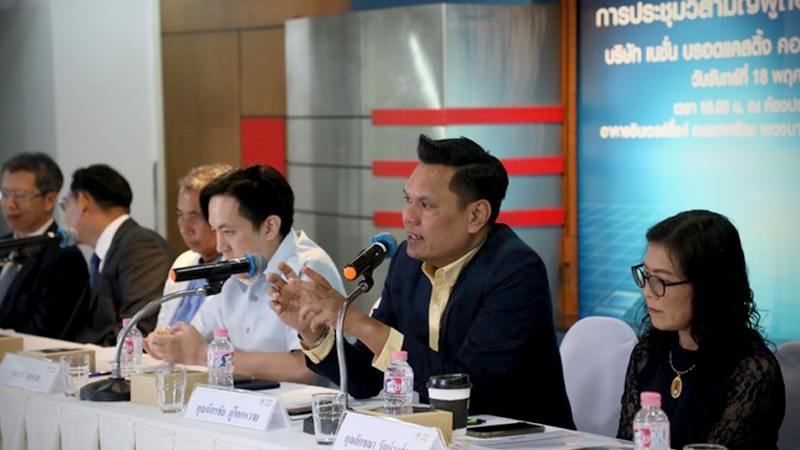
Nation Broadcasting Corporation (NBC) aims to boost viewer ratings of Nation TV 22 channel to eighth place in the next few months from ninth place currently following readjustment of its TV programmes.

The broadcaster’s managing director, Chatchai Pokogwai, said on Monday (November 18) that Nation TV’s advertising revenue had improved gradually.

Currently, the channel’s advertising revenue averages Bt40 million per month, up 100 per cent from before May last year.

The broadcaster aims to cash in on existing businesses to launch new promising businesses next year. Among the planned ones are a tour-related business, home shopping, and event organising.

The home-shopping business would be a hub to promote local products from across Thailand, he said, targeting monthly revenue of Bt30 million. The event organising business is expected to generate around Bt5 million a month.

ADB, Gulf PD sign Bt5.4-bn deal to build power plant in Rayong

ศาสตร์เกษตรดินปุ๋ย : ขอบคุณแหล่งข้อมูล : หนังสือพิมพ์ The Nation

https://www.nationthailand.com/business/30378463?utm_source=category&utm_medium=internal_referral

ADB, Gulf PD sign Bt5.4-bn deal to build power plant in Rayong

Nov 18. 2019
The Asian Development Bank (ADB) and Gulf PD Co Ltd signed a $180-million (Bt5.4 billion) agreement on Monday.

The Asian Development Bank (ADB) and Gulf PD Co Ltd signed a $180-million (Bt5.4 billion) agreement on Monday.
By The Nation

1,511 Viewed

The Asian Development Bank (ADB) and Gulf PD Co Ltd signed a $180-million (Bt5.4 billion) agreement on Monday to build and operate a 2,500-megawatt combined cycle gas turbine power plant in Rojana Rayong 2 Industrial Park.


Gulf PD is owned by Independent Power Development, a joint venture between Gulf Energy Development (GED) and Mitsui.

ADB’s support is composed of a regular loan of $50 million and a B loan of up to $85 million. The bank will also mobilise $45 million through the Leading Asia’s Private Infrastructure Fund (LEAP), established in 2016 and supported by the Japan International Cooperation Agency.

The ADB signed the loan agreement with its cofinanciers – the Japan Bank for International Cooperation and 12 other international and local commercial banks – playing an anchor lender role in the project by catalysing up to $764 million in commercial cofinancing. The B loan will be funded by Singapore’s Oversea-Chinese Banking Corporation and Germany’s DZ Bank.

The agreement for the Eastern Economic Corridor Independent Power Project was signed by ADB deputy director-general for Private Sector Operations Christopher Thieme and the GED CEO Sarath Ratanavadi at a ceremony in Bangkok.

“The project will build the fourth-largest power plant and one of the largest combined cycle gas turbine power plants in Thailand, which will be key to the Eastern Economic Corridor [EEC] development plan, considered as the prime economic growth driver for the country until 2028,” said Thieme. “The ADB is proud to play an essential role in this transaction, which will help provide reliable power to industry and households and boost Thailand’s economic growth and development prospects. We are particularly pleased to bring in additional cofinanciers to this transaction through our B loan programme and LEAP, since the financing gap will be one of the major challenges for the success of the EEC development plan.”

The plant will be fully operational by 2024, delivering at least 16,000 gigawatt hours of electricity. With the state-of-the-art combined-cycle gas turbine technology to be used at the plant, the project will mean one million fewer tonnes of carbon dioxide is emitted every year compared to current electricity grid emissions, said a press statement. The plant will be integral to sustaining Thailand’s energy security given that more than 8,500 MW of generating capacity – equivalent to about 20 per cent of current national energy capacity – of ageing power plants will be retired between 2020 and 2025.

According to the statement, Gulf PD was established in 2012 to develop, construct, own, and operate the 2,500MW power plant, while GED is a leading power generation company with the largest portfolio of contracted power purchase agreements in Thailand. Mitsui, established in 1947, is one of Japan’s largest trading companies involved in the development of more than 74 power projects globally.

The ADB is committed to achieving a sustainable Asia and the Pacific, while continuing its efforts to eradicate extreme poverty. In 2018, it made commitments of new loans and grants amounting to $21.6 billion.

B.Grimm buys solar power project in Cambodia

ศาสตร์เกษตรดินปุ๋ย : ขอบคุณแหล่งข้อมูล : หนังสือพิมพ์ The Nation

https://www.nationthailand.com/business/30378461?utm_source=category&utm_medium=internal_referral

B.Grimm buys solar power project in Cambodia

Nov 18. 2019
By THE NATION

1,069 Viewed

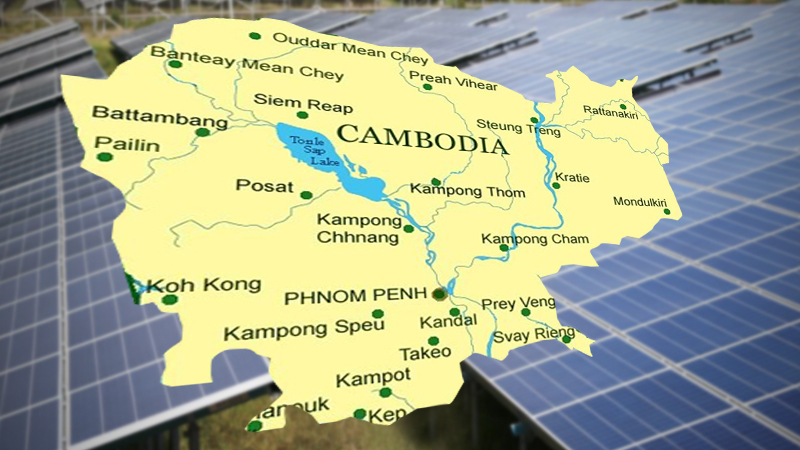
B.Grimm Power Public Company Limited’s wholly owned subsidiary, B.Grimm Solar Power 1, last Wednesday entered into a share purchase agreement with Pramote Laocharoenwong, who is not connected with the company, to acquire all shares of Ray Power Supply for a total value of US$300,000 (Bt9.07 million).

According to its filing with the Stock Exchange of Thailand today, the transaction is in accordance with the principle approved by the Board of Directors on November 13, 2019.

The acquisition is currently awaiting approval from the Ministry of Mines and Energy and relevant competent authorities of Cambodia.

Ray Power Supply has been granted the right to develop a ground-mounted solar farm project in Serei Saophoan, Banteay Meanchey Province, pursuant to the power purchase agreement for 30 Megawatts with Electricite Du Cambodge (EDC) with the term of 20 years. The scheduled commercial operation date is October 2020.

Minor acquires Bonchon Chicken in Thailand

ศาสตร์เกษตรดินปุ๋ย : ขอบคุณแหล่งข้อมูล : หนังสือพิมพ์ The Nation

https://www.nationthailand.com/business/30378456?utm_source=category&utm_medium=internal_referral

Minor acquires Bonchon Chicken in Thailand

Nov 18. 2019
By THE NATION

2,657 Viewed

Minor International Public Company Limited (Mint) has invested in Chicken Time Thailand, the operator of a more than 40 outlets of the Bonchon chicken brand.

According to a statement released today (November 18), the purchase of a 100-per-cent stake in Chicken Time, which amounted to Bt2 billion, will allow Minor Food to operate existing Bonchon stores in Thailand.

As part of the transaction, its wholly owned subsidiary, Minor Food Group (MFG) has set up Minor Food Holding for the acquisition.

While such an investment does not include the franchise rights to open new stores, Mint is in the process of discussing with the master franchise right holder on a potential partnership to allow further expansion of Bonchon outlets across the country.

Bonchon brand, which was established in 2002 in South Korea, has become a strong global brand as Korean cuisine and Korean-style fried chicken have gained increasing popularity worldwide.

The brand differentiates itself with a specialised Korean-style fried chicken glazed with its signature sauces. With its strong brand equity and customer loyalty for distinctive super crispy chicken and other Asian fusion dishes, Bonchon restaurants have rapidly expanded worldwide, spanning across nine countries including the US, Bahrain, Kuwait, the Philippines, Singapore, Cambodia, Vietnam, Myanmar and Thailand.

“The already-lucrative portfolio of Bonchon brand in Thailand will bring us immediate revenue and earnings to further sharpen our growth trajectory. We believe that Thailand continues to offer promising long-term outlook on the back of its growing middle class and increasing personal income.” said William E Heinecke, founder and chairman of Mint.

“The unique customer proposition of the Bonchon brand combined with our robust four-decade experience and well-established operating platform in Thailand will no doubt equip us to further maximize value of this new investment for our shareholders.”

Paul Kenny, chief executive of Minor Food, added, “We took our time to find the right brand to be added to our food portfolio and we couldn’t be happier that we found this one-of-a-kind food concept. Chicken is undoubtedly one of the top preferred protein for Thai people, and the growth potential of such market is enormous. While Bonchon will fit well within our casual dining restaurant portfolio, at the same time it also enhances our brand diversification. This strategic move will surely take Minor Food to another level, building on our long history as a restaurant operator.”

Shoe brand Nanyang sees red

ศาสตร์เกษตรดินปุ๋ย : ขอบคุณแหล่งข้อมูล : หนังสือพิมพ์ The Nation

https://www.nationthailand.com/business/30378457?utm_source=category&utm_medium=internal_referral

Shoe brand Nanyang sees red

Nov 18. 2019
By The Nation

1,094 Viewed

A shoe has pipped food, alcoholic drinks, retail items and more to the post by walking off with the “Marketing of The Year” prize at the 11th MAT Awards 2019. The shoe is the limited-edition Nanyang “Red”, which was designed to reach more customers after the firm produced footwear in only black, white and brown.

Jakrapon Chantawimon, general manager of Nanyang Marketing, said the company had been working hard to expand its original business of making shoes for male students and now offered footwear for girls and sports though branding still focuses on function more than fashion at a reasonable price.

The “Nanyang RED limited edition 2019” arose from Jakrapon’s passion for Liverpool FC and he announced on his Facebook page that Nanyang would launch new products in red if the club topped the Premier League. The team didn’t but they did win the UEFA Champions League, so he went ahead with the project. And the shoes did even better than expected, selling 12,598 pairs.

The general manager added that one of the key factors of the product’s success was the marketing campaign which used free media like Facebook. Therefore, the company didn’t have to spend lots of money on advertising.

“Marketing people can no longer complain that they don’t have enough budget for promotion. We have shown them that an old brand like Nanyang was able to create a successful promotion strategy without resorting to the traditional advertising method,” he said.

Trump administration extends reprieve allowing limited tech exports to Huawei

ศาสตร์เกษตรดินปุ๋ย : ขอบคุณแหล่งข้อมูล : หนังสือพิมพ์ The Nation

https://www.nationthailand.com/business/30378482?utm_source=category&utm_medium=internal_referral

Trump administration extends reprieve allowing limited tech exports to Huawei

Nov 19. 2019
By The Washington Post · Jeanne Whalen · BUSINESS414 Viewed

The Trump administration will extend for another 90 days its temporary order that allows a limited range of U.S. technology exports to China’s Huawei, the Commerce Department said Monday.

The extended grace period is meant to help rural U.S. telecom companies that rely on Huawei equipment to provide wireless internet and phone service, the Commerce Department said. But it doesn’t fundamentally change the sweeping prohibitions the U.S. has put on Huawei.

In order to purchase replacement parts and software from Huawei, rural telecom companies need to issue purchase orders containing technical information, which counts as a technology export, according to the Rural Wireless Association, a trade group to which many rural telecoms belong.

Giving them temporary permission to continue these transactions “will allow carriers to continue to service customers in some of the most remote areas of the United States who would otherwise be left in the dark,” said Secretary of Commerce Wilbur Ross.

The United States banned tech exports to Huawei in May, adding the Chinese company to a trade blacklist. The Trump administration views Huawei as a security risk because it believes the Chinese government could tap into Huawei network gear installed abroad to spy on the West or disrupt infrastructure. U.S. officials have provided few public details to back up these concerns, which Huawei calls unfounded.

Senate Minority Leader Chuck Schumer criticized the extension of the trading window. “If President [Donald] Trump and his Commerce Department agree that Huawei is a national security threat, they should start acting like it,” he said in a statement. “Every day President Trump is soft on Huawei, the Chinese Communist Party takes that as a signal that they can continue hurting American jobs and threatening our national security without any repercussions.”

In addition to the export ban, the Trump administration is cracking down on Huawei in other ways.

On Friday, the Federal Communications Commission is expected to vote on a proposal to block U.S. telecom and internet companies from receiving federal subsidies if they buy foreign equipment from companies deemed to pose a security threat, including Huawei and fellow Chinese equipment maker ZTE. Rural telecom companies rely on these subsidies to make ends meet.

The FCC will also discuss a new proposal to require subsidy recipients to remove any existing Huawei or ZTE equipment from their networks.

Pine Telephone Company, which uses Huawei equipment in its network in rural Oklahoma, said the 90-day reprieve to continue trading with Huawei is useless if the government ultimately intends to order companies to rip out all Huawei gear.

“You want me to go buy more stuff that you’re going to ask me to rip out? Let’s make up our minds,” Jerry Whisenhunt, general manager of Pine, said by telephone Monday. He said he is purposely avoiding spending money on Huawei software upgrades for his equipment because he fears he’ll have to stop using the gear soon.

Beyond the trade allowed by the 90-day reprieve, most other U.S. tech sales to Huawei are still banned, although some U.S. companies say they are continuing to supply Huawei with parts that they say don’t violate the prohibition. The ban applies to technology made in the United States, and to products made overseas that derive more than 25% of their value from U.S.-origin technology.

Dozens of U.S. companies have asked the Commerce Department for special licenses that would excuse them from the ban and allow them to keep selling computer chips, software and other parts to Huawei. The Chinese company is one of the world’s largest sellers of telecom network gear and smartphones, and was a large buyer of U.S. technology before the trade ban.

U.S. companies seeking licenses have argued they should be able to sell Huawei parts for use in consumer technology such as smartphones, which they argue doesn’t threaten U.S. national security.

The fate of these license requests is unclear. Early this month Commerce Secretary Ross said the agency “very shortly” would approve “quite a few” of the 260 license applications it had received. But lawyers familiar with the matter say no licenses have yet been granted.

Trump has suggested Huawei’s fate is tied up in the trade talks Washington is conducting with Beijing. Despite calling Huawei a threat, Trump has suggested that the United States could ease up on the company as part of a larger deal.

US stocks edge higher with focus on China trade deal

ศาสตร์เกษตรดินปุ๋ย : ขอบคุณแหล่งข้อมูล : หนังสือพิมพ์ The Nation

https://www.nationthailand.com/business/30378479?utm_source=category&utm_medium=internal_referral

US stocks edge higher with focus on China trade deal

Nov 19. 2019
By Syndication Washington Post Bloomberg · Claire Ballentine, Vildana Hajric · BUSINESS, US-GLOBAL-MARKETS430 Viewed

U.S. stocks edged higher to fresh records as investors looked for signs of progress in U.S.-China trade negotiations. The dollar weakened and Treasury yields dipped.

The S&P 500, Dow Jones Industrial Average and Nasdaq Composite all fluctuated throughout the day, but ended up eking out a gain. Defensive shares such as consumer staples and utilities performed best. Word that White House would extend a license to allow U.S. companies to do business with Chinese telecom firm Huawei competed with reports that said Beijing was skeptical about reaching a broad deal anytime soon.

U.S. equities are showing their sensitivity to any developments on trade after months of closely followed negotiations. Today’s records extended gains from last week, when White House economic adviser Larry Kudlow’s had said that U.S.-China talks were nearing the final stages.

“I don’t know how many times we’ve seen optimism turn into pessimism,” said Jerry Braakman, chief investment officer of First American Trust, in Santa Ana, California, which manages around $1.7 billion. “If it was easy, it would already be signed.”

Meanwhile, the dollar extended a slide after Federal Reserve Chairman Jerome Powell met with President Donald Trump and Treasury Secretary Steven Mnuchin on Monday to discuss the economy. Japanese and Chinese equities closed higher, while stocks slipped in India and Australia. Hong Kong’s market outperformed, even as unrest in the city continued.

Most members of the Stoxx Europe 600 index fell. The pound jumped as the Conservative Party maintained its poll lead less than a month before U.K. elections.

China’s yuan dipped after the country’s central bank lowered borrowing costs on short-term loans for the first time since 2015 and injected $26 billion into the financial system. The moves were seen as aimed at shoring up confidence following a string of poor data in the second-biggest economy.

On the energy front, Saudi Arabia set an IPO valuation target for Aramco well below the kingdom’s goal of $2 trillion and pared back the size of the sale. It looks set to rely on local investors after most international money managers balked at even the reduced price target.

Here are some key events coming up this week:

–U.S. economic indicators due for release include housing starts Tuesday and initial jobless claims on Thursday.

–Britain holds its first televised leadership debate before next month’s election Tuesday.

–Federal Reserve speakers this week include district bank presidents John Williams, Loretta Mester and Neel Kashkari.

–European central bankers speaking this week include European Central Bank President Christine Lagarde, Bundesbank chief Jens Weidmann, along with Yves Mersch, Luis de Guindos, Pablo Hernandez de Cos and Philip Lane.

–China announces its loan prime rates, a benchmark for borrowing costs, on Wednesday.

These are the main moves in markets:

Stocks

–The S&P 500 index rose less than 0.1% at the close of trading in New York.

–The Stoxx Europe 600 index was little changed.

–Hong Kong’s Hang Seng index jumped 1.3%.

Currencies

–The Bloomberg Dollar Spot index fell 0.1%.

–The euro strengthened 0.2% to $1.1075.

–The Japanese yen rose 0.1% to 108.65 per dollar.

–The offshore yuan sank 0.3% to 7.0254 per dollar.

–The British pound gained 0.5% to $1.2955.

Bonds

–The yield on 10-year Treasuries dipped two basis points to 1.81%.

–Britain’s 10-year yield rose two basis points to 0.75%.

–Germany’s 10-year yield was little changed at -0.34%.

–Italy’s 10-year yield fell two basis points to 1.21%.

Commodities

–West Texas Intermediate crude decreased 1.5% to $56.84 a barrel.

–Gold rose 0.2% to $1,471.77 an ounce.

Slow growth not reflective of Thai economic potential, says BOT official

ศาสตร์เกษตรดินปุ๋ย : ขอบคุณแหล่งข้อมูล : หนังสือพิมพ์ The Nation

https://www.nationthailand.com/business/30378478?utm_source=category&utm_medium=internal_referral

Slow growth not reflective of Thai economic potential, says BOT official

Nov 19. 2019
Don Nakornthab, a senior director at the Bank of Thailand (BOT), expressed optimism about economic outlook.

Don Nakornthab, a senior director at the Bank of Thailand (BOT), expressed optimism about economic outlook.
By The Nation

1,006 Viewed

Thailand’s economic outlook is better than what the current slow growth suggests, a central bank official said, while an analyst urged the government to increase spending to boost the economy.


Don Nakornthab, a senior director at the Bank of Thailand (BOT), expressed optimism despite gross domestic product in the third quarter growing just 2.4 per cent year on year.

The growth rate in the third quarter from August to October was a bit higher than the 2.3 per cent  growth rate in the second quarter but the growth rate remained lower than expected, he said.

He, however, foresees a better economic performance due to the positive impact of government spending and public investment in infrastructure projects. But future growth would still be below Thailand’s economic potential, he said.

The outcome of public investment still needed to be monitored closely, he said, referring to the delay in investment.

Global geopolitical risks remain, he said, adding, the US-China trade war had resulted in more trade barriers and remained a risk factor for the  Thai economy.

The Stock Exchange of Thailand Index rose 5.77 points on Monday (November 18) to close at 1,608 points.

“The market expects more government stimulus, following slower growth in the third quarter,” said Kobsithi Silpachai, head of capital markets research at Kasikornbank.

He said due to the relatively strong fiscal  position, the government has plenty of room to stimulate the economy.

The government is targeting fiscal deficit at Bt469 billion for fiscal 2020, with plans to spend Bt3.2 trillion.

Even though the Thai economy remains in slow growth mode, the baht continued to trade strong at around Bt30.24 to the US dollar yesterday. Investors still see baht-denominated assets as a safe haven due to Thailand’s high current account surplus. Thailand also has ample international reserves of $220 billion.

The central bank has recently  cut its key interest rate to 1.25 per cent and introduced measures to encourage capital outflows but it has had little effect in reining in the baht.

“It doesn’t work, the central bank’s move is too little and too late,” said Kobsithi. The stronger baht relative to other currencies has aggravated the problems of Thai exporters in selling their products given the global slowdown.

To strengthen the economy, we need structural reforms, Kobsithi suggested.

“Our ageing population means we are becoming more and more like Japan each day,” he said, adding that monetary stimulus will become less effective.

Committee overseeing digital project okays draft plan

ศาสตร์เกษตรดินปุ๋ย : ขอบคุณแหล่งข้อมูล : หนังสือพิมพ์ The Nation

https://www.nationthailand.com/business/30378474?utm_source=category&utm_medium=internal_referral

Committee overseeing digital project okays draft plan

Nov 18. 2019
By THE NATION

885 Viewed

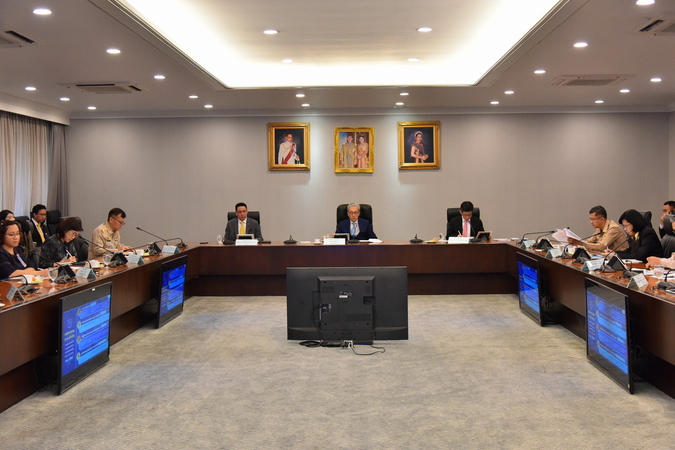
The committee tasked with developing the digital government project has approved in principle the draft of the plan for 2019-2022.

The meeting was chaired by Deputy Prime Minister Somkid Jatusripitak on Monday (November 18).

The committee assigned the Digital Government Development Agency (Public Organisation), or DGA, to coordinate with related agencies to promote the adoption of digital technology in enhancing operations and public services.

The committee will also submit soon for Cabinet approval the plan’s goals, which are developing the skills of state officials to possess digital proficiency in three years and the creation of digital platforms for all state agencies, through which they can provide public services.

The others include the cancellation of the need for copies of ID cards and house registration papers in one year and the use of data analytics to enable state agencies to capitalse on the massive digital database to improve their public services.