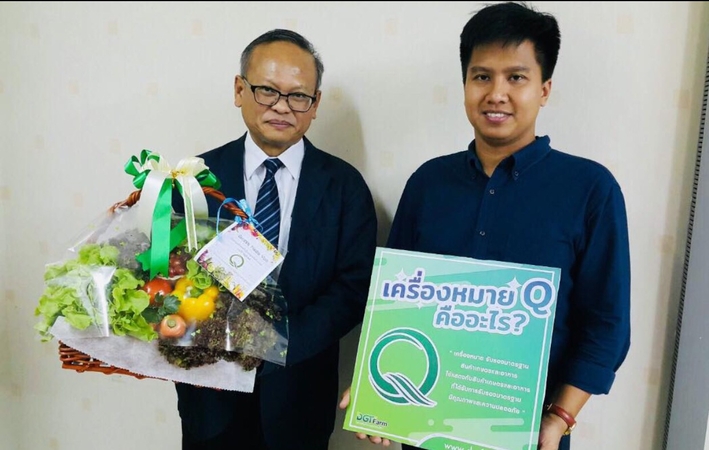
MPC cuts growth estimate to just 2.8%

ศาสตร์เกษตรดินปุ๋ย : ขอบคุณแหล่งข้อมูล : หนังสือพิมพ์ The Nation

https://www.nationthailand.com/business/30376733

MPC cuts growth estimate to just 2.8%

Sep 26. 2019
Titanun

Titanun
By THE NATION

1,334 Viewed

The Monetary Policy Committee on Wednesday (September 25) reduced its forecast for economic growth this year from 3.3 to 2.8 per cent and for next year from 3.7 to 3.3 per cent.

“This is the fourth adjustment since last year,” said its secretary, Titanun Mallikamas. “In June 2018 the committee estimated GDP growth at 4.2 per cent, and then later adjusted it to 3.8, 3.3 and 2.8 per cent, for a total 1.4-per-cent decrease from the original estimate.”

He said the committee based its latest decision on the economy expanding at a slower rate than expected, especially in the export sector.

“We previously predicted exports to hold at 0 per cent but then had to adjust that to minus-1 per cent due to the stronger baht. The slowdown in exports is starting to affect domestic demand and private investment, while reduced employment is lowering domestic consumption as well.”

The committee also revised its projection for import expansion from 0.3 to minus-3.6 per cent and for public investment from 3.8 to 2.5 per cent.

“Other factors were foreign trade disputes, the decline in tourism, rising household debt and the effects of natural disasters,” Titanun said.

“The government’s economic stimulus packages have helped maintain GDP at this level. Without those, it would have gone down even lower.”

The committee, however, increased its estimate for the current account from US$29.1 billion to $34.2 billion in 2019 and from $26.3 billion to $30.4 billion in 2020.

“This was due to increased gold exports thanks to spiking gold prices,” Titanun said.

The downward revisions elsewhere, though, made it clear that the committee is somewhat more pessimistic about the economy than the Asian Development Bank, which on Wednesday lowered its GDP forecast for 2019 from 3.9 to 3 per cent.

ADB seeks co-financing of Thai projects

ศาสตร์เกษตรดินปุ๋ย : ขอบคุณแหล่งข้อมูล : หนังสือพิมพ์ The Nation

https://www.nationthailand.com/business/30376740

ADB seeks co-financing of Thai projects

Sep 26. 2019
Hideaki Iwasaki

Hideaki Iwasaki
By Wichit Chaitrong
The Nation

1,262 Viewed

The Asian Development Bank (ADB) is looking to co-financing deals of mass transit, double-track rail and renewal energy projects with the Thai companies, said Hideaki Iwasaki, the bank’s country director in the Kingdom.

He said Thai government is in a strong fiscal position and has not borrowed much from the ADB.

However, The ADB has provided loans to private companies in recent years, citing co-financing of the yellow and pink mass transit lines in Bangkok.

The bank is keen on co-financing mass transit projects in Bangkok.

Although Thailand has started investing in double-track rail projects, the bank can still provide financial support to some sections of the systems, he said.

Renewal energy such as solar and wind power is also an area ADB has supported financially as it promotes sustainable development, he said.

The bank has helped local institutions raise funds by issuing green bonds.

It has also provided financial support for the construction of highways in Roi Et and the road from Sakon Nakhon to Nakhon Phanom.

“The ADB is now focusing on climate change and road safety in Thailand,” Iwasaki said.

It is also currently working with the Civil Aviation Authority of Thailand (CAAT) on improving the management of 29 regional airports in small cities.

It has conducted a study on the matter, he added.

TCEB shifts focus on 4Ms to rock global MICE market

ศาสตร์เกษตรดินปุ๋ย : ขอบคุณแหล่งข้อมูล : หนังสือพิมพ์ The Nation

https://www.nationthailand.com/business/30376727

TCEB shifts focus on 4Ms to rock global MICE market

Sep 25. 2019
By THE NATION

502 Viewed

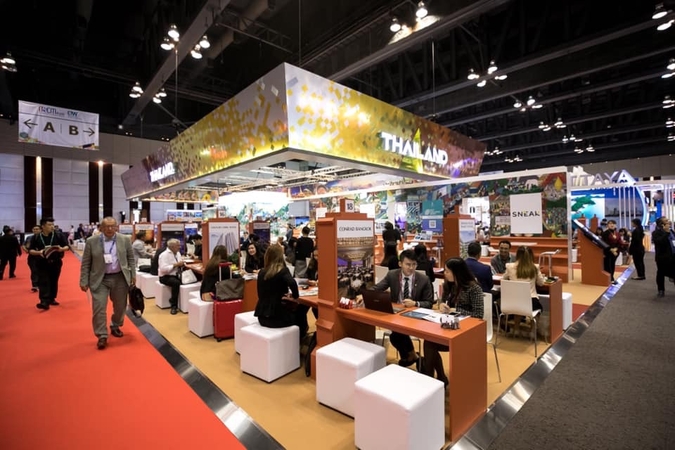
The Thailand Convention and Exhibition Bureau (TCEB) is moving fast to rock the global MICE market by spotlighting on the 4Ms – meet now, meet mega, meet smart and meet sustainable – at the IT&CMA and CTW Asia-Pacific forum in Bangkok. This move is expected to generate Bt57 billion next year.

TCEB has also joined with entrepreneurs in five cities to turn them into environmentally sustainable MICE cities by cutting down waste volume by 50 per cent.

Meanwhile, the so-called 4Ms promotions designed by TCEB will include meetings being taken to potential cities (Meet Now); large-sized meetings (Meet Mega); meetings group that conform with the Thailand 4.0 policy (Meet Smart); and meetings that include sustainable activities (Meet Sustainable). These groups will also be offered extra privileges, including a special MICE lane at the airport, cultural performances, souvenirs and supporting budget of up to Bt1 million.

Chiruit Isarangkun Na Ayuthaya, TCEB president, said the bureau is focusing on national competitiveness and plans to make MICE part of the national agenda.

“The world is changing at an ultra-fast pace owing to digital technology, trade wars, economic depression, inflation and natural disasters. These have inevitably affected economy, politics and society. To expedite MICE to achieve goals, it is therefore necessary to seek collaboration on both national and international levels. We can expect our operations to yield maximum efficiency with lowest costs, while also remaining competitive and surviving with sustainability,” he said.

TCEB is highlighting its marketing strategies during the annual MICE trade show – the IT&CMA and CTW Asia-Pacific forum, which wraps up on September 26.

Though TCEB’s primary markets for meetings and incentives (MI) will remain the Asean+6 countries, namely China, Japan, India, South Korea, Australia and New Zealand, and the US as well as Europe as a secondary market, it is also eyeing countries in Eastern Europe.

In 2020, TCEB expects 1.39 million MICE travellers in Thailand, generating Bt105.6 billion in revenue. The number of MICE travellers from the meetings and incentives market has been estimated to be 762,000, generating revenue of Bt57 billion.

Chiruit added that apart from the goal to enhance Thailand’s image as a great destination for international events and moves to boost MICE ecosystems in Bangkok, Pattaya, Phuket, Chiang Mai and Khon Kaen, TCEB also plans to collaborate on four dimensions. The collaborations will be based on the development of knowledge through training; promotion of venues of MICE organisers; providing support for sustainable events and for MICE venues to achieve sustainable standards; and monitoring and evaluation of tangible sustainability of MICE businesses.

TCEB’s first campaign with the five MICE cities is “Zero Plastic Events”, with the aim to cut down the use of plastic bottles used at MICE events from 17.34 million to 8.67 million within a year. The campaign will include the use of glass bottles during short meetings that last one or two days; using reusable bottles for longer meetings that can be taken back as a souvenir; or providing water coolers with drinking glasses. Plastic and paper glasses will be banned.

“If the operation goes as well as planned, the number of plastic bottles will be reduced as estimated, which will be equivalent to 638 tonnes of carbon dioxide or equal to planting 70,226 trees. Costs can also be lowered by Bt30 billion. TCEB is confident that this collaboration is another milestone of unification towards bringing Thai MICE towards sustainability and enabling Thai MICE to meet standards and recognition as Asia’s leading MICE destination,” Chiruit added.

Govt revenues, outlay jump in fiscal 2019

ศาสตร์เกษตรดินปุ๋ย : ขอบคุณแหล่งข้อมูล : หนังสือพิมพ์ The Nation

https://www.nationthailand.com/business/30376725

Govt revenues, outlay jump in fiscal 2019

Sep 25. 2019
By The Nation

620 Viewed

General government fiscal revenue was Bt2.617 trillion in the first nine months of fiscal 2019 (October-June), an increase of 6.6 per cent and Bt162.2 billion over the same period last year.

Officials credited the hike mainly to increased revenue from income- and consumption-based taxes and remittances from state-owned enterprises (Bt105 billion) and extra-budgetary funds (Bt53.3 billion).

General government expenditure for the same nine months was Bt2.745 trillion, a jump of 5.7 per cent and Bt149.2 billion from last year.

The overall balance ended up Bt127.066 billion in deficit, representing 0.8 per cent of GDP.

Conversely, the consolidated general government primary balance, which excludes interest payments to reflect the substantive performance and direction of fiscal policy, was Bt13.357 billion in surplus, or 0.1 per cent of GDP.

ADB drops Thai growth forecast to 3%

ศาสตร์เกษตรดินปุ๋ย : ขอบคุณแหล่งข้อมูล : หนังสือพิมพ์ The Nation

https://www.nationthailand.com/business/30376722

ADB drops Thai growth forecast to 3%

Sep 25. 2019
By Wichit Chaitrong
The Nation

880 Viewed

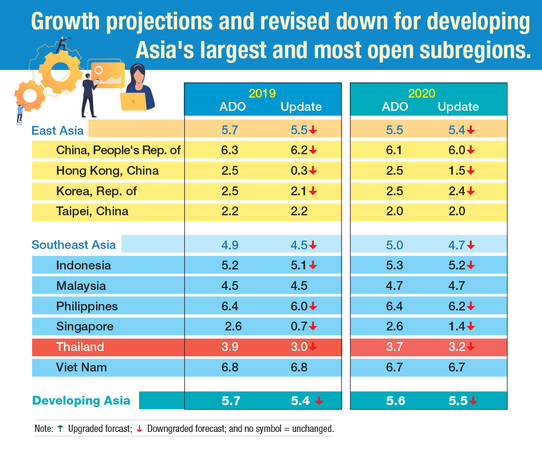
The Asian Development Bank has lowered its growth forecast for the Thai economy to 3 per cent but is optimistic that conditions will improve next year.

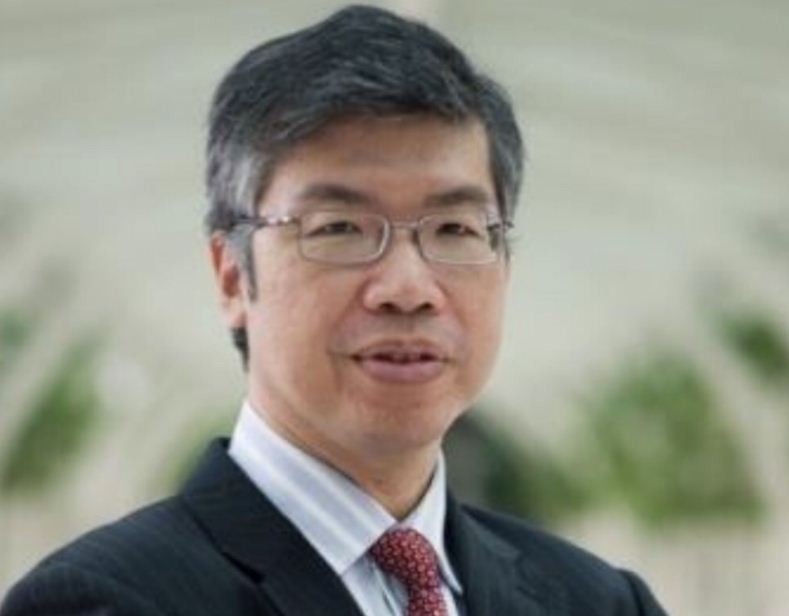
Principal economist Thiam Hee Ng said in Bangkok on Wednesday (September 25) that the downgrade from 3.9 per cent stemmed from the global economic slowdown, the US-China trade dispute and the strong baht.

Worried monetary panel holds policy at 1.5%

Thiam Hee Ng

Thiam Hee Ng

He said the bank foresaw a slightly higher growth rate at 3.2 per cent next year, due largely to infrastructure investment in the Eastern Economic Corridor, but was conscious of the risk in any delays in the investment.

Among positive indicators the bank considered were substantial interest among foreigners in investment incentives and the Board of Investment’s report of more foreign direct investment in the pipeline.

Chinese and Japanese manufacturers are planning to relocate their production bases in Thailand and elsewhere in Southeast Asia to avoid higher tariff rates imposed on Chinese goods by the US government.

But Hee Ng warned that the trade tensions would continue to hamper the global economy overall and have an impact on Thai exports and tourism.

“The super-strong baht partly weighed down exports and also caused slower growth among tourist arrivals in the first half of the year,” he noted.

The baht has appreciated not only against US dollar but also other currencies.

A rate cut by the central bank would likely do little to weaken the baht, he said. Investors see the Thai economy as a safe haven due to a large current-account surplus and significant foreign reserves.

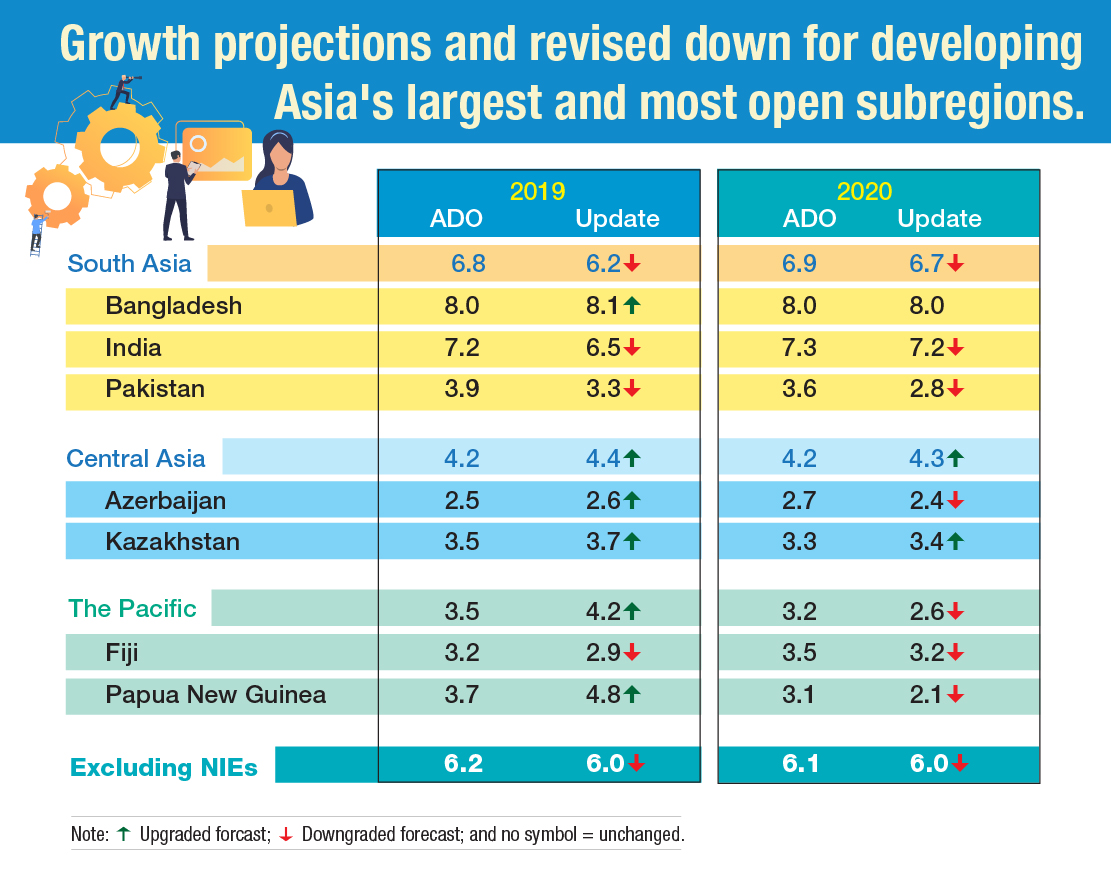
The ADB also revised downward its forecast for Asia’s growth as a whole to 5.4 per cent this year and 5.5 per cent next.

It cited slower growth in China, India and other economies in the region, as well as uncertainty stemming from escalating trade tensions and Brexit.

Worried monetary panel holds policy at 1.5%

ศาสตร์เกษตรดินปุ๋ย : ขอบคุณแหล่งข้อมูล : หนังสือพิมพ์ The Nation

https://www.nationthailand.com/business/30376718

Worried monetary panel holds policy at 1.5%

Sep 25. 2019
Titanun

Titanun
By The Nation

503 Viewed

The Monetary Policy Committee voted unanimously on Wednesday (September 25) to maintain the policy rate at 1.5 per cent, its secretary said.

MPC’s secretary Titanun Mallikamas said the committee agreed that economic expansion is slower than expected due to a decline in exports and its knock-on effect on domestic demand.

ADB drops Thai growth forecast to 3%

Headline inflation is now projected to be under the lower bounds of the targeted figure, although overall financial conditions remained “accommodative”, Titanun said.

Financial stability risks had already been addressed to some extent, though there remained pockets of risks that warranted monitoring.

The committee decided an accommodative policy rate would contribute to continued economic growth and help raise headline inflation closer to its target.

Merchandise exports contracted more than expected due to weaker economies among Thailand’s trading partners and global trade in general.

Tourism is also growing more slowly than anticipated.

Private consumption is expected to slow further despite fiscal stimulus measures because of declining household income and employment, particularly among export-related manufacturing firms, elevated household debt and the impacts of natural disasters.

Private investment is also seen wavering, but a rise in foreign companies relocating their production bases here and in public-private partnership infrastructure projects is shoring it up.

Public expenditure has slowed owing partially to delays in state-owned enterprise investment projects.

Titanun said the committee would monitor external risks from intensifying trade tensions and the economic outlook of China and other advanced economies that could affect domestic demand.

He said core inflation was expected to moderate due to subdued demand-pull inflationary pressures, but the committee felt structural changes contributed to more persistent inflation than in the past, such as the expansion of e-commerce, rising price competition and technological development reducing production costs.

It also expects headline inflation to increase towards target in 2020 in line with economic expansion.

There is ample liquidity in the financial system. Real interest rates remained at a low level. Government bond yields declined. These allowed financing by the private sector to continue expanding.

However, loans extended to both businesses and consumers will exhibit slower growth, Titanun said. The committee expressed concern over the baht’s appreciation against trading partners’ currencies, which could affect the economy to a larger degree amid overseas uncertainties. It plans to closely monitor exchange rates and capital flows and consider implementing additional measures if necessary.

The committee found that implemented macroprudential measures had to some extent curbed vulnerabilities in the financial system, but vigilance was needed regarding search-for-yield behaviour that could result in risks being under-priced, debt accumulation and debt serviceability of households and SMEs, and growth in assets held by saving cooperatives.

The committee acknowledged that, despite using policy tools as appropriate, the Thai economy would continue to face structural problems affecting competitiveness and economic growth.

Jurin, business executives, line up business agreements on India trip

ศาสตร์เกษตรดินปุ๋ย : ขอบคุณแหล่งข้อมูล : หนังสือพิมพ์ The Nation

https://www.nationthailand.com/business/30376711

Jurin, business executives, line up business agreements on India trip

Sep 25. 2019
Deputy Prime Minister and Minister of Commerce Jurin Laksanawisit

Deputy Prime Minister and Minister of Commerce Jurin Laksanawisit
By The Nation

617 Viewed

Commerce Ministry staff and chief executives of private companies are on a five-day trade trip to Mumbai and Chennai, India to drum up business, led by Deputy Prime Minister and Minister of Commerce Jurin Laksanawisit.

“The primary aim of this visit is to negotiate new business networks between Thai private sector and Indian entrepreneurs, and to preside over the signing ceremony of a memorandum of understating (MoU) between several Thai and Indian business operators,” Jurin said on Wednesday of the September 24-28 junket.

The MoUs will cover five key businesses, said Jurin, including rubber, rubberwood, tapioca flour, construction materials, and logistic services, and will help Thai entrepreneurs penetrate Indian markets.

The deputy PM will also preside over the signing of an MoU between the Department of International Trade Promotion and Bigbasket, India’s grocery delivery application, so that Thai products could be sold in India through the app.

“In addition to the MoU signing, Thai and Indian entrepreneurs will take part in series of seminars to discuss business opportunities across different sectors, such as furniture manufacturing and construction materials,” he added.

In 2018, trade value between Thailand and India grew 20 per cent over the previous year. Thailand’s major export products to India include chemicals, plastic beads, gems and jewellery, cars and automotive equipment, air conditioners, iron and steel, copper, and computer components.

Jurin opens Thai-India business-matching seminar in Mumbai

Commerce Minister Jurin Laksanavisit presided over a business-matching seminar in Mumbai on Wednesday (September 25), saying he was pleased to have visited India in an official capacity for a second time.

In his opening speech, he said that though other countries are being adversely affected by the China-US trade war, which is nowhere close to coming to an end, the Indian economy has barely felt the effect due to strong domestic consumption. India’s population stands at more than 1.3 billion.

The meeting also saw the signing of several memoranda of understanding, namely an MoU between Thai and Indian rubberwood firms, an MoU between the Thai and India business councils and global link companies to support SME businesses and an MoU between the two business councils and the Mumbai Industries Association.

Jurin also announced a cooperation between the Thailand Department of International Trade Promotion and BigBasket, an online grocery store in India, to place Thai products on the BigBasket website.

He said the Indian market has expanded and developed its facilities to support new investment from Thailand thanks to good logistics and distribution networks as well as construction and design services. Jurin said he believes companies from both sides will work well together to ensure a bright future for the Thailand-India trade market.

Gov’t promotes new ‘Q’ mark assuring quality food products

ศาสตร์เกษตรดินปุ๋ย : ขอบคุณแหล่งข้อมูล : หนังสือพิมพ์ The Nation

https://www.nationthailand.com/business/30376707

Gov’t promotes new ‘Q’ mark assuring quality food products

Sep 25. 2019
By THE NATION452 Viewed

A “Q” mark for raising customer’s awareness about food safety and chemical contamination is being promoted by the government’s food standards bureau, as it aims to increase distributing channels in both domestic and international markets.

Wittawat Sarasalin, deputy secretary-general of the National Bureau of Agricultural Commodity and Food Standards (ACFS), on Wednesday said that the Ministry of Agriculture and Cooperatives is attempting to improve the quality of food and agricultural products in both domestic and international market. The effort is to bring them in line with the food safety standards required by customers around the world who are paying increased attention to “health-friendly” products.
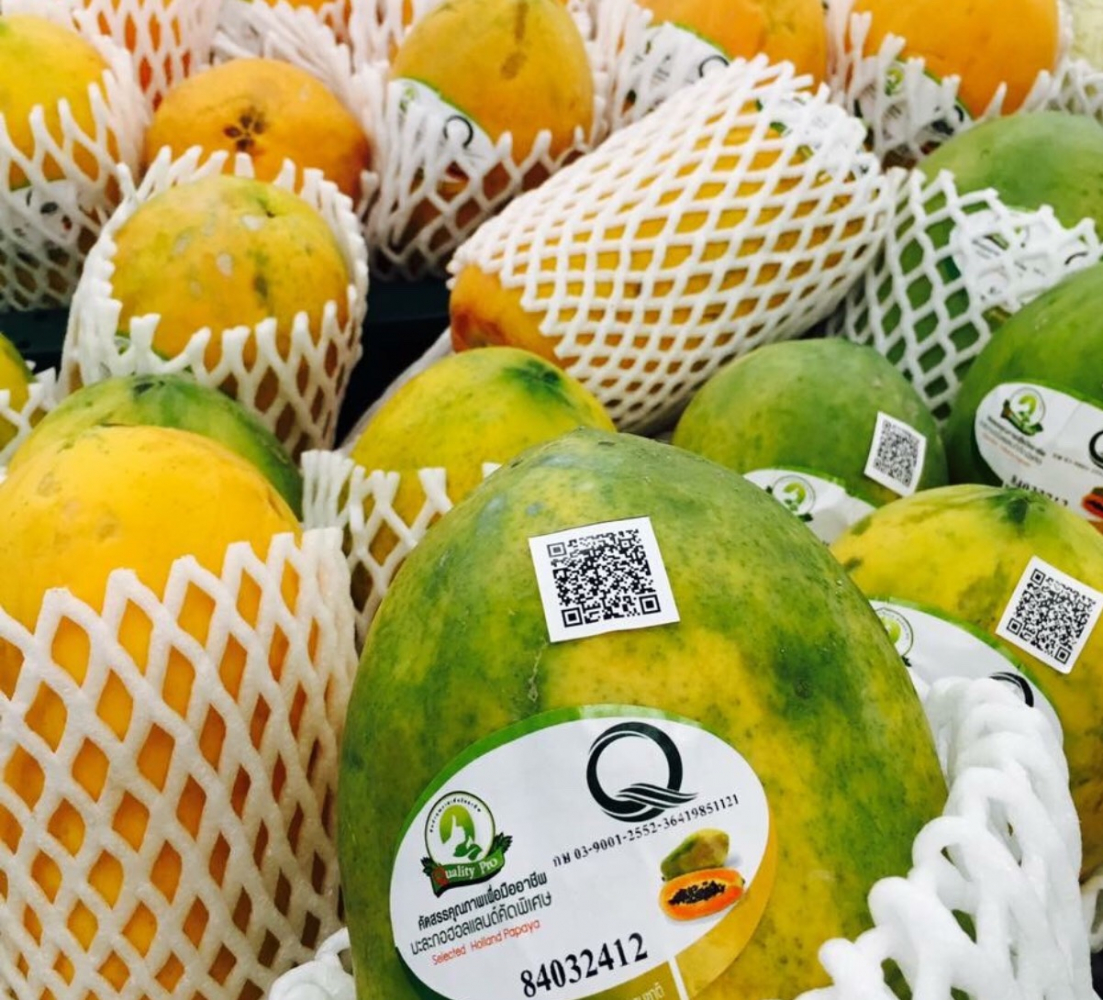
Working toward accredited agricultural and food product standards, examinations and certification under international practices, ACFS recently organised a campaign to raise the public awareness through a “Q” symbol. The aim is to create a positive image for and acceptance of the “Q” brand among entrepreneurs and customers.

“The “Q” is intended as a food safety mark certified by ACFS to assure customers they can trust that the product is safe and clean under the agriculture product standard act BE 2551, that ensures that the source of origin, food components and processing method meet the safety standard,” Wittawat said.

“We want to ensure customers have a good choice for selecting clean and safe food, which can eliminate food poisoning, as well as provide a good incentive for farmers and entrepreneurs to produce clean food that is also free from chemical contamination.”

ACFS has worked with modern trade companies such as TOP, Big C, The Mall, Macro and other fresh markets to garner their support for products bearing the “Q” logo, and ensure a significant channel for customers to choose and buy products meeting the safety standard.

Currently, two kinds of accredited agricultural product standards – products meeting the compulsory standard and those meeting a non-compulsory standard. Farmers, entrepreneurs, importers and exporters must meet the standard to earn the legitimacy that comes with certification.

The compulsory standard has covered six criteria related to smoked fresh fruit with sulphur dioxide, the acceptable amount of Alpha toxin in peanuts, good practice for producing frozen durian, good practice for collecting raw milk, and good practice in white shrimp farming to ensure no disease.

Under the agriculture product standard act BE 2551, 322 announcements have been declared, including 177 cases of product standards, 158 cases of manufacturing standards and 47 cases of data standards, among others.

Wittawat said that any entrepreneur carrying the “Q” mark branding must ensure that their guard is not lowered and that the product quality is maintained. Officials will make random checks, he said. If the firm fails to follow the safety standard, the right to use the “Q” mark will be revoked. Meanwhile, customers should select products with the “Q” logo, which will be easily seen on packaging along with details that include the name of the entrepreneur who checks the standard, the code of the certified agriculture product standard as well as the code and name of the person involved in the certification.

Customers will be able to check the source of Q-certified agricultural products. In the event of a problem, they have the right to access information about the product and public announcements will be made when faulty products are removed from the shelf. A person convicted of falsifying the mark faces three years in prison, or a Bt300,000 fine, or both.

Vietnamese work space provider invests in the Thai market

ศาสตร์เกษตรดินปุ๋ย : ขอบคุณแหล่งข้อมูล : หนังสือพิมพ์ The Nation

https://www.nationthailand.com/property/30376687

Vietnamese work space provider invests in the Thai market

Sep 25. 2019

Photo by:UPGen

Photo by:UPGen
By The Nation
321 Viewed

Vietnam based UPGen, the largest flexible and custom work space solutions provider, marked a major milestone today as the Group announced its expansion into Southeast Asia that will see it launching new sites in both Bangkok and Kuala Lumpur in the fourth quarter of 2019.

The new sites will span nearly 10,000 square metres, increasing UPGen’s existing portfolio of smart office space managed across Hanoi and Ho Chi Minh City. UPGen is also strengthening its market-leading position in Vietnam by rolling out another 50,000 sqm of spaces in the country.

The continued expansion follows a significant equity investment by Northstar Group in 2018. A series B fundraising is currently underway.

“Southeast Asia’s economy is rapidly expanding, yet the region lacks an infrastructure which supports and enables fast-growing corporates or start-ups as they move through different stages of growth. I am excited to introduce our disruptive coworking model in Bangkok as well as Kuala Lumpur, two markets that faces unique challenges. We offer a solution to the real pain points which hinder growth in the Vietnamese cities that we operate in and see great potential for our approach and services in other, comparable, Southeast Asian cities. For us, it is about being a platform for growth for our clients and helping them achieve the success to which they aspire,” co-founder Nam Do said

UPGen’s flexible, 360-degree approach to managing work space means a client’s space has its own look and feel, equipped with the necessary tools for employees to do their job better, function efficiently, as well as be more productive. UPGen offers two main solutions to clients; UPBase – shared workspaces and UPScale – one-site custom solutions. UPBase helps clients create performance boosting work spaces with the flexibility and room to grow or downsize as needed one month to the next while UPScale creates a space for companies that is totally unique to their corporate style and has their own look and feel.

Many fast-growing corporates and start-ups call Thailand and Malaysia home. Small and medium enterprises (SMEs) make up more than 98 per cent of total enterprises in both countries and generate about 40 per cent of GDP. UPGen’s flexible work spaces provide a low-cost solution for businesses with fast-growth in headcount or looking for better space in a prime location, offering smart financing solutions by turning capital expenditure into sustainable, monthly operating expenses including the cost of the work space’s design and fittings.

Founded in Hanoi in 2016, UPGen is one of only a few home-grown work space operators to be pursuing regional expansion. As the country’s key community builder, the Group also helps create exposure, enables connectivity in the ecosystem, supports scalability, and attracts talent for clients. The corporates and start-ups it currently works with include Tiki, Vietnam’s largest e-commerce retailer, ride-hailing firm Be Group, dynamic media company Yeah1 and Standard Chartered, among others. UPGen also counts Vietnam’s VPBank as strategic partner.

Supalai announces latest condo project

ศาสตร์เกษตรดินปุ๋ย : ขอบคุณแหล่งข้อมูล : หนังสือพิมพ์ The Nation

https://www.nationthailand.com/property/30376674

Supalai announces latest condo project

Sep 24. 2019
Perspective Supalai Lite Thaphra-Wongwian Yai/Photo by Supalai Plc

Perspective Supalai Lite Thaphra-Wongwian Yai/Photo by Supalai Plc
By The Nation

91 Viewed

Supalai Plc, a listed real estate developer, has introduced its latest condominium project, Supalai Lite Thaphra – Wongwian Yai.

Project value Bt1.24 billion in investment, unit prices of the project start at Bt1.98 million.

The project comprises 419 units – ranging from studio, one bedroom, two bedrooms, and three bathrooms with usable space between 28 to 99.5 square metres each, said Tritecha Tangmatitham, the company’s managing director today (September 24). Booking is scheduled for October 19-20.