Sea freight untouched by rising oil prices

ศาสตร์เกษตรดินปุ๋ย : ขอบคุณแหล่งข้อมูล : หนังสือพิมพ์ The Nation

https://www.nationthailand.com/business/30376382

Sea freight untouched by rising oil prices

Sep 18. 2019
By The Nation

596 Viewed

Though Thai businesses have been warned to closely monitor the situation in the Middle East, the rising price of oil after the attacks on Saudi oil facilities have yet to affect the cost of sea freight.

Wisit Limluecha, vice chair of the Thai National Shippers’ Council (TNSC), speaking as a representative of the Thai exporters, said the attacks should not disrupt the production of oil in Saudi Arabia for too long, so it should not have an impact on sea transport. He also said the cost of sea freight should remain unchanged as long as oil prices stay at around US$70 to $80 (Bt2,137 to Bt2,442) per barrel.

He said that though there is concern about whether the attacks in Saudi Arabia will affect the supply, preliminary assessment shows that the impact will be minimal because Saudi has many oil fields to cover global demands. The United States is also a big producer of oil, so it can meet demands. This disruption has also opened the window for other oil producers, while traders with oil reserves can also start selling at higher prices.

However, he said, if the price of crude oil rises well above $80 per barrel, it may adversely impact the export sector as the price of goods will rise due to an increase in production cost, but prices will not rise by much.

Wisit also pointed out that Thailand was able to handle things when the price of crude oil hit $100 per barrel, so this disruption should not have much of an impact.

“However, Thai businesses will have to closely monitor the situation, especially if the current tensions lead to a full-blown war and sea routes are closed. Then an economic crisis will be unavoidable. But for the time being, there’s no shortage of oil,” he added.

As of August 2019, there was no change to shipping freight costs, according to TNSC. For instance, a 20-foot equivalent unit (TEU) from Thailand to Shanghai costs $200 and a 40-foot equivalent unit (FEU) costs $300. For the Thailand-Hong Kong route, a TEU costs $100 and FEU $200; for Thailand-Japan a TEU costs $300 and FEU $400; and for Thailand-Australia a TEU costs $300 and FEU $600.

Thailand’s gain as Chinese shun pork for chicken

ศาสตร์เกษตรดินปุ๋ย : ขอบคุณแหล่งข้อมูล : หนังสือพิมพ์ The Nation

https://www.nationthailand.com/business/30376377

Thailand’s gain as Chinese shun pork for chicken

Sep 18. 2019
By The Nation

617 Viewed

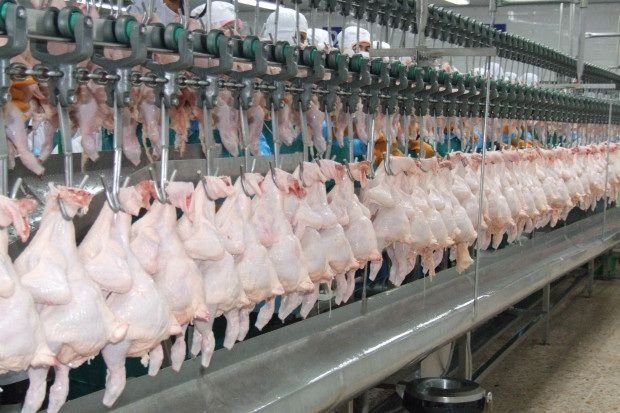
African swine fever has turned out to be a boon for Thai poultry exporters.

Seven Thai firms are licensed to ship poultry to China, where the disease was first detected in August 2018 and led to the culling of tens of thousands of pigs in a bid to stem its spread.

It also resulted in a dramatic shift in Chinese meat preferences from pork to chicken – and a matching hike in the retail price of poultry.

African swine fever – which cannot be transmitted to humans – has in the past year made its way around the world, affecting 10 European countries, four in Africa and four in Asia, migrating from China to Mongolia, Vietnam and Cambodia. The spread has yet to be contained.

Kukrit Areepakorn, manager of the Thai Broiler Processing Exporters Association, said the price of pork in China has skyrocketed since the government there began culling pigs, but the mass shift to chicken has also doubled the price of poultry.

China’s Certification and Accreditation Administration last year authorised just seven Thai chicken processors to export frozen meat and by-products there. Two are affiliates of CPF and the others are GFPT, Saha Farm, Goldenline, Thai Food Group and F&F Food.

“We haven’t seen chicken prices like this before,” Kukrit said. “Chicken’s feet sell for $4,200 per tonne, up from $2,000 last year, and mid-joint wings have gone from $3,000 to $5,300. It’s extremely fortunate for the seven companies that are able to export to China.”

The number of Thai firms involved could grow.

Given the growing demand and massive amounts needed, inspectors from China’s Bureau of Import and Export Food Safety have been sent to Thailand to conduct random but careful inspections at more processing factories and their findings will be announced soon, which could lead to more companies being approved to ship their poultry there.

Thai firms are doubly fortunate in that Thailand and Chile are the only countries on whose goods China collects no import duties, and Thailand is at an advantage again in terms of geographical proximity.

In the first seven months of 2019, Thailand exported 540,000 tonnes of poultry overseas, a 9.8-per-cent increase over the same period last year.

China alone imported 33,500 tonnes of chicken and by-products from Thailand in those seven months, a 712-per-cent jump, becoming the Kingdom’s third-biggest export market for poultry after the European Union and Japan.

Kukrit forecast that chicken exports will exceed the expected 900,000 tonnes over the full year.

Norway’s seafood council sets up regional office in Bangkok

ศาสตร์เกษตรดินปุ๋ย : ขอบคุณแหล่งข้อมูล : หนังสือพิมพ์ The Nation

https://www.nationthailand.com/business/30376369

Norway’s seafood council sets up regional office in Bangkok

Sep 18. 2019
Kjersti Rodsmoen, left, Norway’s ambassador to Thailand, and Asbjorn Warvik Rortveit

Kjersti Rodsmoen, left, Norway’s ambassador to Thailand, and Asbjorn Warvik Rortveit
By THE NATION

705 Viewed

The Norwegian Seafood Council (NSC) has set up its regional office in Bangkok to strengthen operations in Southeast Asia.

Asbjorn Warvik Rortveit, NSC’s Southeast Asia regional director, said: “I’m very proud to represent the Norwegian Seafood Council in this region, and I’m especially happy to be stationed here in Bangkok. The Norwegian seafood industry highlights food safety, animal welfare, sustainable production, and minimal use of antibiotics, things we know Thai consumers pay attention to. I, therefore, look forward to teach Thai consumers the benefits of seafood from Norway”.

The NSC said Thailand is the fastest-growing seafood market in Southeast Asia with export volume of 29,000 tonnes worth Bt4.5 billion. Seafood, especially salmon, has become very popular in Thailand as a healthy lifestyle has become more trendy.

The NSC said it was committed to developing a closer relationship between the Norwegian and Thai seafood industries.

Norway exports high-quality seafood to various markets globally. Thailand is currently the most significant market in Southeast Asia with high potential for growth in the future, the NSC said.

Thailand imports large volumes of fresh seafood from Norway, especially salmon, and Norway has dominated the fresh export market with a market share of 98 per cent  since 2018. The volume of fresh Norwegian salmon exported to Thailand exceeded 10,000 tonnes for the first time in 2018.

By the third quarter of 2019, salmon and trout exports exceeded 11,000 tonnes. The NSC also plans market activities in both business-to-business (B2B) and business-to-customer (B2C). Particularly in the B2B market, the NSC has partnered with many restaurants in Thailand such as Sushi Den, Zen, S&P and Thammachart, the NSC said. “Salmon Academy is a popular training programme we use to educate our partners about Norwegian salmon and fjord trout. For the B2C market, the NSC aims to build a clear identity for fresh Norwegian salmon and fjord trout, and strengthen the position as the most suitable fish for raw consumption,” the NSC said

“In Thailand, there is a good potential for growth for the Norwegian seafood industry. The Norwegian Seafood Council is committed to provide the world’s best-quality seafood to Thailand and Southeast Asia,” Rortveit said.

Kjersti Rodsmoen, Norway’s ambassador to Thailand, said: “I am delighted to continue the long-established bond of Thailand and Norway by welcoming the new regional office of NSC in the Embassy of Norway in Bangkok and supporting the best seafood products from Norway to Thailand.”

Gov’t reaches Bt349 bn fiscal deficit for 11 months

ศาสตร์เกษตรดินปุ๋ย : ขอบคุณแหล่งข้อมูล : หนังสือพิมพ์ The Nation

https://www.nationthailand.com/business/30376354

Gov’t reaches Bt349 bn fiscal deficit for 11 months

Sep 18. 2019
By The Nation

894 Viewed

The government has accumulated a Bt348.97 billion fiscal balance deficit for the first 11 months of the fiscal year 2019 (October 2018 to August 2019), the Fiscal Policy Office and Ministry of Finance report. 

The government has received Bt2.309 trillion in revenue for the 11-month period, Lavaron Sangsnit, the director–general of the Fiscal Policy Office and the Ministry of Finance spokesperson, said.

Government disbursements were Bt2.7 trillion. To finance the deficit, the government has borrowed Bt348.978 billion, thus leaving a treasury reserve of Bt512.27 billion at the end of August 2019.

New property player steers away from hot spots

ศาสตร์เกษตรดินปุ๋ย : ขอบคุณแหล่งข้อมูล : หนังสือพิมพ์ The Nation

https://www.nationthailand.com/property/30376334

New property player steers away from hot spots

Sep 17. 2019
By THE NATION

128 Viewed

Neo Group, a new property development company, opted to stay away from the high competition in the horizontal housing market, by selecting three locations in the heart of Ladprao for its projects, highlighting “Value for Money”, “Great Location”, and “Perfectly Balanced Design” to serve the needs of all lifestyles.

Piyanuch Boonyiamyien, president of Neo 3241 Development Co Ltd or Neo Group, revealed that Neo Group is a new property development company with old faces who have been in the industry for more than 10 years and are specialised in land  and development as well as project feasibility study with large organisations.

Piyanuch gathered her friends who are interested in and have a passion for property development to bring together their skills, knowledge and experiences to create housing projects that make the most of every square inch of space, and still leave room for further extension.

Four projects have been launched: The Classy Condo Ratchada 19, Neo House Nakniwat 32, Neo Space Sukhontasawas 3, and Neo Space Plus Sukhontasawas 3. All have received  good feedback from the residents.

“The team and everyone involved have been studying the results and feedback from these properties in order to improve our future projects as well as learning the demands of our target customers. We have realised that apart from the key factors of location, potential of the location, convenient transportation and accessibility to food and suppliers, interior and exterior design and space allocation to match space usage without major renovation also figure  in a customer’s decision making process.

“Once the information has been compiled, we will  launch three more projects with a total investment of Bt300 million,  focusing on serving the demands of all lifestyles, including townhomes, home offices, single and twin houses on good  locations in the heart of Ladprao. Our understanding of  customer demands are reflected in a project’s location, design, space allocation and parking among others, to ensure every square metre is fully utilised, given the increasing land prices. Reasonable prices within customers’ budget is another key strength of the three planned properties.  Overall, we are focusing on 4 key elements:  location,  design,  value for money and the balance of function and design”, she said.

Piyanuch  concluded that “ As a small company. we are very quick in managing and making decision, we are in a very strong position to impress customers and response very quickly to their requirements throughout their decision process, both during and after sale”.

House & Condo Show presales up 10%

ศาสตร์เกษตรดินปุ๋ย : ขอบคุณแหล่งข้อมูล : หนังสือพิมพ์ The Nation

https://www.nationthailand.com/property/30376330

House & Condo Show presales up 10%

Sep 17. 2019
By THE NATION

332 Viewed

The 41st House & Condo Show, which opened its doors from September 12 to 15, secured presales worth Bt3.5 billion from homebuyers.

The figure rose 10 per cent from the fair last year, said Churat Chakarakul, who was in charge of organising the fair.

The total included 37 per cent of presales for townhouses, 34 per cent for condominiums, 20 per cent for single houses and 6 per cent for attached houses.

The value of bank loan applications during the fair was Bt4 billion.

The fair was co-hosted by the Housing Business Association, the Thai Condominium Association and the Thai Real Estate Organisation.

DBS to double wealth business in Thailand by 2023

ศาสตร์เกษตรดินปุ๋ย : ขอบคุณแหล่งข้อมูล : หนังสือพิมพ์ The Nation

https://www.nationthailand.com/business/30376362

DBS to double wealth business in Thailand by 2023

Sep 18. 2019
Pattera Dilokrungthirapop of DBS Vickers Securities (Thailand), left, and Sim S Lim of DBS Bank unveil their new partnership, by which DBS plans to double its wealth assets under management in Thailand by 2023.

Pattera Dilokrungthirapop of DBS Vickers Securities (Thailand), left, and Sim S Lim of DBS Bank unveil their new partnership, by which DBS plans to double its wealth assets under management in Thailand by 2023.
By THE NATION

57 Viewed

DBS Bank on Wednesday (September 18) announced a partnership between DBS Private Bank and DBS Vickers Securities (Thailand) aimed at doubling its wealth assets under management in Thailand from S$4 billion to $8 billion by 2023.

Targeting Thailand’s growing pool of high-net-worth individuals (HNWIs) who are increasingly diversifying their portfolios and accessing investment opportunities overseas, the partnership seeks to provide access to fully integrated onshore and offshore wealth management.

To cater to rising demand, DBS also aims to double its headcount for wealth-relationship managers (RMs) in Thailand by 2023.

Thailand was home to more 122,000 HNWIs as of 2017, almost equal the number in Singapore.

HNWIs are defined as having investable assets of US$1 million or more, excluding primary residence, collectibles, consumables and consumer durables.

Thai wealth assets under management grew at a robust compound annual growth rate of 12.7 per cent between 2010 to 2017, according to Capgemini’s Asia-Pacific Wealth Report 2018.

Today, much of Thai wealth is held in family-owned businesses, which are key drivers of the economy, accounting for more than 80 per cent of the nation’s GDP and over one-third of listed firms on the Stock Exchange of Thailand, according to PwC Thailand Family Business Survey 2019.

DBS believes these family businesses will be well-served by its unique “one-bank” proposition, which provides access to offerings across wealth management, retail, investment and corporate banking.

The partnership brings together DBS Vickers Securities (Thailand)’s comprehensive onshore offering across funds, equities, structured notes and bonds and DBS Private Bank’s global wealth expertise, extensive Asian network and offshore wealth management solutions.

This first-in-market “one-stop” proposition enables DBS’ wealth clients in Thailand to conveniently access and manage their investments in one place. In contrast, existing market practices require investors to go through separate entities for their investment needs – one for onshore and another for offshore.

“This partnership represents our commitment to growing our business in Thailand,” said Sim S Lim, Group Head of Wealth Management and Consumer Banking at DBS Bank. “We believe the Thai wealth market holds immense potential, having witnessed Thai investors’ growing sophistication and receptiveness to investment ideas, and the Bank of Thailand’s encouraging regulatory stance towards offshore investments.

“We’ve served Thai investors for over two decades through our securities business and understand their needs and preferences. With our strong Asian expertise and connectivity, leading digital capabilities, and reputation as Asia’s safest and the world’s best, we seek to become a trusted partner by providing customers with seamless access to opportunities and wealth management solutions both within and beyond Thailand’s shores.”

Pattera Dilokrungthirapop, CEO at DBS Vickers Securities (Thailand), said Thai HNWIs are “relatively conservative with offshore investments, but this is beginning to change”.

“As their personal wealth grows, we’re seeing corresponding demand for holistic wealth management services and global investment strategies. Today, what they want is a ‘one-stop shop’ that provides trusted advisory, wealth products and solutions, and a seamless onshore and offshore experience – a gap that DBS can effectively fill through this partnership.”

DBS has been operating a securities business in Thailand since 1998. Today, DBS Vickers Securities (Thailand) holds a full securities licence and has established its position as a leading securities company in Thailand.

Thai telecom operators could see annual revenue boost of $1 billion from 5G

ศาสตร์เกษตรดินปุ๋ย : ขอบคุณแหล่งข้อมูล : หนังสือพิมพ์ The Nation

https://www.nationthailand.com/business/30376316

Thai telecom operators could see annual revenue boost of $1 billion from 5G

Sep 17. 2019
By THE NATION

1,135 Viewed

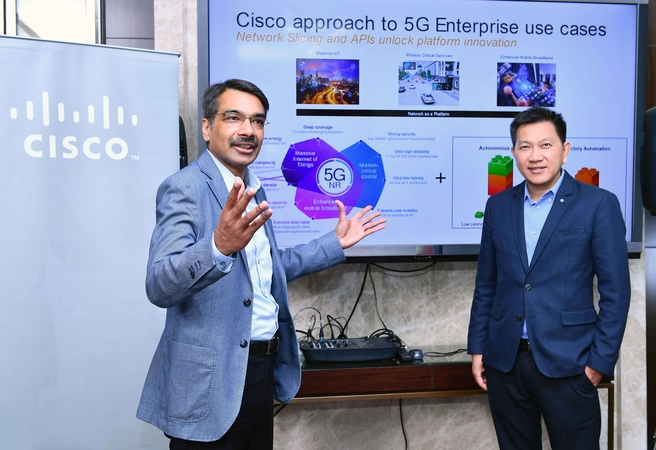
The rollout of 5G services could boost the annual revenue of Thai telecom operators by as much as $1.1 billion (Bt33.5 billion) by 2025, according to a new study commissioned by global technology leader Cisco.

The study, conducted by management consulting firm AT Kearney, highlights that 5G promises speeds up to 50 times faster, 10 times more responsive, and much lower power connectivity than 4G.

Speed, low latency and enhanced connectivity will help telecom operators provide super-fast Internet connections that enable streaming of high-definition videos, cloud gaming and delivery of interactive augmented and virtual reality-powered content to consumers, the study said.

The technology will also help to fast-track smart cities, Industry 4.0, large-scale Internet of Things (IoT) deployments, and more. This will enable telecom operators to increase revenues both from consumers as well as enterprise clients.

Titled “5G in Asean: Reigniting Growth in Enterprise and Consumer Markets”, the study states that Thailand will be among the first few countries to roll out 5G services in 2021.

The study expects 5G penetration to be around 25 to 40 per cent in major countries in the region by 2025, with Thailand seeing 33 per cent penetration. The total number of 5G subscriptions in Asean is forecast to exceed 200 million in 2025.

“Businesses across Thailand, especially in key sectors such as manufacturing, are looking to 4IR [Fourth Industrial Revolution] technologies,” said Vatsun Thirapatarpong, managing director for Thailand and Indochina at Cisco. “The rollout of 5G services in the coming years will bring substantial benefits to enterprises. At the same time, consumers are eagerly awaiting the rollout for an enhanced experience with content consumption on their personal devices. Together, these two trends will play a key role in boosting Thailand’s economic growth in the coming years,” he added.

“The expected rollout of 5G services comes at a perfect time for telecom operators,” said Naveen Menon, president for the Asean region at Cisco. “The usage of cellular data is growing rapidly as users access an increasing amount of services and content on their personal devices. At the same time, enterprises are looking to leverage the Fourth Industrial Revolution, which is underpinned by artificial intelligence, IoT, 3D printing, advanced robotics and wearables, to boost growth,” he added.

Telecom operators are likely to invest about $10 billion in the region’s 5G infrastructure by 2025, the study said.

“The rollout of 5G services will require substantial investments in technology to modernise underlying networks,” pointed out Dharmesh Malhotra, managing director for Cisco’s Service Provider business in Asean.

“Telecom operators in the region are likely to continue investing in upgrading their 4G networks and building 5G capabilities in a phased manner. This will allow 4G and 5G to operate simultaneously. Cisco is partnering with network operators in their journey to 5G rollout and is already engaged with customers in Asean on 5G transformation,” he added.

However, the study says that to unlock this potential, the region needs to address some key challenges.

Foremost among these is the slow availability of spectrum for 5G services and the resulting suboptimal network rollout.

5G will be deployed across multiple bands, with three bands likely to be important globally in the near term – low band (700 MHz), mid-band (3.5 to 4.2 GHz), and high-band on mmWave spectrum (24 to 28 GHz).

In Southeast Asia, the low band is being used for FTA TV, while the mid-band is used for satellite services.

Although mmWave bands are available, deployment will need to be combined with low-band spectrum to enable an economically viable coverage of suburban and rural areas as well as in-building access.

Consumers are excited about 5G and are willing to pay for better quality, unlike 3G and 4G technology, the study noted, warning that it would be fatal for operators to engage in a price war just to attract a higher number of subscribers in the hope they can charge them more at a later stage.

On the enterprise side, operators will need to build new capabilities and bundle enhanced connectivity with solutions and applications to help customers understand, implement, and scale up value-enhancing services. They will also have to contend with a new set of competitors that provide private networks to enterprises.

“The overall potential of 5G rollout in Asean is substantial,” said Nikolai Dobberstein, partner at AT Kearney and a lead author of the report. “However, to live up to the full potential, the region will need to address the main challenges. This will require a coordinated effort from all stakeholders – regulators, operators, and enterprises. Among the key issues that regulators would need to take the lead on are: ensuring near-term spectrum availability, fostering infrastructure sharing and nurturing the development of national cybersecurity capabilities across the region.”

In Thailand, the National Broadcasting and Telecommunications Commission is expected to release the 700 MHz spectrum on technology-neutral terms and allow licence winners to roll out 5G services in December 2020. The commission is also considering auctioning the 2.6 GHz band for 5G by 2020, according to the study.


More to be done to reduce, treat common diseases, says Upjohn

ศาสตร์เกษตรดินปุ๋ย : ขอบคุณแหล่งข้อมูล : หนังสือพิมพ์ The Nation

https://www.nationthailand.com/business/30376315

More to be done to reduce, treat common diseases, says Upjohn

Sep 17. 2019
By The Nation

668 Viewed

Upjohn Thailand says it is committed to an integrated strategy to improve patient health and relieve the burden of non-communicable diseases with trusted, quality medicines for every patient, everywhere. 

Upjohn will expand its ability to prevent and to treat non-communicable diseases (NCDs) in Thailand, the local branch of the pharmaceutical giant said in a Tuesday release.

Upjohn (Thailand) Ltd was established to promote good health for all Thais with targeted coverage of more than 1.5 million patients in 2020 and 2 million patients in 2025, or 33 per cent of Thailand’s patients with non-communicable diseases (NCDs).

Pichitchai Jakpaisan, the general manager of Upjohn (Thailand) Ltd, said the company wants to be seen as a leader in dealing with NCDs “by building trust, demonstrating that we have high-quality products, and providing support through our medical expertise”.

About 15 per cent of Thais are now NCD patients, about 10.5 million patients, but 40 Thais die from NCDs every hour. This works out to 1,000 Thais every day, or 350,000 Thais who die yearly from NCDs.

Though the figures are sobering figures, half of Thais dealing with NCDs can survive through effective prevention and treatment, according to the release.

“We want to help the Thai people stay healthy for as long as they live,” said Pichitchai. “We have 20 brands available in Thailand, including therapies in the areas of cardiovascular disease, pain, urology, psychiatry, and other NCDs. We are focused on our mission to serve NCD products through three channels: government hospitals, private hospitals and retail. Through our strategies, we expect to cover more than 1.5 million patients in 2020 and 2 million patients in 2025, or 33 per cent of Thailand’s NCD patients.”

Dr Sachin Rustagi, the research and development lead  for Thailand and Indochina, for the company, sees NCDs as a slow-moving disaster and the leading cause of death and disability, as they account for 71 per cent, or 41 million, of all global deaths each year. Of the 41 million deaths, nearly 85 per cent are in emerging markets and more than a third are premature.

“In Thailand, NCDs are the cause of death for over 75 per cent of all Thai mortalities. The simple fact is that premature deaths are preventable. Doing nothing will cost about $7 trillion, while the cost of prevention is $170 billion worldwide,” said Rustagi.

The four major NCDs are coronary artery disease and cerebrovascular disease, cancer, chronic obstructive pulmonary disease and diabetes. The risk factors for the four diseases include an unhealthy diet, tobacco use, harmful use of alcohol, physical inactivity and air pollution, he said.

“In this regard, the current standards, criteria, and surveillance approaches are insufficient for handling such concerns while decreasing the effects of NCDs in a comprehensive and efficient manner. It’s important that we strengthen the coordination between the public and private sectors, and really focus on the key diseases,” said Rustagi.

“We need to have intersectional partnerships among the government, businesses, professionals and civil societies in order to effectively translate urgent policy priorities into action.”

The pharmaceutical company is focused on relieving the burden of NCDs “with trusted, quality medicines for every patient, everywhere, with a goal of treating 225 million new patients worldwide by 2025, including in Thailand,” said Rustagi.

To help patients living with uncontrolled risk factors that put them at risk of NCDs in the future, Upjohn has launched the “Act Today for Tomorrow” programme globally, aiming to create urgency and underline the importance of better treating NCDs with Upjohn’s portfolios, the release noted.

Standard Chartered looks to digital, new markets in time of disruption

ศาสตร์เกษตรดินปุ๋ย : ขอบคุณแหล่งข้อมูล : หนังสือพิมพ์ The Nation

https://www.nationthailand.com/business/30376304

Standard Chartered looks to digital, new markets in time of disruption

Sep 17. 2019
Bill Winters, Group Chief Executive at Standard Chartered Bank.

Bill Winters, Group Chief Executive at Standard Chartered Bank.
By The Nation

928 Viewed

Standard Chartered Bank (SC) said it is aiming to become a big support for the future global investment market while also preparing to deal with digital disruption.

The bank saw an opportunity throughout Asia as the economy of Asean countries grew rapidly in recent years. It is investing Bt60 billion annually to improve its digital banking services, and will this year see a 26-per-cent growth, matching the previous year, said Bill Winters, the group chief executive for Standard Chartered Bank

Winters said the strategy for this year is to seek new business opportunity, especially opportunities to support high-growth markets such as Thailand.

The Bank has been in Thailand for 125 years, and its history has encouraged the bank to move forward. It now provides services in every major Asian jurisdiction, including China, Hong Kong, Taiwan and India, as well as in Africa and the Middle East.

Standard Charter’s main strategy is to invest more on facilitating cross-border trade, while also investing in every border-trade market due to the recent rapid growth. He forecast that over the next 20 years, growth in the global market will depend significantly on border trade.

Moreover, the bank is also attending to business expansion and approaches to entering new markets. Recently, SC received permission to pursue banking s in Saudi Arabia, adding more investment opportunities in a new market.

In the next three years, the bank is forecasted for 3-5 per cent constant yearly income growth.

“Every bank has an upturn or a downturn in every market. Some markets have a good economy but some don’t. Some markets face politically change. However, we have to follow our motto ‘Here for Good ’. This means we will stand beside our customers whether in an upturn or a downturn.

“When we decide to invest, it means a long-term investment. We intend to expand our business constantly. Our strategy is to improve what we have been doing well in such markets and to take part in growing such markets.”

With digital disruption hitting every sector, banks are also having to adapted to change, he said. In doing so, the bank will evaluate its processes so as to offer better service.

Banks have invested $1-2 billion, about Bt60 billion, with the main investment focussed on digitisation to reshape traditional services as digital services. Previously, the bank provided the service through a new licence. But digital services don’t have to be based only stand-alone banks. The new services are now available in 10 countries, including India, Singapore and in Africa, with Hong Kong the next to open for digital services. Providing digital services to many countries is vital to the future success of the bank, he said.

From left: Bill Winters and Plakorn Wanglee

From left: Bill Winters and Plakorn Wanglee

Plakorn Wanglee, the president and CEO of the Thailand office, said the bank here will grow at a similar rate to last year, which was 3-5 per cent for the full year.

Their most important business strategy is encouraging businesses to invest more in both internal and external markets. A business satisfied with the internal market will seek opportunities outside the country, especially in Asia and particularly the Asean countries such as Vietnam, Cambodia, Laos and Myanmar. The bank is eager to offer its support to encourage investment in both markets.

The bank is also looking to growth of the stock market, especially during fluctuating markets. The bank will take part in risk management during fluctuating markets for a business. As well, it creates new products to support institutional investors and foreign investors.

“The disruption has encouraged bank to adapt to the new change. We have to invest more in digital technologies to support our customers’ business, such as cooperating with the Bank of Thailand (BOT) to develop a payment application,: said Plakorn. “Recently, we collaborated with PTT on a trial of a digital oil-trading system on the Voltron blockchain-based industry platform in order to improve services for our customers.”