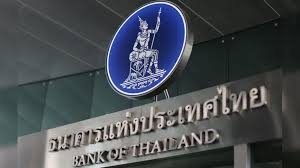
Govt planning e-wallet to boost domestic tourism

ศาสตร์เกษตรดินปุ๋ย : ขอบคุณแหล่งข้อมูล : หนังสือพิมพ์ The Nation

https://www.nationthailand.com/business/30375642

Govt planning e-wallet to boost domestic tourism

Aug 31. 2019
By The Nation

654 Viewed

Finance Minister Uttama Savanayana said on August 30 that the government will launch an e-wallet app next month as part of efforts to boost domestic tourism.

All Thai nationals, aged 18 onwards, who register for the e-wallet will get a Bt1,000 credit that they can spend on travelling. This is part of the government stimulus package.

Thai travellers who top up their wallet to spend on travel-related expenses such as hotel or transport, will get 15 per cent of their money back, though this will be limited to Bt4,500 per person.

The Comptroller General Department has opened registration for shops and food vendors, and Uttama expects some 130,000 shops to apply.

Holders of state-welfare cards are also eligible for the Bt1,000 subsidy provided they use the money outside their hometowns.

BOT to keep close eye on unemployment rate

ศาสตร์เกษตรดินปุ๋ย : ขอบคุณแหล่งข้อมูล : หนังสือพิมพ์ The Nation

https://www.nationthailand.com/business/30375641

BOT to keep close eye on unemployment rate

Aug 31. 2019
By THE NATION

652 Viewed

The Bank of Thailand (BOT) will keep a close watch on unemployment, especially since it expects economic growth to be less than 3 per cent this year due to external negative factors, its senior director Don Nakornthab said on August 30.

The unemployment rate in July was 1.1 per cent, compared to 0.9 per cent in June.

The bank is keeping a close eye on the situation because unemployment can affect domestic consumption and people’s ability to repay their debts.

Krungthai, BBL, TMB top mobile banking woes

ศาสตร์เกษตรดินปุ๋ย : ขอบคุณแหล่งข้อมูล : หนังสือพิมพ์ The Nation

https://www.nationthailand.com/business/30375646

Krungthai, BBL, TMB top mobile banking woes

Aug 30. 2019
Siritida

Siritida
By The Nation

668 Viewed

The Bank of Thailand has assessed the quality of electronic banking services in the second quarter of this year as part of its efforts to protect consumer interest and to ensure bank clients will be updated with the latest  information timely in the event of a system failure, said Siritida Panomwon Na Ayudhya, assistance governor, on Friday.

Statistics provided by the payment system and financial technology group of the central bank are as follows:

In mobile banking services, state-owned Krungthai Bank (KTB) experienced 7 times of system failure; Bangkok Bank (BBL) 5 times; TMB 4 times; CIMB Thai and Thanachart,  2 times each;  and Tisco 1 time.

In internet banking, BBL and KTB had 2 rounds of system error each while TMB and Thanachart reported 1 time each.

For ATM and CDM(cash deposit machine), Krungsri and TMB  suffered two glitch each compared to 1 time each at  BBL, KTB, Thanachart and Thai Credit Retail.

For system trouble at bank branch, KTB, TMB and Thanachart all experienced 1 time each.

SET companies see 17 per cent combined drop in first half profit

ศาสตร์เกษตรดินปุ๋ย : ขอบคุณแหล่งข้อมูล : หนังสือพิมพ์ The Nation

https://www.nationthailand.com/business/30375630

SET companies see 17 per cent combined drop in first half profit

Aug 30. 2019
Manpong

Manpong
By THE NATION

338 Viewed

The companies listed in the Stock Exchange of Thailand (SET) saw their combined net profit in the first half of this year drop 17 per cent year on year to Bt373 billion.

According to Manpong Senanarong, the SET senior executive vice president, 679 out of 712 listed companies reported financial performance in the first half to the SET. Of the total, 501 posted net profit.

These profitable companies showed total sale revenue of Bt5.534 trillion, up 1.5 per cent year on year, but their core operating profit dipped 21.5 per cent year on year to Bt424.068 billion and their net profit dropped 17.1 per cent year on year to Bt373.170 billion.

For the second quarter they posted total sales revenue of Bt2.781 trillion, down 0.8 per cent year on year, and net profit of Bt164.713 billion, down 20.7 per cent year on year.

Their softening first half performance was attributed to the impact of the prolonged US-China trade war,

Their core operating profit margin in the first half fell to 7.7 per cent from 9.9 per cent over the same period last year, while their net profit margin slid to 6.7 per cent from 7.9 per cent. This caused them to put a higher demand on revolving funds.

Thai economy has minor July expansion, overall performance remains lacklustre: BOT

ศาสตร์เกษตรดินปุ๋ย : ขอบคุณแหล่งข้อมูล : หนังสือพิมพ์ The Nation

https://www.nationthailand.com/business/30375624

Thai economy has minor July expansion, overall performance remains lacklustre: BOT

Aug 30. 2019
By The Nation

680 Viewed

In July 2019, the Thai economy expanded at a slightly higher pace than in the previous month, according to the Bank of Thailand at a press conference on Friday.

The BOT said that private consumption indicators improved on the back of spending on durable and semi-durable goods, although overall private consumption continued to be on a decelerating trend relative to the first half of this year. Public spending rebounded from central government expenditures, while capital expenditures of state enterprises continued to contract.

Private investment indicators were flat. On the external front, the value of merchandise exports slightly expanded, owing mainly to gold exports. Excluding gold, export value growth remained negative, consistent with the decrease in manufacturing production. The tourism sector expanded at a higher rate due to an increase in the number of Chinese and Indian tourists, the former partly due to the low base effect from the tour boat incident in Phuket last year.

On the stability front, headline inflation edged higher mainly on the back of the increase in fresh food prices, while core inflation decelerated. The seasonally adjusted unemployment rate increased from the previous month. The current account registered a surplus, attributed mainly to the trade balance. The capital and financial accounts posted a surplus on both the assets and the liabilities positions.

BOT added that private consumption indicators expanded at a higher rate from the same period of last year on the back of spending on durable goods, attributed to the increase in the number of newly registered motorcycles and the number of commercial car sales, as well as on the spending on semi-durable goods, attributed to the retail sales of semi-durable goods and garment imports. Meanwhile, spending on non-durable goods and services moderated and remained unchanged, respectively. Overall, private consumption expanded at a softer pace compared to the first half of this year, partly due to weakening supporting factors, consistent with the continual deterioration of consumer confidence. Non-farm income turned into contraction as the number of employed persons decreased. Farm income expanded at a softer pace mainly from agricultural prices, particularly fruits, while agricultural production was unchanged.

Public spending, excluding transfers, rebounded from the same period last year from both current and capital expenditures of the central government. Current spending slightly increased mainly from compensation of civil servants as a result of an increase in pension disbursement. Capital spending increased from disbursement of the Department of Highways and the Royal Thai Police. However, capital spending of state enterprises continued to decrease from lower disbursement of PTT Public Co Ltd and the Mass Rapid Transit Authority of Thailand.

The value of merchandise exports expanded by 3.8 per cent from the same period last year, which was the first positive growth in 8 months. However, the value of merchandise exports excluding gold continued to contract at 1.7 per cent. The continued contraction can be attributed to weaker global demand as a result of slower economic growth in a number of major trading economies, the trade conflict between the US and China, the continued downturn in the electronic cycle and the contraction of global crude oil prices.

The contraction was mainly due to the decrease in exports of petroleum-related products from both prices and export volume, as well as of electronic products, especially hard disk drives, integrated circuits, printed circuit boards and cellular phones. However, hard disk drive exports showed a recovery sign supported by the relocation of the production base from Malaysia. However, exports in several categories continued to expand, partly due to the substitution of Chinese goods in the US market, such as television sets, refrigerators, car tyres, canned fish and garments. In addition, exports of air-conditioners continued to expand on the back of warmer than usual temperatures, particularly in Europe and Australia. Moreover, exports of fruit to China continued to expand, despite China’s economic slowdown.

The value of merchandise imports expanded by 0.9 per cent from the same period last year, and excluding gold, the value of merchandise imports expanded by 4.2 per cent. The expansion was attributable to an increase in three factors. First, the increase in imports of raw and intermediate goods excluding fuel, particularly steels and electronic parts, while imports of crude oil contracted from both prices and volume partly due to the continual shutdown of oil refineries for maintenance from the previous month. Second, the increase in imports of capital goods excluding aircrafts, ships, floating structures, and locomotives, particularly steam turbine and machinery for sugar production. Third, an increase in imports of consumer goods, especially non-durable goods accelerated this month partly due to the low base effect of some goods, such as jewellery and electrical appliances.

The number of Chinese tourists rebounded from the low base effect as a result of the tour boat incident in Phuket last year, while the number of Indian tourists benefited from the exemption of the visa on arrival fee. However, the number of tourists from Europe decreased, particularly the number of Russian tourists following an economic slowdown.

Private investment indicators, on net, were unchanged from the same period last year. Investment in machinery and equipment slightly expanded. Meanwhile, investment in construction contracted from the continual decline in permitted construction area, except for areas for manufacturing purposes which expanded. Moreover, construction material sales contracted following the contraction of concrete pile sales, consistent with the slowdown in the real estate sector. After seasonal adjustment, private investment indicators were unchanged from the previous month.

On the stability front, headline inflation edged higher to 0.98 per cent from 0.87 per cent last month, due mainly to an increase in fresh food prices, coupled with a smaller contraction in energy prices following an increase in domestic retail petroleum prices as a result of a rise in global crude oil prices. Meanwhile, core inflation decelerated from the previous month, reflecting a slowdown in domestic demand. The seasonally-adjusted unemployment rate increased from last month. The current account registered a surplus due mainly to an increase in the trade surplus. The overall capital and financial accounts registered a surplus from both the assets and liabilities positions.


Govt to use blockchain, big data so welfare cards go to those in need

ศาสตร์เกษตรดินปุ๋ย : ขอบคุณแหล่งข้อมูล : หนังสือพิมพ์ The Nation

https://www.nationthailand.com/business/30375619

Govt to use blockchain, big data so welfare cards go to those in need

Aug 30. 2019
Uttama

Uttama
By Wichit Chaitrong
The Nation

672 Viewed

Finance Minister Uttama Savanayana said on Friday that the ministry would use blockchain technology and big data to manage welfare cards, which currently cover 14.5 million people.

His comment comes as many observers suspect the welfare cards programme benefits a number of undeserved rich people. Prime Minister General Prayut Chan-o-cha also recently urged high income people to give up their welfare cards.

Uttama said updated data will help the government decide who will be eligible in the next round to receive cash handouts under the programme.

The superior data system, to be implemented this year, will also help the government design better measures to support the poor, the minister said.

The scope of big data will cover public healthcare services, he said.

Qatar eyes increased investment in Thailand

ศาสตร์เกษตรดินปุ๋ย : ขอบคุณแหล่งข้อมูล : หนังสือพิมพ์ The Nation

https://www.nationthailand.com/business/30375611

Qatar eyes increased investment in Thailand

Aug 30. 2019
Somkid Jatusripitak

Somkid Jatusripitak
By The Nation

486 Viewed

Qatar is interested in expanding its investment in Thailand to increase the trade value of US$3.9 billion (Bt119.2 billion) witnessed last year by the two countries, Deputy Prime Minister Somkid Jatusripitak said after meeting Qatari Deputy Prime Minister and Foreign Affairs Minister Sheikh Mohammed bin Abdulrahman bin Jassim Al-Thani on Thursday.

Somkid said Qatar wants to expand investment in Thailand’s energy, medical care, aviation, and tourism sectors by collaborating with both the public and private sectors.

Qatar also has a sovereign wealth fund of more than $338 billion to expand investment overseas, including in Thailand, Somkid added.

“We have assigned the Board of Investment to collaborate with Qatar to promote investment in the Eastern Economic Corridor and other projects that meet the demand of Qatari investors who see Thailand as a gateway to other Asean countries, especially the CLMV [Cambodia, Laos, Myanmar, Vietnam] bloc,” he said.

Hua Hin condo market picks up

ศาสตร์เกษตรดินปุ๋ย : ขอบคุณแหล่งข้อมูล : หนังสือพิมพ์ The Nation

https://www.nationthailand.com/property/30375605

Hua Hin condo market picks up

Aug 30. 2019
File Photo Hua Hin/The Nation

File Photo Hua Hin/The Nation
By The Nation

169 Viewed

The condominium market in Hua Hin has returned to a balanced state thanks to developers slowing down the launches of local condominium projects. This follows the opening of a large number of developments in 2011 and 2012, which caused demand to fall behind the supply, according to Knight Frank Thailand research.

The company’s director of research Risinee Sarikaputra said that in the middle of 2019, the supply of condominiums in Hua Hin totalled 26,886 units. An average of 1,120 new condominium units were put on sale annually between 2016 and 2018, as operators began to delay the launch of projects in the Hua Hin area because of the oversupply. In 2011 and 2012, new condos were being launched at a rate of 6,000 units per year, resulting in reduced sales rates of 45 per cent in 2011 and 56 per cent the following year. That same period also saw operators engage in price wars by devising various promotions to boost sales. Many operators had to delay the launch of their projects and some projects were cancelled altogether.

Slightly more than 22,000 condominiums have been sold in the Hua Hin area out of a supply of 26,886 units, which represents a sales rate of 83 per cent. The lowest sales rate was in 2011. The sales rate increased to 71 per cent in 2015 and 78 per cent in 2017. It was the highest in mid-2019, at 83 per cent. The area with the most supply remaining includes Cha-am, with about 3,376 units available for sale while the areas with the least amount of available supply are Hua Hin and Khao Takiab, with only 254 and 295 units remaining, respectively. The sales rates in Khao Takiab and Hua Hin are 92 and 89 per cent, respectively.

Risinee said that the main buyers in Hua Hin are still Thai people looking for a holiday home for their weekend breaks, and they may rent the units out when they are not there. Foreign customers who buy condominiums in Hua Hin only account for 10 per cent of all buyers; this buyer group consists of foreigners from Scandinavian countries, China, Hong Kong and Singapore.

In terms of the price of condominiums in Hua Hin, the average selling price of a condo with sea views is currently 131,494 baht per square metre. This increased 2 per cent from the end of 2018. The price of a sea view condo falls within the range of 107,000 to 176,000 baht per sqm. Lower-priced units are usually those that have only partial sea views or are not directly facing the sea. The average selling price in Hua Hin tends to be higher than other areas. For units that do not have sea views, the prices range from 60,000 baht to 90,000 baht per sqm. In the first half of 2019, the average selling price of units without sea views was 73,685 baht per sqm, reflecting an increase of 2 per cent from the end of 2018, she said.

LPN Development dangles big discounts on Shopee

ศาสตร์เกษตรดินปุ๋ย : ขอบคุณแหล่งข้อมูล : หนังสือพิมพ์ The Nation

https://www.nationthailand.com/property/30375574

LPN Development dangles big discounts on Shopee

Aug 29. 2019
Photo by LPN Development Plc

Photo by LPN Development Plc
By The Nation

224 Viewed

10 residential projects of listed property firm LPN Development Pcl are open for bookings on Application Shopee platform, offering discounts of up to Bt80,000 and gift vouchers, until the end of this month, the company’s chief executive officer and managing director Opas Sripayak said on Wednesday.

“We started online sale two years ago on our website www.lpn.co.th., enjoying positive feedback from the local market. We then decided to join up with Shopee to expand sale to the global market. Linking our distribution channel to social media and matching the preference of customers for online purchases was the right strategy ,” he said.

Customers interested in booking our residential units through the Shopee platform will have to pay Bt18 for a voucher. They can then bring the voucher to the sale office for a discount of up to Bt80,000 on the unit’s price and receive eight gifts,

The company tested this marketing concept between August 8 and August 18. Following good response, it has relaunched the campaign, he said.

The ten residential projects include five condominiums and five single detached house and townhouse complexes.

The five condominiums are Lumpini Park Petchakasem 98, Lumpini Ville Ratburana-River View 2, Lumpini Ville Sukhumvit 76-Baring Station, Lumpini Suk Sawas-Rama 2, and Lumpini Township Rangsit-Klong 1.

The single detached house and townhouse projects are Baan Lumpini Town Ville Lad Praduk-Bang Pai Station, Baan Lumpini Town Ville Permsin-Watcharapol Phase 2, Baan Lumpini Town Ville Ransit-Klong 2 Phase 1, Baan Lumpini Town Ville Ratchapruk-Pinklow, and Baan Lumpini Town Park Thakham-Rama 2.

All units of the projects are fully completed and ready for buyers to move in.

Sansiri, BCPG launch solar bus stop with charger at Sukhumvit 77

ศาสตร์เกษตรดินปุ๋ย : ขอบคุณแหล่งข้อมูล : หนังสือพิมพ์ The Nation

https://www.nationthailand.com/property/30375569

 Sansiri, BCPG launch solar bus stop with charger at Sukhumvit 77

Aug 29. 2019
Photo by Sansiri Plc

Photo by Sansiri Plc
By The Nation

277 Viewed

Listed property firm Sansiri Plc has tied up with BCPG Plc to introduce Bangkok’s first solar bus stop with wireless charging, at T77, Sukhumvit 77, with the juice flowing starting today (August 29).

The solar panels will produce 7,000 watts to provide electricity for the bus stop, which includes a mobile phone charger using both USB and wireless systems, Sansiri Plc’s chief operating officer Uthai Uthaisangsuk said on Thursday.

The move is a part of the company’s “green business” concept.

This system is expected to reduce CO2 by 1,454 kilograms per year, equal to growing a 1.07-rai forest, and represents a decrease in electricity costs of Bt11,283 yearly.