Five sectors chief beneficiaries of new fiscal policies

ศาสตร์เกษตรดินปุ๋ย : ขอบคุณแหล่งข้อมูล : หนังสือพิมพ์ The Nation

https://www.nationthailand.com/business/30373484

Five sectors chief beneficiaries of new fiscal policies

Jul 24. 2019
By The Nation

761 Viewed

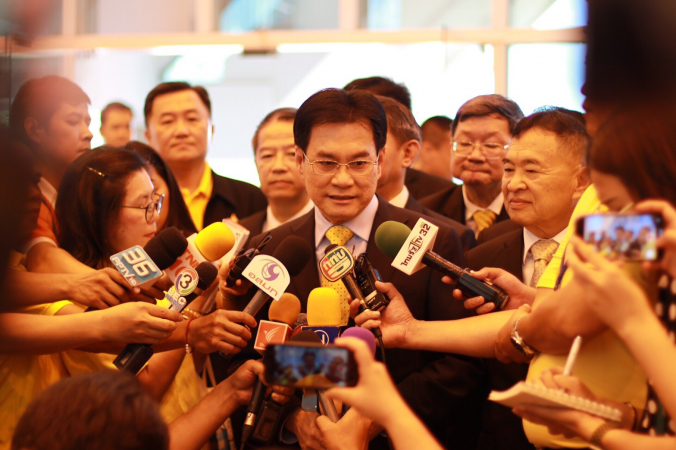
Firms engaged in property development, retail, industrial estates, telecommunications and construction will benefit most from 12 “urgent” economic policies the new government will unveil in Parliament on Thursday (July 25), brokerage firms say.

Passkorn Linmaneechok, deputy managing director at Kasikorn Securities Co Ltd, said the policies will focus on improving lower-income people’s quality of life, especially in helping them secure a private residence.

This will benefit listed property firms that build low-cost housing, such as LPN Development Plc and Pruksa Holding Plc, Passkorn said.

Also coming are pledges to reduce the cost of living, improve labour conditions, help farmers and promote innovation, all of which will boost purchasing power in the agricultural sector and in society in general, thus particular benefiting the retail sector, where CP All Plc, Siam Global Plc and Robinson Plc do most of their business.

Companies managing industrial estates, such as WHA Corp Plc and Amata Corp Plc, will reap the rewards of efforts to realise the grand ambitions of the Eastern Economic Corridor (EEC), Passkorn said.

True Corp Plc, Total Access Communication Plc (Dtac) and Advanced Info Service Plc are sure to benefit from investments in telecommunications infrastructure, especially 5G.

And construction firms including Italian-Thai Development Plc, Ch Karnchang Plc and Sino-Thai Engineering and Construction Plc will see earnings rise thanks to a policy to speed up development of infrastructure such as railways, roads and airports.

Terdsak Taweethiratham, vice-president at Asia Plus Securities, said a policy was coming aimed at boosting domestic purchasing power – by raising social welfare for the elderly, disabled and poor, the Mom Pracharat scheme, an increase in the number of state welfare cards issued, agricultural product-price insurance and farmers’ income insurance, among other means.

Medium-term tax reform that will reduce personal income tax by 10 per cent and trim taxes for online retailers is also in the pipeline, he said, as is a plan to increase the minimum daily wage to Bt400 from Bt325.

Such reforms will take time because tax cuts invariably result in a bigger budget deficit, while the hike in the minimum wage will affect manufacturers and must first be endorsed by the Triple Committee representing the public and private sector and employees.

“Nevertheless, we believe these policies will benefit the retail sector, such as CP All Plc, Home Products Centre Plc, Robinson Plc, Siam Makro Plc and Berli Jucker Plc,” Terdsak said.

Myanmar invites foreign investment in microfinance

ศาสตร์เกษตรดินปุ๋ย : ขอบคุณแหล่งข้อมูล : หนังสือพิมพ์ The Nation

https://www.nationthailand.com/business/30373503

Myanmar invites foreign investment in microfinance

Jul 23. 2019
Phyu Yamin Myat, general secretary of Myanmar Microfinance Association, at the Microfinance Success Asia event in Yangon on July 23 (Photo- Khine Kyaw, The Nation)

Phyu Yamin Myat, general secretary of Myanmar Microfinance Association, at the Microfinance Success Asia event in Yangon on July 23 (Photo- Khine Kyaw, The Nation)
By KHINE KYAW
THE NATION
YANGON

558 Viewed

In response to growing investors’ interest in Myanmar’s finance sector amid on-going market liberalisation, key players in the microfinance industry gathered on Tuesday at an event in Yangon, the nation’s hub of commerce.

Phyu Yamin Myat, general secretary of Myanmar Microfinance Association, told the first-ever Microfinance Success Asia event in the country that foreign businesses are keen on entering this “huge market”.

“Many investors are aware of the huge opportunities. Myanmar’s microfinance sector is competitively young but is growing very fast,” she said.

“This is where we are right now. We have to grow fast because our country has a very high demand for this service [microfinance].”

She said, currently, there are more than 3.4 million clients in the microfinance sector with a total loan portfolio of nearly US$350 million.

“You can imagine how stressful it is [to manage the big market]. Our employees are overloaded, executives and management are constantly under pressure,” she said.

“Microfinance is not only about providing finance solutions or loans to our customers; it is also about guiding them to a sustainable business operation and income generation.”

She said all stakeholders must strive for fast growth as it would have to support 25 per cent of Myanmar’s population who are living below poverty line.

“We are facing increasing challenges and pressures that we believe can be solved with technology. We are delighted to partner with HBZ Events to host this event to facilitate an exchange of knowledge and discussions on the latest technology solutions for the sector in Myanmar,” she said.

Gonzalo González A, chief executive of DAWN Microfinance said Myanmar has done very well promoting financial inclusion since it introduced the Microfinance Law in 2011.

“I believe the next stage of microfinance industry development will be to encourage partnerships among different actors to provide services to low income segments and small businesses in Myanmar,” he said.

“Through panel discussions, we analysed the benefits of different microfinance models as well as lessons learned from other markets which can be studied for future policy reforms in Myanmar.”

The event brought together Myanmar’s government officials and representatives from the inclusive finance arena: microfinance institutes (MFIs), SME and entrepreneurship promotion agencies, banks, farmers associations, technology companies, consultancy companies, financial cooperative experts, development partners as well as policy makers and regulators.

It provided an opportunity for delegates to engage in professional exchanges and to form networks between players from all sectors of the industry.

Herman Zaidin, managing director of HBZ Events, said both local and regional microfinance industry stakeholders now have a platform to learn, network and synergise for the advancement of microfinance solutions and operations to bring more impact to the lives of millions.

Said Syed Mamnun Quader, group managing director of Southtech, said the firm has been supporting MFIs and the development banks to improve the lives of millions by providing them with the right tools, technology, advice and training since 1996. He encourages stakeholders to explore ways to grow their business in the region.

“We have enabled them to be highly efficient and cost effective. More than a million people have already benefited from our solutions in Myanmar alone and having established our full-fledged office in Yangon for the past five years, we are well-placed to help MFIs in Myanmar grow and prosper ,” he said.

Cameron Goldie-Scot, chief executive of Musoni, said there is now a huge opportunity for MFIs to leverage technology, improve efficiency and expand outreach in Myanmar.

“We discussed different ways that MFIs can go digital, and shared our case studies that highlighted how Musoni, with our local partner ThitsaWorks, supports some of the largest MFIs in this country,” he said.

With 8.8 million of the population in Myanmar owning a business, 56 per cent of the enterprises do not have a savings/checking account and only 7 per cent of small enterprises have a line of credit. According to a study by United Nations Capital Development Fund, 52 per cent of businesses identified access to finance as an obstacle.

Alison Grun, regional director for Asia Pacific of Software Group, said microfinance is thriving in Myanmar, offering a means of leverage to MSMEs to grow their potential and push the country’s economy forward at the same time.

“We are working with Fullerton Finance Myanmar and Early Dawn Microfinance to help more MFIs address the evolving needs of customers in terms of convenience,” he said.

More new businesses set up in Thailand this year, despite increase in risks

ศาสตร์เกษตรดินปุ๋ย : ขอบคุณแหล่งข้อมูล : หนังสือพิมพ์ The Nation

https://www.nationthailand.com/business/30373504

More new businesses set up in Thailand this year, despite increase in risks

Jul 23. 2019
Sorada Lertharpachit, director for business promotion and development division, the Department of Business Development

Sorada Lertharpachit, director for business promotion and development division, the Department of Business Development
By THE NATION

539 Viewed

The number of new businesses registered in Thailand the first half of this year has risen 2 per cent year-on-year, according to the Department of Business Development, though the number of new firms set up in the month of June was still significantly less compared to the same month last year.

However, Sorada Lertharpachit, director for the department’s business promotion and development division, said the 5,586 new businesses set up in June was 6 per cent less than the 5,942 registered in May. Also, the number of new businesses set up in June this year had dropped by 14 per cent when compared to June last year, when 6,514 new businesses had been created.

The top three categories for new businesses were construction, real-estate and restaurants, which attracted a total investment of Bt15.147 billion in June, down Bt20.071 billion or 57 per cent compared to May, when Bt35.218 billion was invested. Investment in June this year had also dropped by Bt9.442 billion or 38 per cent year on year in comparison to June last year, when Bt24.589 billion was spent on setting up new businesses.

Sorada said 1,264 businesses were closed this Jun, 12 per cent more than in May but 9 per cent less when compared to June last year. The top three categories of businesses closed in June were construction, real-estate and management consultation. Their total capital was Bt4.973 billion, 41 per cent more than the businesses closed in May.

Meanwhile, 38,222 new businesses were registered from January to June this year, 2 per cent more than the same period last year. The top three categories for the newly registered businesses were construction, real estate and dining outlets. Though the number of new businesses set up in the first half of this year was higher, the total capital invested was Bt117.756 billion, 18 per cent less than the amount invested in the same period last year.

Up to 6,667 businesses, in construction, real-estate and management consultancies, closed down in the first six months of this year, 6 per cent more than the same period last year, while their total investment was Bt22.336 billion, 43 per cent less than that of businesses shuttered last year.

Sorada said in June, 42 foreign businesses set up shop in Thailand, bringing Bt8.322 billion in investment. Of the foreign businesses, 14 are from Japan with a total investment of Bt2.999 billion, followed by seven from Singapore with Bt178 million and two from China that have spent Bt115 million on their capital.

In the first half of this year, 287 foreign businesses have brought Bt54.293 billion in investment to Thailand, which is 23 per cent less than the same period last year. However, the amount spent on setting up these businesses in the first half reached Bt7.933 billion, or 17 per cent more than the same period last year.

Sorada said the department had previously forecast that 70,000 to 72,000 businesses will be registered this year, similar to the 72,109 businesses registered last year. However, setting up new businesses this year is riskier, especially since the baht is appreciating against the US dollar, which is affecting competitiveness both in terms of pricing and income, the impact from the US-China trade war and Thailand’s political situation.

“We expect the new government to launch new stimulus measures, which will boost the confidence of new investors, especially small and medium enterprises [SMEs]. We have seen some 6,370 new businesses registered every month, and if this figure is stable throughout the year, there should be 70,000 to 72,000 new businesses registered this year. On average, 1,100 businesses are shut down per month, which is lower than last year’s average of 1,800,” she said.

Commerce ministry frets over rice output

ศาสตร์เกษตรดินปุ๋ย : ขอบคุณแหล่งข้อมูล : หนังสือพิมพ์ The Nation

https://www.nationthailand.com/business/30373497

Commerce ministry frets over rice output

Jul 23. 2019
By THE NATION

461 Viewed

Commerce Minister Jurin Laksanawisit said on Tuesday he would urgently meet rice exporters and related parties to discuss ways to boost exports once the government has unveiled its policies in Parliament on Thursday.

He expressed concern that the drought gripping the upper half of the country could hamper plans to export 10 million tonnes this year.

In a related matter, Anan Suwannarat, permanent secretary of the Agricultural Cooperatives Ministry, said the Department of Agricultural Extension had set up “war rooms” in all provinces to closely monitor the drought situation.

The drought that has extended from May into July could cost the economy at least Bt15 billion, representing 0.1 per cent of Gross Domestic Product, the Kasikorn Research Centre estimates.

The estimate is mainly based on the drought’s impact on the first rice crop of the year, known as the “in-season” crop.

The economic loss could be greater if damage to other kinds of farm produce is also taken into account.

In Lop Buri, the Pa Sak Jolasid Dam reservoir has dropped dangerously low, to only 4 per cent of capacity – even lower than it was four years ago when the central province withered in the grip of severe drought.

In Nan in the North, millions of worms have infested 47,000 acres of cornfields spanning all 15 districts, more than half the province’s land devoted to corn.

In Nong Khai in the Northeast, the Mekong River is running too low to catch any fish. The level is more than 10 metres below the top of the bank on the Thai side.

Residents are instead earning a living in construction or small business.

The news was only good in Ubon Ratchathani, also in the Northeast, where a significant amount of rain fell on Tuesday, credited to cloud-seeding operations.

A Muang Ubon farmer said his rice had narrowly escaped devastation in what he called the most severe drought he’d ever seen.

The Kwang Noi Dam in Phitsanulok currently holds 134 million millimetres of water – 14 per cent of its capacity. One of four major dams designated for dispensing water for public consumption, it is able to release just 10 per cent of what it normally shares.

Warawut Niumnoi, director of water distribution and maintenance at the dam, said only 91 million millimetres of water was available to distribute.

There is currently no inflow at all, he said, and what is being released into the Chao Phraya plain can only be let go at 25 cubic metres per second.

Phitsanulok Governor Piphat Eakphapun has directed agencies to closely monitor the drought situation, prepare remedial plans for farmers, especially those growing rice and corn, determine the need for artificial rainmaking, and coordinate with the Department of Groundwater Resources on further plans.

The Army has established a centre to monitor the situation in real-time so that water can be provided to the drought victims efficiently.

Automation academy upgrades Thai labour skills

ศาสตร์เกษตรดินปุ๋ย : ขอบคุณแหล่งข้อมูล : หนังสือพิมพ์ The Nation

https://www.nationthailand.com/business/30373468

Automation academy upgrades Thai labour skills

Jul 23. 2019
By THE NATION

278 Viewed

The Department of Skill Development has set up the Manufacturing Automation and Robotics Academy (MARA) at the Institute for Skill Development in Chonburi to upgrade Thai labour skill and create trainers for automation skills.

MARA has already provided skills to over 6,000 workers in the province, said Director-General Suchart Pornchaiwiseskul. The courses range from the robot control skills and coding for automation systems.

The department will in future set up an additional MARA in each of Rayong, Chachoengsao and Samut Prakan.

Energy minister to continue subsidies for low-income earners

ศาสตร์เกษตรดินปุ๋ย : ขอบคุณแหล่งข้อมูล : หนังสือพิมพ์ The Nation

https://www.nationthailand.com/business/30373461

Energy minister to continue subsidies for low-income earners

Jul 23. 2019
By The Nation

593 Viewed

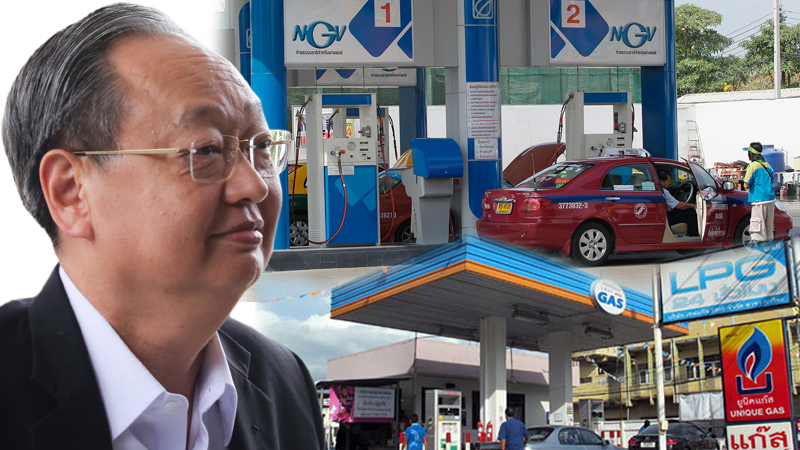
Energy minister Sontirat Sontijirawong has announced several energy policies regarding LPG and NGV prices, drought problems, and biodiesel promotion, along with hinting about a new mega plan to be unveiled next week.

After a meeting with his permanent secretary Kulit Sombatsiri and high-ranked executives, the new minister revealed that the Energy Ministry will focus primarily on what he sees as two pressing issues.

The first is to task PTT Plc with pegging the price of LPG for peddlers and vending stands, as well as the NGV price for public buses, for another two months until September, in order to help low income earners. It will also coordinate with the Finance Ministry to provide similar aid via the welfare card scheme.

The second pressing issue is tackling drought problems, with each Provincial Energy Office being urged to survey affected areas and consider installation of solar-powered water pumps to provide aid to drought victims.

Next week the Energy Ministry will send their staff to the sites to follow up on the progress and monitor the drought situation closely at a local level.

As for the long-term plan, the Energy Ministry will continue promoting the use of B10 and B20 biodiesel among local agriculturists by coordinating with PTT and related agencies to roll out promotional measures.

“As the existing measure that keeps B20’s price lower than B7’s will expire on July 31, new measures will be considered and unveiled next week,” Sontirat said.

Sontirat also promised to unveil the ministry’s mega-plan next week after the government announces its policy direction to Parliament on July 25.

The new mega-plan will cover both short- and long-term projects with a focus on saving energy and helping low-income earners. It will also involve the Energy Conservation Promotion Fund, which was previously ordered to formulate action plans for large-scale projects.

Regulator seeks industry input to create TV ratings regulations

ศาสตร์เกษตรดินปุ๋ย : ขอบคุณแหล่งข้อมูล : หนังสือพิมพ์ The Nation

https://www.nationthailand.com/business/30373451

Regulator seeks industry input to create TV ratings regulations

Jul 23. 2019
By THE NATION

359 Viewed

The national broadcast regulator will meet with key sectorial players on Thursday as it seeks to create regulations for TV ratings in Thailand.

The office of National Broadcasting and Telecommunications Commission (NBTC) will meet with digital TV broadcasters, the digital TV association, a TV ratings agency, large-scale ad buyers, large media agencies, and content producers to discuss the means to construct and survey the ratings for TV programmes, as well as to share pros and cons in the development of TV rating regulations.

Takorn Tantasith, the NBTC secretary general, said on Tuesday that the Thursday meeting will help the agency develop an approach to regulate TV ratings. The regulator is hoping for a buy-in by key sector players for a central TV rating organisation to support the domestic digital TV industry.

Invited to the meeting are all digital TV broadcasters, the Digital TV Association of Thailand, as well as TV rating houses Media Research Development Association (Thailand) or MRDA, the Nielsen company (Thailand) Ltd and PSI Broadcasting Ltd. Also invited are large-scale ad buyers such as Unilever Thai Holding Ltd, Procter & Gamble Manufacturing (Thailand) Ltd, Nestle (Thai) Ltd, L’Oreal Thailand Ltd, Coca-Cola (Thailand) Ltd, Toyota Motor Thailand Ltd and Pepsi Cola (Thai) Trading Ltd.

A home by the river

ศาสตร์เกษตรดินปุ๋ย : ขอบคุณแหล่งข้อมูล : หนังสือพิมพ์ The Nation

https://www.nationthailand.com/property/30373434

A home by the river

Jul 23. 2019
Perspective of Chapter Charoennakorn – Riverside-Photo by: Pruksa Real Estate Plc

Perspective of Chapter Charoennakorn – Riverside-Photo by: Pruksa Real Estate Plc
By The Nation

86 Viewed

Listed property firm Pruksa Real Estate on Monday introduced its latest condominium project, Chapter Charoennakorn – Riverside, worth Bt4.72 billion.

The project is designed on the “Urban Riverside Condominium” concept and targets new-generation buyers who want to live in the city but also benefit from a riverside living experience. The units will range in price from Bt3.29 million to Bt34 million per unit, the company’s chief executive officer Prasert Taedullayasatit said.

He added that Chapter Charoennakorn – Riverside is very close to the Sathorn CBD and surrounded by facilities including Iconsiam, Asiatique The Riverfront, community malls as well as many leading schools and top hospitals.

The project offers Studio to 3-Bedroom Riverfront condos with stunning riverside views from every unit, with the elegant water curves making up the main theme of the building design. The project also incorporates the unique features of sailing boats, knots and the lighthouse to perfectly complement both the interior and common space.

Sansiri’s latest debenture worth Bt4 billion

ศาสตร์เกษตรดินปุ๋ย : ขอบคุณแหล่งข้อมูล : หนังสือพิมพ์ The Nation

https://www.nationthailand.com/property/30373392

Sansiri’s latest debenture worth Bt4 billion

Jul 22. 2019
Wanchak

Wanchak
By The Nation

96 Viewed

Listed property firm Sansiri Plc will issue a three-year, 10-month debenture worth Bt4 billion from July 30-August 1 to finance its expansion this year, chief operating officer Wanchak Buranasiri said on Monday.

The debenture will carry an annual interest rate of 3.9 per cent, repaid in instalments every three months until it expires.

The company has appointed Siam Commercial Bank, Kasikorn Bank, Bangkok Bank and Krung Thai Bank to underwrite the venture.

“Bt1 billion worth of the earnings will to used pay back some of our previous debenture expiring at the end of July, the next Bt1 billion to cover our debenture expiring in October and the remaining Bt2 billion will support our business expansion through the rest of this year,” Wanchak said.

Tris Credit Rating on June 11 assigned the company a BBB+ credit rating.

In the first quarter of 2019, Sansiri’s total revenue was Bt6.63 billion, up 27 per cent from the same period last year.

Its backlog of residential properties ready to sell or waiting to be transferred to purchasers is worth Bt57.2 billion, Wanchak said.

Sole marketing rights granted for luxury riverside development

ศาสตร์เกษตรดินปุ๋ย : ขอบคุณแหล่งข้อมูล : หนังสือพิมพ์ The Nation

https://www.nationthailand.com/property/30373386

Sole marketing rights granted for luxury riverside development

Jul 22. 2019
By The Nation

251 Viewed

Christie’s International Real Estate has been awarded exclusive agency rights to promote the Banyan Tree Residences Riverside Bangkok, a luxury condominium development on the banks of the Chao Phraya.

The decision by the developers, Nirvana Daii Plc, will allow Christie’s, the luxury real estate arm of Christie’s, the fine art auction house, to market the high-end development through their Bangkok affiliate, Richmont’s Luxury Real Estate.

Tim Skevington, Richmont’s managing director, said his company was delighted to be heading Christie’s first residential development project in Thailand.

Banyan Tree Residences Riverside Bangkok is Nirvana’s flagship project – its goal has been to focus on modern and innovative design to truly serve customers’ needs.

With the concept “A Sanctuary for Your Soul”, Banyan Tree offers a unique, luxury lifestyle comprising three key priorities: tranquility, rarity and impeccable quality.

Although the 45-storey condominium block sits on a sizeable 10-rai block, it has a total of only 133 units and has a maximum of 4 units per floor, with five property types from 1 bedroom to a duplex penthouse.

The parking area offers 2 spaces per unit and residents will also be able to commute from a private floating jetty, where a shuttle boat service is available.

Nirvana says 60 per cent of the project has already been booked.

They don’t come cheap, however – the cheapest units are Bt22.9 million, while two-bedroom units start at Bt49 million.