Proptech key to success of smart city projects: report

ศาสตร์เกษตรดินปุ๋ย : ขอบคุณแหล่งข้อมูล : หนังสือพิมพ์ The Nation

http://www.nationmultimedia.com/detail/Real_Estate/30372060

Proptech key to success of smart city projects: report

Real Estate July 01, 2019 13:53

By The Nation

“Smart City” housing initiatives in Asia Pacific will not reach their potential if they focus on delivering cutting-edge technologies without paying enough attention to the needs and experiences of citizens, according to new research by real estate consultant JLL.

The report contends that as the real estate industry catches up in technology, it could bridge the gap between smart city solutions and the physical spaces where people work, live and play.

Collating insights from 30 experts from technology, real estate and government, it reveals the challenges that face the growing number of smart cities in Asia Pacific and around the world. The research also highlights the opportunity for a more human-centred approach to smart city development, which promotes inclusiveness, efficiency, sustainability and transparency.

“Cities are unleashing technologies such as the internet of things and artificial intelligence to solve some of the pressing problems of urbanisation – whether it’s traffic or waste disposal or public safety,” said Jeremy Kelly, director of global research at JLL.

“This has the potential to change the way we live and work, as well as how we interact with the buildings and infrastructure in our cities. These innovations hold particular promise in Asia Pacific where city populations are growing rapidly.”

Thailand aims to develop 60 smart cities in 30 provinces between 2020 and 2021 and to increase that to 100 smart cities nationwide by 2022. China has more than 500 smart cities in the pipeline, while the India government has a five-year plan for the development of 100 smart cities between 2017 and 2022. Likewise, Singapore is progressing its “Smart Nation” vision launched in 2014, and in 2018 a US$23 million (Bt702 million) Asean-Australian investment fund was announced to support smart cities in Southeast Asia.

However, while more than 1,000 smart city initiatives have been announced around the world, only 15 have a comprehensive strategy that includes detailed targets. Of these, only eight offer concrete plans ready for implementation. The report examines the reasons why so many smart city projects have been slow to take off.

Bureaucracy is one key stumbling block. Given that cities are large and complex, smart city initiatives can succeed only if governments are open to experimentation and willing to invest time and resources in learning from missteps.

“To fulfil the promise of smart cities, we must start focusing less on the technology and more on how to use it to make lives better for people. We believe real estate can be a connector between the people who are the lifeblood of cities and the digital infrastructure that is increasingly powering our urban environments. It’s time for the real estate industry to step up,” added Kelly.

While often viewed as a technological laggard, the real estate industry is now approaching a tipping point with the rapid growth of proptech, or the convergence of property and technology. Spurred by the momentum of smart city technologies, proptech offers tangible, near-term solutions to urban development problems, improving cities’ sustainability, decision-making capabilities and transparency. The JLL report identifies several areas where proptech can make such impact. From the construction phase to facility management, proptech brings tangible benefits in the form of improved efficiency for building occupiers and enhanced value for investors.

“Our research shows that real estate is a crucial element in the future of smart cities and our clients are asking us how they can ensure the buildings they occupy or invest in are future-ready,” said Dr Megan Walters, head of Asia Pacific research at JLL. “We believe that by creating precincts that combine technology and human experience, they will operate more efficiently for occupiers, and can deliver a premium for investors due to lower operating costs and better yields.”
Veteran shows the way forward for PR agencies

ศาสตร์เกษตรดินปุ๋ย : ขอบคุณแหล่งข้อมูล : หนังสือพิมพ์ The Nation

http://www.nationmultimedia.com/detail/Corporate/30372093

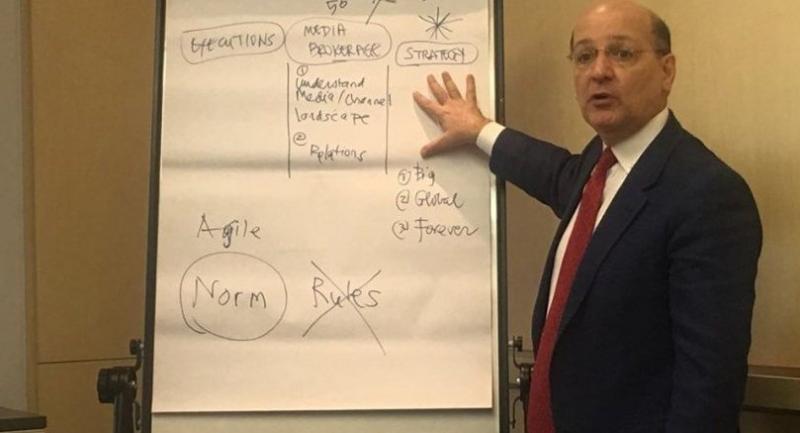
Hasan Basar, managing director of Bangkok Public Relations

Veteran shows the way forward for PR agencies

Breaking News July 01, 2019 19:44

By Kwanchai Rungfapaisarn
The Nation

The changing landscape in media channels has given public relations agencies that are strategy-oriented an additional premium in partnering with their clients, according to public relations guru Hasan Basar, managing director of Bangkok Public Relations who has 35 years of experience in this service industry.

Trusted media will be in greater demand by consumers in the future with the increasingly blurred lines between real and fake news, especially in social media, he said, noting also that PR consultants need to layer on top of their public relations skills the ability to understand the real business dynamics of their clients.

Basar said that he co-established the consultancy in 1995, only two years before Thailand sank into a financial crisis that quickly spread throughout the region.

“In a way, we were fortunate to be hit by the crisis so early in the company’s life. It forced us to set up a business system and structure that is very flexible and lean, and an organisation that is flat and focused on quality,” he said. “These are all the things essential for survival today, some 25 years later, and they helped us weather the multiple political and natural crises that we all suffered, especially in the last ten years.”

Basar said that every staff member at Bangkok PR has cross-functional capability, from decision making, to execution and consultancy services.

“Our flat organisation keeps our staff numbers low, helping us work better and faster,” he noted, adding that in today’s business environment, quality and speed is critical to success.

“From the beginning, we were committed to working for a limited number of clients, doing a lot for them, and staying with them a long-time. We’ve served some clients for 25 and 22 years. It allows us to emphasise higher-end services such as strategy and the execution of plans that require sensitivity and good judgment,” Basar said, adding that when Bangkok PR first started, it almost exclusively served multinational companies.

Basar said that Bangkok PR currently has around 18 staff, which is similar to 24 years ago when he set up the company. However, the company has posted annual revenue five times higher.

“That has been possible because we’ve moved up the value chain and after 24 years of experience, all our staff are still hands on with clients and share the benefit of that long experience with them on a day-to-day basis and at every level, handling the most challenging tasks. Almost half them have worked with me for 20 years, or more.”

“Our organization culture is ‘boundaryless’, whether between responsibility or seniority,” said Basar, however, noting that confidentiality of client information is as strict as in a legal practice.

“When we recruit new staff, we don’t test their public relations knowledge, but rather their ability to think clearly, and analyse and solve problems that have multiple parametres,” said Basar.

“Our staff retention is built on taking care of our people emotionally – fulfilment of important assignments, physically – working in a good, spacious office, and financially. Of course, salary and bonuses are important, but, in the consultancy business, the ability to be exposed to big challenges and to work with experienced people is the best way to learn and increase one’s own capabilities and earning capacity,” he said.

Basar said PR consultancies need to understand media channels, their particular behaviours, mixing and matching their content and their style to suit the particular requirements of each channel, and also still maintaining a relationship of trust with those channels that are moderated, or curated, such as traditional news channels.

“The birth of social media allows consumers access to a huge volume of information, disinformation, and non-information, which we have to accept in the context of ‘enriching’ what traditional media such as television and newspapers provide, through digital and other platforms. Far from weakening traditional media, I personally believe social media has made the trusted editor a far more important player,” he said.

Companies serving only as brokers for accessing media will decline as a service, while the ability to correctly anticipate public mood as well as formulate effective messaging will gain in importance.

“At Bangkok PR, we allocate around half of our efforts to the creation of strategic PR plans for our clients and the other half to executing them effectively on their behalf,” said Basar. He said that, today, almost 100 per cent of the company’s clients are Thai firms, which have grown to regional and global scale in their public relations.

GulfNRV2 begins supplying electricity to EGAT

ศาสตร์เกษตรดินปุ๋ย : ขอบคุณแหล่งข้อมูล : หนังสือพิมพ์ The Nation

http://www.nationmultimedia.com/detail/Corporate/30372087

x

GulfNRV2 begins supplying electricity to EGAT

Corporate July 01, 2019 18:25

By The Nation

The Gulf Energy Development Plc said in a filing with the Stock Exchange of Thailand on Monday that its subsidiary Gulf NRV2 Co Ltd – operator of Gulf NRV2 power project – has commenced the sale of electricity to the Electricity Generating Authority of Thailand (EGAT) under the Small Power Producer (SPP) programme.

Gulf Energy’s executive director Yupapin Wangviwat said the GNRV2 project, located in Nakhon Ratchasima’s Suranari Industrial Estate, has an installed power-generation capacity of 128.2 megawatts and a steam-generation capacity of 10 tonnes an hour.

GNRV2 is contracted to supply 90MW to EGAT pursuant to a 25-year power-purchase agreement and will supply the remaining power and steam it generates to industrial users through secured long-term contracts.

The GNRV2 power project is the last of the 12 SPP projects under Gulf MP Co Ltd (GMP), which had a combined power-generation capacity of 1,563.4MW and steam-generation capacity of 225 tonnes per hour.

All 12 projects commenced commercial operations as scheduled at a lower cost than initially projected, and 2019 is the first year that the company will realise revenues from the 12 projects.

Mongkol Puangpetra, KTB Securities (Thailand) Co Ltd’s head of research, estimates that the total power-generating capacity of Gulf will surge by 448MW this year.

The increase in capacity is expected to boost its revenue to Bt31 billion this year from over Bt20 billion last year.

Hilton set to enter Malaysia’s Damai Laut town with DoubleTree

ศาสตร์เกษตรดินปุ๋ย : ขอบคุณแหล่งข้อมูล : หนังสือพิมพ์ The Nation

http://www.nationmultimedia.com/detail/Corporate/30372068

Signing of DoubleTree by Hilton Damai Laut Resort

Hilton set to enter Malaysia’s Damai Laut town with DoubleTree

Corporate July 01, 2019 15:29

By The Nation

Hilton, one of the world’s fastest-growing hospitality groups, announced recently that it was converting Swiss-Garden Beach Resort in Malaysia’s Damai Laut into DoubleTree by Hilton.

Set to open next year, the 291-room DoubleTree by Hilton Damai Laut Resort will offer unobstructed views of the Strait of Malacca and Pangkor Island.

“Damai Laut is one of the key gateways to beautiful surrounding islands, including Pangkor and Marina islands. As a coastal town with a rich historical heritage, Damai Laut has a huge potential to be the next resort destination of choice for domestic travellers. We are confident that the entry of Hilton in this location will propel demand as we expand our iconic Hilton hospitality to guests in the region,” said Shawn McAteer, senior vice president and global chief for DoubleTree.

“As we celebrate the 50th anniversary of Hilton this year, we are excited to continue expanding our presence in Malaysia by giving more guests the opportunity to experience our comfortable spaces and warm service, all starting with our signature welcome.”

The DoubleTree by Hilton Damai Laut Resort will be located within 425 of lush surroundings, featuring an 18-hole award-winning golf course with direct access to the beachfront. Strategically located along the southern reaches of Malaysia’s coastal town of Lumut, the resort will be located near the only turtle sanctuary of the west coast.

“We recognise the immense tourism potential in Malaysia, which is one of our key growth markets here in Southeast Asia. Secondary and tertiary destinations in the country, such as Damai Laut, are opening up to tourists even more and we are keen to continue expanding our footprint and portfolio of brands across both gateways and secondary cities in the market by working with the right partners,” said Guy Phillips, senior vice president for Hilton’s Asia and Australasia markets.

“We are delighted to partner with OSK Holdings Berhad to introduce DoubleTree by Hilton as the first internationally-branded resort in Damai Laut,” Phillips added.

The new property will offer 291 guest rooms with a mix of garden and sea views and features five dining outlets, including an all-day-dining restaurant, a speciality restaurant and a beach restaurant. Guests can enjoy a mini water park and the 18-hole golf course at the resort, which will also feature meetings and events facilities, including a 1,860-square metre event space and an 885sqm ballroom.

Up, Up, and into the Cloud The Four Common Traits of Successful Cloud Journey in Thailand

ศาสตร์เกษตรดินปุ๋ย : ขอบคุณแหล่งข้อมูล : หนังสือพิมพ์ The Nation

http://www.nationmultimedia.com/detail/Corporate/30371947

Ed Lenta
Ed Lenta

Up, Up, and into the Cloud The Four Common Traits of Successful Cloud Journey in Thailand

Corporate July 01, 2019 15:00

By Special to The Nation

In recent years, many countries in Asia including Thailand, have launched national initiatives for a digital economy.

According to a report by the Thailand Investment Board, the Thailand Ministry of Digital Economy and Society said that economic digitalisation will spur growth in every industrial sector in  the country and is estimated to contribute 25 per cent  to Thailand’s GDP by 2027.

Every organisation has its reason for embarking on a cloud transformation journey. Some want to consolidate their data assets. Others want to respond faster to the changing needs of their customers while some are seeking a platform that will help them launch new ventures, and explore local, and global market opportunities.

Since 2006, Amazon Web Services (AWS) has helped thousands of organisations of all sizes across Asia Pacific launch their journeys into the cloud. And over that time, one of the things I have discovered, is that while each transformation is unique in its own way, the most successful ones have four distinctive traits in common.

1.  visionary leadership

Visionary leaders are constantly reinventing their customer experience because if they don’t, someone else will and they risk being disrupted. These leaders inspire teams by painting a picture of what the future state of their organisation will look like, and the benefits from it. By establishing a clear sense of the organisation’s purpose, and effectively communicating how the organisation’s cloud strategy will fulfil that purpose, the leadership team can align employees throughout the company, to a common goal.

2. Innovators at heart

Time and time again, we see that the most successful cloud transformation leaders are innovators. They take the building blocks offered by cloud providers and assemble them in unique ways, creating new platforms, products, and services that enhance their operations and provide them with launching pads for new business strategies.

These companies would also invest in their own organisational capabilities by hiring and re-training worked needed to move forward. They know that by building and retaining knowledge within their organisations, they are creating an evolving resource that will help them maintain their competitive edge well into the future.

3. Think big, but start small

Cloud transformation leaders know the world is changing, and they are determined to change with it. So they get started. They learn through the process of doing, and adapt accordingly when their increasing knowledge and experience tell them this is necessary. They become highly adaptable, not just in response to changing market conditions, but also to what the new insights tell them.

The only way to truly learn how to execute a successful cloud transformation programme is to start one.

4.  Excite and enable everyone

The most successful cloud transformation leaders excite staff about the future state of the company and what the transformation will bring, while also giving them the skills to make the most of the future.

Every department of an organisation will be impacted by cloud transformation, including product development, marketing, finance, and the legal team. Hence, informing and including employees from across the organisation ensure that they can get the most benefits from the changes as they happen, and gives the project a greater chance of success. The benefits they receive are directly connected to how quickly and deeply leaders and teams begin thinking about how to empower their staff with the opportunity and tools they need to innovate for their customers.

Bringing it all together

One of the best examples of these four traits in action is the Central Group, one of the largest conglomerates in Thailand with businesses spanning from retail, shopping malls, real estate to hotels. Central  is adopting a cloud-first strategy, choosing to run data lake architecture on AWS, and at the same time rebuilding its mobile applications and e-commerce capabilities. By leveraging the elasticity, agility, and cost benefits of AWS, Central Group aims to offer more innovative services not only to digitally-savvy customers, but also to connect with the legacy systems such as ERP and the  business units in different countries, support OMNI channel and the unified commerce platform in order to become more operationally efficient.

Organisations will exhibit these four attributes in different ways, but experience has shown that any successful transformation relies to some extent on all four.

Leadership sets the vision and inspires and steer the organisation towards its goal by themselves. They trust in their purpose and vision and then work to ensure that all of their people understand that vision, make it happen, and maximise its value as it is delivered.

Contributed by Ed Lenta, Managing Director, Asia Pacific, Amazon Web Services

The growing trend of INTERCONNECTION

ศาสตร์เกษตรดินปุ๋ย : ขอบคุณแหล่งข้อมูล : หนังสือพิมพ์ The Nation

http://www.nationmultimedia.com/detail/Corporate/30371922

(Photo/Ericsson)
(Photo/Ericsson)

The growing trend of  INTERCONNECTION

Corporate July 01, 2019 01:00

By   SIRIVISH TOOMGUM
THE NATION

2,819 Viewed

AMID the growing interconnection between machines and people, Thai consumers and businesses will continue to experience changes. This phenomenon has also raised concerns among captains of the telecom and ICT industries about how Thais will adapt to the new environment.

“With machines and humans being more and more interconnected, Thai consumers and businesses will continue to experience change,” Alexandra Reich, chief executive officer of Total Access Communication (DTAC), said.

“Mobile communication has had a substantially positive impact on the economic and social development of Thailand and we are optimistic that it will continue to improve our well-being as a nation,” said Reich.

Artificial intelligence (AI) in a data-rich and connected world will continue to stimulate innovation and product development with new usage and monetisation, she added.

There are still many untapped opportunities for business, especially SMEs, to digitalise their business and operations using the cloud, machine learning, internet of things (IoT) connectivity and mobile applications, she said.

“This will not only drive productivity but also enrich offerings and improve customers’ experiences. Consumers will be able to embrace new experiences with augmented and virtual realities, have access to billions of people seeing their content, and live through shared experiences across borders with low latency networks and simultaneous translation.”

Reich said connectivity is the core enabler for these innovations and the demand for quality services will increase as they become critical for people and businesses.

However, there is danger if the human touch gets lost in this fast-paced digital development.

The threats are real but telecom operators, government and businesses can work together to mitigate them, she said.

“We need to be careful about how many hours we watch our mobile phones and how we value privacy. We need to be conscious that a connected world can amplify the good voices but also the bad.

“We need to protect our citizens against cyberattacks and identity theft. Most importantly, we need a well-managed transition, as the digital economy also comes with a change in job profiles and capabilities. Also, we need to not only continuously educate our kids, but also the adult population,” she said.

Benefits of the 5G wireless broadband will take a number of years before being fully exploited.

“While we are seeing 5G deployments in 2019, most analysts believe that it could take three to five years to build the ecosystems and the new use-cases that will be valued by businesses and consumers,” she explained.

”It will be a learning curve on how to drive value for the respective stakeholders. The biggest change will come as we will see a structural change in a lot of business models leading to a more collaborative approach across industries,” Reich said.

The growing data consumption, especially for processing, as well as virtualisation, will at some point lead to the next generation of network – 6G. 6G will require more spectrum, more energy efficiency and probably work even faster.

The National Broadcasting and Telecommunications Commission (NBTC) has granted 700MHz licences to the three telecom operators – DTAC, Advanced Info Service (AIS), and True Corp for the development of 5G service on this band. Terms of the licence will become valid next October and the NBTC also plans to allocate additional new spectrum bands in preparation for the launch.

(Photo/Ericsson)

Nadine Allen, president and country manager of Ericsson (Thailand) Ltd, said 5G is not just another G.

“Previous [network] generations were centred around consumer and personal communications. With 5G, we are on the threshold of a global technology shift, which will bring about new opportunities, new efficiencies and new business models. 5G will enable consumers to capture the full value of connectivity,” said Allen.

“Consumers in Thailand are already waiting for 5G. According to Ericsson’s ConsumerLab Report, one in two smartphone users will switch mobile operators within six months if their original operator does not provide 5G, providing operators with a first mover advantage.”

According to the report, 5G is a platform for innovation and a game-changer. With ultra-fast connectivity speeds and low latency rates, 5G will transform industries and enable the future of smart cities.

“With game-changing capabilities, we believe that 5G has the potential to enable mobile communications networks to be an important and critical part of national infrastructure,” said the report.

5G-related use cases could range from connected robotics, healthcare and smart manufacturing, to connected homes, and give rise to endless possibilities as well as new opportunities to innovate on a broader scale.

“Beyond 5G, Ericsson is also constantly innovating in the next wave of technologies. For example, we have an Accelerator innovation hub in Canada to focus on R&D in AI and automation as it will be a key trend in the future. In fact, innovation is in Ericsson’s DNA. Today, around 18.5 per cent of Ericsson’s annual global revenues is invested in R&D,” said Allen.

Attractive to foreign investors

For Thailand, 5G will be the enabler for the Digital Thailand 4.0 vision. In a yearly rankings recently released by the Switzerland-based IMD World Competitiveness Centre, Thailand advanced five places to 25th, propelled by an increase in foreign direct investment and productivity. 5G will further enhance the country’s competitiveness and strengthen its attractiveness for foreign investors looking for locations in a digitalised environment, she said.

AIS chief executive officer Somchai Lertsutiwong said the world is on the edge of entering the 5G era.

Moreover, there are nine other key technology trends shaping the future: big data and analytics, the cloud, artificial intelligence, blockchain, cognitive security, quantum computing, robotics, autonomous driving, and fintech. New technologies will change the world in a way that previously could only be seen in science-fiction movies.

“Thais have been called the most intensive Facebook users. We have seen many companies, especially SMEs, reaping benefits from Instagram, Line, and other online networks to grow their businesses, including online payment,” said Somchai. “However, as of today, only 65 per cent of the Thai population can access the internet, leaving more than 20 million out of the loop.”

Looking forward to the next decade, AIS expects more than 90 per cent of Thais will be using one or more telecommunication devices for convenience in life, work and doing business, he added. 5G, together with the above-mentioned technologies, will bring about a new level of applications such as virtual reality everywhere, smart autonomous-driving cars, smart homes, smart manufacturing, smart cities and many more “smarts” enabled by IoT (where everything can be connected). Business will not be the same in the 5G era.

“The major concern now is how we adapt ourselves to the future and how we prepare the next generation to be comfortable with their own future. Replaced by robots, AI and automation, many jobs will become unnecessary; many things we currently teach our children in schools and universities might be out of date,” said Somchai.

“Thailand needs to reskill its workforce and reform the educational system to ensure our competitiveness in the future. It took 10 years for the development of the 5G standard and it will take another decade for 6G. I hope it will take less time for Thailand to prepare for the changes,” he said.

E-stamps to plug huge hole in beer tax revenue

ศาสตร์เกษตรดินปุ๋ย : ขอบคุณแหล่งข้อมูล : หนังสือพิมพ์ The Nation

http://www.nationmultimedia.com/detail/Economy/30372088

x

E-stamps to plug huge hole in beer tax revenue

Economy July 01, 2019 18:30

By The Nation

The Excise Department is hoping to plug a hole in tax revenue from October by using electronic stamps to measure the quantity of beer leaving plants.

Pachara Anantasilp, director-general of the Excise Department, said that the e-stamps would be attached to empty beer containers before they are filled, making tax collection more efficient.

“We have found that the tax collected is lower than expected. In 2019, tax collected on beer was about Bt10 billion below the target. So we are shifting over to the e-stamps, which are similar to QR codes, on containers in beer production lines,” he said.

The Cabinet has approved the e-stamp method, which is now being reviewed by the State Council which is expected to give the go-ahead within two months.

“The department has discussed the change with business operators and all have no problem with the new tax collection. The e-stamp method should launch within fiscal 2020 and by this October,” Pachara said.

He said that the department was also tightening inspection of beer for export. Previously, its plant inspectors found lots earmarked for export were being illegally distributed locally.

Now, beer producers must report the quantity and destination of their products, he said. Thailand exports only 13 per cent of the beer it produces.

“E-stamps and more stringent conditions for exports should help the department improve inspection of beer for local distribution and export. Using the QR codes will tell us where, when and by whom the beer was manufactured, as well when the tax was paid. Already, tightening tax collection on beer has increased tax revenue by about Bt1 billion,” Pachara said.

The Excise Department collected a total Bt289 billion in tax in the first half of this fiscal year – about 4.7 per cent below its target.

Tax on beer amounted to Bt6.7 billion – Bt1.06 billion or 18.94 per cent higher than the same for the same period last year, but still Bt3 billion (30.92 per cent) below the target.

Court rejects CP’s addition to airports development bid

ศาสตร์เกษตรดินปุ๋ย : ขอบคุณแหล่งข้อมูล : หนังสือพิมพ์ The Nation

http://www.nationmultimedia.com/detail/Economy/30372086

x

Court rejects CP’s addition to airports development bid

Breaking News July 01, 2019 18:00

By The Nation

An Administrative Court appeal-review committee has rejected a submission of additional documents from the Charoen Pokphand Group-led Thana Holding Consortium, as part of its bid to develop the U-Tapao Airport and Eastern Airport City Project.

The projects come under the eastern economic zone development scheme, which will feature high-speed rail connections serving urban expansion plans that will see the Eastern Aviation City grow to become an aviation metropolis within 10 years.

A July 1 meeting of the Eastern Economic Corridor (EEC) Policy Committee chaired by Prime Minister Prayut Chan-o-cha confirmed that selection of bid winners will proceed without the documents, which were submitted after the deadline, said Kanit Saengsubhan, secretary-general to the EEC Office.

The EEC selection committee will announce the bid winners within a month of the court’s ruling.

“The next step is for the selection committee to examine the documents submitted on time. The bidders’ first set of documents are now being reviewed by the selection committee, with review of the second scheduled for completion in two to three weeks,” Kanit said.

Selected bidders will then be judged on their third and fourth envelopes – financial proposals and additional proposal, respectively – and the winner announced once the court has made a final ruling, he said.

Meanwhile, an ongoing appeal by a private company engaged in the third phase of the Laem Chabang Port Project is expected to be resolved in a month by the appeals review committee.

The EEC Policy Committee also acknowledged comments from 15 agencies regarding the draft contract for third phase of the Map Ta Phut Port Project. Ten agencies agreed with the draft contract while five proposed to add details but no significant amendments.

The next step is to forward the draft contract to the Attorney General Office for amendment before proposing it to Cabinet within two to three weeks.

Kanit also said that the EEC Policy Committee had noted progress made on the high-speed rail project, with a contract being prepared between the State Railway of Thailand (SRT) and the project winners.

Authorities have expropriated 82 per cent of the land for the high-speed rail project, which will connect Thailand’s three main airports – Don Mueang in Bangkok, Suvarnabhumi in Samut Prakan and U-Tapao in Rayong. The remaining 18 per cent of the land is SRT property that has been encroached upon.

The EEC Policy Committee has approved a budget of Bt200 million so that the remaining land can be cleared before the original schedule of within two to three years.

Delays in acquiring the land could impact both the high-speed rail project and U-Tapao Airport and Eastern Airport City Project.

BOT holds off on short-term bonds due to a stronger baht

ศาสตร์เกษตรดินปุ๋ย : ขอบคุณแหล่งข้อมูล : หนังสือพิมพ์ The Nation

http://www.nationmultimedia.com/detail/Economy/30372082

BOT holds off on short-term bonds due to a stronger baht

business July 01, 2019 17:22

By The Nation

3,457 Viewed

The Bank of Thailand (BOT) is cutting down on the issuance of short-term bonds at a time when the value of the baht is at its strongest in six years, closing at Bt30.52 against the US dollar on Monday, the Kasikorn Research Centre reported on Monday.

Kasikorn said the BOT report on June 28 showed that it was reducing the issuance of short-term bonds, though the central bank has not yet made an official announcement.

“The BOT had taken similar actions in the year 2017. This is a means of reducing capital inflows into the country,” the research centre said.

The baht on Monday opened at Bt30.66 to the greenback, closing at Bt50.52 at the end of the day.

Gov’t balance in first-half Bt263 billion deficit, 1.6 per cent of GDP

ศาสตร์เกษตรดินปุ๋ย : ขอบคุณแหล่งข้อมูล : หนังสือพิมพ์ The Nation

http://www.nationmultimedia.com/detail/Economy/30372072

x

Gov’t balance in first-half Bt263 billion deficit, 1.6 per cent of GDP

business July 01, 2019 15:49

By The Nation

2,612 Viewed

The General Government Fiscal Balance Report (GFS Basis) for the first half of the fiscal year 2019 (October 2018–March 2019) was Bt1.585 trillion, which was 6.6 per cent (Bt98.181 billion ) higher than for the same period of last year, according to a Finance Ministry report on Monday.

The rise was principally due to revenue increases from the central government (including extra-budgetary funds) and local authority organisations (LAOs) of Bt136.943 billion and Bt23.089 billion, respectively.

Meanwhile, general government expenditures for the first half of 2019 reached Bt1.848 trillion, 5.8 per cent (Bt102.061 billion) higher than for the same period last year.

As a result, Thailand’s general government balance for the first half of 2019 had a deficit of Bt263.196 billion or 1.6 per cent of GDP. Consequently, the consolidated general government primary balance, which principally reflected the intrinsic performance and the direction of fiscal policy, was in deficit to the tune of Bt176.854 billion, or 1.0 per cent of GDP.