The Stock Exchange of Thailand (SET) Index closed at 1,416.02 on Wednesday, down 8.37 points or 0.59 per cent. Total transactions amounted to Bt89.55 billion with an index high of 1,440.52 and a low of 1,414.21.
In the morning session, an analyst at Krungsri Securities expected the day’s index to fluctuate between 1,415 and 1,435 points amid an influx of foreign funds.
“However, uncertainty over the [highly infectious] coronavirus mutant in Britain and fears of a new Covid-19 wave in Thailand would pressure the index,” he predicted.
The 10 stocks with the highest trade value today were PTT, DELTA, CPF, BANPU, CPALL, KBANK, STGT, ADVANC, SCB and AOT.
As of 4.30pm, the price of oil dropped by US$0.08 or 0.17 per cent to $46.94 per barrel, while gold rose by $5.10 or 0.27 per cent, to $1,875.40 per ounce.
Other Asian indices were on the rise:
Japan’s Nikkei Index closed at 26,524.79, up 88.40 points or 0.33 per cent.
China’s Shang Hai SE Composite Index closed at 3,382.32, up 25.54 points or 0.76 per cent, while Shenzhen SE Component Index closed at 14,015.02, up 132.72 points or 0.96 per cent.
Hong Kong’s Hang Seng Index closed at 26,343.10, up 223.85 points or 0.86 per cent.
South Korea’s KOSPI Index closed at 2,759.82, up 26.14 points or 0.96 per cent.
Taiwan’s TAIEX Index closed at 14,223.09, up 45.63 points or 0.32 per cent.
Bank of Thailand keeps interest rate at 0.5%, downgrades 2021 GDP outlook
EconDec 23. 2020Titanun Mallikamas, secretary of the Monetary Policy Committee (MPC)
By The Nation
The Bank of Thailand (BOT) kept its benchmark interest rate unchanged for the fifth straight time on Wednesday, but downgraded its outlook for the economy next year after a fresh Covid-19 outbreak.
The unanimous vote to maintain the policy rate at 0.5 per cent was taken to preserve its limited policy space to support economic recovery that remained “highly uncertain”, said Titanun Mallikamas, secretary of the Monetary Policy Committee (MPC) after Wednesday’s meeting.
Most economists had expected the policy rate to remain unchanged following three rate cuts earlier this year.
The bank also projected the Thai economy would contract 6.6 per cent in 2020, upgrading its previous forecast of 7-per-cent contraction due to improvements in private consumption and exports.
However, the BOT cut its 2021 growth outlook from 3.6 per cent to 3.2 per cent. The move follows an outbreak of more than 1,000 Covid-19 cases at the weekend. The bank forecasts 4.8 per cent growth in 2022.
It said the economic recovery remained highly uncertain and would depend in the short term on effective containment of the latest virus outbreak.
Recovery in the longer term would rest on revival of the foreign tourist trade, Covid-19 vaccination, and the labour market, where unemployment and underemployment remained high, it added.
The financial system remained sound while vulnerabilities among households and SMEs remained, said the bank. It also voiced concern that uneven recoveries across sectors would affect sustainability of economic growth.
Headline inflation was projected to return to the target in the middle of 2021.
The bank said it would consider additional measures to rein in the baht, which has been rising rapidly against the dollar to the dismay of Thai exporters.
Monetary policy must remain accommodative, said the BOT.
In deliberating monetary policy going forward, the bank said it would monitor government recovery measures and also risks such as the fresh virus outbreak.
Bank gives small businesses lessons on surviving crises
Dec 23. 2020
By The Nation
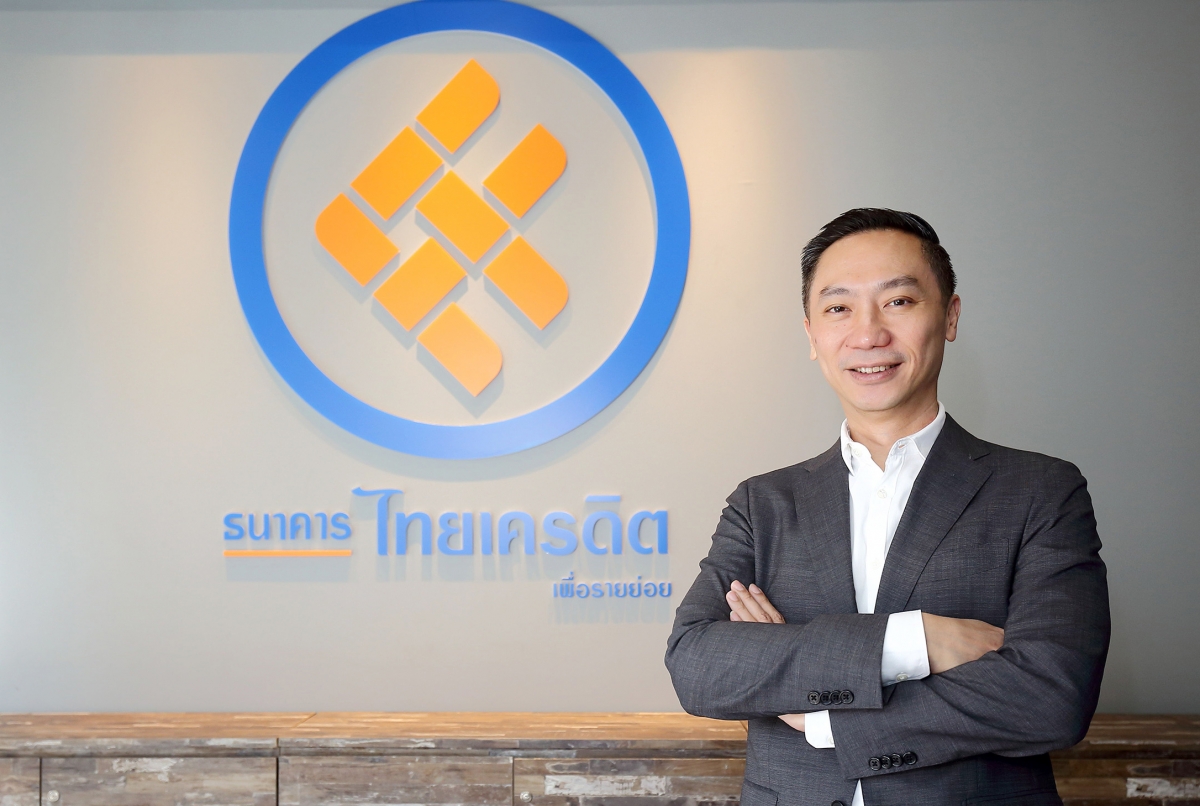
The Thai Credit Retail Bank (TCRB), which serves the micro business segment, is teaching small business owners how they can turn the Covid-19 crisis into an opportunity through its fourth “Smart Micro Customers: Hardworking, Saving with Discipline” programme.
Some 30,000 vendors have taken part in this intensive training scheme, in which they learned essential skills like financial planning, powerful sales techniques and cashless payments.
Roy Agustinus Gunara
Roy Agustinus Gunara, TCRB’s managing director, said that by providing knowledge and boosting business opportunities, this programme can be effective in helping vendors boost their income during this crisis.
A survey of 45,075 vendors nationwide revealed that 70.3 per cent were suffering from a slump in sales, while 83.6 per cent had no access to online channels.
The spread of Covid-19 has made household debts soar by 83.8 per cent, the highest in 18 years, while only 48.6 per cent of Thais have been found to have financial knowledge. The survey also found that 33.33 per cent of Thais have few savings.
Considering that small businesses form the foundation of the Thai economy and are TCRB’s major customers, the 4th Smart Micro Customers scheme is designed to help them survive the crisis.
In it, participants are given lessons on financial planning, techniques to reach and attract customers via online channels and social media, payment methods via QR Code as well as the use of e-Wallet application, among others.
The latest programme has won a strong response, attracting some 30,000 vendors from all regions. As a result, 95 per cent of the participants have been able to pay off their debts and boost their financial credibility, while 53 per cent have realised that they need to change their behaviour to boost financial discipline in debt repayment to achieve good credibility.
Narumol Chan-aum, a coffee vendor in Rayong province, said: “I learned that payment via QR Code helps prevent infections and reduces mistakes. This form of payment has played a greater role during the Covid-19 outbreak as customers wanted to avoid touching bank notes or coins, so we had to change. QR Code payments have helped boost sales because of greater convenience and cuts the problem of giving the wrong change or handling counterfeit money.”
Phutniphan Rampoeypol, the owner of a car-care service in Bueng Kan province, said she learned that meeting customers’ needs was key to service, so she has introduced free pick-up and delivery, which has boosted her revenue by 30 to 40 per cent.
Chalanthorn Khamdaeng, the owner of a grocery and coffee shop in Chiang Mai, said the training has helped her learn how Line groups can be used to generate more revenue and profits. She created a Line group and added the accounts of her clients. In the group she began promoting consumer products and got a good response, especially at the height of the outbreak. She also provided free delivery service, encouraging customers to come back for more.
Narumol Kosolset, a shoe vendor in Bangkok, said the programme focused on income-and-expense accounts to promote savings, in that vendors can save money if they enter items in the account sheet carefully. This way, she said, vendors can see cash flow every day without waiting for the end of the month.
“The bank has placed greater importance on providing financial and sales knowledge to help small and micro business owners prepare for crises. The next programme will be available both online and offline, and will come packed with insightful information that responds to the current situation and meets international standards. This revised programme will be certified by leading educational institutes, making the participants proud of what they have learned,” Gunara concluded.
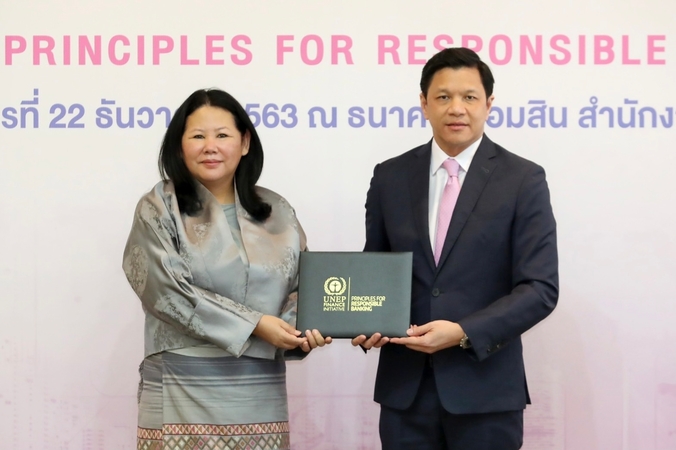
The Government Savings Bank (GSB) has joined the United Nations Environment Programme Finance Initiative and signed Principles for Responsible Banking as part of its commitment to become a social bank.
GSB is the first Thai state financial institution to recognise the principles for responsible banking.
Noble reveals Bt45bn property development plan for 2021
Dec 22. 2020
By The Nation
Real estate firm Noble Development Plc (NOBLE) has unveiled plans to develop 11 new projects worth a total Bt45.1 billion in 2021.
Citing high purchasing power among local and overseas customers, Noble is confident its revenue next year will exceed Bt11 billion with pre-sales of Bt16 billion. This would pave the way to becoming a top-5 property developer in Thailand over the next three years (2021-2023), said the company.
Chairman and co-chief executive officer Thongchai Busrapan said 2021 will be a year of growth and huge investment for Noble.
The Bt45.1-billion plan is the largest since the firm was established in 1991. Targeted revenue of Bt11 billion is 10 per cent up on this year’s target of Bt10 billion, while the Bt16 billion pre-sales target is a jump of 146 per cent from Bt6.5 billion this year.
The 2021 plan comprises five solo projects, five joint ventures with BTS Group Holdings Plc, and one joint venture with Hongkong Land.
Four condominium projects, both high rise and low rise, are scheduled to launch in the first half of next year – the Bt5.4-billion Noble Form Thonglor, the Bt0.7-billion Nue Noble Centre Bangna, the Bt10.7-billion Embassy at Wireless, and the Bt1.9-billion Nue Condo at Don Mueang.
The other seven projects will be launched in the second half of the year, comprising condominiums, semi-detached houses, and townhouses, as part of Noble’s strategy to diversify its customer base locally and internationally.
The company has also partnered with U City Plc, an affiliate of BTS Group Holdings, to jointly develop Bangkok high-rise and low-rise condominiums, semi-detached houses, and townhouses on a 50:50 basis in Suksawat, Rat Burana, Khu Khot, and Rama IX roads worth a combined Bt23 billion.
The new projects are planned after the first joint venture project worth Bt2 billion on Ratchada-Lat Phrao Road has already sold more than 50 per cent of units. The four new projects are close to mass transit lines.
Noble has also formed a joint venture company with BTS Group Holdings and Saha Pathana (SPI) Inter-Holding Plc to acquire land around Project Thana City Bang Na (Noble 40 per cent, SPI 41 per cent and BTS 19 per cent) with registered capital of Bt1 billion.
The company said it was continuing to focus on development of residential projects along mass transit lines.
Although the Covid-19 pandemic had seen some customers delay their purchases, Noble still enjoyed a 37 per cent share of Bangkok’s condominium market during the first nine months of 2020, Thongchai said.
The company has set a 2021 capital expenditure budget of more than Bt9 billion to support the investment plan.
In November, Noble sold debentures worth Bt1.25 billion to investors, with subscriptions exceeding expectations.
The company also plans to issue 4:1 ratio warrants for existing shareholders to purchase ordinary Noble shares, to support business expansion in the next three years.
Moreover, Noble said it should be able to complete a par split process from 3 baht to 1 baht per share early next year, which would help increase trading liquidity for investors and also boost Noble’s eligibility for the SET100 Index.
Thai Oil has signed a memorandum of understanding with Eastern Water Resources Development and Management (East Water), which will undertake water distribution and resource development programmes to support Thai Oil’s clean-fuel project in the Eastern region, chief executive officer and president Wirat Uanarumit said.
“Under this MOU, East Water will also be responsible for operating and maintaining water pumps and machinery under the project. We estimate that it could start operating by early 2022,” he said.
“This project will be a key effort in developing water resources for users in the Eastern region and will support Thai Oil’s future clean-fuel campaigns,” Wirat added.
Meanwhile, Office of National Water Resources (ONWR) secretary-general Somkiat Prajamwong said the ONWR board has agreed to a budget of Bt1.37 billion to build a 15-million-cubic-metre reservoir in Ban Nong Krathing, Chachoengsao, to support increasing water usage in the Eastern Economic Corridor (EEC).
“We expect the reservoir to be completed in 2025. It will help provide water to 10,000 rai of farmland in the rainy season and 3,000 rai during the dry season,” he said.
“It will also help maintain the ecosystem balance and push salt water away from Bang Pakong river during storm surges.”
Somkiat said the ONWR is studying the possibility to produce freshwater from sea water to solve the water shortage problem in EEC areas during the dry season.
“The project will be piloted in Chon Buri and Rayong and is expected to start next year,” he added.
Sakol Energy (SKE) has unveiled plans to acquire businesses related to the clean energy and the environment to boost its revenue and profits next year.
Jakkraphong Sumethchotimetha, the managing director of the gas station operator, said green and clean energy business trends are likely to grow for many years.
“Also, the company plans to expand its existing business while also seeking new opportunities, pending approval from the Securities and Exchange Commission.” Meanwhile the rapidly changing situation meant risk assessment was necessary for some SKE projects.
“The company still has sufficient funds for investment and we will consider issuing warrants based on the company’s and shareholders’ benefits,” he said
SKE would also produce and sell compressed biomethane gas (CBG) to industries in Bangkok and its vicinity rather than in other provinces where demand had dropped.
Jakkraphong expects SKE revenue and profit to increase next year, forecasting performance in the fourth quarter this year would not improve from the third quarter due to a decline in demand for CBG and Natural Gas Vehicle (NGV) fuel amid the economic slowdown and falling oil prices.
“Also, we have maintained our target to boost electricity production capacity to 30 megawatts by 2022.”
He said long-term contracts with strong partners meant company operations would not be disrupted next year, while expressing confidence the government would be able to contain the spread of Covid-19.
“However, the company will make efforts to diversify risks based on the Covid-19 crisis and economic situation in order to seek opportunities for investment in other types of energy in the future,” he added.
The price of gold dropped by Bt150 per baht weight in morning trade on Wednesday after rising by Bt100 per baht weight at close on Tuesday, the Gold Traders Association reported.
As of 9.26am, the buying price of a gold bar was Bt26,550 per baht weight and selling price Bt26,650, while gold ornaments cost Bt26,075.20 and Bt27,150, respectively.
At close on Tuesday, the buying price of a gold bar was Bt26,700 per baht weight and selling price Bt26,800, while gold ornaments cost Bt26,226.80 and Bt27,300, respectively.
The spot gold price moved to US$1,863 (Bt56,295) per ounce in the morning, while the Comex (Commodity Exchange) gold price to be delivered in February next year dropped by $12.50 to $1,870.30 per ounce on Tuesday due to a dollar appreciation and the historic rise in the US gross domestic product, resulting in mass sell-offs of safe-haven assets.
The Hong Kong gold price meanwhile dropped by HK$90 to $17,210 (Bt67,082) per tael, the Chinese Gold and Silver Exchange Society reported.
The Stock Exchange of Thailand (SET) Index fell by 7.55 points, or 0.53 per cent, to 1,431.94 in the morning session on Wednesday.
An analyst at Krungsri Securities expected the day’s index to fluctuate between 1,415 and 1,435 points amid an influx of foreign funds.
“However, uncertainty over the coronavirus mutation in Britain and fears of a new Covid-19 wave in Thailand would pressure the index,” he predicted, adding that some Thai provinces have already imposed lockdown measures to curb the spread of the virus.
He recommended investors buy:
> TQM, BLA, STGT, AJ, PTL, Synex and Com7, which actually benefit from a fresh Covid-19 outbreak.
> PTTEP, PTTGC, Top and IVL, which benefit from the rising oil price, while their fourth-quarter performance is expected to improve.
The SET Index closed at 1,424.39 on Tuesday, up 22.61 points, or 1.61 per cent. Total transactions amounted to Bt87.82 billion, with an index high of 1,428.11 points and a low of 1,388.23.
By Syndication Washington Post, Bloomberg · Kamaron Leach, Cecile Gutscher
U.S. stocks fell for a third day as optimism over a covid-19 relief bill was tempered by the emergence of a new variant of the virus and a slew of lockdowns and travel curbs to contain it. The dollar advanced and Treasuries gained.
The benchmark S&P 500 fluctuated between gains and losses before closing lower, with consumer services and energy the biggest sector decliners. The Nasdaq Composite and Russell 2000 set record highs in what is a holiday shortened week. U.S. lawmakers cleared a $2.3 trillion year-end spending bill and stimulus package. President-elect Joe Biden warned the “darkest days” of the pandemic were still to come and called on Congress to be ready early next year to produce another stimulus package.
“Sometimes you get exaggerated moves in stocks due to lack of liquidity,” said Jonathan Boyar, managing director at BoyarValue Group.
Amgen Inc. was among the biggest losers in the Dow Jones industrial average, falling after a study showed an experimental drug failed to cut asthma patients’ dependence on steroids. Apple Inc. paced the gain in the Nasdaq after a report said the company is planning to make a battery-powered self-driving car as soon as 2024. Tesla Inc. fell for a second day.
In Europe, stocks rebounded from their steepest slump in almost two months Monday, with all industry groups in the green. British Airways owner IAG SA surged more than 5% as travel shares bounced back. Crude oil edged lower for a second day.
The global stock rally is looking increasingly fragile after equities touched a record high last week, as lockdowns and rising virus cases threaten to overshadow U.S. pandemic relief and the initial rollout of vaccines. The bill passed by Congress on Monday represents the second-biggest economic rescue package in American history.
“The agreed fiscal relief package will undoubtedly help mitigate some of the negatives but unfortunately, it won’t be able to fully offset the effects of people staying at home as many businesses face tighter restrictions or are even forced to close,” according to James Knightley, chief international economist at ING Groep.
In the U.K., where the virus variant has taken hold, a full lockdown came into force in London and southeast England. Europe and regions from Canada to Hong Kong have suspended travel links to the island nation, piling pressure onto the government as it tries to salvage a free-trade agreement with the European Union.
The bloc rebuffed Prime Minister Boris Johnson’s latest concessions on fishing rights, keeping the pound lower.
These are the main moves in markets:
Stocks
The S&P 500 Index decreased 0.2% to 3,687.27 as of 4:02 p.m. EST, the lowest in more than a week.
The Dow Jones industrial average sank 0.7% to 30,015.51, the lowest in more than a week on the biggest dip in more than three weeks.
The Nasdaq Composite Index increased 0.5% to 12,807.92, the highest on record.
The Stoxx Europe 600 Index surged 1.2% to 391.25, the biggest jump in five weeks.
Currencies
The Bloomberg Dollar Spot Index jumped 0.6% to 1,132.18, the highest in more than a week on the largest climb in almost eight weeks.
The euro sank 0.7% to $1.2162, the weakest in a week on the biggest dip in more than four months.
The British pound fell 0.7% to $1.3368, the weakest in more than a week on the largest drop in more than a week.
The Japanese yen depreciated 0.3% to 103.66 per dollar, the weakest in a week on the biggest dip in more than two weeks.
Bonds
The yield on 10-year Treasuries declined two basis points to 0.92%, the largest drop in more than a week.
Germany’s 10-year yield declined two basis points to -0.60%, the lowest in a week on the biggest fall in more than a week.
Britain’s 10-year yield declined two basis points to 0.183%, the lowest in more than a week.
Commodities
West Texas Intermediate crude dipped 2.1% to $46.94 a barrel, the lowest in more than a week.
Gold depreciated 0.9% to $1,860.77 an ounce, the weakest in a week on the largest dip in almost two weeks.

 Titanun Mallikamas, secretary of the Monetary Policy Committee (MPC)