The Electricity Generating Authority of Thailand (Egat) aims to import 1.9 million tonnes of liquefied natural gas (LNG) next year, followed by 1.8 million tonnes per year in 2022 and 2023, said new Egat governor Boonyanit Wongrukmit.
Boonyanit took office on December 4.
The state agency will also ask the Cabinet early next year to approve its plan to call bids for the procurement of a floating storage and regasification unit (FSRU) in the Gulf of Thailand, he added.
It is also seeking opportunities to invest in upstream LNG businesses in the next three to five years. Egat is expanding into the emerging electric vehicle (EV) sector, targeting installation of 31 EV charging stations next year.
The state agency forecasts power demand in Thailand will edge up 4 per cent next year from the estimated 3 per cent year-on-year decline this year.
The Industrial Estate Authority of Thailand (IEAT) is partnering up with state-run TOT to install 5G broadband technology system in 14 industrial estates under its management nationwide, IEAT governor Somchint Pilouk said.
The project is expected to be ready in three years. The first phase will focus on industrial estates in the Eastern Economic Corridor.
The IEAT and TOT will workout details of the project and how much the 5G system rollout will cost in each estate. IEAT has adopted many technological systems to enhance business operations in its estates.
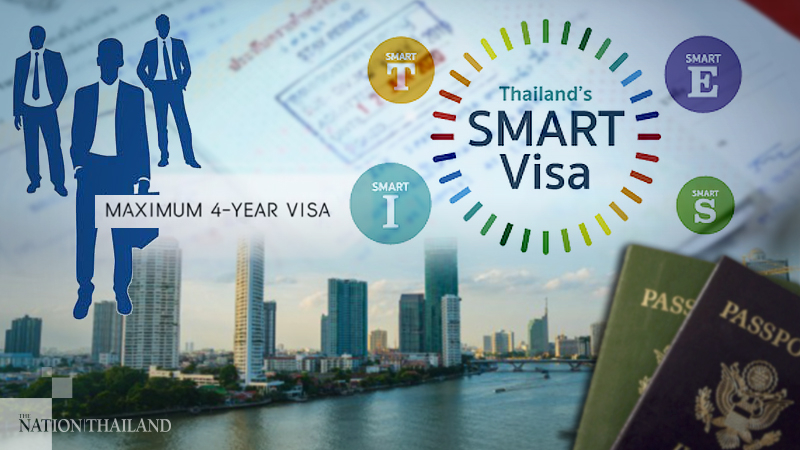
The Board of Investment (BOI) will ask the Cabinet to approve new smart visa rules designed to attract more overseas talent to work in Thailand.
The new rules have already been given the green light by the government’s Centre for Covid-19 Situation Administration (CCSA).
Among the move’s aims is to allow digital freelancers currently working in Thailand to exchange their tourist visas for smart visas. To be eligible, applicants must have an employment contract with a foreign firm lasting at least six months and proof of qualifications and professional experience. BOI partners will help in screening their professional backgrounds.
After receiving the smart visa, their expertise could be tapped by universities, the Digital Economy Promotion Agency, National Innovation Agency, National Science and Technology Development Agency, and others, said BOI deputy secretary general Narit Therdsteerasukdi.
“The [resulting] influx of talent will create a talent pool in the country,” he assured.
Known as digital nomads, the foreign freelancers currently work in Bangkok, Phuket, Chiang Mai and even on Ko Pha-ngan in Surat Thani province, where they have set up a co-working space.
The new visa rules will also cover experienced foreign executives in several businesses – helping to boost development of an investment ecosystem, especially for start-ups. Their expertise could be applied to innovation camps, co-working spaces, advanced materials and packaging, and 3D printing.
The BOI also aims to lure academics to government universities to teach subjects beyond science and technology. These would include innovation, technology management and entrepreneurship.
The new visa rules would allow small businesses to tap foreign talent by reducing the minimum salary they can offer foreigners from Bt100,000 to Bt50,000.
The new rules also relax requirements for executives, reducing the 10 years’ experience and education level (bachelor’s degree) currently required.
So far, 514 foreigners have been granted smart visas since they were adopted in 2018. About half work in digital businesses, followed by automation and robotics. About 47 per cent of them work in start-ups.
Currently, Thailand offers four types of smart visa – the SmartT for talent, Smart E for executives, Smart I for investors, SmartS for start-ups and SmartO for family members.
Holders are permitted to stay up to four years in Thailand without a work permit. The visas also allow travel in and out of the country, as well as fast-track privileges at airports.
The Stock Exchange of Thailand (SET) Index closed at 1,477.21 on Tuesday, up 1.08 points or 0.07 per cent. The volume of total transactions was Bt91.74 billion with an index high of 1,478.61 and a low of 1,459.97.
In the morning session, an analyst at Krungsri Securities said he expected the day’s index to fall to between 1,465 and 1,470 owing to the lack of elements to stimulate investment.
“Besides, the SET will be pressured by the slowdown in foreign funds, uncertainty over the Bank of Thailand’s measures to curb the baht’s appreciation and the index’s tight valuation,” he said
The top 10 stocks with the highest trade value today were KBANK, CPALL, BAM, ADVANC, PTT, IRPC, PTTGC, AOT, IVL and SCC.
As of 4.30pm, the price of oil dropped by US$0.07 or 0.15 per cent to $46.92 per barrel, while gold rose by $16.50 or 0.90 per cent, to $1,848.60 per ounce.
Other Asian indices were on the downslide, except the Shenzhen SE Component Index:
Japan’s Nikkei Index closed at 26,687.84, down 44.60 points or 0.17 per cent.
China’s Shanghai SE Composite Index closed at 3,367.23, down 1.89 points or 0.056 per cent, while Shenzhen SE Component Index closed at 13,763.31, up 71.18 points or 0.52 per cent.
Hong Kong’s Hang Seng Index closed at 26,207.29, down 182.23 points or 0.69 per cent.
South Korea’s KOSPI Index closed at 2,756.82, down 5.38 points or 0.19 per cent.
Taiwan’s TAIEX Index closed at 14,068.52, down 142.53 points or 1 per cent.
The Stock Exchange of Thailand (SET) Index is expected to hit 1,600 points at the beginning of next year thanks to foreign fund inflows, experts said.
Wijit Arayapisit, a research department strategist at Maybank Kim Eng Securities, expects the index to hit 1,600 points from signs of economic recovery, positive news of Covid-19 vaccine, improved liquidity, foreign fund inflow and analysts’ forecast adjustment.
“We expect the economy to recover next year from the lowest point this year, though we do not expect to see a mass sell-off of shares, which was seen in previous years,” he said.
Therdsak Thaveeteeratham, executive vice president for research at Asia Plus Securities, also expects more foreign funds to flow into Thai stock market next year as more foreign investors are paying attention to risk assets.
He expects SET to hit 1,550 points next year from signs of economic recovery as the country’s third-quarter gross domestic product (GDP) showed better than expected results.
“SET skyrocketed in the last two months. Thanks to hopes over Covid-19 vaccine and non-violent political situation which encouraged investors to invest in stock markets, especially in the Asian region,” he said.
Padermpob Songkroh, managing director at Yuanta Securities expected SET in the next six months to rise as the country’s economy is expected to bottom out which can be seen in the improvement of third-quarter GDP.
“Therefore, we expect the country’s GDP in the fourth-quarter this year to rise further,” he said.
Kavee Chukitkasem, deputy managing director at Kasikorn Securities, said he expects SET to hit 1,562 points next year from foreign fund inflow amid the economic recovery.
However, he advised long-term investors not to buy Thai shares because they are overpriced and not very attractive for foreign investors.
“SET may hit 1,600 points as the country’s GDP is expected to rise until the second quarter next year, but the GDP figures will return to normal in the remainder of next year,” he said.
Risks to financial stability in certain areas could rise despite improving economic conditions, and one such area will be the deterioration in households and businesses’ ability to service their debts, the central bank said.
Earlier this month, the Bank of Thailand (BOT) met the Monetary Policy Committee (MPC) and the Financial Institutions Policy Committee (FIPC) to assess risks to Thailand’s financial stability.
The committees said the country is financially sound overall, as commercial banks and insurance companies have substantial capital buffers, while financial markets continued to function properly.
Yet despite the better-than-expected economic outturns, the Thailand’s economic recovery will likely be gradual and uncertain. Risk factors ahead could include the possibility of a second Covid-19 outbreak, the scale of re-opening the country to foreign tourists in 2021 and the continuity of the government’s economic stimulus measures.
Under this environment, risks to financial stability in certain pockets could rise. One key area would be the deterioration in debt serviceability of households and businesses, especially SMEs, which could spill over to other sectors. These risks need to be managed with targeted and timely measures, so the economic momentum is not affected. The committees conducted a comprehensive assessment of financial stability risks and highlighted two priority areas:
• Supporting businesses and households in a targeted and timely manner to contain financial stability risks. Businesses have started re-opening, but are showing different paces of recovery. As a result, support measures – including structural, demand-sided, and financial policies – should be tailored to address the problems and the viability of each business segment as follows:
o For viable firms facing temporary liquidity shortage, liquidity support via new loans and proactive debt restructuring would be appropriate.
o For already-burdened-by-high-debt firms facing liquidity shortage, funding support for business restructuring, through credit or debt-to-equity swap mechanism, and proactive debt restructuring should be prioritised. In this light, the Office of the Securities and Exchange Commission (SEC) was in consultation with government and private agencies to evaluate the possibility of establishing funds to help firms affected by the outbreak.
o For firms facing competitiveness issues for some time, attention should be given to structural measures aiming to reduce excess capacity and support adaptation of business models to meet changing consumer demand.
With regard to households, measures aiming to reduce debt-servicing burden, notably debt payment holidays and instalment reductions, have reached a large number of retail borrowers so far. However, some borrowers still need additional help through debt restructuring.
The BOT has urged financial institutions to help borrowers in a manner tailored to borrowers’ problems and needs by letting them “opt-in” for support programmes, instead of applying broad measures. In addition, debt restructuring for retail borrowers was pushed to be more comprehensive and suitable to borrowers’ debt serviceability in the long term. Alongside these debt measures, measures to support income and reduce expenses should also be implemented. These include government’s measures on employment support and expenditure reduction for low-income households, as well as measures by the Office of Insurance Commission (OIC) to help policyholders by reducing premiums and extending premium payments.
• Safeguarding stability of the financial sector and containing spillover from financial markets. Measures undertaken to stabilise domestic financial markets, namely the Corporate Bond Stabilisation Fund (BSF) and the Mutual Fund Liquidity Facility (MFLF), had been instrumental in restoring investor confidence and market functioning. However, the credit spreads of corporate bonds rated BBB or below and unrated bonds, which had picked up sharply in the first half of 2020, were yet to recede to normal levels, reflecting investors’ concerns on these segments. Also, there continued to be rollover risks in high-yield bonds (non-investment grade and unrated), which were issued mainly by real estate developers. Although these risks are still present, assessments indicate that they will not lead to systemic risks. While overall the situation has improved, the economic outlook remains highly uncertain and capital markets would likely remain volatile, so both the BSF and the MFLF still need to be maintained to prepare for future shocks that could affect investor sentiment.
Moreover, there remains a need to prepare additional measures for risks from market segments not covered by the BSF, such as supporting the establishment of high-yield bond funds, which could provide additional liquidity and help stabilise the corporate bond market. With regard to the savings cooperatives system, the search-for-yield behaviour continues to be present, as reflected by the growing proportion of excess liquidity invested in equity and corporate debt securities. Thus, there continues to be a need to strengthen and effectively implement related regulations, such as investment limits on financial securities.
Furthermore, financial regulators have implemented several measures to ensure the financial sector possess adequate buffers to withstand potential risks and support economic recovery going forward. For example:
o The BOT set the limit on banks’ dividend payments, prohibited the buyback of stocks and debentures that could be counted as regulatory capital before maturity, and relaxed the eligibility criteria for regulatory capital to be on par with the international standard. The objective was to ensure that financial institutions have enough capital cushion to withstand unanticipated events and play a key role in supporting economic recovery.
o The SEC was in the process of revising regulations to provide asset management companies with more liquidity management tools, as approved by the Capital Market Supervisory Board.
o The OIC was in the process of issuing guidelines on subordinated debt issuances by life and non-life insurance companies to be counted toward regulatory capital, aiming to strengthen capital and liquidity positions of insurance companies. Also, the OIC issued the guidelines for insurance companies on IT security and cyber risks, which emerged as new risks for the insurance industry.
Given economic and financial uncertainties going forward, the BOT, the SEC, and the OIC will continue to collaborate closely in assessing risks as well as the adequacy and effectiveness of measures undertaken. The regulators will also stand ready to impose additional measures to contain financial stability risks and support economic recovery. Further cooperation with government agencies would be essential going forward, while financial regulations should be coordinated and reviewed to ensure that they continue to be appropriate in the changing economic and financial context.
The Stock Exchange of Thailand (SET) Index fell by 6.10 points, or 0.41 per cent, to 1,470.03 in the morning session on Tuesday.
An analyst at Krungsri Securities expected the day’s index to fall to between 1,465 and 1,470 due to lack of factors to stimulate investment.
“Besides, the SET would be under pressure from the slowdown in foreign funds flows, uncertainty over the Bank of Thailand’s measures to curb the baht’s appreciation and the index’s tight valuation,” he said
He recommended that investors buy:
▪︎ PTTEP, PTTGC, TOP, IVL and SPRC that benefit from rising oil price.
▪︎ MINT, CENTEL and AOT that benefit from positive news of Covid-19 vaccine.
▪︎ BAM, DELTA and COM7, which are expected to be listed in the SET50 Index.
▪︎ JMART, which is expected to be listed in the SET100 Index.
The SET Index closed at 1,476.13 on Monday, down 6.54 points or 0.44 per cent. Total transactions amounted to Bt107.3 billion with an index high of 1,495.18 and a low of 1,471.56.
The price of gold rose by Bt50 per baht weight in morning trade on Tuesday after falling sharply by Bt200 per baht weight at close on Monday, the Gold Traders Association reported.
As of 9.24am, the buying price of a gold bar was Bt26,000 per baht weight and selling price Bt26,100, while gold ornaments were priced at Bt25,529.44 and Bt26,600, respectively.
At close on Monday, the buying price of a gold bar was Bt25,950 per baht weight and selling price Bt26,050, while gold ornaments were Bt25,483.96 and Bt26,550, respectively.
Spot gold price moved to US$1,831 (Bt55,073) per ounce in the morning, while the Comex (Commodity Exchange) gold price to be delivered in February next year dropped by $11.5 to $1,832.1 per ounce on Monday due to mass sell-offs of safe-haven assets amid positive news of a Covid-19 vaccine. Besides, the market is keeping an eye on US Federal Reserve’s monetary policy meeting on Tuesday.
The Hong Kong gold price meanwhile dropped by HK$120 to $16,890 (Bt65,527) per tael, the Chinese Gold and Silver Exchange Society reported.
The baht opened at 30.09 to the US dollar on Tuesday, weakening from the previous close of 30.06.
The Thai currency is likely to move between 29.95 and 30.15, said Jitipol Puksamatanan, senior director of the chief investment office at SCB Securities.
On Monday night, the S&P 500 Index fell by 0.4 per cent due to mass sell-offs of cyclical shares, but the Stoxx 600 Index rose by 0.4 per cent on hopes of a fresh European Union economic stimulus package.
Meanwhile, West Texas Intermediate oil price rose by 0.9 per cent from the Opec+ move to cut production capacity, while gold price dropped by 0.6 per cent to US$1,828 per ounce due to investors’ mass sell-offs to take profit.
In the financial market, the US Ten-year treasury yield dropped to 0.89 per cent due to lack of positive sentiments and the weakening dollar. The dollar fell to the weakest in two years due to uncertainty over the US states’ lockdown to contain the spread of Covid-19, while the pound sterling rose to its strongest from hopes of the United Kingdom and the European Union reaching a Brexit agreement by the end of this year.
Meanwhile, the baht is expected to move in a narrow range until the end of this year because Asian currencies have begun to hit a new high, while the capital market has become less attractive after the stock market hit their highest levels amid the economic recovery.
Bangkok Airways to launch three daily flights to Mae Sot from Bangkok
Dec 14. 2020
By The Nation
Bangkok Airways Pcl will launch a new route between Bangkok (Suvarnabhumi) and Mae Sot in Tak province, starting February 1, 2021.
The newly added direct services will be operated with the highest preventive measures and standards, the airline said.
The daily Bangkok (Suvarnabhumi) – Mae Sot (Tak) service will be operated using an ATR72-600 aircraft.
The first outbound flight, PG381, departs Bangkok (Suvarnabhumi) at 7.50am and arrives at Mae Sot Airport at 9.20am.
The first inbound flight, PG382, departs Mae Sot Airport at 9.50am and arrives in Bangkok at 11.25am.
The second outbound flight, PG383, departs Bangkok at noon and arrives at Mae Sot Airport at 1.30pm. The second inbound flight, PG384, departs Mae Sot Airport at 2pm and arrives at Bangkok at 3.35pm.
The last outbound flight, PG385, departs Bangkok at 3pm and arrives at Mae Sot Airport at 4.30pm. The last inbound flight, PG386, departs Mae Sot Airport at 5pm and arrives in Bangkok at 6.35pm.

 Egat governor Boonyanit Wongrukmit
  IEAT governor Somchint Pilouk