The Stock Exchange of Thailand (SET) Index closed at 1,260.08 on Friday, down 4.24 points or 0.34 per cent. Total transactions amounted to Bt73.52 billion with an index high of 1,270.22 and a low of 1,251.08.
In the morning session, an analyst at Krungsri Securities expected the day’s index to fluctuate between 1,255 and 1,270 despite the strong prospect of former vice president Joe Biden being elected president.
“Uncertainty over [Thai] protesters’ plans for anti-government rallies this weekend, along with rising US Covid-19 cases, would cause volatility in the index,” he said.
The 10 stocks with the highest trade value today were KBANK, GPSC, GULF, BBL, CPALL, PTT, SCB, TASCO, AOT and BGRIM.
As of 4.30pm, the price of oil dropped by US$0.58 or 1.50 per cent to $38.21 per barrel, while gold rose by $1.50 or 0.08 per cent, to $1,948.30 per ounce.
Other Asian indices were on the rise, except in mainland China:
Japan’s Nikkei Index closed at 24,325.23, up 219.95 points or 0.91 per cent.
China’s Shang Hai SE Composite Index closed at 3,312.16, down 7.97 points or 0.24 per cent, while Shenzhen SE Component Index closed at 13,838.42, down 55.83 points or 0.40 per cent.
Hong Kong’s Hang Seng Index closed at 25,712.97, up 17.05 points or 0.066 per cent.
South Korea’s KOSPI Index closed at 2,416.50, up 2.71 points or 0.11 per cent.
Taiwan’s TAIEX Index closed at 12,973.53, up 54.73 points or 0.42 per cent.
‘Global markets expected to be propped up by government intervention’
EconNov 06. 2020Joseph Caceres, the new head of investment advisory and solutions, SCB-Julius Baer Securities Co Ltd
By The Nation
Markets will continue to be supported by global policy intervention, according to SCB Julius Baer, which recommends staying invested but highly selective in the fourth quarter of 2020.
The strategic wealth management joint venture between Siam Commercial Bank and Julius Baer, the leading Swiss wealth management group, expects markets to be supported by government and central bank intervention as well as the development of a Covid-19 vaccine.
“We believe that global economic recovery is on track, led by strong monetary and fiscal stimulus and later by a cyclical recovery on the back of a vaccine. We continue to be constructive on equities but highly selective, particularly as we enter the more volatile weeks ahead of and during the US presidential elections,” said Joseph Caceres, the new head of investment advisory and solutions, SCB-Julius Baer Securities Co Ltd.
“We believe longer term structural shifts in the way we live and work will continue to drive the technology sector including across digital infrastructure, fintech and healthcare. We advise clients to stay invested but remain well-diversified and have a preference geographically towards the US and China,” Caceres suggested.
EEC, high-speed railway airport link make Pattaya attractive to hotel investors
Nov 05. 2020Chakkrit Chakrabandhu Na Ayudhya
By The NationPattaya will become a bright spot for hotel investors next year thanks to domestic demand potential, as well as the development of the Eastern Economic Corridor (EEC), property consultancy firm JLL said.
The seaside town has been one of Thailand’s major tourism markets, with its 64,000 hotel rooms coming in just after Bangkok and slightly ahead of Phuket.
Its proximity to Bangkok and development of the EEC has put Pattaya on the spotlight since the new economic zone is expected to stimulate demand for hotels from both leisure and corporate standpoints.
Also, U-Tapao Airport’s aim to serve 5 million passengers and the planned high-speed railway linking it with Suvarnabhumi and Don Mueang airports will further make Pattaya more attractive to investors. The railway link is expected to be up and running in 2025.
Despite suffering badly from the Covid-19 pandemic, the Pattaya hotel market is catching the attention of investors.
“In recent months, we have been getting an unprecedented number of enquiries from investors looking for an opportunity to invest in hotels in Pattaya. Though we have yet to see a trend of deeply discounted hotels in the market, the situation is delicate and the landscape could potentially shift,” said Chakkrit Chakrabandhu Na Ayudhya, executive vice president of investment sales in Asia at JLL’s Hotels and Hospitality Group.
“Owners are being pressured by the extended burn rate. As the crisis prolongs, the pricing gap between owners and investors will naturally become narrower,” he said.
Pimpanga Yomchinda
Pimpanga Yomchinda, vice president of investment sales in Asia for JLL, said: “Since the pandemic started, we have seen a lot of engagement from hotel owners. They want to understand the implications of various hold-and-disposal scenarios so they can make the most informed decisions. As there is no one-size-fits-all approach, the best way for us to understand the situation is to meet owners on the ground, look into their needs and help them customise their asset/portfolio strategy.”
Chakkrit added: “The disposal process will need to be refined to accommodate the current situation by allowing more flexibility with additional deal features such as vendor financing, income guarantee, staged payments or delayed handover. This will, in turn, optimise deal certainty and proceeds.”
Pattaya has seen no major hotel transactions since 2018 due largely to the lack of investment-grade assets being offered in the market. It remains to be seen whether the pandemic will unlock some of them over the next 12 months, said Chakkrit.
According to JLL, the average number of keys for hotels sold in the last five years in Thailand was approximately 180. While hotels in Pattaya have approximately 100 keys on average, almost half of the hotels across the city have less than 50 keys.
“With a lower-key count, it is harder to achieve sufficient economies of scales from an investor’s point of view. In addition, investors are more interested in Pattaya’s upscale hotel segment that accounts for less than 20 per cent of the city’s total hotel stock. The rest of the stock is in the midscale and budget segments, which faces strong competition.
“Traditionally, investor demand for Pattaya hotels would lean more towards rarer and more sought-after upscale and upper-upscale segments because the midscale and budget segments are viewed as offering lower profitability and being difficult to differentiate due to large supply of rooms.”
Domination of domestic investors
“Due to border restrictions, we are naturally seeing more engagement from domestic investors compared to what we saw in almost 40 hospitality deals [worth over Bt40 billion] that we brokered in Thailand since 2010. We are also seeing more enquiries from corporates with diverse income streams and private equity funds since the pandemic started,” Chakkrit said.
JLL’s Hotels and Hospitality Group in conjunction with the Thai Hotels Association has planned a series of hotel investment conferences in Thailand’s key hotel markets this year. The last event was held in Pattaya and the next is planned for Phuket on November 11.
BTS Group Holdings Pcl (BTSG) is a major player in four businesses: mass transit, media, property, and services.
The Green Bond offering targeted institutional and high net worth investors.
The total demand on the bookbuilding date was 3.3 times greater than the company’s initial target issue size, the company said.
BTSG chief financial officer Surayut Thavikulwat said the offering from November 3-5 aimed to raise Bt5 billion. Due to the oversubscription, the greenshoe option was exercised, which allows the underwriter to increase the size of the issue. The additional Bt3.6 billion greenshoe option boosted the total issue size to Bt8.6 billion. They comprise Bt500 million two-year series with a fixed interest rate of 2.10 per cent per annum, Bt4 billion three-year series with a fixed interest rate of 2.44 per cent per annum, Bt1.5 billion five-year series with a fixed interest rate of 2.86 per cent per annum, Bt2 billion seven-year series with a fixed interest rate of 3.11 per cent per annum and Bt600 million 10-year series with a fixed interest rate of 3.41 per cent per annum.
TRIS Rating assigned “A” to the Green Bond on September 29. The Green Bond’s proceeds will be used for investment and debt repayment of the two monorail mass transit projects — the Pink Line Khae Rai-Min Buri section, and the Yellow Line Lad Prao-Sam Rong section. Both are the anchored projects that will elevate Bangkok’s electric mass transit network to lessen the use of fossil-fuel vehicles, resulting in the reduction of carbon emission and fine dust particles in the Bangkok metropolitan area.
The Pink Line Khae Rai-Min Buri section and the Yellow Line Lad Prao-Sam Rong section are under construction. Overall construction progress of both lines are more than 60 per cent complete and expect to commence full operation in 2022.
“BTSG would like to thank investors for their trust and interest in subscribing to the BTSG Green Bond and we would also like to thank Bangkok Bank, Siam Commercial Bank, and Krungthai Bank as the lead arrangers for their support and contribution to this achievement. This Green Bond is the second series of Green Bonds issued by BTSG following the success of its first Green Bond in 2019.
“The consecutive Green Bond issuance shows our commitment towards continuous investments in green projects and sustainable business growth,” said Surayut.
BTSG Green Bond complies with International Green Bond Standards, including the Green Bond Principles 2018 issued by the International Capital Market Association as well as the Asean Green Bond Standards 2018 issued by the Asean Capital Markets Forum, Surayut said.
Visa to face U.S. antitrust suit over Plaid acquisition
CorporateNov 06. 2020Visa credit cards are arranged for a photograph in 2019. CREDIT: Bloomberg photo by Andrew Harrer
By Syndication Washington Post, Bloomberg · David McLaughlin, Jenny Surane · BUSINESS The U.S. Justice Department sued to block Visa Inc.’s $5.3 billion acquisition of Plaid Inc., accusing Visa of trying to buy the financial-technology firm to eliminate an emerging threat to its online debit business.
The Justice Department said in an antitrust complaint filed Thursday in federal court in San Francisco that the deal for Plaid would illegally extend Visa’s dominant position and should be stopped.
“By acquiring Plaid, Visa would eliminate a nascent competitive threat that would likely result in substantial savings and more innovative online debit services for merchants and consumers,” the government said.
The Justice Department’s case hinges on the fact that Visa handles the lion’s share of debit transactions in the U.S., with a market share that dwarfs even that of rival Mastercard Inc. The payments network earned $4 billion from the business last year, according to the complaint.
Visa’s dominance in debit comes from its massive network: Banks have slapped Visa’s logo on half a billion debit cards in the U.S. and those cards are then accepted at millions of merchant locations around the world. Few companies have been able to replicate Visa’s success.
Plaid is a potential threat to that business, according to the government. Its technology allows apps like PayPal Holdings Inc.’s Venmo to connect to some 200 million consumer bank accounts. While it doesn’t compete with Visa today, Plaid had been planning a new online debit service that Visa feared would threaten its monopoly, the U.S. said.
When Visa was considering a deal for Plaid in March 2019, a Visa executive compared Plaid to an island “volcano” in the ocean and warned that beneath the surface “is a massive opportunity — one that threatens Visa,” according to the complaint.
Months later, as Visa was conducting its due diligence on Plaid, Visa learned the company planned to create a “meaningful” money movement business by the end of 2021. Plaid was seeking to offer the service at a 50% discount to Visa’s fees, saving merchants millions of dollars — a plan it was upfront with Visa’s executives about. Visa Chief Executive Officer Al Kelly told Chief Financial Officer Vasant Prabhu that the acquisition would be an “insurance policy” to protect the business, according to the complaint.
Those fears culminated in January’s surprise announcement: Visa would pay a whopping $5.3 billion for Plaid, a multiple of 50 times the data company’s revenue and Visa’s second-largest acquisition ever. Visa on Thursday reiterated its argument that Plaid complements its business.
“As we explained to the DOJ, Plaid is not a payments company,” Visa said in a statement. “Visa’s business faces intense competition from a variety of players — but Plaid is not one of them. Plaid is a data network that enables individuals to connect their financial accounts to the apps and services they use to manage their financial lives, and its capabilities complement Visa’s.”
Visa shares rose 2.4% to $198.52 at 1:23 p.m. after earlier rising as much as 3.6%. The stock has advanced 5.4% this year, compared with the 32% gain of the S&P 500 Information Technology Index.
The Justice Department said Plaid is uniquely positioned to offer a “pay-by-bank” service that would compete with Visa’s online debit service. Instead of providing their debit card credentials when paying for goods online, consumers give their bank account information. Banks typically charge a flat fee between 2 cents and 25 cents for such transactions, whereas a $60 debit card transaction can carry a fee of as much as 39 cents, the Department of Justice found.
The Justice Department argued Plaid’s connections to consumer bank accounts means the company could be an attractive partner to merchants looking for an alternative to accepting Visa’s debit cards. Retailers have long complained about the fees associated with accepting debit cards, even after the U.S. capped the rates Visa and Mastercard can charge on such transactions roughly a decade ago.
Retailers spend more than $100 billion a year on accepting electronic card payments. While Visa and Mastercard are responsible for setting the fees that merchants are charged, most of it goes to the banks that issue the cards, with the networks taking a much smaller percentage of the fee.
“Ultimately, Visa recognized that the best course of action for its business was to eliminate Plaid as a competitive threat by purchasing Plaid itself,” the department said.
As part of its acquisition of Plaid, Visa recognized that it was also protecting the revenues of the banks it works with, the complaint said. One executive observed in an internal document quoted in the filing that banks would have “a lot to lose if [pay-by-bank transactions] accelerate as the result of Plaid landing in the wrong hands.”
“It is in our collective interest to manage the evolution of these payment forms in a way that protects the commercial results we mutually realize through card-based payments,” the Visa executive said, according to the complaint.
The Justice Department accused Visa of a “long history” of entering into agreements to quash nascent competition. The department said Visa convinced an unamed major technology company not to build or support technologies that would disrupt its business in exchange for substantial fee reductions.
Visa is currently in negotiations to renew this ongoing agreement, the complaint says, and the network is demanding that the technology company continue to abide by these practices, “including not encouraging customers to use less expensive payment methods and prohibiting marketing to non Visa options during payment checkout.”
By Syndication Washington Post, Bloomberg · Crystal Tse, Olivia Carville · BUSINESS
Airbnb is opening its books as soon as next Thursday ahead of a much-anticipated initial public offering, according to people with knowledge of the matter.
The home-rental startup, which said in August it filed confidentially for a listing with the U.S. Securities and Exchange Commission, will show the public the listing documents and its financial information for the first time as it seeks to woo investors. Airbnb is aiming to raise as much as $3 billion in an IPO before year end, Bloomberg has reported. Timing of the IPO filing could still change, said the people, who declined to be named discussing private information.
Airbnb’s listing will come in a tight window for public debuts during an eventful year. Covid-19 and the uncertain outcome of the U.S. presidential election had led companies to think twice before tapping the market, while the holiday calendar in the remainder of the year means there is a shorter time frame to get deals done.
A representative for Airbnb declined to comment. Reuters earlier reported on the filing coming next week.
While Airbnb had been sending incremental updates to the market signaling its debut is on the way, such as announcing that it has chosen Nasdaq Global Select Market to host its listing, the public filing will serve as the key milestone. It will be allowed to start taking orders for shares from investors 15 days after the documents are available.
The San Francisco-based company was valued at $18 billion in April when it raised $2 billion in debt from investors at the depth of the pandemic. That was a significant drop from its earlier peak valuation of $31 billion in a 2017 fundraising round.
A quicker-than-expected rebound from the pandemic has brought the company’s valuation back to $22 billion at end of September, based on the value of its common shares at a recent stock split, Bloomberg News reported.
New York Times slides after warning of subscriber slowdown
CorporateNov 06. 2020Copies of the New York Times at a newsstand in New York on Feb. 3, 2019. MUST CREDIT: Bloomberg photo by Tiffany Hagler-Geard.
By Syndication Washington Post, Bloomberg · Gerry Smith · BUSINESS, MEDIA
The New York Times fell the most since April after warning that it doesn’t expect an encore to its dramatic 2020 subscriber gains.
The Times added 393,000 online subscribers in the third quarter, thanks partly to a heavy news cycle, the company said in a statement Thursday. And digital-only subscription revenue exceeded print subscription revenue for the first time.
But on an earnings call, Chief Executive Officer Meredith Kopit Levien warned that the Times was unlikely to continue adding subscribers at the same pace next year. She called 2020 “an unprecedented year” for digital subscription growth, adding, “We don’t expect to repeat its results.”
Also, the Times warned that its advertising business, which contributes about one-third of its overall revenue, will continue to struggle as marketers pull back during the pandemic and readers move online. Total advertising revenue is expected to decline 30% next quarter, the same percentage it fell last quarter.
Though the online business is now the Times’ main focus, internet ads typically don’t command the kind of prices that print ones do.
Times shares fell as much as 6.3% to $38.84 in New York trading. They had gained 29% this year through Wednesday, compared with a 6.6% rise in the S&P 500.
The Times is trying to get more of its revenue from paying readers to make up for the shaky advertising market. Investors are watching closely to see if the publisher can continue its growth in digital subscribers if President Donald Trump loses the election and a breakneck news cycle slows down. The publisher has found other ways to attract new subscribers, including a popular $1-a-week promotional offer.
“The big question for the company is the outlook following a potential U.S. presidential victory by Joe Biden. While subscriber growth could slow following the elections, the company has substantial pricing power given its newsroom investments and customer-analytics data,” Bloomberg Intelligence media analyst wrote.
The Times has set a goal of hitting 10 million total subscribers by 2025. It crossed 7 million subscribers in the month of October.
Profit was 20 cents a share in the third quarter, beating analysts’ projection of 11 cents a share. Revenue was $426.9 million, surpassing Wall Street’s expectations of $411.8 million.
Inside the chaotic unraveling of Jack Ma’s $35 billion IPO
Biz insightsNov 06. 2020Jack Ma in 2017. MUST CREDIT: Bloomberg photo by Cole Burston
By Syndication Washington Post, Bloomberg · BUSINESS, WORLD, US-GLOBAL-MARKETS, ASIA-PACIFIC The midlevel bureaucrats left China’s richest man waiting as they prepared for a meeting that would send shock waves across the financial world.
It was Monday morning in Beijing, and Jack Ma had been summoned to a conference room at the China Securities Regulatory Commission (CSRC) just days before he was set to take Ant Group public in the biggest stock-market debut of all time.
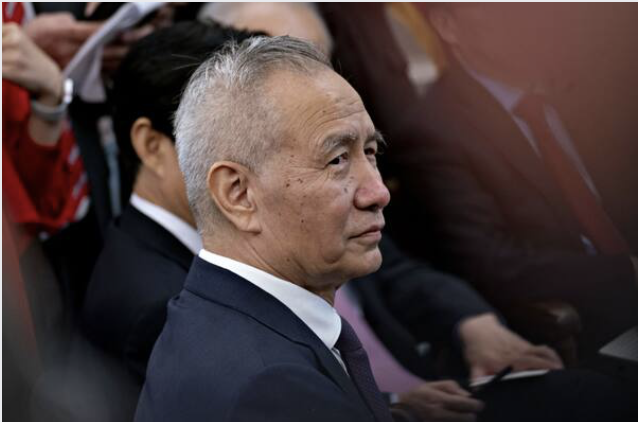
Liu He in 2019. MUST CREDIT: Bloomberg photo by Andrew Harrer
When the bureaucrats finally turned up, they skipped over pleasantries and delivered an ominous message: Ant’s days of relaxed government oversight and minimal capital requirements were over. The meeting ended without a discussion of Ant’s IPO, but it was a sign that things might not go as planned.
The subsequent unraveling of the $35 billion share sale has thrust Ma’s fintech giant into turmoil, offering a stark reminder that even China’s most celebrated businessman is not immune to the whims of a Communist Party that has steadily tightened its grip on the world’s second-largest economy under Xi Jinping’s leadership.
Among the questions that linger as international investors try to make sense of a chaotic 72 hours: Why would China scuttle Ant’s IPO at the last minute after months of meticulous preparation? And what does the future hold for one of the country’s most important companies?
Interviews with regulators, bankers and Ant executives offer some answers, though even insiders say only China’s top leaders can be confident of what happens next. Most of the people who spoke for this report did so on the condition of anonymity to discuss sensitive matters.
Ma’s meeting in Beijing on Monday triggered a behind-the-scenes scramble by Ant and its bankers for more clarity from Chinese regulators. While CSRC officials signaled at the time that they were not aware of any changes to the IPO plans, the regulator’s cryptic social media post later that day about a “supervisory interview” with Ma set tongues wagging from Hong Kong to New York.
By Tuesday afternoon, the mood had worsened as whispers of a delay began circulating in Shanghai. At about 8 p.m., the city’s stock exchange called Ant to say the IPO would be suspended.
When the official statement landed less than an hour later, it cited a “significant change” in the regulatory environment but offered few additional details on why authorities would scupper the listing two days before shares were expected to start trading.
At a hastily arranged meeting between Ant’s bankers and the CSRC later that evening, officials noted the company’s need for more capital and new licenses to comply with a spate of regulations for financial conglomerates that had begun taking effect at the start of November. There was no discussion of how quickly the IPO could be restarted.
An Ant spokesman said the need for more capital and new licenses was not discussed in the meeting, but he declined to provide more details.
One concern among regulators was that the stricter rules may not have been fully disclosed in Ant’s prospectus. On top of the new financial conglomerate regulations, the government had on Monday released stringent draft rules for consumer loans that would require Ant to provide at least 30% of the funding for loans it underwrites for banks and other financial institutions. Ant funds 2% of its loans, with the rest taken up by third parties or packaged as securities.
Several officials said it was better to stop the listing at the 11th hour than to let it proceed and expose investors to potential losses.
That sentiment was shared by at least one institutional money manager, who said he had practically begged an Ant executive for an IPO allocation during a meeting at the Mandarin Oriental hotel in Hong Kong. Now that he has a clearer idea of the regulatory risks, he’s relieved the share sale was shelved.
The CSRC said in a statement on Wednesday that preventing a “hasty” listing of Ant in a changing regulatory environment was a responsible move for the market and investors.
Still, some China watchers have an alternative theory for why Xi’s government acted the way it did: It wanted to send a message.
Ma, a former teacher who’s widely revered in China, faced an unusual amount of criticism in state media after he criticized the country’s financial rules for stifling innovation at a conference in Shanghai on Oct. 24. His remarks came after Vice President Wang Qishan – a Xi confidante – called for a balance between innovation and strong regulations to prevent financial risks.
“It appeared that, intentionally or not, Ma was openly defying and criticizing the Chinese government’s approach to financial regulation,” Andrew Batson, China research director at Gavekal Research, wrote in a report.
The weekend before Ma was summoned to Beijing, the Financial Stability and Development Committee led by Vice Premier Liu He stressed the need for fintech firms to be regulated.
In one sign authorities may keep up the pressure on Ant, people familiar with the matter said on Wednesday that regulators plan to discourage banks from using the fintech firm’s online lending platforms. The directive strikes at the heart of Ant’s commission-based lending model, which generated about 29 billion yuan ($4.4 billion) of revenue in the six months ended June.
Any suggestion that banks will stop using its platforms is unsubstantiated, Ant said in a response to questions from Bloomberg.
Some investors are bracing for tougher times at Ant and the rest of Ma’s business empire. Shares of Alibaba Group Holding, which owns about a third of Ant, tumbled more than 8% on Tuesday in New York for the steepest drop in five years. The slump cut Ma’s wealth by almost $3 billion, to $58 billion, dragging him down to No. 2 on China’s rich list behind Tencent Holdings’s Pony Ma.
The IPO debacle has also raised broader concerns about China’s commitment to transparency as it tries to lure international investors.
On Tuesday, confusion over the suspension triggered a flood of calls to Ant’s bankers from baffled money managers. The sense of whiplash in some cases was stark: An hour or two before the suspension was announced, Ant’s investor relations team was still trying to confirm attendance at a post-IPO gala in Hong Kong. One of the company’s biggest foreign investors predicted the episode could do lasting damage to confidence in China’s capital markets.
It may also have spillover effects on Hong Kong, whose status as a premier financial hub has already come under question amid increased influence from Beijing. Nearly a fifth of the city’s population by one estimate had signed up to buy Ant shares; many who had planned on a windfall were instead stuck paying interest expenses on useless margin loans.
“The lack of transparency reminds us that the ‘Chinese way’ remains fraught with issues,” said Fraser Howie, author of “Red Capitalism: The Fragile Financial Foundation of China’s Extraordinary Rise.”
As for Ant itself, it’s unlikely that the IPO suspension will deal a fatal blow. The company had 71 billion yuan of cash and equivalents as of June and is one of China’s most systemically important institutions. The last thing authorities want is a destabilizing loss of confidence in a business that plays a key role in the nation’s financial plumbing.
The more pertinent risk for Ant is a decline in its breakneck pace of growth and lofty valuation. China’s new regulations will force the company to act more like a traditional lender and less like an asset-light provider of technology services to the financial industry. That will almost certainly mean a lower price-earnings ratio for the stock if it eventually lists.
Also looming is the introduction of China’s central bank digital currency, which threatens to erode Ant’s dominance in payments. That could have implications for the company’s other businesses as well. Ant’s credit platform, for instance, utilizes its huge trove of payments data to assess the financial strength of borrowers who often lack collateral or formal credit histories.
All of that will be bad news for shareholders who propelled Ant’s valuation to $315 billion – higher than that of JPMorgan Chase & Co. But it may suit regulators and party leaders who worry that Ma’s creation has grown too big, too fast.
Fed has the economy’s weight on its shoulders again
Biz insightsNov 05. 2020Jerome Powell, chairman of the Federal Reserve, during a news conference in Washington on March 3, 2020. CREDIT: Bloomberg photo by Andrew Harrer.
By Syndication Washington Post, Bloomberg Opinion · Brian Chappatta · OPINION, BUSINESS, US-GLOBAL-MARKETS For the past few weeks, investors dared to dream of a U.S. government that worked hand-in-hand with the Federal Reserve to provide ample fiscal aid and get the world’s largest economy through the coronavirus pandemic.
This “blue wave” scenario has come crashing down in the wake of Tuesday’s election results. Yes, Democrat Joe Biden looks as if he has the advantage in reaching 270 Electoral College votes, but his party fell far short of expectations in the Senate, where Republicans are all but guaranteed to retain control, and it lost some seats in the House. Democrats alone won’t be able to pass legislation to send money out to unemployed Americans, closed small businesses and strapped state and local governments.
At least for a day after his re-election, Republican Senator Mitch McConnell sounded amicable to compromise, even on the thorny issue of large-scale aid to states and cities. “Hopefully the partisan passions that prevented us from doing a rescue package have subsided,” McConnell, who pushed for a much smaller package than the $2 trillion one that had been discussed by the Trump administration and Democratic leaders, said on Wednesday. “That’s job one when we get back.”
Yet even taking McConnell’s comments at face value, it’s hard to imagine Senate Republicans willing to do “whatever it takes” on the fiscal spending side to get the U.S. economy back to its pre-covid levels, especially if Biden is in the White House and can take credit for the rebound. More likely, the burden of stimulus will once again fall to the Fed and Chair Jerome Powell.
A prolonged presidential election and political gridlock are the backdrop to the Federal Open Market Committee’s decision on Thursday, when Powell and his colleagues aren’t expected to offer much in the way of new information. Recall that at the last meeting in September, they unveiled enhanced forward guidance that pledged to keep the fed funds rate unchanged in a range of 0% to 0.25% “until labor market conditions have reached levels consistent with the Committee’s assessments of maximum employment and inflation has risen to 2 percent and is on track to moderately exceed 2 percent for some time.” That followed Powell’s August reveal of the central bank’s new monetary policy framework, which would seek inflation that “averages” 2% over time, therefore allowing overshoots after periods in which it falls short of the target.
Heading into this week, it looked as if the biggest question for the Fed was whether it would step in to combat an aggressive steepening of the Treasury yield curve, with traders positioned for a large round of fiscal stimulus. The election aftermath took care of that question: 10-year yields fell 14 basis points on Wednesday, the most since March, to 0.76%, while 30-year yields tumbled by roughly the same amount to 1.54%. That’s well within the central bank’s comfort zone.
But judging by the reaction across other financial markets, it’s clear traders are thinking beyond the votes and betting on the Fed having to shoulder almost the entire burden of resuscitating the U.S. economy. These investors most likely remember 2011 through 2015, when a tea party Congress brought the U.S. to the brink of default under President Barack Obama and forced the budget deficit to narrow each year in the name of “fiscal responsibility.”
What happened during that period? From the time of the debt-ceiling showdown in 2011 through the Fed’s first interest-rate increase of the cycle in December 2015, the S&P 500 Index returned 90%, or 15.8% on an annual equivalent basis. The 30-year Treasury yield fell from about 4% to 3%, dipping to as low as 2.22% along the way. Corporate bonds delivered strong returns. In other words, it was a great period for financial assets. Meanwhile, the average annual increase in U.S. hourly earnings was barely above 2% – hardly enough to keep pace with inflation.
This is the conundrum the Fed finds itself in now, less than 48 hours after the U.S. elections. Is it possible, given the current set of tools, for monetary policy to deliver broad-based economic prosperity? Or is it confined to primarily propping up asset holders and debtors, then counting on the wealth effect to make its way through the economy?
I’ve tackled this question from a number of angles in the past month with a fiscal aid package stalled in Washington. For one, the Fed could make a more explicit link between its bond purchases and fiscal policy initiatives to push lawmakers into more aid, but it’s unclear whether Powell wants to open that potential Pandora’s box. The central bank could also throw the doors wide open to its Municipal Liquidity Facility, lowering interest rates and encouraging more states and cities to take out a loan. But it seems keen for the facility to remain a last-resort backstop rather than a substitute for federal grants.
Put it all together, and it’s hard to see how the Fed would make up for a smaller dose of fiscal aid on its own. Yes, it moved last week to sharply reduce the minimum loan size in its Main Street Lending Program to $100,000 from $250,000, potentially making it open to a broader swath of U.S. businesses. But with fewer than 400 loans made since the program became operational in July, and just 14% of Main Street lending done through the end of September for loans of less than $1 million, it’s questionable at best whether it’ll receive widespread interest. Powell himself has stressed that these businesses may need grants, not loans that they have to repay, to get through the pandemic. Also, as it stands, the program is set to expire on Dec. 31, as is the muni facility, though that could change at a moment’s notice.
So that leaves the Fed with its tried-and-true monetary policy toolkit: Simply keep interest rates near zero for even longer and perhaps increase the size of its bond-buying program or have it target the long end of the yield curve. That should keep bonds well-bid, corporate debt deals flowing and equity markets elevated. As for fiscal aid, though, that’s looking as if it still has to run through Capitol Hill.
The Stock Exchange of Thailand (SET) Index dropped by 1.33 points, or 0.11 per cent, to 1,262.99 in the morning session on Friday.
An analyst at Krungsri Securities expected the day’s index to fluctuate between 1,255 and 1,270 despite strong prospects of former vice president Joe Biden being elected president.
“Uncertainty over pro-democracy protesters’ move to hold anti-government rallies this weekend and rising US Covid-19 cases would cause volatility in the index,” he said.
He recommended that investors buy STGT, STA, CBG, IVL, EPG, AP, COM7, SYNEX, ASIAN, HANA, SVI and TVO, whose third-quarter performances are expected to improve.
The SET Index closed at 1,264 on Thursday, up 41.88 points or 3.43 per cent with total transactions amounting to Bt81 billion amid hopes of Biden winning the US presidential election, as it will be a positive sentiment for trade relations and the rollout of economic stimulus measures.


 Joseph Caceres, the new head of investment advisory and solutions, SCB-Julius Baer Securities Co Ltd
 Chakkrit Chakrabandhu Na Ayudhya


 Visa credit cards are arranged for a photograph in 2019. CREDIT: Bloomberg photo by Andrew Harrer

 Copies of the New York Times at a newsstand in New York on Feb. 3, 2019. MUST CREDIT: Bloomberg photo by Tiffany Hagler-Geard.
 Jack Ma in 2017. MUST CREDIT: Bloomberg photo by Cole Burston
 Jerome Powell, chairman of the Federal Reserve, during a news conference in Washington on March 3, 2020. CREDIT: Bloomberg photo by Andrew Harrer.


