U.S. jobless rate declined to 8.4% in August, extending rebound #ศาสตร์เกษตรดินปุ๋ย

#ศาสตร์เกษตรดินปุ๋ย : ขอบคุณแหล่งข้อมูล : หนังสือพิมพ์ The Nation.

U.S. jobless rate declined to 8.4% in August, extending rebound

EconSep 04. 2020

By Syndication Washington Post, Bloomberg · Reade Pickert · BUSINESS 
The U.S. labor-market rebound extended for a fourth month in August, offering hope that the economy can continue to recover despite a persistent pandemic and Washington’s standoff over further government aid to jobless Americans and small businesses.

Non-farm payrolls increased by 1.37 million, including the hiring of 238,000 temporary Census workers, according to a Labor Department report Friday. The unemployment rate fell by more than expected, by almost 2 percentage points, to 8.4%.

Yields on 10-year Treasurys rose after the report, while U.S. stock futures reversed losses and the dollar fluctuated.

The median estimates in a Bloomberg survey of economists called for a 1.35 million gain in non-farm payrolls and an unemployment rate of 9.8%.

The data signal progress in the labor market is continuing though at a more moderate pace since the initial bounceback in hiring, with payrolls remaining about 11.5 million below the pre-pandemic level. The pace of further gains likely hinges on whether America improves control of coronavirus infections, as well as an end to the stalemate in Congress over another stimulus package.

The payroll figures showed broad-based gains across industries. Retail added about 249,000 jobs, more than in the prior month, while professional business services increased by 197,000 and transportation and warehousing was up about 78,000.

But the gains in leisure and hospitality businesses, such as restaurants, that had driven prior months cooled significantly in August with a rise of 174,000, compared with 621,000 in July.

The much better-than-expected improvement in the jobless rate spanned demographic groups, though White and Hispanic Americans saw larger declines in the rate compared with Asian and Black Americans.

The gender gap also narrowed. Among adult women, the unemployment rate fell 2.1 percentage points to 8.4%, compared with a 1.4-point drop among men, to 8%.

Economy adds 1.4 million jobs in August, unemployment rate below 10% for first time since the pandemic took hold #ศาสตร์เกษตรดินปุ๋ย

#ศาสตร์เกษตรดินปุ๋ย : ขอบคุณแหล่งข้อมูล : หนังสือพิมพ์ The Nation.

Economy adds 1.4 million jobs in August, unemployment rate below 10% for first time since the pandemic took hold

EconSep 04. 2020

By The Washington Post · Eli Rosenberg · NATIONAL, BUSINESS, US-GLOBAL-MARKETS 
WASHINGTON – The U.S. economy added 1.4 million jobs in August, sending the unemployment rate below 10% for the first time since the pandemic began, a glimmer of good news as the pandemic continues its march across the country.

The unemployment rate fell to 8.4%. 

Analysts had expected job gains of around that amount, as the economy has shown signs of rebounding from the economic carnage left by closures aimed to stem the spread of the coronavirus.

The report is likely to influence the political debate about whether to reauthorize more aid for businesses and the unemployed, when Congress returns from its recess this month. It could also play a central role in the presidential race.

Economists say that they are still concerned about the job market’s long term prospects because of the expiration if some of the aid programs passed by Congress in the Spring.

Exim Bank launches scheme to help businesses with post-Covid-19 recovery #ศาสตร์เกษตรดินปุ๋ย

#ศาสตร์เกษตรดินปุ๋ย : ขอบคุณแหล่งข้อมูล : หนังสือพิมพ์ The Nation.

Exim Bank launches scheme to help businesses with post-Covid-19 recovery

EconSep 04. 2020

By The Nation

The Export-Import Bank of Thailand (Exim Thailand) has launched a business rehabilitation scheme for specific clients, by using its “support-relax-extend-sustain” approach.

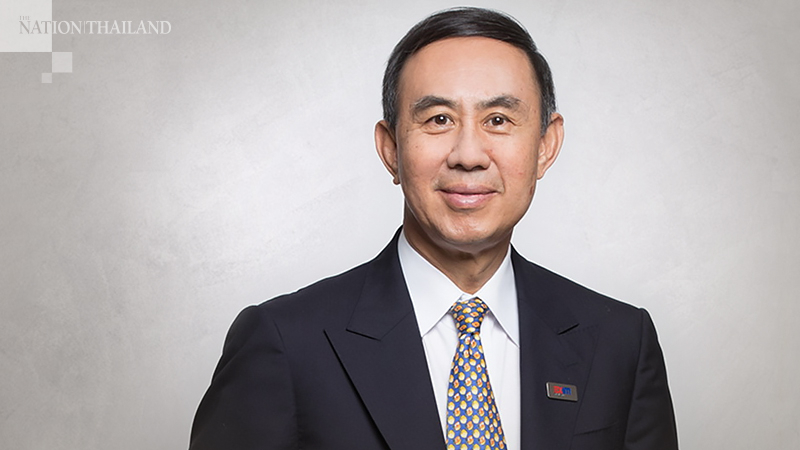
Exim Thailand president Pisit Serewiwattana said that the persistence of Covid-19 across the world had hindered economic activities in almost all sectors. The International Monetary Fund and World Bank have predicted global GDP contraction of 4.9 per cent and 5.2 per cent in 2020 respectively, the highest contraction in more than 90 years.

Such drastic global economic contraction has dampened Thai export, particularly that of small and medium enterprises (SMEs), which are normally vulnerable to surrounding uncertainties and crises, as reflected in SMEs’ export value shrinkage of 17.9 per cent in the first six months of 2020, which was higher than a 7.1 per cent shrinkage in total Thai export value in the same period of the previous year.

Exim Thailand therefore has launched “Post-Covid-19 Business Rehabilitation for Entrepreneurs Scheme” to assist, support and take care of four groups of clients based on their requirements. They are:

▪︎Entrepreneurs with growth prospects:

Exim Thailand will “support” them to ensure their liquidity adequacy and consistent loan repayment capability.

▪︎Entrepreneurs with decline in revenues but continuity in business operation:

Exim Thailand will “relax” loan conditions to enable them to fully settle debts or request new credit facilities.

▪︎Entrepreneurs requiring extension of loan repayment period:

Exim Thailand will “extend” loan repayment period or partially restructure principal and interest payment for them pending their post-crisis recovery.

▪︎Entrepreneurs with shortage of liquidity for business operation:

Exim Thailand will “sustain” their businesses by way of debt restructuring for them, which will help slow down non-performing loan.

Exim Thailand’s clients may apply for extension of loan repayment period, change in loan conditions to suit their business operation, and additional credit lines from August 3 until December 31, 2021.

He added that Exim Thailand had kept itself abreast with the Covid-19 situation and itself found that over 20 per cent of its clients earlier granted suspension of principal and interest payment for up to six months since February 2020 have yet to be able to make instalment payment of principal and interest. They would like the bank to relax loan conditions and extend the loan repayment period.

Some of them can further operate their businesses but additional capital is needed, while others still lack liquidity for their continued operation. Exim Thailand said it was ready to fulfil their liquidity requirement and carry out debt restructuring for them as required.

Several factors may pull down SET Index next week, analysts say #ศาสตร์เกษตรดินปุ๋ย

#ศาสตร์เกษตรดินปุ๋ย : ขอบคุณแหล่งข้อมูล : หนังสือพิมพ์ The Nation.

Several factors may pull down SET Index next week, analysts say

EconSep 04. 2020

By The Nation

Investors have been advised to keep an eye on the domestic political situation, additional economic stimulus measures, Covid-19 situation and tensions between US and China as it could affect the Stock Exchange of Thailand (SET) Index next week.

The SET Index on Thursday (September 3) closed at 1,311.95, down 0.86 per cent from the previous week, while total transactions stood at Bt49.165 billion, down 8.59 per cent from the previous week.

Meanwhile, the Market for Alternative Investment (mai) closed at 312.95, up 0.70 per cent from the previous week.

An analyst at Kasikorn Securities said the index fell at the start of the week due to foreign investors’ mass sell-offs in stocks, especially of banks and energy groups, after the MSCI cut investments in Thai shares from August 31 and uncertainty followed domestic political unrest.

“The index then rebounded in the middle of this week from economic stimulus measures, especially measures to stimulate spending before falling later in the week due to mass sell-offs to reduce risks before a long holiday, while investors were closely following the situation between US and China, as well as the political situation in Thailand,” the analyst said.

Next week, the analyst said he expects the index’s support line to be between 1,285 and 1,300 and the resistance line between 1,325 and 1,335.

“We recommend following the domestic political situation, additional economic stimulus measures, Covid-19 situation and tensions between US and China,” he said.

“Internationally, we advise following US consumer and producer price indices in August, the European Central Bank’s meeting, Japan and Europe’s second-quarter gross domestic product and China’s economic data in August.”

Thai gold price rises despite fall in US price #ศาสตร์เกษตรดินปุ๋ย

#ศาสตร์เกษตรดินปุ๋ย : ขอบคุณแหล่งข้อมูล : หนังสือพิมพ์ The Nation.

Thai gold price rises despite fall in US price

EconSep 04. 2020

By The Nation

The price of gold rose by Bt100 per baht weight in morning trade on Friday (September 4), the Gold Traders Association reported.

As of 9.29am, the buying price of a gold bar was Bt28,750 per baht weight and selling price Bt28,850, while gold ornaments were priced at Bt28,227.92 and Bt29,350, respectively.

At close on Thursday (September 3), the buying price of a gold bar was Bt28,650 per baht weight and selling price Bt28,750 while gold ornaments were priced at Bt28,136.96 and Bt29,250, respectively.

The Comex (Commodity Exchange) gold price to be delivered in December dropped by US$6.9, or 0.35 per cent, closing at $1,937.8 (Bt60,841.28) per ounce yesterday.

Gold price closed in negative territory due to mass sell-offs of the precious metal after the US showed strong economic data and Wall Street saw a sharp fall.

Stocks post biggest rout since June as tech sinks #ศาสตร์เกษตรดินปุ๋ย

#ศาสตร์เกษตรดินปุ๋ย : ขอบคุณแหล่งข้อมูล : หนังสือพิมพ์ The Nation.

Stocks post biggest rout since June as tech sinks

EconSep 04. 2020

By Syndication Washington Post, Bloomberg · Claire Ballentine · BUSINESS

U.S. equities tumbled by the most in almost three months as the rotation away from highflying tech stocks gained steam, with investors questioning the sustainability of lofty valuations.

The S&P 500 Index retreated from a record high and fell more than 3.5%, its biggest drop since early June, amid declines in Apple, Microsoft, Amazon and Facebook. The Nasdaq 100 sank 5%, its largest decline since March. European stocks erased gains and finished more than 1% lower.

Treasury yields dipped and the dollar rose.

Global equities are pulling back hard from unprecedented highs as investors question the justification for steep valuations as the pandemic rages on. While data Thursday showed applications for jobless claims fell last week, U.S. investors may need evidence of a fuller economic recovery after a 60% run-up in the S&P 500 since its March lows.

“What we’re seeing here just a little bit of a reckoning,” said Nancy Prial, co-chief executive officer at Essex Investment Management. “It’s too soon to say whether this is a pause that refreshes or whether this is the beginning of a more meaningful downturn in big tech. Most of these are great companies with really robust growth opportunities, but the stocks are very richly valued.”

The Cboe Volatility Index — a measure of expected price swings for the S&P 500 Index known as Wall Street’s “fear gauge” — rose to the highest level since June. Bitcoin fell as much as 7.6%.

Elsewhere, oil slumped. Major equity gauges in Asia were mixed.

Here are the main market moves:

Stocks

– The S&P 500 Index sank 3.5% as of 4 p.m. EDT.

– The Stoxx Europe 600 Index fell 1.4%.

– The MSCI Asia Pacific Index fell 0.3%.

– The MSCI Emerging Market Index dipped 1%.

Currencies

– The Bloomberg Dollar Spot Index climbed 0.2%.

– The euro was little changed at $1.1853.

– The Japanese yen rose less than 0.1% to 106.13 per dollar.

Bonds

– The yield on 10-year Treasurys fell two basis points to 0.63%.

– Germany’s 10-year yield fell one basis point to -0.49%.

– Britain’s 10-year yield rose less than one basis point to 0.23%.

Commodities

– West Texas Intermediate crude declined 0.5% to $41.29 a barrel.

– Gold fell 0.6% to $1,930.71 an ounce.

SET slides on falling oil, sell-offs ahead of holiday #ศาสตร์เกษตรดินปุ๋ย

#ศาสตร์เกษตรดินปุ๋ย : ขอบคุณแหล่งข้อมูล : หนังสือพิมพ์ The Nation.

SET slides on falling oil, sell-offs ahead of holiday

EconSep 03. 2020

By The Nation

The Stock Exchange of Thailand (SET) Index closed at 1,311.95 today (September 3), down 3.93 points or 0.30 per cent. Total transactions amounted to Bt50.337 billion with an index high of 1,322.66 and a low of 1,308.84.

In the morning session, an analyst at Krungsri Securities expected the index to rise to between 1,323 and 1,330 points in response to new domestic economic stimulus and hopes of US Covid-19 relief measures, before falling back. The new Thai stimulus measure will offer a 50 per cent subsidy on products purchased from participating retailers and street vendors, at no more than Bt3,000 per person.

However, the analyst said the index will come under pressure from the falling oil price and mass stock sell-offs to reduce risks before the upcoming four-day holiday.

The 10 stocks with the highest trade value today were STGT, AOT, MINT, BAM, CPALL, PTT, NER, SCC, PTTEP and KBANK.

As of 4.50pm, the price of oil dropped by US$0.59 or 1.42 per cent to $40.92 per barrel, while gold dropped by $4.70 or 0.24 per cent, to $1,940 per ounce.

Other Asian indices were mixed:

Japan’s Nikkei Index closed at 23,465.53, up 218.38 points or 0.94 per cent.

China’s Shang Hai SE Composite Index closed at 3,384.98, down 19.82 points or 0.58 per cent, while the Shenzhen SE Component Index closed at 13,772.37, down 115.05 points or 0.83 per cent.

Hong Kong’s Hang Seng Index closed at 25,007.60, down 112.49 points or 0.45 per cent.

South Korea’s KOSPI Index closed at 2,395.90, up 31.53 points or 1.33 per cent.

Taiwan’s TAIEX Index closed at 12,757.97, up 58.47 points or 0.46 per cent.

Property-based mutual funds best investment option for now, say analysts #ศาสตร์เกษตรดินปุ๋ย

#ศาสตร์เกษตรดินปุ๋ย : ขอบคุณแหล่งข้อมูล : หนังสือพิมพ์ The Nation.

Property-based mutual funds best investment option for now, say analysts

EconSep 03. 2020

By The Nation

Kasikorn Asset Management is encouraging investment in property funds, Real Estate Investment Trusts (REITs) and infrastructure funds as it believes they will generate returns in the long term.

Over the past eight months, foreign investors pulled out of these mutual funds as they were affected by the Covid-19 fallout.

Thidasiri Srisamith, Kasikorn Asset Management’s chief investment officer, said property funds, REITs and infrastructure funds are a good choice at this time, except funds that invest in hotels and convention centres, because those are still affected by the Covid-19 fallout.

“Kasikorn is still positive about investing in property funds and REITs in Thailand and Singapore despite the high volatility and 8.81 per cent drop in REITs’ returns as of July 31,” she said. “However, returns over the past three years rose by 6.71 per cent, and 7.83 per cent over the past five years.”

She said the K Property Sector Fund (K-Prop) has boosted its investments from 50 per cent to 70 per cent in Singapore REITs and reduced its investment to 30 per cent in Thai REITs, because though the Thai real-estate funds can add more assets, the state of the fund depends very much on asset owners and market conditions.

“Kasikorn Asset Management is planning on establishing new funds to boost investment, while asset companies that our REITs have invested in are still able to pay dividends. This shows that these companies are still able to manage well during this crisis,” she said.

She added that two REITs had been established after the government eased lockdown measures, namely Prospect Logistics and Industrial Leasehold Real Estate Investment Trust (PROSPECT) worth Bt3.5 billion, which has generated returns worth 11.1 per cent in the first year, and Khonburi Sugar Power Plant Infrastructure Fund (KBSPIF) worth Bt2.8 billion, which has generated 8.95 per cent worth returns in the first year.

“Since the market is facing volatility and interest rates will remain low for the next two years, this is a good opportunity to invest in REITs to generate consistent returns in the long term,” she added.

Meanwhile, Chayanee Juengmanon, a senior research analyst at Morningstar Research, said over the past eight years, property funds’ assets under management had dropped by 18.8 per cent to Bt150 billion due to a drop in returns and having to come up with about Bt11 billion for redemption, adding that even though some asset companies are performing better than they did in the first quarter, the situation has not returned to normal yet.

“Over the past two years, up to Bt100 billion flowed into these funds because they were attractive to investors as they generate returns,” she said.

“However, the Covid-19 outbreak has made its returns since March to contract up to 18 per cent as some assets, such as department stores, hotels, office buildings and factories have been badly affected by lockdown measures.”

Govt sets aside Bt45 billion for new ‘Let’s Go Halves’ stimulus package #ศาสตร์เกษตรดินปุ๋ย

#ศาสตร์เกษตรดินปุ๋ย : ขอบคุณแหล่งข้อมูล : หนังสือพิมพ์ The Nation.

Govt sets aside Bt45 billion for new ‘Let’s Go Halves’ stimulus package

EconSep 03. 2020

By The Nation

The government is getting ready to launch a new three-month economic stimulus package called “Kon La Khreung” (Let’s Go Halves), which like its previous “eat, shop, spend” scheme, will be operated online.

Danucha Pichayanan, deputy secretary-general of the National Economic and Social Development Council (NESDC), said the Cabinet has agreed to earmark Bt45 billion for this scheme, in which the government will provide a 50-per-cent subsidy for products purchased from participating retailers and street vendors from October to December. However, the subsidy is capped at Bt3,000 per consumer.

The scheme aims to provide subsidies to 15 million consumers aged 18 and above and expects at least 80,000 retailers and street vendors to participate. Retailers of alcoholic beverages and cigarettes will not be eligible.

Danucha said payments for purchases must be made via Krungthai Bank’s online wallet Pao Tang. The government will cover 50 per cent of the money spent on purchases, but initially consumers are allowed to spend no more than Bt100 to Bt250 daily of their Bt3,000 credit.

Shoppers will only pay 50 per cent for products, while participating stores will receive the rest of the money the following day.

NESDC believes this package will inject Bt9 billion in the economy and stimulate the GDP by 0.25 per cent.

The Finance Ministry is preparing a detailed proposal for the government’s Centre for Economic Situation Administration so the scheme can kick off in October.

SET up over planned new economic stimulus measures #ศาสตร์เกษตรดินปุ๋ย

#ศาสตร์เกษตรดินปุ๋ย : ขอบคุณแหล่งข้อมูล : หนังสือพิมพ์ The Nation.

SET up over planned new economic stimulus measures

EconSep 03. 2020

By The Nation

The Stock Exchange of Thailand (SET) Index rose by 2.18 points, or 0.17 per cent, to 1,318.06 in the morning session today (September 3).

An analyst at Krungsri Securities expected the index to rise between 1,323 and 1,330 points before falling in response to the Thailand Centre for Economic Situation Administration’s (Cesa) new economic stimulus measures and hopes of new US Covid-19 relief measures.

Under the Cesa scheme, the government will provide a 50 per cent subsidy for products purchased from participating retailers and street vendors, at no more than Bt3,000 per person.

The scheme aims to provide subsidies to 15 million people and expects 80,000 retailers and street vendors to participate.

However, the analyst said the decline in the oil price and mass stock sell-offs to reduce risks before the upcoming four-day holiday will pressure the index.

He recommended that investors buy stocks whose third-quarter performance would improve, such as CPF, GFPT, TU, Asian, KCE, Hana, Delta, HMPro, Global, DoHome, Com7, JMT, CHG, BCH, PTG, PlanB, CBG and Tasco.

The SET Index closed at 1,315.88 points yesterday (September 2), up 10.31 points, or 0.79 per cent. The volume of total transactions stood at Bt43.68 billion, with an index high of 1,316.08 points and a low of 1,301.78.