Online lenders fizzling in crisis with On Deck agreeing to sale
CorporateJul 30. 2020Rob Young, president of international at On Deck Capital Inc., speaks during the Canada Fintech Forum in Montreal on Oct. 23, 2019. MUST CREDIT: Bloomberg photo by Christinne Muschi.
By Syndication Washington Post, Bloomberg · Jenny Surane, Payne Lubbers · BUSINESS, PERSONAL-FINANCE
Many online lenders were born in the last crisis. In their latest test, they’re fizzling.
On Deck Capital Inc. said late Tuesday it had agreed to sell itself for $90 million, almost six years after an initial public offering that valued the online small-business lender at $1.85 billion.
Shares of On Deck and competitors including LendingClub Corp. and GreenSky Inc. have tumbled this year as the covid-19 pandemic raised doubts about customers’ ability to repay loans. Kabbage Inc., which is backed by Japan’s SoftBank Group Corp., began suspending customers’ credit lines in the early days of the outbreak as small businesses across the U.S. shut their doors to help stem the spread of the virus.
On Deck Chief Executive Officer Noah Breslow warned in April that the company could no longer prioritize growth in its core business. “Our current focus is on improving cash flow and mitigating risk for our small-business customers and ourselves alike,” Breslow said on a conference call.
During the financial crisis, banks were short on firepower for lending and wary of risks, which cleared the way for new entrants. Now the problem isn’t a shortage of cash, but of information. It’s hard to predict who will keep their jobs or stay afloat as the pandemic evolves. Even established credit-card lenders such as Capital One Financial Corp. are conceding they don’t know which of their longtime customers still have a job.
“I don’t think we have a rigorous measure of how many of our current borrowers are unemployed,” Capital One Chief Executive Officer Richard Fairbank said on a conference call earlier this month. “There are a lot of people that are in different degrees of unemployment right now, and so, even as there is such great credit performance right now, what we’re obsessing about is looking beyond that.”
On Deck said its deal with Enova International Inc. was its best option to grapple with the new environment.
“Joining forces with Enova, a highly respected and well-capitalized leader in online lending, and leveraging our combined scale and strengths provides the best opportunity for our long-term success,” Breslow told analysts on a conference call Tuesday.
Shares of New York-based On Deck, which lost almost 80% this year through Tuesday, surged 61% at 9:45 a.m. in New York.
The pandemic hasn’t been the only problem for On Deck. Its shares tumbled last year after JPMorgan Chase, the country’s largest lender, decided to no longer use On Deck’s technology to originate online small-business loans.
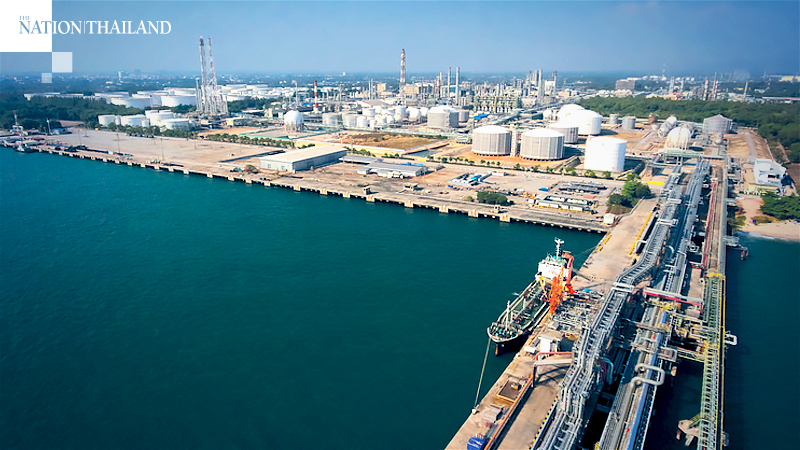
PTT subsidiary IRPC is issuing Bt28 billion in senior bonds to boost liquidity, support business growth and investment opportunities, and repay debts.
Noppadol Pinsupa, IRPC president and CEO, explained that the bonds have bondholders’ representatives but no guarantor and are rated A-(tha) by Fitch Ratings.
“Six financial institutions, namely Krungthai Bank, Kasikorn Bank, Siam Commercial Bank, CIMB Thai Bank, TMB Bank, and Phatra Securities will responsible for the bond offering,” he said, adding the bonds were a good choice for investors seeking consistent returns in volatile market conditions.
The issuance aims to raise funds for investment, debt repayments, boosting liquidity, and enhancing company potential and competitiveness in line with its strategic plan.
“The company aims to invest in projects, such as upgrading petroleum refining to the Euro 5 standard, transporting fuel via pipelines, dredging ports, increasing production of value-added products, and applying digital systems,” he said.
“We expect the abovementioned projects to generate over Bt4.6 billion in revenue.”
IRPC was still able to invest in line with its five-year (2020-24) plan and was prioritising investments to ensure it has sufficient liquidity and could meet customers’ needs during the current situation and in the future, said Noppadol.
IRPC operates a full range of petroleum and petrochemical businesses to meet customers’ needs in industries such as electrical appliances, automotive, medical, and public health,” he said. “IRPC also operates utility business, such as ports, oil depots, and power plants, which are important for the country’s industry and economic development.
More information about IRPC’s bonds can be found at the Securities & Exchange Commission (SEC)’s website, www.sec.or.th, or by contacting Krungthai Bank on (02) 111 1111, Kasikorn Bank on (02) 888-8888 ext 819, Siam Commercial Bank on (02) 777 6784, CIMB Thai Bank on (02) 626 7777, TMB Bank on 1558 ext 9, and Phatra Securities on (02) 305 9442.
Chevrolet Sales Thailand has reaffirmed its commitment to providing aftersales service to its customers nationwide, announcing today (July 29) that all current Chevrolet dealerships around Thailand will become authorised Chevrolet service centres as new car sales cease.
“This means all existing Chevrolet customers can have total peace of mind that they will continue to receive certified maintenance, parts, warranty repairs and roadside assistance services through a national network of authorised Chevrolet service outlets,” the automaker said in a press statement.
“This is a very important announcement for our customers around Thailand,” said Hector Villarreal, president of GM Southeast Asia. “We are happy to confirm that all our current dealer partners will transition to become authorised Chevrolet service outlets, ensuring we have a national network of outlets for our customers to get expert maintenance, repairs and warranty services, along with genuine GM and ACDelco spare parts. It’s another important milestone in our continued commitment to look after our valued customers across Thailand beyond the end of new vehicle sales,” he added.
Said Vanchana Unakul, general director of aftersales at General Motors Thailand: “We are ensuring ongoing excellent customer service satisfaction. There is no better way to do so or illustrate this than by confirming that our national dealer network will become Chevrolet service outlets. It demonstrates not just Chevrolet Thailand’s commitment to our customers, but also the commitment of our dealer partners to look after their loyal customers.”
According to the company, the aftersales services include:
• Bumper-to-bumper factory warranty of 3 years or 100,000 km, whichever comes first, covering workmanship, parts and manufacturing defects.
• Service by certified technicians to make repairs and carry out vehicle maintenance.
• 100 per cent genuine GM parts and guaranteed quality products such as GM engine oil with high-performance lubricant oil technology and ACDelco products.
• 24-hour roadside assistance by certified technicians for all vehicle problems.
• A Chevrolet 1734 Customer Assistance Centre, opened from Monday to Saturday, 9am-6pm.
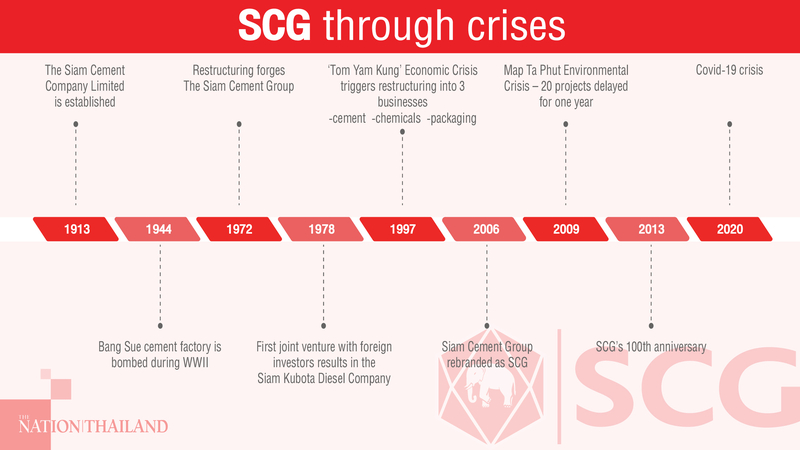
Siam Cement Group (SCG) has created a “Plan for the Best” roadmap for its three business segments to adapt during the Covid-19 crisis, while forging ahead with its Vietnam petrochemical plant project.
Over the years, SCG has overcome business setbacks ranging from the 1997 Asian financial crisis, which saw SCG restructure, to 2009’s Map Ta Phut environmental crisis which put the brakes on 20 investment projects for one year.
However, Roongrote Rangsiyopash, President and CEO of SCG, said the global Covid-19 outbreak is different and more severe than the 1997 financial crisis, when Thai exports still grew to meet demand outside Asia. SCG was nevertheless heavily affected as business was diversified, resulting in huge investments and liabilities as the company narrowed its focus to three business groups – cement and construction products, chemicals, and packaging.
Next came the so-called Hamburger Crisis of 2007-08, which hit the United States and Europe but had a softer impact on Thailand through reduced investment flows. Meanwhile the impact of Thailand’s 2011 flood crisis on SCG was minimal as offices were temporarily relocated before things quickly returned to normal.
Roongrote said the Covid-19 crisis had no precedent in his lifetime, noting you had to go back a century to the Spanish flu pandemic for a comparable event.
As Covid-19 spread quickly from China to Asean countries and beyond, many Thai businesses began struggling for survival amid a climate of public fear. Businesses related to entertainment, tourism and travel have been especially hard hit.
SCG boosts crisis management
SCG is considered lucky because its main business is not in a sector that has been severely affected, like airlines, hotels or entertainment. The company also has experience coping with previous crises, including the 2011 floods when SCG relocated its headquarters, arranged for employees to work from home, and launched a Business Continuity Management Unit (BCM) to enhance teamwork.
Now, SCG has invited virus experts to lecture staff on disease prevention, while arranging for 90 per cent of its employees to work from home.
‘Digital’ survival
SCG uses digital systems to monitor and run most of its global business, meaning staff can work outside the office to manage e-mail billing and e-documents via blockchain systems to guarantee security.
Meanwhile, transferring meetings online via Zoom has helped staff to work more efficiently and solve a greater range of issues.
4X management speed
According to Roongrote, crisis management must adapt by speeding up decision-making and working processes. SCG managers have now switched from their normal monthly meetings to meetings once a week, which has made the work process four times faster. The acceleration is needed in order to solve problems quickly, even if there are fewer customers during the virus crisis. Meanwhile, SCG’s construction projects with the government sector are still continuing and its packaging business is operating as usual.
2021
Vaccine production that will end the virus crisis is expected to begin next year, but SCG has plans to cover two scenarios.
1. Prepare for the worst: The Covid-19 crisis drags on until the end of 2021 when a vaccine is finally delivered. Meanwhile, Thai cases increase beyond 100,000 and an Italy-like lockdown prohibits people from leaving the house so that economic activities, including construction, come to a halt.
In this scenario, SCG will employ a business management strategy to weather the storm until the end of 2021.
“In the period from February-April, staff were told not to look ahead and focus only on sustaining the business with the same goal – to get this boat through the storm and patch any holes to survive,” said Roongrote.
2. Plan for the best: Encourage each SCG business group to develop products to meet demand caused by the virus crisis. The packaging business should increase deliveries and use more packaging that is sealed and safe from contamination. The construction materials business must think of new products – such as a touchless toilet with sensor system and batteries that only need to be changed once a year. Chemical Business must find new channels for the “new normal” market.
Vietnam petro project goes ahead as planned
With no new domestic cases for many weeks, the outbreak in Thailand has died down, bringing a brighter picture for business plans and investment.
The virus crisis prompted SCG to cut its investment budget of Bt70-80 billion by 20 per cent and pause some projects, but those figures will be revised when the outbreak has been further controlled.
However, SCG is proceeding as planned with investment to construct a petrochemical plant in Vietnam, where Covid-19 is under control and the economy is expected to recover quickly since it is not heavily reliant on tourism and has a population of almost 100 million.
The Emerald Hotel in Bangkok will reopen on August 1 after having been shut since May 1 due to the Covid-19 crisis, the hotel said yesterday (July 28).
The 619-room hotel is located on Ratchadaphisek Road in Bangkok’s Din Daeng district.
Like many hotels nationwide, The Emerald temporarily ceased operations in compliance with the government’s measures to reduce public assembly to minimise the risk of the virus spreading.
“We are glad to inform you that from August 1, the Emerald will be ready to serve all guests,” the hotel’s management said. “We have employed appropriate sanitary measures to ensure the safety of both staff and customers. Furthermore, the hotel will offer a special room rate of Bt999 per night throughout the month of August.”
The promotion is available only for Thais.
For further information, visit the hotel’s Facebook page at @theemeraldhotel.
By The Washington Post · Heather Kelly · NATIONAL, BUSINESS, TECHNOLOGY, CONGRESS
They came for blood.
For more than five hours, lawmakers questioned the CEOs of four of the world’s largest technology companies about antitrust, anti-conservative bias and more. It was an aggressive, wide-ranging hearing that was held to determine whether the companies’ outsize power and influence was bad for competition and consumers.
And the lawmakers showed up with evidence – both in the form of documents and people – to hold the CEOs accountable. It was clear many had also done their research, navigating complicated tech jargon to try to pin the executives down.
Both Facebook’s Mark Zuckerberg and Google’s Sundar Pichai faced a flood of questions on whether their platforms are biased against conservatives. Apple’s Tim Cook, who received the fewest questions, was confronted on the company’s app store policies. Amazon CEO Jeff Bezos was quizzed on how the e-commerce site uses competitive data from third-party sellers, with real-life examples of people who said they were hurt by the company’s tactics. (Bezos owns The Washington Post.)
Lawmakers did not let up on the intensity just because the subjects were beaming in over video connections and in-person attendees were in masks. The hearing was peppered with interruptions of the CEOs, even as they tried to keep sharing their talking points.
Here are some of the biggest takeaways from tech’s big day on Capitol Hill.
– – –
Lawmakers came prepared
Not everyone stuck to the topic of the hearing, but the lawmakers who focused on antitrust questions had clearly absorbed the specifics from the committee’s year-long investigation. They also displayed a better understanding of the technology itself than in previous tech hearings.
It was evidenced out of the gate, as Rep. David Cicilline, D-R.I., chairman of the House Judiciary antitrust subcommittee, asked detailed questions about how Google has developed its business.
“The evidence seems very clear to me: As Google became the gateway to the Internet, it began to abuse its power,” Cicilline said. “It used its surveillance over Web traffic to begin to identify competitive threats and crush them. It has dampened innovation and new business growth, and it has dramatically increased the price of accessing users on the Internet, virtually ensuring that any business that wants to be found on the Web must pay Google a tax.”
A report on the companies’ investigation into the companies is expected to be released in August.
– – –
Republicans asked about anti-conservative bias
There were quite a few off-topic moments during the hearing, from complaining about emails going straight to spam, to asking each CEO to commit to not working with suppliers who use “slave labor.” But it was complaints of anti-conservative bias that popped up again and again throughout the hearing, often with a dramatic flair that seemed directed more at people outside the hearing than lawmakers or executives.
In his opening remarks, Rep. James Sensenbrenner of Wisconsin, the top Republican on the subcommittee, signaled that it would be a line of questioning for many members on the committee.
“Conservatives are consumers, too, and they need the protection of antitrust laws,” he said.
The CEO’s batted away most of the questions.
Bezos at one point, when questioned about “cancel culture,” described social media as a “nuance-destruction machine.”
– – –
CEOs were put on the defensive
Over the course of the more-than-five-hour hearing, the executives were interrupted and cut off repeatedly by lawmakers on all sides. While Republican and Democrats’ main issues with the companies varied, their unhappiness with the companies was consistent.
The CEOs have been trained to not give away too much and fill in the blanks with stock phrases, but with just five minutes on the clock for each question, lawmakers quickly cut them off when it was clear that they were not being direct.
It was a change of pace for the wealthy and powerful CEOs who are used to calling the shots at their own companies. The aggressive questioning often used the executives own past words against them as lawmakers quoted lines from old emails.
Rep. Pramila Jayapal, D-Wash., unearthed an email in which Zuckerberg told the founder of Instagram, in the process of negotiations to acquire the photo-sharing service in 2012, that he was building a copycat camera service. The Instagram founder confided in an investor at the time that he feared Zuckerberg would “go into destroy mode” if he did not sell Instagram to him.
“Facebook’s very model makes it hard for new companies to flourish,” Jayapal said.
Zuckerberg said he did not recall some of the exchanges she was referring to.
– – –
Even Bezos forgets to unmute
While most lawmakers were present in person for the hearing, the CEOs all appeared over video chat due to the pandemic. Classic teleconferencing high jinks ensued.
At one point, Bezos tried speaking without unmuting his line. Earlier in the day, a slow connection delayed Zuckerberg’s voice so his words were not in sync with his lips. The hearing paused early on to fix issues with Bezos’ video. And like any regular marathon video-call participants, Zuckerberg and Bezos grabbed a few snacks while on camera.
Overall, the distance did not alter the intensity of the process. Each executive seemed the proper amount of serious and under-pressure during questioning, and lawmakers did not hold back when it came to interrupting or talking over them to make a point or force the CEOs to get to the point.
– – –
Amazon was in the hot seat; Apple flew under the radar
The lawmakers took their time getting to questions for Bezos, but ended the day spending much of the time on the head of Amazon. Meanwhile, Cook received the fewest questions from the 15 member panel.
In one notable moment, Bezos said he could not guarantee that data collected from third-party sellers was not used to launch Amazon’s own options. The company’s relationship with – and power over – its third-party sellers was a frequent topic.
Jayapal, who represents the Seattle area where many Amazon employees work, pressed Bezos on whether Amazon ever used third-party-seller data to make business decisions.
“What I can tell you is we have a policy against using seller-specific data to aid our private label business,” Bezos replied. “But I can’t guarantee you that policy has never been violated.”
At one point, Rep. Ken Buck, R-Colo., asked all four CEOs to pledge to avoid using “slave labor.”
Cook said, “We would terminate a supplier relationship if it were found.”
—
Heather Kelly is a reporter covering the ways technology affects everyday life. Based in San Francisco, she joined The Washington Post in 2019 after seven years at CNN, where she worked as a writer and editor covering consumer technology trends and Silicon Valley.
The price of gold rose by Bt50 per baht weight in morning trade today (July 30), the Gold Traders Association reported.
As of 9.29am, the buying price of a gold bar was Bt29,000 per baht weight and selling price Bt29,100, while gold ornaments cost Bt28,470.48 and Bt29,600, respectively.
At close yesterday, the buying price of a gold bar was Bt28,950 per baht weight and selling price Bt29,050, while gold ornaments cost Bt28,425 and Bt29,550, respectively.
The Comex (Commodity Exchange) gold price to be delivered in August rose by US$8.8, or 0.45 per cent, to $1,953.4 (Bt61,388.72) per ounce at yesterday’s close.
Gold remained in positive territory as investors continued to purchase the metal as a safe-haven asset before the US Federal Open Market Committee began a key meeting.
The Chinese Gold and Silver Exchange Society said the Hong Kong gold price rose by HK$70, opening at $18,170 (US$2,344.52 / Bt73,674.75) per tael this morning.
By The Washington Post · Rachel Siegel · NATIONAL, BUSINESS, HEALTH, POLITICS, HEALTH-NEWS
WASHINGTON – The head of the Federal Reserve said Wednesday that rising numbers of coronavirus cases since mid-June are beginning to weigh on the economy, reinforcing that the fate of the recovery depends on containing the pandemic.
“On balance, it looks like the data are pointing to a slowing in the pace of the recovery,” Federal Reserve Chair Jerome Powell said during a news conference on Wednesday. “I want to stress it’s too early to say both how large that is and how sustained it will be.”
Job gains from May and June came “sooner and stronger” than expected, Powell said. But those encouraging signs were closely followed by a surge in coronavirus cases nationwide. Powell said that at the same time people’s lives depend on containing the public health crisis, it is also important to “deal with the economic ramifications.”
Powell said some measures of consumer spending, based on debit card and credit card use, have moved down since late June. Powell also mentioned recent labor market indicators that are pointing to slower job growth, especially for smaller businesses. Hotel occupancy rates have flattened out, Powell said, while Americans are not going to restaurants, gas stations and beauty salons as much as they had been earlier in the summer.
Powell said the upcoming jobs reports and other surveys will help flesh out the Fed’s economic outlook, cautioning that he did not “want to get ahead of where the data are on this.” But as he has for months, Powell again emphasized that the economy’s recovery depends on the country’s ability to stop the virus from spreading.
“The path of the economy is going to depend, to a very high extent, on the course of the virus and on the measures we take to keep it in check,” Powell said. “The two things are not in conflict. Social distancing measures and a fast reopening of the economy actually go together. They’re not in competition with each other.”
As expected, the Fed’s policymaking board decided to keep interest rates, which are already near zero, unchanged as it concluded two days of policy meetings this week. Markets responded optimistically to the news, with the Dow Jones industrial average ending up 160 points at Wednesday’s close.
The Federal Reserve signaled in its statement on Wednesday that the Fed would continue to use “its full range of tools” to steer the economy out of recession, even as the virus significantly shapes the future of the economy.
“The ongoing public health crisis will weigh heavily on economic activity, employment, and inflation in the near term, and poses considerable risks to the economic outlook over the medium term,” the Fed’s top panel of policymakers said in a statement at the conclusion of two days of meetings.
After sharp declines, economic activity and employment “have picked up somewhat in recent months,” the Fed said. Economists have been closely watching July indicators, which could help explain whether the recovery from earlier this summer is beginning to fizzle as some states and cities reimpose restrictions on businesses to combat rising coronavirus cases.
“Overall financial conditions have improved in recent months, in part reflecting policy measures to support the economy and the flow of credit to U.S. households and businesses,” the Fed statement read.
To support the flow of credit to households and businesses, the Fed said it would increase its holdings of Treasury securities and agency residential and commercial mortgage-backed securities at least at the current pace over the coming months. The Fed has said its support of the markets should remain in place to help safeguard the broader financial system during the pandemic.
At his news conference, Powell said the Fed was committed to keeping its lending facilities and other emergency measures in place not only during the shutdown and reopening, but also through the “long tail where a large number of people are struggling to get back to work.”
“We’re in this until we’re well through it,” Powell said.
Powell’s news conference comes as Congress clashes over another stimulus bill and an extension for enhanced unemployment benefits. On Tuesday, President Donald Trump brushed off the new $1 trillion Senate GOP coronavirus legislation as “sort of semi-irrelevant.”
Powell has repeatedly said that the Fed cannot heal the economy alone and that more help will be needed from Congress to ease the pain for millions of Americans. On Wednesday, Powell said funding from the Cares Act has been key to keeping people in their homes and jobs. He praised the Paycheck Protection Program, for example, for getting money directly to businesses that couldn’t necessarily have been saved through a Fed lending program.
“Lending is a particular tool, and we’re using it very aggressively, but fiscal policy is essential here,” Powell said. “As I’ve said, more will be needed from all of us, and I see Congress is negotiating now over a new package, and I think that’s a good thing.”
Powell has stopped short of telling lawmakers exactly what they should do, or how urgently they should act, saying it isn’t his role to tell other parts of government how to do their jobs. But on Wednesday, Powell pushed the success of Congress’s earlier programs as reason for lawmakers to act again, said Skanda Amarnath, research director of Employ America, a policy group that advocates for full employment and higher wages.
Amarnath said Powell’s framing could give some cover to Republican lawmakers who are less convinced more help is needed, or who dispute the connection between the virus and the recovery.
“[Powell] is trying to reiterate that you can’t think of this as ‘either or,’ ” Amarnath said, adding that when it comes to tackling the pandemic and the economy, “you’re going to have to tackle one to tackle the other.”
For months, Powell has insisted that the virus will dictate an economic turnaround, which he says can’t happen until Americans feel safe going about their daily routines. Since the Fed’s last meeting in June, rising case counts have forced states to reimpose restrictions on business activity. Minutes from the Fed’s June meeting showed officials were worried the United States could enter a much worse recession later this year if the pandemic is not contained.
At this week’s Fed meeting, Fed leaders were expected to discuss other policy tools, such as forward guidance and asset purchases, without necessarily coming away with any firm conclusions. Economists are also awaiting the release of the Fed’s long-term monetary policy review, which could change the way the Fed approaches its inflation target.
By Syndication Washington Post, Bloomberg · Rita Nazareth · BUSINESS, US-GLOBAL-MARKETS
U.S. stocks climbed and the dollar fell after the Federal Reserve signaled continued stimulus to prop up the world’s largest economy. Treasurys were little changed.
The S&P 500 extended its July rally as the Fed kept rates near zero in a widely anticipated decision, pledging to use all of its tools to support a recovery from the coronavirus pandemic. Chairman Jerome Powell said there are signs the increase in infections is starting to weigh on activity while noting that the path forward for the economy is “extraordinarily uncertain.” The central bank repeated prior language that the outbreak “poses considerable risks” to the outlook over the medium term.
As the pandemic continues to rage in parts of the U.S., hot spots in Europe and across big emerging economies, governments are having to double down on the $11 trillion dollars worth of stimulus and unprecedented central bank support unleashed since the crisis began. The Fed has kept rates pinned near zero since the outbreak’s onset in March and rolled out several emergency lending programs geared toward fostering liquid trading conditions in financial markets.
“The Fed’s large, looming presence and ability to act more if needed has provided a backstop for risk assets over the near term,” according to Jason Pride, chief investment officer of private wealth at Glenmede. “The focus now shifts to the FOMC’s September meeting, when investors might expect more action,” he said, referring to the Federal Open Market Committee.
Meanwhile, Scott Minerd, chief investment officer at Guggenheim Partners, said a failure in Washington to agree to another covid-19 relief package could push unemployment higher, undermining the stock market and forcing the Fed to expand asset purchases.
“We are in a particularly vulnerable time of the year for risk assets,” Minerd said Wednesday in an interview on Bloomberg Television. “The markets could get easily rattled.”
Some 19% of S&P 500 companies that have posted results so far have reported per-share profits that beat or missed estimates by 50% or more. That’s the highest proportion of companies with surprises of this magnitude since at least 2010, data compiled by Bloomberg Intelligence’s Gina Martin Adams and Wendy Soong show.
Yet earnings may fail to deliver the kind of support needed to sustain the four-month rally in American stocks any time soon, according to Liz Ann Sonders, Charles Schwab Corp.’s chief investment strategist.
She compared the S&P 500 with its forward earnings, based on projected profit during the next 12 months, in a report Monday. While the S&P 500 made up 85% of the gap between this year’s high and low through Tuesday, the profit gauge only rebounded 20%, according to data compiled by Bloomberg. “Earnings will eventually need to do more than just beat an extremely low bar” to justify the surge in share prices, she wrote.
These are some of the main moves in markets:
Stocks
– The S&P 500 climbed 1.3% as of 4 p.m. EDT.
– The Stoxx Europe 600 Index fell 0.1%.
– The MSCI Asia Pacific Index decreased 0.2%.
Currencies
– The Bloomberg Dollar Spot Index dipped 0.3%.
– The euro increased 0.5% to $1.178.
– The Japanese yen was little changed at 105.04 per dollar.
Bonds
– The yield on 10-year Treasurys was unchanged at 0.58%.
– Germany’s 10-year yield increased one basis point to -0.50%.
– Britain’s 10-year yield climbed one basis point to 0.118%.
Commodities
– The Bloomberg Commodity Index rose 0.7%.
– West Texas Intermediate crude climbed 0.5% to $41.26 a barrel.
Experts are divided over whether gold will hit the magic price of Bt30,000 per baht weight by the end of this year, as the global price nears US$2,000 per ounce.
Kritrat Hiranyasiri, chairman of MTS Gold said gold prices could rise further as investors react to the US-China trade war, Covid-19 pandemic, and central banks’ move to inject cash into the economic system.
“We expect the spot gold price to hit a new high of US$2,000 per ounce [soon],” he said.
“Also, we expect the SPDR Gold Trust, one of the world’s largest exchange traded funds, to buy more gold because it currently holds only 1,249 tonnes – lower than its holding during the 2008-11 financial crisis of 1,320 tonnes.”
He predicted the Thai price will hit Bt30,000 given that goldsmiths charge a Bt500 to Bt1,000 commission per baht weight and the price is currently at Bt29,550 per baht weight.
“Gold is considered a safe-haven asset because markets are volatile and the interest rate is low,” he added.
However, Gold Traders Association chairman Jitti Tangsitpakdee said the price may already be at its ceiling.
“There is only a small chance that gold will hit Bt30,000 per baht weight, because gold funds worldwide will sell gold to take profit resulting in falling prices,” he said.
The value of gold has rocketed by Bt7,000 per baht weight since the beginning of this year, generating returns of over 20 per cent.
“The price will only hit Bt30,000 if the global market price reaches US$2,020 per ounce,” Jitti added.
“However, we recommend that investors don’t place too much hope in gold and sell some to take profit, otherwise they face the same despair as eight years ago [during the last gold boom].”

 Rob Young, president of international at On Deck Capital Inc., speaks during the Canada Fintech Forum in Montreal on Oct. 23, 2019. MUST CREDIT: Bloomberg photo by Christinne Muschi.






 Federal Reserve Chair Jerome Powell