
Dtac unveils 3-pronged strategy for ‘new normal’ era #ศาสตร์เกษตรดินปุ๋ย

#ศาสตร์เกษตรดินปุ๋ย : ขอบคุณแหล่งข้อมูล : หนังสือพิมพ์ The Nation.

Dtac unveils 3-pronged strategy for ‘new normal’ era

Jul 24. 2020Dtac CEO Sharad MehrotraDtac CEO Sharad Mehrotra

By The Nation

Total Access Communication (dtac) said it is combating the Covid-19 fallout with a three-pronged strategy – seamless digital ecosystems, network capacity improvements nationwide and new ways of work.

With the World Bank predicting 8.3 million Thais could lose their income to the virus crisis, dtac said it has announced affordable offers to meet customers’ everyday needs, such as insurance and online shopping. It is also supporting customers’ rapidly increasing data usage by accelerating its rollout of high-capacity massive MIMO (Multiple Input Multiple Output) and TDD (Time Division Duplex) sites, which are compatible with 76 per cent of mobile devices used by dtac customers.

Dtac CEO Sharad Mehrotra said the pandemic had transformed Thai consumers’ behaviour:

Average monthly data consumption per user grew 44 per cent from January to June, following the explosion of work-from-home apps such as Zoom and MS Teams.

Redemption of dtac online shopping rewards grew fivefold during the same period, as shop closures pushed customers towards digital channels.

Data usage grew five times faster in the provinces than in Bangkok, and is remaining high despite lockdown measures being eased – a sign many are choosing to stay in their hometown rather than face joblessness in Bangkok.

Dtac said it is responding by blending offline and online services and joining with partners across industries to offer a wide range of services and products on its mobile application.

On the network front, dtac announced sustained investments in the second half of 2020 to respond to the massive human migration triggered by Covid-19 and the rise of remote work.

This includes meeting a nationwide target of over 20,000 high-speed TDD sites on 2300MHZ (in partnership with TOT) within 2020; tripling capacity at high-traffic spots nationwide, with additional Massive MIMO sites for an enhanced mobile broadband experience; continued rollout of 5G on 26GHz in select sites and 700MHz (pending National Broadcasting and Telecommunication Commission approval) with industry use cases in the Eastern Economic Corridor in Q3 such as smart video surveillance and fixed wireless access; and increased coverage on 700MHz in key regions (pending NBTC approval).

Meanwhile, due to the acceleration of change, dtac is also implementing an internal transformation programme based on flexible work, automation and a new company culture. All of dtac’s offices now allow flexible work for 95 per cent of employees, allowing them to come to the office every other week or only when needed.
Mango Tree opens newest eatery in Tokyo #ศาสตร์เกษตรดินปุ๋ย

#ศาสตร์เกษตรดินปุ๋ย : ขอบคุณแหล่งข้อมูล : หนังสือพิมพ์ The Nation.

Mango Tree opens newest eatery in Tokyo

Jul 24. 2020

By The Nation

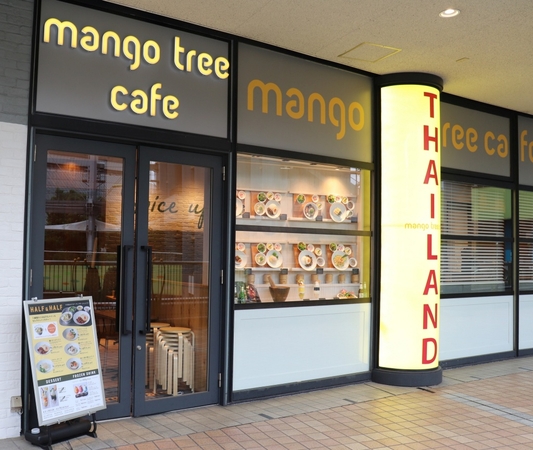
Leading Thai restaurant operator, Mango Tree Worldwide, has just opened the Mango Tree Café Tokyo Dome City LaQua, located in one of the Japanese capital’s top entertainment complexes.

This opening underscores Mango Tree’s confidence in Asia’s hospitality industry after the Covid-19 pandemic. As life in many countries is slowly returning to normal, most of Mango Tree’s 69 outlets worldwide have now reopened in line with the “new normal” with advanced safety standards and social distancing.

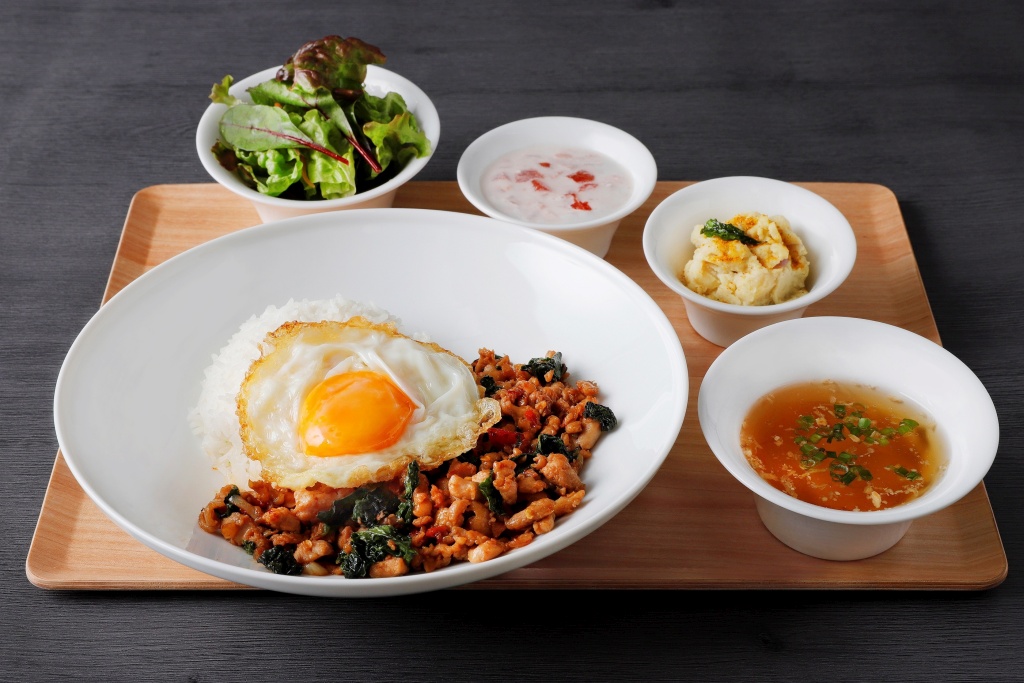
The company has also reinforced its focus on healthy cuisine, using organic ingredients and local produce to create fresh and sustainable dishes.

Trevor MacKenzie, global managing director of Mango Tree Worldwide, said Japan has successfully handled the outbreak and Mango Tree’s faith in the country is demonstrated by this new opening. It plans to expand further in Japan by opening new outlets in popular, high-profile locations.

Mango Tree Worldwide currently has 29 outlets in Japan under five brands: Mango Tree, Mango Tree Bistro, Mango Tree Café, Mango Tree Deli and Mango Tree Kitchen. This latest addition to the group’s portfolio follows the launch of five new locations in 2019 in Tokyo, Osaka and Fukuoka.

MINT raises almost Bt10bn in oversubscribed rights offering #ศาสตร์เกษตรดินปุ๋ย

#ศาสตร์เกษตรดินปุ๋ย : ขอบคุณแหล่งข้อมูล : หนังสือพิมพ์ The Nation.

MINT raises almost Bt10bn in oversubscribed rights offering

Jul 24. 2020

By The Nation

Minor International (MINT) said it has raised Bt9.858 billion through its rights offering issuance, which was oversubscribed by about 30 per cent despite business and capital market volatility due to the Covid-19 outbreak.

MINT received strong support from the full range of investors and shareholders, including domestic, regional and international institutional investors, as well as retail investors, said the company.

The funds raised will be used for working capital and to refinance existing debt obligations, as well as acting as a cushion for unexpected uncertainty amid the currently improving Covid-19 situation.

The hospitality, restaurant and leisure group said the transaction marks the culmination of its comprehensive funding strategy,

Earlier, MINT successfully issued US$300 million in perpetual bonds. The company also received support from creditors and bondholders by obtaining a waiver of financial covenant testing until the end of fiscal year 2020.

In addition, MINT is seeking to raise about Bt5 billion in additional equity from 3-year warrants, which will be issued to all shareholders on August 7.

The company reports gradual recovery across its businesses since mid-May, with 72 per cent of its hotels and 95 per cent of its restaurant now open.

“The overwhelming success of the rights offering illustrates our shareholders’ strong confidence in the company’s future. Additionally, both the rights issuance and warrants are rewards for our shareholders as the true value of the company should strengthen when the global pandemic subsides,” William E Heinecke, MINT’s founder and board chairman, said.

The message behind gold’s rally: The world economy is in trouble #ศาสตร์เกษตรดินปุ๋ย

#ศาสตร์เกษตรดินปุ๋ย : ขอบคุณแหล่งข้อมูล : หนังสือพิมพ์ The Nation.

The message behind gold’s rally: The world economy is in trouble

EconJul 26. 2020

By Syndication Washington Post, Bloomberg · Steven Frank, Vivien Lou Chen, Elena Mazneva · BUSINESS, US-GLOBAL-MARKETS 

It’s easy to forget now but there was a time early on in the pandemic when the price of gold was in freefall.

It was a curious thing, what with the virus sparking a collapse in the global economy, and it would prove in time to be one of the great head-fakes in the recent history of financial markets. For the pandemic of 2020 would soon show itself to be the driving force behind one of the most ferocious rallies the gold market has ever seen. At the close of trading in New York on Friday, bullion had spiraled to $1,902.02 an ounce, some 30% higher than the low it hit in March and just 1% off a record high set back in 2011.

The virus has unleashed a torrent of forces that are conspiring to fuel relentless demand for the perceived safety from turmoil that gold provides. There’s the fear of further government-ordered lockdowns; and politicians’ decision to push through unprecedented stimulus packages; and central bankers’ decision to print money faster than they ever have before to finance that spending; and the plunge in inflation-adjusted bond yields into negative territory in the U.S.; and the dollar’s sudden decline against the euro and yen.

All these things, when taken together, have even triggered concern in some financial circles that stagflation — a rare combination of sluggish growth and rising inflation that erodes the value of fixed-income investments — could take hold across parts of the developed world.

In the U.S., where the virus is still raging and the economic recovery is stalling, this debate is growing louder. Investor expectations for annual inflation over the next decade, as measured by a bond-market metric known as breakevens, have moved higher the past four months after plunging in March. On Friday, they hit 1.5%. And while that remains below pre-pandemic levels and below the Federal Reserve’s own 2% target, it is almost a full percentage point higher than the 0.59% yield that benchmark 10-year Treasury bonds pay.

The main driver behind gold’s latest rally “has been real rates that continue to plummet and don’t show signs of easing anytime soon,” Edward Moya, a senior market analyst at Oanda Corp., said by phone. Gold is also drawing investors “concerned that stagflation will win out and will likely warrant even further accommodation from the Fed.”

U.S. bond markets have been a driving force behind the rush to gold, which is serving as an attractive hedge as yields on Treasuries that strip out the effects of inflation fall below zero. Investors are looking for safe havens that won’t lose value.

The mania for gold right now has trickled down to Main Street. Retail investors have helped put ETF holdings backed by gold on track for an 18th straight weekly gain, the longest streak since 2006. Meanwhile, gold posted its seventh weekly gain on Friday, and analysts don’t expect the increases to end anytime soon.

“When interest rates are zero or near zero, then gold is an attractive medium to have because you don’t have to worry about not getting interest on your gold,” Mark Mobius, co-founder at Mobius Capital Partners, said in a Bloomberg TV interview. “I would be buying now and continue to buy.”

Analysts have been predicting huge upside for gold for several months. In April, Bank of America Corp. raised its 18-month gold-price target to $3,000 an ounce.

“The global pandemic is providing a sustained boost to gold,” Francisco Blanch, BofA’s head of commodities and derivatives research, said Friday, citing impacts including falling real rates, growing inequality and declining productivity. “Moreover, as China’s GDP quickly converges to U.S. levels helped by the widening gap in Covid-19 cases, a tectonic geopolitical shift could unfold, further supporting the case for our $3,000 target over the next 18 months.”

Gold Rally May Extend Into 2021 on Strong Fundamentals: BI Focus

Bank of America’s bold prediction was made after gold prices initially dropped in March as investors sought cash to cover losses on riskier assets. Prices quickly recovered after a surprise cut to the Fed’s benchmark rate and signs that the economic toll of the coronavirus would lead to massive stimulus efforts from global governments and central banks.

This isn’t the first time gold has gotten help from central bank stimulus programs. From December 2008 to June 2011, the Fed bought $2.3 trillion of debt and held borrowing costs near zero percent in a bid to shore up growth, helping send bullion to a record $1,921.17 in September 2011.

The crisis a decade ago was all about banks, said Afshin Nabavi, head of trading at Swiss refiner and dealer MKS PAMP Group, who nows sees gold “pointing towards $2,000.”

“This time, to be honest, I do not see the end of the tunnel,” he said, at least until U.S. elections in November.

Thai investors advised to keep eyes on US-China spat, Fed meeting #ศาสตร์เกษตรดินปุ๋ย

#ศาสตร์เกษตรดินปุ๋ย : ขอบคุณแหล่งข้อมูล : หนังสือพิมพ์ The Nation.

Thai investors advised to keep eyes on US-China spat, Fed meeting

EconJul 25. 2020

By The Nation

Experts have advised investors to keep an eye on international factors such as US-China tensions, listed companies’ second-quarter performance, and the upcoming US Federal Reserve (Fed) meeting, as these could affect the Stock Exchange of Thailand (SET) Index and the gold price next week.

The SET Index on Friday (July 24) closed at 1,340.92, down 18.73 points or 1.38 per cent, with total transactions of Bt46.529 billion.

A stock analyst at Trinity Securities expected the index next week to fluctuate in a narrow range between 1,300 and 1,380 due to a flare-up of tensions between the US and China, and listed companies reporting their second-quarter performance.

“Also, we advise investors to follow the Fed meeting from July 28 to 29 as the [US central bank] will issue additional financial measures to stimulate the economy,” the analyst said.

The price of gold on Friday stood at US$1,893.68 per ounce, while the price in Thailand was Bt28,400 per baht weight.

A gold analyst at YLG Bullion International advised investors to buy gold for short-term speculation.

“If the gold price does not drop below the support level of between $1,883 and $1,878 per ounce, the price will rise to the resistance level between $1,898 and $1,911 per ounce,” the analyst said.

“If the price does not rise over the resistance level, investors who cannot tolerate risks can gradually sell some gold to take profits.”

Five banks get BOT okay to use facial recognition technology #ศาสตร์เกษตรดินปุ๋ย

#ศาสตร์เกษตรดินปุ๋ย : ขอบคุณแหล่งข้อมูล : หนังสือพิมพ์ The Nation.

Five banks get BOT okay to use facial recognition technology

EconJul 25. 2020Bank of Thailand’s assistant governor Siritida Panomwon Na Ayudhya Bank of Thailand’s assistant governor Siritida Panomwon Na Ayudhya

By The Nation

The central bank issued guidelines on July 22 on using biometric technology, including facial recognition, for use in financial services, and five banks have put the KYC (know-your-client) procedure in place for the opening of accounts.

Bank of Thailand’s assistant governor Siritida Panomwon Na Ayudhya said on Friday (July 24) that 14 banks and non-banking financial institutions have applied to use the biometric technology as a KYC tool for identity verification. 
So far, five bank – Kasikornbank, Bangkok Bank, Krungsri, TMB and CIMB Thailand – have been given the green light as they have successfully passed the experiment in a regulatory sandbox, she said. Now all five banks use facial recognition technology for their services, meaning clients can open bank accounts using a mobile phone app or ATM machine without having to go to the bank in person. 

As many as 5 million accounts have been opened so far using the facial-recognition technology, which fits perfectly in the “new normal” brought on by the Covid-19 pandemic. 

According to the central bank’s guidelines on biometric technology, service providers must implement six measures:

1. They must put in place policy and regulations on using the technology, 

2. Gather users’ information and ensure it is secure,

3. Accurately assess the client using biometrics; 

4. Meet international standards in protecting users’ information; 

5. Protect users and educate them about the technology; 

6. Put in place operational risk management and ensure continuous service.  

In the initial phase, banks will apply the biometric technology to their own customers, while in the second phase, the central bank will allow cross-verification of users’ identity among financial service providers, Siritida added.

Feasibility study of Phase 2 airport rail plan ready next month #ศาสตร์เกษตรดินปุ๋ย

#ศาสตร์เกษตรดินปุ๋ย : ขอบคุณแหล่งข้อมูล : หนังสือพิมพ์ The Nation.

Feasibility study of Phase 2 airport rail plan ready next month

EconJul 25. 2020

By The Nation

The State Railway of Thailand has hired a consultant to conduct a feasibility study on the plan to build Phase 2 of the high-speed rail system linking three international airports, said SRT Special Project chief and construction engineer Sucheep Sooksawang.

Phase 2 covers the 190-kilometre Rayong-Chantaburi-Trat extension, he said, after a market-sounding event for the project on Friday. Representatives from around 200 local and foreign private companies attended the event.

The study will be completed next month and submitted to the Cabinet next year. The SRT will then draw up a public-private investment plan in 2022 before calling for constructors’ bids in 2024.

The SRT has three options for investment.

Under the first, a private company would invest in the construction, train system, trains, operation and maintenance, while the SRT would allocate land plots.

Under the second, a private company would invest in the train system, trains, operation and maintenance, while the SRT allocates land and takes care of construction.

Under the third option, a private company would be responsible for operation and maintenance, with the SRT taking care of the rest.

The project is reportedly expected to cost Bt101.7 billion.

SET down more than 1% as US-China tensions hit global stocks #ศาสตร์เกษตรดินปุ๋ย

#ศาสตร์เกษตรดินปุ๋ย : ขอบคุณแหล่งข้อมูล : หนังสือพิมพ์ The Nation.

SET down more than 1% as US-China tensions hit global stocks

EconJul 24. 2020

By The Nation

The Stock Exchange of Thailand (SET) Index closed at 1,340.92 today (July 24), down 18.73 points or 1.38 per cent. Total transactions amounted to Bt46.529 billion with an index high of 1,350.93 and a low of 1,337.21.

The SET and stock markets around the world fell instantly after China ordered the US to close its consulate in Chengdu in retaliation for the US shutting down the Chinese consulate in Houston.

In the morning session, a Krungsri Securities stock analyst expected the index to fall to between 1,350 and 1,355 before rebounding.

“Despite the US easing its lockdown restrictions, unemployment claims in the country have risen to 1.4 million, up more than a million over 18 weeks of consecutive rises,” he said.

“Meanwhile, investors have sold off their stocks to reduce risks before the four-day holiday due to uncertainty as the US economy continues to slowdown and the number of Covid-19 cases there continues rising.”

However, the analyst said the index should rebound due to mass buy-ups of stocks in companies showing improved second quarter performance, and on hopes that the US will issue economic stimulus measures worth $1 trillion.

The 10 SET stocks with the highest trade value today were GULF, PTT, STA, SAWAD, CPALL, CPF, AOT, PTTEP, ACE, and MINT.

As of 4.30pm, the price of crude oil rose by US$0.38 or 0.93 per cent to $41.45 per barrel, while gold rose by $3.40 or 0.18 per cent, to $1,893.40 per ounce.

Other Asian indices were on the fall:

China’s Shang Hai SE Composite Index closed at 3,196.77, down 128.34 points, or 3.86 per cent, while the Shenzhen SE Component Index closed at 12,935.70, down 725.80 points, or 5.31 per cent.

Hong Kong’s Hang Seng Index closed at 24,705.33, down 557.67 points, or 2.21 per cent.

South Korea’s KOSPI Index closed at 2,200.44, down 15.75 points, or 0.71 per cent.

Taiwan’s TAIEX Index closed at 12,304.04, down 109 points, or 0.88 per cent.

Japan’s Nikkei Index was closed for the four-day holiday weekend.

Thai exports fall for 3rd month in a row #ศาสตร์เกษตรดินปุ๋ย

#ศาสตร์เกษตรดินปุ๋ย : ขอบคุณแหล่งข้อมูล : หนังสือพิมพ์ The Nation.

Thai exports fall for 3rd month in a row

EconJul 24. 2020

By The Nation

Thai exports in June dropped 23.17 per cent year on year to US$16.44 billion, the third straight fall in three months since April, according to the Commerce Ministry’s Trade Policy and Strategy Office.

Meanwhile imports dropped 18.05 per cent year on year to $14.834 billion, resulting in a trade surplus of $1.610 billion (Bt51.16 billion).

Exports in the first six months dipped 7.09 per cent to $144.34 billion.

In June, exports of Thai farm and food products expanded under the Covid-19 outbreak, with demand high for canned seafood, processed food, frozen chicken, non-alcoholic drinks, pet feed, frozen vegetables and fruits.

Thai exports to certain markets in June expanded, however, including to China (for the third consecutive month), Ireland, Poland, Denmark and the United Arab Emirates.

Auto industry sees positive signals despite contraction in first half #ศาสตร์เกษตรดินปุ๋ย

#ศาสตร์เกษตรดินปุ๋ย : ขอบคุณแหล่งข้อมูล : หนังสือพิมพ์ The Nation.

Auto industry sees positive signals despite contraction in first half

EconJul 24. 2020

By The Nation

Auto production contracted by 43.14 per cent in the first half of the year compared to the same period in 2019 but the Federation of Thai Industries (FTI) is confident of the situation improving in the second half.

Production for the whole year is expected to contract by 30-35 per cent year on year, 

FTI spokesman Surapong Paisitpatanapong said. The production data included domestic sales and exports of cars and motorcycles.

Automobile production in June 2020 totalled 71,704 units, down by 58.52 per cent compared with the same period last year as it was mostly for domestic sales than for export, Surapong said  However, production in May increased by 27.96 per cent month on month since most of the automotive industry operators had reopened and factories had resumed production.

Auto production during the first six months of this year totalled 606,132 units down by 43.14 per cent year on year. One-tonne pickup trucks accounted for 368,562 units, equal to 60.81 per cent of total production.

Motorcycle production in June was 89,799 units, down by 56.09 per cent compared to the same period last year. Total motorcycle production in the first six months of this year was 877,447 units, down by 30.28 per cent.

Domestic car sales in June totalled 58,013 units, down by 32.6 per cent compared to the same period last year but up from May by 43.53 per cent. Domestic sales have increased since the government relaxed the lockdown and offered aid to those affected by Covid-19. Sales in the first six months totalled 328,604 vehicles, down 37.3 per cent year on year.

Motorcycle sales in June were 125,028 units, down by 16.87 per cent year on year but up from May by 28.43 per cent. Overall, sapes during the first six months of the year totalled 731,979 units, down by 18.1 per cent compared to the same period last year.

The situation of vehicle production and sales has improved, Surapong said. The FTI estimates that throughout the year, the Thai automotive industry will have lower overall production, sales and exports, less than 50 per cent from the previous year, and contract by 30-35 per cent if the Covid-19 situation, both in Thailand and abroad, is controlled.