Business continuity with ‘digital twins’ in self-healing supply chains #ศาสตร์เกษตรดินปุ๋ย

#ศาสตร์เกษตรดินปุ๋ย : ขอบคุณแหล่งข้อมูล : หนังสือพิมพ์ The Nation.

Business continuity with ‘digital twins’ in self-healing supply chains

Biz insights

Jun 29. 2020Roch Gauthier 
Senior Product Management Director, Aspen TechnologyRoch Gauthier Senior Product Management Director, Aspen Technology

By Roch Gauthier
Senior Product Management Director, Aspen Technology
Special to The Nation

Before the onset of the current pandemic, companies were already increasingly interested in the idea of a self-healing supply chain.

Steve Banker of ARC Advisory Group stated in a recent Forbes article: “The term ‘self-healing supply chain’ is beginning to be used. This term reflects the idea that parameters should automatically be updated. It also includes the idea that the best plan is useless if unexpected events occur. It is important not just to create an optimum plan, but to be able to replan using a robust control tower as needed. A self-healing supply chain is impossible without a robust supply chain digital twin.”

Business continuity refers to maintaining, adjusting or rapidly resuming business functions in the event of a major disruption. 

In a recent report titled “Beyond Covid-19: supply chain resilience holds key to recovery”, Baker McKenzie and Oxford Economics cited that the pandemic has resulted in an unprecedented global supply chain crisis. Forecasting global recovery as early as H1 2021 in the hardest-hit manufacturing sectors, the firm alluded to digitalisation of supply chains as strategic for businesses to achieve resilience and sustainability.

On this road to recovery, it is essential that businesses continue to stay ahead of the curve. In the recent months, I had conversed with supply chain professionals in process manufacturing industries to learn how their organisations were adapting and achieving business continuity by leveraging digital twins.

Let me share with you what I have observed and learned in different phases since the onset of the pandemic.

Phase I: Protect people and the business

Keep plant operations personnel safe

The priority at the onset of the pandemic was to keep employees safe. I learned about a North American company that rapidly incorporated social distancing into their production planning and scheduled digital twins in order to help keep their manufacturing operations personnel safe. While generating optimal manufacturing plans and schedules, digital twin technology ensures that operations personnel work in a section of the production facility with adequate physical distancing to keep people safe while simultaneously considering complex manufacturing equipment constraints related to using alternating lines/equipment on various days of the week.

Gain insights into financial and operational implications of business scenarios

The other priority was to protect the financial health of the business. Many organisations mobilised a team responsible for evaluating the financial and operational implications of numerous short- to mid-term business scenarios. I learned that an European company had been using their end-to-end supply chain planning optimisation digital twin to run and analyse a significant number of scenarios every day immediately at the onset of the pandemic. Their digital twin allowed them to easily change time period specific data assumptions related to supply and demand conditions spanning their global supply chain. Since their digital twin makes use of holistic mathematical optimisation, they were able to rapidly develop a portfolio of supply chain “game plans” on how to best respond to circumstances as the future unfolds. My big takeaway is that supply/demand scenarios analysis has rocketed in importance in the process manufacturing industries since the beginning of the pandemic.

Phase II: Adjust processes to achieve continuity as supply/demand conditions fluctuate

Keep work-from-home and on-site teams aligned constantly

Maintaining business continuity and safe reliable supply chain and manufacturing operations became much more challenging when some of the people who usually work at the manufacturing sites were directed to work from home. This included schedulers, material planners, engineers, supply chain planners, shipping coordinators, to name a few. I learned a wonderful story about an Asian production site that is using a digital twin that helps their supply chain and manufacturing operations teams stay aligned and on the same page throughout the day. The technology allows them to interact with a live web-based view of the latest published schedule, view projected inventory positions, identify problems ahead of time and help everyone maintain situational awareness about what is happening at the manufacturing facility and working towards a common goal.

Quickly adjust to keep demands, capacity, supply and operations execution in synchronisation

I learned of a company that produces some materials that have been in higher demand in past months that leverages a scheduling optimisation digital twin, which helps them to align demands, capacity, supply and operations execution by team members daily. The digital twin allows them to adjust to changing conditions and helps them improve cash flow, ensure on-time shipping performance and flex production output.

Phase III: Prepare for the recovery

Monitor demand for signs of recovery and hopefully rebound

Since the beginning of the pandemic, most companies that I have spoken to are reporting that the accuracy of their demand forecasts are considerably less accurate than before. Forecasting digital twins were never designed to handle the profound and fundamental changes that have occurred in consumer behaviour and upstream business demand patterns as a result of the pandemic. There is a good article that was published recently in the MIT Technology Review on this topic entitled “Our weird behaviour during the pandemic is messing with AI models”. In preparing for a recovery, some companies are using digital twins to help them closely monitor changes in demand trends week-over-week as part of their weekly sales and operations execution meetings.

Redesigning supply chain and manufacturing to be more resilient

The pandemic has exposed vulnerabilities in today’s global supply chains that were designed for efficiency. There is an opportunity for manufacturers to (re)design their businesses to make them more resilient. This will involve analysing and building redundancies for critical product lines and associated production and supply capabilities, including reviewing existing suppliers and locations; substitution options; as well as existing manufacturing locations and the current flexibility of manufacturing resources.

This is an area where an end-to-end supply chain optimisation digital twin can be leveraged to explore and analyse various supply chain and manufacturing (re)design alternatives to build more resilient businesses.

Strengthen your supply chain with self-healing capabilities

Digital supply chain planning and scheduling twins are often used to make customer order promises and commitments. There are significant risks to customer service levels and on-time in-full KPIs if digital twins get out of synch with reality. Self-healing supply chain capabilities ensure that supply chain digital twins remain as accurate as possible, reflecting demonstrated plant, equipment and process performance. This is achieved by automatic detection of data inputs that may no longer be valid among the tens to hundreds of thousands of manufacturing data inputs (for example, processing times, yields, set-up times, cleanout times, transition times, etc) using supply chain digital twins. Self-healing supply chain capabilities help identify these proverbial needles in the haystack with minimal time and talent input. 

Self-healing supply chain capabilities can also combine both predictive and prescriptive technology. For example, low-touch machine learning is used to predict with high degrees of certainty manufacturing equipment/asset failures weeks in advance. Prescriptive mathematical optimisation methods in supply chain planning and scheduling digital twins make use of these advance equipment failure warnings to answer the question: “When should we take planned downtime (in advance of the predicted failure event) to ensure minimal disruptions, costs and impact to customer order commitments and relationships?”

Closing thoughts

Digital twins are proving to be critical tools for many manufacturers in processing industries during these uncertain times. Digital twins provide insight so organisations can adapt to this new operating environment and keep supply chain and manufacturing operations running as nimbly and efficiently as possible. Building digital capabilities now will help organisations prepare for the uncertainty that is likely to continue into 2021 and beyond.

SET buoyed by strong US, China economic data, though concerns remain #ศาสตร์เกษตรดินปุ๋ย

#ศาสตร์เกษตรดินปุ๋ย : ขอบคุณแหล่งข้อมูล : หนังสือพิมพ์ The Nation.

SET buoyed by strong US, China economic data, though concerns remain

Econ

Jun 30. 2020

By The Nation

The Stock Exchange of Thailand (SET) Index opened today (June 30) at 1,343.99, up 14.23 points, or 1.07 per cent.

A stock analyst at Krungsri Securities expected the index to rebound between 1,340 and 1,345 points before falling in response to strong economic data emanating from the US and China.

“The US pending home sales index in May rose by 44.3 per cent compared to the previous month, while China’s industrial profits in May rose by 6 per cent year on year,” the analyst said.

“These positive sentiments also boosted the price of crude oil, with the demand for fuel expected to increase.”

The analyst, however, said the index is still under pressure from uncertainty following the second wave of Covid-19 infections in the United States.

He recommended investors buy:

▪ Energy stocks that benefit from a rising crude oil price, such as PTT, PTTEP, Top, PTTGC, IRPC, SPRC, and IVL.

▪ Stocks whose second-quarter performance will improve, such as CKP, Tasco, and STA.

▪ Stocks that were added to the SET50 and SET100 calculation – BPP, TTW, Ace, BFIT, DoHome, RBF, SIRI, SISB, SPCG, TVO, and WHAUP.

The SET Index fell by 0.58 points, or 0.04 per cent, yesterday, closing at 1,329.76. Total transactions amounted to Bt48 billion.

Gold price unchanged in morning trade #ศาสตร์เกษตรดินปุ๋ย

#ศาสตร์เกษตรดินปุ๋ย : ขอบคุณแหล่งข้อมูล : หนังสือพิมพ์ The Nation.

Gold price unchanged in morning trade

Econ

Jun 30. 2020

By The Nation

The price of gold was unchanged in morning trade today (June 30), the Gold Traders Association reported.

As of 9.20am, the buying price of a gold bar was Bt25,800 per baht weight and selling price Bt25,900, while gold ornaments were priced at Bt25,332.36 and Bt26,400, respectively.

The Gold Spot Index price this morning moved to around US$1,768 (Bt54,616) per ounce after the price rose slightly by 90 cents to $1,781.2 per ounce at yesterday’s close.

Gold gained as investors continued to buy the metal as a safe-haven asset amid uncertainty following the second coronavirus wave, especially in the United States, while the number of cases worldwide has shot past the 10-million mark.

However, a strengthening dollar has put pressure on the gold price, which has risen in a limited range.

Amateur traders pile into Asian stocks, making pros nervous #ศาสตร์เกษตรดินปุ๋ย

#ศาสตร์เกษตรดินปุ๋ย : ขอบคุณแหล่งข้อมูล : หนังสือพิมพ์ The Nation.

Amateur traders pile into Asian stocks, making pros nervous

Econ

Jun 30. 2020A man looks at stock prices displayed in the trading gallery of the RHB Investment Bank headquarters in Kuala Lumpur, Malaysia. MUST CREDIT: Bloomberg photo by Samsul Said
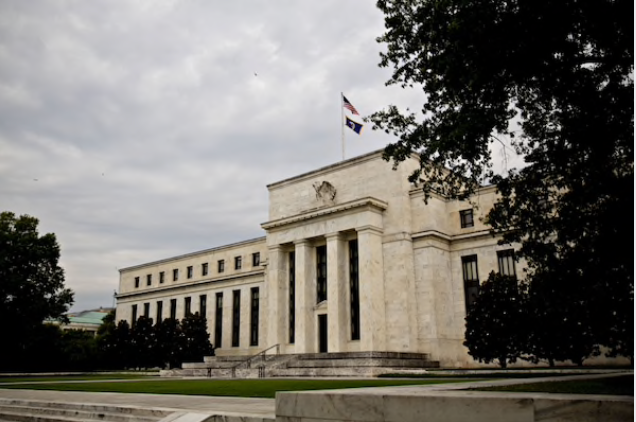
A man looks at stock prices displayed in the trading gallery of the RHB Investment Bank headquarters in Kuala Lumpur, Malaysia. MUST CREDIT: Bloomberg photo by Samsul Said

By Syndication Washington Post, Bloomberg · Gearoid Reidy, Ayaka Maki · BUSINESS, US-GLOBAL-MARKETS 

When the coronavirus pandemic sent shares plunging, you didn’t have to be a professional investor to spot a buying opportunity. In fact, it might be better if you weren’t.

The can’t-miss rise of equity markets around Asia is fueling the explosion of interest among retail investors in the region, mirroring their exuberance worldwide. Millions of investors who had never so much as opened a trading account before have been piling into the market.

Just as the pandemic led bored Americans to make the Robinhood investing app a household name, it’s the amateurs who have helped to lift equities from India to Thailand despite some of the worst macroeconomic fundamentals in memory. But it’s also giving professionals pause – what happens when these investors are no longer around?

“If everyone is going into the same name and something happens, those names are likely to be sold off quite aggressively,” said Catherine Yeung, Fidelity International’s investment director. “I think we just need to be wary that market seems a bit complacent at the moment.”

In Japan, the Tokyo Stock Exchange Mothers Index, which hosts many tech start-up listings, has soared throughout the pandemic: buying the dip on almost any small-cap stock would make money. All but seven of the 320 companies on the board have gained since April’s start, from vaccine hopeful AnGes Inc., up 228%, to Precision System Science Co., which is developing a virus test and has added more than 509%.

“If there’s a report on TV about a coronavirus-related stock that’s going up, they can just buy it the next day and make profit,” said Naoki Murakami, a longtime Japanese day trader. He points to “simple” bets by amateur investors on stocks such as AnGes or Avigan maker Fujifilm Holdings Corp.

In the U.S., Robinhood and the Reddit forum called r/wallstreetbets have become a dominant force in the market, boosting everything from the stocks of bankrupt companies such as Hertz Global Holdings Inc. to revenue-less start-ups like truck maker Nikola Corp. That pattern has been repeated in Europe with brokerages in Germany, the U.K. and France all reporting a jump in participation by individual investors, fueled by a fear of missing out.

And while the names may be less familiar, the same picture appears across countries in Asia that imposed lockdowns.

Retail investors supported Singapore’s exit from bear market territory. Dividends in the city-state are a draw, “and they are sitting at home, they have nothing to do,” said Aik Hong Ng, deputy head of Phillip Investor Centre, a unit of Phillip Securities Pte. Some are loading up on debt and leverage to buy more shares.

“Almost-global shelter-in-place measures are entrenching digital habits across all aspects of daily life. This includes digitizing our investment behavior,” said Clarie Kwa, chief market officer for wealth management advisory firm 360F in Singapore. “Without the normal distractions of life, people actually stop procrastinating and open their first retail accounts, motivated further by their fear of missing a chance to buy low.”

In the Philippines, AAA Southeast Equities Inc. saw two to three times more new online brokerage accounts opened each month from March when the lockdown was imposed, said President William Matthew Cabangon. Meanwhile, India has seen 1.8 million new accounts opened since March, while South Koreans are borrowing to fuel their purchases.

As the first major economy to adopt the zero-interest rate policies and central bank asset purchases that are boosting equity valuations across the world, Japan’s experience may be the most informative.

Burned when the bubble collapsed, for years Japan’s retail investors have avoided stocks. Two decades of underperformance instilled habits that propelled investors to try to sell at the top. Yet that attitude could at last be shifting.

Japanese individuals opened more than 820,000 online brokerage accounts between February and April, more than double the number in the same period in 2019. That’s been prompted by a growing awareness of Japanese firms’ favorable dividends, a push to promote tax-exempt investing accounts and the backing of the Bank of Japan’s ETF purchases, said Makoto Sengoku, a market analyst at Tokai Tokyo Research Institute Co.

A 35-year-old Japanese housewife, who had long watched her husband and parents buy stocks and get gifts typical for shareholders, never before found the right time to start buying herself.

“I’m THE amateur,” she said, declining to give her name citing privacy concerns. “But I saw a chance when shares plunged and I started buying.” She’s been documenting her experience on Twitter under the handle @kabukonosekai, buying the dips on large companies and planning to hold them long term.

In a regular survey this month of retail investors by Monex Group Inc., just 17% said the plunge led them to sell risk assets and move into cash, with 37% saying they took the opportunity to increase their share holdings.

A separate Nikkei Money survey of more than 30,000 individual investors found that of those who had started this year, just 0.1% had thought about quitting due to losses, with close to 60% either happy with their performance or wanting to invest more actively.

Well, who wouldn’t be happy with their performance in the market that goes up regardless of bad news? The question turns to whether these investors will cut and run during the next dip, or learn new ways to succeed.

In China, interest has waned somewhat. A surge of account openings in March and April coincided with lockdowns throughout the country, but May figures were more muted. China has already had a considerable retail investor presence, with the lockdown stock boom paling in comparison to some recent share rallies.

In Japan, where retail investors are less of a force, individuals’ share of trading volume jumped during the state of emergency, and more surprisingly has stayed consistent even as workers have returned to the office.

“Amateurs can make money just by buying stocks now, but the difference will be if they can grow when they start losing,” said Murakami, the Japanese day trader.

“Oddly enough, many if not most of the retail investors take a long view,” said veteran investor Mark Mobius, co-founder of Mobius Capital Partners, “and they will probably keep their money in the market and think of a long term return.”

Fed program could buy debt from huge companies, subsidiaries of foreign-based firms #ศาสตร์เกษตรดินปุ๋ย

#ศาสตร์เกษตรดินปุ๋ย : ขอบคุณแหล่งข้อมูล : หนังสือพิมพ์ The Nation.

Fed program could buy debt from huge companies, subsidiaries of foreign-based firms

Econ

Jun 30. 2020

By The Washington Post · Rachel Siegel · BUSINESS, US-GLOBAL-MARKETS 

The Federal Reserve’s disclosure that it could purchase the debt of massive companies such as Apple and Microsoft, as well as U.S. subsidiaries of foreign firms, triggered a fresh debate about the central bank’s norm-shattering response to the economic crisis and whether its efforts are going to the neediest slices of the economy.

The Fed on Sunday disclosed its index of nearly 800 companies, including Verizon, Comcast and U.S. divisions of Toyota, Volkswagen, Daimler and BMW. The index essentially guides the Fed’s corporate debt purchases and widens the scope of questions the Fed could face as it tries to prevent a broader economic collapse. The central bank has said it launched the corporate debt program to support the markets and, in turn, companies in need of cash that are vying to keep workers on the payrolls.

But as with much of the Fed’s recession response, the central bank has never bought corporate debt like this before, and it’s unclear what the implications of its actions will be.

William Slaughter, senior portfolio manager at Northwest Passage Capital Advisors, tweeted that “it is exceedingly hard to fathom what public interest the Fed is serving by buying bonds” of Apple, Microsoft and Oracle. Pointing to the foreign automakers that came in near the top of the index, Slaughter asked, “should the Fed really make it easier to lease your next Porsche?” (The luxury car company is owned by Volkswagen.)

The Treasury Department has devoted $75 billion to the Fed’s two corporate credit facilities as part of money allocated by the Cares Act, which passed in March. The Fed has bought almost $429 million in individual bonds, according to Sunday’s disclosures.

The Fed’s corporate credit facilities are twofold: the “primary market” facility, which launched Monday, allows the Fed to purchase bonds directly issued by large companies that apply for certification. The “secondary market” facility purchases already-issued bonds that fall within the index and are trading in the secondary market. The Fed has said that even as the markets have healed significantly since March, the facilities should still be in place in case conditions turn south.

The central bank has said it is within its legal bounds to include American subsidiaries of foreign companies. The central bank has said it is buying a broad set of bonds reflecting a swath of companies that issue in the American bond market, and many foreign-based companies borrow in that market. Foreign investors, particularly those in Asia and Europe, have scooped up U.S. corporate bonds, which has helped bolster credit markets, and the Fed’s decision to buy corporate debt will give bondholders assurances about their investments.

The index will be recalculated every four to five weeks as new companies meet eligibility requirements and existing ones do not. And with the index, the Fed doesn’t specifically pick and choose which companies to help. Among the 794 companies in the index were a slew of energy firms, along with utilities, tech, capital goods and insurance companies.

Still, some say the makeup of the index raises questions about why the Fed is buying corporate debt in the first place, particularly when the markets have rebounded since the start of the pandemic.

Aaron Klein, policy director of the Center on Regulation and Markets at the Brookings Institution, said the fault wasn’t necessarily with the Fed, whose corporate credit facilities are supported by the Cares Act. But Klein said it’s unclear why the central bank’s response extends to companies that weren’t as vulnerable to national lockdowns that shuttered hotels, casinos and retail stores.

“Why is the solution buying Apple, Microsoft and Comcast debt? Or Ebay or Google?” Klein said. “Is the problem in America that the holders of Apple stock need more help? Is the problem that investors in Google debt are likely to suffer catastrophic and unexpected losses from the covid shutdown?”

Fed Chair Jerome Powell has said that many of the Fed’s programs are meant to ensure proper market functioning, and that even when the markets are strong, the support keeps companies and individuals in a healthy position to borrow. In testimony before the House Financial Services Committee this month, Powell said “we’ll put the tools away” once they are no longer needed.

Companies can borrow money by issuing bonds, a type of debt. These bonds must be repaid in a certain amount of time, and companies often repay that debt by issuing new debt. If companies can’t issue new debt, there could be severe economic consequences.

David Wessel, director of the Hutchins Center on Fiscal and Monetary Policy at Brookings, said the makeup of the index reflects how globalized the American bond market – and any particular slice of it – is today.

“Who is being bailed out here?” Wessel said. “It’s certainly not the companies – the companies already borrowed the money. The people who are getting help are the people who own those bonds.”

But with any new program comes new challenges. The Fed has signaled that its primary focus is on helping the economy and ensuring that financial markets operate smoothly, and there has been less attention paid to what the repercussions might be.

During the financial crisis in 2008 and 2009, the Fed intervened numerous times in ways that officials said prevented an even broader crisis. But politicians later curbed the Fed’s future powers amid complaints about bailouts and the Fed’s unusual authority over the economy. 

A number of economists believe that the Fed’s actions now could lead to another round of these discussions, but that is not the central bank’s focus at the moment.

“The Fed is doing whatever it can at the moment,” said Diane Swonk, chief economist at Grant Thornton. “The reality is some of it could come back and haunt the Fed. The law of unintended consequences is not one we can worry about now.”

Stocks rally on record home sales amid virus woes #ศาสตร์เกษตรดินปุ๋ย

#ศาสตร์เกษตรดินปุ๋ย : ขอบคุณแหล่งข้อมูล : หนังสือพิมพ์ The Nation.

Stocks rally on record home sales amid virus woes

Econ

Jun 30. 2020

By Syndication Washington Post, Bloomberg · Rita Nazareth, Vildana Hajric · BUSINESS 
U.S. stocks climbed after better-than-estimated economic data overshadowed concern over an increase in coronavirus cases. Treasurys and the dollar advanced.

The S&P 500 erased its June decline after data showed U.S. pending home sales posted a record gain, exceeding all forecasts. Boeing Co. led gains the Dow Jones industrial average after a 737 Max lifted off from a Seattle airfield with a U.S. Federal Aviation Administration pilot on board. The tech-heavy Nasdaq extended gains as Facebook Inc. wiped out its losses.

The unexpected improvement in economic data partly resulted from some states beginning to ease restrictions from coronavirus lockdowns. Florida reported a jump in its double-digit infection rate, New Jersey halted plans for indoor dining and New York City said it’s considering it. Deaths from the virus surpassed 500,000 worldwide and confirmed cases exceeded 10 million as the World Health Organization warned that the worst is yet to come.

“There’s a lot of cash on the sidelines,” Tom Lee, co-founder and head of research at Fundstrat Global Advisors, told Bloomberg TV. “It’s not clear what trajectory coronavirus is heading. But I also think because we’re into quarter-end, there’s been some rebalancing. So I’m kind of in the camp that any weakness is short-lived. I would think July is going to be a strong month for stocks.”

U.S. companies are providing reason for hope that an earnings recession may be less severe than analysts expect. The signal comes from a profit-outlook index, compiled by Bloomberg and based on corporate revisions to forecasts.

For almost all of June, the index’s 20-day moving average has exceeded 50, showing more companies raised projections than lowered them. The average peaked June 17 at 63.4, the highest reading in the index’s 20-year history. Analysts estimate that second-quarter earnings for the S&P 500 will plunge 44% after a first-quarter decline of 18%.

These are some of the main moves in markets:

Stocks

The S&P 500 Index rose 1.5% as of 4 p.m. New York time.

The Dow Jones industrial average jumped 2.3%.

The Nasdaq Composite Index rose 1.2%.

The Stoxx Europe 600 Index increased 0.4%.

The MSCI Asia Pacific Index decreased 1.4%.

Currencies

The Bloomberg Dollar Spot Index gained 0.2%.

The euro increased 0.2% to $1.1238.

The Japanese yen depreciated 0.3% to 107.59 per dollar.

Bonds

The yield on 10-year Treasurys dipped less than one basis point to 0.64%.

Germany’s 10-year yield rose one basis point to -0.47%.

Britain’s 10-year yield declined one basis point to 0.163%.

Commodities

The Bloomberg Commodity Index jumped 1.6%.

West Texas Intermediate crude rose 3% to $39.63 a barrel.

Gold increased 0.1% to $1,782.50 an ounce.

Manufacturing falls 23% in May, sparking plea for post-virus recovery plan #ศาสตร์เกษตรดินปุ๋ย

#ศาสตร์เกษตรดินปุ๋ย : ขอบคุณแหล่งข้อมูล : หนังสือพิมพ์ The Nation.

Manufacturing falls 23% in May, sparking plea for post-virus recovery plan

Econ

Jun 30. 2020

By The Nation

News today that the Manufacturing Production Index (MPI) in May fell to its lowest in over 8 years, with production capacity at only 52 per cent, has triggered concern over the government’s continuing lack of a Covid-19 recovery plan.

The MPI for May stood at 80.31, down 23.19 per cent from the same period last year and the lowest since January 2012, as Covid-19 lockdowns around the world sent the global economy into a tailspin. Thai businesses responded by reducing working days, which reduced production capacity to 52.84 per cent, said Itthichai Yotsri, deputy director-general of the Office of Industrial Economics (OIE). Especially hard hit was the automotive industry, where production capacity fell to 26.86 per cent.

Itthichai noted that Thailand has seen no post-pandemic economic recovery plan from the government, a factor that many parties are closely monitoring. Causing more frustration is the rumour of a pending Cabinet reshuffle, which is disrupting government work, including moves to solve difficulties faced by small and medium-sized enterprises (SMEs) in securing soft loans from financial institutions.

Itthichai pleaded for immediate remedial measures.

“Policies launched from now on are considered crucial, because the impact of the pandemic is worse than any that Thailand has experienced before. Meanwhile we cannot predict what the Covid-19 situation will be like in foreign countries, and how it will affect global industrial production and the Thai economy in the second half of this year,” said the director.

However, the OIE predicted that the Thai economy will improve in June, after May’s MPI rose 2.86 per cent from April’s figure of 78.08. The manufacturing situation improved after the government launched the third phase of lockdown easing on June 1 and Phase 4 on June 15, allowing some economic activities and businesses to resume.

“Although the May MPI index is very negative, a month-by-month comparison indicates that industrial production should continue to improve. But this depends on the relaxation of restrictions, people’s spending, and whether the severe drought situations and shortage of wet-season rain damages crops,” said Itthichai.

The OIE still projects MPI for the whole year to shrink 6-7 per cent, from its initial forecast of 2-3 per cent growth, to its lowest since MPI records began in January 2000. Meanwhile it forecasts Gross Domestic Product (GDP) will contract by 5.5-6.5 per cent, from the previous prediction of 1.5-2.5 per cent growth.

Bt50 billion fund to be earmarked for loans to SMEs #ศาสตร์เกษตรดินปุ๋ย

#ศาสตร์เกษตรดินปุ๋ย : ขอบคุณแหล่งข้อมูล : หนังสือพิมพ์ The Nation.

Bt50 billion fund to be earmarked for loans to SMEs

Econ

Jun 30. 2020

By THE NATION

The Office of Small and Medium Enterprise Promotion will earmark Bt50 billion to offer loans to small, medium and micro businesses to help boost their liquidity so they can retain workers amid the Covid-19 crisis.

The agency’s director general, Asst Professor Dr Veerapong Malai said the fund will be part of the government’s economic stimulus package and the plan will be tabled before the Cabinet on July 7.

The Bt50-billion package will provide two types of loans:

• A maximum of Bt100,000 per borrower at an interest rate of 1 per cent with a 10-year repayment period. This loan is applicable to individuals, juristic entities and community enterprises;

• A maximum of Bt1 million per borrower at an interest rate of 1 per cent with a 10-year repayment period. This loan is only applicable to juristic entity.

‘Business bubbles’ to let in only high-value, low-risk travellers #ศาสตร์เกษตรดินปุ๋ย

#ศาสตร์เกษตรดินปุ๋ย : ขอบคุณแหล่งข้อมูล : หนังสือพิมพ์ The Nation.

‘Business bubbles’ to let in only high-value, low-risk travellers

Econ

Jun 30. 2020

By THE NATION

The National Security Council has outlined the criteria for allowing foreign businesspeople into Thailand under the “business bubble” arrangement expected to start in July.

Related story: Another 6 groups of foreigners to be allowed entry in July

Council secretary-general Gen Somsak Rungsita said those without a Thai work permit will have to ask permission from state agencies such as the Foreign Ministry or Board of Investment.

A joint committee will also be set up to consider permissions, added Somsak, speaking in his role as chairman of the panel on easing Covid-19 restrictions.

The committee will comprise representatives of the Foreign Ministry, BOI, the Public Health Ministry and the National Economic and Social Development Council.

Criteria for allowing entry to businesspeople will include the severity of the Covid-19 outbreak in their countries and the economic value to Thailand of their visit.

Priority consideration will be given to investors in mega-projects in the Eastern Economic Corridor and elsewhere.

The committee will also focus on Thailand’s ability to track business arrivals, he added.

Foreign business travellers will be tested for Covid-19 three times – in their country of origin, on arrival in Thailand and before departure.

So far, Singapore, South Korea, Japan, Hong Kong and China have asked to form “business bubbles” with Thailand, said Somsak. Meanwhile entry for Chinese businesspeople would be considered on a province by province basis.

Those with Thai work permits will need to show a health certificate showing they are not infected with Covid-19, along with health insurance covering medical treatment in Thailand.

Both the Centre for Covid-19 Situation Administration and the government were now studying the criteria, he added.

Meanwhile, tourists are unlikely to be allowed in to Thailand any time soon, since more time was needed to prepare for “travel bubbles”, he said.

“Travel bubbles” will match countries at low risk of Covid-19 contagion and allow free flow of visitors between them without the need to quarantine.

Asset-management firms waiting to swoop on bad debts, though minister dismisses fears #ศาสตร์เกษตรดินปุ๋ย

#ศาสตร์เกษตรดินปุ๋ย : ขอบคุณแหล่งข้อมูล : หนังสือพิมพ์ The Nation.

Asset-management firms waiting to swoop on bad debts, though minister dismisses fears

Econ

Jun 30. 2020

By The Nation

Finance Minister Uttama Savanayana said he is not worried about the Covid-19 crisis pushing up the number of bad debts, while stock analysts are predicting that asset management companies will benefit from banks’ anticipated rise in bad debts.

The minister said he was not concerned about the potential of rising bad debts from Covid-19 crisis leading to financial instability because the central bank and commercial banks had experience in containing this problem. 

“Though we are facing a crisis, our financial institutions are strong and once there is an economic turnaround, things will return to normal again,” Uttama said after meeting with central bank governor and bankers on Monday (June 29). 

“We are not complacent, and the government has been providing financial support to businesses. We are also discussing extra measures to help businesses expand in the post-Covid era.” 

Predee Daochai, Kasikornbank president, said the Covid-19 crisis has generated uncertainty in the banking business, because banks still cannot predict the volume of bad debts because the Covid-19 pandemic has not ended yet. 

Kasikornbank has been boosting its reserves against risk asset and making capital plans for the next one to three years it is required to do so by the central bank. Kasikornbank is also conducting a stress test as it has done in the past, and so far, it has not seen any problems, he said. 

Average BIS capital adequacy ratio of Thai banks is 18.7 per cent compared to the minimum requirement of 8.5 per cent.

Paying Srivanich, Krungthai Bank’s president, said his bank has also conducted a stress test in preparation to cope with the impact of the crisis. He said his bank has been closely monitoring the situation to see what happens when the government financial aid comes to a halt at the end of the year. “Small and mid-sized businesses may be relatively strong now, but they may weaken once the financial aid comes to an end,” he noted, adding that the government may need to provide more funds to support SMEs. 

Separately, analysts said that asset management companies are ready to swoop in once banks’ bad debts begin surging. 

The share prices of three major asset-management companies have risen as investors expect them to benefit from banks’ bad debts, which are expected to soar as a result of Covid-19 fallout. 

The shares of Bangkok Commercial Asset Management (BAM) rose 33.70 per cent on June 26 from  last year, while JMT Network Services’ share price rose 13 per cent, while that of Chayo Group rose 11.11 per cent.

BAM’s shares rose 60 per cent from the lowest point in March, while JMT and Chayo’s rose 100 per cent from March’s lowest level. 

Based on the first-quarter performance, JMT made profits worth Bt206.81 million, up 43 per cent, Chayo earned a profit of Bt36.99 million up 34.6 per cent, while BAM’s profit was Bt698.82 per cent, down 78.5 per cent largely because it had received a large chunk of debt payment from a client the year before. 

Looking ahead for asset management companies, Korakot Sawetkruttamat, deputy managing director at Kasikorn Securities, believes banks’ non-performing loans (NPLs) will rise considerably in the fourth quarter of this year. Hence, he said, that would be the best time for asset management firms to buy up bad debts. 

BAM reckons it will spend Bt10 billion to Bt12 billion on bad debts, while JMT is eyeing purchases of Bt4.4 billion and Bt4.5 billion and Chayo Bt1 billion. 

The three companies are expected to beat their targets or buy bad debts with a combined worth of Bt17.5 billion, taking into account the fact that businesses with combined debts worth Bt6.8 trillion have been seeking government financial aid. 

Investing in these companies will be relatively safe if investors want to commit long-term and hope to gain from their profits later. 

Rising bad debts combined with contraction in the economy will benefit asset companies, unless the situation worsens. However, their short-term performance in the next few quarters is not bright as the government has implemented measures that allow debtors to temporarily suspend debt repayment. 

Of the three firms, BAM is the most attractive as it has a portfolio of bad debts with collaterals. Chayo has also acquired a large number of bad debts backed by collaterals, but it has low liquidity. Meanwhile, JMT takes on bad debts without collaterals, though the company has a chance to grow fast and pay high dividends. 

Analysts at Capital Nomura Securities are also predicting that asset companies will benefit from bad debts becoming cheaper during the Covid-19 crisis and get good returns once the economy recovers. 

BAM has an advantage as it is in the basket of FTSE SET Mid Cap Index as well as the MSCI Index, and can grab the interest of foreign investors, Nomura analysts said.