Positive sentiments pushed the Stock Exchange of Thailand (SET) Index up by 4.46 points or 0.34 per cent today (June 26), closing at 1,330.34, while total transactions amounted to Bt47.193 billion with an index high of 1,344.04 and a low of 1,328.49.
During the morning session, a Krungsri Securities stock analyst said he expected the index to fluctuate between 1,315 and 1,340.
“The market won positive sentiment after the European Central Bank gave central banks the go-ahead in lending cash to mitigate the Covid-19 impact and the mass buy-offs of stocks,” the analyst said.
“Meanwhile, Larry Kudlow, director of the US National Economic Council, has said that the US will not impose lockdown measures again even though the number of new Covid-19 cases is rising sharply.”
However, the analyst warned of uncertainty from economic recession after the International Monetary Fund revised the global GDP this year from 3 per cent contraction to 4.9 per cent contraction.
“The index will also be under pressure from foreign investors’ move to reduce capital flow into the country.”
The top 10 stocks with the highest trade values today were GULF, CPALL, ADVANC, KBANK, AOT, PTT, SCC, GPSC, CPF and INTUCH.
As of 4.30pm, crude oil price rose by US$0.57 or 1.47 per cent to $39.29 per barrel, while gold price dropped by $3.60 or 0.20 per cent to $1,774.20 per ounce.
Asian indices, meanwhile, were mixed:
Japan’s Nikkei Index closed at 22,512.08, up 252.29 points, or 1.13 per cent.
Hong Kong’s Hang Seng Index closed at 24,549.99, down 231.59 points, or 0.93 per cent.
South Korea’s KOSPI Index closed at 2,134.65, up 22.28 points, or 1.05 per cent.
Stock markets in China and Taiwan were closed due to the Dragon Boat festival.
The Stock Exchange of Thailand (SET) has extended uptick rules on short-selling and the ceiling and floor prices of stocks to September 30 from June 30 this year to mitigate the impact from market volatility.
Meanwhile, the Thailand Futures Exchanges also has extended the rule on daily price limit of SET50 Index Futures, SET50 Index Options, Sector Futures, and Single Stock Futures to September 30 from June 30.
SET officials said that the move had been approved by the Securities and Exchange Commission after hearing comments from related parties.
“The SET had announced these rules since the middle of March to mitigate the impact from market volatility due to the Covid-19 outbreak,” the officials said.
“However, the market is still facing high volatility due to Covid-19 and uncertainties for the global economy.”
The price of gold was unchanged in morning trade on Friday (June 26), the Gold Traders Association reported.
As of 9.29am, buying price of a gold bar was Bt25,700 per baht weight and selling price Bt25,800, while gold ornaments were priced at Bt25,421.40 and Bt26,300, respectively.
The Gold Spot Index price this morning moved to around US$1,762 (Bt54,423) per ounce after the price dropped by $4.5 to $1,770.6 per ounce at Thursday’s close (June 25) due to the strengthening dollar.
However, the price of gold dropped slightly after the US revealed weak economic data.
The Stock Exchange of Thailand (SET) Index opened at 1,337.65, up 11.77 points, or 0.89 per cent, on Friday morning (June 26).
A stock analyst at Krungsri Securities expected the index to fluctuate between 1,315 and 1,340.
“The market gained positive sentiment from the European Central Bank allowing central banks outside the euro-zone to lend cash to mitigate the Covid-19 impact and mass buy-offs in stocks as window dressing,” the analyst said
“Meanwhile, Larry Kudlow, director of the US National Economic Council, revealed that the US government will not impose lockdown measures again although the number of new Covid-19 cases in the country were increasing sharply.”
The analyst, however, said that uncertainty following the economic recession after the International Monetary Fund cut the global gross domestic product this year from contracting 3 per cent to contracting 4.9 per cent would plunge the index.
“In addition, the index would be under pressure from foreign investors’ move to reduce capital flows into the country.”
He recommended the following stocks:
▪ Defensive stocks, such as INTUCH,TTW, and DIF.
▪ Stocks that were added to the SET50 and SET100 calculations — BPP, TTW, ACE, BFIT, DOHOME, RBF, SIRI, SISB, SPCG, TVO, and WHAUP.
The SET Index fell by 7.55 points on Thursday (June 25), closing at 1,326. Total transactions amounted to Bt60 billion.
Foreign investors made net sales of Bt740 million in stocks, but made net buys of Bt1.754 billion in bonds. There were 5,141 net long TFEX SET50 contracts.
By Syndication Washington Post, Bloomberg · Sarah Syed, Jenny Surane, Steven Arons · BUSINESS
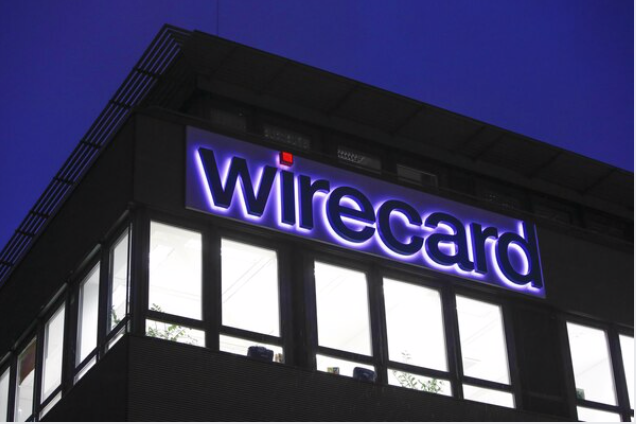
Visa Inc. and Mastercard Inc. are considering revoking Wirecard AG’s ability to process payments on their networks, moves that could cause further pain for the fintech firm that’s been battered by an accounting scandal.
The world’s largest payment networks have begun reaching out to some Wirecard clients to prepare them for the possibility, according to people familiar with the matter, who asked not to be named because the information isn’t public.
“We continue to closely monitor developments and assess new information as it becomes available,” Visa said in a statement. “Our priority is, and will always be, maintaining the integrity of the Visa payments system and protecting the interests of consumers, merchants and our clients.”
Wirecard helps businesses around the world accept electronic payments from customers, so its relationships with Visa and Mastercard and being able to process payments with the companies are critical to its business.
“Mastercard is aware of the news regarding Wirecard AG and is monitoring the situation closely,” Mastercard said in a statement. “Our priority is ensuring people are able to continue to use their cards. We will continue to work with all parties and stand ready to take any necessary action.”
Wirecard filed for insolvency Thursday, citing over-indebtedness and inability to assure it can continue as a going concern. The announcement was the culmination of a stunning accounting scandal that led to the arrest of its chief executive officer and left the German payment-processing firm unable to find more than $2 billion missing from its balance sheet.
Wirecard Bank, where the Visa and Mastercard licenses are held, isn’t part of the insolvency proceedings, the company said. German financial regulator BaFin has appointed a representative for the lender.
“In future, the release processes for all payments of the bank will be located exclusively within the bank and no longer at group level,” Wirecard said in a statement Thursday.
A representative for Wirecard said it’s currently not making any additional statements.
Jun 26. 2020Shoppers wait outside the Macy’s flagship store in New York on Nov. 28, 2019. MUST CREDIT: Bloomberg photo by Jeenah Moon.
By Syndication Washington Post, Bloomberg · Anne Riley Moffat, Jordyn Holman · BUSINESS, RETAIL
Macy’s Inc. announced plans to slash thousands of back-office jobs in a striking admission that the reeling retail sector won’t be returning to the good old days anytime soon.
The restructuring, including the elimination of about 3,900 corporate and management jobs, is expected to save the company $365 million this fiscal year, then about $630 million a year going forward, it said in a statement.
“We know that we will be a smaller company for the foreseeable future, and our cost base will continue to reflect that moving forward,” Chief Executive Officer Jeff Gennette said.
Shares fell as much as 4.2% in New York. The stock was already down 60% this year, compared with a 5.6% decline in the S&P 500 Index.
The job cuts are in addition to the staff reductions taking place inside stores, along the Macy’s supply chain and in customer support roles. The new round of corporate layoffs adds to fears that many of the measures taken to temporarily furlough employees in the early stages of the pandemic are becoming permanent.
In the wider retail sector, the vast majority of layoffs and furloughs have been at the store level as physical locations remained closed for weeks or months at the onset of the pandemic. But those job cuts have started to trickle up to companies’ headquarters and corporate outposts as well. Gap Inc. laid off at least 10% of its corporate employees, according to Business of Fashion, while Dow Jones reported this week a culling at Barnes & Noble Inc.’s New York head office.
“The reality is that everything is changing, everything is evolving and figuring out how to adapt, how to operate on a smaller base means figuring out how to operate more efficiently at the top,” said Simeon Siegel, retail analyst at BMO Capital Markets. “If a business expects to shrink, it needs to address its corporate makeup as well.”
Even before the pandemic took off in the U.S., Macy’s had taken steps to slim down. The chain in February as part of its turnaround Polaris strategy said it was cutting about 9% of its workforce, or 2,000 jobs.
“Earlier in the year, we announced our Polaris strategy which included major structural changes across the organization. At the time, I was confident that these changes positioned our business for success. Then, a month later, the Covid-19 pandemic hit,” Gennette wrote in an email to staff, obtained by Bloomberg News. “And with that, everything changed.”
The fresh layoff news comes just two weeks after the department-store chain heartened investors by announcing it had reopened 450 stores in some capacity and expected to exit the second quarter with a “clean inventory position.” Gennette said at the time reopened stores are performing better than anticipated, initially sending shares soaring.
But share prices have sunk since then, as customers in some markets continue to avoid large indoor retail spaces in favor of online ordering, local businesses or — to the fear of many retailers — not spending money on non-essentials at all. The U.S. savings rate hit an all-time high of 33% in April thanks mostly to Covid-19-induced business closures, and some of that frugality seems to be persisting.
“Macy’s has done corporate restructuring in the past and having sales essentially decimated from the pandemic may have forced them to look closer at their cost structure, removing excess costs,” said Poonam Goyal, retail analyst at Bloomberg Intelligence. “Even though stores are reopening, sales aren’t where they used to be. They have to find ways to reduce costs because that’s the one thing that they can control.”
“We do expect other companies to look at their cost structure more closely during the pandemic,” she added.
Macy’s had already been taking steps to shore up access to capital, including leveraging up on new debt. Earlier this month, the company announced a credit line of $3.15 billion backed by its inventories. Including an earlier bond sale, the department-store operator said it had secured $4.5 billion of total new financing.
The company will take a pre-tax cash charge of about $180 million related to the restructuring, mostly in the second quarter. Macy’s also said those workers coming back from furlough will begin to return starting the week of July 5. The company had 123,000 workers at the end of last year, according to a filing.
Jun 25. 2020The Lufthansa logo appears on a screen in the airline’s empty baggage drop hall at Frankfurt Airport in Germany, on June 24, 2020. MUST CREDIT: Bloomberg photo by Alex Kraus.
By Syndication Washington Post, Bloomberg · Aoife White · BUSINESS, WORLD, US-GLOBAL-MARKETS, EUROPE
Deutsche Lufthansa won European Union approval for Germany’s 6 billion-euro ($6.7 billion) recapitalization that Irish rival Ryanair Holdings says it will sue to overturn.
The European Commission said in a statement on Thursday that Germany’s plan to take a 20% stake in Europe’s largest airline is in line with state-aid rules and would prevent the carrier’s collapse.
The EU approval covers the German government’s plan to pay 300 million euros for a 20% stake and make two so-called silent participations of 4.7 billion euros and 1 billion euros in the company’s capital.
The decision “comes with strings attached, including to ensure the state is sufficiently remunerated,” EU Competition Commissioner Margrethe Vestager said in an emailed statement. “Lufthansa has committed to make available slots and additional assets at its Frankfurt and Munich hub airports, where Lufthansa has significant market power. This gives competing carriers the chance to enter those markets.”
Germany’s bailout for Lufthansa has already faced resistance from the airline’s supervisory board, which complained about the EU’s demand for it to yield 24 slots a day at Frankfurt and Munich airports once air traffic demand returns. The EU sought the cutbacks to compensate for the massive advantage the state subsidy will give Lufthansa over rivals. Handing over slots should stoke more competition.
Those measures don’t go far enough for Ryanair, which will sue to overturn the EU approval, Chief Legal Officer Juliusz Komorek said. The legal fight adds to several other Ryanair legal challenges to state aid for airlines.
Ryanair is separately seeking an EU cartel probe into alleged discussions between Lufthansa and other airlines to avoid a price war in Italy.
“There is absolutely no reason why Lufthansa, which benefits from the German payroll support system scheme, might on top of this require 9 billion euros,” he told reporters on a video call. “It doesn’t. It needs it as a war chest.”
The German bailout plan overcame a major roadblock when the airline’s biggest investor said he’d vote in favor of the rescue package at a special shareholder meeting later Thursday. He had earlier criticized a steep discount being granted to the German government for the stake, and held the votes to single-handedly stop the share sale.
The EU approval comes with tight conditions to ensure the aid is repaid swiftly and Lufthansa doesn’t use taxpayer funding to expand its business.
Lufthansa will be banned from dividends and share buybacks until the aid is repaid. Managers can’t get bonus payments nor can the company buy more than 10% of rivals until at least 75% of the recapitalization is redeemed. The measures aim to give Lufthansa an incentive to buy back the state stake and silent participations.
The EU’s decision doesn’t cover a 3 billion-euro state loan guarantee that the EU says it will handle separately.
Regulators said the aid “does not exceed the minimum needed to ensure the viability of the airline.” Vestager said last week her officials had quizzed Germany over comments by Lufthansa’s chief executive officer that the aid was more than needed. The EU can’t allow governments to give companies more financial help than they require.
Lufthansa aims to redeem the loan and the recapitalization by 2026, the EU said.
Jun 25. 2020Masayoshi Son, chairman and chief executive officer of SoftBank Group Corp. (left) and Jack Ma, former chairman of Alibaba Group Holding Ltd., shake hands at Tokyo Forum 2019 in Tokyo on Dec. 6, 2019. MUST CREDIT: Bloomberg photo by Kiyoshi Ota.
By Syndication Washington Post, Bloomberg · Pavel Alpeyev · BUSINESS, WORLD, US-GLOBAL-MARKETS, ASIA-PACIFIC
SoftBank Group Corp. founder Masayoshi Son ended his company’s annual shareholder meeting with a surprise Thursday by announcing he’s stepping down from the board of Chinese e-commerce titan Alibaba Group Holding Ltd.
The billionaire said his departure shouldn’t be interpreted as signifying any disagreements, even though Alibaba co-founder Jack Ma is quitting SoftBank’s board at the same time. Ma and Son have maintained a close friendship since the Japanese entrepreneur was an early investor in Alibaba and helped it along to its current value of roughly $600 billion, calling it the crown jewel of SoftBank’s portfolio.
“It’s not like we had a fight,” Son said during the virtual shareholder meeting. “This was perfectly amicable.”
While the mutual departures are unlikely to have an immediate impact on either company, they mark the end of an era. The two men are among the most successful entrepreneurs of their generation and have been able to rely on each other’s advice for decades. Son was on Alibaba’s board as it went public in 2014 in the largest initial public offering in history. When SoftBank ran into trouble with investment losses this year, Son was able to use his Alibaba stake to raise much-needed capital.
“The joint board membership was a big positive for both companies because it gave them a way to benchmark their respective business models,” said Michiaki Tanaka, a business school professor at Rikkyo University in Tokyo. “Not having that board-level contact is a big loss.”
Alibaba remains Son’s most successful investment by far and SoftBank’s most valuable asset. In early 2000, Son invested $20 million into the then-unknown web portal connecting Chinese manufacturers with overseas buyers, a stake that is now worth more than $150 billion. That spectacular return cemented his reputation as an investor and later helped him raise the $100 billion Vision Fund. Son has previously spoken highly of Ma.
“He had no business plan, zero revenue,” Son said about Ma on The David Rubenstein Show. “But his eyes were very strong. I could tell from the way he talked, he has charisma, he has leadership.”
Son is known for anointing the entrepreneurs he finds particularly promising as “the next Jack Ma,” and Alibaba has long served as the standard against which he has judged SoftBank’s other startup investments. But that’s also made Son vulnerable to charismatic founders like WeWork’s Adam Neumann, whose many governance transgressions led to the office-sharing firm canceling its initial public offering last year. WeWork, once thought to be worth $47 billion, has lost more than 90% of its value.
Son’s recent track record has been spotty. Starting with the WeWork fiasco, he has suffered a string of setbacks at portfolio companies including Wag Labs, Zume Pizza and Brandless Inc. SoftBank lost almost $18 billion writing down the value of its startup companies in the last fiscal year.
Still, Son struck an optimistic note at the shareholder meeting Thursday. He began the presentation to investors in typical fashion, reaffirming his conviction that a global digital transformation and the advent of artificial intelligence — both accelerated during the pandemic — will help his investments in the likes of TikTok-owner ByteDance Ltd. and British chip designer Arm Ltd.
SoftBank is in the process of offloading 4.5 trillion yen (about $42 billion) of assets to bankroll stock buybacks and slash debt to reassure investors. On Thursday, the company announced a third 500-billion-yen buyback, having completed an earlier one this month.
The company this week agreed to sell a stake in T-Mobile US for as much as $20 billion. Together with the $11.5 billion from issuing contracts to sell Alibaba stock and a sale of stock in its domestic telecom unit, Son’s company has now completed 80% of its envisioned asset unwinding, he said.
Son said he was “graduating” from Alibaba’s board. But the two-decade-long relationship produced few cooperative venture of note, even while the two companies were constructing e-commerce empires in their respective markets. In 2010, the two agreed to link their online platforms to allow users of SoftBank’s Yahoo Japan to buy products on Alibaba’s Taobao site, but the project failed to gain momentum. In 2015, Alibaba backed SoftBank’s failed bipedal robotics business.
“Following Jack Ma leaving the SoftBank board, Son stepping down from Alibaba is merely a symbolic end of an era,” said Justin Tang, head of Asian research at United First Partners in Singapore. “It will be business as usual for both companies.”
A shareholder asked at the Thursday meeting how many of the 88 companies SoftBank’s Vision Fund currently has on its books will be the next Alibaba. Son’s answer was that there are one or two “mini-Alibabas.”
WHA Corporation, a logistics and industrial facilities provider, is confident of 15 per cent growth in logistics, public utility and digital platforms.
The company expects the industrial estate business to recover in the second half of the year to reach its target of 1,400 rai.
WHA Group chairman and group chief executive Jareeporn Jarukornsakul said that before Covid-19, the company had estimated that 2020 would be its best year yet with more than 20 per cent expansion in overall businesses.
“After the outbreak crisis hit, we reduced our target to 15 per cent on average across four main businesses of the group, namely logistics, industrial estate, public utility and digital platform,” she said.
Jureeporn
“The outbreak has helped boost the company’s logistics business significantly as can be seen by up to 400 per cent growth in the number of customers who rented our warehouses in the first half of the year.”
Jareeporn added that currently WHA has 2.5 million square metres of warehouse space and is planning to expand to 2.56 million within the end of 2020.
“So far this year we have rented out an additional 30,000sqm of warehouse space to customers and expect that until the year-end there will be more customers who need storage space, especially those from China,” she added.
As for the industrial estate business, the group estimated that the outbreak should have only short-term impact as many foreign customers are still planning to move from China to Thailand to avoid the impact of US-China trade war.
“Their plan was put on hold temporarily due to the outbreak, but we believe that in the second half of 2020 they will start migrating as planned,” added Jareeporn. “Furthermore, we have been contacted by several companies in Hong Kong and Taiwan who are interested in moving to Thailand, especially those in electronic industries.”
“WHA set the target of industrial estate areas sold or rented to customers within 2020 at 1,400 rai, 1,200 of which are in Thailand and 200 of which in Vietnam,” she added.
“Thailand has the advantage of superior infrastructure and support for 5G technology, making it suitable for high-technology, modern automotive and electronic industries, while our industrial estates in Vietnam will focus largely on labour-intensive industry.”
Jareeporn added that the company’s public utility and digital platform businesses both have suffered minor impacts from Covid-19 and should be able to reach the expansion target by the year-end.
“Only the industrial estate business, which is accountable for 20 per cent of the company’s revenue, saw significant impact in the first half of the year and we are positive that the market will improve in the second half when foreign investors are allowed in the country,” she said.
“As for this year’s investment budget, we had previously allocated Bt9 billion and will maintain this target until the year-end, while next year’s budget has been set at Bt10 billion to expand the four business groups with investment in 5G infrastructure and robotics technology for industrial factories,” added Jureeporn.
By The Washington Post · Renae Merle, Rachel Siegel · NATIONAL, BUSINESS, HEALTH
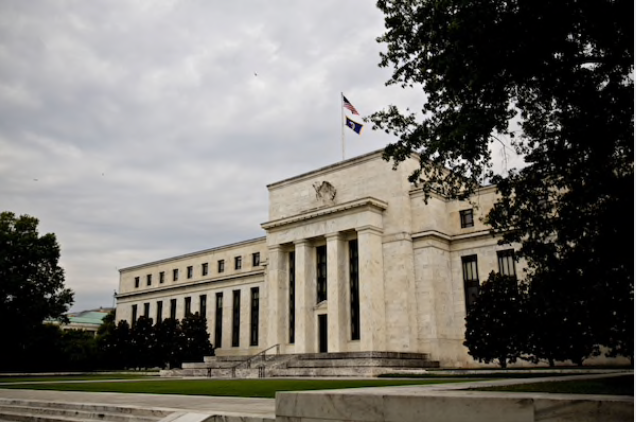
WASHINGTON – For the first time since the aftermath of the global financial crisis, the Federal Reserve is putting new restrictions on how the country’s biggest banks spend capital with an eye toward protecting the financial system from risks to the economy posed by coronavirus pandemic.
The Federal Reserve ordered the country’s 34 biggest banks, including JPMorgan Chase, Wells Fargo and Bank of America, to suspend their stock buyback programs and to limit dividend payments to shareholders. The banks must also submit new plans for maintaining enough of the they capital needed to survive a downturn.
Most banks are in good shape now, the Fed’s Vice Chair Randal Quarles said in a statement. “The banking system remains well capitalized under even the harshest of these downside scenarios-which are very harsh indeed,” Quarles said.
However, if there is slower U-shaped recovery or a W-shaped scenario where a brief recovery is followed by a harsh second drop later this year, “several (financial firms) would approach minimum capital levels,” according to a Fed statement. The banks reviewed could incur loan losses of $560 billion to $700 billion under some scenarios, the Fed found.
The hopeful outlook was not shared by all Federal Reserve Board members. Federal Reserve Gov. Lael Brainard wrote a separate statement calling on the Fed to block dividend payouts to shareholders during the third quarter, not just limit them.
“I do not support giving the green light for large banks to deplete capital, which raises the risk they will need to tighten credit or rebuild capital during the recovery. This policy fails to learn a key lesson of the financial crisis, and I cannot support it,” wrote Brainard, who was appointed by President Obama.
The Fed’s decision adds to the already-bleak reality gripping the American economy during the worst recession since the Great Depression.
More than 30 million Americans have claimed unemployment benefits as of last week, and more major companies keep filing for bankruptcy each week. Despite trillions of dollars in government stimulus and unprecedented intervention from the Fed, many say an economic recovery hinges most on more federal assistance and a vaccine or cure to end to the coronavirus pandemic.
This recession marks the first big test of banking industry reforms put in place after the financial crisis. The banking industry has emphasized that it has significantly more capital to weather a downturn and has not stopped lending to corporations or retail investors.
But some regulators have warned that after years of record profits, the banking industry could be hit hard depending on how long this downturn persists.
“If this goes on long enough, it could produce strains in the banking sector. And then the Fed and Congress and Treasury would have to step in to make sure that the banks are sound,” Neel Kashkari, the head of the Federal Reserve Bank of Minneapolis, said on “Face the Nation” in April.
The Fed typically conducts a “stress test” to assess whether the largest banks could survive a hypothetical economic crisis without needing a taxpayer bailout or being forced to stop lending. The hypothetical scenario for this year’s traditional stress was published in February, just as the coronavirus pandemic and its economic devastation began to take hold.
The Fed quickly realized that the extreme scenario it had dreamed up paled in comparison to the escalating crisis. The typical test looks at how the banks would perform, for example, if unemployment spiked to 10 percent. Now, the official unemployment rate is 13.3 percent, and the real rate is likely 3 percentage points higher.
The Fed then developed a coronavirus-specific test it used to shape its policy on payouts of shareholder dividends.
The Fed’s approach has been met with its share of criticism. For example, the traditional test typically include data specific to large banks, with a spotlight on specific banks that need work. But this new test aggregated data comparing how the banking system would fare as a whole.
Three Democratic senators said it was “highly disconcerting” that the test would not include bank-by-bank results. In a Tuesday letter to Fed Chair Jerome H. Powell and Quarles, Sens. Brian Schatz, Sherrod Brown and Elizabeth Warren said “transparency surrounding the results of the tests is a bedrock principle of the stress testing framework.”
“This decision could undermine confidence in the banking system,” the senators wrote.
The letter also raised concerns about bank capital requirements being tied to the results of the traditional stress test from earlier this year. Not basing those requirements off the coronavirus-specific sensitivity analysis, the senators wrote, could lead to “lower than appropriate” guidelines that don’t match the current reality.
Failing to disclose the individual results of each bank could also mask weaker financial institutions from needed scrutiny, said Gregg Gelzinis, a senior policy analyst for the Center for American Progress, who called the decision a “critical weakness.”
“This is going to undermine the usefulness of the results,” Gelzinis said.
Eight of the country’s biggest banks, including JPMorgan Chase and Bank of America, had already suspended buybacks earlier this year as the economy slowed down due to the coronavirus. But bank CEOs have defended their need to continue dividends.
“From our perspective, our dividend is sound, and we plan on continuing to pay it,” Citigroup CEO Michael Corbat told CNBC this week.
Among America’s biggest banks, JPMorgan Chase and Wells Fargo have paid out the most in dividends to shareholders since 2008, about $80 billion each, according to S&P Global Market Intelligence data. Bank of America and Citigroup paid out about $52 billion and $30 billion, respectively, during that period.
Wells Fargo CEO Charles Scharf said in April that dividends were important to shareholders: “If they [companies] have ability to pay, it’s the right thing to do,” he said.
Still, given such extreme uncertainty about the economy’s future, advocates say the Fed should be more stringent. Dennis Kelleher, chief executive of Better Markets, which advocates stronger market regulation, said the Fed shouldn’t allow any capital distributions by banks for at least a year.
“These aren’t just stress tests for Wall Street banks. These are credibility tests for the Fed,” Kelleher said.
Some Democrats and advocacy groups have also called on federal regulators to halt regulatory rollbacks launched under the Trump administration, warning that they could weaken banks during a deep economic downturn. Separately on Thursday, the FDIC finalized a rollback of a key post-financial crisis restrictions on risky trading, known as the Volcker rule.
“Trump’s financial regulators are not letting the pandemic and the economic catastrophe get in the way of their deregulatory agenda,” Kelleher said.
The banking industry had complained for years that the rule was too cumbersome. The changes adopted by the FDIC “will allow banks to further support the economy at this challenging time for the nation,” Rob Nichols, president of the American Bankers Association, said in a statement.



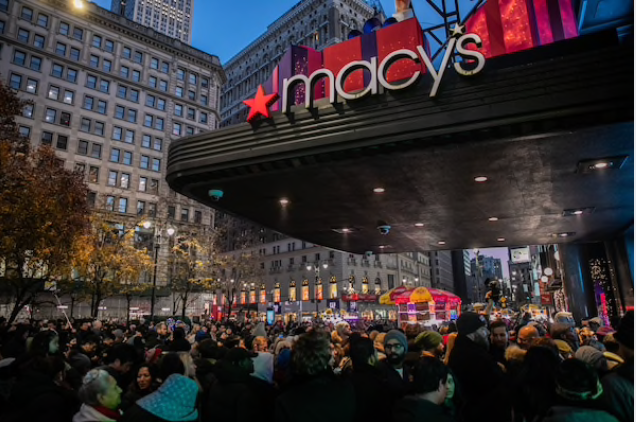 Shoppers wait outside the Macy’s flagship store in New York on Nov. 28, 2019. MUST CREDIT: Bloomberg photo by Jeenah Moon.
 The Lufthansa logo appears on a screen in the airline’s empty baggage drop hall at Frankfurt Airport in Germany, on June 24, 2020. MUST CREDIT: Bloomberg photo by Alex Kraus.
 Masayoshi Son, chairman and chief executive officer of SoftBank Group Corp. (left) and Jack Ma, former chairman of Alibaba Group Holding Ltd., shake hands at Tokyo Forum 2019 in Tokyo on Dec. 6, 2019. MUST CREDIT: Bloomberg photo by Kiyoshi Ota.