Customers of the Export-Import Bank of Thailand have started seeing a delay in payments from importers, who are suffering from the Covid-19 fallout, the bank’s president Pisit Serewiwattana said.
The outbreak has disrupted the receiving of orders by importers and the distribution of goods.
The bank is helping ease its clients’ financial problems by extending the period of export guarantee and debt suspension.
He suggested that exporters purchase export credit insurance facilities against the risk of non-payment by importers. He also said that subscribing to the insurance will help cover exporters’ costs and ensure they get payment from their regular foreign customers.
He added that despite the outbreak, the bank’s export credit lending has continued growing, with up to Bt20 billion given in loans since the beginning of the year. This has increased its outstanding loans to Bt130 billion.
He said he expects new loans worth another Bt15 billion in the second half.
Jun 19. 2020Oil tankers are seen anchored in the Pacific Ocean above Long Beach, Calif., on May 1, 2020. MUST CREDIT: Bloomberg photo by Patrick T. Fallon.
By Syndication Washington Post, Bloomberg · Hailey Waller · BUSINESS, US-GLOBAL-MARKETS
Oil eclipsed $40 a barrel in New York on Friday, extending a slow but relentless rise that’s been fueled by a pick-up in demand and could signal a reawakening for U.S. shale production.
Two of the world’s biggest commodity trading houses, Vitol Group and Trafigura Group, said global oil demand is recovering at a rapid pace this month, while Saudi Energy Minister Prince Abdulaziz bin Salman also said he sees encouraging signs of a consumption recovery.
The rally allows the industry some breathing room on its high debt burden, giving confidence to lenders and investors as U.S. shale seeks to rebuild after the worst price collapse in a generation. But with producers planning to turn on the taps once again, it could also be short-lived.
“To a certain degree producers will come back,” said Bob Yawger, director of the futures division at Mizuho Securities USA. “It’s not the sweet spot by any stretch of the imagination,” he added, but “people will come back.”
U.S. producer Continental Resources Inc. said this week it will start bringing back some of its shut-in oil production next month following EOG Resources Inc.’s pledge to accelerate output in the second half of the year.
West Texas Intermediate crude prices for 2021 have traded above $40 for much of this week, a level that could entice producers to hedge their output.
Timespreads are also showing strength. Brent crude’s prompt spread is rallying after settling in backwardation — a bullish indicator that points to tighter supply conditions — on Thursday for the first time since early March. WTI’s front-month spread also rose Friday.
OPEC’s deal with allies including Russia to curb production has also helped spur the price recovery. Even OPEC’s habitual quota cheat, Iraq, said it will implement its cuts in full this month. UBS Group AG said it expects an under-supplied market in the second half of this year and in 2021.
OPEC+ is “on the right track” to re-balance the global oil market but still has “a long way to go,” Prince Abdulaziz bin Salman said on Thursday at the group’s Joint Ministerial Monitoring Committee. He said the next two weeks will be “critical” for OPEC+ to demonstrate all countries are adhering to the cuts.
Meanwhile, U.S. oil production has a ways to go to regain the momentum it had earlier this year when output topped 13 million barrels a day. Data from the Energy Information Administration this week showed output declined for an eleventh straight week to just above 10 million barrels a day last week.
Though the outlook for crude has brightened in recent days, a potential resurgence of the virus is clouding the long-term outlook. Traffic in Beijing has plunged as authorities battle a fresh outbreak, while some U.S. states are still seeing cases surge.
Crude also got a boost Friday from equity markets in Europe and the U.S., which gained following the latest breakthrough in trade negotiations between America and China and stimulus talks in Europe. Crude has been embroiled in equity-market sentiment for much of this week.
“Oil prices find a lot of support in line with equity markets,” said ABN Amro’s senior energy economist, Hans van Cleef. “Risk-on mode is supportive for commodities.”
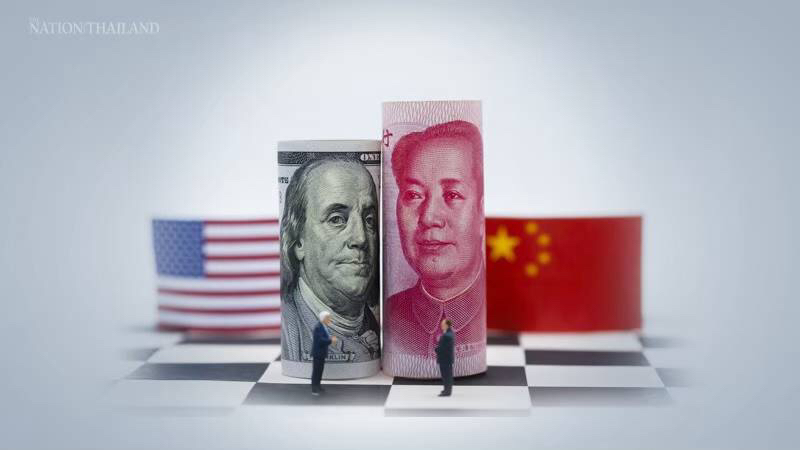
By Syndication Washington Post, Bloomberg · No Author · BUSINESS China plans to accelerate purchases of American farm goods to comply with the phase one trade deal with the U.S. following talks in Hawaii this week.
The world’s top soybean importer intends to step up buying of everything from soybeans to corn and ethanol after purchases fell behind due to coronavirus disruptions, said two people familiar with the matter, who asked not to be named because the information is private.
A separate person said the Chinese government has asked state-owned agricultural buyers to make all efforts to meet the phase one agreement. Nobody from the commerce ministry responded to a fax seeking comment.
The plan offers respite to markets concerned about trade disruptions after the countries exchanged blows over everything from the origins of the coronavirus to new security legislation in Hong Kong. U.S. equity futures, the Euro Stoxx 50, soybeans in Chicago and the yuan extended gains.
On Thursday, U.S. Secretary of State Michael Pompeo said China’s top foreign policy official committed to honor all of his nation’s commitments under the trade deal.
“During my meeting with CCP Politburo Member Yang Jiechi, he recommitted to completing and honoring all of the obligations of Phase 1 of the trade deal between our two countries,” Pompeo said in a tweet on Thursday, using an acronym for the Chinese Communist Party.
Pompeo offered no details beyond the tweet, but that was the first substantive news out of the secretive meeting with Yang at Hickam Air Force Base in Hawaii on Wednesday. It’s still unclear how the meeting came about or who had asked for it. Both sides have said the other initiated it.
China pledged to buy $36.5 billion worth of American agriculture products under the phase one deal, up from $24 billion in 2017, before the trade war.
However, China purchased only $4.65 billion in the first four months of the year, data from the U.S. Department of Agriculture show. That’s only 13% of the goal set in the trade deal and almost 40% below the same period in 2017.
China had asked state buyers to halt some purchases of American farm goods including soy, Bloomberg News reported earlier this month. However, Chinese importers had continued to increase its American soy purchases, picking up 2.2 million metric tons of the oilseed in the two weeks ended June 11, according to the USDA data.
MEA invites applications from state agencies, private businesses to build EV charging stations
Jun 19. 2020
By THE NATION
The Metropolitan Electricity Authority (MEA) announced on Friday (June 19) that it is seeking applications from government/state enterprise agencies and private companies who are interested in joining the MEA EV Smart Charging System project.
Under this project, MEA will provide fifty 22KW smart chargers to selected candidates free of charge along with two-year maintenance servicing. The smart chargers will be equipped with data analysis software and can be connected to the MEA EV mobile application that displays the locations and status of EV chargers in coverage areas.
Eligible candidates must be government or state enterprise agencies or private business operators located in Bangkok, Nonthaburi or Samut Prakan. They must also have a suitable area to build an EV charging station for public use.
Hospitality giant slowly reopening hotels with safety measures under new normal
Jun 18. 2020
By THE NATION
Minor International, a leader in international hospitality, food and lifestyle, said it will reopen its 535 hotels worldwide in line with the “new normal” by improving sanitation and hygiene measures to curb the transmission of Covid-19.
Chaiyapat Paitoon, chief strategy officer for Minor International, said the Covid-19 pandemic has affected the global economy, though there are signs of recovery in countries that have controlled the outbreak and are lifting restrictions.
Meanwhile, Minor is reopening some hotels under the new normal:
• 28 hotels in Thailand that generated 14 per cent of Minor’s hotel revenues last year began reopening from the end of May, starting with Anantara Siam Bangkok, followed by the company’s hotels in Hua Hin in early June. Some hotels in Phuket, Koh Samui, Pattaya and Khon Kaen are also scheduled to reopen in June and July.
• 29 hotels in other Asian countries that generated 4 per cent of Minor’s hotel revenue. Its hotels in China and Vietnam reopened in April, showing a positive sign in Asia’s tourism sector.
• 343 hotels that are part of the NH Hotel Group, which generate 67 per cent of revenue, will reopen soon. Up to 60 per cent of these hotels are expected to reopen by the end of June. Also, many countries in Europe have started lifting lockdowns, while some have even announced the end of the pandemic.
In addition, many countries have also launched economic stimuli to support the tourism sector. For instance, Vietnam has launched a special campaign to improve domestic tourism. by cutting down the prices of hotel rooms and flights, while Taiwan has cut down on utility bills and subsidised labour in the tourism industry.
The Tourism Authority of Thailand (TAT), meanwhile, has proposed several schemes for the government to implement to boost domestic tourism, such as “Thiao Pan Suk”, which allows Thai citizens to register and purchase digital vouchers for hotel discounts.
The second is “Rao Pai Thiao Kan”, which supports accommodation providers, while the third is “Kamlangchai”, which provides approximately 1.2 million medical personnel working in the Covid-19 frontline to go on study tours organised by travel agencies.
The government also recently exempted operation fees for hotel businesses, while Minor International has said it will organise marketing activities in line with the government’s support measures for businesses to jump-start the tourism sector.
Chaiyapat said the group believes the Covid-19 outbreak will be resolved gradually and many sectors will recover slowly. Tourists will also start travelling once the crisis ends.
Meanwhile, in line with its aim to reopen its 535 hotels, Minor has appointed a health and safety committee comprised of senior execs and experts to oversee the implementation of hygiene and safety measures.
Thepparat Theppitak has been appointed new president of the Electricity Generating Plc (EGCO) Group. Appointed by the board of directors on June 17, he will officially assume his post on July 1.
Thepparat will lead the company in pursuing its vision “to be a major sustainable Thai energy company with full commitment to environment protection and social development support”, said EGCO, “strengthening its leadership in the power generating business and expanding its wings in energy-related business, as well as exploring new investment opportunities in core-related business for sustainable growth”.
Since 2018, Thepparat, 54, has served as deputy governor of Power Plant Development and Renewable Energy at the Electricity Generating Authority of Thailand.
Previously, he was assistant governor of Renewable and New Energy at EGAT (2017-2018). He has extensive experience in engineering techniques, including power plant development and management.
The government on Friday (June 19) signed a Bt290-billion contract with BBS Joint Venture for the construction of the U-Tapao International Airport and Eastern Airport City Development Project.
One of five mega-infrastructure projects in the government’s flagship Eastern Economic Corridor (EEC) scheme, the U-Tapao airport development in Rayong will link with Bangkok’s Don Mueang and Suvarnabhumi airports via high-speed trains to handle up to 200 million passengers annually.
The contract signing was overseen at Government House by Prime Minister General Prayut Chan-o-cha.
The project will create a hub for tourism, logistics and aviation in the EEC, said the government, while the Eastern Aerotropolis between Rayong and Pattaya will revitalise the eastern seaboard, connecting with Bangkok through sea, road, rail and air, and making Thailand an aviation hub and gateway to Asia. U-Tapao would effectively become Bangkok’s third commercial airport, said the government.
The BBS bid offered returns of Bt305.555 billion to the state. The project is also expected to generate more than Bt62 billion in tax revenue and 15,600 jobs per year for the first 5 years.
The project area is situated in Ban Chang district, Rayong province, about 30km from Pattaya and the Map Ta Phut Industrial Estate.
The government will invest Bt20 billion to construct a second runway and control tower to handle up to 70 flights per hour, while BBS will invest Bt270 billion in the construction of the third passenger terminal with annual capacity of 60 million passengers, automated people mover (APM), logistics and cargo complex, free-trade zone and a commercial centre with a capacity of 3 million tonnes per year. Other supporting facilities include Maintenance Repair and Overhaul (MRO), aviation training centre, electricity power plant, tap water production plant, wastewater treatment plant, and aviation fuel services.
Moreover, the project also has the commercial gateway of 400,000 square metres which includes duty free area, shopping arcade, restaurants, hotels as well as Business Park and Airport City covering 1 million square metres of shopping and exhibition centres, and office buildings.
BBS Joint Venture has formed the U-Tapao International Aviation Co Ltd to construct the project, which is divided into four phases.
Phase 1 includes a passenger terminal building of 157,000sqm, commercial area, parking facilities, ground transportation centre, and 60 aircraft stands – scheduled for completion in 2024 to boost annual passenger capacity to 15.9 million.
Phase 2 includes a passenger terminal building of 107,000sqm with Automated People Mover (APM) and automated walkways with 16 additional aircraft stands, to be completed in 2030 and boosting passenger capacity to 30 million.
Phase 3 includes Passenger Terminal 2 of 107,000 sqm with an additional Automated People Mover (APM) and 34 aircraft stands, to be completed in 2042 and boosting capacity to 60 million annual passengers.
Construction of the 3,500-metre second runway is being undertaken by the Royal Thai Navy, with a 2024 completion date.
The U-Tapao International Aviation Co Ltd consists of Bangkok Airways Plc, BTS Group Holdings Plc, and Sino-Thai Engineering and Construction Plc.
By The Washington Post · Reed Albergotti · BUSINESS, COURTSLAW, RACE A group of black YouTube creators filed suit against the company this week, alleging that the platform has been systematically removing their content without explanation.
The suit, filed in federal court in Northern California, outlines alleged discrimination against four creators, who post YouTube videos to earn advertising revenue. YouTube is part of tech giant Google.
The suit is the latest in a series of allegations that YouTube’s software, which can automatically remove videos suspected of violating the company’s policies, discriminates against certain groups, such as LGBT groups. It comes during a national reckoning over racial discrimination in which companies like Google have promised to push for change.
YouTube uses its “absolute, and ‘unfettered’ control over access to approximately 95 percent of all video content that is available to the public,” the lawsuit alleges, to “rig the game, by using their power to restrict and block Plaintiffs and other similarly situated competitors, based on racial identity or viewpoint discrimination for profit.”
YouTube spokesman Farshad Shadloo said the company is reviewing the complaint. “We’ve gone to extraordinary lengths to build our systems and enforce our policies in a neutral, consistent way,” he wrote. He said the company’s automated systems do not discriminate based on race. In the past, YouTube has said that its algorithmic approach to content moderation is protected under the law.
Catherine Jones, creator of the YouTube channel Carmen CaBoom, said the platform removed the channel, alleging nudity. But none of her videos contained nudity, the lawsuit says. Other videos Jones produced were removed because of alleged hate speech, a designation the suit says is untrue.
Nicole Lewis, whose Nicole’s View channel earns $6,000 to $7,000 per year, says 17 videos were removed or archived for unknown reasons, according to the lawsuit. Kimberly Carleste Newman said 700 or more videos from her channel, the True Royal Family, have disappeared, and she doesn’t know why or how to get them back, the lawsuit says. And Lisa Cabrera says her 4,423 videos have generated 20 million views, but 68 of them were removed with no explanation, according to the suit.
On Thursday, YouTube CEO Susan Wojcicki shot down the allegations during a Washington Post Live event. “It’s not like our systems understand race or any of those different demographics,” she said.
But she said the fairness of machine learning algorithms is a “huge area of work” across the industry. “We always want to make sure that our machines haven’t by accident learned something that isn’t what we intended,” she said. “If we ever find that it did, then we will retrain our machines to make sure that they now have the right, that whatever that issue was has been removed from the training set of our machines.”
YouTube said in response to the suit filed by LGBT YouTube creators last summer that its algorithms don’t discriminate against people for their gender or race. That suit is ongoing.
The suit filed Tuesday cites a sworn declaration by another YouTube creator, Stephanie Frosch, who says YouTube officials told her in 2017 that the company’s content moderation algorithms do discriminate based on race.
Frosch is a plaintiff in the suit filed last summer. In the declaration, Frosch says she was invited to YouTube’s headquarters in September 2017 to discuss alleged discrimination.
After asking Frosch to sign a nondisclosure agreement, YouTube representatives told Frosch that the company’s algorithms categorize creators based on their race, among other characteristics, she wrote. That information is used “when filtering and curating content and restricting access to YouTube services,” she says she was told. “The result is that the algorithm discriminates based on the identity of the creator or its intended audience when making what are supposed to be neutral content based regulations and restrictions for videos that run on YouTube,” company officials told her, according to the declaration.
“Our automated systems are not designed to identify the race, ethnicity, or sexual orientation of our creators or viewers, and our policies are global, enforced by a global team,” said Shadloo, the Google spokesman.
Peter Obstler, an attorney at Browne George Ross, represents Frosch and the black creators who filed suit.
By Syndication Washington Post, Bloomberg · Claire Ballentine · BUSINESS, US-GLOBAL-MARKETS
BlackRock is moving forward in fulfilling Larry Fink’s commitment to tackling the climate crisis with a slate of exchange-traded funds.
Four ETFs that track companies using environmental, social and governance criteria started trading Thursday. Among the changes BlackRock’s chief outlined in his January letter was making sustainability integral to portfolio construction and risk management.
Fink pledged to double sustainable ETF offerings, push index providers to expand their environmental, social and governance benchmarks and drop thermal coal producers from BlackRock’s approximately $1.8 trillion in active strategies. Investor interest in value-based and sustainable strategies has surged amid protests against racism and a deadly outbreak that has infected more than 8.3 million people around the world.
“One thing that has emerged as a result of the virus and the lockdown is a renewed appreciation for the environment broadly speaking,” said Emily Roland, co-chief investment strategist at John Hancock Investment Management.
The new suite of BlackRock funds includes: the iShares ESG Aware Conservative Allocation ETF (EAOK); the iShares ESG Aware Moderate Allocation ETF (EAOM); the iShares ESG Aware Growth Allocation ETF (EAOR); and the iShares ESG Aware Aggressive Allocation ETF (EAOA). Each has a 0.18% expense ratio.
BlackRock is also planning to launch four ESG funds that provide exposure to companies with higher scores in that category while also screening for controversial activities such as fossil fuels, palm oil, for-profit prisons and weapons.
“This strong demand across our global wealth and institutional clients is driving more innovation in index and product development and portfolio solutions,” the firm said in a statement.
After taking in a record $4 billion in April, ETFs focused on ESG have seen $52 million in outflows so far this month, according to data compiled by Bloomberg. Three BlackRock products — ESGU, ESGE, ESGD — have lured $8.5 billion out of the total $13.1 billion inflows for the category this year.
By Montri Khongkruephan Special to THE NATION The Covid-19 pandemic has had a significant impact on most businesses across the world. Many countries have been implementing extensive mitigation measures to turn their downside scenario to a recovery scenario; they include social distancing, “shelter in place” orders and “lockdown” to reduce growth in the number of Covid-19 infections.
These measures have widely and deeply impacted the businesses both from commercial and operation points of view. Most of the organisations have had to announce either mandatory “work-from-home” policy or a split team working environment to comply with those measures.
CFOs and their team currently play a strategic role in supporting the organisation during this period. From financial accounting and reporting perspectives, there are four key activities that CFOs would need to put more efforts in to support the organisation during the pandemic.
▪︎Risk assessment – Performing risk assessments in potential risk areas that impact businesses and markets in three stages of the pandemic situation — respond, recover and thrive — in order to bring the businesses back to normal as soon as possible. Thus, re-forecasting revenues, costs and investment projects are the outcomes from this key activity.
▪︎Cost Control – All expenditures need to be re-evaluated and realigned with challenging business conditions and risk assessment provided. CFOs need to drive down the costs by eliminating non-essential costs. Furthermore, assessing opportunities to improve resources and spending allocations and processes are also important for the organisation to help their businesses recover once the government lockdown measures are lifted.
▪︎Cash flow management – Optimising and monitoring working capital will enable the business to identify and unlock cash release opportunities. Examining the operational, strategic and financing levers among accounts receivable, accounts payable and inventory can also help improve liquidity. Usually, most companies accelerate their collections and delay payments to suppliers. Considering your company is also a supplier of your customers, they are likely to delay their payment as well. However, business trust is as important as their cash flow.
▪︎Financial reporting – Considering how the management ensures that their teams are doing proper work while staying compliant during the working-from-home period.
In order to perform those four key activities effectively, organisations need to have the right infrastructure in place to be able to provide accurate and timely financial information.
CFOs are currently facing extreme challenges and constraints during this difficult time and it is getting worse due to the lockdown and mandatory work-from-home policy or split-team working arrangements.
The question remains as to why finance teams are unable to work remotely. Prior to the Covid-19 situation, most of the organisations were convinced that they have gone digital with ERP and robotics, and various other digital initiatives in recent years.
However, the current pandemic has revealed that in reality, financial operations still remain hybrid — between digital and manual.
Whilst some processes and data have been automated, the majority is still required to be done manually. Therefore finance teams are not able to operate outside the office as they need to access their desktops and hard documents to process and reconcile information in the office. Such a hybrid state creates five key challenges for financial operation activities with respect to working remotely:
▪︎Limited mobility – Over 40 per cent of organisations have shown that their finance teams cannot work remotely as they need access to the desktops and manual files at the office.
▪︎Labour and time-intensive – Around 61 per cent of organisations still manually do finance work offline eg approving the JV entries, signing documents, finance memos, preparing reconciliation, etc.
▪︎Higher risk of error – Over 50 per cent of CFOs are not completely confident with the accuracy of their financial reporting, which is the first priority of CFOs. This challenge becomes critical during a pandemic if your organisation has been operating in many countries.
▪︎Low morale – Some 42 per cent feel that they put too much efforts on tedious data-gathering, copy and paste function rather than doing the data analysis. Although the organisation can hire low-cost personnel to support such tasks but they are still concerned about staff morale.
▪︎Lack of analytical capabilities – Over 60 per cent find lack of analytical capabilities. The question is: will CFOs invest in training to upskill their team or find a right analytic tool to help them?
Taking into account the above-mentioned challenges, organisations need to accelerate their adoption of automation in Finance “Virtual Finance Operations”. There are four steps for CFOs to consider:
1 Go paperless – Organisations can start considering an end to the use of paper in several processes eg memo approval, document approval, procure-to-pay, and order-to-cash processes, etc. Moreover, utilising e-payments and encouraging suppliers to issue electronic invoices, including establishing a central portal for uploading documents, will be supportive of the paperless processes.
2 Go mobile – Organisations may consider replacing all desktop computers with laptops, including looking into possibilities of processing on-the-go via mobile applications eg approval workflow on your mobile phone.
3 Go automation – Organisations need to accelerate their adoption of automation. The examples are “Optical Character Recognition” and “Natural Language Processing” to automate the data capture of physical documents. Furthermore, leveraging “Robotics Process Automation” technology to automate repetitive, rule-based accounting activities.
4 Go cloud – Moving to cloud-based ERP systems, including implementing a cloud-based solution extension from those ERP related to a financial close and reporting platform, which enables the finance teams to work, manage and monitor the close, consolidation and reporting activities online from anywhere.
In conclusion, finance teams need to put more effort in the four key finance operation activities to support and monitor the organisation in a remote working environment, as CFOs are nowadays facing more challenges from managing their finance team during the lockdown and the mandatory work-from-home policy in many countries due to the pandemic. This could soon be a “new normal” in the business environment.
Most of the challenges are a result of the digital-manual hybrid state of financial operations, which keeps CFOs awake at night.
“Virtual finance operations” will be a sleeping pill for CFOs, which consist of four steps: Go paperless; go mobile; go automation; and go cloud.
Virtual finance operations introduce efficiencies into the organisation and keep the finance team running smoothly even in times of crisis.
Another important matter is that CFOs and controllers should empower their finance teams with the “flexibility” to work from anywhere, real-time collaboration and minimising tedious and manual processes. Rethinking on transforming the current practices of financial operations to virtual finance operations will become a long-term competitive advantage, not only to survive during the pandemic, but also to stand out in the “New Normal” trend for financial operations in the near future.
The author is partner, audit and assurance, Deloitte Thailand


 Oil tankers are seen anchored in the Pacific Ocean above Long Beach, Calif., on May 1, 2020. MUST CREDIT: Bloomberg photo by Patrick T. Fallon.


 Thepparat Theppita
 (Photo credit: Royal Thai Government)


 Montri Khongkruephan

