Coronavirus will end the golden age for college towns #ศาสตร์เกษตรดินปุ๋ย

#ศาสตร์เกษตรดินปุ๋ย : ขอบคุณแหล่งข้อมูล : หนังสือพิมพ์ The Nation

https://www.nationthailand.com/business/30388149?utm_source=category&utm_medium=internal_referral

Coronavirus will end the golden age for college towns

May 19. 2020
Noah Smith

Noah Smith
By Syndication Washington Post, Bloomberg Opinion · Noah Smith · OPINION, OP-ED 

The coronavirus pandemic is likely to bring about many deep, long-lasting changes in U.S. society and the economy. It’s difficult to predict what most of those will be. Unfortunately, one likely possibility is that college towns will suffer.

For the past few decades, college towns have been a pillar of the economy. Universities draw in lots of educated workers, in large part because of their research activities. This in turn lures private capital, which draws in yet more educated workers — a self-reinforcing effect. The result is that college towns and their surrounding areas have been some of the big winners from the knowledge economy. In some cases, universities have even become the seeds for tech clusters, creating thriving new metropolises. Austin, Texas, and the Research Triangle cities of North Carolina are good examples. Some Rust Belt cities such as Pittsburgh have built their economic revivals around top universities. But even when colleges don’t do much research, they can still generate modest but real benefits for declining regions, simply by drawing in and concentrating money and consumers.

But even before the pandemic, this golden age of college towns was under threat. The Great Recession caused most states to make deep, long-lasting cuts in university funding. Even by 2018, with the recovery complete, most states were still spending substantially less than before the recession. Meanwhile, demand for for-profit and private nonprofit schools had fallen, shuttering a growing number of colleges:

This may have been because of a growing realization that the job opportunities available to many college graduates weren’t worth the large amount of debt that many students had to take out to get their degrees.

But if universities were on shaky ground before coronavirus, they will be crushed by this pandemic and the resultant depression. The first blow will come from even deeper cuts in state funding. With tax revenues in free fall, states are already running huge budget deficits while their borrowing ability is limited. Spending will surely be cut. If the 2008 crisis is any indication, cuts to higher education spending will not be quickly restored even when recovery begins.

Tuition also will be crushed. The pandemic itself is already depressing enrollment because students don’t know when classes will be reopened. But even when that threat is gone, mass unemployment will reduce the ability of many American households to pay steep college prices.

Furthermore, the most lucrative group of tuition-payers — international students — will mostly disappear. International students pay top dollar to study at American universities, subsidizing domestic students and helping to support university budgets in the wake of state funding cuts. Even before coronavirus, President Donald Trump’s administration had been working to decrease the inflow of students from overseas. Coronavirus will exacerbate this trend, thanks to travel restrictions related to the pandemic, further tensions with China, the decreased attractiveness of the U.S. job market and further restrictions by Trump.

Big drops in state funding and tuition are already devastating universities’ budgets, forcing salary cuts and layoffs at a rapid rate. Fewer students and university workers will mean reduced demand for local businesses in college towns. And if online classes during the pandemic lead to a long-term shift toward distance education, it will mean even less money gets spent around university campuses.

But the long-term impacts could be even more severe. Budget cuts will make it harder to pay for graduate-student stipends, research-assistant salaries, construction of research facilities and other things that draw in educated workers and private capital. The dearth of international students will also hit science and engineering departments hard because these students make up a majority in many key STEM fields.

Anyone who has worked in a university laboratory knows that graduate students do much of the actual research. It will be impossible for engineering departments to replace many of these lost researchers. That in turn will force many labs to shutter or scale back, making college towns a less attractive investment destination for private companies.

Thus, the golden age of American college towns may be ending. The highly successful model of using tax and tuition dollars to subsidize and plant the seeds for thriving local economies is getting hit from all directions at once. The economic activity that once clustered there will begin migrating out — to big cities, to distributed networks of remote workers, to other countries or simply to nowhere at all. The federal government could partially offset the situation if it chose to by giving big bailouts to states, by reversing restrictions on international students and by taking action to quickly suppress the pandemic. But absent such a rescue, college towns are in for a long period of pain.

—

This column does not necessarily reflect the opinion of the editorial board or Bloomberg LP and its owners.

Smith is a Bloomberg Opinion columnist. He was an assistant professor of finance at Stony Brook University, and he blogs at Noahpinion.

PTTGC reviews its future investment plans amid Covid-19 outbreak #ศาสตร์เกษตรดินปุ๋ย

#ศาสตร์เกษตรดินปุ๋ย : ขอบคุณแหล่งข้อมูล : หนังสือพิมพ์ The Nation

https://www.nationthailand.com/business/30388140?utm_source=category&utm_medium=internal_referral

PTTGC reviews its future investment plans amid Covid-19 outbreak

May 20. 2020
Kongkrapan Intarajang

Kongkrapan Intarajang
By THE NATION
Petrochemical giant, PTT Global Chemical (PTTGC), will review its short and long-term investment plans in response to the fallout of Covid-19 outbreak, chief executive officer Kongkrapan Intarajang said on Tuesday (May 19).

In line with this decision, the company will also postpone deciding on its investment in a petrochemical complex in the United States to next year. Initially, it expected to make a final decision on this investment in the third quarter of this year.

The CEO said the company will revisit the projects it still has to make a final decision on, adding that the new resolutions will be based on the production cost of the projects as well as the change in product demands in response to the economy in the post-Covid era. The company will also review its merger and acquisition plans.

PTTGC, which is PTT Group’s petrochemical flagship, has already invested around Bt100 billion on three projects in the Eastern Economic Corridor, including the Olefins Reconfiguration Project. They are expected to be completed in the second half of this year.

Kongkrapan said the company will seek shareholders’ approval on June 2 to issue debentures worth up to US$4 billion during the 2020-2024 timeframe to boost liquidity. It has about Bt23 billion cash in hand.

It is also planning to cut up to Bt1 billion worth of unnecessary expenses this year.

The company has maintained an annual growth of product sales this year at between 7-10 per cent in line with the greater production, though the sales in the first quarter was hit by the outbreak.

Experts eyed to write up a rehab plan for THAI #ศาสตร์เกษตรดินปุ๋ย

#ศาสตร์เกษตรดินปุ๋ย : ขอบคุณแหล่งข้อมูล : หนังสือพิมพ์ The Nation

https://www.nationthailand.com/business/30388142?utm_source=category&utm_medium=internal_referral

Experts eyed to write up a rehab plan for THAI

May 20. 2020
Saksayam Chidchob, right

Saksayam Chidchob, right
By THE NATION

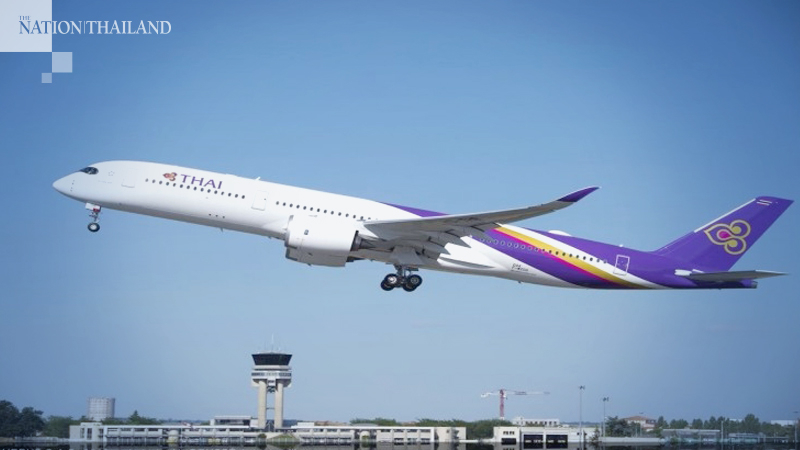
Transport Minister Saksayam Chidchob will next week present Prime Minister Prayut Chan-o-cha a list of 15 persons who will jointly draw up a rehabilitation plan in line with the Bankruptcy Law for Thai Airways International (THAI).

This follows the Cabinet’s approval on Tuesday (May 19) of a proposal that the debt-ridden national carrier enter a bankruptcy court-supervised rehab process. The Cabinet also approved that the Finance Ministry reduce its stake in THAI to less than 50 per cent, which make the airline lose its state-enterprise status.

At the Cabinet meeting on Tuesday, the Transport Ministry proposed three options for the Cabinet to choose in tackling THAI’s financial distress, including the choice of entering the rehab process under Bankruptcy Law. The other two options were for the Finance Ministry to take a Bt54 billion loan to help THAI or to let the airline go bankrupt.

The minister said the decision to make the airline enter a court-supervised rehab process will assure the creditors that THAI will come back stronger after the rehabilitation is completed.

The Transport Ministry is tasked with appointing a panel to draw up the rehab plan, which will be forwarded to the court. If the court approves this plan, the shareholders will have to come together to give it the green light.

Saksayam said he will appoint the panel this week and propose the names of at least 15 members to the premier next week. He added that he has already approached some people who have a background in the aviation industry.

He added that THAI has to file for bankruptcy in both Thailand and US, because up to 35 per cent of its total debt is owed to foreign creditors. He added that most of the debt involves the leasing of aircraft.

THAI will seek financial and legal advisers to proceed with filing for its rehab process in Thai and American courts, he said, adding that he is confident the rehab plan will be completed by next month and THAI can begin working on recovery.

Gulf fights virus by donating 6,000 KN95 masks to Phramongkutklao Hospital #ศาสตร์เกษตรดินปุ๋ย

#ศาสตร์เกษตรดินปุ๋ย : ขอบคุณแหล่งข้อมูล : หนังสือพิมพ์ The Nation

https://www.nationthailand.com/business/30388143?utm_source=category&utm_medium=internal_referral

Gulf fights virus by donating 6,000 KN95 masks to Phramongkutklao Hospital

May 19. 2020
By The Nation

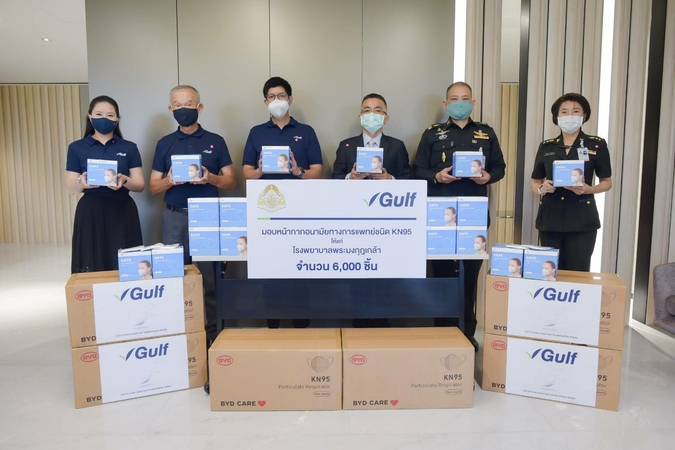
Gulf Energy Development Pcl has donated 6,000 KN95 masks to Phramongkutklao Hospital for its battle against Covid-19 and other respiratory diseases.

The masks were handed over by a Gulf delegation featuring, from far left, Yanisa Wattanakumnuan, vice president of community relations; Boonchai Thirati, executive director; and Sitamon Ratanavadi, corporate social responsibility assistant. On hand to receive the masks, from fourth left, were Gen Suradet Jaruchinda (MD) and Maj-Gen Ruttavitch Vuttipadhpibul (MD), special expert and expert, respectively, at the Permanent Secretary for Defence’s Office and Phramongkutklao Hospital Foundation Committee; and Col Roongkhajee U-thaimongkol, director of Phramongkutklao Hospital Foundation.

“Gulf Group does its best in its duty to generate electricity, which is a basic public utility for the country and necessary for medical workers to be able to do their job,” said Gulf executive director Boonchai.

“[Gulf] recognises that these frontline workers are working to the best of their ability to treat patients and successfully keep the situation under control,” he added.

“Therefore, donating these medical masks is providing another essential piece of equipment to medical workers to protect and prevent the transmission of contagious respiratory diseases, which include more than just Covid-19. Following from Gulf Group’s donation of 100,000 masks to Chulalongkorn Hospital last week, of which 50,000 masks went to Chulalongkorn Hospital workers and the remaining 50,000 were handed to other hospitals, today Gulf and Chulalongkorn Hospital are donating 6,000 masks to Phramongkutklao Hospital to support efforts to control the disease in the long term.”

Since the start of the Covid-19 pandemic, Gulf Group has spent Bt50 million to support or launch anti-virus projects, including supporting the procurement of medical equipment for the Faculty of Medicine at Ramathibodi Hospital, Mahidol University, Rajavithi Hospital, Bamrasnaradura Infectious Diseases Institute, the Central Chest Institute of Thailand, the Police General Hospital and Buddhachinaraj Hospital; providing alcohol sanitising gel to small hospitals in Pattani and Yala; and donating cloth face masks to sub-district health screening teams in 10 provinces. In addition, Gulf Group has pledged to provide over 150,000 meals to poor urban communities across Bangkok and has partnered with EGAT to provide survival kits for people in Nonthaburi province. Gulf’s aid initiatives have also extended to Thai elephants suffering during the pandemic through donations to the Aob Chang project. Gulf Group said it remains committed to supporting national efforts to alleviate the effects of Covid-19 in Thailand.

Chula medics granted free fleet of EV cars for 3 months #ศาสตร์เกษตรดินปุ๋ย

#ศาสตร์เกษตรดินปุ๋ย : ขอบคุณแหล่งข้อมูล : หนังสือพิมพ์ The Nation.

https://www.nationthailand.com/biz-moves/30388127?utm_source=homepage&utm_medium=internal_referral

Chula medics granted free fleet of EV cars for 3 months

May 19. 2020
By The Nation

Smart energy solutions company, Banpu Next, and car-sharing startup, Haupcar, have launched the “Banpu Next EV Car Sharing for Caring” project in which free EV cars will be provided for medical personnel at Chulalongkorn Hospital for three months as they fight the Covid-19 contagion.

Somruedee Chaimongkol, chief executive officer of Banpu Public Co Ltd and acting CEO of Banpu Next, along with Haupcar Co Ltd’s CEO and co-founder Krit Vichaiwatanapanich, and Takenori Harada, managing director of electric car manufacturer FOMM (Asia) Co Ltd, presented the fleet to the management of King Chulalongkorn Memorial Hospital recently.

Cars can be booked and unlocked via the Haupcar app, before the user drives it away. This does away with the need to have any physical contact with another person, which is in perfect compliance with the social-distancing measure.

The fleet was received by Asst Professor Yuwaree Pichitchok, MD, deputy director of the hospital’s strategy and human resources department.

Visit www.banpunext.co.th, call (02) 095 6599 or email contact@banpunext.co.th for more information.

Huawei: A Year and Beyond #ศาสตร์เกษตรดินปุ๋ย

#ศาสตร์เกษตรดินปุ๋ย : ขอบคุณแหล่งข้อมูล : หนังสือพิมพ์ The Nation.

https://www.nationthailand.com/biz-moves/30388116?utm_source=homepage&utm_medium=internal_referral

Huawei: A Year and Beyond

May 19. 2020
By THE NATION

[Shenzhen, China, May 18] Huawei held its 17th annual Global Analyst Summit in Shenzhen, both onsite and online.

At the event, Huawei was joined by over 2,000 analysts, key opinion leaders, and media representatives from a range of industries, including telecoms, the Internet, and finance. Together, they discussed how the industry can work together to weather the difficult times, achieve win-win outcomes, and accelerate the arrival of the intelligent world.

At the opening of the event, Huawei’s Rotating Chairman Guo Ping delivered a keynote speech titled “Huawei: A Year and Beyond”. Guo Ping started by sharing Huawei’s experience and business results of the past year. He said, “Over the past year, many technologies became unavailable to us. Despite this, Huawei struggled to survive and is striving to move forward.”

Huawei has long been an active contributor to the ICT industry. Since it was founded, Huawei has been committed to bringing digital to more people, homes, and organizations, in order to move the world forward. In the past 30-plus years, Huawei has deployed over 1,500 networks in more than 170 countries and regions, serving over 3 billion people worldwide. We also provide smart devices to 600 million consumers. US actions against Huawei will not only harm Huawei, but also harm the experiences of customers and consumers that use Huawei’s products and services.

Guo Ping, Huawei's Rotating Chairman, delivers a keynote speech at the 17th annual Global Analyst Summit

Guo Ping, Huawei’s Rotating Chairman, delivers a keynote speech at the 17th annual Global Analyst Summit


ICT infrastructure is the foundation of the intelligent world. By 2025, the digital economy will represent an industry worth 23 trillion US dollars. The ICT industry still has great potential. Standing at the threshold of the intelligent world, we can see more opportunities than challenges for the ICT industry.

Looking ahead, Huawei will continue investing and innovating in three domains: connectivity, computing, and smart devices. We will work with customers, partners, standards organizations, and all other industry players in domains like supply chain, standards, and talent cultivation, to encourage open collaboration, promote inclusive industry development, and explore the future together.

Guo Ping stated, “Today the world is an integrated collaborative system. The trend of globalization shouldn’t and will not likely be reversed. Fragmented standards and supply chains benefit no one, and further fragmentation will have a severe impact on the entire industry. The industry as a whole should work together to strengthen IPR protection, safeguard fair competition, protect unified global standards, and promote a collaborative global supply chain.”

The first Huawei Global Analyst Summit took place in 2004, and has been held annually ever since. This year’s summit runs from May 18 to 20, with a series of parallel sessions. Attendees include industry experts from around the world, who discuss and share their insights into industry trends, tech trends, and global collaboration. For more details, please visit: https://www.huawei.com/en/press-events/events/has2020

BJC Big C Foundation support COVID-19 treatment in the U.K. #ศาสตร์เกษตรดินปุ๋ย

#ศาสตร์เกษตรดินปุ๋ย : ขอบคุณแหล่งข้อมูล : หนังสือพิมพ์ The Nation.

https://www.nationthailand.com/biz-moves/30388062?utm_source=homepage&utm_medium=internal_referral

BJC Big C Foundation support COVID-19 treatment in the U.K.

May 18. 2020
By THE NATION

On behalf of BJC Big C Foundation, Mr. Aswin Techajaroenvikul and his wife Mrs. Thapanee had the honor to present 120,000 Azithromycin tablets to support COVID-19 treatment in the U.K. through H.E. Mr. Brian Davidson, British Ambassador to Thailand.

The presentation ceremony was led by Mrs. Suwannee Poonapanont, Senior Executive Vice President – Healthcare Business and Acting Executive Vice President – Pharmaceutical Division, Ms. Suree Chooratchareon, Assistant Vice President of Group Corporate Communications Division and Mr. Suthep Pothchongran, Assistant Vice President – Regulatory Affairs of BJC Big C and witnessed by Mr. Richard Porter, Trade Counsellor and Ms. Kanyanat Premjitt, Trade Officer at the British Embassy Bangkok on May 15.

MEA offers 7 tips on cutting your summer electricity bill #ศาสตร์เกษตรดินปุ๋ย

#ศาสตร์เกษตรดินปุ๋ย : ขอบคุณแหล่งข้อมูล : หนังสือพิมพ์ The Nation.

https://www.nationthailand.com/biz-moves/30388053?utm_source=homepage&utm_medium=internal_referral

MEA offers 7 tips on cutting your summer electricity bill

May 18. 2020
By THE NATION

The Metropolitan Electricity Authority (MEA) has offered tips to customers on how to reduce their power bills in summer, after seeing a sharp spike in electricity usage among householders due to the work-at-home directive to curb the spread of Covid-19.

The seven major tips for cutting your bill are:

1. Set air-conditioners to 26 degrees Celsius, and use electric fans to increase cooling airflow in the room.

2. Unplug electric tea-kettles when you don’t need hot water. Keeping the water hot all day can increase your power bill by up to Bt123 per month.

3. Do not overstock the refrigerator, and keep the door closed after use. Also, place the fridge at least 15cm from the walls to reduce heat.

4. Use computer components that are certified with the Energy Star standard to save electricity. A laptop also consumes up to three time less power than a desktop computer.

5. Some appliances still consume electricity in standby mode, so make sure to unplug them when not in use for prolonged periods.

6. Avoid ironing in air-conditioned rooms as the heat will make the A/C work harder. It is also recommended to iron a lot of clothes in one session to save power.

7. Switch to LED bulbs, which are 50-75-per-cent more energy efficient than other types. An 18-watt LED lamp can be as bright as a 32-watt fluorescent lamp and save Bt14 per month if used five hours per day.

For more information, visit the MEA facebook page, www.mea.or.th, or contact the call centre at 1130.

Minor International launches strategy to raise Bt25 billion in capital #ศาสตร์เกษตรดินปุ๋ย

#ศาสตร์เกษตรดินปุ๋ย : ขอบคุณแหล่งข้อมูล : หนังสือพิมพ์ The Nation.

https://www.nationthailand.com/business/30388136?utm_source=category&utm_medium=internal_referral

Minor International launches strategy to raise Bt25 billion in capital

May 19. 2020
 Dillip Rajakarier, group CEO of Minor International

Dillip Rajakarier, group CEO of Minor International
By The Nation

Minor International Public Co Ltd (MINT), a big player in the hospitality, restaurant and lifestyle industries, announced on Tuesday (May 19) that it was launching a comprehensive funding strategy to strengthen its capital base.

In line with its strategy to focus on cash preservation, liquidity and debt management, MINT’s board of directors has approved a plan to raise Bt25 billion through various instruments, including perpetual bonds, rights offering and three-year warrants.

The strategy is subject to shareholders’ approval at the Annual General Meeting of Shareholders on June 19.

The company’s aim is to complete the capital raising programme by 2023, with plans to raise Bt10 billion from onshore/offshore equity-accounted perpetual bonds and another Bt10 billion through rights offerings within the third quarter of this year.

The company also aims to raise additional equity through warrants worth about Bt5 billion, which will be issued once the rights offering transaction is completed. These warrants will have a tenure of three years from the date of issue.

The warrants will be set at a premium of no more than 10 per cent of the market price in the early part of the third quarter. This share price will not be indicative of the future share price, but will act as a reward for MINT’s existing shareholders.

Details of the rights offering and warrant issuance will be provided in the company’s disclosure to the Stock Exchange of Thailand.

In the first quarter of 2020, MINT reported a net loss of Bt1,774 million due to the adverse impact of the Covid-19 pandemic on its three businesses, together with an unfavourable impact from the new accounting standard on leases.

In the second quarter, MINT’s financial performance will be further impacted due to the temporary closure of hotels and restaurants since March.

However, as cities from Madrid to Bangkok cautiously start lifting lockdown measures, MINT is preparing to resume its operations in a world of the “new normal”.

In the long-term, MINT is streamlining its cost structure with the aim of improving efficiency while strengthening its digital capabilities.

“I am confident that this comprehensive capital-raising exercise will strengthen MINT’s ability to grow sustainably. We expect full support from our major shareholders, reflecting their belief in the future of MINT. A solid balance sheet will be the foundation for MINT to further build on its first-class quality assets to generate returns in the long term. Our interest-bearing-debt to equity ratio is expected to come back down to 1.3 times by the end of this year, significantly below the debt covenant of 1.75 times. On behalf of MINT’s management team, we are excited to embark on this recovery path, and start building growth for the company again,” said Dillip Rajakarier, group CEO of Minor International.

Minor International has three core businesses: hospitality, restaurants and lifestyle brands distribution.

It has 529 hotels in its portfolio, including Anantara, Avani, Oaks, Tivoli, Marriott, Four Seasons, St Regis and Radisson Blu to name a few, and is one of Asia’s largest restaurant companies with over 2,300 outlets in 26 countries including The Pizza Company, The Coffee Club, Bonchon, Swensen’s, Sizzler, Dairy Queen and Burger King etc.

It is also one of Thailand’s largest distributors of lifestyle brands and contract manufacturers, covering brands such as Anello, Bodum, Bossini, Brooks Brothers, Charles & Keith and Minor Smart Kids among others.

Cabinet approves bankruptcy restructuring for Thai Airways #ศาสตร์เกษตรดินปุ๋ย

#ศาสตร์เกษตรดินปุ๋ย : ขอบคุณแหล่งข้อมูล : หนังสือพิมพ์ The Nation.

https://www.nationthailand.com/business/30388119?utm_source=category&utm_medium=internal_referral

Cabinet approves bankruptcy restructuring for Thai Airways

May 19. 2020
By THE NATION

The Cabinet today (May 19) approved the Transport Ministry’s proposal that Thai Airways International (THAI) undergo rehabilitation under the Bankruptcy Act, said Prime Minister Prayut Chan-o-cha.

The premier declined to give details of the rehab plan, though the Cabinet has reportedly approved a plan by the Finance Ministry, which is the major shareholder in THAI, to sell 3 per cent of its shares in the carrier to the second largest shareholder, the Vayupak Fund.

The ministry currently holds 51.03 per cent of THAI shares, while the Vayupak Fund owns around 15 per cent, and the Government Savings Bank (GSB) holds around 2.1 per cent.

The Cabinet gave the green light to Thai Airways International (THAI)’s rehabilitation plan at its meeting on Tuesday (May 19), said Chakkrit Parapuntakul, second vice chairman and acting president of the airline, echoing the premier’s comment earlier in the day.

He added that reforms will be implemented via the business reorganisation chapter under the auspices of the Bankruptcy Court and in line with the Bankruptcy Act.

Though THAI will undergo rehabilitation as per the bankruptcy law, the airline will not be dissolved or go into liquidation or be declared bankrupt.

Instead, the business reorganisation chapter will enable the airline to reach its objectives even more effectively in line with the law, which provides equal protection to all relevant stakeholders.

THAI, meanwhile, will be able to conduct business as usual, including passenger flights and cargo transportation.

Business will be conducted in line with the reform plan to boost operational efficiency as well as improve product and service quality.

Chakkrit said THAI is committed to do everything possible to emerge from the crisis. This is an important step for THAI to change so it becomes a stronger and more sustainable entity, he added.

All THAI tickets are still valid and passengers are advised to contact the airline via thaiairwayss.com or through its contact centre (02) 356 1111.

THAI’s credit rating downgraded ahead of bankruptcy restructuring

Tris Rating has downgraded its company rating for THAI and its rating for THAI’s senior unsecured debentures from “BBB” to “C”, while maintaining a CreditAlert with negative implications.

The downgrade on Tuesday (May 19) reflects the anticipation of a freeze on all THAI’s debt obligations under bankruptcy law, following the government’s resolution on Tuesday that the national carrier will petition for restructuring via the Bankruptcy Court.

Once the court accepts the petition, it will trigger an automatic freeze on debt obligations, meaning THAI will stop servicing all debts until an agreement is reached among all stakeholders.

When the freeze is implemented, or if there are payment defaults prior to the freeze, THAI’s rating will be downgraded to “D” or “Default”.

The CreditAlert for THAI reflects the likelihood that its ratings will be downgraded to “D”.