Kasikornbank to cut overdraft rate by 25 basis points #ศาสตร์เกษตรดินปุ๋ย

#ศาสตร์เกษตรดินปุ๋ย : ขอบคุณแหล่งข้อมูล : หนังสือพิมพ์ The Nation

https://www.nationthailand.com/business/30384577?utm_source=category&utm_medium=internal_referral

Kasikornbank to cut overdraft rate by 25 basis points

Mar 21. 2020
KBank president Predee Daochai

KBank president Predee Daochai
By THE NATION

Kasikornbank will lower its Minimum Overdraft Rate (MOR) by 25 basis points to 6.62 per cent and minimum retail rate (MRR) by 12 basis points to 6.50 per cent to ease the burden on small and medium-sized clients and individual clients, according to its statement today.

KBank president Predee Daochai said the move will take effect from March 24.

The move is in line with the Monetary Policy Committee’s decision on Friday (March 20) to cut the key policy rate by 0.25 of a percentage point, from 1.00 to 0.75 per cent, effective from March 23 to reduce the interest burden on borrowers affected by the Covid-19 outbreak and to alleviate liquidity strain in the financial markets.

Thai stocks gain on hopes of Covid-19 antiviral drug, but situation still worrisome #ศาสตร์เกษตรดินปุ๋ย

#ศาสตร์เกษตรดินปุ๋ย : ขอบคุณแหล่งข้อมูล : หนังสือพิมพ์ The Nation

https://www.nationthailand.com/business/30384567?utm_source=category&utm_medium=internal_referral

Thai stocks gain on hopes of Covid-19 antiviral drug, but situation still worrisome

Mar 21. 2020
By The Nation

The Stock Exchange of Thailand (SET) Index on Friday (March 20) recovered due to hopes from China’s move to produce Favipiravir, an antiviral drug able to cure Covid-19 virus, and investors making a short covering to buy back stocks, Sunthorn Thongthip, strategist at Kasikorn Securities said.

The SET Index yesterday closed at 1,127.24, up 83.05 points or 7.95 per cent with total transactions worth Bt93.027 billion.

He said that at the same time, central banks worldwide had tried to inject liquidity into the monetary system and issued various measures to mitigate the Covid-19 impact, resulting in hopes for the market.

“Currently, the market hopes that the number of infected people would decline after the antiviral drug goes under production,” he said.

“We expect that the recovery of the market this time would be able to maintain at this level for one or two weeks to see the situation from now on meets expectations.”

He advised investors not to buy back stocks when stock prices begin to rise.

“Although the production of the antiviral drug has started, as long as there is no vaccine or the number of infected people remains very high, the chance of severe volatility is still possible,” he said.

“Investors who have previously held shares or have gained profit from buying stocks when its prices fell into the buy zone, may consider reducing their portfolios and holding cash to wait and see the situation again.”

He added that the antiviral drug currently being produced seemed to have a 30 per cent curing record, so one cannot be sure that the situation will be resolved.

“Meanwhile, economic activity has still not fully recovered, causing the SET Index to face difficulty in recovering to the level between 1,400 and 1,500,” he added.

“We estimate the index’s resistance level at 1,165, while the index is expected to swing between1,100 and 1,200 for a while.”

A stock analyst at Tisco Securities warned investors to be careful since the index had a tendency to fall.

“The index rebounded sharply at close on Friday, but the Covid-19 situation could be more severe because the disease is still spreading in Europe and Thailand,” the stock analyst said. “We estimate that the index would move at between 1,070 and 1,200.”

Gold price was at US$1,505.20 per ounce, while its price in Thailand was Bt23,200 per baht weight.

A strategist at YLG Bullion International said that the Mayor of Los Angeles city had issued an emergency order “Safer at Home”, while the number of infected people in the US surpassed 13,000, having a negative sentiment on gold price.

“Initially, if the price is not able to rise above the resistance level at US$1,523 per ounce, the gold price would gradually weaken again,” the strategist said.

“We evaluate the support level in the range of between US$1,451 and US$1,445 per ounce.”

Dtac ready for uninterrupted mobile services #ศาสตร์เกษตรดินปุ๋ย

#ศาสตร์เกษตรดินปุ๋ย : ขอบคุณแหล่งข้อมูล : หนังสือพิมพ์ The Nation

https://www.nationthailand.com/biz-moves/30384324?utm_source=category&utm_medium=internal_referral

Dtac ready for uninterrupted mobile services

Mar 18. 2020
Dtac chief executive officer Sharad Mehrotra

Dtac chief executive officer Sharad Mehrotra
By THE NATION

Total Access Communication (dtac) is prepared to keep customers connected as the spread of Covid-19 continues , according to a company statement (March 18).

At the same time, the company is rolling out a range of measures to limit exposure of its employees to the virus , so that they could continue to provide mobile services without interruption.

Dtac chief executive officer Sharad Mehrotra said: “As the coronavirus outbreak spreads and causes a series of serious disruptions, mobile connectivity becomes the most critical way for everyone to stay connected with loves ones, continue to conduct business and receive information from the government. This is why dtac has put in place measures to keep our customers and employees safe, while also ensuring reliable services”.

Most needed services

Should the Covid-19 outbreak escalate, dtac will have to respond to both changing behaviour in mobile usage and the need to maintain uninterupted services for its customers.

Dtac will ensure continuous monitoring of its network with a backup Network Operation Center. dtac has also readied three alternative call centres and automatic response systems to serve any spikes in customer queries.

“We have to be ready to not only maintain our current level of service but adapt it to changing needs if need be. We have the teams ready to do this, and we can even roll out mobile units if need be. We will not let our customers down when they need us most,” said Mehrotra.

Ensuring continued service

Dtac has also implemented measures to limit the organisation’s exposure to possible disruption. dtac has implemented mandatory temperature check for all employees and visitors to its offices. Moreover, cleaning of high-contact surfaces is now performed hourly. Disinfection professionals spray antiseptic solution in its offices every night and all salespersons are required to wear face masks in the shops.

There have been no cases of COVID-19 infection among dtac employees but all employees must self-quarantine for 14 days after returning from high-risk countries or in contact with a possibly infected person.

On March 18-19, dtac is conducting trials for work arrangements where one half of the company headquarters’ employees work from home, alternating with the other half every other day.

Senior disease control official to advise CPF on best practices to combat Covid-19 #ศาสตร์เกษตรดินปุ๋ย

#ศาสตร์เกษตรดินปุ๋ย : ขอบคุณแหล่งข้อมูล : หนังสือพิมพ์ The Nation

https://www.nationthailand.com/biz-moves/30384225?utm_source=category&utm_medium=internal_referral

Senior disease control official to advise CPF on best practices to combat Covid-19

Mar 17. 2020
By The Nation

The deputy director-general of Department of Disease Control, Dr Tanarak Plipat, will provide knowledge on the Covid-19 situation and best practices to Charoen Pokphand Food Pcl (CPF) executives and employees.

The information will serve as guidelines and daily practices to prevent the spread of the epidemic in the office, the manufacturing plant and at home.

Siripong Arunrattana, chief operating officer of CPF’s livestock business, and a group of executives and employees will attend the session at CP Tower Silom in Bangkok.

The presentation also will be viewed through video conference at CPF’s offices and processing plants in 57 areas nationwide.

CPF has announced stringent restrictions to all employees and control measures in the processing line aimed at preventing infections.

KPMG in Thailand brings in experts to strengthen Customs, supply chain service #ศาสตร์เกษตรดินปุ๋ย

#ศาสตร์เกษตรดินปุ๋ย : ขอบคุณแหล่งข้อมูล : หนังสือพิมพ์ The Nation

https://www.nationthailand.com/biz-moves/30384164?utm_source=category&utm_medium=internal_referral

KPMG in Thailand brings in experts to strengthen Customs, supply chain service

Mar 16. 2020
(L-R) Charoen Phosamritlert, Malika Bhumivarn, Benjamas Kullakattimas

(L-R) Charoen Phosamritlert, Malika Bhumivarn, Benjamas Kullakattimas
By THE NATION

KPMG in Thailand is continuing its expansion by hiring a team of professionals from a Bangkok-based consulting firm, Bolliger & Company Consulting Limited.

The addition, to be effective as of Monday (March 16), will significantly strengthen KPMG’s current Customs and supply chain services capabilities, the company said

“KPMG in Thailand’s move on the country’s Customs scene is aimed at further enhancing how it can help businesses with the ever-increasing complexity of Customs requirements and international trade regulations while meeting the highest standards of compliance. I am delighted to welcome our new partner, Malika Bhumivarn, and her team. Their wealth of experience will further strengthen KPMG in Thailand’s Customs capabilities,” said Charoen Phosamritlert, chief executive officer, KPMG in Thailand, Myanmar and Laos.

“The synergies of our combined strengths as well as the resources of our global network will allow us to meet the unique needs of our clients,” said Benjamas Kullakattimas, partner, head of tax and legal, KPMG in Thailand.

“I am excited to be part of KPMG’s rapidly expanding service offerings. I believe my Customs and supply chain expertise, when teamed with KPMG’s network and resources, will be of strategic assistance to clients,” said Malika Bhumivarn, tax partner, KPMG in Thailand.

KPMG in Thailand, with more than 1,900 professionals offering audit, legal, tax, and advisory services, is a member firm of the KPMG network of independent firms affiliated with KPMG International Cooperative, a Swiss entity.

WeWork under pressure as more members contract coronavirus in co-working spaces #ศาสตร์เกษตรดินปุ๋ย

#ศาสตร์เกษตรดินปุ๋ย : ขอบคุณแหล่งข้อมูล : หนังสือพิมพ์ The Nation

https://www.nationthailand.com/business/30384536?utm_source=category&utm_medium=internal_referral

WeWork under pressure as more members contract coronavirus in co-working spaces

Mar 21. 2020
By The Washington Post · Tonya Riley · BUSINESS, HEALTH, CAREER-WORKPLACE 

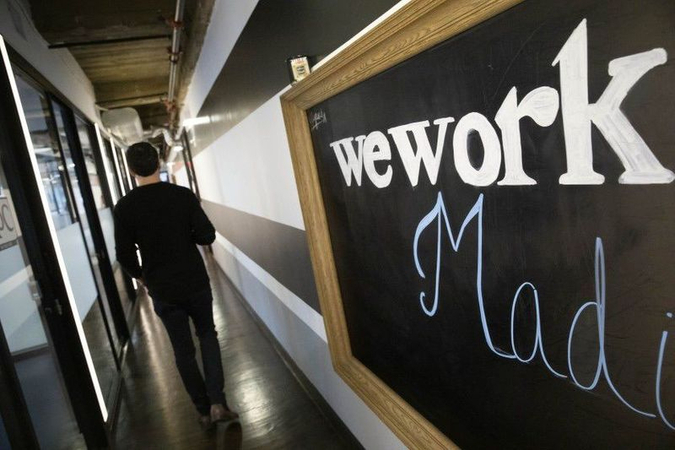
Doria Lavagnino was already working from home when she got the announcement she feared: Someone who shares office space at her WeWork location in New York tested positive for the novel coronavirus.

The co-working company assured members of the Madison Avenue location on Wednesday that it cleaned the floor on which the infected individual worked and visited just three days earlier. The site was back in business by Thursday.

But Lavagnino is disturbed that WeWork, known especially for its communal perks such as cold brew coffee or beer on tap, did not shutter the location completely or even try to help its members determine whether they interacted with the infected individual. Hours after the site reopened, the company announced that someone else tested positive and two more floors needed to be cleaned.

As government officials encourage workers to stay home, there’s a growing chorus of small business owners – a group likely to be hit hardest in the economic fallout from coronavirus – who are angry that WeWork has refused members refunds for a space they can no longer use.

“We’re told by our government that for our health to stay at home and I’ve told my employees all to stay at home,” Lavagnino, co-founder of financial planning platform CentSai, told The Washington Post. “I’m paying close to $5,000 a month in rent and I’m not there. Imagine how crippling that is to a small business.”

And the uproar is only likely to grow as the pandemic spreads. WeWork members at at least seven other different New York locations tested positive for the disease, the New York Post reported. There have been other reported cases in major cities such as Los Angeles and Chicago.

Some members have signed onto a petition on the worker advocacy platform Coworker.org calling on WeWork to close its 848 locations worldwide. There are more than 300 locations in the United States.

Jill Raney, a Washington-based WeWork member who launched the petition, says the company’s decision to remain open during a public health crisis is “unconscionable.” She says it effectively forces businesses with small margins to choose between wasting money or putting themselves at risk of infection.

“Psychologically, it’s messing with me that I’m paying for a service [that’s] not safe for use,” says Raney, who founded the digital strategy group Practice Makes Progress and is the only employee.

WeWork’s position is in stark contrast to some competitors, such as women-focused co-working collective The Wing and Washington-based meeting and event space The Cove, which shut down their sites in light of the public health concerns.

The Wing also offered members refunds. WeWork’s biggest competitor, Regus has not closed its offices and did not respond to requests for comment about whether it plans to offer refunds.

WeWork argues that staying open is, in fact, in the public interest and that the business is an essential service – especially in the time of coronavirus. That phrasing seems designed to position the company to continue to operate even in states such as New York and California which have issued orders for non-essential companies to close or reduce their workforces, though the company would not directly comment on this.

“WeWork is a service provider and we have an obligation to keep our buildings open,” the company wrote in a statement on Twitter, echoing an internal memo from chief executive Sandeep Mathrani and executive chairman Marcelo Claure. “We too have members counting on us to remain open so they can run their companies.”

The tweet quotes three anonymous members who say the company they’re providing essential healthcare and financial support services during the pandemic.

The company insists it’s taking all the proper health precautions. “Since the start of the Coronavirus outbreak, WeWork has been closely monitoring the situation and ensuring preventative measures are implemented in line with the [Centers for Disease Control], [World Health Organization] and local government guidance to protect our employees and members around the world,” Ralph Patrone, WeWork’s head of global security and safety, said in a statement to The Washington Post.

“We have a robust emergency preparedness plan in the event any member or employee contracts the Coronavirus, which includes notifying members, closing impacted floors or buildings, and working with our cleaning partners to deep clean and disinfect the space.”

The company has also suspended events at its locations around the world and allowed employees, including the front desk and other operations staffs that work at individual locations, the opportunity to work from home.

WeWork did not respond to questions about if it would consider refunding members and declined to comment on Raney’s petition. WeWork members, on Twitter and on the company’s internal app, say their request for refunds were either refused or have gone unanswered by the company.

WeWork has undergone significant turmoil at the corporate level in the past few months, something that some members believe has trickled down to its coronavirus response. WeWork founder Adam Neumann stepped down as chief executive in October after the company delayed its public offering amid concerns over his behavior and questions over the company’s finances. Now Japanese investment firm SoftBank is considering backing out of part of the planned massive bailout, the Wall Street Journal reported this week. (WeWork executives disputed that characterization in an internal memo.)

Despite WeWork’s assurance that it’s following all local government guidelines, Raney and other WeWork members expressed concerns that the WeWork offices – which can house hundreds of employees – go against warnings from local and federal officials to cap the size of gatherings.

Raney said when she last went into the Manhattan Laundry location on U Street last Friday, nothing had been done to separate communal furniture. She noticed no difference in cleaning schedules and communal drinks were still readily available.

The announcements of new cases illustrate the difficulties in containing the spread of such a highly contagious disease. “Anyone who’s been in a WeWork knows if you can’t get a conference room on your floor you’re going to another floor. You go to mail for another floor,” she said. One of the floors set to be deep cleaned at the Madison Avenue location after its second positive coronavirus case was near the mail room, Lavagnino said.

Lavagnino is troubled that the company has not answered her questions about its cleaning policies, while WeWork sent out a music playlist curated by the company to over its internal app to help them work from home.

Raney hopes that if WeWork doesn’t choose to shut down, local governments will step in. As for Lavagnino, she doesn’t plan on renewing her lease when it expires in May.

“They have an opportunity to help small businesses – but the way this has been handled was so mismanaged.”

PG&E glides toward bankruptcy exit now that state is focused on virus #ศาสตร์เกษตรดินปุ๋ย

#ศาสตร์เกษตรดินปุ๋ย : ขอบคุณแหล่งข้อมูล : หนังสือพิมพ์ The Nation

https://www.nationthailand.com/business/30384535?utm_source=category&utm_medium=internal_referral

PG&E glides toward bankruptcy exit now that state is focused on virus

Mar 20. 2020
Pacific Gas and Electric headquarters in San Francisco on Jan. 14, 2019. MUST CREDIT: Bloomberg photo by David Paul Morris.

Pacific Gas and Electric headquarters in San Francisco on Jan. 14, 2019. MUST CREDIT: Bloomberg photo by David Paul Morris.
By Syndication Washington Post, Bloomberg · Mark Chediak · BUSINESS, US-GLOBAL-MARKETS

The deepening coronavirus crisis has shifted nearly all attention away from what had been one of California’s most pressing issues: the fate of embattled utility PG&E Corp.

Now, the company is quietly edging closer to exiting the largest utility bankruptcy in U.S. history, largely intact as an investor-owned power giant.

A long-threatened state takeover is likely off the table as PG&E makes progress in talks with Gov. Gavin Newsom and his administration devotes more resources to fighting the pandemic. This week, he dropped objections to PG&E’s $23 billion financing plan, citing market turmoil. The company also won bankruptcy court approval to start sending materials to creditors who will vote on its $58 billion reorganization proposal.

PG&E’s filed for bankruptcy more than a year ago after its equipment was linked to wildfires that killed scores of Californians, triggering widespread public outrage and calls for the utility to be broken up or in put in the government’s hands. But as the coronavirus emerges as an even more urgent public issue for state and local officials, the company’s path toward proceeding with its own plan and exiting by a state deadline of June 30 is becoming clearer.

“The governor has had opportunities to forcefully object if he really wanted to stop this plan or initiate a state takeover, so his absence to do so speaks volumes,” said Philip Brendel, a credit analyst for Bloomberg Intelligence. “I believe he’s moved on to the next state crisis — the coronavirus.”

PG&E climbed as much as 6.2% Friday as stocks gained broadly.

California has been one of the U.S. centers of the coronavirus outbreak, trailing only New York and Washington in cases. Newsom on Thursday took the dramatic step of ordering all residents to isolate themselves at home to limit the virus’s spread, the country’s strictest effort so far.

An official with the Newsom administration said it remains focused on reforming PG&E, and that it continues to hold talks with the company. The administration’s preference is to keep it as investor-owned utility, but a state takeover is still an option if PG&E falls short of demands for reform, the official said.

PG&E said in a statement that discussions continue with the governor’s office and it’s making “good progress.”

Newsom still has some sway over PG&E because the utility needs state approval of its bankruptcy plan to qualify for coverage from a state wildfire insurance fund. He has said he wants changes to PG&E’s governance and management, including replacing the utility’s entire board. He also raised issues with the company’s capital structure. The Newsom official said PG&E has made progress in meeting some of the administration’s demands.

The utility has pledged reforms including replacing some directors, tying executive pay more closely to safety metrics and dividing up its operations into regional units to better respond to local concerns. PG&E has also said it’s open to a proposal that would let California regulators take greater control of the company if it gets into trouble again.

Still, the pandemic means the governor is less inclined to make a drastic move now, said Barry Moline, executive director of the California Municipal Utilities Association.

“He needs to focus his attention on this public-health crisis and societal disruption, and taking action on PG&E would probably be seen as a distraction,” Moline said. “It doesn’t take away from the reality that the bankruptcy deal with PG&E may not be the best for California, is filled with risk and guaranteed higher prices for residents.”

There have been other attempts to reshape PG&E beyond Newsom. Even as its budget is being hit by the coronavirus, San Francisco says it still wants to buy the company’s grid within the city. And a proposal by a group of a more than 200 city and county officials, led by San Jose Mayor Sam Liccardo, to turn PG&E into a giant customer-owned cooperative is still on the table.

A bill that would make PG&E a government-run entity is pending with the state legislation, said California State Sen. Scott Wiener. Still, he conceded that the coronavirus is making that effort more difficult. The state legislature is suspended until April 13, giving lawmakers a small window to step in.

“Obviously, it was always going to be a hard, uphill climb to turn PG&E into a publicly owned utility, but we were giving it our best shot,” Wiener said in a telephone interview. “Covid-19 just made it a heck of a lot harder given the need for a laser-like focus on the pandemic.”

The governor’s office is pressing for additional concessions, including putting mechanisms in place to ensure PG&E improves safety operations in the near term. The governor also wants changes to its financing plan to make sure the company can fund as much as $40 billion in infrastructure upgrades.

That could be a much heavier lift if the virus continues sending credit markets into a tailspin.

“The company is going to come out of bankruptcy financially hobbled,” said Jared Ellias, a professor at the University of California Hastings College of Law, who has been following the case. “They won’t have the financial flexibility they would have if they emerged with a clean balance sheet with less debt.”

PG&E said in filing with state regulators that the company’s plan will “put it back on solid financial footing, with sufficient resources to invest in wildfire mitigation.”

Given the crisis and market disruption, the Newsom administration likely understands that it’s best for the state and PG&E to get the company out of bankruptcy before wildfire season, said Michael Wara, a climate and energy policy professor at Stanford University.

“I think the Newsom administration thinks they aren’t going to get a better deal that’s on the table and they are trying to lock it in,” Wara said.

Where is the U.S. getting the trillion dollars it’ll take to fight the coronavirus? #ศาสตร์เกษตรดินปุ๋ย

#ศาสตร์เกษตรดินปุ๋ย : ขอบคุณแหล่งข้อมูล : หนังสือพิมพ์ The Nation

https://www.nationthailand.com/business/30384538?utm_source=category&utm_medium=internal_referral

Where is the U.S. getting the trillion dollars it’ll take to fight the coronavirus?

Mar 21. 2020
Photo by: The Washington Post — The Washington Post

Photo by: The Washington Post — The Washington Post
By The Washington Post · Christopher Ingraham · BUSINESS, US-GLOBAL-MARKETS

$8.3 billion. No wait, $750 billion. Scratch that: how about $1 trillion?

The price tags for coronavirus relief packages in the United States keep getting bigger as the scope of the epidemic, and of the damage it will wreak on the economy, grows larger and more alarming with each day. Democrats and Republicans, some of whom have long preached fiscal restraint, are suddenly interested in throwing as much money at the epidemic as possible.

After a decade – and in the midst of a presidential campaign – when there were repeated arguments about what America can afford, policymakers appear to be ignoring issues of cost and deciding to spend, spend, spend.

So how can the nation suddenly afford to spend a trillion or more on the coronavirus?

The answer, in one word: debt.

As long as Congress authorizes it, the Treasury Department can issue as much debt as it needs to pay the nation’s bills. It does this by selling Treasury bonds to investors – foreign governments, banks, mutual funds, and many others who want to keep their money in a safe place. As long as investors keep buying American debt, the U.S. can keep selling it.

As of right now, the U.S. federal debt (not including government securities held by Social Security) stands at about 79% of annual gross domestic product. That’s high, historically speaking, but not a record – in the immediate aftermath of World War II, for instance, federal debt briefly spiked above 100% of gross domestic product.

As the coronavirus pandemic has send stock markets plunging in recent weeks, investors have signaled a rapacious demand for U.S. government debt.

At one point earlier this month, the 10-year Treasury bond traded as low as .54% during this crisis. When you account for inflation, that means that investors were effectively willing to lend money to the U.S. government for an entire decade at a loss.

Investors have been willing to do this because they’re looking for a safe place to park their cash at a time of massive uncertainty caused by the coronavirus pandemic.

Amid intense volatility in the bond market and panicked selling in recent days, the 10-year Treasury bond has moved up to .99%, as of Friday morning. That’s still extremely low by historic standards, so low that the Treasury Department is considering issue a 50 year bond for new spending.

The question is: How long will investors continue to lend money in this way?

Some countries, such as Japan, have lived with high debt levels for years, while others, such as Greece and Ireland, have seen financial crises as a result of their heavy burdens.

Few think that the U.S. debt burden right now is something that should preclude big spending to fight coronavirus. In time, when the economy recovers, the debt burden come could down thanks to a combination of economic growth, tax increases and spending reductions.

But before the coronavirus hits, the government was to set spend about $1 trillion more in 2020 than it collected. The coronavirus-induced recession and the new spending could double that this year.

A lot is riding on the continued confidence of global investors.

Senate struggles to finalize trillion-dollar stimulus bill as economic calamity grows #ศาสตร์เกษตรดินปุ๋ย

#ศาสตร์เกษตรดินปุ๋ย : ขอบคุณแหล่งข้อมูล : หนังสือพิมพ์ The Nation

https://www.nationthailand.com/business/30384553?utm_source=category&utm_medium=internal_referral

Senate struggles to finalize trillion-dollar stimulus bill as economic calamity grows

Mar 21. 2020
By The Washington Post · Erica Werner, Jeff Stein, Paul Kane, Mike DeBonis · NATIONAL, BUSINESS, POLITICS, CONGRESS, WHITEHOUSE 
WASHINGTON – The Senate worked to reach agreement late Friday on a trillion-dollar stimulus bill to save the economy from collapsing under the ravages of the coronavirus, but bipartisan agreement proved elusive as lawmakers debated how best to allocate enormous sums of money to help individual Americans and businesses large and small.

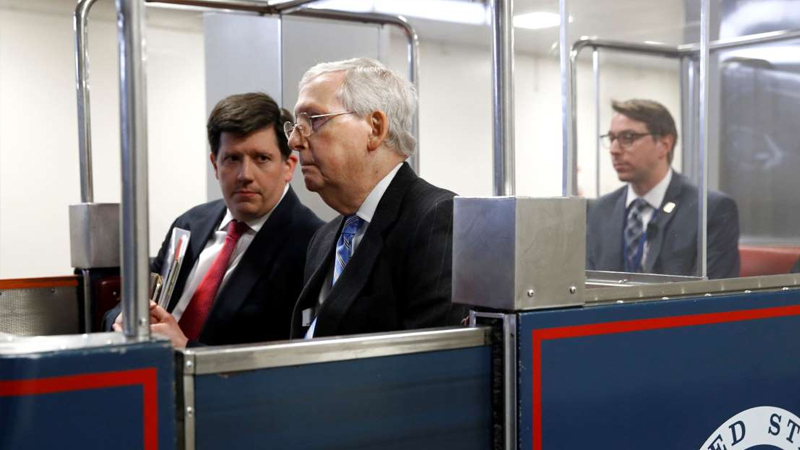
Early in the day, Majority Leader Mitch McConnell, R-Ky., said it was imperative to a reach a deal by Friday night on the legislation to be able to pass it on Monday. By Friday evening, though, major issues remained unresolved, including a push by Democrats to add many tens of billions of dollars to unemployment insurance programs to catch the tidal wave of people bracing for layoffs.

A related issue — how to structure direct payments to individuals and how much to spend on them — was also unresolved, as were numerous other matters, making it likely that talks would stretch into Saturday.

Nonetheless, participants voiced optimism about the progress made on the legislation, which was introduced only Thursday. The process, McConnell has remarked, amounts to “warp speed” for the Senate.

“I’m not optimistic, but I’m not pessimistic at this point. Conversation is positive on a lot of good fronts,” said Sen. Richard Durbin of Illinois, the No. 2 Senate Democrat. “There’s still some things that need to be worked out that could be deal breakers, so it isn’t over.”

Leaving a meeting of key Republicans, White House legislative affairs director Eric Ueland acknowledged that some sticking points are likely to require negotiating throughout the weekend, but he said Senate lawyers would formally draft agreed-upon portions of the bill late Friday and throughout the weekend so that whenever the final pieces come together, a vote can be held quickly.

“I don’t want to be negative about where we are, because, again, we made a significant amount of progress but the clock is ticking and the need for legislation in order to deliver urgently needed aid to the American people and the American economy leaves us no time to hesitate or pause,” Ueland told reporters. The legislation’s final pricetag appeared sure to far eclipse $1 trillion.

As talks intensified, lawmakers and President Donald Trump’s team kept pushing to make the package bigger and more aggressive in its scope. They were also working to scrap limits in the initial GOP bill that would have directed smaller cash payments to lower-income Americans than to others, amid blowback from the White House, Democrats, and Republicans.

As initially written, the plan would have given many Americans $1,200 in a one-time payment, but the poorest families – those without federal tax liability – could get as little as $600. That structure has drawn bipartisan criticism, and senators appeared all but certain to change it to ensure poorer Americans didn’t receive less money. And Trump said the initial payment amount would likely be substantially higher than $1,000.

“We’re not talking about a thousand dollar check. We’re talking about much more than that,” Trump said Friday. “We’re also talking about doing phases. If this doesn’t work, we’re going to keep doing until we get it going.”

Trump also voiced support for barring any corporations that receive aid from being able to do stock buy-backs, or use money to repurchase their stock in order to drive their equity prices higher, enriching shareholders. That issue is not addressed in the bill as initially written, but Trump said he discussed it with Schumer.

“We talked about as an example, buybacks, stock buybacks. I don’t want to have stock buybacks,” Trump said. “I want that money to be used for the workers and also for the company to keep the company going, but not for buybacks.”

McConnell and Treasury Secretary Steven Mnuchin hope to see the legislation pass the Senate on Monday, but it remained unclear whether the negotiators could meet the deadline for such a massive bill, which could be the largest economic rescue in history.

The frantic negotiations are taking place as the economic problems in the United States are multiplying. JPMorgan Chase has estimated that the U.S. economy could shrink by 14 percent between April and June, the biggest contraction in the post-World War II era. Goldman Sachs has estimated that 2.25 million people filed for unemployment this week, a nearly tenfold increase from one week ago and the largest number ever recorded.

Underscoring the urgency of the situation as the administration searches for every possible tool to respond, Mnuchin announced Friday that the nation’s tax filing deadline would be pushed back from April 15 to July 15.


Democrats, whose votes will be needed to pass the stimulus legislation in the House and Senate, panned the bill as unveiled by McConnell on Thursday as overly weighted toward industry. But Schumer and House Speaker Nancy Pelosi, D-Calif., were engaged in talks throughout the day Friday, although Pelosi is at home in California with the House out of session. House members would have to be called back to vote on the bill, a complication unto itself given the spread of the virus with two House members already announcing they’ve tested positive.

Schumer and Democrats were pushing for expanding unemployment benefits in order to provide six weeks of pay with 100 percent wage substitution, and waive existing delays in securing payments, among other changes to make the program more generous. A different coronavirus relief bill signed into law earlier this week already boosted unemployment insurance programs, but Democrats insist they most be expanded as layoffs cascade throughout the economy, rather than just provide individuals with a one-off check as envisioned by the Senate GOP bill as originally introduced.

Some Republicans were voicing concerns about the ability of states to administer large-scale increases in the program, and Labor Secretary Eugene Scalia joined the negotiations Friday to issue a warning on that front. Economists expect a staggering increase in unemployment claims in coming weeks that could potentially shatter records.

“That is our bottom line. It is our single most important issue,” Sen. Ron Wyden, D-Ore., told reporters about expanding unemployment. “The administration has raised questions, as you know, about how it would be administered. We have said, well, we think in most states it can be handled.”

Democrats were also pushing for a large state stabilization fund to answer the pleas of governors. Schumer said that issue, too, remained a sticking point.

“That’s another big issue. That’s a big issue that hasn’t been resolved,” Schumer told reporters late Friday, adding: “There are still many issues outstanding.”

Despite their disagreements on policy details lawmakers in both parties agreed time was of the essence in face of the unprecedented economic threat posed by the coronavirus, which has now brought much of the nation into lockdown.

“We need to deliver relief now,” McConnell said on the Senate floor. “We need to go big. We need to minimize new complexity. And we need to move swiftly.”


As originally proposed the bill includes an extensive list of proposals aimed at alleviating the economic shock facing both small and large businesses: delaying corporate taxes; providing zero-interest loans; and paring back the paid family leave plan recently approved by Congress, among other changes.

The plan includes numerous delays on corporate and business taxes, and would allow the hospitality industry to immediately write off the costs of building improvements, changing a provision in the 2017 tax law. These changes are opposed by many Democrats.

Beyond the general corporate tax changes, the Senate GOP bill also proposes relief for bigger firms and corporations, a move that some critics have alleged could amount to taxpayer funded bailouts. The bill would not provide direct cash subsidies to these large firms. But it does call for other forms of emergency federal help, such as low-interest loans. The airlines would receive $50 billion in “loans and loan guarantees,” while cargo air carriers would receive $8 billion.

The legislation also calls for creating an additional fund, of $150 billion, to help rescue other industries hurt by the coronavirus downturn. It gives the Treasury Department wide authority in determining which businesses qualify for the fund, which would give the Trump administration significant discretion over a large pool of money — and Senate Republicans are expected to increase the amount beyond $150 billion before the final text is introduced, according to three congressional aides and lobbyists aware of the internal discussions.

The bill’s enormous interventions for small firms appeared to be the portion of the legislation with the most bipartisan agreement. Spearheaded by Sen. Marco Rubio (R-Fla.), the proposal calls for $300 billion in loans to be made available through lenders certified by the Small Business Administration, with the maximum loan capped at $10 million. Unlike the part of the bill for large companies, small businesses could be eligible to have their loans forgiven at a future date if they retain their employees during this period at the same level as before the coronavirus hit.

Rubio told reporters that lawmakers are also looking at loosening the SBA definition of small business – currently set at 500 – to ensure that somewhat larger businesses don’t miss out on relief.

“Just making sure that we’re not cutting businesses off,” Rubio said, citing the example of a hotel that might have more than 500 employees, predominantly low-wage workers.

The legislation, as originally written by the Senate GOP, would have rolled back parts of the paid sick leave plan recently enacted by Congress and signed into law by Trump. Numerous Republican senators and business groups have complained that package requires firms to pay an expensive new benefit, but does not compensate them with a federal tax cut until they would already be driven out of business. It’s unclear whether Democrats would push back on changes to this area.

Democrats were, however, pushing for a variety of additional restrictions to ensure any corporate aid doesn’t amount to bailouts that help corporate executives at the expense of workers and taxpayers. Some in organized labor were irate over the bill as introduced and demanding changes.

Democrats and Republicans attacked the initial GOP bill design that aimed to limit the direct payments to lower-income households. The legislation would have provided $1,200 per adult and $500 for child, with checks beginning to phase out for those earning more than $75,000. But the poorest families, because they had no federal income tax liability, would have seen smaller benefits, with the minimum set at $600.

“There’s a lot of us who would like to see that changed,” said Sen. Mike Rounds, R-S.D. “They have the same expenses everybody else does. Just because they’re on the lower end of the income scale doesn’t mean they don’t have some basic expenses.”

U.S. markets wrap up worst week since the 2008 financial crisis #ศาสตร์เกษตรดินปุ๋ย

#ศาสตร์เกษตรดินปุ๋ย : ขอบคุณแหล่งข้อมูล : หนังสือพิมพ์ The Nation

https://www.nationthailand.com/business/30384547?utm_source=category&utm_medium=internal_referral

U.S. markets wrap up worst week since the 2008 financial crisis

Mar 21. 2020
By The Washington Post · Thomas Heath, Taylor Telford · NATIONAL, BUSINESS, US-GLOBAL-MARKETS

U.S. markets wrapped up one of their messiest-ever weeks Friday, tumbling more than 10 percent from where they began Monday for their worst finish since the 2008 financial crisis. Stocks were wrenched all week in hourly spasms as investors tried to fathom where the coronavirus will eventually leave the U.S. economy.

The craziness ran right up to the closing bell, with the Standard & Poor’s 500 and the Dow Jones industrial average plunging more than 3 percent minutes after the World Health Organization warned that global health systems were “collapsing” under the strain of the pandemic.

Wall Street’s meltdown over the past month has erased all of the stock market gains since Donald Trump entered the White House. On Feb. 12, the Dow peaked at 29,551.42 – a 49 percent jump from its close on Trump’s Inauguration Day in January 2017. But within a span of weeks it has lost a third of its value as the coronavirus crisis has played out. On Friday, it lost an additional 913.21 points, roughly 4.6 percent, to close at 19,173.98.

The S&P finished at 2,304.92, down 4.3 percent, while the tech-heavy Nasdaq composite slid 3.8 percent to close at 6,879.52.

Investors remain in the same fog they have inhabited since markets began their swift drop in February, after the S&P 500 and Dow hit all-time highs. All three indexes are now in a bear-market decline of at least 20 percent from their highs. The Dow and S&P have erased more than 30 percent in a month.

“We had years of low volatility and rising markets, and this virus crisis made it all come to an end at once,” said Kathy Jones, chief fixed-income strategist at the Schwab Center for Financial Research. “There is no endpoint in sight, and that’s causing a degree of panic because people are saying, ‘I just need to hold some cash.’ There will be more turmoil, but we flushed out a lot of the people who were leveraged. A lot of good things are happening to restore liquidity and order to markets.”

Markets lurched all week, but nothing signified the chaos like oil prices, which dropped below $20 a barrel for part of the day Friday – a mark not seen in years. Oil prices are so low that the industry may go through a generational restructuring. Prices need to be at least in the $50-a-barrel range for companies and producing states to make a profit.

Oil prices saw their worst and best percentage changes in back-to-back days Wednesday and Thursday as a Saudi-Russian feud resets markets. The federal government said it might jump in, ordering millions of barrels of oil purchases for the nation’s Strategic Petroleum Reserve to help soak up excess supply and protect prices.

Governments and central banks have unleashed a torrent of measures to relieve the economic stranglehold of the coronavirus. But those moves have yet to calm investors and institutions that have been unloading assets from stocks to bonds to gold to meet cash obligations.

“People feel like a battered boxer, unsure of how to respond to a flurry of economic punches,” said Sam Stovall of CFRA Research. “The good news out of this bad news is the volatility looks like it is coming to a crescendo. Only two other periods in the past half-century have seen a high level of volatility. History tells us the worst may be behind us.”

The Federal Reserve rolled out eight emergency actions this week, establishing a special backstop for money-market mutual funds (typically a risk-free place for investors to store cash), slashing interest rates to zero and restarting the crisis-era bond-buying program known as “quantitative easing.”

The central bank also announced plans to buy short-term business loans known as commercial paper, ramped up “swap lines” with foreign central banks to ensure other nations have enough dollars, allowed banks to borrow money from the Fed at a 0.25 percent interest rate and announced loans for primary dealers of U.S. Treasury bonds.

Treasury Secretary Steven Mnuchin announced Friday that the administration had moved back the Internal Revenue Service tax-filing deadline from April 15 to July 15 because of the widespread disruption caused by the outbreak. Mnuchin made the announcement on Twitter, citing President Trump’s directive.

Signs of progress in the war against covid-19 stoked some positive feelings on Wall Street. The U.S. dollar, which had skyrocketed as worried investors rushed to secure greenbacks, weakened against other currencies.

Investors also seemed to embrace the increasingly stringent measures being used to combat the spread of the virus. California on Thursday night ordered its 40 million residents to mostly stay at home, and Illinois on Friday announced a similar order. As of Friday afternoon, nearly 260,000 coronavirus cases had been confirmed around the globe. The World Health Organization noted that it took more than three months to reach 100,000 cases worldwide – but only 12 days to log the next 100,000.

“These massive shutdowns in California, New York and elsewhere are going to take a toll,” said Ivan Feinseth of Tigress Financial Partners. “But stocks will come back. I believe in the human spirit and resiliency of people and of markets.”