Adelson’s Las Vegas casinos stay open in city divided over virus response #ศาสตร์เกษตรดินปุ๋ย

#ศาสตร์เกษตรดินปุ๋ย : ขอบคุณแหล่งข้อมูล : หนังสือพิมพ์ The Nation

https://www.nationthailand.com/business/30384290?utm_source=category&utm_medium=internal_referral

Adelson’s Las Vegas casinos stay open in city divided over virus response

Mar 18. 2020
Billionaire Sheldon Adelson, chairman and chief executive officer of Las Vegas Sands Corp., stands during a Presidential Medal of Freedom ceremony in the East Room of the White House in Washington, D.C.,on Nov. 16, 2018. MUST CREDIT: Bloomberg photo by Andrew Harrer

Billionaire Sheldon Adelson, chairman and chief executive officer of Las Vegas Sands Corp., stands during a Presidential Medal of Freedom ceremony in the East Room of the White House in Washington, D.C.,on Nov. 16, 2018. MUST CREDIT: Bloomberg photo by Andrew Harrer
By Syndication Washington Post, Bloomberg · Christopher Palmeri, Michael Sasso · NATIONAL, BUSINESS 

MGM Resorts International and Wynn Resorts both announced over the weekend that they were closing their Las Vegas casinos until the coronavirus threat passes. But not the giant Venetian down the street.

The property, owned by billionaire Sheldon Adelson’s Las Vegas Sands, is keeping its doors open, hoping that its safety precautions — such as canceling meetings and shows and frequently wiping down slot machines — will keep employees and guests safe.

Pedestrians pass in front of the Las Vegas Sands Venetian resort illuminated at night in Las Vegas, Nevada, on April 24, 2018. MUST CREDIT: Bloomberg photo by Bridget Bennett

Pedestrians pass in front of the Las Vegas Sands Venetian resort illuminated at night in Las Vegas, Nevada, on April 24, 2018. MUST CREDIT: Bloomberg photo by Bridget Bennett

“Our team members are our most valuable asset and we have every intention of getting through this challenging situation together,” the company said in a statement. Management is still assessing the situation on a daily basis, and plans could change.

For now, the company’s position stands in stark contrast to that of President Donald Trump, a former casino owner himself whose political rise was supported by Adelson. On Monday, Trump called for Americans to avoid gatherings of more than 10 people. “We have an invisible enemy,” said the president, who was criticized by some for not recognizing the threat sooner. “This is a bad one.”

Adelson has been a close confidant of Trump and one of his biggest donors, making the apparent split more notable. In fact, the president was supposed to speak at this month’s Republican Jewish Coalition conference in Las Vegas, held at Adelson’s Venetian. Trump canceled as the virus threat escalated, and the event was postponed.

The showdown over whether to close casinos comes at a time when the industry is pleading for relief from lawmakers.

“In a matter of days, the U.S. casino industry went from a growing, thriving segment of the U.S. economy to a near standstill,” American Gaming Association Chief Executive Officer Bill Miller said in a statement seeking stimulus funding. It followed airlines making their own push Monday for $58 billion in aid from Congress.

The casino industry, like so many, is wrestling with how best to survive the pandemic. Government officials in at least a half-dozen states, including New York, Massachusetts, Ohio and Illinois, have ordered casinos to close in hopes of preventing the spread of the virus.

In some cases, the states don’t have jurisdiction — and that’s brought its own issues. Tribal nations, which operate casinos across the country, can decide if they want to shutter their resorts.

In Florida, the Seminole Tribe is keeping its six casinos open in the state, including its most profitable property in Tampa, while taking precautions to keep patrons safe, casino spokesman Gary Bitner said.

The tribe, which owns the Hard Rock brand, will close all poker rooms by 7 p.m. Tuesday, limit the number of players at table games and turn off many of its slot machines to increase distance between players. In Tampa, for example, two machines in each row of three will be turned off, Bitner said.

In Louisiana, which ordered its 20 state-regulated casinos closed on Monday, Gaming Control Board Chairman Ronnie Jones wasn’t sure if its three tribal ones were closing or not. “They aren’t required to notify us,” he said. By late Monday, he’d heard two of the three were shutting down.

In Las Vegas, the biggest U.S. casino market, operators have been divided. On Sunday, Nevada Governor Steve Sisolak ordered schools and state offices shut, but he stopped short of casinos, saying he would “strongly support” any operators that did close. MGM and Wynn went ahead and did just that.

Wynn Chief Executive Officer Matt Maddox told employees and guests he’s been consulting with an infectious disease specialist and following federal guidelines on crowds.

One issue: the threat of lawsuits. Carnival Corp. was sued last week for allowing passengers to sail in its ships during the crisis. Las Vegas employees and guests have already been diagnosed with the illness.

Some industry insiders also point to Macau, which took swift action, shutting down all public events in January, just before the big Chinese New Year, followed by a 15-day closure of the casinos in February. Business remains slow, with access limited. But the region, one of the top tourist destinations in the world, reported only 11 cases since the crisis began, with 10 having since been discharged by the local hospital, according to the government information bureau.

Other casino operators, such as Caesars Entertainment Corp., Boyd Gaming Corp. and Red Rock Resorts Inc., are staying open. Business-interruption insurance — which could be paid if a government orders a shutdown, but not if the company decides to close on its own — is one factor in the thinking.

Compounding the decision-making is the huge debt the casino industry carries, due in part to feverish dealmaking over the past few years. Caesars, for example, is being acquired by Eldorado Resorts in a transaction worth a combined $17.3 billion in cash, stock and debt when it was announced last June. Caesars and others have been drawing on their revolving credits lines, to save cash for the tough times ahead.

The Las Vegas-based operator of properties such as Caesars Palace and Planet Hollywood has canceled all live events through the end of March, closed its buffets and cut staff.

“We are taking these bold measures now and look forward to welcoming guests back to enjoy world-class entertainment experiences as soon as we are able,” Caesars said in a statement.

At Adelson’s Sands, customers still ate and gambled on Monday afternoon. Many other hotels and casinos in Las Vegas remained open, as does air travel to McCarran International Airport. A Sands employee cafeteria is being shuttered, to limit close contact, with workers being given other food options. Unlike other operators, though, Sands said: “The company is not considering layoffs or any changes to any of our existing health-care benefit plans.”

The industry has been especially hard hit by the sell-off on Wall Street. Shares of all casinos operators tumbled on Monday, with MGM down 34% and Caesars off by 28%.

But Adelson’s empire has fared a little better than most.

On Monday, Jefferies analyst David Katz upgraded Sands from a hold to a buy, citing its financial resources, flexibility and management stability. He called the stock “safe to play in traffic.”


Wikimedia’s approach to coronavirus: Staffers can work 20 hours a week, get paid for full-time #ศาสตร์เกษตรดินปุ๋ย

#ศาสตร์เกษตรดินปุ๋ย : ขอบคุณแหล่งข้อมูล : หนังสือพิมพ์ The Nation

https://www.nationthailand.com/business/30384289?utm_source=category&utm_medium=internal_referral

Wikimedia’s approach to coronavirus: Staffers can work 20 hours a week, get paid for full-time

Mar 18. 2020
By The Washington Post · Jena McGregor · BUSINESS, HEALTH, CAREER-WORKPLACE

As employees across the country juggle remote work and childcare, the nonprofit that operates Wikimedia has told workers they can work just 20 hours a week and continue to receive full-time pay.

In a letter to employees, Katherine Maher, chief executive of the Wikimedia Foundation, said: “We’re not declaring a holiday – if you are able to work more normal hours, the mission can use you. However, the world is unpredictable right now, and whether you need to care for loved ones, get groceries, or go to the doctor, your well-being is our priority. We are not tracking your time.”

Maher said the decision was made to give the foundation’s 400 employees and contractors a realistic sense of what’s expected. “We wanted to give them clear guardrails,” she said in an interview Monday evening.

When employers give generic instructions telling employees to juggle their increased workload however they can, she said, “it just creates an uncertainty and lack of clarity as [employees] try to read between the lines about what’s expected.” By creating a “ceiling” of hours, she hopes workers are able to shift to home responsibilities and think “the organization’s not going to judge me.”

Those want to keep working full-time may do so. “Many people use work as a way of channeling their stress with the world around us,” Maher wrote in her letter. “If that’s you, great!”

About two-thirds of the foundation’s workforce are software engineers and product developers — and 70 percent were already remote, with people in San Francisco, Washington, North Carolina and Minneapolis.

Maher said the site has seen an uptick in traffic. “We’ve seen a surge in interest in coronavirus,” she said. “What we’re expecting is we’ll focus our staff on shoring up the resiliency of the platform. Instead of rolling out a new update to iOS, we’re focused on presenting critical coronavirus information in the best way possible.”

People who work on the foundation’s partnerships or events teams will be redeployed to support the people who edit the site, or work on partnerships with public health entities.

How long the part-time offer will continue is unclear. Eighty percent of the nonprofit’s budget is funded by small dollar donations, Maher said, at an average of $15 to $16 from seven to eight million individuals each year.

“My feeling is what we’re really looking at now is the initial crest of impact; the economic impact is a longer curve,” she said.

Maher, who is based in San Francisco and has been working remotely since March 9, is still working full-time, though she did take a break for an hour or so Monday to make a run to the grocery store, she said.

She decided to post the letter online in hopes other employers might use similar tactics. “This is a force majeure,” she said. “Being honest with people is the only strategy that’s going to work.”

Amazon’s warehouse workers sound alarms about coronavirus spread #ศาสตร์เกษตรดินปุ๋ย

#ศาสตร์เกษตรดินปุ๋ย : ขอบคุณแหล่งข้อมูล : หนังสือพิมพ์ The Nation

https://www.nationthailand.com/business/30384295?utm_source=category&utm_medium=internal_referral

Amazon’s warehouse workers sound alarms about coronavirus spread

Mar 18. 2020
By The Washington Post · Jay Greene, Elizabeth Dwoskin · NATIONAL, BUSINESS, WORLD, EUROPE

As Amazon sales surge from shoppers stocking up on consumer staples, the e-commerce giant’s warehouse workers are raising alarms that the company is not doing enough to protect them from the novel coronavirus.

Warehouse workers in Spain and Italy have tested positive for the virus, while workers in New York and Chicago told The Washington Post that Amazon isn’t taking enough precautions as orders mount. Some said workers were sent home only after they had coughs, and signs were posted advising workers to wash their hands.

But in interviews, warehouse workers in the United States and Europe say they worry their workplaces are not safe enough and could contribute to the spread of the virus. More than 1,500 workers from around the world have signed a petition that calls on the company to take additional steps to ensure the safety in their workplace.

A worker at one of the facilities in Spain, where some colleagues have been quarantined with coronavirus-like symptoms and two others have tested positive for the coronavirus-causing disease covid-19, told The Post that he fears the warehouse may be a hot spot and wants it shut down.

“It’s an atmosphere of fear – huge fear right now,” said Luismi Ruiz, who has worked there since November 2012 and is a union representative. Amazon is spraying disinfectant throughout the warehouse and staggering employee breaks so fewer people congregate together, to try to reduce contagion.

“These measures are totally insufficient,” Ruiz added.

Amazon says it’s taking appropriate precautions to protect workers. The company says it’s following guidance from health officials regarding the operation of its facilities. And it provides workers time to use the restrooms to wash their hands.

“We are going to great lengths to keep the buildings extremely clean and help employees practice important precautions such as social distancing and other measures,” Amazon spokeswoman Kelly Cheeseman said. “Those who don’t want to come to work are welcome to use paid and unpaid time off options and we support them in doing so.”

(Amazon chief executive Jeff Bezos owns The Washington Post.)

Any disruption to Amazon’s ability to deliver goods could affect countless customers, who have turned to the company in recent days to bring canned food, cleaning supplies and more to their homes so they do not need to venture out to physical retailers and potentially spread the virus. Shoppers have turned to Amazon so frequently since the outbreak of the virus that the company has acknowledged that it’s out of stock of some household staples and that its deliveries are taking longer than usual.

It may not just be workers’ safety at stake. Research shows that the coronavirus can potentially remain viable – capable of infecting a person – for up to 24 hours on cardboard and up to three days on plastic and stainless steel, though it has primarily spread through direct person-to-person contact.

Amazon has long had a contentious relationship with some warehouse workers, who have helped fuel its rapid growth. For years, the company, which has nearly 800,000 employees worldwide, most of whom work in its warehouses, has been criticized for what some employees describe as poor working conditions, insufficient bathroom breaks and tough goals. They’ve also complained of the company’s efforts to quash unionization. Democratic presidential candidate Sen. Bernie Sanders, I-Vt., has denounced the company for paying subsistence wages to its warehouse staff.

Amid criticism, the company raised its minimum wage to $15 an hour in 2018 and has implemented other changes to improve working conditions.

Now, workers are calling on the company to better protect them from a virus that’s raced through the country and led several major retailers, including Apple, Patagonia and Nike, to temporarily shut their physical stores to contain the coronavirus.

At a New York delivery center, Jonathan Bailey, a sorting associate, said pressure from Amazon to meet the rate at which it wants workers to fulfill orders could lead workers to ignore safe sanitary practices. If Bailey and his colleagues don’t “make rate,” managers can write that up, a blemish on their record that can make it difficult to advance at the company and can lead to firings, Bailey said.

Although Amazon is encouraging workers to wash their hands, it’s not giving them enough time to do so, Bailey said. The nearest bathroom is a two- to three-minute walk in each direction, reducing the amount of time he and his colleagues have to meet company shipping expectations, he said.

“If a worker is to cough or sneeze, there is no way for them to practice good sanitary habits” and run to a restroom to wash hands, said Bailey, who has worked for Amazon since last summer. “It’s going to affect your stow rate.”

That’s one reason the worker petition calls for eliminating rate-based write-ups. The petition also demands the company provide paid sick leave even if workers don’t have a covid-19 diagnosis because testing remains difficult to get. And it seeks to make sure warehouses are shut if a worker tests positive for covid-19 and not reopened until it’s been thoroughly cleaned.

To alleviate that strain, Amazon announced plans Monday to hire 100,000 new warehouse workers in the United States. And the company intends to raise pay by $2 an hour in the U.S., 2 pounds an hour in the UK, and about 2 euro an hour in parts of the European Union, a move it expects will cost $350 million.

Amazon made a specific pitch to workers who have been furloughed by current employers who have suspended operations.

“We want those people to know we welcome them on our teams until things return to normal and their past employer is able to bring them back,” Dave Clark, senior vice president of worldwide operations, wrote in a blog post.

The additional jobs come amid growing concern about low-wage workers not having job protections to stay at home or get health coverage if they come down with the disease.

The spread of the virus is particularly acute in Europe, as is the concern among Amazon warehouse workers there. The company has added workers in Italy recently to meet increased demand, according to Matteo Rossi, who works for Transnational Social Strike, which is trying to organize Amazon workers. He worries that could impede social distancing, a practice crucial to helping stop the spread of the disease.

“Amazon warehouses are more crowded than before,” Rossi said.

Amazon confirmed that three workers at warehouses outside Madrid and Barcelona tested positive for covid-19, according to a report from the Spanish news site La Información.

A worker at an Italian warehouse in Torrazza also tested positive for the disease, and workers there are concerned about returning to the facility, according a report from the Italian news site La Stampa. Workers declared a strike Monday at a warehouse in Piacenza over concerns about containing the spread of the virus, La Stampa reported.

Christian Kraehling worries about meetings at the start of every shift, where his colleagues at a warehouse in Bad Hersfeld, Germany, are reminded of safety precautions such as using handrails when going down stairs. Those meetings include scores of workers standing shoulder-to-shoulder.

“It’s a very bad situation with the coronavirus,” said Kraehling, who has worked for Amazon for 10 years.

Coronavirus compounds trade war pain for businesses #ศาสตร์เกษตรดินปุ๋ย

#ศาสตร์เกษตรดินปุ๋ย : ขอบคุณแหล่งข้อมูล : หนังสือพิมพ์ The Nation

https://www.nationthailand.com/business/30384272?utm_source=category&utm_medium=internal_referral

Coronavirus compounds trade war pain for businesses

Mar 17. 2020
By The Washington Post · Rachel Siegel · BUSINESS, US-GLOBAL-MARKETS, CAREER-WORKPLACE

Jay Foreman laid off a dozen workers late last year as his company, Basic Fun! Toys, stared down a round of China tariffs that were supposed to take effect in mid-December.

Foreman dodged those levies when President Donald Trump announced a “phase one” agreement with Beijing. But Foreman stayed on guard, knowing that any rupture in the trade deal – or in the broader economy – could trigger a sudden blow.

Then came coronavirus. At first, Foreman worried about a supply chain backlog as Chinese factories ground to a halt. Then, once manufacturing started coming back online, the U.S. economy went into free fall, and Foreman isn’t sure whether his customers will keep their orders. A week and a half ago, he laid off 18 people.

Given the outbreak’s shock factor, inconsistent government response and economic calamity, Foreman summed up his situation bluntly: “This is like 9/11, Katrina and the financial crisis all condensed into one.”

In a matter of weeks, the pandemic has sent global markets into a nose dive, spurred hundreds of layoffs and sent the U.S. economy hurtling toward recession. From entire industries to small businesses, companies that planned to hire new employees this year or invest in updated equipment are backing off, holding onto hope that the economy will turn around once the outbreak is contained.

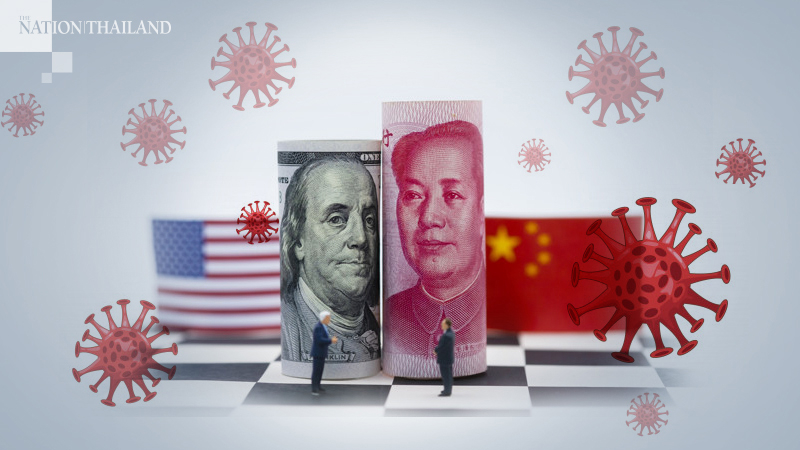
That may not come soon enough for businesses already hurting under Trump’s trade war, which spurred billions of dollars in tit-for-tat tariffs from the United States and China alike. In mid-January, Trump signed a partial deal that he claimed would reset an off-balance economic relationship.

But that agreement left a slew of unresolved trade issues still on the table. And many American companies saw their tariff burdens unchanged.

Even before coronavirus, experts were skeptical that both countries could follow through on their “phase one” commitments. Now with the world scrambling to counter a public health and economic nightmare, attention has shifted far away from “phase two,” experts say, leaving businesses in extended limbo.

“It’s really hard to see how they would have the bandwidth,” said economist Mary Lovely of Syracuse University and the Peterson Institute for International Economics.

On future talks with China, “ultimately the question is, does the president have the political incentive to push this before the election?” Lovely added. “And I think the answer to that is pretty clearly ‘no.'”

Multiple administration officials said this month that talks about a second China agreement have all but evaporated. Rhetoric about China from Trump and other White House officials has also hardened, complicating the prospects of a future agreement and eliciting a backlash from Beijing.

Initially, Trump lavished praise on China’s response to the outbreak. In early February, Trump said Chinese President Xi Jinping’s response to the virus was “strong, sharp, and powerfully focused” and predicted it would lead to a “very successful” result.

But as it became clear over the following weeks that China failed to contain the spread, Trump and other officials started blaming the outbreak on failures of Chinese leadership, particularly that of China’s government to accurately report how many people were infected. That issue has also raised questions about the trustworthiness of China’s commitments under the “phase one” agreement.

The Office of the United States Trade Representative did not respond to requests for comment. The White House last week referred to Trump’s Oval Office address Wednesday night. During that speech, Trump announced sharp travel restrictions to the United States from Europe for 30 days, setting off massive confusion over whether the ban applied to trade and cargo.

“Because of the economic policies that we have put into place over the last three years, we have the greatest economy anywhere in the world, by far,” Trump said during his address.

That relief hasn’t reached Tiffany Zarfas Williams, owner of the Luggage Shop of Lubbock in Texas, who got no help from the trade deal. Williams said many luggage manufacturers are trying to source products out of Vietnam and India because of the trade war. But Williams worries that the quality of the products will slip. Raising prices to balance out the cost of the tariffs seems completely off the table now.

Sales at her shop are already down 50 percent compared to last year. Williams joked that if she sold cleaning products or hand sanitizer, she’d be turning away customers.

This time of year, shoppers would normally be packing bags for spring break. Williams wonders who will be buying luggage anytime soon.

Her company used to have five employees. One recently left, and Williams said she isn’t going to fill that empty slot. She was looking forward to replacing her shop’s computer system. Now that’s on hold.

“How can things change so quickly?” Williams said. “It definitely is a double whammy when you put this on top of the tariffs.”

Deena Ghazarian launched her small business as the trade war took hold. Ghazarian is the founder and CEO of Austere, a technology accessories company.

In the spring of 2019, as Austere was ramping up production and preparing for its first shipments, the company got slammed with tariffs on HDMI chords, surge protectors, fiber-optic cables and cleaning products for screens. Because Ghazarian had already promised retailers certain prices, Austere had to absorb the cost of the 25 percent levy.

Last fall, Ghazarian met with her Chinese manufacturers to figure out how to manage costs in the long term, and she planned for a more affordable arrangement that would kick in after Lunar New Year – right when coronavirus gripped China’s economy.

Even with the supply chain backlogs, Ghazarian thinks she has enough inventory to get through mid-May at the very latest. She’s hopeful people will keep buying cleaning and protection products, plus other accessories for working from home.

But beyond that, she’s terrified about making payroll for her 15 employees.

“I think we’ll be great for the first quarter,” Ghazarian said. “I am scared to death for the second quarter.”

Joe Shamie’s company, Delta Children, manufacturers baby and kids furniture. His products are still weighed down by a 25 percent levy, and he hasn’t been able to get the government to grant him exclusions.

Shamie said he’s been able to keep high levels of inventory, and many of his customers can still buy online if they don’t want to venture to a store. But developing new products, and making sure cribs and bassinets are safe, requires physically testing products and meeting with overseas manufacturers in person.

Shamie isn’t predicting any layoffs. But he is ramping up Delta Children’s software systems, laptops and IT department in case he has to send employees home.

“With coronavirus, that means even more that individuals that can’t afford [the tariffs] need relief,” Shamie said.

Alex Camara is also wondering how he could send his machinists and plant workers home. Camara is the chief executive of AudioControl, a Seattle-based company that makes audio tools for cars and homes. The company builds its products in the Pacific Northwest, but certain components come from China. Those goods are still pinned under a 30 percent tariff.

AudioControl has absorbed most of that cost, and Camara said he can’t raise prices and risk losing out to companies that manufacture abroad. Camara worries about supply chain delays that could last months.

The economic ripples from coronavirus morph every day. But the tariffs have persistently been his company’s largest burden, Camara said – and will be for the foreseeable future.

“I think people forget about it,” Camara said. “It feels, for some people, like yesterday’s news.”

GSB picks pension fund chief Withai for president #ศาสตร์เกษตรดินปุ๋ย

#ศาสตร์เกษตรดินปุ๋ย : ขอบคุณแหล่งข้อมูล : หนังสือพิมพ์ The Nation

https://www.nationthailand.com/business/30384266?utm_source=category&utm_medium=internal_referral

GSB picks pension fund chief Withai for president

Mar 17. 2020
Withai Ratanakorn

Withai Ratanakorn
By The Nation

The Government Savings Bank board picked Withai Ratanakorn as the candidate for GSB president, board chairman Patchara Anuntasilpa said today (March17).

The appointment must be approved by the Bank of Thailand and Finance Minister Uttama Savanayana.

Withai will replace Chatchai Payuhanaveechai, whose term will come to an end on June 14. Withai is currently secretary-general of the Government Pension Fund, the largest pension fund.

If Withai receives final approval, he will serve as GSB president for a four-year term.

BGRIM acquires 70-per cent of Ang Thong Power for Bt2.5 bn #ศาสตร์เกษตรดินปุ๋ย

#ศาสตร์เกษตรดินปุ๋ย : ขอบคุณแหล่งข้อมูล : หนังสือพิมพ์ The Nation

https://www.nationthailand.com/business/30384259?utm_source=category&utm_medium=internal_referral

BGRIM acquires 70-per cent of Ang Thong Power for Bt2.5 bn

Mar 17. 2020
BGRIM CEO Preeyanart Soontornwata

BGRIM CEO Preeyanart Soontornwata
By The Nation

B Grimm Power Plc (BGRIM) has sealed a Bt2.52 billion deal for a 70 per cent stake in Ang Thong Power Co (ATP), a small power producer.

The acquisition, made through wholly-owned B Grimm Power (Chon Buri) 2 Co, consolidated BGRIM’s outstanding portfolio to 3,019 MW and raising the total number of power plants in its network to 47.

CEO Preeyanart Soontornwata said the share purchase of ATP, which operates a 123-MW co-generation facility in Chaiyaphum sub-district, Chaiyo district of Ang Thong province, is in line with the company’s on-going business expansion both at home and abroad.

The ATP interest acquired by BGRIM was held by Redman Pacific Holding Pte Ltd which is not a connected juristic person of the company.

ATP has had an accord to sell 90 MW of its power production to the Electricity Generating Authority of Thailand (Egat) for 25 years.

Preeyanart noted that there are also several projects under development and construction which will raise the company’s total installed generating capacity to at least 3,547 MW in the near future.

BGRIM targets to boost its combined generating capacity to 5,000 MW in 2022 as per the power sale commitment stipulated for the period.

Regarding impact from the global economic conditions and Covid-19 pandemic, she insisted that BGRIM’s income was only slightly affected, thanks to the “take-or-pay” nature of BGRIM’s power sales to Egat .

Furthermore, a part of its revenue comes from renewable energy power plants which are supported by the governments in countries which it operates.

She also pointed out that 25 per cent of its total revenue comes from electricity and steam sales to industrial customers whose energy demand has not shown any sign of sagging.

BGRIM’s power sales to industrial customers in the first two months of this year rose 0.8 per cent from the same period last year due to increased demand from packaging, air conditioning and other industrial segments.

BGRIM has a line-up of industrial clients with a total power purchase commitment of 31 MW with delivery to start in the second and third quarter of this year.

There is still a significant demand for reliable power supplies from BGRIM’s power plants situated near them.

These industries include data centres, petrochemical industries and the manufacturers of alternative energy equipment

There are more than 1,500 industrial operators in industrial estates, where BGRIM power projects are located, but only 130 of them are being served by BGRIM, underscoring the fact that they could become new clients of the company in the future, she concluded.

Wall Street pros panic over coronavirus while mom and pop buy #ศาสตร์เกษตรดินปุ๋ย

#ศาสตร์เกษตรดินปุ๋ย : ขอบคุณแหล่งข้อมูล : หนังสือพิมพ์ The Nation

https://www.nationthailand.com/business/30384288?utm_source=category&utm_medium=internal_referral

Wall Street pros panic over coronavirus while mom and pop buy

Mar 18. 2020
By Syndication Washington Post, Bloomberg Opinion · Barry Ritholtz · OPINION, BUSINESS, US-GLOBAL-MARKETS

If you’re one of those people – a pundit, investor or active manager – who’s been bracing for passive investing and exchange-traded funds to blow up the stock market, well, there’s some bad news for you.

But first, let’s recall some warnings about passive investing:

– Index funds are Marxist or communist

– Or socialist

– Passive investing is “devouring capitalism”

– It has reached a “mania”

– The passive boom is creating “frightening” risk for markets

– Passive investing is “lobotomized investing”

– Indexing represents a danger to the economy

– Your love of index funds is terrible for our economy

– They are a bubble waiting to burst

– Passive investing poses a systemic risk

But a funny thing happened on the way to this dangerous, systemic, Marxist bubble:

Nothing.

If ever there was a situation where the critics have told us passive was destined to fail, this should be it: the fastest bear market on record. A market externality caused by the coronavirus pandemic has sent volatility to swing wildly as markets have fallen the most since the financial crisis of 2008-’09. For investors younger than 40, this month probably saw the worst day of their investing lives. The Dow Jones Industrial Average now is about 30% lower than its record high set a little more than four weeks ago.

If ever there was an opportunity for active investing to shine, this is it.

But that’s not what we have seen. The panic is emanating from the great minds on Wall Street, not the plodders on Main Street. Perhaps the most intriguing indicator of this is found in the vehicles that professionals use versus those preferred by individual investors.

Consider the three largest S&P 500 Index funds in the world: State Street’s SPDR S&P 500 ETF Trust or Spyder (SPY), Blackrock’s iShares Core S&P 500 ETF (IVV) and Vanguard’s S&P 500 ETF (VOO). State Street’s Spyder is arguably the choice of professionals; it was the first major index ETF and the most liquid. BlackRock and Vanguard’s offerings are preferred by registered investment advisers and individual investors. Note these all hold the exact same thing; they are simply in different ETF wrappers.

As of last week, when the sell-off began to accelerate, BlackRock and Vanguard customers were net buyers every single day. By the end of the week, State Street’s customers turned into sellers. (We should get updated data on last week from all three fund managers later this week.)

In other words, as the sell-off progressed, Wall Street pros panicked and sold while moms and pops stayed calm and bought. Some of this is attributable to different timelines between investors and traders, or between short-term and long-term. But one can’t help but think that some of this is explained by psychology: The professionals are the ones whose bonuses and perhaps even their jobs are on the line. Retail investors looked to take advantage of a price drop.

But we can guess how this will develop, based on the latest data from Vanguard Group. According to the firm’s most recent measures of money flows, every single day of February and the first week of March all saw a net gain for equities. (Data for the week of March 9 was not available when I wrote this.)

This is very similar to what former Vanguard chairman and chief executive officer William McNabb observed during the financial crisis in 2008-’09: The pros sold and the amateurs bought.

Retail investors are the dumb money? I don’t think so.

Most investment assets today are still managed actively. However, as we noted in 2017, the active part of the money-management industry is still being downsized – or more correctly, right-sized. The active management world still has not yet come to grips with the sea change that followed the financial crisis.

Passive indexing and ETFs have provided a counterweight to the active traders who seem to be panic selling. Remember that the next time someone warns you of the dangers of passive investing.

– – –

This column does not necessarily reflect the opinion of Bloomberg LP and its owners.

Ritholtz is a Bloomberg Opinion columnist. He is chairman and chief investment officer of Ritholtz Wealth Management, and was previously chief market strategist at Maxim Group. He is the author of “Bailout Nation.”

Prioritising PDPA compliance activities as May approaches #ศาสตร์เกษตรดินปุ๋ย

#ศาสตร์เกษตรดินปุ๋ย : ขอบคุณแหล่งข้อมูล : หนังสือพิมพ์ The Nation

https://www.nationthailand.com/business/30384276?utm_source=category&utm_medium=internal_referral

Prioritising PDPA compliance activities as May approaches

Mar 17. 2020
Alexander Cespedes

Alexander Cespedes
By Alexander Cespedes
Special to The Nation

Organisations need to comply by 27 May 2020 with the Personal Data Protection Act B.E. 2562 (PDPA). Non-compliance may result in administrative fines, criminal penalties and punitive damages. However, the PDPA should be seen as a business enabler. The objective is to mitigate risks and increase trust while we transition into a data driven society.

The question is: can we still make it in time to comply by May? First of all, compliance is not a one-off exercise, it is about building a capability and achieving continuous improvement. The PDPA wants you to be in control of your personal data and increase your level of assurance. Therefore, if by May you have at least identified the main risks, introduced a couple of measures and come up with a proper implementation plan, you have a road to follow.

In the following sections we focus on two main actions to take towards May: “Prioritize your risks” and “achieve quick wins”.

Prioritise based on risks

The very first step is to understand what personal data you process, why, how and where. Towards this end, work closely with your client facing teams and internal functions. Be sure to distinguish between structured and unstructured data. Often unstructured data is harder to manage and control.

The cornerstone of any PDPA compliance project is the records of processing activities in support of Section 39. Make sure the records represent the combined understanding of your business, IT and legal people. It is important to identify for which processing activities you process (sensitive) personal data, for which purpose and the lawful basis.

Next step is to visualise the records into high level data flows which should be used to support any discussions with management or the regulator. In parallel, you should make a list of systems and applications supporting processing activities and identify transfers to third countries. By the way, understanding the data collection points will enable you to know where a privacy notices should be added.

Then, identify for each processing activity the risks for non-compliance to your organisation and the risks to rights and freedoms of data subjects. Perform a threshold assessment based on well accepted criteria used in the EU such as whether the activity may result in profiling or monitoring, whether it is easy to merge data sets, whether you are processing on a large scale, etc. This will allow you to distinguish between high, medium or low risk processing activities.

For the high risk activities, perform a Data Protection Impact Assessment (DPIA). When doing so, analyze which data protection principles maybe be impacted. We recommend to also take into consideration the rights of the data subject. The key questions are “how bad would it be if something happens?” and “how likely is this to happen?”

Now you can determine whether the level of risk is acceptable for your organization. However, consider that some risks to the rights and freedoms of data subjects should not be accepted. In this context, determine which controls could mitigate which risk. Controls may modify the likelihood, the impact, or both. There are four typical types of controls to be considered: preventive, detective, repressive and corrective.

Achieve quick wins

There may not be enough time to mitigate all risks by May. Nevertheless, you should initiate some quick wins and focus on short term pragmatic actions: Remove unused data, determine lawful basis of your processing activities, update your contract templates and draft key policies and notices.

Removing personal data you don’t need equals to removing the risk that something may happen to it. Just imagine how many years of activities have accumulated personal data across your systems. However, remember that the PDPA is not absolute and data retention requirements from other legal obligations may apply.

Managing consent is resource intensive and relying on legitimate basis in some cases is a black box. Try to rely as much as possible on legal obligation and performance of a contract to have a clear-cut answer to “can we process this personal data?”

Sooner or later you will need to review all your contracts with third parties. But this is a project on its own and may take months. At the very least you should identify all types of contracts you have and update the templates so that it includes the necessary legal language. When doing so be sure to have a placeholder to cover the instruction given from controller to processor and consider having a clause allowing you to audit the processor when relying on its services as a controller.

Lastly, draft your privacy policy in a way that is easy to digest, create the supporting procedures for example to handle data subject requests or report personal data breaches. Also make sure clear notices are created and available at the relevant personal data collection points. Data subjects have the right to know what personal data you collect, what it will be used for, etc.

Conclusion

Don’t try to do everything by May. Be smart, and focus on the real risks while creating some success stories to gain credibility from your teams. After May you can continue your efforts to increase your level of assurance, operationalize your practices and monitor compliance.

Alexander Cespedes is Director, Risk Advisory, Deloitte Thailand

Fitch revises outlook on Thailand to ‘Stable’ ; affirmed at ‘BBB+’ #ศาสตร์เกษตรดินปุ๋ย

#ศาสตร์เกษตรดินปุ๋ย : ขอบคุณแหล่งข้อมูล : หนังสือพิมพ์ The Nation

https://www.nationthailand.com/business/30384347?utm_source=category&utm_medium=internal_referral

Fitch revises outlook on Thailand to ‘Stable’ ; affirmed at ‘BBB+’

Mar 18. 2020
By THE NATION

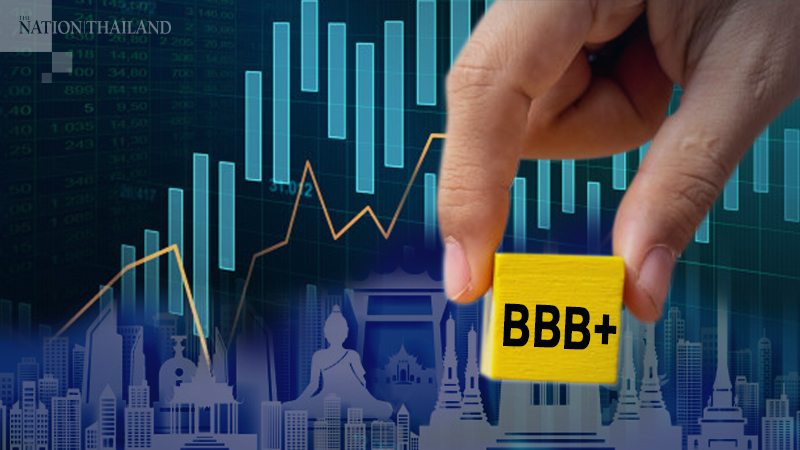
Fitch Ratings has revised its Outlook on Thailand’s Long-Term Foreign-Currency Issuer Default Rating (IDR) to Stable from Positive and has affirmed the rating at ‘BBB+’, according to its statement relaesed on Tuesday (March 17).

Key rating drivers

The outlook revision reflects the evolving impact of the global Covid-19 outbreak on Thailand’s economy through its tourism sector as well as lingering uncertainty in Thailand’s political environment following the country’s transition to civilian rule.

The ‘BBB+’ rating reflects Thailand’s sound external and public finances, which serve as cushions against economic and financial shocks. These strengths are balanced by weaker structural features relative to peers, including lower World Bank governance scores and, to a lesser extent, lower income per capita.

Fitch forecasts that Thailand’s economic growth will weaken to 1 per cent in 2020, from 2.4 per cent in 2019, on account of the Covid-19 pandemic.

This would mark a second consecutive year of slowing growth, and the lowest pace of expansion since 2014. A combination of factors led to the economic slowdown last year to 2.4 per cent, from 4.2 per cent in 2018, including weaker external demand amid US-China trade tensions, a sharp appreciation of the baht, delayed approval of the budget for the fiscal year ending-September 2020 (FY20), and drought conditions in the agricultural sector.

The growth outlook for 2020 is subject to considerable downside risk due to the uncertainty surrounding the duration of the virus shock. Thailand’s tourism sector is especially vulnerable.

The sector and related business account for around 20 per cent of GDP, according to the Bank of Thailand (BOT).

Preliminary figures indicate that tourist arrivals for the month of February declined by almost 44 per cent year-on-year. Fitch baseline assumes the global outbreak is gradually contained, setting the stage for a gradual recovery of tourism inflow.

In the meantime, there are other factors supporting growth. In particular, the long-awaited approval of the FY20 budget will help to boost infrastructure investment in the remainder of 2020; the budget was delayed by over four months due to the lengthy formation of the new government coalition and legal issues about the validity of some parliamentary votes.

The government has also adopted various relief measures to support tourism and other sectors, such as extending the income-tax return deadline from March to June 2020 and tax deductions.

More recently, the government approved an estimated Bt400 billion (2.4 per cent of GDP) stimulus package, which includes targeted soft loans for small and medium enterprises (SMEs) to alleviate the impact of Covid-19 on the slowing economy.

Additional stimulus measures, such as tax benefits, debt payment extensions and financial assistance, may be adopted to maintain the debt-service ability of households and small private businesses if downward pressure on the economy persists in the next couple of quarters.

The rating agency expects momentum to regain traction in 2021, with growth projected at 3.8 per cent as external and domestic demand gradually recover in line with regional trends.

Continued public expenditure and implementation of the government’s infrastructure programme under the 20-year national strategy and the Eastern Economic Corridor should support modest economic growth in the coming years, which Fitch estimates at 3.5 per cent over the medium term. Thailand will nevertheless continue to face structural challenges from an ageing population and human capital constraints.

The Bank of Thailand (BOT) cut its benchmark policy rate by 25 basis points to a historical low of 1 per cent at its last policy meeting on 5 February, adding to two rate cuts of a cumulative 50 basis points since August.

We expect one more rate cut in 2020 to bolster the economy in the near term. Headline consumer inflation increased to 0.7 per cent year-on-year in February 2020, well below the BOT’s 1-3 per cent target band. We expect inflationary pressure to remain muted for the remainder of 2020, Fitch said.

Fitch expects Thailand’s record of sound fiscal management to remain intact, supported by the enactment of the Fiscal Responsibility Act in April 2018.

It forecast a wider general government deficit (Government Finance Statistics basis) of 1.3 per cent of GDP in FY20, from 0.8 per cent in FY19, due to the reduced government revenue and the government’s stimulus measures.

Fiscal measures from the recent stimulus package are unlikely to significantly widen the FY20 budget deficit, and we project the government to have fiscal space to counter a prolonged economic downturn.

Fitch expects the general government debt-to-GDP ratio to gradually increase to 43.3 per cent by FY24, from 35.9 per cent in FY19, as the government utilises its fiscal space to boost infrastructure investment. Thereafter, we project the debt ratio to revert to a downward trend.

Fitch forecasts Thailand’s external finances to remain robust relative to peers, a core strength of the country’s credit profile. We forecast the current account surplus to remain high at 5.8 per cent of GDP in 2020. Official reserves covered an average of 8.2 months of current external payments in 2018-2019; we forecast coverage of 8.7 months and a net external creditor position at around 44 per cent of GDP in 2020, both well above the ‘BBB’ and ‘A’ median peer levels.

Thailand’s political environment remains divisive, exacerbated by the ruling coalition’s thin parliamentary majority and vocal opposition.

However, the coalition’s majority increased somewhat after nine members of parliament from the Future Forward Party joined a coalition party supporting the government. As such, the coalition government will likely be less constrained in parliament, reducing risks around its ability to implement its policy agenda and ensures policy continuity.

Nevertheless, a degree of lingering political uncertainty remains. In late February 2020 Thailand’s Constitutional Court dissolved the Future Forward Party – a main opposition party that received the third-highest share of seats in the legislature – over claims of illegal donations to political parties. These actions have led to limited discontent at university campuses.

Fitch believes financial-sector risks will be contained amid the economic downturn. Thailand’s household debt-to-GDP ratio at the end of 3Q/19 was 79.1 per cent (seasonally adjusted), which remains high compared with peers, and households’ ability to service debts may worsen as economic conditions deteriorate.

However, Thai banks are well-capitalised, with high excess provisions and sound liquidity, providing a buffer against potential shocks, particularly for low-income households.

Related story:

Weaker outlooks for Thai banks and corporates: Fitch

Weaker outlooks for Thai banks and corporates: Fitch #ศาสตร์เกษตรดินปุ๋ย

#ศาสตร์เกษตรดินปุ๋ย : ขอบคุณแหล่งข้อมูล : หนังสือพิมพ์ The Nation

https://www.nationthailand.com/business/30384346?utm_source=category&utm_medium=internal_referral

Weaker outlooks for Thai banks and corporates: Fitch

Mar 18. 2020
By THE NATION

Asset quality and earnings of Thai banks will be significantly weaker in 2020 while Thai corporates face challenging credit conditions as the country’s economy will be one of the hardest hit by the coronavirus pandemic in the APAC region, Fitch Ratings analysts told Fitch Ratings (Thailand) Limited’s webinar today (March 18) .

Thailand’s economy has a high reliance on tourism and exports, said Jeremy Zook, Associate Director, Sovereign Ratings at Fitch Ratings.

Fitch has just revised the sovereign rating Outlook to Stable from Positive in view of the rapidly evolving impact of the pandemic on the Thai economy and lingering political uncertainty.

It forecast growth to slow to 1.0 per cent in 2020, mainly due to slowing tourism, but a weaker global economy and the drought.

There are considerable downside risks to this forecast as more stringent quarantine measures are being imposed on travellers and a rising number of domestic Covid-19 cases could dampen consumption.

Despite the challenging near-term growth outlook, in Fitch’s view, Thailand’s strong external and public finances serve as a cushion against the current economic and financial shock, consistent with the ‘BBB+’ sovereign rating.

Fitch’s Director of Corporate Ratings, Obboon Thirachit, cautioned issuers and investors that credit conditions for Thai corporates will be challenging in 2020 as downside risks increase across portfolios and as some business-specific pressures weigh in.

Even before the coronavirus, Thai corporates had already been affected by slow economic growth and subdued earnings. Further economic downturn stemming from the pandemic could delay earnings recovery, putting additional pressure on the credit profiles of the issuers with high leverage.

Fitch expects further negative rating actions to continue for the rest of 2020 because of the higher proportion of corporates with Negative Outlooks and increasing downside risk, although the majority of Thai corporates should remain on Stable Outlook in light of their resilience and rating headroom.

In 2020, among corporate sectors, the oil and gas and petrochemical sectors are likely to be adversely affected by the combination of demand shock from the coronavirus and the low oil price from oil supply shock.

Still, some of the issuers have mitigating strategies, resources or rating headroom that could place them at less immediate risk.

For the building material sector, the financial profiles of major cement producers are already stretched following large M&A and high investment over the past few years. Slow demand recovery and oversupply situation could further delay the pace of deleveraging. Telecoms also face high capex need ahead of the 5G investment cycle. Ongoing price competition and weak data monetisation will continue to put pressure on revenue and earnings growth.

Weaker economic conditions are affecting the banking sector, said Parson Singha, Senior Director of Financial Institutions at Fitch Ratings Thailand.

The magnitude of the impact depends on the downturn’s severity and duration, but we expect banks’ asset quality and earnings to be significantly weaker in 2020 compared with prior years. SMEs make up around one-third of bank lending and are particularly vulnerable to economic shocks.

Furthermore, bank earnings, even before the outbreak, had already been under pressure due to low interest rates and slowing fee income growth. The business outlook is weak, although the banking sector has sound buffers that protect against downturns – for example, as of end-2019, the common equity Tier 1 ratio was 16 per cent and the loan loss reserve coverage was 145 per cent . Domestic liquidity also remains relatively strong.

Related story:

Fitch revises outlook on Thailand to ‘Stable’ ; affirmed at ‘BBB+’