Chao Phraya commuters to enjoy comfort of AC boats from May #ศาสตร์เกษตรดินปุ๋ย

#ศาสตร์เกษตรดินปุ๋ย : ขอบคุณแหล่งข้อมูล : หนังสือพิมพ์ The Nation

https://www.nationthailand.com/business/30384188?utm_source=category&utm_medium=internal_referral

Chao Phraya commuters to enjoy comfort of AC boats from May

Mar 16. 2020
By THE NATION

Chao Phraya Express Boat Co on Monday (March 16) announced the launch of four new air-conditioned Riva Express boats.

They will be the first air-conditioned boats plying the river.

The new service will help commuter to link with major trainline BTS, the company said. BTS commuters can use its Rabbit Card to pay and access Chao Phraya Riva Express at stopover piers.

The boat company is one of the subsidiaries of Supatra Group, operator of passenger boats on the Chao Phraya in Bangkok for a 100 years.

The launch is aimed at providing better transportation facilities and more convenience for people in Bangkok.

Atirat Ratanasate, deputy minister of transport, who presided over the opening ceremony on Monday, said the Ministry of Transport had pledged to develop water transportation infrastructure as part of ministry’s five-year strategy between 2017 and 2021.

The plan is aimed to extend water transport facilities and make it environmentally friendly as well as link all transport modes to become a seamless loop. The launch of the new air-conditioned boats will help strengthen strategy “from boat to train”, which will increase mass transport efficiency.

Supapan Pichaironarongsongkram, chairperson of Chao Phraya Express Boat Co, said the Supatra Group, founded by Khunying Supatra Singholaka, is celebrating its 100th anniversary.

The four new boats called Catamaran come with a large twin body designed by the world famous designer firm Schwetz Design in Australia and assembled in Thailand.

Each boat is light weight thanks to its aluminium body, 23.9-metres long and seven metre wide. It can accommodate up to 200 passengers.

Using two diesel engines with total power of 350 horsepower, the design comes with new technology that will produce lower waves, reduce wobble and be less noisy. With these technologies, the boat can demonstrate the same speed as a BTS train with international safety standards.

Each boat also features GPS (Global Positioning System), LED screen, and broadcasting system.

The air-conditioned Riva Express boat will commence operations from May 18. A ride will cost Bt50 for the entire route. During the introduction period, the company will offer a special deal of only Bt30 per person for the entire route. Service hours will be Monday to Friday.

The morning service hours will be 6.20am to 8.30am for the Nonthaburi–Sathon route. The boat will be departing from piers every 20 minutes and will stop at 8 piers.

From 9.45am to 4.15pm, the boats will be mainly operate on the Sathon-Bang Po route that connects with trains. The seven stations on this route are: Sathon (BTS Taksin station), IconSiam, Ratchawong, Rachnee (MRT Saman Chai station), Prannok, Thewes and Bang Po (MRT Bang Po station.

In the evening, the boat will serve from 5.30pm to 7.30pm on the Sathon- Nonthaburi route, and stop at 8 piers.

Due to the current coronavirus pandemic, the company is experiencing some negative impact as the number of tourists has declined. Therefore, major targeted markets are local people such as school and university student and general employees, as they still need to travel to school or to work by boat.

To comply with the government’s guidance on the Covid-19 epidemic, all four boats have been cleaned up and are well sanitised. A hand gel is also provided on the boats.

TrueMove H pays first instalment for 2600MHz licences #ศาสตร์เกษตรดินปุ๋ย

#ศาสตร์เกษตรดินปุ๋ย : ขอบคุณแหล่งข้อมูล : หนังสือพิมพ์ The Nation

https://www.nationthailand.com/business/30384186?utm_source=category&utm_medium=internal_referral

TrueMove H pays first instalment for 2600MHz licences

Mar 16. 2020
By THE NATION

TrueMove H Universal Communication (TUC), a subsidiary of True Corp, today paid the first instalment worth more than Bt1.91 billion for nine 2600MHz licences to the National Broadcasting and Telecommunications Commission and picked up the licences.

Payment for the 2600MHz licences upfront is divided into seven instalments.

The watchdog held an auction for three spectrum bands – 700MHz, 2600MHz and 2.6GHz licences – on February 16 in which five bidders participated. They were Advanced Wireless Network (AWN) of Advanced Info Service, dtac TriNet of Total Access Communication, TUC, CAT Telecom, and TOT.

TUC offered Bt17.873 billion to win nine 2600MHz licences and Bt3.577 billion to win eight 26GHz licences.

AWN offered more than Bt17.15 billion to win one 700MHz licence, over Bt19.56 billion to win 10 licences for the 2600MHz spectrum and Bt5.345 billion to win 12 licences for 26GHz.

CAT proposed Bt34.306 billion to clinch two 700MHz licences.

TOT offered Bt1.795 billion to grab four 26GHz licences.

Dtac Trinet offered more than Bt910 million to win two 26GHz licences.

KPMG in Thailand brings in experts to strengthen Customs, supply chain service #ศาสตร์เกษตรดินปุ๋ย

#ศาสตร์เกษตรดินปุ๋ย : ขอบคุณแหล่งข้อมูล : หนังสือพิมพ์ The Nation

https://www.nationthailand.com/biz-moves/30384164?utm_source=category&utm_medium=internal_referral

KPMG in Thailand brings in experts to strengthen Customs, supply chain service

Mar 16. 2020
(L-R) Charoen Phosamritlert, Malika Bhumivarn, Benjamas Kullakattimas

(L-R) Charoen Phosamritlert, Malika Bhumivarn, Benjamas Kullakattimas
By THE NATION

KPMG in Thailand is continuing its expansion by hiring a team of professionals from a Bangkok-based consulting firm, Bolliger & Company Consulting Limited.

The addition, to be effective as of Monday (March 16), will significantly strengthen KPMG’s current Customs and supply chain services capabilities, the company said

“KPMG in Thailand’s move on the country’s Customs scene is aimed at further enhancing how it can help businesses with the ever-increasing complexity of Customs requirements and international trade regulations while meeting the highest standards of compliance. I am delighted to welcome our new partner, Malika Bhumivarn, and her team. Their wealth of experience will further strengthen KPMG in Thailand’s Customs capabilities,” said Charoen Phosamritlert, chief executive officer, KPMG in Thailand, Myanmar and Laos.

“The synergies of our combined strengths as well as the resources of our global network will allow us to meet the unique needs of our clients,” said Benjamas Kullakattimas, partner, head of tax and legal, KPMG in Thailand.

“I am excited to be part of KPMG’s rapidly expanding service offerings. I believe my Customs and supply chain expertise, when teamed with KPMG’s network and resources, will be of strategic assistance to clients,” said Malika Bhumivarn, tax partner, KPMG in Thailand.

KPMG in Thailand, with more than 1,900 professionals offering audit, legal, tax, and advisory services, is a member firm of the KPMG network of independent firms affiliated with KPMG International Cooperative, a Swiss entity.

Exim Thailand cuts lending interest rate to help customers amid virus crisis #ศาสตร์เกษตรดินปุ๋ย

#ศาสตร์เกษตรดินปุ๋ย : ขอบคุณแหล่งข้อมูล : หนังสือพิมพ์ The Nation

https://www.nationthailand.com/business/30384250?utm_source=category&utm_medium=internal_referral

Exim Thailand cuts lending interest rate to help customers amid virus crisis

Mar 17. 2020
Bank president Pisit Serewiwattana

Bank president Pisit Serewiwattana
By THE NATION

The Export-Import Bank of Thailand (Exim Thailand) has cut its lending interest rate, comprising the minimum overdraft rate, minimum loan rate (MLR) and minimum retail rate (MRR), from 5.985 per cent per annum to 5.75 per cent, the lowest in the banking industry today, effective from March 19.

Bank president Pisit Serewiwattana said the move is aimed at supporting and enabling the bank’s customers and entrepreneurs to continue international trade and investment with lower operating costs amid the current global and Thai economic uncertainty sparked by the Covid-19 outbreak.

In addition, Exim Thailand has in place a debt suspension scheme for exporters.

Under the scheme, the bank is allowing suspension of principal repayment and interest for six months for customers with long-term and short-term credit lines and affected by the Covid-19 spread, and expanded insurance protection for exporters after shipment or those in the process of shipment to China.

The bank is also offering credit programmes with special interest rates lower than the MLR and MRR for entrepreneurs of all sectors, such as the Exim Investment and Production Efficiency Enhancement Credit Scheme, which provides long-term loans to encourage business people to purchase and improve their machinery and equipment or factories in order to lift production efficiency, with a special interest rate of 2 per cent per annum in the first two years.

Oil prices drop amid Covid-19 concerns #ศาสตร์เกษตรดินปุ๋ย

#ศาสตร์เกษตรดินปุ๋ย : ขอบคุณแหล่งข้อมูล : หนังสือพิมพ์ The Nation

https://www.nationthailand.com/business/30384238?utm_source=category&utm_medium=internal_referral

Oil prices drop amid Covid-19 concerns

Mar 17. 2020
By The Nation

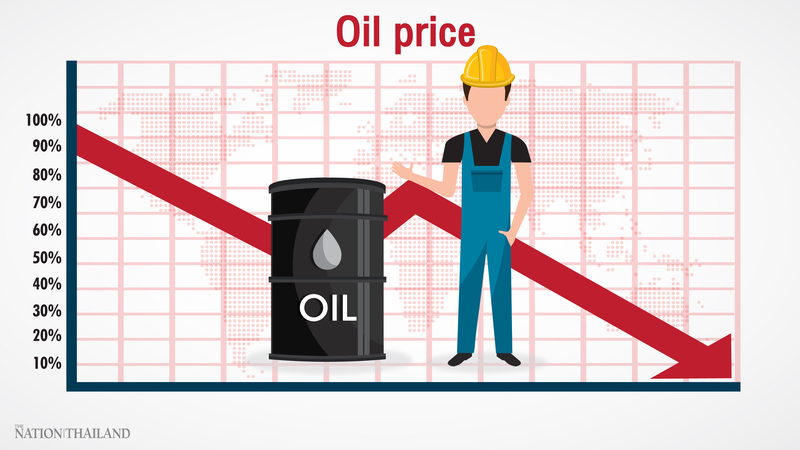
Oil prices dropped due to market uncertainty amid the spreading Covid-19 virus, an energy situation analyst at Thai Oil said today (March 17).

Prices dropped as markets were concerned that a global economic recession would emerge again in this dire Covid-19 situation as a number of governments worldwide decided to lock down cities to tackle the virus.

IHS Markit said the amount of oil in the market might turn to oversupply of between 800,000-1.3 million barrels per day – greater than the oversupply situation at the end of 2015 – after Saudi Arabia and Russia announced they would increase production capacity in April this year, leading to a price war.

US President Donald Trump’s action suspending travel from Europe and the United Kingdom, coupled with the US Federal Reserve’s move to cut the short term interest rate by 1 percentage point to almost zero and go in for quantitative easing bond purchases with a limit of US$700 billion (Bt22.2 trillion), would pressure oil demand.

Benzene fuel prices dropped lower than those of Dubai crude oil as benzene demand tended to come under pressure after many governments decided to lock down cities.

Diesel fuel prices dropped lower than those of Dubai crude as the market was concerned that diesel demand would drop due to an economic recession cause by the coronavirus spread.

Gold price sees steep fall despite major US rate cut #ศาสตร์เกษตรดินปุ๋ย

#ศาสตร์เกษตรดินปุ๋ย : ขอบคุณแหล่งข้อมูล : หนังสือพิมพ์ The Nation

https://www.nationthailand.com/business/30384236?utm_source=category&utm_medium=internal_referral

Gold price sees steep fall despite major US rate cut

Mar 17. 2020
By The Nation

The price of gold dropped by Bt500 per baht weight on Tuesday morning (March 17), the Gold Traders Association reported.

Buying price of a bar of gold was Bt22,600 per baht weight and selling price was Bt22,700. Buying price of gold ornaments was Bt22,194.24 per baht weight and selling price Bt23,200.

The prices dropped from Monday’s close (March 16) when a gold bar cost Bt23,100 to buy and Bt23,200 to sell, while gold ornaments cost Bt22,679.36 to buy and Bt23,700 to sell.

Gold contracts in COMEX futures to be delivered in April dropped by US$30.20 to $1,486.50 per ounce on Monday’s close after rising the previous day.

Gold price dropped over 5 per cent in the previous week, the biggest drop when compared week on week in three years due to uncertainty following the impact on the global economy caused by Covid-19 outbreak.

The price of gold also did not gain positive sentiment from the weakening dollar after the US Federal Reserve made an interest rate cut of one percentage point to 0.00-0.25 per cent and used the “quantitative easing” bond purchase programme with a limit of US$700 to relieve the impact of Covid-19 outbreak on the US economy.

SET bounces back after falling 7 per cent on Monday #ศาสตร์เกษตรดินปุ๋ย

#ศาสตร์เกษตรดินปุ๋ย : ขอบคุณแหล่งข้อมูล : หนังสือพิมพ์ The Nation

https://www.nationthailand.com/business/30384229?utm_source=category&utm_medium=internal_referral

SET bounces back after falling 7 per cent on Monday

Mar 17. 2020
By The Nation

The Stock Exchange of Thailand (SET) Index on Tuesday (March 17) morning rose by 8.80 points, or 0.84 per cent, to 1,054.88.

A stock analyst at Krungsri Securities expected the SET Index would slide between 1,020 and 1,030 before rebounding, as investors are still under pressure following the economic recession due to the worldwide spread of Covid-19.

“Currently, around 170,000 people have been infected by this virus, while around 6,500 people have died,” the stock analyst said.

The analyst explained that although the US Federal Reserve had made an emergency interest rate cut by one percentage point to almost zero and used “quantitative easing” bond purchase programme with a limit of US$700 to tackle the Covid-19 outbreak, investors still sold their stocks to reduce risks in the stock market, resulting in negative sentiment for investment.

“However, we expect the index to rebound from various measures issued by countries worldwide to support the economy, which would be positive sentiment for the index,” the stock analyst said.

The analyst recommended three groups of stocks for investors:

● Defensive stocks that pay high dividends, such as ADVANC, INTUCH and TTW.

● Retail stocks, which gained buying power after the government returned the electricity metre insurance for a total of Bt30 billion, such as CPALL, HMPRO, and BJC.

● Financial stocks, which gained benefit from interest rate cut trends, such as MTC, SAWAD, and KTC.

Bitcoin’s slide extends for fourth day as risk aversion surges #ศาสตร์เกษตรดินปุ๋ย

#ศาสตร์เกษตรดินปุ๋ย : ขอบคุณแหล่งข้อมูล : หนังสือพิมพ์ The Nation

https://www.nationthailand.com/business/30384220?utm_source=category&utm_medium=internal_referral

Bitcoin’s slide extends for fourth day as risk aversion surges

Mar 17. 2020
By Syndication Washington Post, Bloomberg · Vildana Hajric · BUSINESS, TECHNOLOGY 

Bitcoin tumbled as much as 18% with risk aversion the dominant theme across asset classes amid the coronavirus outbreak.

The largest cryptocurrency was down 7.5% to $5,026 as of 12:45 p.m. in New York, after dropping as low as $4,442, according to Bloomberg data. It has slumped about 55% from the $10,500 high for the year set Feb. 13. Other alt coins tumbled, with Ether down about 12% and Litecoin off more than 8% on Monday.

Monday’s rout extends the recent crypto sell-off into a second week and comes as stock gauges globally plunge into bear markets amid the coronavirus crisis. The outbreak has spread to more than 3,000 Americans and has ground activity in Europe to a virtual standstill.

“Despite the massive sell-off, bitcoin’s price has still failed to attract investors. This is because the price is likely to drop even more,” said Naeem Aslam, chief market analyst at AvaTrade. “For me, anything below $3,500 is very attractive. It is likely that the price may drop to that level.”

Technical gauges suggests that bitcoin appears primed to retest the recent lows of $4,000. If that level is broken, a retest of late 2018 and early 2019 lows is seen possible.

One technical indicator, the GTI Global Strength Indicator, is already in oversold territory, having fallen below the 30 threshold that signifies that condition. However, it is still above the level marked during 2018 and 2019 lows, indicating there may be more pain to come.

U.S. stocks plunge 12% with virus upending economy #ศาสตร์เกษตรดินปุ๋ย

#ศาสตร์เกษตรดินปุ๋ย : ขอบคุณแหล่งข้อมูล : หนังสือพิมพ์ The Nation

https://www.nationthailand.com/business/30384215?utm_source=category&utm_medium=internal_referral

U.S. stocks plunge 12% with virus upending economy

Mar 17. 2020
By Syndication Washington Post, Bloomberg · Jeremy Herron, Vildana Hajric · BUSINESS, US-GLOBAL-MARKETS

The stomach-turning ride on global financial markets took a dramatic turn Monday with U.S. stocks plunging the most since 1987 after President Donald Trump warned the economic disruption from the virus could last into summer.

The S&P 500 sank 12%, extending losses as Trump said the economy could fall into a recession. Equities opened sharply lower after central bank stimulus around the world failed to mollify investors worried about the damage the coronavirus is inflicting on economies.

The negative superlatives for American stocks are piling up. The S&P wiped out its gain in 2019 and is now down almost 30% from its all-time high. The Dow Jones industrial average lost almost 13%, falling 3,000 points to close at two-year low. The Russell 2000 had its worst day on record, losing more than 14%.

“This is different. The thing that is scarier about it is you’ve never been in a scenario where you shut down the entire economy,” said Steve Chiavarone, a portfolio manager with Federated Investors. “You get a sense in your stomach that we don’t know how to price this and that markets could fall more.”

While the Fed cut rates toward zero and stepped up bond buying, investors continued to clamor for a massive spending package to offset the pain from closures of schools, restaurants, cinemas and sporting events. Companies around the world have scaled back activity to accommodate government demands to limit social interaction.

Here are some of Monday’s key moves across major assets:

– All 11 groups in the S&P 500 fell, with eight of them down at least 10%.

– The Dow Jones Industrial Average’s tumble from its record reached 30%.

– Brent crude dipped below $30 a barrel for the first time since 2016.

– Treasury yields retreated across the curve with moves most pronounced on the short end.

– Shares tumbled in Asia and Europe, where the continent is now reporting more new virus cases each day than China did at its peak as more countries lock down.

– The yen surged, the Swiss franc rallied and the dollar fluctuated.

– Gold failed again to capitalize on the rush to havens and reversed an earlier gain to tumble.

– Bonds declined across most of Europe, where a measure of market stress hit levels not seen since the 2011-2012 euro crisis.

The Fed and other central banks have dramatically stepped up efforts to stabilize capital markets and liquidity, yet the moves have so far failed to boost sentiment or improve the rapidly deteriorating global economic outlook. An International Monetary Fund pledge to mobilize its $1 trillion lending capacity also had little impact in markets.

The problem is, bad news keeps stacking up. The New York Fed’s regional gauge of factory activity plunged. Ryanair Holdings said Monday it will ground most of its European aircraft while a consultant said the pandemic will bankrupt most airlines worldwide before June unless governments and the industry step in. Nike Inc. and Apple Inc. announced mass store closings.

“In normal circumstances, a large policy response like this would put a floor under risk assets and support a recovery,” Jason Daw, a strategist at Societe Generale in Singapore, wrote in a note. “However, the size of the growth shock is becoming exponential and markets are rightfully questioning what else monetary policy can do and discounting its effectiveness in mitigating coronavirus-induced downside risks.”

The yen rebounded from Friday’s plunge after the Fed and five counterparts said they would deploy foreign-exchange swap lines. Australian equities fell almost 10%, the most since 1992, even after the Reserve Bank of Australia said it stood ready to buy bonds for the first time – an announcement that sent yields tumbling. New Zealand’s currency slumped after an emergency rate cut by the country’s central bank.

Meanwhile, China reported Monday that output and retail sales tumbled in the past two months.

These are the main moves in markets:

Stocks

– The S&P 500 fell 11.98% as of 4 p.m. in New York.

– The Dow Jones industrial average plunged 12.93%

– The Stoxx Europe 600 Index lost 4.9%, paring a drop that reached 10%.

– The MSCI Emerging Market Index declined 6.3%.

– The MSCI Asia Pacific Index decreased 3.7%.

Currencies

– The Bloomberg Dollar Spot Index rose 0.2%.

– The euro gained 0.5% to $1.1162.

– The Japanese yen strengthened 1.8% to 105.94 per dollar.

Bonds

– The yield on two-year Treasurys sank 14 basis points to 0.35%.

– The yield on 10-year Treasurys declined 22 basis points to 0.73%.

– The yield on 30-year Treasurys declined 22 basis points to 1.31%.

– Germany’s 10-year yield climbed seven basis points to -0.47%.

Commodities

– West Texas Intermediate crude fell 9.2% to $29.05 a barrel.

– Gold weakened 4.3% to $1,463.30 an ounce.

– Iron ore sank 2.5% to $86.10 per metric ton.

Dow plunges 3,000 points as Fed intervention does little to subdue Wall Street’s distress #ศาสตร์เกษตรดินปุ๋ย

#ศาสตร์เกษตรดินปุ๋ย : ขอบคุณแหล่งข้อมูล : หนังสือพิมพ์ The Nation

https://www.nationthailand.com/business/30384202?utm_source=category&utm_medium=internal_referral

Dow plunges 3,000 points as Fed intervention does little to subdue Wall Street’s distress

Mar 17. 2020
By The Washington Post · David J. Lynch · BUSINESS, US-GLOBAL-MARKETS

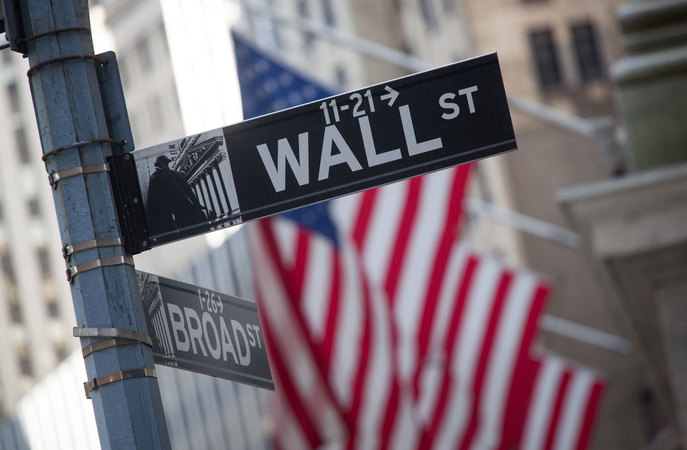
Fears that policymakers have not done enough to avert a protracted economic downturn deepened a sense of national crisis on Monday and sent stocks to their worst single-day losses since the Black Monday crash of 1987.

The selloff accelerated, with the Dow Jones industrial average plunging 2,997 points, after President Donald Trump warned that disruption from the coronavirus pandemic could last through August and issued new public health guidance, saying Americans should limit gatherings to no more than 10 people. He also defended his handling of the crisis, which has been marred by a slow rollout of testing, saying his administration has done “a fantastic job.”

From Washington to Wall Street, the coronavirus is reshaping American life. The Supreme Court said it would postpone scheduled oral arguments through April, citing its stance during the 1918 Spanish flu epidemic and outbreaks of yellow fever in 1973 and 1798.

On Wall Street, investors fled stocks, despite the Federal Reserve’s move Sunday night to cut interest rates to near zero and to begin purchasing $700 billion worth of Treasury bonds and mortgage-backed securities in a bid to calm jittery markets.

The Dow Jones industrial average closed down nearly 13% in late trading before closing at 20,188, down more than 2,997 for the day. That marked the largest one-day point decline in U.S. history, though in percentage terms Monday’s 13% loss was topped by the nearly 23% decline on October 19, 1987. All three of the Dow’s 2,000-point single-day losses have occurred in the past week.

The broader Standard & Poor’s 500 index and the technology-rich Nasdaq suffered similar setbacks.

Trading was halted almost as soon as it began after stocks fell 7%, breaching a “circuit-breaker” designed to discourage panic selling. It was the third such halt in the past six sessions.

Investors welcomed the Fed’s actions but said the central bank needed to do more and do it quickly. Clogged markets for commercial paper – a form of short-term corporate borrowing – threaten to spill over into the banking system and cause a run on money market funds, according to analysts at Bank of America.

The Fed, joined by fellow banking regulators from the Federal Deposit Insurance Corporation and the Office of the Comptroller of the Currency, reiterated its call Sunday for banks to borrow from its “discount window.” The Fed has slashed the rate it charges banks for those short-term loans to 0.25%, in hopes of spurring lending to cash-strapped businesses.

Frustration is building with Washington’s failure to find a way to quickly assemble an economic rescue. “The fiscal response should already have been done,” said David Kotok, chairman of Cumberland Advisors. “And the fiscal response, in my estimation, will eventually have to be more than $1 trillion or the country is going to have a raft of bankruptcies.”

With many governors ordering bars and restaurants to close, and numerous other businesses telling their employees to work from home, the $21 trillion U.S. economy is shuddering to a halt. At the White House, the president, who was slow to acknowledge the severity of the health scare, said the U.S. “may be” tipping into recession.

“It’s going to be incredibly negative for the economy. It looks almost inevitable that we’re heading for a recession,” said Jim O’Sullivan, chief U.S. macro strategist for TD Securities.

In consumer-oriented sectors, the economy is rapidly losing momentum. Already, movie theater box office revenue have plummeted by 60% to 70% compared with the same period last year, according to economist Jesse Edgerton of JPMorgan Chase. And restaurant reservations nationally have fallen by half.

As companies retrench, layoffs will accelerate, driving up the historically low unemployment rate, according to O’Sullivan. Kevin Hassett, Trump’s former top economic adviser, told Politico that job losses could reach “a million or so” by early April. For the economy, it is now a race between Washington’s ability to plug the hole with government spending and the accumulating effects of the virus-inspired shutdown.

Monday’s market plunge – continuing a month-long rout that has slashed more than 30% from the Dow’s value – reflected a growing realization that the economy faces a deep and protracted downturn, almost certainly its worst since the global financial recession.

Ian Shepherdson, chief economist of Pantheon Macroeconomics, said output could shrink in the second quarter at an annual rate of 10%, more than during the worst of the 2008-09 global financial crisis.

Disorderly trading in the market for U.S. Treasurys remained an issue. Normally, the $17 trillion market for those government securities operates without drama. But the volume of trading has roughly tripled since that financial crisis, outstripping the ability of market middlemen to keep pace. In recent days, sellers have vastly outnumbered buyers, leading to wide gaps between the prices demanded and offered.

“All of this selling of Treasuries is telling me that there’s a lot of financial institutions that are under stress and need to raise cash to meet [margin] calls and that’s not going away,” said Steven Blitz, chief U.S. economist for TS Lombard.

If investors were looking for a reason to sell on Monday, they found one in a key gauge of manufacturing activity, which posted its lowest reading since March 2009.

The Federal Reserve Bank of New York’s Empire State survey’s “general business conditions” index plunged 34.4 points, its largest-ever monthly decline, to -21.5 in February. By a margin of more than 2 to 1, manufacturers said business over the past month had gotten worse.

Several major retailers, including Apple, Patagonia and Abercrombie & Fitch, have or will shut their doors through March to contain the coronavirus. Though store closures could be crucial to slowing the speed of the disease, they also sap consumer spending, which powers 70% of the U.S. economy.

Everlane, Nike, Glossier, REI, Urban Outfitters and Lululemon have also announced closures, but say they will keep their online operations running. Some are warning of possible shipment delays while companies in the hardest-hit industries already have begun layoffs.

As the economic toll starts to come into focus, some major industries are petitioning the White House for help. Representatives of the airline industry on Monday circulated a request for a $50 billion bailout that would include loans, grants and tax relief.

“We’re going to back the airlines 100%. It’s not their fault,” the president said.

The sudden crisis took many companies by surprise. In a survey late last month of 90 large multinational companies, British Standards Institute found that almost half (46%) lacked contingency plans that were specifically designed to deal with a possible disease outbreak.

Of those surveyed, 71% of supply chain managers working in industries such as consumer products, pharmaceuticals and aerospace said the coronavirus had disrupted their global supply chains.

After weeks of minimizing the seriousness of the epidemic, the president struck a somber tone Monday. He said he had cautioned his 13-year-old son Barron Trump about the disease, which he labeled “an invisible enemy that a month ago nobody ever thought about.”

“This is a bad one. This is a very bad one,” the president said. “It’s so contagious. It’s just so contagious – record-setting type contagion.”

Trump began his day with a video conference on the coronavirus with leaders of the Group of Seven nations. The group later issued a statement pledging “to doing whatever is necessary to ensure a strong global response through closer cooperation and enhanced coordination of our efforts.” But officials offered no details of any coordinated stimulus efforts.

On Capitol Hill, lawmakers are moving toward approval of legislation that would provide free coronavirus testing, extend paid sick leave to many workers and fund unemployment insurance payments.

National Economic Director Larry Kudlow told reporters Monday that those measures and actions already supported by the president would funnel $400 billion into the economy. A payroll tax cut backed by the president would double that figure, he said. Although such a measure has received lukewarm interest on the hill.

“Our government is prepared to do whatever it takes. Whatever it takes; that’s what we’re doing,” the president said at the White House.

With the central bank having cut interest rates and launched additional measures to smooth markets, the president and lawmakers now must act, said Megan Greene, an economist at Harvard University’s Kennedy School of Government.

“For the most part, it’s not up to the Fed anymore,” she said. “They’ve told the government they can borrow at 0%. There’s no excuse for the government not to step up. And until we get some kind of fiscal response, or actual policy, I think the markets are going to continue to fall.”

Even as the president announced new steps to curb the outbreak, the number of cases and fatalities continued to climb. In the U.S., 4,287 people have been infected as of 5 p.m. Monday with 74 deaths.

Trump predicted that once the pandemic wanes, the stock market will regain lost ground and “you’re going to have a stock market like nobody has ever seen before.”