วันที่ 08 มี.ค. 2563 ข่าวเศรษฐกิจ-ธุรกิจ #ศาสตร์เกษตรดินปุ๋ย

#ศาสตร์เกษตรดินปุ๋ย : ขอบคุณแหล่งข้อมูล : หนังสือพิมพ์โพสต์ทูเดย์

https://www.posttoday.com/economy

เดินหน้า 1 อุตสาหกรรมจังหวัด 1 สตาร์ทอัพ ยกระดับเศรษฐกิจ  นำร่อง 12 จังหวัดทั่วไทย
เดินหน้า 1 อุตสาหกรรมจังหวัด 1 สตาร์ทอัพ ยกระดับเศรษฐกิจ นำร่อง 12 จังหวัดทั่วไทย

เร่งปั้นอุตสาหกรรมไทย ชูแคมเปญ“ผลิตได้ ขายได้ อยู่ด้วยกันได้” ส่งเสริมการขับเคลื่อนเศรษฐกิจด้วยกลุ่ม สตาร์ทอัพ เตรียมดัน 1 อุตสาหกรรมจังหวัด 1 สตาร์ทอัพ

วันที่ 08 มี.ค. 2563 เวลา 16:19 น. | ข่าวเศรษฐกิจ-ธุรกิจ
บอร์ดต่างด้าวเคาะลงทุนไทยเดือนก.พ. อีก 20 ราย ขนเงินลงทุน 718 ล้าน พ่วงไอเดียรีไซเคิล -ทีวีในเน็ต

ภาพรวม 2 เดือนแรกของปี’63 คนต่างด้าวได้รับใบอนุญาตลงทุนในไทย 45 ราย ใช้เงิน 1,630 ล้านบาท พุ่งพรวด 313 % หลังมีธุรกิจใช้เงินสูง ทั้งระบบโทรทัศน์ผ่านเครือข่ายอินเตอร์เน็ต ขุดลอกบำรุงรักษาร่องน้ำและแอ่งจอดเรือที่บริเวณท่าเทียบเรือ

วันที่ 08 มี.ค. 2563 เวลา 14:36 น. | ข่าวเศรษฐกิจ-ธุรกิจ
ชู GI “มะยงชิดนครนายก - มะปรางหวานนครนายก” ปลุกเศรษฐกิจท้องถิ่น
ชู GI “มะยงชิดนครนายก – มะปรางหวานนครนายก” ปลุกเศรษฐกิจท้องถิ่น

จังหวัดนครนายก ร่วมกับหน่วยงานท้องถิ่น จัดงาน “มะยงชิด มะปรางหวาน ของดีนครนายก ประจำปี 2563” ขนสินค้า GI จังหวัดร่วมงานคึกคัก หวังโกยรายได้แตะหลัก 100 ล้าน

วันที่ 08 มี.ค. 2563 เวลา 09:00 น. | ข่าวเศรษฐกิจ-ธุรกิจ

วันที่ 07 มี.ค. 2563 ข่าวเศรษฐกิจ-ธุรกิจ #ศาสตร์เกษตรดินปุ๋ย

#ศาสตร์เกษตรดินปุ๋ย : ขอบคุณแหล่งข้อมูล : หนังสือพิมพ์โพสต์ทูเดย์

https://www.posttoday.com/economy

"ฮอลล์" ใช้พรีเซนเตอร์คู่ทำตลาดครั้งแรกในรอบ 30ปี เจาะตลาดลูกอมหมื่นล้านบาท
“ฮอลล์” ใช้พรีเซนเตอร์คู่ทำตลาดครั้งแรกในรอบ 30ปี เจาะตลาดลูกอมหมื่นล้านบาท

เมื่อโลกเปลี่ยนไป อะไรก็ไม่เหมือนเดิม “ลูกอมฮอลล์” ก็เช่นกันที่แม้ว่าจะอยู่ในตลาดมานานกว่า 54 ปี ก็ยังขอปรับลุคสินค้าใหม่ในการทำตลาดด้วย “ฮอลล์ เอ็กซ์เอส มินท์” พร้อมชูกลยุทธ์ “ซูเปอร์สตาร์ ไอดอล” มาเจาะกลุุ่มเจเนอเรชั่น Z

วันที่ 07 มี.ค. 2563 เวลา 17:30 น. | ข่าวเศรษฐกิจ-ธุรกิจ
โออาร์ ผนึกพันธมิตร สร้างโอกาสธุรกิจชุมชนโตยั่งยืน

จัด “โครงการไทยเด็ด แมชชิ่ง เดย์ ครั้งที่ 5” จ.กาญจนบุรี ครั้งแรกในภาคตะวันตก หวังส่งเสริมเศรษฐกิจฐานรากเติบโตยั่งยืน

วันที่ 07 มี.ค. 2563 เวลา 14:46 น. | ข่าวเศรษฐกิจ-ธุรกิจ
โรบินสัน โชว์ล้ำลดสัมผัสเงินสด และบัตรเครดิต กระตุ้นนักช้อป

โรบินสัน ค้าปลีกฝ่าวิกฤตโควิด-19 ชูกลยุทธ์ Contactless Payment ลดการสัมผัสเงินสด และบัตรเครดิต หนุนลูกค้าช้อปไร้เงินสดเพิ่ม พร้อมคุมเข้มมาตรการ 50 สาขา ทั่วประเทศ

วันที่ 07 มี.ค. 2563 เวลา 13:40 น. | ข่าวเศรษฐกิจ-ธุรกิจ
คาซ่า ลาแปง ปรับเกมธุรกิจกาแฟ เอาใจกลุ่มพนักงานออฟฟิศ

“คาซ่า ลาแปง” ผนึก “กลุ่มเจมาร์ท” เปิดตัวกาแฟเดลิเวอรี่ “Rabbit Walk”บริการส่งถึงที่ เอาใจกลุ่มพนักงานออฟฟิศ

วันที่ 07 มี.ค. 2563 เวลา 12:06 น. | ข่าวเศรษฐกิจ-ธุรกิจ
ศูนย์วิจัยกสิกรไทย มองธุรกิจค้าปลีกไทย ปี63 หดตัวลง 0-8-2.2%

ผลกระทบ COVID-19 บวกกับกำลังซื้อที่ซบเซา กระทบค้าปลีกไทย คาดปี’ 63 มูลค่าตลาดหดตัวร้อยละ 0.8 ถึง 2.2 แฟชั่น-เฟอร์นิเจอร์-เครื่องดื่มแอลกอฮอล์-ของฟุ่มเฟือย เตรียมจับจ่ายลดลง

วันที่ 07 มี.ค. 2563 เวลา 11:04 น. | ข่าวเศรษฐกิจ-ธุรกิจ
เศรษฐกิจทรุด ร้อนถึงวงการโคนม อ.ส.ค.ศึกษาธุรกิจนมบน "แพล็ตฟอร์ม" หวังโตยั่งยืน
เศรษฐกิจทรุด ร้อนถึงวงการโคนม อ.ส.ค.ศึกษาธุรกิจนมบน “แพล็ตฟอร์ม” หวังโตยั่งยืน

อ.ส.ค.รับมือภาวะวิกฤติเศรษฐกิจทรุด ผนึกม.เกษตรเร่งศึกษาธุรกิจนมบน“แพลตฟอร์ม” เดินหน้าวิจัยและพัฒนาผลิตภัณฑ์นมไทย-เดนมาร์ค สู่นวัตกรรมธุรกิจสมัยใหม่ ผลักดันอาชีพโคนมสู่ความยั่งยืน

วันที่ 07 มี.ค. 2563 เวลา 10:01 น. | ข่าวเศรษฐกิจ-ธุรกิจ
ฟอร์ดยกย่องหญิงเก่งผู้อยู่เบื้องหลังรถกระบะเรนเจอร์

ฟอร์ดร่วมฉลองวันสตรีสากลกับหญิงแกร่งผู้อยู่เบื้องหลังความสำเร็จของ ฟอร์ด เรนเจอร์

วันที่ 07 มี.ค. 2563 เวลา 09:17 น. | ข่าวเศรษฐกิจ-ธุรกิจ
ไทยสมายล์ติดกรองอากาศในเครื่องบินเพิ่มป้องกันโควิด-19

ไทยสมายล์ห่วงใยผู้โดยสาร ใช้ระบบกรองอากาศ HEPA Filter ที่มีประสิทธิภาพบนทุกเที่ยวบิน

วันที่ 07 มี.ค. 2563 เวลา 09:00 น. | ข่าวเศรษฐกิจ-ธุรกิจ

วันที่ 06 มี.ค. 2563 ข่าวเศรษฐกิจ-ธุรกิจ #ศาสตร์เกษตรดินปุ๋ย

#ศาสตร์เกษตรดินปุ๋ย : ขอบคุณแหล่งข้อมูล : หนังสือพิมพ์โพสต์ทูเดย์

https://www.posttoday.com/economy

คืบหน้าโครงการฯสัญญาร่วมทุนสนามบินอู่ตะเภา เตรียมเข้า ครม.เม.ย.นี้

บอร์ดอีอีซีรับทราบความคืบหน้าโครงการพัฒนาสนามบินอู่ตะเภาสัญญาร่วมลงทุนเข้า ครม. ได้เดือนเม.ย.นี้ พร้อมไฟเขียวแผนบริหารจัดการน้ำรับมือแล้งระยะสั้นในอีอีซีย้ำน้ำเพียงพอ

วันที่ 06 มี.ค. 2563 เวลา 19:10 น. | ข่าวเศรษฐกิจ-ธุรกิจ
ครม.เศรษฐกิจ เคาะมาตรการระยะสั้น 2 เดือน ฝ่าวิกฤตโควิด-19

ทั้งมาตรการการเงิน ภาษี แจกเงินผู้มีรายได้น้อย กลุ่มอาชีพอิสระ เกษตรกร เดือนละ 1,000 บาท 2 เดือน

วันที่ 06 มี.ค. 2563 เวลา 17:17 น. | ข่าวเศรษฐกิจ-ธุรกิจ
เดอะมอลล์ แจงลูกค้าสุ่มเสี่ยง "โควิด-19" ใช้บริการสาขาบางแค
เดอะมอลล์ แจงลูกค้าสุ่มเสี่ยง “โควิด-19” ใช้บริการสาขาบางแค

เข้มมาตรการเฝ้าระวังและการป้องกันเชิงรุกขั้นสูงสุด เพื่อความปลอดภัย พร้อมปิดทำการ 3วัน เริ่ม 6-8 มี.ค.ก่อนเปิดให้บริการตามปกติ

วันที่ 06 มี.ค. 2563 เวลา 15:50 น. | ข่าวเศรษฐกิจ-ธุรกิจ
เปิดเทคนิค"ปั้นแบรนด์และ Product อย่างไรให้ปัง!"
เปิดเทคนิค”ปั้นแบรนด์และ Product อย่างไรให้ปัง!”

เซเว่นฯร่วมกรมการค้าภายในสมาคมค้าปลีกฯ จัดสัมนาพิเศษธุรกิจค้าปลีก และ SME มีผู้สนใจเข้าฟังกว่า 200 คนไม่เสียค่าใช้จ่าย

วันที่ 06 มี.ค. 2563 เวลา 13:43 น. | SME
ทอท.ยกระดับมาตรการคุมโควิด-19 ใน 6 สนามบิน รับผีน้อยกลับไทย

บริษัท ท่าอากาศยานไทย เพิ่มมาตรการตรวจคัดกรองผู้โดยสารให้เข้มงวดมากขึ้นใน 6 สนามบิน รับเที่ยวบินจากประเทศกลุ่มเสี่ยงมาใช้บริการ

วันที่ 06 มี.ค. 2563 เวลา 11:22 น. | ข่าวเศรษฐกิจ-ธุรกิจ
"ชาบูชิ" เปิดตัวบริการ "ชาบูชิ เดลิเวอรี่" เอาใจสายกิน-คนรักสะดวก
“ชาบูชิ” เปิดตัวบริการ “ชาบูชิ เดลิเวอรี่” เอาใจสายกิน-คนรักสะดวก

โออิชิ ลุยพัฒนาแบรนด์ “ชาบูชิ” ให้บริการใหม่ “ชาบูชิ เดลิเวอรี่” พร้อมเสิร์ฟคนรักสบาย ถึงหน้าประตูบ้าน

วันที่ 06 มี.ค. 2563 เวลา 09:23 น. | ข่าวเศรษฐกิจ-ธุรกิจ

วันที่ 05 มี.ค. 2563 ข่าวเศรษฐกิจ-ธุรกิจ #ศาสตร์เกษตรดินปุ๋ย

#ศาสตร์เกษตรดินปุ๋ย : ขอบคุณแหล่งข้อมูล : หนังสือพิมพ์โพสต์ทูเดย์

https://www.posttoday.com/economy

‘ริสแลนด์’ รุกตลาดคอนโดฯลักซ์ชัวรีใจกลางเมือง ลุย 4 โครงกว่า ลงทุน 3 หมื่นล้าน

‘ริสแลนด์ ประเทศไทย’ ส่องตลาดคอนโดหรู ยังมีโอกาส แม้เศรษฐกิจชะลอ เหตุคนซื้ออยู่จริง เลิกเก็งกำไร ปี’63 ส่ง 4 โครงการเจาะลูกค้า

วันที่ 05 มี.ค. 2563 เวลา 20:33 น. | ข่าวเศรษฐกิจ-ธุรกิจ
เล็งลดราคาน้ำมัน-ก๊าซ-ค่าไฟฟ้า  อุ้มภาระค่าครองชีพประชาชนรับมือโควิด-19
เล็งลดราคาน้ำมัน-ก๊าซ-ค่าไฟฟ้า อุ้มภาระค่าครองชีพประชาชนรับมือโควิด-19

“สนธิรัตน์” ระดมหน่วยงานรัฐ-เอกชนด้านพลังงาน สั่งศึกษาแนวทางลดค่าน้ำมัน แก๊สหุงต้ม และค่าไฟฟ้าเพื่อลดค่าใช้จ่ายด้านพลังงานให้ประชาชน

วันที่ 05 มี.ค. 2563 เวลา 19:14 น. | ข่าวเศรษฐกิจ-ธุรกิจ
บีซีพีจี’ ทุ่ม 4.5 หมื่นล้าน ลุยลงทุนโรงไฟฟ้าซีแอลเอ็มวี -เอเชียแปซิฟิค

‘บีซีพีจี’ เปิดแผนลงทุน 5 ปีเติบโต 75% ปูพรมขยายโรงไฟฟ้าขนาดใหญ่ กลุ่มซีแอลเอ็มวี และเอเชียแปซิฟิค เพื่อให้ EBITDA โตอย่างต่อเนื่อง วางงบลงทุน ไม่ต่ำกว่า 4.5 หมื่นล้านบาท

วันที่ 05 มี.ค. 2563 เวลา 18:15 น. | ข่าวเศรษฐกิจ-ธุรกิจ
พาณิชย์สั่งคุมราคาขายหน้ากากอนามัยไม่เกินชิ้นละ 2.50 บาท

รมว.พาณิชย์ลงนามประกาศคุมราคาขายหน้ากากอนามัยผลิตในประเทศ ต้องไม่เกินชิ้นละ 2.50 บาท ขณะที่ “เจลแอลกอฮอล์ล้างมือ” ต้องขออนุญาตก่อนปรับราคา

วันที่ 05 มี.ค. 2563 เวลา 17:38 น. | ข่าวเศรษฐกิจ-ธุรกิจ
‘ซีพี’ ควัก 100 ล้านบาท สร้างโรงงานผลิตหน้ากากอนามัยแจกฟรี

“ธนินท์’ เร่งสร้างโรงงานผลิตหน้ากากอนามัยแจกฟรีให้บุคคลากรทางการแพทย์-ประชาชนทั่วไป ช่วยกรณีโควิด-19 หวังแก้ปัญหาขาดแคลน คาดสร้างเสร็ภายใน 5 สัปดาห์

วันที่ 05 มี.ค. 2563 เวลา 17:35 น. | ข่าวเศรษฐกิจ-ธุรกิจ
แจกหน้ากากผ้า 30 ล้านชิ้นให้ประชาชน รอรับไม่เกินปลายสัปดาห์หน้า

“สมคิด” นั่งหัวโต๊ะถกทุกภาคส่วน สั่งผลิตหน้ากากผ้า 30 ล้านชิ้นแจกประชาชนกรุงเทพฯ ปริมณฑล และเมืองใหญ่ ลดความต้องการหน้ากากอนามัยไม่กระทบบริการทางการแพทย์

วันที่ 05 มี.ค. 2563 เวลา 15:10 น. | ข่าวเศรษฐกิจ-ธุรกิจ
‘พาณิชย์’ผ่อนผันภาคธุรกิจ  เลื่อนประชุมผู้ถือหุ้นเลี่ยงโควิด-19
‘พาณิชย์’ผ่อนผันภาคธุรกิจ เลื่อนประชุมผู้ถือหุ้นเลี่ยงโควิด-19

กรมพัฒน์ฯ ออกระเบียบประชุมผู้ถือหุ้นภาคธุรกิจช่วงโรคโควิด-19 ระบาด เปิดทางขยายเวลาหากได้รับผลกระทบจัดประชุมไม่ได้หรือจัดประชุมล่าช้ากว่ากำหนดให้ทำหนังสือชี้แจงเหตุผลต่อนายทะเบียน เป็นรายกรณี

วันที่ 05 มี.ค. 2563 เวลา 14:30 น. | ข่าวเศรษฐกิจ-ธุรกิจ
'ไปรษณีย์ไทย' เข้มมาตรการรับมือโควิด-19 งดบริการปลายทางประเทศเสี่ยงแพร่ระบาดชั่วคราว
‘ไปรษณีย์ไทย’ เข้มมาตรการรับมือโควิด-19 งดบริการปลายทางประเทศเสี่ยงแพร่ระบาดชั่วคราว

รมว.ดีอีเอสกำชับ ‘ไปรษณีย์ไทย’ เส้นทางขนส่งต้องปลอดไวรัส สร้างความมั่นใจให้ประชาชน เบรคการให้บริการรับฝากสิ่งของชั่วคราวไปประเทศปลายทางเสี่ยงติดเชื้อ

วันที่ 05 มี.ค. 2563 เวลา 13:33 น. | ข่าวเศรษฐกิจ-ธุรกิจ
คนไทยหนีไวรัสโควิด-19 ลดจับจ่ายฉุดกำลังซื้อ กดเงินเฟ้อเดือนก.พ. ต่ำกว่าคาด

พาณิชย์ หวั่นเงินเฟ้อปีนี้อาจโตไม่ถึง 0.8% จับสัญญาณการใช้จ่ายในประเทศชะลอตัว ภาคธุรกิจรายได้ลดลง จากผลกระทบไวรัสโควิด-19

วันที่ 05 มี.ค. 2563 เวลา 11:49 น. | ข่าวเศรษฐกิจ-ธุรกิจ
เกษตรฯ เร่งเครื่องโลจิสติกส์ ปี63 จัดงบ 387 ล.บาท 19 โครงการ

วางแผนแม่บท 3 ปี (2563-2565) พัฒนาระบบโลจิสติกส์การเกษตรทั้งซัพพลายเชน

วันที่ 05 มี.ค. 2563 เวลา 09:36 น. | ข่าวเศรษฐกิจ-ธุรกิจ

In tobacco country, Trump’s tariffs hit hard for growers and communities #ศาสตร์เกษตรดินปุ๋ย

#ศาสตร์เกษตรดินปุ๋ย : ขอบคุณแหล่งข้อมูล : หนังสือพิมพ์ The Nation

https://www.nationthailand.com/business/30384114?utm_source=category&utm_medium=internal_referral

In tobacco country, Trump’s tariffs hit hard for growers and communities

Mar 15. 2020
A worker picks tobacco in a field on July 8, 2016, in Deep Run, N.C. Tobacco growers have lost about $250 million since 2018, when tariffs caused China, their largest customer, to stop buying. MUST CREDIT: Washington Post photo by Matt McClain

A worker picks tobacco in a field on July 8, 2016, in Deep Run, N.C. Tobacco growers have lost about $250 million since 2018, when tariffs caused China, their largest customer, to stop buying. MUST CREDIT: Washington Post photo by Matt McClain
By  Special to The Washington Post · Amanda Abrams · NATIONAL, BUSINESS, WORLD

WILSON, N.C. – A generation ago, the annual opening of the tobacco market was a big event in this eastern North Carolina city. Bales of sweet-smelling tobacco leaves lined the warehouses downtown. People crowded in – politicians looking to boost their credentials with the powerful agriculture community, local reporters covering the market, farmers and their families and, of course, merchants ready to make a sale.

Today, that activity is privatized, with transactions taking place in offices, buildings and factories away from the public eye. The shift obscures the crisis facing growers throughout the South, as well as the industry and those depending on it.
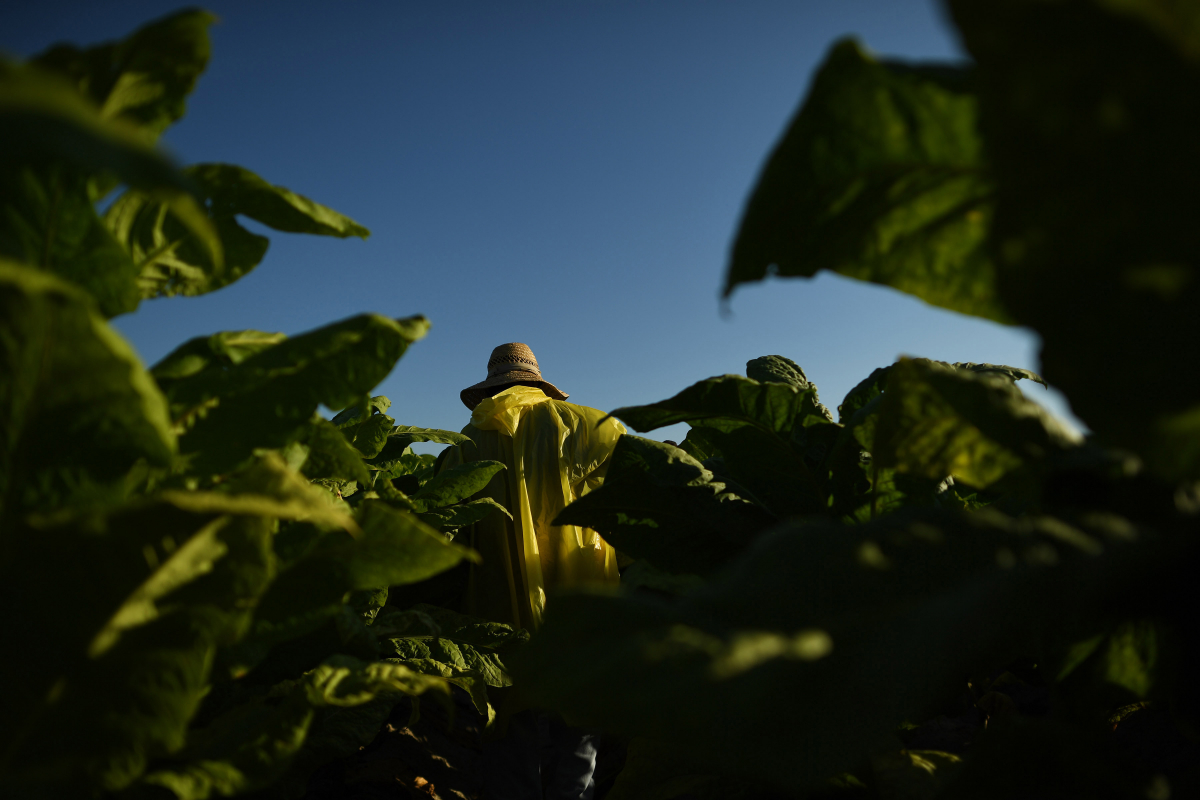
A laborer works in a tobacco field on land on July 28, 2016, in Albertson, N.C. Lowered demand for tobacco has far-reaching impacts on communities that revolve around farming it, including fewer hired laborers and layoffs from large employers. Tobacco farmers affected by President Trump's tariffs were not eligible for government subsidies like other crop farmers, and it is still unclear how the November presidential election will be affected in purple North Carolina, which Trump won by only three points. MUST CREDIT: Washington Post photo by Matt McClain

A laborer works in a tobacco field on land on July 28, 2016, in Albertson, N.C. Lowered demand for tobacco has far-reaching impacts on communities that revolve around farming it, including fewer hired laborers and layoffs from large employers. Tobacco farmers affected by President Trump’s tariffs were not eligible for government subsidies like other crop farmers, and it is still unclear how the November presidential election will be affected in purple North Carolina, which Trump won by only three points. MUST CREDIT: Washington Post photo by Matt McClain

“You don’t see it, but a lot of these people are hurting bad,” says former Democratic congressman Bob Etheridge, who led the state office of the U.S. Farm Service Agency from 2014 through 2017.

“Devastating is the word,” says Rick Smith, president of the Independent Leaf Tobacco Co., who has spent a half-century buying and selling tobacco around the world. “The agricultural community is struggling. They’re all struggling.”

The pain is especially acute in North Carolina, where 2,000 growers are suffering from the loss of their biggest customer: China. Thanks to the tariffs on Chinese imports that President Donald Trump imposed in 2018, tobacco sales to that country have ground to a halt. In this state alone, growers have lost roughly $250 million since then. But unlike farmers raising soybeans or vegetables, cows or pigs, they weren’t eligible for federal bailout payments intended to soften the tariffs’ blow.

And despite 2020 opening with a new trade agreement and the potential for greater farm exports to China, much remains in limbo as spring nears. Seeds need to be planted in greenhouses this month so they can be transplanted to the fields in April and then harvested in late summer.

The uncertainty is endangering individual livelihoods, not just of growers but of the workers who earn offseason dollars in the processing plants. It’s also threatening rural communities, which have long been buoyed by tobacco money, and exacerbating the divide between them and North Carolina’s booming urban areas.

While many growers are still stalwart Trump fans, some wonder if there will be repercussions at the polls in November.

Wilson County farmer David Hinnant is feeling the pain. “We did take a hard hit. It’s cut all of us back,” he admitted recently.

Hinnant’s family has been in the area since the late 1700s, growing tobacco through the generations. Nowadays, thanks to the past profits from tobacco, he and his son also plant sweet potatoes, corn, soybeans and peanuts on their 3,000-acre farm.

“Tobacco enabled us to do these things,” said Hinnant, 67, whose weathered face and hands bear testament to a lifetime of work outdoors. “We didn’t get rich, but we made a living.”

Over the past few years, those profits have shrunk tremendously because of the trade war. Hinnant and his son are trying to figure out alternatives, but nothing brings in the kind of money tobacco once did.

The sandy soils in the eastern part of the state nurture some of the best flue-cured tobacco in the world, and about half of all tobacco produced in the United States comes from North Carolina. The crop had stayed relatively lucrative compared to others, especially since China started buying U.S. tobacco around 2005. In 2017, much of the 300 million-plus pounds of tobacco sold abroad went to that country.

Trump’s tariffs hit the following year, at a point when farmers already had a crop in the ground. Some did get paid for their harvest, but the inventory meant for China remains in U.S. warehouses. Last year was a complete bust between the tariffs and Hurricane Dorian, which destroyed many plants just before the end of the season. Ultimately, no North Carolina farmers got contracts for sales to China. The resulting glut has depressed market prices.

Tobacco cultivation has dropped considerably; last year, North Carolina farmers harvested 117,000 acres, down from 177,000 a decade earlier. Most now grow other crops; still, some are barely hanging on. According to the American Farm Bureau Federation, 16 family farms in North Carolina filed for bankruptcy in 2019, up from 12 the previous year.

The economic troubles ripple outward; one of the region’s biggest private employers, Vidant Health, announced possible layoffs a month ago. Economists have estimated that every dollar earned from tobacco results in almost $4 in new spending – on farm equipment, fertilizer, labor and other purchases in the community.

“Wages that aren’t earned aren’t spent,” said Graham Boyd, executive director of the North Carolina Tobacco Growers Association. “Churches feel the effect – farmers can’t tithe as much. So does the booster club at school, automobile dealerships, service people. It’s significant.”

In Wilson, located about 40 miles from the capital of Raleigh, the impact has been somewhat cushioned. Both the city and its surrounding county, which bears the same name, have had more success than others in the region at attracting manufacturing firms such as a Bridgestone tire plant and a Merck biopharmaceutical facility. Those have brought in new opportunities and dollars in recent years.

Yet Wilson County’s median household income of $42,850 is still $10,000 less than that of the state. And the economy still depends on tobacco. All the big companies, including U.S. Tobacco Cooperative, British American Tobacco, Philip Morris and Pyxus, have a presence here. Some responded last year by consolidating their facilities; others simply didn’t hire seasonal workers.

It’s unclear what all this might mean for presidential politics come November. Trump won this deeply purple state by three points in 2016 and largely had the support of white farmers. But eastern North Carolina is home to a high percentage of African-Americans, many of whom vote Democratic. Wilson County, for one, went for Hillary Clinton in the last election.

Tobacco farmers don’t seem to blame Trump for their tariff-related troubles. The trade imbalance had to be addressed, many say; they just happened to be in the crosshairs. “I can’t say I was angry at the government. Some adjustments needed to be made,” Hinnant explained.

In fact, notes longtime political analyst Thomas Mills, founder and publisher of the website PoliticsNC, the tariffs issue could wind up boosting Trump’s support.

“At least he’s standing up for [farmers], in their minds,” Mills said. “These small towns in rural communities have been taking hit after hit after hit. To blame it on Trump now is, in their minds, wrong.”

Etheridge, the former Farm Service Agency leader, warns that such support is not a given – especially if the Democratic challenger takes their needs seriously.

“A lot of those farmers voted for the current administration because no one was speaking to them,” he said. “I think if someone comes out with a policy and follows through, I think they’ll listen.”

Though hopeful about the recent trade deal with China, tobacco growers here have little clarity so far about its actual details. Many still don’t have contracts with buyers outlining exactly how much tobacco they need to grow.

Hinnant has already seeded over half of his greenhouses despite the continuing uncertainty. He’s taking the long view. “As farmers, we’re optimists. We’re optimistic that 2021 sets us back on track.”

Luxury shoppers in China emerge from quarantine to buy again #ศาสตร์เกษตรดินปุ๋ย

#ศาสตร์เกษตรดินปุ๋ย : ขอบคุณแหล่งข้อมูล : หนังสือพิมพ์ The Nation

https://www.nationthailand.com/business/30384113?utm_source=category&utm_medium=internal_referral

Luxury shoppers in China emerge from quarantine to buy again

Mar 15. 2020
A pedestrian wearing a protective mask and rain coat stands in front of a shopping mall at night in Shanghai on Feb. 12, 2020. MUST CREDIT: Bloomberg photo by Qilai Shen.

A pedestrian wearing a protective mask and rain coat stands in front of a shopping mall at night in Shanghai on Feb. 12, 2020. MUST CREDIT: Bloomberg photo by Qilai Shen.
By Syndication Washington Post, Bloomberg · Robert Williams, Jinshan Hong · BUSINESS, WORLD, RETAIL, ASIA-PACIFIC 

Chinese shoppers are slowly returning to the glitzy malls and boutiques where they’ve been driving growth of the global luxury industry as coronavirus quarantine measures relax.

Store traffic in China is creeping back up after falling as much as 80% at the virus outbreak’s peak there earlier this winter, hammering sales of brands ranging from Burberry Group to Gucci. The recovery could accelerate in the coming weeks, fueled by so-called “revenge spending” sprees.

Amrita Banta, managing director at Agility Research, used the term — previously coined to describe pent-up Chinese consumer demand that was unleashed in the 1980s after the chaos and poverty of the Cultural Revolution — to describe buying by luxury clients whose pockets are flush with cash after weeks of canceled plans.

“China seems to have turned the corner and bigger cities are showing cautious optimism,” she said. “We see a slow but definite bounce back.”

Chinese shoppers made up more than one-third of the luxury industry’s sales and about two-thirds of its growth in recent years. When Beijing imposed lockdowns in late January to stem the spread of the coronavirus, sales ground to a halt just as the key Lunar New Year vacation period was getting started.

What had previously seemed like a disastrous first quarter for the industry is poised to turn into a poor first half, as luxury hubs like Italy ramp up their own quarantine measures and the virus spreads in major markets like the U.S.

Even as the virus spreads globally, there are signs that China’s own outbreak is coming under control. The country reported only two-dozen new cases of the disease on Wednesday, down from hundreds or thousands per day a few weeks ago. And luxury brands such as Hermes International are reopening shops.

“We see a slow improvement in the business in China,” Salvatore Ferragamo Chief Executive Officer Micaela Le Divelec Lemmi said Tuesday. “On top of the traffic, the mood of the Chinese customers will also be relevant. After a month and a half of closures and restrictions, there is a will to come back and have a real life.”

Andy Li, who works in financial technology, agrees. The 29-year-old has already gone to the Maoye mall, in the northern Shanxi province, three times since quarantine measures eased two weeks ago. The mall, which houses brands including Kering’s Gucci and Bottega Veneta, checks shoppers’ temperatures before allowing them to enter. Guests must also wear masks.

“I was trapped in my home for an entire month,” Li said. “Our residential compound was chained up, and we were not allowed to go anywhere. Now I feel somewhat free again.”

He tried shopping more online during the quarantine, but said the products he ordered got stuck in customs amid logistics delays.

Hermes says it has reopened all but two of its stores in mainland China, after closing 11 locations when quarantine measures were at their peak. Chow Tai Fook Jewellery Group, the world’s biggest jeweler by sales, said about 85% of its more than 3,600 Chinese stores resumed operations this week.

Flight cancellations and restrictions on sales of package tours have made it harder for Chinese tourists to travel internationally, which could accelerate a shift to buying more at home rather than on shopping trips abroad. That trend had already taken hold as lower import duties and taxes made local shopping more attractive.

It’s unlikely that revenge spending will make up for all of the lost sales. The outbreak is likely to reduce industry sales by as much as 40 billion euros ($45 billion) in 2020, according to the survey of 28 top executives undertaken by Boston Consulting Group and Sanford C. Bernstein. And not everyone will be racing back to the mall as quarantine measures relax.

“It all comes down to the confidence of the consumers,” said Jason Yu, managing director at Kantar Worldpanel Greater China. Many people who work in the service sector or run smaller companies saw their incomes damaged by the epidemic, he said, and might be more likely to weed out non-essential spending from budgets.

While the number of officially confirmed new cases in China has slowed sharply, there’s a risk that infections could rise again now that more people are resuming activities. Travelers could spark new outbreaks by bringing the virus back to China from abroad.

Despite the grim first quarter — with revenue seen falling between 25% and 33% worldwide — Ferragamo still expects sales growth in China this year, but only if the coronavirus’s impact continues to fade. With limited visibility, the Florence, Italy-based brand said it’s cutting production and suspending all investments “not considered fundamental.”

“Like all our competitors, we have to live on a 24-hour basis,” Le Divelec Lemmi said.

Bill Gates leaves Microsoft’s board, stepping farther away from the tech giant he founded #ศาสตร์เกษตรดินปุ๋ย

#ศาสตร์เกษตรดินปุ๋ย : ขอบคุณแหล่งข้อมูล : หนังสือพิมพ์ The Nation

https://www.nationthailand.com/business/30384074?utm_source=category&utm_medium=internal_referral

Bill Gates leaves Microsoft’s board, stepping farther away from the tech giant he founded

Mar 14. 2020
Bill Gates/ File photo by Syndication Washington Post

Bill Gates/ File photo by Syndication Washington Post
By The Washington Post · Jay Greene · NATIONAL, BUSINESS, TECHNOLOGY

SEATTLE – Bill Gates, who co-founded Microsoft and led the company as it became a technology juggernaut, is stepping down from the company’s board to spend more time on his philanthropic work.

Gates, who made the announcement Friday afternoon, said in a LinkedIn post he wants to “dedicate more time to philanthropic priorities including global health and development, education, and my increasing engagement in tackling climate change.” He declined to comment beyond the post, his spokeswoman Bridgitt Arnold said.

Gates founded Microsoft in 1975 with his high school friend Paul Allen, who passed away in October 2018. His competitive zeal helped create a company that dominates the personal computing industry. In the process, Gates amassed a fortune. He is currently the second wealthiest person in the world with $102 billion, behind only Amazon founder Jeff Bezos, according to the Bloomberg Billionaires Index.

(Bezos owns The Washington Post.)

Gates began moving away from Microsoft in 2000, when he gave up the chief executive post he long held to Steve Ballmer, to serve as chief software architect and chairman. In 2008, he stepped down as chief software architect and gave up his day-to-day duties at the company to spend the bulk of his work time at the Bill and Melinda Gates Foundation. He stepped down as Microsoft’s chairman in 2014.

Gates will continue to serve as Technology Advisor to Microsoft chief executive Satya Nadella and others at the company. Microsoft isn’t filling Gates’ seat on the board.

“With respect to Microsoft, stepping down from the board in no way means stepping away from the company,” Gates wrote.

In a statement, Nadella said he looks forward to continuing to work with Gates. Microsoft declined to make Nadella available.

Gates will also step away from his one other board position at Berkshire Hathaway, the company run by his longtime friend Warren Buffett.

“Warren and I were the best of friends long before I joined and will be long after,” Gates wrote.

As virus ravages travel market, a startup seeks survival advice #ศาสตร์เกษตรดินปุ๋ย

#ศาสตร์เกษตรดินปุ๋ย : ขอบคุณแหล่งข้อมูล : หนังสือพิมพ์ The Nation

https://www.nationthailand.com/business/30384055?utm_source=category&utm_medium=internal_referral

As virus ravages travel market, a startup seeks survival advice

Mar 14. 2020
By Syndication Washington Post, Bloomberg · Sarah Syed, Tom Giles · BUSINESS, US-GLOBAL-MARKETS

From his office inside a converted century-old Berlin power station, Johannes Reck watched the bookings at his travel company evaporate.

Having built GetYourGuide over a decade from his student dorm in Zurich into one on Europe’s most highly valued startups, Reck and his three co-founders were accustomed to challenges. But what was unfolding here, with the novel coronavirus spreading across the globe, was beyond anything the team had witnessed. Bookings were down by almost half, and Reck realized that he could do with some help.

“This is the most severe shock that I’ve seen in the last 10 years,” Reck said. “The irony of Europe is that we had a fantastic start to the year, consumer sentiment was high, and then it fell off a cliff a few days ago.”

Reck picked up the phone last week to get advice from an unlikely source: Kees Koolen and Arthur Kosten, the founders of Booking.com, one of his biggest rivals, but also a business that’s been battle-hardened by shocks like the 9/11 terrorist attacks and the 2008 financial crisis.

The duo gave some valuable tips, Reck, 35, said in an interview in the red-brick headquarters. Among their advice was to keep a close eye on the data, focus on core activities, but also not to retrench too aggressively because that makes rebuilding harder once the crisis eases.

Reck is one of a young generation of entrepreneurs who have enjoyed the fruits of a decade-long bull market unencumbered by severe external shocks. But the spreading coronavirus has become a watershed moment, particularly for consumer-facing industries like travel and hospitality, because of sweeping lockdowns and travel restrictions.

An airline trade group said last week that the industry will lose as much as $113 billion in sales because of the virus. On Monday, Booking.com withdrew its forecast, citing the worsening impact of the virus on travel.

That was before Italy went into a country-wide quarantine and U.S. President Donald Trump closed the borders to most Europeans for 30 days on non-Americans who have spent the prior two weeks in Europe.

It’s a tough test for a company founded by Reck in 2009 with three former classmates. In May, SoftBank Group Corp.’s Vision Fund led a $484 million investment, valuing the company at well over $1 billion, a person familiar with the investment said at the time. The company, with more than 500 employees, also counts Singapore’s state-owned investment firm Temasek and KKR & Co. among its investors.

GetYourGuide’s platform allows travelers to book tours and experiences online from operators on the ground in the destination city. Reck said because of his Asian investors, he and his team were made aware of the impact the virus would have before it hit Europe. So long as the company can maintain and improve the customer experience in the downturn, it will thrive when the market picks up again, the CEO said.

“We had roughly two months to prepare in Europe and had a plan in place for the virus hitting here,” Reck said. The response includes strengthening customer service and reducing costs like advertising and marketing spend, consulting fees, and slowing down on hiring. The company is also looking ahead to further growth.

“We’ve not been acquisitive at all but it’s something we’re reviewing as we speak,” said Reck. Before the virus hit, GetYourGuide had already looked to Asia for potential takeover targets, according to the CEO.

Italy as a travel destination is important to GetYourGuide, but as a global market player, Reck said, the company is spread out enough so that no single target market has a majority share. And Reck said he thrives in moments of crisis because they remind him of the early startup days.

“This is how we grew the business,” he said. “It feels like we’re a startup again, with our back to the wall and we really need to deliver.”

Reck said he’s optimistic that GetYourGuide will weather the storm given his company’s lower fixed costs and support from deep-pocketed backers.

At the same time, he’s not taking any chances. On March 11, GetYourGuide sent out a companywide memo to all its employees in Berlin: an order to work from home to avoid a spread of the virus.

Keeping your distance is good for public health but tough for small businesses #ศาสตร์เกษตรดินปุ๋ย

#ศาสตร์เกษตรดินปุ๋ย : ขอบคุณแหล่งข้อมูล : หนังสือพิมพ์ The Nation

https://www.nationthailand.com/business/30384048?utm_source=category&utm_medium=internal_referral

Keeping your distance is good for public health but tough for small businesses

Mar 14. 2020
File photo /Syndication Washington Post, Bloomberg

File photo /Syndication Washington Post, Bloomberg
By The Washington Post · Jeanne Whalen · BUSINESS 

Public health officials are urging Americans to help slow the spread of coronavirus through social distancing, leading to isolation measures unseen in recent times. Cultural and sporting events are being cancelled, universities are shutting down and large office buildings are emptying out so staff can work from home.

All of that separation is vital for public health but terrible for business at all levels of the economy – first and foremost for entrepreneurs who rely on foot traffic and social gatherings to make ends meet.

“We’re about to conduct a grand experiment in the United States. We’re going to figure out exactly every task that’s part of work that can be done remotely,” said Joe Brusuelas, chief economist at RSM, an auditing and consulting firm. “Small and medium-sized firms, these are the firms that are most likely going to need temporary bridge financing…to survive a sharp, albeit transitory, decline in economic activity.”

The Small Business Administration has said it’s ready to provide low-interest loans of up to $2 million to small firms hurt by the coronavirus outbreak. “These loans may be used to pay fixed debts, payroll, accounts payable and other bills that can’t be paid because of the disaster’s impact,” the SBA said in a statement.

In a televised address Wednesday night, President Donald Trump called on Congress to devote an additional $50 billion to the SBA loan program.

Small businesses employing fewer than 500 people contributed about 44 percent of the country’s GDP and employed about 48 percent of the U.S. workforce in 2014, according to the SBA and U.S. Census Bureau. Businesses with fewer than 20 workers employed 18 percent of American workers that year.

Brusuelas estimated the disruption tied to social distancing will last eight to 10 weeks, based on outbreaks in South Korea and Italy. But no one knows for sure, and the uncertainty is rattling entrepreneurs.

“The plan is changing by the minute for us,” said Hugh Grant-Chapman, a server at Mikko cafe in Washington, D.C. People were still coming in to dine this week, but the catering business that constitutes most of Mikko’s revenue has been “destroyed,” he said.

So many events have been canceled at the last minute that the kitchen is full of prepared food no one wants, he said. “I just saw them throw away a whole thing of lentils,” he said. “We’re cutting back hours for everyone. The catering team has nothing to do.”

A few doors down, Swift Dry Cleaners is “struggling,” owner Daniel In said. “If you’re not working, you don’t need dry cleaning.”

“I don’t want to tell my employees not to come to work because I want them to be able to provide for their families,” he said. “But I can’t have people come in and do nothing.” In is considering asking his landlord for a discount on his rent.

Leon, a normally popular lunch spot, planned a promotional event Thursday meant to introduce new menu items.

“There were supposed to be 30 people here. We have two people,” said marketing manager Carlen Dickerson, motioning toward empty tables. “A lot of the offices around here are remote now.”

Simliar scenes are playing out nationwide, said Holly Wade, director of research at the National Federation of Independent Business.

The problems are particularly acute in restaurants, catering groups and any businesses that are “public-facing,” she said. But NFIB has also heard from other businesses reporting impact, all across the country.

A plastics manufacturer in Pennsylvania says a conference its employees were supposed to attend was cancelled at the last minute, costing the company money and work time. The owner of a parking lot near an airport said business is down.

John Bailey, owner of a charter-bus company employing 50 people in York, Pennsylvania, said 50 groups have cancelled trips in the last week, with more sure to cancel in the coming weeks as college sports, schools and universities shut down. He anticipates the disruption will cost his company hundreds of thousands of dollars.

On a conference call with members of the Pennsylvania Bus Association Friday, Bailey heard plenty of other dire stories. A hotel owner said tour groups were cancelling into mid May. “It’s not just the hotel room that gets cancelled,” Bailey said in an interview. Tour groups “eat in restaurants, they go to shows, the buses do rest stops, they are buying fuel along the road. Things wear out on buses and you’ve got to buy parts,” he said. “It’s going to have a real ripple effect on the economy.”

After the Sept. 11 terrorist attacks, business dried up for about three weeks, and then things rebounded, Bailey said. “With this one, there’s no end date,” he said.

David Wilcox, an economist at the Peterson Institute for International Economics, said hourly workers at small businesses could be in for considerable pain. Their shifts and income may be cut, but they won’t technically be out of work and eligible for unemployment benefits.

And without paid sick leave in many parts of the country, some employees will feel pressured to show up for work even if they feel unwell or have a loved one to care for.

“It’s going to be a very tough experience for the bottom half of the job ladder,” Wilcox said.

SoftBank plans $4.8 billion buyback after Elliott’s call #ศาสตร์เกษตรดินปุ๋ย

#ศาสตร์เกษตรดินปุ๋ย : ขอบคุณแหล่งข้อมูล : หนังสือพิมพ์ The Nation

https://www.nationthailand.com/business/30384046?utm_source=category&utm_medium=internal_referral

SoftBank plans $4.8 billion buyback after Elliott’s call

Mar 14. 2020
By Syndication Washington Post, Bloomberg · Pavel Alpeyev · BUSINESS, WORLD, TECHNOLOGY, ASIA-PACIFIC

SoftBank Group plans to spend up to 500 billion yen ($4.8 billion) buying back as much as 7% of its shares, taking a step advocated by activist investor Elliott Management Corp. to boost stockholder value.

The re-purchases will run from March 16 through March 15, 2021 and the shares will be retired, the company said Friday. SoftBank’s shares fell despite the announcement, dropping as much as 9.2% along with the broad market decline.

The scale however falls far short of Elliott’s envisioned amount. The activist investor disclosed a stake of almost $3 billion in SoftBank in February, arguing the company’s shares were substantially undervalued given assets including a stake in Chinese e-commerce giant Alibaba Group Holding. Elliott advocated for a share buyback of as much as $20 billion, along with governance changes and more transparency about its investments.

Elliott said in a statement Friday it supported the move and called the initial buyback an “important first step in addressing the company’s undervaluation.” It said SoftBank should have opportunities to pursue additional buybacks after the merger between SoftBank-backed Sprint Corp. and T-Mobile US Inc. is completed.

“Elliott trusts that SoftBank’s leadership will continue to build upon today’s progress and its demonstrated commitment to value creation,” it said.

Founder Masayoshi Son has also argued his shares are undervalued, and SoftBank itself calculates its stock may be worth more than double the current price. But the Japanese company’s portfolio of startups — which includes struggling names like WeWork and Oyo Hotels — remains particularly vulnerable to economic and market shocks from the coronavirus pandemic. The investment giant’s five-year senior credit default swaps — a hedging tool that indicates the risk of a company going under — spiked on Thursday to their highest levels since 2016.

“The buyback continues SoftBank’s practice of re-purchases following large drops in the share price,” said Justin Tang, head of Asian research at United First Partners in Singapore. “Given the long drawn-out acquisition period, it is unlikely to provide much support in the market driven by emotions.”

The past 12 months have been tumultuous for Son and SoftBank. The company unveiled a record buyback in February 2019, sparking a rally that pushed shares to the highest since its dot-com peak in 2000. Uber Technologies Inc.’s disappointing public debut and the implosion of WeWork wiped out the gains over the next few months. But SoftBank surged again after Elliott disclosed its stake and Son won approval to sell his Sprint Corp. to T-Mobile US Inc. The latest buyback comes as all of the gains from the activist’s involvement have been wiped out by the growing fears around the coronavirus pandemic.

“Given the spread between what we consider to be the fair value of our company and growing market volatility, we decided on this policy for shareholder return,” SoftBank spokesman Kenichi Yuasa said. “The amount reflects consideration of liquidity on hand and financial stability.”

Investors have grown increasingly wary about SoftBank’s and the Vision Fund’s holdings in startups that have enjoyed abundant liquidity in past years. Son met with fund managers and financial institutions in New York City this month, arguing that recent market declines were an opportunity to invest at discounted valuations. But global economic uncertainty has strained fundraising and stoked worries that startup valuations are stretched — particularly in sectors vulnerable to the outbreak such as ride-hailing and travel.

Elliott wants SoftBank to set up a special committee to review processes at the Vision Fund, the world’s largest single investment pool for tech startups. Investor Paul Singer’s firm argues the fund has dragged down the share price despite making up a small portion of assets under management, people familiar with the discussions have said.

The activist has also pushed SoftBank to sell some of its stake in Alibaba to pay for a buyback. But Son said during SoftBank’s latest quarterly financial briefing he’d prefer to sell as little as possible and that there’s “no rush” to do so.

Instead, SoftBank last month announced plans to borrow as much as 500 billion yen by putting up shares of its Japanese telecom unit as collateral, renewing questions about the Japanese conglomerate’s massive debt pile. SoftBank said the money will come from 16 financial institutions and pledged as much as 953 million shares of SoftBank Corp.

SoftBank had 19.25 trillion yen of interest-bearing debt as of Dec. 31, a 23% increase since the start of the fiscal year in April. Sprint’s imminent merger with T-Mobile will lighten the load by about 4.9 trillion yen. Still, SoftBank may find it a challenge to balance shareholder returns with big-ticket investments in technology companies. The company had 3.8 trillion yen of cash and equivalents, while more than 2.6 trillion yen of bonds are coming due in the next three years.

“Son is sending a message that the stock in cheap,” said Mitsushige Akino, an executive officer at Ichiyoshi Asset Management Co. Considering how much the overall market has plunged, “you could say that investors have received Son’s signal.”