Hopes of bipartisan deal rise as White House, Democrats negotiate coronavirus relief package #ศาสตร์เกษตรดินปุ๋ย

#ศาสตร์เกษตรดินปุ๋ย : ขอบคุณแหล่งข้อมูล : หนังสือพิมพ์ The Nation

https://www.nationthailand.com/business/30383973?utm_source=category&utm_medium=internal_referral

Hopes of bipartisan deal rise as White House, Democrats negotiate coronavirus relief package

Mar 13. 2020
House Speaker Nancy Pelosi/File photo / Syndication Washington Post

House Speaker Nancy Pelosi/File photo / Syndication Washington Post
By The Washington Post · Mike DeBonis, Erica Werner, Jeff Stein · NATIONAL, BUSINESS, HEALTH, POLITICS

WASHINGTON – The Trump administration and congressional Democrats moved toward a deal Thursday on an economic relief package to help workers impacted by the coronavirus, with both sides under intense pressure to act as the scale of the crisis mounted.

The talks between House Speaker Nancy Pelosi, D-Calif., and Treasury Secretary Steven Mnuchin raised hopes on Capitol Hill that a bipartisan agreement was in reach – within days if not hours – to address the health catastrophe that has upended Washington and the nation.

A congressional recess is scheduled for next week, but Pelosi vowed Thursday not to leave until action was taken, while Senate Majority Leader Mitch McConnell, R-Ky., announced he would cancel the recess to advance “bipartisan legislation to continue combating the coronavirus and keep our economy strong.”

“I think it would be wise to have folks here,” said Sen. Joni Ernst, R-Iowa, who is up for reelection in November. “This is such a serious issue. We need to be continually monitoring this as a group, not having us all out to the four winds.”

The behind-the-scenes negotiations between Democrats and the White House stood in contrast to the partisan response that greeted a package of economic measures that House Democrats introduced late Wednesday.

The House bill includes a $2 billion boost to state unemployment insurance programs, more than $1 billion in nutritional aid, a new paid-leave benefit for employees affected by the outbreak and an increase in federal Medicaid spending, as well as a guarantee of free coronavirus testing.

That package met a frosty reception early Thursday from the White House and congressional Republicans, who were wary of the bill’s costs and its potential burdens on employers.

“There are things in there that have nothing to do with what we’re talking about,” President Donald Trump told reporters as he met with the prime minister of Ireland in the Oval Office. “So, you know, it’s not a way for them to get some of the goodies that they haven’t been able to get for the last 25 years.”

McConnell called the bill “an ideological wish list that was not tailored closely to the circumstances.”

House Minority Leader Kevin McCarthy, R-Calif., meanwhile, told reporters the Democratic bill contained “glaring problems” that would be difficult to resolve before the congressional recess that was set to begin later Thursday.

“We should not take a rush just because there is a bill,” he said. “We should make sure it works.”

Trump is advancing costly ideas of his own – including a payroll-tax holiday that could drain tens of billions of dollars from Social Security. That idea has gotten limited traction among both parties on Capitol Hill.

But as the day progressed, the leaders of both parties sent growing signals there was a deal to be had. McCarthy, for instance, suggested a narrower package could win GOP support – leaving broader measures, such as the payroll-tax cut, for another day.

“I know at the end of the day we will find to do what is right,” he said. “I think we can get this done in 24 or 48 hours. I think it’s critical that we do.”

Pelosi said Mnuchin’s suggestions had been “all very reasonable” and, like McCarthy, held out the possibility of a broader economic relief bill later.

“We are . . . agreeing to most of it, because they are not that different. So we don’t need 48 hours,” she said. “We need to just make a decision to help families right now.”

By late afternoon, a senior administration official said that the two sides had “made a lot of significant progress since the sun came up this morning,” although several issues remained to be resolved. The official spoke on condition of anonymity to provide insight into the confidential negotiations.

Sen. Rob Portman, R-Ohio, said most of the ideas advanced by House Democrats were acceptable to Republicans. He said he was in touch with the White House about tailoring the Democrats’ paid sick leave proposal to ensure it can be accessed more quickly, and that it doesn’t turn into an open-ended entitlement.

“So I’m just saying, let’s try to accomplish something that we can agree on and get it done,” Portman said.

Only last week Congress passed an $8.3 billion emergency spending plan to address public health needs arising from the crisis. But as the stock market plunges, layoffs begin, schools around the country shut down, and entire sports leagues shutter their seasons, the need for a robust economic response has become glaring.

There are now well over 1,000 confirmed coronavirus cases in the U.S. and more than three dozen deaths, numbers that are expected to exponentially rise. And increasing numbers of lawmakers are announcing plans to shut down their offices and self-quarantine following brushes with infected individuals.

The White House was also moving to assemble its own relief plan, one that included requests for congressional action as well as administrative actions that the Trump administration could take unilaterally.

White House officials were holding meetings Thursday to hammer out details of the administration’s economic response package as promised by Trump in his national address Wednesday night, including some kind of paid-sick-leave plan that could be enacted administratively. Critical details remained unresolved, however.

The House paid-leave plan relies on a two-pronged approach, combining a temporary program that would be administered by the Social Security Administration that would provide up to $4,000 a month to affected households, with a new permanent sick-leave mandate for U.S. employers. Only firms employing fewer than 50 people would be eligible for federal assistance in meeting that mandate, which was strongly opposed by the administration.

Another controversial provision would increase the percentage of Medicaid spending borne by the federal government by 8 percentage points through Sept. 30, 2021. That would be a welcome relief to states, which could see an influx of Medicaid enrollees in a time of economic crisis. But the price tag for the federal government could be vast – stretching easily into the tens of billions of dollars.
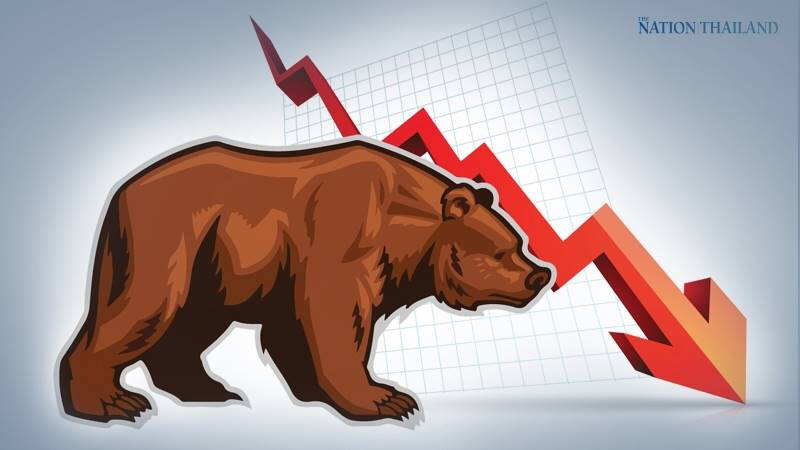
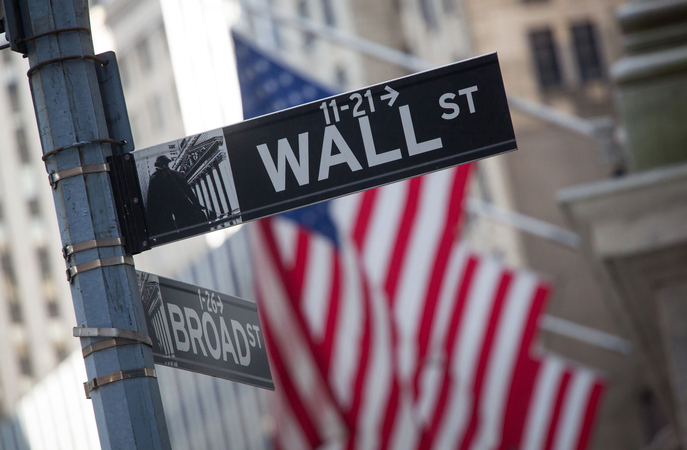
U.S. stocks sink in worst day since Black Monday #ศาสตร์เกษตรดินปุ๋ย

#ศาสตร์เกษตรดินปุ๋ย : ขอบคุณแหล่งข้อมูล : หนังสือพิมพ์ The Nation

https://www.nationthailand.com/business/30383972?utm_source=category&utm_medium=internal_referral

U.S. stocks sink in worst day since Black Monday

Mar 13. 2020
By Syndication Washington Post, Bloomberg · Claire Ballentine, Vildana Hajric, Sarah Ponczek · BUSINESS, US-GLOBAL-MARKETS

U.S. stocks tumbled, with benchmark gauges posting their worst drop since 1987, as investors signaled that the Federal Reserve’s extraordinary bond-buying measures and President Donald Trump’s economic proposals won’t be enough to counter the economic impact from the coronavirus.

All three major U.S. equity gauges fell more than 9%, with the Dow Jones Industrial Average and S&P 500 losing the most since Black Monday more than three decades ago. Ten-year Treasury yields erased declines and inched higher as policymakers’ pledge of $1.5 trillion in liquidity recalled the quantitative easing used during the 2008 financial crisis. Oil and precious metals fell, with palladium entering a bear market as it tumbled more than 20% Thursday.

The stock rout was worldwide, with Europe’s benchmark index down 11% in a record drop. Brazil’s Ibovespa tumbled as much as 20% at one point, extending this year’s loss to almost 50% in dollar terms. Canada’s main gauge was off more than 12%.

With the S&P 500 wiping out all its gains since the end of 2018, investors are trying to guess at the effectiveness of policymakers’ measures to curb the spread of the coronavirus and limit its economic damage. Trump’s travel ban and tepid fiscal measures failed to impress most observers. Spirits were further dampened by new bans on public gatherings in the U.S. and professional sports leagues’ move to suspend operations.

“Markets likely need more. More innovation from central banks, more targeted help for the most vulnerable parts of the economy – and action from fiscal authorities to stop this transitory shock from developing into a more prolonged insolvency crisis,” said Seema Shah, a global investment strategist for Principal Global Investors. “Emotion is now driving markets.”

On another bruising day across markets:

– The S&P 500, Nasdaq Composite and Nasdaq 100 indexes sank deeper into a bear market, with losses from February closing records extending well past 20%.

– The slump triggered the second 15-minute trading halt this week shortly after the U.S. open.

– The MSCI All-Country World Index extended losses to enter bear-market territory.

– The cost of insuring debt issued by Europe’s investment grade companies surged to the highest since 2013.

– Japanese stocks closed more than 4% lower even after another liquidity pledge from the country’s central bank. Australian shares sunk deeper into a bear market despite a stimulus plan there.

– Oil extended losses toward 5%. Bitcoin slumped. Gold fell below $1,600 an ounce.

More bad news about the impact of the coronavirus further sapped investor spirits. The leading U.S. infectious-disease official said the testing system in the country is “a failing.” The European Union warned that the sickness threatens to exceed health-care capacity across the region “in a few weeks or even days.” The National Hockey League followed the National Basketball Association’s lead and suspended its season, while Major League Baseball said opening day would be delayed.

“We need to see what is effectively a ‘declaration of war’ against the virus and full support to offset the economic damage that war will cost,” said Peter Tchir, head of macro strategy at Academy Securities. “Whatever has gone on this week, it’s not a liquidity crunch.”

Meanwhile, signs that companies in the hardest-hit industries were drawing down credit lines to battle the effects of the virus on their businesses added to anxiety.

“The risks have definitely risen,” said Chris Gaffney, president of world markets at TIAA. “The question is how long will this last and I don’t think anybody can predict that at this point.”

– – –

These are the main moves in markets:

Stocks

– The S&P 500 Index declined 9.5% at the close of trading in New York; the Dow Jones Industrial Average lost 10%.

– The Stoxx Europe 600 Index fell 11%.

– The MSCI Asia Pacific Index dipped 5.3%.

– The MSCI Emerging Market Index sank 6.5%.

Currencies

– The Bloomberg Dollar Spot Index gained 1%.

– The euro weakened 0.7%, to $1.1194.

– The Japanese yen fell 0.9%, to 105.45 per dollar.

Bonds

– The yield on 10-year Treasuries rose three basis points, to 0.9%.

– Germany’s 10-year yield fell one basis point, to -0.75%.

– Britain’s 10-year yield declined three basis points, to 0.26%.

Commodities

– West Texas Intermediate crude declined 5.8%, to $31.07 a barrel.

– Gold weakened 4%, to $1,569.79 an ounce.

Dow plunges 10% despite Fed lifeline as coronavirus panic grips investors #ศาสตร์เกษตรดินปุ๋ย

#ศาสตร์เกษตรดินปุ๋ย : ขอบคุณแหล่งข้อมูล : หนังสือพิมพ์ The Nation

https://www.nationthailand.com/business/30383971?utm_source=category&utm_medium=internal_referral

Dow plunges 10% despite Fed lifeline as coronavirus panic grips investors

Mar 13. 2020
By The Washington Post · Thomas Heath, Taylor Telford · BUSINESS, PERSONAL-FINANCE

Wall Street losses snowballed Thursday, with the Dow Jones industrial average plummeting 10%, even after the Federal Reserve took the highly unusual step of injecting more money into the bond market to stabilize the financial systems amid growing panic about the coronavirus and its stranglehold on the economy.

The Dow skidded 2,252 points for its worst finish since 1987.

The New York Fed on Thursday and Friday will pump $1.5 trillion into the short-term lending markets that banks use to lend to one another. The central bank also announced it will buy $60 billion worth of Treasury bonds for the next month (Friday through April 13) to help keep that market functioning appropriately. Earlier this week, investors reported problems trading in U.S. government bonds. These irregularities echoed the types of freezes seen during the 2008 financial crisis, and the Fed appeared to want to act quickly to stop them.

The frantic sell-off began shortly after the open, following President Donald Trump’s announcement that he would restrict travel from Europe for 30 days to stem the spread of the coronavirus. The Dow plummeted nearly 1,700 points, but it was the Standard & Poor’s 500 index’s 7% slide that triggered the “circuit breaker” – a 15-minute break to stop the free-fall and give traders time to recalibrate. But the blue-chip index sank further, closing down nearly 10%. The S&P 500 was off 9.5%, and the tech-heavy Nasdaq down nearly 9.3%.

The New York Stock Exchange activated the rarely used lever as the coronavirus’s accelerating spread and worsening economic outlook have rattled global markets for weeks. Futures markets tumbled overnight after Trump announced the travel ban – a move that blindsided European officials.

Thursday’s dive follows the frenetic pace Wall Street has followed all week and comes a day after the Dow morphed into a bear market, reflecting a 20% fall from its all-time high. The S&P 500 triggered the first circuit breaker of the week Monday after falling 7% early into the session. By the end of day, it had shed 7.6% and the Dow had lost a stunning 2,014 points, or 7.8%. The markets bounced back Tuesday, posting across-the-board gains, only to recoil Wednesday after the World Health Organization declared the coronavirus a pandemic. The Dow cratered nearly 1,500 points to fall into a bear market, which marks a 20% drop its all-time high.

Global lockdowns slam energy demand #ศาสตร์เกษตรดินปุ๋ย

#ศาสตร์เกษตรดินปุ๋ย : ขอบคุณแหล่งข้อมูล : หนังสือพิมพ์ The Nation

https://www.nationthailand.com/business/30383962?utm_source=category&utm_medium=internal_referral

Global lockdowns slam energy demand

Mar 12. 2020
By Syndication Washington Post, Bloomberg · Rachel Morison, Naureen S. Malik, Will Wade · BUSINESS, US-GLOBAL-MARKETS

Electricity demand in Europe and the U.S. will make weekdays seem like weekends as the coronavirus prompts a growing number of countries to consider telling people to stay home.

Power use in Italy slumped 7.4% Wednesday from a week earlier after the government shut schools and told workers to remain home. The World Health Organization has now officially declared the outbreak a pandemic.

That trend is threatening to spread across the globe as countries from Germany to the U.K. to the U.S. weigh stricter measures to keep the virus from spreading. It shows that a broad economic slowdown is becoming more likely as millions of people stay home, slashing the need for electricity in offices, theaters, restaurants and elsewhere.

“We would expect to see demand look more like a weekend,” said Adam Jordan, an analyst at the U.S. energy research company Genscape.

In northern Italy, the average power load on weekends and holidays is about 20% lower than levels seen during the workweek. Peak demand in the country on Monday was 5.9% lower than the week before, according to data from the grid operator Terna. That was the day the government announced nationwide restrictions on movement and gatherings, expanding a lockdown that previously had been limited to the country’s north.

Italy’s experience provides “some insight as to how power demand might be affected across the rest of Europe if the virus continues to spread at its current rate,” BloombergNEF analyst Tom Rowlands-Rees wrote in a report.

In China, carbon emissions have plummeted about 25% since quarantines began, said Daniel Grunwald, a U.S.-based analyst at Morningstar Inc.

“We can safely assume traffic and power generation will stagnate considerably here as well as it has in Asia and Europe,” Grunwald said.

U.S. utilities may see a “sizeable drop” in electric demand from commercial customers as schools and office spaces are shut, Scotiabank analysts led by Andrew Weisel said in a research note Wednesday. It’s less clear how that will affect revenue.

“The stay-at-home mentality could boost residential volumes, which are materially higher margin,” Weisel said.

It’s not just offices. In Germany, a temporary shutdown of factories and plants will have a significant impact on electricity demand in Europe’s biggest economy.

German Chancellor Angela Merkel promised Wednesday to do “whatever is necessary” to limit the impact of the coronavirus. In Britain, Chancellor of the Exchequer Rishi Sunak said up 20% of the working population may need to be off work, hitting production capacity and consumer spending.

“Industrial demand is 40% of German power output, so if that were reduced significantly, effects could be more sizeable,” said Hanns Koenig, principal analyst at Aurora Energy Research Ltd. “If the coronavirus leads to a recession, the financial crisis in 2009 could be a proxy where demand dropped by 6%. So a reduction in the 5% to 10% range across sectors wouldn’t be implausible.”

Grid operators say that reduced demand won’t hinder their ability to deliver adequate power, as they’re used to dealing with this scenario on holidays and weekends. They’re more worried about keeping the virus out of their control rooms.

The difference between highest and lowest demand is 39% on weekends in Germany, 24% in Britain and 42% in France. If consumption is reduced even close to those levels on a daily basis it would cut profits at power stations. Reduced consumption will mean lower prices and cut the running hours of power plants that switch on during peak times.

The unprecedented shift in work patterns is also making it difficult to make forecasts, said Cody Moore, head of gas and power trading at Mercuria Energy America. Grid operators must predict demand for each hour of every day. Right now Mercuria is looking at historical patterns and factoring in weather, season, power supplies and other constraints to determine what happens when people don’t go to work or school.

“We have grid operators that are trying to forecast scenarios that they’ve never seen before,” Moore said. “The only thing we can conclude for sure is it probably increases volatility.”

Lagarde unveils surgical aid for growth with ECB stimulus #ศาสตร์เกษตรดินปุ๋ย

#ศาสตร์เกษตรดินปุ๋ย : ขอบคุณแหล่งข้อมูล : หนังสือพิมพ์ The Nation

https://www.nationthailand.com/business/30383961?utm_source=category&utm_medium=internal_referral

Lagarde unveils surgical aid for growth with ECB stimulus

Mar 12. 2020
Christine Lagarde, president of the European Central Bank, gestures during the central bank's rate decision news conference in Frankfurt, Germany, on March 12, 2020. MUST CREDIT: Bloomberg photo by Alex Kraus.

Christine Lagarde, president of the European Central Bank, gestures during the central bank’s rate decision news conference in Frankfurt, Germany, on March 12, 2020. MUST CREDIT: Bloomberg photo by Alex Kraus.
By Syndication Washington Post, Bloomberg · Carolynn Look · BUSINESS, WORLD, US-GLOBAL-MARKETS, EUROPE 

European Central Bank President Christine Lagarde unveiled a calibrated package of monetary measures aimed at “surgically” supporting key parts of the euro-area economy hurt by the coronavirus outbreak.

Warning of a “major shock” to the prospects for global growth, Lagarde crafted what she called a “comprehensive” string of measures aimed at supporting activity by helping companies and keeping banks lending. That includes an enhanced loan program at an interest rate possibly even lower than the ECB’s deposit facility. Officials rejected investor pressure to reduce borrowing costs again, but they promised to buy more bonds.

While the euro stayed lower, Italian bonds plummeted, a possible hint of investor alarm that the stimulus won’t be able alleviate damage to the economy suffering the region’s worst outbreak.

In a signal that there are limits to the institution’s ability to keep providing stimulus, Lagarde urged governments to provide “an ambitious and coordinated fiscal policy response” to match the ECB’s new injection of liquidity, symbolically placing that demand front-and-center in her opening statement. She called for “decisive and determined” action by finance ministers as soon as Monday, when they meet.

That followed her warning to European leaders on Tuesday that without appropriate action, the outbreak threatens to create conditions similar to the 2008 crisis.

The dramatic escalation in the ECB’s own response after weeks of monitoring the worsening outbreak arrived in parallel with news of a loosening in Germany’s reluctant stance toward fiscal easing, though still laced with caution. One day earlier, the U.K. had delivered a coordinated package including an emergency interest-rate cut, complementing a 30 billion-pound ($38 billion) budget stimulus.

“Together with the substantial monetary policy stimulus already in place, these measures will support liquidity and funding conditions for households, businesses and banks and will help to preserve the smooth provision of credit to the real economy,” Lagarde told reporters in Frankfurt.

The ECB’s move reflects mounting concern as the disease disrupts tourism, business travel and global supply chains, giving Lagarde a major test just over four months into the job.

European stocks extended declines after the announcement, with the Stoxx Europe 50 Index down 10% as of 3:39 p.m. in Frankfurt. The euro fluctuated between gains and losses before falling 1.1% against the dollar. Italian bonds plunged, with 10-year yields up 57 basis points.

Questioned on the market reaction, Lagarde said it takes time for such decisions to be analyzed and appreciated.

Describing the euro-zone economy, Lagarde said that data already signal a considerably worse outlook, and that the virus had “heightened market volatility” in the run-up to the decision. She unveiled new forecasts which showed projections that were “notably” lower for 2020.

Where Lagarde defied market expectations on Thursday was in keeping the deposit interest rate at minus 0.5%, staving off pressure for a cut deeper below zero. With negative interest rates hurting banks and irking some voters in northern European countries, the arguments in favor of shunning such a move were clearly persuasive.

Here’s a quick recap on what the ECB announced earlier on Thursday:

– Additional long-term loans for banks to provide immediate liquidity.

– More favorable terms on its so-called TLTRO targeted loan program.

– An extra 120 billion euros ($135 billion) of asset purchases focused on the private sector

– Temporary measures by the ECB’s supervisory arm to ease capital demands for banks.

The TLTRO measure has possibly created a dual-rate regime through the back door, by allowing the rate offered on the program — which would be used by banks to lend into the real economy — to fall by as much as a quarter-point below the deposit rate, which is already half a point below zero.

The ECB’s measures announced on Thursday also open a new dimension to the central bank’s crisis toolkit by marrying liquidity provision intended to channel money to small and medium-sized enterprises with an easing of capital demands, also aimed at encouraging banks to lend.

The increase in quantitative easing will pump liquidity into the financial system, and the ECB signaled that purchases could be skewed toward corporate debt “support favorable financing conditions for the real economy in times of heightened uncertainty.”

Lagarde’s call on “governments and all other policy institutions to take timely and targeted actions” has yet to be heeded throughout Europe. While indebted Italy, the worst-affected country from the virus, has added stimulus, Germany and particularly has been reticent.

Still, Chancellor Angela Merkel said on Wednesday that the government will do whatever is needed to limit the impact of the coronavirus. The administration is prepared to abandon its long-standing balanced-budget policy, according to people with direct knowledge of its economic policy.

T-bills are scarce and the shortage is about to get even worse #ศาสตร์เกษตรดินปุ๋ย

#ศาสตร์เกษตรดินปุ๋ย : ขอบคุณแหล่งข้อมูล : หนังสือพิมพ์ The Nation

https://www.nationthailand.com/business/30383958?utm_source=category&utm_medium=internal_referral

T-bills are scarce and the shortage is about to get even worse

Mar 12. 2020
By Syndication Washington Post, Bloomberg · Alexandra Harris, Liz Capo McCormick · BUSINESS, US-GLOBAL-MARKETS 

The shortage of T-bills is about to get a whole lot worse. All along, Wall Street has been bracing for a record decline in second-quarter net issuance as the Treasury cuts supply in response to tax season and the Federal Reserve buys bills to boost reserves.

But now, supply is set to get squeezed even more as the Covid-19 scare causes demand for Treasuries to soar. Money market funds in particular are rushing to lock in rates before they reach 0%, prompting strategists at JPMorgan Chase to say demand could outstrip supply by over $1 trillion next quarter.

“We made the case that scarcity was about less supply and Fed demand,” said Priya Misra, the global head of rates strategy at TD Securities. Now, “we have to add the investor-demand component.”

The most immediate impact will be on savers, who can expect the minuscule yields they’re getting on money market funds to keep shrinking. But analysts say the knock-on effects could extend well beyond that. They could spill into overnight lending markets and hamper the Fed’s ability to control its policy rate — just as the economic fallout from the coronavirus starts to emerge.

While Treasury Secretary Steven Mnuchin indicated on Wednesday the U.S. may forgo seasonal cuts to bill issuance to fund a possible extension of the April 15 tax filing deadline, as of now, supply is still set to decline.

The first cuts will come Thursday, as bills the Treasury issues for cash management purposes come due and last week’s bill auctions settle. That will reduce the net amount outstanding by roughly $42 billion.

Margaret Kerins, global head of fixed-income strategy at BMO Capital Markets, says the magnitude of the supply-demand imbalance will largely hinge on the money market fund industry.

“The size of the flows into money market funds and their subsequent demand for securities will be a key factor in how large the bill scarcity is,” she said.

Money market funds that buy government securities attracted $53 billion in new money in the week ended March 4, according the Investment Company Institute, pushing total assets to a record $2.75 trillion.

Instead of putting the money to work in the market for overnight repurchase agreements to buy the highest-yielding securities, many fund managers like Federated Investment Management favor longer-dated bills because of the likelihood of more rate cuts by the Fed.

It makes more sense to buy a “one-year bill than buying a one-month and rolling it over,” said Federated CIO Deborah Cunningham.

That kind of pullback from the repo market, where money market funds typically lend out cash in return for yield, may have caused the overnight repo rate to rise above the Fed’s target range last week, both before and after the central bank lowered rates. That, in turn, prompted a surge of dealer demand for the New York Fed’s overnight repo operations, which on March 4 attracted the most bids since the backstop began in September.

Of course, there’s nothing to stop the Treasury from issuing more bills to address any potential scarcity. Some market watchers expect any fiscal package from the Trump administration to cushion the economy from the virus will be funded with bills, which may alleviate some of the shortage.

Others are wondering whether the Fed will tweak its bill buying program to include short-dated coupon securities, something the bank has avoided because it doesn’t want to appear to be engaging in quantitative easing, or QE. (Though given how little room it has for further cuts, some say the coronavirus fallout may force the Fed’s hand anyway.)

“It’s still probably best to continue with just bills because it’s the least messy way forward,” said Thomas Simons, a money-market economist at Jefferies. “It’s still probably true because adding coupons does add problems the Fed wants to avoid.”

Either way, short-term markets may not get any relief until the Treasury plans on issuing more bills again, possibly in the third quarter, according to Teresa Ho, a strategist at JPMorgan.

“There’s too much cash chasing too few assets,” she said.

ECB joins virus fight with stimulus package to help economy #ศาสตร์เกษตรดินปุ๋ย

#ศาสตร์เกษตรดินปุ๋ย : ขอบคุณแหล่งข้อมูล : หนังสือพิมพ์ The Nation

https://www.nationthailand.com/business/30383956?utm_source=category&utm_medium=internal_referral

ECB joins virus fight with stimulus package to help economy

Mar 12. 2020
European Central Bank President Christine Lagarde /File photo: Syndication Washington Post, Bloomberg

European Central Bank President Christine Lagarde /File photo: Syndication Washington Post, Bloomberg
By Syndication Washington Post, Bloomberg · Carolynn Look · BUSINESS, WORLD, US-GLOBAL-MARKETS, EUROPE

European Central Bank President Christine Lagarde followed through on her pledge to counter the economic shock of the coronavirus outbreak with a stimulus package that included more bond purchases and loans for banks but not an interest-rate cut.

The move reflects mounting concern over the impact of the disease as it disrupts tourism, business travel and global supply chains, giving Lagarde a major test just over four months into the job. Only two days ago, she told European Union leaders in a conference call that they risk a 2008-style crisis if they don’t come up with coordinated action.

In response, the Governing Council took the following decisions:

– Additional long-term loans for banks to provide immediate liquidity;

– More favorable terms on its targeted loan program;

– An extra 120 billion euros ($135 billion) of asset purchases focused on the private sector;

– The decision was complemented with temporary measures by the ECB’s supervisory arm to ease capital demands for banks.

European stocks extended declines after the announcement, with the Stoxx Europe 600 Index down 7.8% as of 2:02 p.m. in Frankfurt. The euro fluctuated between gains and losses before falling 0.4% against the dollar as of 2:02 p.m. in Frankfurt.

Meanwhile, the yield on Italy’s 10-year government bonds soared as much as 34 basis points. German bonds briefly erased gains; the yield on the nation’s 10-year securities declined three basis points to minus 0.77%.

Lagarde is likely to use her 2:30 p.m. press conference to warn that governments must also step up. The ECB’s action is notably more nuanced than its central-bank peers, which have led the economic response to the outbreak with sizable emergency rate cuts.

That reflects Lagarde’s limited ammunition after years of massive stimulus under her predecessor, Mario Draghi. Her institution already holds about a quarter of the region’s outstanding government debt, while its negative rates risk damaging the banking system and eroding financial stability.

In contrast, the Federal Reserve and the Bank of Canada were able to slash rates by half a percentage point last week. The Bank of England cut its key rate by the same magnitude on Wednesday, freed up cash at lenders, and introduced a new program to provide easy and cheap credit. It acted in concert with the government, which unveiled 30 billion pounds ($39 billion) of fiscal stimulus the same day.

Yet with the euro-area economy already stuck in a manufacturing recession and the virus now hitting the services sector — President Donald Trump has suspended travel to the U.S. from Europe — the 25-member Governing Council decided they had to do something.

The loan measures and the increase in quantitative easing will pump liquidity into the financial system. The decision to direct buying toward corporate debt will aid larger companies, while the new funding operations “will support bank lending to those affected most by the spread of the coronavirus, in particular small and medium-sized enterprises,” according to the ECB’s statement.

Euro-zone governments have started to wake up to the need for economic support. Italy, where a national lockdown has been imposed, is the hardest hit so far by the spread of the virus in Europe, and has said it’s ready to spend as much as 25 billion euros on stimulus.

Even in Germany — which despite having the most fiscal firepower has been reluctant to spend — Chancellor Angela Merkel said the government will do whatever is needed to limit the impact of the coronavirus. The administration is prepared to abandon its long-standing balanced-budget policy, according to people with direct knowledge of its economic policy.

Recession calls mount in Canada on double hit from virus and oil #ศาสตร์เกษตรดินปุ๋ย

#ศาสตร์เกษตรดินปุ๋ย : ขอบคุณแหล่งข้อมูล : หนังสือพิมพ์ The Nation

https://www.nationthailand.com/business/30383955?utm_source=category&utm_medium=internal_referral

Recession calls mount in Canada on double hit from virus and oil

Mar 12. 2020
By Syndication Washington Post, Bloomberg · Shelly Hagan · BUSINESS, WORLD

Canada appears on the brink of recession as the economy takes a double hit from the coronavirus and tanking oil prices, ramping up pressure on Prime Minister Justin Trudeau’s government to deliver a fiscal stimulus package.

Bank of Nova Scotia, the country’s third-largest lender, became the first major Canadian bank to forecast the country will fall into a mild recession this year unless the government moves ahead with a fiscal stimulus plan. Similar near-recession calls could follow as forecasts are revised down in the face of rapidly deteriorating conditions.

The downgrades come as Trudeau’s government takes a cautious approach to dealing with the slowdown, promising just C$1.1 billion ($800 million) in new funding to respond to the pandemic. In the absence of a significantly larger package, the rapid rise in coronavirus cases globally, sharp fall in oil prices and increasing volatility in financial markets will trigger an economic contraction, Jean-Francois Perrault, chief economist at Scotiabank, said Wednesday.

“A reasonably mild recession appears likely unless timely and targeted fiscal measures are deployed in the very near future to deal with the economic impacts of the virus,” Perrault wrote in a research note.

The Canadian government’s measures pale in comparison to more dramatic steps from central banks and governments around the world, with the Bank of Canada last week slashing interest rates by half a percentage point to restore confidence.

The Bank of England made an emergency rate cut Wednesday, in coordination with a 30 billion pound ($39 billion) stimulus package from Boris Johnson’s government. In Italy, Prime Minister Giuseppe Conte is ready to spend as much as 25 billion euros ($28.3 billion) on stimulus to shield its economy from the worst outbreak of coronavirus outside China.

President Donald Trump, meanwhile, has opted to temporarily ban most travel to the U.S. from the European Union, while also laying out a series of fiscal measures to deal with the economic fallout. And on Thursday, Australia unveiled an A$17.6 billion ($11.4 billion) fiscal stimulus package.

For Trudeau, it’s “likely that stimulus will end up needing to be far larger than what’s already been announced,” Royce Mendes, an economist at Canadian Imperial Bank of Commerce, said by telephone Wednesday. His bank is also forecasting domestic growth will turn negative in back-to-back quarters this year, a situation economists refer to as a technical recession.

Scotiabank sees the country’s gross domestic product growth slowing to 0.3% for the year, including two straight quarters of negative growth, in the absence of significant stimulus. Perrault recommends the government roll out a fiscal package equivalent to 1% of GDP, or just over C$20 billion, in order to prevent the Canadian economy from going into recession.

National Bank of Canada, the country’s sixth-largest lender, also revised its forecasts for 2020 growth down to 0.6% on Wednesday. “Our expectation for a late-year economic recovery, which could extend into 2021, is predicated on rapid and significant policy responses, both from central banks and from governments,” National Bank’s economics team said in a note.

Bank of Montreal was the first of the six banks to revise their forecasts lower this week, with a call for full year GDP growth at 0.5%. Goldman Sachs is predicting Canada’s economy is on the “verge of recession,” forecasting no growth in the first quarter of this year and a contraction in the second quarter.

The latest stream of downward revisions include predictions that the Bank of Canada will cut rates to 0.25% by June from its current 1.25%. That’s in line with financial market expectations, according to overnight index swaps trading. The last time the Bank of Canada policy rate reached 0.25% was in 2009. Earlier this month, the central bank cut interest rates by 50 basis points amid escalating coronavirus concerns, matching an emergency move by the Federal Reserve.

World economy powering down makes recession more likely #ศาสตร์เกษตรดินปุ๋ย

#ศาสตร์เกษตรดินปุ๋ย : ขอบคุณแหล่งข้อมูล : หนังสือพิมพ์ The Nation

https://www.nationthailand.com/business/30383954?utm_source=category&utm_medium=internal_referral

World economy powering down makes recession more likely

Mar 12. 2020
File photo of President Trump at press conference on coronavirus/ Syndication Washington Post

File photo of President Trump at press conference on coronavirus/ Syndication Washington Post
By Syndication Washington Post, Bloomberg · Enda Curran, Michelle Jamrisko · BUSINESS, WORLD, US-GLOBAL-MARKETS

A pandemic-driven global recession is becoming more likely by the day as the flow of goods, services and people face ever-increasing restrictions.In just the past day or so, President Donald Trump curbed travel to the U.S. from Europe, Italy’s government ordered almost every shop to close and India suspended most visas.

Twitter joined the flood of companies telling employees to work at home and the National Basketball Association suspended its season.

While such announcements are aimed at containing the coronavirus, each quarantined city, canceled flight, scrapped sporting event and scuppered conference will hammer demand across the globe this quarter and likely longer. An initial consumer rush to stock up on supplies may be followed by months of cautious restraint.

“The resulting pandemic of fear continues to spread and is bound to cause a global recession,” Ed Yardeni, president and founder of Yardeni Research Inc. wrote in a research note.

Dashed are the hopes from just a few weeks ago that the world economy would track a V-shaped trajectory — a sharp first-quarter slump in growth followed by a second-quarter rebound. Now, the biggest economic shock since the 2008 financial crisis is raising the risk of a worldwide recession, with the debate shifting to how long and deep the slump will be.

Equities and bond yields continued their retreat on Thursday, with the MSCI World Index of stocks now on the verge of a bear market.

China is already on course for what could be its first quarterly contraction in decades. In the U.S., a Bloomberg Economics model suggests a 53% chance that the 11-year expansion will end within a year. The economies of Japan, Germany, France and Italy were already shrinking or stalled before the virus outbreak, and the U.K. is wobbling amid Brexit uncertainty.

As the virus spreads, the threat grows of a phenomenon economists refer to as a feedback loop — a vicious cycle in which a country that starts to recover domestically then suffers diminished demand from abroad as other nations succumb, prolonging the downturn.

At Pacific Investment Management Co., global chief economic adviser Joachim Fels says the U.S. and Europe face the “distinct possibility” of a recession. Former U.S. Treasury Secretary Larry Summers, a paid contributor to Bloomberg News, says the coronavirus may prove to be the most serious crisis of the century so far and puts the odds of a U.S. recession at 80%.Traditionally more conservative in calling a recession, Wall Street economists are also downgrading their forecasts. Those at Bank of America Corp. on Wednesday cut their global growth forecast for 2020 from 2.8% to 2.2%. That’s “in spitting range of a typical global recession” and well below the world’s long-term trend of 3.5%, they said.

Counterparts at JPMorgan Chase told clients this week that the risk of a global recession “has risen materially.” To revive their confidence, they said they need to see a fading of the virus, a stronger and more creative response by economic policy makers, and for firms and banks not to slash jobs or lending. They also argued that the tumble in the cost of oil may not necessarily boost growth as much as historically because consumers will pocket the windfall from cheaper fuel prices.

Policymakers are already struggling to keep up, adding to concern that falling demand won’t be cushioned enough by stimulus.

The Federal Reserve’s emergency interest rate cut of March 3 failed to buoy investor confidence, adding to pressure on its officials to ease monetary policy and perhaps even slash rates to zero when they reconvene next week if not sooner. There are also calls for it to follow the Bank of England in channeling assistance to parts of the economy in most need.

European Central Bank President Christine Lagarde got her chance to act on Thursday after telling regional leaders earlier in the week that their economy risked a shock that echoed the crisis of the last decade if they didn’t urgently. The ECB announced what it called a ” comprehensive” package that included more quantitative easing and tools to increase liquidity, but not a cut to interest rates.

The ECB already has negative rates so little room to reduce them, a problem for Bank of Japan Governor Haruhiko Kuroda too.That leaves fiscal policy, which should be more potent than monetary policy because it can be targeted and delivered in size. But governments are again proving sluggish in getting ahead of the crisis with the majority waiting for their nations to become infected before shifting and then only slowly.

While more governments are rolling out stimulus packages worldwide and are offering more than $130 billion of virus-relief steps, Trump’s administration has been slow crafting a plan after initially questioning the need for one.

German Chancellor Angela Merkel promised to do “whatever is necessary” on Wednesday. While the rhetoric has yet to be matched by a fiscal push in Europe’s largest economy, her administration is prepared to abanon its long-standing balanced-budget policy to help finance steps to contain the virus fallout.

Much of the economic data have yet to bear out the magnitude of the pain to the global economy. In some ways, though, the virus outbreak’s impact is more worrisome than even the financial crisis, given that it’s hitting a multitude of consumer and business channels and has crushed prospects for a full recovery in some sectors, said Taimur Baig, chief economist at DBS Bank in Singapore.

“This is the opposite transition from the crisis propagation perspective — now we have the services sector basically coming to a standstill worldwide” while the financial system still is relatively healthy, said Baig, a former economist at the International Monetary Fund.

While the crisis of 2008-09 was a “classic financial crisis,” this time, “it’s not about fixing banks or putting capital in there — it’s about saying the pandemic has ended. That’s what makes it very uncertain” as the virus has proved so hard to control, he said.

Singapore readies second virus aid package, won’t lock down city #ศาสตร์เกษตรดินปุ๋ย

#ศาสตร์เกษตรดินปุ๋ย : ขอบคุณแหล่งข้อมูล : หนังสือพิมพ์ The Nation

https://www.nationthailand.com/business/30383952?utm_source=category&utm_medium=internal_referral

Singapore readies second virus aid package, won’t lock down city

Mar 12. 2020
A file photo from 2018 shows ommercial buildings standing reflected in a rooftop pool in Singapore. MUST CREDIT: Bloomberg photo by Brent Lewin.

A file photo from 2018 shows ommercial buildings standing reflected in a rooftop pool in Singapore. MUST CREDIT: Bloomberg photo by Brent Lewin.
By Syndication Washington Post, Bloomberg · Faris Mokhtar · WORLD, ASIA-PACIFIC

Singapore is preparing a second package of support measures as the coronavirus outbreak weighs on the economy, but it isn’t going to lock down the city-state with more stringent measures, according to Prime Minister Lee Hsien Loong.

The city-state will take steps to support firms and workers, Lee said in a televised address on Thursday evening, without providing financial details on the package. The government will assist companies with their costs and cash-flow, while also helping people keep their jobs and retrain them during their downtime, he said.

“Our economy is taking a big hit,” the prime minister said. “Nobody has been spared. Everyone feels the impact, to different degrees.”

Lee said Singapore expects more imported cases as the virus spreads globally but stressed that the country will not raise its disease response level.

“Let me emphasize this: the situation in Singapore remains under control. We are not going to DORSCON Red,” he said, referring to the highest level on the Disease Outbreak Response System Condition color-coded framework. “We are not locking down our city like the Chinese, South Koreans or Italians have done.”

In February, Singapore downgraded its forecast for the economy this year, projecting growth in a range of -0.5% to 1.5%, compared with a previous estimate of 0.5% to 2.5%.

The city-state last month allocated S$6.4 billion ($4.6 billion) in support for medical response as well as special packages to aid businesses and consumers. The country’s president Halimah Yacob said Wednesday Singapore must consider tapping past reserves to help its people and businesses, a move not seen since 2009 when it faced its worst recession amid the global financial crisis.

Singapore will also need additional social distancing measures if cases jump, Lee said in his speech. These will be temporary, such as suspending school, staggering work hours, or compulsory telecommuting, he said.

“They will be extra ‘brakes,’ to be implemented when we see a spike in cases,” Lee said. Singapore has seen a pickup in new cases in recent days, with the country reporting nine new infections Thursday, bringing the total to 187. The World Health Organization has declared the outbreak a pandemic as it spreads rapidly outside China.

Singapore will close all of its mosques for at least five days starting on Friday after about 90 of its citizens attended a mass event in Kuala Lumpur from which a number of individuals were infected with COVID-19, according to statement Thursday by the Islamic Religious Council of Singapore. Friday prayers at all mosques March 13 will be suspended in the city-state.

Earlier this week, a top Singaporean official, Minister for Communications and Information S Iswaran, warned against complacency in the face of rising cases, saying the affluent island needs to impose longer-term changes to deal with a rapidly evolving epidemic.

In its efforts to halt the spread of the virus, Singapore has carried out stringent tracing and containment measures, and is helped by a top-notch health system and a small population that’s largely accepting of government orders.But it’s stopped short of more aggressive social distancing measures like closing schools and offices. Other places in the region like Hong Kong and Japan have already taken such steps. In Hong Kong, schools have been closed since January and won’t re-open until April at the earliest, while many professionals are working from home.The increase in new cases of infection in Singapore after a relative lull is underscoring concerns that the highly-infectious pathogen will come back in waves to Asian countries that have seemingly weathered a first spike.