วันที่ 24 ก.พ. 2563 ข่าวเศรษฐกิจ-ธุรกิจ #ศาสตร์เกษตรดินปุ๋ย

#ศาสตร์เกษตรดินปุ๋ย : ขอบคุณแหล่งข้อมูล : หนังสือพิมพ์โพสต์ทูเดย์

https://www.posttoday.com/economy

เอ็ม บี เคฯ เร่งหามาตรการช่วยร้านค้าในศูนย์ฯ หลังเดินขบวนขอลดค่าเช่า

เอ็มบีเค เซ็นเตอร์ ทำหนังสือชี้แจงผู้ประกอบการร้านค้า เร่งหามาตรการช่วยเหลือจากสถานการณ์ไวรัสโควิท-19 ทำศูนย์การค้าเงียบกริบ หลังลูกค้ากลุ่มนักท่องเที่ยวหด

วันที่ 24 ก.พ. 2563 เวลา 22:45 น. | ข่าวเศรษฐกิจ-ธุรกิจ
ก้อนน้ำมันดินหาดหัวไทร ไม่ได้รั่วจากแหล่งปิโตรเลียมอ่าวไทย

กรมเชื้อเพลิงธรรมชาติ รอผลวิเคราะห์ก้อนน้ำมันดินโผล่หาดหัวไทรสืบหาแหล่งที่มา พร้อมไล่ตรวจสัมปทานปิโตรเลียมรอบอ่าวไทย ไม่พบน้ำมันดิบรั่วไหล

วันที่ 24 ก.พ. 2563 เวลา 18:52 น. | ข่าวเศรษฐกิจ-ธุรกิจ
ปตท.เทงบลงทุน 9 แสนล้านระยะ 5 ปี บูมโครงสร้างพื้นฐานพลังงาน ร่วมกระตุ้นจีดีพีประเทศ

ปตท.เดินหน้าแผนการลงทุนระยะยาว กว่า 9 แสนล้านบาท สร้างความมั่นคงด้านพลังงาน ระยะ 5 ปี มุ่งธุรกิจแอลเอ็นจี -ไฟฟ้า-ปิโตรเคมีมูลค่าสูง มั่นใจช่วยกระตุ้นเศรษฐกิจประเทศ

วันที่ 24 ก.พ. 2563 เวลา 18:04 น. | ข่าวเศรษฐกิจ-ธุรกิจ
'สมคิด' บุกแดนซามูไร ส่องโมเดลการเกษตรท่องเที่ยวชุมชน สร้างรายได้เศรษฐกิจฐานราก
‘สมคิด’ บุกแดนซามูไร ส่องโมเดลการเกษตรท่องเที่ยวชุมชน สร้างรายได้เศรษฐกิจฐานราก

‘สมคิด’ นำทีมเยือนญี่ปุ่น เร่งขับเคลื่อนเกษตรอุตสาหกรรม สร้างโมเดลพัฒนาชุมชน สั่งธกส. ผนึกกำลัง กสอ. สร้างเป็นทีมใช้ชื่อว่า ธ.ก.ส.อ. จับมือบริษัทยักษ์ใหญ่ญี่ปุ่น สร้างระบบนิเวศและให้บริการเครื่องจักรกลเกษตรครบวงจร

วันที่ 24 ก.พ. 2563 เวลา 13:37 น. | ข่าวเศรษฐกิจ-ธุรกิจ
เถ้าแก่น้อย ชูกลยุทธ์ "ซูเปอร์สแน็ค" เจาะตลาดขนมขบเคี้ยว 3.8 หมื่นล้านบาท
เถ้าแก่น้อย ชูกลยุทธ์ “ซูเปอร์สแน็ค” เจาะตลาดขนมขบเคี้ยว 3.8 หมื่นล้านบาท

เมื่อกลุ่มลูกค้า หันมาใส่ใจสุขภาพมากขึ้น จนกลายเป็น “เมกะเทรนด์” งานนี้ เภ้าแก่น้อย ขยับพอร์ทสินค้าครั้งใหญ่ เสริมทัพธุรกิจด้วยสินค้ากลุ่มซัพพลีเมนท์ และ ขนมขบเคี้ยวประเภทอื่นๆ

วันที่ 24 ก.พ. 2563 เวลา 12:25 น. | ข่าวเศรษฐกิจ-ธุรกิจ
'พาณิชย์' โล่ง ส่งออกเดือน ม.ค.โต 3.35% บวกครั้งแรกรอบ 6 เดือน
‘พาณิชย์’ โล่ง ส่งออกเดือน ม.ค.โต 3.35% บวกครั้งแรกรอบ 6 เดือน

ทิศทางส่งออกปรับตัวดีขึ้น หลังดีลเฟส1 จีน-สหรัฐ สร้างบรรยากาศการค้า ดันส่งออกเดือนม.ค. ขยายตัวครั้งแรกในรอบ 6 เดือน แต่ยังระวังแรงกดดันจากไวรัสโควิด-19 ฉุดเศรษฐกิจโลกชะลอตัวได้

วันที่ 24 ก.พ. 2563 เวลา 11:49 น. | ข่าวเศรษฐกิจ-ธุรกิจ
ความเสี่ยงตลาดแรงงาน....ผลกระทบจากเศรษฐกิจชะลอตัวแรง
ความเสี่ยงตลาดแรงงาน….ผลกระทบจากเศรษฐกิจชะลอตัวแรง

การวิเคราะห์ความเสี่ยงของการจ้างงานจำเป็นที่จะต้องเห็นแนวโน้มของเศรษฐกิจไทยที่อยู่ในสภาวะชะลอตัวมาตั้งแต่ปีที่ผ่านมา

วันที่ 24 ก.พ. 2563 เวลา 08:00 น. | คอลัมนิสต์เศรษฐกิจ-ธุรกิจ

วันที่ 23 ก.พ. 2563 ข่าวเศรษฐกิจ-ธุรกิจ #ศาสตร์เกษตรดินปุ๋ย

#ศาสตร์เกษตรดินปุ๋ย : ขอบคุณแหล่งข้อมูล : หนังสือพิมพ์โพสต์ทูเดย์

https://www.posttoday.com/economy

ใครมีไอเดีย อย่าช้า !! เชิญร่วมแข่งขันดีไซน์เนอร์ "ผ้าไทยใส่สบาย" สร้างอัตลักษณ์ความเป็นไทย
ใครมีไอเดีย อย่าช้า !! เชิญร่วมแข่งขันดีไซน์เนอร์ “ผ้าไทยใส่สบาย” สร้างอัตลักษณ์ความเป็นไทย

กระทรวงวัฒนธรรม จับมือ 4 มหาวิทยาลัยภาคีเครือข่าย จัดประกวดแข่งขันออกแบบตัดเย็บเครื่องแต่งกายที่ทำมาจากผ้าไทย ภายใต้แนวคิด “ผ้าไทยใส่สบาย” นำผ้าไทยอันเป็นทุนทางวัฒนธรรม มาใช้เป็นวัตถุดิบในการสร้างสรรค์ผลงาน

วันที่ 23 ก.พ. 2563 เวลา 18:12 น. | SME
ประชาพิจารณ์โรงไฟฟ้าแม่เมาะฯครั้งที่ 3 ชาวลำปางห่วงแผนจัดการน้ำหน้าแล้ง

กฟผ.-ทีแอลที คอนซัลแตนส์ เปิดรับฟังความเห็นรอบที่ 3 โครงการโรงไฟฟ้าแม่เมาะทดแทน เครื่องที่ 8-9 ชาวลำปางกว่า 2,000 คน ร่วมแสดงความคิดเห็น เตรียมรวบรวมข้อกังวล วางมาตรการรองรับ ก่อนจัดทำ EHIA ย้ำประโยชน์สูงสุดต้องเกิดกับประชาชน

วันที่ 23 ก.พ. 2563 เวลา 14:30 น. | ข่าวเศรษฐกิจ-ธุรกิจ
เซ็นทรัลฯร้อง!! พนักงาน 33 สาขาทั่วประเทศ ไม่ติดไวรัส COVID-19

จากกรณีที่มีข่าวลือต่างๆ เกี่ยวกับพนักงานในศูนย์การค้าเซ็นทรัลฯ ได้รับเชื้อไวรัส COVID-19 นั้น บริษัทฯ ขอเรียนแจ้งให้ทราบว่าข่าวลือต่างๆ ไม่เป็นความจริงแต่อย่างใด

วันที่ 23 ก.พ. 2563 เวลา 13:30 น. | ข่าวเศรษฐกิจ-ธุรกิจ
"จักษ์กริช พิบูลย์ไพโรจน์" เอ็มดีใหญ่ เอ็กโก กรุ๊ป ประสบอุบัติเหตุทางน้ำ เสียชีวิต วันนี้
“จักษ์กริช พิบูลย์ไพโรจน์” เอ็มดีใหญ่ เอ็กโก กรุ๊ป ประสบอุบัติเหตุทางน้ำ เสียชีวิต วันนี้

เอ็กโก กรุ๊ป ออกแถลงการณ์ ” จักษ์กริช พิบูลย์ไพโรจน์” กรรมการผู้จัดการใหญ่ EGCO เสียชีวิตด้วยอุบัติเหตุทางน้ำในวันนี้

วันที่ 23 ก.พ. 2563 เวลา 13:23 น. | ข่าวเศรษฐกิจ-ธุรกิจ
"มาดามแป้ง" เปิดตัว สยามไบโอไซเอนซ์ บริษัทยาเพื่อคนไทย
“มาดามแป้ง” เปิดตัว สยามไบโอไซเอนซ์ บริษัทยาเพื่อคนไทย

“มาดามแป้ง” เปิดตัว “ของขวัญจากพ่อ” บริษัทผู้ผลิตยาชีววัตถุผ่านเทคโนโลยีชั้นสูงแห่งเดียวของคนไทย และภูมิภาคเอเชียตะวันออกเฉียงใต้

วันที่ 23 ก.พ. 2563 เวลา 12:30 น. | ข่าวเศรษฐกิจ-ธุรกิจ

วันที่ 22 ก.พ. 2563 ข่าวเศรษฐกิจ-ธุรกิจ #ศาสตร์เกษตรดินปุ๋ย

#ศาสตร์เกษตรดินปุ๋ย : ขอบคุณแหล่งข้อมูล : หนังสือพิมพ์โพสต์ทูเดย์

https://www.posttoday.com/economy

รมว.ดิจิทัลพร้อมหนุนคนว่างงานขายของออนไลน์

“พุทธิพงษ์”เผยคนไทยว่างงานใช้มือถือ 11 ชม./วัน แนะปรับตัวทำงานออนไลน์ขายของ 2ชม./วัน ใช้ดิจิทัลเพิ่มความสามารถแรงงานไทยรองรับอุตสาหกรรมขนาดใหญ่

วันที่ 22 ก.พ. 2563 เวลา 17:09 น. | ข่าวเศรษฐกิจ-ธุรกิจ
"พาณิชย์" เกาะติดนโยบายรอบ 6 เดือน แก้ปํญหาราคาสินค้าเกษตรหาตลาดรองรับ
“พาณิชย์” เกาะติดนโยบายรอบ 6 เดือน แก้ปํญหาราคาสินค้าเกษตรหาตลาดรองรับ

จุรินทร์ จับมือ วีรศักดิ์ ติดตามนโยบายรอบ 6 เดือน รุกแผนรองรับปัญหาราคาสินค้าเกษตร วางแนวรองรับผลผลิต พาณิชย์จังหวัดเฮ! มีโอกาสโต

วันที่ 22 ก.พ. 2563 เวลา 13:16 น. | ข่าวเศรษฐกิจ-ธุรกิจ
"นิคมฯ สงขลา" พร้อมเปิดให้บริการเต็มรูปแบบต.ค.นี้
“นิคมฯ สงขลา” พร้อมเปิดให้บริการเต็มรูปแบบต.ค.นี้

คาดหากใช้พื้นที่เต็มจำนวนจะดึงเม็ดเงินได้ 13,800 ล้านบาท เตรียมเปิดด่านสะเดาแห่งที่ 2 – มอเตอร์เวย์สายใหม่ เชื่อมหาดใหญ่-สะเดา

วันที่ 22 ก.พ. 2563 เวลา 09:00 น. | ข่าวเศรษฐกิจ-ธุรกิจ

วันที่ 21 ก.พ. 2563 ข่าวเศรษฐกิจ-ธุรกิจ #ศาสตร์เกษตรดินปุ๋ย

#ศาสตร์เกษตรดินปุ๋ย : ขอบคุณแหล่งข้อมูล : หนังสือพิมพ์โพสต์ทูเดย์

https://www.posttoday.com/economy

ประกันภัยมอบ 8 ล้านบาท กรรมธรรม์ประกัน Covid-19

บริษัทประกันภัยมอบ 8 ล้านบาท กรรมธรรม์ประกัน Covid-19 ให้ตำรวจท่องเที่ยวสนามบิน

วันที่ 21 ก.พ. 2563 เวลา 15:33 น. | ข่าวเศรษฐกิจ-ธุรกิจ
กรุงเทพฯ แชมป์เบอร์ 2 เมืองศักยภาพด้านHR ดีสุดใน AEC

อเด็คโก้ กรุ๊ปฯ เผยผลสำรวจการแข่งขันด้านทรัพยากรบุคคลของโลกประจำปี’63 กรุงเทพฯ คว้าอันดับ 2 เมืองที่มีศักยภาพด้านทรัพยากรบุคคลที่ดีที่สุดใน AEC เป็นรองเพียงสิงคโปร์ ส่วน นิวยอร์ค เบอร์1

วันที่ 21 ก.พ. 2563 เวลา 15:27 น. | ข่าวเศรษฐกิจ-ธุรกิจ
เอไอเอส-ดีแทค ได้แล้ว!! ใบอนุญาต 5G

AWN และ DTN ชำระค่าใบอนุญาตคลื่น 2600 MHz งวดแรก และคลื่น 26 GHz พร้อมรับใบอนุญาตจากสำนักงาน กสทช.

วันที่ 21 ก.พ. 2563 เวลา 10:43 น. | ข่าวเศรษฐกิจ-ธุรกิจ
ยัน,!! โยกย้ายในกรมชลฯโปร่งใส  เดินตามกฏทุกตอน ปัดจัดซื้อจัดจ้างส่งกลิ่น ใครมีเบาะแสพร้อมสอบสวน

อธิบดี?กรมชลฯออกโรง การันตี โยกย้าย ไร้การวิ่งเต้น ย้ำมีกรรมการกลั่นกรอง โอดมีข่าวลือทุกปีเหตุเป็นกรมใหญ่  ส่วนจัดซื้อวัสดุก่อสร้างเป็นไปตาม พรบ.จัดซื้อจัดจ้าง ใครทุจริตโครงการจะสอบสวนลงโทษทางวินัย

วันที่ 21 ก.พ. 2563 เวลา 09:00 น. | ข่าวเศรษฐกิจ-ธุรกิจ
กกพ.เดินหน้า ดันโปรเจ็ก ERC Sandbox เปิดทางซื้อขายไฟฟ้าเสรี

เตรียมเสนอกพช.ปลดล็อคกฏเหล็กส่งเสริมการแข่งขันเสรีกิจการไฟฟ้านำร่องทดสอบประชาชนซื้อขายไฟฟ้ากันเองพร้อมชงค่าไฟฟ้าใหม่รถEV

วันที่ 21 ก.พ. 2563 เวลา 07:30 น. | ข่าวเศรษฐกิจ-ธุรกิจ

Big banks want regulation eased because of coronavirus. Experts call it opportunistic. #ศาสตร์เกษตรดินปุ๋ย

#ศาสตร์เกษตรดินปุ๋ย : ขอบคุณแหล่งข้อมูล : หนังสือพิมพ์ The Nation

https://www.nationthailand.com/business/30383312?utm_source=category&utm_medium=internal_referral

Big banks want regulation eased because of coronavirus. Experts call it opportunistic.

Mar 04. 2020
File photo / Syndication Washington Post, Bloomberg

File photo / Syndication Washington Post, Bloomberg
By The Washington Post · Renae Merle · BUSINESS, HEALTH

The country’s biggest banks are asking federal officials for long-sought regulatory relief as part of the government’s efforts to contain the economic fallout from the coronavirus, requests that experts lambasted as opportunistic and unnecessary.

The Bank Policy Institute — a lobbying group for big banks including Bank of America, JPMorgan Chase, Wells Fargo and Citigroup — is recommending, among other things, that the Federal Reserve lower capital requirements and ease the periodic “stress tests” banks take to prove they can survive another economic crisis.

The Federal Reserve could “make changes to its bank regulations or enact promptly already planned regulatory changes that would not reduce safety, soundness or financial stability,” the group said in a note titled “Actions the Fed Could Take in Response to COVID-19” signed by Greg Baer, its chief executive; Francisco Covas, head of research; and Bill Nelson, the chief economist.

The recommendations are “transparently opportunistic,” said Jeremy Kress, an assistant law professor at the University of Michigan School of Business. For years, the banking industry resisted calls for higher capital requirements that could have been used as a buffer, or a rainy-day fund, during economic turmoil, he said. Those buffers could have been turned off now to give the industry more flexibility to make loans during the current economic uncertainty, Kress said.

But without those buffers reducing existing capital requirements, which are currently set at minimum levels, the timing could be risky, he said.

“The whole idea of capital requirements and stress-testing banks is to make sure they have enough cushion to absorb losses” during an economic crisis, Kress said.

Sen. Sherrod Brown, D-Ohio, ranking member of the Banking Committee, said in a statement that: “My priority right now is ensuring that our federal, state and local health agencies have the resources they need to keep Americans safe. It’s not the time to reduce financial system protections to bolster the bottom lines for Wall Street.”

Several of the group’s largest members, including Wells Fargo, Bank of America and Citigroup, declined to comment on the BPI’s efforts. JPMorgan Chase, the country’s largest bank, is “ready to help” with the government’s coronavirus response, spokesman Andrew Gray said in a statement. “Our primary focus as a bank is to consistently provide credit and capital to support clients, customers and communities through this uncertain period,” he said. The bank stands by efforts by regulators to “help lenders freely, fairly and better serve their customers,” Gray said, but “this issue is up to the regulators and should not be used to push for unrelated regulatory changes.”

The Fed made an emergency interest rate cut Tuesday, slashing the benchmark U.S. interest rate by half a percentage point, but has made no mention of the industry’s desired regulatory relief. “We saw a risk to the outlook of the economy and we chose to act,” Fed Chair Jerome Powell said at a news conference shortly after the rate-cut announcement.

Treasury Secretary Steven Mnuchin told reporters after a Capitol Hill hearing Tuesday that he is talking to bank regulators about potential regulatory relief measures.

The staff of the Financial Stability Oversight Council, a group of high-level regulators, is also scheduled to discuss the coronavirus during a meeting this week, according to a person familiar with the planning but not authorized to speak publicly.

Wall Street has scrambled to respond to the spread of the virus, which now has a global death toll of more than 3,000. Morgan Stanley is requiring any person, including employees, entering its offices anywhere in the world to disclose whether they had recently traveled to mainland China, Iran, Italy, Japan or South Korea, according to a person familiar with the bank’s policy but not authorized to publicly discuss it. It has also postponed some events and is hosting others virtually, the person said.

At the bank’s annual meeting earlier last week, JPMorgan Chase CEO Jamie Dimon said he dreamed about the coronavirus. “I had this nightmare that somehow in Davos, all of us who went there got it, and then we all left and spread it,” he said, according to CNN. “The only good news from that is that it might have just killed the elite.”

In the note from the Bank Policy Institute, the group says it supports “easing monetary policy” but goes on to recommend some long-sought regulatory changes. “All of these reforms are designed to allow banks to deploy their abundant capital and liquidity to continue lending in support of the economy,” Baer, the group’s president, said in a statement. “We have been proposing many of these reforms for years with a moment like this in mind; it would be strange to abandon them when they were potentially most needed.”

The banking industry has scored significant wins rolling back regulations during the Trump administration. Federal regulators earlier this year proposed weakening key post-financial-crisis restrictions on risky trading known as the Volcker rule. It has also proposed allowing big banks such as JPMorgan Chase and Bank of America to submit their full “living wills” — plans for their closure during another economic crisis — less often.

But some bankers have grown concerned that post-financial crisis rules could still limit their ability to lend to troubled companies during an economic downturn.

Deregulation has already gone too far, and the coronavirus could pose unique challenges to the financial system that are still unclear, said Larry White, a professor at New York University School of Business. As the virus spreads some people may not be able to work, shop and travel, he said, and “that is a problem for businesses because at the end of the day they won’t be able to sell stuff.”

“But I am not sure that is a good argument for, ‘Oh, we need to do something about liquidity.’ That is overreach by BPI,” White said.

Kirin considers buybacks, dividends as investor challenge looms #ศาสตร์เกษตรดินปุ๋ย

#ศาสตร์เกษตรดินปุ๋ย : ขอบคุณแหล่งข้อมูล : หนังสือพิมพ์ The Nation

https://www.nationthailand.com/business/30383304?utm_source=category&utm_medium=internal_referral

Kirin considers buybacks, dividends as investor challenge looms

Mar 04. 2020
By Syndication Washington Post, Bloomberg · Lisa Du, Grace Huang · BUSINESS, WORLD, RETAIL, ASIA-PACIFIC
Facing a challenge from a vocal investor fund that wants to restructure its business, Japanese beer giant Kirin Holdings is dangling the prospect of share buybacks or dividends to win shareholders.

Chief Executive Officer Yoshinori Isozaki said that Kirin is considering more ways to reward shareholders, according to prepared remarks for a press briefing Tuesday during the company’s investor day. Pushing back against criticism from activist investor Independent Franchise Partners (FP), with whom the company has been embroiled in conflict, he said that Kirin is not deviating from its main focus of beer.

Kirin has been in defense mode about its wellness and pharmaceutical business, which FP wants it to dispose of. The London-based fund has put in shareholder proposals for its annual meeting on March 27, which requests Kirin to undertake a 600 billion yen ($5.6 billion) buyback funded by a disposal of its health-related businesses. It’s also demanding the company to add two independent directors and revamp its executive compensation.

Shares of Kirin, Japan’s second-largest beermaker, have fallen 16% since FP’s proposals were made public Feb. 14, compared to a 12% drop in the benchmark Topix Index.

Isozaki’s remarks are the latest in a back-and-forth spat that started last month over FP’s desire to see Kirin exit its health-care business, including its majority ownership of pharmaceutical company Kyowa Kirin Co., and its stake in beauty brand Fancl Corp. But the brewer says that its wellness segment is being set up take advantage of a market in Japan that could double to 4 trillion yen by 2024, according to its investor day presentation.

Kirin last month rejected a compromise from FP to withdraw its other requests if the company agreed to revamp its board with their suggested directors.

In an interview with Bloomberg on Feb. 27, Kirin’s Chief Financial Officer Noriya Yokota described FP’s suggestions as “drastic.”

“If we just focus on beer, we won’t be able to grow at the speed that we want,” he said.

Vocal investor activity has blossomed in Japan in the past year, shaking up what was previously a staid corporate landscape. Last year, there was a tussle for control of Unizo Holdings Co., while Oasis Management Co. pushed Tokyo Dome Corp. to modernize its entertainment complex in the megalopolis.

While it’s still unclear how successful these campaigns will be, a multi-year push by the government to overhaul corporate governance is making investors more confident that they can get companies to change.

These are debt-bloated companies the coronavirus threatens to drag down #ศาสตร์เกษตรดินปุ๋ย

#ศาสตร์เกษตรดินปุ๋ย : ขอบคุณแหล่งข้อมูล : หนังสือพิมพ์ The Nation

https://www.nationthailand.com/business/30383302?utm_source=category&utm_medium=internal_referral

These are debt-bloated companies the coronavirus threatens to drag down

Mar 04. 2020
Pedestrians wear protective masks while walking along a street in New York on Feb. 27, 2020. MUST CREDIT: Bloomberg photo by Jeenah Moon.

Pedestrians wear protective masks while walking along a street in New York on Feb. 27, 2020. MUST CREDIT: Bloomberg photo by Jeenah Moon.
By Syndication Washington Post, Bloomberg · Denise Wee, Olivia Rockeman · BUSINESS 

From Richard Branson’s Australian airline to U.S.-based cinema chains and casino operators, the companies most vulnerable to the coronavirus outbreak are facing mounting pressure in global credit markets.

An escalating outbreak that drives off customers and revenue could lead to ratings downgrades, hinder refinancing efforts, and in some cases trigger defaults. And it’s more than just travel companies: Debt-laden commodities producers, shipping firms and luxury automakers have endured waves of selling by bondholders as they ratchet down expectations for global growth.

Investors who’ve spent years pouring money into nearly everything the credit markets had to offer are balking now that the outbreak has spread to more than 65 countries. That’s stoking fears of a prolonged slump in riskier assets. While central banks from the U.S. to the U.K. and Japan have all said they stand ready to roll out stimulus to support credit markets, it’s not clear the tactic will work if the problem is an historic slump in consumer demand.

“We should all be worried,” said Azhar Hussain, head of global credit at Royal London Asset Management, who manages 6.1 billion pounds ($7 billion) of assets. “First-order effects are likely to be travel and cyclicals with long supply chains, but the concern is that it spreads to the developed-market consumer.”

Diamond Hill Capital Management’s Bill Zox and John McClain told investors Monday morning that they see little upside from more rate cuts if business activity is increasingly disrupted by the virus and everyone is forced to work from home. “Corporate CFOs won’t be Skyping in plans for new capital projects,” they wrote.

Below are some of the companies on the watch lists of credit investors and ratings firms as the human and economic toll of the virus increases.

Airlines:

— Virgin Australia Holdings: The carrier, part of billionaire entrepreneur Richard Branson’s Virgin Group, saw its $425 million of bonds due in 2024 plunge nearly 12 cents since the start of last week to a record low of 85.2 cents on the dollar on Monday. The airline warned last week that the coronavirus is expected to reduce earnings by A$50 million ($33 million) to A$75 million in the second half of 2020. S&P Global Ratings last week lowered its outlook on the company to negative, citing restrictions on inbound tourism from Chinese nationals.

— Garuda Indonesia: The flag carrier’s $500 million global sukuk due in 2020 has slumped nearly 37 cents since the start of last week to a near record low of 60.6 cents on the dollar on Tuesday. Tourism to the country is faltering, and the government forecasts $4 billion of losses on travel restrictions.

— Airline vendors are also feeling the pressure. WiFi companies Gogo Inc. and Global Eagle Entertainment Inc., which provide passenger internet for airlines including United, Delta and Southwest, are declining in debt and equity markets on concern that if more companies suspend business travel, the demand for in-flight WiFi could drop significantly. Both companies carry some of the weakest junk ratings and high debt relative to their earnings.

Gaming:

— Codere: If the spread of the virus in Europe isn’t contained, the Spanish gaming company may find it more difficult to refinance bonds due next year, according to Lucror Analytics. The debt, 500 million euros of notes due in November 2021, has plunged 9 cents on the euro since Feb. 21 to about 87 cents, Bloomberg data show.

— Macao casinos: China’s gambling hub shut down 41 casinos for 15 days to contain virus exposure, triggering a record drop in gaming revenue in February. March may bring more of the same, writes Bloomberg Intelligence’s Margaret Huang.

— That could pressure U.S. casino companies with significant business in Macau. MGM China, a unit of MGM Resorts International, sought to ease covenants tied to a HK$9.75 billion ($1.25 billion) loan to address what MGM China CEO Grant Bowie said “may be an extended recovery period.” The company’s junk-rated $750 million of notes due in 2026 have dropped 5.25 cents on the dollar to a nine-month low of 101.25. Meanwhile, the $1 billion of notes that Wynn Resorts Ltd.’s Macau unit issued in December have plunged to 97 cents from almost 102 on Feb. 12.

Travel:

— Cruise lines: Passenger ships have been among the worst-hit in markets after a quarantined ship off Japan’s coast with more than 600 confirmed cases led to cancellations and profit warnings. While most of the sector brags of investment-grade ratings and relatively strong balance sheets, the escalating crisis is raising concern that those ratings may be at risk if the virus isn’t contained. Take the credit-default swaps market, where credit investors buy insurance against losses. For cruise operator Royal Caribbean Cruises Ltd., the cost of the contracts has more than tripled in less than a week.

— Tui: The German travel service provider was downgraded to BB- from BB with a negative outlook on Friday by S&P, which said the coronavirus could jeopardize bookings, adding to risks it was already facing from the grounding of Boeing’s 737 Max and unusual weather patterns. Tui’s 300 million euros of notes due in October 2021 have dropped almost 7 cents on the euro to 95.

Entertainment:

— Companies and municipalities have been shutting doors to venues like museums, casinos and movie theaters to prevent widespread exposure. AMC Entertainment Holdings Inc.’s bonds plunged to stressed levels last week after the chain closed 22 of its 47 theaters in Italy. While the closures in aren’t expected to have a major impact on the company, an outbreak in the U.S. could be a problem, Chief Executive Officer Adam Aron said on an earnings call Thursday. The company has already been suffering from a decline in movie theater attendance, reporting that ticket sales in the U.S. slipped 4.4% in 2019. AMC’s $600 million of notes due in 2025 dropped to 81.5 cents on the dollar to yield more than 10%.

Energy:

— The world is facing the biggest commodity demand shock since the global financial crisis as the virus outbreak spreads, according to Goldman Sachs. Oil and gas companies across the globe have come under pressure amid fears of a global slowdown. Some, such as Chesapeake Energy Corp. and Whiting Petroleum Corp., have plunged to distressed levels in credit markets, with Chesapeake’s notes due 2025 dropping to 60 cents on the dollar and Whiting’s plunging to about 38 cents.

–In Asia, India’s Vedanta Resources Ltd.’s 2024 bonds fell 7.5 cents last week as the virus weighed on commodity prices, and Indonesia’s Medco Energi Internasional Tbk has also fallen some in the bond market.

Shipping

–China has grown into the maritime industry’s main source of cargoes, and sailings to ship goods to consumers around the world has been disrupted. As the virus wreaks havoc on physical supply chains and global trade, the shipping industry is rife with canceled voyages, idle containers and falling rates. CMA CGM, the world’s third-largest shipping company is seeking to refinance $1 billion of debt coming due next year, but coronavirus might disrupt the plans of the highly leveraged shipping operator, which opened shop in Shanghai in 1992. The company’s notes due January 2025 are currently up 1 point to 65 cents, but were trading at 70 cents last Monday.

Autos

–Aston Martin’s bonds lost around 6 cents on the dollar last week, with its April 2022 notes bid at around 92 cents on Monday after it declined to divulge its latest sales figures for a new SUV. The company is relying on growth in China to double its sales output. Notes issued by Jaguar Land Rover also lost around 6 cents on the euro in the same period. Its November 2024 notes were bid at around 95 cents on Monday as coronavirus fears nixed its plans to issue a U.S. dollar bond.

Thermo to buy Qiagen for $10 billion in 2020’s top health deal #ศาสตร์เกษตรดินปุ๋ย

#ศาสตร์เกษตรดินปุ๋ย : ขอบคุณแหล่งข้อมูล : หนังสือพิมพ์ The Nation

https://www.nationthailand.com/business/30383288?utm_source=category&utm_medium=internal_referral

Thermo to buy Qiagen for $10 billion in 2020’s top health deal

Mar 03. 2020
By Syndication Washington Post, Bloomberg · Ed Hammond, Aaron Kirchfeld, Nabila Ahmed · BUSINESS 

U.S. laboratory equipment maker Thermo Fisher Scientific agreed to buy Qiagen, a Dutch maker of tests for diseases including cancer and the new coronavirus, for about 9 billion euros ($10 billion) in the biggest health-care acquisition so far this year.

Investors will get 39 euros in cash for every Qiagen share, Thermo Fisher said Tuesday. That’s 23% higher than Monday’s closing price. Qiagen also sells products for food and forensic testing. Bloomberg earlier reported the companies were nearing a deal after reviving discussions that broke off late last year.

The purchase would rank as one of Thermo Fisher’s largest after the company spent $13.6 billion for Life Technologies Corp. to gain DNA-testing capabilities in 2014. Deals have heated up in the industry after a slow start to the year, with this coming one day after Gilead Sciences Inc. agreed to buy Forty Seven Inc. for about $4.9 billion to advance into cancer treatments.

Qiagen shares surged as much as 22% in Frankfurt, the biggest gain in almost two decades. Thermo Fisher said the purchase will boost its earnings per share immediately after the deal is closed, which is expected in the first half of 2021. The company expects synergies of $200 million in the third year after completion.

Thermo Fisher will assume 1.26 billion euros in net debt, and it will finance the purchase through cash, bridge financing and new debt.

When a new coronavirus emerged out of China in January, Qiagen got to work on a test to detect the virus in bodily fluids. The test is now being evaluated at four hospitals in China and one in France. The diagnostic gives results in about one hour.

Qiagen’s stock took a hit last October as Chief Executive Officer Peer Schatz announced he would step down after 15 years at the helm and the Dutch company slashed its forecast for quarterly sales growth.

The testing company started exploring options after receiving approaches from several possible buyers, then ended them in December, saying the proposals weren’t compelling enough. Qiagen said its board backs the Thermo Fisher transaction.

JPMorgan and Morgan Stanley are advising Thermo Fisher. Qiagen hired Goldman Sachs and Barclays Bank.

Fed cuts interest rate half a percentage point, largest emergency cut since the financial crisis #ศาสตร์เกษตรดินปุ๋ย

#ศาสตร์เกษตรดินปุ๋ย : ขอบคุณแหล่งข้อมูล : หนังสือพิมพ์ The Nation

https://www.nationthailand.com/business/30383310?utm_source=category&utm_medium=internal_referral

Fed cuts interest rate half a percentage point, largest emergency cut since the financial crisis

Mar 04. 2020
By The Washington Post · Heather Long · BUSINESS, US-GLOBAL-MARKETS
Adds reaction, market close and coronavirus details
WASHINGTON — The Federal Reserve on Tuesday took the emergency step of cutting the benchmark U.S. interest rate by half a percentage point, an attempt to limit the economic and financial fallout from the coronavirus.
.

https://www.washingtonpost.com/video/business/fed-chair-powell-on-emergency-interest-rate-cut-we-saw-a-risk-to-the-outlook-of-the-economy/2020/03/03/633bdf67-b2f0-4a36-aae1-166edd754494_video.html

https://www.washingtonpost.com/video/c/embed/633bdf67-b2f0-4a36-aae1-166edd754494

The U.S. central bank has not made a cut like this since late 2008, shortly after the collapse of Lehman Brothers. Fed leaders believed it was wise to move quickly as concerns mount about the plunging stock market and a severe economic disruption in every major economy. Recession fears in the U.S. have spiked in the past two weeks.

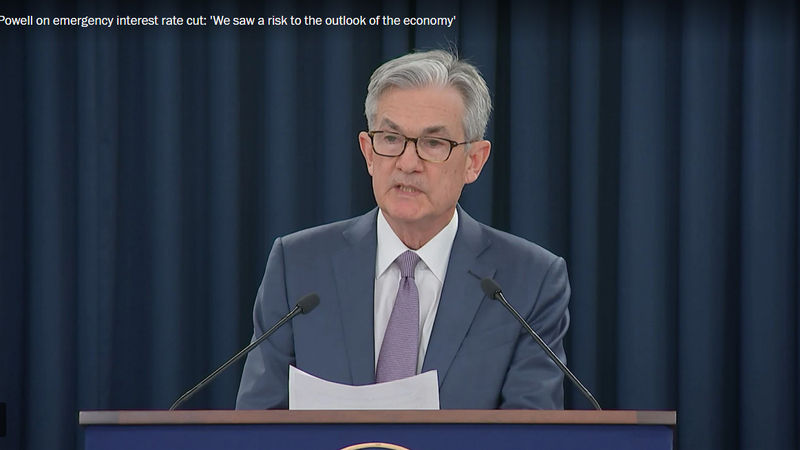
“We saw a risk to the outlook of the economy and we chose to act,” Fed Chairman Jerome Powell said at a news conference shortly after the rate cut announcement.

The economic concerns have picked up. Many U.S. companies initially scrambled to reroute manufacturing supply chains because their China suppliers were shuttered.

But a broader worry has emerged as many U.S. businesses are prohibiting work-related travel, fearful of health risks. And there’s a fear that consumers will pull back on their own expenditures as the virus spreads, schools are shut down and the stock market swings. This kind of sharp pullback could derail what had been steady economic growth, leading companies to cut workers and investments, and creating a drag that is hard to arrest.

The Fed’s action reduced the U.S. interest rate to just below 1.25%, down from about 1.75%. Fed leaders voted unanimously in favor of the rate reduction, and Powell tried to project a sense of calm during the 13-minute news conference. He said repeatedly that the U.S. economic fundamentals still look healthy, but he noted that “sentiment” had shifted. The cut led to a brief stock market rally, but it was short-lived.

The Dow Jones industrial average ended the day down nearly 800 points, and the bond market flashed a warning sign as the yield on the 10-year U.S. Treasury bond fell briefly below 1% for the first time ever.

Economists have warned that the coronavirus is suddenly shaping up to be the biggest risk to the global economy since the financial crisis. Growth this year is expected to slow sharply, even if a recession is avoided. Goldman Sachs has projected that economic growth in the United States could stall in the second quarter, which runs April through June.

The Fed’s move is one of several that policymakers have discussed in recent weeks. Congress is preparing a $7.5 billion emergency funding package to help with the costs of fighting the epidemic. President Donald Trump on Tuesday called for new tax cuts and an even bigger Fed rate cut to stimulate the economy. Treasury Secretary Steven Mnuchin, meanwhile, said they would consider an infrastructure package and regulatory relief for banks, but discussions appeared to be in early stages.

He criticized the Fed for not doing more on Tuesday, but there are limits to what the central bank can achieve, especially with interest rates already low. Also, the economic shock is causing many people to stay home, regardless of how available cheap credit is.

“You are not going to slay a disease by lowering interest rates,” said Bernard Baumohl, chief global economist at the Economic Outlook Group. He compared to the Fed’s cut to “placing a Band-Aid on an arm to cure a headache.”

Powell acknowledged that the Fed can’t come up with a vaccine or fix a broken supply chain that’s disrupted by the outbreak in China, but he believes the rate cut will help protect the economy from a rapid downturn.

“We don’t think we have all the answers, but we do believe our action will provide meaningful support to the economy,” Powell said. “It will support accommodative conditions and avoid a tightening of financial conditions, and it will help boost household and business confidence.”

While some worry that Powell caved to Trump, many economists and investors thought Powell made a mistake by not using his news conference to stress that the Fed would act again, if needed.

“The Fed’s action today is better than nothing, but it’s not quite what the doctor ordered,” said George Selgin, a senior fellow at the Cato Institute and close Fed watcher. “Powell needed to give markets a more certain sense of the Fed’s willingness to move rates further as necessary.”

Powell left the door open to another rate cut, but he stopped far short of promising action. He once again dismissed the idea that the Fed is caving to Trump’s wishes.

“We’re never going to consider any political considerations whatsoever. And it’s very important the public understands that,” Powell said.

Many economists blame the White House and Congress for being slow to respond to the crisis, thereby forcing the Fed to step in with its blunt instruments at a time such as this.

“We need to know the extent of the virus in the U.S. We are not even doing broad-based testing. We don’t know where this is or who has it. The uncertainty is so high right now about the most basic things, and that’s weighing on the economy,” said Julia Coronado, a former Fed economist and founder of Marcopolicy Perspectives.

In contrast to Trump, Mnuchin praised the Fed’s action on Tuesday, telling Congress, “They did the right thing getting ahead of this. . . . I applaud the Fed on this move.”

Earlier Tuesday morning, global finance ministers held a call to discuss the economic unrest, but they stopped short of announcing any joint steps. In the 2008 financial crisis, G-7 finance ministers announced “urgent and exceptional action” to bail out the banks. Shortly after the Tuesday call, however, the Fed made its announcement.

The Fed’s move followed Australia’s central bank, which cut interest rates to their lowest level ever. Trump had demanded that the Fed follow suit.

“Australia’s Central Bank cut interest rates and state it will most likely further ease in order to make up for China’s coronavirus situation and slowdown. They reduced to 0.5%, a record low. Other countries are doing the same thing, if not more so. Our Federal Reserve has us paying higher rates that many others, when we should be paying less,” Trump tweeted. The Fed “should ease and cut rate big.”

Lowering interest rates makes it even cheaper to borrow money, but it does not address the root cause of the current concern in financial markets.

Trump also called for a one-year reduction in payroll taxes, which would be an immediate boost to the paychecks of working Americans if approved by Congress. Payroll taxes are used to fund Social Security and Medicare and have been reduced in past times of economic trouble, including after the most recent financial crisis.

While Democrats have been highly critical of the 2017 GOP tax cuts, some Democratic lawmakers might be open to payroll tax cuts. About 75% of U.S. taxpayers do get assessed the payroll tax, according to the nonpartisan Tax Policy Center. Americans pay payroll taxes on income up to $137,700, so a cut would not have an impact on any income above that level.

Still, House Majority Leader Steny Hoyer, D-Md., dismissed Trump’s call for a payroll tax cut when asked about it Tuesday.

“I don’t think tax cuts are the answer to every problem,” Hoyer told reporters.

But he left the door open to some sort of fiscal stimulus in the future if the economy falls deeper into peril due to the virus’ spread.

“That may or may not be what we would do,” he said of a potential stimulus, saying Congress would remain “focused on . . . trying to keep the economy stable and growing and keep people employed.”

The 10-year U.S. Treasury yield hit an all-time low. Here’s why that’s worrisome #ศาสตร์เกษตรดินปุ๋ย

#ศาสตร์เกษตรดินปุ๋ย : ขอบคุณแหล่งข้อมูล : หนังสือพิมพ์ The Nation

https://www.nationthailand.com/business/30383309?utm_source=category&utm_medium=internal_referral

The 10-year U.S. Treasury yield hit an all-time low. Here’s why that’s worrisome

Mar 04. 2020
By The Washington Post · Heather Long · BUSINESS, HEALTH
 The U.S. bond market flashed an unprecedented sign of worry on Tuesday that has never been seen before. Not even during the Great Recession.

For roughly more than an hour on Tuesday, the yield on the 10-year U.S. Treasury bond fell below 1%. In plain speak what that means is that investors in America and around the world are willing to hand the U.S. Treasury their money for a decade in exchange for an anemic amount of return — 0.91 percent at the record low. To put it another way, that’s only a tad better than the interest most Americans are currently getting on their savings accounts, yet buying a bond requires tying up your money for years.

This is telling us something big. It means there’s a lot of concern that the global health and economic situation is going to get worse before it gets better. And it means the Trump administration and Congress is going to have to play a bigger role.

Here are the three key takeaways:

1. There’s still a lot of concern about the economy from the coronavirus. The coronavirus is quickly morphing into the biggest threat to the global economy since the 2008 financial crisis. No one really knows how many people are going to get the coronavirus, how deadly it will be or how many places will be impacted. The news is changing daily, and uncertainty tends to drive markets down and undermine confidence. When investors are scared, they run into the arms of the 10-year U.S. Treasury bond, and they don’t demand much in return.

Supply chains have already been disrupted. People are canceling flights and cruises. The big question is whether the coronavirus will also cause American consumers to pull back sharply on spending, which is the main driver of the U.S. economy. If a lot of Americans stay home, restaurants, stores, theaters, conference venues and more will suffer. Tuesday’s 10-year Treasury bond milestone is a signal that there’s still a lot of fear that this situation could get a lot worse than economists initially expected.

The move was also likely driven by the Federal Reserve, which took the highly unusual step of doing an emergency interest rate cut Tuesday. The Fed lowered the benchmark U.S. rate to just under 1.25%, down from about 1.75%. The move was meant to reassure investors and consumers that the Fed would do what’s needed to support the economy, but bond investors think that won’t be enough. Interest rates are likely to go lower. J.P. Morgan now predicts a 50% chance that U.S. interest rates return to zero this year.

2. Wall Street is shouting at the White House and Congress to get their act together. When the yield fell below 1%, a number of experts tweeted that this was a clear call for the White House and Congress to take more decisive action — likely even more than the $7.5 billion emergency funding package that’s already in the works.

Economists have pointed out for days that a Fed rate cut can only go so far. It doesn’t matter how low interest rates go. If Americans are worried about catching the coronavirus, they aren’t going to leave their homes to spend a lot of money. What the nation really needs is assurance the federal government has a handle on the situation and is taking steps to contain the virus, including widespread testing.

Here’s how Julia Coronado, a former Fed economist and founder of Macropolicy Perspectives described it to me today: “We need to know the extent of the virus in the U.S. We are not even doing broad-based testing. We don’t know where this is or who has it. The uncertainty is so high right now about the most basic things and that’s weighing on the economy.”

Another major area of concern is that about a quarter of U.S. workers have no paid sick leave, and in the service sector, including fast food and hospitality companies, that figure rises to nearly half of the workforce. Access to paid sick leave allows people to take time off without losing money — and research has shown it tends to make flu rates plummet when people are encouraged to stay home, as The Washington Post’s Christopher Ingraham points out.

3. There’s big demand for “safe” U.S. assets. The movements of the 10-year U.S. Treasury bond are also telling us something about the global economy. Investors around the world tend to run to U.S. government bonds any time there is a crisis because U.S. assets are easily tradable and the U.S. government is widely viewed as unlikely to default.

While there is a real risk of a global recession — or even a U.S. one — if the situation worsens, the United States is widely viewed as one of the last or least likely to fall. That’s mainly because the U.S. economy was in pretty good shape at the start of the year. Unemployment remains at a half-century low with most people who want a job able to get one. Wages had been rising and confidence was high. That gives the U.S. more of a cushion heading into this time of turbulence than Europe and parts of Asia, which were already struggling to revive their economies even before the coronavirus hit.

“If you’re looking for a port in the storm, the U.S. is still the safe haven,” said Lindsey Piegza, chief economist for Stifel Financial. “We are continuing to see those capital flows come into the US, which is exacerbating downward pressure on bond yields.”