Sales of new U.S. homes reach highest level since july 2007 #ศาสตร์เกษตรดินปุ๋ย

#ศาสตร์เกษตรดินปุ๋ย : ขอบคุณแหล่งข้อมูล : หนังสือพิมพ์ The Nation

https://www.nationthailand.com/property/30382915?utm_source=category&utm_medium=internal_referral

Sales of new U.S. homes reach highest level since july 2007

Feb 27. 2020
Homes under construction in Louisville, Ky., on Jan. 5, 2019. MUST CREDIT: Bloomberg photo by Luke Sharrett.

Homes under construction in Louisville, Ky., on Jan. 5, 2019. MUST CREDIT: Bloomberg photo by Luke Sharrett.
By Syndication The Washington Post, Bloomberg · Katia Dmitrieva

New-home sales in the U.S. jumped at the start of the year, reaching the strongest pace since mid-2007 on the heels of cheaper borrowing costs, favorable weather and a resilient labor market.

Single-family home sales rose 7.9% to a 764,000 annualized pace in January, exceeding the median estimate in a Bloomberg survey, while the December figure was revised higher, government data showed Wednesday. The median sales price jumped 14% from a year earlier to a record $348,200 as more expensive properties made up a larger share of purchases.

Mortgage rates near three-year lows, elevated consumer confidence and steady employment are energizing the real estate market. Stronger demand against a backdrop of lean inventories will probably power residential construction for a third straight quarter and contribute to economic growth as business investment remains tepid and concerns mount about the economic repercussions of the coronavirus.

The number of new homes sold for which construction hadn’t yet started increased to the best level since June, while the number sold and currently being built was the highest since 2007. Those figures indicate a robust pipeline for homebuilders.

Consumer confidence data from the Conference Board on Tuesday showed a jump in the share of respondents who said they intended to buy a new home within the next six months.

Purchases of new homes, which account for about 10% of the market, increased in three of four U.S. regions, led by the Midwest and West.

The supply of homes at the current sales rate declined to 5.1 months, the lowest since November 2017, from 5.5 months in the prior month.

Economists in Bloomberg’s survey projected an annualized pace of 718,000 new-home sales for January. Estimates ranged from 674,000 to 792,000.

The government’s data on new-home sales are volatile on a month-to-month basis. Changes in the seasonally adjusted data have a wide margin of error. There’s a 90% chance that the percentage change in January was between a 9.9% decline and a 25.7% increase, according to the U.S. Census Bureau.

Centara to enlarge global footprint with eight new properties this year. #ศาสตร์เกษตรดินปุ๋ย

#ศาสตร์เกษตรดินปุ๋ย : ขอบคุณแหล่งข้อมูล : หนังสือพิมพ์ The Nation

https://www.nationthailand.com/property/30382907?utm_source=category&utm_medium=internal_referral

Centara to enlarge global footprint with eight new properties this year.

Feb 26. 2020
By THE NATUON

Centara Hotels & Resorts, the leading hotel operator in Thailand , is accelerating its global expansion with plans to open new hotels and resorts in some of the world’s most dynamic destinations.

In 2020, Centara expects to open eight new properties, adding four countries to the company’s world map and enhancing its leadership position in Thailand.

This will increase the group’s worldwide inventory by almost 2,000 rooms and suites, in line with a strategic plan to make Centara a top 100 global hotel operator within five years.

As part of this expansion, Centara’s highly anticipated first resort of its new luxury brand will be unveiled at the end of 2020, following the refurbishment and repositioning of Centara Grand Beach Resort Samui.

This popular beachfront retreat closed temporarily in 2019 to facilitate an extensive upgrade. Its grand reopening in late 2020 will mark the launch of Centara’s sixth hotel brand, the name of which will be announced shortly.

Centra by Centara Cha Am Beach Resort Hua Hin is expected to open in April 2020.

Located on the pristine Cha-Am Beach, this 190-room and suite hotel will be surrounded by attractions, including theme parks, golf courses, retail outlets and a Royal palace.

COSI, Centara’s affordable lifestyle brand, will also drive Centara’s domestic growth in Thailand. After the recent addition of hotels in Pattaya and Koh Samui, this cutting-edge concept will enter another popular beach resort destination in Q4, with the launch of the 142-room COSI Krabi Ao Nang Beach.

Southeast Asia will be a major focus area for Centara in 2020. The company will plant its flag in two new countries this year; the 95-room Centara KMA Resort Inle Lake will become its first location in Myanmar in Q2, and the 162-room Centara Plumeria Resort Pakse will launch in Q4 to mark Centara’s introduction to Laos.

Moving forward, Centara will enter several exciting new destinations in both countries, including Luang Prabang, the UNESCO World Heritage-listed former capital of Laos and the country’s capital, Vientiane.

The Middle East is another key region, with several new hotels and resorts preparing to welcome their first guests this year.

In Qatar, The B Premiere Hotel, an 85-room property under the Centara Boutique Collection, will be introduced in Q2. Then in Q4, Centara will enter the UAE with the 607-key Centara Mirage Beach Resort Dubai – an outstanding family-friendly themed resort that will comprise 607 rooms and suites and a wealth of activities for all ages.

Finally, Centara will accelerate the implementation of its companywide Sustainability Plan in 2020, which includes the elimination of single-use plastic products, such as straws, bags, bottles and food containers, the reduction of food waste, and the expansion of its support for local farmers, rural communities and small-scale sustainable producers.

Amazon merchants spooked by coronavirus fallout curtail ad spending #ศาสตร์เกษตรดินปุ๋ย

#ศาสตร์เกษตรดินปุ๋ย : ขอบคุณแหล่งข้อมูล : หนังสือพิมพ์ The Nation

https://www.nationthailand.com/business/30382912?utm_source=category&utm_medium=internal_referral

Amazon merchants spooked by coronavirus fallout curtail ad spending

Feb 27. 2020
The Amazon.com logo on a smartphone. MUST CREDIT: Bloomberg photo by Jason Alden.

The Amazon.com logo on a smartphone. MUST CREDIT: Bloomberg photo by Jason Alden.
By Syndication The Washington Post, Bloomberg · Spencer Soper

Chuck Gregorich, who sells China-made patio furniture on Amazon.com, expects to lose as much as $2 million in sales this year due to factory closings and other coronavirus-related slowdowns. So he’s cutting his ad spending on Amazon and thinking about raising prices to avoid running out of inventory. The sudden shift in sales tactics by merchants like Gregorich threatens Amazon’s fastest-growing and profitable revenue source.

“If we’re going to run out, why not run out at full price,” he says. “We have to make sure the sales we have are as profitable as they can be.”

Amazon merchants spent about 6% less on advertising over the past two weeks than they did a year ago, says Daniel Knijnik, who runs Quartile Digital, a New York firm that helps manage Amazon advertising for 2,300 brands selling goods on the site. Many of them are small outfits forced to react more quickly than big brands selling to the likes of Walmart and Target, he says, because they lack the inventory stockpiles and alternative suppliers their larger counterparts can draw on.

Amazon’s advertising sales are a small piece of overall revenue, but they help the company offset the huge costs of storing and shipping millions of products. In the holiday quarter, what Amazon calls “other” revenue-most of which is advertising-totaled $4.78 billion, up 41% from a year earlier.

Like many of its tech industry peers, Amazon started 2020 predicting strong sales growth. Now mounting fears of a pandemic and the related economic fallout has put those rosy projections in question. Amazon’s shares have dipped 5.9% so far this week, tracking the decline in the S&P 500 Index. The falloff in advertising could be a harbinger of worse news to come.

Amazon last month forecast sales of $69 billion to $73 billion in the current quarter and has not adjusted that outlook in response to the coronavirus. Apple warned that it is likely to miss its sales forecast for the current quarter due to the outbreak, which disrupted smartphone production and forced store closings in China. “We are monitoring developments related to COVID-19 and taking appropriate steps as needed,” Amazon said in an email, using the official name for the virus.

The company is taking other previously unreported measures to soften any virus impact for smaller sellers. On Feb. 7 Amazon advised merchants that they could put their accounts in “vacation status” to avoid getting penalized by its algorithms if they suspected items would run out of stock. It also instructed merchants to cancel any customer orders they would not be able to fulfill. “If your performance metrics have been impacted by this event, please include a brief description of how your business was impacted when you respond to the relevant performance notification,” Amazon said in a notice. “We will consider this unforeseen event when we evaluate your account’s recent performance.”

More than half of the items sold on Amazon come from independent merchants like Gregorich, who pay the company a commission only when shoppers buy their goods. That puts Amazon in a very different position than traditional retailers when reacting to supply-chain disruptions. Walmart and Target remain in constant contact with their wholesale suppliers about postponing delivery deadlines and finding alternative sources for products to keep shelves stocked. Amazon has those relationships as well, but has less direct contact with smaller merchants.

Its marketplace is largely managed by machine, with algorithms deciding in real time which products people see. Prices, consumer feedback, advertising and the speed of delivery all factor into the calculation. Amazon’s algorithms can punish merchants whose products sell out by making it harder for shoppers to find their wares, giving sellers an incentive to protect their inventory until they can replenish it. Cutting ad spending is the easiest lever for them to pull.

“We have reduced our ad spend and have identified the stock level where we’ll increase prices to slow down the rate of sale even more,” says Jerry Kavesh, a Seattle merchant who sells cowboy boots and hats on the site.

Mark Looram, managing director of GTO Limited, which oversees factory operations in China and the Asia Pacific region for big importers, expects prices for China-made products to shoot up on Amazon more quickly than at competing retailers that have more control. “One of the major differences with Amazon sellers is that they control their pricing and can increase or decrease depending on market conditions,” he says.

Price spikes can attract the attention of regulators. In 2017, after back-to-back hurricanes struck Florida and Texas, Amazon fielded complaints of price-gouging on bottled water. In fact, the high price reflected the expense of quickly shipping a heavy case of water across the country when local supplies were depleted. It was an example of how Amazon’s machines, designed to help match supply with demand, lack the judgment of a human touch.

So far, there haven’t been reports of virus-related shortages of essentials in the U.S. Instead, merchants are facing delays in replenishing inventory of things like dog treats, wine refrigerators and patio umbrellas. With no clear answers about when China will be back to full production, sellers are trying to stretch out what they have until new supplies roll in. Even with those adjustments, some merchants have already run out of stock.

“I have clients in various categories that are getting crushed because of the coronavirus,” says Dan Brownsher, who runs Channel Key, a Las Vegas e-commerce consulting business with more than 50 customers who sell products on Amazon. “What was supposed to ship in February or March now won’t be shipped until April. We have items out of stock that won’t be back until April.”

Virus-related disruptions will be most immediate to those selling spring and summer seasonal goods like inflatable pool toys and patio umbrellas, which could push any impact on Amazon into the second quarter.

Gregorich might have to hold off introducing a new line of patio furniture until next year. He ordered 14 containers of products from a Chinese factory, which recently refunded his deposit because it can’t complete the order in time. He’s keeping in touch with the factory in case it can make part of the order before the outdoor furniture selling season ends in the summer.

“We told the factory to let us know where they are and maybe get a partial order in the summer and still make some sales so we don’t miss the whole season,” he says. “We’re going to miss that product this year.”

Sustainable investment in focus at KBank Private Banking as execs plays down impact from Covid-19 #ศาสตร์เกษตรดินปุ๋ย

#ศาสตร์เกษตรดินปุ๋ย : ขอบคุณแหล่งข้อมูล : หนังสือพิมพ์ The Nation

https://www.nationthailand.com/business/30382916?utm_source=category&utm_medium=internal_referral

Sustainable investment in focus at KBank Private Banking as execs plays down impact from Covid-19

Feb 27. 2020
By The Nation

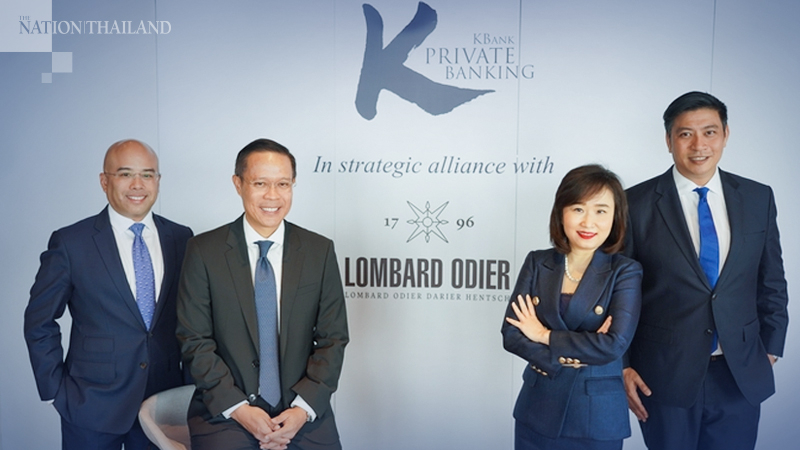
KBank Private Banking is committed to sustainable investment by focusing on clean environment, wealth sharing and new S-curve businesses, say its executives who claim that funds under its management are less impacted by market volatility amid the coronavirus outbreak.

Regarding the global sell-off of equities due to growing fear of the coronavirus epidemic, the bank’s executives said today (February 26) that investors should diversify to safe-haven assets, such as gold as an alternative to the highly volatile stock markets. Currently, fund managers have increased their investment in bond holding, up to 80 per cent of their portfolio, leaving just 20 per cent in stocks , they said. They also have cash in hand for new investment when opportunities rise. K-CCTV, a mutual fund which invests in China’s stocks has cash more than 10 per cent of its portfolio amid a market downturn there.

Jirawat Supornpaibul, head of Private Banking Group at Kasikornbank,

Jirawat Supornpaibul, head of Private Banking Group at Kasikornbank,

Jirawat Supornpaibul, head of Private Banking Group at Kasikornbank, said given the current technological disruption and economic volatility, investment strategies that mainly focus only on returns and traditional business models can no longer secure long-term growth. The bank aspires to open up a new chapter of comprehensive wealth management in Thailand to build a strong foundation for the next generation who is taking a more active role in shaping the course of society, he said. Kbank Private Banking has Bt750 billion in assets under its management.

By working closely with its strategic partner, Lombard Odier, KBank Private Banking is implementing the ‘3S’ strategies: 1) Sustainable investment approach, 2) New dimension of wealth sharing, 3) S-Curve re-innovation

Funds have been allocated to invest in clean energy, such as wind farms in Europe in light of global climate change, while wealth sharing aims to reduce the widening gap of the rich and the poor in order to maintain social harmony, he said. The bank has held talks with two charity foundations with Bt10 billion in funding each to help them manage their finance efficiently for social benefits.

Siriporn Suwannagarn, head of Private Banking Financial Advisory

Siriporn Suwannagarn, head of Private Banking Financial Advisory

Sustainable investment approach

Siriporn Suwannagarn, head of Private Banking Financial Advisory said, “Global investment communities are putting more emphasis on supporting businesses with a strong commitment to sustainability. Sustainability is more important than IT revolution because it will sustain our lives”.

These companies are considered not only significantly contributing to the environment and the society, but they also have the potential for long-term growth, which will eventually drive their valuation to be higher than other businesses. In 2020, KBank Private Banking is embedding sustainability into every investment advisory given to customers to reduce risks and create stable growth. Additionally, we will be introducing investment strategies on impact investing and a series of sustainability funds throughout the year.

“In 2019, we have introduced the mutual fund K-HIT to allow customers to invest in mega-trend-themed businesses, such as Next Generation Energy, Clean Water and Land, and Health Tech. This thematic fund is among the highest-performing fund during the lackluster market situation. Early this year, when the global stock market suffered a serious blow from the COVID-19 outbreak, K-HIT still performed well with as high as 9.08 per cent returns as of February 24” said Siriporn. “Our risk-based asset allocation has worked  for us well”.

The return on investment for KBank Private Banking customers was 14 per cent last year. However, due to global equity sell-off , the return stood at 0.5 per cent as of February 25 this year. “We have succeeded in maintaining positive returns while other fund managers may have slided into negative territory , “ said Siriporn.

Triphon Phumiwasana, head of Private Banking Business Head

Triphon Phumiwasana, head of Private Banking Business Head

New dimension of wealth sharing.

Triphon Phumiwasana, head of Private Banking Business Head, said : “The high-risk investment landscape not only affects business operations, but it also has a far-reaching consequence to charitable activities. In Thailand, many philanthropic organisations that own hundreds of billions in assets still primarily employ a low-risk approach to asset management, which can no longer regularly generate substantial returns in the current financial climate and, therefore, robs them of an opportunity to make a difference to the society in their full potential.

“Looking to create direct social impact, KBank Private Banking will move forward this year to open up a new dimension of asset allocation for philanthropy. We aim to unlock the potential of Thai foundations by providing effective risk and financial management services, collaborating with Lombard Odier in offering advisory in fund management, fundraising and governance structure, and hosting seminars with global funds to share international best practices in philanthropic investment with local charitable bodies,” said Triphon. Charity funds in Thailand are estimated to be worth Bt 500 billion. If it could generate annual return of 2 per cent, there would be an extra Bt10 billion injecting into the economy, he added.

Nont Buranasiri, head of Private Banking Family Wealth Management

Nont Buranasiri, head of Private Banking Family Wealth Management

S-Curve reinnovation

Nont Buranasiri, head of Private Banking Family Wealth Management said: ” Technological disruption is one of the top worries of our high-net-worth clients, who are owners of large corporations looking for innovative business models. KBank Private Banking aims to be a connector between the world’s rising innovator companies that need investment and our customers who are seeking opportunities to build a new S-Curve for their businesses.”

“Previously, we hosted a series of events to share with our customers know-hows on new business models, such as KPB Academy. We also connected our customers with global disruptor networks. In 2020, we will be providing our advisory service in investment into these innovative companies such as Google, in the hope of playing our role in stimulating the next generation jobs and the country’s economic development,” added Non

IVL enjoys 18% growth in 2019, dividend on the way #ศาสตร์เกษตรดินปุ๋ย

#ศาสตร์เกษตรดินปุ๋ย : ขอบคุณแหล่งข้อมูล : หนังสือพิมพ์ The Nation

https://www.nationthailand.com/business/30382909?utm_source=category&utm_medium=internal_referral

IVL enjoys 18% growth in 2019, dividend on the way

Feb 26. 2020
Group chief executive ‬Aloke‭ ‬Lohia

Group chief executive ‬Aloke‭ ‬Lohia
By THE.NATION

Indorama Ventures Public Company Limited (IVL), a global chemical producer, on Wednesday (February 26) reported an 18-per-cent jump in ‬registered‭ ‬volume‭‬‭ ‬growth in 2019, driven mainly‭ ‬by‭ ‬ ‭ ‬inorganic expansion. Industry-wide spreads declined to historic lows in 2019, leading to a 20-per-cent reduction in IVL’s core EBITDA.

Operating cash flow through this period increased by 33 per cent, to US$1.3 billion, as a result of lower prices and operational excellence.

IVL has proposed a dividend of Bt1.225 per share for 2019.

IVL concurrently undertook several transformative initiatives that were announced on February 4 at its Capital Market Day and are expected to generate benefits starting in 2020 and targeted to lead to $350 million in run-rate cost savings by 2023.

These initiatives and the strategic acquisition of the Huntsman Integrated Ethylene and Propylene Oxide assets (codenamed Spindletop), footprint expansion into a growing market in India, formation‭ ‬ ‭of‭ ‬a ‬dedicated‭ ‬team‭ ‬to ‬grow ‬the PET‭ recycling‭ ‬business, continued‭ focus‭ on‭ ‬working‭-‬capital optimisation coupled with an increased emphasis on leadership development are the key strategic priorities for the group.

“IVL‭ ‬now has‭ ‬three strong growth engines to‬ generate continued returns for its stakeholders,” said ‬Group chief executive ‬Aloke‭ ‬Lohia.

“The first is the ‭combined PET‬ segment, which includes its key feedstocks and recycling business, the integrated oxides and derivatives‬ segment, which includes the recent acquisition of the Spindletop assets, the completed IVOL gas cracker in Louisiana, and the fibres‬ segment, which serves mobility, hygiene and lifestyle verticals.

“Our ‬global reach, ‬with around ‬80 per cent of capital ‭ ‬invested in Europe and‭ the Americas, makes our business‭ resilient to events happening in any particular country or region. On the other hand, our end-product strategy of serving the packaging, hygiene and safety needs of society, leads to our growth in excess of GDP growth.

“Going forward, we will reinforce our strengths via five strategic priorities – cost transformation, asset full potential, adjacency growth, recycling leadership and leadership development.”

Wall Street extends losses as spread of coronavirus outside China picks up #ศาสตร์เกษตรดินปุ๋ย

#ศาสตร์เกษตรดินปุ๋ย : ขอบคุณแหล่งข้อมูล : หนังสือพิมพ์ The Nation

https://www.nationthailand.com/business/30382925?utm_source=category&utm_medium=internal_referral

Wall Street extends losses as spread of coronavirus outside China picks up

Feb 27. 2020
By The Washington Post · Taylor Telford, Thomas Heath

Wall Street’s anxieties about the coronavirus were on full display Wednesday, with the Dow Jones industrial average moving from a three-digit morning surge to a 124-point loss at the end of the day. The outbreak’s rapid spread in Italy, Iran and South Korea has investors worried that the worst is still to come.

Wednesday brings the Dow’s five-day losing streak to 2,390 points, erasing 8.15% off the blue-chip gauge. It’s the biggest five-day percentage loss in two years.

“This is the pullback that everybody says was long overdue and that will shake out some of the weak hands,” said Ivan Feinseth, chief investment officer at Tigress Financial Partners. “It’s all coronavirus. Every time the market starts to rally, another case pops up.”

New cases outside China exceeded those within its borders for the first time Wednesday, the World Health Organization reported. Investors are increasingly waking up to the potential fallout from an outbreak that has claimed nearly 3,000 lives, upended global supply chains, dramatically slowed travel and taken a bite out of corporate earnings. Oxford Economics says the virus could slow global growth to its lowest levels since the financial crisis.

Wall Street’s demeanor darkened significantly Tuesday after officials from the Centers for Disease Control and Prevention warned that the virus would inevitably take a toll on the United States and asked businesses and local communities to prepare for its impact. The Dow on Tuesday endured its worst two-day slump in four years, with the index chalking up back-to-back 3% declines.

Wednesday saw an early rebound, with the Dow advancing more than 400 points before turning negative. The reversal came after Germany announced that it was on the brink of an epidemic and Bloomberg News reported that a Food and Drug Administration official said the virus was on the “cusp of a pandemic.”

“Today’s 652-point swing in the Dow shows that there are buyers out there, but more investors are waiting on the sidelines, looking for better bargains,” said Howard Silverblatt of S&P Dow Jones Indices.

“No one knows for sure how much further this decline may have to run, but excesses have quickly been wrung out,” said Sam Stovall of CFRA Research.

The Standard & Poor’s 500 index on Wednesday dropped 12 points, to 3,116. The broad S&P has lost 7.97% in the past five sessions. That is also the biggest loss in two years. The tech-laden Nasdaq Composite broke a losing streak by finishing up 15 points to close at just over 8,980.

“The recent market carnage saw the S&P 500 futures fall 9% from the record high, and investors are nervous we could see further short-term weakness as history suggests outbreaks could take several months before the longer-term bullish trend reasserts itself,” Ed Moya, an analyst with Oanda, wrote Wednesday. “Until the global spreading of the virus appears under control, we could see continued downward revisions to growth forecasts.”

Overseas, investors shared Wall Street’s jitters. Europe’s benchmark Stoxx 600 index closed nearly flat, while Hong Kong’s Hang Seng Index closed down 0.7%, and Japan’s Nikkei 225 closed down nearly 0.8%.

Oil prices continued to fall, a reflection of the lower demand across the globe brought on in part by the coronavirus’s shackling of Asian economies. The U.S. oil benchmark West Texas Intermediate sank deeper below the $50 per barrel “make or break threshold,” trading at $48.71 late in the day. That’s its lowest price in a year. Brent crude, the global benchmark, fell to $52.75 per barrel.

Bond yields skirted near all-time lows. The yield on the 10-year Treasury note rebounded slightly from Tuesday’s all-time low. Yield drops as the price of a bond rises.

White House officials are playing down the threat posed by the outbreak. Larry Kudlow, President Donald Trump’s chief economic adviser, said late Monday that investors should consider “buying these dips.” On CNBC this week, Kudlow said he did not expect the Federal Reserve to react to the coronavirus and cut interest rates to juice the economy. He said there is “no supply disruption” appearing in the numbers that the White House is studying.

“We have contained this. We have contained this. I won’t say airtight, but pretty close to airtight,” Kudlow told CNBC in an interview Tuesday.

Publicly, Trump has said the coronavirus is “very well under control,” but privately he has been furious about the stock market’s slide, according to people familiar with the president’s thinking who spoke on the condition of anonymity to share internal details. After the Dow’s drop-off of more than 1,000 points Monday, Trump tweeted: “Stock Market starting to look very good to me.”

The outbreak has hobbled China’s powerful manufacturing sector, causing major supply-chain disruptions that have dampened revenue forecasts in a variety of industries. Retailers including Nike and Starbucks have closed stores in China, while Apple and Tesla have warned of the virus’s impact on their profitability. As scores of airlines reduce service, air travel demand is slated to decline this year for the first time since the financial crisis, with the virus costing the airline industry $29.3 billion, the International Air Transport Association warned this week. China’s idled factories and shut-in consumers have delivered a tough blow to the auto industry, which is expected to experience a 2.5% decline in 2020 global auto sales, according to a new report from Moody’s.

“Negative psychological momentum continues to build,” Wayne Wicker, the chief information officer at Vantagepoint Investment Advisers, wrote in commentary Wednesday. “While they have initiated reductions, analysts will continue to be taking earnings estimates lower to reflect ongoing disruptions in supply chains and manufacturing.”

Authorities ponder pleas from struggling airlines #ศาสตร์เกษตรดินปุ๋ย

#ศาสตร์เกษตรดินปุ๋ย : ขอบคุณแหล่งข้อมูล : หนังสือพิมพ์ The Nation

https://www.nationthailand.com/business/30382906?utm_source=category&utm_medium=internal_referral

Authorities ponder pleas from struggling airlines

Feb 27. 2020
CAAT director-general Chula Sukmanop

CAAT director-general Chula Sukmanop
By THE NATION

The Civil Aviation Authority of Thailand (CAAT) will ask the Civil Aviation Board when it meets on March 6 to consider measures proposed by some 20 airlines suffering the effects of the COVID-19 virus outbreak.

CAAT director-general Chula Sukmanop said on Wednesday (February 25) that one proposal is for a 50-per-cent reduction through year’s end in fees charged to the airlines – for landing, parking, office rentals and other services.

Others would see the two-week process for approving requests for flight adjustments shortened and

passenger-service charges halved to encourage more people to fly.

Nearly 9,800 flights to Thailand scheduled for March have been cancelled, representing a loss of three million passengers, Chula said.

Banks rethink operations to cope with coronavirus in Asia #ศาสตร์เกษตรดินปุ๋ย

#ศาสตร์เกษตรดินปุ๋ย : ขอบคุณแหล่งข้อมูล : หนังสือพิมพ์ The Nation

https://www.nationthailand.com/business/30382913?utm_source=category&utm_medium=internal_referral

Banks rethink operations to cope with coronavirus in Asia

Feb 27. 2020
Bank buildings line the Central district of Hong Kong. MUST CREDIT: Bloomberg photo by Chan Long Hei

Bank buildings line the Central district of Hong Kong. MUST CREDIT: Bloomberg photo by Chan Long Hei
By Syndication The Washington Post, Bloomberg · Cathy Chan

Global banks including UBS Group and Bank of America are broadening their contingency plans across Asia to ensure that they can keep trading and other operations running as the spread of the coronavirus accelerates outside China.

Credit Suisse Group is also among lenders starting to implement alternative work arrangements in South Korea, adding Asia’s fourth-largest economy to the list of areas where staffers are being moved into different offices. That way, operations can continue should an infection prompt the closure of one location, according to people familiar with the matter. Banks are considering similar moves in Japan.

Firms from Shanghai to Hong Kong and now Seoul are rethinking how they work and travel to keep staffs safe and ensure that business continues. Deals involving Chinese companies have slumped, as have initial public offerings in Hong Kong. HSBC Holdings and Singapore’s three biggest banks have warned that the virus may force them to set aside more money for soured loans.

In South Korea, infections have topped 1,200, making it a new hot spot for the virus, that has killed more than 2,700 people globally. Infections in South Korea jumped from 51 a week ago, with a U.S. soldier stationed in the country becoming the first reported American military case. About two dozen countries including Singapore have levied restrictions on travelers from South Korea, while flights and tour-group trips to the nation are being canceled.

In Japan, Prime Minister Shinzo Abe called for major sporting and cultural events to be called off, postponed or scaled down over the next two weeks, saying the move was crucial in preventing the domestic spread of the virus. Japan has 164 confirmed cases.

The rapid spread of the virus has prompted the Bank of Japan to ask major banks about their preparedness for a worsening of the outbreak, people with knowledge of the matter said. Initial findings from the talks indicate that large financial institutions are well placed to deal with the situation, the people said, asking not to be identified.

UBS has put South Korea on a so-called level 2 as part of it business continuity planning, in line with Hong Kong and Singapore. China is categorized at level 3, signaling the highest risk, one of the people said.

South Korea is rated as an “increased caution” at HSBC, meaning that business travel can continue but that employees should reconsider the need for the trip and avoid the heaviest hit areas of Daegu and Gyeongbuk, a spokeswoman said. Morgan Stanley and Standard Chartered have also restricted travel to and from South Korea.

Morgan Stanley employees traveling from South Korea, or in close contact with someone who has been there, need to work from home for 14 days afterward, a person said.

Representatives for the banks declined to comment on the measures.

Banks are also starting to take measures in northern Italy, where more than 250 people have been infected. Many large companies, including Unicredit and Fiat Chrysler, have asked employees to work from home and cut back on business travel.

Downgraded growth in Southeast Asia fuels calls for stimulus #ศาสตร์เกษตรดินปุ๋ย

#ศาสตร์เกษตรดินปุ๋ย : ขอบคุณแหล่งข้อมูล : หนังสือพิมพ์ The Nation

https://www.nationthailand.com/business/30382911?utm_source=category&utm_medium=internal_referral

Downgraded growth in Southeast Asia fuels calls for stimulus

Feb 27. 2020
Construction workers labor on a building towering above the business district in Jakarta, Indonesia. MUST CREDIT: Bloomberg photo by Dimas Ardian

Construction workers labor on a building towering above the business district in Jakarta, Indonesia. MUST CREDIT: Bloomberg photo by Dimas Ardian
By Syndication The Washington Post, Bloomberg · Michelle Jamrisko

The acceleration of the coronavirus outbreak over the past week is putting downside pressure on forecasts for Southeast Asian economies, leading policy makers to unveil support measures.

Economists have slashed this year’s growth forecasts for China to about 5.5%, compared with 6.1% last year. With most of Southeast Asia heavily reliant on China-linked supply chains and tourism, that has meant growth downgrades in the region as well: Thailand, for example, is seen slowing to barely above 2% this year, from 2.4% in 2019.

Almost all of Southeast Asia’s top six economies have cut interest rates this year, and economists are betting on more to come. On the fiscal side, Singapore has taken the lead with significant support to cushion its economy from the impact of the virus.

“We had previously expected the dovish wave in 2019 to subside, as global growth bottoms out and picked up slightly in 2020,” said Edward Lee, an economist for South and Southeast Asia at Standard Chartered in Singapore.

Given the virus outbreak, “we had already seen quite a few economies easing monetary policies and some sanctioning fiscal policies to mitigate the impact,” Lee said, with more rate cuts likely in Malaysia, the Philippines and Thailand.

Here’s how the growth outlook and policy reaction are shaping up across Southeast Asia:

– – –

– Indonesia

Southeast Asia’s biggest economy hasn’t recorded any confirmed coronavirus cases, but is calling on leaders worldwide to brace for a larger-than-expected hit to growth. Beyond trade and tourism, Indonesia is vulnerable to losses in exports of coal and palm oil, for which China is a major customer.

The central bank on Feb. 20 lowered its forecast range for economic growth this year to 5%-5.4%, from 5.1%-5.5%.

– Policy response

Bank Indonesia cut its benchmark interest rate Thursday after three straight holds, with Governor Perry Warjiyo pledging to keep policy “accommodative.” The next rate decision is set for March 19.

Finance Minister Sri Mulyani Indrawati said in a Bloomberg Television interview earlier this week that the government still has fiscal space to act without violating its budget-deficit limit of 3% of GDP. She said the government will increase payments to low-income households and is considering a tax break for companies if the situation turns “severe.”

– – –

Thailand

Heavy reliance on tourism, particularly from China, leaves Thailand among the most exposed in the region as travel restrictions weigh on the sector. The government estimates that the number of visitors could drop by about 2.8 million compared with last year, to 37 million. Receipts from Chinese visitors slumped 10% in January from the same time in 2019, according to Tourism Ministry data.

The baht, the strongest currency in the region last year, has plunged in 2020. Officials have said they’re comfortable with further currency weakness.

– Policy response

The Bank of Thailand cut its interest rate to a record low Feb. 5, and said it has more room to ease. Its next scheduled meeting is March 25.

Long-awaited budget legislation has been approved by parliament and awaits royal assent, with an expected 400 billion baht ($12.6 billion) in investment likely to filter through to the economy.

– – –

Singapore

Singapore has won praise for its anti-virus strategy, with new cases dwindling after several weeks in which the city-state had the highest number of confirmed cases outside China.

The government last week lowered the midpoint of its 2020 growth forecast to 0.5% from 1.5%, following last year’s 0.7% expansion, the weakest in a decade.

– Policy response

The Monetary Authority of Singapore, which uses the exchange rate as its main policy tool, said Feb. 5 that the Singapore dollar had room to weaken, fueling bets that the central bank will ease policy. The MAS’s next scheduled decision is in April.

The 2020 budget unveiled last week envisions Singapore’s biggest deficit since at least 1997. It included S$800 million ($573 million) in targeted measures to counter the virus, and S$5.6 billion in additional support for households and businesses to shore up the ailing economy.

– – –

Malaysia

The virus outbreak has punished the ringgit and threatens to lessen growth in Malaysia, which was already the weakest last year since 2009. A political crisis is stalling a planned fiscal response, further clouding the outlook for the economy.

– Policy response

Bank Negara Malaysia cut its benchmark interest rate Jan. 22, even before the spread of coronavirus made major news. The bank’s chief has said there’s more space to act as inflation remains low. The next planned decision is March 3.

– – –

Philippines

The Philippines is seeing a significant hit to tourism, with the government estimating about $445 million a month in losses for the sector. Travel restrictions also have affected work schedules for thousands of Filipinos employed overseas, whose remittances make up about 9% of GDP.

The economy is considered less vulnerable than others in the region, with authorities projecting a 0.7 percentage-point hit to GDP this year if the virus lingers through year’s end.

– Policy response

The central bank was among the first in the region to cut its benchmark interest rate in response to virus risk, on Feb. 6. Officials have said there’s “a lot of room” to cut further.

– – –

Vietnam

Vietnam is highly exposed to coronavirus risk through its tight supply chain with neighboring China. Schools have been closed, thousands of workers have been quarantined and flights between China and Vietnam have been suspended.

Exports plunged in January as the outbreak was setting in, and government officials have said economic growth this year could slow to less than 6% after reaching 7% last year. Officials are maintaining their target of 6.8% growth in 2020.

– Policy response

Vietnam’s central bankers have ordered commercial lenders to give loan relief to virus-hit businesses. So far there have been few hints of any forthcoming fiscal support.

– – –

Bloomberg’s John Boudreau, Sunil Jagtiani, Yudith Ho and Siegfrid Alegado contributed to this report.

Foreign arrivals up by 2.5% in January, says Tourism Ministry #ศาสตร์เกษตรดินปุ๋ย

#ศาสตร์เกษตรดินปุ๋ย : ขอบคุณแหล่งข้อมูล : หนังสือพิมพ์ The Nation

https://www.nationthailand.com/business/30382899?utm_source=category&utm_medium=internal_referral

Foreign arrivals up by 2.5% in January, says Tourism Ministry

Feb 26. 2020
By THE NATION

Perhaps bidding to shore up confidence in a tourist trade staggered by the COVID-19 virus, the Ministry of Tourism and Sports has offered a preliminary count of 3.81 million-plus foreign visitors to Thailand in January.

The figure represents a 2.46-per-cent year-on-year increase.

Total spending among foreign tourists last month was down 3.6 per cent, to Bt188.8 billion, the ministry said.

There were 2.39 million arrivals from East Asia, up 3.55 per cent, and they spent Bt97.46 billion, down 2.26 per cent.

The number of visitors from other Southeast Asian countries grew by 12.25 per cent to 836,788, with total spending of Bt25.47 billion, up 11.14 per cent.

Some 1.03 million Chinese visited, down 3.71 per cent, with spending of Bt49.38 billion, down nearly 10 per cent.

Arrivals from Europe rose 3.4 per cent to 916,493, spending Bt61.96 billion, down 2.65 per cent.

Arrivals from North and South America dipped 3.3 per cent to 166,321, with spending of Bt10.85 billion, down 9.31 per cent.