Dtac takes possession of 26 GHz 5G licences #ศาสตร์เกษตรดินปุ๋ย

#ศาสตร์เกษตรดินปุ๋ย : ขอบคุณแหล่งข้อมูล : หนังสือพิมพ์ The Nation

https://www.nationthailand.com/business/30382884?utm_source=category&utm_medium=internal_referral

Dtac takes possession of 26GHz 5G licences

Feb 26. 2020
By THE NATION

Total Access Communication (Dtac) subsidiary Dtac Trinet picked up its 26GHz 5G licences from the National Broadcasting and Telecommunication Commission on Wednesday (February 26).

Dtac acquired two licences in the band in the February 16 auction and has committed to launching 2600MHz 5G in selected locations in the second quarter of the year.

Deployment of the 5G network on its 700MHz band is planned for the second half of 2020.

CK Power shows strong profit growth in 2019 #ศาสตร์เกษตรดินปุ๋ย

#ศาสตร์เกษตรดินปุ๋ย : ขอบคุณแหล่งข้อมูล : หนังสือพิมพ์ The Nation

https://www.nationthailand.com/business/30382882?utm_source=category&utm_medium=internal_referral

CK Power shows strong profit growth in 2019

Feb 26. 2020
By The Nation

CK Power Pcl (CKP) saw a 28-per-cent surge in operating profits year on year in 2019.

The company achieved Bt8.84 billion in revenue, generating profits of Bt769 million, after recognising the profit sharing from Xayaburi Hydroelectric Power Plant.

Thanawat Trivisvavet, the company’s managing director.

Thanawat Trivisvavet, the company’s managing director.

Thanawat Trivisvavet, the company’s managing director, said in 2019 there was interest income from the Nabong Substation lease which had been completed since the end of 2018 together with the recognition of profit-sharing from investment in Xayaburi Hydroelectric Power Plant that had started commercial operation of electricity generation to Egat since October 29, 2019.

CKP has approved dividend at Bt0.03 per share, which will be paid to shareholders on May 27.

Thanawat said last year, CKP had opened five new rooftop solar power plants — Phachi Solar Power Plant, in Phra Nakhon Si Ayutthaya province with installed capacity of 0.89 megawatts; Bang Len Solar Power Plant in Nakhon Pathom province with installed capacity of 0.97MW; Phutthamonthon 5 Solar Power Plant, in Nakhon Pathom with installed capacity of 0.97MW; Mahachai Solar Power Plant in Samut Sakhon province with installed capacity of 0.72MW and another solar power plant in Krathum Baen, Samut Sakhon province with installed capacity of 0.52MW. The company also increased the proportion of shareholding in SouthEast Asia Energy Co Ltd by 5.33 per cent with investment value of Bt681.5 million, resulting in the increase of indirect shareholding in Nam Ngum 2 Hydroelectric Power Plant from 42 to 46 per cent.

Thanawat added that in 2020, CKP expects to have better operating results due to the operation of Xayaburi Hydroelectric Power Plant at full capacity throughout the year.

Meanwhile, CKPower is still looking for opportunities to expand its investment in the generation and distribution of clean and environmentally friendly power in Thailand, Lao PDR and other countries, he added.

FAA wants detailed inspections, fixes of engine panels on Boeing 737 Max #ศาสตร์เกษตรดินปุ๋ย

#ศาสตร์เกษตรดินปุ๋ย : ขอบคุณแหล่งข้อมูล : หนังสือพิมพ์ The Nation

https://www.nationthailand.com/business/30382863?utm_source=category&utm_medium=internal_referral

FAA wants detailed inspections, fixes of engine panels on Boeing 737 Max

Feb 26. 2020
File Photo of Boeing 737 Max/Getty Images

File Photo of Boeing 737 Max/Getty Images
By The Washington Post · Lori Aratani · NATIONAL, BUSINESS, TRANSPORTATION

A new airworthiness directive set to be published this week by the Federal Aviation Administration will require enhanced inspections and fixes to portions of an outside panel that helps protect the engines on Boeing’s 737 Max from lightning strikes.

The company first identified the issue in December and said it involved composite panels that sit atop the engine housing on planes that were manufactured between February 2018 and June 2019.

In the airworthiness directive, the FAA said that the panels may not have the quality of “electrical bonding” needed to shield the underlying wiring from lightning strikes or high intensity radiated fields. As a result, the planes’ engines could lose power in the event of a lightning strike.

“The FAA is proposing this AD because the agency evaluated all the relevant information and determined the unsafe condition described previously is likely to exist or develop in other products of the same type design,” the document stated. That is part of the reason that the agency said it was expanding its directive to include inspection of all Max jets, not just those built in the time period specified by Boeing.

News of the issues with the composite panels was first reported by the Wall Street Journal.

The Max has been grounded since March, following two deadly crashes that killed a total of 346 people.

This latest issue raises more questions about quality control at Boeing’s Renton, Washington, plant where the 737 Max is built. Last week, the company reported that it has found debris in the gas tanks of some of the several hundred 737 Max jets that have been built, but not yet delivered to customers. The company said it is dealing with the problem.

In December, a manager at the plant told a congressional panel that pressure to increase production of the 737 Max had created a “factory in chaos.” Edward Pierson said he repeatedly voiced concerns about production problems but was ignored. Boeing said it looked into the manager’s concerns but they did not think the issues he raised were related to the crashes.

The FAA estimated that the airworthiness directive would affect 128 of Boeing’s 737 Max jets.

Boeing said it would provide operators with the necessary parts and that the costs of the inspection and fixes will be covered under warranty. The company said it does not expect the issue to impact its mid-2020 timeline for returning the 737 Max to service.

The enhanced inspections of the composite panels add to several steps that Boeing must take to win approval from the FAA for the troubled jetliner to resume service. Boeing has been working on software fixes to an automated system, known as MCAS, which has been implicated in both crashes. It must also design new training for pilots who will fly the Max when it returns to service.

BP to pull out of trade groups over climate policies #ศาสตร์เกษตรดินปุ๋ย

#ศาสตร์เกษตรดินปุ๋ย : ขอบคุณแหล่งข้อมูล : หนังสือพิมพ์ The Nation

https://www.nationthailand.com/business/30382857?utm_source=category&utm_medium=internal_referral

BP to pull out of trade groups over climate policies

Feb 26. 2020
By The Washington Post · Steven Mufson · NATIONAL, BUSINESS, WORLD, SCIENCE-ENVIRONMENT

 BP is expected to withdraw from at least two trade groups over climate policies, a move that comes after the company vowed to reach net-zero carbon emissions by 2050.

The oil giant is pulling out of the American Fuel and Petrochemical Manufacturers and the Western States Petroleum Association, said several industry members who spoke on the condition of anonymity pending the formal announcement. BP might also pull out of a third association.

But BP is expected to remain in the American Petroleum Institute despite the API’s tough positions on climate change over the years.

On Feb. 12, BP chief executive Bernard Looney said the company would slash its own greenhouse gas emissions to net zero by 2050. He also said BP would seek to alter the positions of some trade associations to which it belongs. If that fails, he said, the company would withdraw from those groups.

In the past, BP has worked closely with the two trade groups. It has had a position on the AFPM executive committee for the past three years. And as a member of the WSPA, it poured about $13 million into the oil industry’s more than $31 million campaign in 2018 to defeat a state carbon tax, or “fee,” that was championed by Washington Gov. Jay Inslee, a Democrat. BP said that it supported carbon taxes but said the one in Washington state was badly flawed because of certain exceptions.

This month, by contrast, the company has supported Washington legislation that would give the state the authority to adopt measures to reduce greenhouse gas emissions. This followed a state supreme court decision that said the state lacked such authority.

BP is not the only oil giant to leave a trade association. Last April, Shell pulled out of the AFPM, saying it was at odds with the refining and petrochemical group on the Paris climate agreement, carbon pricing, fuel mandates and the reduction of methane emissions.

But some industry members are critical of BP for remaining a member of API while quitting less-prominent trade groups. “All of this strikes me as a cheap publicity stunt masquerading as news,” said Stephen H. Brown of RBJ Strategies, an energy consultancy.

Markets wrap: U.S. stocks plunge, bonds surge after CDC warning #ศาสตร์เกษตรดินปุ๋ย

#ศาสตร์เกษตรดินปุ๋ย : ขอบคุณแหล่งข้อมูล : หนังสือพิมพ์ The Nation

https://www.nationthailand.com/business/30382856?utm_source=category&utm_medium=internal_referral

Markets wrap: U.S. stocks plunge, bonds surge after CDC warning

Feb 26. 2020

File Photo /Getty Images

File Photo /Getty Images
By Syndication Washington Post, Bloomberg · Vildana Hajric, Claire Ballentine · NATIONAL, BUSINESS, US-GLOBAL-MARKETS ·
U.S. stocks tumbled to an almost 12-week low and bond yields plunged to records on rising concern the coronavirus will upend global supply chains critical to economic growth.

The S&P 500’s four-day rout reached 7.6%, with losses accelerating Tuesday after the U.S. Centers for Disease Control and Prevention warned Americans to prepare for a coronavirus outbreak at home. That follows a rapid increase in cases from Italy to Iran and Japan, with a growing list of companies warning that profits will suffer as economies around the world suffer. The S&P, Dow Jones Industrial Average and Nasdaq Composite indexes all set record highs this month.

The 10-year U.S. Treasury yield fell to a record low of 1.3055% as investors sought shelter from the virus’s impact on the outlook for growth. All 11 sectors in the S&P 500 fell with energy, material and financial shares leading the declines. Volatility spiked, sending the Cboe’s measure of equity gyrations surging past 30 for the first time since 2018.

“The market is pricing in a significant slowdown in GDP and a 10% impact on earnings,” said Zhiwei Ren, portfolio manager at Penn Mutual Asset Management. “And since no one knows how bad the infection will be, it is hard to make a bet on economy.”

U.S. central bankers are closely monitoring the spreading coronavirus, but it is “still too soon” to say whether it will result a material change to the outlook, Federal Reserve Vice Chairman Richard Clarida said.

Elsewhere, European stocks closed in the red, while bonds from the region were mixed. Crude oil slumped again after Monday’s slide of nearly 4%.

Japanese shares tumbled more than 3% as traders returned after a holiday. Stocks fell in China and Australia and pushed higher in South Korea and Hong Kong. The yen strengthened against the dollar for a third day.

Erratic market moves suggest investors remain on edge over the economic impact of the virus. The World Health Organization has held off from declaring a global pandemic even as cases surged in South Korea, Italy and Japan.

“We know there will be supply disruptions, the question now is to what extent will it affect economic growth and more importantly for the stock market earnings growth,” said Sandip Bhagat, Whittier Trust Co.’s chief investment officer “The market is repricing to that new reality.”

Analysts at Oxford Economics Ltd. said the epidemic could wipe more than $1 trillion from global domestic product, while the International Monetary Fund lowered its growth forecasts for the world economy.

These are some key events coming up:

– Earnings keep rolling in from companies including: Peugeot SA on Wednesday; Baidu Inc., Best Buy Co. Inc., Occidental Petroleum Corp. and Dell Technologies Inc. on Thursday; and London Stock Exchange Group Plc on Friday.

– The Bank of Korea announces its policy decision on Thursday, with rising risks of an interest-rate cut.

– U.S. jobless claims, GDP and durable goods data are out Thursday.

– Japan industrial production, jobs, and retail sales figures are due on Friday.

These are the main moves in markets:

– – –

– The S&P 500 Index decreased 3.2% to 3,128.43 as of 4:01 p.m. New York time, the lowest in more than 11 weeks on the largest dip in almost 15 months.

– The Dow Jones Industrial Average sank 3.3% to 27,081.50, the lowest in four months.

– The Nasdaq Composite Index fell 2.9% to 8,965.61, the lowest in eight weeks on the largest drop in six months.

– The MSCI All-Country World Index dipped 2.4% to 542.98, the lowest in almost 12 weeks on the biggest decrease in almost seven months.

– The Stoxx Europe 600 Index fell 1.8% to 404.60, the lowest in more than 11 weeks.

– – –

– The Bloomberg Dollar Spot Index decreased 0.2% to 1,212.91.

– The euro rose 0.2% to $1.0885, the strongest in almost two weeks.

– The Japanese yen strengthened 0.6% to 110.10 per dollar.

– The British pound gained 0.6% to $1.3003, the strongest in a week.

– – –

– The yield on 10-year Treasuries sank five basis points to 1.33%, the lowest on record.

– The yield on 30-year Treasuries dipped four basis points to 1.80%, the lowest on record.

– Germany’s 10-year yield decreased three basis points to -0.51%, the lowest in almost 20 weeks.

– Britain’s 10-year yield fell two basis points to 0.519%, hitting the lowest in three weeks with its sixth straight decline.

– – –

– Gold weakened 0.6% to $1,632.93 an ounce, the first retreat in more than a week and the biggest fall in almost three weeks.

– Copper decreased 0.8% to $2.56 a pound, the lowest in two weeks.

– West Texas Intermediate crude dipped 3.1% to $49.79 a barrel, the lowest in two weeks.

U.S. markets plummet, continuing coronavirus-fueled sell-off #ศาสตร์เกษตรดินปุ๋ย

#ศาสตร์เกษตรดินปุ๋ย : ขอบคุณแหล่งข้อมูล : หนังสือพิมพ์ The Nation

https://www.nationthailand.com/business/30382854?utm_source=category&utm_medium=internal_referral

U.S. markets plummet, continuing coronavirus-fueled sell-off

Feb 26. 2020
By The Washington Post · Rachel Siegel, Thomas Heath · BUSINESS, US-GLOBAL-MARKETS 

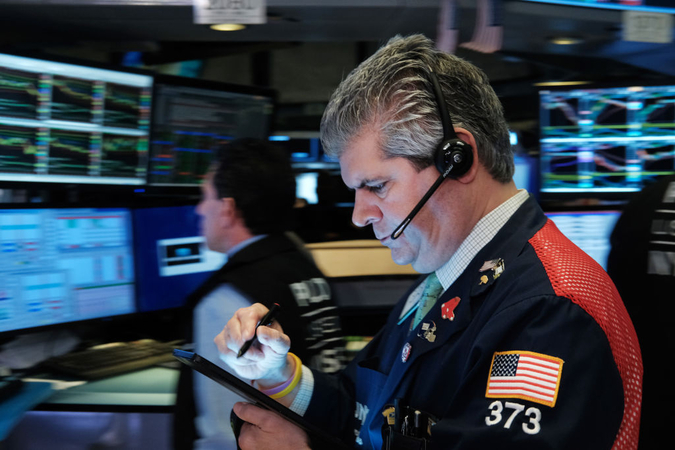
The Dow Jones industrial average sank 879 points Tuesday as investors absorbed increasingly worrisome forecasts about the coronavirus, which is spreading faster and more broadly than thought and is renewing recession anxiety. Tuesday brought the Dow’s two-day swoon to more than 1,900 points – the worst two-day percentage loss in two years.

The blue chip index went into full retreat after health officials warned it was only a matter of time before the deadly virus becomes a public health threat in the United States. In separate briefings, officials from the Centers for Disease Control and Prevention, the National Institutes of Health and other agencies adopted a markedly different tone about the outbreak, emphasizing they no longer viewed its domestic spread in terms of “if” but rather “when.”

“We are finally starting to see the markets react to the coronavirus,” said Nicole Tanenbaum, chief investment strategist at Chequers Financial Management. “There has been a lot of complacency in the market and a sentiment-driven rally that hasn’t taken into account that this virus may not be as contained as we hoped it would be.”

Tuesday’s slide extended Monday’s dismal finish, which saw the Dow Jones industrial average shed more than 1,000 points in one of the steepest point losses in history. At the market close on Tuesday, the Dow stood at 27,081 after having flirted with 30,000 earlier this month. It has fallen 6.59% this week. The broad S&P closed at 3,128, down 3.03% on the day and down 6.28% over the last two days. The Nasdaq Composite finished the day down 2.77% at 8,965.

“Stocks are due for a bumpy ride as the market assesses the growing likelihood of a broad economic downturn,” said Ball State University economist Michael Hicks. “The economic fundamentals of recession in China and the increasing risk of Covid-19 clearly point to more losses. This is not just a few spooked investors.”

The Standard% Poor’s 500 and Nasdaq composites were down 3.2% and 2.9%, respectively, by mid-afternoon while the Dow had shed 3%.

Global markets also have trembled as the outbreak intensifies outside of China. Japan’s Nikkei index sank more than 3%. The Shanghai Composite Index was down roughly 0.6%, and Hong Kong’s Hang Seng was essentially flat. In Europe, Britain’s FTSE 100 fell 1.94% and Germany’s DAX closed the day 1.88%.

The price of oil was hit hard, with U.S. benchmark West Texas Intermediate dipping below $50.

“This is the make-or-break point trying to make a profit in the shale oil patch,” said John Kilduff of Again Capital.

Kilduff said the cratering of demand from China and South Korea “is a one-two punch to demand. You now have two out of three Asian economies throttling down the manufacturing and oil demand. It’s a major hit.”

Meanwhile the yield on the 10-year Treasury note, a key benchmark, fell to 1.32% during the day as investors fled to safety amid growing alarm the global economy is pulling back. Yields drop as the price of bonds rise.

“It’s fear,” said Michael DePalma, a managing director at MacKay Shields. “Treasuries are all about fear. And right now you are seeing fear that coronavirus infects more of the world, and the economic ripple effects are going to be severe. Investors are anticipating a global economic slowdown, so they are going to the safest, most liquid investment in the world. That’s U.S. Treasuries.”

Larry Kudlow, the president’s top economic adviser, said he thinks long-term investors should buy stock and expressed optimism the Chinese economy could rebound quickly.

“We have contained this. We have contained this. I won’t say airtight, but pretty close to airtight,” Kudlow told CNBC.

Kudlow also said he did not expect the Federal Reserve to react to the coronavirus and cut interest rates to juice the economy. He said there is “no supply disruption” yet appearing in the numbers being studied by the White House.

The pneumonia-like illness has spread rapidly since emerging in late December, with China confirming 77,658 cases and 2,663 deaths to date. Iran confirmed 95 cases and at least 15 deaths. And South Korea reported 144 new cases, bringing its toll to 977.

Shares of Moderna, the Massachusetts-based drugmaker, surged 25% Tuesday on reports that it had shipped the first batch of a coronavirus vaccine to U.S. government researchers.

According to the Wall Street Journal, Moderna had sent in vials to the National Institute of Allergy and Infectious Diseases in Bethesda, Maryland. The Institute told the Journal that it expects to start a clinical trial of 20 to 25 healthy volunteers by the end of April.

Much is still unknown about the novel coronavirus virus, prompting a rush to produce a vaccine and test its safety and efficacy. That push isn’t only coming from private biotech firms. Late Monday, the White House asked Congress for $1.8 billion in emergency spending to boost its coronavirus response.

“The administration believes additional federal resources are necessary to take steps to prepare for a potential worsening of the situation in the United States,” acting White House Office of Management and Budget director Russell Vought said in a letter to congressional leaders.

Separately, President Trump said Tuesday the U.S. stock market would crash if he doesn’t win reelection. Trump routinely cites the strength of the U.S. markets, which have long been trading at or near record highs, as a barometer of his presidency. From the White House to the campaign trail, he touts that success as one of his chief accomplishments.

Speaking at a business round table during his 36-hour visit to India, Trump said the markets would see a boost if he wins in November. But “if I don’t win, you’re going to see a crash like you’ve never seen before,” Trump said.

9,000 matching seen at Subcon Thailand 2020 #ศาสตร์เกษตรดินปุ๋ย

#ศาสตร์เกษตรดินปุ๋ย : ขอบคุณแหล่งข้อมูล : หนังสือพิมพ์ The Nation

https://www.nationthailand.com/business/30382833?utm_source=category&utm_medium=internal_referral

9,000 matching seen at Subcon Thailand 2020

Feb 26. 2020
By THE NATION

SubconThailand 2020 is expected to see 9,000 matching between Thai and foreign enterprises, compared to 8,029 last year, said Sonklin Ploymee, executive director of the Board of Investment (BOI)’s Industrial Linkage Development Division.

The fair is the leading industrial parts and business matching event in Asean, co-organised by the BOI’s Industrial Linkage Development Division, Infoma Markets, and the Thai Subcontracting Promotion Association. It will be held during May 13-16 at Bitec.

Total value of transactions is expected to be at least Bt16 billion, up from Bt14 billion last year.

Sonklin is confident of the success of the fair, despite the current coronavirus outbreak.

Home prices in 20 U.S. cities rise by most in almost a year #ศาสตร์เกษตรดินปุ๋ย

#ศาสตร์เกษตรดินปุ๋ย : ขอบคุณแหล่งข้อมูล : หนังสือพิมพ์ The Nation

https://www.nationthailand.com/business/30382852?utm_source=category&utm_medium=internal_referral

Home prices in 20 U.S. cities rise by most in almost a year

Feb 26. 2020
By Syndication Washington Post, Bloomberg · Katia Dmitrieva · BUSINESS 

Home prices in 20 U.S. cities advanced in December by the most in nearly a year on the heels of stronger demand and lean inventory.

The S&P CoreLogic Case-Shiller index of property values increased 2.9% from the same month the previous year, data released Tuesday showed. That’s the biggest annual advance since January 2019 and matches the median forecast in a Bloomberg survey of economists. Prices were up 0.4% from November.

– – –

Key insights

– Mortgage rates, already near three-year lows, could decline further in conjunction with the latest drop in U.S. Treasury yields. Cheaper financing costs will likely underpin demand in a market constrained by lean inventory, leading to further home-price appreciation.

– A separate gauge from the Federal Housing Finance Agency, which tracks repeat sales and derived from conforming loans, showed home prices climbed 0.6% in December from the previous month, the most since September, and were up 1.3% in the fourth quarter.

– Prices in all 20 cities increased in the year through December, led by Phoenix; Charlotte, North Carolina; and Tampa, Florida.

– National U.S. home prices increased 3.8% in December from a year earlier, the strongest annual advance since February.

U.S. markets bounce, then fall one day after coronavirus-fueled sell-off #ศาสตร์เกษตรดินปุ๋ย

#ศาสตร์เกษตรดินปุ๋ย : ขอบคุณแหล่งข้อมูล : หนังสือพิมพ์ The Nation

https://www.nationthailand.com/business/30382844?utm_source=category&utm_medium=internal_referral

U.S. markets bounce, then fall one day after coronavirus-fueled sell-off

Feb 25. 2020
By The Washington Post · Rachel Siegel · BUSINESS, US-GLOBAL-MARKETS

U.S. stocks were volatile Tuesday, with the Dow Jones industrial average jumping 150 points at the open before dropping as much as 320 points in the red by late morning. The whiplash came one day after the Dow fell 1,000 points on fears that coronavirus would further stymie the global economy.

The Standard & Poor’s 500 and Nasdaq composites both fell about 1.2%.

After such extreme sell-offs, stocks tend to bounce back quickly. But the market’s performance Tuesday morning appeared to tell a different story. American businesses are still wary that Chinese manufacturing and production will be stalled until the outbreak is under control. And the Federal Reserve is up against fresh pressure to find an emergency salve.

Meanwhile, Japan’s Nikkei index sank more than 3%. The Shanghai Composite Index was down roughly 0.6%, and Hong Kong’s Hang Seng was essentially flat.

In Europe, Britain’s FTSE sank 1.15% and Germany’s DAX was roughly 0.8% in the red.

The Chinese government confirmed 508 new cases, along with 74 deaths, bringing the total number of accumulated infections nationwide to 77,658, with 2,663 deaths. Iran confirmed 95 cases nationwide, with at least 15 deaths. And South Korea reported 144 new cases, bringing its national total to 977.

Shares of Moderna, the Massachusetts-based drugmaker, surged 10% Tuesday morning on reports that it had shipped the first batch of a coronavirus vaccine to U.S. government researchers. The share price had skyrocketed 15% in pre-market trading.

The Wall Street Journal reported Monday evening that Moderna had sent vials to the National Institute of Allergy and Infectious Diseases in Bethesda, Maryland. The Institute told the Journal that it expects to start a clinical trial of 20 to 25 healthy volunteers by the end of April to test whether two doses of the vaccine induce an immune response that can guard against the infection.

Much is still unknown about the novel coronavirus virus and the illness it causes, prompting a rush to produce a vaccine and test its safety and efficacy. That push isn’t only coming from private biotech firms. Late Monday, the White House asked Congress for $1.8 billion in emergency spending to boost its coronavirus response.

“The administration believes additional federal resources are necessary to take steps to prepare for a potential worsening of the situation in the United States,” wrote Acting White House Office of Management and Budget director Russell Vought in a letter to congressional leaders.

Separately, President Trump said Tuesday the U.S. stock market would crash if he doesn’t win reelection. Trump routinely cites the strength of the U.S. markets, which have long been trading at or near record highs, as a barometer of his presidency. From the White House to the campaign trail, he touts that success as one of his chief accomplishments.

Speaking at a business round table during his 36-hour visit to India, Trump said the markets would see a boost if he wins in November. But “if I don’t win, you’re going to see a crash like you’ve never seen before,” Trump said.

Indonesia unveils $742 million stimulus to counter virus impact #ศาสตร์เกษตรดินปุ๋ย

#ศาสตร์เกษตรดินปุ๋ย : ขอบคุณแหล่งข้อมูล : หนังสือพิมพ์ The Nation

https://www.nationthailand.com/business/30382831?utm_source=category&utm_medium=internal_referral

Indonesia unveils $742 million stimulus to counter virus impact

Feb 25. 2020
File Photo of Indonesia's virus fight/ the Jakarta Post, ANN

File Photo of Indonesia’s virus fight/ the Jakarta Post, ANN
By Syndication Washington Post, Bloomberg · Arys Aditya, Tassia Sipahutar · BUSINESS

Indonesia unveiled a raft of fiscal incentives for its tourism, airline and housing sectors hit by the outbreak of the deadly coronavirus, broadening efforts to bolster growth in Southeast Asia’s largest economy.

The government will waive taxes on hotels and restaurants in the nation’s top 10 tourist destinations for a three-month period starting March 1, Coordinating Minister for Economy Airlangga Hartarto told reporters in Jakarta after a cabinet meeting. State-run oil behemoth PT Pertamina will sell jet fuel at concessional rates to airlines to enable them offer a 30% discount on a quarter of their seats to these destinations, Finance Minister Sri Mulyani Indrawati said.

The fiscal incentives will be equivalent to $742 million (10.3 trillion rupiah), including about 3.3 trillion rupiah to be given as grants to local governments hit by the slump in tourist arrivals, Indrawati said. The stimulus for the tourism and related sectors may help draw more visitors and net the government 13 trillion rupiah in foreign exchange earnings, Tourism and Creative Economy Minister Wishnutama Kusubandio said.

The incentives will complement the central bank’s interest rate cut last week to support economic growth, Indrawati said, adding the banking regulator will also take steps to reduce cost of borrowing. The government will extend 1.5 trillion rupiah as interest rate and down-payment rebate for home buyers from the low-income groups, she said.

“All these measures are expected to support economic growth,” Indrawati said. The stimulus for housing will help clear the unsold inventory and have a multiplier impact on the economy, she said.

The coronavirus outbreak, which has killed nearly 3,000 people worldwide and is fast spreading outside China, is threatening to further weaken Indonesia’s already sputtering economy. Indrawati has called for a coordinated global response to the outbreak, warning that authorities may be underestimating its impact on trade and economic growth.

Indonesia hasn’t recorded any coronavirus cases, yet officials are worried about the broader impact the pandemic will have on the economy. The government had already announced plans to accelerate spending to protect household consumption which accounts for nearly 60% of the economy.

While Bank Indonesia last week trimmed its growth forecast for this year by 10 basis points to 5%-5.4%, the government had projected an expansion of 5.3% before the virus outbreak. The economy grew at 5.02% last year.

Below are the highlights of the fiscal stimulus:

– Interest rebate expected to generate demand for 175,000 new housing units this year

– 298.5 billion rupiah to be paid out as incentives for airlines, travel agents and social-media influencers to attract foreign tourists

– Tourist destinations eligible for tax breaks are – Batam, Yogyakarta, Makassar, Labuan Bajo, Lombok, Malang, Manado, Silangit, Tanjungpandan and Tanjungpinang

– Pertamina to give discount on jet fuel equivalent to 265 billion rupiah at nine airports

– Extra social security funds of 4.6 trillion rupiah for 15.2 million beneficiaries to boost consumption

– Government expects 736,000 additional foreign tourist arrivals with the stimulus

– 30% airfare discounts offered to 10 tourist destinations to cost 433.9 billion rupiah