THAI says no plan to cut salaries of staff #ศาสตร์เกษตรดินปุ๋ย

#ศาสตร์เกษตรดินปุ๋ย : ขอบคุณแหล่งข้อมูล : หนังสือพิมพ์ The Nation

https://www.nationthailand.com/business/30382631?utm_source=category&utm_medium=internal_referral

THAI says no plan to cut salaries of staff

Feb 22. 2020
By THE NATION

Thai Airways International (THAI) has denied rumours circulated on social media that the carrier has reduced its staff’s working days and was cutting salaries due to declining passenger numbers as a result of the novel coronavirus outbreak.

THAI president Sumeth Damrongchaitham said that the carrier had prepared for the situation from the time news came out about the virus.

He said they were closely monitoring the situation and had stepped up hygiene measures to deal with the impacts and ensure customer safety.

Money is pouring into scooter startups #ศาสตร์เกษตรดินปุ๋ย

#ศาสตร์เกษตรดินปุ๋ย : ขอบคุณแหล่งข้อมูล : หนังสือพิมพ์ The Nation

https://www.nationthailand.com/business/30382622?utm_source=category&utm_medium=internal_referral

Money is pouring into scooter startups

Feb 22. 2020
Tourists pose for photographs beside Dott and Bird Rides Inc.public hire scooters in Paris on Dec. 31, 2019. MUST CREDIT: Bloomberg photo by Anita Pouchard Serra.

Tourists pose for photographs beside Dott and Bird Rides Inc.public hire scooters in Paris on Dec. 31, 2019. MUST CREDIT: Bloomberg photo by Anita Pouchard Serra.
By Syndication Washington Post, Bloomberg · Nate Lanxon · BUSINESS, WORLD, TRANSPORTATION, US-GLOBAL-MARKETS, EUROPE ·

E-scooter startup Tier Mobility extended a funding round to more than $100 million from $60 million, at a time of increasing regulatory scrutiny.

Berlin-based Tier said Friday it added RTP Global, Novator Partners, and a third backer it declined to name, to its so-called Series B fundraising announced in October. One of Abu Dhabi’s sovereign wealth vehicles is also investing.

Regulators are getting less tolerant of scooters as they’ve grown in popularity. Montreal recently banned e-scooters, saying they were too often parked illegally, while a raft of U.S. cities are cutting back where they can be used. In Europe, Germany proposed rules to require a permit to park in public spaces. Last year France also introduced several new safety rules to ensure scooters have proper lights and braking systems.

Chief Executive Officer Lawrence Leuschner said Tier will use the extra $40 million for research and development, acquisitions, and to create new types of vehicles to complement its fleet of tens of thousands of scooters. The company declined to comment on its valuation.

Demand for e-scooters in cities worldwide has helped the industry’s biggest players achieve multibillion-dollar valuations. The popularity of the North American front-runners has caused a surge of new competitors to spring up across Europe over the past two years. In January, California-based Bird Rides Inc. said it would acquire Circ, a German rival, for an undisclosed sum. Bird also said it raised an additional $75 million from investors on top of the $275 million round disclosed in October, the same month Tier announced its original Series B fundraising plans.

In the U.K., it’s illegal to ride a scooter on public roads under highway law. But the government is considering updating legislation to accommodate scooters as part of a regulatory review taking place this year.

Leuschner said Friday his company has found a new consumer retail business in refurbishing and selling old scooters removed from its fleet after a few months of use.

“Since November, we’ve sold between 4,000 and 5,000 of the models we introduced in Germany during the summer,” he said in an interview. The models cost 699 euros ($755) and come with a free helmet, insurance, a license plate and a year’s warranty, he said.

Leuschner said about 85% of Tier’s fleet of scooters also now use batteries that can be removed, meaning the company doesn’t have to take entire vehicles back to a warehouse be charged.

“We’ve reduced our running costs by about 40% and it shows we can operate any ride profitably in any place,” he said.

The company has raised $136 million since it was founded in 2018 and has spread to more than 50 cities, providing more than 17 million rides, mainly in Europe.

New York Times poised to name Meredith Levien as next CEO #ศาสตร์เกษตรดินปุ๋ย

#ศาสตร์เกษตรดินปุ๋ย : ขอบคุณแหล่งข้อมูล : หนังสือพิมพ์ The Nation

https://www.nationthailand.com/business/30382613?utm_source=category&utm_medium=internal_referral

New York Times poised to name Meredith Levien as next CEO

Feb 22. 2020
By Syndication Washington Post, Bloomberg · Gerry Smith · BUSINESS, US-GLOBAL-MARKETS
New York Times Co. is leaning toward naming Meredith Kopit Levien as its next chief executive officer, tapping an internal candidate to succeed Mark Thompson after an eight-year stint, according to people familiar with the matter.

Levien, currently chief operating officer, is the front-runner to get the top job, with the move potentially coming as soon as April, said one of the people, who asked not to be identified because the decision isn’t yet final. Thompson, 62, was named Times CEO in 2012 after serving as director general of the British Broadcasting Corp.

The Times declined to comment.

Thompson would be handing over the reins after turning the Times into a bigger force online. The company’s digital subscribers have surged in recent years, letting it hire more journalists and offset the decline of advertising revenue. Shares of the Times have climbed fourfold under his watch, far outpacing the S&P 500.

Levien, who’s in her late 40s, joined the Times in 2013 as head of advertising after serving as chief revenue officer at Forbes Media. She was named operating chief in 2017, overseeing teams that are responsible for consumer revenue, advertising, digital products, live events and other things.

Levien wouldn’t be the first female CEO at the Times. Janet Robinson held the job for seven years before she was pushed out in 2011 after a period when the company struggled financially and its stock price plummeted.

Levien has steered the Times toward more nontraditional advertising deals, as much of the online ad market is dominated by Google and Facebook. She helped build the Times’ in-house custom ad agency, T-Brand Studio, and got the publisher to focus on deeper ad partnerships with big companies like Verizon Communications, as opposed to traditional display ads. The less-predictable timing of such deals has made ad revenue more volatile from quarter to quarter.

In 2019, the paper added more than 1 million new digital-only subscriptions — and the growth helped propel the company’s stock to its highest in 15 years. The subscriber increase has been partly driven by President Donald Trump’s ability to create a never-ending news cycle that attracts more readers to the Times. But the Times has also become more sophisticated at acquiring and retaining subscribers by using tactics like $1-a-week promotions and requiring readers to register and log in to read more articles.

The Times has also invested heavily in marketing, such as a recent “The Truth Is Hard” campaign highlighting the work of its journalists.

And the company has launched podcasts and added more subscribers to its non-news offerings, such as its Crosswords and Cooking apps. Early last year, the paper set a goal of 10 million total subscribers by 2025, and it’s more than halfway there, tallying 5.3 million paying customers for its print and digital products.

HP adopts shareholder rights plan to slow Xerox takeover bid #ศาสตร์เกษตรดินปุ๋ย

#ศาสตร์เกษตรดินปุ๋ย : ขอบคุณแหล่งข้อมูล : หนังสือพิมพ์ The Nation

https://www.nationthailand.com/business/30382609?utm_source=category&utm_medium=internal_referral

HP adopts shareholder rights plan to slow Xerox takeover bid

Feb 22. 2020
By Syndication Washington Post, Bloomberg · Nico Grant · BUSINESS, US-GLOBAL-MARKETS
HP Inc., fighting off a hostile acquisition bid by Xerox Holdings Corp., adopted a shareholder rights plan that would make the takeover more difficult to carry out.

If a person or group acquires 20% or more of HP’s stock, the plan would let other shareholders boost their voting power and dividends, HP said in a statement.

The plan “guards against coercive tactics to gain control without paying all shareholders an appropriate premium for that control,” the company said. The program wouldn’t block a merger or takeover, but would “encourage Xerox (or anyone else seeking to acquire the company) to negotiate with the board,” according to Thursday’s statement by the Palo Alto, California-based computer maker.

Xerox has said it will launch a tender offer “on or around March 2” for HP shares valued at $24 in cash and stock. For each HP share, a holder would get $18.40 in cash and 0.149 Xerox shares. The offer won’t be subject to any conditions related to financing or due diligence, Xerox said.

“The HP board clearly adopted a poison pill because our offer is receiving overwhelming support from their shareholders,” Xerox said Friday in a statement. “Despite the HP board’s intention to deny shareholders the chance to choose for themselves, we will press ahead with our previously announced tender offer and electing our slate of highly qualified director candidates.”

Norwalk, Connecticut-based Xerox already had started a proxy fight, last week nominating 11 candidates for HP’s board to help close the deal.

Activist investor Carl Icahn, who is Xerox’s largest shareholder, is pushing for the combination, which Xerox contends would unlock about $2 billion in synergies and revive both hardware giants in an era of software ascendancy.

While Icahn owns almost 11% of Xerox, he is also HP’s fifth-largest investor, with a 4.3% stake. Xerox’s Chief Executive Officer John Visentin should run the combined company, Icahn has said.

HP has promised a full response to Xerox’s offer on Feb. 24 when it reports earnings and exits a quiet period.

“As we have previously said, we are very concerned about Xerox’s aggressive and rushed tactics, and any process that is not based on full information is a threat to our shareholders,” Chip Bergh, HP’s chairman, said in the statement.

The shareholder rights plan “works by imposing a significant penalty upon any person or group that acquires 20% or more of the outstanding shares of HP common stock without the approval of the Board,” HP said in a filing.

Xerox, the smaller of the two companies with a market value of $7.84 billion, fell 1.4% to $36.28 at 12:51 p.m. Friday in New York trading. HP was little changed at $22.61, valuing the company at about $33 billion.

Wells Fargo reaches $3 billion settlement with DOJ, SEC over fake-accounts scandal #ศาสตร์เกษตรดินปุ๋ย

#ศาสตร์เกษตรดินปุ๋ย : ขอบคุณแหล่งข้อมูล : หนังสือพิมพ์ The Nation

https://www.nationthailand.com/business/30382607?utm_source=category&utm_medium=internal_referral

Wells Fargo reaches $3 billion settlement with DOJ, SEC over fake-accounts scandal

Feb 22. 2020
 File Photo by Syndication Washington Post, Bloomberg

File Photo by Syndication Washington Post, Bloomberg
By The Washington Post · Renae Merle · NATIONAL, BUSINESS, COURTSLAW, US-GLOBAL-MARKETS 

Wells Fargo on Friday agreed to pay $3 billion to settle potential federal criminal and civil charges that for more than a decade the bank’s aggressive sales goals led to widespread consumer abuses, including millions of accounts opened without customers’ consent.

Under its settlement with the U.S. Justice Department and the Securities and Exchange Commission, Wells Fargo acknowledged that it collected millions of dollars in fees as employees falsified records, forged signatures and misused customers’ personal information to open fake accounts in order to meet unrealistic sales goals. Bank leaders knew of the misbehavior, including “violations of federal criminal law,” as early as 2002 but didn’t stop it until 2016, according to the settlement agreement.

The $3 billion fine, which is about 15 percent of Wells Fargo’s $19.5 billion in profits last year, is among the largest corporate penalties handed down during the Trump administration but not a record.

Friday’s settlement, which includes a deferred prosecution agreement, does not cover any individual employees. No senior bank employees have been criminally charged.

“This case illustrates a complete failure of leadership at multiple levels” within Wells Fargo, said Nick Hanna, U.S. attorney for the Central District of California, in a statement. “Simply put, Wells Fargo traded its hard-earned reputation for short-term profits, and harmed untold numbers of customers along the way.”

Charlie Scharf, the bank’s chief executive, said in a statement: “The conduct at the core of today’s settlements – and the past culture that gave rise to it – are reprehensible and wholly inconsistent with the values on which Wells Fargo was built. While today’s announcement is a significant step in bringing this chapter to a close, there’s still more work we must do to rebuild the trust we lost.”

It comes as Wells Fargo, one of the country’s largest and most profitable banks, struggles to repair its image. Its progress has been slowed by the bank’s admission of other consumer abuses over the last few years, including mistakenly foreclosing on hundreds of clients and repossessing the cars of thousands of others. Friday’s settlement does not cover that conduct.

And the bank still faces significant regulatory hurtles. The Federal Reserve has banned the bank, which has nearly $2 trillion in assets, from growing any bigger until it fixes its systemic cultural issues and the Office of the Comptroller of the Currency has indicated it was unhappy with the bank’s progress in addressing its problems.

Last month, the OCC went further, taking the rare step of filing cases against specific Wells Fargo employees. It banned former Wells Fargo chief executive John Stumpf from working in banking again and fined him $17.5 million and filed civil cases against five other employees, including Carrie Tolstedt, the former head of community banking. It is seeking a $25 million fine from Tolstedt.

The bank imposed unrealistic sales goals on employees, who were “intimidated and badgered” to comply, the OCC lawsuit says. In 2010, one employee told senior executives: “The noose around our necks ha[s] tightened: we have been told we must achieve the required solutions goals or [we] will be terminated.” Another employee wrote to the CEO’s office and another senior leader in 2013, saying: “I was in the 1991 Gulf War. . . . This is sad and hard for me to say, but I had less stress in the 1991 Gulf War than working for Wells Fargo.”

Between 2011 and 2015, “tens of thousands of employees were the subject of allegations of unethical sales practices” and more than 5,300 were fired, according to a statement of facts agreed to by Wells Fargo.

About $500 million of the $3 billion settlement will go to the SEC, which alleged the bank mislead investors about its “cross-selling” business strategy. “This settlement holds Wells Fargo responsible for its fraud,” Stephanie Avakian, co-director of the SEC’s Division of Enforcement, said in a statement.

Wells Fargo has repeatedly apologized for the sales scandals, overhauled its board and gone through three CEOs in three years, hiring an industry veteran, Scharf, to take the helm last year.

Scharf told analysts last month that he is spending nearly all of his time addressing the regulatory headaches that have dogged Wells Fargo. “We are committing all necessary resources to ensure that nothing like this happens again, while also driving Wells Fargo forward,” he said Friday.

The scandals have made Wells Fargo a frequent target of Democrats on Capitol Hill, particularly Rep. Maxine Waters of California, chair of the powerful Financial Services Committee, and Sen. Elizabeth Warren of Massachusetts. “Bank executives like former @WellsFargo CEO John Stumpf should face jail time when the banks they lead break the law. I’ve got a bill to hold Wall Street executives personally accountable,” Warren said in a recent tweet.

Waters has scheduled three hearings next month on “holding Wells Fargo accountable.”

Wells Fargo nears SEC, DOJ settlement over fake-accounts scandal #ศาสตร์เกษตรดินปุ๋ย

#ศาสตร์เกษตรดินปุ๋ย : ขอบคุณแหล่งข้อมูล : หนังสือพิมพ์ The Nation

https://www.nationthailand.com/business/30382601?utm_source=category&utm_medium=internal_referral

Wells Fargo nears SEC, DOJ settlement over fake-accounts scandal

Feb 22. 2020
File Photo by Syndication Washington Post, Bloomberg

File Photo by Syndication Washington Post, Bloomberg
By The Washington Post · Renae Merle · NATIONAL, BUSINESS, COURTSLAW, US-GLOBAL-MARKETS

Wells Fargo is nearing a settlement with federal authorities over accusations of widespread consumer abuses that have haunted the bank for more than three years, a person familiar with the discussions said.

The settlement with the Securities and Exchange Commission and Department of Justice could be announced as soon as Friday, said the person, who was not authorized to speak on the record about the settlement. Wells Fargo had previously said it would set aside about $3 billion for a settlement of the investigations.

The settlement, which was first reported by The New York Times, would be the latest in a series of fines and penalties against the San Francisco bank since it admitted in 2016 that it had opened millions of accounts customers didn’t request. In 2018, it was fined $1 billion by the Consumer Financial Protection Bureau and the Office of the Comptroller of the Currency.

Last month, the OCC went further, taking the rare step of filing cases against specific Wells Fargo employees. It banned former Wells Fargo CEO John Stumpf from working in banking again and fined him $17.5 million and filed civil cases against five other employees, including Carrie Tolstedt, the former head of community banking. It is seeking a $25 million fine from Tolstedt.

The bank imposed unrealistic sales goals on employees, who were “intimidated and badgered” to comply, the OCC suit says. “For more than 14 years, the systemic sales practices misconduct resulted in compromise of customer accounts, misuse of customer personal information, and actual financial harm to consumers.”

In 2010, one employee told senior executives: “[T]he noose around our necks ha[s] tightened: we have been told we must achieve the required solutions goals or [we] will be terminated.” Another employee wrote to the CEO’s office and another senior leader in 2013, saying: “I was in the 1991 Gulf War. . . . This is sad and hard for me to say, but I had less stress in the 1991 Gulf War than working for Wells Fargo.”

Bank executives ignored those warnings about their aggressive sales goals, which helped fuel the bank’s profits. Wells Fargo has agreed to pay consumers more than $100 million as part of various settlements related to the fake-accounts scandal.

Once among the country’s largest and most profitable banks, Wells Fargo has struggled to overcome the scandal, which ballooned as the bank admitted to other consumer abuses, including mistakenly foreclosing on hundreds of clients and repossessing the cars of thousands of others. It has overhauled its board and gone through three CEOs in three years, hiring an industry veteran, Charles Scharf, to take the helm last year.

Scharf told analysts last month that he is spending nearly all of his time addressing the regulatory headaches that have dogged Wells Fargo. The bank had made “terrible mistakes,” he said, adding, “I don’t have all the answers yet.”

The scandals have made Wells Fargo a frequent target of Democrats on Capitol Hill, particularly Rep. Maxine Waters, D-Calif., chair of the powerful Financial Services Committee, and Sen. Elizabeth Warren, D-Mass. “Bank executives like former @WellsFargo CEO John Stumpf should face jail time when the banks they lead break the law. I’ve got a bill to hold Wall Street executives personally accountable,” Warren said in a recent tweet.

The potential settlement is not likely to satisfy all of the bank’s critics and the Federal Reserve has yet to lift a ban it imposed on the bank, which has nearly $2 trillion in assets, from growing any larger until it fixes the cultural issues uncovered by the recent scandals.

Tesla gets go-ahead to resume clearing forest for factory in Germany #ศาสตร์เกษตรดินปุ๋ย

#ศาสตร์เกษตรดินปุ๋ย : ขอบคุณแหล่งข้อมูล : หนังสือพิมพ์ The Nation

https://www.nationthailand.com/business/30382592?utm_source=category&utm_medium=internal_referral

Tesla gets go-ahead to resume clearing forest for factory in Germany

Feb 22. 2020
By Syndication Washington Post, Bloomberg · Karin Matussek, Stefan Nicola · BUSINESS, WORLD, US-GLOBAL-MARKETS, EUROPE

Tesla has overcome a legal roadblock standing in the way of Elon Musk’s plan to build an electric-car factory in Germany.

A Berlin-Brandenburg court on Thursday ruled that Tesla can resume cutting down trees at a forest site in the small town of Gruenheide to make way for its first assembly plant in Europe. That puts the U.S. carmaker on track to start construction before the start of a crucial breeding period for local wildlife in March.

The court found that local authorities didn’t violate laws when they allowed work on the factory to start, throwing out a complaint by Gruene Liga Brandenburg, an environmental group that claimed Tesla and local authorities were sidestepping regulations to rush the project.

The decision is a boon to Tesla’s ambitious timetable to have the plant up and running by the middle of next year. The company plans to eventually produce as many as 500,000 cars a year at the site, employing 12,000 people and posing a serious challenge to Volkswagen, Daimler and BMW.

Tesla shares were down about 1.8% to $883.21 in pre-market New York trading, from a close of $899.41 on Thursday. The stock has more than doubled this year, giving the company a market value of about $166 billion.

Musk, Tesla’s chief executive officer, recently tried to ease local concerns about water usage at the plant, which would border a nature reserve.

Local officials had warned that construction could be delayed by six to nine months if the forest isn’t cleared by mid-March. Tesla has already cut down two-thirds of the trees and should be able to fell the remainder in time.

“It’s a good signal for environmental protection, jobs, and future technologies,” Economy Minister Peter Altmaier said in a statement. “We’ve learned that we’ll only have a chance in such significant projects if we can come to decisions in an appropriate time frame.”

Brandenburg’s environment ministry this month gave Tesla a preliminary green light to start cutting down trees in an area equivalent to 100 soccer fields ahead of granting final approval. The court stopped the process with an injunction on Feb. 15. By late Thursday, the appeals court ruled that legal requirements to allow early construction were met.

Gruene Liga has warned that Tesla’s plant could threaten the region’s water supply and overburden local transport infrastructure. The group argued that authorities shouldn’t have allowed the forest to start being cleared until after March 5, the deadline set for environmental groups to comment on the project.

Local officials argue the site is an inferior pine forest planted to be harvested in the first place.

The factory will be designed with “sustainability and the environment in mind,” Musk said last month on Twitter, adding Tesla will plant three new trees for every one cut. The company still needs final approval for the project from authorities in the state of Brandenburg.

Tesla will also have to scare off or relocate wolves, bats, snakes, ants and lizards until construction is over. Under German regulations, the project must consider the breeding period for local wildlife in spring.

Elon Musk went from sleeping in the factory to being on the cusp of launching a crew into space #ศาสตร์เกษตรดินปุ๋ย

#ศาสตร์เกษตรดินปุ๋ย : ขอบคุณแหล่งข้อมูล : หนังสือพิมพ์ The Nation

https://www.nationthailand.com/business/30382589?utm_source=category&utm_medium=internal_referral

Elon Musk went from sleeping in the factory to being on the cusp of launching a crew into space

Feb 21. 2020
SpaceX CEO Elon Musk talks with reporters following a press conference after NASA and SpaceX's performed an in-flight abort test of the Crew Dragon capsule at NASA's Kennedy Space Center in Cape Canaveral, Fla., on Jan. 19, 2020. MUST CREDIT: Washington Post photo by Jonathan Newton

SpaceX CEO Elon Musk talks with reporters following a press conference after NASA and SpaceX’s performed an in-flight abort test of the Crew Dragon capsule at NASA’s Kennedy Space Center in Cape Canaveral, Fla., on Jan. 19, 2020. MUST CREDIT: Washington Post photo by Jonathan Newton
By The Washington Post · Christian Davenport, Faiz Siddiqui · BUSINESS, US-GLOBAL-MARKETS

Just over a year ago, the Securities and Exchange Commission had launched an investigation into Elon Musk after he tweeted that he planned to take Tesla public. He was facing criticism, and a defamation lawsuit, for calling a Thai-cave rescuer a “pedo guy” and “child rapist.” And when Musk took a hit off a joint during an Internet broadcast, it triggered a safety review from NASA that was concerned the billionaire maverick was going off the rails.

But now Musk is on a roll, literally dancing his way forward past a thicket of controversies. Tesla’s stock price has quadrupled, and the company’s market value now is greater than GM’s and Ford’s combined. A jury acquitted him in the defamation suit. And SpaceX is on the cusp of its first human spaceflight, having just completed what Musk called “a picture-perfect” test flight.

President Donald Trump even compared him recently to Thomas Edison, calling him “one of our great geniuses.”

Most notable for some is that Musk, known for taking to Twitter to tout his successes and lash out at his critics, has demonstrated restraint. He hasn’t tweeted any sensitive numbers about the publicly traded Tesla, and he kept silent after NASA pronounced the software in Boeing’s Starliner capsule – SpaceX’s competitor for sending people into space – so flawed that more than a million lines of code must be meticulously reviewed, a process that could take months.

People who follow Musk closely say they’ve noticed the change. Rebukes by regulators and the serious responsibility of sending astronauts to space, now weeks away, have humbled him, they say.

“Elon’s not dealing like he’s under the vice anymore, and he is acting more reasonable,” said Gene Munster, managing partner of analyst firm Loup Ventures.

That doesn’t mean there aren’t challenges ahead. Tesla is launching its new crossover SUV in the first quarter, and new vehicles in the past have become a production stumbling block. Tesla also revealed last week that it’s again under investigation by the SEC.

And though he may have been humbled, he remains refreshingly unfiltered. He recently danced on stage in China, performing what some dubbed a strip tease, shrugging his hoodie off and then throwing it. He told a recent SpaceX event on the rushed timeline to build a rocket he hopes will get to Mars: “My new thing is management by rhyming: If the schedule is long, it’s wrong; it if it’s tight, it’s right.” He also recently released a song that climbed the charts on Spotify after he tweeted to his 30 million followers a shot of himself jamming to the beat.

The track’s title also served a four-word manifesto: “Don’t Doubt Ur Vibe.”

– – –

Musk’s relentless focus on Tesla, in particular, has begun to pay off. Musk’s goal of injecting electric cars into the mainstream is becoming reality, and Wall Street has begun to accept that. The company’s stock has long been besieged by short sellers, gambling that the company won’t achieve its goals. But the short sellers are reeling, prompting headlines such as this recent one in the Wall Street Journal: “Detroit Falters as Tesla Excites.”

“There are still things they need to work through,” said Munster. “It’s still going to be bumpy. But as far as the core concept – ‘Will Tesla make it or not make it?’ – that question has now been decided. Tesla is going to be around for decades.”

Musk, who was bullied as a child in South Africa and made his way to North America as a teenager, has always had a combative streak that often pitted him against the establishment. He took on the credit card industry with PayPal, where he was CEO until he was ousted in 2000. He remained the company’s largest shareholder, however, and pocketed $165 million when PayPal was acquired by EBay for $1.5 billion. He founded SpaceX in 2001 and disrupted the military-industrial complex that for years had held a strong hold over America’s space industry. His investment in Tesla didn’t come until 2004, when he was named the company’s chairman of the board. He became CEO in 2008. Forbes estimates his net worth at more than $43 billion.

The low point for Musk came during the summer of 2018. A slate of top executives had left Tesla, which had been struggling and laying off employees in droves. The company was having difficulty delivering on its rosy production promises, and Musk said on Twitter that the company had graduated from one nightmare to another – “from production hell to delivery logistics hell.”

He lamented to the New York Times that August in an interview that, “This past year has been the most difficult and painful year of my career. It was excruciating.”

The company was struggling to achieve its goal of delivering 5,000 Model 3 cars per week.

Tesla never truly delivered on the core marketing component of the Model 3 – that it would be a $35,000 car, making it affordable to the masses. While a model costing that price was available briefly last year, it was pulled from Tesla’s traditional online sales hub and moved to special order status.

Musk had long been turning attention – some said too much attention – to the intricacies of the company’s product lineup and assembly line. And he made decisions in haste, axing products on impulse without embarking on market research.

“Get it off the website now,” he said, after one executive presented what he saw as a compelling case.

When the company failed to meet its output for Model X SUVs because the falcon-wing doors were so hard to fit, “Elon moved into the factory for two weeks,” said a former Tesla executive who spoke on the condition of anonymity in order to discuss internal company matters. “He was sleeping in a sleeping bag – real time triaging cars at the end of the line trying to get to the root cause of what the issues were. It was wild.”

Musk also got hands-on when the company was facing a lag because of paint. “Elon wasn’t satisfied,” the former executive said, “and so he took over the paint shop. He ran the paint shop for two weeks.”

His agony was compounded by a self-inflicted wound – when he took to Twitter to announce that if Tesla’s stock price reached $420, he would take the company private.

“Funding secured,” he wrote on Aug. 7, 2018, in a pronouncement that shocked investors and sparked an SEC investigation that resulted in a lawsuit accusing him of misleading investors and seeking to bar him from running any public company.

Musk ended up settling soon afterward, paying a $20 million fine and agreeing to step down as Tesla’s chairman for three years.

Late in 2018, it was officials on the ninth floor of NASA headquarters who were fuming over his behavior. Musk had recently puffed a joint while appearing on the Joe Rogan show and took a sip of whiskey – not the sort of conduct NASA is used to seeing form the heads of one of their prime contractors.

In this case, NASA was relying on Musk’s SpaceX to build a spacecraft capable of flying its astronauts to the International Space Station. And NASA administrator Jim Bridenstine, a teetotaling conservative Republican former congressman from Oklahoma, didn’t appreciate the message it sent.

He ordered a safety review of the company and publicly chastised Musk, saying that “culture and leadership start at the top. Anything that would result in some questioning the culture of safety, we need to fix immediately.”

SpaceX went to great lengths to show that it prioritizes safety over all else. And in March of last year, it successfully flew its Dragon spacecraft to the International Space Station and back, a feat that seemed to erase any concerns from Bridenstine, who crowed after the 2:49 a.m. launch that SpaceX had helped put NASA on the “precipice of launching American astronauts in American rockets from America soil.”

Speaking at the pre-dawn press conference, Musk said he “was emotionally exhausted” and that the flight was “super stressful,” and the culmination of “an incredible amount of hard work and sacrifice.”

The high didn’t last long.

A month later, that same spacecraft blew up during a test of its emergency abort system, sending an ominous cloud of orange smoke wafting into the Florida sky.

– – –

At Tesla, everything started to stabilize once Musk had a new team he could trust to deliver in 2019.

Gone were the days when Musk moved into the manufacturing plant, overseeing mundane elements of production personally, such as the Model X production, the company’s paint shop and later the Model 3’s lagging due to overemphasis on automation.

Finally, he began to delegate, more and more, becoming more comfortable after the revolving door of executives finally left him with a team he could trust, former officials and close observers said.

The Model 3 line was ramping up and meeting delivery goals. Tesla opened a factory to produce cars in China. The stock started rising. And Musk did a dance – arms pumping, jacket tossed to the side – at an event in Shanghai celebrating the first car deliveries in China that went viral and symbolized [youtube.com] the sudden turn-around.

Still, there are many perils ahead.

Musk faces serious questions about core pieces of Tesla’s business model that could send the company back to its near-constant volatility over the last few years, which saw the company’s stock dip to a record low of $177 as recently as June. Even earlier this month, the stock rose nearly 14 percent to $887 before falling 17 percent the next day. It closed above $921 a share on Wednesday before following the market down on Friday.

One of Musk’s biggest tests will be the first deliveries of its new Model Y crossover. Tesla has faced questions about demand now that a $7,500 federal tax credit for electric vehicle purchases has expired. Musk acknowledged the challenges on a call with analysts last month, though it was not demand that concerned him. “We are worried about production, [making] sure we get that production ramp going and reach volume production as soon as possible,” he said.

It’s also not out of the regulatory line of fire. Tesla revealed earlier this month that the SEC had subpoenaed the company seeking records concerning “certain financial data and contracts including Tesla’s regular financing arrangements” in December, just as the agency closed the investigation into Musk’s tweets. The company separately revealed that the Department of Justice was seeking documents on Musk’s communications about taking the company private and Model 3 production. It also faces probes by the National Highway Traffic Safety Administration into safety regarding both its Autopilot assistant and alleged battery fires.

And then there’s the question of whether Musk can safely fly astronauts – a feat SpaceX hasn’t yet tried. That test is likely to come this spring, when SpaceX is expected to fly two NASA astronauts, Doug Hurley and Bob Behnken, to the International Space Station.

In January, SpaceX nailed a test flight that showed off the capsule’s emergency abort system, paving the way for the first flight with crews on board. Garrett Reisman, a former NASA astronaut who worked at Space X for years and still serves as a consultant, said Musk and the people at SpaceX know “to never believe things are going to be as great as they are during the highs, and not as low during the lows.”

Still, he said, the abort-system test “was a huge morale boost” that fired up Musk and his whole team.

It showed. Hours after the flight, Musk, who turns 49 in June, was loose and in a good mood, holding forth before a gaggle of reporters at the Kennedy Space Center. One of them urged him to show off his dance moves, as he had done in Shanghai when Tesla opened a factory there.

But he demurred, saying maybe he would consider it once he had flown astronauts safely. “I’m not your dancing puppet!” he said, laughing.

Virgin Galactic’s share price has left the stratosphere #ศาสตร์เกษตรดินปุ๋ย

#ศาสตร์เกษตรดินปุ๋ย : ขอบคุณแหล่งข้อมูล : หนังสือพิมพ์ The Nation

https://www.nationthailand.com/business/30382611?utm_source=category&utm_medium=internal_referral

Virgin Galactic’s share price has left the stratosphere

Feb 22. 2020
By Syndication Washington Post, Bloomberg Opinion · Chris Bryant · BUSINESS
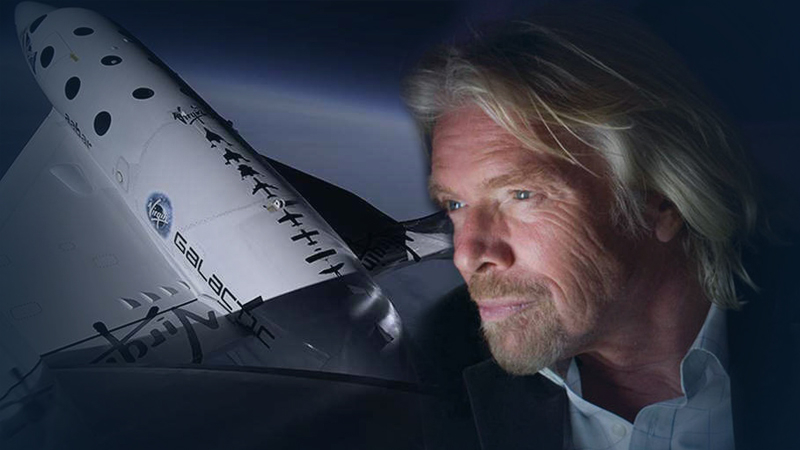
A year ago Richard Branson was on his private island, Necker, when the former Twitter executive Adam Bain came to see him with a proposal for how to take Branson’s suborbital space travel company public.

The bearded British billionaire is doubtless glad he took the meeting: After an unsteady start, Virgin Galactic Holdings Inc.’s valuation has rocketed. The stock has surged more than 400% since a low in December, valuing the company at close to $8 billion, or almost 2,000 times the revenues it’s estimated to have generated in 2019. (For comparison, Uber Technologies Inc. trades on about 5.5 times last year’s revenue).

Vieco USA, a Virgin-controlled entity, still owns more than half of the shares, meaning Branson’s net worth – estimated by the Bloomberg Billionaires Index at about $5 billion before the listing – is suddenly a whole lot bigger. The loss-making company is now his most valuable asset.

There haven’t been any big company developments to justify such market euphoria, which makes you wonder whether it’s sustainable. The stock gains since the start of this year are about double those enjoyed by Tesla Inc.’s rip-snorting shares.

Several hedge funds, including Suvretta Capital Management, which owns 3.4% of Virgin Galactic’s equity, have profited from the surge but plenty of its peers are betting that a meeting with cold reality is inevitable. About 30% of the free float has been shorted, according to IHS Markit data. This space battle isn’t for the fainthearted, and there’s a danger that overenthusiastic retail investors end up getting hurt. On Thursday, the stock rose as much as 13%, erased all those gains, then fell as much as 18%, before closing broadly unchanged.

In fairness, Virgin Galactic’s technical achievements are impressive, even inspiring. Branson’s company has spent years perfecting its product, giving it a head start in the nascent space tourism business. At $250,000 a ticket for a 90-minute flight (including a few minutes of zero-gravity weightlessness) it could prove to be pretty lucrative. The company might have almost $600 million of yearly revenue by 2023, according to a management projection.

But a lot can go wrong when your business is carrying tourists into suborbital space and twitchy regulators are poring over your every move. Any unexpected delays or interruptions (never mind an accident) would cause the stock to swiftly lose altitude.

As with Elon Musk’s Tesla faithful, Virgin Galactic’s fans don’t seem too bothered by these near-term challenges. One hope among investors is that the company will use the technology and experience gained from ferrying tourists into space to build a potentially far more lucrative market: intercontinental hypersonic flight.

Yet the regulatory hurdles to launching such flights will be daunting. Perfecting the technology will require much more than the $430 million in net proceeds that Virgin Galactic received from the listing. (Virgin Galactic could receive a further cash boost if warrants conveying the right to purchase a total of 31 million shares are exercised for cash.)

It’s conceivable, then, that the huge run-up in the stock – if sustained – might tempt Branson to raise more money, just as Tesla did last week with a $2 billion stock offering.

The investor enthusiasm shown for Branson’s company won’t have escaped Musk’s attention either. His Space Exploration Technologies Corp. (SpaceX) has had no trouble raising money in private markets; it’s been valued at about $33 billion. But the Tesla founder is also considering a public offering of SpaceX’s internet offshoot, Starlink, in a few years, and any market fervor around space investing would make that easier. A hard landing for Virgin Galactic investors could change the dynamic.

For now, Branson could afford to splash out on another private island if he wanted. Or maybe some acreage on the moon.

_ _ _

Bryant is a Bloomberg Opinion columnist covering industrial companies. He previously worked for the Financial Times.

BITCOIN-COMMENT: The key to bitcoin’s future: Inflation #ศาสตร์เกษตรดินปุ๋ย

#ศาสตร์เกษตรดินปุ๋ย : ขอบคุณแหล่งข้อมูล : หนังสือพิมพ์ The Nation

https://www.nationthailand.com/business/30382598?utm_source=category&utm_medium=internal_referral

BITCOIN-COMMENT: The key to bitcoin’s future: Inflation

Feb 22. 2020
By Syndication Washington Post, Bloomberg Opinion · Noah Smith · OPINION, BUSINESS, OP-ED, US-GLOBAL-MARKETS 

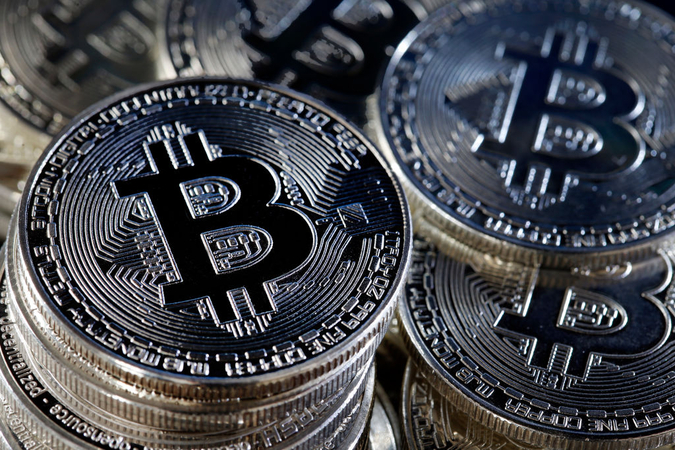
Bitcoin is back, sort of. The original cryptocurrency hasn’t regained the lofty highs of its bubble peak in late 2017, but it has climbed back up to about $10,000.

Predictions that bitcoin would collapse have not borne fruit. Despite its bubbles and crashes, the cryptocurrency is now a semi-permanent feature of the global financial landscape.

What it is not, however, is a generally accepted currency. Although many retailers now accept bitcoin, the overwhelming majority of day-to-day payments are done in regular old fiat currency. The mere fact that the dollar price of bitcoin remains an important metric indicates that bitcoin’s central value is as a speculative asset, rather than its usefulness as a medium of exchange.

It’s fairly obvious why. Because of bitcoin’s price volatility, people don’t want to hang onto it for very long. No one wants to get their paycheck only to find that it has halved in value by the time it comes to buy groceries. Also, optimists who think bitcoin’s value will continue to go up on average over time will be reluctant to part with it in exchange for something ephemeral like a pizza; better to hang onto the BTC and buy pizza with depreciating dollars instead. (Disclosure: I still own a small amount of bitcoin.)

In fact, these two reasons are just different sides of the same coin: Basic finance theory says that in a reasonably efficient market, high expected returns come at the expense of high volatility. An asset like bitcoin, or the U.S. dollar, can be a good investment or can be good for buying stuff, but unless the economy is deeply dysfunctional, it can’t be both.

Some economists, however, are thinking about how this situation might change, and whether bitcoin – or some alternative cryptocurrency – might actually replace fiat money as the standard means of payment. This has big policy implications, because if it did become real money, cryptocurrency could interfere with central banks’ ability to manage the economy and the price level. It also matters for crypto investors’ wallets.

One possibility is that nothing needs to be done, and eventually bitcoin will settle into a new low-volatility equilibrium, making it more suitable as a means of payment. Economists Michael Choi and Guillaume Rocheteau have made a model in which this happens. The problem is that the model sees bitcoin competing with other commodity-like forms of money, such as gold or other cryptocurrencies. Their result relies on the idea that liquid assets will always be in short supply. In reality, bitcoin is competing against fiat currencies that can be produced more or less costlessly.

A more plausible prediction comes from economists Jonathan Chiu and Thorsten Koeppl. Like other economists who have theorized about bitcoin, they view cryptocurrency’s fundamental challenge as that of preventing double-spending – in other words, verifying electronically that someone really has the money when they make a payment. This issue of digital trust, after all, is the problem bitcoin was designed to solve.

Chiu and Koeppl suggest that to become useful as a form of money, a cryptocurrency should be inflationary. The people who verify bitcoin transactions, called miners, are now compensated for their usage of computing power by being awarded new bitcoins, but the rewards are decreasing over time. One of the basic ideas of bitcoin, which stems partly from the hard-money beliefs of its creators, is that the cryptocurrency should be deflationary – that its supply should be limited, and its value should increase over time due to increasing scarcity. This means that eventually, miners will have to be rewarded with transaction fees instead of new bitcoins.

Chiu and Koeppl say this is a bad idea. Transaction fees, they note, are levied on a small population – that is, whoever is doing the transaction. To make it worth the miners’ while, the fees must be very high, which discourages people from transacting in bitcoin. If miners are instead paid with inflation, the cost gets spread out among everyone who owns bitcoin. Also, transaction fees make a double-spending attack more potentially lucrative, because creating a fake transaction would also save money on the fee. Thus, they recommend sticking with the inflation method of payment, and letting cryptocurrency depreciate over time like the U.S. dollar does.

This could be exactly what cryptocurrency needs in order to turn into real money. Negative expected returns – essentially, a low and stable inflation target – would make bitcoin less attractive as a long-term investment. Instead of hoarding it, people would be fine getting rid of it in exchange for pizza. The currency’s value might then stabilize, as speculation decreased.

Abandoning the dream of deflationary digital gold might be hard for bitcoin’s adherents to accept. But other cryptocurrencies, such as ZCash, Monero, Dash or Facebook Inc.’s Libra might step in to fill the gap. Of course, they would still have to overcome the technical problem of being able to handle large transaction volumes as cheaply and easily as a credit card company, but Chiu and Koeppl are confident that this is possible.

So ironically, cryptocurrency might only become a currency if it acts more like the U.S. dollar, with a low but predictable inflation target.

– – –

This column does not necessarily reflect the opinion of Bloomberg LP and its owners. Noah Smith is a Bloomberg Opinion columnist. He was an assistant professor of finance at Stony Brook University, and he blogs at Noahpinion.