CPF assures adherence to labour law, human rights principles #ศาสตร์เกษตรดินปุ๋ย

#ศาสตร์เกษตรดินปุ๋ย : ขอบคุณแหล่งข้อมูล : หนังสือพิมพ์ The Nation

https://www.nationthailand.com/biz-moves/30382498?utm_source=category&utm_medium=internal_referral

CPF assures adherence to labour law, human rights principles

Feb 20. 2020
Parisotat Punnabhum, CP Foods' Executive Vice President of Human Resources

Parisotat Punnabhum, CP Foods’ Executive Vice President of Human Resources
By The Nation

Charoen Pokphand Foods PLC (CPF) says its recruitment policy is strictly aligned with labour law and human rights principles, ensuring equal treatment, remuneration and welfare in line with legislative requirements. Migrant workers, in particular, are recruited under the Thai government’s memorandum of understanding (MoU) with neighbouring countries, supported by certified agencies at the countries of origin.

Parisotat Punnabhum, CP Foods’ Executive Vice President of Human Resources, said CPF operates with ethics, responsibility and transparency, particularly when it comes to the recruitment of both Thai and foreign workers.

CPF has strictly followed its labour policy and guidelines. Under the policy, child labour is prohibited. It also forbids the collection of any payment from workers or the confiscation of workers’ personal documents. It highlights respect for workers’ differences and equal treatment. Workers shall not be rewarded unfairly or deprived of labour rights regardless of their nationality, citizenship, ethnicity, complexion, religion, gender, age, physical disabilities, political views and marital status. Preventive and rectifying measures on sexual harassment are also included.

Regarding remuneration, CPF adheres to the pay scale and other payments, including overtime and other benefits, as stipulated in the labour law. The payments are on time and deducted only for the reasons allowed by law. Hours of work and overtime are set within legal limits. The company promotes, improves and maintains safety at workplace, protecting workers and relevant individuals against health risks. It also strives to conserve the environment and reduce impacts from the operations of the company and its partners , in compliance with environmental laws.

“We emphasise legal recruitment in all dimensions and encourage our suppliers to comply with laws and international labour standards. Given that these are aligned with our policy, their best practices will help push all parties towards the shared goals,” Parisotat said.

Meanwhile, CPF collaborated with Labour Protection Network Foundation (LPN) in establishing “Labour Voices Hotline by LPN”. Through the centre, operated by a neutral organisation, workers of all nationalities can express their views and recommendations, file complaints or seek assistance. The centre also offers training on human rights and legal knowledge about labour, occupational health and safety in Thailand.

S Hotels & Resorts joins EWD in development of high-end lifestyle resort in CROSSROADS Maldives #ศาสตร์เกษตรดินปุ๋ย

#ศาสตร์เกษตรดินปุ๋ย : ขอบคุณแหล่งข้อมูล : หนังสือพิมพ์ The Nation

https://www.nationthailand.com/biz-moves/30382472?utm_source=category&utm_medium=internal_referral

S Hotels & Resorts joins EWD in development of high-end lifestyle resort in CROSSROADS Maldives

Feb 20. 2020
By THE NATION

Bangkok, February 19 – S Hotels & Resorts Public Company Limited has received US$16.2 million from the sales of 50% stake in Prime Locations Management 3 Ltd, the operator of a high-end lifestyle resort on Island 3 in the CROSSROADS Maldives, to Wai Eco World Developer Pte (EWD).

S Hotels & Resorts (SHR) through its subsidiary S Hotels and Resorts (SC) Co., Ltd. (SHR SC) which holds 100% in Prime Locations Management 3 (Prime Locations), has completed the sales of 50% stakes in Prime Locations worth US$16.2 million to EWD on the 19th February 2020.

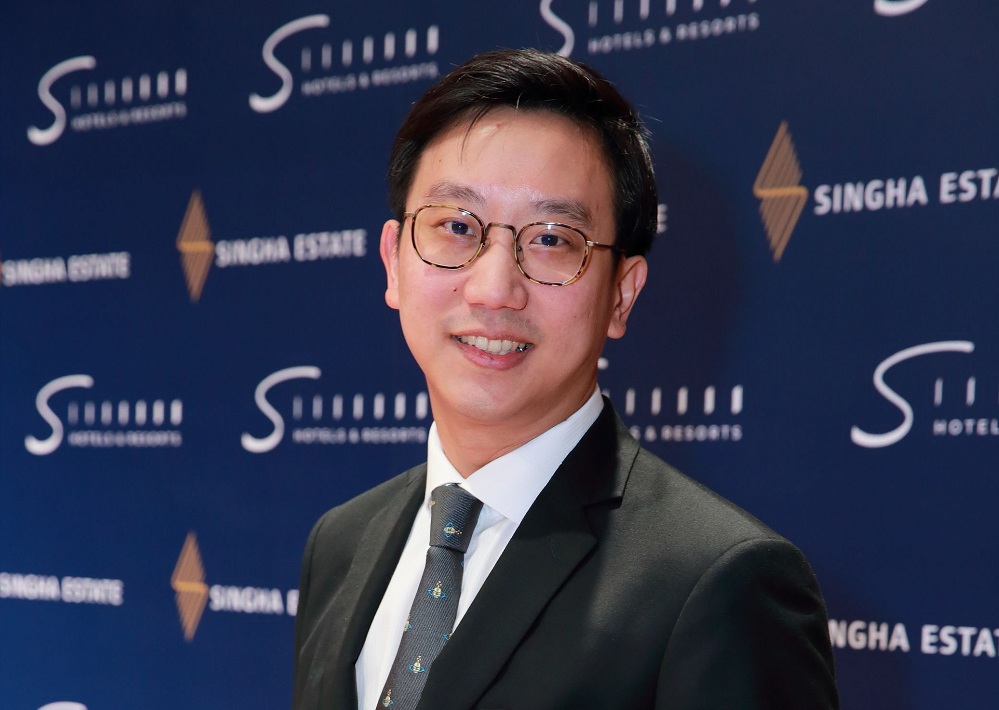
Mr. Chairath Sivapornpan, Chief Financial Officer of S Hotels & Resorts Plc, said having EWD as its business partner will enhance the company’s financial and operational strengths. SHR is even more confident that the resort on Island 3 in CROSSROADS will be successful and achieved commercial operation in time.

Under the joint venture agreement between SHR and EWD, Prime Locations Management 3 has a wholly owned subsidiary Dream Islands Development 3 Private Limited to enter a Sublease Agreement with Dream Islands Development 2 Private Limited (DID2) to obtain sublease rights of Island 3 in the CROSSROADS. DID2 has a Head Lease Agreement with the Government of Maldives.

Late 2019, SHR announced its joint venture cooperation with EWD, a business conglomerate from Myanmar which has various business interests in property development, mining, automotive and food, to develop a high-end lifestyle resort worthUS$60 million on Island 3 in the CROSSROADS.

The new high-end lifestyle resort on Island 3 will have 80 spacious villas with majority of inventory as water villas at a price point of $900-$1000 per night. The new resort development will support SHR to have a more diversified portfolio in the Maldives. The construction is expected to start this year and will be completed in 2022.

dtac and Yara announce collaboration to launch digital agriculture solutions in Thailand #ศาสตร์เกษตรดินปุ๋ย

#ศาสตร์เกษตรดินปุ๋ย : ขอบคุณแหล่งข้อมูล : หนังสือพิมพ์ The Nation

https://www.nationthailand.com/biz-moves/30382468?utm_source=category&utm_medium=internal_referral

dtac and Yara announce collaboration to launch digital agriculture solutions in Thailand

Feb 20. 2020
Haakon Bruaset Kjol, Head of Strategy and Transformation Group at Total Access Communications Plc or dtac together with Terje Knutsen, EVP Sales & Marketing at Yara International ASA signed a collaboration agreement on digital agriculture.

Haakon Bruaset Kjol, Head of Strategy and Transformation Group at Total Access Communications Plc or dtac together with Terje Knutsen, EVP Sales & Marketing at Yara International ASA signed a collaboration agreement on digital agriculture.
By THE NATION

Bangkok – dtac and Yara in Thailand are joining efforts to bring together agricultural knowledge and digital connectivity to deliver unparalleled access to agriculture information and resources to empower smallholder farming communities.

This is an exciting first step for both organizations, to leverage their strengths and leading industry positions in Thailand to offer a unique value proposition to millions of smallholder farmers.

“Telecommunications is a key enabler for innovation in a digital economy, with the emergence of new connectivity technologies such as 5G, IoT and AI, we see massive opportunities to drive transformation across major industry sectors. Agriculture as a key pillar of the Thai economy is particularly close to our hearts, we have over the past 10 years empowered farmers with mobile technology and digital services through our Smart Farmer program. We see a lot of synergies in our strategic collaboration with Yara as it speaks to our commitment and vision as a company – to connect you with what matters most and to empower societies. Together, we look forward to delivering sustainable impact within the agriculture sector,” said Sharad Mehrotra, dtac CEO.

“We believe that digital technologies can expand our reach and deepen the engagement with each individual farmer. Therefore we are excited about the strategic collaboration with dtac. Together we can contribute to empower smallholder societies through digital solutions, bringing agronomic solutions and knowledge of balanced crop nutrition which help increase productivity, profitability and sustainability for farmers in Thailand,” said Terje Knutsen, EVP Sales & Marketing at Yara.

By working together, dtac and Yara believe that they can contribute towards the future of farming in Thailand, contributing to a growing ecosystem of knowledge and solutions that drive productivity improvements and unlock economic opportunities for farmers.

Hong Kong companies have no safety net in fight for survival #ศาสตร์เกษตรดินปุ๋ย

#ศาสตร์เกษตรดินปุ๋ย : ขอบคุณแหล่งข้อมูล : หนังสือพิมพ์ The Nation

https://www.nationthailand.com/business/30382709?utm_source=category&utm_medium=internal_referral

Hong Kong companies have no safety net in fight for survival

Feb 24. 2020
A passenger wearing a protective mask rides a tram in Hong Kong on Feb. 12. MUST CREDIT: Justin Chin/Bloomberg

A passenger wearing a protective mask rides a tram in Hong Kong on Feb. 12. MUST CREDIT: Justin Chin/Bloomberg
By Syndication Washington Post, Bloomberg · Kiuyan Wong · BUSINESS, HEALTH, ASIA-PACIFIC

Hong Kong is being threatened by a “Tsunami-like” cataclysm, the city’s finance chief has warned, as the new coronavirus devastates businesses already hobbled by months of anti-government protests. The financial hub’s lack of a bankruptcy process will only exacerbate the pain.

Unlike in the U.S., Australia and rival Singapore, businesses in Hong Kong don’t have recourse to any corporate rescue procedure when in difficulties. The lack of a proper legal framework for seeking bankruptcy protection, which has been deliberated on for a quarter century, means companies are forced into liquidation, according to Johnson Kong, the president of the Hong Kong Institute of Certified Public Accountants.

“If we had the laws in place earlier, companies could have a better chance to survive this hit,” Kong said in an interview last week.

Kong expects a wave of bankruptcies with the virus outbreak keeping consumers indoors. Last year’s list of casualties was already the highest in two years as Chinese tourists deserted the protest-hit city and pushed it into recession. The government has pledged HK$25 billion ($3.2 billion) for relief measures and banks have been waiving some fees and extending loan payments.

The retail and food and beverage sectors are most vulnerable to liquidations, said Kong, who’s been involved in restructuring and insolvencies for more than 35 years.

Formal procedures give cash-strapped companies the opportunity to turn around, instead of immediately winding up and leaving employees and creditors unpaid. In the U.S., for example, Chapter 11 protection helped the once troubled toy chain Toys ‘R’ Us come back.

Hong Kong has been discussing a new legal framework since as early as 1996 and proposed legislation was submitted in 2014, but never dealt with by lawmakers.

A spokesman for the Financial Services and Treasury Bureau said that a new bill is now in an “advance stage,” but any debate on it won’t happen until later this year, or early next year. “Given the complexity and technicalities of the bill as well as the concerns expressed by various stakeholders in previous exercises, we will organize a fresh round of engagement with stakeholders on specific areas in the draft bill in the next few months,” the spokesman said.

Kong, who was on the Standing Committee on Company Law Reform from 2009 to 2015, said that the government pushed for a rescue procedure after Lehman Brothers Holdings Inc. collapsed, but the economy recovered swiftly and the plan was “put on the back burner.”

January was the worst start to a year since 2015 with 703 bankruptcies, according to the latest statistics from the Hong Kong government. The city’s unemployment rate also rose for a fourth straight month, reaching its highest level since 2016. The data does not reflect the full impact of shutdowns from the outbreak, which emerged toward the end of January.

Gordon Lam, a food truck owner and convener for the Hong Kong Small and Middle Restaurant Federation, said a lot of his peers are considering closing up. The virus has brought business to a standstill, while rents and staff expenses remain.

“Doing business in Hong Kong has always been pricey, but I could at least make the money to pay rent and costs,” he said. “Now there’s no business to start with.”

How one company’s tax-avoidance move could be OK through donating stock #ศาสตร์เกษตรดินปุ๋ย

#ศาสตร์เกษตรดินปุ๋ย : ขอบคุณแหล่งข้อมูล : หนังสือพิมพ์ The Nation

https://www.nationthailand.com/business/30382695?utm_source=category&utm_medium=internal_referral

How one company’s tax-avoidance move could be OK through donating stock

Feb 23. 2020
Allan Sloan is a columnist for The Washington Post. He is a seven-time winner of the Loeb Award, business journalism's highest honor.

Allan Sloan is a columnist for The Washington Post. He is a seven-time winner of the Loeb Award, business journalism’s highest honor.
By  The Washington Post · Allan Sloan · BUSINESS, PERSONAL-FINANCE 

OK, tax-filing season is almost upon us. So let me offer you a tax quiz.

How can a company make a charitable contribution and then show itself getting a tax benefit that’s much higher than its income tax rate?

No, the answer isn’t “fraud.” Or a special ruling from the IRS. Or some ultra-clever, ultra-tacky tax dodging.

Rather, it’s a classic example of how corporate accounting works. Or doesn’t work.

And it’s also a classic example of why, as I wrote last month, you can’t figure out from a company’s financial statements how much federal income tax (if any) it pays for a given year.

So now, let me show you how BlackRock Inc., the nation’s biggest asset manager, managed to show a $241 million tax benefit by donating to charity $589 million of stock it owned in a mortgage company called PennyMac. Those PennyMac shares went to two foundations affiliated with BlackRock, which over time will sell them and use the money to fund various programs.

That $241 million benefit is a bit more than 40 percent of the size of the donation. On first blush, that doesn’t seem right. According to BlackRock’s 2019 financial statement, the company paid a combined federal, state and local income tax rate of 22 percent. So a $589 million donation should have yielded around $132 million in tax savings.

So what closes the gap in its reported tax benefit? It’s the result of a benefit that appears only in the company’s accounting – but doesn’t actually involve real dollars the company has to pay or that taxpayers do or don’t receive.

It does have a practical effect, however. For years, BlackRock’s reported earnings were artificially reduced by accounting charges for taxes that it might have to pay in the future. And for this year, BlackRock’s earnings will be artificially inflated because those charges have just been reversed.

Let me explain. Or try to explain.

In 2008, with the financial crisis in full swing, BlackRock invested $34 million to help create PennyMac. To invoke a baseball cliché, that investment was a grand slam home run (without requiring BlackRock’s players to steal any competitors’ signs) that ultimately became worth more than 20 times what BlackRock paid for it.

Under accounting rules, BlackRock had to set up a “deferred tax” account for taxes that it would have owed had it sold its PennyMac stake or distributed it to BlackRock shareholders. This account is simply a line in the company’s books – it did not actually require the company to set aside any cash.

But because BlackRock donated its entire PennyMac holding to charity earlier this month, there will never be any tax due on the gain. So BlackRock wiped out the deferred tax account, generating a tax benefit. Combine that with the deduction from donating the stock and – voilà – you have a 40 percent tax benefit.

Normally, I’m critical of companies’ tax avoidance moves. But this one strikes me as perfectly OK. After all, BlackRock is getting the same deal that you would get if you paid $1,000 for stock that was worth $20,000 when you donated it to charity.

Like BlackRock, you’d get a tax deduction equal to the value of the shares you donated and wouldn’t owe any tax on the difference between your cost and the shares’ value on Donation Day.

This is the second time that BlackRock donated PennyMac stock. In 2013, it donated $124 million worth, and showed a $57 million tax benefit for earnings purposes. (That 46 percent rate is higher than the 40 percent rate on its recent donation, presumably because the federal corporate tax rate was 35 percent in 2013, compared with today’s 21 percent.)

“People donate appreciated securities all the time, it’s a standard practice,” said Bob Willens, of Robert Willens, who first brought the deal to my attention. “But this is the first time I’ve seen a company do it.”

Perhaps this donation and its related tax will spur other companies to make similar donations of appreciated holdings.

And perhaps BlackRock, which preaches – quite properly – about the need for corporate transparency and social consciousness, will someday show us the detailed tax numbers for its PennyMac donations. And for that matter, disclose how much federal tax it owes for a given year, and urge companies in which it’s a major investor to do the same.

I’m not predicting that will happen. But hey, you never know.

Bill Gates-led fund invests in making lithium mining more sustainable #ศาสตร์เกษตรดินปุ๋ย

#ศาสตร์เกษตรดินปุ๋ย : ขอบคุณแหล่งข้อมูล : หนังสือพิมพ์ The Nation

https://www.nationthailand.com/business/30382694?utm_source=category&utm_medium=internal_referral

Bill Gates-led fund invests in making lithium mining more sustainable

Feb 23. 2020
Bill Gates/ File Photo by Syndication Washington Post, Bloomberg

Bill Gates/ File Photo by Syndication Washington Post, Bloomberg
By Syndication Washington Post, Bloomberg · Akshat Rathi · BUSINESS, TECHNOLOGY, US-GLOBAL-MARKETS

Breakthrough Energy Ventures, helmed by Bill Gates, and MIT’s The Engine fund are leading an investment round of $20 million for Lilac Solutions, a U.S. startup aimed at making the extraction of lithium less water-intensive and more sustainable.

As the world looks to cut carbon emissions, people are increasingly turning to lithium-ion batteries for solutions such as powering electric vehicles or storing renewable energy. While there’s enough lithium available to meet today’s demand, BloombergNEF expects the market could see a shortfall as soon as 2023 as demand for the metal grows fourfold over the next decade.

About 75% of the world’s lithium is trapped in underground deposits of briny water that contain a mixture of salts. The typical way to recover lithium is to pump the water to the surface into miles-long salt ponds and let the water evaporate. What remains is then treated with chemicals, processed, washed, and filtered to leave behind the lithium.

BNEF estimates that each ton of lithium extracted from brine requires 70,000 liters of fresh water. Making matters worse, much of lithium mining happens in regions that are already water-stressed. In Chile’s Atacama Desert, for example, mining activity is wrecking the ecosystem and straining local communities.

Evaporation pond extraction is also quite slow: It can take up to two years for brine to yield usable lithium. And the process is able to recover only about 50% of the lithium present in the brine. All that raises the upfront capital cost and slows down the pace at which new mines can be started.

Lilac Solutions, based in Oakland, California, is a one of a handful of startups deploying technologies that could drastically cut water use, lower capital expenditure, and make lithium-extraction more energy efficient. Instead of waiting for the sun to heat evaporation ponds, Lilac uses ion-exchange beads that are able to selectively remove lithium and leave behind magnesium, calcium, boron, and other unwanted minerals. Once the beads are saturated, they’re treated with an acid to extract the lithium and can then be used again.

The process does away with the need for large evaporation ponds and is able to return the lithium-depleted brine back underground, according to the company. It also cuts down the amount of time needed to extract lithium from brine to mere hours. And the beads are selective enough to recover about 90% of lithium in brines.

Other companies have tried to build these ion-exchange beads in the past, but they were either not selective enough at picking lithium out of the mixture of minerals or fell apart after just a few cycles, said Chief Executive Officer David Snydacker. The Lilac beads are the product of an obsession with lithium-ion batteries that started during his PhD research at Northwestern University.

Lilac’s process also cuts energy use and thus greenhouse-gas emissions. Breakthrough Energy Ventures looks to invest in startups that are each capable of cutting emissions by 500 million metric tons annually. The fund’s investors include Jeff Bezos, founder of Amazon.com Inc., and Jack Ma, co-founder of Alibaba Group Holding. Michael Bloomberg, the founder and majority owner of Bloomberg LP, is a backer of Breakthrough.

The new round of funding will allow Snydacker to create a manufacturing line in California. The company intends to partner with existing mines rather than open its own; the first pilot using Lilac’s technology will start in Argentina later this year, in partnership with mining company Lake Resources. If it works, Snydacker hopes to deploy the technology to extract lithium from unconventional sources, such as oil fields and geothermal power plants, which both produce copious amounts of brine.

Lilac’s competition is growing. Other startups in the space such as Rincon Ltd., Tenova, Adionics, and Summit Nanotech are all launching pilot plants. Some use ion-exchange technology like Lilac others use either nano-filtration (essentially filters small enough to separate charged atoms) or solvent extraction (chemicals that have affinity for lithium).

The demand for lithium is growing rapidly, according to BNEF metals analyst Sharon Mustri. “The main challenge for these startups is to scale up,” she said.

For Canada’s Trudeau, the $15.5 billion Teck mine decision is a lose-lose situation #ศาสตร์เกษตรดินปุ๋ย

#ศาสตร์เกษตรดินปุ๋ย : ขอบคุณแหล่งข้อมูล : หนังสือพิมพ์ The Nation

https://www.nationthailand.com/business/30382689?utm_source=category&utm_medium=internal_referral

For Canada’s Trudeau, the $15.5 billion Teck mine decision is a lose-lose situation

Feb 23. 2020
File Photo by Syndication Washington Post, Bloomberg

File Photo by Syndication Washington Post, Bloomberg
By Special To The Washington Post · Amanda Coletta · WORLD, SCIENCE-ENVIRONMENT

TORONTO – For as long as he’s been prime minister, Justin Trudeau has insisted that supporting Canada’s struggling oil and gas sector, tackling climate change and mending the country’s relationship with its indigenous people go “hand in hand.”

His Liberal government would put a price on carbon emissions, giving him the “social license” for energy projects such as pipelines, which would quiet opposition to the carbon tax.

Now, at the start of Trudeau’s second term, looms a decision that’s testing his commitments both to fighting climate change and to developing Canada’s potentially lucrative oil sands.

By the end of the month, Trudeau’s cabinet is expected to approve or reject Teck Resources’ $15.5 billion Frontier mine proposal for northern Alberta – a 71,600-acre project projected to pump 260,000 barrels of bitumen per day and emit 4.1 megatons of emissions per year for the next four decades.

A federal-provincial review panel found last year that the project would have “significant adverse environmental effects,” including the “irreversible” destruction of peatland, impacts on indigenous groups, harm to the wood buffalo and the loss of habitat for at-risk species until at least 2181.

But the panel concluded that the economic benefits – 7,000 jobs during construction, 2,500 jobs during the life of the mine and $52 billion in government coffers – “justified” the environmental effects, and that it was in the public interest.

The decision now belongs to Trudeau – and it could be a political minefield.

Give the project the green light, and he’ll be labeled a hypocrite on climate change – again (his government bought the Trans Mountain pipeline in 2018, and approved an expansion last year). Trudeau campaigned on a pledge to get Canada to net zero emissions by 2050. (The country is on track to miss its 2030 target under the Paris accord.)

“If the government is indeed serious in its intention to be a climate leader, it has to address the elephant in the room, which is the continued expansion of the oil and gas sector,” said Caroline Brouillette, a climate change researcher with the environmental group Équiterre. “That means saying no to Teck.”

But nix the mine, and Trudeau risks raising more opposition in the oil-rich provinces of Alberta and Saskatchewan, which completely shut out his Liberals in last year’s federal election, and where struggles in the oil patch have fueled resentment and alienation.

Ratcheting up the stakes, Alberta Premier Jason Kenney has threatened a “swift and serious” reaction if Ottawa gives the project a thumbs-down, and he predicted western alienation would bubble over – leaving nothing short of national unity on the line.

“An arbitrary rejection of the Teck Frontier project at the 11th hour would be yet another signal that the Trudeau Liberals have abandoned our province in our time of need,” Christine Myatt, a spokeswoman for the United Conservative premier, wrote in an email.

The bombast belies an awkward fact: Even if the project is approved, it might never get built.

Teck chief executive Don Lindsay said last month that the mine’s construction is dependent on “three Ps”: pipelines, a suitable partner and oil prices high enough to warrant the investment.

Teck based its proposal on oil prices of $95 a barrel – far higher than where global benchmark prices have been since 2014.

The company said last week it will be forced to take an $855 million impairment charge if the project is not approved. It took a $688 million write-down in the quarter on its Fort Hills mine, which already is in production, because of “lower market expectations” for crude oil prices.

Chris Stannell, a spokesman for Teck, said in an email that the company is evaluating “improvements to project technology and other operational improvements” that it believes will make the Frontier project “technically feasible and commercially viable.”

“A lot of the rhetoric is promising people that this project is right there, it’s ready to go and all we need is Prime Minister Trudeau,” said Andrew Leach, an energy economist at the University of Alberta. “Even if he said yes, at a minimum, this project is years away, and it would need a big rebound in oil prices.”

Several oil sands projects that have been approved have yet to be built, Leach notes.

“Right now, the market is saying no,” he said. “So it would not just be the government.”

The slump in oil prices means the promised economic benefits are more modest than they were when Teck made its proposal, Leach said. He said the government should take that into account.

Chris Severson-Baker, the Alberta director for the Pembina Institute, an environmental think tank, says one reason so much is being read into the Teck decision is that the Trudeau government hasn’t produced a clear plan for how it is going to meet its carbon emission targets.

“That puts a lot of pressure on this one project,” he said.

A spokeswoman for Canada’s environment ministry did not respond to a request for comment.

The federal-provincial panel acknowledged that the Frontier mine might “make it more difficult” for Canada to achieve its domestic and international greenhouse gas emissions commitments, but it did not take that into account when making its recommendation.

Teck Resources says the mine would have a lower emissions intensity than roughly half of all oil refined in the United States. It has promised to get to net zero emissions by 2050 across all of its mining operations; it owns or has interests in 13 facilities in Canada, the United States, Chile and Peru.

Tim McMillan, chief executive of the Canadian Association of Petroleum Producers, said he gives the federal government “full credit” for working since the election to “bridge east and west.” Failing to approve the project, he said, would have a “concerning” effect on those efforts and also discourage foreign investment.

The Frontier mine faces opposition from some indigenous groups, who say they have not been sufficiently consulted.

Trudeau is under pressure to resolve several indigenous-led, anti-pipeline blockades that have for more than two weeks paralyzed Canada’s railway system, bringing the movement of people and freight to a virtual standstill.

The blockades were set up in solidarity with some members of the Wet’suwet’en Nation in British Columbia who oppose the construction of a natural gas pipeline there.

“This is the first government that has put its political capital on the line to push through significant environmental policies,” Leach said. “But on the other hand, they’ve also been the first government that’s really taken it on the chin in terms of the pipeline fight.”

The project is dividing Trudeau’s caucus, as well as the broader Canadian public.

Nearly half of all Canadians support the construction of the mine, according to a survey from the Angus Reid Institute; 40 percent are opposed. Support is highest in the prairie provinces. Opposition is rooted in Quebec, British Columbia and Ontario – key political battlegrounds.

“It certainly makes things, politically, quite tricky for the Trudeau government as it tries to navigate both politically and from a policy perspective,” said Shachi Kurl, the institute’s executive director. “The country is divided along regional lines and people are divided along political lines. …

“The numbers really underscore the challenge and the difficulty of trying to approach a middle way.”

America’s coal country isn’t dead – it’s preparing for a comeback #ศาสตร์เกษตรดินปุ๋ย

#ศาสตร์เกษตรดินปุ๋ย : ขอบคุณแหล่งข้อมูล : หนังสือพิมพ์ The Nation

https://www.nationthailand.com/business/30382677?utm_source=category&utm_medium=internal_referral

America’s coal country isn’t dead – it’s preparing for a comeback

Feb 23. 2020
By Syndication Washington Post, Bloomberg · Will Wade · BUSINESS

At least five of America’s coal producers went bankrupt in 2019. Prices for the fossil fuel have plunged 40% since a 2018 peak. And some of the nation’s largest miners are retrenching and slashing their dividends.

But don’t be mistaken: The fight against climate change hasn’t killed off Coal Country yet.

Instead of pouring money into dividends and buybacks, the nation’s largest coal producers say they’re hoarding cash to weather what they see as an impermanent storm. Overall, the industry returned more than $1 billion to investors last year before retrenching. The goal this year: Be ready to start mining again and paying dividends at the first sign of a market revival. They’re betting that prices will bottom out in the first half of 2020 before rising in the second half as production declines and global consumption gains.

That’s spurred a new “mantra” at Peabody Energy Corp., according to Chief Executive Officer Glenn Kellow. It is “to live within our means,” he said during his Feb. 5 earnings call.

A year ago, Peabody announced its biggest dividend ever, and said it would return to shareholders all of its free cash flow. On Feb. 5, the message was very different: The nation’s leading coal producer said it was suspending its dividend, halting buybacks and cutting capital expenditures.

Hope has been in short supply for coal miners. The industry has been battered as much of the world forsakes the fuel to fight climate change, and as low natural gas prices squeezes its economics. Coal once accounted for more than half of all U.S. power generation. Today it’s less than 25%.

The decline underscores the limitations of President Donald Trump’s pro-fossil fuel policies. While the White House has rolled back environmental regulations and tried to rescue coal plants from early retirement, utilities are still shifting to cheaper and cleaner natural gas, wind and solar power. Meanwhile, all of the Democratic presidential candidates have taken a stance against coal.

And yet there’s still “a hope that prices have bottomed out and will begin to tick up a bit,” said Michael Dudas, an analyst with Vertical Research Partners, in a telephone interview. “Companies are trying to preserve cash and keep conservative.”

Optimism within the industry is probably stronger among companies producing coal used by steelmakers, Dudas said. Still, thermal coal might also see a gain with a hot summer or a colder winter, he said.

Because of the lower prices, higher-cost mines are being shut down and there’s been a wave of bankruptcies. The result, according to Dudas: “Supply comes off the market, inventory levels start to get worked off and, eventually, we will have more demand and that will move the price cycle higher.”

Peabody’s not alone. Consol Energy Inc. also announced it’s cutting capital expenditures. And while Arch Coal Inc. boosted its dividend, the company said there will be less cash available to return to shareholders through share buybacks. Instead, the money will go toward toward a new mine in West Virginia, expected to open in mid-2021.

“We’re confident that Arch is well equipped to weather the current market downturn,” said Arch CEO John Eaves in a Feb. 6 conference call. “And just as well equipped to capitalize on the next market up cycle whenever it occurs.”

Jimmy Brock, the Consol CEO, also sees a glimmer on the horizon. “Low prices are starting to drive a supply response,” he said during his earnings call last week. “There are some indications that provide hope for an improvement in the second half of 2020.”

Alliance Resource Partners LP too cut its distribution by 26% this month, with CEO Joe Kraft saying it made more sense to keep the cash to ride out a bumpy year.

Prices for thermal coal delivered to Amsterdam, Rotterdam and Antwerp, an Atlantic benchmark, are about $52 a metric ton. That’s down almost 50% from an October 2018 peak, and last month it slipped to the lowest in 44 months. Booming natural gas supplies and a mild winter are dragging down demand at power plants, while utilities in the U.S. and Europe continue to shift away from the dirtiest fossil fuel in an effort to curb climate change.

Metallurgical coal is also down, sliding more than 40% from an early 2018 high. Prices for the steelmaking ingredient plunged steeply in the second half of last year as global economic trends slowed and trade tensions heated up with China, the world’s biggest producer of the metal.

(Michael Bloomberg, the founder and majority owner of Bloomberg LP, the parent company of Bloomberg News, has committed $500 million to launch Beyond Carbon, a campaign aimed at closing the remaining coal-powered plants in the U.S. by 2030 and slowing the construction of new gas plants.)

Shinsegae outlet shuts down food section over coronavirus fears #ศาสตร์เกษตรดินปุ๋ย

#ศาสตร์เกษตรดินปุ๋ย : ขอบคุณแหล่งข้อมูล : หนังสือพิมพ์ The Nation

https://www.nationthailand.com/business/30382664?utm_source=category&utm_medium=internal_referral

Shinsegae outlet shuts down food section over coronavirus fears

Feb 23. 2020
(Yonhap)

(Yonhap)
By The Korea Herald/ANN

Shinsegae Department Store, a major South Korean retailer, said Sunday it will partially shut down one of its outlets in southern Seoul for a disinfection measure following a recent visit there by a patient diagnosed with the new coronavirus.

The store in the posh Gangnam district will close its food court at the basement level for one day, the company said.

The patient infected with the COVID-19 virus stayed at the venue for an hour on Wednesday with her husband.

The patient also attended a religious service of a minor Christian sect in Daegu, 302 kilometers south of Seoul, last week.

Her infection was confirmed on Friday.

Members of the sect constitute the majority of the total coronavirus infections here, which topped 400 cases on Saturday.

Shinsegae said it has decided to maintain the operation of other floors as the patient only visited the food court and wore a face mask.

“We will take all necessary disinfection and sanitary measures to prevent the spread of the COVID-19 virus,” a corporate official said.

Earlier this month, other department store and supermarket chains, such as Lotte Department Store and Hyundai Department Store, also suspended the operations of their stores after patients’ visits. (Yonhap)

Condo projects near universities prove a success #ศาสตร์เกษตรดินปุ๋ย

#ศาสตร์เกษตรดินปุ๋ย : ขอบคุณแหล่งข้อมูล : หนังสือพิมพ์ The Nation

https://www.nationthailand.com/property/30382637?utm_source=category&utm_medium=internal_referral

Condo projects near universities prove a success

Feb 22. 2020
By THE NATION

Condominium projects located near universities are bucking the trend of negative economic sentiment caused by the Covid-19 crisis, the current drought and the decline in exports.

Pruksa Real Estate Value chief executive officer Piya Prayong said that the condo projects launched near universities were successful.

He cited the example of Pruksa’s “Plum 89” project, situated near Rangsit University, Bangkok University, and Thammasat University’s Rangsit campus.

“Almost 2,000 units of these condominium units have been sold, especially as the unit price is inexpensive, or lower than Bt1 million,” he added.

He said there were investors buying at least 10 to 20 condo rooms, with the aim of renting them out to students at Bt7,000 to Bt10,000 per month.

“The room rates are not expensive for parents, and presently the rooms are full of students,” he added.

The CEO also said that the rooms of another Pruksa condo project, located near Srinakharinwirot University, have been sold to investors who aim to rent them out as well.

Meanwhile, LPN Development’s managing director, Opas Sripayak, said that more than 7,000 units of his company’s “Lumpini Township Rangsit-Khlong 1” have been sold out, and ownership was expected to be transferred at the end of this year.

The condo project, like Plum 89, are also located in the Rangsit area.