Powell says risks to outlook remain, Fed monitoring virus #ศาสตร์เกษตรดินปุ๋ย

#ศาสตร์เกษตรดินปุ๋ย : ขอบคุณแหล่งข้อมูล : หนังสือพิมพ์ The Nation

https://www.nationthailand.com/business/30381976?utm_source=category&utm_medium=internal_referral

Powell says risks to outlook remain, Fed monitoring virus

Feb 11. 2020
Jerome Powell, chairman of the Federal Reserve, speaks during a House Financial Services Committee hearing in Washington on Feb. 11, 2020. MUST CREDIT: Bloomberg photo by Andrew Harrer.

Jerome Powell, chairman of the Federal Reserve, speaks during a House Financial Services Committee hearing in Washington on Feb. 11, 2020. MUST CREDIT: Bloomberg photo by Andrew Harrer.
By Syndication Washington Post, Bloomberg · Christopher Condon, Max Reyes

Federal Reserve Chairman Jerome Powell said the U.S. central bank is keeping a close eye on fallout from the deadly coronavirus outbreak in China, singling it out among risks threatening the U.S. and world economy.

“In particular, we are closely monitoring the emergence of the coronavirus, which could lead to disruptions in China that spill over to the rest of the global economy,” Powell said in remarks before U.S. lawmakers Tuesday.

Powell stopped short of saying the outbreak had changed the Fed’s baseline outlook for the U.S. economy, or the expectation among many members of the Federal Open Market Committee that rates will remain on hold this year. U.S. equities climbed as investors digested the latest views from the Fed chair and Treasuries slipped.

“The FOMC believes that the current stance of monetary policy will support continued economic growth, a strong labor market and inflation returning to the committee’s symmetric 2% objective,” Powell said. “As long as incoming information about the economy remains broadly consistent with this outlook, the current stance of monetary policy will likely remain appropriate.”

Coronavirus, which has killed more than 1,000 people, has prompted the world’s largest-known quarantine effort and slowed large portions of China’s economy, disrupting travel and commerce worldwide.

Powell faced questions from lawmakers of the House Financial Services Committee about the potential impact of the virus on the U.S. economy.

“We know that there will be some, very likely be some effects on the United States,” he said, adding that the question for the Fed is whether they’ll be “persistent” and “material.”

“It’s just too early to say,” Powell said.

The Fed chief is also scheduled for a hearing before the Senate Banking Committee at 10 a.m. Wednesday as part of his semi-annual testimony to Congress.

Fed officials have dialed up their concern over the coronavirus in public remarks in recent days. Vice Chairman Richard Clarida called it a “wild card” on Jan. 31. The Fed’s Semiannual Monetary Policy Report, released Feb. 7, said it was a “new risk” that could potentially interfere with trade, depress commodity prices and cause the U.S. dollar to appreciate.

Some private-sector economists have been less cautious, marking down their estimates for first-quarter growth in the U.S., while investors are betting the Fed will respond with an interest rate cut later this year.

In his prepared remarks, Powell provided a mostly positive picture of the U.S. economy — which was dented but not significantly damaged by slower global growth and international trade disputes in 2019.

“Economic activity increased at a moderate pace and the labor market strengthened further, as the economy appeared resilient to the global headwinds that had intensified last summer,” he said.

His comments followed data released last week showing U.S. employers added a better-than-expected 225,000 new jobs in January.

Powell said the central bank had been successful in containing a sudden September spike in overnight funding rates that briefly pushed the Fed’s benchmark lending rate to stray outside its target range.

The central bank has conducted emergency lending into the market for repurchase agreements and, in October, began purchasing $60 billion a month in Treasury bills. The latter move has boosted bank reserves, allowing banks to feed money into the repo market in place of the Fed.

“As our bill purchases continue to build reserves toward levels that maintain ample conditions, we intend to gradually transition away from the active use of repo operations,” he said. “We intend to slow our purchases to a pace that will allow our balance sheet to grow in line with trend demand for our liabilities.”

Powell repeated his concerns over longer-term issues holding back growth in the U.S. economy.

“Finding ways to boost labor force participation and productivity growth would benefit Americans and should remain a national priority,” he said.

He also warned lawmakers the economy would need support from fiscal policy in the event of a downturn, and pressed them to put the federal budget on a sustainable path.

The White House on Monday released President Donald Trump’s proposed 2021 federal budget, which included deficit spending of about $1 trillion. Trump has repeatedly criticized Powell for not lowering interest rates further.

Coronavirus emerged as an economic threat in recent months just as the global outlook was beginning to brighten. Powell and his colleagues cut rates three times in 2019 to guard against the risks posed by trade tensions, slow global growth and below-target inflation. Since late last year, however, Fed officials have said monetary policy was in a good place and would remain unchanged unless their outlook for the economy changed materially.

Completion of the China phase-one trade deal, Britain’s avoidance of a sudden, no-deal exit from the European Union and a slight improvement in global manufacturing data pointed to a more stable outlook for 2020 after a decidedly rocky 2019.

“Some of the uncertainties around trade have diminished recently, but risks to the outlook remain,” Powell said.

Ghosn faces Nissan in Dutch court for 1st time since escape #ศาสตร์เกษตรดินปุ๋ย

#ศาสตร์เกษตรดินปุ๋ย : ขอบคุณแหล่งข้อมูล : หนังสือพิมพ์ The Nation

https://www.nationthailand.com/business/30381925?utm_source=category&utm_medium=internal_referral

Ghosn faces Nissan in Dutch court for 1st time since escape

Feb 11. 2020
File Photo: Ghosn/Syndication Washington Post, Bloomberg

File Photo: Ghosn/Syndication Washington Post, Bloomberg
By Syndication Washington Post, Bloomberg · Ellen Proper

Carlos Ghosn’s lawyers faced off with Nissan in an Amsterdam court for the first time since the former executive’s dramatic escape from Tokyo last year.

Ghosn is suing his former employer for 15 million euros ($16.4 million) as part of a Dutch wrongful dismissal lawsuit. At a hearing Monday, his lawyers asked a court for access to documents related to a March 2019 report on internal governance that led to Ghosn’s dismissal by the carmaker’s Dutch unit and by a joint venture called Nissan-Mitsubishi BV.

The 65-year-old, who was facing two trials on charges of financial misconduct in Japan, jumped bail and fled the country in December with the help of a security detail led by a former Green Beret. Ghosn has since accused executives at Nissan of plotting with prosecutors in Japan to have him unjustly arrested.

Ghosn’s lawyers argued that documents used to write the report were the basis for his ouster from top leadership roles at Nissan, France’s Renault SA, and Mitsubishi Motors Corp., and are necessary for his wrongful dismissal lawsuit.

“He needs to know how and why Nissan came to the conclusion that there was no confidence in him anymore,” Ghosn lawyer Roeland de Mol told the three-judge panel. Ghosn didn’t attend the hearing and remains in Lebanon where he settled after his escape.

Nissan’s lawyers said that Ghosn’s dismissal was justified by many factors including his long-term detention in Japan as well and questionable tax payments by the Nissan-Mitsubishi joint venture. They detailed an earlier allegation he embezzled 7.8 million euros, and told the court they want it back.

“Ghosn has started a media offensive in which he tries to portray himself as a victim and has announced a massive offensive of lawsuits with bravado,” Nissan lawyer Eelco Meerdink told the court.

In January 2019, Nissan alleged that Ghosn been improperly paid 7.8 million euros through Nissan-Mitsubishi. His lawyer said Monday that the amount included 5.8 million euros in salary he had been receiving as Nissan’s CEO. The venture started to pay it after he stepped down from that role at the Japanese automaker, with the aim of keeping the payments off of Nissan’s books, Meerdink said.

Similarly, the tax payment totaled almost 500,000 euros, and Ghosn also received an improper 1.9 million-euro signing bonus, the lawyer said.

The court said it would rule on the document issues after several weeks of additional arguments. A trial could be scheduled for later this year.

BlackRock’s Paris office barricaded by climate activists #ศาสตร์เกษตรดินปุ๋ย

#ศาสตร์เกษตรดินปุ๋ย : ขอบคุณแหล่งข้อมูล : หนังสือพิมพ์ The Nation

https://www.nationthailand.com/business/30381914?utm_source=category&utm_medium=internal_referral

BlackRock’s Paris office barricaded by climate activists

Feb 11. 2020
French riot police block pedestrian access outside the Blackrock Inc. offices following a climate activist protest in Paris on Feb. 10, 2020. MUST CREDIT: Bloomberg photo by Christophe Morin.

French riot police block pedestrian access outside the Blackrock Inc. offices following a climate activist protest in Paris on Feb. 10, 2020. MUST CREDIT: Bloomberg photo by Christophe Morin.
By Syndication Washington Post, Bloomberg · Gaspard Sebag 

BlackRock’s Paris office was briefly barricaded on Monday by climate activists who sprayed red paint on the floors and covered the walls with graffiti before leaving the premises of the world’s largest asset manager.

Youth For Climate France said in a statement that it targeted BlackRock for its investments in companies that damage the environment, listing Vinci, Total, BNP Paribas and Societe Generale among them.

“Our activists left BlackRock’s headquarters of their own accord after having occupied it for more than an hour,” the group said in a tweet.

BlackRock offices in other cities have drawn similar protests in the past few years, including its New York headquarters and London. Protesters have trailed its chief executive officer, Larry Fink, to events and speaking engagements. Beyond climate concerns, activists have also voiced objections to its holdings in companies that manufacture guns and run private prisons.

About two-thirds of BlackRock’s $7.4 trillion under management is held in index funds, putting it among the largest owners of a huge swathes of public companies and complicating the issue of divestment because it’s a passive investor.

The climate protests on Monday come after BlackRock CEO Fink issued his strongest warning yet to business leaders on the environmental crisis, and said his firm will take steps to address the issue across the thousands of companies in which it invests.

This month, it rapped Siemens on the knuckles for its handling of a controversial rail contract for an Australian coal mine, which has come under criticism from environmental activists. BlackRock, which is Siemens’ biggest shareholder, said the German industrial company needs a “more thorough review of the potential risks.”

In France, BlackRock has become a lightning rod for many demonstrations. Last month, its offices were stormed during protests against President Emmanuel Macron’s pension reforms on speculation that the company had helped shape the plan.

“We strongly condemn the violent intrusion and acts of vandalism on our premises this morning,” BlackRock said in a statement after the Paris protest. “These acts, like the attempts to intimidate our employees for several weeks, are unacceptable and intolerable.”

Vinci, Total, BNP and Societe Generale didn’t immediately respond to messages seeking comments on the protesters’ allegations.

During the occupation of BlackRock’s Paris premises, live feeds posted online showed police vans seeking to cordon off the area, after dozens of climate activists had entered the building. The walls inside were covered with graffiti.

“BlackRock assassins” and “I want to live” could be read on walls and windows. There were also anarchist logos. One activist interviewed on the live-feed said the blockade was also a protest against the French state’s inaction on climate issues.

BlackRock’s Paris offices are in the center of the city, a five-minute ride away from the iconic Louvre pyramid. Many members of the company’s staff in Paris were still in the building as the protest unfolded. Security personnel appeared to have been overwhelmed by the activists.

Family builds $3.8 billion fortune, one pint of blood at a time #ศาสตร์เกษตรดินปุ๋ย

#ศาสตร์เกษตรดินปุ๋ย : ขอบคุณแหล่งข้อมูล : หนังสือพิมพ์ The Nation

https://www.nationthailand.com/business/30381913?utm_source=category&utm_medium=internal_referral

Family builds $3.8 billion fortune, one pint of blood at a time

Feb 11. 2020
By Syndication Washington Post, Bloomberg · Emma Vickers

Harry Lee Armstrong is almost broke. But he’s found a quick way to make a little cash. It’s called “plassing.”

Laid off from his construction job, Armstrong has driven to a storefront donation center where a valuable global commodity – the golden plasma in human blood – is harvested seven days a week.

Wedged between a dental office and a liquor store in a Pennsylvania strip mall, the place hardly looks like a cogwheel of international commerce.

But that’s precisely what it is: part of a far-flung corporation that’s raking in hundreds of millions a year thanks in large part to hard-pressed people like Armstrong.

In fact, the blood plasma business is so good these days that the family behind this company, Barcelona-based Grifols, has amassed a $3.8 billion fortune, according to calculations by Bloomberg. The Grifols family declined to comment.

Over the past decade, as international demand for plasma has soared and many Americans have struggled to make ends meet, plasma collection in the U.S. has more than doubled, according to the Plasma Protein Therapeutics Association, which represents the industry. Grifols is riding the wave. The company’s shares have climbed 37% in the past year, almost four times more than Spain’s IBEX 35 Index.

After a series of acquisitions over the past two decades, Grifols runs 220 collection centers in at least 32 states, a quarter of the U.S. total. The company posted net income of 596.6 million euros ($653 million) for 2018. More than three-quarters of its 4.49 billion euros of revenue was generated by the company’s bioscience division, which runs donation centers in the U.S. and processes the collected plasma into drugs for sale.

For millions of people, many of them poor or underemployed, cash in the hand is worth a needle in the arm. On this gray December Monday, Armstrong has gotten $70 for as much as a pint and a half of plasma.

“We gotta pay the bills, eat,” said Armstrong, leaning against his car in the parking lot outside the Grifols center.

Of his day’s plasma pay, he said: “It’ll put gas in the car.”

– – –

Plasma is the liquid portion of blood, and it has a wide variety of medical uses. Drugs derived from plasma are used for treating ailments such as hemophilia and are showing promise in slowing the progression of Alzheimer’s. It’s also a big business, and at times a contentious one. Doctors agree that donating plasma is safe, but how often is too often is a matter of debate.

At issue, too, is whether companies should pay donors, or “plassers,” as they’re known in the trade. The U.S., Germany and China are among the only countries where payment is legal.

Grifols and several other companies have built what analysts characterize as a global oligopoly. Central to the business model is the idea that encouraging people to sell plasma is perfectly fine. Donors want the money, the argument goes, and their plasma ultimately leads to life-saving products for everyone.

Still, studies have found that plasma collection centers are disproportionately located in low-income areas. Critics say the industry is taking advantage of the poor.

“It’s intentional,” said Heather Olsen, a researcher on a Case Western Reserve University study of the plasma business. “There’s nothing happenstance happening in this industry.”

Some donors might agree. But many of them just need the money.

On a December day, business is steady at the collection center in suburban Fairless Hills, north of Philadelphia. A banner outside urges people to “join our plasma donor community.” Armstrong found the Grifols center by word of mouth. Another one closer to his home that’s run by one of Grifols’ competitors, CSL Ltd. of Australia, was packed.

People trickle in and out. A forklift operator donates weekly to earn fun money. A retired painter is supplementing his Social Security.

Grifols donor Hunter Tini said in January he sells his plasma on lunch breaks, often passing the time by listening to audio books like “Lord of the Rings.” He’s grappling with $80,000 in student debt, so the extra money comes in handy, he said.

Emiliano Montero, 22, said he recently landed a position paying $11 an hour after years of doing odd jobs under the table. Now, he’s no longer eligible for government food assistance, so he’s plassing, too. He said he’s living out of his Honda Civic while taking care of his sisters. Montero said he doesn’t mention his plasma sideline to friends.

“It just hurts my pride a bit,” he said. “I guess you gotta do whatever you gotta do.”

– – –

Founded in Barcelona in 1940 by brothers Jose Antonio and Victor Grifols Lucas, Laboratorios Grifols began developing vaccines and blood transfusion technology among a population impoverished by civil war and internationally isolated by the Franco regime.

Jose Antonio pioneered the plasmapheresis technique in 1950. By separating out the plasma, the part of the blood rich in antibodies and proteins in which white and red cells float, and re-infusing the red blood cells, Grifols found that donors could give more frequently and with no side effects.

Today, Grifols is among three companies that dominate the global plasma market. It remains a family business, run by co-chief executive officers Raimon Grifols Roura, the son of co-founder Victor, and his nephew, Victor Grifols Deu.

It also has remained loyal to the city of its inception. During a rare public appearance in 2014, Grifols Chairman Victor Grifols Roura expressed his support for Catalan independence, Reuters reported at the time. When the Catalan constitutional crisis peaked in 2017, Grifols Roura kept his company headquartered in Barcelona, as at least six other major Spanish companies, fearful of a unilateral independence declaration, moved out.

The Grifols family fortune is shared between the children of co-founders Victor and Jose Antonio. Nuria Roura Carreras, Victor’s widow, also has substantial holdings and the highest individual net worth in the family: more than $900 million.

Grifols acknowledges its reliance on low-income Americans. In its 2018 annual report, the company flagged what might seem like an unusual risk for a business: the people it depends on might actually become better off financially.

“Improvements in socioeconomic conditions in the areas in which our and our suppliers’ plasma collection centers are located could reduce the attractiveness of financial incentives for potential donors,” the company wrote.

Amazon, Apple and HBO hit Culver City to fight the streaming war #ศาสตร์เกษตรดินปุ๋ย

#ศาสตร์เกษตรดินปุ๋ย : ขอบคุณแหล่งข้อมูล : หนังสือพิมพ์ The Nation

https://www.nationthailand.com/business/30381909?utm_source=category&utm_medium=internal_referral

Amazon, Apple and HBO hit Culver City to fight the streaming war

Feb 11. 2020
By Syndication Washington Post, Bloomberg · Edvard Pettersson, Olivia Rockeman

The streaming wars have come to Culver City. A century after the pioneers of Hollywood built their studios here, a new breed of entertainment company is transforming this California town just east of Santa Monica into a hotbed for content.

Amazon.com, Apple and HBO are moving into vast office and production spaces in the city of 40,000 over the next few years as they scale up their Southern California movie and TV operations to compete with Netflix, the top video-streaming platform. Netflix itself has been expanding in the heart of Hollywood, about 8 miles northeast of Culver City.

Its rivals are building their war rooms in the city to tap Los Angeles County’s deep resources in the entertainment industry. They’ve spent billions of dollars on movies and TV shows to steal viewers from Netflix, cable channels and the very movie studios Culver City was built on. Developers have poured billions of their own into the land rush, converting aging industrial hulks to sleek creative space.

“It’s been quite amazing to watch what has been happening there in the last 24 to 36 months,” said Lewis Horne, division president for the Pacific Southwest with commercial-property brokerage CBRE Group Inc. “This is exponential growth that we’re seeing.”

The streamers need to be where the writers, producers and other creative talent live and work. Apple craves content for its new Apple TV+ streaming service as it pushes beyond iPhones into digital services and subscriptions. Amazon says its massive spending on movies and shows helps draw consumers to its Prime subscription plan and encourages current members to renew. HBO, a pioneer in its own right with “The Sopranos,” which fired the starting gun on the “prestige TV” race in 1999, has to keep up.

Culver City’s “rich legacy” in cinema and its central location — about a half-hour drive from downtown L.A. and less than 20 minutes from the airport — were a big draw, said Albert Cheng, chief operating officer of Amazon Studios.

Amazon Studios will lease almost the entire 720,000-square-foot (67,000-square-meter) Culver Studios complex once it’s completed next year and has already taken all the office space at the adjacent Culver Steps, a recently finished mixed-use development by Hackman Capital Partners.

Hackman bought Culver Studios, where parts of “Gone With the Wind” and “King Kong” were shot, in 2014 and is transforming it into state-of-the-art production facilities. It’s preserving the historic neocolonial mansion that producer-director Thomas Ince, known as the father of the Western, built after real estate developer Harry Culver persuaded him to move his studio there in 1915.

“It was a fantastic opportunity to acquire 15 acres in the the middle of downtown Culver City and bring it back to its former glory,” founder and Chief Executive Officer Michael Hackman said. “We didn’t have a tenant in tow, but we believed one of the giant media companies would be interested in it.”

Apple will lease 128,000 square feet for its content division at a new complex developed by LPC West and Clarion Partners. Apple already houses employees in Culver City to work on its TV+ video service, Apple Music, Apple Podcasts, Beats by Dre headphones and some hardware and software engineering. HBO’s new, 240,000-square-foot digs will be in Ivy Station, a mixed-use development by Lowe and AECOM-Canyon Partners scheduled to be completed this year.

Apple, HBO and Netflix declined to discuss their real estate expansions in Southern California.

All told, an estimated 1.3 million square feet of office space is under construction in Culver City, according to CBRE. Retail developers, for their part, are changing the city’s image with boutique shopping centers like Platform, built in 2016 on a former used-car dealership and including coveted millennial brands like Blue Bottle Coffee, Reformation and SoulCycle.

The Los Angeles area now has the third-biggest high-tech workforce on the West Coast, behind the San Francisco Bay Area and Seattle, according to a report published in August by Clarion Partners. Lured in part by rents lower than in Northern California’s tech hubs, companies have concentrated in Silicon Beach towns such as Santa Monica, El Segundo, Venice and Culver City itself.

Facebook, for one, is expanding in Playa Vista, and in West L.A. Google will move into a converted shopping mall where it will lease all 600,000 square feet of office space.

The studio Ince set up in 1915, before he built Culver Studios down the street a few years later, became part of Metro-Goldwyn-Mayer, which expanded the site to a 180-acre complex of studio lots where such classics as “The Wizard of Oz” were filmed. It’s now part of Sony Corp.’s Sony Pictures Entertainment, still the largest employer in Culver City as of 2018, with about 3,000 workers, according to a city report.

Culver City, which sits on about 5 square miles, has been more affordable than its more glamorous Silicon Beach neighbors, but that’s starting to change as it emerges as a media and tech hub. Home prices are now 72% higher, on average, than in Los Angeles County as a whole, according to Zillow.

Meanwhile, office space in the city, occupied or vacant, has increased to 5.3 million square feet at the end of last year from about 3 million in early 2015, according to CBRE. The vacancy rate fell to 9% from 16%. The average asking rent rose to $4.02 a square foot from $2.88.

Hackman got interested in Culver City about 13 years ago when his children were attending a private school here. His first venture was to buy up a number of industrial warehouses in the Hayden Tract area and convert them to creative office spaces.

Last month, TikTok, owned by Beijing-based ByteDance, moved into its new space at C3, a building designed for entertainment, media and tech companies. Vanessa Pappas, general manager of TikTok U.S., summed it up in a Jan. 22 blog post.

“Located between the innovative tech companies in Silicon Beach and the streaming content companies at Hayden Tract,” she wrote, “TikTok truly sits at the intersection of technology and entertainment.”

Popeyes sandwich demand fuels profit beat at Burger King owner RBI #ศาสตร์เกษตรดินปุ๋ย

#ศาสตร์เกษตรดินปุ๋ย : ขอบคุณแหล่งข้อมูล : หนังสือพิมพ์ The Nation

https://www.nationthailand.com/business/30381908?utm_source=category&utm_medium=internal_referral

Popeyes sandwich demand fuels profit beat at Burger King owner RBI

Feb 11. 2020
Restaurant Brands International Inc. rose after posting earnings that topped analysts' estimates, driven by surging popularity of the Popeyes chain's chicken sandwich.

Restaurant Brands International Inc. rose after posting earnings that topped analysts’ estimates, driven by surging popularity of the Popeyes chain’s chicken sandwich.
By  Syndication Washington Post, Bloomberg · Leslie Patton

Restaurant Brands International Inc. rose after posting earnings that topped analysts’ estimates, driven by surging popularity of the Popeyes chain’s chicken sandwich.

Popeyes same-store sales soared 34% in the the fourth quarter, more than double the 15% gain analysts had predicted, according to Consensus Metrix. The brand’s business in the U.S. catapulted after it introduced a new chicken sandwich last year. It sold out in the summer, and was brought back in November chainwide.

The “chicken sandwich has proven to be a game changer for the brand in every way,” Restaurant Brands Chief Executive Officer Jose Cil said in a statement.

The shares rose as much as 3.6% to $66.17 in New York Monday. The stock was little changed this year through Friday’s close, after gaining 22% last year.

Restaurant Brands, which also owns Burger King and Tim Hortons, reported fourth-quarter earnings, excluding some items, of 75 cents a share, exceeding the average analyst estimate by two cents.

While Burger King’s same-store sales rose 2.8%, the result was shy of projections for 3.4% growth. Like Popeyes, the burger chain is having success in the U.S. with new fare, including the much-hyped Impossible Whopper, and plans to expand the line further this year. But faux meat competition is building as other chains, including McDonald’s Corp., add Impossible Foods Inc. or Beyond Meat Inc. items.

Tim Hortons, where Restaurant Brands gets about 60% of its revenue, continues to struggle in its home market of Canada. The chain has failed to pull in diners with its lunch offerings, as well as cold coffees, amid steep fast-food and cafe competition. Comparable sales declined 4.3% last quarter, a bigger drop than analysts’ estimated.

Restaurant Brands has big growth plans in China for Popeyes, and Cil said on a conference call Monday that there is “massive potential” for the brand there.

Cil said it’s too early to say what impact the deadly coronavirus will have on Restaurant Brands’ business, and that Burger King China accounted for about 2% of systemwide sales in 2019. The immediate focus is on the health and well-being of its partners and customers, he said. In August, the company said there were about 1,000 Burger King restaurants in China.

Rivals including McDonald’s and Yum China Holdings Inc. have closed locations in China.

Foxconn delays return of workers to China iPhone plants #ศาสตร์เกษตรดินปุ๋ย

#ศาสตร์เกษตรดินปุ๋ย : ขอบคุณแหล่งข้อมูล : หนังสือพิมพ์ The Nation

https://www.nationthailand.com/business/30381905?utm_source=category&utm_medium=internal_referral

Foxconn delays return of workers to China iPhone plants

Feb 11. 2020
By Syndication Washington Post, Bloomberg  

Hon Hai Precision Industry has told some employees at its main iPhone-making unit that it’s postponing the resumption of production, a sign of the struggles Apple’s primary partner is having with the novel coronavirus.

Hon Hai, known also as Foxconn, sent a message via its internal app on Sunday that it wouldn’t be able to decide on a back-to-work date “until further notice” for its iDPBG business unit, according to a version reviewed by Bloomberg News. That division makes gadgets for Apple at a factory in the so-called iPhone city of Zhengzhou in central China and two other plants in Shenzhen. It’s not clear how many employees received the message and whether other workers were summoned back.

Foxconn declined to comment on the message and said on Monday its factories will comply with government requirements, and resume output in an “orderly manner” by staggering the return of workers.

The internal directive is bound to fuel more confusion over when the assembler of electronics to most of the world’s largest tech brands will fire up its factories. Foxconn has told employees at its southern Shenzhen headquarters not to return to work when the extended Lunar New Year break ended Feb. 10, according to a memo obtained by Bloomberg.

Not all of its employees returned to their hometowns for the holiday break so there’s still some available workers on production sites, according to people familiar with the plant operations. But it’s unclear as to how many such workers are on hand.

The unit could also struggle to hire back workers after the holiday period. A recruitment app for iDPBG shows that two of its plants in Shenzhen had received only 800 applications from former workers as of Monday morning. The facilities are seeking as many as 3,000 ex-workers.

Apple and Foxconn were among the first corporations to try and quantify the epidemic’s impact. Hon Hai slashed its 2020 outlook last week, anticipating disruptions to Apple’s carefully calibrated production chain as well as weaker consumer demand and overall economic growth. As China’s largest private employer and a key partner to many of the world’s most recognizable consumer brands, Foxconn has become a high-profile symbol of how the outbreak could disrupt Chinese manufacturing and hence the world’s supply of electronics.

Harry’s fixes shaving, breaks exit strategy #ศาสตร์เกษตรดินปุ๋ย

#ศาสตร์เกษตรดินปุ๋ย : ขอบคุณแหล่งข้อมูล : หนังสือพิมพ์ The Nation

https://www.nationthailand.com/business/30381928?utm_source=category&utm_medium=internal_referral

Harry’s fixes shaving, breaks exit strategy

Feb 11. 2020
By Syndication Washington Post, Bloomberg Opinion · Brooke Sutherland · OPINION

Harry’s billed itself as an alternative to overpriced razors, and the sales pitch worked – too well, in fact.

The shaving company’s planned sale to Schick razor maker Edgewell Personal Care Co. officially collapsed on Monday after the Federal Trade Commission sued to block the $1.37 billion deal on anti-competitive grounds.

There had been some thought that Edgewell would fight for the Harry’s deal in court, but the company said Monday it’s instead walking away, “given the inherent uncertainty of a potential trial, the required investment of resources and time and the distraction that a continuing court battle would entail.” Shareholders are fine with that: The stock rose more than 20% on Monday after climbing 13% on Feb. 3, when the FTC’s opposition was announced. While investors may be happy to say goodbye to an acquisition that was arguably overpriced, regulators’ opposition to the takeover has wide-ranging ramifications. Among other things, this threatens to close the door on one of the more sure-fire exit strategies for would-be direct to consumer unicorns.

In advertisements, Harry’s pitched itself as “the shaving company that’s fixing shaving.” In its complaint, the FTC argues that Harry’s successfully disrupted an effective duopoly between Edgewell and Gillette-maker Procter & Gamble Co. and forced the incumbents to start lowering their prices for razors. Curiously, it argues that this only happened once Harry’s products migrated out of the e-commerce-only environment in which they launched and started appearing on shelves at Target and Walmart stores. Using similar logic, the FTC dismisses Dollar Shave Club – acquired by Unilever in 2016 for $1 billion – as a full-blown competitor capable of making up for the loss of an independent Harry’s in part because it still mainly sells razors via an online direct-to-consumer model.

The idea that firm lines exist between the online and brick-and-mortar worlds – and that pricing dynamics in one don’t affect the other – feels rather silly in this day and age. Most consumers wouldn’t distinguish between the two marketplaces, and increasingly, neither would businesses. The FTC’s decision to block the Harry’s purchase is reminiscent of pushback to the merger of Staples and Office Depot in 2016, where the regulator ignored the stream of sales defecting to Amazon and declined to view it as a strong enough competitor in commercial office supplies. Amazon’s 2017 acquisition of Whole Foods Market, by contrast, was waved through without a second glance and closed in just two months.

Notably, without Harry’s and without the sales from an infant and pet-care business Edgewell sold in December, the company now expects total revenue to decline as much as 5% this year. When Edgewell had announced the Harry’s purchase last year, it projected a $20 million increase to Ebitda by 2023 from annual cost savings and an additional $20 million boost from revenue benefits, including new brand launches and international expansion opportunities.

Antitrust regulation isn’t a forward-looking industry and I don’t think anyone would want to task the FTC or the Department of Justice with picking out the winners and losers of the future. But the result is a system that seems ill-suited to navigating the changes to the economy from e-commerce and direct-to-consumer business models. And while regulators may not want to predict the future, their actions will have a significant impact on what unfolds from here.

One of the odd messages being sent by this decision is that it may be better for upstart consumer brands to avoid brick-and-mortar stores if they want to sell themselves to a more-established organization down the road. That’s not going to be helpful for Target, Walmart or the bevy of aging department stores trying to compete with Amazon and make themselves relevant to today’s consumer. Another alternative is for startups to sell out before they get big enough to matter, which raises the odds that smaller brands get swallowed up and killed off rather than nourished into viable competitors. The IPO route looks increasingly closed, at least at the valuations many had enjoyed in the private markets. Some brands will still succeed as independent entities – Glossier, Allbirds and Warby Parker come to mind – but the road to making it big arguably just got tougher.

Fed’s leveraged-lending stress test is a start to easing Wall Street fears #ศาสตร์เกษตรดินปุ๋ย

#ศาสตร์เกษตรดินปุ๋ย : ขอบคุณแหล่งข้อมูล : หนังสือพิมพ์ The Nation

https://www.nationthailand.com/business/30381916?utm_source=category&utm_medium=internal_referral

Fed’s leveraged-lending stress test is a start to easing Wall Street fears

Feb 11. 2020
By Syndication Washington Post, Bloomberg Opinion · Brian Chappatta · OPINION

Ask just about anyone on Wall Street what worries them the most, and corporate leverage will most likely rank among their top fears. In August, Bank of America surveyed 224 fund managers with a combined $553 billion in assets and found that a record 50% of them were concerned about excessive debt on company balance sheets.

It’s not hard to see why that’s the case. For one, a growing number of well-known U.S. companies are now rated triple-B, potentially just one economic downturn from becoming junk and facing a spike in borrowing costs. But at least that’s more or less out in the open. More ominous is the explosive growth in the market for leveraged loans and collateralized loan obligations. Global regulators haven’t found a way to quantify the threat they may pose to the financial system in a worst-case scenario. At least not yet.

The Federal Reserve is apparently ready to take a stab at measuring that risk itself. It announced last week that as part of its annual stress tests, Wall Street’s biggest banks must prove they can withstand a “wave of corporate sector defaults” and outflows from leveraged-loan funds that cause steep enough price declines to flow through into CLO tranches. The scenario anticipates that such a sell-off would also spill over into other types of risky credit and private equity.

“This year’s stress test will help us evaluate how large banks perform during a severe recession and give us increased information on how leveraged loans and collateralized loan obligations may respond,” Randal Quarles, the Fed’s vice chairman for supervision, said in a statement. The banks have until April 6 to submit their plans; the results will come out at the end of June.

The message from the Fed to Wall Street is quite clear: Leveraged lending is seen as a big risk and now is the time to look carefully through your books to make sure you haven’t missed any potential exposures. The central bank seems to believe it staved off a recession with its three quarter-point interest-rate cuts last year. Chair Jerome Powell’s recent refrain is that the economy and monetary policy are now in a “good place.”

In September, though, he warned that the elevated level of corporate debt is “a real issue” and could serve as an “amplifier” of any slowdown. Boston Fed President Eric Rosengren dissented on lowering rates last year in part because of financial stability concerns around “near-record equity prices and corporate leverage.” The special focus on leveraged loans in the 2020 stress tests can likely trace its origins back to these remarks.

Yet I wouldn’t hold my breath for significant revelations from this exercise. For one thing, announcing that leveraged lending will be a crucial component of this year’s test creates the appearance that the Fed is tipping off Wall Street in advance of the exam. This kind of transparency is just one of the ways in which the Fed softened its process: It also eliminated the “qualitative objection,” which gave the Fed the power to fail even well-capitalized banks if it judged that their handle on risk wasn’t adequate. Overall, the fact that the Fed’s stress tests are arguably easier than before minimizes how much markets might learn from this go-around.

It’s also worth remembering the findings from the Financial Stability Board’s December report on the leveraged-lending market. Here’s what the global regulatory organization that comprises central banks, finance ministries, international bodies and regulatory authorities managed to conclude about stress-testing credit-risk exposure at banks:

“There are inherent difficulties in modelling what the impact of a severe yet plausible scenario could be on complex debt products that have been originated under loose credit conditions. Furthermore, the cross-border dimension of the risks may not be fully covered by the stress tests, as interconnectedness is challenging to assess for individual jurisdictions.”

This does not inspire much confidence. Quarles just so happens to be the chair of the stability board in addition to the Fed’s regulation chief. It’s a smart move for the Fed to test whether banks can withstand a global recession in which the markets for corporate debt and commercial real estate are hit especially hard. But as the board said, it’s hard to accurately model for the worst case given the unprecedented nature of credit markets in the post-financial crisis era.

There’s no harm in trying, though. The stability board report provided interesting figures on banks’ exposure to leveraged loans and CLOs relative to their capital adequacy ratios, for instance. Any additional insight into the leveraged-lending market, and just how intertwined it is with the biggest U.S. banks like JPMorgan Chase & Co., Citigroup and Goldman Sachs, would go a long way toward confirming or assuaging investors’ fears. It’s the unknown that’s scary.

– – –

Brian Chappatta is a Bloomberg Opinion columnist covering debt markets. He previously covered bonds for Bloomberg News. He is also a CFA charterholder.

Trump offers $4.8 trillion budget plan that seeks big cuts to domestic programs #ศาสตร์เกษตรดินปุ๋ย

#ศาสตร์เกษตรดินปุ๋ย : ขอบคุณแหล่งข้อมูล : หนังสือพิมพ์ The Nation

https://www.nationthailand.com/business/30381929?utm_source=category&utm_medium=internal_referral

Trump offers $4.8 trillion budget plan that seeks big cuts to domestic programs

Feb 11. 2020

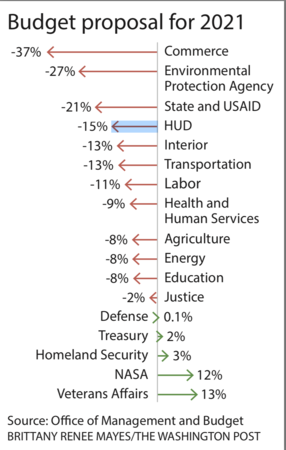
President Donald Trump's budget proposal for 2021 Photo by: The Washington Post — The Washington Post

President Donald Trump’s budget proposal for 2021 Photo by: The Washington Post — The Washington Post
By The Washington Post · Jeff Stein, Erica Werner
WASHINGTON – The White House on Monday proposed a $4.8 trillion election-year budget that would slash major domestic and safety net programs, setting up a stark contrast with President Donald Trump’s rivals as voting gets underway in the Democratic presidential primary.

The budget would pursue hundreds of billions of dollars in cuts to Medicaid and seek reductions in the Children’s Health Insurance Program while wringing some savings from Medicare despite Trump’s repeated promises to safeguard the program for older Americans.

The budget is a proposal to Congress, and lawmakers have mostly rejected the White House’s proposed cuts in the past. Still, the budget plan sets up the Trump administration’s policy priorities heading into the November elections and are likely to draw scrutiny in Washington and on the campaign trail. Trump has in the past not shown much interest in pursuing the budget cuts his aides have offered, and he didn’t make public comments about the plan on Monday.

Instead, one of his top advisers defended the proposed cuts, even as Democratic presidential candidates blasted the reductions.

Russell Vought, acting White House budget director, touted the proposed spending increases in the budget for NASA, immigration, opioid mitigation and veterans, while denying it would lead to benefit reductions for Medicare and Medicaid, as Democrats charged. Vought also said the budget includes widespread cuts to federal waste that would bring down the deficit.

“This continues to be a budget that funds priorities where the president supports spending money,” Vought told reporters. “We are trying to fund what his priorities are, what his campaign commitments are, and finding savings and inefficiencies where we possibly can.”

A central theme of the new budget is its attempt to scale back domestic programs. It would slash the Environmental Protection Agency budget by 26.5% over the next year, and cut the budget Department of Health and Human Services budget by 9%. The HHS includes the National Institutes of Health and the Centers for Disease Control and Prevention, which would see a budget cut even as it is under intense scrutiny over its response to the coronavirus. Officials said the part of the CDC that responds to emergencies such as the coronavirus would be protected.

“This is the future President Trump envisions for our nation,” said House Budget Committee Chairman John Yarmuth, D-Ky. “One where the federal government relinquishes any responsibility for the well-being of the American people in our nation. What the president has put forth is a destructive and irrational budget that intentionally goes after working families and vulnerable Americans.”

The plan would target the Education Department is for a nearly 8% cut, the Interior Department would be cut 13.4%, and the Housing and Urban Development department would be cut 15.2%. The State Department and U.S. Agency for International Development would be cut by 22%.

Trump has sought spending cuts in the past, only to back down immediately during negotiations with Democrats. For example, he has sought to cut numerous federal agencies multiple times and then reversed himself and approved budget increases. That’s because Trump has pushed for huge increases in military spending, and Democrats have said they would only go along with such a change if Trump backed more money for housing, education, and health care.

Proposing the cuts again, on the eve of the New Hampshire Democratic primary, gave Democrats a fresh target to attack.

“The old cliche is that a budget is a moral document,” Sen. Bernie Sanders, I-Vt., said in a statement. “What kind of unbelievable moral framework allowed this White House to propose $182 billion in cuts to nutrition assistance from needy families, when nearly 1 in 7 households with children are food insecure?”

Trump did not defend any of the cuts in public. Over the weekend, he commented on the budget proposal briefly, noting on Twitter that he would not touch Social Security or Medicare.

But even some of Trump’s staunchest allies criticized his sharp cuts for domestic agencies, such as the Agriculture Department, which he is targeted for an 8% overall reduction. That was an indication that the budget will get a cold shoulder on Capitol Hill from the lawmakers of both parties who will be responsible for writing spending bills into law that will actually fund the government when the 2021 fiscal year begins Oct. 1.

“I applaud the Administration for aiming to tackle the debt and deficit by addressing federal spending, but I do not support the disproportionate cuts to important agricultural programs,” Sen. Kevin Cramer, R-N.D., said in a statement. “The cuts proposed today would save little but inflict severe pain in American agriculture.”

Trump has made homelessness a key focus in the past year, but his budget would seek a big reduction in housing funds. He proposed an $8.6 billion cut for the Department of Housing and Urban Development for 2021, a 15.2% decrease from the amount enacted for 2020. The cuts, as in previous years, include eliminating the four-decade-old Community Development Block Grant program popular among congressional Democrats and Republicans as well as affordable housing grants to states and municipalities to help with the construction, purchase or rental of homes.

The block grants, funds that Congress has restored in past budgets, provides cities with money for affordable housing and other community needs, such as fighting blight, improving infrastructure and delivering food to homebound seniors. The administration, in its budget documents, said the program “has not demonstrated sufficient impact.”

Housing advocates were not surprised by the proposed cuts, which were similar to past proposals, and they urged Congress to reject them as it has largely done in the past. Advocates pointed to the flat funding of homeless assistance grants as a sign of the administration’s lack of seriousness on ending homelessness, especially given Trump’s recent focus on the housing crisis in California. The budget plan indicated that the administration will begin a new initiative to reduce street homelessness, targeting select cities but provides no further details.

Parts of the budget, however, show how the White House has shifted in the face of political blowback from past plans. It would preserve, for example, a handful of politically sensitive programs that in some cases have provoked uproars and caused Trump to backpedal when he’s tried to cut them in the past.

These include the Special Olympics and the Great Lakes Restoration Initiative – a program important to Michigan, Ohio, and Wisconsin, critical states for the 2020 election. Even as White House officials kept the Great Lakes fund steady, as it did for an ecosystem protection program in South Florida, similar programs in other, less politically important states are cut in the Trump budget.

The budget plan would also preserve State Department and Pentagon aid for Ukraine, something the White House tried to delay last year in a move that led to Trump’s impeachment by the House of Representatives. However, the Ukraine portion of a State Department anti-corruption program called International Narcotics Control and Law Enforcement would fall under the budget proposal, to $13 million from $30 million this year. Congress has rejected that proposed cut in the past.

Still, some agencies would be spared from cuts or even see a proposed increase.

Trump’s new budget calls for an increase in funding for the Department of Homeland Security, while keeping Pentagon spending mostly flat. The NASA budget would increase by 12% with new money aimed at putting U.S. astronauts back on the moon.

Even with all the other proposed spending cuts, the budget would not eliminate the federal deficit over the next 10 years, missing a longtime GOP fiscal target. Instead, White House officials said their budget proposal would close the deficit by 2035.

But it would only achieve this if the economy grows at an unprecedented, sustained 3% clip through 2025, levels the administration has failed to achieve for even one year so far. The U.S. economy grew 2.3% in 2019, the weakest level since Trump took office. Many economists believe economic growth will remain sluggish this year.

Because the government spends so much more money than it brings, the Treasury Department must borrow the difference by issuing debt. The debt has grown by roughly $3 trillion since Trump took office, and the budget plan would add more than $5 trillion to it over the next decade. There is currently more than $20 trillion in government debt, something Trump had vowed to eliminate by 2025 when running for office.

Trump’s budget aims to cut spending on safety-net programs such as Medicaid and food stamps, cutting food stamp spending by $181 billion over a decade. It proposes to squeeze hundreds of billions of dollars from Medicare over a decade through cost-saving proposals such as reforming medical liability and modifying payments to hospitals for uncompensated care.

A senior administration official defended the Medicaid cut, noting that it reflects a decrease in the rate at which spending would grow rather than a reduction from current spending levels. The official said the administration would save money on Medicaid spending through new work requirements and recouping payments incorrectly spent by the federal government.

Liberal economists rejected that argument. “This is a budget that would cause many millions of people to lose health care coverage. That is unambiguous,” said Aviva Aron-Dine, a former Obama official and vice president at the Center on Budget and Policy Priorities, a left-leaning think tank.

During the last year President Barack Obama was in office, the deficit was less than $600 billion, but it has grown significantly since.

As part of the new budget plan, the White House would seek to make permanent parts of the 2017 tax cut that are set to expire after 2025. The budget says extending these tax cuts through the end of the decade would amount to a $1.4 trillion tax cut.