Traders in world’s longest working day plead for shorter hours #ศาสตร์เกษตรดินปุ๋ย

#ศาสตร์เกษตรดินปุ๋ย : ขอบคุณแหล่งข้อมูล : หนังสือพิมพ์ The Nation

https://www.nationthailand.com/business/30381843?utm_source=category&utm_medium=internal_referral

Traders in world’s longest working day plead for shorter hours

Feb 08. 2020
Commuters walk across London Bridge in London Feb. 3rd, 2016. MUST CREDIT: Bloomberg photo by Jason Alden.

Commuters walk across London Bridge in London Feb. 3rd, 2016. MUST CREDIT: Bloomberg photo by Jason Alden.
By TRADERS-EUROPE/
Syndication Washington Post,  Bloomberg · Ksenia Galouchko, William Canny, Jan-Patrick Barnert 

People working some of the longest days in world equity markets would like them to be shorter, a Bloomberg News survey showed.

Across Europe, 74% of finance professionals, including traders, analysts and fund managers, said they favor reducing the current 8 1/2-hour stock market day — which exceeds the U.S. by two hours.

The results of the survey lend weight to a proposal by two professional bodies to shorten market hours for reasons including the concentration of liquidity in the first and last hours of trading, the short time window between corporate news releases and the market open, and the need to improve the work-life balance and diversity at financial firms. The Association for Financial Markets in Europe (AFME) and the Investment Association of U.K. asset managers asked bourses in November to consider cutting 90 minutes from their trading day.

“Making trading hours shorter will improve market efficiency,” said Matthew McLoughlin, a London-based partner and head of trading at Liontrust Investment Partners and a member of the Investment Association’s buy-side trading committee. “There’s no benefit in spreading liquidity out over a longer period than necessary.”

In an informal survey, Bloomberg News asked 114 market participants, with 52% based in London and the rest spanning other major European cities, including Paris and Amsterdam. About two-thirds of the respondents were traders, 17% fund managers and 16% analysts.

A reduction of the trading day by one hour is favored by 51% of those who advocated shorter hours, while 34% would like to see it cut by 1 1/2 hours. Overall, a later start to the European stock market open would be appreciated by 78% of those respondents and 75% are in favor of an earlier close.

While there is no strong consensus on what the hours should be, the most popular response, favored by 28% of respondents, was to delay the market’s opening time by an hour to 9 a.m. London time and bring forward the close by 30 minutes to 4 p.m.

Advances in technology over the last 20 years that make it easier to trade from remote locations around the globe are one reason why market hours don’t need to be as long as they are in Europe, according to Helen Thomas, a former head of active currency at State Street Global Advisors who now runs a macroeconomic consulting firm.

“Markets these days are much more efficient in terms of trading cost and technology improvement, so people can trade more easily and more quickly from anywhere in the world,” she said.

London’s 8 a.m. market start means most traders need to be at the office by 6 a.m., making it more challenging for parents with young children to work as traders because it’s “impossible” to find childcare at 5 a.m., Liontrust’s McLoughlin said. The long hours and early start also deter recent university graduates from going into equity trading because they can instead work for technology firms that offer flexible hours and a work-life balance, he said.

Shorter sessions “could help change the perception of the industry with different generations, which could in turn, help attract people who wouldn’t normally consider a career in asset management,” said Louise Drummond, deputy global head of investment execution at Aberdeen Standard Investments.

The imbalance between the length of trading hours in Europe and the U.S. is at odds with the respective scale of the regions’ markets. The capitalization of the Stoxx Europe 600 is about half that of the S&P 500 and the average turnover in the European benchmark in the last 12 months is about 40% lower than on Wall Street.

Some of the survey responses included proposals to begin trading at 11 a.m. London time, to have a formal lunch break around midday, and to make the European trading day 24 hours long.

According to April Day, head of equities at AFME, one of the bodies which proposed the shorter hours, exchanges across Europe will need to coordinate between themselves if the hours are changed. But she admits that this could take time and is “uncharted waters.”

The London Stock Exchange just concluded a seven-week consultation among participants on a potential adjustment to market hours, and says it “strongly supports improving diversity and workplace culture.” A spokesman for Deutsche Boerse said it’ll discuss the main implications of a change to trading times with its stakeholders and announce its position in due course. Euronext NV representatives weren’t immediately available to comment.

The proposal for reduced hours could meet resistance from continental European bourses. Pushing back the start of the trading day across the entire region might mean the German stock market not opening until 10 a.m. local time and Finland until 11 a.m, for example.

“We believe that shortening trading hours isn’t good for the market as it reduces the possibilities for investors and active traders to implement their trading decisions,” said Peter Vorrath, head of business and corporate development for SSW-Trading GmbH, a proprietary trading firm in Hamburg, Germany.

Vorrath is also concerned about the impact shorter hours will have on retail investors as the move might increase the costs for day traders who like to operate outside normal business hours when spreads are wider, and push them toward over-the-counter and retail exchanges.

In its response to LSE’s consultation, Norway’s Wealth Fund said on Monday that it supports shorter trading hours and favors the option of 9 a.m. to 4 p.m. London time because that would shift the day closer to the opening of North American markets when peak trading interest occurs. According to Norges Bank Investment Management, this would also allow after-hours market placements to occur earlier.

“Just because these hours were deemed appropriate 20 years ago, it doesn’t mean that it’s suitable for today’s society or the technologically-minded workforce that we have,” Liontrust’s McLoughlin said. “The financial industry needs to realize that they’re making a mistake here and they need to fix it.”


Book World: Paul Krugman battles conservative ‘zombies’ #ศาสตร์เกษตรดินปุ๋ย

#ศาสตร์เกษตรดินปุ๋ย : ขอบคุณแหล่งข้อมูล : หนังสือพิมพ์ The Nation

https://www.nationthailand.com/business/30381836?utm_source=category&utm_medium=internal_referral

Book World: Paul Krugman battles conservative ‘zombies’

Feb 08. 2020
Arguing with Zombies

Photo by: Norton — HANDOUT

Arguing with Zombies Photo by: Norton — HANDOUT
By Special To The Washington Post · Stephanie Mehta

Arguing With Zombies: Economics, Politics, and the Fight for a Better Future By Paul Krugman Norton. 444 pp. $29.95

—

A U.S. president with slipping approval ratings moves to shore up his conservative bona fides by pledging to reform a crucial government safety net program. He and his surrogates breathlessly insist that the current system is in crisis. Broadcast news outlets provide little in the way of context and economic analysis of the claims.

Sounds a lot like President Trump’s attacks on the Affordable Care Act, also known as Obamacare, but as Paul Krugman reminds us in his new book, “Arguing With Zombies: Economics, Politics, and the Fight for a Better Future,” conservatives’ use of misleading or inaccurate information to justify cuts to assistance and entitlement programs dates back years, most notably to George W. Bush’s failed 2004 effort to privatize Social Security.

Loyal readers of Krugman’s twice-weekly column in the New York Times will not be surprised by the central themes of the book, which includes and expands on his Times writings. He forcefully and repeatedly contends that Republican lawmakers are carrying water for corporations and the wealthiest Americans by rolling back regulations and cutting taxes for the rich on the basis of the fake or “zombie” theory that what’s good for the 1 percent is good for everybody. (In Krugman’s vivid language, zombie ideas are those “that should have been killed by contrary evidence, but instead keep shambling along, eating people’s brains.”)

Still, the book is a revelation. It showcases the range of Krugman’s intellect – he can toggle authoritatively from climate change and the Green New Deal to the Maastricht Treaty and currency crises – and his gift for clear, accessible writing. He neatly mixes pop cultural references and economic data; one column calling for 1950s-era tax policies (back then the marginal tax rate on top incomes was more than 90 percent) is whimsically titled “The Twinkie Manifesto.”

But Krugman’s real superpower may be his longevity. He began contributing to the Times in 2000, and he has chronicled numerous economic policies and proposals that have been promoted or propped up by zombie claims. He opens his book with a chapter on the push to privatize Social Security – by turning it over to financial services companies – with a series of columns showing that, contrary to Bush administration reports, the program is highly functional. He proceeds to dismantle other corporate and conservative talking points in vogue over the years: The Trump tax cut will pay for itself! (In fact, federal tax receipts on corporate income have plunged, and the budget deficit is now more than $1 trillion.) Government needs to be more fiscally responsible! (See aforementioned tax cut, which didn’t come with concomitant spending cuts.) A disciple of John Maynard Keynes, Krugman eviscerates lawmakers in the United States for wringing their hands, post-financial crisis, over budget deficits caused by stimulus spending, which actually keep an economy from ruinous contraction. Without, say, unemployment benefits, families cut their spending, which in turn hurts vendors of goods and services.

Taken together, all these arguments with zombies reveal much about the electorate and the Republican Party of today. Krugman writes: “I see Trump not as a departure from the past so much as the culmination of where movement conservatism” – an elitist dogma wrapped in populist rhetoric – “has been taking us for decades.”

Krugman doesn’t shy from calling out the mean-spiritedness that underlies much of the conservative agenda. One new essay is titled “The Cruelty Caucus.” Indeed, there’s little economic rationale for cutting food stamps for work-eligible adults, as the Trump administration has; Krugman notes that the United States actually spends very little helping low-income Americans. Nor is there a financial rationale for opting out of Medicaid expansion, as 14 states have. “Refusing free money that would help the poor is something else – it’s cruelty for its own sake,” Krugman writes.

The book is unexpectedly light on the topic of trade, for which he won what he calls the “Swedish thingie.” (Krugman won his Nobel Prize for an analysis of trade patterns.) In the introduction to his 13-page chapter on trade wars, Krugman notes that “international trade and international trade policy aren’t as important as people think they are,” as if to justify the glossing over of what’s (not) to come. But I would have loved more insight into his thinking on the flavor of free trade that has become commonplace among liberal elites in business, even as the rise of populists on the left and the right has exposed the shortcomings of globalization.

Krugman’s critics on the right will surely take issue with his writings on Trump’s economic policies by pointing to record-high stock prices and the 11-year expansion of the U.S. gross domestic product. But it is becoming increasingly difficult to quibble with Krugman’s underlying message that the current system is hurting the poor to the benefit of the rich and corporations. According to the Census Bureau, a key index that measures the gap between the wealthiest and poorest Americans is the highest it has been in 50 years.

The problem is so acute that some businesses – the very beneficiaries of many of Trump’s policies – have proactively embraced the notion of inclusive capitalism, essentially acknowledging that the system is broken if it doesn’t work for everyone. Companies such as Bank of America are voluntarily raising their minimum wages; others, such as Mastercard, are enhancing their retirement plans. The Business Roundtable, which represents the chief executives of some of the country’s biggest corporations, last year adopted a new statement of purpose, acknowledging that Americans are struggling, and modernizing its principles to invest in employees and support the communities where its members operate.

Krugman probably wouldn’t object to these measures, but he might offer another suggestion. Corporations have entire teams dedicated to finding ways to reduce their payments to the federal government. Maybe in addition to being more benevolent to their workers, they could just pay their taxes.

—

Mehta is the editor in chief of Fast Company.

Russia delivers sixth straight rate cut, signals more easing #ศาสตร์เกษตรดินปุ๋ย

#ศาสตร์เกษตรดินปุ๋ย : ขอบคุณแหล่งข้อมูล : หนังสือพิมพ์ The Nation

https://www.nationthailand.com/business/30381827?utm_source=category&utm_medium=internal_referral

Russia delivers sixth straight rate cut, signals more easing

Feb 08. 2020
By Syndication Washington Post, Bloomberg · Anya Andrianova, Andrey Biryukov

The Bank of Russia delivered a sixth consecutive bout of monetary easing and said a further rate cut is possible next month, as inflation continues a retreat below target. Government bond yields dropped to near a record low.

The bank lowered its benchmark interest rate by 25 basis points to 6%, according to a statement Friday, taking the total reduction in the past year to 175 basis points. The move was forecast by 22 out of 34 economists in a Bloomberg survey.

“There is a relatively high probability of a rate cut at the next meeting, but it’s not guaranteed,” Governor Elvira Nabiullina said at a news conference after the decision. The next meeting will be held on March 20.

Disinflationary risks are higher than pro-inflationary risks in the short-term, while the spread of coronavirus will be an “additional uncertainty factor” over the coming quarters and threatens the global economy, according to the statement. Fallout from the disease isn’t having a major impact on Russia’s economy yet, Nabiullina said.

At least 11 other central banks have eased monetary policy this week, while many others have been biding their time as the fallout from the spread of coronavirus reverberates through the global economy.

Bonds rallied as investors bet that the central bank is ready to drop rates below 6%, the lower band of its neutral-rate range. The range is an estimate and the central bank can go below it, Nabiullina said.

Russian local-currency government bonds, known as OFZs, attracted inflows of about $16 billion last year due in part to faster-than-expected easing. Yields on bonds maturing in 10 years dropped 7 basis points on Friday to 6.16%.

“It’s a bold move,” said Valeriy Vaysberg, head of research at Region Investment Co. “This means that the rally in OFZs could continue. We also expect a strengthening of the ruble and strong demand at government bond auctions.”

Russia’s rate cuts have so far failed to stoke price growth, which has slowed to far below the bank’s 4% goal since October. A government overhaul last month is expected to usher in accelerated fiscal spending aimed at boosting sluggish economic growth in President Vladimir Putin’s final term in office.

Additional social outlays announced last month won’t have a “considerable pro-inflationary impact,” but this year’s inflation trends will be shaped by the pace of budget spending, the central bank said. Extra spending in 2020 could total 2.1 trillion rubles ($34 billion), or 1.3% of gross domestic product, according to calculations by ING Groep NV.

Russia has room for stimulative budget policy and the impact on inflation will be limited if the government sticks to a budget rule designed to limit exposure to oil price volatility, Nabiullina said. The central bank plans to meet frequently with the government to discuss the extra spending, she said.

Annual inflation slowed for a 10th straight month to 2.4% in January. The Economy Ministry said Friday there is a “serious risk” price growth will fall as low as 2.2% this quarter.

“The central bank doesn’t sound hawkish with respect to fiscal spending,” said Evgeny Koshelev, an analyst at Rosbank in Moscow. “That may add inflation pressure only in the medium-term.”

Mega-landlord deal in Germany faces mounting investor resistance #ศาสตร์เกษตรดินปุ๋ย

#ศาสตร์เกษตรดินปุ๋ย : ขอบคุณแหล่งข้อมูล : หนังสือพิมพ์ The Nation

https://www.nationthailand.com/property/30381819?utm_source=category&utm_medium=internal_referral

Mega-landlord deal in Germany faces mounting investor resistance

Feb 08. 2020
By Syndication Washington Post, Bloomberg · Jack Sidders, Luca Casiraghi
A three-way deal to create one of Germany’s biggest landlords is facing a growing backlash from investors.

Shareholders of conservative Berlin apartment-owner ADO Properties are questioning the rationale behind the proposed acquisition of two highly-indebted rivals, claiming the deal would destroy value. “We think this deal should never have happened,” said Michael Muders, a fund manager at Union Investment Privatfonds GmbH, which holds about 5% of ADO and is its largest independent shareholder.

The complex deal announced in December would trigger a series of changes that result in ADO effectively becoming the owner of stakes in two German property companies. One is a takeover of Adler Real Estate AG, a landlord specializing in low-cost housing across Germany, with links to Austrian businessman Cevdet Caner. The other is Consus Real Estate AG, a developer with a much higher risk profile and substantial debt.

The deal “is not in the interest of ADO shareholders, and it should be canceled,” Muders said. “Without consulting the shareholders they have decided to change the risk profile completely.”

On Dec. 10, ADO’s biggest shareholder, an Israeli company that invests in German real estate, was acquired by Adler. In a complex maneuver announced five days later, after new board members were installed, ADO proposed the deal to take over Adler. At the same time, it said it would acquire a 22% stake in Consus and has options to acquire a further 51%.

ADO’s shares have plunged about 18% since the deal to buy Adler was announced in December. Consus, which had a net loan-to-value ratio of 88%, according to its 2019 annual report, has gained almost 21% since the announcement.

Adler has grown exponentially in the last decade after investors including Caner’s private foundation took over its largest shareholder, a company called Mezzanine IX, according to public filings. Two of Caner’s family members hold 63% of Mezzanine, now Adler’s second-largest shareholder, according to a document published on the Luxembourg business register in December and company filings.

Caner was the founder of a group of property companies called Level One, which became Germany’s biggest real estate bankruptcy in 15 years when it collapsed in 2008, owing about $1.6 billion (1.5 billion euros) to creditors led by Credit Suisse Group AG.

ADO plans to launch a 500 million euro rights issue after the closing of the Adler deal, according to a December statement.

“How can you justify changing the strategy, increasing the risk and raising capital at such a discount?” Muders said. “ADO management can’t defend it.”

Union joins Timbercreek Investment Management in publicly opposing the deal. The Canadian asset manager has asked German regulators to block it, Bloomberg News reported Wednesday.

ADO says the deal is an opportunity for the company, and that every existing shareholder will be able to subscribe to the rights issue.

“By acquiring a developer like Consus the company will be able to develop its own new apartments for letting, and will address the market’s housing shortage,” Thierry Beaudemoulin, Chief Executive Officer of ADO Properties, said in an emailed statement on Friday. “At the same time, it expects to achieve substantial savings by refinancing the majority of Consus’s debt, which is much more expensive than ADO’s.”

The German Federal Financial Supervisory Authority approved ADO’s offer document on Friday, triggering the start of an acceptance period for Adler shareholders that ends on March 6, according to an emailed statement from ADO. As the acquirer, ADO’s shareholders won’t be consulted.

California homebuilders rush to get ahead of solar mandate #ศาสตร์เกษตรดินปุ๋ย

#ศาสตร์เกษตรดินปุ๋ย : ขอบคุณแหล่งข้อมูล : หนังสือพิมพ์ The Nation

https://www.nationthailand.com/property/30381815?utm_source=category&utm_medium=internal_referral

California homebuilders rush to get ahead of solar mandate

Feb 08. 2020
By Syndication Washington Post, Bloomberg · Noah Buhayar 
California has struggled to produce enough housing for decades, the result of high construction costs and decades of government policies that have discouraged development. So why did homebuilder permits jump at the end of last year?

The answer, according to an industry group: A state mandate that requires almost all new homes to have solar power starting this year.

Permits issued for new single-family houses soared 56% in December from a year earlier to 5,526, according to the Construction Industry Research Board, part of the nonprofit California Homebuilding Foundation. That followed a 19% increase in November and capped a year when permits were down 2% overall.

The numbers probably understate the burst of activity, said Bob Raymer, technical director of the foundation’s affiliate, the California Building Industry Association. That’s because they represent only permits that have been issued, and not those that are pending. Homebuilders, he said, had an incentive to get their paperwork in before the end of the year so they could avoid costs associated with the solar mandate.

There can be several months between when a permit application is submitted — which determines the rules a builder must comply with — and when it’s approved, “so, we should continue to see some rather high CIRB numbers for the next few months,” Raymer said.

The solar mandate is the first in the nation and part of a wide-ranging push by the most-populous state to get to get all its electricity from carbon-free resources by 2045. The requirement is part of why California’s installed residential solar capacity is expected to grow about 65% this year to roughly 1,700 megawatts, according to BloombergNEF.

Even so, it’s been criticized for adding a major upfront expense for homebuyers in a state where the median single-family house costs $615,000, more than double the national average.

State officials estimated the solar mandate would add an average of about $9,500 to the purchase price of a home, while noting that reduced energy costs could yield a net savings of $19,000 over 30 years. No-money-down solar leases are also available.

The jump in permits probably doesn’t say much about the long-term housing production trends in California, said Jeff Langbaum, a Bloomberg Intelligence analyst.

“This is housing people would have built anyway,” he said. “You still need some sort of major change in terms of the amount of long-term construction activity — single-family, multifamily, affordable, across the board — to really fix the issue.”

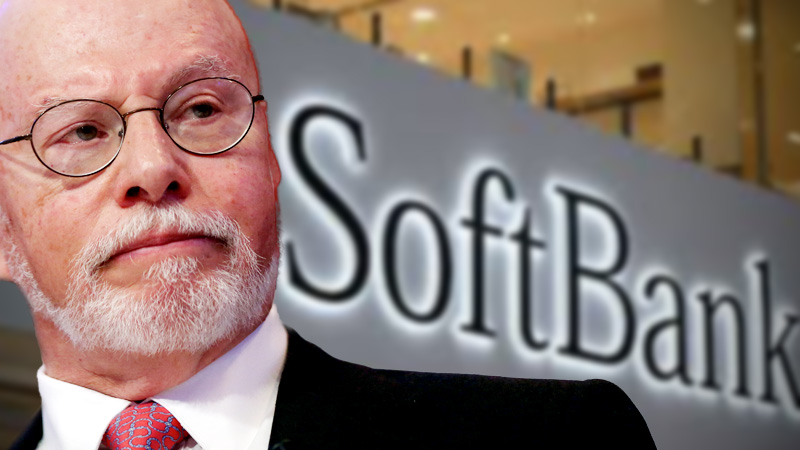
SOFTBANK: Singer versus Son looks like billionaires playing nice, for now #ศาสตร์เกษตรดินปุ๋ย

#ศาสตร์เกษตรดินปุ๋ย : ขอบคุณแหล่งข้อมูล : หนังสือพิมพ์ The Nation

https://www.nationthailand.com/business/30381826?utm_source=category&utm_medium=internal_referral

SOFTBANK: Singer versus Son looks like billionaires playing nice, for now

Feb 08. 2020
By Syndication Washington Post, Bloomberg · Pavel Alpeyev, Takahiko Hyuga 
Paul Singer earned his reputation as a take-no-prisoners brawler by challenging the interests of Argentina’s government and South Korea’s chaebol. With his latest investment though, the American activist appears to be taking a more collaborative approach.

Singer’s Elliott Management Corp. took a stake of almost $3 billion in SoftBank Group Corp., saying the Japanese company’s shares are woefully undervalued compared with its assets. That’s exactly the argument SoftBank founder Masayoshi Son has been making for years.

Indeed, SoftBank has taken to posting a daily calculation online of what its shares are worth compared with their price, based on its holdings in Alibaba Group Holding, Sprint and others. The company’s own sum-of-parts calculation puts its total value at 12,259 yen a share ($111). That’s more than twice SoftBank’s actual share price, which values the company at about $96 billion. Elliott thinks SoftBank’s net asset value could be about $230 billion, people familiar with the discussions have said.

The New York-based hedge fund and SoftBank’s leadership have held cordial discussions, according to people familiar with the matter, perhaps because some of their interests are aligned. Indeed, news of Elliott’s stake popped SoftBank’s market value by more than $6 billion, and lifted the value of Son’s stock by more than $1 billion. The value of Elliott’s stake rose too, of course.

SoftBank may not go along with everything that Singer is seeking. But their interests may be more similar than they first seemed. As SoftBank prepares to report financial results on Feb. 12, here’s a rundown of the issues:

Buyback: Elliott wants SoftBank to buy back shares because of their discount, arguing it could spend as much as $20 billion by trimming investments in companies like Alibaba, Sprint and others. Son seems likely to accommodate at some point, though the amount may be much smaller. He has already unveiled re-purchases with February earnings twice in the past — one for $5.5 billion last year and another for $4.4 billion in 2016.

“There was a pretty good chance of another share buyback in 2020, even before Elliott’s involvement,” said Atul Goyal, an analyst at Jefferies Group. “Given the persistent discount, it was only a matter of time before SoftBank got targeted by an activist.”

Alibaba shares surged 55% last year, far outstripping SoftBank’s 30% gain. The “decoupling” prompted Goyal to speculate that another buyback is imminent. Son has shown increasing willingness to part with stock in his most successful investment to date, including putting up $9.5 billion of Alibaba shares as collateral for margin loans under conditions that suggest he has no intention of getting them back, Goyal wrote in a report dated Dec. 9.

Board diversity: Elliott isn’t seeking any board seats at SoftBank, but wants the company to boost independence and diversity on its board, the people said. At most, only two of the 11 directors are independent and all are male, they said. At the last earnings call in November, Son said he was committed to improving corporate governance. A person familiar with the matter said the company was currently seeking independent board members.

Investment oversight: Elliott also wants SoftBank to set up a special committee to review the investment process at its $100 billion Vision Fund, which it thinks has dragged on the share price despite making up a small portion of assets under management, the people said. Son isn’t likely to give up his control; indeed, he is the only “key man” at the fund. But SoftBank recently approved new governance standards for its portfolio companies and investment guidelines, a step toward more accountability.

“A buyback is a near-term catalyst for the share price,” said Justin Tang, head of Asian Research at United First Partners. “A more enduring catalyst in our view is increased Elliott involvement in SoftBank’s investment decision making and a restructuring of its debt which is costing billions in interest payments.”

Transparency: Elliott also wants greater transparency around the Vision Fund, which discloses the names of its investments but not the size of the stakes or the valuation at which they were made, the people said.

SoftBank itself had recognized the need for more oversight as early as 2018 when it charged Chief Operating Officer Marcelo Claure with improving operations across portfolio companies. Claure, who led the Sprint turnaround, spent months assembling a team of about 40 executives. In the end, he was forced to cede control of the so-called SoftBank Operating Group to the man it was supposed to be overseeing — Rajeev Misra, the head of the Vision Fund.

“More disclosure on Vision Fund would be good, but in the end it comes down to trust and track record — listing the investments and getting independent valuations,” said Dan Baker, an analyst at Morningstar Investment Management Asia Ltd. “Any reduction in power and control for Son would likely be hard for him to swallow.”

The real boost to SoftBank’s shares would be if Elliott convinced Son to gradually wind down the Vision Fund altogether, Baker said. But there is little sign Son would go along. The Japanese billionaire seemed undeterred by the poor market reception of marquee investments, including Uber Technologies Inc., and the implosion of WeWork. As recently as November, Son said he still plans to raise another massive investment fund.

“The interests of SoftBank and Elliott are aligned when it comes to wanting the shares price to rise,” said Mitsushige Akino, an executive officer at Ichiyoshi Asset Management Co. in Tokyo. “But Son’s management style is looking 10 to 20 years ahead. That’s where you may see tension.”

Onetime Indian billionaire says he’s now worth nothing #ศาสตร์เกษตรดินปุ๋ย

#ศาสตร์เกษตรดินปุ๋ย : ขอบคุณแหล่งข้อมูล : หนังสือพิมพ์ The Nation

https://www.nationthailand.com/business/30381825?utm_source=category&utm_medium=internal_referral

Onetime Indian billionaire says he’s now worth nothing

Feb 08. 2020
By Syndication Washington Post, Bloomberg · Jonathan Browning
The brother of Asia’s richest man was ordered to set aside $100 million in his dispute with three Chinese banks, even as he pleaded poverty.

“The value of my investments has collapsed,” Anil Ambani said, according to a London court filing by banks seeking around $700 million in defaulted loans. “My net worth is zero after taking into account my liabilities. In summary, I do not hold any meaningful assets which can be liquidated for the purposes of these proceedings.”

The lawsuit was filed by three state-controlled Chinese banks, which argue that they provided a loan of $925 million to Ambani’s Reliance Communications in 2012 with the condition that he personally guarantee the debt. Ambani’s comments were disclosed as he tried to avoid depositing hundreds of millions of dollars with the court ahead of a trial.

On Friday evening, Judge David Waksman ordered Ambani to put up $100 million into the court’s account within six weeks. Ambani plans to appeal.

The embattled Indian tycoon says that while he agreed to give a non-binding “personal comfort letter,” he never gave a guarantee tied to his personal assets — an “extraordinary potential personal liability.”

The 60-year-old is the brother of Mukesh Ambani, who’s worth $56.5 billion and is the wealthiest man in Asia. Anil, on the other hand, has seen his personal fortune dwindle over recent years, losing his billionaire status. His Reliance Communications filed for bankruptcy last year.

Anil has “clearly got more assets and income than he’s letting on,” the judge said. “What I’m dealing with is an extraordinarily wealthy family who have helped each other in the past.” Waksman said he didn’t believe that Ambani’s family “have firmly and irrevocably brought the shutters down.”

Ambani’s lawyer, Robert Howe, had argued that the court shouldn’t order his client to make a payment he can’t cover. The tycoon argues that that an order requiring him to do so would hinder his ability to defend himself in the case, Howe said.

“Mr. Ambani is reviewing the order of the U.K court and will take legal advice as to further remedies in appeal,” representatives for Ambani’s Reliance Group said.

Bankim Thanki, an attorney representing Industrial & Commercial Bank of China Ltd., China Development Bank and the Export-Import Bank of China, said in a filing that Ambani’s statements are “plainly a yet further opportunistic attempt to evade his financial obligations to the lenders.”

“We hope that Mr. Ambani will comply with the court’s order and look forward to the swift resolution of the case at trial,” the banks said in a statement.

Ambani was caught up in another legal wrangle last year, when India’s Supreme Court threatened him with prison after Reliance Communications failed to pay to pay 5.5 billion rupees ($77 million) to Ericsson’s Indian unit. The judges gave him a month to find the funds, and his brother, Mukesh, stepped in just in time to make the payment.

The brothers’ relationship has been fraught since their father’s death left behind a vast empire that was split between them. While Mukesh’s oil and petrochemicals businesses have flourished, Anil’s assets dwindled.

Anil said in a filing that he recognized that the judge would want to know if he could satisfy any order to put up funds from outside resources, including his family.

“I can confirm that I have made enquiries but I am unable to raise any finance from external sources,” he said.

Waksman had said in an earlier ruling that he believed Ambani’s defense would be shown to be “opportunistic and false.”

Ambani’s lawyer told the judge that as a result of the comments the tycoon’s relatives were unlikely to lend any funds.

There is a “very substantial risk they will never get it back,” Howe said.

“The order pertains to an alleged personal liability of Mr. Ambani and will have no bearing on the operations of the Reliance Infrastructure Ltd., Reliance Power Ltd. and Reliance Capital Ltd.,” Ambani’s representatives said.

Fed’s stress test scenario is tougher for the biggest U.S. banks #ศาสตร์เกษตรดินปุ๋ย

#ศาสตร์เกษตรดินปุ๋ย : ขอบคุณแหล่งข้อมูล : หนังสือพิมพ์ The Nation

https://www.nationthailand.com/business/30381824?utm_source=category&utm_medium=internal_referral

Fed’s stress test scenario is tougher for the biggest U.S. banks

Feb 08. 2020
By Syndication Washington Post, Bloomberg · Yalman Onaran
The Federal Reserve’s hypothetical scenario to test the biggest U.S. banks’ resilience in a crisis just got tougher.

The 2020 test foresees the harshest decline in real economic output and the biggest rise in unemployment since the exercises were first carried out in 2009, and four of the six major criteria that feed into the potential losses are more dramatic than last year’s inputs. Still, the 2018 test holds the record for the most elements being the toughest.

Harsher test scenarios haven’t necessarily stopped the biggest banks from increasing their dividends or share buybacks in recent years. After almost a decade of holding onto most of their profits, the big banks have been allowed by the Fed to ramp up payouts in the past two years following a buildup of capital levels to more-comfortable levels.

This year’s test will also consider a higher stress to the banks’ exposures to leveraged loans and collateralized loan obligations, a corner of the financial world that’s been worrying regulators around the world as corporate leverage rises with interest rates remaining low.

Exporters scramble for materials as factories idle #ศาสตร์เกษตรดินปุ๋ย

#ศาสตร์เกษตรดินปุ๋ย : ขอบคุณแหล่งข้อมูล : หนังสือพิมพ์ The Nation

https://www.nationthailand.com/business/30381822?utm_source=category&utm_medium=internal_referral

Exporters scramble for materials as factories idle

Feb 08. 2020
By Special To The Washington Post · Michael Tatarski
HO CHI MINH CITY, Vietnam – The extended shutdown of Chinese factories from the coronavirus outbreak is upsetting supply chains as manufacturers feel the pinch from shortages of material and travel restrictions on staff.

In Vietnam, which shares an 800-mile border with China and is home to many businesses that export to the United States, companies say the squeeze is compounding pressure caused by President Donald Trump’s trade war with Beijing.

Despite Vietnam’s close economic and tourism ties with China, the human cost of the coronavirus outbreak in this country of nearly 100 million remains small, with 12 confirmed infections. But for companies with Chinese staff, or those reliant on materials and equipment from China, the pain is real.

Kaiser Furniture, a Taiwanese-owned manufacturer that has operated in Vietnam since 2004, falls into both of those categories. The company, which sells 95 percent of its furniture to the United States, has over 3.2 million square feet of production facilities and roughly 5,000 employees in Binh Duong province, a heavily industrialized region outside Ho Chi Minh City.

Dwayne Wood, Kaiser’s general manager of sales and marketing, says 120 of its workers are from mainland China, 50 of whom are trapped in Hubei province, the epicenter of the outbreak. The employees had been visiting home for the Lunar New Year holiday when the virus began to spread rapidly, prompting Chinese authorities to place Hubei under an unprecedented lockdown.

“They are all senior and middle managers,” Wood said. “Our production scheduling guys, our entire costing department. A couple of our purchasing people and two senior managers at our upholstery area are stuck, so we’re having to move things around to be able to get those areas to work.”

Other Chinese employees of Kaiser were able to return to Vietnam before flights between the two countries were suspended last weekend, though some had to fly via Malaysia or South Korea. Now, Vietnam is no longer granting new visas to Chinese nationals, and anyone arriving in the country who has been in China within the last two weeks faces 14 days in quarantine.

While travel restrictions have created personnel problems, Wood said, broader issues are gaining prominence.

“The bigger impact for us is that China really just hasn’t started back up [since the end of the holiday], and China is such a huge trading partner, and we still rely heavily on them for a lot of our component parts,” he said.

Furniture production for the U.S. market is well-established in Vietnam, with large-scale manufacturing dating back two decades.

While Vietnam’s economy has diversified and grown rapidly in recent years, driven in part by rising labor costs in China, businesses still rely on the huge Chinese industrial sector to churn out essential components. For Kaiser, that means parts such as drawer guides and specific fabrics or leather, though most of the lumber it uses is American.

“The biggest disruption of the coronavirus for a lot of people here will be how it affects the supply chain. It was already a stretch with Lunar New Year; our customers placed extra orders early to compensate for the break. . . . But now we’re back, and we’re trying to contact our vendors in China, and they’re not even back to work,” Wood said.

Others in Vietnam say they have not felt the full force of disruptions but worry that it’s only a matter of time.

An executive at a large American footwear company based in Ho Chi Minh City said that while the business is not experiencing problems yet, managers are monitoring the supply chain closely.

“A lot of the athletic brands have already started moving out of China, but a lot of technical materials, whether knits or carbon plates, things like that, haven’t completely migrated out of China yet,” said the manager, who was not authorized to comment publicly and spoke on the condition of anonymity.

These parts are largely produced in Guangdong province, home to the industrial powerhouses of Shenzhen and Guangzhou, a region that so far has avoided significant disruptions from the outbreak. Nonetheless, the footwear producer is exploring contingency plans with other suppliers. Its factories outside Ho Chi Minh City have distributed masks and hand sanitizer to workers, while also quarantining Chinese employees for 14 days.

“There have been concerns voiced by the Vietnamese workers, some of which is perpetuating something kind of stereotypical, but we want the factories to be super transparent,” the executive said.

The footwear firm is not alone in taking such a step. The labor department in Ho Chi Minh City has ordered 187 companies to keep 1,069 Chinese employees in quarantine for two weeks.

New restrictions within China could further stress production lines. This week, officials in Zhejiang province announced that only one person per household would be allowed to leave home every two days for necessities. This includes three districts of the city of Hangzhou, home to e-commerce giant Alibaba.

“We’ve also heard that Hangzhou is telling factories they can’t open until March 1, and that’s a really key fabric area,” Wood said. “If that happens, then we’ll be greatly affected.”

Although China has largely weathered Trump’s trade war, many economists expect its annual growth to slump to below 4% for the first quarter as services halt and consumers avoid going out due to contagion fears.

“The tariffs have had a great impact on the exodus of manufacturing from China, but it’s been kind of a slow death, whereas if something like this happens where they’re physically not able to go back to work, it really forces people to quickly change their mind-set and move away from China at a much faster pace,” Wood said.

GE’s ‘beat-and-raise story’ leads longtime skeptic to upgrade #ศาสตร์เกษตรดินปุ๋ย

#ศาสตร์เกษตรดินปุ๋ย : ขอบคุณแหล่งข้อมูล : หนังสือพิมพ์ The Nation

https://www.nationthailand.com/business/30381818?utm_source=category&utm_medium=internal_referral

GE’s ‘beat-and-raise story’ leads longtime skeptic to upgrade

Feb 08. 2020
By Bloomberg · Esha Dey 
General Electric received faint praise from Wall Street on Friday as a long-time bearish analyst upgraded his rating on the stock, saying the company has successfully repositioned itself into a “high-level beat and raise story.”

Gordon Haskett analyst John Inch, who has had a sell-equivalent rating on GE since October 2018, raised it to hold, and also lifted his price target to $11 from $7.

“The financial targets that GE recently laid out for 2020 appear to be readily achievable,” Inch wrote in a note to clients. He added that GE’s businesses, while not particularly inspiring as a whole, appear to pose less of a risk today than before. The worst for the struggling power segment appears to be over, at least in the coming 1-2 years, while the healthcare unit’s performance could improve from current anemic levels, Inch added.

GE Capital also seemed to pose less of a future risk as the asset portfolio has shrunk and time has passed, and even though aviation still has some challenges, possible cash tailwinds related to Boeing’s 737 Max should provide sufficient breathing room to hold reported free cash flow relatively intact over the next couple years, Inch wrote.

After a tumultuous few years since late 2017 when GE’s financials started slowly unraveling, the company’s recent results have inspired hope that its turnaround was steadily progressing. In the latest fourth-quarter results reported last month, GE said its industrial free cash flow, a closely watched indicator of earnings potential, may climb to as much as $4 billion this year from $2.32 billion in 2019.

Inch, however, does not believe all is rosy with GE yet, and still sees fundamentals that are fraught with risks, including outsized debt, aggressive accounting, weak earnings quality and a “significantly mediocre to moribund” portfolio mix outside of aviation. The analyst said there was no obvious reason why GE’s share price should continue to meaningfully outperform from current levels, and expects it to ultimately settle closer to $10 to $11.

GE shares gained as much as 1.1% Friday, to touch the highest since October 2018. The stock has now risen 17% this year, whereas the S&P 500 Index has gained 3.1%.

The company has 12 analysts recommending buying the stock, 10 advising to hold, while 3 say sell, according to Bloomberg data.