Casper Sleep rises in debut after IPO falls short of target #ศาสตร์เกษตรดินปุ๋ย

#ศาสตร์เกษตรดินปุ๋ย : ขอบคุณแหล่งข้อมูล : หนังสือพิมพ์ The Nation

https://www.nationthailand.com/business/30381733?utm_source=category&utm_medium=internal_referral

Casper Sleep rises in debut after IPO falls short of target

Feb 07. 2020
By Syndication Washington Post, Bloomberg · Liana Baker 

Bed-in-a-box seller Casper Sleep Inc. rose in its trading debut after an $100 million initial public offering priced at the bottom of a reduced range.

Shares of Casper rose as much as 32% Thursday and were up 23% to $14.75 apiece at 1:22 p.m. in New York, giving the company a market value of $585 million. That’s just over half of the online mattress retailer’s $1.1 billion valuation in a private funding round last year.

Casper sold 8.35 million shares Wednesday for $12 each. This came after it cut its price target significantly from an initial range of $17 to $19.

“We’re seeing consumers come back very frequently to buy from Casper,” Chief Executive Officer Phillip Krim said in a Bloomberg TV interview. “That will continue to accelerate as we bring more products to market.”

The IPO shows investors have grown skeptical of money-losing unicorns — startups whose private valuations reached $1 billion or more. The listing follows landmark but largely disappointing performances last year by consumer-oriented companies including Uber Technologies Inc. and its smaller rival Lyft Inc., as well as SmileDirectClub Inc. and Peloton Interactive Inc.

Casper priced its shares on the same day as PPD Inc., a biotechnology and drug-research services firm that raised $1.62 billion, pricing its shares at the top of its target for the offering. In the past year, such business-to-business firms, especially software makers, have tended to fare better in their IPOs than consumer-focused companies.

New York-based Casper, founded in 2014, became one of the leading brands in its niche thanks to its pioneering status and savvy marketing. Since then, a slew of competitors have emerged in the U.S. and abroad. From 2016 to September 2019, Casper spent $422.8 million on marketing, according to an earlier filing.

Casper had 60 stores in the U.S. and Canada as of Sept. 30. Its sales increased to $312 million for the nine months ended Sept. 30, a 20% gain from the same period in 2018. Its net loss widened to $67 million from $64 million during the same period in 2018.

The company’s backers include Target Corp. and Dani Reiss, the chief executive officer of Canada Goose Holdings Inc.

The offering was led by Morgan Stanley, Goldman Sachs and Jefferies Financial Group Inc. The company’s shares are trading on the New York Stock Exchange under the symbol CSPR.

Frozen Wells Fargo bonuses show a peril for bankers after crisis #ศาสตร์เกษตรดินปุ๋ย

#ศาสตร์เกษตรดินปุ๋ย : ขอบคุณแหล่งข้อมูล : หนังสือพิมพ์ The Nation

https://www.nationthailand.com/business/30381725?utm_source=category&utm_medium=internal_referral

Frozen Wells Fargo bonuses show a peril for bankers after crisis

Feb 07. 2020
Signage is displayed outside of Wells Fargo & Co. bank branch in St. Petersburg, Fla.,, on Jan. 14, 2019. MUST CREDIT: Bloomberg photo by Eve Edelheit.

Signage is displayed outside of Wells Fargo & Co. bank branch in St. Petersburg, Fla.,, on Jan. 14, 2019. MUST CREDIT: Bloomberg photo by Eve Edelheit.
By Syndication Washington Post,  Bloomberg · Hannah Levitt 

A new religion swept Wall Street after the 2008 crisis: Pay executives with stock, make them wait to collect it, and there will be fewer problems.

Now a generation of executives retiring from Wells Fargo & Co. is experiencing what can happen to those payouts when new scandals arise — even for people uninvolved in wrongdoing.

Dozens of former executives have waited, in some cases for years, to collect millions of dollars in stock-linked bonuses, according to people with knowledge of the situation. Behind the scenes, the company’s scandals triggered a series of stringent reviews by both the bank and regulators that must be completed for each payout to proceed.

The situation has swept up executives who haven’t been accused of any misconduct, according to the people, who asked not to be named discussing the confidential process. For denizens of the financial industry, it offers a cautionary tale about what can happen now that banks are diverting billions of dollars annually into stock awards to be doled out in the future.

To be sure, Wells Fargo’s executives may not draw much public sympathy — their bank has been accused of myriad customer abuses and has become a favorite punching bag across the political spectrum. But their peers at others firms might wonder if they will someday find themselves unwittingly in similar situations.

“That’s the fear: You’re going to be at the wrong place at the wrong time — you didn’t do anything bad but you’re going to be judged in a politically, potentially arbitrary way,” said Alan Johnson, managing director of compensation consultant Johnson Associates. “It’s like nuclear fallout. The bomb didn’t drop on you but you were within five miles of it.”

Delayed compensation came into vogue just after the crisis, as bank investors and regulators looked for ways to end an era of lax supervision, aggressive risk-taking and outright wrongdoing that nearly toppled the global financial system. By delivering a higher portion of annual pay in the form of stock, locking it up for years, and making it susceptible to clawbacks or other terms, stockholders could theoretically take comfort that their long-term interests were aligned with those of the people in charge of running the business. And if something went wrong, it’d be easier to hold individual executives accountable.

Highly paid executives at banks typically received as as little as 30% of their earnings in the form of long-term compensation before the financial crisis — a portion that’s grown to 50% to 60% today, according to Johnson Associates. Wells Fargo’s top five earners received 72% of their pay in long-term awards by 2018, according to its most recent annual proxy statement.

Soon after the lender’s scandals began erupting in September 2016, the bank announced it would withhold millions of dollars in unpaid stock awards from some of its most senior leaders, including former Chief Executive Officer John Stumpf and community banking chief Carrie Tolstedt.

Critics led by Sen. Elizabeth Warren said that didn’t go far enough. They argued that executives paid heavily in stock had long benefited from its rising price, while legions of branch staff lost their jobs for either failing to hit overly aggressive targets or engaging in bogus sales to do so.

But unknown to many in the public, a broader drama was starting to unfold inside the San Francisco-based company. In November of that year, the Office of the Comptroller of the Currency withdrew a waiver it had granted the bank a few months earlier so that it could continue paying deferred stock to retiring executives.

Losing the waiver meant thousands of senior managers could be subject to intense scrutiny upon their departure — a review process created by regulators decades ago to prevent executives at troubled banks from escaping with “golden parachutes.” Banks have to fill out documents that can run 50 pages long for every applicant, showing retirees weren’t involved in any misconduct before they collect shares earned at the peak of their careers. Then, multiple regulators review the paperwork and decide whether payouts can proceed.

Some executives have been in that limbo for years.

“We have been working diligently and constructively with our regulators in this review process, but the process is highly detailed and has, unfortunately, caused a number of former employees to experience delays,” Wells Fargo acknowledged in a statement.

“We regret that any former employee who should receive post-departure payments has experienced a delay, and we are looking forward to completing the review process,” it said. “We appreciate the patience demonstrated by everyone involved.”

As the backlog mounted, the OCC reached a new deal with the bank in 2018, limiting the number of executives subject to the reviews and allowing the agency to sign off on behalf of the regulators. Reviews from that wave are also still pending, and senior executives planning to retire soon will enter that process, too.

Last month, the OCC announced civil charges against eight former Wells Fargo executives, looking to levy about $59 million in penalties. Stumpf and two others settled. Tolstedt and four colleagues are fighting the claims.

Meanwhile, a number of federal probes of the bank are rumbling on.

There’s an irony in the situation at Wells Fargo. The bank largely skated through the 2008 credit crisis that upended Wall Street and shifted pay practices across the industry. Now its executives are feeling the brunt of those changes.

AIS posts 8% rise in revenue last year #ศาสตร์เกษตรดินปุ๋ย

#ศาสตร์เกษตรดินปุ๋ย : ขอบคุณแหล่งข้อมูล : หนังสือพิมพ์ The Nation

https://www.nationthailand.com/business/30381711?utm_source=category&utm_medium=internal_referral

AIS posts 8% rise in revenue last year

Feb 06. 2020
By THE NATION

Advanced Info Service (AIS) announced on Thursday (February 6) a total revenue of Bt183.432 billion last year, up 8-per cent year on year, and a net profit of Bt31.051 billion, a 4.6 per cent increase from 2018.

AIS has around 42 million subscribers.

Somchai Lertsutiwong, the company’s CEO, said: “Last year marked our  30th year in the business. Despite numerous changes, AIS remained steadfast in building capabilities in digital infrastructure and technology as well as keeping pace with innovations”.

AIS has been expanding its 4G network. It currently has more than 158,000 base stations across the country.

JAL expands role in local activities for rise in Thai passengers #ศาสตร์เกษตรดินปุ๋ย

#ศาสตร์เกษตรดินปุ๋ย : ขอบคุณแหล่งข้อมูล : หนังสือพิมพ์ The Nation

https://www.nationthailand.com/business/30381709?utm_source=category&utm_medium=internal_referral

JAL expands role in local activities for rise in Thai passengers

Feb 06. 2020
By Sirivish Toomgum
THE NATION

Japan Airlines Co Ltd (JAL) has deepened its involvement in local activities in Thailand as a means to reach out to potential Thai customers, said Sze Hunn Yap, JAL’s regional marketing manager, Asia Pacific.

Its participation in local events such as the Japan National Tourism Organisation’s travel fairs in Thailand, have served to familiarise Thais with the carrier.

She hopes Thais would feel comfortable flying with JAL and the great value it has to offer, citing the carrier’s high standards of products, service and hospitality.

“Regionally, we are running a brand campaign titled ‘Fly Once Fly Always’ to encourage people who have never flown JAL to fly with us once to experience first-hand the high level of service and quality. We believe travellers will remember the JAL brand through the experience,” she added.

With this campaign, JAL aimed to highlight its strength including a base of over 500 Thai cabin crew, of which several will be placed on duty for every flight in and out of Bangkok.

JAL is also one of the most awarded airlines for punctuality by Flighstats.

“We want to instill peace mind in our Thai customers with Thai-speaking staff on board, who offer authentic Japanese hospitality”.

Sze Hunn Yap

Sze Hunn Yap

JAL also boasts an exquisite selection of in-flight cuisine, with some of its meals crafted by award-winning as well as Michelin-starred chefs.

“This year is going to be an exciting one for Japan as a country. It will host the Olympics and we hope to take the opportunity to highlight the many beautiful destinations in the country, not just the big cities of Tokyo and Osaka”.

“JAL flies to more domestic airports in Japan than other carriers and offers great-value fares. We strive to meet the needs of Thais planning to go to Japan with our quality products and services, as well as the number of flights daily between the two countries,” she added.

She added that JAL has always valued Thai customers and has been improving relevant services and communications.

“The Thai travel market is growing, and we have seen a rise in the number of repeat Thai visitors to Japan In 2018 alone, more than 1.132 million Thais visited Japan and there is a lot of potential in both first-timers and repeat flyers to Japan”.

Currently JAL operates five daily flights between Thailand and Japan, of which three to Tokyo (2 to Haneda airport, 1 to Narita airport), one to Osaka, and one to Nagoya.

JAL participated in Japan National Tourism Organization's travel fair in Thailand last year.

JAL participated in Japan National Tourism Organization’s travel fair in Thailand last year.

When asked about the intensifying competition, she said that Japan Airlines is a full-service carrier and also a Skytrax 5-Star Airline that was awarded for the quality of products such as the World’s Best Economy Class Seat.

“We also fly to the highest number of airports in Japan, catering to the growing numbers of Thais visiting various prefectures in Japan, and to some destinations that no other airline fly to, such as Yakushima, an island south of Japan where the ancient rainforest has been designated a natural World Heritage Site. These are our competitive advantages over others in the market”.

JAL was founded in 1951 and became the first international airline in Japan. The airline now flies to 349 airports in 52 countries and regions, together with its codeshare partners with a modern fleet of more than 230 aircraft.

Open an SCB account at any 7-Eleven via facial recognition #ศาสตร์เกษตรดินปุ๋ย

#ศาสตร์เกษตรดินปุ๋ย : ขอบคุณแหล่งข้อมูล : หนังสือพิมพ์ The Nation

https://www.nationthailand.com/business/30381704?utm_source=category&utm_medium=internal_referral

Open an SCB account at any 7-Eleven via facial recognition

Feb 06. 2020
By THE NATION

Siam Commercial Bank (SCB) and Counter Service Co Ltd are letting non-SCB customers open an online non-passbook savings account at 7-Eleven’s Counter Service using facial recognition technology to verify their identities.

The “This is Me at 7-Eleven” campaign lets people open an account using only an ID card without ever having to visit a bank branch.

The service, available starting on Thursday (February 6), is expected to add more than a million customers this year alone and pave the way for other financial services in the future.

SCB president Apiphan Charoenanusorn said the partnership with Counter Service extends the success of their Banking Agent service partnership launched last year.

That collaboration generated Bt31.9 billion worth of transactions, consisting of Bt31.8 billion in deposits and Bt99.5 million in withdrawals, for an average of Bt185.3 million per day.

“SCB and Counter Service joined to facilitate cash deposits and withdrawals using SCB account numbers and the SCB Easy mobile application at all 7-Eleven branches,” said Counter Service senior vice president Weeradej Ackapolpanich.

“The service has been welcomed by a large number of customers. This new collaboration will make Counter Service a leading banking agent in Thailand.”

To open an account, you insert your ID card in the Electronic Data Capture (EDC) device at the 7-Eleven, have a photo taken for facial recognition, enter your telephone number and a PIN at EDC, agree to the conditions presented and confirm.

Then you download the SCB Easy application and fill in the required information to open a non-passbook savings account.

Fighting cancer with data #ศาสตร์เกษตรดินปุ๋ย

#ศาสตร์เกษตรดินปุ๋ย : ขอบคุณแหล่งข้อมูล : หนังสือพิมพ์ The Nation

https://www.nationthailand.com/business/30381783?utm_source=category&utm_medium=internal_referral

Fighting cancer with data

Biz insights

Feb 07. 2020

By Santhosh Viswanathan
Special to The Nation

Cancer remains one of the world’s biggest problems, with approximately 18 million cancer cases and 9.6 million deaths reported in 2018 (footnote 1).

Contributing to these numbers is a global population that is both growing and ageing, as well as the changing prevalence of certain causes of cancer linked to social and economic development the world over.

While we have seen some decreased incidence rates for lung and cervical cancers, most countries are still faced with an increase in the absolute number of cancer cases diagnosed, requiring treatment and care.

Bottom line, the clock is ticking, and there is an urgent need to accelerate our efforts in finding new treatment methods and hopefully, a cure. And while we’ve been placing our bets on technology to help in this quest, perhaps what is also needed is a different perspective on the issue of how to approach the problem at hand.

That is exactly what one of our colleagues at Intel, Bryce Olson, chose to do.

In 2014, Bryce was diagnosed with a very aggressive stage-four prostate cancer and was told that he had less than two years to live. Having a young daughter who was still in primary school, Bryce did not want to give up. He went through all the standard treatments that you can get for cancer – radiation, surgery, and chemotherapy; none of it worked.

We live in a time where technology is already being used in medical research for the purposes of speeding up genomics sequencing. At the same time, the medical industry was also exploring precision medicine: The ability to provide a customised series of treatments, tailored to the specific patient, based on his or her genetic context.

Bryce realised that with the combination of “genomic sequencing and precision medicine”, he had a chance to fight cancer. He went to his doctors and said: “Sequence me!”

The genomics sequence of one’s normal tissue and the tumour is compared. The differences between the DNA building blocks of the two, or in other words, the cancer drivers, are then identified.

Once these cancer drivers have been identified, there are three insights that one gets: Whether there is a treatment for the unique driver of disease for that cancer type; whether there is a treatment for different cancer types with the same genetics driver; and whether there are any clinical trials or new treatments that are being developed that may be a fit to cure the disease.

For Bryce, tapping into genomics sequencing has helped to shorten his diagnostic journey, eliminate the need for repeated diagnostic procedures, and reduce reliance on one-size-fits-all treatments. Essentially, he fought cancer with data and insights derived by sequencing his DNA. This precision medicine approach helped send his cancer into remission for several years, as the insights it provided to the doctors enabled them to determine the most appropriate treatment.

With the understanding of the potential of genomic sequencing, Bryce inspired his colleagues at Intel to continue to optimize the technology to accelerate the process of genomic sequencing. Using this technology, the entire process of genomics sequencing, can now be done in just one day at a cost of approximately US$1,000 (approx Bt31,000). In comparison, the Human Genome Project took approximately 13 years and US$2.7 billion to complete. The processor and technologies behind it will further help decrease the cost and the time to sequence our DNAs, thereby enabling everyone in the world to have access to it.

To further scale the delivery of genetic and genomic services, the team has also built the first clinical-grade, HIPAA-compliant chatbot called Gia (Genomic Information Assistant), which educates cancer patients about the power of genomics, answers their questions, and helps them take the next steps towards improving their outcomes.

Bryce’s story shows us the potential of genomic sequencing in enabling medical professionals to respond more effectively to diseases, and in a more personalised manner. However, collaborative efforts are needed across the world between companies, research institutions, hospitals, and universities to find a new way to provide the right treatment to the right person at the right time.

Unfortunately, Bryce’s cancer has returned, but our erstwhile colleague remains unperturbed. Knowing what he now knows, Bryce and Intel, are now working with the Broad Institute and other leaders in the field of advanced cancer research to use artificial intelligence-powered by Intel technology to discover new, innovative solutions that can help him and millions of others like him around the world. It’s time to leave our fears behind and remember the magic words “sequence me”.

[1] World Cancer Research Fund’s Worldwide Cancer Data 2018

Santhosh Viswanathan is Managing Director, Intel Asia-Pacific and Japan Territory.

 Santhosh Viswanathan, Managing Director, Intel Asia-Pacific and Japan Territory

Santhosh Viswanathan, Managing Director, Intel Asia-Pacific and Japan Territory

What to do about a lazy co-worker when management doesn’t care #ศาสตร์เกษตรดินปุ๋ย

#ศาสตร์เกษตรดินปุ๋ย : ขอบคุณแหล่งข้อมูล : หนังสือพิมพ์ The Nation

https://www.nationthailand.com/business/30381714?utm_source=category&utm_medium=internal_referral

What to do about a lazy co-worker when management doesn’t care

Feb 06. 2020
Karla L. Miller offers weekly advice on workplace dramas and traumas. You can send her questions at work.advice.wapo@gmail.com.

Karla L. Miller offers weekly advice on workplace dramas and traumas. You can send her questions at work.advice.wapo@gmail.com.
By Special toThe Washington Post · Karla L. Miller · BUSINESS, CAREER-WORKPLACE

Q: It recently became obvious that a co-worker was spending two to four hours out of each day texting and shopping online using the company computer and her personal cellphone. At the same time, management told me to “lean in” to help another co-worker with an increased workload. I asked if Shopping Co-Worker might be a better choice based on time availability, to which I was told that supporting Swamped Co-Worker was part of my job.

When I brought up that Shopping Co-Worker was spending a lot of time not working, I was told it was none of my business; I should focus on my job. It’s increasingly frustrating that my work is suffering based on my additional load while Shopping Co-Worker checks Facebook, browses potential clothing and car purchases, reads texts, etc.

At what point is a co-worker stealing wages “none of my business” – if ever – and how do you put on a résumé that you’re seeking another job because management seems too dim to understand how theft of wages affects morale?

A: Not to be a simpering semanticist, but if management is content to pay your colleague to convert surplus oxygen to CO2, then she can hardly be accused of stealing her own wages. There’s a distinct difference between cadging from the cash drawer and putting in what an onlooker deems to be a subpar level of effort.

But I take your point. It does destroy morale when workers are being asked to shoulder an unfair portion of the workload while they can see colleagues slack-a-lackin’. And if you suspect this unequal distribution of duty systemically burdens workers of a specific gender, race, age group, etc., that’s a matter for HR or even a lawyer.

But since you’ve raised your concerns and been advised to drop the matter, that’s precisely what I recommend you do. If it helps, you can tell yourself (and only yourself) a story about why the not-so-secret shopper is being allowed to get away with it. Maybe she’s unwell. Maybe she completes work in microbursts when you’re not watching. Maybe she’s so incompetent that assigning her tasks creates more work for everyone else. Maybe she’s paddling harder than is visible on the surface. Maybe management is building the case to declare her redundant. Whether she’s a charity case or a leech, none of those scenarios requires further intervention from you. And the more you lean over into someone else’s business, the more unbalanced you become.

What is your business, and where you need to center your focus, is your own performance and compensation. If your increased workload is dragging you down, ask your manager to help you prioritize. State the problem without presuming to prescribe the solution.

Train your powers of observation on tracking your own progress. Update your manager and Swamped Co-Worker frequently – via email, so it’s in writing – on what you’ve completed. That record may be useful in making a case for more money come review time, or it may help you assemble a portfolio of accomplishments when the time comes to look elsewhere.

Speaking of which: If you decide to explore sunnier prospects, don’t bring shade with you. Trashing the dimwits who treated you unfairly, however justified it seems, only tells prospective employers that you may say the same of them one day.

Russia a clear winner in U.S. embargo of Venezuelan oil #ศาสตร์เกษตรดินปุ๋ย

#ศาสตร์เกษตรดินปุ๋ย : ขอบคุณแหล่งข้อมูล : หนังสือพิมพ์ The Nation

https://www.nationthailand.com/business/30381773?utm_source=category&utm_medium=internal_referral

Russia a clear winner in U.S. embargo of Venezuelan oil

Feb 07. 2020
Miners erode river banks in search of gold in Canaima National Park in Parai-Tepui, Venezuela, on May 14, 2019. MUST CREDIT: Washington Post photo by Michael Robinson Chavez

Miners erode river banks in search of gold in Canaima National Park in Parai-Tepui, Venezuela, on May 14, 2019. MUST CREDIT: Washington Post photo by Michael Robinson Chavez
By The Washington Post · Anthony Faiola, Karen DeYoung 

In the year since the Trump administration declared what amounted to economic war against the Venezuelan government of President Nicolás Maduro – an oil embargo that cut it off from its biggest petroleum buyer, the United States – the move has yielded some clear losers, including U.S. investors now shut out of the market.

It has also produced one clear winner: Vladimir Putin’s Russia.

U.S. officials, oil industry insiders and analysts say secret deals between Moscow and Caracas to produce, transport and sell oil to other markets have become a cash cow for Russia that is earning its state-controlled enterprises an estimated $120 million a month.
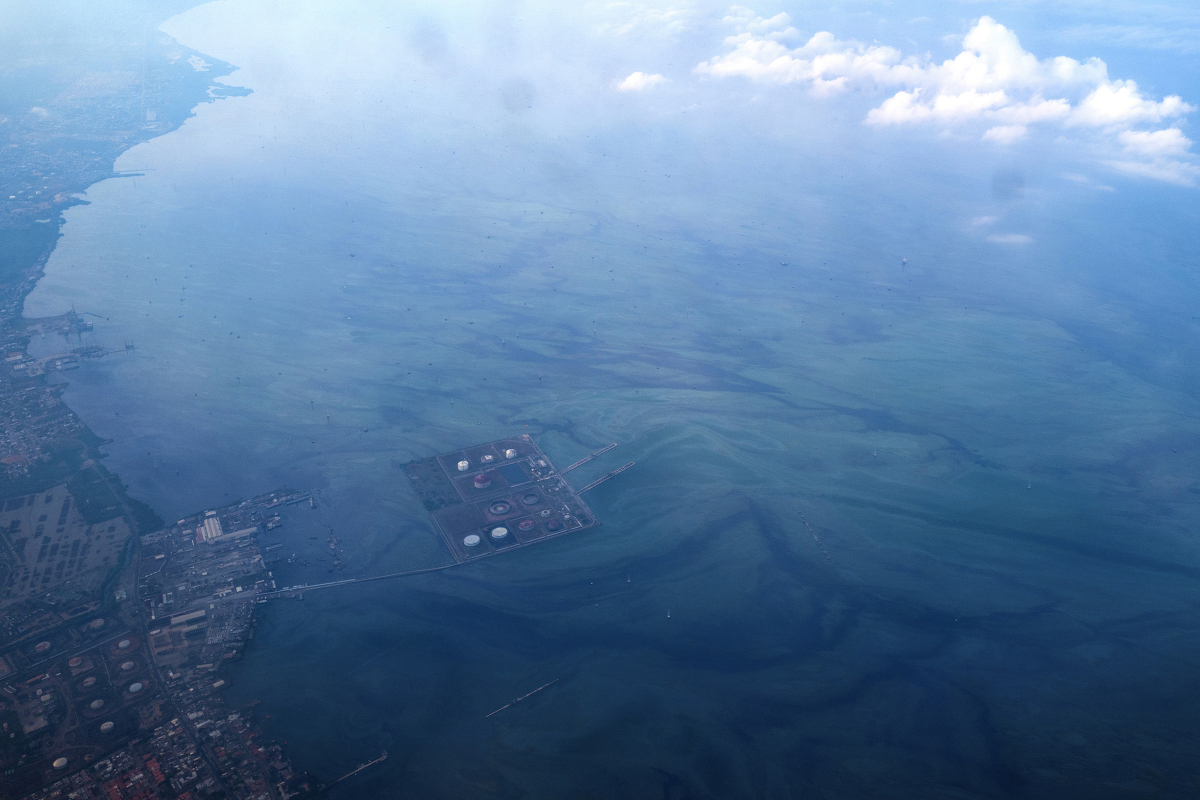
Oil streaks the surface of Lake Maracaibo just offshore from the oil production centers of Cabimas, Venezuela. MUST CREDIT: Washington Post photo by Michael Robinson Chavez

Oil streaks the surface of Lake Maracaibo just offshore from the oil production centers of Cabimas, Venezuela. MUST CREDIT: Washington Post photo by Michael Robinson Chavez

The Russians describe their relationship with the South American nation, home to the world’s largest proven oil reserves, as one of “mutual cooperation.” Since Hugo Chávez founded the socialist state in 1999, Russia has become Venezuela’s primary supplier of military equipment and advisers, a consistent supporter in international bodies and a key source of government loans and investment.

But now, observers say, the Russians are to some extent extorting Maduro, Chavez’s successor, who has been boxed in by the United States. Washington is blacklisting ships that transport Venezuelan crude and threatening secondary measures against any entity, including international banks and customers, that “materially assist” Maduro’s government. That’s made Venezuela’s greatest asset – its oil – a globally toxic brand.

The Russians have been willing to absorb the risk of sanctions. They’re chartering vessels from third parties and obscuring the origin of the crude as they market it around the world.

But they’re also charging Maduro dearly for their efforts – sometimes through fees but more often by demanding deep discounts on crude that can be flipped for a tidy profit.

U.S. officials and industry analysts say Russian state companies – chiefly the state-controlled oil giant Rosneft – are handling 70% to 80% of Venezuela’s total oil exports.

In sharp contrast to the drain on the coffers of the Soviet Union resulting from Moscow’s Cold War-era support of communist Cuba, today’s relationship with socialist Venezuela is providing Russia with a rare opportunity to make a mint as it strengthens its foothold in the backyard of the United States.

Neither the Russian Foreign Ministry nor Rosneft responded Thursday to requests for comment. PDVSA, Venezuela’s state-owned oil company, and Venezuela’s communications ministry were similarly unresponsive.

In an interview last month with The Washington Post, Maduro said Rosneft was responsible for “15 to 20%” of Venezuela’s oil production, and was making “important investments to multiply that production.” He did not address Russian marketing or transport of the oil.

U.S. officials and industry sources say the Russians also have been supplying Venezuela with the chemicals it needs to keep its troubled oil sector functioning as well as with refined gasoline. Much of Venezuela’s supply of chemicals was previously provided by U.S. companies. But Maduro appeared to play down Venezuela’s reliance on Russia.

“The U.S. has tried to block all of the imports we need for energy production, but for now we’ve succeeded in avoiding being impacted by it,” he said. “Those relations are diversified. They don’t depend on just one international actor.”

This article, which reveals new details of Russia’s economic involvement with Venezuela, is based on more than a dozen interviews with people familiar with Russia-Venezuela deals, several of whom spoke on the condition of anonymity to discuss sensitive matters.

The Russians have made no secret of their support for Maduro, who is considered illegitimate by the United States and more than 50 other governments, or of their political and economic interest in Venezuela, a broken and isolated country in search of any benefactors it can find. Russian Foreign Minister Sergei Lavrov is due in Caracas on Friday, when the Russian Foreign Ministry says he will discuss “practical steps to deepen cooperation between the two countries in such areas such as energy, mining, transport, agriculture, medicine, pharmaceuticals and military-technical cooperation.”

“The Russians have learned that they don’t need another Cuba, they don’t need to engage in imperial overstretch,” said Russ Dallen, a managing partner at Caracas Capital Markets, a financial and consulting firm that tracks Venezuelan oil. “This time, they are making their colonies pay and are sucking everything they can out of Venezuela.”

U.S. officials estimate that Rosneft is handling 400,000 barrels of Venezuelan crude a day – more than half of Venezuela’s production, by some accounts – and reaping a profit of roughly $120 million a month. Venezuelan oil insiders with access to data from PDVSA put the number slightly lower, depending on production levels in any given month. Venezuela’s oil output has fallen by about 35% since the embargo was imposed in January 2019.

Other companies, including Spain’s Repsol, India’s Reliance and U.S.-based Chevron, which has been given a renewable sanctions waiver, remain relatively minor players in the Venezuelan oil industry.

Rosneft remains by far the most important foreign company doing business in Venezuela, not only as an investor in five joint oil ventures but also as a force in marketing and sales.

“Rosneft is making a lot of money in Venezuela,” said Elliott Abrams, the U.S. special representative on Venezuela. “If you think about the number of barrels a day they are handling, it turns into a neat profit.”

Russia has said the oil it ships from Venezuela is not subject to U.S. sanctions, which restrict U.S. companies and individuals from doing business with the Venezuelan government and PDVSA. Russia has also received Venezuelan oil as repayment of Rosneft loans.

U.S. officials say they are considering ways to cut the lifeline Rosneft and its subsidiaries are providing to Maduro.

“We’re letting the Russians and we’re letting the company know that their support of the Maduro regime is – it’s not a good business decision, but it’s also immoral, what it’s doing to the people of Venezuela,” White House national security adviser Robert O’Brien said at a forum in Washington on Wednesday.

“So I think you’re going to see some action, either voluntarily from the company, or the U.S. will likely take action in the near future on that issue.”

But sanctions against one of Russia’s largest companies is a controversial decision within the Trump administration. U.S. imports of Russian crude oil have surged over the past year. According to Dallen, Russia is now the second largest supplier to American refineries.

Venezuela’s opposition has supported U.S. sanctions on Maduro’s government.

“If we assume that the way forward is to increase diplomatic, economic and financial pressure on the dictatorship, then I believe that all sources of oxygen to Maduro to maintain his repressive apparatus must be addressed,” senior opposition figure Leopoldo López said in an interview.

Abrams said the approach is working. He pointed to the extraordinary steps Maduro has taken to sustain the economy under the embargo – including embracing a de facto dollarization of the economy and holding talks to give control of oil sites to foreign companies.

“When people say to me the sanctions are not working, I look at Maduro committing treason against Chavismo, and I say, this can only be explained by the impact of sanctions,” he said.

– – –

At 8 p.m. on Nov. 6, two men representing themselves as senior members of Russian intelligence – Oleg Antonov, 50, and Tsvetan Kirilov, 40 – held a meeting in a midrise building in central Caracas. Several executives from Venezuela’s oil and other industrial sectors were present, according to four people who said they had direct knowledge of the event.

Trump administration sanctions, the Russians argued, had largely targeted the state-owned oil firm. So they pitched a way around them, with oil exploration and export deals conducted through joint ventures between Russian companies and private Venezuelan entrepreneurs. Such arrangements, the two men suggested, could exploit a loophole that would make it easier to sell Venezuelan crude to leery foreign buyers.

Under a deal struck between Chávez and the Cuban leader Fidel Castro, Venezuela provides free or heavily discounted oil to the communist island, which keeps some and sells the rest. The Trump administration, which accuses Cuba of running Venezuela’s repressive intelligence service, has been studying the possibility of a limited naval blockade to prevent the shipments, and it has blacklisted several ships and maritime companies based in countries such as Cyprus and Panama.

The Russians, the people with knowledge of the meeting said, floated the idea of flying Russian flags on tankers leaving Venezuela’s ports, essentially daring the United States to interfere. They also discussed the possibility of expanding cooperation in gold and other commodities mined in Venezuela’s mineral-rich south.

U.S. sanctions block Venezuela’s government and specific individuals close to it from using the U.S. financial system or conducting transactions in U.S. dollars, measures that have led many European banks to stay away rather than complicate their relations with the United States.

But the Russians discussed expanding a system already employed by the Maduro government to sidestep U.S. sanctions: the use of Russian banks to store cash and make international transactions on Venezuela’s behalf.

“The Russians were talking about everything, about more business, about how to get around U.S. sanctions,” said one person with direct knowledge of the meeting.

Asked about the reported meeting and the Russian individuals, the CIA declined to comment.

Russia’s Federal Security Service, the alleged employer of the two visitors, did not respond to a request for comment.

Putin has long criticized U.S. sanctions against Russia and other countries, and he has suggested that other currencies be used to replace the dollar as international tender.

The Russians are expanding their stakes in Venezuela in other ways. Rosneft in recent months has increased its operational control over existing joint ventures in the oil sector, including the largest such enterprise, Petromonagas. It has also engaged in talks about creating arrangements in which foreigners would hold majority ownership. Such arrangements, first reported by Bloomberg News and confirmed by two people familiar with the discussions, would effectively defy a Chávez-era policy against allowing foreign entities to control any part of the nation’s energy sector.

In an interview with The Washington Post, Juan Guaidó, the opposition figure recognized by the United States and more than 50 other nations as Venezuela’s true leader, would not say whether he backed harsher U.S. sanctions on Rosneft. But he said “it’s clear that in 2019, the primary economic beneficiary [in Venezuela] were companies of Russian origin.”

Others argue that the administration has overshot on sanctions. In last month’s interview, Maduro suggested that U.S. companies could once again profit from Venezuela’s oil sector should sanctions be relaxed. Some U.S. industry players – most of whom have been shut out of Venezuela – say Washington is imposing an “America last” policy that is effectively granting the Russians exclusive access to Venezuela’s wealth.

Sanctions have “empowered and enriched the U.S.’s strategic adversaries, particularly the Russians who have used the crisis to regain a military foothold in our hemisphere, as Rosneft plunders a fortune by monopolizing the trade of hydrocarbons in and out of Venezuela,” Harry Sargeant, a principal of the U.S. firm EREPLA Services, said in a statement. The company entered into a potentially lucrative contract with the state-owned Venezuelan oil firm PDVSA in 2018 but has been prevented by sanctions from launching operations.

The financial relationship between Russia and Venezuela has changed over time. During the Chávez years, the Russians extended $3.15 billion of credit for the purchase of Sukhoi fighter jets, air defense systems, tanks and other weapons. In 2014, the year after Chávez died and Maduro took over, Russia, through Rosneft, provided some $6.5 billion in loans to PDVSA. Venezuela has repaid that loan with oil at a rate of nearly $2 billion a year. The full amount is set to be paid off by the first quarter of this year.

The Russians could offer new loans to Venezuela for repayment in oil. In the meantime, analysts say, they are engaging in obfuscation and logistical tricks to hide the extent of their involvement in Venezuelan’s oil export trade.

Though China largely ceased direct imports of Venezuelan oil last year in a nod to U.S. sanctions, the Chinese appear still to be receiving Maduro’s crude – now delivered by the Russians.

In December, for example, Rosneft chartered the Princess Mary, a Liberian-flagged freighter, according to port documents obtained by Caracas Capital. The ship had previously been used to transport crude to an India refinery co-owned by Rosneft. India is an importer of Venezuelan oil that has resisted U.S. appeals to stop.

On Dec. 3, the Princess Mary picked up a large cargo of oil from an offshore platform near the Puerto Jose refinery on Venezuela’s northern coast.

For the next 12 days, according to captures of the ship’s transponder, it sailed to a point off Togo on the West African coast, Caracas Capital says. There, it rendezvoused with two smaller ships, the Ridge U and the Ridge A. The Princess Mary’s crude was transferred to the smaller ships at sea. They then sailed toward Asia, according to transponder data and satellite images.

The Ridge A stopped sending transponder signals on Jan. 15. Five days later, the vessel turned up in the Chinese port of Zhanjiang. As of this week, the Ridge U remained in the Singapore Strait, reporting its destination as Shandong, China.

“The Russians are now acting as the personal Uber drivers for Venezuelan oil,” Dallen said.

The Chinese Foreign Ministry did not respond Thursday to a request for comment.

House passes bill to rewrite labor laws and strengthen unions #ศาสตร์เกษตรดินปุ๋ย

#ศาสตร์เกษตรดินปุ๋ย : ขอบคุณแหล่งข้อมูล : หนังสือพิมพ์ The Nation

https://www.nationthailand.com/business/30381748?utm_source=category&utm_medium=internal_referral

House passes bill to rewrite labor laws and strengthen unions

Feb 07. 2020
By The Washington Post · Eli Rosenberg

One of the most significant bills to strengthen workers’ abilities to organize in the past 80 years passed the House on Thursday, the latest sign of momentum for the labor movement.

The Protecting the Right to Organize Act, known as the PRO Act, would amend some of the country’s decades-old labor laws to give workers more power during disputes at work, add penalties for companies that retaliate against workers who organize and grant some hundreds of thousands of workers collective-bargaining rights they don’t currently have. It would also weaken “right-to-work” laws in 27 states that allow employees to forgo participating in and paying dues to unions.

The House passed the bill with a vote of 224 to 194, mostly along party lines.

The bill is unlikely to be taken up by the GOP-controlled Senate, as Republicans and business groups have argued forcefully against it, saying it would hurt employers, violate privacy rights and be a major boon for national unions.

Whatever the bill’s fate, it highlights the growing push to reexamine the country’s decades-old labor laws.

The National Labor Relations Board, which is charged with upholding workers’ rights to unionize or work together to improve their workplaces, currently has no ability to levy fines when it finds that companies have broken the law, such as firing a worker for starting a union campaign.

This bill would give the NLRB, which enforces federal labor law, the power to fine companies up to $50,000 per violation. It would also award workers’ compensation for the damages they experience when they are retaliated against, not just back pay and reinstatement, as they are currently entitled to.

The bill would also allow more people currently classified as contractors to be given the status of employees for the purposes of union organizing, potentially paving the way for gig workers at companies such as Lyft, Uber and DoorDash to organize with unions or among themselves.

The bill would also weaken right-to-work laws passed in predominantly red states, which allow employees in many states to be exempt from paying fees to unions that represent them.

A group formed to oppose the bill from many business groups, the Coalition for a Democratic Workplace, has sharply criticized a provision in the bill that requires employers to provide a list of their employees’ information, including jobs, shift information, cellphone numbers and addresses, to union leadership as an NLRB-sanctioned election nears.

The staff of Sen. Lamar Alexander, R-Tenn., chairman of the Committee on Health, Education, Labor and Pensions, has said the committee will not consider the legislation this session.

How Switzerland could find itself labeled a currency manipulator #ศาสตร์เกษตรดินปุ๋ย

#ศาสตร์เกษตรดินปุ๋ย : ขอบคุณแหล่งข้อมูล : หนังสือพิมพ์ The Nation

https://www.nationthailand.com/business/30381740?utm_source=category&utm_medium=internal_referral

How Switzerland could find itself labeled a currency manipulator

Feb 07. 2020
By Syndication Washington Post, Bloomberg · Catherine Bosley

Switzerland may be hoping that it’s just too small for President Donald Trump to care about it.

The export-reliant economy at the heart of Europe risks letting history repeat itself if it becomes a target in the U.S. president’s trade war, a decade after it ran afoul of Washington with banking secrecy.

Switzerland is in danger of being labeled a currency manipulator. U.S. Treasury officials put it back onto a shortlist for that designation last month, citing its high capital-account surplus and bilateral trade balance.

Another barrage of foreign exchange interventions by the Swiss National Bank to limit the franc’s gains could be all that’s needed to qualify.

“There’s quite a big danger of Switzerland, with its high current account balance, winding up in the cross hairs of U.S. politics, and on Donald Trump’s Twitter feed, in the medium term,” said Adriel Jost, an economist at consultancy Wellershoff & Partner.

With the franc, one of the world’s most-traded currencies, near a three-year high against the euro, SNB officials might be tempted to act. But the Trump administration’s push for the power to apply punitive tariffs on countries accused of manipulating currencies serves as a reminder of the potential consequences.

Such an initiative could open a new front in Trump’s trade wars after only a brief lull marked by the signing of an initial agreement on commerce between the U.S. and China.

Publicly, at least, Swiss officials don’t seem worried about being back on the watchlist they escaped in 2018. SNB policy makers insist the U.S. understands Switzerland’s position — and that may be true.

“We never intend to weaken the Swiss franc to get an advantage over other countries but rather we have to avoid that the Swiss franc becomes too strong,” SNB President Thomas Jordan said in an interview last month.

Interventions are a key part of Swiss monetary policy, because too strong a currency will choke off growth. The franc was little changed at 1.0716 per euro at 10:18 a.m. in Zurich.

Still, there’s plenty of precedent for the Swiss to ponder. International pressure forced the Bern government to change the way multinational corporations were taxed. Just last year, the European Union threatened to cripple the Swiss stock exchange as it sought to extract concessions in a political dispute.

Most famously, during the global financial crisis, the U.S. led a crackdown on Switzerland’s policy of letting bank customers keep account details from tax authorities. A decade later, after more than $6 billion in fines paid by banks, secrecy has been abolished for non residents.

As the U.S. president trains his sights on Europe, Switzerland might make an appealing target. The country of 8.5 million lacks the clout of the EU, which it has refused to join.

It’s big enough to make an example of to bully others, but too insignificant to fight back. While the U.S. is Switzerland’s biggest extra-European destination for exports, for the U.S. it accounts for less than 2%.

For its part, the Swiss government has said relations with the U.S. are “excellent” and that there are regular discussions of financial matters.

If the U.S. deems a country a currency manipulator, under a 2015 law the U.S. must embark on talks. If the problems aren’t corrected, the U.S. can impose foreign-investment restrictions and seek redress through the International Monetary Fund.

But the fund has already said the SNB’s monetary policy is “appropriate.”

Switzerland’s exports of more than $40 billion a year might appeal as a target to the White House. But the lion’s share of those sales are pharmaceuticals, including cancer drugs made by Basel-based Roche Holding and gene therapies by rival Novartis. Punitive tariffs might not curb demand.

Bern may lack trump cards, but it does hold a joker. The Swiss represent the U.S. in Iran. The country’s channeling of dialog between the two may have helped avert war at the start of this year.

“Trying to forecast Trump’s trade policy is probably a thankless task,” said Peter Rosenstreich, head of market strategy at Swissquote Bank. But Switzerland may just be too small “to make the splash that Trump likes.”