Lagarde says ECB running out of room to fight global threats #ศาสตร์เกษตรดินปุ๋ย

#ศาสตร์เกษตรดินปุ๋ย : ขอบคุณแหล่งข้อมูล : หนังสือพิมพ์ The Nation

https://www.nationthailand.com/business/30381736?utm_source=category&utm_medium=internal_referral

Lagarde says ECB running out of room to fight global threats

Feb 07. 2020
File Photo: European Central Bank President Christine Lagarde/ Syndication Washington Post, Bloomberg

File Photo: European Central Bank President Christine Lagarde/ Syndication Washington Post, Bloomberg
By Bloomberg · John Ainger, Fergal O’Brien

European Central Bank President Christine Lagarde said a decade of crisis fighting has left policymakers with few options for more monetary stimulus, just as new concerns such as the coronavirus outbreak arise.

Lagarde said that while the euro zone’s domestic economy remains “resilient,” lingering global threats could undermine the recent stabilization in activity, and uncertainties remain elevated. The warning came just hours after data showed a huge drop in Germany factory orders, indicating the manufacturing recession in Europe’s largest economy is far from over.

Fundamental economic trends and “the legacy of the financial crisis have driven interest rates down,” Lagarde told European Parliament lawmakers on Thursday. “This low interest rate and low inflation environment has significantly reduced the scope for the ECB and other central banks worldwide to ease monetary policy in the face of an economic downturn.”

The reference to “significantly” reduced space was stronger than the ECB’s statement late last month, when it announced a strategic review into the reasons for low inflation and how to tackle it. It’s partly an acknowledgment of rising concern that the loose policy threatens financial stability by squeezing bank margins and driving asset prices — such as stocks and real estate — to unsustainable levels.

Vice President Luis De Guindos said at a separate event in Madrid that the side effects from policies such as negative interest rate and quantitative easing are becoming “more tangible.”

Lagarde’s message was also aimed at governments though — signaling that they need to step in with fiscal support.

“We have indicated clearly that where there is fiscal space it would be appropriate for policymakers to actually use that fiscal space in order to support the euro-area economy,” she said, while declining to name specific countries.

Lagarde said structural changes in the global economy — aging populations and declining trend growth — mean it’s the right time for the ECB to embark on its review. While the inflation goal of “below, but close to, 2%” will be the primary focus, the president also said climate change, technology and finance will impact prices.

The coronavirus outbreak has become the most immediate concern for some central bankers. The Bank of Thailand on Wednesday cut its key interest rate to a record low, and the Philippine governor hinted a similar move was imminent there. The Monetary Authority of Singapore said there is “sufficient room” for its currency to ease if the virus weakens the economy.

Lagarde said a day earlier that the outbreak has added to economic uncertainty, as did Executive Board member Philip Lane, the ECB’s chief economist. Lane’s predecessor, Peter Praet, told Bloomberg Television on Thursday that the ECB should be wary of rushing in too soon though.

“What worries me probably more — the sort of of perception you know, especially in financial markets, that central banks always have to react,” he said. “Every time you get a shock in the system you get high expectations of a reaction of the central bank that’s quickly incorporated in market expectations. But there’s only so much a central bank can do.”

Lagarde’s two-hour conversation with lawmakers also touched on the U.K.’s departure from the European Union, an event that she said should be the spur for the EU to develop its own capital markets union. Brexit raises question marks over the role of London’s enormous financial center in funding European companies.

“If that is not a triggering factor to engage all of us, I don’t know what else we need,” Lagarde said. “Capital markets union has to happen fast.”

U.S.Stocks climb to records with virus impact unknown #ศาสตร์เกษตรดินปุ๋ย

#ศาสตร์เกษตรดินปุ๋ย : ขอบคุณแหล่งข้อมูล : หนังสือพิมพ์ The Nation

https://www.nationthailand.com/business/30381731?utm_source=category&utm_medium=internal_referral

U.S.Stocks climb to records with virus impact unknown

Feb 07. 2020
By Syndication Washington Post, Bloomberg · Claire Ballentine 

U.S. stocks continued their push higher even as the economic impact from the deadly coronavirus remains murky. Treasuries were mixed, and gold advanced.

The S&P 500 Index’s four-day rally hit 3.7% as major equity benchmarks added to all-time highs on the strength of solid corporate results and signs that central banks stand ready to act if growth falters. The torrid ascent has some firms warning about a sense of euphoria taking over among investors, especially as the coronavirus epidemic continues to spread and China’s economy remains virtually locked down. Treasuries edged higher and gold climbed in a sign of some demand for haven assets.

In corporate news, Boeing spiked 3.6% after saying it fixed a software bug in its grounded plane. Twitter Inc. rallied 15% after topping projections for fourth-quarter revenue. Strong results helped powered the Stoxx Europe 600 Index to a record. Crude oil edged above $51 a barrel in New York.

“A lot of the moves this week have been explained by a relief rally that the coronavirus seems to be slowing somewhat, clearly there was a lot of uncertainty embedded in market behavior coming in,” said Mark Heppenstall, chief investment officer at Penn Mutual Asset Management. “It does still have a number of question marks still out there.”

– – –

Here are some key events coming up:

– A report on German industrial production is due Friday.

– The U.S. employment report for January is set for Friday release.

– Australia’s central bank chief speaks and takes questions at a parliamentary committee.

– – –

And these are the main moves in markets:

Stocks

– The S&P 500 Index rose 0.3% as of 4 p.m. New York time.

– The Stoxx Europe 600 Index increased 0.4%.

– The MSCI Asia Pacific Index increased 1.8%.

– The MSCI Emerging Market Index gained 1.3%.

Currencies

– The Bloomberg Dollar Spot Index rose 0.2%.

– The euro fell 0.2% to $1.098.

– The onshore yuan was little changed at 6.9708 per dollar.

– The Japanese yen fell 0.1% to 109.98 per dollar.

Bonds

– The yield on 10-year Treasuries fell one basis point, to 1.65%.

– Germany’s 10-year yield fell one basis point, to -0.37%.

– Japan’s 10-year yield rose two basis points, to -0.024%.

Commodities

– West Texas Intermediate crude rose 0.5%, to $51.01 a barrel.

– Gold futures rose 0.5%, to $1,570 an ounce.

Rate cut not a cure-all monetary tool, said BOT boss #ศาสตร์เกษตรดินปุ๋ย

#ศาสตร์เกษตรดินปุ๋ย : ขอบคุณแหล่งข้อมูล : หนังสือพิมพ์ The Nation

https://www.nationthailand.com/business/30381710?utm_source=category&utm_medium=internal_referral

Rate cut not a cure-all monetary tool, said BOT boss

Feb 07. 2020
File photo:  Veerathai Santiprabhob

File photo: Veerathai Santiprabhob
By THE NATION

Though the Bank of Thailand still has sufficient monetary tools in its armory to support the economy, it should be known that no single tool could cure all the problems, said central bank governor Veerathai Santiprabhob on Thursday (February 6).

He made the remark at a seminar on economic issues, hosted by Phatra Securities.

The novel coronavirus outbreak has affected various industries to different extent and the policy rate cut alone might not be enough to offset the damages.

He warned that use of the interest rate policy might bring unwanted repercussion, saying that diverse fiscal and monetary tools are needed to tackle the problems.

The central bank’ Monetary Policy Committee on Wednesday voted unanimously to trim the policy rate by 0.25 percentage point from 1.25 per cent to the historic low of 1 per cent, effective immediately.

The reduction was in line with MPC’s estimate that Thai economy growth would be lower than its previous forecast, due mainly to the new coronavirus outbreak, delay of the 2020 fiscal budget disbursement and drought.

The rate cut has prompted many banks to follow suit, trimming their lending interest rates for corporate customers.

He added that the MPC move reflected the need for swift action in support of the declining economy and ease financial burden of businesses.

After the rate cut on Wednesday, he said, the central bank called a meeting with executives of many banks urging them to provide more financial assistance to customers affected by the economic slowdown.

PTT ready to help quench eastern factories’ thirst #ศาสตร์เกษตรดินปุ๋ย

#ศาสตร์เกษตรดินปุ๋ย : ขอบคุณแหล่งข้อมูล : หนังสือพิมพ์ The Nation

https://www.nationthailand.com/business/30381718?utm_source=category&utm_medium=internal_referral

PTT ready to help quench eastern factories’ thirst

Feb 07. 2020
By The Nation

PTT has urged the Office of National Water Resources (ONWR) to invite bids on a public-private joint venture that would more carefully manage water use in the East, home to hundreds of thirsty factories and with more development imminent.

President and chief executive Chansin Treenuchagron said on Thursday (February 6) that PTT Group is concerned about the drought situation in the East, noting that conditions depend heavily on the amount of rain that falls in May and June.

In the long run, he said, PTT would like to see a joint venture established to turn seawater into potable water in the Laem Chabang-Map Ta Phut areas of Chon Buri and Rayong, and PTT companies including PTTGC and Thai Oil were ready to participate.

He said the government should accept public-private bids on land reclamation and procuration and offer tax incentives to ease the high costs involved. The technology exists for turning seawater into freshwater, Chansin noted.

The currently strong baht has opened investment opportunities for PTT in the past few years, he said. Phase 3 of the Map Ta Phut Industrial development is expected to rise this year on land reclaimed from the sea. Phase 3 of the Laem Chabang port development will begin drawing investments at the end of the year or early next year.

“PTT Group operations this year still face many risks, including drought, the slow domestic economy and especially the coronavirus outbreak in China, which could affect global demand for oil and plastic beads,” Chansin said. “PTT has adjusted in the last two years to reduce its reliance on the Chinese market by turning to India, Africa and the rest of Southeast Asia, and this may be Thailand’s opportunity to produce substitutes for Chinese goods as well.”

He said PTT, at the direction of Energy Minister Sontirat Sonthichirawong, is negotiating with gas producers in the Gulf of Thailand and providers in Myanmar to reduce purchases in order to preserve resources, and is instead importing more liquefied natural gas, which is cheaper for producing electricity.

However, the negotiations are conducted cautiously so that they don’t affect major purchase agreements or “global daily contracted quantity”. The negotiations are expected to conclude within the first quarter of the year.

LNG for increasing electricity production must be purchased in “appropriate amounts” so as not to increase the “take or pay” burden, Chansin said. PTT might initially procure it in the form of “spot markets” on short-term contracts.

Government measures aimed at reducing the impacts of the baht’s appreciation and the relatively cheaper global price of LNG will lower the cost of producing electricity, he said.

PTT hopes to start importing LNG to spot markets in the second or third quarter, probably less than a million tonnes for short-term use by industries with no access to gas pipelines.

The users would have to switch over to LNG from costlier and more environmentally damaging fossil fuels such as palm oil and coal.

China cuts tariffs on $75 billion in U.S. imports as coronavirus keeps it in lockdown #ศาสตร์เกษตรดินปุ๋ย

#ศาสตร์เกษตรดินปุ๋ย : ขอบคุณแหล่งข้อมูล : หนังสือพิมพ์ The Nation

https://www.nationthailand.com/business/30381724?utm_source=category&utm_medium=internal_referral

China cuts tariffs on $75 billion in U.S. imports as coronavirus keeps it in lockdown

Feb 07. 2020
The container area of the Yangshan Deep Water Port in Shanghai on Feb. 4, 2020. Photographer: MUST CREDIT: Bloomberg photo by Qilai Shen.

The container area of the Yangshan Deep Water Port in Shanghai on Feb. 4, 2020. Photographer: MUST CREDIT: Bloomberg photo by Qilai Shen.
By  The Washington Post · Taylor Telford

China said it would halve tariffs on $75 billion of U.S. goods, pressing forward on the first phase of its trade pact with Washington even as the coronavirus crisis remains a significant hurdle to its economic engine.

The phase one agreement signed last month quelled the protracted trade conflict that tied up the world’s two most powerful economies, imperiled global growth and caused chaos for multinational corporations. The terms required both nations to de-escalate tariffs, and compelled China to buy an additional $200 billion in American goods over the next two years.

Levies will be slashed from 10% to 5% or from 5% to 2.5% on hundreds of U.S. products starting Feb. 14, China’s finance ministry said. The tariffs on cars, oil, soybeans and other goods date back to September and had been implemented in response to additional tariffs the U.S. had applied in the fall.

The widely expected move comes as China is paralyzed by the coronavirus, which has infected more than 28,000 in the mainland and killed more than 500. It has also brought China’s powerful manufacturing industry to a standstill, as travel restrictions freeze China’s workforce and major companies such as Boeing, Apple and Nike have been forced to close factories until at least mid-February. McDonald’s, Starbucks, KFC, Levi Strauss, H & M and Samsung have closed stores across China. Casinos in Macao, the world’s biggest gambling market, are shutting down for two weeks.

“The recent cut in Chinese tariffs is more about containing the economic damage to China from the coronavirus than it is about trade relations between the two countries,” Brad McMillan, Chief Investment Officer for Commonwealth Financial Network, said in commentary Thursday. “Along with the recent moves by the PBOC to inject money to protect their markets, this is aimed at managing the risk.”

China is the world’s leading oil consumer, and the country’s lockdown has sent shock waves through crude markets. Brent crude prices hit a one-year low earlier this week, and BP has warned the virus could reduce global oil demand by as much as 80% this year. OPEC and its allies have been meeting to discuss oil output in the face of declining demand.

Even if the virus is contained soon, economists are predicting China’s growth rate will fall to between 3% and 4% this quarter.

“Reducing tariffs and importing more food from the U.S. makes a lot of sense for the Chinese. The Chinese government is facing a number of homegrown problems, the major one being the outbreak of the coronavirus,” said Ed Yardeni, president of Yardeni Research. “They are clearly in need of importing more food. The swine flu epidemic last year decimated their pork supply. Now there is evidence their chickens are facing a virus. They need our food. Food inflation is soaring in China. There have also been disruptions in their transportation system, further complicating the food supply.”

China’s ministry of agriculture and rural affairs announced an outbreak of the highly pathogenic H5N1 virus that wiped out 4,500 birds on a poultry farm in the Hunan province earlier this week. The World Health Organization said the virus “does not infect humans easily” and that the person-to-person spread is unusual. But H5N1 compounds dangers for China’s poultry industry, as the coronavirus has made it difficult for farmers to receive chicken feed. Hubei poultry farmers said they were “very distressed” about the situation in a letter to the China Animal Agriculture Association last week.

Experts are skeptical about China’s ability to deliver on the additional $200 billion in American purchases it is supposed to make, and the likelihood seems slimmer given the outbreak. But the pact includes a disaster clause which allows for some leniency in the event of a crisis like the coronavirus. The U.S. is slated to follow suit and cut tariffs on certain Chinese imports from 15% to 7.5%, also on Feb. 14.

In an interview with Fox Business earlier this week, White House National Economic Council director Larry Kudlow acknowledged that the outbreak could delay China’s purchases. But he said the effect on the U.S. economy would be minor.

“We’re just trying to help China right now,” Kudlow said Tuesday. “It’s not going to be that big a deal for us.”

China has agreed to buy an additional $76.7 billion in U.S. goods and services in the first year of the deal – a 41% jump from the $187.5 billion it spent in 2017, according to the office of the U.S. trade representative. The Chinese have agreed to dollar targets for services, as well as for farm goods, energy products and manufactured goods. New sales for American farmers alone are expected to near $40 billion in the first year, up from $24 billion.

U.S. Agriculture Secretary Sonny Perdue said Wednesday that the U.S. should be patient with China if it struggles to hit these targets amid the outbreak, Reuters reported.

“If they’re really trying and it really just blows the economy out of the water, then we would have to be understanding of that,” Perdue said, speaking to reporters at a cattle convention in Texas.”

Farmers were among those hit hardest by the trade war, and the U.S. government has tried to stem the losses with a $28 billion bailout. American farm bankruptcies jumped 20% in 2019, hitting an eight-year high, according to recent analysis from the American Farm Bureau.

Fresh data from the Commerce Department on Wednesday showed that the U.S. trade deficit with China narrowed in 2019 for the first time in three years, as both nations slapped tariffs on hundreds of billions of dollars worth of imports. The deficit with China fell $73.9 billion to $345.6 billion last year.

“China hopes that both sides will abide by bilateral agreements and make an effort to implement relevant provisions so that we can boost market confidence, promote bilateral trade relations and global economic growth,” China’s State Council Tariff Commission said in a statement.

The sign of de-escalation lifted overseas markets, with Hong Kong’s Hang Seng Index closing up 2.5% and Europe’s benchmark Stoxx 600 index on track for its best week of trading since 2016. But Wall Street, which has been on a tear all week, seemed to shrug, with the Dow Jones industrial average flat in early trading.

Ministry issues new measure on strong baht #ศาสตร์เกษตรดินปุ๋ย

#ศาสตร์เกษตรดินปุ๋ย : ขอบคุณแหล่งข้อมูล : หนังสือพิมพ์ The Nation

https://www.nationthailand.com/business/30381717?utm_source=category&utm_medium=internal_referral

Ministry issues new measure on strong baht

Feb 07. 2020
File Photo: Finance Minister  Uttama Savanayana

File Photo: Finance Minister Uttama Savanayana
By The Nation

Finance Minister Uttama Savanayana said on Thursday (February 6) that exporters could park more of their money abroad as the latest measure to curb appreciation of the Thai currency.

Exporters will be allowed to keep a larger amount of their profits in overseas accounts, up to one million dollar from the $200,000 currently allowed, he said.

It will lower cost for exporters and at the same time lessen pressure on the baht’s appreciation as exporters need not repatriate large sums of money back to the country.

It will also lead to more balance between capital outflows and inflows, he said.

The baht gained 8 per cent against the US dollar last year.

The currency was highly volatile in the first month of 2020, moving past the Bt30/dollar level and retreating below Bt31.

It weakened at the outbreak of the coronavirus, but has since regained strength.

At the close of trade on Thursday, the weighted-average interbank exchange rate stood at Bt31.078/ dollar, compared with Bt30.110 on January 2, the first day of trade this year, according to the Bank of Thailand.

High current account surplus and slowing investment were blamed for the strong baht.

Four banks follow lead on cutting loan rates #ศาสตร์เกษตรดินปุ๋ย

#ศาสตร์เกษตรดินปุ๋ย : ขอบคุณแหล่งข้อมูล : หนังสือพิมพ์ The Nation

https://www.nationthailand.com/business/30381699?utm_source=category&utm_medium=internal_referral

Four banks follow lead on cutting loan rates

Feb 06. 2020
By THE NATION

Four banks will cut interest rates on loans tomorrow (February 7) in view of the economic slowdown and impact from the novel coronavirus outbreak, said the banks in their respective announcements on Thursday (February 6).

Their move followed the policy rate reduction by the Bank of Thailand’s Monetary Policy Committee (MPC) on Wednesday (February 5).

Kasikornbank (KBank) was the first to announce a rate cut on Wednesday shortly after the MPC’s decision.

Effective today, KBank has reduced its minimum retail rate (MRR) for SMEs and individual customers to 6.62 per cent from 6.87 per cent.

Siam Commercial Bank (SCB) will lower its Minimum Loan Rate (MLR) to 5.775 per cent from 6.025 per cent, effective tomorrow.

Recently the bank launched a six-month grace period for repayment of the loan principal amount to existing customers in the hotel business as an urgent measure to help mitigate the impact on their business from the coronavirus crisis.

Government Housing Bank (GH Bank) will trim MLR, minimum retail rate (MRR) and Minimum Overdraft Rate (MOR), effective tomorrow.

It will cut MLR from 6 per cent a year to 5.875 per cent, MRR from 6.5 per cent a to 6.375 per cent and MOR from 6.750 per cent a year to 6.500 per cent.

Government Savings Bank (GSB) will cut both MRR and MOR from 6.745 per cent to 6.495 per cent tomorrow. Krungthai Bank (KTB) will also cut its minimum loan rate (MLR) from 6.025 per cent per year to 5.775 per cent, effective tomorrow.

The MPC on Wednesday voted unanimously to trim the policy rate by 0.25 percentage point from 1.25 per cent to 1 per cent, effective immediately.

The reduction was in line with MPC’s estimate that Thai economy growth would be lower than its previous forecast, due mainly to the new coronavirus outbreak, delay of the 2020 fiscal budget disbursement and drought.

China lowers US import tariffs #ศาสตร์เกษตรดินปุ๋ย

#ศาสตร์เกษตรดินปุ๋ย : ขอบคุณแหล่งข้อมูล : หนังสือพิมพ์ The Nation

https://www.nationthailand.com/business/30381693?utm_source=category&utm_medium=internal_referral

China lowers US import tariffs

Feb 06. 2020
A US cargo ship docks at the Qingdao Port, Shandong province. [Photo by Yu Shaoyue/For China Daily]

A US cargo ship docks at the Qingdao Port, Shandong province. [Photo by Yu Shaoyue/For China Daily]
By Chen Jia | chinadaily.com.cn

China decided to lower the rates of additional tariffs levied on about $75 billion in imported goods from the United States starting Feb 14, to further ease Sino-US trade tensions and promote economic and trade cooperation between the two sides, the Customs Tariff Commission of the State Council said on Thursday.

For goods with 10 percent tariffs since Sept 1, 2019, the rate was decreased to 5 percent, and for those with 5 percent tariffs the rate was adjusted to 2.5 percent, per a statement from the commission.

The commission said subsequent adjustments depend on changes in the Sino-US economic and trade situation, and China hopes to work with the US to try to eliminate all additional tariffs.

In addition, China will continue to work on the exclusion of additional tariffs on US products. “The previous measures of tariff exclusion, which have been released, remain in effect,” according to the statement.

The move came as a response to US tariff adjustments starting Feb 14, the commission said. On Jan 16, the US government announced it would cut the additional tariffs on $120 billion in imported goods from China, down from 15 percent to 7.5 percent.

“China hopes the two sides can follow the agreement, implement relevant content, enhance market confidence, improve the bilateral economic and trade relations and promote global economic growth,” the commission said.

BOI rolls out economy-boosting incentives #ศาสตร์เกษตรดินปุ๋ย

#ศาสตร์เกษตรดินปุ๋ย : ขอบคุณแหล่งข้อมูล : หนังสือพิมพ์ The Nation

https://www.nationthailand.com/business/30381692?utm_source=category&utm_medium=internal_referral

BOI rolls out economy-boosting incentives

Feb 06. 2020
By THE NATION

The Board of Investment (BOI) on Thursday (February 6) approved a wide range of measures to accelerate investment and support all sectors of the economy, from large-scale projects to small and medium-sized enterprises.

The measures also include incentives to help strengthen the grassroots economy and the tourism industry.

“The measures aim to support investment at all levels, from large projects with a significant economic impact to community-level businesses,” BOI secretary general Duangjai Asawachintachit told reporters after the meeting chaired by Prime Minister Prayut Chan-o-cha.

In a follow-up to the “Thailand Plus” package announced by the BOI in September, the first new measure aims to accelerate investment in large-scale projects eligible for corporate income tax-exemptions of 5-8 years by offering an additional 50 per cent corporate income-tax deduction for a period of five years if they realise an investment of not less than Bt500 million in 2020 or a total of not less than Bt1 billion by the end of 2021.

Qualified projects must submit applications before December 30 this year.

To encourage the private sector to participate more actively in improving the competitiveness of the grassroots economy in agriculture and agricultural processing, light industries and community tourism, the BOI approved an extension and improvement of a promotion measures allowing companies to enjoy tax benefits when they invest in such projects.

The revised definition of qualified applicants now includes businesses that have not previously received BOI promotional privileges, as long as they operate in sectors promoted by the BOI. Also, businesses currently enjoying corporate income-tax exemptions can claim additional tax benefits if they invest in or spend on the grassroots economy. Applications for this scheme must be submitted by the end of 2021.

To support the tourism sector and encourage the development of environmentally friendly infrastructure in tourist areas, as well as promoting tourism in less-visited provinces, the BOI extended tax privileges for investments in cable car projects at tourist sites to include electricity-powered tramways, with investments worth at least Bt100 million.

The BOI also relaxed conditions for the hotel business, particularly for SME operators.

Enhanced tax incentives are also given to hotels in 55 less-visited provinces.

In 2019, investment applications filed through the BOI were worth Bt756.1 billion, topping the government’s target.

Of the total value, Bt506.2 billion worth or 67 per cent were applications for foreign direct investment.

Casper’s shrunken IPO will test markets’ appetite for unprofitable startups #ศาสตร์เกษตรดินปุ๋ย

#ศาสตร์เกษตรดินปุ๋ย : ขอบคุณแหล่งข้อมูล : หนังสือพิมพ์ The Nation

https://www.nationthailand.com/business/30381673?utm_source=category&utm_medium=internal_referral

Casper’s shrunken IPO will test markets’ appetite for unprofitable startups

Feb 06. 2020
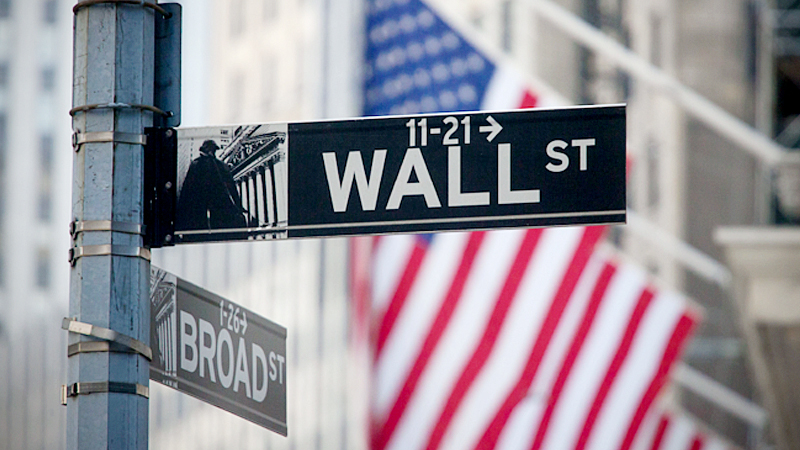
A Wall Street street sign hangs in front of the New York Stock Exchange on April 18, 2016. MUST CREDIT: Bloomberg photo by Michael Nagle.

A Wall Street street sign hangs in front of the New York Stock Exchange on April 18, 2016. MUST CREDIT: Bloomberg photo by Michael Nagle.
By Syndication Washington Post, Bloomberg · Elizabeth Fournier, Crystal Tse · OPINION

The year’s first fallen unicorn is about to test public markets’ appetite for unprofitable startups, and so far it’s not looking like a positive bellwether for the class of 2020.

Mattress retailer Casper Sleep Inc. cut the price range Wednesday for its initial public offering, shrinking its potential market value to well below the $1.1 billion valuation it hit in a private funding round less than a year ago. It’s now aiming to sell shares for $12 to $13 each, down from the original range of $17 to $19.

Questions about how private valuations for buzzy startups translate into public trading dogged 2019’s marquee listings, with the two most prominent debuts — Uber Technologies Inc. and Lyft Inc. — still trading well below their initial public offering prices. Meanwhile, the spectacular collapse of WeWork reads like a cautionary tale for money-losing unicorns headed for public markets.

Speaking before Bloomberg reported that Casper was planning to slash its price range, the co-chair of law firm Cooley LLP’s global capital markets practice group said he was expecting a more subdued pipeline of wannabe public companies in 2020, and a less tumultuous ride for investors.

“Last year, we saw some of the most interesting tech deals but not a great deal of stability in the post-market trading for other companies to want to emulate,” said David Peinsipp. “This year, I expect to see more consistency and stability, which I think will be a good sign for the market.”

Casper, which counts Target and the chief executive officer of Canada Goose Holdings among its backers, echoed IPO pitches of the past by focusing prospective investors’ attention away from losses and onto its rapid revenue growth — and the potential for more as it taps into the $432 billion “global sleep economy.” That may have been enough to spook those who’ve been burned by similar promises.

“Investors continue to be very focused on companies with leadership position in big markets,” said Greg Chamberlain, head of U.S. technology, media and telecommunications equity capital markets at JPMorgan Chase. “There’s an increased focus on detailing the path of profitability.”

Five weeks into the year, markets have so far been kind to debutantes, with all but one of the six U.S. listings that raised more than $100 million trading above their IPO price, despite anxiety about the spreading coronavirus roiling equities in recent days. Of course, not all of the candidates fit the mold of the loss-making unicorn pumped up by private money.

Reynolds Consumer Products Inc., the profitable maker of Reynolds Wrap aluminum foil and Hefty trash bags, last week raised $1.2 billion in the biggest U.S. IPO this year. Its shares closed Tuesday up almost 16% from their debut. That offering will likely be surpassed by PPD Inc., a biotechnology and pharmaceutical research services company — also profitable — that’s seeking to raise $1.62 billion in its IPO set for Wednesday.

While Casper is taking the traditional route to tap public market investors, one trend market watchers are expecting is a flurry of companies considering direct listings instead of an IPO. The alternative route lets existing investors sell shares without being diluted, and without a lock-up period during which they can’t cash out. Even companies that aren’t likely to go public that way are asking about the process.

“We’re certainly seeing the IPO process evolve,” JPMorgan’s Chamberlain said. “We’ll likely see increased transparency in the process, including the manner of communicating with public market investors and method of price discovery.”

Companies could also rush to market in the first half of the year to avoid coinciding with the U.S. presidential election in November. Listings often tend to trail off around the Thanksgiving holiday, but the effect could be particularly stark this year.

“Subject to the market’s view on the impact of the 2020 election, IPOs are likely to be front loaded with the majority pricing before July or August,” said Colin Stewart, global head of technology capital markets at Morgan Stanley.

Over 180 companies went public on U.S. exchanges last year, raising more than $51 billion combined, according to data compiled by Bloomberg. Here are some of the ones we’re watching in 2020.

– Airbnb: While Airbnb Inc. isn’t expected to pursue a traditional IPO, the 12-year-old home-rental company is still likely to be the most high-profile listing this year.The profitable company, last valued at $31 billion in a 2017 private funding round, is planning a direct listing where it won’t raise new capital, people familiar with the matter have said. Airbnb Inc. previously said it plans to be publicly traded during 2020.

– Other direct listings: Investors expect one to four direct listings this year, compared to just one — Slack Technologies Inc. — last year, according to a survey conducted by Deutsche Bank. Work management platform Asana Inc. filed on Monday for a direct listing. Food-delivery service Doordash Inc. and software development and information-technology operations GitLab Inc. are also among firms considering the alternative method.”Almost every company is asking about direct listing today,” said Jackie Kelley, Americas IPO Leader at Ernst & Young.

Venture capital firms as well as Goldman Sachs and Morgan Stanley each held events last year to promote the listing option. The New York Stock Exchange and Nasdaq have submitted bids to the Securities and Exchange Commission to let companies raise primary capital during a direct listing.

– Food: If 2019 was the year of the ride-hailing IPO, 2020 could be the year that the food-delivery industry gets shaken up. The only U.S. listed player, Grubhub Inc., has denied reports that it is for sale while Postmates Inc. has been sitting on its confidential IPO filing since last February. Alongside Uber Eats and Doordash, betting on the winner is no easy task.

Olo, which powers the back-end software for some of these delivery services, reached out to potential advisers late last year for an IPO that could value it at about $1 billion, Bloomberg reported. The company, whose name is derived from “online ordering,” counts Shake Shack Inc. founder Danny Meyer and Tiger Global Management among its investors.JAB Holding Co., meanwhile, is working with banks on the planned IPO of its coffee empire, which includes brands such as Caribou Coffee and Peet’s, people with knowledge of the matter have said.

– Sports and fitness: Dallas, Texas-based Topgolf International Inc., an operator of golf-themed driving ranges, tapped Morgan Stanley, JPMorgan and Bank of America Corp. for an IPO that could raise about $1 billion, people familiar with the matter have said. The company, backed by Providence Equity Partners and Callaway Golf Co., is seeking a valuation of $4 billion. Group workout company F45 Training — backed by actor Mark Wahlberg, and boutique fitness franchise owner Xponential Fitness LLC are both planning listings.

– Fashion: Debt-laden retailer J. Crew Group Inc.’s plan to spin off its denim unit Chinos Holdings Inc., branded as Madewell, could happen later this year. The deal would help the parent raise capital amid a heavy debt load, which stands at almost $2.5 billion.Premium shoe brand Cole Haan Inc., acquired in 2013 by private equity firm Apax Partners from Nike Inc., filed for an IPO confidentially in October.

– Cybersecurity: Santa Clara, California-based cybersecurity firm McAfee Inc. has hired Morgan Stanley and Bank of America Corp. as well as a full banking syndicate for an IPO, people familiar with the matter said last year. The listing would be return to public markets for McAfee, which was taken private by Intel Corp. in 2010 in a $7.7 billion buyout. Private equity firms TPG and Thoma Bravo later took stakes.

– Enterprise software: Software companies, including Zoom Video Communication Inc. and Datadog Inc., posted a post-IPO gain of 41% on a year-to-date weighted average basis, compared to an average of 20.8% across industries, according to data compiled by Bloomberg. The enthusiasm has encouraged a roster of similar companies to follow suit.

Procore Technologies Inc. is working with Goldman Sachs on a listing that could value the construction-management software maker at more than $4 billion, while JFrog Inc. has tapped Morgan Stanley and JPMorgan for an IPO. Jamf Software, which makes tools for enterprises to manage Apple Inc. devices, has filed confidentially and could be valued at about $3 billion in a listing.

“Some of the software companies that went public five years ago have matured, and investors are looking for the next wave of enterprise software companies and rewarding them with higher multiples,” said Justin Smolkin, Deutsche Bank’s head of technology, media and telecommunications equity capital markets.