UOB (Thai) activates Asia’s first solar industry ecosystem in Thailand #ศาสตร์เกษตรดินปุ๋ย

#ศาสตร์เกษตรดินปุ๋ย : ขอบคุณแหล่งข้อมูล : หนังสือพิมพ์ The Nation

https://www.nationthailand.com/business/30381663?utm_source=category&utm_medium=internal_referral

UOB (Thai) activates Asia’s first solar industry ecosystem in Thailand

Feb 06. 2020
By The Nation

U-Solar, Asia’s first solar industry ecosystem, has been launched by United Overseas Bank (Thai) in Thailand to power the development and adoption of renewable energy across the country.

Through the U-Solar programme, activated on Wednesday (February 5), the bank connects businesses and consumers across the entire solar power value chain and helps each in their transition to a low-carbon economy. The programme is also available in Indonesia, Malaysia and Singapore.

In supporting the growth of the solar power industry, UOB provides solar project developers with solutions in green financing, project loans and portfolio financing, as well as cash management services.

For Engineering, Procurement Construction (EPC) contractors, UOB offers end-to-end contract-based financing solutions, from bid bonds and letters of credit issuance to performance guarantees and working capital facilities.

To promote the adoption of solar power by the end-users which include companies and consumers seeking solar power solutions for their factories, offices or homes, U-Solar offers a one-stop shop for them to plug easily into the services provided by UOB’s partners across the region.

They can also tap UOB’s financing solutions for the installation, operation and maintenance of solar power systems based on their business or personal needs in making the switch to solar power.

The launch in Thailand was officiated by Sontirat Sontijirawong, Minister of Energy and Anupap Kuvinichkul, Senior Director of Banking Supervision Department, Bank of Thailand.

The government has been continuously promoting renewable energy in Thailand. It aims to increase the share of the country’s total renewable energy power generation from 10 per cent in 2019 to 37 per cent or 20,755 megawatt (MW) in 2037. The Ministry of Energy has previously implemented several schemes, such as the feed-in premium and feed-in tariff scheme, to stimulate investments in the renewable energy sector.

Sontirat said: “The Ministry of Energy recently launched the 700MW community-based Power Plant programme to promote power generation from renewable energy resources, including biomass, biogas, as well as hybrid systems comprising bio-based, wind and solar energy. This programme is aligned with the Ministry of Energy’s Energy for All policy that aims to enable the local community, especially low-income residents to participate in the production of renewable power sources for additional income. Through the programme, we not only accelerate the development and deployment of renewable energy but also help to boost the livelihood of local residents”.

Tan Choon Hin, Chief Executive Officer and President (UOB Thai), said: “With the Thai government driving the growth of the renewable energy sector, we believe the U-Solar programme can help contribute to the progress of the solar power industry in Thailand. By encouraging the development and the adoption of solar power among local corporates and consumers, we can play a part in building a greener future for the country”.

UOB (Thai) has partnered with leading integrated energy solutions company in Asia-Pacific such as Banpu Public Company Limited, and EPC contractors including Bangkok Solar Power and KG Solar, to offer businesses and home owners installation, commissioning, operations and after-sales service packages for solar power systems.

To help with the costs of installing and maintaining the system, UOB (Thai) will provide businesses solar equipment financing up to Bt45 million and home owners zero per cent interest installment plan for up to 24 months.

Coronavirus outbreak poses stiff test for Thai banks: S&P #ศาสตร์เกษตรดินปุ๋ย

#ศาสตร์เกษตรดินปุ๋ย : ขอบคุณแหล่งข้อมูล : หนังสือพิมพ์ The Nation

https://www.nationthailand.com/business/30381681?utm_source=category&utm_medium=internal_referral

Coronavirus outbreak poses stiff test for Thai banks: S&P

Feb 06. 2020
By THE NATION
The outbreak of a new coronavirus will test the resilience of Thai banks, according to an S&P Global Ratings release on Wednesday (February 5).

S&P Global Ratings believes loan growth and asset quality in the sector may weaken as economic activity further slows. While it’s too early to quantify the impact, the short-term impact should be absorbable since the sector has healthy profit levels, strong capital and good coverage ratios, it said.

“We believe the outbreak will have a greater impact on Thai banks than on any other banking system in the Association of Southeast Asian Nations, given the country’s high credit risk and high linkages with China for tourism and trade,” said S&P Global Ratings credit analyst Deepali Seth-Chhabria.

The Thai economy has rebounded strongly after previous crises, such as the global financial crisis in 2008 and severe flooding in 2011, and this limited the impact on Thai banks. However, this time around, the outbreak would exacerbate an economic slowdown already underway due to weak external demand.

“A prolonged delay in Thailand’s economic revival would deepen the downside scenario for domestic banks, given high household leverage, aggressive underwriting standards, and weakness in the small and midsize enterprise [SME] sector,” said Seth.

The drag on the hospitality and tourism sectors could be acute since the contribution of tourism exports to gross domestic product is high at about 11 per cent and China accounted for about 28 per cent of total visitors to Thailand in 2018. As multinational firms close their plants and offices in China, the impact will be felt by supply chains worldwide in the fields of high-tech, electronics, and auto and auto parts. China is a sizeable trading partner for Thailand, contributing about 20 per cent of its imports and 12 per cent of exports in the first 10 months of 2019.

Trade, which forms about 12.4 per cent of the loan book, may also be strained, as SMEs account for 74 per cent of this exposure, and will be more vulnerable in a weak economic environment, S&P said. As of September 30, 2019, restaurants, hotels, and transportation accounted for 4.4 per cent of the loan book in the Thai banking sector, and SME exposure is half of this.

Thailand’s household leverage, at 79 per cent, is one of the highest among emerging markets. If the economic weakness is accompanied by job losses in the tourism and general commercial sectors, it could lead to higher delinquencies with a severe impact on asset quality, S&P said.

At that time, steps taken by the government to correct the situation will be key. As seen in the past, the government may unveil supportive policies, including short-term economic stimulus packages targeting SMEs and the retail sector. These measures could provide some cushion for the economy and the banking sector. Earlier on Wednesday, the Bank of Thailand slashed its policy rate by 25 basis points to a record low of 1 per cent in an effort to shore up the economy.

Asset quality started to stabilise in 2019 after a few years of deterioration. Banks have been strengthening their balance sheets and maintaining healthy Tier-1 capital adequacy ratios of about 15 per cent. The overall creditworthiness of Thai banks will continue to benefit from government support, complementing their financial strength, S&P said.

Some bank ratings have limited buffers. If the outbreak is prolonged, these ratings could come under pressure should credit costs rise sharply, loan quality deteriorate severely, or capitalisation weaken significantly.

While the situation is obviously a fluid one, S&P’s base-case projection is that the coronavirus crisis will stabilise globally in April 2020, with virtually no new transmissions in May. Its worst-case projection is that the virus stops spreading in late May, and optimistically in March. However, in a black-swan event that authorities fail to contain the viral outbreak, the impact of a prolonged and acute epidemic could be more challenging, S&P said.

Virus ‘wildcard’ threatens to drag central banks into action #ศาสตร์เกษตรดินปุ๋ย

#ศาสตร์เกษตรดินปุ๋ย : ขอบคุณแหล่งข้อมูล : หนังสือพิมพ์ The Nation

https://www.nationthailand.com/business/30381672?utm_source=category&utm_medium=internal_referral

Virus ‘wildcard’ threatens to drag central banks into action

Feb 05. 2020
Pedestrians wearing face masks walk along Yoawarat Road in Bangkok, Thailand, on Feb. 5, 2020. MUST CREDIT: Bloomberg photo by Andre Malerba.

Pedestrians wearing face masks walk along Yoawarat Road in Bangkok, Thailand, on Feb. 5, 2020. MUST CREDIT: Bloomberg photo by Andre Malerba.
By Syndication Washinton Post, Bloomberg · Enda Curran

THE NATION

Global central bankers are mainly biding their time as the coronavirus fallout reverberates through the world economy, which they had hoped was stabilizing after its worst year since the financial turmoil of 2009.

While the Bank of Thailand on Wednesday cut its key interest rate to a record low, most monetary policymakers have stuck to expressing concern and signaling a willingness to act if the virus delivers a sustained triple blow to demand, inflation and financial markets.

On Wednesday, the Philippine central bank governor hinted a similar move to Thailand’s was imminent and the Monetary Authority of Singapore said there was “sufficient room” for its currency to ease if the virus weakens its economy.

At the Federal Reserve, Vice Chairman Richard Clarida last week described the impact of the virus as an economic “wild card.” Bank of Japan Governor Haruhiko Kuroda said Tuesday he wouldn’t hesitate to shield his economy. Reserve Bank Australia Governor Philip Lowe, the developed economy most exposed to China, said he’s prepared to lower rates if needed, while stressing that it’s important not to “catastrophize.”

The economic pain is playing out in real time. Nike Inc. became the latest company to warn of a hit, saying it had closed about half of its company-owned stores in China as a result of the outbreak, which it expects to have a “material impact” on its operations in the country. World Bank President David Malpass warned Tuesday of an enormous amount of uncertainty.

The upshot is that after racing to the rescue of swooning economies in 2019, central bankers are again having to assess a fresh downside risk to their outlook and a new disinflationary impulse. Their hope is that the virus will soon be contained, enabling a swift bounce back in global growth, without them having to ease already loose monetary policy even further.

“Typically, what’s happened in the past, there may be a short-term impact of an epidemic or a pandemic, but longer term it seems to have relatively little influence, and I think many observers are hoping that will be true this time,” former Fed Chair Janet Yellen said Tuesday in Washington. “But we don’t know where this is going, and to my mind it is clearly a source of uncertainty and risk to the global outlook.”

A dilemma for central banks is that their key rates are already at or near historical lows. Bloomberg Economics estimates show that benchmarks across major advanced economies are already back below neutral, the rate that balances full employment and low inflation.

That may leave central banks reluctant to cut for fear of using up ammunition they might need to fight a future downturn. But they also could choose to cut in hopes of warding off a renewed economic downturn.

The SARS experience 17 years ago may offer reason not to panic. According to James McCormick, a strategist at Natwest Markets, the 2003 “impact on growth and markets was short-lived and once it had passed, the global economy resumed its solid uptrend into the end of year.”

Less confident is Erik Nielsen, group chief economist at UniCredit Bank, who had already been among the few economists to predict the Fed would cut rates this year before the virus hit the headlines.

“If the outbreak does not dissipate soon, the authorities in both China and elsewhere are likely to extend travel bans, people will stay at home, and the increase in uncertainty will cause consumers to delay consumption and firms to defer investment,” said Nielsen. “In other words, we think it’s way too early to dismiss this outbreak as just a brief interruption of constructive markets — as much as we wish it is.”

The Fed’s Clarida stressed that it was too soon to take a firm view on the spillovers to the U.S., while making clear that the country could absorb a temporary stutter.

“If this were to result in, say, a one or two-quarter slowdown in growth, that’s probably not something that changes the big picture,” he said Friday in an interview on Bloomberg Television. “But I do agree it’s a challenging situation. We’re going to keep on top of it.”

The Fed kept rates steady last week after cutting three times in 2019 and signaling it would probably keep policy on hold through this year. Investors have responded to the virus’s spread by increasing bets that officials would cut rates in 2020, according to federal funds futures contracts, though they still only fully price one quarter-point cut.

“The odds of Fed cuts are surely going up, and cuts will happen if the consequences of the virus prove large enough,” said Roberto Perli, a partner at Cornerstone Macro LLC and a former Fed economist. His view is that if the Fed does cut, it will do so by more than the traditional 25 basis points.

“The idea of cuts is not far fetched at all — the bar for cutting rates was previously fairly high, but the coronavirus is bringing it down significantly,” Perli said.

European Central Bank Vice President Luis de Guindos said this week that it’s too early to jump to conclusions. “We are in the first stage of this outbreak and know very little about the characteristics of the virus so far,” he told Greek television station ERT. Bank of England Mark Carney described it last week as a “fast-moving issue.”

China’s central bank took its first concrete steps to cushion the economy and plunging markets this week, providing short-term funding to banks and cutting the interest rate it charges for the money. More measures may come in the weeks ahead, with much hinging on how quickly authorities can contain the virus.

“This remains for now a tail risk and a wildcard,” said Ben Emons, managing director of macro strategy at Medley Global Advisors. “But central banks will not lag in their response.”

Unconfirmed reports of coronavirus cure send global markets soaring #ศาสตร์เกษตรดินปุ๋ย

#ศาสตร์เกษตรดินปุ๋ย : ขอบคุณแหล่งข้อมูล : หนังสือพิมพ์ The Nation

https://www.nationthailand.com/business/30381664?utm_source=category&utm_medium=internal_referral

Unconfirmed reports of coronavirus cure send global markets soaring

Feb 05. 2020
By  The Washington Post · Taylor Telford 

Reports that a key breakthrough has been made in the search for a coronavirus cure lifted markets around the world Wednesday, as investors grew optimistic that the outbreak can be stopped before it does more damage to global economic growth.

A local TV station in China reported that researchers at Zhejiang University had discovered a treatment for the virus, which has spread to 28 countries according to the U.S. Centers for Disease Control and Prevention, sickened more than 2,400 people and killed nearly 500. And in Britain, researchers told Sky news that a vaccine could be tested by next week. The World Health Organization, however, did not confirm the reports and said in a statement that there are currently no known cures for the coronavirus. The WHO will hold a news conference at 10 a.m. to give an update on the outbreak.

The lack of WHO confirmation did not dampen the markets’ gleeful spirits. European markets have nearly erased the losses from last week’s panic about the outbreak, with the benchmark Stoxx 600 index up 1.3 percent and approaching an all-time high. The Shanghai Composite Index continued to crawl back from its recent brutal sell-off, also closing up 1.3 percent. Dow Jones industrial average futures are calling for a more than 250-point gain at open, suggesting it too will fully recover from last week’s losses.

“It seems, the world is nearing a cure for the coronavirus and that could mean markets may only need to price in only one bad quarter of data for China,” Ed Moya, an analyst with OANDA, wrote in commentary Wednesday. “Financial markets may get overly optimistic on these early headlines, but the playbook remains once Wall Street is beyond the virus, risky assets will remain supported on central bank stimulus and the global growth rebound story.”

U.S. markets were also buoyed by an ADP and Moody’s Analytics report showing the biggest monthly gain in private payrolls since May 2015. Private payrolls added 291,000 jobs in January, nearly double what experts had predicted.

Oil has staged a major recovery after prices fell to a one-year low earlier this week, with Brent crude trading up 2.8 percent at $55.46 a barrel Wednesday morning. The virus has all but halted travel in China, the world’s leading oil consumer, and prompted air carriers and tourism companies to announce widespread cancellations.

“While we do not yet know the severity of the coronavirus outbreak, which is still largely contained within China, a substantial increase in its scope globally would have significant negative implications for the energy market,” analysts at Moody’s wrote in commentary Wednesday. “Past virus outbreaks did not hurt oil and gas demand as much, and while investors should be cautious, whether this time is different still remains to be seen.”

Experts have been using the 2003 SARS outbreak to gauge the potential fallout from the coronavirus on global growth, and a 2004 study from the Brookings Institution, Korea University and the Australian National University estimated that the outbreak delivered a $40 billion hit to the global economy; that would amount to about $56 billion today, adjusting for inflation. But the stakes are far higher now, as China is now one of the world’s most vital economic engines: Its gross domestic product is roughly $13 trillion, compared with $1.6 trillion during the SARS outbreak. Even if the virus is contained quickly, economists are predicting China’s growth rate will fall to between 3 and 4 percent this quarter.

At a Bipartisan Policy Center event Tuesday, former Federal Reserve chair Janet Yellen said that though past epidemics such as SARS delivered a short-term economic blow that then faded, it is unclear whether that will be the case with the coronavirus.

“China is such a significant piece of the global economy that it’s bound to have spillover effects,” she said.

The outbreak has come at a pivotal moment, when the global economy was expected to rebound thanks to the trade truce between the United States and China. It’s brought China’s powerful manufacturing industry to a standstill, as most factories across the country have been idled until mid-February while travel restrictions have the Chinese workforce in lockdown.

Tesla, whose shares have soared past $900 and more than doubled this year, saw its stock slide Wednesday after it announced that it will delay highly anticipated Model 3 deliveries due to Chinese factory closures. Plane makers Airbus and Boeing have also announced closures, as have Samsung and Apple, which has suppliers in Wuhan, the center of the outbreak. McDonald’s, Starbucks, KFC, Levi Strauss, H & M and Nike have all shuttered stores across China, and many have revised first quarter revenue outlooks to account for losses tied to the virus.

KBank trims MRR rate in wake of policy-rate cut #ศาสตร์เกษตรดินปุ๋ย

#ศาสตร์เกษตรดินปุ๋ย : ขอบคุณแหล่งข้อมูล : หนังสือพิมพ์ The Nation

https://www.nationthailand.com/business/30381652?utm_source=category&utm_medium=internal_referral

KBank trims MRR rate in wake of policy-rate cut

Feb 05. 2020
By THE NATION

Kasikornbank (KBank) will on Thursday (February 6) reduce its minimum retail rate for SMEs and individual customers to 6.62 per cent from 6.87 per cent.

The move follows apolicy-rate cut by the Bank of Thailand’s Monetary Policy Committee from 1.25 to 1 per cent on Wednesday, now in effect.

KBank president Predee Daochai said the move was also designed to help lift the economy.

GSB pledges help for indebted state officials #ศาสตร์เกษตรดินปุ๋ย

#ศาสตร์เกษตรดินปุ๋ย : ขอบคุณแหล่งข้อมูล : หนังสือพิมพ์ The Nation

https://www.nationthailand.com/business/30381644?utm_source=category&utm_medium=internal_referral

GSB pledges help for indebted state officials

Feb 05. 2020
Deputy Prime Minister Somkid Jatusripitak, left

Deputy Prime Minister Somkid Jatusripitak, left
By THE NATION

Deputy Prime Minister Somkid Jatusripitak asked the Government Savings Bank (GSB) on Wednesday (February 5) to help state official who are its customers in restructuring their debts.

He told the bank to devise an approach with the Bank of Thailand.

GSB president Chatchai Payuhanaveechai said it would complete a plan to that effect in about a month.

GSB has 1.18 million state officials among its customers with loans totalling a combined Bt629 billion, 2.65 per cent of which are considered non-performing loans.

Some 600,000 of those customers are civil servants and employees of state enterprises.

Chatchai said the bank would help only those who have good repayment records to restructure their debts, but these “disciplined customers” account for 90 per cent of the total.

The rest will have to improve their repayment records before receiving any assistance, he said.

MPC lowers policy rate amid negative factors #ศาสตร์เกษตรดินปุ๋ย

#ศาสตร์เกษตรดินปุ๋ย : ขอบคุณแหล่งข้อมูล : หนังสือพิมพ์ The Nation

https://www.nationthailand.com/business/30381632?utm_source=category&utm_medium=internal_referral

MPC lowers policy rate amid negative factors

Feb 05. 2020
By THE NATION

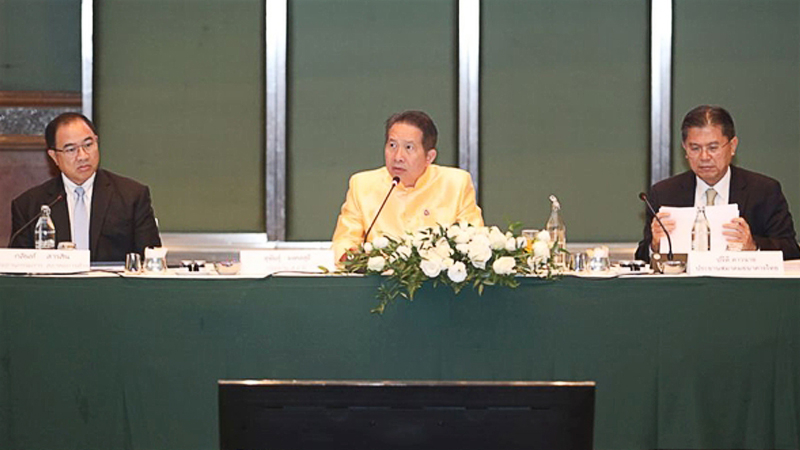
The Monetary Policy Committee (MPC) of the Bank of Thailand voted unanimously to cut the policy rate by 0.25 percentage point from 1.25 per cent to 1 per cent, effective immediately, at its meeting on Wednesday (February 5), said the committee’s secretary Titanun Mallikamas.

He added that the reduction was in line with MPC’s estimate that Thai economy growth would be lower than its previous forecast, due mainly to the new coronavirus outbreak, delay of the 2020 fiscal budget disbursement and drought.

According tothe central bank statementon Wednesday, the MPC would keep a close watch on economic growth, inflation and financial stability relative to the risks of the coronavirus outbreak, delay to enactment of the Annual Budget Expenditure Act, and the drought. These will be taken into consideration in deliberating monetary policies.

The committee stands ready to deploy policy tools if needed. In addition, the MPC would monitor structural problems that impair competitiveness and economic growth, to be addressed by all related parties.

The Joint Standing Committee on Commerce, Industry and Banking hasrevised downward the country’s gross domestic product (GDP) growth this year to between 2 per cent and 2.5 per cent from the previously projection of 2.5 to 3 per cent, according to its statement on Wednesday.

TMB Analytics, an economic analysis division of TMB Bank, has also revised downward its 2020 GDP forecast for Thailand to between 1.7 per cent and 2.1 per cent from 2.7 per cent, due to the impacts from the virus outbreak, the drought, and the delayed budget disbursement.

The Cabinet on Tuesday (February 4) approved the Finance Ministry’s proposed measures to mitigate the impact of the novel coronavirus outbreak and global uncertainties on the tourism sector.

Thai GDP growth forecast for the year slashed #ศาสตร์เกษตรดินปุ๋ย

#ศาสตร์เกษตรดินปุ๋ย : ขอบคุณแหล่งข้อมูล : หนังสือพิมพ์ The Nation

https://www.nationthailand.com/business/30381628?utm_source=category&utm_medium=internal_referral

Thai GDP growth forecast for the year slashed

Feb 05. 2020
By THE NATION

The Joint Standing Committee on Commerce, Industry and Banking has revised downward the country’s gross domestic product (GDP) growth this year to between 2 per cent and 2.5 per cent from the previously forecast 2.5 to 3 per cent.

The revision is in line with the number of local and global uncertainties and risks, particularly the outbreak of the novel coronavirus, according to its statement on Wednesday (Feburary 5).

The committee has estimated that if the virus situation drags on for between three to six months, it could cost the Thai tourism sector between Bt108 billion to Bt220 billion.

Other risks factors include the protracted delay in the disbursement of the 2020 fiscal budget, the ongoing drought, and impacts from the PM2.5 particulate dust pollution.

However, it has maintained the forecast for exports this year to between minus 2 per cent to flat growth.

TMB Analytics, an economic analysis division of TMB Bank, has also revised downward its 2020 GDP forecast for Thailand to between 1.7 per cent and 2.1 per cent from 2.7 per cent, due to the impacts from the virus outbreak, the drought, and the delayed budget disbursement.

The Cabinet on Tuesday (February 4) approved the Finance Ministry’s proposed measures to mitigate the impact of the novel coronavirus outbreak and global uncertainties on the tourism sector.

Among the measures approved is the extension of the deadline for filing personal income tax returns to June this year from March. Companies will be allowed to enjoy tax deductions for expenses on local seminar activities taking place during January-December 31, 2020, with the deduction being two times the actual cost.

It also approved the reduction of jet fuel excise tax for domestic flights from Bt4.726 per litre to Bt0.20 per litre until September 30.

The Cabinet also approved plans by state-run banks to offer soft loans and extend debt repayment periods to tourism businesses affected by the big decrease in the number of tourists amid the virus outbreak.

Sontirat hails community power projects in Northeast, warns of zero tolerance for bribery #ศาสตร์เกษตรดินปุ๋ย

#ศาสตร์เกษตรดินปุ๋ย : ขอบคุณแหล่งข้อมูล : หนังสือพิมพ์ The Nation

https://www.nationthailand.com/business/30381625?utm_source=category&utm_medium=internal_referral

Sontirat hails community power projects in Northeast, warns of zero tolerance for bribery

Feb 05. 2020
By The Nation

Energy Minister Sontirat Sontijirawong was in Khon Kaen this week singing the praises of community-based power plants and alternative energy sources in the Northeast, but warning of stiff punishment for any officials trying to take advantage of the progress being made.

He reported “a good response” to the energy policy from citizens and entrepreneurs, saying community power plants can benefit the local economy while ensuring that everyone has access to electricity.

It will create jobs, bring in added income, reduce relocations in the workforce and increase investment in the area, such as in the cultivation of crops that can be used as fuel, he said. It will even reduce PM2.5 dust pollution because farmers will be burning less cropland debris.

Sontirat said a committee would be established to work with communities and address issues and complaints. “If any officials seek to profit from these projects, they will face the penalty punishment,” he warned. “I want everyone to be our eyes and share what they suspect.”

He stressed that the ministry has clear guidelines for implementing community-based power plants and is ready to support entrepreneurs and communities that are ready to invest.

Macy’s is closing 125 stores and laying off 2,000 employees #ศาสตร์เกษตรดินปุ๋ย

#ศาสตร์เกษตรดินปุ๋ย : ขอบคุณแหล่งข้อมูล : หนังสือพิมพ์ The Nation

https://www.nationthailand.com/business/30381604?utm_source=category&utm_medium=internal_referral

Macy’s is closing 125 stores and laying off 2,000 employees

Feb 05. 2020
By The Washington Post · Abha Bhattarai · BUSINESS, RETAIL

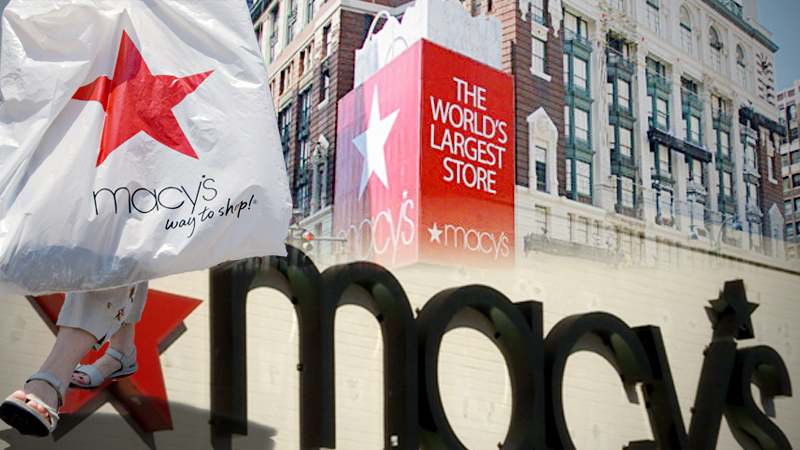
Retailer Macy’s is closing 125 stores – about a fifth of its total – and laying off about 2,000 workers as it struggles to shore up sales after a disappointing holiday season.

The department store chain is also shutting down its second headquarters in Cincinnati and will move operations to New York, the company announced in a statement Tuesday. The company also plans to close offices in San Francisco and Lorain, Ohio, as well as a customer service center in Tempe, Arizona, resulting in a 10% reduction of corporate and support staffs.

“The changes we are making are deep and impact every area of the business, but they are necessary,” Jeff Gennette, chief executive of Macy’s, said in a statement. “We are taking the organization through significant structural change to lower costs, bring teams closer together and reduce duplicative work.”

Macy’s, which had $25 billion in sales in 2018, is one of the country’s largest and most prominent retailers, with anchor stores at hundreds of U.S. shopping malls. But changing consumer habits and mounting competition from Walmart, Amazon and Target have been reversing its fortunes. The retail giant has closed dozens of underperforming stores, many of them in shopping malls, over the past four years as it invests in its most lucrative properties. Even so, Macy’s has struggled to win over customers who are increasingly buying online.

The company’s woes come amid continued turmoil in the retail industry. U.S. companies announced a record 9,300 store closures last year, according to Coresight Research, and analysts said they expect that trend to continue into the new year. Dozens of major companies – many of them mall staples such as Gymboree, the Limited and Sears – have filed for bankruptcy in recent years.

Macy’s has experimented with smaller store formats and Backstage outlets. It recently partnered with online reseller ThredUp to sell used clothing at a few dozen of its stores. On Tuesday, the retailer announced yet another new idea: Market by Macy’s, a small-format store that will sell local goods, as well as food and drinks, at “lifestyle” shopping centers around the country. The first Market store is schedule to open in Dallas this week.

In addition to about 600 Macy’s and Bloomingdale’s stores, the company operates 171 Bluemercury beauty shops and has been building its Macy’s Backstage outlets. The company’s “Story” concept stores, meanwhile, offer a range of experiences, including yoga classes and cooking workshops aimed at attracting younger shoppers who do most of their buying online.

Shares of Macy’s stock fell slightly, about 0.12%, after the news.