Will Davos save the world, or put it out of its misery? #ศาสตร์เกษตรดินปุ๋ย

#ศาสตร์เกษตรดินปุ๋ย : ขอบคุณแหล่งข้อมูล : หนังสือพิมพ์ The Nation

https://www.nationthailand.com/business/30381063?utm_source=category&utm_medium=internal_referral

Will Davos save the world, or put it out of its misery?

Jan 26. 2020
Dan Zak is a reporter for The Washington Post. He writes a wide range of news stories, narratives and profiles from local, national and foreign assignments, from the Academy Awards to Fallujah, Iraq. He joined The Post in 2005.

Dan Zak is a reporter for The Washington Post. He writes a wide range of news stories, narratives and profiles from local, national and foreign assignments, from the Academy Awards to Fallujah, Iraq. He joined The Post in 2005.
By The Washington Post · Dan Zak · FEATURES 

DAVOS, Switzerland – When this hot planet finally begins to evict us en masse, the global elites might seek refuge up here in the Alps, in the highest town in Europe – if only out of habit.

They’re here at this time every year, to negotiate and network and divide up the exciting business of solving the world’s problems. This week was the 50th meeting of the World Economic Forum. The themes were cohesion and sustainability, though humanity seems capable of neither right now. See the mega-fires in Australia. See the situation with Iran, whose foreign minister scrapped his attendance here at the last minute. See the United Kingdom leaving the European Union, or Prince Harry leaving the United Kingdom. See the world leaders and billionaires park their jets in Zurich and then float into Davos on helicopters to watch the leader of the free world make misleading boasts about the U.S. economy as the Senate tries him back home on an abuse-of-power charge.

In Davos, the trials are both incredibly broad and exquisitely niche. “ACT ON CLIMATE,” someone has written in big letters, in the snow, near the helicopter landing zone. In the center of town, lupine packs of black Benzes prowl the jammed streets looking for fossil fuel executives and hedge fund managers to scoop up. Cryptocurrency traders shatter their wrists slipping on black ice after too many glasses of $5,000-a-bottle wine. A sketchy guesthouse rents single bedrooms with communal bathrooms for $1,000 a night despite online reviews like this one, translated from a Polish guest: There is a terrible chaos.

There is a terrible chaos elsewhere, yes, but not here at Davos. Here the chaos is orderly, policed and profitable. Here the chaos is shoehorned into sessions on “escaping the liquidity trap” and “the global impact of a tech cold war.” The chaos is blurred by flutes of Cristal at parties thrown by corporations and entire nation-states, who plaster the town with garish pleas for investment (Canada: Everyone else is investing in us; why aren’t you?). Poverty, disease, climate change, artificial intelligence – in Davos, these are not obstacles but opportunities for collaboration among 3,000 invited diplomats, corporate swashbucklers, academics, “thought leaders” and “changemakers.”

Why are we all here? It’s a practical question that can turn metaphorical in the rarefied air. Davos is an impossible summit. It’s a place where guests can attend a session on resilience at a mountain base camp, preceded by Yo-Yo Ma himself playing Bach’s Suite No. 3 in C Major. At its worst, it is not merely an example but a celebration of luxury, hierarchy, exclusivity. But it’s also a place where people gather to talk in idealistic terms about the future of the species – presidents and CEOs and royal highnesses, who can move massive amounts of capital (intellectual and otherwise). If the key to our collective fate cannot be found here . . .

But hold that thought, because now comes Greta Thunberg, the teenage climate activist, to suggest that being here matters not at all.

“I’ve been warned that telling people to panic about the climate crisis is a very dangerous thing to do,” Thunberg announced to 200 attendees Tuesday, referring to her comments in Davos last year. “But don’t worry, it’s fine. Trust me, I’ve done this before, and I can assure you: It doesn’t lead to anything.”

Then again, try telling that to Anthony Scaramucci, who felt like a small fish at his first Davos 13 years ago but made deals here, built his company’s management portfolio into $11.5 billion, did an extremely brief but very eventful turn as White House communications director and now hosts one of the week’s most popular parties. At his yearly “wine forum,” there is jollity, not panic, and 100-point Spanish Riojas, not trillions of flecks of ocean-bound plastic.

“I would say that in the last 50 years, collectively, we’re having a frat party with the environment,” Scaramucci said over a quadruple espresso Thursday. “Now Greta and her children and my grandchildren and great-grandchildren are going to be living in the frat house on Sunday morning after we destroyed the place on Saturday night. And so the problem is: When you are an impermanent person on Earth and you’re enjoying the frat party, it’s very hard for you to stop the frat party.”

– – –

At the start of the week, in a bar at the InterContinental hotel, billionaire Marc Benioff and the musician will.i.am brought down mallets on a cask of Japanese whiskey, poured themselves a shot and toasted the guests at Time magazine’s kickoff party.

“Thank you for making me feel like family here on this mountain,” will.i.am said from the stage. “It’s a brand new decade, y’all. This decade is going to define the rest of freaking humanity.”

That’s the consensus here among the elites: This is it! We were made for this moment! And the way that humanity survives itself while maintaining the world order – and adapting to the “fourth industrial revolution” – is through something called “stakeholder capitalism,” which is an academic way of saying “capitalism that doesn’t grind people into chuck, and suck the planet dry, but still makes us lots of money.”

The forum has set itself the ambitious goal of improving the state of the world.

If Davos is a microcosm of stakeholder capitalism, then the rest of the world can look forward to cigarette giant Philip Morris transforming a storefront on every Main Street into a swanky lounge where Sheryl Crow performs near signage advising customers to “UNSMOKE YOUR MIND,” which is probably what a million cancer patients wish they could do to their lungs.

On a WhatsApp group of Davos denizens, one man reviewed the Philip Morris lounge thusly: “Upbeat music. Hot attendants. Cocktails. It’s a nice change from sustainability and gender pay gap etc etc.”

The et cetera et cetera – the serious discussions about the outside world – is happening in the World Economic Forum’s official gathering place, a congress center fortified like a castle, where actors like Big Tobacco are banned. There you can bump into both German Chancellor Angela Merkel and the 15-year-old chief water commissioner for the Anishinabek Nation of Canada. There you can drink celery juice from the health bar while watching a digital map the size of a one-bedroom apartment that depicts the incidence of child slave labor around the world. There you can watch foreign ministers puzzle over the future of NATO, and a 25-year-old blind YouTuber from Los Angeles talk about how to understand disability.

In keeping with the forum’s hard pivot toward the climate crisis, the carpets were made from used fishing nets and the paint on the walls was made from seaweed. The forum is heavily promoting a global effort to plant 1 trillion trees by 2030 and has asked its business participants to commit to net-zero carbon emissions by 2050.

“Banks and pension funds with CEOs attending Davos are collectively financially exposed to fossil fuel companies to the tune of $1.4 trillion,” Greenpeace reported this week.

Old habits, you know.

Outside the et cetera et cetera, Davos becomes a four-day funhouse for media outlets and corporations, consisting of a hierarchy of badges and titles, where the currency is the perception of importance and even millionaires grovel for invites to private suppers in chalets. (George Soros is a perennial host.) The great-granddaughter of J. Paul Getty is Instagramming from a mountaintop hot tub. The great-grandson of Sigmund Freud is throwing parties at the town golf club. Magician David Blaine keeps appearing everywhere. Russia, like other countries, has rented out a whole building for its own junket; last summer, two Russians who claimed to be plumbers supposedly tried to install surveillance equipment around town. This week, Davos was wallpapered with ads from the Saudi government that encourage investment and tout the foundation of its crown prince, who would like the focus on youth leaders rather than his kingdom’s execution of journalists and dissidents.

“This whole event is sort of a dictator’s bazaar,” mused activist-investor Bill Browder, known as Putin’s Enemy No. 1, over a dinner of rosti Wednesday. (Says a managing director of the forum: “Our message is clear: Institutions, rule of law and good governance underpin the world’s most successful economies.”)

Down the street in this world of stakeholder capitalism, a neon sign by Deutsche Bank asks, almost mockingly: “Is growth an illusion?” Nearby, Russian oligarchs mingle at a lounge named “Caspian Week,” which sounds like a tourism bureau for Azerbaijan but is actually a small energy conference co-sponsored by a Swiss oil company.

Don’t tell Greta, who walks around Davos with a police entourage the size of a world leader’s. But she is a world leader, isn’t she? Her name is on everyone’s lips here. On the opening day of the meeting, she was in the 10th row of the congress hall to listen to President Donald Trump, who addressed the 17-year-old obliquely.

“To embrace the possibilities of tomorrow, we must reject the perennial prophets of doom and their predictions of the apocalypse,” said Trump, who is derided by much of the Davos crowd for his nativist anti-intellectualism but tolerated for his anti-tax philosophy.

Before introducing Trump and thanking him for his leadership, Klaus Schwab, the founder of the World Economic Forum, praised the “transformational power” in the auditorium.

“If you aggregate our goodwill and action,” Schwab told attendees in his German baritone, “we can say to the next generation: ‘You can rely on us.’ ”

That morning, a small army of activists from that generation had blockaded the road into Davos, choking off Uber’s black-car service and sending a ripple of inconvenience through the town.

– – –

“This era is over.”

Robert Julius Blokker, 32, had just marched 13 miles to Klosters, one town over from Davos.

“Millionairism is done.”

He was sitting on a sleeping pad in an auditorium crawling with activists, who were on their way to tell the World Economic Forum that 50 years was enough.

Davos “is not some fun classy getaway cool thing to do if you’re a CEO,” said Blokker, who is from the Netherlands. “This is a besieged fortress of the last people building walls against reality, thinking that they’re still in charge of a world they lost control of a long time ago. And it’s very troubling that we might see how far they’re willing to go to uphold the illusion.”

If Davos is an illusion, it’s a good one. In 1971, Schwab chose the town, a former health resort for tuberculosis patients, to host a “a workshop of the elite” from the business world, as the first invitation described it. What used to be a yearly salon of nerdy men in wool sweaters and tweed jackets became, over a half century, a kind of shadow United Nations that attracts a dizzying panoply of fascinating, impressive people with a genuine desire to better the world. Davos is the place where the heads of East and West Germany first met for negotiations, and where Nelson Mandela and Frederik Willem de Klerk first appeared together abroad.

Not merely a frat party, but also a college.

Fifty years on, amid trade wars and a retaliation against globalism, the forum and its annual meeting are needed more than ever, says Tony Fratto, who has attended Davos as both a U.S. Treasury Department official and partner at a private communications firm.

“Yes, it’s expensive and they’re spending money and having parties and you can hear the jewelry jangling,” Fratto says. “But it is people who are committed to trying to elevate standards of living and expand rights and opportunities for people.”

During the lifetime of the forum, says author and political scientist Ian Bremmer, globalism created incredible wealth, buoyed life expectancy, broadened access to education, lifted droves out of poverty.

“But environmental catastrophe is the bad side of it, and, inside the advanced industrial democracies, we have failed our people,” says Bremmer, who was first invited to Davos more than a decade ago as part of program for young global leaders. “Inequality has grown and grown and grown. I think the globalist ideology and Davos have become synonymous with the system being rigged.”

This is a besieged fortress of the last people building walls against reality.

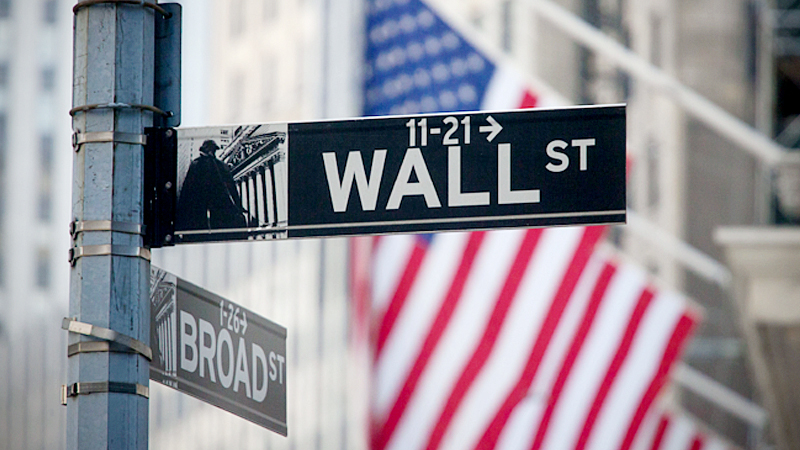
On Wednesday, a Wall Street Journal party on the promenade was blasting the Talking Heads’ “Once in a Lifetime” into the frozen starry night, and it felt exactly right.

And you may ask yourself, “Well – how did I get here?”

The answer to that question is Klaus Schwab, the great convener, the first and only sovereign of the World Economic Forum. He is regarded as a visionary, a genius, an enlightened being, a narcissist, a cult leader, a wannabe Nobel laureate. Depending on whom you talk to, his creation is viewed as a magnificent achievement that has nurtured the world, or a brilliant boondoggle that prizes chat above action and revenue above the public good. A few high-ranking former employees contacted for this story would not comment on the record because they fear his power. Civil-society groups have charged the forum with exerting undemocratic, pro-business influence over the United Nations.

Angela Merkel, however, keeps coming back for the et cetera et cetera. This was her 12th Davos.

“This is something unique that was created here in the Swiss mountains,” Merkel said in her keynote speech Thursday. “The forum has set itself the ambitious goal of improving the state of the world. . . . I think if you look back five decades, you can tell that the world has indeed gotten better.”

Schwab was not available for comment on short notice – it was, after all, the busiest week of his year – but his personality shines through a self-congratulating coffee table book about the forum that was distributed to attendees.

“It is my deep personal conviction that we must move towards a society which is no longer based on production and consumption,” Schwab says in a Q&A in the book. The World Economic Forum “aims to be a pioneer in this new social order based on ideals rather than on material values.”

Capitalism is all about materials, though, and they swirled around the congress center: mutual funds, cloud technology, petroleum, cannabis, consultancy, cryptocurrency.

There’s a feeling one gets here, as an outsider here: that there is a system, or a game, and that these people have figured out how to play it. The hive of social activity is the Belvedere hotel, which was transformed this week into a labyrinth of branded cocktail hours and candlelit dinners in private rooms.

A quote from a senior consultant at Deloitte welcomes people into this realm: “Profit and purpose can exist in harmony.”

If you pass the guards with submachine guns, scan your badge on a blinking kiosk and shuffle through security, you find yourself in front of four portals, each leading to a different ecosystem labeled with the acronyms of big sponsors: PwC, Citi, WSJ, KPMG. It’s “Alice’s Adventures in Wonderland,” but with business cards instead of playing cards and a lucrative contract as the white rabbit.

And you may ask yourself, “How do I work this?”

Maybe the key to the future can be found in Davos.

Maybe the only people who can get to it are the ones who arrived with keys of their own.

– – –

What is Davos good for? Whom is it good for? Is it good for someone like Scaramucci, with his ingratiating self-awareness? Is Davos good for someone like the Prince of Wales, who loaned his fusty imprimatur to a hip-sounding “Sustainable Markets Initiative”? Is it good for Ivanka Trump, who met with the prime minister of Pakistan and co-hosted a breakfast with American CEOs? Is it good for will.i.am, who appeared with primatologist Jane Goodall on a panel titled “Leadership in the Fourth Industrial Revolution,” or is it good for Jane Goodall, who appeared on the panel with will.i.am?

Is Davos good for the rest of us, who may indirectly benefit from the forum’s focus on strengthening cybersecurity in global aviation?

On Wednesday, the forum launched “Reskilling Revolution” (yet another initiative) to “provide one billion people with better education, skills and jobs by 2030.”

A billion jobs.

A trillion trees.

Sounds wonderful. (Sounds too good to be true.)

If you want to pursue a united front, probably the only place on Earth where that could even be moved from fantasy into a reality is Davos.

Maybe Davos is good for someone like Micah White, who protested the World Economic Forum in New York in 2002, when he was 20 years old, and helped start the Occupy movement in 2011. On Tuesday, White was walking the sunny promenade of Davos as a guest. He wore a navy suit and carried a backpack branded with the logo of the World Economic Forum, which has been recruiting more activists, women and young people into its fold.

Accepting the invitation could be “reputational suicide,” White says, but he views climate change as a threat that requires immediate collaboration between activists and elites, not a time-consuming political revolution where one tries to overthrow the other.

“If you want to pursue a united front, probably the only place on Earth where that could even be moved from fantasy into a reality is Davos,” says White, seated in Facebook’s hub after a private meeting with industry leaders. “That’s not my fault. We have 10 years [to act on climate], and we have to work with what exists right now.”

You can see Davos as everything that’s wrong with the world, or you can see it as an opportunity to save the world. Sometimes you can see both at the same time.

On the edge of town, by the ski slopes, an activist for the homeless camped in a tent in 20-degree weather as forum attendees paid thousands of dollars a night for lodging. During the day, Andrew Funk hoped to educate them whenever they stepped out of their inner sanctum. On Thursday, he spotted and approached Jimmy Wales, the co-founder of Wikipedia, and came away believing that Wales might join him for a frigid camp-out at next year’s Davos.

“Three thousand euros ends homelessness for one person through our program,” says Funk, who lives in Barcelona and runs an organization called Homeless Entrepreneur. “Every night a person stays in Davos could end homelessness for one to three people.”

It was something real and true to think about, whenever confronted by absurdity here. Like the lone bagpiper flown in from Scotland to blow his instrument for 2 1/2 hours outside a whiskey bar, which was set up by an asset manager from Edinburgh with a portfolio worth $700 billion. The bagpiper wore a kilt, so his knees were bare. His undercarriage was well acquainted with the Swiss winter. He stood behind a large, branded frame that said, “This is #MyDavos,” to encourage selfies and Instagrams.

There on the promenade, a company had turned a man into a product.

How much longer does he have to do this?

“Counting the minutes,” he said. Then he kept blowing into the frigid night.

Davos elite want to plant 1 trillion tress to help the planet, but many still fight a carbon tax #ศาสตร์เกษตรดินปุ๋ย

#ศาสตร์เกษตรดินปุ๋ย : ขอบคุณแหล่งข้อมูล : หนังสือพิมพ์ The Nation

https://www.nationthailand.com/business/30381042?utm_source=category&utm_medium=internal_referral

Davos elite want to plant 1 trillion tress to help the planet, but many still fight a carbon tax

Jan 25. 2020
Photo Credit:  World Economic Forum / Mattias Nutt

Photo Credit: World Economic Forum / Mattias Nutt
By The Washington Post · Heather Long 

DAVOS, Switzerland – Leaders of the world’s most powerful companies sent one clear message this week as they gathered in this ski chalet town for the World Economic Forum: They care about the environment — to a point.

With the Australian bushfires raging and teenage activist Greta Thunberg proclaiming “our house is still on fire,” business leaders were eager to talk about how they are eliminating plastic water bottles at their headquarters, installing solar panels on their homes and corporate buildings and planting a lot of trees.

Nearly everyone attending the Davos events committed to join the new “1 trillion tree” initiative to plant an abundance of trees by 2030. Even President Trump signed on despite his insistence that “prophets of doom” about climate change are wrong.

But conversations grew tense when someone brought up putting a price on carbon.

“If you want to put a tax on people, go ahead and put a carbon tax. That is a tax on hard-working people,” said U.S. Treasury Secretary Steven Mnuchin on a panel Friday. He argued a tax was unnecessary, because technology would almost certainly bring down clean energy costs.

Economists across the political spectrum overwhelmingly say the best way to tackle climate change is to enact a carbon tax or “cap and trade” system, where there’s a limit on carbon emissions and companies that go past the limit must purchase credits.

But at the World Economic Forum, the idea is still a somewhat dicey subject, at least among CEOs and government leaders from certain parts of the world.

“I was in a few discussions where we talked about the price of carbon. That’s definitely something there is no agreement on,” said Douglas Peterson, chief executive of financial firm S&P Global, in an interview on the sidelines of the forum.

Few chief executives are brave enough to publicly say they are against a carbon tax. They are fearful of the 17-year-old Thunberg and her allies calling them out on Twitter or in speeches.

At Davos, the heads of large companies gather behind closed doors for an International Business Council meeting. Brian Moynihan, head of Bank of America, put forward a framework companies could use to assess their carbon footprint and environmental risk, according to two attendees who spoke on the condition of anonymity. There was no formal vote on it, but one attendee estimated at least a third of the room looked annoyed and unconvinced.

The hesitancy among some corporate leaders to do a real assessment of carbon risk is indicative of how far there is to go to see wide-scale mitigation, advocates say. Environmental activists blasted Davos attendees for paying lip service to caring about environment but not actually doing much.

Banks and pension funds that attend Davos are “collectively financially exposed to fossil fuel companies to the tune of $1.4 trillion,” Greenpeace reported.

“We got the feeling WEF [the World Economic Forum] was locked in a bubble of positivity,” said Loukina Tille, an 18-year-old climate activist in Switzerland, as she protested outside the conference center in Davos on Friday with Thunberg and others.

Mnuchin’s dismissal of a carbon tax did not sit well with European leaders. Numerous European officials from Britain’s Prince Charles to European Commission President Ursula von der Leyen took to the Davos stage to endorse putting a price on carbon.

“Do we want to go down in history as the people who did nothing to bring the world back from the brink?” Prince Charles said.

The European Union has committed to becoming carbon neutral by 2050 and already has a cap and trade system in place.

Von der Leyen threatened to impose a border tax — similar to Trump’s tariffs — on goods coming into Europe that don’t come from a country with a price on carbon. The tax “would hit importers from countries that do not respect international climate goals,” she said.

Canada started a tax of $20 per ton of carbon dioxide last year that is gradually set to rise. Other countries are moving even more aggressively. Finland is aiming to be carbon neutral by 2035.

“It would be very effective if we had a global carbon price,” Finnish Prime Minister Sanna Marin said in an interview with The Washington Post. “We don’t have the luxury of time. We need to act now. That’s a fact.”

Some companies like Microsoft and Verizon are already planning ahead, based on a price of carbon they have calculated internally. A number of chief executives told The Washington Post that they think it’s inevitable there will be a carbon tax or cap and trade system in most major markets, if not globally, in the coming years.

An incentive price is needed “to move behavior,” said Verizon chief executive Hans Vestberg, a native of Sweden, in an interview. Verizon has committed to becoming carbon neutral by 2035.

Axel Weber, the chairman of UBS bank, put it this way: “Whatever that price is, it will increase over time” and he encouraged companies to start planning for it.

Markets wrap: Stocks post biggest drop since October on virus #ศาสตร์เกษตรดินปุ๋ย

#ศาสตร์เกษตรดินปุ๋ย : ขอบคุณแหล่งข้อมูล : หนังสือพิมพ์ The Nation

https://www.nationthailand.com/business/30381040?utm_source=category&utm_medium=internal_referral

Markets wrap: Stocks post biggest drop since October on virus

Jan 25. 2020
By Syndication Washington Post, Bloomberg · Brendan Walsh, Vildana Hajric

The spread of a deadly respiratory virus rattled global markets, sending U.S. stocks lower and fueling demand for havens in government bonds and gold. Oil fell for a fourth day on concern the outbreak will dent economic growth.

The S&P 500 index posted its biggest drop since October amid reports that U.S. officials had confirmed two more cases of the illness, which originated in China and has also spread to several countries in Asia and to Europe. Benchmark Treasury yields fell to a three-month low, while the dollar advanced for a second day.

Investors are exercising caution with stocks close to all-time highs, cognizant of the chance the respiratory virus migrates across the world and develops into a more devastating pandemic like the SARS illness that emerged 17 years ago. Officials in China boosted travel restrictions to cover 40 million people to contain the virus’s spread.

“Investors can’t help but be unnerved by constant headlines of new cases all over the world,” said Alec Young, managing director of global markets research at FTSE Russell. “To make matters worse, the market will be closed when we get the next update on the virus’ spread over the weekend. As such, this is quickly turning into a sell first, ask questions later environment.”

In company news, United Airlines Holdings Inc. and American Airlines Group Inc. each slid more than 3% on concern the virus will limit demand for air travel and tourism. Financial shares also sank, with Citigroup Inc. down almost 2% as UBS warned the sector could be hurt by less credit-card spending and a decline in cross-border payments.

Health shares were among the worst performers Friday on growing speculation that upcoming elections in the U.S. may prompt lawmakers to take action on the increasing cost of medicines in the U.S. Intel Corp. was a rare bright spot after giving a bullish revenue forecast.

Elsewhere, the pound slipped for a second day versus the dollar, giving back some of its rally from earlier in the week.

These are the main moves in markets:

– – –

– The S&P 500 index fell 0.9% at the close of trading in New York; it lost 1% for the week.

– The Stoxx Europe 600 index added 0.9%.

– The MSCI AC Asia Pacific index fell 0.1%.

– – –

– The Bloomberg Dollar Spot index gained 0.1%.

– The British pound declined 0.4% to $1.3076.

– The euro fell 0.3% to $1.1027.

– The Japanese yen rose 0.2% to 109.29 per dollar.

– – –

– The yield on 10-year Treasuries fell five basis points 1.69%.

– Britain’s 10-year yield dipped three basis points to 0.56%.

– Germany’s 10-year yield fell three basis points to -0.34%.

– – –

– West Texas Intermediate crude declined 2.2% to $54.39 a barrel.

– Gold rose 0.5% to $1,571.30 an ounce.

– – –

With assistance from Bloomberg’s Cecile Gutscher, Adam Haigh and Brian Chappatta.

Global LNG poised for terrible year as supply floods market #ศาสตร์เกษตรดินปุ๋ย

#ศาสตร์เกษตรดินปุ๋ย : ขอบคุณแหล่งข้อมูล : หนังสือพิมพ์ The Nation

https://www.nationthailand.com/business/30381039?utm_source=category&utm_medium=internal_referral

Global LNG poised for terrible year as supply floods market

Jan 25. 2020
By Syndication Washinton Post, Bloomberg · Stephen Stapczynski, Anna Shiryaevskaya, Naureen S. Malik

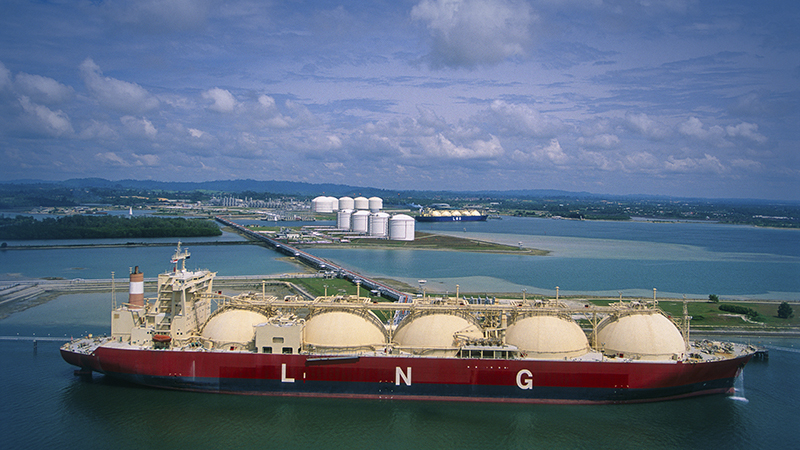
Liquefied natural gas prices are poised to test record lows this year thanks to an onslaught of new supply and warmer winter temperatures curbing consumption.

The startup of new export projects from Australia to the U.S. has flooded the market, while brimming stockpiles in Europe and an expected slowdown in Chinese demand have dumped cold water on consumption prospects. LNG for spot delivery to North Asia is on track to hit an all-time low this summer, while gas prices in Europe and the U.S. are trading at the weakest seasonal levels since 1999.

“The outlook for natural gas over the next year or so isn’t great,” said Marco Dunand, chief executive officer of trading house Mercuria Energy Group Ltd. “There’s a surplus already in the U.S. and Europe. And the mild winter in Asia means another surplus is building up there,” he said in an interview. Mercuria jumped into LNG trading last year with hires from EDF Trading Ltd.

This is what the rock-bottom prices mean for the industry:

– American Halt

U.S. gas exports have surged amid the nation’s shale boom, but plummeting prices may now throttle back shipments or encourage sustained maintenance while firms weather the storm. Producers and companies with off-take agreements may decide not to load cargoes because prices are too low to earn a profit after accounting for shipping costs.

“The global oversupply of LNG has been building and building and building,” said Ron Ozer, founder of gas-focused hedge fund Statar Capital LLC in New York. “The gas market can’t stomach the oversupply and warm weather, and it’s getting both.”

With cargoes from the Gulf of Mexico currently priced around $2.65 per million Btu, cash margins are positive only because of weak U.S. benchmark prices, according to Robert Sims, an analyst at Wood Mackenzie Ltd. There’s a chance that production could be reduced if the spread between benchmark Henry Hub and U.S. Gulf LNG narrows 25 cents, he said.

Torbjorn Tornqvist, chief executive officer of Gunvor Group Ltd., the biggest independent LNG trader, sees the market about 50 cents away from shut downs.

“We can see even lower prices in the next few months,” Tornqvist said in an interview this week in Davos. “The supply and demand balance doesn’t look good.”

U.S. cargoes are seen least profitable in Asia in April, and in Europe in July, Anna Borisova, analyst at BloombergNEF in London, said.

– Contract Scrutiny

Buyers may demand revisions to long-term supply contracts, such as better pricing or the removal of restrictions on reselling cargoes. Japan’s Osaka Gas Co. has already taken action, moving an Exxon Mobil Corp.-led LNG joint-venture to arbitration in a bid to get lower rates.

Qatar, one of the world’s biggest suppliers and traditionally the strictest when it comes to pricing, may be showing some flexibility. The supplier has started offering more competitive price links, with the lowest seen to Korea Gas at 10.8% the price of oil, according to FGE, an energy consultant. That compares to 2008, when Qatar signed contracts with Chinese firms in the 16% range.

– Investment Delays

After four years of belt-tightening, the amount of investments last year in new production capacity set a record. Companies including Qatar Petroleum, Novatek PJSC and Venture Global LNG Inc. sanctioned new plants from the U.S. to Russia.

But the current wave of additional supply and persistent weak global prices is challenging new projects seeking final investment decisions, according to Morgan Stanley. The bank reduced its outlook for the number of projects reaching FID and revised lower its new supply outlook for the middle of the decade. The low price environment will also likely force Qatar to stagger or postpone its planned 64% capacity expansion, currently scheduled by 2027, according to FGE.

– Profit Pain

Weak prices mean more pain for global energy majors including Total SA and Eni SpA, who have seen profits from gas-related businesses dwindle. Some European utilities — who face mounting criticism for their use of fossil fuels — may decide to follow peers that are ditching LNG altogether. Denmark’s Orsted A/S cited loss-making LNG operations for its decision to sell the business to Glencore Plc at the end of last year, while Spain’s Iberdrola SA completed its exit this month.

– The Sunnier Side

Royal Dutch Shell Plc, the biggest trader of the fuel, has been able to stave off losses on LNG through contracts linked to oil, while leveraging the weak spot market. Most long-term LNG contracts are linked to the price of crude, which puts them about twice as expensive as prompt cargoes sourced on the spot market.

The world’s biggest importers of LNG, Japan’s Jera Co. and Korea Gas Corp., will benefit from lower prices and may be encouraged to shift more of their procurement to the spot market. Jera gets about 20% on spot or via short-term contracts, which run four years of less. That compares with an average of 32% across global LNG trade. Korea Gas bought about one-quarter of its imports on a spot basis in 2018. Still, the firms’ upside is limited as they will source most of the remainder through oil-linked contracts.

India’s transition toward gas may get a boost, as the nation’s price-sensitive buyers are poised to pick up more cargoes from the spot market, Morgan Stanley analysts said in a Jan. 16 note. Beneficiaries of the transition are gas aggregators like Gail India Ltd and Petronet LNG Ltd and city gas distributors, according to the bank.

_ _ _

With assistance from Bloomberg’s Javier Blas.

วันที่ 25 ม.ค. 2563 ข่าวเศรษฐกิจ-ธุรกิจ #ศาสตร์เกษตรดินปุ๋ย

#ศาสตร์เกษตรดินปุ๋ย : ขอบคุณแหล่งข้อมูล : หนังสือพิมพ์โพสต์ทูเดย์

https://www.posttoday.com/economy

กลุ่มปตท.ร่วมลดปัญหาฝุ่น ปรับสูตรดีเซลพิเศษกำมะถันต่ำเสิร์ฟลูกค้ากรุงเทพ-ปริมณฑล

กลุ่มปตท.ร่วมลดปัญหาฝุ่น ปรับสูตรดีเซลพิเศษกำมะถันต่ำเสิร์ฟลูกค้ากรุงเทพ-ปริมณฑล

ปตท. ชวนลูกค้าเติมดีเซลสูตรใหม่ ราคาถูกกว่าดีเซลปกติลิตรละ 2 บาท หลังหั่นค่ากำมะถันต่ำกว่าค่ามาตรฐาน หวังร่วมลดฝุ่นละอองขนาดเล็ก (PM 2.5) เริ่มจำหน่ายแล้วในเขตกรุงเทพฯ และปริมณฑล

วันที่ 25 ม.ค. 2563 เวลา 18:05 น.

ข่าวเศรษฐกิจ-ธุรกิจ

ตั้งศูนย์ดูแลผู้โดยสารชาวจีนกว่า 2 หมื่นราย ตกค้างสนามบิน หลังปิดเมืองอู่ฮั่น

ตั้งศูนย์ดูแลผู้โดยสารชาวจีนกว่า 2 หมื่นราย ตกค้างสนามบิน หลังปิดเมืองอู่ฮั่น

ทอท.เปิดศูนย์อำนวยความสะดวกเพื่อรองรับผู้โดยสารตกค้าง หลังยกเลิกเที่ยวบินไปอู่ฮั่นถึงวันที่ 8 ก.พ. เบื้องต้นคาดมีนักท่องเที่ยวเข้ามาแล้วแตะ 2 หมื่นคน

วันที่ 25 ม.ค. 2563 เวลา 15:49 น.

ข่าวเศรษฐกิจ-ธุรกิจ

ทอท.คุมเข้มผู้โดยสารสกัดไวรัสโคโรน่า 4 สนามบิน รับมือเที่ยวไทยช่วงตรุษจีน

ทอท.คุมเข้มผู้โดยสารสกัดไวรัสโคโรน่า 4 สนามบิน รับมือเที่ยวไทยช่วงตรุษจีน

ทอท.ออกมาตจรการเร่งด่วน คุมเข้มไวรัสโคโรน่า 4 สนามบิน หลังจีนสั่งปิดเมืองอู่ฮั่น แจงแผนตรวจเข้ม สร้างความมั่นใจสนามบินไทยปลอดเชื้อ

วันที่ 25 ม.ค. 2563 เวลา 14:05 น.

ข่าวเศรษฐกิจ-ธุรกิจ

"ศักดิ์สยาม" ปัด สั่งศึกษามาตรการเก็บค่าธรรมเนียมรถติดแก้ PM 2.5

“ศักดิ์สยาม” ปัด สั่งศึกษามาตรการเก็บค่าธรรมเนียมรถติดแก้ PM 2.5

รมว.คมนาคม ยืนยันไม่มีการสั่งศึกษาออกมาตรการเก็บค่าธรรมเนียมรถติดเพื่อแก้ปัญหาฝุ่นพิษ PM2.5

วันที่ 25 ม.ค. 2563 เวลา 13:35 น.

ข่าวเศรษฐกิจ-ธุรกิจ

ททท.จัดงานเทศกาลตรุษจีน สานสัมพันธ์ 45 ปี การฑูตไทย-จีน

ททท.จัดงานเทศกาลตรุษจีน สานสัมพันธ์ 45 ปี การฑูตไทย-จีน

ททท.ผนึกกำลังภาครัฐและเอกชน ย้ำสัมพันธ์แน่นแฟ้นทางการทูตไทย-จีน จัดแสดงทางวัฒนธรรมจากมณฑลต่างๆ ขณะที่เยาวราช 25-26ม.ค. แจกเหรียญมงคลเจ้าคุณธงชัย วัดไตรมิตรฯ “ร่ำรวย ราบรื่น ปลอดภัย” วันละ 9,999 เหรียญ

วันที่ 25 ม.ค. 2563 เวลา 12:58 น.

ข่าวเศรษฐกิจ-ธุรกิจ

Amazon Web Services to build data centers in Jakarta: Minister #ศาสตร์เกษตรดินปุ๋ย

#ศาสตร์เกษตรดินปุ๋ย : ขอบคุณแหล่งข้อมูล : หนังสือพิมพ์ The Nation

https://www.nationthailand.com/business/30381029?utm_source=category&utm_medium=internal_referral

Amazon Web Services to build data centers in Jakarta: Minister

Jan 24. 2020
Industry Minister Agus Gumiwang Kartasasmita (The Jakarta Post/Jerry Adiguna)

Industry Minister Agus Gumiwang Kartasasmita (The Jakarta Post/Jerry Adiguna)
By Eisya A. Eloksari
The Jakarta Post

Amazon Web Services (AWS) will build an infrastructure “region” in Jakarta by the end of next year or early 2022 in the biggest investment in Indonesia’s the information and technology sector, a high-ranking official has said.

Jakarta will also have three Availability Zones consisting of several interconnected data centers, according to the Industry Ministry.

An AWS region is a physical location where its data centers are clustered. Each region consists of multiple, isolated and physically separate Availability Zones within an area.

An Availability Zone is one or more discrete data centers with redundant power, networking and connectivity in an AWS region, according to the company’s website.

“This investment can boost Indonesia to become a strategic digital hub,” Industry Minister Agus Gumiwang said after a meeting with AWS global public policy vice president Michael Punke during the 2020 World Economic Forum (WEF) in Davos, Switzerland, as quoted in a statement on Thursday.

The development of an ASW region, he added, could also accelerate the transformation of the nation’s small and medium companies as well as big corporations in various sectors toward industry 4.0.

“The AWS region in Indonesia will certainly support the startup ecosystem so it can grow rapidly,” Agus added. “It can also help create more jobs and companies in the technology sector.”

The value of the country’s digital economy was projected to reach US$40 billion in 2019, up from $27 billion a year before, according to the annual e-Conomy SEA 2019 report by technology giant Google, Singaporean holding company Temasek and management consulting firm Bain & Company. The value is expected to triple to $130 billion by 2025.

The ministry’s metal, machinery, transportation and electronics director general, Harjanto, said that AWS’ investment was “the biggest investment realization in the ICT [information and communication technology] sector to date,” although he did not disclose the figure.

AWS is a subsidiary of United States-based technology company Amazon that offers analytics technology, artificial intelligent, Internet of Things (IoT) and machine learning services, among other services.

Jakarta will join Hong Kong, Beijing and Ningxia in China, Mumbai in India, Seoul in South Korea, Singapore, Tokyo in Japan and Sydney in Australia as AWS regions in the Asia-Pacific. There are 14 other regions across the globe.

The government will also partner with AWS to provide cloud computing training for “hundreds of thousands of Indonesians” by 2025.

Indonesia has been looking to secure investments from multinational corporations at the WEF, such as Singaporean ride-hailing giant Grab, Japanese financial services firm Mizuho, state-owned Japan Bank for International Cooperation (JBIC) and Chinese dairy giant Yili Group, to boost the country’s economic growth.

Investment Coordinating Board (BKPM) data showed that overall realized investment totaled Rp 601.3 trillion ($44 billion), a 12.3 percent increase year-on-year (yoy), from January to September 2019.

While domestic investment grew 17.3 percent to Rp 283.5 trillion, foreign direct investment (FDI) rose 8.2 percent yoy to Rp 317.8 trillion.

GH Bank budgets Bt100 bn for new loan packages #ศาสตร์เกษตรดินปุ๋ย

#ศาสตร์เกษตรดินปุ๋ย : ขอบคุณแหล่งข้อมูล : หนังสือพิมพ์ The Nation

https://www.nationthailand.com/business/30381028?utm_source=category&utm_medium=internal_referral

GH Bank budgets Bt100 bn for new loan packages

Jan 24. 2020
Finance Minister Uttama Savanayana, left, announces policy direction of the Government Housing Bank on Friday (January 24). At right is the bank's president Chatchai Sirilai.

Finance Minister Uttama Savanayana, left, announces policy direction of the Government Housing Bank on Friday (January 24). At right is the bank’s president Chatchai Sirilai.
By THE NATION

Government Housing Bank (GH Bank) has budgeted Bt100 billion for a new mortgage campaign, according to its statement released on Friday (January 24).

The bank president Chatchai Sirilai said the new packages fell in line with the Finance Ministry’s policy to widen loan access to homebuyers.

The first package involves Bt30 billion in lending, carrying an annual interest rate of 3.25 per cent in the first year before rising to 4 per cent in the second, 5 per cent in third year and 0 per cent during the 37th to 42th months.

Borrowers, eligible for 0 per cent rate, are those who have signed up for GHB All mobile financial service application. They will have to pay installments via the app.

For the 43th month until the end of the loan term, interest rates are set at MRR-0.75 per year for retail clients, and MRR-1 per cent a year for borrowers whose employers have entered into an agreement with GHB under which their salaries will be deducted for the monthly installmet payments to the bank.

Maximum lending is capped at Bt3 million with collaterals. Eligible borrowers must have a maximum monthly salary of Bt35,000. This loan package is available until December 30, 2020.

The other package “Dream Homes by GHB” comes with Bt10 billion in loans, carrying an interest rate of 3.25 per cent during the first to third years and MRR-2 per cent a year (equivalent to 4.50 per cent per year as of the present level ) for the fourth and fifth years.

The rate from the 61th to 66th month is 0 per cent per annum.

The rate from 67th month until the end of loan term is MRR-0.50 per cent per annum for retail clients and MRR-0.75 per cent per annum if the employer of the borrower had signed an MoU with GHB under the Corporate Synergy project.

Eligible borrowers must be free of any mortgage agreement with GHB or other banks. This package is available until December 30 this year.

The bank will also issue savings lotteries worth Bt50 billion next month. It will use the proceeds to develop a low-interest mortgage package offering Bt50 billion in loans.

In addition it will help clients who are state officials and state personnels restructure their debt.

Chatchai said that the bank is ready to support the government’s policies.

He added that GHB targeted Bt209 billion in new loans this year compared to Bt215.301 billion last year. Currently, its outstanding loan amount stands at more than Bt1.209 trillion, up 8.37 per cent from 2018.

Naver’s global webcomic biz on growth track #ศาสตร์เกษตรดินปุ๋ย

#ศาสตร์เกษตรดินปุ๋ย : ขอบคุณแหล่งข้อมูล : หนังสือพิมพ์ The Nation

https://www.nationthailand.com/business/30381025?utm_source=category&utm_medium=internal_referral

Naver’s global webcomic biz on growth track

Jan 24. 2020
(Naver)

(Naver)
By The Korea Herald/ANN

Naver Corp., South Korea’s top internet portal operator, is witnessing a growth in its webcomic business, which will eventually improve its earnings, industry sources said Friday.

Naver Webtoon, more commonly known as Line Webtoon in the United States, is home to a plethora of creator-owned content, ranging from romance to fantasy.

In particular, Naver Webtoon is showing marked growth in the United States after entering the market in 2014.

The number of its monthly active users, or MAUs, surpassed the 10 million mark in the US in November, nearly doubling from 2014.

Naver Webtoon recorded 60 million MAUs in the global market and is expected to bring in 600 billion won ($519 million) in content transactions this year.

Line Webtoon’s US content revenue grew to 13 billion won ($11.1 million) in the third quarter of 2019, up from 2 billion won in the first quarter, according to Naver’s corporate filing.

“Along with the steady two-digit growth in its ad business, we are expecting the webcomic operation to lead Naver’s content service business,” said Ju Young-hoon, an analyst at Eugene Investment & Securities.

“Naver already has about 60 million monthly users on a global level, meaning the webtoon operation can make inroads in the global market on its own,” Ju added.

With the growing global content revenue, he estimated Naver’s operating profit in 2020 to advance 47.1 percent to 1.03 trillion won, bouncing back from the previous year’s 26.2 percent fall.

Local brokerages continued to paint rosy pictures for Line Webtoon’s US revenue hike, citing the company’s fourth-quarter estimate by US market tracker Sensor Tower.

According to Sensor Tower data, Line Webtoon’s US downloads in the October-December period surged 61 percent on-year. The webtoon provider’s US operating profit reached 40 billion won, Sensor Tower estimated.

“In 2020, Naver’s webtoon has ample room for a value hike,” said Mirae Asset Daewoo analyst Park Jeong-yeob. “The US is a promising market, in terms of both content consumption and monthly active users.” (Yonhap)

5G milestone for SCG, AIS: Unmanned forklift run from 110km distant #ศาสตร์เกษตรดินปุ๋ย

#ศาสตร์เกษตรดินปุ๋ย : ขอบคุณแหล่งข้อมูล : หนังสือพิมพ์ The Nation

https://www.nationthailand.com/business/30381017?utm_source=category&utm_medium=internal_referral

5G milestone for SCG, AIS: Unmanned forklift run from 110km distant

Jan 24. 2020
By THE NATION

Advanced Info Service (AIS) and business conglomerate SCG have signed a pact on 5G research and development for multiple projects.

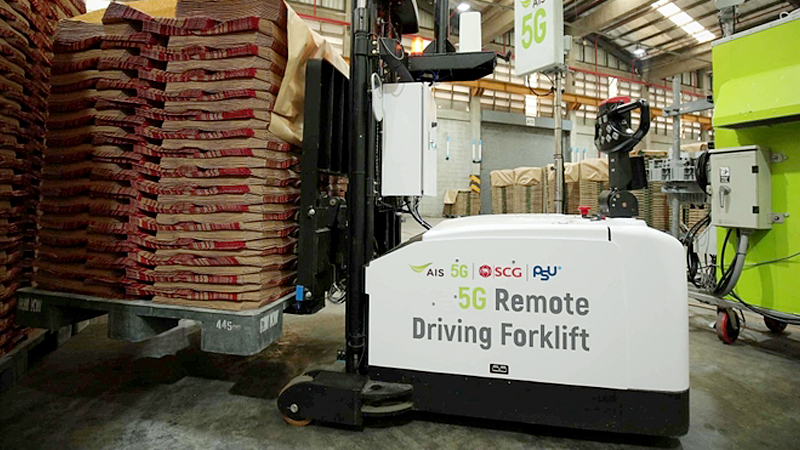
They and Prince of Songkhla University on Friday (January 24) demonstrated the use of 5G technology for industry in operating an unmanned forklift from 110 kilometres away.

The forklift was at an SCG plant in Saraburi, the operator at SCG headquarters in Bangkok, using the 2.6-gigahertz bandwidth of the AIS 5G network to hoist and move around material.

“This industrial test paves the way to increased productivity and safety and opportunities for staff training by remote,” the companies declared in a press release.

They intend to build a 5G ecosystem to enhance sustainable innovation and increase Thailand’s industrial competitiveness and quality of life.

The National Broadcasting and Telecommunications Commission will auction off four 5G spectra on February 16.

Wasit Wattanasap, head of National Network Operation and Support at of AIS, said the technology will “dramatically change the way we do things in Thailand”.

“Users will benefit in three ways: faster data speed, internet-of-things connectivity, and a stable and responsive network. Needless to say, developing a 5G ecosystem involves many players, including the government, companies and academics. Everyone has a part to play.”

Attapong Sathitmanothum, director – Mechanization Automation & Robotics (MARs) and Industry 4.0 at SCG, said his firm aimed to “improve work operations in various fields and business units, including cement and building materials, packaging and chemicals”.

“A working group in Mechanisation, Automation and Robotics [MARs] was established in 2016 to be a catalyst in levelling up the production process to create a ‘smart factory’.

“Investing more than Bt860 million during the first three quarters of 2019, SCG achieved predictive maintenance to notify us before a machine breaks down [‘smart maintenance’], use of robots in the laboratory [‘smart laboratory’], automated dispatching to deliver cement to customers automatically [‘smart dispatching’] and use of digital technology enabling data accessibility throughout the supply chain so that everyone can utilise the same data as a single, factual source, perform analytics to improve competitiveness and enhance responsiveness to customer needs.”

Attapong said 5G technology can strengthen SCG’s efficiency in many ways.

“Workers will be safer, especially with machinery in risky areas such as mines and confined spaces such as inside a cement kiln. Efficiency will be increased as the transmission of big data becomes easy.

“Several plants in different locations can send data to a control centre capable of managing information in real time. Customers will be more satisfied because logistics will become more effective.”

Associate Professor Dr Peerapong Teekasakul, director of Innovation Hub at Council of University Presidents of Thailand, noted that Prince of Songkhla University has, through its Institute of Research and Digital Innovation, been actively conducting research and development with the private and industry sectors.

“We co-study and co-test 5G technology in many dimensions, with the goals of building and preparing it for actual industrial use which, in turn, will increase competitiveness for Thai industry.”

Govt financial support sought to end sugarcane plantation burning problem #ศาสตร์เกษตรดินปุ๋ย

#ศาสตร์เกษตรดินปุ๋ย : ขอบคุณแหล่งข้อมูล : หนังสือพิมพ์ The Nation

https://www.nationthailand.com/business/30381007?utm_source=category&utm_medium=internal_referral

Govt financial support sought to end sugarcane plantation burning problem

Jan 24. 2020
By The Nation

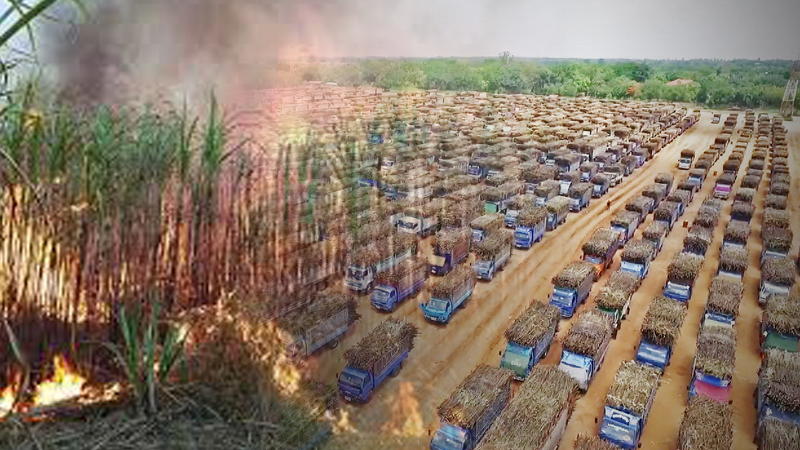
The problem of fires at sugarcane plantations requires cooperation from all sectors, Sitiwuth Siempakdee, vice president of Thai Sugar Miller Co, said.

Meanwhile, sugar factories are campaigning to cut raw sugarcane for processing. They have suggested that the government offer funding at low interest rates to farmers to buy harvesters as the prices of the equipment are quite high. They are priced in the range of Bt6 million to Bt12 million. They also urged the government to purchase electricity from biomass power plants as some plants could not sell the power to the Electricity Generating Authority of Thailand (Egat).

“No farmer wants to burn their field but the cost of labour is high. Factories must sign contracts with farmers to help with the harvesting. Factories can encourage farmers by buying raw sugarcane while some sugarcane can be left for generating power,” Sitiwuth said.

Sugarcane harvesting started on December 1, 2019. Cane output was 42.62 million tonnes. Fresh sugarcane was 21.69 million tonnes (15.83 million tonnes in the previous year), burnt sugarcane was 20.93 million tonnes (20.58 million tonnes), cane sugar production was 43.73 million bags (34.80 million bags), representing a yield of 102.61 kilograms of sugar per tonne (95.59 kilograms per tonne) and the sweetness average was 12.20 Commercial Cane Sugar (CCS) (11.46 CCS).

“The increase in sugarcane output over the previous year was because there were three new factories,. Also, factories increased the efficiency of their machines, improved sugar extraction as a result cane extraction capacity average is 1.0-1.1 million tonnes per day,” Sitiwuth said. “However, as the impact of drought increases, sugarcane output this year will be lower than 30-40 per cent of the previous year, or only 90 million tonnes. Sugarcane extraction will be less than last year by 3 to 4 million tonnes,” said Sitiwuth.