Five big macroeconomic questions for 2020 and beyond #ศาสตร์เกษตรดินปุ๋ย

#ศาสตร์เกษตรดินปุ๋ย : ขอบคุณแหล่งข้อมูล : หนังสือพิมพ์ The Nation

https://www.nationthailand.com/business/30380123?utm_source=category&utm_medium=internal_referral

Five big macroeconomic questions for 2020 and beyond

Jan 04. 2020
File Photo Getty Images

File Photo Getty Images
By Syndication Washington Post, Bloomberg Opinion · Narayana Kocherlakota 

As a new decade begins, I see five big questions facing macroeconomists, which I’ve listed in a roughly increasing order of difficulty.

Why not make full use of our productive resources? Inflation has been stuck below the Federal Reserve’s target of 2% for much of the past decade. It is expected to remain low for at least another year or two. The low rate of price increases is sending a clear message: there’s too little demand for goods and services relative to the supply of resources – especially human resources! – that can be used to produce those goods and services. So, why doesn’t the Fed respond to low inflation by easing monetary policy so as to boost demand, and make use of available supply?

How can governments take advantage of low interest rates? The 30-year yield on U.S. Treasuries is just over 2% – about half what it was a decade ago and about a third of what it was two decades ago. It would seem like a lot of public investments would be profitable if financed at this remarkably low interest rate. Shouldn’t the U.S. government issue (a lot) more long-term (with maturity of 30 years or possibly even longer) bonds to finance increased subsidies to higher education? Increased subsidies to research by universities and corporations? Spending on infrastructure like roads or hospitals?

What are the lessons of China for Africa? Per capita GDP for the 1 billion people of sub-Saharan Africa was about $1,500 in 2018. In 1998, China had about same per capita GDP (and population). In the intervening two decades, per capita GDP has quintupled in China. What lessons, if any, can sub-Saharan Africa learn from China’s experience to enable the same kind of rapid growth? In particular, China has contradicted basic neoclassical economics by making many kinds of government interventions in its economy. Which (if any) of those interventions have helped lead to its unusually rapid growth? Could those be replicated by the individual governments in Africa?

What are the policy consequences of a falling world population? At least since Malthus, we’ve known that it is hard to make accurate long-run predictions about population. But the best current forecast is that, because of falling fertility rates, the world’s population will be essentially flat by 2100 (which means in turn that population is expected to start to fall shortly thereafter). The combination of falling fertility rates and rising life expectancy means that we should expect that the world’s population to be much older in 2100 than today. Can an old and shrinking population be the basis for a dynamic economy? What macroeconomic policies would need to be undertaken to ensure that happens?

Is growth still good? The world’s climate seems likely to change, and possibly rapidly, over the next hundred years. Should governments of developed countries around the world be working to slow economic growth to help reduce the pace of climate change? How would it be possible to build the needed international popular support for this approach?

–

Narayana Kocherlakota is a Bloomberg Opinion columnist. He is a professor of economics at the University of Rochester and was president of the Federal Reserve Bank of Minneapolis from 2009 to 2015.

Oil prices spike, Dow dives after U.S. airstrike kills top Iranian military leader #ศาสตร์เกษตรดินปุ๋ย

#ศาสตร์เกษตรดินปุ๋ย : ขอบคุณแหล่งข้อมูล : หนังสือพิมพ์ The Nation

https://www.nationthailand.com/business/30380121?utm_source=category&utm_medium=internal_referral

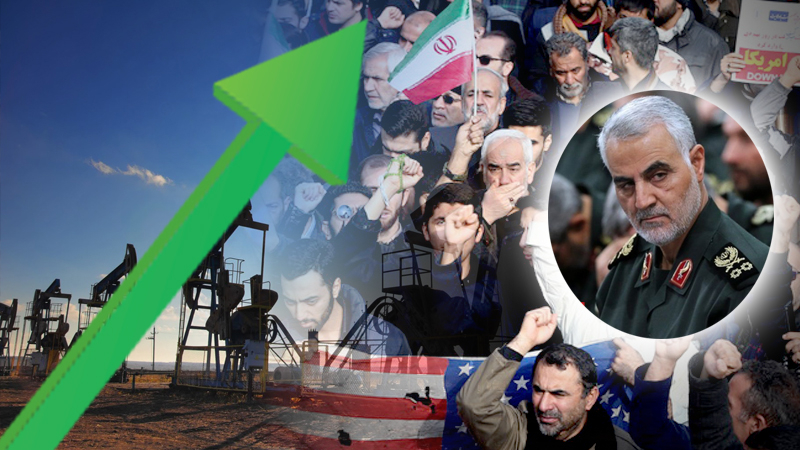
Oil prices spike, Dow dives after U.S. airstrike kills top Iranian military leader

Jan 04. 2020
File Photo: Getty Images

File Photo: Getty Images
By Updates throughout

The Washington Post · Taylor Telford, Thomas Heath, Will Englund

Crude oil prices bumped up by about 3 percent Friday after a top Iranian military commander was killed in an airstrike ordered by President Donald Trump, but analysts agreed that what happens next will be far more significant for world petroleum markets.

“No real oil volumes have been lost, and the overall market is well supplied. In fact, Saudi Arabia has significant spare capacity at the moment,” John Kilduff, an analyst with Again Capital, a New York investment firm, wrote in an email. “Still, this is a big deal, and the market is on tenterhooks, awaiting Iran’s response.”

The killing of Qasem Soleimani, commander of Iran’s Quds Force, whose car was struck by a missile as he was leaving the airport in Baghdad late Thursday night, was described as a “cowardly and vicious act” by Iranian President Hassan Rouhani. “Iran will take revenge for this heinous crime,” he said.

Iran’s defense minister, Amir Hatami, said the strike by the “arrogant U.S.” would be met with a “crushing” response. Foreign Minister Mohammad Javad Zarif called the strike an “act of international terrorism” and said in a tweet that the United States “bears responsibility for all consequences of its rogue adventurism.”

An obvious point of vulnerability is the narrow Strait of Hormuz, hemmed in by Iran’s southern coast. About a sixth of the world’s oil supply passes through the waterway, which is 21 nautical miles wide at its narrowest point, and has been deemed “the world’s most important choke point” by the U.S. Energy Information Administration. The quantity of oil ferried through the strait – much of which is headed for China, India and Japan – is nearly double that of all U.S. oil production. Should threats of attack close the passage, there could be devastating consequences for the world economy.

Other potential Iranian targets are oil fields and facilities in Iraq or Saudi Arabia.

Two oil tankers in the Persian Gulf were crippled by attacks in June, and drone strikes on state-owned Saudi Aramco in September temporarily took 5.7 million barrels of crude, or 6 percent of worldwide consumption, out of daily circulation, causing the biggest daily jump in oil prices since 1988. Production was restored within two weeks, and price increases following both incidents – as much as 15 percent following the drone attack – fairly quickly subsided.

In a note issued late Thursday night, ClearView Energy Partners, a research firm based in Washington, said it is reasonable to expect Iranian reprisals “possibly via all three avenues Iran has pursued in the recent past: (1) targeting regional shipping and energy production; (2) proxy (and principal) attacks against U.S. assets and allies, including cyberattacks; and (3) further nuclear brinkmanship.”

Any one of those, it said, would send oil prices higher. The note also argued that market prices continue to suggest undue faith in “Iranian rationality and U.S. restraint.”

Robert McNally, president of Rapidan Energy Group in Bethesda, Maryland, wrote in an email: “Direct attacks against U.S. personnel, diplomats or vessels or a return to targeting (Persian) Gulf oil infrastructure or tankers could easily add another $5-10 dollars per barrel to the price. Should conflict escalate to an all-out conventional conflict including the U.S. and Iranian militaries in the Gulf, crude prices could spike into the triple digit range.”

In a paper issued last summer assessing the impact of a conflict in the region, Rapidan argued that a disruption in the Strait of Hormuz could last “for many weeks, if not longer.” It suggested that a major U.S. military operation would see oil prices spike, recede, but then grow steadily higher again as expectations of a “quick and total victory” would undoubtedly be proven wrong. It also predicted that in such a case China would immediately begin hoarding oil, quickly sending prices even higher.

But analysts agreed that all they can do at this point is speculate.

“While there is no immediate, direct impact on oil supply from Iran or any other country, events such as this have the effect of raising the geopolitical risk premium in oil prices,” said Pavel Molchanov, an oil analyst with Raymond James. “We will need to watch how Iran responds, and whether its response might lead to an actual supply disruption.”

Molchanov pointed out that shutting down the Strait of Hormuz, while dramatic, would cause serious damage to Iran’s own economy, which is already struggling under the weight of American sanctions. They have cost the nation $200 billion in revenue since being imposed in 2018, pushed inflation up to about 40 percent, and created food shortages.

McNally said there could, conceivably, be a bright side. He expects the killing of Soleimani to bring the U.S.-Iran confrontation to a head, and that raises the possibility of an eventual deal that could exert downward pressure on oil prices. But there could well be some difficult moments before that happens.

On Friday morning Brent crude rose nearly 4 percent, before dropping back an increase of about 3.5 percent later in the day. West Texas Intermediate was up just shy of 3 percent. Oil company stocks also climbed.

In Russia, the world’s second-largest producer of oil after the United States, the stock index hit an all-time high on the news from Baghdad.

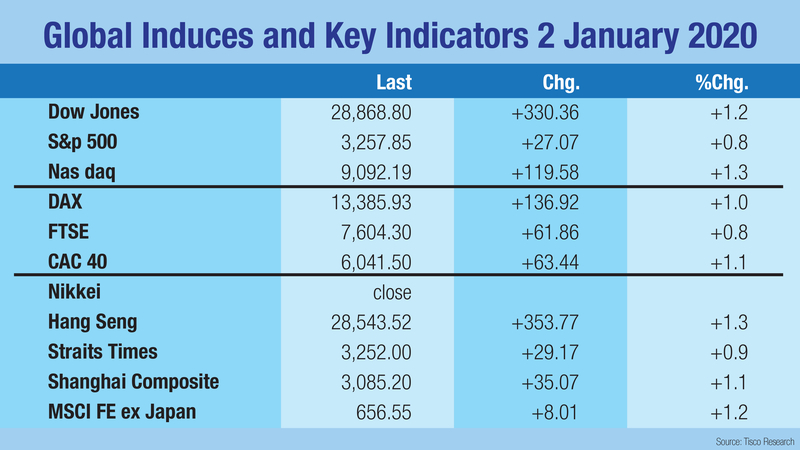
But in New York, Wall Street’s euphoric start to 2020 took a sobering hit, with the Dow Jones industrial average falling more than 340 points at the opening bell. The blue-chip index clawed back some of those losses and closed the day down 234 points, or 0.8 percent, to finish at 28,634. The Standard & Poor’s 500 index ended the day at 3,234, down 0.7 percent. The tech-heavy Nasdaq composite lost 71 points, 0.8 percent, to settle at 9,020. All three indexes had set record highs Thursday, the first day of trading of the year.

Gold, a haven for investors in tumultuous times, jumped 1.5 percent to $1,551 an ounce, a four-month high.

Oil prices were dampened all through 2019 by a huge worldwide oil glut; the year also saw the United States become the global leader in oil production, exporting petroleum for the first time in decades. Both developments could serve to mitigate the effects of a Middle East military escalation, analysts said, although Saudi and Russian decisions to cut production in December have helped to prop up the price.

Kilduff cautioned, as well, that the risks to oil production in the Middle East are real and have probably not been adequately reflected in the world’s oil price.

U.S.-Iranian tensions have been building since 2018, when Trump pulled out of a 2015 nuclear deal and reinstated sanctions.

Saudi Arabia, Iraq and Kuwait have grown in importance as U.S. sanctions have helped push Iran as well as Venezuela – once major producers – off the oil supply grid. Iran’s oil minister has accused the United States of imposing the sanctions to gain market clout as it enjoys a shale boom. The U.S. Energy Information Administration predicts the average American output will reach 13.2 million barrels per day in 2020, an increase of 900,000 barrels per day from 2019.

The Strait of Hormuz is crucial to the major Asian economies, including China, South Korea, Japan and Indonesia. Saudi Arabia, for example, is the largest supplier of crude oil to China, eclipsing Russia this past year.

More than 70 percent of Saudi crude production, about 5 million barrels a day, is earmarked for Asia. But major consumers such as Japan, India and South Korea have been shifting to North American oil sources during the past year because of the fear of disruption in the Middle East, according to S&P Global Platts. Those concerns were amplified by the attacks on oil tankers and strikes on Saudi oil fields in 2019.

U.S. factory gauge unexpectedly falls to lowest since 2009 #ศาสตร์เกษตรดินปุ๋ย

#ศาสตร์เกษตรดินปุ๋ย : ขอบคุณแหล่งข้อมูล : หนังสือพิมพ์ The Nation

https://www.nationthailand.com/business/30380116?utm_source=category&utm_medium=internal_referral

U.S. factory gauge unexpectedly falls to lowest since 2009

Jan 04. 2020
Even so, economists expect the record-long U.S. expansion to continue in 2020 despite factories' malaise. A partial trade deal between the U.S. and China was announced Dec. 13, and President Donald Trump said this week that he will sign it Jan. 15.

Even so, economists expect the record-long U.S. expansion to continue in 2020 despite factories’ malaise. A partial trade deal between the U.S. and China was announced Dec. 13, and President Donald Trump said this week that he will sign it Jan. 15.
By Syndication Washington Post, Bloomberg · Reade Pickert

U.S. manufacturing closed out a tumultuous year with the weakest monthly performance since the end of the recession, with orders shrinking and factories continuing to dial back production.

Stocks and Treasury yields, already lower after a U.S. airstrike killed one of Iran’s most powerful military leaders, extended declines after the report.

The Institute for Supply Management’s purchasing managers’ index fell to 47.2 in December from 48.1, the fifth straight month of contraction and missing estimates for a rise in a Bloomberg survey of economists, according to a report Friday. It was the worst reading since June 2009 and marked the eighth decline in the last nine months. Readings below 50 indicate activity is shrinking.

The deterioration was driven by the weakest gauges of new orders and production since April 2009. The data show American factories remain plagued by pullbacks in business investment at home, softer demand throughout the world and, until recently, an escalating trade war between the U.S. and China.

“Trade issues remain an issue for supply managers,” Timothy Fiore, chair of the ISM’s manufacturing survey committee, said on a call with reporters. “I think that unplanned factory closures and extended holiday periods had a part to play on the production side and likely the employment side.”

Fifteen of the 18 manufacturing industries reported contraction in December, led by apparel and wood products.

To be sure, the sub-50 ISM reading contrasts with IHS Markit’s purchasing managers’ index, which eased slightly to 52.4 in December but remained near a seven-month high. The nation’s two most-watched manufacturing surveys pointed in different directions in November as well, underscoring disagreement among economists and investors on which index offers a more accurate picture of the sector.

The ISM index averaged a reading of 51.2 for all of 2019, also the lowest in a decade. That’s down 7.6 points from 2018’s average, the steepest drop since 2001.

Even so, economists expect the record-long U.S. expansion to continue in 2020 despite factories’ malaise. A partial trade deal between the U.S. and China was announced Dec. 13, and President Donald Trump said this week that he will sign it Jan. 15.

While a thawing in trade relations could help, factories still face the repercussions of policy uncertainty, a weak corporate investment climate and a step down in global growth that will have a lingering impact on factory decisions in 2020.

One reason the ISM’s gauges of production and new orders may have trouble recovering quickly is Boeing’s struggle with its 737 Max airplane. Boeing told its suppliers to suspend parts shipments starting in mid-January following the grounding of the aircraft. Fiore said Boeing’s problems will probably be a drag on manufacturing for the next four to six months.

The ISM’s gauge of factory employment fell in December to the lowest level since January 2016, suggesting further softness in manufacturing hiring even as the rest of the jobs market remains broadly strong.

An index of prices paid showed input costs rising for the first time since May as the gauge of supplier deliveries held above 50, suggesting shipments of inputs are slowing.

The imports gauge contracted for the eighth time in nine months and the export gauge dipped further below the line between expansion and contraction.

Pinterest bulls see a marketer’s goldmine in the making #ศาสตร์เกษตรดินปุ๋ย

#ศาสตร์เกษตรดินปุ๋ย : ขอบคุณแหล่งข้อมูล : หนังสือพิมพ์ The Nation

https://www.nationthailand.com/business/30380115?utm_source=category&utm_medium=internal_referral

Pinterest bulls see a marketer’s goldmine in the making

Jan 04. 2020
Banners display Pinterest signs in font of the New York Stock Exchange during the company's initial public offering in New York on April 18, 2019. MUST CREDIT: Bloomberg

Banners display Pinterest signs in font of the New York Stock Exchange during the company’s initial public offering in New York on April 18, 2019. MUST CREDIT: Bloomberg
By Syndication Washington Post, Bloomberg · Andres Guerra Luz 

Pinterest Inc. has shed more than a quarter of its market value since the end of October, falling below its April initial public offering price.

Yet many market watchers still think the social-media company has the right formula to boost advertising revenue and win over investors.

Almost half of Wall Street analysts tracked by Bloomberg recommend buying the stock and hedge funds now account for 22% of shareholders, up from 16% in August, according to data compiled by Bloomberg.

Bulls say that Pinterest’s online site is a marketer’s goldmine, and the only issue the company faces is figuring out how to better cash in on it.

“It’s caught on something really unique,” Wedbush analyst Ygal Arounian, who rates the stock outperform, said in a recent phone interview. “They just need to be able to execute and put all the pieces together in order to capture that opportunity.”

Shares in the unprofitable company have fallen 49% since an August high in an environment that has seen investors pressuring management teams for profitability after years of pushing growth at all costs.

San Francisco-based Pinterest, with a market value of $10.3 billion, operates a site with more than 320 million monthly active users spread across the world.

The site allows users to scroll through a feed of “pins” that contain images or videos and links and descriptions. Users can then save the pins to customizable boards to curate ideas for anything from vacation plans to dinner recipes or holiday shopping lists.

Pinterest’s pitch for marketers is that, while advertisements often act as a distraction on other sites, more users come to its site with an intent to make a purchase. That makes advertisements an inherent part of the Pinterest user’s experience, rather than something negative, the company said in its prospectus.

Analysts who agree with that premise say the stock is attractive even after a third-quarter revenue miss led to a 17% plunge in one day. The company is expected to report $1.11 billion in revenue for 2019, up 47% from the year before, followed by more than 30% growth in each of the next two years.

The company is “heads-down focused” on improving its ad tech stack and gain wallet share from digital media peers in 2020, Wedbush’s Arounian said in a written report Friday. There’s a lot of work to do, but “minor wins can go a long way” to better-than-expected results this year with the bar now reset significantly lower, he wrote.

Pinterest is developing digital advertisement tools to give marketers insight into their audience, adding features that allow users to shop directly from the site and expanding their advertiser base to more small- and mid-sized businesses.

“The stronger that ad tech toolset is and the more things they could address for advertisers, the more money advertisers will be willing to spend on the platform,” Arounian said in the phone interview. “That could help re-accelerate growth.”

Analysts who are more cautious raise a variety of concerns. They note slowing growth in Pinterest’s more lucrative U.S. user base and say the company won’t win over investors until it can consistently deliver quarterly gains in line with Street expectations.

Pinterest’s monthly active users hint at saturation in the U.S., MKM Partners’ Rohit Kulkarni said in a note following the company’s third-quarter earnings report in October.

“Given the growth rate of users in the U.S. and the level of engagement that the users in U.S. exhibit, it makes me wonder how large can this company become over the longer-term,” Kulkarni said in a phone interview. “It remains unprofitable right now, so I’m still on the sidelines.”

While there’s substantial upside potential in the faster-growing international user base, that won’t support the stock until the company can reduce the revenue gap with U.S. users, he said.

The average revenue per international user is about one-twentieth that for a U.S. user, Kulkarni said, while that number is more like a seventh or eighth for other sites such as Facebook.

Shares of Pinterest fell as much as 1.9% in early trading Friday.

Still, some of the disappointment with the company’s progress might come from investors setting a high bar, said D.A. Davidson analyst Tom Forte, who upgraded his rating on the stock to buy after the third-quarter earnings report.

“When people look at Pinterest through the lens that they’re unicorns, then I think it’s a victim of high expectations,” Forte said. “As a long-term follower of both e-commerce and social networking companies, I’ve been pleased by their initial performance.”

Pinterest is expected to report fourth-quarter results in mid-February.

Gold nears six-year high as Mideast tensions spur haven demand #ศาสตร์เกษตรดินปุ๋ย

#ศาสตร์เกษตรดินปุ๋ย : ขอบคุณแหล่งข้อมูล : หนังสือพิมพ์ The Nation

https://www.nationthailand.com/business/30380114?utm_source=category&utm_medium=internal_referral

Gold nears six-year high as Mideast tensions spur haven demand

Jan 04. 2020
One kilogram of fine gold bar in Munich, Germany, on July 10, 2019. MUSTS CREDIT: Bloomberg photo by Michaela Handrek-Rehle.

One kilogram of fine gold bar in Munich, Germany, on July 10, 2019. MUSTS CREDIT: Bloomberg photo by Michaela Handrek-Rehle.
By Syndication Washington Post, Bloomberg · Ranjeetha Pakiam, Elena Mazneva 

Gold advanced toward a six-year high after a U.S. airstrike killed one of Iran’s most powerful generals, ratcheting up tensions in the Middle East and driving demand for havens.

Bullion rallied as much as 1.5% to $1,551.52 an ounce in the spot market, reaching the highest since September. Platinum futures briefly topped $1,000 an ounce to touch the highest since early 2018 in New York, while silver and other haven assets rose.

The strike in Baghdad ordered by President Donald Trump killed Qassem Soleimani, the Iranian general who led the Revolutionary Guards’ Quds force. Iran’s supreme leader vowed “severe retaliation.” The news helped gold to build on the biggest annual gain in almost a decade, a rally that was driven by a weaker dollar, lower real rates and geopolitical concerns.

“Market players are now afraid that this marks another level of escalation in a region that is characterized by tension,” Daniel Briesemann, an analyst at Commerzbank AG, said by phone Friday. “The U.S. airstrike in Iraq, that’s the one and only driver of gold prices today.”

Gold for immediate delivery was up 1.3% at $1,549 by 10:15 a.m. in New York, taking this week’s gain to 2.5%, the most since August. The metal jumped 18% last year.

Last year’s advance marked a positive shift in investor attitude toward gold, according to RBC Capital Markets, which predicted further gains this year and next. Goldman Sachs, Citigroup and UBS Group have said they’re looking for $1,600 an ounce.

“Today’s event has probably only brought forward the inevitable test of the September high,” said Ole Hansen, head of commodity strategy at Saxo Bank. “Rising inflation concerns through higher input prices — oil and food — combined with geopolitical uncertainty is a potent cocktail which supports a market already on the move.”

January is historically gold’s best month, according to Bloomberg Intelligence, with an average advance of 2.7% over the past 20 years. The metal will approach $1,600 by February if it matches the 5.2% average increase of the past five years.

Still, geopolitics typically doesn’t have a lasting impact on gold unless broader consequences for the economy or financial markets arise, said Carsten Menke, an analyst at Julius Baer.

Gold extended gains after the latest U.S. ISM manufacturing data showed the weakest monthly performance since the end of the recession, according to a report Friday. That strengthens the case for owning bullion as a hedge against dimming growth outlook.

The purchasing managers’ index fell to 47.2 in December from 48.1, missing estimates for a rise in a Bloomberg survey of economists.

Next up, investors await minutes from the Federal Reserve’s last policy-setting meeting due later on Friday.

Other precious metals:

– Platinum futures climbed as much as 1.7% to $1,001.40 an ounce in New York, reaching the highest for a most-active contract since February 2018It traded at $993.90 at 10:20 a.m.

– Silver and palladium futures also advanced.

The dollar’s losses may just be getting started #ศาสตร์เกษตรดินปุ๋ย

#ศาสตร์เกษตรดินปุ๋ย : ขอบคุณแหล่งข้อมูล : หนังสือพิมพ์ The Nation

https://www.nationthailand.com/business/30380108?utm_source=category&utm_medium=internal_referral

The dollar’s losses may just be getting started

Jan 04. 2020
A customer holds Turkish two-hundred Lira banknotes, left, and U.S. one-hundred dollar banknotes, inside a foreign currency exchange bureau in Istanbul on Oct. 9, 2019. MUST CREDIT: Bloomberg photo by Kerem Uzel.

A customer holds Turkish two-hundred Lira banknotes, left, and U.S. one-hundred dollar banknotes, inside a foreign currency exchange bureau in Istanbul on Oct. 9, 2019. MUST CREDIT: Bloomberg photo by Kerem Uzel.
By Syndication Washington Post, Bloomberg · Ruth Carson 

The dollar had an awful December and things may only get worse.

That’s the view of a growing number of fund managers and strategists including those at M&G Investments Ltd., Brandywine Global Investment Management and ABN Amro Bank NV. A truce in the U.S.-China trade war, improving global growth and a shrinking yield premium on U.S. Treasuries will undermine the currency, they said.

“We expect to see better growth in the rest of the world ex-USA,” said Jack McIntyre, a portfolio manager at Brandywine Global Investment Management in Philadelphia. “The primary driver of dollar weakness will be a shift in relative economic growth rates between the U.S. and the rest of the world.”

The Bloomberg Dollar Spot Index, which tracks the U.S. currency against 10 global peers, slid 2% in December, the biggest monthly decline in almost two years. The gauge’s failure to sustain gains made earlier in 2019 may have drawn a line under a rally that saw it surge about 40% from a low in 2011 to a peak in early 2017.

The dollar started to fall from October as Washington and Beijing closed in on an initial deal to end their trade dispute. The agreement was confirmed by U.S. President Donald Trump in December. Hedge funds and other speculative investors flipped to a net short position on the greenback for the first time since June 2018 following the news, according to data from the Commodity Futures Trading Commission.

“You had safe-haven support for the dollar in 2019, but we have a trade truce now,” said Georgette Boele, senior foreign-exchange strategist at ABN Amro Bank in Amsterdam. “The dollar is on a path of long-term weakness.”

Another major pillar behind the dollar’s multi-year advance was also undermined as the Federal Reserve cut its benchmark rate in July, September and October to support slowing growth.

“The Fed does have some room to move lower in 2020, and for this reason I would expect a weaker dollar,” said Jim Leaviss, head of fixed-income at M&G Investments in London. There may also be “more pressure on the Fed if growth remains mediocre going into the U.S. elections,” he said.

Treasury 10-year yields dropped almost 80 basis points over the course of the year. The Fed’s dovish pivot has seen the U.S. two-year yield advantage over similar-maturity German debt shrink to 217 basis points from around 350 basis points in late 2018, according to data compiled by Bloomberg.

Not everyone is convinced the dollar is poised to keep weakening.

Citigroup recommends betting the greenback will strengthen against the euro and Canadian dollar on a view the U.S. economy will outperform the rest of the world. Goldman Sachs argues the dollar will only decline if the euro and yuan appreciate significantly, and it says that looks unlikely for now.

Back on the bearish side, National Australia Bank Ltd. is looking for further dollar losses, but sees more of a grind lower than a sudden sell-off.

“The dollar is set to begin 2020 fundamentally overvalued,” strategists at the bank including Ray Attrill in Sydney wrote in a research note. “We expect it to fall in 2020, but in a relatively sedate fashion barring resumption of Fed easing or dramatic improvement in growth prospects outside the U.S.”

China denies reports Shanghai-London stock connect is halted #ศาสตร์เกษตรดินปุ๋ย

#ศาสตร์เกษตรดินปุ๋ย : ขอบคุณแหล่งข้อมูล : หนังสือพิมพ์ The Nation

https://www.nationthailand.com/business/30380109?utm_source=category&utm_medium=internal_referral

China denies reports Shanghai-London stock connect is halted

Jan 04. 2020
File Photo: One person said that Britain's stance on the pro-democracy protests in Hong Kong was one of the issues that prompted the move.

File Photo: One person said that Britain’s stance on the pro-democracy protests in Hong Kong was one of the issues that prompted the move.
By Syndication Washington Post, Bloomberg · No Author 

China denied reports that a tie-up between the Shanghai and London stock exchanges has been halted.

The operation of a stock link between the two exchanges has been normal since June, the China Securities Regulatory Commission said in a media briefing on Friday. The regulator has noticed some companies delaying issuance of global depositary receipts and respects their freedom to decide a time based on financing needs and market conditions, spokesman Chang Depeng said.

“Shanghai London Stock Connect is an important initiative in China’s financial opening, it is instrumental in expanding cross-border investing and funding channels bilaterally,” he said. “Since June 2019, the link has been operating normally.”

The Chinese government temporarily suspended the Shanghai-London Stock Connect program on political grounds, people familiar with the matter previously told Bloomberg. One person said that Britain’s stance on the pro-democracy protests in Hong Kong was one of the issues that prompted the move. Reuters had previously reported the decision.

“It’s good that the government will keep developing the scheme as it’s a positive step for financial markets in both countries,” Linus Yip, First Shanghai Securities strategist, said by phone. “The Shanghai-London stock connect needs to overcome lots of difficulties, including the long distance and time zone differences.”

The link between the Shanghai and London exchanges was created to allow companies listed on one venue to issue shares on the other. It has so far underwhelmed with just a single Chinese company listing in London and no U.K. companies coming to the Shanghai bourse.

Brokerage Huatai Securities Co. was the first Chinese company to sell global depositary receipts in London last June. Its GDRs fell 1.7% in London as of 9:59 a.m. local time. The stock tumbled as much as 11% on Thursday, the biggest decline since their listing. SDIC Power Holdings Co. in December postponed its plan to sell GDRs because of “market conditions.”

SET could break 1,600 in Q1, reach 1,700 this year: analysts #ศาสตร์เกษตรดินปุ๋ย

#ศาสตร์เกษตรดินปุ๋ย : ขอบคุณแหล่งข้อมูล : หนังสือพิมพ์ The Nation

https://www.nationthailand.com/business/30380104?utm_source=category&utm_medium=internal_referral

SET could break 1,600 in Q1, reach 1,700 this year: analysts

Jan 04. 2020
The benchmark index broke the 1,600 barrier in the morning session, reaching a high of 1,604.43 before retreating in afternoon trading.

The benchmark index broke the 1,600 barrier in the morning session, reaching a high of 1,604.43 before retreating in afternoon trading.
By The Nation

The Stock Exchange of Thailand Index barely changed on Friday (January 3), closing at 1,594.97, down 0.85 point or 0.05 per cent after surging on January 2, the first trading day of 2020.

The benchmark index broke the 1,600 barrier in the morning session, reaching a high of 1,604.43 before retreating in afternoon trading.

Regional markets were boosted by news of the US-China trade deal, to be signed on January 15, and Wall Street’s record-high closings on January 2. However, market sentiments were then dampened by news of rising tensions in the Middle East after a US government announcement that the US air strike had killed Qasem Soleimani, head of the Islamic Revolutionary Guards Corps (IRGC) Quds Force, the alleged architect of Tehran’s proxy conflicts in the Middle East.

Apichat Poobunjirdkul, senior strategist at Tisco Securities Co, remains optimistic of Thai equities, citing rising oil prices resulting from a cut in Opec production. The US air strike also caused global oil prices jumped over 4 per cent on Friday.

However, investors should closely follow the situation in the Middle East, he said, adding that if the conflicts between the United States and Iran  escalated, it would adversely affect the global economy and equity markets.

Tisco predicted the SET index breaking 1,600 in the first quarter this year and could reach 1,700 in the course of 2020. Profits of Thai listed firms are expected to expand 8 per cent year on year, he said. Return from investment in Thai equity last year averaged at just 1 per cent, compared with 25 per cent in developed markets (MSCI DM Index), and 15 per cent in emerging market (MSCI EM Index).

The low return of Thai equity last year was mainly caused by two consecutive years of falling profits of listed firms, and volatile crude prices affecting performance of the energy sector. Higher reserve requirement for pensioners, stricter accounting standards and issue of political stability all contributed to the lacklustre Thai corporate performance, he said.

For this year, Tisco is “cautiously optimistic” about Thai equities given the many positive factors, including a easing in US-China trade tensions, low interest rates and the start of central banks’ injection in the economies.

On the other hand, potential risks to the Thai economy this year include a new round of trade negotiation between US and China, the US presidential election, Thai political situation , new accounting standards, and the outflows of  long term equity funds from the Thai stock market, he added.

Oil prices spike, Dow futures dive after U.S. airstrike kills Iran’s top military leader #ศาสตร์เกษตรดินปุ๋ย

#ศาสตร์เกษตรดินปุ๋ย : ขอบคุณแหล่งข้อมูล : หนังสือพิมพ์ The Nation

https://www.nationthailand.com/business/30380105?utm_source=category&utm_medium=internal_referral

Oil prices spike, Dow futures dive after U.S. airstrike kills Iran’s top military leader

Jan 03. 2020
By The Washington Post · Taylor Telford, Thomas Heath 

Crude oil prices spiked 4% Friday after Iran’s top military commander was killed in an airstrike ordered by President Donald Trump, an abrupt escalation of Middle East tensions with serious implications for global oil supplies and economic growth.

Brent crude surged more than $2.50 a barrel, to $68.96, in its biggest jump since Saudi oil fields came under attack in September. West Texas Intermediate hit $63.72 a barrel, an eight-month high. Oil company stocks also climbed, with Shell up 1.4% and BP up 1.9% in Europe.

The news dampened Wall Street’s euphoric start to 2020, with the Dow Jones industrial average falling more than 340 points at the opening bell. Gold, a safe haven for investors in tumultuous times, jumped 1.5% to $1,551 an ounce, a four-month high.

Sam Stovall, president of CFRA Research, said history suggests that the shock to the markets will be temporary as investors await the consequences from the airstrike.

“Equity and commodity markets have been roiled by a variety of unanticipated military actions over the past 30 years. Surprisingly, the effects have dissipated fairly quickly as investors concluded that they would not result in a global recession,” Stovall wrote in a note to investors Friday. “Indeed the S&P 500 fell an average 1.6% on the day of the event, and was lower by an average 5.4% at the bottom. Yet the bottom was put in place an average of 17 calendar days after the event, and the S&P 500 recouped all that it lost an average of 45 days later.”

About a fifth of the world’s oil supply passes through the narrow Strait of Hormuz, off the southern coast of Iran. The strait is 21 miles wide at its narrowest spot, deemed “the world’s most important choke point,” by the U.S. Energy Information Administration. The quantity of oil ferried through the strait is double that of total U.S. oil production. If the route were shuttered because of threats of attacks, it would be a devastating blow to the global economy.

“While there is no immediate, direct impact on oil supply from Iran or any other country, events such as this have the effect of raising the geopolitical risk premium in oil prices,” said Pavel Molchanov, an oil analyst with Raymond James. “We will need to watch how Iran responds, and whether its response might lead to an actual supply disruption.”

Oil tankers and installations could be prime targets for a retaliatory attack, Jeffrey Halley, an Asia-Pacific analyst with OANDA, wrote in commentary Friday. Two oil tankers in the Persian Gulf were crippled by attacks in June, and drone strikes on state-owned Saudi Aramco in September temporarily took 5.7 million barrels of crude out of daily circulation, or 6% of worldwide consumption, and caused the biggest daily jump in oil prices since 1988. The U.S. blamed Iran for both attacks.

U.S.-Iran tensions have been building since 2018, when President Trump pulled out of the 2015 nuclear deal and reinstated sanctions aimed at strengthening the stranglehold on the country’s oil exports. The sanctions have devastated Iran’s economy, Iran’s President Hassan Rouhani has said, costing the country $200 billion in revenues. Inflation is rampant at roughly 40%, and citizens are struggling with rising prices and food shortages.

Iran’s Oil minister has accused the U.S. of imposing the sanctions to gain market clout as it enjoys a shale boom that has helped it become one of the world’s top oil producers.

Maj. Gen. Qasem Soleimani, Iran’s Quds force commander, was killed in an airstrike Thursday on a road near the Baghdad airport. Among the five who died in the convoy were Jamal Jaafar Ibrahimi, a powerful Iraqi militia leader better known as Abu Mahdi al-Muhandis, as well as Soleimani’s son-in-law, according to a militia official in Iraq.

The attack comes a week after hundreds of pro-Iranian demonstrators stormed the U.S. Embassy in Baghdad, chanting “Death to America,” barricading U.S. diplomats inside.

Defense Secretary Mark Esper said the Pentagon had taken “decisive defensive action” against Soleimani, the revered military figure who had close links to a network of armed groups backed by Iran across the Middle East and, according to the United States, bore responsibility for hundreds of American deaths.

Iran’s defense minister, Amir Hatami, said that the strike by the “arrogant U.S.” would be met with a “crushing” response. Foreign Minister Javad Zarif called the strike an “act of international terrorism” and said in a tweet the United States “bears responsibility for all consequences of its rogue adventurism.”

Positive factors push SET index past 1600 in morning trade #ศาสตร์เกษตรดินปุ๋ย

#ศาสตร์เกษตรดินปุ๋ย : ขอบคุณแหล่งข้อมูล : หนังสือพิมพ์ The Nation

https://www.nationthailand.com/business/30380091?utm_source=category&utm_medium=internal_referral

Positive factors push SET index past 1600 in morning trade

Jan 03. 2020
By The Nation

The Stock Exchange of Thailand Index surged past 1,600 in morning trading today (January 3) before receding in the afternoon session.

The SET surge was generally attributed to the more than 1 per cent jump in US equities with the Dow Jones and Nasdaq closing at record highs yesterday (January 2) on their first trading day of 2020.

Meanwhile, tensions in the Middle East between the United States and Iran pushed up world crude prices. In Thailand, investors are now less concerned about the strengthening baht after the Thai currency moved back to Bt30 / dollar from Bt29 in the New Year period.

Analysts at Tisco Research today forecast that the SET index may face new resistance barrier at 1610-1620 while lower bound is estimated at 1590. Rising oil prices make shares of HANA, PTTEP, TOP, IRPC and SPRC attractive, said Tisco Market Insight report.

They also suggested investors look for investment opportunities in shares of ADVANC, INTUCH, AP,QH, LH , BBL, KKP, SCB, MAJOR, SCC, TTW and TVO, which usually pay high dividends to shareholders.