David Oxford named new country head for Nokia #ศาสตร์เกษตรดินปุ๋ย

#ศาสตร์เกษตรดินปุ๋ย : ขอบคุณแหล่งข้อมูล : หนังสือพิมพ์ The Nation

https://www.nationthailand.com/business/30380064?utm_source=category&utm_medium=internal_referral

David Oxford named new country head for Nokia

Jan 02. 2020
David Oxford

David Oxford
By THE NATION

Nokia has appointed David Oxford country director for Thailand effective January 1.

Oxford, to be based in Bangkok from February 1, will oversee all business and operations in what Nokia regards as a fast-growing market.

He brings more than 24 years’ experience in the telecommunications industry in sales, technology and operations.

Oxford was previously Nokia’s customer team head at Indosat in Indonesia, where he oversaw significant growth in the nation and enhanced customer relations.

Prior to that he held the same position at Nokia Philippines, having joined the company after five years with General Electric in Thailand.

“His experience and track record will enable Nokia to push forward in Thailand as it enters the Fourth Industrial Revolution,” the company said in a statement.

“He will leverage his strategic insights – as well as his ability to form and deepen client and industry relationships – to lead Nokia’s delivery of its end-to-end portfolio, including 5G and high-speed broadband.

“This is part of Nokia’s greater effort in Thailand to help the nation closer foster technological and socio-economic transformation, as enshrined under the Thailand 4.0 initiative.”

Oxford acknowledged that Thailand will continue to be a crucial market for Nokia.

“For over two decades, we have been involved in the growth of the nation’s telecommunications industry,” he said. “As we head into the new decade, I look forward to working with communications service providers and enterprise customers to embrace new technological transformation, especially in the 5G era.”

Thai jewellers urged to explore US market #ศาสตร์เกษตรดินปุ๋ย

#ศาสตร์เกษตรดินปุ๋ย : ขอบคุณแหล่งข้อมูล : หนังสือพิมพ์ The Nation

https://www.nationthailand.com/business/30380083?utm_source=category&utm_medium=internal_referral

Thai jewellers urged to explore US market

Jan 03. 2020
By The Nation

The Department of International Trade Promotion (DITP) has urged Thai exporters to cash in on the demand for engagement rings in the US.

The department’s suggestion follows a survey that found young couples who are going to be married still preferring rings.

The department urged entrepreneurs to study the market and make products to meet the needs in order to boost exports.

The department’s director-general, Somdet Susomboon, said that he had received a report on the market for engagement jewellery in the United States from the Office of International Trade Promotion in Chicago, United States. The report pointed to the demand for gems and jewellery for married couples, which is useful information for Thai manufacturers and exporters in product planning to penetrate this consumer market, especially “engagement rings” that still have high demanded.

Usasri Kheorayab, director of the Thai Trade Centre in Chicago, added that the survey results showed more than 70 per cent of the fiances surveyed said they had to see the actual ring before buying, and 4 out of 10 people would buy an engagement ring 1-2 months before the day of the actual engagement. Diamond rings were the most popular, preferred by 86 per cent, followed by other types of gemstones such as Moissanite, Sapphire and Morganite (10 per cent), coloured diamonds (3 per cent), while1 per cent did not want any precious stones.

The metal choices were: white gold (54 per cent), pink gold (14 per cent), platinum (13 per cent), gold (13 per cent), and silver (7 per cent). The most popular gemstones patterns are: circular (47 per cent), princess patterns (14 per cent), oval patterns (14 per cent), square shape rounded edge (9 per cent), and 5 per cent prefer teardrop shape.

About 50 per cent of engagement ring sizes will be around 1-2 carats.

The average price of an engagement ring in 2019 was on average US$5,900, but 7 out of 10 fiancés will spend between $1,000-$4,000 on their engagement rings because they want to stay within their budget. The average price of engagement rings divided by different regions of the United States were: the mid-Atlantic region $7,500, New England area $6,900, Southwest region $5,600, West region $5,500, Southeast region $5,400 and In the middle of the country, $5,300.

“I want to ask the gems and jewellery entrepreneurs to study this information and use it in planning the production of engagement rings to meet the needs of young women in the United States, which will not only increase the opportunity to export to the US market but will help export gems and jewellery penetrating the United States market as a whole as well as increase exports,” Usasri said.

Singapore’s economy grew 0.7% in 2019, down from 3.1% in 2018: Flash data #ศาสตร์เกษตรดินปุ๋ย

#ศาสตร์เกษตรดินปุ๋ย : ขอบคุณแหล่งข้อมูล : หนังสือพิมพ์ The Nation

https://www.nationthailand.com/business/30380079?utm_source=category&utm_medium=internal_referral

Singapore’s economy grew 0.7% in 2019, down from 3.1% in 2018: Flash data

Jan 03. 2020
Pedestrians in the Central Business District, on Nov 4, 2019. Singapore's economic growth for the full year is projected to be between 0.5 per cent and 1 per cent.ST PHOTO: ONG WEE JIN

Pedestrians in the Central Business District, on Nov 4, 2019. Singapore’s economic growth for the full year is projected to be between 0.5 per cent and 1 per cent.ST PHOTO: ONG WEE JIN
By The Straits Times/ANN

SINGAPORE – Singapore’s economy grew by 0.7 per cent year on year in 2019, based on flash estimates released by the Ministry of Trade and Industry (MTI) on Thursday (Jan 2).

This was better than the 0.6 per cent growth forecast by analysts polled by Bloomberg, although it was far below the 3.1 per cent expansion in 2018.

It is also Singapore’s slowest economic growth since 2009, when the economy expanded 0.1 per cent year on year.

The ministry had projected economic growth for 2019 to be between 0.5 per cent and 1 per cent.

In the fourth quarter, the economy expanded by 0.8 per cent year on year, compared with the revised 0.7 per cent in the previous quarter. This is similar to what private-sector economists had predicted.

On a quarter-on-quarter seasonally adjusted annualised basis, the economy expanded at a slower pace of 0.1 per cent compared with the 2.4 per cent growth in the third quarter.

Ms Selena Ling, head of treasury research and strategy at OCBC Bank, said that the figures confirm that the Singapore economy bottomed in the second quarter of 2019.

While noting that growth in 2019 was the weakest in a decade, she said there are positives to take away from a “glass half-full perspective”.

“We avoided a technical recession, which was one of the fears after the (soft second quarter figures), and we avoided a full-year recession, so the worst-case scenarios did not come true,” Ms Ling added.

Maybank Kim Eng senior economist Chua Hak Bin highlighted that the estimates for the manufacturing sector suggest that the Government expects December’s factory output to remain in contraction territory.

The manufacturing sector contracted by 2.1 per cent in the fourth quarter, continuing the 0.9 per cent decline in the third quarter.

This was due to output declines in the electronics, chemicals and transport engineering clusters, which more than offset expansions in the precision engineering, biomedical manufacturing and general manufacturing clusters, the MTI said.

But Dr Chua said that the sector could see some recovery and possibly bounce back into expansion territory in December, which could lead to a slight uptick in overall economic growth.

“Manufacturing should emerge from its recession in 2020, which will be a big plus to the overall economy,” he added.

The construction sector grew by 2.1 per cent year on year in the fourth quarter, slightly slower than the 2.4 per cent in the previous quarter, on the back of public sector construction activities.

The services-producing industries expanded 1.4 per cent, compared with 0.9 per cent in the third quarter, supported by the likes of the finance and insurance sector, as well as the business services sector.

Ms Ling said the services and construction sectors are likely to be the bright spots for 2020.

“The resilient domestic labour market, which contributes to consumer confidence and private consumption, coupled with public sector spending on infrastructure projects including education, health and social services, remain key supporting pillars for the Singapore economy,” she said.

“The 2020 growth prognosis remains attendant on the external risks and global economic environment, but the stars are aligning towards a more supportive recovery story,” Ms Ling said, noting that phase one of the United States-China deal will be signed later in January and recent policy measures announced by China to address its economic slowdown and other challenges.

“The US-China phase one trade deal has already provided some uplift to market sentiments,” she added, but cautioned that the overall impact of the trade negotiations will still be dependent on the later phases, and the trade agreement is likely to be a “protracted process” given how talks have progressed since 2018.

The MTI will release the final growth figures for the fourth quarter and the whole of 2019 – including performance by sectors, sources of growth, inflation, employment and productivity – in February.

https://www.straitstimes.com/business/economy/singapores-economy-grows-07-in-2019-flash-data

Experts weigh in on China’s central bank move to cut reserve requirement #ศาสตร์เกษตรดินปุ๋ย

#ศาสตร์เกษตรดินปุ๋ย : ขอบคุณแหล่งข้อมูล : หนังสือพิมพ์ The Nation

https://www.nationthailand.com/business/30380078?utm_source=category&utm_medium=internal_referral

Experts weigh in on China’s central bank move to cut reserve requirement

Jan 03. 2020
Headquarters of the People's Bank of China (PBOC), the central bank, is pictured in Beijing, Sept 28, 2018. [Photo/VCG]

Headquarters of the People’s Bank of China (PBOC), the central bank, is pictured in Beijing, Sept 28, 2018. [Photo/VCG]
By China Daily/ANN

The People’s Bank of China (PBOC), China’s central bank, decided on Wednesday to cut the reserve requirement ratio (RRR) for financial institutions by 50 basis points from Jan 6 to spur the real economy.

The move will cut the cash that lenders must hold as reserves, releasing about 800 billion yuan ($114.6 billion) of long-term liquidity to bolster the economy and reduce social financing costs.

Let’s take a look what experts say about it.

Lyu Suiqi, professor at the School of Economics Peking University

The move marks the central bank’s policy direction in countercyclical adjustment. As a measure to keep employment, the financial sector, foreign trade, foreign and domestic investments, and expectations stable, it highlights the confidence and ability of the Chinese government.

The RRR cut can keep market liquidity at a reasonably ample level and further optimize liquidity structure. In terms of the direction of monetary policy, Lyu said the central bank will stick to prudent monetary policy, and avoid a flood-like stimulus.

Zeng Gang, deputy director-general of the National Institution for Finance and Development

The medium- and long-term capital brought by the RRR cut, on the one hand, could reduce banks’ cost of debt, encourage them to put more funds in capital with higher yield, and correspondingly reduce the cost of capital. On the other hand, long-term funds could, to some extent, promote banks’ medium- and long-term loan growth.

More than 120 billion yuan in long-term funds is expected to be unlocked for small and medium-sized lenders, which will build up their capacity to support the targeted enterprises, said the central bank. Zeng said the country is increasing support for small, micro and private businesses, optimizing their supply structure to ensure supply and demand is matched.

Li Qilin, chief analyst at Yuekai Securities

Presently, it’s not obvious to see lending rates move downward, due in part to the higher cost of debt, which leads to banks being unwilling to cut their lending rates.

The RRR cut is equivalent to providing low-cost debt for banks. It plays an important role in reducing the cost of capital, and then reduces the financing cost of the real economy. Furthermore, it could dredge up monetary policy transmission channels, motivate the vitality of market players, and further make sure the market forces will play a decisive role in the allocation of resources.

Wen Bin, chief analyst at China Minsheng Bank

The move was in line with market expectations as the maturity of 600 billion yuan of reverse repos in January, coupled with tax payments and higher cash demand during the Spring Festival, will put strains on liquidity.

Wen expected the reduction to lead to lower pricing of the new loan prime rate (LPR) to be announced later this month, with the one-year LPR at 4.1 percent and the above-five-year LPR at 4.75 percent. Noting the move will shore up market confidence, Wen said there is still room for further RRR cuts.

Lou Feipeng, senior economist at Postal Savings Bank of China

The first reserve ratio cut in 2020 aims to reduce social financing costs by providing capital for the early issuance of local government bonds that will strengthen infrastructure construction. As the cut was made at the start of the year, commercial banks are able to lend more to companies and receive profits earlier.

“The reserve ratio cut is a countercyclical measure to stabilize growth and a reflection of the flexibility of monetary policy,” Lou said.

Ming Ming, vice-director of CITIC Securities Institute

Considering this year’s Spring Festival comes earlier than usual, market liquidity is coming under pressure with higher cash demand. The reserve ratio cut could create a stable capital interest rate and embody the flexibility of prudent monetary policy, Ming said.

Central bank sees some hope on cloudy horizon #ศาสตร์เกษตรดินปุ๋ย

#ศาสตร์เกษตรดินปุ๋ย : ขอบคุณแหล่งข้อมูล : หนังสือพิมพ์ The Nation

https://www.nationthailand.com/business/30380077?utm_source=category&utm_medium=internal_referral

Central bank sees some hope on cloudy horizon

Jan 03. 2020
Central bank governor Veerathai Santiprabhob chaired  the Bank of Thailand’s Monetary Policy Committee final meeting of 2019 on December 18. File Photo

Central bank governor Veerathai Santiprabhob chaired the Bank of Thailand’s Monetary Policy Committee final meeting of 2019 on December 18. File Photo
By The Nation

Thai economic growth this year could exceed the baseline prediction of 2.8 per cent, the central bank believes. Minutes of the Bank of Thailand’s Monetary Policy Committee final meeting of 2019 on December 18, released on Thursday (January 2), included a unanimous vote to keep the policy rate unchanged at 1.25 per cent per annum.

The committee released a statement saying it was possible the economy would outperform the baseline projection.

It cited higher-than-projected growth among trading-partner economies where additional government stimuli were applied, trade tensions had improved and electronics sectors had shown faster- and better-than-expected recoveries, and higher-than-expected domestic demand as a result of public infrastructure investment and public-private collaboration, which it said can incentivise the private sector to invest more and more quickly.

It also noted there was potential for additional government stimulus measures here.

However, the committee warned that downside risks remained for headline and core-inflation in line with risks to economic growth.

The economy was expected to expand by 2.5 per cent in 2019 and is seen growing 2.8 per cent in 2020, in both cases below its potential and less than previously assessed.

Merchandise exports are projected to recover more slowly than expected due to sluggish global trade volume stemming from trade tensions and structural changes in the Thai export economy.

Public expenditure and private investment will also expand more slowly than previously forecast, the committee said.

However, private consumption in 2019 should turn out to have been better than estimated thanks to short-term economic stimuli.

In 2020, nonetheless, consumption is projected to slow in tandem with lower growth in household income and drought.

In 2021, the economy is expected to continue gaining traction as postponed public-private partnership (PPP) and public investment projects finally get started.

The committee believes private investment will expand at a lower rate than previously assessed due to export contraction, profitability and business confidence in investment deteriorating further and PPP projects on hold.

But it said private investment will be supported by export recovery and continuing infrastructure investment projects, including in the 5G network.

Public expenditure will expand more slowly than forecast as government agencies struggle to meet carry-over budget obligations under the new Budget Procedure Act, and also due to prolonged delays in state-owned enterprise investment and a reduction this year in their investment budgets.

Headline inflation for 2019 and 2020 is projected to be below target due mainly to supply-side factors.

These include lower-than-expected energy price recently and lowered projections for crude oil prices in the period ahead, and a coming minimum-wage hike also lower than expected.

Core inflation will remain low, in line with decelerating demand-pull inflationary pressures. But headline inflation is seen increasing from 0.7 per cent in 2019 to 0.8 per cent in 2020.

Core inflation is projected to increase from 0.5 per cent in 2019 to 0.7 per cent in 2020 in line with optimism for economic recovery and the minimum-wage hike.

Headline inflation is likely to return to target during the second half of 2021, the committee believes. The target for 2020 is in a range of 1-3 per cent.

SET index up 16 points, nearing 1,600, on first trading day of 2020 #ศาสตร์เกษตรดินปุ๋ย

#ศาสตร์เกษตรดินปุ๋ย : ขอบคุณแหล่งข้อมูล : หนังสือพิมพ์ The Nation

https://www.nationthailand.com/business/30380074?utm_source=category&utm_medium=internal_referral

SET index up 16 points, nearing 1,600, on first trading day of 2020

Jan 02. 2020
By The Nation

The Stock Exchange of Thailand Index closed at 1,595.82 on Thursday (January 2), up 15.98 points or 1.01 per cent rise.

The turnover for the first trading day of 2020 was Bt54.5 billion.

The exchange peaked on Thursday slightly higher than its close at 1,597.92, edging towards the watershed 1,600 level.

Credit: set.or.th

Credit: set.or.th

Analysts credited the robust action in the Thai and other Asian equity markets to easing of trade tensions between the United States and China.

US President Donald Trump tweeted on Tuesday that the first phase of the US-China trade pact would be signed on January 15, after which negotiations would begin on the second phase. He also said he would visit China but gave no hint of when.

On its last trading day of 2019, the SET index closed at 1,579.84, up 1.62 points, which Tisco Research credited largely to inflow from the long-term equity fund and retirement mutual fund.

Major markets in Asia also rose on Thursday. China’s Shanghai Stock Exchange Composite Index rose 1.15 per cent and Hong Kong’s Hang Seng was up 1.25 per cent.

But South Korea’s Kospi dropped 1.02 per cent. Japan’s Nikkei remains closed for extended holidays.

Baht weakens after hitting Bt29/dollar #ศาสตร์เกษตรดินปุ๋ย

#ศาสตร์เกษตรดินปุ๋ย : ขอบคุณแหล่งข้อมูล : หนังสือพิมพ์ The Nation

https://www.nationthailand.com/business/30380065?utm_source=category&utm_medium=internal_referral

Baht weakens after hitting Bt29/dollar

Jan 02. 2020
The Thai currency moved down to Bt 30.18/dollar this morning (December 2) after the weighted-average interbank exchange rate strengthened to Bt30.121 a dollar on December 30, a day before the New Year holidays, assistant governor of the Bank of Thailand Vachira Arromdee says.

The Thai currency moved down to Bt 30.18/dollar this morning (December 2) after the weighted-average interbank exchange rate strengthened to Bt30.121 a dollar on December 30, a day before the New Year holidays, assistant governor of the Bank of Thailand Vachira Arromdee says.
By The Nation

The baht has retreated after passing the Bt30 mark to Bt29 level against the US dollar in the New Year period.

The Thai currency moved down to Bt 30.18/dollar this morning (December 2) after the weighted-average interbank exchange rate strengthened to Bt30.121 a dollar on December 30, a day before the New Year holidays, assistant governor of the Bank of Thailand Vachira Arromdee said today (January 2).

The depreciation today, she said, was mainly driven by the return of market liquidity but warned that the baht has been highly volatile as the market adjusts to a new equilibrium between market forces of buying and selling US dollar.

The central bank will closely monitor the exchange rate market, she said.

“Participants should wait for market adjustment to settle in before making transactions,” she added.

The baht, in spot market, surged past the Bt30/dollar level to over Bt29 on December 31 and January 1.

Strengthening of the baht had put much pressure on the Thai economy last year, said Tisco Research. It also forecast growth of Thai gross domestic product at just 2.6 per cent in 2020, up from 2.5 per cent estimated for 2019.

Headline inflation up 0.87% in December #ศาสตร์เกษตรดินปุ๋ย

#ศาสตร์เกษตรดินปุ๋ย : ขอบคุณแหล่งข้อมูล : หนังสือพิมพ์ The Nation

https://www.nationthailand.com/business/30380056?utm_source=category&utm_medium=internal_referral

Headline inflation up 0.87% in December

Jan 02. 2020
By THE NATION
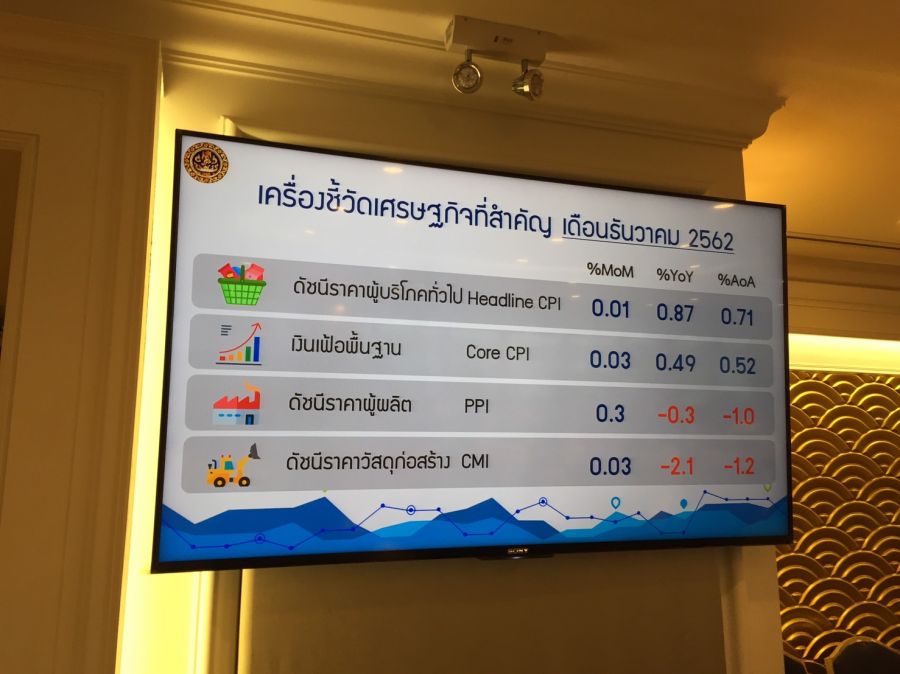
The consumer price index (CPI), commonly referred to as headline inflation, stood at 102.62 as December drew to a close, a 0.87-per-cent increase from the same month last year, the Commerce Ministry reported on Thursday (January 2).

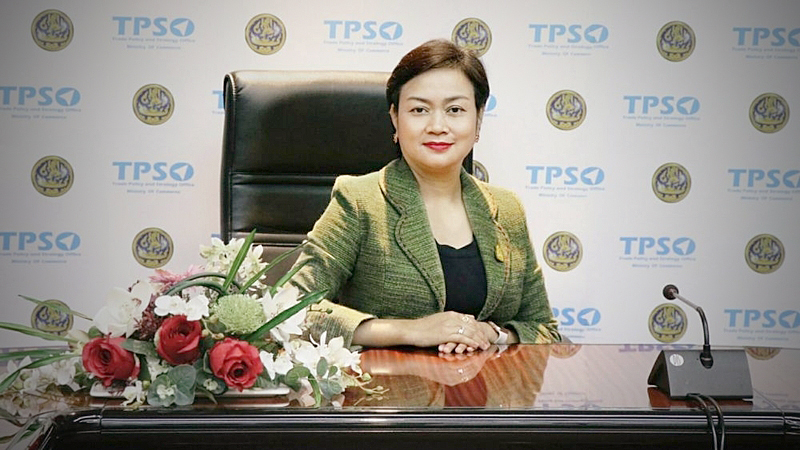
“The CPI rose for the five consecutive months since its last slowdown in August,” said Pimchanok Vonkorpon, director-general of the ministry’s Trade Policy and Strategy Office.

“The key factor in the December rise was a hike in fresh food prices and a minimal decrease in energy prices – the least in the eight months.”

With the prices of fresh food and energy excluded from the calculation, core inflation expanded by 0.49 per cent, she said.

The average increase in core inflation for all of 2019 was 0.52 per cent and in headline inflation 0.71 per cent.

“These numbers are still within the ministry’s expectation of 0.7-1 per cent,” Pimchanok said. “The office estimates inflation rate for 2020 to be in the range of 0.4-1.2 per cent, for an average of 0.8 per cent.”

DTAC traffic surges 150 per cent on New Year’s Eve #ศาสตร์เกษตรดินปุ๋ย

#ศาสตร์เกษตรดินปุ๋ย : ขอบคุณแหล่งข้อมูล : หนังสือพิมพ์ The Nation

https://www.nationthailand.com/business/30380041?utm_source=category&utm_medium=internal_referral

DTAC traffic surges 150 per cent on New Year’s Eve

Jan 01. 2020
By THE NATION

Total Access Communications (DTAC) witnessed a record increase in traffic on New Year’s Eve, 150 per cent more than the previous year, thanks to the popularity of live video streaming via social media platforms like Facebook, which dominated mobile application usage over the New Year.

Prathet Tankuranun, chief technology officer of Total Access Communication Plc, said, “As the clock ticked over to 2020, we saw data usage skyrocket by 150 per cent compared to last year [as of January 1, 7am]. The peak period ranged from 8pm to 9pm on December 31, 2019.”

“Data traffic during New Year countdowns is by far the busiest hour of the busiest day of the year. That’s why DTAC allocated additional network engineers to ensure smooth connectivity 24 hours a day. We also boosted our network capacities with portable towers at New Year’s Eve countdown destinations,” Prathet said.

Bangkok ranked the highest for data consumption. In provincial areas, the highest data usage in Chiang Mai in northern Thailand, Ubon Ratchathani in the Northeast, Ratchaburi in the West, Samut Prakan in Central Thailand, Chonburi in the East and Songkhla in the South.

The most popular mobile apps was Facebook, followed by YouTube, Instagram, Line and Twitter.

วันที่ 30 เม.ย. 2562 ข่าวเศรษฐกิจ-ธุรกิจ #ศาสตร์เกษตรดินปุ๋ย

#ศาสตร์เกษตรดินปุ๋ย : ขอบคุณแหล่งข้อมูล : หนังสือพิมพ์โพสต์ทูเดย์

https://www.posttoday.com/economy

ทำใจอากาศร้อนดันบิลค่าไฟ1-2เดือนพุ่ง

ทำใจอากาศร้อนดันบิลค่าไฟ1-2เดือนพุ่ง

กฟผ.ประเมินไฟพีคเพิ่มขึ้นได้อีก 500 เมกะวัตต์ ยอมรับอากาศร้อนคนไทยแห่เปิดแอร์ทั้งกลางวันกลางคืน ส่งผลให้1-2 เดือนนี้ บิลค่าไฟฟ้าสูงขึ้น

วันที่ 30 เม.ย. 2562 เวลา 18:02 น.

ข่าวเศรษฐกิจ-ธุรกิจ

ขึ้นค่าทางด่วนวงแหวนรอบนอก บางครุ-บางขุนเทียน 15-35บาท เริ่ม20พ.ค.นี้

ขึ้นค่าทางด่วนวงแหวนรอบนอก บางครุ-บางขุนเทียน 15-35บาท เริ่ม20พ.ค.นี้

ครม.ไฟเขียวขึ้นค่าทางด่วนวงแหวนรอบนอกกรุงเทพมหานคร( ถนนกาญจนาภิเษก) ตั้งแต่ด่านบางครุ-บางขุนเทียน หลังเคลียร์กรมทางหลวงและการทางพิเศษฯลงตัว

วันที่ 30 เม.ย. 2562 เวลา 17:19 น.

ข่าวเศรษฐกิจ-ธุรกิจ

คลอดแผนพีดีพี 2018 คุมค่าไฟ 3.58 บาทต่อหน่วย

คลอดแผนพีดีพี 2018 คุมค่าไฟ 3.58 บาทต่อหน่วย

ครม.ไฟเขียวแผนพีดีพี2018 ระยะ20 ปี สั่งทบทวนทุก 5 ปีตามสถานการณ์ วางเป้าหมายเพิ่มกำลังผลิตไฟฟ้า 56,431 เมกะวัตต์ เน้นเชื้อเพลิงก๊าซผลิตไฟฟ้า 53%

วันที่ 30 เม.ย. 2562 เวลา 16:52 น.

ข่าวเศรษฐกิจ-ธุรกิจ

กฟผ.พร้อมรับซื้อน้ำมันปาล์มดิบอีก1แสนตันผลิตไฟฟ้า หวังช่วยดันราคาปาล์มขยับ

กฟผ.พร้อมรับซื้อน้ำมันปาล์มดิบอีก1แสนตันผลิตไฟฟ้า หวังช่วยดันราคาปาล์มขยับ

กฟผ.ขานรับนโยบายดูดซับน้ำมันปาล์มดิบ รับซื้อได้ 1 แสนตัน รอกนป.เคาะ 2 พ.ค.นี้ อิงเงื่อนไขเดิมไม่กระทบต้นทุนค่าไฟ

วันที่ 30 เม.ย. 2562 เวลา 16:29 น.

ข่าวเศรษฐกิจ-ธุรกิจ

ครม.เลื่อนปฏิทินงบ63รอรัฐบาลใหม่อนุมัติ

ครม.เลื่อนปฏิทินงบ63รอรัฐบาลใหม่อนุมัติ

รัฐบาลเลื่อนการพิจารณางบประมาณปี 2563 วงเงิน 3.2 ล้านล้านบาท ไม่มีกำหนดจนกว่าจะได้ ครม.ชุดใหม่มาเห็นชอบ

วันที่ 30 เม.ย. 2562 เวลา 16:03 น.

ข่าวเศรษฐกิจ-ธุรกิจ

LINE JOBS ขอขึ้นแท่นแพลตฟอร์มหางานอันดับ 1 ของไทย

LINE JOBS ขอขึ้นแท่นแพลตฟอร์มหางานอันดับ 1 ของไทย

LINE JOBS ขยายกลุ่มเป้าหมายคนหางานทำ 10 ล้านคน ด้วยช่องทางโดนใจคนยุคใหม่

วันที่ 30 เม.ย. 2562 เวลา 13:02 น.

ข่าวเศรษฐกิจ-ธุรกิจ

เศรษฐกิจโลกชะลอ ฉุด ดัชนีอุตสาหกรรมเดือนมี.ค.วูบ

เศรษฐกิจโลกชะลอ ฉุด ดัชนีอุตสาหกรรมเดือนมี.ค.วูบ

ดัชนีMPIเดือน มี.ค. ลดลง 2.54% จากผลกระทบจากเศรษฐกิจโลกที่ชะลอตัวและอากาศที่ร้อนจัดที่ส่งผลให้สินค้าเกษตรมีผลผลิตลดลง แนะจับตา มองตลาดส่งออกกลุ่ม CLMV ที่ขยายตัวต่อเนื่อง

วันที่ 30 เม.ย. 2562 เวลา 12:48 น.

ข่าวเศรษฐกิจ-ธุรกิจ

พาณิชย์เตรียมนำทัพขนสินค้าไทยโชว์ศักยภาพในงานพืชสวนโลกปักกิ่ง เอ็กซ์โป 2019

พาณิชย์เตรียมนำทัพขนสินค้าไทยโชว์ศักยภาพในงานพืชสวนโลกปักกิ่ง เอ็กซ์โป 2019

กรมส่งเสริมการค้าระหว่างประเทศ เข้าร่วมจัดงานแสดงสินค้าและอาหารไทยในงานพืชสวนโลกปักกิ่ง เอ็กซ์โป 2019 ตอกย้ำไทยเป็นผู้ผลิตสินค้าและผู้จำหน่ายสินค้าเกษตรชั้นนำของโลก

วันที่ 30 เม.ย. 2562 เวลา 10:44 น.

ข่าวเศรษฐกิจ-ธุรกิจ