‘Godzilla vs. Kong’ marks covid-era box office breakthrough #SootinClaimon.Com

#SootinClaimon.Com : ขอบคุณแหล่งข้อมูล : หนังสือพิมพ์ The Nation.

https://www.nationthailand.com/lifestyle/30404521

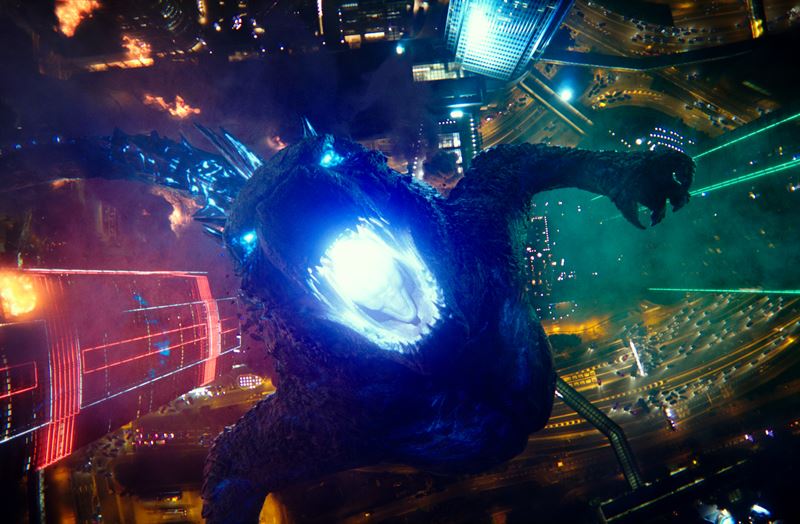
‘Godzilla vs. Kong’ marks covid-era box office breakthrough

EntertainmentApr 05. 2021

By Syndication Washington Post, Bloomberg · Kelly Gilblom

“Godzilla vs. Kong,” the Warner Bros. and Legendary action film, is drawing the largest weekend crowds to movie theaters since the start of the Covid-19 pandemic more than a year ago.

The monster movie brought in ticket sales of about $32.2 million between Friday and Sunday in North America and $48.5 million over the five-day Good Friday holiday period, according to researcher Comscore Inc. The domestic sales were roughly double that of “Wonder Women 1984,” the previous best weekend opening in the pandemic era.

“This is the best news the theatrical side of the business has had in over a year,” said Comscore senior media analyst Paul Dergarabedian, adding that the results proved that a big budget sci-fi action extravaganza like “Godzilla vs. Kong” is “tailor-made for the immersive and impactful experience that only the big screen can provide.”

The movie theaters badly needs the jolt. Ticket sales have fallen more than 85% from a year earlier, according to Comscore, and theaters are only reopening slowly, with more than half now back in business. They’re also imposing strict limits on how many customers may attend at one time.

Still the early returns — with audiences again willing to turn out for major-budget films — suggest there’s pent-up demand, even with studios making their best releases, including “Godzilla vs. Kong,” available online.

“We may not yet be talking about pre-pandemic box office levels, but for this film to come out of the gate swinging shows how eager audiences are to return to movie theaters,” said Shawn Robbins, chief analyst at Boxoffice Pro. “This is one of the necessary inflection points the movie industry has been waiting and hoping for.”

The film, starring Millie Bobby Brown and Alexander Skarsgard, also had a large international premiere. It scored the biggest foreign opening in China in at least 15 months, generating about $137 million in ticket sales there. Its worldwide sales now have reached $285 million, Comscore said.

Analysts and industry insiders have been predicting this type of popcorn film would draw fans back to the big screen. Big-budget action movies, particularly those with recognizable characters like King Kong and Godzilla, tend to sit atop the box office. However, studios mostly held back those releases until more theaters reopened and more moviegoers could gather.

Now, cinemas have reopened in every major U.S. market. AMC Entertainment Holdings Inc., the world’s largest theater chain, said Thursday it has reopened 99% of its locations. “Godzilla vs. Kong” will probably show about 80,000 times across the U.S. between Friday and Sunday, according to Boxoffice Pro.

By comparison, “Wonder Woman 1984” screened 50,000 times during its opening weekend over Christmas and brought in about $17 million in ticket sales over that span. Both movies were also available on HBO Max the same day they came out in theaters, at no additional cost to subscribers.

“The Unholy,” a horror film, took the No. 2 spot with $3.2 million, according to Comscore. “Nobody,” a thriller from Universal Pictures that debuted last weekend, came in the third. Walt Disney Co.’s “Raya and Last Dragon,” an animated film about a warrior girl, ranked No. 4 with ticket sales of $2 million.

‘League of Legends: Wild Rift’ is ‘League’ Lite, targeted at new players #SootinClaimon.Com

#SootinClaimon.Com : ขอบคุณแหล่งข้อมูล : หนังสือพิมพ์ The Nation.

https://www.nationthailand.com/lifestyle/30404461

‘League of Legends: Wild Rift’ is ‘League’ Lite, targeted at new players

EntertainmentApr 03. 2021Riot GamesRiot Games

By The Washington Post · Shannon Liao

When I asked my five-person “League of Legends” team, composed of strangers playing on PC, if anyone was trying out “Wild Rift,” one of them derisively replied, “Who would want to play ‘League’ on their phone?”

The answer, it turns out, is millions. The day of release, App Annie reported 6 million downloads of “League of Legends: Wild Rift” across the United States, Brazil and Mexico, growing the global total to 32 million downloads. The mobile game is already available in Southeast Asia and Europe, with other regions coming soon.

“Wild Rift” takes the gameplay of “League of Legends” – five players versus five players, fighting and strategizing to destroy the enemy’s nexus – and modifies it to make sense on mobile. “Wild Rift” moves at a faster pace than “League” on PC, games demand less time and the size of the map shrank to fit smaller screens.

The reluctance from some PC players is understandable, however. Since its inception in 2009, “League of Legends” has both captivated esports fans and induced a sense of inferiority in its more amateur players stuck in the lower competitive ranks of bronze, silver and gold. Few League players reach the highest tier of Challenger, and even fewer can appear on world championship stages each year in Beijing or Paris displaying their speedy reaction times.

“League” is a game well-informed by its competitive play and what it’s supposed to look like at the highest level – there is a valley of difference between a fun, messy game of All Random All Mid (ARAM) and professional plays. But for many League players, part of the fun is striving to get there. And to those hardcore fans, they might have a visceral reaction to hearing about “Wild Rift,” which runs on iOS and Android, with console support in the works. After all, mobile gaming understandably means having to play on a smaller screen, using touch controls to drag one’s champion around and other compromises to the full “League” experience.

But while those changes might be disliked by hardcore purists, “Wild Rift” adds up to a satisfying experience for many. The simpler version of “League” appears to be attracting a new set of players, those who quit “League” on PC, those who never had a gaming PC, those who never learned “League” because it was too information-dense, those who play other battle arena games similar to “League” and more.

In other words, “Wild Rift” seems to be injecting new life into a community that has grown pretty insular.

“League of Legends” averaged 8 million daily users in 2019, and that number remains flat this year. Without “Wild Rift,” “Teamfight Tactics” and the other games that Riot has added to its recent portfolio, “League” might have continued to plateau. But Riot specializes in attracting fans to new intellectual property and supporting those games as esports. It has competitive plans for “Wild Rift” too, with tournaments already popping up in Southeast Asia and Europe. And the game maintains key features that pro players could excel at: killing minions to get power-ups, complicated champions like Vayne who rolls around and turns invisible, and three stages of the game, including a final stage for teams to face off.

Still, with limited support for controllers (I tried connecting a PS5, PS4 and an Xbox Series X controller to my iPhone and my Android phone, and none of them worked except for the share button on the PS4, which allowed me to capture footage and screenshots), “Wild Rift” is dependent on players learning its touch controls. It took me a good 10 games to get the hang of dragging to move my champion, aiming skill shots and attacking in the right direction. In early games, I would drag my champion backwards by accident and get caught in enemy attacks and die, which was frustrating, knowing that I would’ve survived if I just had a little more control.

After practice, however, I’ve started to play “Wild Rift’s” competitive ranked mode and found it’s easy to be consistent in games, push objectives forward and have a positive impact on the team. Double kills and even triple kills are sometimes simple to pull off, when enemy players are still trying to figure out how to run away. With the smaller map, ganks, the act of popping into a different lane to help kill the enemy, are a lot easier to execute. A common strategy in effective rank games is to group up and start deleting enemy champions one at a time. It’s a plan that works well on PC too, but it feels even more oppressive on mobile, if one team is always sticking together and the other is scattered and uncoordinated.

“Wild Rift” also cleans up one of the more annoying reoccurrences in “League”: online harassment. While I’ve seen players still curse each other out over taking a role someone else wanted, those instances are rare, as it’s pretty tough to type while playing. “Wild Rift” requires a lot of hands-on tapping, and that means less time to say something mean in chat. There are pings players can use to signal that an enemy is missing, to retreat, that the player is on their way, or to engage in a fight. The game’s narrator helpfully calls out “On my way!” repeatedly when the ping is pressed, and even though players tend to spam these pings, I haven’t seen anyone complain that it’s annoying.

With reduced online harassment, “Wild Rift” is a much more beginner-friendly game. In the games where I was trying out off-roles and champions I don’t usually play, like Master Yi in jungle, I died multiple times and was a hindrance to my team – nobody said anything. On PC, it’s common to see a player who has died 10 times get insulted by various teammates for being “useless” or intentionally losing.

Meanwhile, voice chat in game sounds crisp and smooth, but I had to switch to headphones to talk to my teammate, as my hand placement on the controls naturally blocked my phone mic and I sounded muffled and far away.

At the same time, “Wild Rift” still lacks a few features that could be helpful for newbies. Champion skills don’t have descriptions once a game starts, so a new player can’t read up on what each skill is while playing on the fly. Players aren’t taught in the tutorial which champions are best for certain roles, nor what they should do after they destroy the enemy’s first turret.

Ranked mode also opens up to players at level 10, which is fairly early, compared to League on PC where people unlock ranked mode after level 30 and owning 20 champions. The result is that the current ranked mode for “Wild Rift” includes a chaotic mix of people of all skill levels from beginner to advanced, even some people who are still learning the game’s basics.

“Wild Rift” takes the same approach to free-to-play as PC “League” does: Players can earn in-game cosmetics through time spent on the game, and they can avoid spending real money if they’d like. There are no ads and no constant reminders to spend money on the game. There’s no way to pay to win, and spending real money only has benefits such as better looking outfits and unlocking champions faster. I spent around $20 on the game, $13 to buy my champion a nice Lunar New Year themed skin and $7 to skip ahead and get Miss Fortune, my favorite champion.

That separates “Wild Rift” from many rival free-to-play mobile games, which often lure players to sink money with the promise of better lottery rewards and sometimes even run ads on top of that for additional revenue. In fact, Wild Rift’s approach to mobile gaming feels more like a premium, paid product, such as a $4 app in the store, but without the paywall.

And it’s that slick combination of a seemingly premium product that’s also free-to-play that is drawing in new fans to “League of Legends,” a nearly 12-year-old game and now a robust, growing franchise.

‘Godzilla vs. Kong’: Which of our big boys has the power to win? #SootinClaimon.Com

#SootinClaimon.Com : ขอบคุณแหล่งข้อมูล : หนังสือพิมพ์ The Nation.

https://www.nationthailand.com/lifestyle/30404374

‘Godzilla vs. Kong’: Which of our big boys has the power to win?

EntertainmentApr 01. 2021Godzilla battles Kong in Godzilla battles Kong in “Godzilla vs. Kong,” the latest MonsterVerse film. MUST CREDIT: Warner Bros. Pictures and Legendary Pictures

By The Washington Post · Hau Chu, Sonia Rao

Part of the beauty of cinema lies in how it allows us to reflect on the most vital questions of our time – namely, if a nuclear-radiated sea monster could pummel a big gorilla, or whether that massive ape might just be the true prehistoric god-king of the earth.

Godzilla! MUST CREDIT: Warner Bros. Pictures and Legendary Pictures

Godzilla! MUST CREDIT: Warner Bros. Pictures and Legendary Pictures

Such weighty questions require careful thought, the sort that inspired the Renaissance greats to carve thinking men out of stone. One might recall these chiseled figures upon watching Alexander Skarsgard emphatically state in the “Godzilla vs. Kong” trailer, “This is our only chance. We have to take it. We need Kong. The world needs him.”

But does the world truly need Kong? Does he stand a chance against Godzilla? Before we “let them fight,” as Ken Watanabe so dramatically uttered in 2014′s “Godzilla,” join us in admiring (and scorning) these two big boys as we make the case for which gargantuan creature should reign supreme. Their epic brawl premieres Wednesday in theaters and on HBO Max.

– – –

– Godzilla, our nuclear breath-firing destroyer

Off the bat, you have to acknowledge that Godzilla looks cooler and meaner.

But what is he? Or she?Is it a big lizard? A dinosaur-human hybrid? Well, technically it’s a kaiju,which translates from Japanese as “strange beast.”

Sure, the atomic-breather of old was nothing more than an actor in a rubber body suit. But the lore of what Godzilla stands for means more than any large gorilla.

The mythical monster was created as a stand-in for the fear and terror of the nuclear weapons that devastated Japanese society. Since appearing in 1954, the creature has inspired tales ranging from 1968′s monster tag-teaming “Destroy All Monsters” to the brilliant 2016 political satire “Shin Godzilla,” which brought the threat of nuclear peril to the modern day with the 2011 Fukushima Daiichi disaster.

Godzilla’s depictions have spanned the globe for decades, from novels to video games. But let’s get down to the tale of the tape.

In this film canon – which began seven years ago and includes 2017′s “Kong: Skull Island” and 2019′s “Godzilla: King of the Monsters” – we’ve seen our large lad vanquish its enemy by prying open its mouth and spitting pure nuclear energy down its throat and disintegrate two of Ghidorah’s three heads while chewing on the third like a squeaky toy before obliterating it for fun. And that’s just for starters.

So for this newest round, in one corner, there is a prehistoric monster that roams the land and sea who can fire off beams of nuclear energy from its mouth and has regenerative powers that allow it to swat away human weaponry like flies. Cloaked in scales, it also has an unmistakable, anguishing roar that lets you know it’s about to go down.

In the other corner, you have a big, chest-thumping gorilla who gets very easily distracted by a pretty lady.

No contest.

– Hau Chu

– – –

– Kong, the primate to rule them all

If “Tom and Jerry” taught us anything – the cartoon, not that ridiculous new movie with Colin Jost – it’s that size doesn’t count for everything. Speed and agility are underrated players here. If Jerry the mouse can trip Tom by tying his legs together with a string, what’s to stop Kong from doing the same with a vine from stinky Skull Island?

For those who believe size does matter, consider that Kong appears to now be the same height as Godzilla. It’s unclear what led to his practically tripling in size – perhaps it’s that he was an “adolescent” the last time we saw him, per “Godzilla vs. Kong” writer Michael Dougherty – but facts are facts, and our boy could make a killing hawking monster PediaSure.

To address the obvious: Yes, Godzilla can blast atomic breath. But Kong is showing up to the ring with his very own Mjolnir: an ax that seems able to harness the nuclear fire as Thor’s hammer does lightning (or, at the very least, that can deflect it). We’ve established Kong’s agility, but it must also be said that he has the smarts to strategize. Godzilla, on the other hand, is quite literally operating with a lizard brain.

Not to crib from Jay-Z’s heinous verse on “Monster,” but an appeal for Kong is also an appeal for love. He simply does not get enough of it. We saw the kindness in his eyes when Tom Hiddleston and Brie Larson’s characters encountered him up close in “Skull Island,” and the latest MonsterVerse film embraces that trait. It introduces a story line where Kong essentially joins Rebecca Hall’s anthropological linguist character in bonding with and vowing to protect her adopted daughter, the last surviving member of the indigenous tribe that shared the island with him.

Kong is the more empathetic figure, and that goes a long way in Hollywood. He bows to no one, nor should he.

‘Godzilla vs. Kong’ is a clash of the titans – and mismatched storytelling styles #SootinClaimon.Com

#SootinClaimon.Com : ขอบคุณแหล่งข้อมูล : หนังสือพิมพ์ The Nation.

https://www.nationthailand.com/lifestyle/30404322

‘Godzilla vs. Kong’ is a clash of the titans – and mismatched storytelling styles

EntertainmentMar 31. 2021Godzilla, left, battles King Kong in Godzilla, left, battles King Kong in “Godzilla vs. Kong.” MUST CREDIT: Warner Bros. Pictures/Legendary Pictures

By The Washington Post · Michael O’Sullivan

If “Godzilla vs. Kong” sounds like the billing in a prize fight, the movie – a creature-feature sequel to 2017’s witty, stylish “Kong: Skull Island” and 2019’s more flat-footed “Godzilla: King of the Monsters” – lives up to that rock-’em, sock-’em dynamic, in more ways than one. In a literal sense, it’s a multi-round matchup between the reptilian behemoth, an atomic blast-breathing kaiju, and the big ape, who’s looking a little worse for wear and gray in the muzzle as the film begins, several decades after the Vietnam War-era setting of “Skull Island.” In a stylistic sense, it’s also a battle between storytelling with an emotional connection and monster-moviemaking at its most reductive: loud, effects-laden stimulation for the retina, but not much brain or heart.

As Kong awakens from a peaceful night’s sleep at the start of the film, he’s almost cuddly, even when he uproots a massive tree with his bare hands, strips it of leaves and branches and hurls it skyward like a javelin. Jia (Kaylee Hottle), the little deaf girl who is watching him from nearby, unafraid, seems to sense this. The last surviving member of the indigenous tribe that once shared the island with Kong, Jia has a strange rapport with the beast – and vice versa. (It’s more than a rapport, really, as we’ll learn later in the film’s most touching and provocative scene. But “Godzilla vs. Kong” doesn’t seem to know how to take full advantage of Jia and Kong’s surprising bond, which, while a significant plot point, is underutilized.)

It’s always a bad idea to weigh a film against the one you wish you’d seen, and not simply by what you’re given. With “Godzilla vs. Kong,” we’re given two antagonists, but only one of them – the titanic primate, a cousin of Man, however overgrown the big lug may be – is easy to love. The coldblooded Godzilla, despite efforts to find motivation for the mayhem he wreaks, will never be especially relatable.

But, oh, how the film does try.

As things get underway, two parallel plots start to fall into place: Godzilla, in his first attack in three years, emerges from the seas to wreak havoc in Florida. (His arrival, like an inanimate storm, is referred to as making “landfall.” But hurricanes have more personality.) That story line involves a “Scooby-Doo”-esque investigation of Godzilla’s motives – and, naturally, the discovery of a secret plot engineered by a shady corporation – uncovered by a trio of meddling, conspiracy-minded misfits (Millie Bobby Brown, Julian Dennison and Brian Tyree Henry). The human protagonists skew young here, which tells you something about the film’s target demographic.

The other plot involves a team of commandos (Alexander Skarsgard; Rebecca Hall, who plays Jia’s adoptive mother; and Eiza González). They have been tasked with recruiting Kong as an escort on a mission to the center of the Earth. There, in a deep cavity that is believed to be the ancestral home of all the monsters plaguing mankind – and there are a lot – is a power source that the film’s villain (Demián Bichir) needs to combat Godzilla.

Kong, groggy from sedation and strapped to the deck of an aircraft carrier en route to the “Hollow Earth” access point in Antarctica, meets the lizard king in the middle of the Tasman Sea for Round 1. And so begins what might be called the Thrilla with Godzilla. It actually is pretty thrilling, as CGI pugilism goes. (So, for that matter, are some of the effects used to render the Hollow Earth, where gravity is said to be “inverted,” whatever that means.)

Their epic faceoff will include other battles, in Hong Kong, and with additional adversaries. You might guess who – or, rather, what – one of them turns out to be, simply by looking up some of the best-loved Japanese movie monsters.

Is love too much to ask for? In one corner, we have Kong: a soulful-eyed galoot who, as has been true since the original film, is just looking for a little tenderness. In the other corner: Godzilla, a scaly, albeit misunderstood, misanthrope. One half of “Godzilla vs. Kong” wants to tell a human story. Believe it or not, it partly succeeds. The other half just wants to break stuff.

I’d call it a draw.

– – –

Two and one-half stars. Rated PG-13. Also available on HBO Max. Contains intense sequences of creature violence, destruction and brief coarse language. 113 minutes.

Ratings Guide: Four stars masterpiece, three stars very good, two stars OK, one star poor, no stars waste of time.

‘Monster Hunter Rise’ is a grand Japanese homecoming, made by a more confident team #SootinClaimon.Com

#SootinClaimon.Com : ขอบคุณแหล่งข้อมูล : หนังสือพิมพ์ The Nation.

https://www.nationthailand.com/lifestyle/30404321

‘Monster Hunter Rise’ is a grand Japanese homecoming, made by a more confident team

EntertainmentMar 31. 2021The shell and armor for the flagship monster in The shell and armor for the flagship monster in “Rise,” Magnamalo, are inspired by traditional samurai armor. MUST CREDIT: Image by Capcom

By The Washington Post · Gene Park

In platform and premise, “Monster Hunter Rise” may seem like a bit of a risk.

2017’s “Monster Hunter World” became the best-selling game in publisher Capcom’s history, no small feat with an oeuvre that includes the Resident Evil, Street Fighter and Mega Man brands. But that game came with a lot of aesthetic changes that enabled its success. It was the first game to release with high-budget graphics and effects, debuting on PlayStation 4 and Xbox One before a PC release that pushed sales and broke Capcom records. Although the series always featured out-of-the-box eclectic monster designs, the ones in “World” focused on dinosaurs, globally recognized but creatively a bit stale.

“Monster Hunter Rise” is a thematic and technological return home. Even though the series debuted in 2004 on PlayStation 2, it did not take off until it arrived on the PlayStation Portable and Nintendo 3DS mobile platforms. And although “World” was a global hit, fans in Asia probably were waiting for a return to mobile platforms. Now that it’s here, the game’s embrace and love of Japanese culture feels like a celebration.

Still, there were concerns that the team was swinging too hard by focusing the entire game on Japan and its culture. Director Yasunori Ichinose admitted as much last month, saying he was “a bit worried” over the response to the Japanese themes. But producer Ryozo Tsujimoto said Monster Hunter’s return to Japan was always in the cards sooner or later.

“Director Ichinose-san likes the Japanese and Asian aesthetic in general, but we’d only incorporate Japanese/Asian design in ‘Monster Hunter Portable 3rd,’ which was only in Japan,” Tsujimoto told The Washington Post. “We thought we’d come back to revisit those aesthetics after a few titles, now that there’s more that can be done from a technical perspective.”

The Japanese focus also allowed the team to get creative with its monster designs, drawing from the team’s own culture and childhood folklore to create art that feels culturally authentic and full of native passion. Tsujimoto said the focus really came from a desire to create a mainline game that stands apart from the rest.

“We thought by connecting the monster ecology and the yokai lore together, we could come up with new designs, so we shared a lot of monster ideas and then selected what works with gameplay,” Tsujimoto said. Tsujimoto is the son of Capcom’s founder Kenzo Tsujimoto and has been the public face of the series for more than a decade.

Yokai folklore depicts a class of supernatural beings, monsters and ghosts. In “Rise,” the most recognizable creature is likely the Tetranadon, based on the frog-like demon that also inspired Sanrio cutie megabrand Keroppi. The flagship monster in “Rise,” Magnamalo, isn’t yokai, but his shell and armor is inspired by traditional samurai armor.

Some were surprised that “Rise” would be a Nintendo Switch exclusive for at least a year. But given that Capcom recently announced that it shipped 4 million copies of the game in three days, the company probably is not second-guessing the decision. “World” shipped 5 million in the same time period, but across PlayStation 4 and Xbox One consoles.

Mobile gaming in Asia does not carry the same stigma it does in the U.S. People of all ages play video games on their phones or handheld devices, and oftentimes it was “Monster Hunter.” And the Nintendo Switch was only just released in China, where console gaming is a niche market, and has already dwarfed sales of the PlayStation 4 and Xbox One consoles.

YouTuber GaijinHunter, who lives in Japan and has covered the series for years, said last year that given the lopsided global success of “World,” Japan was craving a mobile game, and he correctly predicted a Switch release. He tweeted charts showing how past titles and “World” performed in Japan.

But Monster Hunter games are almost always about looking forward, not back. Many features added in past games endure and survive in all subsequent titles, except the third game’s ill-advised underwater hunts. “World” was such a graphically intensive game, but Tsujimoto said the team was not worried about the limitations because they focused keenly on creating for the Switch hardware.

This feat was largely achieved by using Capcom’s internal RE Engine, which has powered its most recent Resident Evil games. A lower-tech, large-scale Switch game was an interesting test of the engine’s scalability, one that it largely passed. But the jump back to portable meant the team had to redo many of the game’s menu systems, which will take up a good portion of any monster hunter’s time.

“For ‘Rise,’ we developed the game with visibility in mind,” Tsujimoto said. “For example, we changed the colors and the shapes of the item icons for the consumables. Also, when the weapon sharpness goes down, we added sound effects and visual effects on the screen to make it more noticeable.”

Longtime monster hunters will also recognize the crunchiness of the user interface audio, and the large bold colors for status effects. The subtitles are also huge and easy to read.

There was also some fan concern over how the game might play online, given the Switch’s history of poor service. But Nintendo recently updated its aging servers just in time for “Monster Hunter Rise.” The Post asked Tsujimoto whether the team had concerns, or whether it made special requests or entreaties to Nintendo to upgrade its servers.

“Throughout the development process, [Nintendo] have been very supportive in responding to all our questions and requests,” Tsujimoto said without specifying. “We were able to develop this game because we were able to work closely together with Nintendo.”

The Monster Hunter series has always been a sleeping giant in the games industry. “World” was a wake-up call for the world. With strong sales and a stronger identity, “Rise” seems to declare that Monster Hunter has finally risen.

‘Nier Replicant’ is for anyone who regrets playing ‘Automata’ first #SootinClaimon.Com

#SootinClaimon.Com : ขอบคุณแหล่งข้อมูล : หนังสือพิมพ์ The Nation.

https://www.nationthailand.com/lifestyle/30404273

‘Nier Replicant’ is for anyone who regrets playing ‘Automata’ first

EntertainmentMar 30. 2021“Nier Replicant” is a remake and a remaster of the 2010 action role-playing game “Nier.” MUST CREDIT: Image by Square Enix

By The Washington Post · Gene Park

Anyone who’s played it knows that “Nier Automata” is one of the most fascinating video games ever created, but so many missed its prequel, simply named “Nier.”

Enter “Nier Replicant ver.1.22474487139 . . . ,” or simply “Nier Replicant.” Developed by Toylogic, it’s both a remake and remaster of the overlooked 2010 action role-playing game that sets up the existential dread in “Automata.” Creator Yoko Taro’s writing finally got the attention it deserved, both from a growing audience and a development team that could properly bring his vision into a trippy, thrilling experience.

“Replicant” is scheduled to be released April 23 for PC, Xbox One and PS4, so it’s still a ways off. But I’ve been playing the final build of the game for the past week, and it’s been a nostalgic trip back. I finished the original “Nier” for the Xbox 360 in 2010, but I did not return to it for a few reasons. For one, it’s a tragic, sad story, but anyone who’s played “Automata” could’ve guessed that. It’s hard to endure emotionally. For “Automata,” I spent three real-life therapy sessions unpacking what I had learned about myself from the game. But the other reason that kept me away is that the gameplay was also a bit rough. Its level designs were extremely flat, and the combat was not enough to make up for the same-old, same-old temple rooms and ruins.

That’s why “Nier” and Yoko Taro fans cheered when “Replicant” was announced, bringing the same “Bayonetta”-inspired combat to the older story. For veterans, it’s the greatest excuse to return to a story that could arguably be better than “Automata.” For those who only jumped on with “Automata,” it’s going to be a bizarre and surreal trip.

Both games have a fixation with philosophical themes. “Automata” could not exist without the themes and plot established in “Nier,” and the message of “Nier” is enriched and further clarified by what happens in “Automata.” Many of the game design concepts of “Automata,” including its abrupt changes in genre, as well as camera style and setting, hail from the original prequel. And if you think “Automata” had some wild changes, the original game takes a sharp turn into genres you might not expect.

“Replicant” feels great. The eponymous hero Nier moves with the same agility as androids 2B and 9S, with your standard light and heavy attacks. Your mysterious floating book companion, Grimoire Weiss or “Weissy” for short, basically acts as your gun and attack modifier. He works just like the robotic pods of “Automata,” and he can turn the game from a “Devil May Cry” character-action title to a bullet-hell third-person hybrid.

The game starts with Nier as a young child, but as the story wears on, his ability to swing weapons and wield magic through Weissy becomes exponentially more powerful. The original “Nier” is a satire of and homage to “The Legend of Zelda: Ocarina of Time,” complete with a nagging floating companion and a midgame jump in skills, abilities and story stakes.

This comparison will be all the more clear with “Nier Replicant,” which is a retelling of the original Japanese release of “Nier” that never made it to the West. Yoko Taro wrote two versions of the story for Japan, one of which depicted Nier as a brother in search of his sister, which is what we get in the upcoming “Replicant” rerelease. The West only received the version where Nier was a father searching for his daughter. At the time, this was a striking relationship in video games, right at the genesis of the now-worn-out trope of “daddening” video games. Before Kratos or Joel Miller, Papa Nier was a granddaddy of the genre.

By 2021’s standards, the brother-sister dynamic is now the more unique and original of the two, and it’s better for it. You can now see with greater clarity how Yoko Taro uses “Ocarina” to critique and deconstruct video game design and storytelling formulas. The staid level design I spoke of earlier? It now feels wholly coherent to the story’s longing for any kind of self-identity.

I dare not spoil any of the plot twists. “Automata”-only veterans may predict some of them, but that will not matter, not when the acting and music and cinematography push to make this a uniquely raw and emotional experience. Unlike the androids of “Automata,” “Nier Replicant” immediately feels more grounded and connected to humanity. It helps that much of the game is inspired by Japanese high-fantasy tropes of roaming monsters in grasslands, townships and temples. It’s like playing an old-school “Final Fantasy” game before it went cyberpunk, while retaining all the drama and passion of its later stories, held together by the kind of character action we only see in games like “Devil May Cry.”

Everything to know about the new mobile game ‘League of Legends: Wild Rift’ #SootinClaimon.Com

#SootinClaimon.Com : ขอบคุณแหล่งข้อมูล : หนังสือพิมพ์ The Nation.

https://www.nationthailand.com/lifestyle/30404236

Everything to know about the new mobile game ‘League of Legends: Wild Rift’

EntertainmentMar 29. 2021If players buy the battle pass for about $6, the season's reward is Hexplorer Jax. MUST CREDIT: Image by Riot GamesIf players buy the battle pass for about $6, the season’s reward is Hexplorer Jax. MUST CREDIT: Image by Riot Games

By The Washington Post · Shannon Liao

For years, “League of Legends” has remained on the top of the charts – commanding a robust esports scene, ranking as Twitch’s top live-streamed game and attracting 8 million daily players on PC. But try to invite a new player to learn “League of Legends” and they might have a challenging amount of information to absorb or lack the technical specifications on their computer to run the game smoothly.

Parent company Riot Games aims to give new players more chances to learn and play with “League of Legends: Wild Rift” on mobile. It comes out on Apple’s iOS platform and Android devices in the Americas on Monday. Riot also has plans to bring the game to console but declined to say when or on which platforms.

“Wild Rift” is also poised to become a mobile esport, with tournaments starting in Southeast Asia and Europe. Riot said it would have more to share on its esports plans by the end of the year. In regions where the game has been released, it’s been downloaded nearly 22 million times and reached over $29 million in user spending, according to app analytics firm Sensor Tower.

The multiplayer online battle arena game was rebuilt when it was brought to mobile platforms, a move long awaited by fans. To bring “League of Legends” to mobile, Riot performed a balancing act between appealing to veteran players and attracting new ones.

Key parts of “Wild Rift” remain recognizable for veteran “League” players. The goal is still to destroy the enemy’s nexus, and fans will see familiar champion faces, such as the sword-spinning Garen, the frost archer Ashe and gun-slinging bounty hunter Miss Fortune. “Wild Rift” retains its various stages of the game, shortened for mobile: a laning phase where players kill small minions to gain gold and return to home base to buy power-up items; midgame where players begin to roam to kill dragons and towers; and late game, where both teams reach full potential in item builds and learned skills.

Like classic “League,” “Wild Rift” has a standard game mode in which teams of five players fight and strategize to destroy each others’ bases, a ranked mode for determining one’s standing against other players, a mode against bots, and a tutorial mode. A less strategic, more pummeling game mode called All Random, All Mid (ARAM) is slated for a later update.

A lot has changed in “Wild Rift.” On PC, Ashe’s ultimate skill, an enchanted crystal arrow that stuns and damages the enemy, fires straight ahead in the direction the player selects. On mobile, this arrow can be steered after casting, and even curve toward an enemy to increase the chances that it lands on a target. The map is smaller on mobile and is simpler to navigate. Players can select item builds on their champion select screen to streamline gameplay, and minions will glow when they’re ready to be struck by a killing blow to compensate for the game’s smaller screen. And all the keyboard and mouse controls were redesigned as touch controls for mobile.

“It’s probably easier to think about what didn’t change at this point,” said game design director Brian Feeney. “Our overall approach was to create an authentic ‘League’ experience on new platforms, and we knew we had to make some adjustments to the game, the champs, and the controls to really deliver on that promise to players.”

Passive skills in “League” on PC, represented by buttons that do not need to be pressed, became a problem on mobile if left unchanged, as players would have “dead buttons” on their screen, so Riot added an active element to passive skills. Champions such as Nasus – nicknamed “Susan” by the League community and resembling the Egyptian god Anubis – that take their time rising in strength had to be adjusted to attain power more quickly, given the shorter game length.

Riot said it does not want to make “Wild Rift” a new game to learn.

“We don’t want players to go between ‘League’ PC and ‘Wild Rift’ and have to completely relearn how to play against a champion. The last thing we want players to think is: ‘Wait, how does this version of Darius work again?’ ” Feeney said.

Champions from ‘League’ will be added, with gargoyle Galio coming on April 1, the armor-covered armadillo Rammus slated for April 22 and crocodile-like Renekton on May 12.

Riot is building a universe with its "Wild Rift" and "Legends of Runeterra" games. MUST CREDIT: Image by Riot Games

Riot is building a universe with its “Wild Rift” and “Legends of Runeterra” games. MUST CREDIT: Image by Riot Games

Like the PC game, “Wild Rift” has a battle pass and in-game cosmetic skins that cost real money. If players buy the battle pass for about $6, the season’s reward is Hexplorer Jax, which looks different from the K/DA popstar skins Riot has popularized and features Jax, a champion who hasn’t gotten a lot of new skins. Hexplorer is a new line of skins created for “Wild Rift” by Riot’s skins team.

“We used a new skin line to differentiate as we want players to be able to immediately associate a given skin or skin line with the Wild Pass,” revenue strategy lead Jeff Cho explained. “If we were to use an existing skin line, there’s an increased burden of knowledge on the players to remember which skin from a given set can only be obtained from the Wild Pass.”

There’s also a new feature “Wild Rift” is introducing called baubles, small items that a player can throw at an opponent in lieu of name-calling. It’s part of Riot’s experimentation to give players ideally less toxic ways to communicate with their opponents. Baubles could be a slice of pizza or a small tombstone to be dropped on the map that do not serve any other purpose in the game. They’ll be sold in the game’s shop for real money or can be earned as a free reward for playing games.

The game runs on iPhone 6 Plus and newer, and on Android phones with at least 1.5-GHz processors. Riot said it may work with some controllers but has not been optimized to support all controllers yet. “Wild Rift” is still in a testing open beta phase.

“We’re not in a position to declare that ‘this is the game’ or the promise of ‘Wild Rift’ has been fully realized,” said publishing lead Eric Krause.

The game is also still not available in mainland China or India, but Riot has plans to roll it out in those countries. The Americas is one of the later regions to gain access to Wild Rift, after Europe and Southeast Asia, and rollout to the region has fallen behind the previously announced 2020 launch window. To address this, the Americas are getting a specific in-game event called Wild Welcome to help them catch up on content and earn rewards for playing more games.

Riot’s technical operations director, Landon McDowell, attributed the slower rollout in the Americas to “connectivity challenges between the U.S., where a number of our servers are, and where our players are based in Central and South America.” Putting up servers everywhere in the world would be spreading resources too thin, said McDowell, and make it “harder to make quality matches.” For now, select locations such as Brazil will have servers and better service, while those outside of that area may have weaker connections, while Riot works on building its infrastructure.

McDowell explained that Southeast Asia was focused on first because it would be “the most technically complex and it would help us identify and address most of the issues as we were scaling up other regions.”

Between “Wild Rift,” the card game “Legends of Runeterra,” and an upcoming massively multiplayer online role-playing game set in the “League” world, Riot is starting to build a universe.

An upcoming event in “Wild Rift” called Masters of the Hunt is a nod to “League’s” extensive lore surrounding its 150 plus champions. In the event on May 6, void assassin Kha’Zix and his nemesis, a feline creature named Rengar, will hunt and stalk each other, and players get to decide which hunter wins the round.

“We are constantly looking for lore connections when we plan content releases so champions with rivalries or friendships are more likely to be released together and be accompanied with narrative-driven events,” said Jenny Liu, events lead. “We found that players enjoy the rich in-universe connections of our champions.”

‘Monster Hunter Rise’ is the most ambitious Nintendo Switch game in a long time #SootinClaimon.Com

#SootinClaimon.Com : ขอบคุณแหล่งข้อมูล : หนังสือพิมพ์ The Nation.

https://www.nationthailand.com/lifestyle/30404049

‘Monster Hunter Rise’ is the most ambitious Nintendo Switch game in a long time

EntertainmentMar 24. 2021Monster Hunter Rise by CapcomMonster Hunter Rise by Capcom

By The Washington Post · Gene Park

I can hardly believe a game this large, that runs this smoothly, exists on the Nintendo Switch.

The Switch is easily the weakest console on the market today. You won’t see ray-tracing effects or smooth framerates. The handheld hybrid has been host to some remarkable ports of complicated titles, most notably in the “Doom” series. But when it comes to original titles, it’s been less of a technical showcase.

“Monster Hunter Rise” is an original, made-for-Switch Capcom title that shatters expectations of what to expect. For all intents and purposes, it’s an even bigger experience than “Monster Hunter World” on PC and other consoles. This is grand news for any hunters who joined the bandwagon with “World,” currently Capcom’s best-selling title of all time, bigger than its “Resident Evil” or “Street Fighter” series.

This is achieved through Capcom lowering texture details and environmental asset fidelity for much of the hunting grounds, which seem to be larger than any found in “Monster Hunter World.” But the game retains much of the luxurious animation work and streamlined action that elevated the series beyond its niche core audience. Also, you get a customizable dog that you can ride, along with the series-standard cat warriors called Palico.

It helps that the art style leans further into high fantasy Japanese mythos, utilizing Capcom’s RE Engine that has powered the company’s recent successes in “Resident Evil” and “Devil May Cry.” Gone are the saturated, filmic filters and gritty textures of “World.” Instead, whimsy rules the day, even when it comes to the game’s chimerical monster designs. There’s less fur, but everything moves as beautifully as it ever did.

I never even noticed the graphical downgrade, because I was too busy marveling in awe at the fact I was running through a beautifully lit bamboo forest on my wolf Lincoln (named after my sister’s dog) like I was Princess Mononoke on the hunt, while my cat, spellsword warrior Jack, followed behind. Did I mention the two pets are customizable? Jack has an orange coat and stripes, just like my real cat. Even when playing this game by myself, I still cheer when Jack comes in to knock me safely away from a monster’s attack, or when Lincoln leaps onto a creature’s back to rip at its jugular.

Animation has been a key part of the game’s mechanics, as attack windups inform your own next move. Since “Rise” is moving toward more fantasy, the team seemed to have more fun creating wild, imaginative attacks. One midgame monster is a dragon-monkey hybrid. Seems like a simple enough concept, until you remember that being half monkey means this dragon has a prehensile tale, and will swing and stand on it as a monkey would. It’s shocking, observing how these creatures move.

Online, the game holds up well, at least when the servers were live for the review period. I was shocked at the absence of Nintendo’s famously shoddy Switch online experience in my “Rise” sessions. We had four players, all armed with our own dogs, with special effects exploding everywhere around us, and the game’s performance never took a hit. But take that with a grain of salt; the game’s real test will come when everyone in the world can access it. I hope that the short down period for servers during the review period isn’t a bad omen, but we won’t know until launch on March 26.

When it comes to the gameplay loop, there’s little to differentiate it from “Monster Hunter World,” and that’s actually a remarkable thing. “World” was a massive upgrade for the once-niche series, streamlining its action while making it look prettier than ever. That “Rise” manages to match this almost one to one is in and of itself a remarkable feat. It’s also not a knock that “Rise” takes after “World” so much. After all, the “Monster Hunter” series is one of those giant mega-franchises (over 64 million sold worldwide) that reiterates the formula with small updates because people already love the core loop.

The new “rampage” game mode is such a simple addition, it’s shocking how far the series has gone without it. It’s so good, too, that it’s hard to imagine future entries without it. Simply put, it’s a tower defense game throwing squads of large monsters at four players. Around each arena, you can place traps, ballistae and summon special non-playable characters to assist you. These fights are frantic, short, loud and, of course, highly rewarding.

There’s nary a negative to mention. Anything “wrong” with the game comes down to pure preference. The game’s grind will never end, and if the promise of stronger and cooler-looking outfits and weapons doesn’t intrigue you, this game might not be for you. Like others in the series, it’s light on story and lore. “Monster Hunter” is simply a series of reasons for you to hunt monsters.

The loot is the motivation, and fortunately, this is probably the most tightly balanced loot grind in gaming today. It’s a masterfully balanced system that ensures that any hike through the game’s several massive hunting grounds is fruitful, whether it’s grabbing ore for your weapons, or getting extra skins and tails for other items. Each monster has its own strengths and weaknesses, and their parts can be crafted into armor and weapons you wield against monsters of other strengths and weaknesses.

This year is looking pretty dry for big title releases as the world continues to grapple with the pandemic, and huge titles are seeing delays. The Nintendo Switch in particular has had a bit of a dry spell, but “Rise” comes in like a kaiju out of the tide. This is probably the best “Monster Hunter” game to date, and an easy, early contender for 2021′s best game.

Disney to move ‘Black Widow,’ one of the first big movies scheduled to reopen theaters in May, to Disney Plus #SootinClaimon.Com

#SootinClaimon.Com : ขอบคุณแหล่งข้อมูล : หนังสือพิมพ์ The Nation.

https://www.nationthailand.com/lifestyle/30404048

Disney to move ‘Black Widow,’ one of the first big movies scheduled to reopen theaters in May, to Disney Plus

EntertainmentMar 24. 2021Black Widow/Natasha Romanoff (Scarlett Johansson) in Black Widow/Natasha Romanoff (Scarlett Johansson) in “Avengers: Endgame.” MUST CREDIT: Marvel Studio

By The Washington Post · Steven Zeitchik

Disney on Tuesday put a major dent in the hope for a spring moviegoing recovery, pushing some of its upcoming films to streaming platforms, other films to future dates and a third group to both.

All told, the company shuffled eight titles, including pivoting May’s anticipated Scarlett Johansson Marvel film “Black Widow” to a simultaneous release on Disney Plus in July. It also shifted two other late-spring films, “Cruella” and “Luca,” away from a traditional theatrical exclusive.

Collectively, the moves ensure that much of the entertainment from the country’s largest studio won’t be exclusively in theaters until later in the summer and possibly even the fall – throwing theaters hoping for a comeback bid to the side.

“I honestly feel kneecapped,” said William Barstow, who runs Main Street Theatres, a six-location chain primarily in the Omaha, Neb., area. “Disney is our lifeblood. We couldn’t be any more committed to this [‘Black Widow’] thing happening. How can you do that? It just feels unfortunate.” Barstow said he had just closed a loan on a new 12-plex on the assumption “Black Widow” was coming exclusively to theaters in May.

Even as pandemic lockdowns ease, Disney signaled it does not believe that theatrical moviegoing around the world will be back in force this spring and early summer, given uncertainties over lockdowns and vaccine distribution. While much of the United States is likely to be open by May as vaccine distribution increases, many theaters in Europe will not be, as countries grapple with lockdowns, surges and vaccine-rollout challenges.

“Black Widow,” originally scheduled for an exclusive theatrical release on May 7 has now been postponed to July 9. On that date, Disney Plus consumers can either pay $30 to watch under the service’s “Premier Access” program or go to see it in theaters, though it remains to be seen how many will play it.

Some chains, notably Cinemark, chose not to play the studio’s March release, “Raya and the Last Dragon,” which went both to theaters and Disney Plus amid ongoing lockdowns.

Disney had continually postponed “Widow,” a high-profile title in its Marvel Cinematic Universe, from last May, and the film had been heralded as the kind of splashy release that could bring consumers back to theaters after more than a year of staying away due to lockdowns. But now Disney will hold off on theatrical exclusivity and put much of its hope in Disney Plus.

“Cruella,” an Emma Stone movie about a renegade in 1970s London who originally appeared in the “One Hundred and One Dalmatians” movies, will also be available for $30 purchase on Disney Plus simultaneous to its release in theaters May 28, the company said. Meanwhile the animated “Luca,” an Italy-set fantasy picture, will move from theaters exclusively to Disney Plus as a free offering on June 18.

Left undetermined after Tuesday’s announcement are the fates of “In The Heights,” an adaptation of Lin-Manuel Miranda’s Broadway musical hit, currently set for June 11, and the family-adventure title “The Jungle Cruise,” slated for the end of July. Those titles have somewhat if not entirely less global appeal than “Black Widow,” “Cruella” and “Luca.”

Other titles for later in 2021 do remain theatrical, including “Eternals,” the Marvel movie scheduled for November. But “The King’s Man,” the action-comedy sequel, will move from August to December, underscoring Disney’s belief that normalcy will not return until the fall.

The Disney Plus moves angered the nation’s theater owners, who have generally been understanding of Disney’s decision to shift titles such as “Mulan” and “Soul” to its streaming platform during the pandemic, which they agree is an extenuating circumstance.

But those relations have recently begun to fray, first when Cinemark and several Canadian chains decided against playing “Raya” and now with the latest set of moves. Their argument is that pandemic rules shouldn’t apply when many theaters, at least in the U.S., will be open and hungry for business.

The company pointed to audience convenience as the reason for the shift.

“Today’s announcement reflects our focus on providing consumer choice and serving the evolving preferences of audiences,” Kareem Daniel, who runs the company’s media and entertainment distribution division, said in a statement.

“By leveraging a flexible distribution strategy in a dynamic marketplace that is beginning to recover from the global pandemic, we will continue to employ the best options to deliver the Walt Disney Company’s unparalleled storytelling to fans and families around the world.” It was notable, some observers pointed out, that the statement and likely decision came from Daniel, who does not come from the film studio and has a different mindset and set of relationships than the company’s movie-distribution executives.

The entertainment giant also will benefit from its further expansion of Disney Plus into Europe and Latin America, which had not been the case earlier in 2020. There are simply more homes that can buy “Black Widow” compared to when the studio tried selling $30 purchases of “Mulan” last summer, an experiment not regarded as a great success.

The new date will be closely watched around the industry as a potentially telling case of where consumer prefer to watch new movies. Two people who wish to go to see “Black Widow” in theaters will now be able to watch it at home for the same price, and the question long asked by the industry will finally have an answer – namely, how many will opt for that communal experience over the convenience.

Though it has been cast as a pandemic-era move, the “Black Widow” move could also be seen as a way for the company to try to double down on its Disney Plus service, which has drawn 100 million subscribers since launching in late 2019.

Disney has already generated what it says are large numbers from two Marvel series, “WandaVision” and “The Falcon and the Winter Soldier,” on Disney Plus. If “Black Widow” succeeds in its hybrid release, it could mark a new way for the company to release its films even after the pandemic ends.

The news was not all grim for theaters, however: It followed a development earlier in the day in which Warner Bros. signaled that, beginning in 2022, all of its films will have a 45-day exclusive window in U.S. theaters, as the company sharply changed course from a decision to release all its 2021 movies on HBO Max simultaneously.

The move offered a surprising reversal. WB had shown it was not eager to favor theaters as long as the coronavirus was spreading, in December moving “Wonder Woman” and then a host of other films to HBO Max simultaneously. That announcement angered many executives and creators in Hollywood, who said the decision was a breach of their relationship.

Word of the Warner Bros. move came from Cineworld, parent company of Regal, the United States’ second-largest theater chain. In announcing an agreement with WB, Cineworld said the company’s theaters will begin showing all WB movies in 2022 for a 45-day exclusive window in the United States and at least a 31-day window in the United Kingdom. As part of the deal, the company will show all 2021 movies released simultaneously to HBO Max, a move some theaters had previously been reluctant to make. With the Regal deal, WB is expected to make pacts with other companies for at least as long.

Theater owners were also hopeful that other studios would jump into the void left by “Black Widow.” John Krasinski’s “A Quiet Place Part 2,” the long-awaited sequel to the 2018 horror hit, is set for May 28, and Paramount Pictures could move up the film to “Black Widow’s” spot in early May to reopen theaters. That would be fitting: the film was the first to get canceled when the pandemic struck last March.

‘Zack Snyder’s Justice League’: The six most significant changes from the original #SootinClaimon.Com

#SootinClaimon.Com : ขอบคุณแหล่งข้อมูล : หนังสือพิมพ์ The Nation.

https://www.nationthailand.com/lifestyle/30404009

‘Zack Snyder’s Justice League’: The six most significant changes from the original

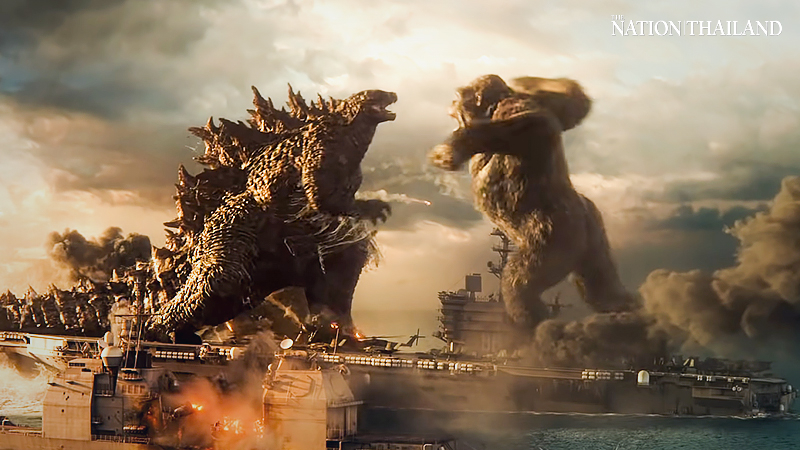
EntertainmentMar 23. 2021“Justice League” villain Steppenwolf gets a revised look in the Snyder Cut. MUST CREDIT: HBO Max

By The Washington Post · David Betancourt

NOTE: This story contains spoilers about “Zack Snyder’s Justice League.”

What a difference an extra two hours makes.

Much of the superhero-loving fandom has already taken multiple streams of “Zack Snyder’s Justice League,” a.k.a. The Snyder Cut,the four-hour epic that dropped on HBO Max Thursday. There is no denying this is a very different movie from the Joss Whedon-directed theatrical version of “Justice League” that debuted in 2017, from its visual effects and its music to the character who saves the day.

There’s more edge in the Snyder Cut, but its extra layers of darkness also reveal a heart to the story that many weren’t expecting to be there. Even if this film is indeed the end of the DC Comics-inspired Snyderverse, it is without doubt the director’s uninterrupted vision.

Here are the six most significant differences in the Snyder Cut.

– Black-suited Superman

Superman is back in black.

One of the most striking visual differences in the Snyder Cut comes when Superman shows up to help balance the scales in the Justice League’s battle against Steppenwolf. Gone is Superman telling Steppenwolf he believes in “truth and justice” when he finally arrives; instead, Superman swoops in to save Cyborg from a mighty swoop of Steppenwolf’s ax, proving he is the Man of Steel when the ax clangs against his shoulder and does no damage.

“Not impressed,” Superman says to Steppenwolf.

What is impressive is the all-black Kryptonian suit, with a black cape and a silver House of El “S” on the chest of the suit. Henry Cavill hinted at this look in a social media post when “Justice League” was in production, but it was one of the many things Warner Bros. and DC decided against for the theatrical release – instead they used an even brighter red and blue suit than the one that appeared in “Man of Steel” and “Batman v Superman: Dawn of Justice.”

The all-black suit is a nod to early 1990s”The Death of Superman” comic book story line, which saw Superman return from the dead with a similar look.

– Steppenwolf

Steppenwolf’s look has become much more menacing and alien and a lot less humanoid. In the theatrical release he is the main antagonist, but with only the slightest mention of why he is truly trying to take over earth. In the Snyder Cut, with his new armor that looks like a suit made of razors, Steppenwolf’s true mission is to get back into the good graces of classic DC villain Darkseid, who debuts in this version.

The Snyder Cut’s Steppenwolf is given a much more brutal ending. When he fails to stop the Justice League, they toss him around, one punch after the other, until Wonder Woman decapitates him with her sword. It is a sharper send off than Steppenwolf being dragged away by his Parademons in a boom tube.

– Darkseid

DC’s answer to Thanos is the almighty Darkseid, ruler of the planet Apokolips. Many fans thought Darkseid’s absence in the theatrical cut was a major swing and miss – they thought his presence would be the reason the Justice League had to unify, but instead all the pressure was put on a much less intimidating Steppenwolf. And let’s face it, Darkseid is who fans wanted to see the Justice League face off against. Not one of his minions.

While the Snyder Cut does not have a true battle between the Justice League and Darkseid, there is one epic stare-down after Wonder Woman sends the head of Steppenwolf through a boom tube where Darkseid was monitoring things.

“Justice League” was always meant to be a prelude to a bigger fight between Darkseid and DC’s top heroes in a sequel. Instead, the Snyder Cut gives us Darkseid’s initial battle against earth and a premonition of what he could do to the Justice League in the future. And yes, Darkseid’s lethal optical Omega Beams make an appearance.

– The Martian Manhunter

A green Justice Leaguer shows up in the Snyder Cut, but it isn’t the Green Lantern. Instead, it’s the Martian Manhunter, a popular character from comics and animation who was hiding in plain sight in Snyder’s first two films of this trilogy. General Swanwick (Harry Lennix) was actually J’onn J’onzz of Mars the entire time. Turns out he had much more in common with fellow alien Superman than they realized when the two first met in 2013’s “Man of Steel.”

In the Snyder Cut’s epilogue, the Martian Manhunter visits Bruce Wayne (Ben Affleck) and tells him there are bigger threats coming, but that he would like to help. It hints at what would have been a much bigger role for the Martian Manhunter if a sequel to “Justice League” had been made.

– The Flash

The Flash (Ezra Miller) is the team’s goofball in both versions, but to say his role in the new one is different is a bold understatement.

For a split second in the Snyder Cut, the bad guys win when Darkseid’s three Mother Boxes merge and set off a planet-destroying explosion that hints at extinction for all on Earth. But the Flash is so quick, he vibrates through the moment at super-speed, moving so fast that he slows time down.

Next, the Flash tells himself he has to break his unbreakable rule and move beyond the speed of light so he can manipulate time and reverse the destruction. It’s a world-saving moment you’d expect from one of the Justice League’s heavy hitters (Superman, Batman or Wonder Woman), but DC’s fastest man alive has the Snyder Cut’s biggest surprise.

Director Zack Snyder said that Cyborg (Ray Fisher) was always intended to be the heart of

– Cyborg

Zack Snyder told The Washington Post that Cyborg (Ray Fisher) was always meant to be the heart of “Justice League,” and the Snyder Cut is proof of that. Whereas the theatrical cut gives Fisher a limited role and tries to turn him into a live-action version of the Cyborg from the animated “Teen Titans Go” at times, the Snyder Cut establishes “Justice League” as a Cyborg film.

Cyborg is relied on to counter the seemingly unstoppable technology of the three Mother Boxes (with a very cool assist from the Flash) but not before he must conquer his demons and realize that he does have something to offer the world, despite thinking that same world turned him into a robotic monster.

There are also touching moments between Fisher and veteran actor Joe Morton, who plays Cyborg’s father, Silas Stone.

Seeing Snyder’s original vision for Cyborg and Fisher’s execution of that role makes it easier to understand why there were initially plans for the character to have his own movie and appear alongside other Justice Leaguers in their films.