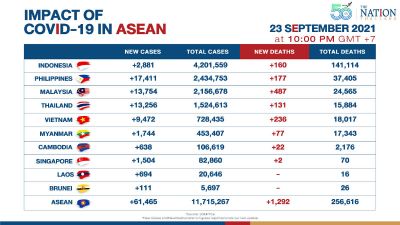
Southeast Asia saw an increase in new Covid-19 cases and deaths on Thursday, collated data showed.
Asean countries reported 61,465 new cases on Thursday, higher than Wednesday’s 60,416, while deaths were higher at 1,292 from Wednesday’s 1,095.
The number of Covid-19 cases in the region crossed 11.71 million, with 256,616 deaths.
Vietnam’s Ho Chi Minh City is considering closing several Covid-19 field hospitals as the city is seeing fewer patients needing to be hospitalised. Buildings that have been modified for treatment and isolation of Covid-19 patients will return to their original purposes as currently patients being treated at home account for around 40 per cent of all existing cases in the city. The country reported 9,472 new cases and 236 deaths on Thursday, bringing cumulative cases in the country to 728,435 patients with 18,017 deaths.
Meanwhile, Cambodia’s Phnom Penh administration office has announced the extension of disease control measures in the city for another 14 days or until October 7. Under these measures, high-risk social activities will be prohibited while both public and private schools will continue to shut down.
Cambodia reported 638 new cases and 22 deaths on Thursday, bringing cumulative cases in the country to 106,619 with 2,176 deaths.
The Biden administration is taking steps to mitigate the impacts of a potential government shutdown on U.S. pandemic response, economic recovery, or other priorities, White House press secretary Jen Psaki said.
The Joe Biden administration is preparing for a possible government shutdown in the event that current funding runs out on Sept. 30, White House press secretary Jen Psaki said on Thursday.
“It’s consistent with longstanding practice across many administrations for OMB to simply remind agency senior staff of the need to review and update orderly shutdown plans,” Psaki said at a press briefing, referring to the Office of Management and Budget (OMB).
“This is not formal guidance being given, it’s just a reminder, we’re seven days out, and we need to be prepared, of course, in any event of any contingency. So we see this as a routine step and one just to be prepared in any event of what could happen,” she said.
ADVERTISEMENT
Psaki noted that the Biden administration is taking steps to mitigate the impacts of a potential government shutdown on U.S. pandemic response, economic recovery, or other priorities.
“The fact is shutdowns are incredibly costly, disruptive, and damaging. Direct public health efforts can generally proceed during a shutdown because they’re exempt, and that is certainly our intention,” she said. Related Stories
Psaki’s comments came after the U.S. House of Representatives on Tuesday night passed a bill that would prevent a federal government shutdown and suspend the debt limit on government borrowing into December 2022.
The bill now heads to the Senate, where the Senate Republicans have vowed to block it. Senate Minority Leader Mitch McConnell signaled on Monday that Republicans would help pass a short-term government funding bill only if Democrats separate it from a plan to suspend the debt limit.
“Depending on what happens there, we will keep government open by September 30th, which is our date, and continue the conversation about the debt ceiling,” House Speaker Nancy Pelosi said Thursday at a press conference, adding Congress will find a way to avert a government shutdown next week.
As the Gaza Strip witnesses an increase in the number of cases of COVID-19 infections, the Health Ministry there is seeking to raise the percentage of vaccination in the hope of achieving herd immunity.
The Palestinian coastal enclave has been witnessing for weeks a significant increase in the number of cases of COVID-19 infections, Gaza-based medical officials said.
There are more than 255 critical cases of the Delta strain across the Gaza Strip, and the majority of those cases are young people and pregnant women, according to officials.
Rana al-Namrouti, a 39-year-old pregnant woman, is one of those patients in a critical condition and she was transferred to the intensive care unit in the European Gaza Hospital for weeks after her health condition deteriorated.
ADVERTISEMENT
The mother of four told Xinhua that her infection with the new strain of the virus caused severe complications that put her in a coma that lasted 25 days.
Connected to a ventilator, she can hardly talk, but she explained that her severe infection caused two clots in the lungs and feet, in addition to stomach bleeding. She recalled what happened to her was “in a state of death and came back to life.”
A medical worker prepares a dose of the COVID-19 vaccine during a vaccination campaign in Gaza City, on Sept. 23, 2021.(Photo by Rizek Abdeljawad/Xinhua)
Yousef al-Akkad, director of the European Gaza Hospital, told Xinhua that “the weakness of the Gazan health system caused by the 14-year Israeli blockade is a major dilemma in facing the spread of the new strain and the increasing number of injuries in hospitals.”
“Inside the hospital, there are 109 cases of coronavirus out of the designated 150 that we can receive,” he said, adding that “the existing cases are classified as critical and dangerous and in need of support for various artificial respirators.”
A medical worker works at a testing lab for COVID-19 at Al-Rimal Clinic in Gaza City, on Sept. 23, 2021. (Photo by Rizek Abdeljawad/Xinhua)
He noted that the hospital has started preparing the fourth section in light of the high epidemiological trend in the sector, expressing his hope that the coming days will witness a flattening of the curve and then a return to decline and refraction.
Despite his optimism, the population’s preventative measures are still absent in the Strip. Yet, the Hamas-run government in Gaza said they will not resort to closure unless necessary or unless the health system collapses, according to Salama Maarouf, the government’s spokesman.
Maarouf said that medical and technical indicators say that the peak of the current wave is from the middle to the end of September. So by the end of this month, the number of infected, including critical cases, is expected to decrease.
Meanwhile, the Health Ministry in Gaza is seeking to raise the percentage of people vaccinated to 70 percent, in the hope of achieving herd immunity.
Ashraf al-Qedra, a spokesman of the ministry, told Xinhua that the percentage of those vaccinated increased from 10 to 35 percent after authorities organized a vaccination campaign with financial rewards.
The vaccinations were taken in sports clubs, local institutions, and universities. It also allocated 40 field medical teams to visit population facilities to facilitate access to them.
Earlier on Thursday, the Health Ministry reported 1,534 new cases infected with the new virus, raising the total number to 160,733 cases. In addition, eight fatalities were recorded, increasing the total number of deaths in Gaza to 1,319.
A Palestinian man receives a dose of the COVID-19 vaccine during a vaccination campaign in Gaza City, on Sept. 23, 2021. (Photo by Rizek Abdeljawad/Xinhua)
“We will continue to work with the U.S. side, as long as there are opportunities for cooperation. However, the cooperation between the two countries must be conducted in the principle of mutual respect,” said Chinese Ambassador Qin Gang.
China is sincere in starting a dialogue with the United States to deescalate bilateral tensions on the basis of mutual respect, Chinese Ambassador Qin Gang said here on Wednesday.
“We will continue to work with the U.S. side, as long as there are opportunities for cooperation. However, the cooperation between the two countries must be conducted in the principle of mutual respect,” said Qin in respond to questions after delivering a speech at a virtual conversation jointly held by the Carter Center and the George H.W. Bush Foundation for U.S.-China Relations.
“And the United States should not expect China’s cooperation in areas where only the U.S. has demand and interests, while neglecting or even undermining China’s interests at the same time, in particular on these core issues concerning China’s sovereignty and territorial integrity,” he said.
ADVERTISEMENT
“To be frank, what I worry about is that the United States uses competition to define China-U.S. relations, while competition on the U.S. side often takes the form of confrontation, especially on major issues concerning China’s core interests,” he said. Related Stories
“If this does not change, it will undermine China’s efforts to promote our mutual trust and cooperation. There is not any example in the history of international relations where the political relationship between two countries is in competition or even confrontation, but other spheres remain safe and sound,” he said.
Containers of China COSCO Shipping Corporation Limited are seen at the Port of Long Beach in Los Angeles County, the United States, Feb. 27, 2019. (Xinhua/Li Ying)
“A very important thing between China and the United States is mutual respect. China is open and inclusive. We welcome and readily accept various suggestions or criticisms, as long as they are objective, truthful, well-intentioned and constructive, and we will make improvements according to them,” said the ambassador, adding that “a very important job of mine is to communicate and listen.”
“However, we do not accept baseless slander and disinformation. We do not accept condescending lecturing. And we do not accept words or deeds that undermine China’s sovereignty, unity and territorial integrity. Citizens must abide by the law. Likewise, countries must abide by the basic norms governing international relations. U.S. law prohibits secession and racial hatred, but why do some Americans want to treat China in this way?” said Qin.
Apple may have to redesign its iPhones to use USB-C charging ports under draft rules from the European Union aimed at cutting waste and simplifying life for consumers owning multiple devices.
The European Commission said Thursday it wants a single type of charging port to be used for all smartphones and tablets as well as equipment such as cameras, some headphones, portable speakers and handheld video consoles.
“With more and more devices, more and more chargers are sold that are not interchangeable or not necessary,” said Thierry Breton, the EU’s industry chief, in an emailed statement. “We are putting an end to that.”
Apple opposes a standard connector, saying it risks hurting innovation that can bring more energy efficient products to the market. The draft legislation adds to intense pressure from the EU in recent years with antitrust probes into its app store and payment system adding to a legal row over a massive back-tax order.
Apple is “concerned that strict regulation mandating just one type of connector stifles innovation rather than encouraging it,” according to an emailed statement. The Cupertino, California-based company said it “deeply cares about the customer experience” and shares the commission’s “commitment to protecting the environment.”
The iPhone maker started removing adapters from packaging last year to reduce waste. While the company uses USB-C for some devices, it has its own Lightning cable and magnetic chargers for iPhones and some accessories.
ADVERTISEMENT
Breton told reporters in Brussels that Apple wasn’t “necessarily worried” about the draft rules. He said he’s in regular contact with Apple Chief Executive Officer Tim Cook who has never mentioned the issue.
“It’s not aimed at Apple or anyone else,” he said at a press conference. “We are thinking about the 15 to 20 years to come. Apple already uses USB-C in other devices” and “I don’t think it’s going to cause anyone any problems.”
People spend around 2.4 billion euros ($2.8 billion) annually on standalone chargers not supplied with devices, the EU said. It forecasts a 250 million euro saving every year as consumers avoid buying new chargers. People tend to own as many as three chargers each and find incompatible chargers annoying, it said.
The rules would see all chargers offer the same speed of charging. Phone makers could still be able to sell phones with a charger as long as they also offer models without. They can also sell devices with a cable in the box and without the electric plug. Devices could potentially have multiple ports so long as one was USB-C.
The EU throws away some 11,000 tonnes of chargers every year, some unused, according to the commission. It expects the proposal to reduce that by almost 1,000 tonnes.
The rules could come into force two years after they are agreed by EU lawmakers and governments who can make changes to the draft text.
The EU proposal doesn’t touch on wireless charging. Regulators said they decided not to include earbuds, smartwatches and fitness trackers due to their smaller size.
Moderna chief executive says that the pandemic could be over in a year and that a boost in production will mean enough vaccines for “everyone on this earth” by then.
Producing enough booster shots should be possible, too, to some extent, and even babies will be able to get vaccines, Stéphane Bancel told a Swiss newspaper in an interview published Thursday. Asked whether that could spell “a return to normal” next year, he replied: “As of today, in a year, I assume.”
With the vaccine industry as a whole expanding production, “enough doses should be available by the middle of next year so that everyone on this earth can be vaccinated,” the French billionaire said.
Whether his predictions come true is likely to depend on narrowing the immunity gap between rich countries, which bid high in the contest to buy vaccines, and poorer countries, which rely on trickling donations.
“It is an obscenity” that some governments have hoarded, and sometimes wasted, shots while people elsewhere still wait for their first doses, U.N. Secretary General António Guterres told leaders in New York on Wednesday.
Nearly 80% of people in the world’s wealthier nations already have received first doses. But, in part because of supply problems and biotech firms such as Moderna’s selling most early doses to rich countries, the level of first-dose vaccination falls to 20% in poorer parts of the world.
ADVERTISEMENT
President Joe Biden, who like other leaders has faced calls to do more, announced Wednesday that the United States would buy 500 million more doses of the Pfizer-BioNTech vaccine to donate to other countries.
Vaccination rates remain in single digits across most of Africa, whereas the United States and Britain are looking to begin offering their populations booster shots – a step that has become another symbol of pandemic inequality.
The Moderna boss says he expects that boosters will be needed every one to three years. “We will end up in a situation similar to that of the flu,” he said. “You can either get vaccinated and have a good winter. Or you don’t do it and risk getting sick and possibly even ending up in hospital.”
The co-creator of the Oxford/AstraZeneca vaccine also predicts that the covid-19 will end up being an experience closer to the common cold. British scientist Sarah Gilbert told a webinar that the virus probably would not mutate into an even deadlier version that can skirt vaccines.
“We normally see that viruses become less virulent as they circulate more easily,” she said, playing down fears that have sprung from the spread of highly contagious variants.
Other officials have not expressed that level of optimism. England’s chief medical officer warned on Wednesday that unvaccinated children would end up with covid-19 at some point as the virus continues circulating.
“They will get it sooner or later because this is incredibly infectious,” Chris Whitty said. He told lawmakers that vaccines would cut the risk of infection by at least half.
“We’re not going to see a situation where it just sort of stops at a certain point,” he said.
Eight rare baby Siamese crocodiles have been discovered in northeastern Cambodia’s Mondulkiri province, the country’s Environment Ministry and the World Wildlife Fund revealed.
The newborn crocs are presently being watched over by Srepok Wildlife Sanctuary officials.
Cambodia’s Environment Minister Say Sam Al said this is the first discovery in almost a decade.
“This discovery also proves the importance of preserving rare crocodiles and other wildlife species in Cambodia,” he said.
Photo Credit: Srepok Wildlife Sanctuary
ADVERTISEMENT
The Siamese crocodile is a medium-sized freshwater croc native to Thailand, Indonesia (Borneo and possibly Java), Brunei, East Malaysia, Laos, Cambodia, Myanmar and Vietnam.
This crocodile is classified as critically endangered on the International Union for Conservation of Nature Red List, and is listed in Appendix I of CITES.
Since the middle of July, Lithuanias COVID-19 infection rate has been steadily increasing. In the past seven days, the average daily number of reported new cases was 1,142 and the average number of deaths was 11 per day
Lithuania has registered 1,402 new COVID-19 infections and nine deaths in the past 24 hours and moved into the worst “black zone” under the color-coded national classification system.
In a “black zone,” the 14-day rate of new coronavirus cases exceeds 500 per 100,000 people and the percentage of positive tests is above ten percent. The number climbed to 504.5 on Tuesday.
Since the middle of July, Lithuania’s COVID-19 infection rate has been steadily increasing. In the past seven days, the average daily number of reported new cases was 1,142 and the average number of deaths was 11 per day.
ADVERTISEMENT
Lithuania made the COVID-19 certificate mandatory on Sept. 13 for all people wishing to enter larger shops.
Citizens get off a bus in Vilnius, Lithuania, Sept. 13, 2021. (Xinhua/Xue Dongmei)
As a result, the country’s larger supermarkets, such as Maxima, Rimi, Norfa and Lidl, reported a drop in revenues as people turned to smaller supermarkets and online shopping instead.
Wearing face masks is still recommended in the country, but the government may reinstate a mask mandate for public indoor spaces at its scheduled meeting on Wednesday.
Customers dine beside mannequins dressed in creations of local designers in a cafe in the Old Town of Vilnius, Lithuania, on May 21, 2020.(Photo by Alfredas Pliadis/Xinhua)
Chinese researchers have discovered by employing big-data analysis that the COVID-19 pandemic in the United States might have started to spread around in September 2019, earlier than the officially announced date of its first confirmed case.
According to a new article published Wednesday as a preprint in ChinaXiv, a series of previous studies showed that the United States, Spain, France, Italy, Brazil and other countries had shown signs of being hit by the virus before its outbreak in China.
ChinaXiv is an online publishing service operated by the National Science Library, Chinese Academy of Sciences.
The article, titled “Dating the First Case of COVID-19 Epidemic from a Probabilistic Perspective,” suggested that the qualitative and quantitative analysis of infectious diseases, done by combining mathematical models and artificial-intelligence technology, can reveal the epidemic law of infectious diseases.
ADVERTISEMENT
The researchers set up an optimized model using the epidemic transmission model and big-data analysis method, and inferred the dates of the first infection cases in 12 northeastern U.S. states and in China’s Wuhan City and Zhejiang Province, based on published data.
The result indicated that, for the 12 U.S. states, the possible dates of the first infection, with a probability of 50 percent, fall mostly between August and October 2019, while the earliest is April 26, 2019 on Rhode Island, and the latest is Nov. 30, 2019 in Delaware.
All of the dates indicated by the data are earlier than Jan. 20, 2020, the officially announced date of the first confirmed case in the United States, showing that the COVID-19 pandemic in the United States started to spread around September 2019 with a high confidence probability.
The result also showed that the date of the first COVID-19 case in Wuhan, with a probability of 50 percent, is Dec. 20, 2019, and the date for Zhejiang is Dec. 23, 2019. It infers that the COVID-19 in China is most likely to have started in late December 2019.
The article said this is consistent with the results of the epidemiological investigation, which proves that the calculation method is accurate and reliable.
The United States is stepping up its preparation of COVID-19 vaccine booster shots, while strong actions are being taken to protect students and staff members from the pandemic on campus
The United States is battling rising death tolls and strained hospital resources amid the COVID-19 pandemic, and “all that could be made more difficult by the upcoming flu season,” CNN reported..
According to The New York Times, the 7-day average of confirmed cases of the pandemic stood at 134,036 nationwide on Tuesday, with its 14-day change striking a 12-percent fall. COVID-19-related deaths were 2,046 on Tuesday, with the 14-day change realizing a 36-percent rise.
CHANGE OF DATA, CHANGE OF MIND
ADVERTISEMENT
The United States is battling rising death tolls and strained hospital resources amid the COVID-19 pandemic, and “all that could be made more difficult by the upcoming flu season,” CNN reported on Wednesday.
The country is once again at a point where an average of more than 2,000 people are dying of COVID-19 every day, according to data from the Johns Hopkins University. Meanwhile, hospitals are straining to keep up with the number of patients coming in.
Staff shortages and employee fatigue in Pennsylvania hospitals have reached a point where some health systems are offering signing bonuses, loan forgiveness and other incentives to staff. In Wyoming, nearly 100 members of the state’s National Guard were activated on Tuesday to assist hospitals dealing with the surge, according to the report.
People wait outside a mobile vaccine clinic in New York, the United States, on Aug. 31, 2021. (Xinhua/Wang Ying)
The serious scenario has triggered off a change of mind among the Americans. According to a new poll, some 50 percent of vaccinated respondents are either “extremely” or “considerably” hesitant to spend the holidays with unvaccinated family members or friends, and only 38 percent said they were not hesitant about making holiday plans with the unvaccinated, while 12 percent said it’s a non-issue for all their families and friends have gotten the shots.
A slightly larger share of 52 percent of vaccinated respondents said that they would be very or somewhat uncomfortable about attending a holiday dinner or gathering knowing some attendees are unvaccinated, according to the Harris poll conducted from Sept. 17 to 19 among 2,055 U.S. adults, including 1,454 vaccinated ones.
A 54 percent majority of all respondents said vaccination status would be a factor in deciding whether or not they will travel or attend events as part of their holiday plans, and a further 42 percent of vaccinated respondents said they had canceled at least one event or existing travel plan they had with people because they were unvaccinated.
Placards display signage for Johnson & Johnson and Pfizer COVID-19 vaccinations at a mobile COVID-19 vaccination center in the Brooklyn borough of New York, the United States, Aug. 18, 2021. (Xinhua/Michael Nagle)
BOOSTER SHOTS ON TRACK
A committee of top vaccine experts under the U.S. Centers for Disease Control and Prevention (CDC) started 10 hours of meeting on Wednesday morning to decide who should be eligible for a booster dose of the Pfizer-BioNTech COVID-19 shot. A vote is expected on Thursday.
A different federal advisory committee under the U.S. Food and Drug Administration (FDA) on Friday recommended a third dose of the Pfizer-BioNTech vaccine six months after full vaccination for people aged 65 and older and those at high risk of severe COVID-19.
The FDA has not yet issued an approval for the booster doses, so while the CDC’s committee can meet, it cannot vote on recommendations until it receives that sign-off, Julie Morita, executive vice president of the Robert Wood Johnson Foundation, a health-focused nonprofit, was quoted on Wednesday by USA Today as saying.
Meanwhile, Johnson & Johnson released new data on Tuesday showing a booster dose of its vaccine given two months after the one-shot vaccine provides 94 percent protection against moderate-to-severe COVID-19 symptoms.
“A single-shot COVID-19 vaccine that is easy to use, distribute and administer, and that provides strong and long-lasting protection is crucial to vaccinating the global population,” said Paul Stoffels, chief scientific officer at Johnson & Johnson. “A booster shot further increases protection against COVID-19 and is expected to extend the duration of protection significantly.”
Johnson & Johnson, citing three studies of the vaccine, said the booster shot offers strong protection against severe or critical symptoms, and a booster dose given six months after the single shot provides even more protection. The results are in line with data from studies of Moderna and Pfizer-BioNTech, two other U.S. vaccines authorized by federal agencies.
SCHOOL MANDATE DISPUTES
The Education Department’s Office for Civil Rights opened an investigation into the Texas Education Agency on Tuesday in response to its guidance that prohibits school leaders from requiring students and staff to wear masks.
“(The) investigation will focus on whether, in light of this policy, students with disabilities who are at heightened risk for severe illness from COVID-19 are prevented from safely returning to in-person education, in violation of Federal law,” Suzanne Goldberg, the department’s acting assistant secretary for civil rights, wrote in a letter to Texas Education Commissioner Mike Morath.
Specifically, the investigation will focus on whether the state’s ban on mask requirements flouts part of the 1973 Rehabilitation Act, which guarantees students with disabilities the right to receive education in a regular educational environment, alongside their peers without disabilities.
Last week, two New York state senators, John Liu from Queens and Robert Jackson from Manhattan, introduced a bill to require any public school located in a city with at least 1 million people to offer a remote option to students if the CDC considers the COVID-19 transmission rate of the surrounding county “substantial” or “high level.”
One of the ways the CDC categorizes the level of community transmission of COVID-19 in an area is by determining the number of positive cases of the virus per 100,000 residents. If a county has 100 or more COVID-19 cases per 100,000 inhabitants, it is considered a red zone or an area of high transmission. Per current data from the CDC, every county in New York City (NYC) is a red zone.
“Parents are calling for a remote option for school and it’s time @NYCSchools provided one. Many families don’t feel safe sending their kids to physical school right now. The stubborn lack of receptiveness to legitimate safety concerns raises questions about mayoral control,” Liu said in his tweet, questioning NYC public schools’ reopening on Sept. 13 with full in-person teaching and learning.
Students are dismissed from the first day of school at PS 133 in the Brooklyn borough of New York, the United States, on Sept. 13, 2021. (Photo by Michael Nagle/Xinhua)



 A medical worker prepares a dose of the COVID-19 vaccine during a vaccination campaign in Gaza City, on Sept. 23, 2021.(Photo by Rizek Abdeljawad/Xinhua)
 A medical worker works at a testing lab for COVID-19 at Al-Rimal Clinic in Gaza City, on Sept. 23, 2021. (Photo by Rizek Abdeljawad/Xinhua)
 A Palestinian man receives a dose of the COVID-19 vaccine during a vaccination campaign in Gaza City, on Sept. 23, 2021. (Photo by Rizek Abdeljawad/Xinhua)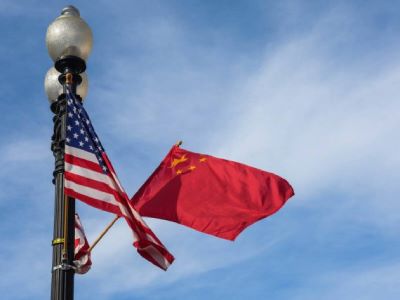
 Containers of China COSCO Shipping Corporation Limited are seen at the Port of Long Beach in Los Angeles County, the United States, Feb. 27, 2019. (Xinhua/Li Ying)
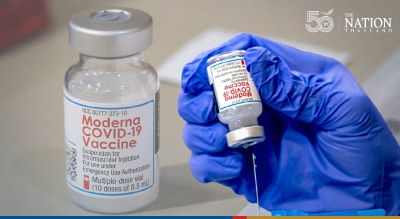

 Photo Credit: Srepok Wildlife Sanctuary
 Photo Credit: Srepok Wildlife Sanctuary
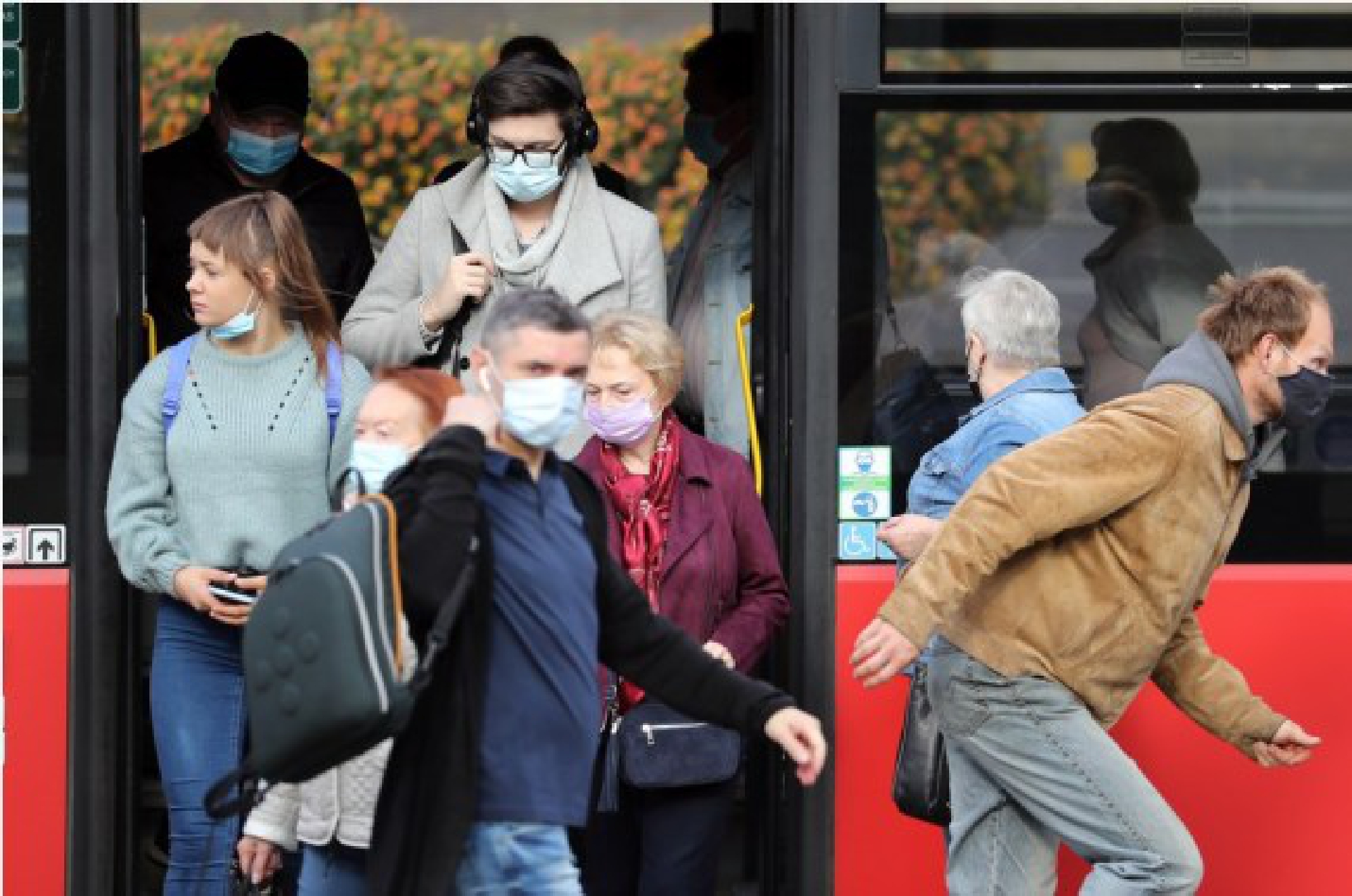 Citizens get off a bus in Vilnius, Lithuania, Sept. 13, 2021. (Xinhua/Xue Dongmei)
 Customers dine beside mannequins dressed in creations of local designers in a cafe in the Old Town of Vilnius, Lithuania, on May 21, 2020.(Photo by Alfredas Pliadis/Xinhua)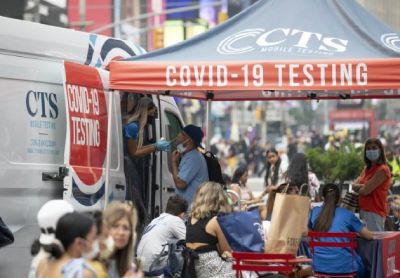

 People wait outside a mobile vaccine clinic in New York, the United States, on Aug. 31, 2021. (Xinhua/Wang Ying)
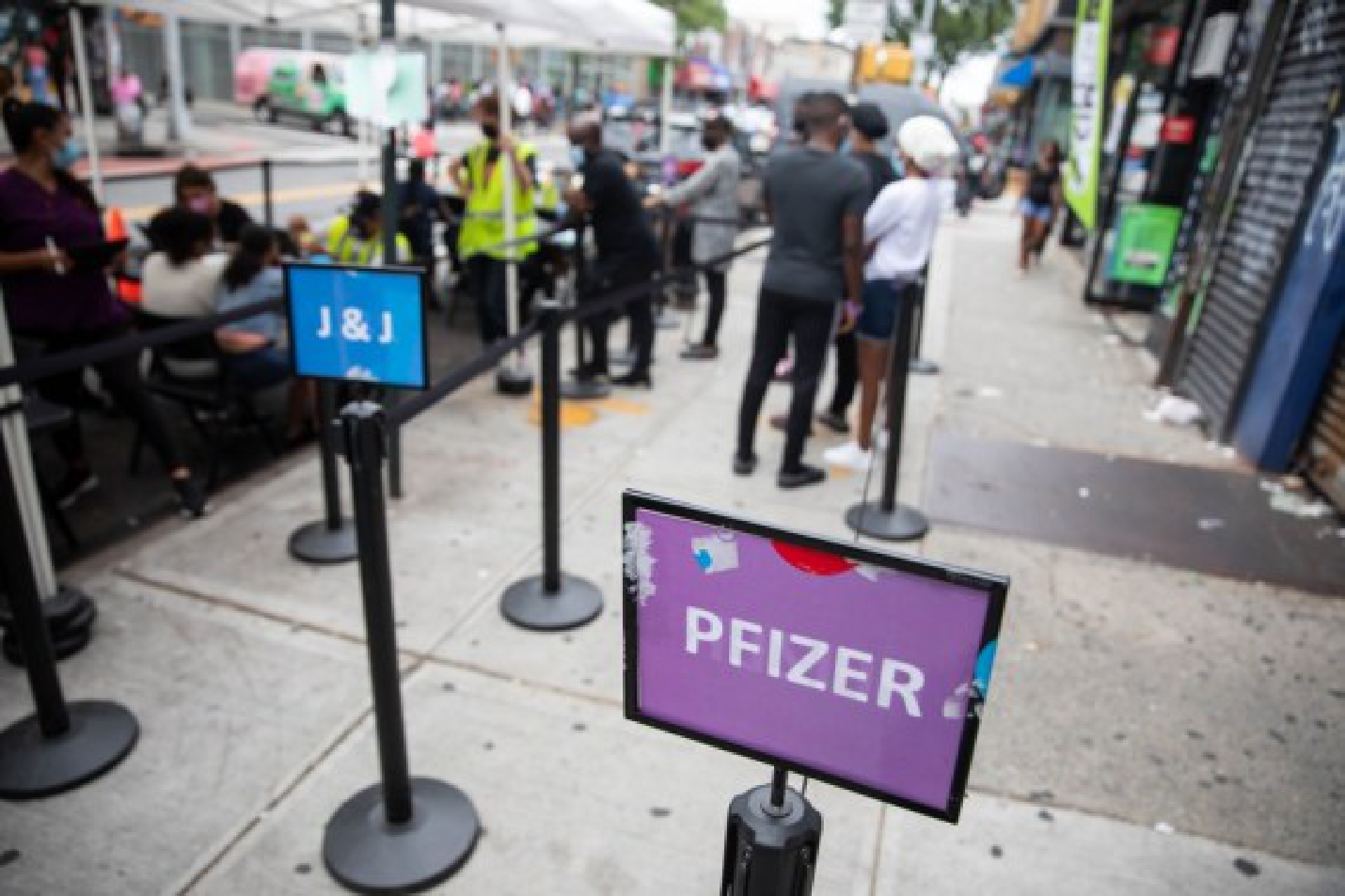 Placards display signage for Johnson & Johnson and Pfizer COVID-19 vaccinations at a mobile COVID-19 vaccination center in the Brooklyn borough of New York, the United States, Aug. 18, 2021. (Xinhua/Michael Nagle)
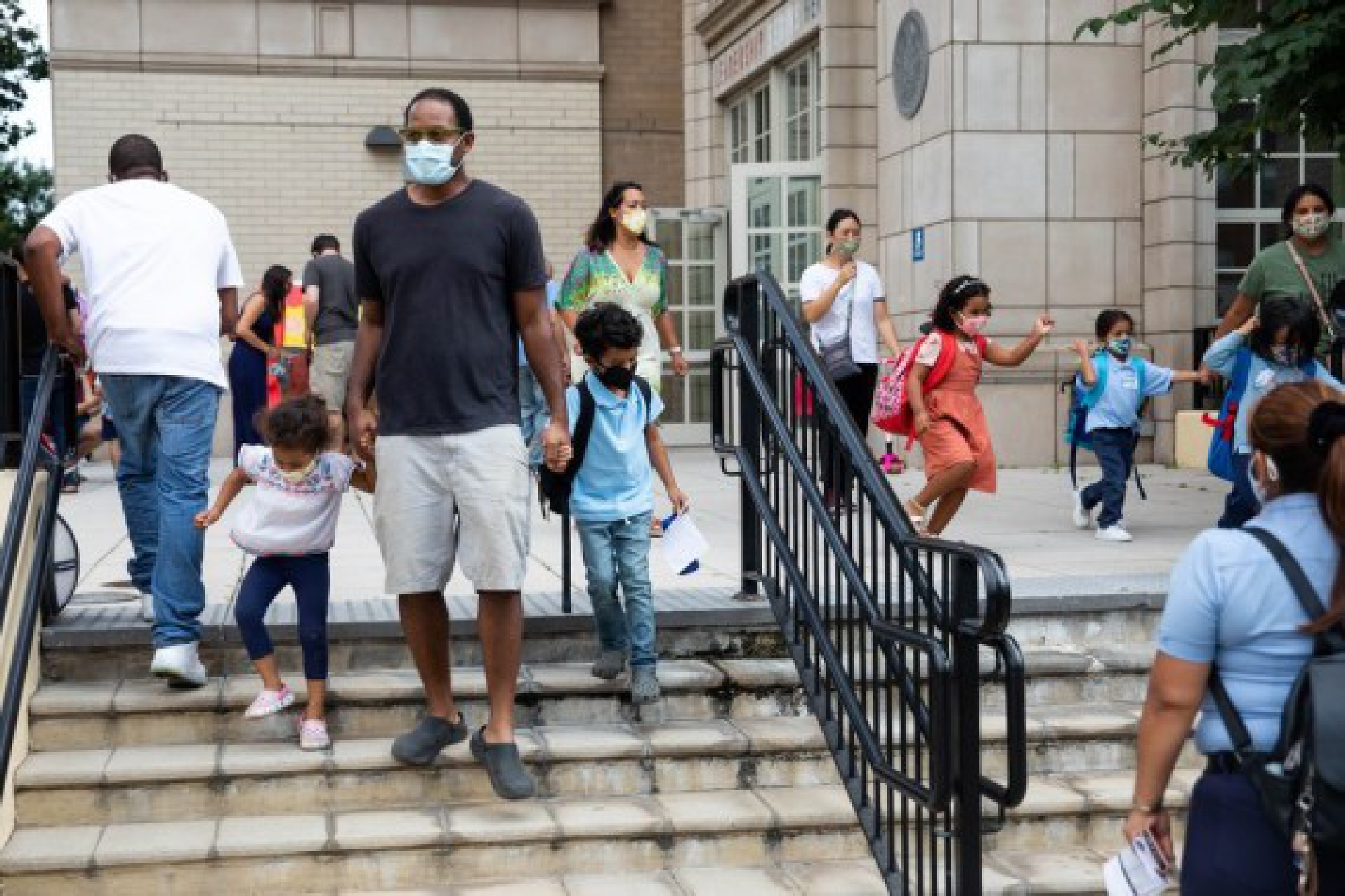 Students are dismissed from the first day of school at PS 133 in the Brooklyn borough of New York, the United States, on Sept. 13, 2021. (Photo by Michael Nagle/Xinhua)
