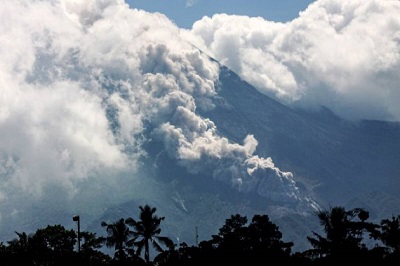
Ash clouds belched as far as 2,000 m to the southeast from Indonesias Mount Merapi
Indonesias most active volcano Merapi has belched ash clouds as far as 2,000 m to the southeast, the Geological Disaster Technology Research and Development Center (BPPTKG) said Tuesday.
The hot clouds erupted at 11:32 a.m. local time with an amplitude of 60 mm, a duration of 152 seconds, and winds moving to the west.
Based on monitoring from midnight to 12:00 a.m. local time, seismographs recorded the 2,968-meter-high mountain, located on the border between Yogyakarta and Central Java provinces, also emitted lava eight times to the southwest as far as 1,500 m, and five times to the southeast as far as 500 m.
The Indonesian authorities have urged people not to move to the dangerous areas and to stay alert to possible eruptions, especially when it rains around Merapi.
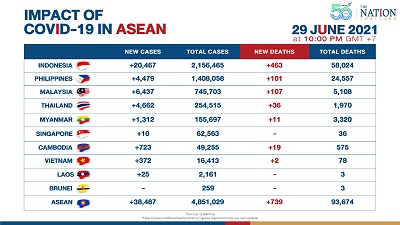
The number of Covid-19 cases in Southeast Asia crossed 4.85 million, with 38,483 new cases reported on Tuesday – lower than Monday’s tally of 39,463 – while new deaths were 739, increasing from Monday’s 614 and taking total coronavirus deaths across Asean to 93,674.
Indonesia reported 20,467 patients and 463 deaths on Tuesday, bringing cumulative cases in that country to 2,156,465 patients and a total 58,024 deaths.
The government is preparing to impose stricter disease control measures in Java and on Bali starting July 3 as infections in these areas are climbing.
Laos meanwhile reported 25 new cases on Tuesday, taking its cumulative cases to 2,101 patients. Of these, 1,958 people have been cured and discharged.
The government is concerned that workers who are returning from Thailand will carry the Delta variant and urged all agencies to be extra cautious.
John McAfees death complicates U.S. efforts to seize his assets
John McAfees death last week in a Spanish prison complicates the U.S. governments intent to recover millions of dollars it says the software tycoon owed in taxes and allegedly ill-gotten gains from promoting cryptocurrencies.
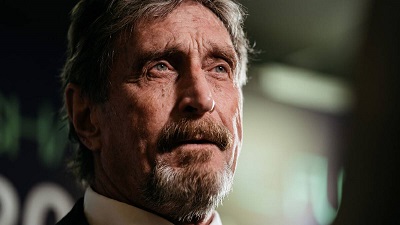
John McAfee during a Bloomberg Television interview in Hong Kong on Sept. 20, 2017. MUST CREDIT: Bloomberg photo by Anthony Kwan.
McAfee, who decades ago founded the anti-virus company that bears his name, was found dead in his cell just hours after Spanish courts approved his extradition to the U.S. to face charges of tax evasion. U.S. prosecutors accused McAfee of not filing tax returns from 2014 to 2018 even as he earned millions from “promoting cryptocurrencies, consulting work, speaking engagements and selling the rights to his life story for a documentary,” according to an indictment last June in a U.S. court in Tennessee, where he once lived.
Spanish court documents released last week alleged he owed the U.S. government more than $4.2 million in taxes. Separately, the U.S. Securities and Exchange Commission claimed McAfee promoted investments in initial coin offerings without disclosing he was paid more than $23 million to do so. The U.S. Department of Justice has a similar case against him.
According to the indictment, McAfee managed to avoid paying taxes by routing his payments through bank accounts and cryptocurrency accounts set up in other people’s names and hiding assets like real estate, a vehicle and a yacht also under the names of others.
Such a complex money trail could keep lawyers busy for years. “This will be a long burn,” said Gwynn Hopkins, a forensic accountant at Perun Consultants in Hong Kong.
But the fact that McAfee died before a verdict was reached in his case means any criminal case against him will be dropped, according to legal experts. And, most countries don’t enforce foreign judgments in relation to tax, Hopkins said. “The general position that’s established is that nation states don’t act as tax collectors for sister states unless there’s a treaty.”
Still, while McAfee’s death means he’ll never be convicted, the U.S. can continue its case by going “after his money, not his freedom,” according to federal defense attorney Nick Oberheiden.
The route to potentially recover any of McAfee’s property or assets will now be through suing his estate through a process known as civil forfeiture. The move is uncommon outside of the U.S., according to Evelyn Baltodano-Sheehan, a former prosecutor at the U.S. Attorney’s office in the Southern District of Florida, and currently a partner at law firm Kobre & Kim, in Miami. The Department of Justice has been seeking to export the idea to other jurisdictions precisely because of situations like McAfee’s, she said.
“For the most part, in a civil forfeiture case, the government would have to prove the same thing they have to in a criminal case, that someone committed an offense, that the property in question was either derived from or used to commit that offense,” Baltodano-Sheehan said. “A person contesting the forfeiture has the right to force the government to prove his case to a jury. There’s a lot of due process,” she said.
The civil forfeiture process is also an effective way of recouping funds in the form of cryptocurrency, she said. The U.S. government is working with a growing number of private partners to quickly map out where Bitcoin went and in what exchanges funds might be held.
“Their resources and their capabilities in the crypto space are increasingly better,” she said. “Just because it’s crypto doesn’t mean it’s gone and unrecoverable, there’s tons of options that you can have both on the criminal side as well as civil litigation, very fact-specific, very jurisdiction-specific, where, if it’s actually there, there is a good chance that you can get a court to freeze it.”
Before anything else can happen, however, there needs to be a death certificate or proof of death from Spanish authorities, according to legal experts, which hasn’t been produced yet. McAfee’s lawyer, Nishay Sanan, has said that until they receive the documents, nothing will move forward. Spanish authorities have said results of the official autopsy could take as long as several weeks. A preliminary autopsy showed he died by suicide, according to Spanish newspaper El Pais.
Meanwhile, McAfee’s wife and legal team will vigorously defend his estate. The cybersecurity pioneer had argued that the extradition request was politically motivated and therefore wasn’t appropriate. “We were actively working on Mr. McAfee’s case and were preparing to fight for his innocence before the United States courts,” Andrew Gordon, another of McAfee’s attorneys, told USA Today. “John was eager to share his side of the story.”
On Friday, McAfee’s wife demanded a “thorough investigation” of his death, and said that when she last spoke to him earlier in the day he was found dead, her husband didn’t sound like someone who was suicidal. The U.S. State Department said it’s “closely monitoring local authorities’ investigation into the cause of death,” according to the AP.
The U.S. government will now have to weigh the prospects of a lengthy and expensive legal battle with the possibility that there may not be much money left to recoup, if they can even find it. U.S. legal authorities will now likely subpoena information from those responsible for his estate.
Once worth more than $100 million, McAfee’s fortune was reduced to $4 million following a series of failed investments in real estate and stocks, the New York Times reported in 2009. McAfee, who resigned from the security software company he founded decades ago, was also notorious for his drug use, which he has spoken about publicly, and hiring of prostitutes. After losing his fortune in the stock market crash, McAfee moved to Belize. In 2012, local authorities accused him of assembling a private army and he was sought for questioning in connection with the murder of his neighbor Gregory V. Faull. He was never charged with a crime, but fled to Guatemala where he was detained and released before eventually returning to the U.S. McAfee said he was innocent.
McAfee’s case has some parallels with another high-profile fraud case where the defendant died. In 2001, Kenneth Lay, the former chief executive officer of Enron Corp., was charged with 10 counts of conspiracy, securities fraud and bank fraud that led to the second-largest bankruptcy in U.S. history at the time. He was convicted in May 2006 and died of a heart attack two months later.
A federal judge tossed out the original verdict on grounds that Lay hadn’t had a chance to appeal it before he died. The U.S. government filed a civil forfeiture action against Lay’s estate, seeking to strip it of $12.7 million in allegedly ill-gotten gains. In April 2013, the U.S. government settled with Lay’s estate and was awarded $2.7 million in cash after Lay’s widow was forced to sell the couple’s penthouse.
Published : June 30, 2021
By : Syndication Washington Post, Bloomberg · Monica Greig, Jamie Tarabay
Asean reports over 39,000 Covid-19 cases for fourth consecutive day
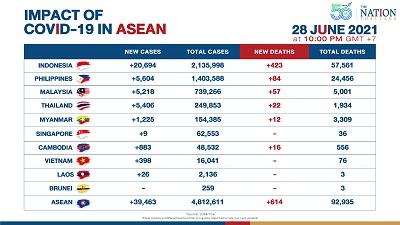
Southeast Asia reported 39,463 new Covid-19 cases on Monday, higher than Sunday’s 39,054, but deaths were lower at 614, down from the previous days 665.
The number of Covid-19 cases crossed 4.81 million across Asean, while the death toll rose to 92,935.
Indonesia reported more than half the cases in the region with 20,694 and 423 deaths on Monday, taking cumulative cases in the country to 2,135,998 patients and the death toll to 57,561. Indonesia’s medical association said that since the outbreak had started 405 doctors and 326 nurses have died due to Covid-19. The province that has reported the most deaths of both professions is East Java, with 69 doctors and 117 nurses dying.
Meanwhile, the Malaysian prime minister announced a 150-billion ringgit (THB1.15 trillion) aid package to help those affected by the outbreak after the government extended the countrywide lockdown indefinitely. The package includes a wage subsidy programme, cash aid, loan moratoriums, tax breaks, grants, subsidies and other measures. The government will also spend an additional 1 billion ringgit to ramp up the inoculation programme, including 400 million ringgit to buy more vaccines.
Canada sets record temperature of over 114 degrees amid heat wave, forecasts of even hotter weather
Lytton, a village in British Columbia, became the first place in Canada to ever record a temperature over 113 degrees Fahrenheit on Sunday – and experts are predicting even hotter weather to come.
The temperature in Lytton soared to just under 115 degrees Sunday, according to Environment Canada, a government weather agency.
That’s just one degree lower than the all-time record in Las Vegas. The previous records for hottest temperature, both 113 degrees, were set in Yellow Grass and Midale in Saskatchewan on July 5, 1937.
“It’s warmer in parts of western Canada than in Dubai. I mean, it’s just not something that seems Canadian,” Environment Canada senior climatologist David Phillips told CTV News on Saturday.
Even in the metropolitan hub of Vancouver, parks, beaches and pools have been flooded with residents eager to cool off as the temperature hit 89 degrees at the local airport on Sunday – a record in a coastal city that usually has mild weather.
This year, Canada’s record comes amid a severe heat wave in the Pacific Northwest, where Portland and Seattle have set records: 112 degrees and 103 degrees, respectively.
Lytton’s record may not stand for long. In a tweet, Environment Canada suggested that as more readings from Sunday come in, new records could be set.
And the heat wave is expected to continue for several more days. CTV News reported that predictions for Tuesday suggest Lytton could reach almost 117 degrees.
The high temperatures in the region have been blamed on a “heat dome” – a sprawling area of high pressure – currently sitting over western Canada and the Pacific Northwest. Experts say climate change can make extreme weather events like this more common.
Air conditioning is not standard in British Columbia, and Canadian outlets reported that locals were having a hard time finding air conditioners and fans over the weekend.
Environment Canada has issued heat warnings for a variety of people, including young children, pregnant women, the elderly and those with chronic illnesses.
BC Hydro, the main electric utility company in British Columbia, warned Monday that electricity demand was also setting records. “Extreme heat leads to record-breaking electricity demand for a second day in a row,” the company said on Twitter.
UN human rights chief calls for reparations to address systemic racism around the world
Two days after the sentencing of Derek Chauvin for the murder of George Floyd, which sparked a global reckoning over racism and policing, the United Nations Human Rights Council released a report calling on countries to adopt a “transformative agenda” to fight systemic racism.
The wide-ranging report, ordered last year in the wake of Floyd’s killing, examined deaths by police across nations and legal systems, and found “an alarming picture of systemwide, disproportionate” burdens on Black people in their encounters with police and criminal justice systems internationally. Across borders, the report noted “striking similarities” and patterns, including in victims’ fight for justice, and made sweeping recommendations, mostly without dwelling on specific national circumstances.
“Racial discrimination in law enforcement cannot, as the Human Rights Council recognized, be separated from questions of systemic racism,” wrote U.N. human rights chief Michelle Bachelet, a former president of Chile, in the report. “Only approaches that tackle both the endemic shortcomings in law enforcement, and address systemic racism – and the legacies it is built on – will do justice to the memory of George Floyd and so many others whose lives have been lost or irreparably damaged.”
Bachelet recommends a whole-of-society, time-bound mechanism to advance racial justice in the context of law enforcement all across the world, identifying a “long-overdue need to confront the legacies of enslavement . . . and to seek reparatory justice.”
The report makes a broad case for reparations. “Reparations should not only be equated with financial compensation,” she wrote, arguing that the concept should also include restitution, rehabilitation, educational reforms, acknowledgment, apologies, memorialization and “guarantees” against further injustice.
In June 2020, the 47-member U.N. Human Rights Council adopted unanimously a resolution brought by African nations that condemned discrimination and violence in policing and requested the report on systemic racism.
“It is important to show Africa . . . the Human Rights Council has heard the plight of African and people of African descent calling for equal treatment and application of equal rights for all,” said Ambassador Dieudonné W. Désiré Sougouri of Burkina Faso, who presented the African resolution in 2020.
Bachelet called out governments that deny that racism “is still happening now, as well as what happened in the past” – and emphasized the importance of “debunking false narratives.”
In analyzing 190 police-related fatalities, the report found that in many cases the victims did not pose a threat that would justify the levels of force used.
Across countries, rarely were the law enforcement officers held accountable for apparent overreach or human rights violations, the report said. Reasons given included insufficient investigations, lack of oversight and accountability mechanisms, and a “presumption of guilt” affecting Black people, along with trials without a mechanism to factor in racial discrimination and institutional bias.
The U.N. investigation also looked into disproportionate use of force at anti-racism protests, including in the United States. It found that a large number of protesters were arrested and labeled as “terrorists” and “sick and deranged anarchists and agitators.” Bachelet wrote that such clampdowns should be seen within the broader context of intimidation and reprisals against those standing against racism.
The past year of mobilization against racism internationally has shifted debates toward systemic and institutionally perpetuated racism, the report found, and it says that systemic racism needs a systemic response.
US forces come under fire after airstrikes against Iran-backed militias in Syria, Iraq
U.S. forces said Monday that they came under rocket attack hours after they carried out airstrikes against Iran-backed militia targets in Syria and Iraq in what officials had described as an effort to deter mounting violence by anti-American groups.
Aspokesman for the U.S.-led coalition in Iraq and Syria, Army Col. Wayne Marotto, said that multiple rockets had targeted a facility housing U.S. troops near al-Omar oil field in northeast Syria. No casualties were reported. Marotto said U.S. forces responded in self-defense with artillery fire targeting positions where the rockets were launched.
No one claimed responsibility for the rocket attacks, but video of the assault was shared on Telegram social media channels used by the militias.
U.S. officials have said the American airstrikes carried out a night earlier were meant to stem militia attacks on U.S. forces, but the Iran-backed groups have sworn revenge, raising the prospect of a further escalation.
The Iraqi government condemned the U.S. airstrike against Iranian-linked militias on Iraqi soil early Monday, underscoring how combustible the situation has become. Iraq described the overnight strike as a “blatant” violation of national sovereignty that breached international conventions.
“Iraq reiterates its refusal to be an arena for settling scores,” Prime Minister Mustafa al-Kadhimi said in a statement, urging both sides to refrain from escalation.
The latest violence comes amid rising U.S. concern over the use of small, explosive-laden drones by Iran-backed groups targeting American and Iraqi personnel in Iraq. U.S. officials describe the emerging drone threat as one of the chief concerns for the small U.S. military mission remaining in the country.
The U.S. airstrikes followed a spate of drone strikes early Saturday in Iraq’s Kurdish region. A congressional aide with knowledge of the Biden administration’s decision-making said the attacks involved Iranian-manufactured drones similar to those that have prompted alarm in Washington as they evade detection systems and strike sensitive targets.
Kadhimi is under pressure from Washington to rein in attacks on U.S.-linked targets. But in practice, Iraq’s network of militia groups, some of them backed by Iran, often hold more power than the prime minister does, experts say, heightening the stakes for any confrontation with them.
As if to underscore the point, thousands of Iraqi paramilitary fighters marched Saturday in the eastern province of Diyala as part of an annual parade, attended this year by Kadhimi, that showcased the range of tanks and rocket launchers in their disposal.
Hours earlier in Iraq’s Irbil province, two of the Iran-linked drones landed roughly a mile from where a new U.S. Consulate is being built, according to the congressional aide and the area’s governor.
In the airstrikes that followed, U.S. forces hit one site used in the launch and recovery of armed unmanned aircraft and another targeted site was a logistics hub, said an official, who spoke on the condition of anonymity due to the sensitivity of the situation.
Kataib Sayyid al-Shuhada, an Iran-backed group largely based in Iraq, said that four of its militiamen were killed. Photographs suggested that the youngest among them was in his early 20s.
A U.S. official with knowledge of the strikes said that the deaths appeared to have happened in Syria and that the strike in Iraq had targeted a storage facility with nobody on-site.
Separately, Syrian state media said, without providing evidence, that U.S. strikes hit residential buildings near the border around 1 a.m. local time, killing a child and wounding three residents.
The militia groups that were targeted said they would seek revenge. “We will not remain silent about the continued presence of the American occupation forces,” groups calling themselves the Iraqi Resistance Coordination Commission said in a statement. “We will make the enemy taste the bitterness of revenge.”
During a visit to Rome on Monday, U.S. Secretary of State Antony Blinken said he hoped the U.S. airstrikes would deter future attacks by Iraqi militias. “I think we’ve demonstrated both with the actions taken last night and actions taken previously that the president is fully prepared to act and act appropriately and deliberately to protect U.S. interests, to protect our people, to protect our personnel,” he said, referring to an earlier set of strikes on the Syrian side of the border.
U.S. officials have counted at least six attacks since April that use drones that appear to have been manufactured by Iran or by its proxies.
“President Biden has been clear that he will act to protect U.S. personnel,” Pentagon spokesman John Kirby said. “Given the ongoing series of attacks by Iran-backed groups targeting U.S. interests in Iraq, the president directed further military action to disrupt and deter such attacks.”
Iraqi officials have lobbied their U.S. counterparts to avoid retaliatory strikes on Iraqi soil, arguing that they would complicate the already delicate politics surrounding the remaining U.S.-led coalition forces in Iraq.
ADVERTISEMENT
That force has been cut in half to roughly 3,000 troops since the start of last year, after the U.S. assassination of Iranian military commander Qasem Soleimani and senior Iraqi militia leader Abu Mahdi al-Muhandis outside Baghdad Airport prompted Iraq’s parliament to urge the expulsion of all U.S. troops.
Despite significant pressure to produce a timetable for the force’s final departure, Iraqi military officials argue that the force’s intelligence and aerial support are still crucial elements in maintaining pressure on Islamic State remnants in Iraq.
The U.S. strikes came after increasingly brazen and sophisticated attacks by Iranian-backed militias on U.S.-linked forces. Officials in Washington say these are probably linked to Kataib Hezbollah, a group that U.S. forces have bombed on several occasions in Iraq.
Increasingly, militiamen are now turning to small, fixed-wing drones that fly too low to be picked up by defensive systems, military officials and diplomats have said. In April, one of the drones hit a CIA hangar in Irbil province, concerning U.S. officials so much that retaliatory military action was briefly considered. A U.S.-led coalition official said that the drone had been tracked to within 10 miles of its target before it strayed into a civilian flight path, making interception too risky.
Fears have been mounting that continuing militia attacks could trigger an escalation in violence between U.S. forces and Iranian-backed groups that operate in the region.
Published : June 29, 2021
By : The Washington Post · Louisa Loveluck, John Hudson, Alex Horton
Japans government on high alert as virus cases rise in Tokyo ahead of Olympics
Japanese Prime Minister Yoshihide Suga said the government must be on high alert as virus cases begin to rise in the capital, about three weeks before Tokyo hosts the Olympics.
“While there is a downward trend across the country as a whole, there is a slight upward trend in the capital region,” Suga told reporters Monday. “We must be on a high state of alert in dealing with the virus.” He added that he would be nimble in adjusting policies to deal with the situation.
Case numbers in Tokyo have been creeping up over the past week, since Suga lifted a state of emergency imposed to rein in infections. Any sharp increase could mean the emergency is reintroduced, further restricting residents’ activities even while the games are taking place.
The seven-day moving average of new virus infections recorded in Tokyo rose to 477 on Sunday, compared with 388 the previous week.
Suga’s comments came as the capital’s government announced Tokyo Governor Yuriko Koike would take a few more days away from public duties on the advice of a doctor, extending an already week-long absence.
Koike had been expected to return to work Monday, after taking time off to recuperate from fatigue. She was taken to a hospital last Tuesday, Kyodo News reported, without saying whether she had received a specific diagnosis.
Koike, 68, has led Tokyo’s response throughout the coronavirus crisis, often appearing to adopt a more cautious stance than Suga’s government. She has retained relatively strong public backing, with 57% of respondents to a poll of Tokyo residents published by the Asahi newspaper on Monday saying they supported her.
Koike said on June 7 she had received her first dose of a coronavirus vaccine.
The political veteran has stepped out of the spotlight at a critical time, just before local elections in Tokyo on July 4. Koike’s term as governor has three more years to run, but she must work closely with the victorious parties in the assembly, which may include Suga’s Liberal Democratic Party.
Controversy continues to rage over the Olympics, which are set to open July 23. About 58% of respondents to a Mainichi newspaper survey published on Monday said they opposed the games. Japan’s Imperial Household Agency even weighed in, saying last week Emperor Naruhito may have concerns the Olympics could cause coronavirus infections to rise.
About 55% of respondents to the Asahi survey said they approved of Koike’s handling of the virus, compared with 35% who said they didn’t. Asked about her handling of the Olympics, voters were evenly divided, with 42% saying they approved and the same percentage disapproving.
Koike, a former TV news anchor, defense and environment minister, left her seat as a Liberal Democratic Party member of parliament in her successful bid to become the first female governor of Tokyo in 2016. Her party challenged then-Prime Minister Shinzo Abe’s LDP unsuccessfully in parliamentary elections the following year.
ADVERTISEMENT
Published : June 29, 2021
By : Syndication Washington Post, Bloomberg · Isabel Reynolds
Iceland ends covid restrictions with 87% getting shots
Iceland is abolishing all domestic covid-19 restrictions, with officials saying 87% of those 16 and older have received at least one vaccine dose.
The island nation, with a population of about 369,000, has seen 6,637 cases, with 30 deaths. About 48% of the population is fully vaccinated, which puts the nation in line with the rate in the U.K. and just above the U.S. rate, according to the Bloomberg Vaccine Tracker.
Iceland could be one of the first European countries to end restrictions, Iceland Health Minister Svandis Svavarsdottir said in announcing the move in a news briefing Friday. The limits will officially end on Saturday.
“The incredible thing that has happened is that vaccinations are happening fast and surely,” Prime Minister Katrin Jakobsdottir said at the briefing. In this respect, she added, “the situation here is among the best in the world.”
Thorolfur Gudnason, the nation’s epidemiologist, has — much like Anthony Fauci in the U.S. — taken a highly public role in combating the disease, appearing regularly in televised meetings that have helped keep Icelanders informed and the vaccination effort running smoothly.
“The information flow was immensely important,” Jakobsdottir said, “because this result cannot be reached without the participation of the public. And the public does not take part unless they understand the measures, believes they are wise and understands their reasoning.”
Iceland is still mandating that visitors to the country be tested upon arrival. Those who aren’t vaccinated need to quarantine for 5 days before being tested again. Starting in July, vaccinated passengers and children will be exempt from testing.
Jakobsdottir also credited the Nordic welfare system for the success, saying it helped boost the public’s trust. “I am relentless in speaking for a health system where everyone has equal access,” she said.
Gudnason, meanwhile, referred to Iceland’s lifting of restrictions as an “incremental victory” with the pandemic still ongoing in other countries. In Iceland “everyone has been rowing in the same direction,” he said, “and that is the reason we have had the results we have.”
A lesson learned from the battle against covid is that the system for reacting to such a medical cataclysm should not be “too complicated,” he said, adding that there needs to be clear roles for parties directly involved.
Published : June 29, 2021
By : Syndication Washington Post, Bloomberg · Ragnhildur Sigurdardottir
The last foreign scientist in the Wuhan lab speaks out
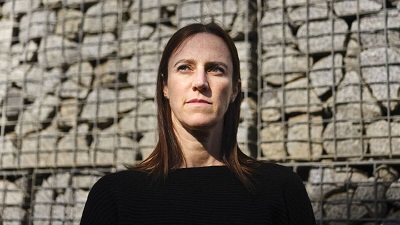
Danielle Anderson was working in what has become the worlds most notorious laboratory just weeks before the first known cases of Covid-19 emerged in central China. Yet, the Australian virologist still wonders what she missed.
Danielle Anderson, a senior research fellow at the University of Melbourne’s Peter Doherty Institute for Infection and Immunity and the only foreign scientist to have undertaken research at the Wuhan Institute of Virology’s BSL-4 lab, poses in Melbourne, Australia, on June 22, 2021. MUST CREDIT: Bloomberg photo by James Bugg
An expert in bat-borne viruses, Anderson is the only foreign scientist to have undertaken research at the Wuhan Institute of Virology’s BSL-4 lab, the first in mainland China equipped to handle the planet’s deadliest pathogens. Her most recent stint ended in November 2019, giving Anderson an insider’s perspective on a place that’s become a flashpoint in the search for what caused the worst pandemic in a century.
The emergence of the coronavirus in the same city where institute scientists, clad head-to-toe in protective gear, study that exact family of viruses has stoked speculation that it might have leaked from the lab, possibly via an infected staffer or a contaminated object. China’s lack of transparency since the earliest days of the outbreak fueled those suspicions, which have been seized on by the U.S. That’s turned the quest to uncover the origins of the virus, critical for preventing future pandemics, into a geopolitical minefield.
The work of the lab and the director of its emerging infectious diseases section – Shi Zhengli, a long-time colleague of Anderson’s dubbed ‘Batwoman’ for her work hunting viruses in caves – is now shrouded in controversy. The U.S. has questioned the lab’s safety and alleged its scientists were engaged in contentious gain of function research that manipulated viruses in a manner that could have made them more dangerous.
It’s a stark contrast to the place Anderson described in an interview with Bloomberg News, the first in which she’s shared details about working at the lab.
Half-truths and distorted information have obscured an accurate accounting of the lab’s functions and activities, which were more routine than how they’ve been portrayed in the media, she said.
“It’s not that it was boring, but it was a regular lab that worked in the same way as any other high-containment lab,” Anderson said. “What people are saying is just not how it is.”
Now at Melbourne’s Peter Doherty Institute for Infection and Immunity, Anderson began collaborating with Wuhan researchers in 2016, when she was scientific director of the biosafety lab at Singapore’s Duke-NUS Medical School. Her research – which focuses on why lethal viruses like Ebola and Nipah cause no disease in the bats in which they perpetually circulate – complemented studies underway at the Chinese institute, which offered funding to encourage international collaboration.
A rising star in the virology community, Anderson, 42, says her work on Ebola in Wuhan was the realization of a life-long career goal. Her favorite movie is “Outbreak,” the 1995 film in which disease experts respond to a dangerous new virus – a job Anderson said she wanted to do. For her, that meant working on Ebola in a high-containment laboratory.
Anderson’s career has taken her all over the world. After obtaining an undergraduate degree from Deakin University in Geelong, Australia, she worked as a lab technician at the Dana-Farber Cancer Institute in Boston, then returned to Australia to complete a PhD under the supervision of eminent virologists John Mackenzie and Linfa Wang. She did post-doctoral work in Montreal, before moving to Singapore and working again with Wang, who described Anderson as “very committed and dedicated,” and similar in personality to Shi.
“They’re both very blunt with such high moral standards,” Wang said by phone from Singapore, where he’s the director of the emerging infectious diseases program at the Duke-NUS Medical School. “I’m very proud of what Danielle’s been able to do.”
Anderson was on the ground in Wuhan when experts believe the virus, now known as SARS-CoV-2, was beginning to spread. Daily visits for a period in late 2019 put her in close proximity to many others working at the 65-year-old research center. She was part of a group that gathered each morning at the Chinese Academy of Sciences to catch a bus that shuttled them to the institute about 20 miles away.
As the sole foreigner, Anderson stood out, and she said the other researchers there looked out for her.
“We went to dinners together, lunches, we saw each other outside of the lab,” she said.
From her first visit before it formally opened in 2018, Anderson was impressed with the institute’s maximum biocontainment lab. The concrete, bunker-style building has the highest biosafety designation, and requires air, water and waste to be filtered and sterilized before it leaves the facility. There were strict protocols and requirements aimed at containing the pathogens being studied, Anderson said, and researchers underwent 45 hours of training to be certified to work independently in the lab.
The induction process required scientists to demonstrate their knowledge of containment procedures and their competency in wearing air-pressured suits. “It’s very, very extensive,” Anderson said.
Entering and exiting the facility was a carefully choreographed endeavor, she said. Departures were made especially intricate by a requirement to take both a chemical shower and a personal shower – the timings of which were precisely planned.
These rules are mandatory across BSL-4 labs, though Anderson noted differences compared with similar facilities in Europe, Singapore and Australia in which she’s worked. The Wuhan lab uses a bespoke method to make and monitor its disinfectants daily, a system Anderson was inspired to introduce in her own lab. She was connected via a headset to colleagues in the lab’s command center to enable constant communication and safety vigilance – steps designed to ensure nothing went awry.
However, the Trump administration’s focus in 2020 on the idea the virus escaped from the Wuhan facility suggested that something went seriously wrong at the institute, the only one to specialize in virology, viral pathology and virus technology of the some 20 biological and biomedical research institutes of the Chinese Academy of Sciences.
Virologists and infectious disease experts initially dismissed the theory, noting that viruses jump from animals to humans with regularity. There was no clear evidence from within SARS-CoV-2’s genome that it had been artificially manipulated, or that the lab harbored progenitor strains of the pandemic virus. Political observers suggested the allegations had a strategic basis and were designed to put pressure on Beijing.
And yet, China’s actions raised questions. The government refused to allow international scientists into Wuhan in early 2020 when the outbreak was mushrooming, including experts from the U.S. Centers for Disease Control and Prevention, who were already in the region.
Beijing stonewalled on allowing World Health Organization experts into Wuhan for more than a year, and then provided only limited access. The WHO team’s final report, written with and vetted by Chinese researchers, played down the possibility of a lab leak. Instead, it said the virus probably spread via a bat through another animal, and gave some credence to a favored Chinese theory that it could have been transferred via frozen food.
China’s obfuscation led outside researchers to reconsider their stance. Last month, 18 scientists writing in the journal Science called for an investigation into Covid-19’s origins that would give balanced consideration to the possibility of a lab accident. Even the director-general of the WHO, Tedros Adhanom Ghebreyesus, said the lab theory hadn’t been studied extensively enough.
But it’s U.S. President Joe Biden’s consideration of the idea – previously dismissed by many as a Trumpist conspiracy theory – that has given it newfound legitimacy. Biden called on America’s intelligence agencies last month to redouble their efforts in rooting out the genesis of Covid-19 after an earlier report, disclosed by the Wall Street Journal, claimed three researchers from the lab were hospitalized with flu-like symptoms in November 2019.
Anderson said no one she knew at the Wuhan institute was ill toward the end of 2019. Moreover, there is a procedure for reporting symptoms that correspond with the pathogens handled in high-risk containment labs.
“If people were sick, I assume that I would have been sick – and I wasn’t,” she said. “I was tested for coronavirus in Singapore before I was vaccinated, and had never had it.”
Not only that, many of Anderson’s collaborators in Wuhan came to Singapore at the end of December for a gathering on Nipah virus. There was no word of any illness sweeping the laboratory, she said.
“There was no chatter,” Anderson said. “Scientists are gossipy and excited. There was nothing strange from my point of view going on at that point that would make you think something is going on here.”
The names of the scientists reported to have been hospitalized haven’t been disclosed. The Chinese government and Shi Zhengli, the lab’s now-famous bat-virus researcher, have repeatedly denied that anyone from the facility contracted Covid-19. Anderson’s work at the facility, and her funding, ended after the pandemic emerged and she focused on the novel coronavirus.
ADVERTISEMENT
It’s not that it’s impossible the virus spilled from there. Anderson, better than most people, understands how a pathogen can escape from a laboratory. SARS, an earlier coronavirus that emerged in Asia in 2002 and killed more than 700 people, subsequently made its way out of secure facilities a handful of times, she said.
If presented with evidence that such an accident spawned Covid-19, Anderson “could foresee how things could maybe happen,” she said. “I’m not naive enough to say I absolutely write this off.”
And yet, she still believes it most likely came from a natural source. Since it took researchers almost a decade to pin down where in nature the SARS pathogen emerged, Anderson says she’s not surprised they haven’t found the “smoking gun” bat responsible for the latest outbreak yet.
The Wuhan Institute of Virology is large enough that Anderson said she didn’t know what everyone was working on at the end of 2019. She is aware of published research from the lab that involved testing viral components for their propensity to infect human cells. Anderson is convinced no virus was made intentionally to infect people and deliberately released – one of the more disturbing theories to have emerged about the pandemic’s origins.
Anderson did concede that it would be theoretically possible for a scientist in the lab to be working on a gain of function technique to unknowingly infect themselves and to then unintentionally infect others in the community. But there’s no evidence that occurred and Anderson rated its likelihood as exceedingly slim.
Getting authorization to create a virus in this way typically requires many layers of approval, and there are scientific best practices that put strict limits on this kind of work. For example, a moratorium was placed on research that could be done on the 1918 Spanish Flu virus after scientists isolated it decades later.
Even if such a gain of function effort got clearance, it’s hard to achieve, Anderson said. The technique is called reverse genetics.
“It’s exceedingly difficult to actually make it work when you want it to work,” she said.
Anderson’s lab in Singapore was one of the first to isolate SARS-CoV-2 from a Covid patient outside China and then to grow the virus. It was complicated and challenging, even for a team used to working with coronaviruses that knew its biological characteristics, including which protein receptor it targets. These key facets wouldn’t be known by anyone trying to craft a new virus, she said. Even then, the material that researchers study – the virus’s basic building blocks and genetic fingerprint – aren’t initially infectious, so they would need to culture significant amounts to infect people.
Despite this, Anderson does think an investigation is needed to nail down the virus’s origin once and for all. She’s dumbfounded by the portrayal of the lab by some media outside China, and the toxic attacks on scientists that have ensued.
One of a dozen experts appointed to an international taskforce in November to study the origins of the virus, Anderson hasn’t sought public attention, especially since being targeted by U.S. extremists in early 2020 after she exposed false information about the pandemic posted online. The vitriol that ensued prompted her to file a police report. The threats of violence many coronavirus scientists have experienced over the past 18 months have made them hesitant to speak out because of the risk that their words will be misconstrued.
The elements known to trigger infectious outbreaks – the mixing of humans and animals, especially wildlife – were present in Wuhan, creating an environment conducive for the spillover of a new zoonotic disease. In that respect, the emergence of Covid-19 follows a familiar pattern. What’s shocking to Anderson is the way it unfurled into a global contagion.
“The pandemic is something no one could have imagined on this scale,” she said. Researchers must study Covid’s calamitous path to determine what went wrong and how to stop the spread of future pathogens with pandemic potential.
“The virus was in the right place at the right time and everything lined up to cause this disaster.”
Published : June 29, 2021
By : Syndication Washington Post, Bloomberg · Michelle Cortez