After controversy, U.S. Catholic bishops announce no national policy on withholding Communion from politicians
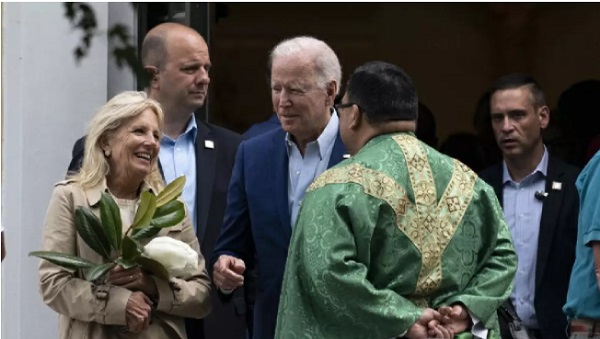
Days after a vote that triggered a tsunami of Catholic debate about Communion and politics, leading U.S. Catholic bishops working on an upcoming document about the sacrament are now de-emphasizing direct confrontation with President Joe Biden or other Catholic politicians who support abortion rights.
Seventy-five percent of members of the U.S. Conference of Catholic Bishops voted during their annual spring meeting on June 17 to go ahead with the drafting of a position paper on the “meaning of the Eucharist,” the core ritual of the Catholic faith, believed to be the presence of Jesus. Before the vote, live on Zoom, dozens of bishops debated the fact that the proposal for the document was a response to the election of Joe Biden, a weekly Mass-attending Catholic who supports abortion rights.
Catholic teaching opposes abortion.
During the three-day meeting of the U.S. bishops and in its aftermath, the bishops made conflicting statements about the document’s intention.
The idea for the document came from a committee the USCCB created after the November election in order to deal with the “problem” of Biden and his abortion policy, and what some bishops see as a confusing scandal for other Catholics watching the country’s most prominent member of their faith.
During the meeting many bishops said Biden was exacerbating what many faith leaders see as an already big problem: most U.S. Catholics, polls show, don’t attend Mass weekly and don’t believe in the supernatural aspect of Communion. But many other bishops pushed back to say there shouldn’t be a special emphasis on abortion and politicians, and such a document would politicize the sacrament.
Also during the meeting, bishops noted some letters exchanged between the Vatican and U.S. bishops before this spring meeting. The letters reflected discussion about a possible “national policy” on “worthiness” for Communion and possibly addressing in particular Catholic politicians who support abortion, euthanasia and other practices forbade by Catholic teaching.
Four days after the vote, on June 21, the USCCB released a Q&A excising past mention of Biden, a national policy or a focus on abortion.
“There will be no national policy on withholding Communion from politicians. The intent is to present a clear understanding of the Church’s teachings to bring heightened awareness among the faithful of how the Eucharist can transform our lives and bring us closer to our creator and the life he wants for us,” the Q&A said.
It said the document will be focused on the call of “all Catholics” to “support human life and dignity and other fundamental principles of Catholic moral and social teaching.”
Also on June 21, Bishop Kevin Rhoades, chair of the Doctrine Committee that will oversee the creation of a draft document, told a Catholic news site that the document will be addressed to “all Catholics” – not just politicians. He said it will also focus on “Eucharistic consistency,” and canon law that forbids from Communion people who are “conscious of serious sin” or “publicly unworthy,” the laws read.
“These disciplinary laws have a medicinal, rather than punitive, purpose,” he told Our Sunday Visitor.
Requests for comment from Rhoades and the USCCB were not returned Friday.
Jayd Henricks, a former top lay officials with the USCCB, said Friday his read is that while Biden’s election may have been the catalyst for the document’s creation, it’s part of a much longer concern among bishops about Catholics not understanding or connecting with this core sacrament. The wording of “national policy,” he said, was more about “giving guidance on a national level.”
Bishops arguing against a document as too narrow and too penalty-focused, Hendricks said, “were arguing against a straw man, a red herring.”
Bishop Shawn McKnight, of Jefferson City, Mo., who had argued during the USCCB meeting against going ahead with the document, Friday said the Q&A was a good sign. The “needle shifted a little bit,” he said, away from a document aimed at a national policy and restrictions.
ADVERTISEMENT
He also noted that Rhoades said there will be regional meetings of bishops this year in order to get more feedback.
McKnight said a general document on the Eucharist is “very appropriate,” one that focuses on “How do we attract people and make the beauty of what it means to us more evident to our young people and for them to understand why it’s so significant, instead being focused on who can and who cannot receive.”
High court delivers flurry of rulings as session nears end
WASHINGTON – The Supreme Court on Friday narrowed a lawsuit against a credit reporting company that had flagged thousands of people as potential terrorists or drug dealers, saying only those who can show “concrete harm” can participate in class-action claims.
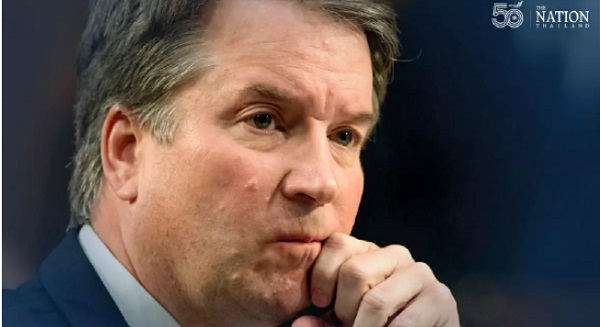
In a 5-to-4 decision for TransUnion v. Ramirez, Justice Brett Kavanaugh said only a portion of the more than 8,000 people that TransUnion had labeled potential wrongdoers had the information disclosed to another party. That means they did not experience the kind of injury the Constitution requires for bringing suit in federal court, he wrote.
“No concrete harm, no standing,” Kavanaugh wrote.
Kavanaugh wrote for himself and four other conservative justices. But the opinion drew a notable dissent from the court’s most consistent conservative, Clarence Thomas, joined by the court’s three liberals.
“TransUnion generated credit reports that erroneously flagged many law-abiding people as potential terrorists and drug traffickers,” wrote Thomas. Yet, “the majority decides that TransUnion’s actions are so insignificant that the Constitution prohibits consumers from vindicating their rights in federal court. The Constitution does no such thing.”
A jury had ruled against TransUnion and in favor of the class of 8,185 individuals who brought the $40 million lawsuit. But the Supreme Court sent the case back, saying only 1,853 of those had the information distributed to a third-party, and thus could recover damages.
One of them is Sergio Ramirez, who had an embarrassing moment at a California car dealership in 2011 when a salesperson ran a credit check. TransUnion said his name matched a name on the government’s list of national security risks. The dealership closed the deal with Ramirez’s wife as the buyer.
But Ramirez complained and found he was not the only one. For an extra fee to those making credit checks, TransUnion offered to check whether a name was listed with the Treasury Department’s Office of Foreign Assets Control, which maintains the roll of “specially designated nationals.”
As Kavanaugh noted, “TransUnion’s Name Screen product generated many false positives. Thousands of law-abiding Americans happen to share a first and last name with one of the terrorists, drug traffickers, or serious criminals” on the list.
But Kavanaugh concluded that just being matched to a potential terrorist was not enough.
“The mere presence of an inaccuracy in an internal credit file, if it is not disclosed to a third party, causes no concrete harm,” he wrote.
“In cases such as these where allegedly inaccurate or misleading information sits in a company database, the plaintiffs’ harm is roughly the same, legally speaking, as if someone wrote a defamatory letter and then stored it in her desk drawer.”
He said it was only speculative that there might be future harm to those wrongly labeled. He was joined by Chief Justice John Roberts Jr. and Justices Samuel Alito Jr., Neil Gorsuch and Amy Coney Barrett.
Stephen Newman, who argued the case for TransUnion, said the outcome “will have broad implications for class certification practice nationwide. It also will improve American businesses’ ability to serve their customers and workers efficiently, with reduced litigation burden.”
Thomas noted that Congress had specifically provided consumers the ability to sue credit reporting companies for harm.
“One need only tap into common sense to know that receiving a letter identifying you as a potential drug trafficker or terrorist is harmful,” he wrote. “All the more so when the information comes in the context of a credit report, the entire purpose of which is to demonstrate that a person can be trusted.”
He was joined by Justices Stephen Breyer, Sonia Sotomayor and Elena Kagan.
Kagan added in a separate opinion that the majority “holds, for the first time, that a specific class of plaintiffs whom Congress allowed to bring a lawsuit cannot do so under [the Constitution].”
ADVERTISEMENT
And she disputed the notion that the risk of disseminating the false information about the plaintiffs was too speculative.
“Why is it so speculative that a company in the business of selling credit reports to third parties will in fact sell a credit report to a third party?” she asked.
– – –
The court sided with oil companies and refineries in HollyFrontier Cheyenne Refining v. Renewable Fuels Assn, saying the Environmental Protection Agency has wider latitude in granting exemptions from the existing mandate that they mix ethanol and other renewable fuels into gasoline and diesel.
In a 6 to 3 decision that looked closely at ambiguous wording in the law, the majority said the agency’s power to create exemptions is not limited to refineries that have consistently received such a reprieve.
The question was what Congress meant when it vested the EPA to grant “extensions” of the exemption. Gorsuch said that did not mean only those currently with exemptions could apply.
“It is entirely natural – and consistent with ordinary usage – to seek an ‘extension’ of time even after some lapse,” he wrote. “Think of the forgetful student who asks for an ‘extension’ for a term paper after the deadline has passed, the tenant who does the same after overstaying his lease, or parties who negotiate an ‘extension’ of a contract after its expiration.”
Barrett disagreed, and wrote her first dissent from a majority opinion since joining the court in October. She was joined by Sotomayor and Kagan, which meant that the court split, also for the first time this term, along gender lines.
Barrett said something must be ongoing before it could receive an extension.
“One would not normally ask to ‘extend’ a newspaper subscription long after it expired,” she wrote. “Or request, after child number two, to ‘extend’ the parental-leave period completed after child number one.”
Under the majority’s reading, she said, “a refinery could ask to ‘extend’ an exemption it had in 2010 in the year 2040, with no need to connect the two periods.”
– – –
Special organizations for Native Alaskans are eligible for federal covid-19 relief funds even though they are not officially tribal governments, the court ruled in Yellen v. Confederated Tribes of the Chehalis Reservation.
In a 6 to 3 vote, Sotomayor wrote for the majority that Alaska Native Corporations are considered “Indian tribes, regardless of whether they are also federally recognized tribes.”
She said the ruling was confirming only “what the federal government has maintained for almost half a century.”
Three groups of Native American tribes had sued in federal court to prevent the corporations from receiving a share of the money from the federal Cares Act set aside for tribes. About $500 million was at stake.
Rescue workers descend on collapsed Florida condo tower in desperate search for signs of life
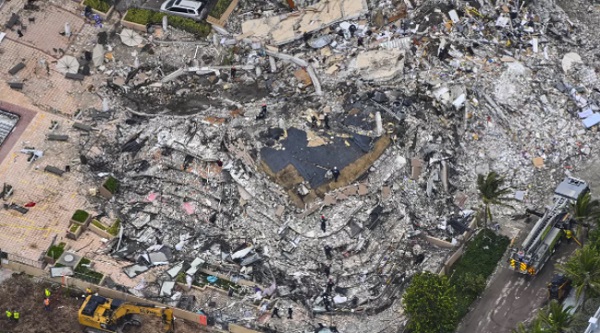
SURFSIDE, Fla. – Hundreds of search-and-rescue workers wielding diamond-tipped drills and sonar scanners probed a smoldering mountain of wreckage Friday during the second full day of the painstaking effort to find signs of life inside a collapsed 12-story condominium tower near Miami Beach.
Working in shifts amid intermittent sun and torrential rain, crews used heavy machinery to delicately lift chunks from the tangled thicket of concrete and rebar that remained of the Champlain Towers South to give rescuers new angles into the rubble. Fires broke out and smoke poured from the building while emergency workers built makeshift tunnels into the building’s interior.
An aerial view of the collapsed Champlain Towers South on Friday in Surfside, Fla. Four people were confirmed dead as of Friday evening, and search-and-rescue teams are still working to find survivors trapped under rubble. “There’s still anticipation of live victims,” said Dave Downey, a Miami-Dade former fire chief. Washington Post photo by Ricky Carioti
Rescue crews along with engineers, medical teams and other first responders were attacking the waterfront building from above and below to try to save any of the 159 people still missing and unaccounted for, according to Miami-Dade County Mayor Daniella Levine Cava.
“They are taking enormous risks,” Levine Cava said in Spanish at a Friday afternoon news conference in the beach community of Surfside, located on a barrier island just north of Miami Beach. “They are ready to find more people alive.”
With distraught relatives anxiously waiting for updates, Surfside officials vowed to review building codes, and Miami ordered citywide inspections of all buildings that were at least six stories high and 40 years old, the age of the collapsed condo tower.
At an emergency meeting of the Surfside town commission Friday, officials said they planned to bring in an independent engineering firm to assess the structural integrity of neighboring buildings. Surfside Mayor Charles Burkett said while there was no immediate evidence that other buildings were in danger, the town would consider evacuating residents of the surrounding Champlain Towers complex buildings, while residents in other nearby structures have already chosen to leave.
“Given we have no idea what caused this collapse, and we all know the chances of that happening again are like lightning striking, but I don’t know that there’s anybody in this room that would be willing to roll the dice,” Burkett said.
By Friday evening, four people had been confirmed killed after the building collapsed early Thursday morning, but only one of them had been identified: Stacie Fang, whose 15-year-old son was rescued from the rubble, was taken to a hospital but did not survive, county officials said.
For hundreds more relatives, many who gathered at a reunification center, there was silence on dead cellphones and the agonizing wait for information about the whereabouts of those who lived in the 55 waterfront apartments that crumbled to the ground.
“Right now, it’s just nothing,” said a college student who had flown in hours earlier from Israel and stood behind yellow police tape waiting for answers about his missing dad. He asked not to be named. “I have no idea what’s going on. I’m waiting for a call that may or may not come.”
From her fourth-floor balcony, Cassandra Stratton, 40, was on the phone with her husband as she watched the pool cave into a crater in the ground and felt a deep tremor in her apartment, her older sister Ashley Dean said. In a moment, the line cut off.
“She screamed bloody murder and that was it,” Dean said Stratton’s husband told her.
From the beach, Dean pointed toward where her sister’s apartment once was, holding back tears as she recalled her charismatic sibling.
“I want to have hope,” she said, “but I’m a realist. I don’t want to hold on to false dreams.”
Among the missing was a group of six people from Puerto Rico who had traveled to Miami to attend the funeral of a friend’s father. Jacqueline Glago said her family friends were staying at the Champlain Towers.
“We haven’t heard anything about them,” she said. “We are all desperate.”
By Friday, the most accessible victims had already been rescued and sent to hospitals. Rescue crews were focused on probing deeper into the wreckage looking for “void spaces” formed by large objects such as refrigerators, air conditioning units, sofas or other rubble that could create pockets where someone could hide without being crushed, said Dave Downey, former fire chief of Miami-Dade Fire Rescue.
“There’s still anticipation of live victims,” he said. “They’re doing everything necessary to locate and extract them.”
ADVERTISEMENT
Downey said crews were removing large blocks of concrete but that every piece of debris moved could cause another shift, and there was a persistent risk of a secondary collapse.
The current chief, Alan Cominsky, said late Friday the search for survivors would continue through the night and that several pieces of heavy equipment, including cranes, were en route.
“This is a very strategic, methodical process,” he said. “We can’t just move it all at one time. It has to be very slow processes where we’re digging through, searching, shoring up certain areas.”
The team leading the operation is the Miami-Dade-based Urban Search and Rescue Florida Task Force 1, an 80-person unit widely regarded as one of the world’s leading search and rescue outfits. The group has experience in a broad range of domestic and international disasters, including the Sept. 11, 2001, terrorist attacks and the 2010 earthquake in Haiti. They use dogs trained to pick up the scent of live humans from floors away and regularly rely on listening devices and fiber optic cameras to peer through the rubble.
The crews worked amid an acrid burning smell and clouds of smoke. Sweat poured down their faces as they lined up for water. A priest walked over to one exhausted-looking firefighter and gave him a hug.
“We’re dealing with a multifaceted, multidimensional type of threat,” said Obed Frometa, a lieutenant on the Miami-Dade search-and-rescue team who helped plan the effort. “We’re dealing not only with the exposed elements of the structure itself, but voids and the continuous threats of collapse.”
Frometa said the search for survivors had been delicate. Each time a new fire ignites, crews have to make sure not to pour too much water on the concrete, fearing the weight would cause that section to collapse on someone who may sill be alive. They’ve also worked below the pile, boring into the top of a collapsed parking garage with diamond-tipped drills to access crushed condo units.
Outside of the wreckage, the small beach city of Surfside was taken over by hordes of police. Helicopters circled overhead, and yellow police tape cordoned off several surrounding blocks and a large swath of the beach. By midafternoon, authorities were setting up large, tan-colored support tents on a tennis court in front of the collapsed building. On the other side of the court’s chain-link fence, an impromptu memorial went up with missing-person fliers and flower bouquets.
Bewildered residents gathered beyond the police cordon, some asking officers how to reach their homes. Others came to pray.
Eric Dar said a prayer on the beach outside the building, wrapping a leather strap around his arm in the Jewish ritual of wearing tefillin and reading from a list of about 30 names of the missing.
“It seems like only prayers can maybe help,” he said, adding, “I just thought that maybe some miracle would happen.”
Authorities were no closer to offering an explanation for why the building fell down.
“We need a definitive explanation for how this could have happened,” Florida Gov. Ron DeSantis, a Republican, said at a Friday news conference in Surfside. “It’s tough. It’s been gut-wrenching for an awful lot of people. But I tell you nobody is quitting here, and we are going to stand by those families and we’re going to stand by everyone that’s been displaced.”
DeSantis spoke with President Joe Biden on Friday and thanked the administration for its “full support” after Biden approved an emergency declaration for Miami-Dade County.
A team of six National Institute of Standards and Technology scientists and engineers will be sent to the collapsed portions of the condo as part of a process to determine how the building fell.
Before the condo fell, repairs were being done on the roof, but Jim McGuinness, a town building official, said he had been on the roof 14 hours before and did not see an inordinate amount of building materials there. He said workers had been replacing the anchors that window cleaners use to rappel down the building’s exterior.
But one resident of a top-floor penthouse warned relatives – before she went missing – that the construction on the roof had caused her unit to vibrate.
“She’d been complaining for the past couple of weeks about the construction on the roof,” Douglas Berdeaux said about his wife’s sister, Elaine Sabino. “She said she was worried that the ceiling was going to collapse on top of her bed.”
Buildings in the county are required to be recertified every 40 years, and the Champlain Towers South building was going through that certification process. Structural engineers also raised the possibility that ocean tides and sea spray could have gotten inside the concrete foundation and corroded the reinforcing steel. One Florida scientist wrote a paper last year that found the tower had been sinking in the 1990s.
Many of those who lived in sections of the building that remained standing and who managed to escape did so in harrowing ways early Thursday. They awoke to sounds they believed were thunder or lightning; a nearby bomb or a roof caving in. Chandeliers swung and floors buckled.
Esther Gorfinkel, 88, believed it was a seaside squall before her room began to shake. Within moments, the intercom blared, first in English, then in Spanish, telling residents to evacuate.
But many including Gorfinkel found the exit doors warped and mangled. Some could look down what had been their hallways into the gaping night air and a thick plume of dust and smoke. Some residents screamed from balconies and escaped down fire rescue ladders.
“A lot of friends of mine are gone,” Gorfinkel said. “That section that fell down, I know everybody and some of them were good friends of mine.”
Published : June 26, 2021
By : The Washington Post · Antonio Olivo, Derek Hawkins, Meryl Kornfield, Joshua Partlow
Death toll soars in Asean, while new Covid cases exceed 37,000
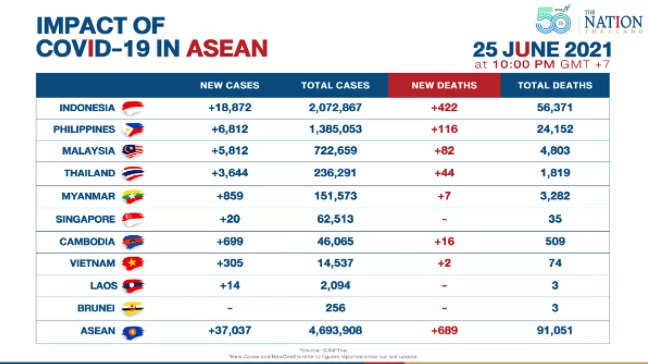
Southeast Asia reported the highest number of Covid-related deaths on a single day in months on Friday, though there was a slight decline in new cases, collated data showed.
Asean reported 689 deaths, increasing from Thursday’s 604, while the 37,037 new cases were lower than the previous day’s 38,320.
The number of Covid-19 cases in the region crossed 4.69 million, while the death toll rose to 91,051.
The Philippines’ Food and Drug Administration approved emergency use of India’s Covaxin inactivated vaccine, making it the 8th type of vaccine allowed for use in the country after Pfizer, AstraZeneca, Sinovac, Sinopharm, Sputnik V, Moderna and Johnson & Johnson. Covaxin is yet to be approved in WHO’s emergency use listing.
The Singapore government will allow permanent residents and holders of long-term work visas to register for vaccination from July 2.
Earlier on June 11, the government had allowed people aged 12-39 years to register to receive a Pfizer vaccine, which it had approved for children from 12 years old in May.
Out of Singapore’s 5.8 million population, about 3 million people have been given the first jab while about 2 million have received the second jab.
Xi talks with astronauts stationed in space station core module.
Chinese President Xi Jinping talked with the three astronauts stationed in the countrys space station core module Tianhe Wednesday morning, expecting the station to make pioneering contributions to the peaceful use of space by humanity.
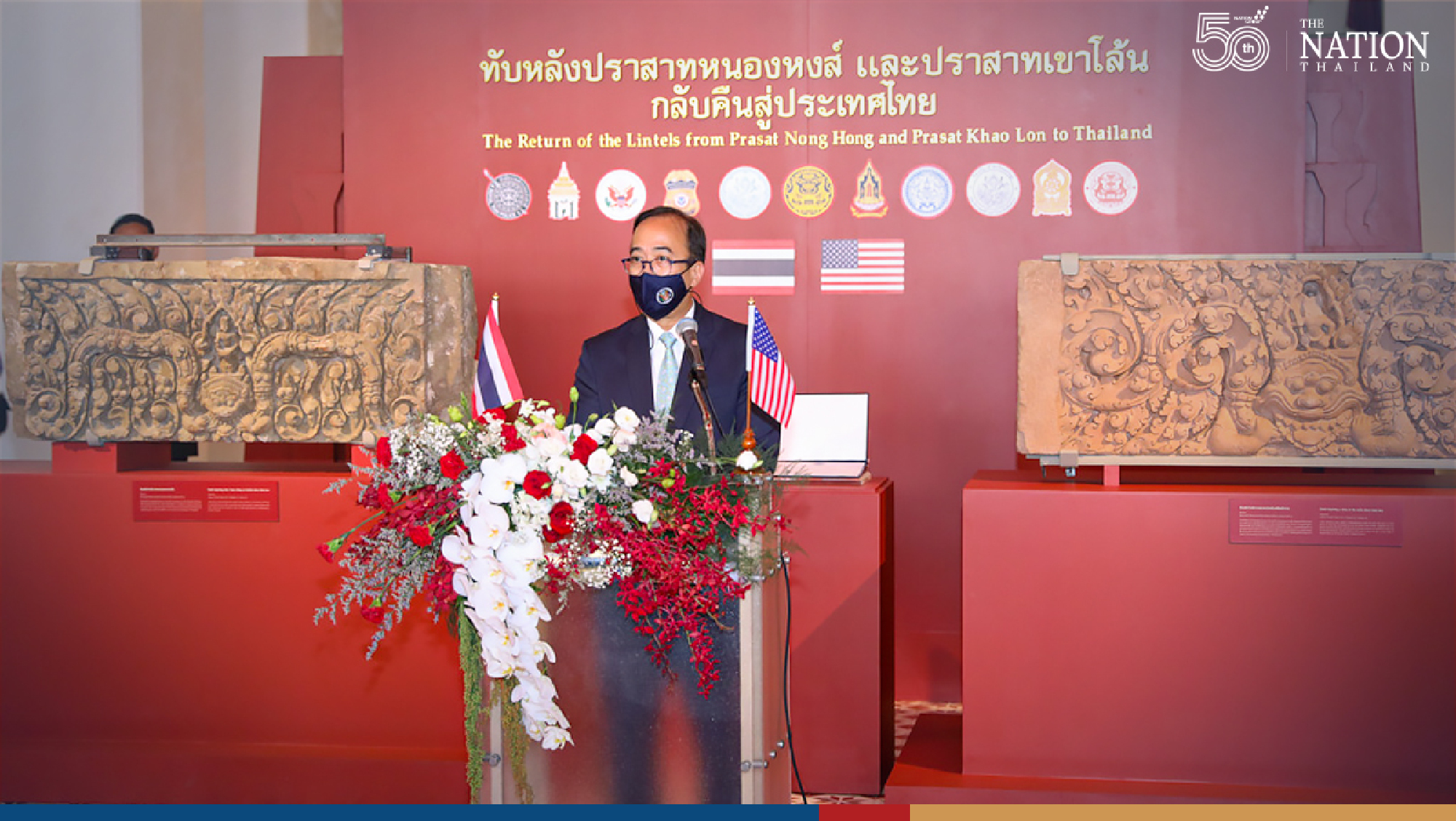
The U.S. government welcomes the return of two 11th century stone lintels to Thailand, marking the end of a four-year effort on behalf of the United States and Thailand to bring these items home.
“These two lintels are visible symbols of Thai culture and history, and the United States government is proud to have fought for their return to Thailand,” said the U.S. Charge d’Affaires Michael Heath who represents the U.S. government at the handover ceremony today.
U.S. Welcomes the Return of Ancient Lintels
Presided over by Deputy Prime Minister Wissanu Krea-ngam, the handover ceremony was made possible by close collaboration between the Thai and the U.S. governments, which partnered to seek the return of the two religiously significant lintels.
U.S. Welcomes the Return of Ancient Lintels
The cooperation officially kicked off in 2017 when a group of independent academics collected information about a number of overseas Thai antiquities and worked with the Prime Minister and the Ministry of Culture to establish a committee to repatriate these important artifacts. The committee agreed to pursue the return of the two lintels, originally from Prasat Nong Hong in Buri Ram and Prasat Khao Lon in Sa Kaeo, which were on display at the Asian Art Museum in San Francisco.
The Culture Ministry and Ministry of Foreign Affairs worked closely with U.S. Homeland Security Investigations (based out of U.S. Embassy Bangkok) and the U.S. Attorney’s Office of the Northern District of California to complete the legal process necessary to remove the items from the collection of the Asian Art Museum in San Francisco so that they could be repatriated to Thailand. The two lintels arrived in Thailand on May 28, 2021.
“We celebrate the return of these lintels and know that, thanks to our close law enforcement cooperation and bilateral ties, they will now be seen by Thais young and old, as they admire the very rich traditions of their Kingdom,” said Mr. Heath, adding, “The United States is a country of laws, and the laws are very clear regarding cultural relics that belong to other nations.”
The United States has an unbreakable friendship with Thailand, our oldest ally in Asia. Together, we partner to strengthen our health, education, military, economic and people-to-people ties.
U.S. Welcomes the Return of Ancient Lintels
The repatriation of these significant items represents another milestone in our long history of cultural cooperation, which also includes support to restore Wat Chaiwatthanaram in Ayutthaya through the U.S. Ambassadors Fund for Cultural Preservation.
The stone lintels, according to the agreement, were returned to Thailand through the U.S. Department of Justice’s victim remission program. Upon their return, the lintels will be placed on exhibition at the Bangkok National Museum for three months.
Asean sees sharp jump in new Covid cases and deaths
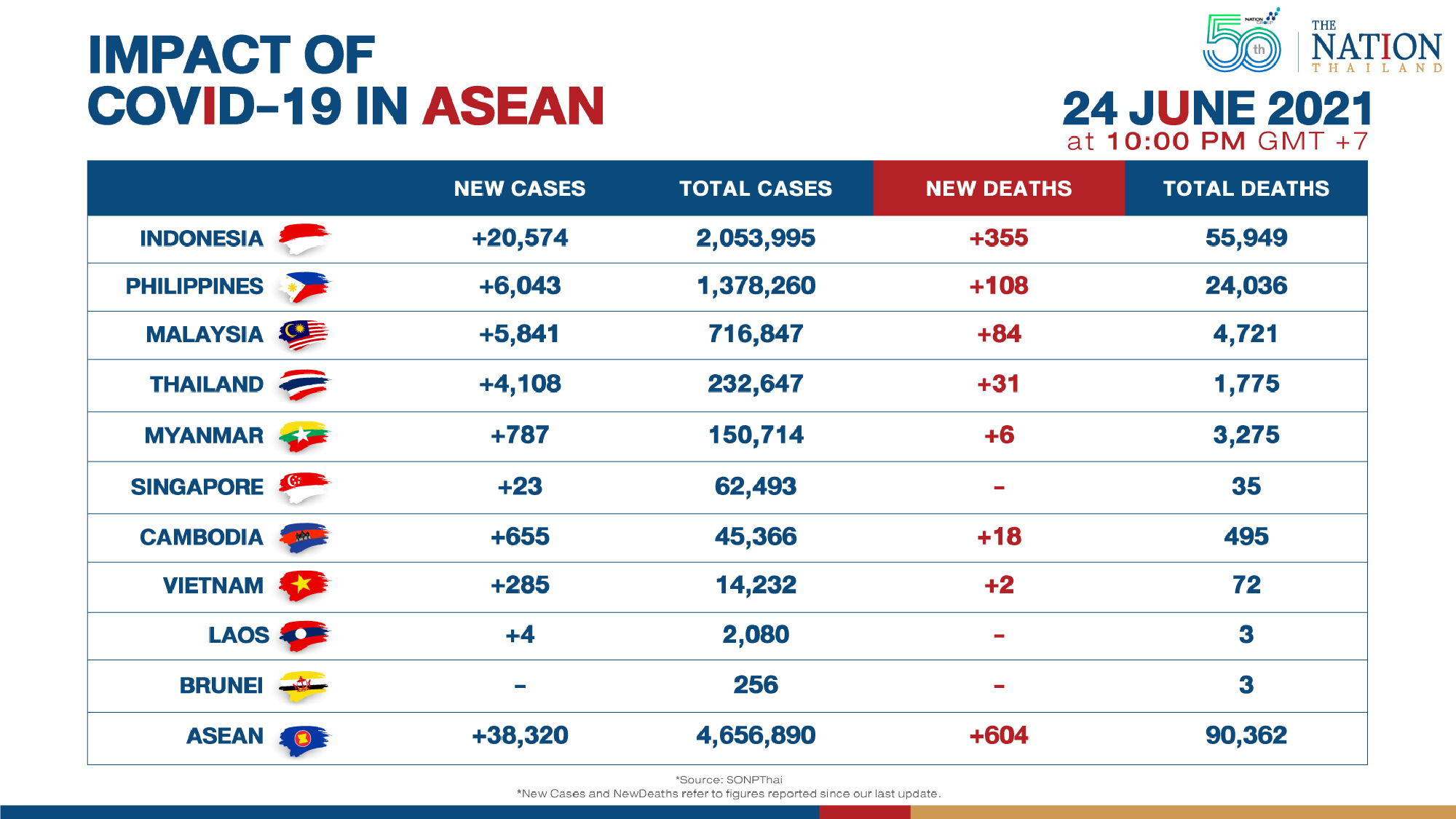
Southeast Asia recorded the highest number of new Covid cases and deaths in months on Thursday, collated data showed.
Asean reported 38,320 new cases, a sharp jump from Wednesday’s 29,597, while 604 patients died, increasing from the previous day’s 575.
Indonesia saw a major increase in new cases with 20,574 testing positive compared to 15,308 on Wednesday; 355 people died on Thursday, up from 303 the previous day.
The number of Covid-19 cases in the region crossed 4.65 million, while total deaths increased to 90,362.
Singapore reported 23 new cases on Thursday, driving cumulative cases in the country to 62,493 with 35 deaths.
Simgapore’s Ministry of Public Health aimed to increase inoculation rate from 47,000 doses per day to 80,000, as the country has received more vaccine. This will enable Singapore to meet its target of vaccinating at least two-thirds of the population before its national day on August 9.
Cambodia reported 655 new cases and 18 deaths on Thursday, bringing cumulative cases in the country to 45,366 with 493 deaths. The Phnom Penh public health office reported that the infection rate in the capital had dropped from 400-500 patients per day to 100-200 patients due to the aggressive vaccination campaign throughout the city.
99 people unaccounted for in Miami-Dade condo collapse
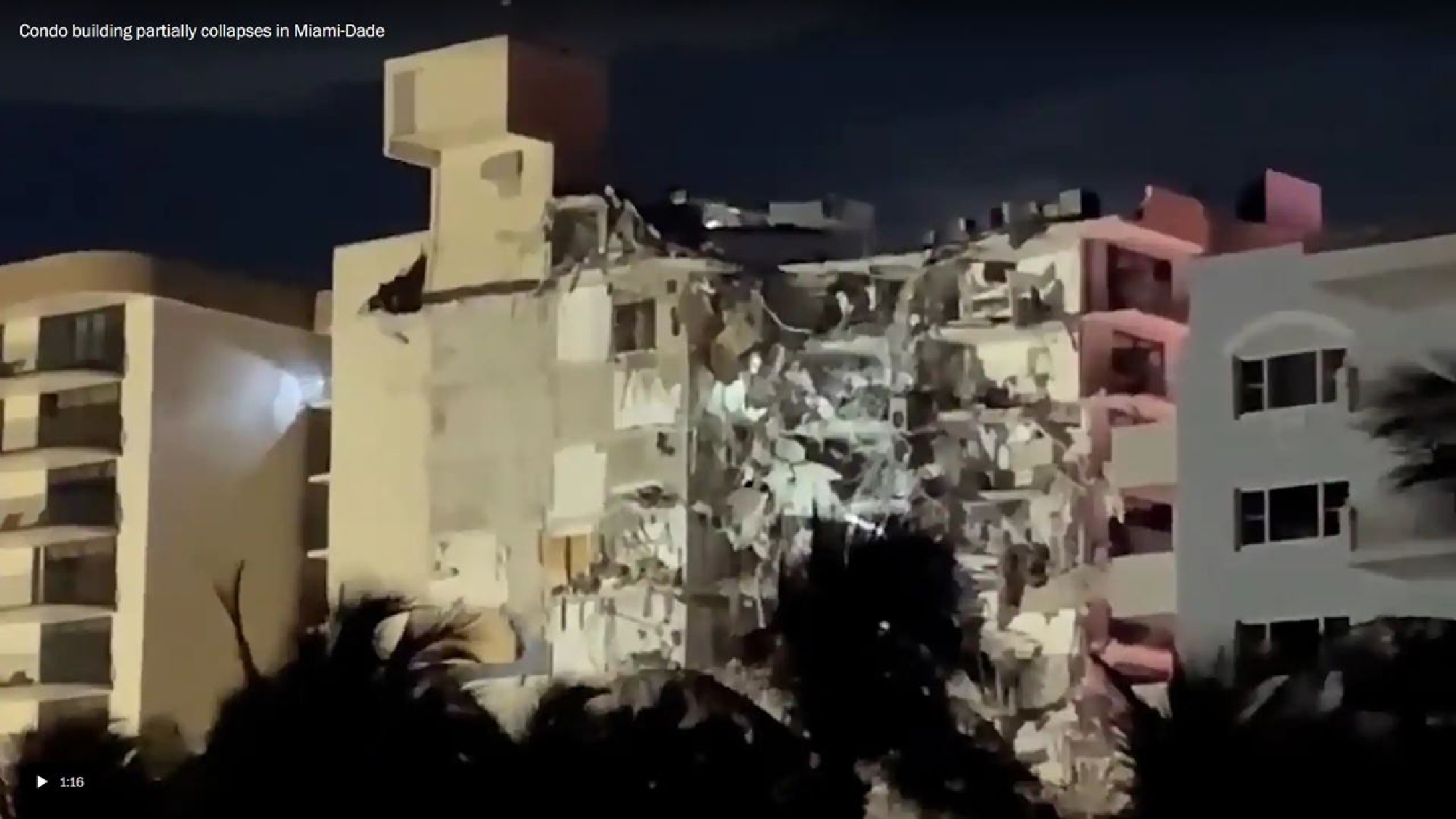
SURFSIDE, Fla. – A large oceanfront condo building near Miami Beach partially collapsed early Thursday morning, killing at least one person, injuring another 10 or more and prompting a massive search-and-rescue response as 99 people remain unaccounted for.
Dozens of units from police and fire agencies rushed to Champlain Towers South in Surfside, Fla., at 1:30 a.m. after the northeast corridor of the building collapsed, Assistant Fire Chief Ray Jadallah said. Rescuers evacuated 35 people from the 12-story building, including two recovered from the rubble.
“We went running out, and we saw all the debris, and the building was just gone,” said Alexis Watson, 21, who is vacationing from Texas at a nearby hotel. “We heard a couple of people yelling, ‘Help, help, please!’ “
Miami-Dade County Mayor Daniella Levine Cava said 102 residents had been located, but 99 people were still unaccounted for as of early Thursday evening. Miami-Dade County Commissioner Sally Heyman said the number of people unaccounted for does not necessarily mean all are missing or were in the building at the time of collapse.
“They are unaccounted for because they have not been heard from or have not called family or friends to say they are okay,” Heyman said.
The partial collapse came one day after the building had passed inspection, Surfside Vice Mayor Tina Paul told The Washington Post. Florida Gov. Ron DeSantis, R said engineers were examining what caused the collapse but an exact cause could take some time to determine.
“It’s a tragic day,” DeSantis said. “We still have hope to be able to identify additional survivors.”
Footage of the collapse captured by nearby security cameras shows a wing of the building suddenly collapsing and a cloud of dust filling the air. One witness described seeing people trapped inside using their phone flashlights to signal for help. In the immediate aftermath, rescuers pulled a boy from the rubble, while firefighters used ladders to rescue other tenants from balconies in the still-standing portion of the tower.
Nicholas Balboa, who lives next door to the condo, said he could see the boy’s hand waving through the rubble as he helped rescue him.
“He was yelling, ‘Please help me!'” Balboa said to WFOR. “It was sheer panic.”
Meanwhile, dozens of family members and friends gathered at a community center established to gather information and hopefully reunite loved ones.
Luz Marina Pena carried a photograph of her aunt, 77-year-old Marina Azen, who lived on the fourth floor. She said her relative had lived in the building for 20 years and never complained about poor maintenance.
Authorities were unable to say whether anyone else had died and emphasized that search-and-rescue operations were ongoing. Surfside City Manager Andrew Hyatt told reporters the efforts could last at least a week. Another official told the Miami Herald that first responders believed they’d recovered all survivors from inside.
“Everyone who is alive is out of the building,” said Frank Rollason, director of Miami-Dade Emergency Management.
The White House is monitoring the situation with the Federal Emergency Management Agency and coordinating any possible assistance with local officials, a Biden administration official said.
President Joe Biden said his administration is ready to offer federal resources “immediately” as soon as DeSantis declared the collapse an emergency.
“We will be there,” the president said.
Fifty rooms at a hotel located next door to the residential building were evacuated, Surfside Mayor Charles Burkett told reporters Thursday.
The mayor told NBC’s “Today” show that it “looks like a bomb went off,” calling the partial collapse “a catastrophic failure of that building.”
“It’s hard to imagine how this could happen,” Burkett said. “Buildings just don’t fall down.”
Miami-Dade Fire Rescue said it had deployed its Technical Rescue Team, which is “specially trained in the treatment and removal of victims trapped in complex or confined spaces,” according to the agency. Video shows first responders helping people in the portion of the building that’s still standing. Part of the inside of the destroyed units could be seen from outside; on one floor, a bunk bed stood standing along the edge.
The building’s residents seemed to be a cross-section of residents emblematic of Miami’s diversity: Venezuelans, Paraguayans and people belonging to the Orthodox Jewish community. Among those unaccounted for are multiple family members of Silvana López Moreira, the first lady of Paraguay.
Bradley Lozano’s family has owned a unit on the side of the building that collapsed since the mid-2000s. His stepfather lived there, and the family had not heard from him as of Thursday morning, Lozano said. They spent the morning checking the reunification center and local hospitals but couldn’t find him.
“We’re still waiting to hear just like everybody else,” Lozano, 37, told The Post.
Lozano, who owns a mortgage servicing company, said he was asleep at home in Pinecrest, Fla., when his brother woke him before 4 a.m. and told him the tower had come crashing down. He turned on the news and saw the heaps of pulverized concrete and metal.
“It’s surreal,” he said. “You just don’t see that in our country, really.”
Constructed on reclaimed wetlands, Champlain Towers South was built as part of a series of 12-story condos along the beach in the early 1980s, the Herald reported at the time. Several units in the building are listed for sale on Zillow with an asking price of $600,000 or more.
A 2020 study conducted by Shimon Wdowinski, a professor in the department of earth and environment at Florida International University, found that the building had been sinking since the 1990s, reported USA Today.
The city of Surfside is an enclave for the Orthodox Jewish community, boasting some of South Florida’s largest synagogues. Just a week before, DeSantis visited the Shul of Bal Harbour in Surfside to sign laws and emphasize his pro-Israel platform. The area that some call “Little Buenos Aires” also hosts an Argentine-American community formed after an economic collapse in the South American country in the 1990s.
Along Collins Avenue, an upscale thoroughfare extending north of Miami Beach, towers lining Miami’s coast are inhabited by a mix of seasonal and year-round residents. Some of the condo’s units may have been empty at the time of the collapse.
Lozano questioned whether construction at the building just south of the tower may have rattled the foundation and weakened the structure. During visits to the condo over the past two years, he said, he frequently saw heavy machinery pounding away at the ground. Neighbors were also wary of the construction work, he said.
He described Champlain Towers South as a “family building,” filled with a mix of snowbirds and year-round residents. Airbnb rentals were barred, so the community was tightknit.
“Everybody who lived there knew each other,” Lozano said.
99 people unaccounted for in Miami-Dade condo collapse
ADVERTISEMENT
Ofi Osin-Cohen, a resident of the building, recounted the horror of being rescued from her fourth-story balcony. Osin-Cohen told “Today” that she awoke when she felt the building begin to shake. Trying to escape the building, all she could see was smoke and debris. She said she also heard screams throughout the building.
“It is just overwhelming to see when we opened the door and saw that the building had collapsed,” she said.
Kevin DiSilva was frantically looking for information on a friend who lived in the collapsed building. The only piece of information he got from police was the name of the hospital where victims were taken.
“We’ve called every number they tell us to call,” DiSilva said. “We don’t know what else to do.”
Local leaders urged the public to support the victims and their loved ones.
“This is a very sad moment in our community,” Jose “Pepe” Diaz, chairman of the Miami-Dade Board of County Commissioners, said in a news conference. “It is important that all prayers go out to all family members and those suffering right now.”
Published : June 25, 2021
By : The Washington Post · Lori Rozsa, Tim Elfrink, Timothy Bella, Derek Hawkins
The Tokyo Olympics just got an important no-confidence vote – from Japans emperor
TOKYO – Japanese Emperor Naruhito appears to be “concerned” that this summers Olympics in Tokyo could cause a rise in coronavirus infections, according to the head of the Imperial Household Agency.
“His majesty is very worried about the current infection situation of the covid-19 disease,” Yasuhiko Nishimura, grand steward of the agency, told a regular news conference on Thursday, the Kyodo News agency reported.
“I suppose that he is concerned that while there are voices of anxiety among the public, the event may lead to the expansion of infections,” Nishimura said.
The emperor is honorary patron for the Tokyo 2020 Games and is widely respected in Japan, but he holds no political power.
It is rare for him to speak out on such an important and controversial topic, and his views carry weight. His warning will embarrass the government and the International Olympic Committee (IOC), but it has come too late to cause a change of heart among organizers, who are determined to start the Games on July 23, after a one-year delay due to the pandemic.
Japan’s chief cabinet secretary, Katsunobu Kato, played down the remarks, saying they represented the “view” of the grand steward. “I would like to ask the Imperial Household Agency for details, but as I have said, we will realize a safe and secure Games,” Kato said at a news conference, according to Kyodo.
David Leheny, a professor in the Graduate School of Asia-Pacific Studies at Waseda University, called the statement from the Imperial Household “very surprising,” especially because it “cuts directly at one of the most fraught topics in Japan today.”
Naruhito “knows it’s not in his power to stop the Games – I doubt he would even want it to be in his power – but I assume, like many, he’s nervous about the potential implications of the Games for public health and is signaling that he’d prefer not to be involved or that any comments he makes at the Games will be a bit more sober and less celebratory than the convening committee might want,” he said.
Naruhito’s grandfather, Emperor Hirohito, officially declared the Tokyo Olympics open in 1964.
Organizers announced this week they would allow limited numbers of domestic spectators to attend events at the Olympics, with attendance capped at 10,000, or 50% of a venue’s capacity. But they also warned that the decision could be revisited if there is an abrupt change in the pandemic situation, and on Wednesday, announced that alcohol would be banned at venues.
The government partially lifted a state of emergency over Tokyo on Sunday, leaving in its place what it calls a “quasi state of emergency,” with restrictions on eating out and drinking alcohol in the evening.
The government’s coronavirus advisers warned Thursday that a rebound in cases already appears to be underway, with Tokyo recording 570 new cases on Thursday and 619 on Wednesday, both numbers more than 100 higher than the week before. They also expressed concern that most new cases could be of the infectious delta variant, first discovered in India, by the time the Games begin.
Japan has avoided the explosion in coronavirus cases seen in many countries, but the country has recorded about 14,500 deaths and experienced severe pressure on its economy and medical system. Its vaccination program has picked up speed in recent weeks, with more than a million shots a day being administered and 19% of the population having received at least one dose.
But concerns are also mounting about keeping athletes safe, healthy and able to compete, after a second member of a Ugandan Olympic team tested positive for the coronavirus.
A first member of the nine-person team, a coach, tested positive on arrival at Tokyo’s Narita International Airport on Saturday, but the other eight members were controversially allowed to proceed to their training camp in Osaka.
With a second member now testing positive in a sample taken Tuesday, the entire delegation has been asked to remain in their hotel and refrain from training until July 3, according to Kyodo News.
The IOC says well over 80% of residents of the Olympic Village will be vaccinated against the coronavirus by the time they arrive, with between 70 and 80% of journalists also inoculated. But there are concerns about the effectiveness of some coronavirus vaccines in preventing infections by some variants of the virus. All the Ugandan team members were reported to have received Oxford-AstraZeneca shots.
The Embassy of the Republic of Korea in Thailand and the Mission of the Republic of Korea to ASEAN
The Embassy of the Republic of Korea in Thailand and the Mission of the Republic of Korea to ASEAN co-hosted the New Southern Policy Connectivity Forum on 22 June
The Embassy of the Republic of Korea in Thailand and the Mission of the Republic of Korea to ASEAN co-hosted the New Southern Policy Connectivity Forum on 22 June
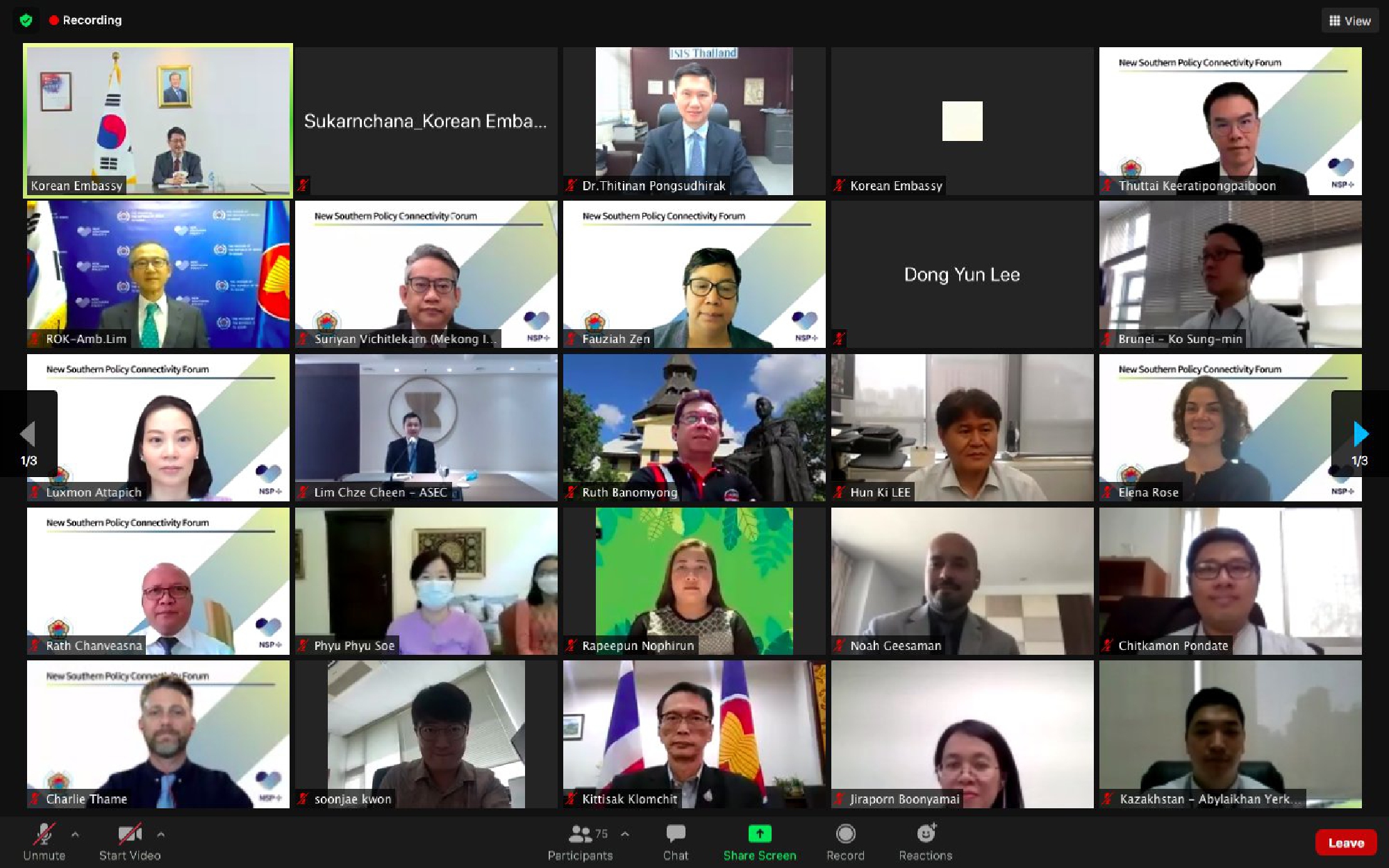
1. The Embassy of the Republic of Korea in Thailand and the Mission of the Republic of Korea to ASEAN co-hosted the New Southern Policy (NSP) Connectivity Forum entitled “Strengthening Partnership for Connectivity in Thailand, Mekong and ASEAN,” under the sponsorship of the Ministry of Foreign Affairs of Thailand, on 22 June via video conference.
The Embassy of the Republic of Korea in Thailand and the Mission of the Republic of Korea to ASEAN2. The New Southern Policy Connectivity Forum has been launched this year, in realization of the New Southern Policy Plus, to take stock of ROK-ASEAN joint efforts on connectivity and discuss ways to advance them. The first NSP Connectivity Forum, which aims to discuss enhancing connectivity on a country-specific and also region-oriented basis, was held in Thailand and has played a leading role in strengthening connectivity in the Mekong sub-region, ASEAN and beyond.
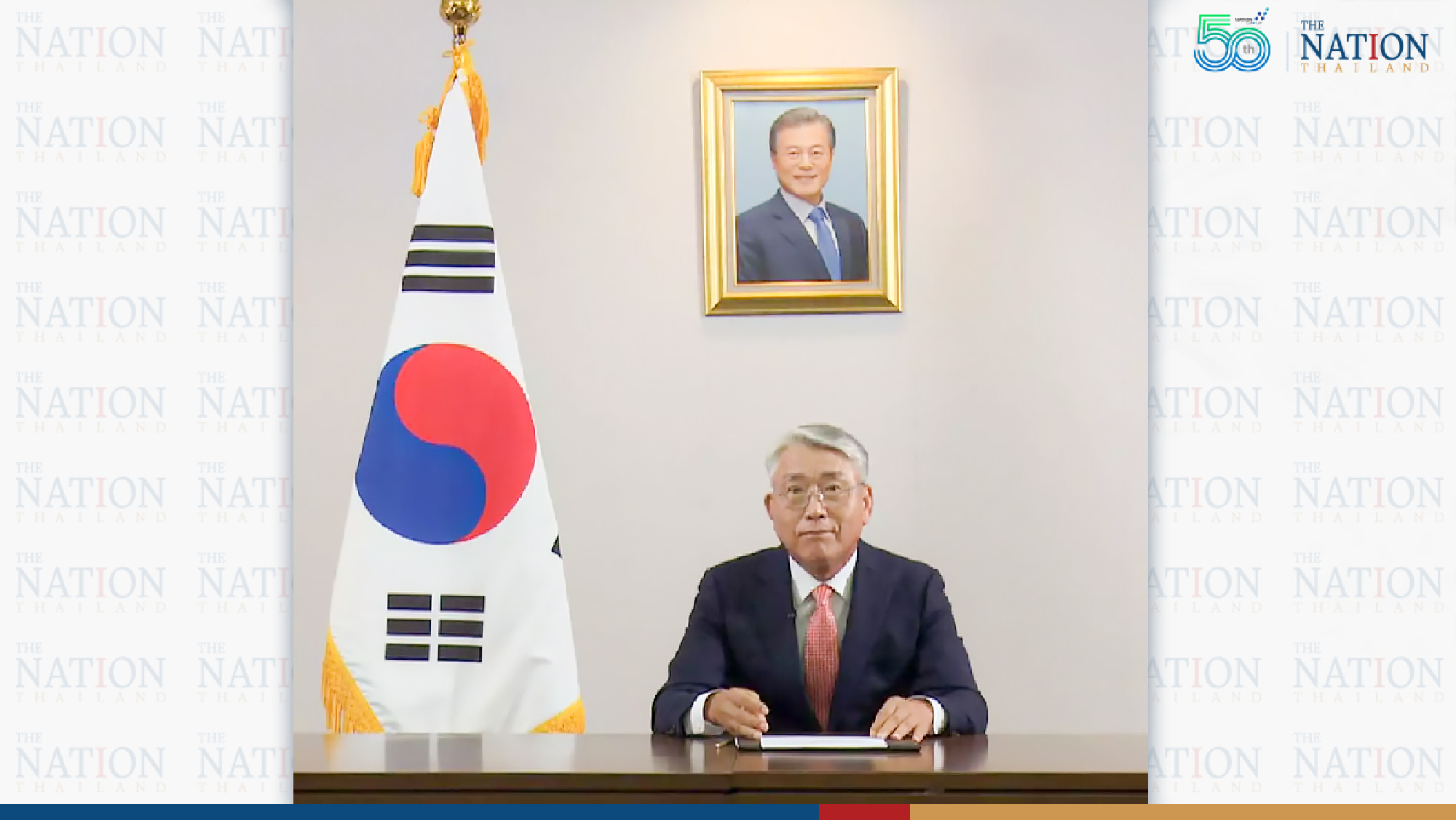
3. H.E. Lee Wook-heon, Ambassador of the Republic of Korea to Thailand, in his Welcoming Remarks, suggested ways to cooperate on enhanced connectivity at three levels – Thailand, Mekong and ASEAN – emphasizing that connectivity has assumed even more importance since the COVID-19 pandemic. He emphasized that recovery and promotion of connectivity not only at the physical and institutional level but at the people-to-people level is a key task.
– He proposed deepening pragmatic cooperation with the Bio-Circular-Green (BCG) Economy Model and the Eastern Economic Corridor (EEC) of Thailand in areas such as smart cities and New and Renewable Energy, and promoting Mekong sub-region connectivity through the Mekong-ROK Cooperation Fund (MKCF) and the ROK’s contribution to ACMECS.
– He reiterated the importance of deepening collaboration on enhanced people-to-people connectivity between the ROK and ASEAN, underlining the importance of expanding opportunities for the future generations of the ROK and ASEAN to interact with each other and to gain a deeper mutual understanding,.
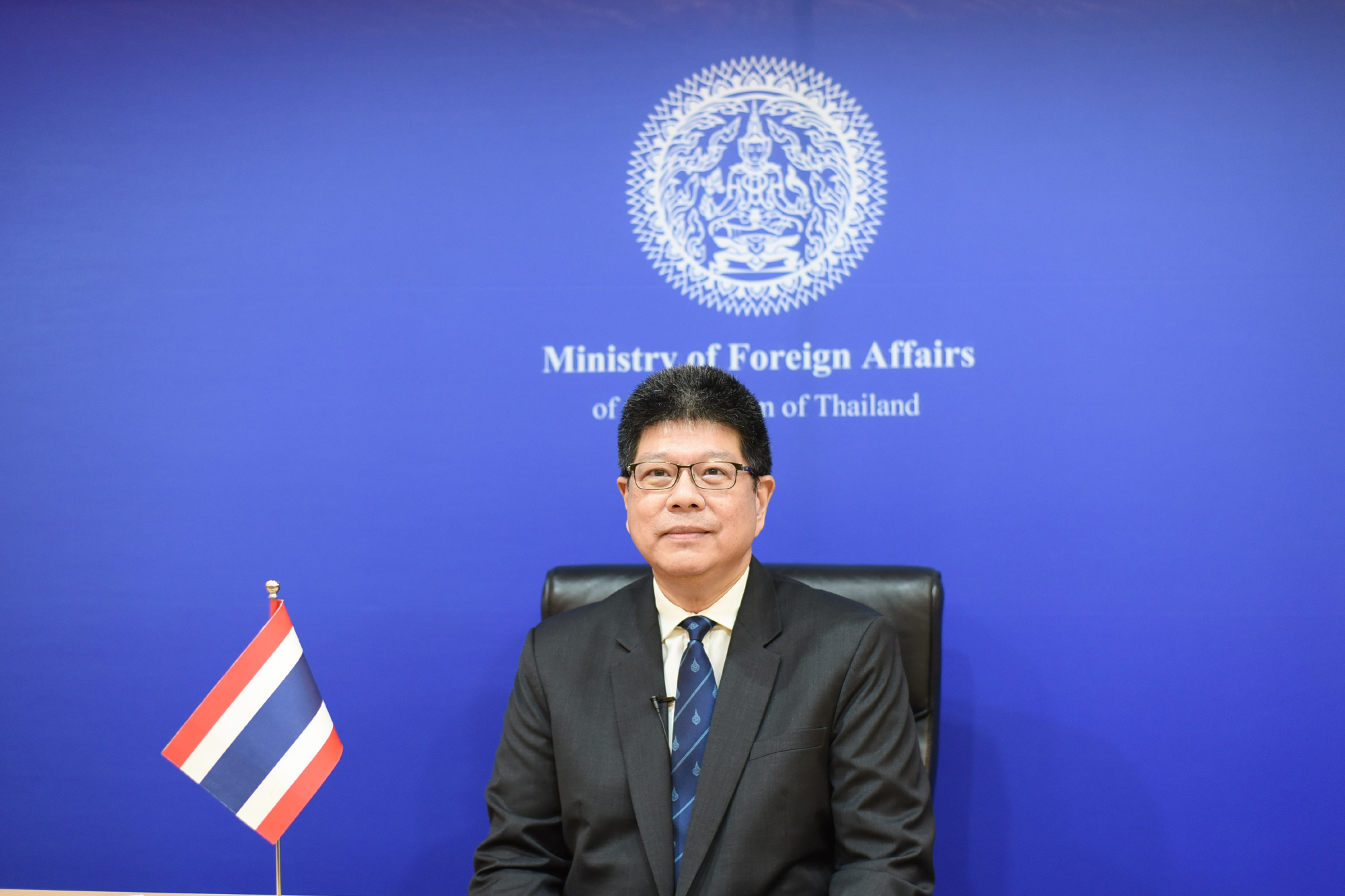
4. H.E. Thani Thongphakdi, Permanent Secretary of the Ministry of Foreign Affairs of Thailand, in his Congratulatory Message, noted the relevancy of the NSP Connectivity Forum, emphasizing that COVID-19 has served to emphasize the importance of interconnectedness and cooperation.
– He explained that as connectivity is at the top of Thailand’s agenda and also one of the priority areas under the ASEAN Outlook on the Indo-Pacific or AOIP, Thailand has proactively pushed forward the “Connecting the Connectivities” initiative in order to enhance synergies with various regional strategies including the New Southern Policy, whilst also looking forward to cooperation with partners for the effective implementation of the ASEAN Comprehensive Recovery Framework.
– He underlined that it should be our common goal to enhance people’s livelihoods, well-being and welfare with no one left behind, as reflected in the NSP vision to build a “people-centered community of peace and prosperity.” He proposed that the ROK, Thailand and ASEAN can cooperate further, in particular, in science, technology and innovation, smart infrastructure and smart cities, green development, digital trade and digital connectivity.
The Embassy of the Republic of Korea in Thailand and the Mission of the Republic of Korea to ASEAN5. Session 1, under the theme of “Connectivity and Implementation of the MPAC 2025 in Thailand,” was attended by the ASEAN Secretariat, the Office of the National Economic and Social Development Council, the Institute of Security and International Studies at Chulalongkorn University and the Eastern Economic Corridor Office, providing an opportunity to review and share information on policies and main projects of Thailand on connectivity and recommendations on enhancing connectivity in Thailand.
ADVERTISEMENT
6. In Session 2, Executive Director of the Mekong Institute, gave a presentation on “partnership for strengthening connectivity in the Mekong region,” which was followed by panel discussions in which the Korea Transport Institute, Thammasat University, the Australian Embassy in Thailand (P4I) and the US Embassy in Thailand participated.
7. This Forum is also valued as an opportunity to seek harmonious partnership with main partner countries including the US and Australia, and to present a vision for synergies between the New Southern Policy and their initiatives in the region.


 99 people unaccounted for in Miami-Dade condo collapse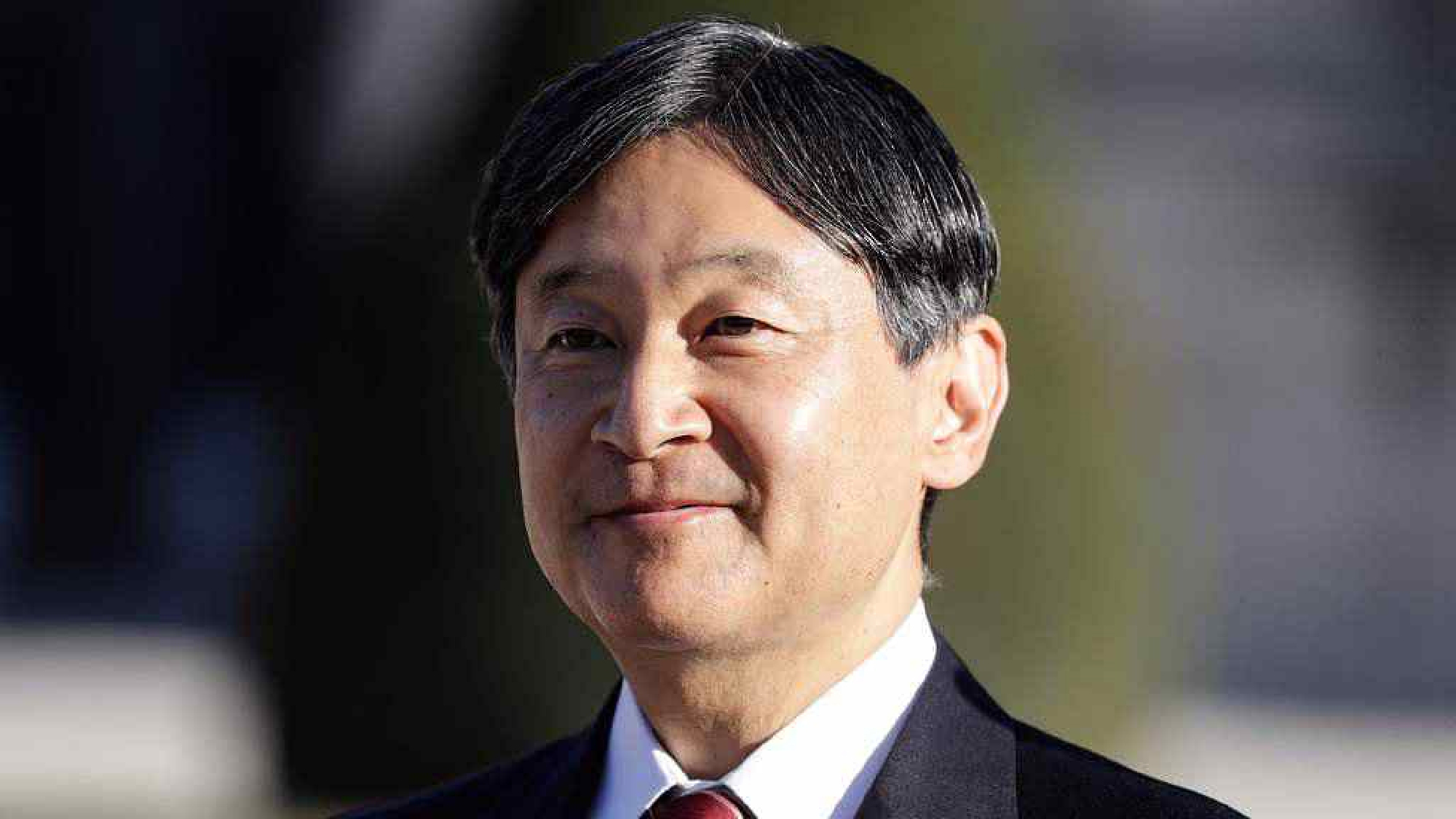
 The Embassy of the Republic of Korea in Thailand and the Mission of the Republic of Korea to ASEAN2. The New Southern Policy Connectivity Forum has been launched this year, in realization of the New Southern Policy Plus, to take stock of ROK-ASEAN joint efforts on connectivity and discuss ways to advance them. The first NSP Connectivity Forum, which aims to discuss enhancing connectivity on a country-specific and also region-oriented basis, was held in Thailand and has played a leading role in strengthening connectivity in the Mekong sub-region, ASEAN and beyond.
 The Embassy of the Republic of Korea in Thailand and the Mission of the Republic of Korea to ASEAN5. Session 1, under the theme of “Connectivity and Implementation of the MPAC 2025 in Thailand,” was attended by the ASEAN Secretariat, the Office of the National Economic and Social Development Council, the Institute of Security and International Studies at Chulalongkorn University and the Eastern Economic Corridor Office, providing an opportunity to review and share information on policies and main projects of Thailand on connectivity and recommendations on enhancing connectivity in Thailand.
