Ropes on climbing routes litter Mount Everest

#SootinClaimon.Com : ขอบคุณแหล่งข้อมูล : หนังสือพิมพ์ The Nation.

https://www.nationthailand.com/blogs/world/asia-pacific/40022786

Ropes on climbing routes litter Mount Everest

Ropes on climbing routes litter Mount Everest

TUESDAY, DECEMBER 06, 2022

Record-setting mountaineer Kami Rita Sherpa didn’t find any fixed ropes in the “death zone” on Mt Everest when he climbed the peak in the spring. Sherpa, who holds the world record for summiting 8,000-metre mountains an astounding 39 times, knows the value of the ropes for climbers crawling up the frozen slopes.

Every year, expert sherpas fix hundreds of kilograms of ropes leading to the top of the Himalayan peaks to help climbers following them. But what happens to these nylon ropes after the end of the mountaineering season?

“They are usually left on the mountain,” said Himal Pandit, training coordinator at the Nepal Mountain Academy established by the Tourism Ministry.

“Around 400 kg of plastic ropes are left on the mountain every year, and they remain there for decades. There is no policy to bring them down, and this has been polluting the mountains,” he said, speaking at the International Sustainable Mountain Tourism Conference in Kathmandu on Thursday.

Everest is a cash cow for the government. Climbers pump billions into Nepal’s economy annually. Around 60,000 trekkers visit Everest base camp alone to gaze in awe at the world’s highest peak, energising the economy all along the trail. But the government has no policy to keep the mountain clean, observers say.

Kami Rita, who has been climbing since 1994, told the Post, “In the past, if we saw any ropes, we would bring them down to the base camp and pass them around. They are good for tying yaks and cows. “I don’t know how much rope lies buried on the peak. It could be a lot.”

Pandit has been doing research on mountain pollution caused by plastic ropes. He has interviewed more than 20 high-altitude climbing sherpas.

“The sherpas say it’s not their responsibility to remove the ropes by risking their lives. We have estimated that there are ropes from 30 to 40 years ago. The government has a policy to fix the ropes, but there is no clear policy to remove them.”

According to Pandit, around 50 tonnes of ropes are estimated to lie buried under the snow on different mountains of Nepal.

There are risks in bringing the ropes down in the same season. “Besides, sherpas are not paid to bring them back. They are paid to fix the ropes only,” said Kami Rita.

“So it’s the responsibility of the sherpas who fix the ropes the following year to bring down the old ropes.”

According to Kami Rita, the rope-fixing team can’t wait for an expedition to finish. So the ropes are either blown away by the wind or swept down by avalanches and lie buried under the snow.

Dambar Parajuli, president of the Expedition Operators Association of Nepal, says ropes are fixed on Everest in two different systems.

From the Khumbu Icefall at the head of the Khumbu Glacier at 5,486 metres to Camp II at 6,400 metres, the ropes are fixed by icefall doctors deployed by the Sagarmatha Pollution Control Committee, a community-based NGO.

The committee charges $600 per climber for the service. These ropes are normally removed.

For the section from Camp II to the summit at 8,848.86 metres, the Expedition Operators Association of Nepal calls for applications from the expedition companies to fix the ropes.

“This system was introduced in 2014, but it was only fully implemented in 2016,” said Parajuli. “Before that, ropes used to be fixed through mutual understanding between the expedition operators.”

The operators had to contribute sherpas and logistics to fix the ropes.

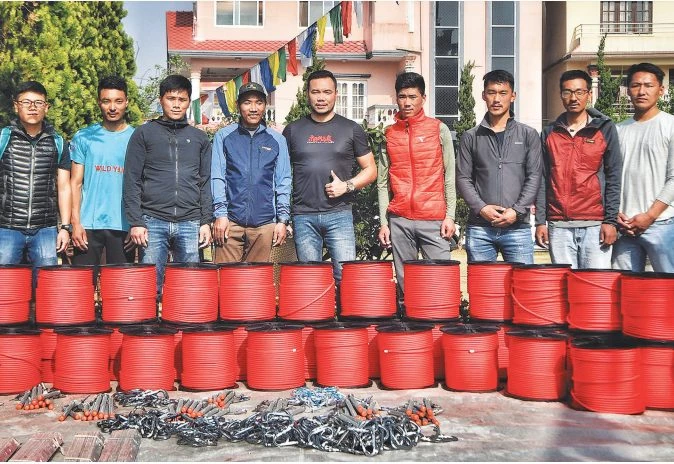
According to Parajuli, it costs more than Rs10 million to fix the ropes, and on Everest, around 1,300 metres of rope is required. Beal climbing ropes are normally used for climbing.

Parajuli says they have a clear contract with the expedition operator who wins the contract to bring back the old ropes while fixing a new set.

“To avoid confusion about which is which, we use ropes of a different colour every year. If we have used red ropes in 2021, we use yellow ropes in 2022,” he said.

According to him, removing the ropes is a super difficult task. “It’s almost impossible to search, dig and fasten them. And we can’t risk a sherpa’s life. So, they are left on the mountain.”
Ropes on climbing routes litter Mount EverestThe litter left behind by visitors has long been a burden on the Everest region. Hundreds of mountaineers, sherpas, guides and other high altitude porters bound for Everest leave behind tonnes of both biodegradable and non-biodegradable waste, like empty oxygen canisters, bottles, ropes, kitchen waste and faecal matter, polluting the area and settlements downstream.

Plastic is a non-biodegradable material and most plastic is made from fossil fuels. If burnt, it poisons the air; if buried, it pollutes the soil. Plastic has been creeping up the mountains due to the increasing number of mountain climbers, mostly on the world’s highest peak Everest.

A conservative estimate puts the average time for one single plastic bag to completely biodegrade at 500 years.

A sherpa earns Rs900,000 to Rs1 million fixing ropes on Everest. It takes five to six days, depending on the weather. The expedition organiser says the old ropes mark the route which is a help to the rope fixers.

Over the years, plastic has created havoc in the Everest region. The trek from Lukla to Everest base camp has long been referred to as “garbage of toilet paper”. There is a big problem of human waste in the Khumbu area, and it has been polluting the water for people living downstream.

Nearly 60,000 trekkers travel to Khumbu annually, leaving behind massive pollution.

There is a government rule requiring every climber to bring back at least 8 kg of garbage—the amount of trash estimated to be produced by one climber—but it hasn’t been very effective.

“Garbage on the mountain is challenging, but it is a solvable problem. There is a solution,” said Alton C Byers, a mountain geographer, conservationist and mountaineer, while presenting a paper entitled “Notes from the Field: Contemporary Social and Physical Changes in Nepal’s High Mountains” at Thursday’s conference.

“Two decades ago, when I visited Khumbu, there was no garbage in any village,” said Byers, a professor at the University of Colorado. “Now, due to modern life, plastics are everywhere. Every food and beverage comes in plastic.”

He said that tourism in Khumbu had grown tremendously, and along with that the number of lodges is growing and growing. “This brings garbage.”

Since January 2020, Khumbu Pasang Lhamu Rural Municipality in Solukhumbu district has banned the use of plastic bags, bottles and other plastic items, citing their adverse effects on human health, especially in the Everest region. The use of plastic bags of less than 30 microns has been prohibited.

“But plastic is climbing up the mountain. This is a serious issue,” said Buddhi Sagar Lamichhane, joint secretary at the Tourism Ministry. “I hope the issue will get traction.”

G7 price cap on Russian oil kicks in, Russia will only sell at market price

#SootinClaimon.Com : ขอบคุณแหล่งข้อมูล : หนังสือพิมพ์ The Nation.

https://www.nationthailand.com/world/russia-central-asia/40022785

G7 price cap on Russian oil kicks in, Russia will only sell at market price

G7 price cap on Russian oil kicks in, Russia will only sell at market price

MONDAY, DECEMBER 05, 2022

The Group of Seven price cap on Russian seaborne oil came into force on Monday as the West tries to limit Moscow’s ability to finance its war in Ukraine, but Russia has said it will not abide by the measure even if it has to cut production.

The price cap, to be enforced by the G7, the European Union and Australia, comes on top of the EU’s embargo on imports of Russian crude by sea and similar pledges by the United States, Canada, Japan and Britain.

It allows Russian oil to be shipped to third-party countries using G7 and EU tankers, insurance companies and credit institutions, only if the cargo is bought at or below the price cap.

Because the world’s key shipping and insurance firms are based in G7 countries, the cap could make it difficult for Moscow to sell its oil for a higher price.

Russia, the world’s second-largest oil exporter, said on Sunday it would not accept the cap and would not sell oil that is subject to it, even if it has to cut production.

Selling oil and gas to Europe has been one of the main sources of Russian foreign currency earnings since Soviet geologists found oil and gas in the swamps of Siberia in the decades after World War Two.

A source who asked not to be identified due to the sensitivity of the situation told Reuters that a decree was being prepared to prohibit Russian companies and traders from interacting with countries and companies guided by the cap.

In essence, such a decree would ban the export of oil and petroleum products to countries and companies that apply it.

Still, with the price cap set at $60 per barrel, not much below the $67 level where it closed on Friday (December 2), the EU and G7 countries expect Russia will still have the incentive to continue selling oil at that price while accepting smaller profits.

The level of the cap is to be reviewed by the EU and the G7 every two months, with the first such review in mid-January.

“This review should take into account … the effectiveness of the measure, its implementation, international adherence and alignment, the potential impact on coalition members and partners, and market developments,” the European Commission said in a statement.

The cap on crude will be followed by a similar measure affecting Russian petroleum products that will come into force on Feb. 5, though the level of that cap has not yet been determined.

Putin drives across Crimean bridge damaged in October blast

#SootinClaimon.Com : ขอบคุณแหล่งข้อมูล : หนังสือพิมพ์ The Nation.

https://www.nationthailand.com/world/russia-central-asia/40022784

Putin drives across Crimean bridge damaged in October blast

Putin drives across Crimean bridge damaged in October blast

MONDAY, DECEMBER 05, 2022

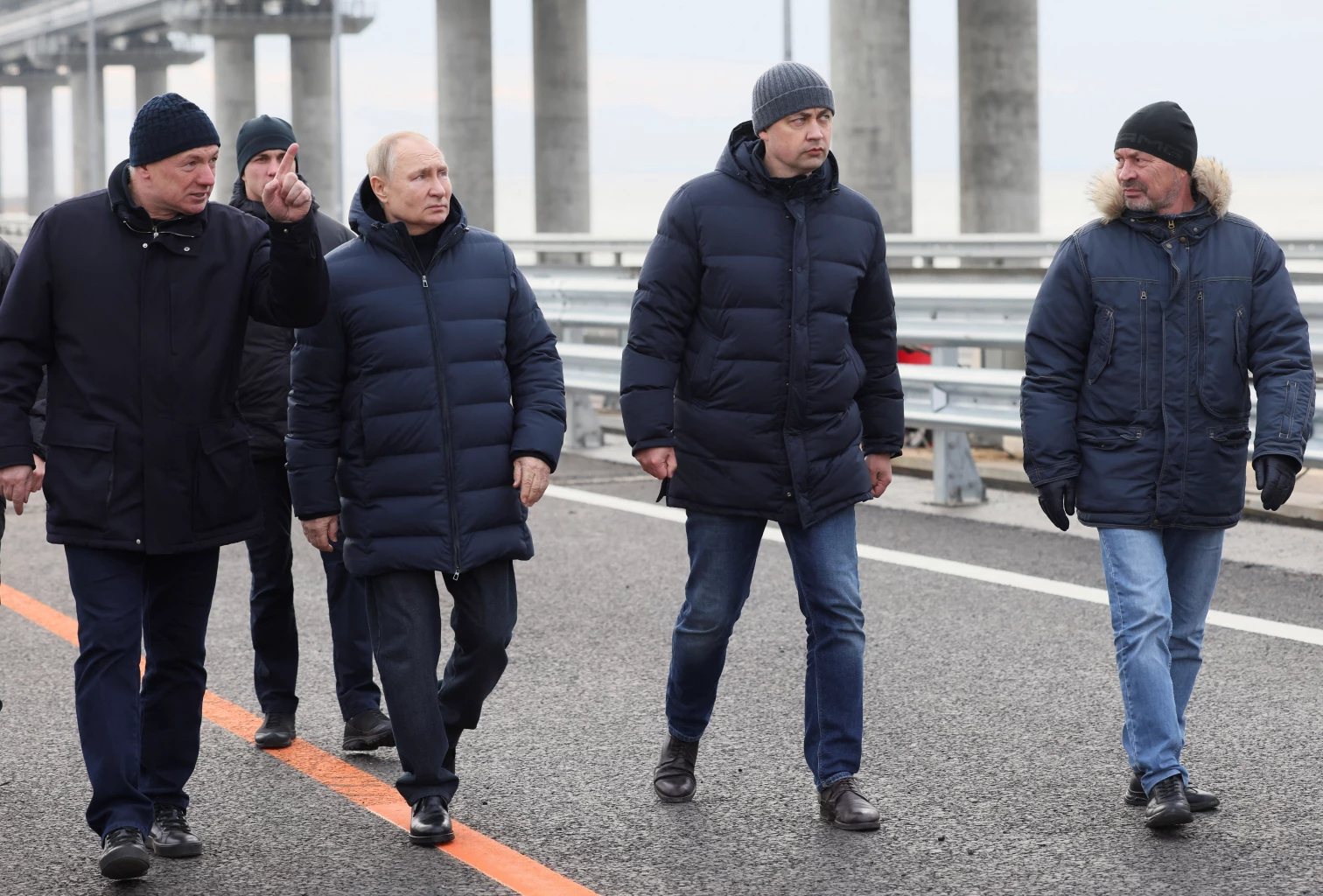
President Vladimir Putin on Monday drove a Mercedes across the Crimean Bridge linking southern Russia to the annexed Crimean peninsula, less than two months since an explosion tore through one of the Kremlin chief’s showcase infrastructure projects.

The 12-mile (19 km) road and rail bridge, which was personally opened by Putin in 2018, was bombed on October 8 in an attack Russia said was carried out by Ukraine.

Putin, accompanied by Deputy Prime Minister Marat Khusnullin, was shown on state television behind the wheel of a Mercedes, asking questions about where the attack took place.

Putin also walked along parts of the bridge, Europe’s largest, to inspect sections that are still visibly scorched.

Ukraine never claimed responsibility for the bombing of the bridge on the morning of October 8, a day after Putin’s 70th birthday. Russia’s Federal Security Service said the attack was organised by Ukrainian military intelligence.

The explosion wrecked one section of the road bridge, temporarily halting traffic across the Kerch Strait. The blast also destroyed several fuel tankers on a train heading towards the annexed Crimean peninsula from neighbouring southern Russia.

Russia in 2014 annexed Crimea, which was transferred from Soviet Russia to Soviet Ukraine in 1954 by then-Soviet leader Nikita Khrushchev and recognised by Russia in 1994 after the collapse of the USSR.

Putin drives across Crimean bridge damaged in October blast

Ukraine has vowed to return Crimea, which relies on the bridge for supplies.

Putin’s ally Arkady Rotenberg’s company built the vast structure, which is Europe’s longest bridge. Putin has long lauded the project, boasting at one point that Russian Tsars and Soviet leaders had dreamed of building it but never did.

ANN news highlights: Mon, Dec 5, 2022

#SootinClaimon.Com : ขอบคุณแหล่งข้อมูล : หนังสือพิมพ์ The Nation.

https://www.nationthailand.com/world/asia-pacific/40022774

Monday, December 5, 2022

Monday, December 5, 2022

MONDAY, DECEMBER 05, 2022

Check out what’s hot in the region as The Nation puts together headlines from members of Asia News Network (ANN). Click to read more:

ANN news highlights: Mon, Dec 5, 2022
Bringing Asia Closer

Energy Japan
Power-saving winter starts for households, businesses – The Japan News

A power-saving period started Dec. 1, with the government asking households and businesses across the nation to conserve electricity during the winter. The period is set to end in March next year.

Vocano Indonesia
Indonesia’s Mount Semeru volcano erupts, top alert status triggered | AFP for Borneo Bulletin

Indonesia’s Mount Semeru erupted yesterday spewing hot ash clouds a mile into the sky and sending rivers of lava down its side, sparking the evacuation of nearly 2,000 people exactly one year after its last major eruption killed dozens.

Covid-19 China
——————————
China further relaxes Covid-19 rules despite high infection numbers – Straits Times

Some Chinese cities further eased Covid-19 measures over the weekend, including scrapping test result checks at some places, in yet another sign that China is setting the stage for moving towards co-existing with the virus.

Urumqi lifts more COVID-19 restrictions – China Daily

The Grand Bazaar pedestrian street in Urumqi, capital of the Xinjiang Uygur autonomous region, and skiing resorts will open from Sunday as the city’s COVID-19 outbreak has been further contained, local government said.

China’s Xi unwilling to accept vaccines despite threat from protests | Reuters for Inquirer 

Chinese leader Xi Jinping is unwilling to accept Western vaccines despite the challenges China is facing with COVID-19, and while recent protests there are not a threat to Communist Party rule, they could affect his personal standing, U.S. Director of National Intelligence Avril Haines said on Saturday.

Myanmar Crisis 
7 students sentenced to death: UN | AFP for The Daily Star

The Myanmar junta handed out at least seven more death sentences this week, taking the tally of those on death row to 139, according to the United Nations.

A young woman beaten, shot dead, and was forced to make a confession that she was a “military informant,” according to a video circulating on social media  | Eleven Media

A video clip on social media showed a young woman who was beaten, forced to confess to being a “military informant,” and later shot dead on a pavement spread. 

Drones being deployed to monitor Bangladesh-Myanmar border | The Daily Star

The home ministry has decided to use drones to monitor the border between Bangladesh and Myanmar.

Indo-Pacific 
Calls for more US economic engagement in Indo-Pacific region at US security forum – Straits Times

Defence leaders at a security forum on Saturday lamented the United States’ lagging economic engagement in the Indo-Pacific region, noting that it failed to keep up with China and even risked undermining America’s security presence in Asia.

Taiwan
Japan-China joint poll: Half see Taiwan contingency as likely – The Japan News

Some 44.5% of respondents in Japan and 56.7% in China believe a military conflict in the Taiwan Strait is likely “within a few years” or “in the future,” a recent Japan-China joint public opinion poll has found.

Diplomacy Laos-China
Lao, Chinese presidents hold talks in Beijing, witness signing of cooperation deals – Vientiane Times

Secretary General of the Lao People’s Revolutionary Party’s (LPRP) Central Committee and President Thongloun Sisoulith held talks with the General Secretary of the Communist Party of China (CPC) Central Committee and Chinese President Xi Jinping in Beijing on November 30.

Asia Media Forum
Opinion: Lights, camera, action – on the world’s stage – The Star/ANN 

The global spotlight wouldn’t be anything new for Malaysia’s 10th Prime Minister.

Islam
Opinion: World Cup host Qatar seeks to change minds on Islam – Dawn

A professor of Sharia law at Qatar University says the World Cup should be used to counter Islamophobia.

World 
Opinion: The end of the world? (2) | Inquirer 

The worst polluters paying the most susceptible, poorer countries to adjust to a higher temperature world, called “the loss and damage agreement” was the only positive outcome of the conference, achieved after a tumultuous two-day extension. But, desirable as that is, it does little to reduce the pollution of the atmosphere. What is particularly worrying is that the rich countries had tried to keep this funding off the agenda, but they were forced into it.

City Vietnam
Ho Chi Minh City tasked to become Southeast Asia’s economic hub by 2030 – Vietnam News

Ho Chi Minh City is tasked to become a modern city that leads the country in digital economy and an economic hub of Southeast Asia by 2030.

Business S Korea
LG Chem to supply plant-based plastic first to Mattel – Korea Herald

LG Chem, South Korea’s leading chemical firm, said Sunday that it will launch a new acrylonitrile butadiene styrene product using plant-based raw materials, with the first batch being supplied to US toy manufacturer Mattel.

A year without hagwon, away from concrete jungle

#SootinClaimon.Com : ขอบคุณแหล่งข้อมูล : หนังสือพิมพ์ The Nation.

https://www.nationthailand.com/blogs/world/asia-pacific/40022764

A year without hagwon, away from concrete jungle

A year without hagwon, away from concrete jungle

MONDAY, DECEMBER 05, 2022

The exchange program between children from Seoul and rural areas offers time to learn things textbooks can’t teach.

Childhood is no longer filled with dreams. Instead, it is beset by competition, pressure and anxiety, as more children are exposed to an overheated education environment from an early age.

But some students and their families are taking a step away from the heat, travelling south for a sabbatical at a countryside school.

The Seoul Metropolitan Office of Education, in charge of primary and secondary education in the capital city, has been encouraging students to try out a school life in the countryside.

The education office’s program invites elementary school students and first- and second-grade middle school students for a year in the rural area.

They can attend small countryside schools, either by moving with their parents, staying at a farmhouse or staying in a local dormitory.

As of November, 263 students have participated in the program, with 149 families signing up. Seventeen of them have been in the program for almost two years since it kicked off in early 2021.

“The future generation of students really have to perceive the world with ecological sensitivity,” Cho Hee-yeon, superintendent of the Seoul Metropolitan Office of Education, said Monday in an interview with The Korea Herald.

Though one may worry about providing education for their children outside of Seoul, the capital city filled with top schools and private education institutions, Cho is sure that is not the case. He believes public education in rural areas can fill the void.

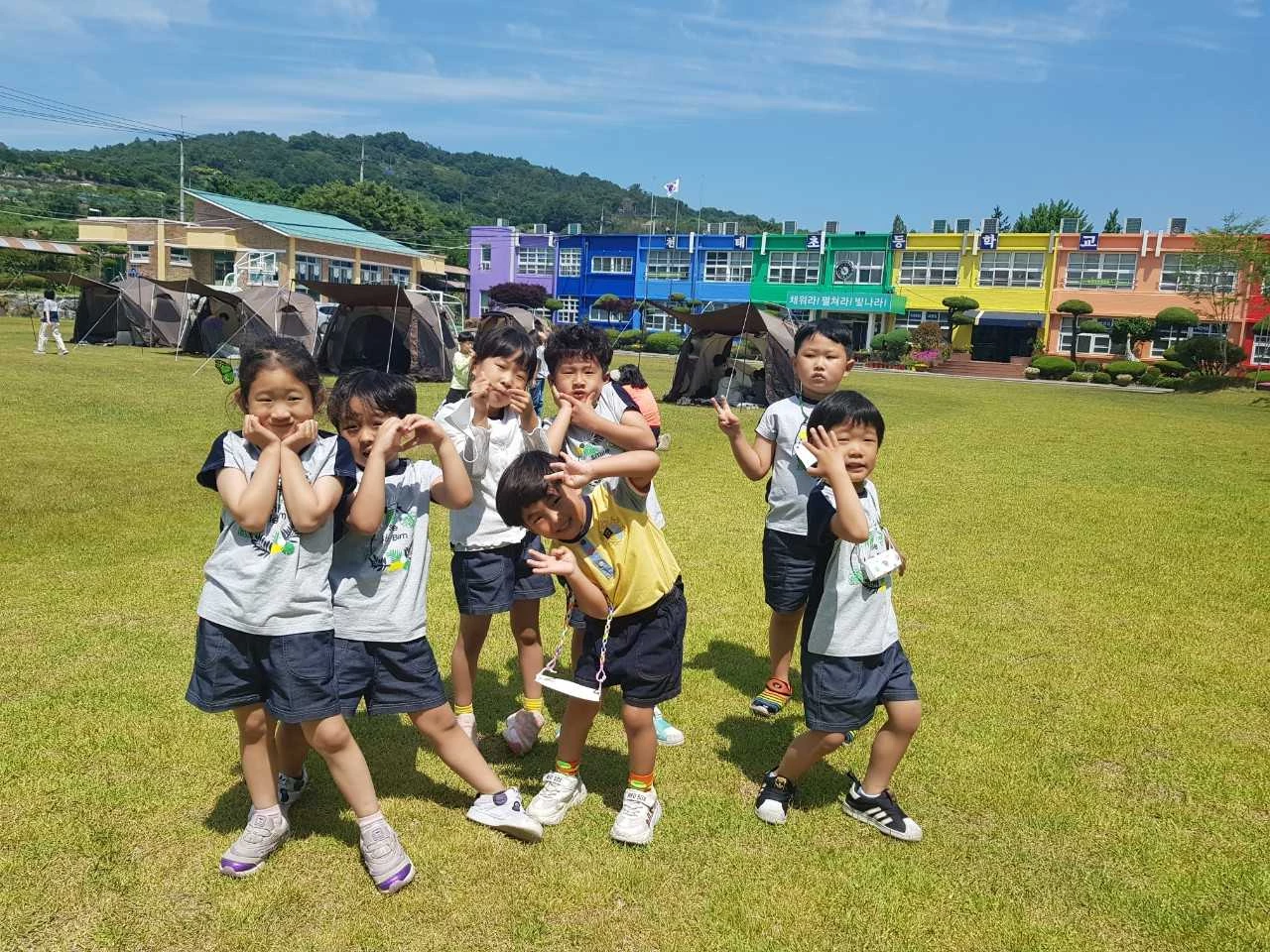
Children at Cheontae Elementary School in Hwasun, South Jeolla Province (Seoul Metropolitan Office of Education)Children at Cheontae Elementary School in Hwasun, South Jeolla Province (Seoul Metropolitan Office of Education)
“With the COVID-19 pandemic, small schools in the countryside have an advantage as students can continue their studies regardless of the pandemic situation,” Cho said, referring to the way city schools had to switch to online schooling.

“Though the countryside may not be able to offer private education, students can learn to become more self-directed,” Cho said. “Also, as there are fewer students, teachers can pay more attention to each one. Some after-school classes are conducted one-on-one.”

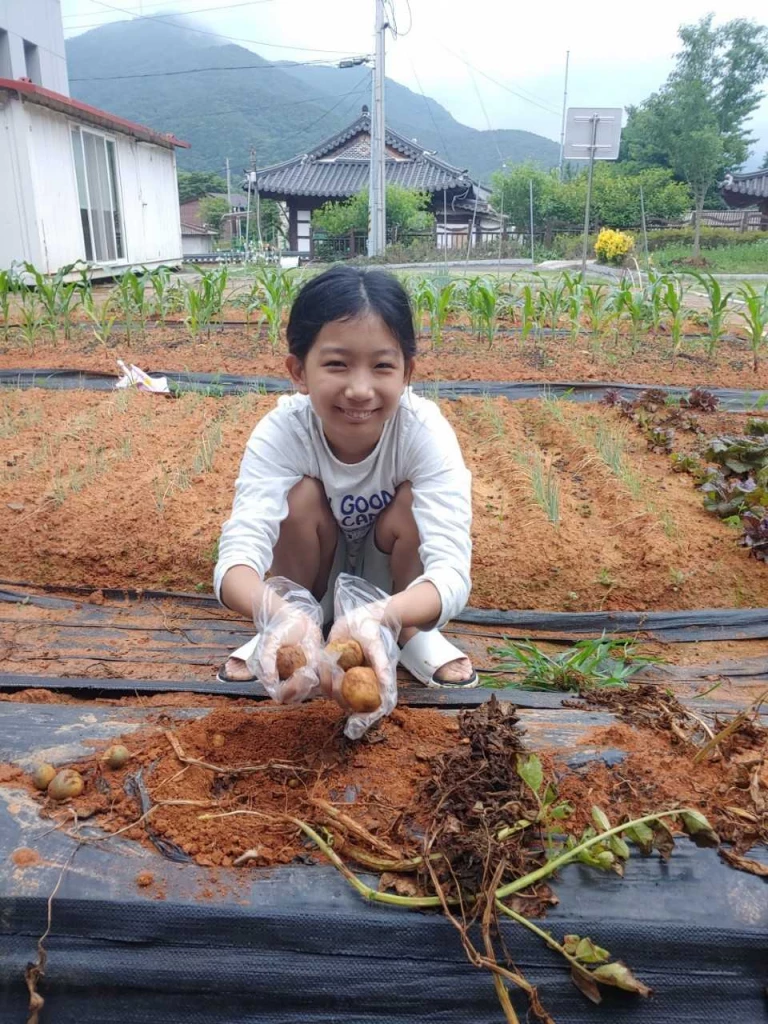
Those who have participated in the program say they are thankful for the opportunity to leave the concrete jungle for a greener environment, try out new activities, such as insect observation, rice transplanting or even just playing with rocks.

“The best part about staying in Gokseong was experiencing nature,” Kim Mi-jin, a parent to two elementary school children who have been attending school from Gokseong, South Jeolla Province wrote in an essay book published by the Seoul education office.

“I hope that my children can grow up and visit Gokseong again to see how the trees they had planted earlier this year have grown, reminding them of our time here,” she wrote.

At small countryside schools, students are friends with everyone.

“It is so strange that I am friends with everyone at my school,” Han Yu-jin, a fifth-grade student who stayed in Hwasun, South Jeolla Province, wrote. “My friends in Seoul came to visit and were very jealous. I am thankful that my mom had the courage to move down here for us.”

The education office’s partnership with schools, which started out with South Jeolla Province, has expanded to North Jeolla Province, driven by the high demand from students and their families. From next year, it will include schools in Gangwon Province.

A year without hagwon, away from concrete jungle

For small countryside schools — with many on the verge of closing down due to decreasing number of students — students from Seoul keep the schools going. Students who did not have classmates earned the chance to make friends.

But as the program is one-sided, Cho is considering expanding the program both ways, starting by offering short-term stays in Seoul for students from rural areas.

Authorities are hoping the program can boost the local economies of rural areas. Unbalanced concentration in economic activities between Seoul and other regions has been a major problem in Korea.

In the end, Cho concedes that the school exchange program is a temporary measure. But he is hoping that some families stay. The countryside has fallen behind in terms of development, partly due to its low population level.

“The agenda is to make those who come for a short-term stay settle down. There are state-led efforts to help city people settle down in rural areas. But they have not been enough,” Cho said. “We are hoping there are students’ parents who considering settling down through experiencing the countryside.”

The Korean Herald 

Asia News Network

China increasing arms exports to Middle East and Eastern Europe

#SootinClaimon.Com : ขอบคุณแหล่งข้อมูล : หนังสือพิมพ์ The Nation.

https://www.nationthailand.com/world/china/40022762

China increasing arms exports to Middle East and Eastern Europe

China increasing arms exports to Middle East and Eastern Europe

MONDAY, DECEMBER 05, 2022

China is expanding its arms exports beyond Asia to the Middle East and Eastern Europe, potentially heightening its military influence while Russia is focused on its invasion of Ukraine and the United States is accelerating its weapons support for Ukraine.

According to data released in March by the Stockholm International Peace Research Institute, China’s arms exports from 2017 to 2021 accounted for 4.6% of the global total, making it the fourth largest arms exporter in the world after the United States, Russia and France.

The volume of China’s exports during this period decreased by 31% from the 2012-2016 period, possibly affected by the novel coronavirus pandemic. However, “Chinese arms capabilities have improved, and exports are expanding,” a diplomatic source in Beijing said.

According to a SIPRI report released in December, the combined arms sales of five Chinese companies in 2020 was an estimated $66.8 billion (about ¥8.69 trillion), up 4.6% from the previous year. Chinese companies had the second largest share of the global arms market after U.S. firms.

China’s largest export destination was Pakistan, which is at odds with India — 47% of China’s arms exports went to Pakistan from 2017 to 2021. By March this year, China had exported its J-10C fighter jets mounted with domestically produced engines to Pakistan for the first time, and last November, China delivered a state-of-the-art frigate.

China has a border dispute in Kashmir with India and is exporting arms to countries near India. Bangladesh, located to the east, was the second largest export destination, accounting for 16% of China’s arms exports over 2017 to 2021. China also sends military aircraft and other equipment to Myanmar.

Drones and missiles

According to the U.S. website Defense News, China has been exporting armed drones to Saudi Arabia, the United Arab Emirates, Egypt, Iraq and Jordan. The site notes that these drones have been used in conflict zones in countries including Libya and Yemen.

China’s exports grew by 290% to Saudi Arabia and by 77% to the UAE from the 2012-2016 period to the 2017-2021 period, SIPRI has said.

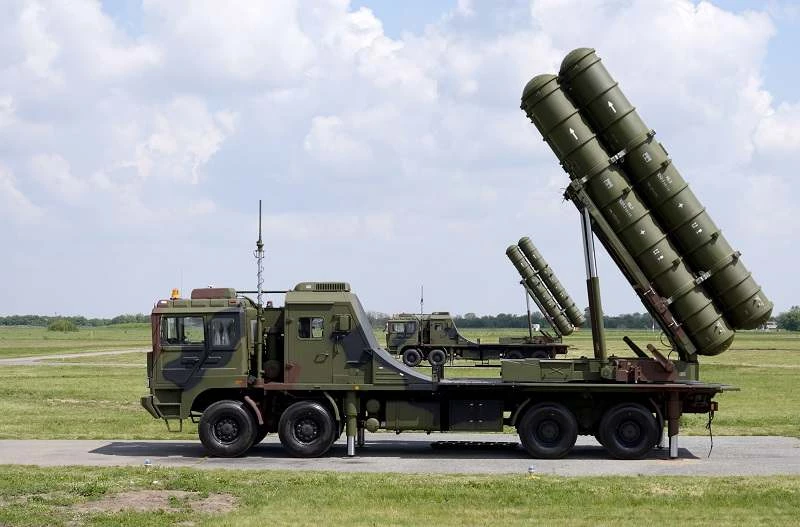
The Associated Press has reported that China delivered HQ-22 surface-to-air missile systems to Serbia in early April. The United States and Europe are concerned that such sales amid Russia’s invasion of Ukraine could lead to instability in the Balkans.

China increasing arms exports to Middle East and Eastern Europe

Unclear principles

China’s arms sales are expected to continue expanding, particularly to developing nations. A source familiar with the inner workings of the Chinese military told The Yomiuri Shimbun that “the Chinese military will further increase its domestic production of weapons and enhance their capabilities.”

The U.S. government has various conditions for arms exports, including considering whether the arms could be used to undermine human rights or to conduct genocide or other crimes against humanity.

Beijing, however, has only indicated three conditions: The arms will contribute to the importing country’s legitimate self-defence capabilities; they will not undermine regional and global peace and security, and they will not interfere in the importing country’s internal affairs.

Concerns over China’s unclear principles have in some cases affected its arms exports.

According to the U.S. government’s Voice of America international news service, China’s planned delivery of a submarine to Thailand by the end of next year has been put on hold because a German company refused to supply its engines. The German side reportedly said it had not been consulted in advance about the military use of the engines.

The Japan News

Asia News Network

Germany’s Scholz says it’s a grave mistake to stop talking to Russia

#SootinClaimon.Com : ขอบคุณแหล่งข้อมูล : หนังสือพิมพ์ The Nation.

https://www.nationthailand.com/world/europe/40022756

Germany's Scholz says it's a grave mistake to stop talking to Russia

Germany’s Scholz says it’s a grave mistake to stop talking to Russia

MONDAY, DECEMBER 05, 2022

German Chancellor Olaf Scholz said on Sunday it would be a grave mistake to completely stop talking to Russian President Vladimir Putin.

Scholz made his remarks after he and Putin had a phone conversation on Friday to discuss Russia’s ongoing invasion of Ukraine.

“That is why it is also important that the French president and I, as representatives of the G7 countries, as two Nato countries, keep seeking dialogue again. However, without any illusions,” Scholz said at the award ceremony for the Marion Doenhoff Prize which this year was awarded to Irina Scherbakowa, a founding member of the Russian human rights organisation Memorial.

Scholz said he talked about the Russian attacks on Ukraine’s energy infrastructure and the need for Russian troops to withdraw from Ukraine.

“I will continue to so, no matter how long the talks last,” Scholz added.

In his laudatory speech before handing over the prize to Scherbakowa, Scholz praised her work and said she was receiving the prize for all Russians who could image a “different, better, brighter future for Russia.”

Memorial was also awarded the Peace Nobel prize this year, along with Belarusian human rights advocate Ales Bialiatski and the Ukrainian human rights organisation Center for Civil Liberties.

Reuters

Tour of innovative public lavatories held in Shibuya Ward, Tokyo

#SootinClaimon.Com : ขอบคุณแหล่งข้อมูล : หนังสือพิมพ์ The Nation.

https://www.nationthailand.com/pr-news/world/asia-pacific/40022754

Tour of innovative public lavatories held in Shibuya Ward, Tokyo

Tour of innovative public lavatories held in Shibuya Ward, Tokyo

MONDAY, DECEMBER 05, 2022

A tour of public lavatories designed by famous architects was held in Shibuya Ward, Tokyo.

The ward boasts public restrooms with unique designs that have been installed under The Tokyo Toilet, a project by the Nippon Foundation to change the image of public lavatories as being gloomy and filthy.

The Shibuya City Tourism Association held the tour on Nov. 10. Ten people participated in the tour, including architecture students. They visited nine places in the ward to see innovative lavatories.

One of the facilities has walls made of special glass that is transparent when the restroom is vacant but, once the door is locked, the glass becomes opaque and cannot be seen through.

At the lavatory in Haru-no-Ogawa Community Park, the participants also observed how it is cleaned.

“We use a mild chemical agent and special equipment [to clean the lavatory] to maintain both hygiene and durability,” a cleaner explained to the group.

The tour program also included a meeting with comedian Mitsuharu Sato, who uses the alias Dr Toilet for his restroom-related activities.

“It’s great that users’ attributes and traits are reflected in the design depending on the facility,” said a Chuo University junior who took part in the tour. “I’d like to be careful about using public lavatories cleanly.”

The Japan News

Asia News Network

Study Identifies Human Skills most in demand in Southeast Asia’s major Job markets

#SootinClaimon.Com : ขอบคุณแหล่งข้อมูล : หนังสือพิมพ์ The Nation.

https://www.nationthailand.com/world/asean/40022734

Study Identifies Human Skills most in demand in Southeast Asia's major Job markets

Study Identifies Human Skills most in demand in Southeast Asia’s major Job markets

SUNDAY, DECEMBER 04, 2022

Pearson, the world’s leading learning company, has revealed results from recent research showing that the top five most in demand skills today are human skills despite new technologies transforming the world of work which is set to continue through at least 2026.

Southeast Asian countries like Singapore, Thailand, Indonesia, the Philippines, and Malaysia are likely to be affected by the threat of recession in countries like the United States and Australia due to its impact on tourism and trade, consequently putting more pressure on local businesses and employees.

In this period of economic uncertainty, businesses are looking for employees who can stay relevant and versatile, and those that fail to upskill will get left behind by the more prepared and adaptable.

The Great Resignation brought about by the pandemic along with the waves of retrenchment has also ushered further uncertainty, creating a job market where only the fittest would survive and thrive.

A World Economic Forum study highlights that over a billion people globally will need reskilling to keep up with the evolving demands of the workforce by 2030.

To help organizations and individuals successfully navigate through the recession, Pearson has conducted a study of the key skills that employers are looking for and training.

Using an analysis of more than 21 million job ads globally, Pearson’s Skills Snapshot identifies today’s new ‘power skills’ – the capabilities now powering the world’s economy and individual careers.

The analysis shows that while technical capabilities remain essentially crucial for many roles, employers highly prize human skills such as collaboration, communication, and leadership.

According to Pearson’s Skills Outlook, the five skills that today’s employers look for the most are all human skills:

Communication
Customer Focus
Leadership
Attention to Detail
Collaboration

As we move towards a new, hybrid style of working, Pearson’s predictive AI modelling tool suggests that the top five power skills that will be most in demand to meet the economic need in 2026 are also human skills:

Collaboration
Customer Focus
Personal Learning
Achievement Focus
Cultural and Social Intelligence

“It is surprising to see that the most critical skills needed in the workforce today and in the future are in fact human skills,” explained Richard George, Vice President, Data Science, Workforce Skills at Pearson. “Swift investment is needed, as a strong foundation of human skills is essential for success for employers and employees. As the adoption of new technologies continues, the importance of non-technical skills such as the ability to learn and cultural and social intelligence is only becoming more important. Organisations that recognise this and invest in helping employees build transferable and flexible capabilities are the ones that will thrive in our changing world.”

“Although technical skills are increasingly high in demand, technological advancement can often render these skills obsolete or unique to specific job scopes. For instance, the Great Recession of 2008 brought about a major shift in skill requirements for that time. Skills such as analysis and data savviness became high in demand and those companies invested time and resources into upskilling or rehiring. Even in tech roles, human skills allow employees to be agile and adaptable in their learning,” continued George.

Pearson also emphasised the relevance of Power Skills to the Southeast Asian market.

In fast-paced markets like Singapore, personal learning and achievement focus help employees differentiate themselves from the rest. Additionally, cross-border and intraregional collaboration is a common part of job scopes, especially in multinational corporations. Collaboration skills as well as Cultural and Social Intelligence help employees thrive in such situations.

The ability to learn is proving to be a critical skill for career and workplace growth. With a strong foundation in enterprise and workplace learning, Pearson is well-positioned to help people and businesses grow the skills they need for today’s economy.

As the world’s leading learning company, Pearson engages in regular studies about current trends and needs of the job market.

By providing this data and the appropriate learning tools to key groups like educators, employers, and even governments, Pearson is helping to close the skill gap.

Pearson helps to foster and support soft skills through integrated assessments and its Skills Accelerator Program by bringing skills training to real-life scenarios.

People cut Banksy mural off battle-scarred Ukraine wall

#SootinClaimon.Com : ขอบคุณแหล่งข้อมูล : หนังสือพิมพ์ The Nation.

https://www.nationthailand.com/world/europe/40022732

People cut Banksy mural off battle-scarred Ukraine wall

People cut Banksy mural off battle-scarred Ukraine wall

SUNDAY, DECEMBER 04, 2022

A group of people tried to take a mural by British street artist Banksy in Ukraine on Friday by cutting it off a battle-scarred wall where it was painted, the governor of Kyiv region said.

The group managed to slice off a section of board and plaster bearing the image of a woman in a gas mask and dressing gown holding a fire extinguisher on the side of a scorched building.

“They (people that tried to take the mural) said that they have decided it with him (Banksy). And we ask them, ‘Nobody has ever seen him! How could you decide that with him?'” Alyona, a local resident who confronted the disturbers, told Reuters.

Eight people were spotted at the scene in the city of Hostomel near Kyiv and the mural was retrieved, according to Andrii Nebytov, chief of Kyiv region National Police.

“The expertise will determine the value of the object. Then the detectives and the prosecutors will determine the qualification of such actions,” said Nebytov

People cut Banksy mural off battle-scarred Ukraine wall

The image was still intact and police were protecting it, he added.

“We planned to cut out this mural to be later placed on a new building. This is our life; this is our memory. The people want to keep it in the community,” said Anna Filipova, a local resident.

Banksy, whose work can sell for millions of dollars on the art market, confirmed he had painted the mural and six others last month in places that were badly affected by heavy fighting after Russia invaded Ukraine in late February.

Russia’s war in Ukraine is now in its tenth month. Moscow’s forces were pushed back from around Kyiv in the first phase of the war, but fighting rages on in the east and south.