One of the world’s biggest ships, wedged across Suez Canal, is disrupting a key trade route #SootinClaimon.Com

#SootinClaimon.Com : ขอบคุณแหล่งข้อมูล : หนังสือพิมพ์ The Nation.

https://www.nationthailand.com/news/30404140

One of the world’s biggest ships, wedged across Suez Canal, is disrupting a key trade route

InternationalMar 26. 2021

By The Washington Post · Jennifer Hassan, Antonia Noori Farzan

Headaches continued to mount Thursday as a gigantic cargo ship remained stuck in Egypt’s Suez Canal for a third day, blocking a crucial choke point in global shipping.

“It is not really possible to pull it loose,” said Peter Berdowski, the CEO of Dutch salvage company Boskalis, which is helping Egyptian officials to dislodge the boat. Completely freeing the cargo ship “might take weeks,” he added, since the vessel is marooned on the canal’s sandy banks “like an enormous beached whale.”

At least 150 ships loaded with consumer goods, crude oil and live animals are stuck in an increasingly costly traffic jam as eight tugboats work to free the massive vessel.

The Ever Given, which is operated by Taiwan-based Evergreen Marine, was bound for the Netherlands on Tuesday when a dust storm hit, leading to heavy winds and poor visibility in the 120-mile-long passage from the Red Sea to the Mediterranean. Exactly what went wrong and led the boat to run aground remains unclear: While initial reports suggested that the dust storm had knocked out power aboard the ship, Bernhard Schulte Shipmanagement, which manages the ship, said Wednesday there was no mechanical or engine failure.

Suez Canal Authority officials and Evergreen Marine have blamed winds that reportedly reached up to 30 mph. But that explanation has garnered some skepticism, given that the ship weighs as much as 220,000 tons when fully loaded and was built to withstand much stronger gusts.

Some experts suspect that the ship’s massive size – it’s more than a quarter-mile long, making it one of the largest container ships ever built – may have been a major additional contributing factor.

Such immense ships present problems because the piles of containers on the deck effectively act like a giant sail, Bill Kavanagh, a lecturer in nautical science at the National Maritime College of Ireland who has navigated the Suez as a captain, told RTE. “It can easily destabilize the vessel and blow a vessel off course, and when you’re taking about a vessel of so many thousand tons of weight, its momentum is quite considerable, and it’s very hard to stop any movement caused by wind.”

On Wednesday, experts estimated that it could take days to dislodge the ship. By Thursday, some were saying it could take weeks.

“In our view the situation now looks unlikely to be heading for a swift resolution,” London-based Braemar ACM Shipbroking said in a note to clients Thursday, according to The Wall Street Journal. Shipping giants such as Maersk warned customers that the backlog probably would increase and that there was no way to know when commerce might be back to normal.

Japanese firm Shoei Kisen Kaisha, the owner of the Ever Given, apologized for the backup on Thursday, saying the company was “working hard to resolve the situation,” but it added that circumstances were “extremely difficult.”

The Suez Canal Authority posted a video of the rescue operation on social media Thursday – complete with an action movie soundtrack. In the 90-second clip, officials are seen heading toward the stranded ship, their eyes transfixed on the horizon as an intense beat plays in the background.

At least eight ships carrying live animals are stuck in the traffic jam, according to Bloomberg News data. Others are moving commodities such as cement and crude oil, meaning extended delays could have a ripple effect on nearly every industry around the world. The ship’s owner could face millions of dollars in insurance claims from companies that did not meet delivery targets because of the holdup or had perishable goods spoil during the wait.

While unexpected delays are par for the course in the shipping industry, worldwide supply chains were already hobbled by the continued disruptions caused by the coronavirus pandemic. Fears that shipments of crude from the Middle East could be delayed for days or weeks led global oil prices to spike Wednesday. An estimated 1.9 million barrels of oil typically pass through the canal on a regular day.

While ships can take an alternative route around the southern tip of Africa, as they did in the days before the canal, doing so could take a week or longer and rack up an additional half-million dollars in costs.

On Thursday, the British government said it was on hand to help free the ship.

“We are ready to provide any assistance that we can but have not been asked yet,” a spokesman for Prime Minister Boris Johnson said.

Jobless claims fall to lowest level of pandemic #SootinClaimon.Com

#SootinClaimon.Com : ขอบคุณแหล่งข้อมูล : หนังสือพิมพ์ The Nation.

https://www.nationthailand.com/news/30404138

Jobless claims fall to lowest level of pandemic

InternationalMar 26. 2021

By The Washington Post · Hannah Denham

WASHINGTON – New jobless claims fell to the lowest levels of the pandemic era, federal data shows, with a better-than-expected 684,000 filed last week.

Economists surveyed by Dow Jones had expected to see a number near 735,000 after filings spiked to 781,000 the week before. The latest tally is less than the prepandemic weekly high of 695,000, set in October 1982.

Mark Hamrick, senior economic analyst for Bankrate, said he welcomed the news, especially after months of downbeat economic trends.

“A positive surprise is welcome news,” Hamrick said in an email. “Given the combination of the dynamic nature of the quickly changing conditions involving the vaccinations, the economy itself and the challenges involved with new applications, as well as the states processing and reporting them into the Labor Department, there are a lot of moving parts.”

Last week’s 97,000 drop in initial unemployment claims is another sign that the economic impact of the coronavirus pandemic is easing. An additional 241,745 filed claims for Pandemic Unemployment Assistance, for gig and self-employed workers.

The total number of claims for all types of unemployment benefits was 18.95 million for the week ended March 6, according to Labor Department data.

Last week, the Federal Reserve released its most positive economic outlook in a year, projecting that the unemployment rate would fall from the current 6.2% to 4.5%, and that economic growth would see its fastest pace in four decades by the end of 2021.

“It’s just a lot of people who need to get back to work, and it’s not going to happen overnight,” Fed Chair Jerome Powell said in a March 17 news conference, explaining that the economy still has a ways to go to catch up to prepandemic levels. “The faster, the better.”

The surge in new coronavirus cases and hospitalizations has slowed in recent weeks, though health officials are monitoring states that have removed restrictions on businesses and mask-wearing. The United States has seen a 4% rise in new cases in the past week.

But Americans are still holding out hope that increasingly broadened access to coronavirus vaccines are the key to returning to work, more job availability, and an improved economy. Nearly 14% of the U.S. population, or about 43.8 million people, have completed vaccination.

Hamrick noted the $1.9 trillion stimulus package and the acceleration of vaccinations and supplies to power the economic trajectory.

“There is still a massive total number of individuals receiving some form of unemployment benefit, speaking to the challenges ahead in healing the economy,” he said. “On the employment front, one key issue will be labor force participation, which took a hit during the downturn. How many individuals will begin looking for work once again?”

Biden promises to tackle the nation’s crises, but says some may wait #SootinClaimon.Com

#SootinClaimon.Com : ขอบคุณแหล่งข้อมูล : หนังสือพิมพ์ The Nation.

https://www.nationthailand.com/news/30404137

Biden promises to tackle the nation’s crises, but says some may wait

InternationalMar 26. 2021Joe Biden speaks during his first formal news conference as president on Thursday, March 25, 2021. MUST CREDIT: Washington Post photo by Demetrius FreemanJoe Biden speaks during his first formal news conference as president on Thursday, March 25, 2021. MUST CREDIT: Washington Post photo by Demetrius Freeman

By The Washington Post · Sean Sullivan, Seung Min Kim

WASHINGTON – President Joe Biden on Thursday set a hierarchy for the country’s numerous crises, pledging to administer 200 million coronavirus vaccine shots by the end of April, repair the country’s infrastructure and move aggressively to expand voting rights – while presenting guns and immigration as secondary priorities.

In his first presidential news conference, Biden outlined a sort of triage, signaling that his focus for now is chiefly on addressing the pandemic and embarking on a push to rebuild roads, bridges and technology. He said most middle and elementary schools are on pace to open in the next five weeks, that he “can’t picture” troops being in Afghanistan in a year, and that he expects to seek reelection in 2024.

Much of the hour-long session was taken up with a discussion of the border, heated at times, as Biden rejected the notion that more migrants are coming because they have heard he is a “nice guy,” though lawmakers and experts have cited his welcoming rhetoric as a contributing factor. He blamed the Trump administration’s policies, saying they left him at a disadvantage, and said he has not traveled to the border because he felt it would be a distraction.

Biden made specific commitments on several fronts, such as the vaccination pledge, but was more vague on other topics, notably when he would seek to take up gun and immigration laws, calling them “long-term problems” to be addressed one at a time. The surge of migrants and the eruption of two mass shootings days apart have inflamed the national conversation, but Biden signaled he would not let that alter his timetable.

The president has yet to respond to pressure to issue executive orders tightening firearms laws or to deliver on a campaign promise to send gun-control legislation to Capitol Hill.

“It’s a matter of timing,” said Biden. “As you’ve all observed, successful presidents – better than me – have been successful in a large part because they know how to time what they’re doing. Order it, decide on priorities, what needs to be done.”

An evenly divided Senate has emerged as the biggest impediment to Biden’s agenda and on Thursday, he offered his strongest indication yet that he is open to doing away with the chamber’s 60-vote threshold on most legislation, known as the filibuster. But he stopped short of endorsing that, touting a more a modest reform but saying that if gridlock cannot be broken, “then we’ll have to go beyond what I’m talking about.”

Democrats are increasingly worried that despite having control of Congress and the White House, they will lose their chance to enact legislation on priorities they have long championed – climate change, immigrations, guns, voting rights and the minimum wage. The House is steadily stacking up a pile of bills at the Senate’s doorstep that Republicans are poised to block in the Senate.

The questions Biden faced on Day 65 of his presidency reflected the rapidly shifting slate of problems he is confronting. He faced no questions on the pandemic, an issue that has dominated the campaign and Biden’s early presidency, culminating in a $1.9 trillion relief bill he signed into law this month. He touted the $1,400 direct payments that have been distributed under that law.

Before taking questions, Biden announced that he was doubling his earlier goal of getting 100 million shots in people’s arms in his first 100 days – a goal he has already met. More than 133 million doses have been administered so far, according to data from the Centers for Disease Control and Prevention, and the country is on track to meet Biden’s revised goal.

“No other country in the world has even come close – not even close – to what we are doing. I believe we can do it,” Biden said. He called his goal “ambitious,” but vaccinations have accelerated to a point that his new target is well within reach.

Earlier Thursday, the White House announced a commitment of nearly $10 billion to address inequities in vaccine coverage based on race, income and geography, a discrepancy that has bedeviled health officials overseeing the immunization effort.

Biden said he was on pace to meet a goal he set of opening a majority of elementary and middle schools within his first 100 days. “We’re really close, and I believe in the 35 days left to go we’ll meet that goal as well,” he said.

As president-elect, Biden promised in December that “the majority of our schools can be open by the end of my first 100 days,” a target that he and his advisers have shifted several times since.

With the pandemic relief bill enacted, Biden said his “next major initiative” – to be unveiled next week – is to “rebuild both physical and technological infrastructure of this country, so that we can compete and create significant numbers of really good-paying jobs.”

White House officials have been preparing a roughly $3 trillion plan that is expected to be divided into two parts – one directly tackling infrastructure and a second focusing on other domestic priorities. That emerging package includes liberal goals such as free community college and universal prekindergarten.

Recent days have seen a collision of sorts between the tasks Biden has promised to tackle from the outset – the pandemic and the economy – and long-running problems that have erupted in unforeseen ways. Democrats and Republicans have struggled for decades to tackle gun violence and immigration reform, and Biden is clearly content to confront them in good time.

But the situation on the border has become more pressing, as Biden struggles to deal with two related challenges: a huge increase in migrants arriving at the border, many of whom are being turned away, and the need to house and care for thousands of unaccompanied children.

Biden framed the decision to accept children as a moral one, promising not to let young would-be migrants starve on the other side of the border. He repeatedly slammed former president Donald Trump’s hard-line policies, including separating families from their children.

While some current and former government officials have said Biden’s pledges to create a more humane system are fueling the rise in the number of people arriving at the border, the president pointed to other factors, including a desire by many people to arrive before hot summer weather as well as poor economic and social conditions in Central America.

“I guess I should be flattered people are coming because I’m the nice guy, that’s the reason why it’s happening,” Biden said sarcastically. He added, “Does anybody suggest that there was a 31 percent increase under Trump because he was a nice guy and he was doing good things at the border? That’s not the reason they’re coming.”

Biden said his administration was trying to expand its capacity to care for children. But officials have struggled to do so, leading to overcrowding and processing delays. There are more than 11,000 children under Department of Health and Human Services custody and nearly 5,000 more in U.S. Customs and Border Protection jails, according to government data released Wednesday. The number of children in the care of CBP is nearly twice the previous record.

Biden pledged to ramp up efforts to move children out of overcrowded CBP detention centers more quickly and improve the overall situation in short order. “They’ll get a whole hell of a lot better real quick or we’re going to hear some people leaving. OK?” he said.

Biden became most visibly animated when he condemned efforts by Republican legislatures nationwide to pass voting-restriction measures. His voice boomed across the East Room of the White House as he denounced the efforts as “sick.”

“The Republican voters I know find this despicable, Republican voters, folks out in the – outside this White House. I’m not talking about the elected officials, I’m talking about voters,” Biden said. “And so I am convinced that we’ll be able to stop this because it is the most pernicious thing.”

He added: “This makes Jim Crow look like Jim Eagle.”

Biden vowed to push the Senate to pass voting-rights legislation, but that could be an all-but-impossible task because of heavy Republican resistance.

Democrats used a budget maneuver known as reconciliation to pass Biden’s pandemic relief bill with a simple majority – and may seek to pass an infrastructure bill the same way – but other legislation will require 60 votes under Senate rules.

Biden said he believes the filibuster is a relic of the Jim Crow era and that he is willing to go beyond his current call to make it tougher for senators to stage filibusters “if there’s complete lockdown and chaos as a consequence” of the status quo.

He paused for several moments when pressed why he the filibuster should not be immediately abolished. “Successful electoral politics is the art of possible,” Biden said. “Let’s figure out how we can get this done and move in the direction of significantly changing the abuse of even the filibuster rule first.”

The filibuster also stands in the way of Biden passing his comprehensive immigration bill, and it represents huge hurdles to placing new restrictions on guns.

“The other problems we’re talking about, from immigration to guns and the other things you mentioned are long-term problems. They’ve been around a long time. And what we’re going to be able to do, God willing, is now begin one at a time to focus on those as well,” Biden said.

Asked whether he has made a decision about sending Congress a manufacturer liability bill like he promised during the campaign to do on Day 1 of his presidency or issue executive orders such as regulating so-called “ghost guns,” which his aides have considered, Biden replied, “All of the above.” But he quickly added, “It’s a matter of timing,” and made clear his next big priority is infrastructure.

Biden also addressed his own political future, though he gave less-than-definitive answers to questions about whether he would run for a second term in 2024, saying first that it was his “expectation” to do so, but later adding that he rarely plans big decision years in advance.

“I’m a great respecter of fate,” Biden said. “I’ve never been able to plan four-and-a-half to three-and-a half years ahead for certain.”


Viewing spots provide ways to enjoy Japan’s sakura #SootinClaimon.Com

#SootinClaimon.Com : ขอบคุณแหล่งข้อมูล : หนังสือพิมพ์ The Nation.

https://www.nationthailand.com/news/30404136

Viewing spots provide ways to enjoy Japan’s sakura

InternationalMar 26. 2021Traffic cones separate walking paths in Ueno Park in Taito Ward, Tokyo, on Saturday. MUST CREDIT: Japan News-Yomimuri photo.Traffic cones separate walking paths in Ueno Park in Taito Ward, Tokyo, on Saturday. MUST CREDIT: Japan News-Yomimuri photo.

By Syndication Washington Post, Japan News

TOKYO – The second cherry blossom season in the coronavirus era has arrived. Last year, many popular venues for viewing the colorful petals simply barred visitors. However, greater efforts are being made in 2021 to accommodate them.

Popular spots are getting creative about finding ways for people to enjoy viewing sakura, from establishing walking routes to drone broadcasts, in a bid to avoid another surge of infections while allowing all to enjoy the splendor of one of Japan’s quintessential trees.

“I was able to enjoy the cherry blossoms without worrying about the distance between me and other people,” a visitor to Ueno Park in Taito Ward, Tokyo, said delightedly on Saturday as he walked past rows of cherry trees along a path.

Ueno Park last year temporarily closed the main walking thoroughfare that is lined with cherry trees.

This year, the park banned entry in certain areas and prohibited parties. However, the main passage is open, although it is divided in the center by traffic cones as a means for people to stroll in opposite directions while admiring the blossoms. The number of security guards has been increased, and patrols are being conducted to make sure rules are followed.

Inokashira Park, which straddles the cities of Musashino and Mitaka in Tokyo, has security guards patrolling the grounds to prevent nighttime sakura viewing.

“Since the coronavirus outbreak is lingering, we’ve taken measures this year to avoid infections in order to open the park for people to relax there,” a Tokyo metropolitan government official said. “However, we’re concerned that there could be a surge of cases, so we’d like to prevent crowding.”

Shinjuku Gyoen National Garden is one of the most famous places for viewing sakura in Tokyo, as it has about 1,000 cherry trees on its grounds.

The garden was closed during sakura season last year, but reopened Tuesday because Tokyo’s state of emergency ended.

However, restrictions apply. Until April 25, entrance is only allowed by advance reservation. Groups of four or fewer people or a family living together are allowed to spread out picnic sheets and eat and drink while viewing the cherry blossoms.

Meanwhile, various entities will broadcast cherry blossoms online.

Drone Entertainment, a Chiba-based company that produces videos using drones, plans on March 27 to use drones to livestream cherry blossoms on YouTube. The company is also broadcasting in 4K cherry blossoms shot last year in about 50 locations across the country.

“We’ll be able to show the beauty of Japanese cherry blossoms to people around the world,” a spokesperson for the company said.

“One of the service’s features is that viewers can see the blossoms from the perspective of birds and flying insects above the trees as well as between them. I hope people will enjoy the program from the safety of their homes together with their families.”

The Chiyoda City Tourism Association in Tokyo has canceled its annual Chiyoda Cherry Blossom Festival. Instead, the association is livestreaming cherry blossoms along Chidorigafuchi Green Way on its website for everyone to enjoy from the comfort and safety of their homes.

Hong Kong tells consulates not to accept BNO passports, Reuters says #SootinClaimon.Com

#SootinClaimon.Com : ขอบคุณแหล่งข้อมูล : หนังสือพิมพ์ The Nation.

https://www.nationthailand.com/news/30404135

Hong Kong tells consulates not to accept BNO passports, Reuters says

InternationalMar 26. 2021A copy of the British National (Overseas) passport sits in Hong Kong on Jan. 30, 2021. MUST CREDIT: Bloomberg photo by Paul Yeung.A copy of the British National (Overseas) passport sits in Hong Kong on Jan. 30, 2021. MUST CREDIT: Bloomberg photo by Paul Yeung.

By Syndication Washington Post, Bloomberg · Kari Lindberg

Hong Kong has told about a dozen foreign consulates to stop recognizing the British National (Overseas) passport as a travel document, Reuters reported.

The news agency on Thursday cited a letter it saw that demanded the Hong Kong passport should be used instead. A senior Western diplomat said most countries would ignore the order, according to Reuters.

Hong Kong’s government didn’t immediately respond to a Bloomberg request for comment.

Hong Kong and China both said in late January they would stop recognizing the passports, which Hongkongers normally use to enter countries such as the U.K., Japan or the U.S., as a travel document. The moves increased tensions with the U.K., but had little practical significance for the people of Hong Kong because they usually enter and exit the city with local identity cards.

The U.K. insisted last year that China should recognize BNO passports as valid. “They are legitimate international travel documents and that’s how you would expect them to be treated,” Prime Minister Boris Johnson’s spokesman, James Slack, said.

The U.K. created the passports before handing Hong Kong back to China in 1997. They allowed holders to visit Britain visa-free for up to six months, but didn’t automatically confer the right to live or work there.

U.K. Foreign Secretary Dominic Raab told the House of Commons last July — after China imposed a sweeping national security law on the former British colony — that a new “bespoke immigration route” will allow holders of BNO status to come to the U.K. without the current six-month limit.

BNO passport holders will be allowed to stay and work in the U.K. for five years, after which they can apply for settled status. A year later they can seek citizenship.

EU leaders face further AstraZeneca vaccine shortages #SootinClaimon.Com

#SootinClaimon.Com : ขอบคุณแหล่งข้อมูล : หนังสือพิมพ์ The Nation.

https://www.nationthailand.com/news/30404134

EU leaders face further AstraZeneca vaccine shortages

InternationalMar 26. 2021European Union flags fly outside the Berlaymont building in Brussels, on Dec. 18, 2020. MUST CREDIT: Bloomberg photo by Olivier Matthys.European Union flags fly outside the Berlaymont building in Brussels, on Dec. 18, 2020. MUST CREDIT: Bloomberg photo by Olivier Matthys.

By Syndication Washington Post, Bloomberg · Nikos Chrysoloras, Alberto Nardelli

When European Union leaders meet on Thursday afternoon to begin a two-day video conference, they’ll underscore the severity of the continent’s health situation and the need for member states to continue lockdowns that have roiled the economies of nations trying to curb the spread of Covid.

They’ll also discuss a controversial new proposal that will allow the EU to block the export of vaccines from pharmaceutical companies that haven’t met their commitments to the bloc. The new rules, unveiled Wednesday, would also block shipments to countries that don’t send full doses or ingredients back to the EU or that have better health situations or vaccination rates.

The leaders are under pressure to contain the pandemic, which has forced a new slate of restrictive measures throughout Europe. So far, the EU has administered 13 doses per 100 people, less than a third of what the U.K. has managed, according to Bloomberg’s Coronavirus Vaccine Tracker. The U.S. has administered 40 doses.

The issue of the Italian shots will still hang over the conversation of EU leaders. AstraZeneca has said that 16 million doses found in a police raid at the Italian site run by Catalent were meant to be shipped to Europe and another 13 million were allocated for Covax, the program to supply developing countries.

That may not entirely convince EU officials who have grown increasingly suspicious of AstraZeneca, which has repeatedly failed to meet its commitments on vaccine deliveries.

The drugmaker’s latest promise is for 30 million shots to be delivered to the EU this quarter, less than a third of its original commitment and it might even miss that target. As of Wednesday, the company had delivered just 18 million doses with a week to go before the deadline. AstraZeneca said that 10 million shots from the Italian storage facility should be delivered to EU countries by the end of the month.

Chancellor Angela Merkel called on Germans to be more optimistic and pull together to beat the coronavirus when she addressed the Bundestag on Thursday morning.

“You can’t achieve anything if you only ever see the negative,” Merkel told lawmakers in Berlin, a day after making a rare public apology over a botched plan for a hard Easter lockdown. She said that she can see “light at the end of the tunnel” even as aggressive mutations spread.

“We will defeat this virus, I am absolutely sure we’ll manage it,” she said. “So it’s about joining forces and looking forward positively, even if the situation remains difficult. That’s what I would ask for from every person in this country.”

Some member states have for weeks been trading nasty threats and accusations over the redistribution of vaccines. At the center of the row, which has spilled from private meetings into the public domain, is a decision taken by Austria and five other central and eastern European governments to turn down more expensive jabs to bet on the cheaper AstraZeneca shots. As part of the EU distribution agreements, the vaccines those countries didn’t want were purchased by other member states. Austrian Chancellor Sebastian Kurz has wrongly accused the bloc of running a “bazaar” for vaccine doses and some governments of securing secret deals.

The Austrian government had proposed that 10 million surplus doses of Pfizer-BioNtech be redistributed among the unhappy six, with several more well off and better inoculated members, including Germany and Malta, not receiving any. Others bristled at the Austrian proposal — and Kurz’s attitude. Germany has proposed redistributing some 3 million of those 10 million doses among countries, such as Bulgaria and Latvia, whose vaccination campaign is indeed behind but not to Austria. The balance would be shared among all 27 members.

Diplomats and officials say that it is not just about political point scoring — Austria has vaccinated a greater proportion of its population than the EU average and many countries, including Germany and France, while others like Bulgaria and Latvia genuinely need help.

While there’s still no solution, officials are trying to keep the spat from flaring up during the summit. The default option would be for all 10 million doses to be distributed pro-rata based on current arrangements, diplomats said, noting that either way, Kurz won’t be getting any extra shots.

When the meeting begins, the leaders will debate the pandemic before moving on to other topics, such as Russia, Turkey and how to boost the international role of the euro. The premiers will declare that lockdowns and curbs on travel must continue, amid a flare up in coronavirus infections across the bloc, according to the latest draft of their joint communique seen by Bloomberg.

At the same time, they’ll vow to begin preparations for a coordinated lifting of restrictions when the epidemiological situations allows it, the statement says. Crucially for tourism-dependent economies, leaders will give a nod for work to go ahead on digital passes, which will ease travel for those inoculated, recovered from the virus or who can show a recent negative test. The aim is to have the system up and running by June, just in time for this summer’s tourist season.

German Chancellor Angela Merkel threw cold water on hopes for a quick deal on EU vaccination passports, telling lawmakers in Berlin on Thursday that it will take time to sort out the details.

At the virtual summit, “we will talk about the next steps for the development of a so-called green certificate which should be ready by summer,” she said. “This is no easy task with 27 member states and will take a few more weeks.”

While the technical issues could be worked out quickly, she said the bloc will have to “look very closely” at the rights that a vaccination passport would allow.

The main part of the discussion may revolve around new rules introduced on Wednesday by the European Commission that pave the way for tougher curbs on vaccine exports. While aghast with AstraZeneca’s delivery delays, some countries are still reluctant to agree on measures that could potentially disrupt global supply chains. Meanwhile, a group of nations that had based their vaccine strategy on AstraZeneca’s shots will seek a so-called corrective mechanism to make up for the shortfall by getting extra doses from an accelerated batch of vaccines from Pfizer. The discussion could turn bitter.

Merkel backs off easter shutdown in German pandemic setback #SootinClaimon.Com

#SootinClaimon.Com : ขอบคุณแหล่งข้อมูล : หนังสือพิมพ์ The Nation.

https://www.nationthailand.com/news/30404097

Merkel backs off easter shutdown in German pandemic setback

InternationalMar 25. 2021Visitors form a socially distanced queue to enter a covid-19 test center in Berlin on March 19, 2021. MUST CREDIT: Bloomberg photo by Liesa Johannssen-Koppitz.Visitors form a socially distanced queue to enter a covid-19 test center in Berlin on March 19, 2021. MUST CREDIT: Bloomberg photo by Liesa Johannssen-Koppitz.

By Syndication Washington Post, Bloomberg · Arne Delfs, Iain Rogers

Chancellor Angela Merkel dropped plans for a five-day Easter shutdown amid massive criticism in the latest setback for Germany’s pandemic fight.

Merkel backed off the proposal in a hastily-arranged video conference with the heads of Germany’s 16 states, according to a person familiar with the discussions.

The meeting followed marathon talks earlier this week that produced no new policies to contain the disease as a third wave of infections grips Europe’s largest economy.

The Easter lockdown was the only fresh initiative after more than 11 hours of tense discussions between Merkel and state leaders that ended early Tuesday, but the proposal spurred widespread criticism, caught officials off guard and created confusion over the implementation.

“That was my mistake,” Merkel told state leaders, according to Bild newspaper. “I accept responsibility.” She is due to defend her actions to German parliament later on Wednesday.

Germany has struggled to lay out a clear plan in the face of a fresh surge in covid-19 cases and amid a sluggish vaccination campaign. That’s causing public frustration over the government’s handling of the crisis to grow just six months before a national election.

Merkel’s conservative bloc — also struggling with a scandal over lawmakers profiting off the pandemic — has tumbled in the polls. Its lead over the second-placed Greens narrowed to 8 percentage points this week, according to a polling average calculated by Bloomberg.

“If Angela Merkel admits a mistake and corrects it, then it deserves respect,” Marco Buschmann, a lawmaker for the opposition FDP party, said in a tweet. “If she sticks to a decision-making mechanism that systematically produces errors, that deserves criticism,” he wrote, adding that parliament should have a say in policies.

Under Germany’s federal system, most pandemic policies — notably those affecting health care and education — are in the hands of the states, limiting Merkel’s authority.

Amid the political confusion, hospitals are again filling up with covid-19 patients as the third wave of the disease takes hold even before the second completely receded, according to the head of the country’s intensive- and emergency-care association.

There are 3,194 covid patients in intensive care in Germany, the highest in more than a month and pushing the occupancy rate to over 85%, according to DIVI’s website.

“We are starting from a very high level,” the group’s president, Gernot Marx, said in an interview with Deutschlandfunk radio. “This is a matter of great concern,” he said, adding that he hoped the decision to enter a hard lockdown over Easter will prevent the health system from becoming overwhelmed.

Microsoft CEO hunts anew for creator hub after TikTok bid fails #SootinClaimon.Com

#SootinClaimon.Com : ขอบคุณแหล่งข้อมูล : หนังสือพิมพ์ The Nation.

https://www.nationthailand.com/news/30404096

Microsoft CEO hunts anew for creator hub after TikTok bid fails

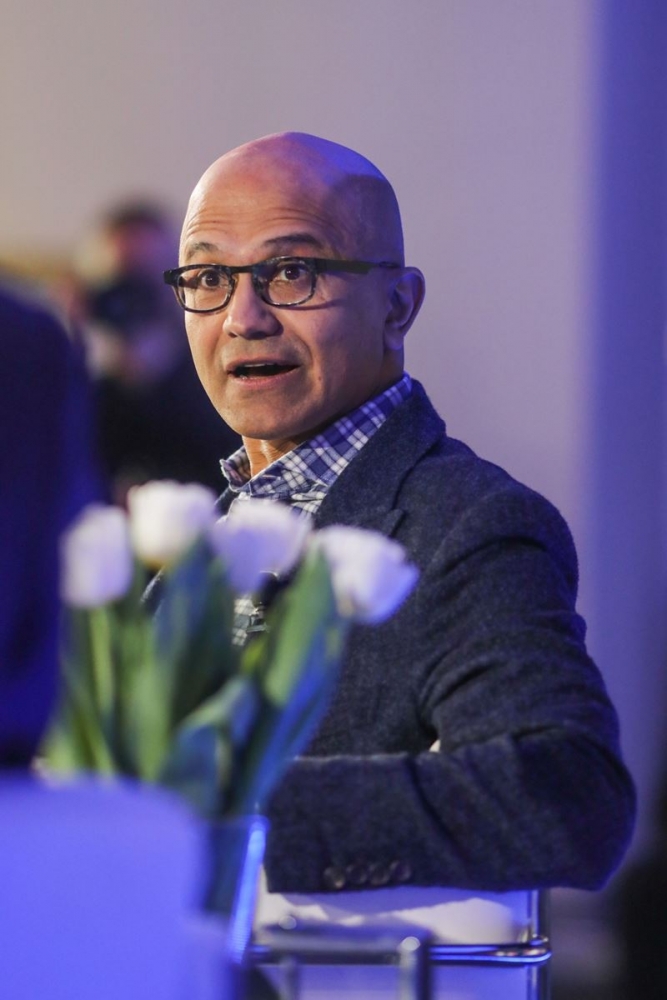
InternationalMar 25. 2021 Chief Executive Officer Satya NadellaChief Executive Officer Satya Nadella

By Syndication Washington Post, Bloomberg · Dina Bass

Microsoft’s latest takeover targets have baffled some analysts and investors who are well aware of the company’s spotty track record in consumer businesses and social media. What’s the appeal, they wonder, in digital properties such as TikTok, Pinterest Inc. or now Discord Inc., a chat app that’s popular with gamers?

The answer in Chief Executive Officer Satya Nadella’s mind is clear. “Creation, creation, creation-the next 10 years is going to be as much about creation as it is about consumption and about the community around it, so it’s not creating alone,” Nadella said in an interview last month. “If the last 10 years has been about consumption-we’re shopping more, we’re browsing more, we’re binge watching more-there is creation behind every one of those. But I see that phenomenon being much more democratized.”

For Nadella, the next decade of growth in cloud computing and internet use will be defined not by people watching and buying, but by those who are generating and exchanging their own content in different, thriving groups. Though he wasn’t referring specifically to acquisition strategy, his past purchases and current wish list illustrate that Nadella is eager to control some of the means of production.

Seen in the context of Nadella’s philosophy about the next phase of cloud innovation, Microsoft’s talks with Discord and its other recent potential targets don’t seem out of band. Looking back to his first major deals when he took over at the software giant in 2014, there’s a clear through-line-from the gaming community building worlds and servers on Minecraft to the professional social network and corporate think-posts of LinkedIn to the open-source projects hosted and collaborated on software code-sharing platform GitHub. In the interview, Nadella cited GitHub and LinkedIn as prime examples of those content-creation communities he expects to feature more heavily in the future of the cloud.

Discord, launched in 2015, has attracted more than 100 million monthly users with a free service that offers voice, video and text communications as well as gamer-friendly features, including the ability for users to broadcast the name of the game they are playing. The app became popular a few years ago, rising alongside smash multiplayer hits such as Epic Games Inc.’s Fortnite, and has long been a draw for celebrity gamers and social media influencers. Discord’s valuation soared to $7 billion last year, and people familiar with the talks said Microsoft was discussing a deal of more than $10 billion. Microsoft and Discord declined to comment.

Social media, meanwhile, has become the virtual way to start a small business or become an entrepreneur from anywhere in the world. Social networks are also realizing the value of their biggest creators and their key role in fueling the parent company’s financial success, with companies from Snap to TikTok to Facebook’s Instagram pouring funds into promoting their stars and helping them make more money.

Satya Nadella at the World Eonomic Forum in Davos, Switzerland, on Jan. 21, 2020. MUST CREDIT: Bloomberg photo by Simon Dawson.

Satya Nadella at the World Eonomic Forum in Davos, Switzerland, on Jan. 21, 2020. MUST CREDIT: Bloomberg photo by Simon Dawson.

For Microsoft, owning more creative communities is a chance to sell more cloud software and tools to the platform and its users. Discord specifically can also bolster Microsoft’s Xbox business, where the software maker is focusing more on getting gamers on subscriptions like Game Pass that they can use across consoles, PCs and mobile devices to access a library of titles. And as more young people grow up with operating systems, email, chat apps and productivity software from companies like Apple and Google, owning a community popular with that age group could acquaint them with Microsoft in a way their elders have been in the past because of Windows and Office.

Still, adding Discord would go a step beyond the programmer and office-worker communities where Microsoft has played for decades. Discord may be a clearer fit in the same way the purchase of Minecraft was, leveraging Microsoft’s 20 years in console gaming and even longer tenure in personal computer games. There’s evidence that Nadella wants to take that step-last year, he was prepared to spend tens of billions of dollars to acquire the U.S. assets of ByteDance Ltd.’s TikTok, the viral video-sharing app heavily used by teenagers, also far outside Microsoft’s core software demographic. The company also approached social media platform Pinterest about a purchase. ByteDance chose to pursue a rival TikTok bid from a group led by Oracle Corp., and any talks with Pinterest, which has a market value of more than $44 billion, didn’t result in a deal.

“Microsoft buying Discord would be a really strategic move-it shows that Microsoft understands the power of community in the context of the pandemic,” said Christophe Jammet, a managing director at Gather, an innovation consultancy. “While Discord has always been a persistent black sheep in the team/productivity comms space, it’s ubiquitous as a community platform for gamers and myriad sub-cultures.”

Nadella’s focus on bringing new creator communities into the Microsoft fold brings with it twin regulatory risks, around antitrust and content moderation. As U.S. and EU regulators look more closely at the power and influence of big tech, none of the large companies could reasonably expect deals, particularly acquisitions of large content platforms, to pass without considerable scrutiny.

There, at least, Microsoft has some experience, though less so on the content moderation side. Microsoft has had to keep offensive speech and harassment off platforms like Xbox Live and the Mixer game-streaming service it cancelled last year, but it hasn’t really been tested with the speed and volume of a large real-time social platform, where certain kinds of speech and programming could land Microsoft in hot water legally or with regulators. Mixer’s lackluster user numbers were part of why it shut down.

Discord has already been required to confront the kind of content questions being reckoned with by bigger services, like Facebook, Google’s YouTube and Twitter Inc. Discord had to take action to ban Nazi content after white supremacists used the service to plan the 2017 Charlottesville, Virginia, riot where a counter-protestor was killed. Earlier this year, it banned WallStreetBets, the investment group famous for fueling stock rallies for GameStop Corp. and AMC Entertainment Holdings Inc., over hate speech. Discord restored the group after insisting it improve moderation practices.

If Microsoft succeeds in buying the service, Nadella’s community strategy would get a big boost. To make it work, Microsoft will have to take on the difficult role of building up the communities it wants and shutting down the ones it doesn’t.

Treasurys’ pause from selloff spurs faith in bond recovery #SootinClaimon.Com

#SootinClaimon.Com : ขอบคุณแหล่งข้อมูล : หนังสือพิมพ์ The Nation.

https://www.nationthailand.com/news/30404093

Treasurys’ pause from selloff spurs faith in bond recovery

InternationalMar 25. 2021A statue of Albert Gallatin, former U.S. Treasury secretary, stands outside the U.S. Treasury building in Washington, D.C., on July 16, 2018. MUST CREDIT: Bloomberg photo by Andrew Harrer.A statue of Albert Gallatin, former U.S. Treasury secretary, stands outside the U.S. Treasury building in Washington, D.C., on July 16, 2018. MUST CREDIT: Bloomberg photo by Andrew Harrer.

By Syndication Washington Post, Bloomberg · Stephen Spratt, John Ainger

The selloff in Treasurys has taken a breather this week after the market’s worst run of losses in three years, shoring up confidence that there’s more room for a recovery in bonds globally.

U.S. benchmark yields traded little changed at 1.62% on Wednesday and have dropped around 10 basis points since Monday’s open, putting them on course to snap a run of seven weekly increases. That’s thanks to a combination of suspected buying from Asia, short covering and fresh option bets on calmer times ahead.

The rally has been mirrored elsewhere, with New Zealand seeing its biggest bond rally in a year and Europe’s safest debt climbing this week as fresh lockdowns across the continent are expected to weigh on the economic recovery. German bonds were on course for their longest run of gains since December.

The bond market’s reprieve “is likely to have legs,” according to Royal Bank of Canada strategists led by Peter Schaffrik, who recommend investors add further tactical longs. “The medical evidence regarding the efficacy of various vaccines vis-a-vis the new strains, and the spread of the new variants, is likely to have a significant bearing on the direction of markets going forward,” they wrote.

Positions in 10-year Treasury futures dropped the most in almost a month after Tuesday’s rally. A slump in open interest by almost 79,000 contracts — the equivalent of around $7.5 billion in 10-year notes — points to investors closing out positions following a surge in new shorts late last week.

Gains in Treasurys may get momentum from the potential return of Japanese investors, who drove more than $34 billion in foreign bond outflows in the last two weeks of February. Japan’s new fiscal year starts in April, so bond bulls will be on the lookout for new purchases.

The relative calm in Treasurys aided a bond rally in Asia, and reverberated across to Europe, where yields pulled back in core and periphery markets alike. German 10-year yields fell to a five-week low of -0.37%, putting focus on -0.40% as the next key level, according to Michael Leister, head of rates strategy at Commerzbank.

The price action marked a sharp contrast from last week, when benchmark yields surged to their highest level in more than a year and a gauge of longer-maturity bonds entered a bear market. Volatility had also been climbing amid a repricing of rates due to massive fiscal stimulus and vaccine rollouts.

But the fact that 10-year and 30-year yields have retreated from thresholds of1.75% and 2.50%, respectively — the highest closing levels this year — has encouraged some volatility sellers into the market.

A large trade on Tuesday saw a sale of so-called straddles in 10-year notes — a combination of a put and a call with the same strike and expiry — that expire on May 21. The investor raked in more than $24 million in premiums, with the bet paying off if yields stay within a 24 basis point range either side of Wednesday’s level of 1.60%.

One final source of short-term demand for Treasurys could come from quarter-end flows. Strategists at Bank of America estimated rebalancing out of equities into bonds may result in $41 billion of Treasury purchases, according to a recent note.

U.S. durable goods orders decrease for first time since April #SootinClaimon.Com

#SootinClaimon.Com : ขอบคุณแหล่งข้อมูล : หนังสือพิมพ์ The Nation.

https://www.nationthailand.com/news/30404092

U.S. durable goods orders decrease for first time since April

InternationalMar 25. 2021A worker welds a lawnmower frame in Coatesville, Ind., on June 12, 2015. MUST CREDIT: Bloomberg photo by Luke Sharrett.A worker welds a lawnmower frame in Coatesville, Ind., on June 12, 2015. MUST CREDIT: Bloomberg photo by Luke Sharrett.

By Syndication Washington Post, Bloomberg · Reade Pickert

Orders for U.S. durable goods unexpectedly declined in February for the first time in nearly a year, indicating a pause in the months-long manufacturing rebound.

Bookings for durable goods — or items meant to last at least three years — decreased 1.1% from the prior month, the first drop since April, after an upwardly revised 3.5% gain in January, Commerce Department figures showed Wednesday.

Core capital goods orders, a category that excludes aircraft and military hardware and is seen as a barometer of business investment, dropped 0.8% after an upwardly revised 0.6% gain. The median estimates in a Bloomberg survey of economists called for 0.5% increases in both total durables orders and core capital goods bookings.

The figures likely represent a temporary softening in the rebound seen across the nation’s factories since the pandemic upended production and demand last year. Production is still being restrained by shortages of some raw materials and supply chain disruptions that are also driving up costs for manufacturers.

“In all likelihood, the February results were suppressed by unusually harsh weather that substantially disrupted economic activity in much of the South and Midwest,” Joshua Shapiro, chief U.S. economist at Maria Fiorini Ramirez Inc., said in a note. “There also could be an element of ‘digestion’ at play after very rapid gains in preceding months.”

Manufacturers are getting a tailwind from a gradual pickup in economic activity, still-lean inventories and robust business investment among companies. The report also showed unfilled orders for durable goods rose 0.8% in February, the most since September 2018.

Looking ahead, the latest stimulus package as well as future infrastructure packages should support investment.

The drop in overall durables was broad, including declines in bookings for motor vehicles, machinery and fabricated metals.

Other manufacturing data have been upbeat. The Institute for Supply Management manufacturing index hit a three-year high in February. And so far, March regional Federal Reserve manufacturing gauges have beat expectations. The Empire State general business conditions index rose to the highest level since November 2018 while the Philadelphia measure surged to the strongest since 1973.

Orders for commercial aircraft surged more than 103% in February from a month earlier. U.S. planemaker Boeing Co. reported 82 orders for the month, the second-best in two years.

Shipments of non-defense capital goods minus aircraft, a figure used to calculate investment in the government’s gross domestic product report, fell 1% in February, likely depressed by severe winter weather in the month.

Digging deeper:

– Excluding transportation, durable goods orders declined 0.9% after a 1.6% gain.

– Orders for motor vehicles and parts dropped 8.7%, while shipments decreased 8.9% amid severe weather and a shortage of semiconductors.

– Core capital goods orders increased an annualized 12.7% in the three months through February, while shipments rose 13.4%.

– Even with the decline in durables orders, the $254 billion value remains well above the year ago level.

– Inventories of durable goods rose 0.7% in February after a 0.3% decline a month earlier.