The Malay-Muslim politics and Malaysia’s GE15

#SootinClaimon.Com : ขอบคุณแหล่งข้อมูล : หนังสือพิมพ์ The Nation.

https://www.nationthailand.com/world/asean/40022217

The Malay-Muslim politics and Malaysia’s GE15

The Malay-Muslim politics and Malaysia’s GE15

FRIDAY, NOVEMBER 18, 2022

In General Election 15, 222 parliamentary seats in Dewan Rakyat (Lower House) are up for grabs, with the polling day set for Nov. 19. A simple majority of 112 (50 % plus one) is needed for any parties or coalition(s) to form the next government.

Out of the 222 seats, the Malay-Muslim seats in Peninsular Malaysia only comprise 117 constituencies (53 % of the total; 95 seats in Peninsular Malay and 22 seats in the Northeast). This becomes a predicament to any Malay-based parties or coalition(s), apart from deep-seated divisions among the Malay-Muslim vote, lately.

Historically, Barisan Nasional (National Front – BN) leaders were successful at winning elections through gerrymandering and malapportionment. This continued even with the removal of constitutional restrictions to have a more balanced number of voters among constituencies in the 1970s. Consequently, rural constituencies (mostly comprised of Malay-Muslims, Sabahans and Sarawakians) were generally given more weightage and seats during electoral redelination exercises.

Beginning in the 1980s, Parti Islam Se-Malaysia (Pan-Malaysian Islamic Party – PAS), the main competitor to United Malays National Organisation (UMNO) over the Malay electorate, had turned more Islamic and fundamentalist than its nationalist past. The Mahathir-led BN in this decade responded by coopting Islamist Anwar Ibrahim to spearhead BN’s version of Islam, hypothetically based on moderation.

Simultaneously, BN skillfully provoked Democratic Action Party (DAP), its main contender for the non-Muslim electorate in the Peninsular Malaysia, to gravitate more toward the Chinese Malaysian population at the expense of its image to the Malay-Muslims. This was done by questioning the DAP’s “Malaysian Malaysia” ideology.

Out of the 222 seats, the Malay-Muslim seats in Peninsular Malaysia only comprise of 117 constituencies (53 % of the total; 95 seats in Peninsular Malay and 22 seats in the Northeast). This becomes a predicament to any Malay-based parties or coalition(s), apart from deep-seated divisions among the Malay-Muslim vote, lately.

Historically, Barisan Nasional (National Front – BN) leaders were successful at winning elections through gerrymandering and malapportionment. This continued even with the removal of constitutional restrictions to have a more balance number of voters among constituencies in the 1970s. Consequently, rural constituencies (mostly comprised of Malay-Muslims, Sabahans and Sarawakians) were generally given more weightage and seats during electoral redelination exercises.

Beginning in the 1980s, Parti Islam Se-Malaysia (Pan-Malaysian Islamic Party – PAS), the main competitor to United Malays National Organisation (UMNO) over the Malay electorate, had turned more Islamic and fundamentalist than its nationalist past. The Mahathir-led BN in this decade responded by coopting Islamist Anwar Ibrahim to spearhead BN’s version of Islam, hypothetically based on moderation.

Simultaneously, BN skillfully provoked Democratic Action Party (DAP), its main contender for the non-Muslim electorate in the Peninsular Malaysia, to gravitate more toward the Chinese Malaysian population at the expense of its image to the Malay-Muslims. This was done by questioning the DAP’s “Malaysian Malaysia” ideology.

Fast forward to the 1990s, Mahathir announced an integrationist political vision for Malaysia’s future (popularly known as “Vision 2020”) with the creation of “Bangsa Malaysia” (Malaysian nation) as its utmost agenda. This forward-looking stance, apart from political stability and economic development, enabled BN to garner large support from the non-Muslim electorate.

However, when PAS started gaining traction back in the Northeast in this decade, the number of constituencies in that region was sustained to check PAS’s advances, despite the significant increase in the number of voters there. On the contrary, more seats were created in the Peninsular Diverse in 1990s and early 2000s, while more parliamentary seats were provided to East Malaysia following the BN electoral support and its projection.

Thus, despite the remarkable coordination of the opposition during GE10 in 1999 – with massive Malay frustration against the government – BN was still able to maintain its two-thirds majority thanks largely to the support of non-Muslim voters throughout the country.

BN lost its two-thirds majority in the parliament 2008 GE12 and in GE13 the then-opposition Pakatan Rakyat (the People’s Alliance) won the popular vote albeit unsuccessful in unseating BN. Several regional states have fallen to the opposition in this period, mostly in the more urban regions of the West Coast of the Peninsular, despite BN’s reigning popularity in the Peninsular Malay region and East Malaysia. The BN split in 2015 and opposition coordination with the BN defectors in the Peninsular and Sabah, however, had enabled the opposition to make the historic breakthrough in GE14.

In the coming election, most of the Malay-Muslim seats in the Peninsular will be contested by four main coalitions – the Zahid Hamidi-Ismail Sabri’s BN, Muhyiddin Yassin-Abdul Hadi Awang’s Perikatan Nasional (National Alliance – PN), Anwar Ibrahim-led Pakatan Harapan (Alliance of Hope) and Mahathir’s Gerakan Tanah Air (Homeland Movement – GTA). This means there will be at least a four-corner fight in every constituency.

However, the deep-seated elite division and hyper-fragmentation of limited number of Malay-Muslim constituencies in Peninsular Malaysia naturally pushed the parties, including the religious conservative elements in PN, particularly Parti Pribumi Bersatu Malaysia [Malaysian United Indigenous Party – Besatu]) and GTA, particularly Parti Pejuang Tanah Air [Homeland Fighters’ Party – Pejuang]), to be more inclusive not only to Sabahans and Sarawakians but also to non-Muslims.

Its implication can be seen in the recently launched coalition manifestos, which are not distinct from one another. These manifestos are largely focused on elevating the material well-being of the population through good governance and upholding the tenets of the constitution, albeit in varying degrees.

The PN manifesto, for example, while highlighting the importance of the position of Islam as the official religion of the federation, does not intend to change the status quo by introducing more Islamization, hudud bill, or transforming Malaysia into an Islamic state as per PAS’ politics in 1980s and 1990s. This is despite PAS being one of the components of the PN coalition.

Additionally, lessons from Mahathir’s syncretic politics, coordination with non-Muslim parties as well as the importance of Sabah and Sarawak votes seem to have provisionally downplayed the Malay-Muslim politics among PN, GTA and BN, all of which are Malay-dominated coalitions.

The GTA coalition is arguably the weakest contender, with the only possibility of winning around three or fewer constituencies, particularly in Kedah. Without any support from a larger and more established coalition, GTA has a feeble grip on society and must rely solely on the personae of its candidates such as Mahathir in Langkawi and his son Mukhriz in Jerlun.

In Northeast’s Terengganu, fierce fighting is expected particularly among PN and BN candidates, with a possibility for PH to capture a few seats. The electoral contests in Terengganu are always heated, whereby the state government and Dewan Undangan Negeri (State Legislative Assembly – DUN) change hands many times between PAS and BN since the 1955 election.

As both parties are equally strong and well-rooted in Terengganu, addressing critical issues are important to help fence-sitters make their decisions. In GE14, for example, Najib Razak’s corruption scandals saw the state swing to PAS, which it lost to BN in GE13.

This time around, both PN and BN are wracked with major issues but UMNO is seen to have more potential to improve its number of seats in the state despite PAS’ association with Bersatu. On the same reasoning, PAS (through PN) is seen to have the advantage of being the largest winner in Kelantan, albeit with less popular vote and the potential for BN to wrest some seats.

Nonetheless, several factors would shape the overall results of the coming election. These are the voter turnout, the sentiment of new and young voters, and candidates’ credibility.

For example, low voter turnout would be a boon to BN. This is because BN’s opposition is mostly out-stationed voters. The voting trend of new and young voters, which consists of around 25 % of the total registered voters, is still uncharted as many did not turn out to vote in the recently held Melaka and Johor state elections.

Simultaneously, due to the constant party-hopping and changes of alliances since early 2020, party identification among voters has been significantly reduced while voters gravitate toward candidates’ credibility and personae instead. In the other words, Malaysia’s GE15 is expected to be less on an ideological battle like in GE 14, but more on contestants’ performance, though those from stronger parties would have an added advantage.

Anwar Ibrahim, for instance, is contesting in a risky constituency in Tambun (Perak), which is an unavoidable move for PH in more Malay-Muslim seats in his coalition bid to Putrajaya. BN is betting on the popular Khairy Jamaluddin in Sungai Buloh, an urban Malay-Muslim constituency of Selangor, in their effort to steal several seats in the PH stronghold.

‘US is here to stay, says Kamala, promising more regional engagement

#SootinClaimon.Com : ขอบคุณแหล่งข้อมูล : หนังสือพิมพ์ The Nation.

https://www.nationthailand.com/world/asia-pacific/40022214

‘US is here to stay, says Kamala, promising more regional engagement

‘US is here to stay, says Kamala, promising more regional engagement

FRIDAY, NOVEMBER 18, 2022

Stephanie Adair

In her opening remarks at the Apec CEO Summit, US Vice President Kamala Harris said Southeast Asia and the Indo-Pacific hold critical importance to the United States.

In her speech on Friday, she said the US has an “enduring economic commitment … measured not in years, but in decades and generations” to the region. 

“The US is here to stay,” Harris promised as she stressed Washington’s previous efforts in the region, such as the Indo-Pacific Economic Framework, which is dedicated to equitable growth and high environmental and labour standards.

She also cited the Quad Vaccine Partnership launched last year in response to the Covid-19 pandemic. 

“Our message is clear. The US has an enduring economic commitment to the Indo-Pacific, one that is measured not in years, but in decades and generations,” she said.

Strengthening partnerships with the private sector is also crucial to the United States’ plan to engage with the region, the vice president said. 

“The US is here to stay. Strengthening our economic relationships in this region and partnering with the private sector is a top priority for the US and a bipartisan one,” Harris said. 

The Biden administration is also pioneering new models in economic cooperation, including the Indo-Pacific Economic Framework launched earlier this year to promote fair trade, supply chain resilience, clean energy and anti-corruption, she said.

The US and Japan have this year also signed a digital trade agreement that covers data flow, e-commerce and privacy issues. The US is committed to supporting new infrastructure investment in the developing world and has called on the private sector to help strengthen supply chains and promote clean energy, she added. 

Citing the US Chips and Science Act and Inflation Reduction Act, Harris said a stronger US economy would benefit not just Indo-Pacific partners but the entire region. 

She added that the US government is committed to efforts that increase foreign direct investment and the free flow of capital. She also called on economies to ensure growth is equitable across society. 

“As we go forward together, companies and economies in this region will find a US that brings immense opportunities for growth, a US that will uphold the rules of the road and a US that will help build prosperity for everyone,” the vice president said.

Apec 2022 is being held at Bangkok’s Queen Sirikit National Convention Centre and wraps up on Saturday.

Stephanie Adair

Cambodia’s rice crowned world’s No 1

#SootinClaimon.Com : ขอบคุณแหล่งข้อมูล : หนังสือพิมพ์ The Nation.

https://www.nationthailand.com/world/asean/40022212

Cambodia’s rice crowned world’s No 1

Cambodia’s rice crowned world’s No 1

FRIDAY, NOVEMBER 18, 2022

Cambodia’s Phka Rumduol jasmine variety has been crowned the World’s Best Rice for the fifth time at the TRT (The Rice Trader) World Rice Conference in Phuket, Thailand on November 17, according to leaders of the Kingdom’s apex rice industry body.

Phka Rumduol is a type of long-grain jasmine rice that has emerged as a top choice of international buyers and is one of the varieties exported under the “Angkor Malys” certification mark. The Cambodian Agricultural Research and Development Institute says it released the variety for farmer use only in 1999, after 10 years of development and testing.

Speaking to The Post on the same day, Cambodia Rice Federation (CRF) president Song Saran hailed the award as a “great honour” for the local rice sector.

“We’d like to thank the CRF team, the farmers, rice mill members, the agricultural community, and the agriculture and commerce ministries for supporting the production of the ‘best rice’, allowing us to participate in the competition and bring home the award to Cambodia,” he said.

Phka Rumduol had previously won the award four times, for three consecutive years from 2012-2014, and then again in 2018 in Hanoi, Vietnam. The jasmine variety took second place three years in a row from 2015-2017.

“Andy” Lay Chhun Hour, CRF vice-president and CEO of Battambang-based City Rice Import Export Co Ltd, Cambodia’s largest rice exporter, is seen as the main person behind Phka Rumduol’s participation in this year’s competition.

Chhun Hour took great pride in the Cambodian rice sector’s role in achieving this year’s award, telling The Post that the accolade would translate into an uptick in exports and many other benefits for the community.

Cambodia’s rice crowned world’s No 1

“This reputation will further help promote the quality of Cambodian rice” and recognition thereof, he said, noting that the locally-grown grain must pass a host of inspections for shape, texture, smell, and taste to clinch the award.

Minister of Agriculture, Forestry and Fisheries Dith Tina on November 17 took to Facebook to “profoundly congratulate” Phka Rumduol on its fifth coronation as World’s Best Rice, saying the honour would “bring pride to Cambodia”.

Mak Chamroeun, chairman of agriculture value chain management company AgriBee (Cambodia) Plc, voiced delight at the results of this year’s World Rice Conference, telling The Post that the decoration would provide a leg-up for the Kingdom’s milled rice export sector to better compete with other countries.

Milled-rice exports have been performing well this year, amounting to 509,249 tonnes in the first 10 months of 2022, up 10.67 percent from the 460,169 tonnes registered in the same time last year, as reported by the agriculture ministry on November 17.

Chamroeun said this fifth-time victory is a “great source of pride” for the CRF and government, and posited that it cements the reputation of Cambodian milled rice as a go-to option.

“I’d like to congratulate the CRF, partners and members, the agricultural community, as well as farmers who work hard for the cultivation and processing of rice to ensure quality and standards,” he said.

The Phnom Penh Post

Asia News Network

The latest news on what’s happening in the region

#SootinClaimon.Com : ขอบคุณแหล่งข้อมูล : หนังสือพิมพ์ The Nation.

https://www.nationthailand.com/world/asia-pacific/40022203

The latest news on what's happening in the region

The latest news on what’s happening in the region

FRIDAY, NOVEMBER 18, 2022

Check out what’s hot in the region on November 18, as The Nation puts together headlines from members of Asia News Network (ANN). Click to read more:

ANN news highlights: Fri, Nov 18, 2022
Bringing Asia Closer

Apec 
China
Xi says Asia-Pacific is ‘no-one’s backyard’, rejects attempts to politicise trade and economic relations – Straits Times
 

US
V-P Harris to defend Biden’s Indo-Pacific strategy in speech to CEOs – Bloomberg for Straits Times
 

Japan-China
Xi, Kishida meet as tensions grow over Taiwan, East China Sea – Reuters for The Japan News
 

Philippines-China
Marcos meets Xi, pushes Apec health investments | Inquirer
 

Thailand-France
Prayut, Macron pledge to boost economic cooperation – The Nation
 

MH17 
Dutch court sentences three to life in prison for 2014 downing of MH17 over Ukraine | Reuters for The Star
 

Myanmar Crisis
Junta to pardon almost 6,000 prisoners – Eleven Media
 

South China Sea 
Harris’ PH trip includes Palawan, tour on WPS patrol vessel | Inquirer
 

Trafficking Bhutan
Bhutan at risk of dropping to Tier 3 of Trafficking in Persons Report  | Kuensel 
 

US-China
Editorial: Xi-Biden summit – Dawn
 

Apec CEO
Vietnam
Vietnamese President highlights requirements of future trade, investment – Vietnam News
 

Philippines I
‘Winning trust and mutual cooperation key to cope with current challenges’ – The Nation
 

Philippines II
Thailand’s CP Group vows hike in PH investments | Inquirer
 

Sustainability
Sustainable development a challenging balancing act, speakers at Apec CEO Summit say – The Nation

Investment Saudi-Korea
Saudi crown prince’s visit brings $30b in busines deals – Korea Herald
 

Climate Pakistan
Climate change may cut Pakistan’s GDP by 18pc to 20pc: World Bank – Dawn
 

China-Thailand
BRI, RCEP to boost business opportunities – China Daily
 

Auto Japan
Toyota pushes AI to drive like pros – The Japan News
 

Kudo Cambodia
Kingdom’s rice crowned world’s No1 | Phnom Penh Post

Blinken praises Thailand’s BCG economy model as world leaders arrive for Apec

#SootinClaimon.Com : ขอบคุณแหล่งข้อมูล : หนังสือพิมพ์ The Nation.

https://www.nationthailand.com/world/asia-pacific/40022192

Blinken praises Thailand’s BCG economy model as world leaders arrive for Apec

Blinken praises Thailand’s BCG economy model as world leaders arrive for Apec

FRIDAY, NOVEMBER 18, 2022

Stephanie Adair

US Secretary of State Antony Blinken praised Thailand’s efforts for sustainability under its BCG (Bio-Circular-Green) economic model as world leaders arrived for the Apec Summit this weekend.

“The United States has been a strong supporter of Thailand. We welcome Thailand’s increased focus on sustainability and inclusion, as well as support for the WTO [World Trade Organisation] and advancing implementation of MC12 outcomes. These topics are more important than ever, as we continue to face a world full of challenges and uncertainty,” Blinken said on Thursday.

“Apec is uniquely positioned to explore how we can build a more durable and resilient global economy. The Biden-Harris administration believes that trade can be a force for good to address these issues, to create a race to the top that delivers inclusive prosperity for all of our citizens.”

Blinken added that the US is fully committed to working with Apec economies to realise this vision and to strengthen ties across this region. 

He highlighted the need to promote trade and environmental protections but said Apec must also address shared challenges like supply chain disruptions and economic inequality.

“The right trade policies can help facilitate access to lower emission goods and services, promote investment in climate-friendly technologies, and help incentivize environmental protection.”

Blinken also praised Thailand’s leadership of Apec cooperation around the Bio-Circular Green economy model as a great contribution to sustainability.

Stephanie Adair

Oman marks the 52nd National Day

#SootinClaimon.Com : ขอบคุณแหล่งข้อมูล : หนังสือพิมพ์ The Nation.

https://www.nationthailand.com/world/middle-east-africa/40022071

Oman marks the 52nd National Day

Oman marks the 52nd National Day

FRIDAY, NOVEMBER 18, 2022

The Sultanate of Oman marks today the 52nd National Day of the Renaissance, the 18th of November Anniversary.

Omani people will mark the Renewed Renaissance and ‎its glorious reign under the leadership of HM ‎Sultan Haitham bin Tarik, who affirmed his constant ‎quest to advance Oman’s modern cultural and ‎economic status and his keenness to make Omani ‎citizens as true partners in their country’s ‎comprehensive development.‎

Oman marks the 52nd National Day

Oman Vision 2040

In 2021, the Sultanate of Oman began implementing its first steps to Oman Vision 2040, a grand strategy which aims to achieve advanced social goals and further economic development, moving the economy from its status of dependence on oil to one more diversified and knowledge based.

HM Sultan Haitham has taken a direct interest in the rollout of Oman Vision 2040, which will consume four five-year development plans on the path to its full fruition. The Sultanate of Oman, as it proceeds with rejuvenated energy towards the vision of Oman 2040 can be reassured of a future that resonates with abundance.
 

Oman marks the 52nd National Day


Economy

Oman presses ahead with the approach charted by H‎M the Sultan to implement ‎economic measures and streamline procedures. This ‎was achieved despite the economic impacts brought ‎about worldwide.

During this year and until the end of August 2022, the ‎Sultanate of Oman was able to pay off loans and replace ‎some high-cost bonds with low-cost ones valued at ‎more than RO 4 billion. It also cut down the size of the ‎public debt by about RO 2.4 billion as at the end of ‎August 2022, to stand at RO 18.4 billion‎ (46.5% to the GDP).

Oman marks the 52nd National Day

Investment

The Omani government created an appropriate environment to attract investments through the improving the stimulating economic infrastructure, creation of attractive incentives and enactment of laws and legislations that regulate this important economical source.

The Sultanate of Oman has promising investment opportunities in diverse economic sectors such as manufacturing, renewable energy, mining, tourism, agriculture and fisheries, logistics and education.

The facilities supervised by the Public Authority for Special Economic Zones and Free Zones are viewed as attractive investment oases. Many international analysts see Oman as an ideal long-term investment opportunity due to the following factors:

•    Strategic location at the centre of the east-west nexus joining markets in Europe, Asia and North America in addition to proximity to Africa.
•    Legal transparency, economic stability, and political tranquility.
•    State-of-the-art roads, airports, ports, free zones, and industrial estates.
•    100% foreign ownership now available nationwide.
•    Corporate tax is low at just 15%.
•    Custom exemptions on the import of plant machinery and raw materials for five years from commencement of production.
•    Trade Agreements: Signatory to WTO, GCC common market, GAFTA, FTAs with USA, Singapore, Iceland, Norway, Switzerland, and Lichtenstein.

Green Hydrogen

Hydrom was launched in 2022 following HM Haitham’s directive to structure and accelerate the development of the green hydrogen sector in Oman, with a vision to position Oman as a leading global green hydrogen hub. Fully owned by Energy Development Oman (EDO) and regulated by Ministry of Energy and Minerals (MEM), Hydrom is a central and independent entity orchestrating the national interest in green hydrogen.

Its main mandate is to master plan the sector, delineating government owned land areas, structuring associated large-scale green hydrogen projects, managing the process for their allocation to developers and overseeing their execution as well as facilitating the development of common infrastructure, connected ecosystem industries and hubs.

Oman marks the 52nd National Day

Heritage, Culture and Arts

The history of the Sultanate of Oman is a fascinating, uplifting chronicle of an outward-looking, enterprising people with strong cultural instincts. These embedded features of the Omani national identity are much evident in the cultural climate of Oman today. They value curiosity, respect for difference, tolerance of other ways of being.

In a world that is shifting gradually towards a more sustainable way of life, the balanced Omani approach favours the open- minded transfer of knowledge and skills, meanings, and values from one generation, one people, to another.


Tourism

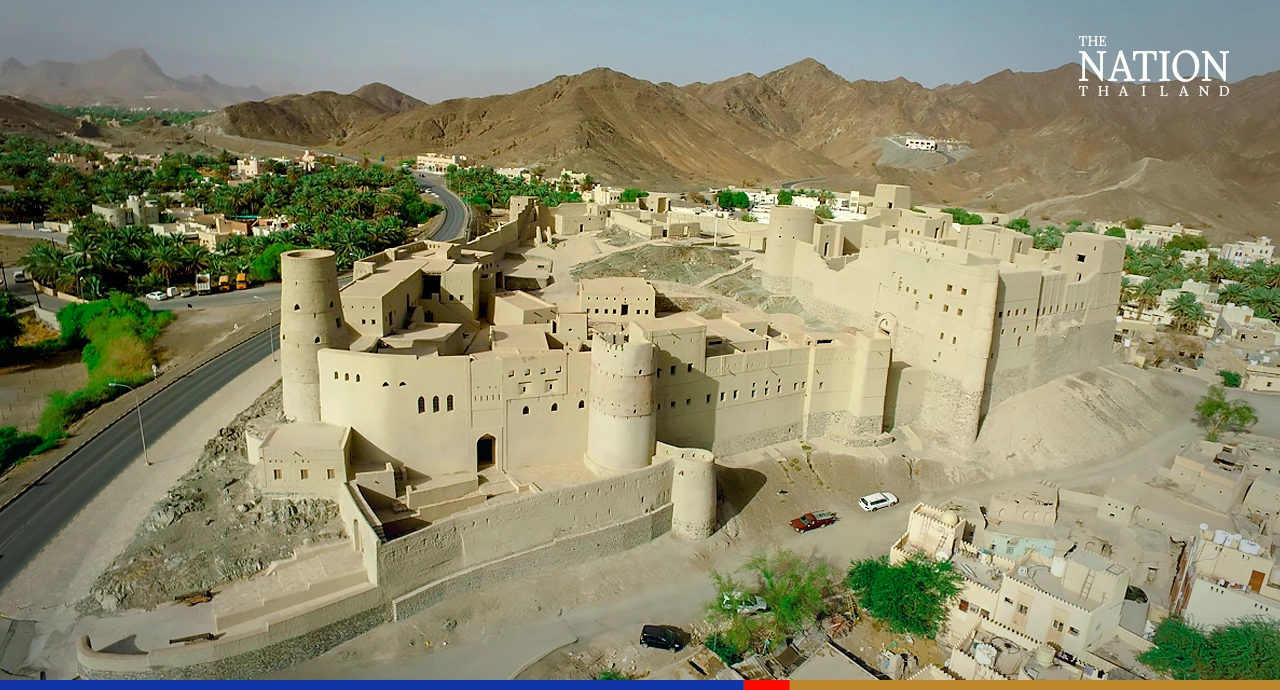
The Sultanate of Oman is richly endowed with stunning vistas and a rich cultural heritage. As a peaceful and unique destination, regional and global interest in Oman as a tourist destination continues to gain momentum.

There are different types of tourist trips in the Sultanate of Oman due to its natural and environmental diversity, including natural reserves, caves, beaches, islands, falaj, wadis, and dams. There are also thousands of castles, forts, and old traditional markets. Oman is rich in many archaeological discoveries that date back to the fifth millennium BC.


Covid-19

Oman, like any other country in the world, has been affected by Covid-19, but the Omani government has alerted from an early time to prepare and deal with this pandemic, and has taken various measures necessary to contain the virus. In turn, the citizens and residents also followed the preventive measures taken by the authorities. Through this strong national cohesion, the Sultanate of Oman was able to control the epidemic, and it was decided to lift all travel restrictions related to Covid-19 since May 2022.

Oman marks the 52nd National Day

Foreign Policy

At the 77th session of the UN General ‎Assembly, Oman reiterated that its solid political ‎approach is based on a deep and stable vision and a vast ‎experience derived from its heritage and human history.

Oman also affirmed that the pillars of its foreign policy ‎are standing on solid grounds of truth and justice, ‎boosted by positive cooperation and ties of friendship ‎with all, with the prime aim of contributing to the ‎consolidation of international peace and security.‎

The foundations upon which Omani foreign policy is ‎based – notably good neighbourliness, respect for the ‎sovereignty of states, non-interference in internal ‎affairs, positive cooperation, mutual interests, justice, ‎dialogue, humanity, and support for international peace ‎and security – have made the Sultanate of Oman a ‎reliable international partner at the local and global ‎levels.‎

Source: Ministry of Information
 

——————————————————-

Embassy of the Sultanate of Oman – Bangkok

82 Saeng Thong Thani Bldg., 32nd Floor, North Sathorn Rd., Silom, Bangrak, Bangkok, Tel.: 02-6399380

Facebook: Bangkok.Embassy.om

Twitter: OmanEmbassyBkk

No need to fly: Experience Japan in Korea

#SootinClaimon.Com : ขอบคุณแหล่งข้อมูล : หนังสือพิมพ์ The Nation.

https://www.nationthailand.com/blogs/world/asia-pacific/40022188

No need to fly: Experience Japan in Korea

No need to fly: Experience Japan in Korea

THURSDAY, NOVEMBER 17, 2022

Friends and couples in kimonos take pictures on streets lit by colourful paper lanterns under the eaves of Japanese-style houses and shops.

Food stalls’ yakitoritakoyaki and platters of beautifully arranged sashimi tempt the appetites of passersby.

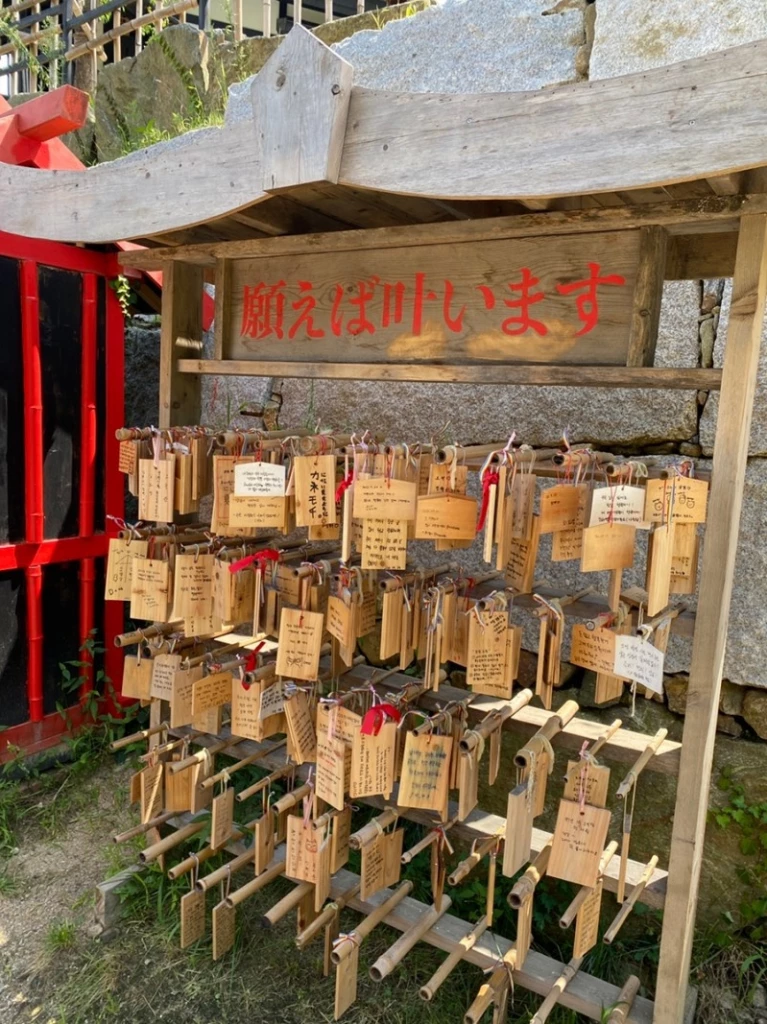
At a shinto shrine, people write prayers or wishes on paper strips and bamboo plaques and hang them on wooden hooks.

This corner of Dongducheon, just north of Seoul, maybe a picture-perfect slice of Japan, but if you came to the same spot years back, you would find a US military base.

The 40,000-square-meter plot, which was part of Camp Casey until 2012, is now home to the Nijimori Studio theme park.

The exotic village is one of several Japanese-themed tourist attractions that popped up in South Korea amid the Covid-19 pandemic.

While Japan was closed to tourists, they offered travel-hungry Koreans a chance to immerse themselves in the culture of the neighbouring country. Now with the border open, a big surge in interest in Japan travel here is fueling the business boom.

Song Ji-eun, an office worker in her 20s, who used to enjoy spa trips to Sapporo before the Covid-19 pandemic occurred, recently stayed at a ryokan-style guesthouse at the Nijimori Studio. She described the experience as “vicarious satisfaction.”

“Japanese vibes here seem quite authentic to some extent,” Song said.

With the room featuring tatami flooring, a bathtub made of Japanese Hinoki wood and a private open-air bath, the one-night stay felt like you’re transported to Kyoto in an instant.

An alley in Nijimori Studio lined with Japanese-style restaurants. (Courtesy of Nijimori Studio)An alley in Nijimori Studio lined with Japanese-style restaurants. (Courtesy of Nijimori Studio)
“Japan was where I visited the most (for holiday) next to Jeju Island. After traveling abroad has become difficult (due to pandemic restrictions,) I started to look for unique spots in Korea,” she said.

Nijimori Studio draws Korean fans of Japanese comics or movies as well.

A search with the hashtag Nijimori Studio in Korean on Instagram returns a host of pictures and short videos shared by cosplayers dressed up as fictional Japanese characters, from Kaonashi, a character in Studio Ghibli film “Spirited Away,” to the schoolgirl from the television series “Sailor Moon.”

Ryokan-style hotels are an emerging trend in the Korean hospitality industry. A number of luxury hotels with traditional Japanese aesthetics have recently opened here.

Paper strips or bamboo plaques on which guests wrote their wishes and prayers hang on wooden hooks of one of shinto shrines at Nijimori Studio. (Courtesy of Nijimori Studio)Paper strips or bamboo plaques on which guests wrote their wishes and prayers hang on wooden hooks of one of shinto shrines at Nijimori Studio. (Courtesy of Nijimori Studio)
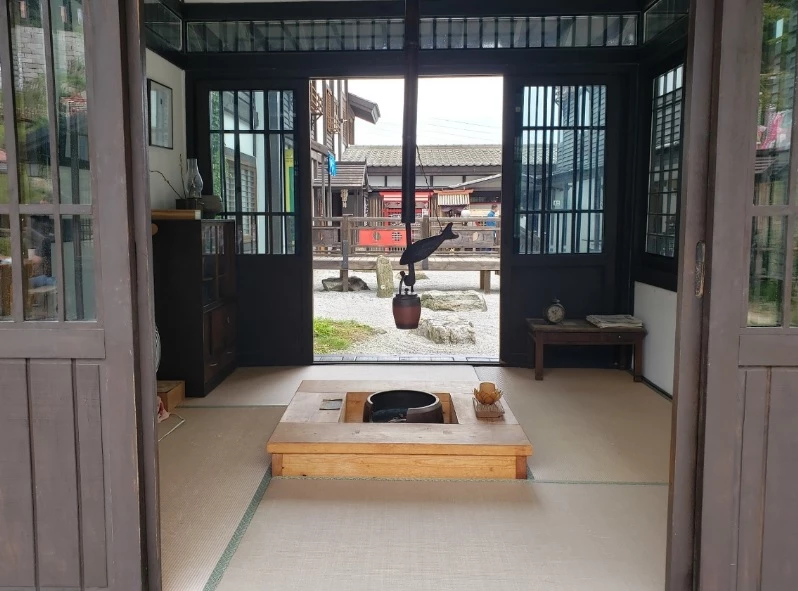
A private room for one-day tea classes. (Courtesy of Nijimori Studio)A private room for one-day tea classes. (Courtesy of Nijimori Studio)

At one newly-built Japanese-style accommodation located in NamhaeSouth Gyeongsang Province, guests can experience Japanese outdoor spa in their room which has a tub on a balcony overlooking the ocean. Its dining room is decorated with wooden dining tables and tatami-mat flooring.

Meanwhile, Japanese vibes have also entered Korea’s dessert cafe scene.

In mid-October, local fans of Studio Ghibli, Japan’s most renowned animation company, opened a coffee shop inspired by a bakery shop featured in the hit film “Kiki’s Delivery Service.”

Stationery items featuring characters from Studio Ghibli’s “Kiki’s Delivery Service” are displayed at “Koriko Cafe.”(Choi Jae-hee / The Korea Herald)Stationery items featuring characters from Studio Ghibli’s “Kiki’s Delivery Service” are displayed at “Koriko Cafe.”(Choi Jae-hee / The Korea Herald)

The coffee house was buzzing Monday with visitors armed with selfie sticks looking for the perfect Instagram shot. Some stood in lines to take a photo at a certain spot in the shop’s garden.

Named after the town where the young witch Kiki lives in the movie, the two-story coffee shop dubbed “Koriko Cafe,” situated in Seoul’s hip Yeonnam-dong, is furnished with an array of accessories, goods and desserts like cakes and muffins featuring Ghibli’s most lovable characters.

With soundtracks from animated films playing, character seat cushions and cute ornaments radiate a cosy and vintage Japanese aesthetic, while vivid colours of the building’s walls and roofs conjure up images of the scenes from Studio Ghibli movies.

“The dessert shop is more than just a lovely cafe. It is a playground for ‘kidults’ like me and a fan platform for anime lovers,” said Yoon Na-rae, a female customer in her 30s, who bought a coin purse with an image of Totoro on it.

Pent-up travel demand amid Covid-19-related border restrictions appears to have driven the popularity of Japanese-style entertainment facilities here.

Japan had halted visa-free entry for Korean nationals starting March 2020 to control the entry of foreign coronavirus patients, while shutting down its borders completely to foreign nationals in November last year. Last month, the neighbouring country resumed its visa waiver programs for 68 countries and regions after nearly two years and seven months.

Demand for Japan tourism has been soaring in line with the eased travel restrictions. According to data from online ticketing site Interpark, the number of flight bookings to Japan between Oct. 1-22 jumped 589 % from a month ago. Of the total international flight reservations, the Japan route accounted for 48 %, the highest share followed by the Southeast Asia region (36 %).

Temasek to write down $275 million in FTX, admits to ‘misplaced’ belief in its ex-CEO

#SootinClaimon.Com : ขอบคุณแหล่งข้อมูล : หนังสือพิมพ์ The Nation.

https://www.nationthailand.com/pr-news/world/asean/40022177

Temasek to write down $275 million in FTX, admits to ‘misplaced’ belief in its ex-CEO

Temasek to write down $275 million in FTX, admits to ‘misplaced’ belief in its ex-CEO

THURSDAY, NOVEMBER 17, 2022

Singapore’s state investor Temasek will write off its US$275 million (9.8 billion baht) investment in cryptocurrency firm FTX, “irrespective of the outcome of FTX’s bankruptcy protection filing”.

In a statement issued early on Thursday, Temasek said the total cost of its investment in FTX was 0.09 per cent of its net portfolio value of S$403 billion as of end-March this year.

It invested $210 million for a minority stake of about 1 per cent in FTX International and pumped in another $65 million for a minority stake of about 1.5 per cent in FTX US, which is the American subsidiary.

These investments were carried out across two funding rounds from October 2021 to January 2022.

The shocking collapse of Sam Bankman-Fried’s FTX empire due to liquidity woes has shaken the crypto world and triggered a contagion that has spread to Genesis and Gemini. FTX has filed for protection from bankruptcy and Bankman-Fried has stepped down as its chief executive.

“It is apparent from this investment that perhaps our belief in the actions, judgement and leadership of Sam Bankman-Fried, formed from our interactions with him and views expressed in our discussions with others, would appear to have been misplaced,” said Temasek.

It added that there have been misperceptions that the investment in FTX is an investment into crypto. “To clarify, we currently have no direct exposure to cryptocurrencies.”

This comes after other FTX investors, such as Sequoia Capital, had said that it would write down the total value of its $214 million bet on the exchange. SoftBank was later said to also anticipate a loss of around $100 million on its investment.

Similar to all investments, Temasek said it “conducted an extensive due diligence process on FTX”, which took about eight months from February to October 2021.

During this period, it reviewed the firm’s audited financial statement, showing it was profitable.

Due diligence efforts were focused on regulatory risks, particularly licensing and compliance, Temasek said, adding that “advice from external legal and cybersecurity specialists in key jurisdictions was sought, with a legal and regulatory review done for the investments”.

Interviews with people familiar with FTX such as staff, industry players and other investors were also conducted.

If allegations, now under investigation, that customer assets were mishandled and misused are true, then it would amount to serious misconduct or fraud at FTX, Temasek said.

It added: “As we only had about one per cent stake in FTX, we did not have a board seat. However, we take corporate governance seriously, engage the boards and management of our investee companies regularly and hold them accountable for the activities of their companies.”

Temasek said that it continues to recognise the potential of blockchain applications and decentralised technologies.

“While this write-down of our investment in FTX will not have a significant impact on our overall performance, we treat any investment losses seriously and there will be learnings for us from this,” it added.

The Straits Times

Asia News Network

Macron says Australia submarine deal was not about confronting China

#SootinClaimon.Com : ขอบคุณแหล่งข้อมูล : หนังสือพิมพ์ The Nation.

https://www.nationthailand.com/world/asia-pacific/40022166

Macron says Australia submarine deal was not about confronting China

Macron says Australia submarine deal was not about confronting China

THURSDAY, NOVEMBER 17, 2022

French President Emmanuel Macron said on Thursday that an agreement to build submarines for Australia, which has since been scrapped, was not about confrontation with China.

“it is not confrontational to China because they are not nuclear-powered submarines. But the choice made by (former Australian) Prime Minister Morrison was the opposite, re-entering into nuclear confrontation,” said Macron after visiting a museum in Bangkok, where he is attending the Asia Pacific Economic Coordination ( Apec) forum.

Australia in 2021, under former leader Scott Morrison’s government, cancelled a multi-billion-dollar order for submarines with French military shipyard Naval Group and opted instead for an alternative deal with the United States and Britain.

New Australian Prime Minister Anthony Albanese‘s government has since reached a 555 million euro ($583.58 million) settlement over the controversial decision, a move Canberra hopes will help repair the rift between the two countries.

Reuters

The latest news on what’s happening in the region

#SootinClaimon.Com : ขอบคุณแหล่งข้อมูล : หนังสือพิมพ์ The Nation.

https://www.nationthailand.com/world/asia-pacific/40022158

The latest news on what's happening in the region

The latest news on what’s happening in the region

THURSDAY, NOVEMBER 17, 2022

Check out what’s hot in the region on November 17, as The Nation puts together headlines from members of Asia News Network (ANN). Click to read more:

ANN news highlights: Thur, Nov 17, 2022
Bringing Asia Closer

Visual Asia
Photo Exhibition: Life in a changing Asia | China Daily/ANN
 

G20 
Ukraine War
G-20 leaders endorse declaration deploring Russian aggression in Ukraine – Straits Times
 

Agenda Indonesia
Widodo hails 3 ‘concrete outcomes’ from G-20 summit in health, energy transition and financial sectors – Straits Times
 

Finance
G20 vows to calibrate pace of interest rate hikes, avoid spillovers – Reuters for Jakarta Post
 

Oped India
Editorial: Bali breakthrough? – The Statesman
 

Oped Japan
Editorial: Continued dialogue is way to avoid conflict – The Japan News

Apec Agenda
Officials conclude discussions on three key items on Apec agenda – The Nation
 

Apec Myanmar 
Amnesty seeks Apec discussion on bloody crackdown in Myanmar – The Nation
 

Diplomacy
China-Indonesia
Xi, Widodo vow to take ties to new level – China Daily
 

S Korea-China
Yoon-Xi summit reveals gap in approach to North Korea – Korea Herald
 

Bangladesh-Russia
Lavrov’s Dhaka visit: Dhaka to focus on food, energy supply, Rohingya crisis | The Daily Star
 

Australia-Laos
Laos, Australia to elevate ties to a comprehensive partnership / Vientiane Times

Rohingya
UN adopts resolution on human rights of Rohingya | The Daily Star
 

Geopolitics SE Asia
Opinion: Southeast Asia can leverage its geopolitical to become key global trade player – Jakarta Post
 

Politics US
Opinion: Lessons from watching US midterm elections – Korea Herald
 

Politics US
Opinion: Crisis of leaders, crisis of voters | Inquirer 

Business Asia-Pacific
German leader Call for diversification in bolstering supply chains – The Star
 

Cypto Singapore 
Temasek to write down US$275 million in FTX, says belief in Bankman-Fried appears to be ‘misplaced’ – Straits Times
 

Tech China
China’s ‘zero-COVID’ finally catches up with iPhone output – The Japan News
 

IPEF
IPEF economic framework launched without tariff reductions – The Japan News