U.S. allies react in horror to Capitol assault, hold Trump responsible
InternationalJan 08. 2021Supporters of President Trump scaled the walls on the Senate side of the US Capitol and gained access inside the building during a massive protest in Washington on Jan. 6, 2021. MUST CREDIT: Washington Post photo by Michael Robinson Chavez.
By The Washington Post · Paul Schemm, Erin Cunningham, Siobhán O’Grady, Adam Taylor
In the aftermath of the violent tumult that unfolded in Washington on Wednesday, when rioters loyal to President Donald Trump swept through the halls of the Capitol, creating scenes of chaos and insurrection that reverberated around the globe, the world continued to respond with incredulity and alarm.
While some U.S. rivals, including China, appeared to take satisfaction in seeing the United States in turmoil, traditional friends and allies offered resounding reactions of horror. Some blamed Trump in clear terms for stoking the mob, and issued calls to uphold democracy that echoed admonitions that the United States has often directed toward countries in crisis.
In the view of the world, the riot, which spread confusion and violence at the epicenter of U.S. democracy, seemed to serve as a final straw, unleashing a torrent of concern about the state of American institutions under Trump, and about his perceived role in degrading them.
“This is an assault on democracy. President Trump and several members of Congress bear substantial responsibility for developments,” tweeted Swedish Prime Minister Stefan Lofven, calling for respect for the outcome of the election, which Joe Biden won. The rioters interrupted the formal certification of the results, which Congress completed Thursday morning.
German Chancellor Angela Merkel said she was “furious” and “sad” about the scenes at the Capitol. British Home Secretary Priti Patel told the BBC that Trump’s comments “directly led to the violence.” Scotland’s first minister, Nicola Sturgeon, was more explicit, telling “Good Morning Britain” that Trump was guilty of “inciting insurrection” and calling his presidency a “dark period in America’s history.”
Germany will examine introducing additional security measures at its parliament, known as the Bundestag, following the events in Washington, according to the body’s president, Wolfgang Schäuble. Berlin was shaken in August when anti-lockdown demonstrators, including far-right figures, rushed the parliament building, reaching its front steps.
Before the assault on the Capitol, Trump spoke to supporters at a rally, encouraging them to take matters into their own hands as Congress moved to certify the results of the election.
Although he did not mention Trump by name, French President Emmanuel Macron delivered an impassioned video message about the historical ties between the United States and France rooted in their early adoption of democracy.
“What happened today in Washington, D.C., is not America, definitely,” he said in the English portion of the message. “We believe in the strength of our democracies.”
Trump’s allies offered only thin support, if any. Polish President Andrzej Duda, a right-wing populist, dismissed Wednesday’s attack as an “internal” matter that he would not comment on.
In statements to supporters Wednesday, Brazilian President Jair Bolsonaro broke with almost all world leaders and echoed Trump’s baseless suspicions of fraud in the U.S. presidential elections.
French far-right leader Marine Le Pen said in an interview on French TV that she was “extremely shocked” by scenes from the Capitol and said Trump “must condemn [the events] in the clearest terms.”
While Israeli Prime Minister Benjamin Netanyahu, also a close Trump ally, called the breach of the Capitol “outrageous” and affirmed his belief in U.S. democracy, his rival, Defense Minister Benny Gantz, went further, saying that the images of a mob ransacking the Capitol should be a warning to other countries.
“This is proof that, before political rivalry, we must agree on the rules of the game: the maintenance of the rule of law, respect for democratic procedures and respectful discourse,” he said on Twitter.
Nationalistic Chinese state-run tabloid the Global Times used the moment to bash U.S. politicians for having supported Hong Kong pro-democracy protesters who had stormed the city’s legislature in 2019.
Konstantin Kosachev, chairman of the foreign affairs committee in the Federation Council, the upper house of Russia’s parliament, said U.S. democracy is “obviously limping on both feet.”
“America no longer charts the course and therefore has lost all right to set it. And even more to impose on others,” he said.
The breakdown in order at the heart of U.S. political institutions allowed countries with poor track records on human rights and democracy a chance to call for calm in the United States, reversing the conventional narrative.
Rioters fight for access to the U.S. Capitol during a joint congressional session to certify the electoral college vote in Washington, D.C. on Jan. 6, 2021. MUST CREDIT: Photo for The Washington Post by Amanda Voisard
Venezuela, which has been in the midst of a severe political crisis for years and is antagonistic to the United States, condemned the “political polarization and spiral of violence” in the country.
Iranian President Hassan Rouhani said in remarks Thursday that “what happened in the United States showed how weak Western democracy is.”
Zimbabwean President Emmerson Mnangagwa, in a tweet Thursday, used the chaos in Washington as an opportunity to rail against sanctions that the United States imposed on his country last year. The events “showed that the U.S. has no moral right to punish another nation under the guise of upholding democracy,” Mnangagwa wrote.
Turkey, which has seen its partnership with the United States come under strain in recent years, urged “restraint and common sense.”
There is a sense of “glee” that “pompous” American policymakers “who pontificate to other democracies need to look within,” wrote Smita Prakash, a high-profile journalist close to the Indian government.
In Southeast Asia, where many countries have weak democratic systems or autocratic regimes and where the United States frequently lectures governments about free and fair elections, parliamentarians concerned about liberal values condemned the assault on Capitol Hill.
Charles Santiago, a member of the Malaysian parliament who chairs the Association of Southeast Asian Nations’ Parliamentarians for Human Rights group, said Trump was “joining in infamy the likes of Hun Sen and Rodrigo Duterte, in trying to destroy democratic institutions and undermine the will of the people here in this region.” Hun Sen has held power in Cambodia since 1985, while Duterte’s administration in the Philippines has locked up many of its critics.
Although the more populist turn under Trump for the past four years has meant a move away from multilateral approaches to U.S. foreign policy, the United States in many parts of the world is still considered a bulwark for democracy amid the rise of authoritarian regimes and movements.
“We need all democrats to join forces – worldwide. The fight against narrow-minded delusion, against intolerance, against the division of our societies – it is our common fight,” German Foreign Minister Heiko Maas wrote in Der Spiegel on Thursday.
Trump’s remarks before riot may be investigated, acting D.C. U.S. attorney says
InternationalJan 08. 2021Supporters of President Donald Trump riot at the U.S. Capitol on Jan. 6, 2021. MUST CREDIT: Photo for The Washington Post by Astrid Riecken
By The Washington Post · Devlin Barrett
WASHINGTON – The top federal prosecutor in Washington D.C. said Thursday that President Donald Trump was not off limits in his investigation of the events surrounding Wednesday’s riot at the U.S. Capitol, saying “all actors” would be examined to determine if they broke the law.
Asked if federal agents and prosecutors will look at the incendiary statements made by speakers at Trump’s rally shortly before a mob of his supporters breached security at the Capitol and wreaked havoc inside, acting U.S. Attorney Michael Sherwin said: “Yes, we are looking at all actors here, not only the people that went into the building, but . . . were there others that maybe assisted or facilitated or played some ancillary role in this. We will look at every actor and all criminal charges.”
Asked specifically if that included Trump, who had urged the crowd to “fight like hell,” before the rioting began, Sherwin replied, “We are looking at all actors here, and anyone that had a role, if the evidence fits the element of a crime, they’re going to be charged.”
Not long after the prosecutor made those remarks, White House spokeswoman Kayleigh McEnany gave a brief statement, saying: “What we saw yesterday was a group of violent rioters undermining the legitimate First Amendment rights of the many thousands who came to peacefully have their voices heard in our nation’s capital. Those who violently besieged our capitol are the opposite of everything this administration stands for.”
The far-reaching federal investigation could spell fresh legal jeopardy for the president’s personal lawyer, Rudolph Giuliani, who also spoke to the crowd, declaring at one point, “let’s have trial by combat,” and declaring he was willing to stake his reputation, and that of the president, on being able to someday find criminality in the 2020 vote count.
On Thursday morning, Giuliani tweeted that the previous day’s violence “was shameful. It was as criminal as the rioting and looting this summer which was not condemned strongly enough by the Left. This violence is condemned in the strongest terms. Our movement values respect for law and order and for the police.”
Two of the president’s sons also spoke at the event, though their remarks were less incendiary, threatening to primary Republicans who did not support Trump’s effort to change electoral college tallies.
“Have some backbone. Show some fight. Learn from Donald Trump,” Eric Trump told the crowd. “And we need to march on the Capitol today. And we need to stand up for this country. And we need to stand up for what’s right.”
Sherwin, the prosecutor, said that the first priority of investigators are the individuals who personally engaged in destructive or violent acts at the Capitol, or what he called “the closest alligators to the boat.”
He also noted there were potential national security risks in Wednesday’s chaos, with video showing papers strewn around lawmakers’ offices, and some accounts of people taking things from the building.
“This is probably going to take several days to flesh out what was stolen, what wasn’t,” he said. “Items were stolen from senators’ offices, documents were stolen, and we have to identify what was done, and it could have potential national security equities.”
Sherwin spoke to reporters by phone Thursday to emphasize that the Justice Department and FBI are rapidly pursuing cases against those who engaged in violence or other lawbreaking, saying that dozens of people would be charged by the end of the day, and investigators are continuing to piece together evidence to bring additional cases.
The vast majority of those who broke into the Capitol building were allowed to politely leave once the chaos ended. One online video even showed an officer holding the door for a stream of angry individuals, including one who triumphantly shouted: “We stopped the vote!”
Now, investigators face a more complex task of piecing together digital evidence to identify and charge those who engaged in violence. That could take weeks or in some cases months, meaning that the bulk of that prosecutorial work may be left to the Biden administration.
Sherwin said investigators’ work was made more difficult by the fact that Capitol Police let so many of the people who broke into the building simply walk out.
“It appears they were not apprehended or zip-tied by the police,” said Sherwin, and agents will now have to gather cellphone records and video footage to “identify people, charge them, and execute their arrest.”
FBI agents have already received thousands of tips after asking for the public’s help in identifying people in the photos and videos of the mob storming the Capitol building.
Officials said they have a broad list of possible crimes to consider, from seditious conspiracy to damaging federal property to simple unlawful entry.
But there are other, more serious potential charges in play, too. Pipe bombs were discovered outside the Republican National Committee headquarters and the Democratic National Committee headquarters. Officials have yet to charge anyone with leaving those homemade bombs there, but such actions may lead to terrorism charges.
“The Department of Justice is committed to ensuring that those responsible for this attack on our Government and the rule of law face the full consequences of their actions under the law,” Acting Attorney General Jeffrey Rosen said in a statement Thursday.
While prosecutors vowed to file the toughest charges possible, they also signaled that they plan to file cases on lesser crimes like unlawful entry, which may be easier to prove, given the voluminous social media postings of the rioters.
D.C. Metro police released dozens of photographs Thursday seeking to identify and possibly charge with unlawful entry some of those who stormed into Congress, including a heavily tattooed shirtless man draped in animal fur and wearing Viking horns.
FBI Director Christopher Wray on Thursday said the FBI has deployed its “full investigative resources” and will “hold accountable those who participated in yesterday’s siege of the Capitol.”
The political fallout from the rioting continued Thursday, as Republicans faced a deep, angry rift within their party over the pro-Trump riot.
Former Attorney General William Barr – who before his Dec. 23 resignation had been one of Trump’s most loyal and effective cabinet secretaries – issued a statement condemning the president.
“Orchestrating a mob to pressure Congress is inexcusable,” Barr said in the statement, released through his former spokeswoman. “The President’s conduct yesterday was a betrayal of his office and supporters.”
InternationalJan 08. 2021Tear gas is fired at supporters of President Donald Trump who stormed the U.S. Capitol on Jan. 6, 2021. MUST CREDIT: Photo for The Washington Post by Evelyn Hockstein
By The Washington Post · Marc Fisher, Meagan Flynn, Jessica Contrera, Carol D. Leonnig
Before noon, the president of the United States, their rogue hero, told thousands of his supporters that this was the last stand, the moment to overturn the result of November’s election and ensure a second term for Donald Trump.
“We’re going to have to fight much harder,” Trump told several thousand red-clad, flag-waving acolytes gathered on the Ellipse, with the White House as backdrop.
And then the 45th president of the United States unleashed a mob.
Thousands of Trump loyalists stormed the Capitol. Members of Congress hid under desks, stripped their identification pins from their lapels to avoid being attacked and escaped into secret passageways. Rioters ransacked the office of the House speaker. Flag-waving protesters smashed windows and assaulted police inside the nation’s iconic symbol of democracy.
The process of affirming the next president was halted by mob violence.
Time will decide whether Wednesday’s assault on the Capitol was a riot, an insurrection, a last gasp of a renegade president or an early skirmish in a civil war organized on far-right social media, but it was already clear that Jan. 6, 2021, would go down in history as one of America’s ugliest days.
It began with the president’s false promise: “After this, we’re going to walk down and I’ll be there with you,” Trump said. He wasn’t going anywhere but back to the White House, where he had 14 days remaining in his term.
“You’ll never take back our country with weakness,” he told his followers. “You have to show strength, and you have to be strong.”
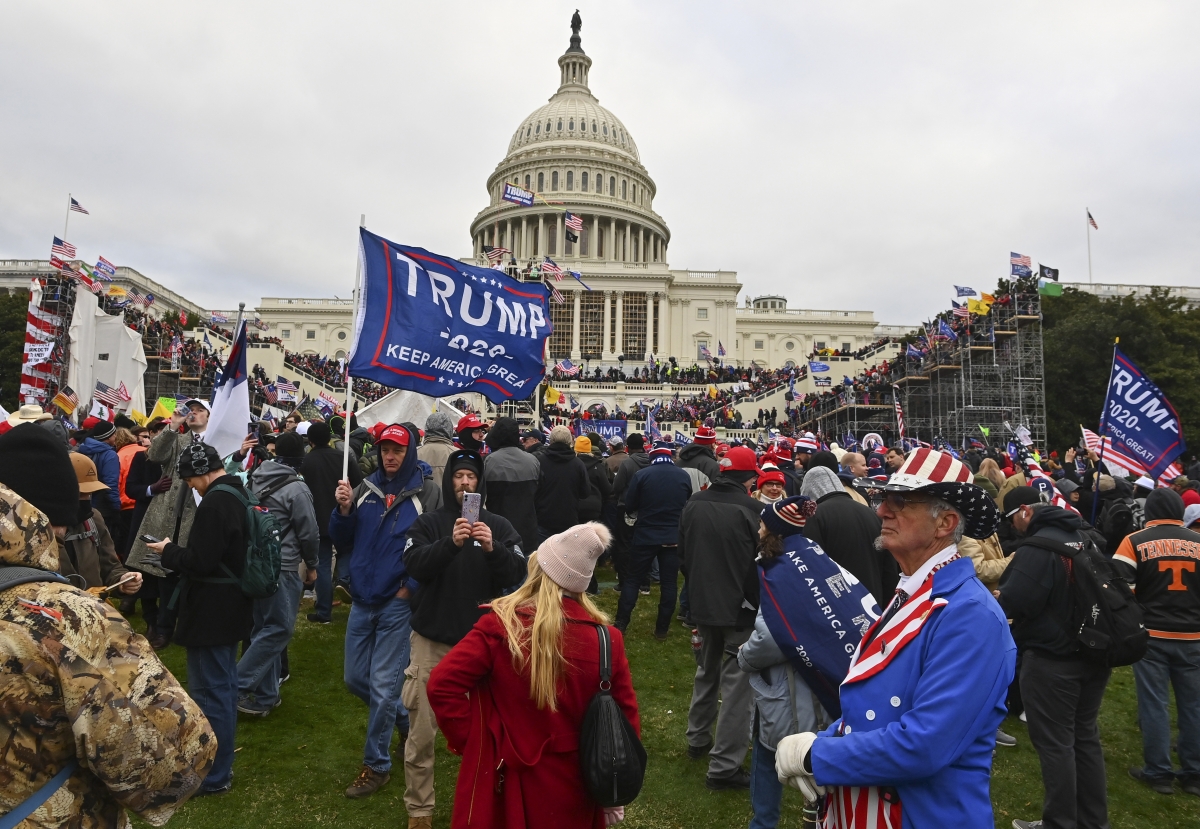
They did as they were told. By the thousands, they walked 16 blocks down Pennsylvania Avenue NW and surrounded the U.S. Capitol.
Supporters demonstrate on behalf of President Donald Trump at the U.S. Capitol on Jan. 6, 2021. MUST CREDIT: Photo for The Washington Post by Evelyn Hockstein
By the hundreds, they climbed the grand marble staircase and breached police gates and smashed windows and shoved police officers and broke through doorways and forced their way in. They burst into the offices and chambers of the Capitol, taking over the place as though it were their own, lounging in members’ offices, strolling through the statuaries, halting the constitutional process of completing Joe Biden’s election to the presidency and raising the specter of a coup against this 232-year-old democracy.
The attack, which some historians called the most severe assault on the Capitol since the British sacked the building in 1814, was “instigated at the highest level,” said House Speaker Nancy Pelosi, D-Calif. It was “what this president has caused today, this insurrection,” said Sen. Mitt Romney, R-Utah, his party’s 2012 presidential nominee.
The assault left one woman – a Trump banner draped around her neck – fatally shot inside the Capitol, and three others dead from medical incidents. It led to at least 52 arrests, four hours of chaos, the evacuation of congressional buildings, the paralysis of the city and the humiliation of a nation that has long considered itself the world’s greatest democracy.
Inside the Senate, Sen. Ben Cardin, D-Md., heard Capitol Police order people away from the doors, and then, suddenly, out of the chamber – now. Some people ran, scrambling to a single exit that police had opened. It led to a staircase, which led to an undisclosed evacuation area.
“There was obviously a great deal of anxiety and concern,” Cardin said. “It was like we might be in harm’s way any second.”
The attack and siege seemed like a surprise: CNN kept showing the debate on the Senate floor even as the mob breached the building, only a handful of Capitol Police officers were posted at the building’s ceremonial front steps, and as the debate unfolded, not one legislator said anything about the mob outside.
But the insurrection was hardly spontaneous. It was carefully, methodically planned, spelled out on far-right social media, where die-hard Trump supporters openly traded advice on how to steer clear of D.C. police officers, how to pry open the doors of the Capitol and how to get illegal guns into the city.
In forums devoted to the QAnon conspiracy theory movement and among hard-right groups such as the Proud Boys, plans to turn a pro-Trump rally into a full-on capture of the Capitol had been plotted, dissected and disseminated for months.
The ultimate inspiration of the mob’s passion, the president himself, had repeatedly urged his followers to come to Washington on the day when Congress would affirm the result of November’s election.
“Big protest in D.C. on January 6th,” Trump tweeted last month. “Be there, will be wild!”
Protesters fight to gain access to the U.S. Capitol during a joint congressional session to certify the electoral college vote in Washington, D.C. on Jan. 6, 2021. MUST CREDIT: Photo for The Washington Post by Amanda Voisard
A presidency that began with Trump standing on the Capitol steps and declaring that “this American carnage stops right here and stops right now” was now ending in anarchy, with an unchecked mob bringing one of the country’s most sacred ceremonies – and the peaceful transfer of power – to a screeching, scary halt.
The unprecedented interruption of what is ordinarily a moment of pomp and peace sent shock waves throughout the world. D.C. Mayor Muriel Bowser, D, ordered a 6 p.m. curfew. The region’s transit system shut down. Shops closed, streets emptied.
“America is so much better than what we’re seeing today,” President-elect Joe Biden tweeted, but in the nation’s capital city, the end of that sentence seemed very much to demand a question mark.
– Protest
Their president told them to move to the Capitol and so they did, converging on the East Front steps after 1 p.m., shouting, chanting, singing the national anthem, waving Confederate flags and Trump 2020 banners.
Some spoke of civil war. Some shouted out the Pledge of Allegiance. Some shouted the pledge even as they rushed the police line meant to keep unwanted visitors out of the building, which has been closed to the general public for months because of the coronavirus pandemic.
They said this was their house, the people’s house, and they had every right to push their way in, all in service of ensuring Trump would somehow reverse the will of the people and grab a second term in office.
Over the course of an hour, waves of protesters arrived in front of the Capitol, just as inside the House and Senate convened in a rare joint session to affirm the electoral college vote and officially decree Biden the next president.
Very quickly, the crowd outnumbered the Capitol Police, who had expected a far smaller gathering, according to law enforcement officials. Police had set up barricades outside the building as a show of police presence, but the protesters simply ignored them – easily knocking them over and hopping over them.
Dozens of protesters pushed onto the steps and ledges of the building on all sides. On the grand staircase opposite the Library of Congress, there were only a handful of officers, arrayed against a crowd reaching into the hundreds.
There was pushing. Men in Trump regalia shoved police, called them “traitors,” cursed at them. At some doors to the building, no officers were visible.
In one big push, Trump supporters surged up the steps and overwhelmed the officers atop the flight of stairs. Hundreds, then thousands followed. Some scaled the walls to get up; others climbed over one another to reach the top.
Inside, after only 12 votes had been certified in the presidential election, both houses of Congress suspended their debates.
For over an hour, people banged on the doors of the Capitol on the north and west sides, chanting: “Let us in! Let us in!”
“The Capitol Police weren’t prepared for so many protesters who were pushing their way in,” said one law enforcement official briefed on the incident, speaking on the condition of anonymity because he was not authorized to speak publicly about the matter. “Not all windows and entrances were protected.”
Officials had not anticipated that Trump would dispatch his rally crowd to the Capitol.
“Capitol Police did have a plan, but apparently they assumed business as usual,” the official said. “They didn’t expect Trump to incite them and that they would forcefully push their way in. Bottom line, there just wasn’t enough personnel.”
Federal law enforcement officials had decided against any large, visible show of force on city streets, not wanting to repeat the huge assemblage of heavily armed agents that flooded the nation’s capital in June to dispel civil unrest over police conduct.
Protesters take over the Inaugural stage during a protest calling for legislators to overturn the election results in President Donald Trump’s favor at the U.S. Capitol on Jan. 6, 2021, in Washington, D.C. MUST CREDIT: Washington Post photo by Ricky Carioti
– Riot
After 2:10 p.m., a man in the crowd swung a clear plastic riot shield to break through first-floor windows on the Capitol’s south side, making a hole big enough to climb through. A stream of protesters pushed in.
Police said those first trespassers then opened one or more doors to let more of the swelling, chanting mob inside. Police tried to disperse the group with pepper balls and smoke bombs, but more people came in behind those at the front.
A Capitol Police officer shouted from a higher stairway, ordering the intruders to halt. When they didn’t comply, the official said, the officer fired his gun at a man who kept coming toward him. The scene was chaotic, with some rushing away from the sound of gunfire. Protesters saw that a woman in their group had fallen.
A medical squad pushed into the building and carried the woman – later identified by her former husband as Ashli Babbitt, an Air Force veteran and avid Trump supporter – out on a gurney.
“White female, shot in the shoulder,” an officer said as they hurried away.
Babbitt gazed vacantly to one side, her torso and face covered in blood. As the gurney was loaded into an ambulance, pro-Trump protesters swarmed, screaming “Murderers!” Capitol Police officers with long guns pushed the crowd back, and the ambulance drove off.
Babbitt died of her wounds, police said.
Protesters, by that point nearly surrounding the building, kept pouring in, breaking through entrances that had been locked but not secured by the Capitol Police.
Inside, officers in riot gear sprayed intruders with chemical irritants and made a few arrests, but outside, crowds climbed up scaffolding, hanging a giant American flag and winning cheers. Pockets of the crowd chanted “four more years” and “USA” as a few people shouted QAnon conspiracy theories through a megaphone.
Police escorted a line of arrested protesters away from the building, and some in the crowd called out to the officers, “Join us!” and ” ‘We the people’ means you, too!”
The rally that morphed into a march had turned into a violent mob, intent on stopping the rites of democracy.
– 2:24 p.m.
On Parler and Gab, the far-right-friendly social media sites, Trump followers urged the crowd in Washington to find and accost Vice President Mike Pence, whom Trump had been pressuring to use his ceremonial role Wednesday to help overturn the election results. Within minutes, the chant arose from factions of the mob at the Capitol: “Where is Pence?”
The vice president had been whisked to a secure location in the Capitol complex.
“This is a coup attempt,” tweeted Rep. Adam Kinzinger, R-Ill.
2:30 p.m.
The intruders fancied themselves revolutionaries, or something. On the west side of the Capitol, they erected a gallows, complete with a hanging rope. They defied orders to disperse, shoved police officers wielding pepper spray, laughed when they heard that Bowser had ordered a citywide 6 p.m. curfew.
“Guess who’s going home? None of us!” someone yelled. “Time to take back what’s ours!” someone else screamed. “A new 1776 has just begun!”
One large cluster of people rushed the steps after a handful of protesters called on others to “storm the Capitol!”
“Get these kids out of here!” a woman shouted at families.
“Storm it!” a man cried. “If you’re not serious about storming the Capitol, get out of here!”
Hundreds made it inside, dismantling metal barricades.
“This is amazing,” a woman in a star-spangled hoodie said. “They’re doing it!”
Inside the Capitol, hundreds broke into an A capella rendition of “The Star-Spangled Banner,” their voices echoing off the marble walls.
2:38 p.m.
Just 14 minutes after the president had slammed his vice president, tweeting that “Mike Pence didn’t have the courage to do what should have been done to protect our Country,” Trump finally admitted the reality of the violent mob attacking the Capitol in his name.
Trump tweeted: “Please support our Capitol Police and Law Enforcement. They are truly on the side of our Country. Stay peaceful!”
Thirty-five minutes later, slightly stronger: “I am asking for everyone at the U.S. Capitol to remain peaceful. No violence! Remember, WE are the Party of Law & Order – respect the Law and our great men and women in Blue.”
Senate Minority Leader Charles Schumer, D-N.Y., unimpressed, tweeted his response: “It’s a little late for that. Don’t you think?”
Trump stayed inside the White House, seeing only a small group of loyal aides, including Chief of Staff Mark Meadows, social media director Dan Scavino, personnel director John McEntee and policy adviser Stephen Miller.
2:52 p.m.
“I am in the House Chambers,” Rep. Daniel Kildee, D-Mich., tweeted. “We have been instructed to lie down on the floor and put on our gas masks. Chamber security and Capitol Police have their guns drawn as protesters bang on the front door of the chamber. This is not a protest. This is an attack on America.”
Packs of intruders had made their way to both chambers of Congress, and House and Senate members were locked inside, watching their handful of security officers point their service weapons at the doors – the only barrier between the mob and the nation’s lawmakers.
Your gas masks are under your chairs, the legislators were told.
“You could hear a pounding on the doors on the outside,” said Rep. David Trone, D-Md. “At that point, they had us get our gas masks out.”
Rep. Jamie Raskin, D-Md., listened to the mob ramming up against the doors, and all he could think about was his family. His 25-year-old son died last week, a tragedy that had shaken the House, and Raskin had taken one of his daughters and his son-in-law to the Capitol to watch the debate over presidential electors, “because we wanted to be together,” he said.
“I thought I could show them the peaceful transfer of power in the United States of America,” Raskin said on C-SPAN. “What was really going through my mind was their safety because they were not with me in the chamber, and I just wanted us all to get back together.”
House members were informed that police had deployed chemical irritants in Statuary Hall, and Rep. Abigail Spanberger, D-Va., a former CIA case officer, prepared to be exposed to tear gas.
Capitol Police officers barricaded the chamber doors with tables and bookshelves.
“It is a low for this country I never thought we would reach,” Spanberger said. “This is what we see in failing countries. This is what leads to a death of democracy.”
2:54 p.m.
Trump’s former communications director, Alyssa Farah, tweeted a message to her former boss: “Condemn this now, @realDonaldTrump – you are the only one they will listen to. For our country!”
3 p.m.
A cluster of protesters using ropes and makeshift ladders reached the north side of the Capitol, although they might have saved themselves the trouble. Far more people simply walked around the corner and made it right up to the building on foot.
A woman wearing a “What would Jesus do?” sandwich board read from scripture before handing the mic to someone who led a prayer for the police.
On the building’s main steps, dozens of protesters, many in Make America Great Again hats, chanted “Fight for Trump.” Hardly anyone wore a mask.
A middle-aged couple from Idaho snapped pictures of each other, smiling.
“These are heroes,” said Dawn, who declined to give her last name. “I am so proud of them.” She pronounced herself “amazed” that so many people believed, as she did, that the election had somehow been stolen from Trump.
3:15 p.m.
The president’s daughter Ivanka Trump, in the absence of any statement by her father, tweeted a call for the mob to cease all violence. She addressed them as “American Patriots.” Minutes later, she took down the tweet.
Schumer and Pelosi called on Trump to demand that the protesters vacate the Capitol grounds. He did not
3:30 p.m.
As dozens of military police marched toward the Capitol, wearing gas masks and carrying batons and shields, at least as many screaming protesters trailed them, calling the authorities “oath breakers,” “cowards” and “traitors.”
3:40 p.m.
Hours into the insurrection, the police seemed vastly outnumbered. The D.C. Council, the capital city’s legislature, announced that the Defense Department had denied the mayor’s request to give the D.C. National Guard the authority to restore order at the Capitol.
Around the same time, Pence, responding to Bowser’s request, ordered the city’s entire National Guard, more than 1,100 strong, activated. And Virginia Gov. Ralph Northam, D, sent members of the Virginia National Guard and 200 Virginia state troopers to the District at the mayor’s request.
Inside the Capitol, a man who had gotten into Pelosi’s office made himself at home. Dressed in jeans, a flannel coat and a baseball cap, he propped his boot up on a desk, rested what appeared to be a weapon against his hip, draped an American flag over a pile of documents and posed for pictures, a satisfied grin sweeping across his face.
When he left, a file folder was placed atop a computer keyboard. In red capital letters, someone had scrawled “WE WILL NOT BACK DOWN.”
Shortly after, photos popped up online of protesters holding shards of the sign they’d torn off the entrance to Pelosi’s office.
4 p.m.
Hundreds of protesters trying to break in through a door on the Capitol’s north side ran smack into a fresh line of police. Both sides splashed each other with pepper spray. Officers hit the crowd with batons, and protesters struck back with flagpoles.
The mob outnumbered the police. They overpowered the officers and rushed the building, chanting “Treason” and “Our house.” A few minutes later, clouds of tear gas emerged over the crowd, leading many to run from the Capitol.
4:15 p.m.
In the president’s absence, Trump’s duly elected successor went on national TV to implore the president to do his job: “I call on this mob to pull back and allow the work of democracy to go forward,” Biden said.
The president-elect, looking deeply saddened, called the mob “a small number of extremists” whose behavior “borders on sedition.”
“The words of a president matter,” Biden said. “I call on President Trump to go on national television now to fulfill his oath and defend the Constitution.”
The president did no such thing.
Instead, Trump did what he’s done for most of his adult life: He doubled down on his provocation.
“These are the things and events that happen when a sacred landslide election victory is so unceremoniously & viciously stripped away from great patriots who have been badly & unfairly treated for so long,” Trump tweeted. “Go home with love & in peace. Remember this day forever!”
Twitter quickly removed the tweet.
“Go home, we love you, you’re very special,” Trump said in a short video he tweeted, but after the bulk of his message focused on his insistence that the election had been rigged against him, Twitter removed that presidential emission, too. And then the company locked Trump’s account for 12 hours, effectively silencing the president’s primary mode of communication
4:30 p.m.
Outside the east side of the Capitol, a man with a megaphone announced to a crowd of hundreds, “Hey, everyone, Donald Trump says he wants everyone to go home.”
In response, some in the crowd booed loudly. One man shouted back: “Shut the f— up! We’re not going to bend a knee, motherf—–!”
Around that time, news organizations filled in the last remaining piece of the electoral puzzle, declaring victory for Democrat Jon Ossoff in Tuesday’s runoff election in Georgia, giving Democrats a sweep of the state’s two U.S. Senate seats and control of the chamber. In ordinary circumstances, this would have been a day of unadulterated triumph for Biden and his party, as they won complete control of the executive and legislative branches of government, opening a path toward achieving his agenda.
But there was nothing ordinary about this day, and any triumph of democracy would have to rise from the ashes of American democracy’s darkest moment in decades, perhaps since the removal of a criminal president in 1974 or the outbreak of the Civil War in 1861.
4:40 p.m.
Hundreds of riot police, from the Department of Homeland Security, the FBI and the D.C. police, arrived and made their presence felt. They began to clear the Capitol and its surrounding office buildings.
As the sun set, officers in riot gear threw explosive flash-bangs into the crowd outside the Capitol. Dozens of Capitol, D.C. and National Guard officers – drooping after hours of confrontations – emerged from the Capitol building.
The fresh troops beat back the mob, which had been banging on the doors and windows of the Capitol for hours. Pushed away, the rioters yelled at the officers, chanting: “Traitors! Traitors! Traitors!”
5 p.m.
Police finished clearing the upper level of the Capitol. Officers, some with shields, formed a human barrier to block anyone else from getting inside.
As the intruders emerged, they were greeted as celebrities. One woman who said she had footage on her phone of Capitol Police pointing guns at rioters was encircled by dozens of protesters eager to see her show.
Just away from the building, about a hundred people rushed a media staging area where TV cameras were trained on the Capitol. They knocked over barricades and stomped on camera equipment, sometimes using Trump flags as weapons.
“CNN sucks!” they yelled.
People milled on the Capitol grounds, eating, taking pictures, chatting on the phone. Some were jubilant, reveling in their ability to take over their country’s seat of government.
“You’re seeing something in America you haven’t seen since 1776,” one man said.
Others remained angry, defiant. They gave police the finger and cursed at them.
Curfew
At 5:40 p.m., the Capitol was declared secure. Pelosi said she and Pence had agreed to resume the electoral college count later in the evening. Some Democrats renewed talk of impeaching Trump – again – with less than two weeks remaining in his term.
The National Association of Manufacturers, which represents 14,000 small and large manufacturers, called the violence “sedition” and asked Pence to “seriously consider working with the Cabinet to invoke the 25th Amendment to preserve democracy.” A section of the amendment – never invoked – allows the vice president and Cabinet to declare a president unable to fulfill his duties and to remove him temporarily from power.
At 6 p.m., the mayor called the rioters’ behavior “shameful, unpatriotic and above all . . . unlawful.” She said those who violated the law “will be held accountable. There will be law and order.”
At 6:15 p.m., police at the Capitol announced: “A curfew is now in effect. All individuals must leave the U.S. Capitol grounds.”
Hundreds of protesters slowly walked away as police in riot gear marched behind them.
“We’ll be back!” a man yelled.
As members of Congress prepared to return and resume the count of the electoral college votes, hundreds of police officers surrounded the building. Some removed Trump flags that had been left behind.
The police presence now was enormous, imposing – and too late, said Rep. Tim Ryan, D-Ohio. “There was a strategic breakdown, for sure,” he said, “and you can bet your a– we are going to get to the bottom of it.”
By 8:45 p.m., the officers who had formed a human shield on the Capitol’s east steps had dispersed. A cluster of officers headed off together, saying good night, joking about how badly they needed the bathroom.
Inside the building, members of Congress resumed their vote count, pausing now and again, deep into the night, to debate disproved claims of election fraud. After the attack, some Republicans backed away from their objections to accepting the election, but more than 100 House Republicans maintained their absolute allegiance to Trump, rejecting overwhelming evidence that the vote was fairly conducted and accurately counted.
At 3:41 Thursday morning, Pence finally declared Biden the 46th president of the United States.
Trump, temporarily barred from Twitter, put out word through Scavino that, “Even though I totally disagree with the outcome of the election, and the facts bear me out, nevertheless there will be an orderly transition on January 20th.”
As dawn broke Thursday, a handful of joggers and dog walkers passed by the Capitol as National Guard troops and police milled about. Barricades had been reopened. On the ground, the mob had left its mark, including a pile of empty beer bottles and a discarded book titled “The Great Controversy: Will Two Former Rivals Unite?”
Four years ago, in his inaugural address, Trump declared, “The time for empty talk is over. Now arrives the hour of action.”
Trump’s hour on the national stage is finally ending, indeed with action, with violence against the very structure and core of the nation he was entrusted to protect, violence fomented and encouraged by the president of the United States.
Late Wednesday night, Washington’s mayor issued an order extending by 15 days the public emergency she had declared earlier, now covering right up until the first full day of President Joe Biden’s turn at the helm of a hurting land.
By The Washington Post · Tony Romm, Elizabeth Dwoskin
Facebook chief executive Mark Zuckerberg said Thursday the social media giant is banning President Donald Trump indefinitely, marking a dramatic escalation of the conflictbetween Silicon Valley and the White House after Trump weaponized the web to help stoke a riot at the U.S. Capitol.
“We believe the risks of allowing the President to continue to use our service during this period are simply too great,” Zuckerberg wrote. “Therefore, we are extending the block we have placed on his Facebook and Instagram accounts indefinitely and for at least the next two weeks until the peaceful transition of power is complete.”
Facebook’s suspension marked the most aggressive penalty that any social media company has meted out to Trump over his four-year term, a period in which he has repeatedly peddled falsehoods, attacked critics and spread divisive rhetoric online. Twitter on Wednesday evening also suspended Trump for 12 hours for the first time, but the company’s blockade lifted Thursday morning, according to a person familiar with the discussions. By Thursday afternoon, the president had not yet tweeted.
The tech giants each took the rare aggressive steps after a violent mob stormed the House and Senate Wednesday, forcing lawmakers into a lockdown and briefly interrupting their formal process to certify Joseph Biden as the next president of the United States. In failing to act until after the deadly riot occurred, Facebook, Twitter and Google-owned YouTube have faced sharp criticism saying they should have done more, and sooner, to stop Trump from helping provoke the situation.
“While I’m pleased to see social media platforms like Facebook, Twitter and YouTube take long-belated steps to address the President’s sustained misuse of their platforms to sow discord and violence, these isolated actions are both too late and not nearly enough,” said Sen. Mark Warner, D-Va., in a statement. “Disinformation and extremism researchers have for years pointed to broader network-based exploitation of these platforms.”
Critics also noted that the moves by tech companies appeared politically expedient, coming as Democrats take full control of Congress and Trump prepares to depart the White House in 13 days.
“It has not escaped my attention that the day social media companies decided there actually IS more they could do to police Trump’s destructive behavior was the same day that they learned Democrats would chair all the Congressional committees that oversee them,” tweeted Jennifer Palmieri, Hillary Clinton’s former communications director.
At the outset of Trump’s term, Facebook and Twitter chose to make exceptions for the speech of public figures, allowing them to use troubling language that would otherwise violate their policies on hate speech and harassment. Those key decisions – made in the name of newsworthiness – enabled Trump and his allies to push the boundaries of political discourse online, helping him to build a powerful online movement and amass more than 88 million Twitter followers and more than 35 million on Facebook. Some of those supporters have ties to extreme far right groups and conspiracy theories, such as QAnon, and flashed their insignia duringWednesday’s riot.
Trump has weaponized that audience repeatedly in the months leading up to the presidential election and its aftermath, peddling falsehoods that promote the idea that there has been rampant voter fraud. Facebook, Twitter and YouTube at times have taken action in response, but their attempts to label the president’s tweets as erroneous have largely not stopped their viral spread – or toned down the sort of political tensions that spilled out into public view this week.
Even though Facebook suspended Trump on Thursday, Pro-Trump pages and groups with tens of thousands of members – including one, called “Joe Biden is not my president,” which is hidden from public view – quickly mobilized in support. Some Facebook users blamed the Capitol riot on “antifa,” echoing Trump’s erroneous contention that left-leaning antagonists stoked the violence.
Facebook has cracked down on some of the most pervasive and violent conspiracy theories, including QAnon, and groups including the Proud Boys, a far-right group with ties to white nationalism. The social media company’s belated efforts also have had the effect of pushing many of the groups’ leaders to alternative social platforms such as Parler, where Trump supporters continued to make violent threats.
“He’s part of a much larger system of disinformation,” said Joan Donovan, the research director at Harvard Kennedy School’s Shorenstein Center on Media, Politics and Public Policy. “And as a result, taking action against Trump is symbolic in some ways, but unless they consistently apply these rules to media manipulators and disinformers, this is going to keep happening.”
She pointed out that in the days leading up the rally, the possibility of violence was clear enough from the calls for civil war being posted on far-right platforms such as Gab, 8kun, and Parler. Trump used his megaphone to repeatedly claim the election was stolen, teeing up people’s rage and anger over his conspiracies.
The seeds of that choice were planted for Facebook as far back as 2015, when the company was confronted with then-candidate Trump’s hateful comments about immigrants and Muslims during the campaign. Executives determined the comment was hate speech, The Post previously reported, and debated several courses of action, including banning Trump at the time or even weakening the site’s hate speech rules across the board.
Ultimately, the executives codified their exception into a newsworthiness policy that gave broad latitude to problematic speech from populist figures all over the world. Twitter followed suit with a similar policy.
As Trump’s presidency got underway, it was clear that was a complex decision. Trump drew an online movement of passionate supporters, some of whom were white nationalists and conspiracy theorists that pushed ideas and memes in his direction. Trump has retweeted QAnon-affiliated accounts more than 250 times since taking office, according to left-leaning watchdog group Media Matters. He has also appeared to encourage violence, including his post this spring that “when the looting starts, the shooting starts.”
Then Trump revved up his baseless campaign claiming election fraud, first by tweeting about mail-in ballots and more recently saying the election was stolen.
Twitter and Facebook both responded by attaching warning labels that the claims were disputed, and in Twitter’s case, blocking the visibility of dozens of posts. In the days after the election, Twitter blocked the visibility of dozens of tweets and disabled the ability to retweet them, along with several hundred posts from other public figures.
On Wednesday, Twitter punished Trump over a series of tweets that sought to cast doubt over the 2020 presidential race. One included a video in which Trump spread disinformation about the election’s outcome, even as he told rioters to leave the House and Senate at a time when lawmakers had started the process of certifying Joseph Biden as the next president. Another tweet attributed the violent mob’s actions to the widely disproved claim that votes had been “stripped away from great patriots.”
Twitter required Trump to delete the tweets to obtain access to his account, but it made clear it plans to escalate its enforcement efforts and suspend the president permanently if he continues to break its rules.
Facebook and its photo-sharing service, Instagram, then suspended Trump from posting over 24 hours starting Wednesday evening, and the tech giant joined Twitter and YouTube in taking down the president’s earlier video. Facebook also said it would remove harmful content posted by other users promoting similar riots at the U.S. Capitol before a day later extending its suspension indefinitely.
Throughout Wednesday, Facebook executives struggled with the decision, particularly because Trump told his supporters to stand down in the video – even has he used inflammatory language, according to a person familiar with the discussions who requested anonymity because they were not authorized to discuss the conversations.
The threat for further violence – and Trump’s history in using social media to spread misinformation – prompted a wide array of critics including the NAACP and the Anti-Defamation League to call on Silicon Valley to suspend the president outright in the final days of his first and only term. Meanwhile, Trump’s supporters took to alternative social-media platforms, including Parler, to tout their support for the riots and call for further bloodshed.
TOKYO – Japan’s leaders believed they had found a way to live with the coronavirus and keep the economy open, relying on widespread mask-wearing and sensible precautions without resorting to mandatory lockdowns.
On Thursday, with the limits of that approach becoming clear as the country’s outbreak spirals out of control, Prime Minister Yoshihide Suga reluctantly declared a state of emergency in the Tokyo area.
“This global infectious disease has exceeded our imagination and it’s becoming a severe fight,” Suga said at a news conference. To overcome the situation, he added, “we need to ask people to have a limited lifestyle.”
The measures include asking restaurants and bars to close early, requesting residents to refrain from non-urgent outings, and limiting attendance at sports and other events to 5,000 people, at least until Feb. 7.
But medical experts are already expressing concern that the measures will be too little, too late to quickly contain the virus – meaning they will have to remain in place for longer. Adding to the worry, the Olympics are scheduled to open in Tokyo in under 200 days.
Japan’s coronavirus caseload and deaths have been much lower than in the United States or Europe, but a surge in cases since November is threatening to overwhelm health services. The country had just over 6,000 new cases on Wednesday, a record, with the cumulative death toll surpassing 3,600.
The irony is that the Japanese public behaved responsibly early in the pandemic, with mask use widespread and social contact dramatically reduced without the threat of legal penalties. Japanese scientists were also ahead of the curve in identifying and warning against high-risk situations, stressing the need to avoid crowded and poorly ventilated spaces.
But the government has been reluctant to take measures that would harm the economy.
A nationwide state of emergency in April and May suppressed infections but didn’t eliminate them, and when the government pivoted to introduce a massive subsidy program to encourage domestic tourism and dining out, the virus roared back.
By November, it was apparent the travel subsidies were helping to spread the virus around the country, but officials resisted calls from medical experts and the general public to end the program – until an abrupt U-turn in late December.
The government’s efforts to avoid total lockdown may have lessened the short-term pain but prolonged the pain. Many here look at Japan’s neighbors, from Taiwan to South Korea, Vietnam and Thailand, and see governments that have shown more determination to bring the virus under control and have benefited economically and in lower death tolls.
Suga, who took office in September, has suffered a plunge in his popularity as he appeared to dither in the face of an unfolding crisis.
“The government’s responses have been slow and tepid,” the Asahi Shimbun said in an editorial this week. “There is no disputing the fact that the ‘wait and see and hope for the best’ approach adopted by both the central and local governments has helped to create the current dismal situation.”
At the same time, a sense of complacency set in that Japan could dodge the worst of the virus.
But wearing masks outdoors, while removing them in packed bars and restaurants, was never going to work. Suga now admits that dining out has become a major source of virus transmission.
“People behaved very well, and they did whatever they could during the first and second waves to cope with the situation,” said Kenji Shibuya, director of the Institute for Population Health at King’s College, London. “But now, because of this lack of strategy and leadership – and confusing messages – I think people are a bit confused.”
Under the new rules, restaurants in the Greater Tokyo area, the epicenter of the latest virus wave, have been asked to close at 8 p.m. and stop serving alcohol at 7 p.m. Businesses are again being asked to encourage working from home, with the government hoping to reduce the number of employees in offices by 70 percent.
Schools will remain open, albeit with tougher precautions to limit virus transmission.
To increase compliance, Suga says the government aims to revise legislation that will combine compensation for businesses that comply with virus guidelines with financial penalties for those that do not.
But it’s not clear if the measures will be enough to placate a pandemic-weary public.
“The worst thing is to pretend to be doing something by declaring a watered-down emergency,” Kentaro Iwata, an infectious-disease expert at Kobe University, tweeted this week.
Professional sports resumed in front of large crowds last year, albeit with venues at half capacity and spectators asked to wear masks and refrain from shouting and cheering. On Monday, more than 24,000 people attended the end-of-season game in Japan’s soccer league in the new National Stadium, the venue for the Opening Ceremony for the Summer Olympics in July.
WASHINGTON – After supporters of President Donald Trump descended on the U.S. Capitol building, hoping to stop the counting of electoral college votes, lawmakers and experts alike repeated a phrase to describe the violent mob: “domestic terrorists.”
“Those who performed these reprehensible acts cannot be called protesters; no, these were rioters and insurrectionists, goons and thugs, domestic terrorists,” Senate Minority Leader Chuck Schumer, D-N.Y., said in a speech after lawmakers reconvened. “They do not represent America.”
“What happened today was domestic terrorism,” GOP spokesman Michael Ahrens tweeted. “Our soldiers have died carrying the American flag into battle for our freedom. To see that flag used in the name of unfounded conspiracy theories is a disgrace to the nation, and every decent American should be disgusted by it.”
Members of both political parties pointed to the destruction of government property, threats to law enforcement and two explosive devices found near the Capitol as acts of terrorism as far-right extremist groups rallied in the nation’s capital to contest the results of the presidential election. In the media, CNN executives told the organization’s journalists that they could refer to the siege as “domestic terrorism.”
National security experts agreed with that assessment, comparing the aggressive takeover of the federal landmark to the FBI’s definition of domestic terrorism: “Violent, criminal acts committed by individuals and/or groups to further ideological goals stemming from domestic influences, such as those of a political, religious, social, racial, or environmental nature.”
The FBI, which is investigating the violence, declined to comment when asked if the raid was considered domestic terrorism.
But the agency has acknowledged that homegrown violent extremism has become an increasingly prevalent threat, especially in the past four years.
“A majority of the domestic terrorism cases that we’ve investigated are motivated by some version of what you might call white supremacy, but it includes other things as well,” FBI Director Christopher Wray told Congress in 2019.
In April, the State Department designated the Russian Imperial Movement as “Specially Designated Global Terrorists,” the first time in history the government classified a white supremacist group as a terrorist threat.
Even members of groups that have publicly supported Trump, such as the Proud Boys and the “boogaloo” movement, have faced prosecution after last summer’s unrest.
But the violence Wednesday indicates how anti-government, white supremacy and other far-right groups are still able to subvert law enforcement, even as their plans were widely shared on social media. Despite the masses that breached the Capitol, only 52 arrests were made, according to D.C. police.
“The fact that the planning to assault the Capitol happened in public shows the bankruptcy of the intelligence apparatus that has been built since 9/11,” Michael German, a former FBI special agent and Brennan Center for Justice’s Liberty and National Security Program fellow, told The Post.
The United States has no domestic terrorism statute, and concerns that the government could infringe on citizens’ constitutional protections of speech and assembly have hampered the ability to respond to threats, experts say.
Recent intelligence assessments focusing on Black and environmental rights extremists have allowed some white supremacy and anti-government groups to act with impunity, German said.
“That has conditioned them to believe they are authorized to act this way,” he said. “So it’s not surprising at all that you would see people who aren’t covering their faces, aren’t trying to hide their identity, attacking police officers and invading and vandalizing the Capitol and disrupting our democracy in the process.”
After the largely White mob was allowed to leave the Capitol mostly unscathed, Black Lives Matter protesters compared the police treatment with their own confrontations with law enforcement.
The unrest could also encourage further violence, experts warned.
On their social media channels, white supremacists and neo-Nazi groups have celebrated the disruption of the election process, said Colin Clarke, a senior research fellow at the Soufan Center, a nonprofit think tank focused on global security issues. In one meme posted on Telegram, an app used by these fringe groups, the woman who died after she was shot in the Capitol building is lauded and compared to a photo of a Black person instigating violence.
“I truly think that the imagery that we’re seeing already today from the Capitol is going to serve as critical propaganda for militia groups, for neo-Nazis and for far-right extremist groups,” Clarke said. “I think what they gained today was so valuable for this movement.”
Clarke said the groups have grown online in recent years with the spread of conspiracy theories, and Trump’s recent baseless claims that the election was stolen has further enraged them.
After the election, Clarke warned in an op-ed in the Los Angeles Times that Trump’s rhetoric could encourage a “sizable minority” that the government is illegitimate – a catalyst for past uprisings internationally.
“I’ve seen this play out in other countries,” he told The Post. “I’m just shocked to see now playing out in my country.”
WASHINGTON – On the House floor early on Thursday, hours after a violent, pro-Trump mob burst into the Capitol, Rep. Matt Gaetz, R-Fla., expressed his anger at the perpetrators. But Gaetz wasn’t pointing the finger at fellow Trump supporters – instead, he suggested that members of antifa had secretly infiltrated the group to cause the chaos.
Citing a widely contested article published by the Washington Times, Gaetz admitted that he does not know “if the reports are true.” But, he said to audible boos, “some of the people who breached the Capitol today were not Trump supporters. They were masquerading as Trump supporters and in fact, were members of the violent terrorist group antifa.”
In fact, many of the Trump supporters who stormed into Capitol openly boasted about their participation, live-streaming as they forced their way past police and bashed the building’s doors and windows.
Yet Gaetz wasn’t alone. Across social media and conservative-leaning TV stations, some right-wing figures peddled the similar claim that the loose collective of far-left activists were responsible for the riots, as The Washington Post’s Jeremy Barr reported.
There is no verifiable evidence that these activists, who broadly identify as anti-fascist, formed part of the insurrectionist mob that abruptly halted Congress in the midst of certifying President-elect Joe Biden’s electoral victory. Earlier that morning, President Donald Trump incited his supporters during a speech outside the White House , telling them they should never accept defeat.
But Trump and his allies have long sought to blame antifa – an ideology, not an organized group, according to the FBI – for any violence tied to protests, though there’s been virtually no evidence to back up those claims.
As conspiracy theories quickly spread online about the Capitol breach as a “false flag operation,” conducted by left-wing activists to cast blame on Trump supporters, Rep. Paul A. Gosar, R-Ariz., took to Twitter to point fingers.
“This has all the hallmarks of antifa provocation,” he wrote, about three hours after the incident went down.
Plenty of other GOP lawmakers followed. Speaking to Fox Business’s Lou Dobbs on Wednesday night, Rep. Mo Brooks, R-Ala., said “there is some indication that fascist antifa elements were involved, that they embedded themselves in the Trump protests.”
Offering no evidence to back his claims, Brooks said the rioters “could be any other number of groups, anarchists or what have you, that could have taken advantage of this opportunity to vandalize the United States Capitol.”
Shannon Grove, the Republican leader in the California state Senate, tweeted and then deleted a post putting the blame on antifa. “Patriots don’t act like this!!” she wrote, according to the San Francisco Chronicle. “This was antifa.”
The Washington Times report cited by Gaetz and others claimed that a “retired military officer” had sent the newspaper a facial recognition analysis of rioters by a technology firm called XRVision. That company, whose website is nearly nonexistent, did not immediately respond to a request for comment from The Post.
Those claims were echoed by an unsupported story by the conspiracy-hawking, right-wing site Gateway Pundit, claiming that “at least 1 bus load of antifa thugs infiltrated peaceful Trump demonstrators as part of a false Trump flag ops.”
On Trump-friendly networks, too, several hosts gave airtime to that unsubstantiated theory.
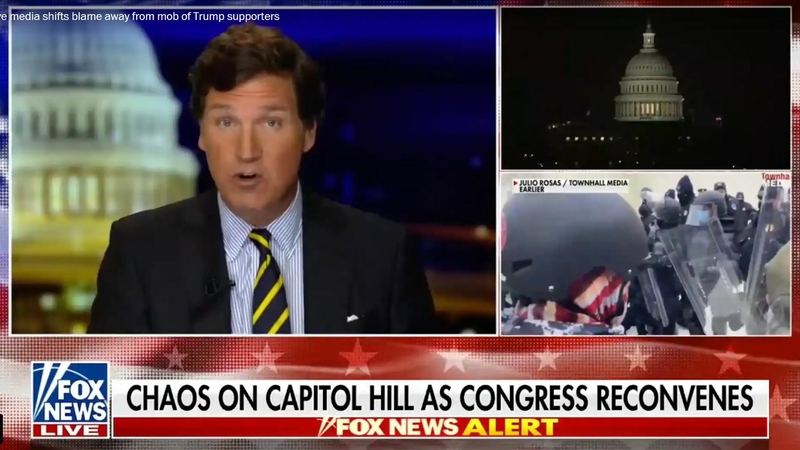
Fox News host Laura Ingraham said Wednesday that the rioters “were likely not all Trump supporters.” She alluded to unspecified “reports” of involvement by antifa and claimed that the insurrectionists’ wardrobe choices were suspicious.
On Newsmax, a cable channel that has won favor with the president for endorsing his baseless claims of a stolen election, Trump supporter and MyPillow founder Mike Lindell claimed “there were probably some undercover antifa people that dressed as Trump people.”
Amnesty International has condemned US President Donald Trump for instigating the violent storming of the Capitol building on Wednesday, calling it a “moment of reckoning for the United States”.
At least four people died as rioters invaded Congress in Washington, shortly after Trump held a rally nearby to protest results of the presidential election won by his Democrat rival Joe Biden.
In his speech, subsequent audio recording and tweets, Trump continued to reject the US election results and incite his supporters – leading thousands to storm and breach the US Capitol, said the rights watchdog.
“President Trump’s refusal to facilitate a peaceful transfer of power has put human rights, public safety and the rule of law at grave risk in the United States,” said Amnesty International USA’s executive director Bob Goodfellow.
“The president’s embrace of white supremacist groups and extremists has further fanned the flames of the chaos and violence we witnessed [on Wednesday],” said Goodfellow. He called on all US officials to respect and protect human rights, including the right to be free from violence, intimidation and racism.
“Across the world, we have witnessed the dire consequences of government officials who spread false information and incite racist or political violence to stay in power. The world is watching, and so are our more than 10 million supporters and members.”
Amnesty said Trump has repeatedly encouraged violence and disorder by his supporters. “These are not the actions of a leader, but an instigator. All public officials must condemn the president’s words,” said Goodfellow.
Trump promises ‘orderly transition’ to Biden administration, one day after inciting mob to storm Capitol
InternationalJan 07. 2021President Donald Trump leaves the White House on his way to a rally in Georgia on Monday, Jan. 4, 2021. MUST CREDIT: Washington Post photo by Bill O’Leary
By The Washington Post · Antonia Noori Farzan
President Donald Trump early Thursday pledged “an orderly transition on January 20,” acknowledging for the first time that he will be leaving office in less than two weeks but stopping short of conceding to President-elect Joe Biden.
The pledge for an orderly passage of power came just one day after a pro-Trump mob, incited by the president, stormed the Capitol and disrupted the certification of Biden’s victory. With Trump still suspended from Twitter over his role in the unrest, he issued the statement through spokesman Dan Scavino minutes after Vice President Pence affirmed that Biden will be president.
“Even though I totally disagree with the outcome of the election, and the facts bear me out, nevertheless there will be an orderly transition on January 20,” said Trump, echoing his baseless claims that the results were not legitimate. “I have always said we would continue our fight to ensure that only legal votes were counted. While this represents the end of the greatest first term in presidential history, it’s only the beginning of our fight to Make America Great Again.”
Trump’s acknowledgment that his presidency will soon end followed a day like no other in modern history, which saw Trump supporters scaling walls and pushing their way past law enforcement officers to force their way into the U.S. Capitol.
The tallying of electoral college votes, ordinarily an uneventful affair, had to be put on hold while lawmakers fled to safely. By the time Trump told the mob to “go home now,” one woman had been fatally shot and multiple police officers had been injured. Three others in the mob died of unspecified medical emergencies.
The violent riot prompted some Republican senators who had planned to challenge the election results to change heart, and tallying the electoral college votes went relatively smoothly after a joint session of the House and Senate resumed late Wednesday. Though some GOP senators disputed election results from Pennsylvania and Arizona, both challenges failed and Vice President Mike Pence officially affirmed Biden’s win in the early hours of Thursday morning.
“The announcement of the state of the vote by the president of the Senate shall be deemed a sufficient declaration as persons elected president and vice president of the United States,” Pence said.
As critics pointed out, Trump’s statement following the electoral college vote notably failed to congratulate or even mention Biden.
Trump has repeatedly refused to concede the election over the past two months, at times suggesting that he might remain in the White House after Jan. 20. Biden and Vice President-elect Kamala Harris will be inaugurated on Jan. 20 at noon.
Senior officials have discussed removing Trump under the 25th Amendment. Here’s how that could work.
InternationalJan 07. 2021Vice President Mike Pence. MUST CREDIT: Washington Post photo by Melina Mara.
By The Washington Post · Tim Elfrink
Hours after a pro-Trump mob incited by the president stormed the Capitol, dozens of Democrats demanded that he be removed under the 25th Amendment – an unprecedented option being seriously discussed late Wednesday by senior administration officials alarmed at Trump’s conduct.
The amendment, which can remove a president “unable to discharge the powers and duties of his office,” has only been used briefly for medical events, as when President Ronald Reagan underwent colon surgery.
But some politicians and experts argue that Trump has met those standards by encouraging violence through his incendiary rhetoric and by refusing to accept the reality of his defeat.
“President Trump revealed that he is not mentally sound and is unable to process and accept the results of the 2020 election,” Democratic members of the House Judiciary Committee wrote to Vice President Mike Pence on Wednesday. “President Trump’s willingness to invite violence and social unrest to overturn the election results by force clearly meet this standard.”
Although the amendment has never been used in these circumstances, some experts say it could provide a faster and more realistic path than impeachment to quickly remove Trump from power. That would all depend, though, on the backing of Pence and the Cabinet.
So how would it work?
The amendment, which was ratified in 1967 after concerns about the order of succession after John F. Kennedy’s assassination, would allow Pence and a majority of the Cabinet to declare that Trump is unfit for duty. They would then send a letter to Congress about their decision.
At that moment, said Erwin Chemerinsky, dean of the University of California at Berkeley’s School of Law, Pence would assume the powers of the presidency. If Trump were in a coma or otherwise incapacitated, Pence would keep that power indefinitely.
But the amendment also gives Trump the power to object by writing his own letter to Congress – an action that would immediately restore his powers. If that happened, though, Pence and the full Cabinet would have four days overrule him. (There’s no agreement on who would be in power for those four days, The Washington Post’s Philip Bump reported. The amendment is unclear and would likely have to be tested in court.)
If Pence and the Cabinet did overrule Trump, Congress would be called on to decide the dispute. Pence would remain in power in the meantime.
That’s where the timing gets interesting. The amendment orders Congress to convene within 48 hours to decide on whether to boot the president – but then it gives lawmakers 21 days to make a decision.
Affirming Pence’s move would require a two-thirds majority of both the House and Senate. That’s an unlikely result, considering a majority of House Republicans voted early on Thursday to back Trump’s electoral objections.
But if the House and Senate leadership simply stalled the vote, they could effectively run out the clock on Trump’s term, leaving Pence in charge until President-elect Joe Biden’s inauguration on Jan. 20, Chemerinsky said.
“Pence would be the president for that time,” he said.
Impeachment, by contrast, would be extraordinarily difficult to push through the House and a Senate trial by Jan. 20, Chemerinsky said. (Unlike impeachment, the 25th Amendment can’t actually remove Trump from office – instead, it would delegate his powers to Pence.)
That’s not to say that Pence or the Cabinet would ever embrace removing Trump under the 25th Amendment. While senior aides did discuss the option on Wednesday, those talks were informal and no concrete plans were in the works, The Washington Post reported.
If the aim is to avoid further violence and turmoil, Pence and the Cabinet would have to weigh whether removing Trump early would actually accomplish that, Chemerinsky said.
“Do they perceive Trump as so dangerous in the next 13 days that he needs to be gone immediately?” Chemerinsky said. “Or do they think this would just divide the country even further and make him into a martyr?”

 Supporters of President Trump scaled the walls on the Senate side of the US Capitol and gained access inside the building during a massive protest in Washington on Jan. 6, 2021. MUST CREDIT: Washington Post photo by Michael Robinson Chavez.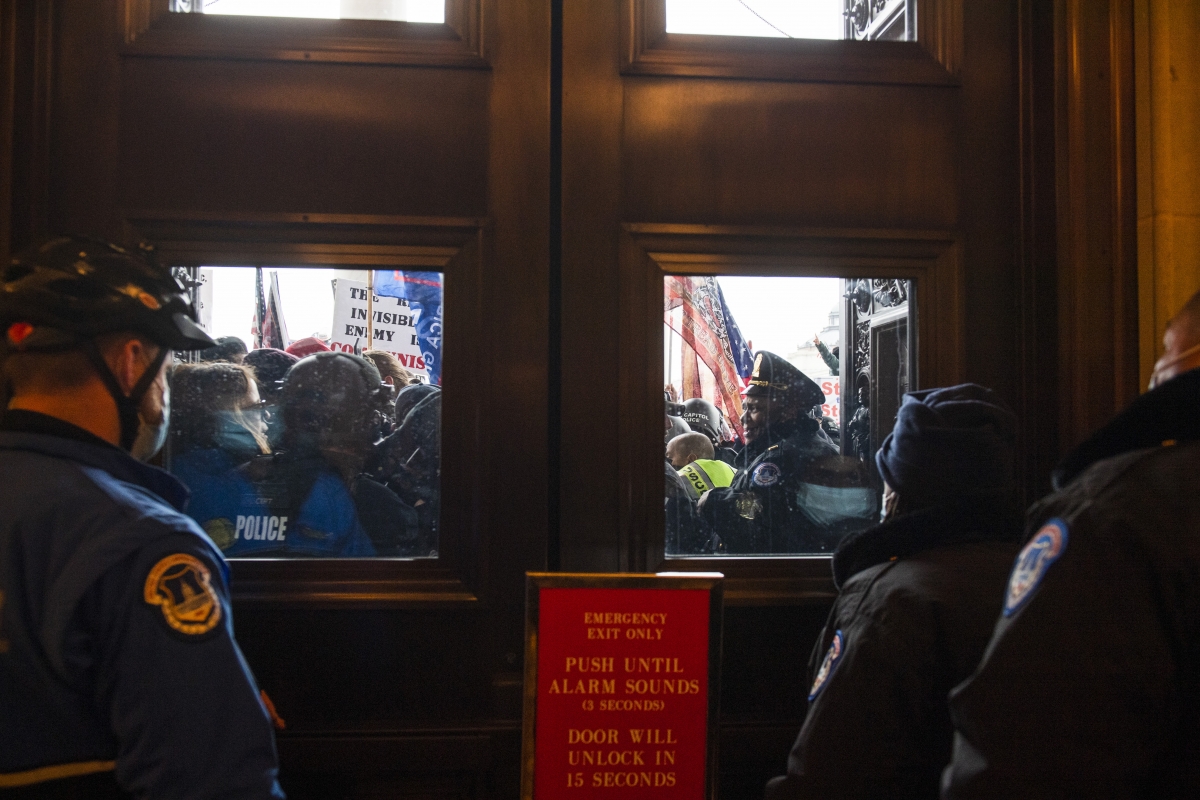
 Supporters of President Donald Trump riot at the U.S. Capitol on Jan. 6, 2021. MUST CREDIT: Photo for The Washington Post by Astrid Riecken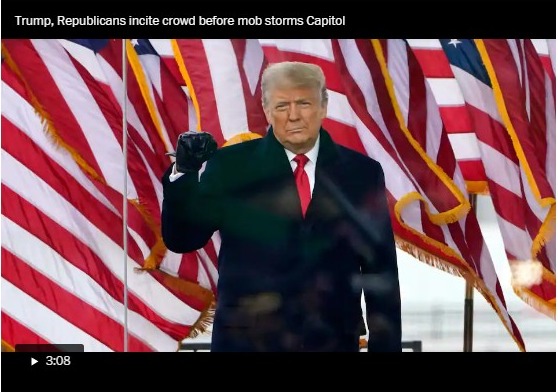
 Tear gas is fired at supporters of President Donald Trump who stormed the U.S. Capitol on Jan. 6, 2021. MUST CREDIT: Photo for The Washington Post by Evelyn Hockstein


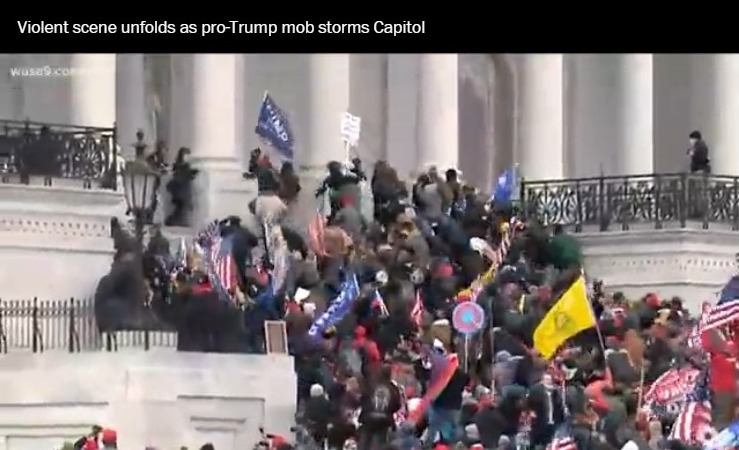



 President Donald Trump leaves the White House on his way to a rally in Georgia on Monday, Jan. 4, 2021. MUST CREDIT: Washington Post photo by Bill O’Leary
 Vice President Mike Pence. MUST CREDIT: Washington Post photo by Melina Mara.
