Democrats, Republicans blame Trump for inciting ‘coup’ as mob storms Capitol
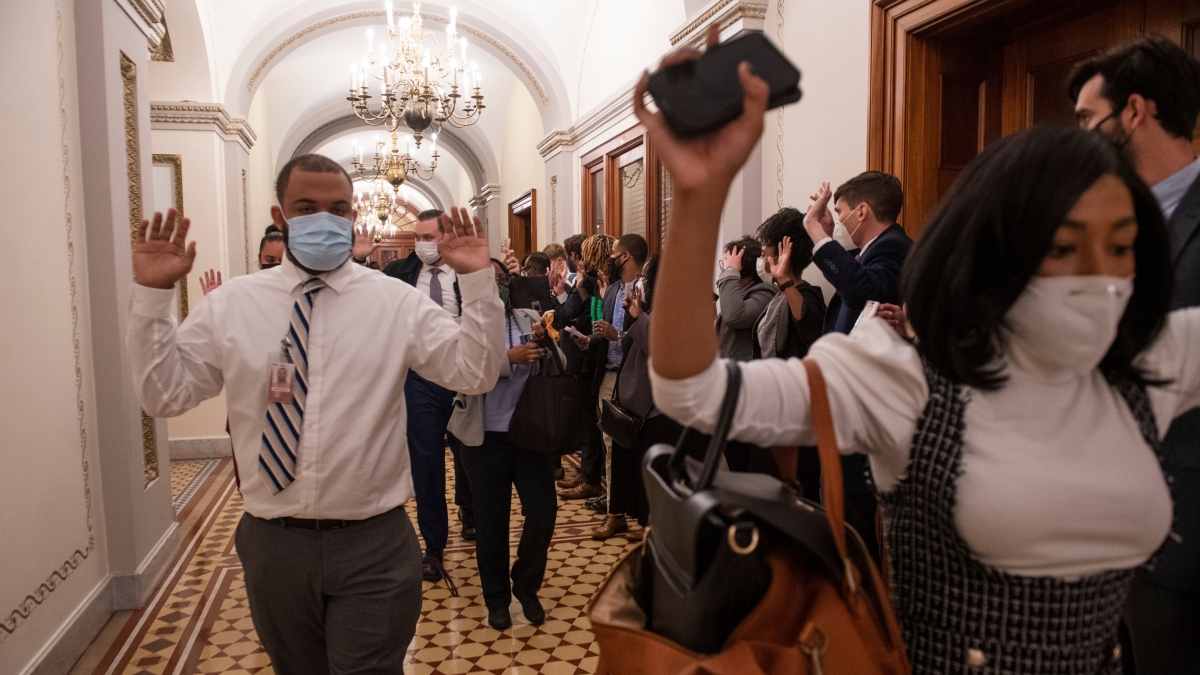
InternationalJan 07. 2021Congressional staff members are ushered out of the Capitol Congressional staff members are evacuated Wednesday after rioters breached the U.S. Capitol, interrupting a joint congressional session to count the electoral college vote in Washington. MUST CREDIT: Photo for The Washington Post by Amanda Voisard
By The Washington Post · Colby Itkowitz, Paulina Firozi
WASHINGTON – Congressional Democrats and some Republicans on Wednesday accused President Donald Trump of inciting a coup after an angry mob of his supporters stormed the U.S. Capitol, interrupted the proceedings and triggered an evacuation of lawmakers.
Throngs of pro-Trump rioters busted through security barricades, breaking windows, climbing on rafters, ripping down American flags and roaming the Senate chamber. Lawmakers were told to grab gas masks as police deployed tear gas inside the Rotunda, the ornate area under the dome that connects the House and the Senate.
Rep. Adam Kinzinger, R-Ill., called it a “coup attempt.” He later commented directly to Trump: “You are not protecting the country. Where is the DC guard? You are done and your legacy will be a disaster.”
Sen. Ben Sasse, R-Neb., assailed Trump.
“Today, the United States Capitol – the world’s greatest symbol of self-government – was ransacked while the leader of the free world cowered behind his keyboard – tweeting against his Vice President for fulfilling the duties of his oath to the Constitution,” the senator said in a statement. “Lies have consequences. This violence was the inevitable and ugly outcome of the President’s addiction to constantly stoking division.”
Rep. Don Bacon, R-Neb., blamed Trump’s rhetoric, saying, “our president should have given a much more clear tone. Leaders create calmness and direction; they don’t inspire people to get angry and do the things that they’re doing.”
He called on the president to “stand up and be a better leader on this, because he has not been in my view . . .. He needs to respect the peaceful transition of power.”
Sen. Mitt Romney, R-Utah, as he was led away to safety, told a New York Times reporter, “This is what the president has caused today, this insurrection.”
Sen. Lisa Murkowski, R-Alaska, implored Trump to “tell your supporters to stop the violence. Stop the assault. Now.”
Former congressman Will Hurd, R-Tex., who retired last year over his frustrations with Trump’s takeover of the party, called it “domestic terrorism.”
“This should be treated as a coup led by a president that will not be peacefully removed from power,” Hurd tweeted.
Democrats, some tweeting from hiding places within the Capitol, reacted passionately to the chaos around them.
“On August 24, 1814, the British stormed our Capitol and set fire to it,” tweeted Sen. Cory Booker, D-N.J. “Now the Capitol has again been breached and sieged. Donald Trump incited this. He is responsible for this. And he is silent as this tragic moment continues.”
Trump eventually released a one-minute taped statement telling his supporters to “go home now.” Still, he continued his baseless claim that the presidential election was “fraudulent.”
“I know your pain, I know your hurt. We had an election that was stolen from us. It was a landslide election and everyone knows it – especially the other side,” he said, reiterating the same false allegations that have incensed his supporters. “But you have to go home now. We have to have peace. We have to have law and order, we have to respect our great people in law and order. We don’t want anybody hurt.”
Still, many saw Trump’s statement as falling short of his responsibility as president to quell the unrest.
Rep. Gerald E. Connolly, D-Va., accused Trump of urging “the Proud Boys to show up today in a barely veiled invite to disrupt the count. You’d be blind to not see this coming. And now it’s time to end it.”
“This is thuggery at its best,” tweeted Rep. Adriano Espaillat, D-N.Y. “And the flames are being stoked by the person currently in our #WhiteHouse. Donald Trump is responsible for this. #TrumpThugs.”
In a statement, Sen. Josh Hawley, R-Mo., said the “violence must end.”
“[T]hose who attacked police and broke the law must be prosecuted, and Congress must get back to work and finish its job,” he added.
Meanwhile, Rep. Joaquin Castro, D-Tex., said Sen. Ted Cruz, R-Tex., and Hawley – who was the first senator to announce that he would object to certifying Biden’s electoral college victory – should “immediately resign.”
Trump will auction drilling rights to Arctic National Wildlife Refuge
InternationalJan 07. 2021The coastal plain of the Arctic National Wildlife Refuge, with the Brooks Range as a backdrop. MUST CREDIT: U.S. Fish & Wildlife Service photo
By The Washington Post · Juliet Eilperin, Steven Mufson
WASHINGTON – Trump administration officials will auction off oil and gas leases in Alaska’s Arctic National Wildlife Refuge on Wednesday, capping Republicans’ decades-long quest to drill in one of the nation’s most vast unspoiled wild places. The move marks one of the most significant environmental rollbacks the president has accomplished in his term.
But with low oil prices and an increasing number of banks saying they would not finance Arctic energy projects, major oil companies did not try to buy the leases. That left the state agency, Alaska Industrial Development and Export Authority, as the main bidder. The agency put up all but two of the winning bids, which went to two small energy firms.
The sale of 11 tracts on 600,000 acres netted about $14 million, a tiny fraction of what Republicans initially predicted it would yield. Two of the bids were competitive.
Interior Deputy Secretary Kate MacGregor, who stood before a camera and read the bids out loud as she pulled them out of manila folders, announced at the start of the sale, “Today is truly historic.” Noting that many people had spent years working to open the refuge up to drilling, she said, “Thank you for your grit and for your determination.”
While a 2017 law compels the government to auction another several hundred thousand acres by the end of 2024, the incoming administration may be able to overturn that requirement if Democrats win control of the Senate in the wake of Tuesday’s runoff elections in Georgia.
A coalition of environmental and conservation groups tried to block the sale on the grounds that the administration had cut corners in crafting the leasing program, but U.S. District Judge Sharon Gleason denied their request for a preliminary injunction Tuesday evening.
Arctic National Wildlife Refuge, ANWR, Alaska
The Interior Department’s Bureau of Land Management will offer drilling rights to most of the refuge’s nearly 1.6 million-acre coastal plain, which attracts hundreds of thousands of migrating caribou and waterfowl each year and provides critical habitat for the Southern Beaufort Sea’s remaining polar bears. As sea ice on the Arctic Ocean abutting the refuge shrinks, the bears – threatened with extinction due to climate change – have been forced to spend more time on land. Federal scientists estimate that a third of the bears’ maternal dens lie within the area the administration has opened up for energy development.
The refuge has become a rallying point for Republicans and environmentalists alike, who have fought for 40 years over whether to tap into the fossil fuels lying beneath it. The government estimates there could be 7.7 billion barrels of recoverable oil on the coastal plain, though seismic surveys have not been conducted since the 1980s. The BLM is in the process of letting the Kaktovik Iñupiat Corporation conduct seismic tests there this winter.
The sale marks the culmination of President Donald Trump’s push to expand oil and gas drilling across the country, including in some of its most ecologically-sensitive areas. On Monday the BLM opened up an additional 7 million acres for leasing on the National Petroleum Reserve-Alaska, home to a critical calving area for tens of thousands of caribou and migratory feeding ground for hundreds of thousands of birds.
Trump officials predict that extracting oil from the relatively-pristine refuge, which supports 270 species, will require as many as four airstrips and major well pads, 175 miles of roads, vertical supports for pipelines, a seawater treatment plant and a barge landing and storage site. Drilling operations could last for nearly half-a-century.
A number of Alaska Native officials – including those in Kaktovik, which lies within the refuge’s boundaries and has surface land rights next to the coastal plain – back energy development on the refuge. The Arctic Slope Regional Corporation, which holds 92,000 acres of subsurface mineral rights, has also backed drilling there.
In a federal court hearing on Monday, where several environmental groups unsuccessfully sought a preliminary injunction to halt the lease sale, Tyson Kade – a lawyer for the North Slope Borough and Kaktovik – argued that such a move would cost Alaska Natives living in the region jobs and revenue. “The Court should consider the interests of the people who actually live on the North Slope and the coastal plain,” he said.
But the Gwich’in people, who have relied for centuries on the Porcupine caribou herd that migrates each year through the refuge, have joined with conservationists in opposing any drilling there.
Last month the BLM withdrew nearly 475,000 acres from the auction, citing public concerns about drilling’s impact on the caribou herd.
Gleason ruled Tuesday the auction could go forward because the Gwich’in and other plaintiffs – including the National Audubon Society and Natural Resources Defense Council “have not established that they are likely to suffer imminent irreparable harm” since drilling is not expected to commence immediately.
“We will fight to protect the lands that nourish the Porcupine caribou herd and our people, no matter how long it takes or where it takes us,” said Bernadette Demientieff, executive director of the Gwich’in Steering Committee, in a statement. “This administration steamrolled through a disrespectful, harmful, illegal leasing plan, and we plan to stop it. While that didn’t happen today, that day will come.”
Opponents have also launched a public campaign to deter major financial institutions and energy firms from investing in such a project. America’s six largest banks and Canada’s five biggest banks have all pledged not to back energy exploration on the refuge.
When asked whether Royal Dutch Shell planned to bid, the company’s chief executive Ben van Beurden said “Oh, no, no, no.” Shell bought leases in the Chukchi Sea off the northwest coast of Alaska in 2008 and spent more than $7 billion only to drill a dry hole in 2015.
“We believe that the oil and gas upstream part is a foundational piece of business for us, but we’re going to be very selective on where we want to create value,” van Beurden said. “And I can tell you at the North Slope or offshore Alaska, it’s not going to be part of that.”
One major bank said it had asked clients with assets in the region whether they planned to bid and they said absolutely not, according to the bank’s spokesman, who asked for anonymity to protect business relationships.
Anxiety about the possibility that no one would bid on the leases in the refuge prompted former governors Bill Walker and Frank Murkowski to write op-eds urging the state to place bids on the leases so that the state could sell or give the leases to oil companies to keep development moving. On Dec. 23, despite calls to spend the money elsewhere, the AIDA board voted to spend up to $20 million, enough to buy 800,000 acres at the $25 rock bottom minimum price.
While Congress projected in the Tax Cuts and Jobs Act 2017 that the lease program would raise $1.8 billion in revenue for the federal government, officials now say it will raise half that, and it could be even less. Justice Department lawyer Paul Turcke estimated Monday the sale would generate “many millions of dollars” split evenly between Alaska and the federal government.
There has been little competition for leases on the National Petroleum Reserve-Alaska, where companies have operated for years. More than 90% of the leases sold since 2012 received just a single bid. In eight of the past nine years, there was not a single competitive bid on the reserve.
President-elect Joe Biden has indicated he opposes any development on the refuge: On Tuesday a senior transition official who spoke on the condition of anonymity because he has yet to take office said of the auction “It is just a sham, and a poke in the eye.”
It remains unclear how much Biden can restrict drilling given the legal mandate to hold another auction by the end of 2024,though Democrats may be able to overturn this provision if they win both of Georgia’s Senate seats.
Drew Caputo, Earthjustice’s vice president of litigation for lands, wildlife and oceans, noted that the Bureau of Land Management is supposed to hold quarterly auctions on its lands but can defer them repeatedly.
“The 2017 tax law is way more prescriptive than BLM rules that cover oil and gas lease sales,” Caputo said, adding Biden will have “a binding obligation” to conduct a lease sale on the refuge by the end of his first term “unless the law is changed before then. That mandate is not an excuse for other legal violations, like inadequate environmental analysis.”
There are four separate lawsuits challenging the administration’s environmental analysis of the proposed drilling program.
Frank Macchiarola, senior vice president of policy, economics and regulatory affairs for the American Petroleum Institute, said in an email that the environmental review at issue “confirmed the potential to develop the area safely, and any company that chooses to invest will be held to the world’s highest environmental standards.”
“Our members are laser-focused on continuing safe and environmentally sound energy production, and we will work with the Biden administration to support policies that balance U.S. energy leadership,” Macchiarola said.
The New York Stock Exchange said it will proceed with a White House order to cease trading of three Chinese telecoms, the latest in a string of recent blows for Chinese companies dealt by the U.S. government.
It follows President Donald Trump’s late Tuesday move to ban more Chinese mobile apps in the United States, including Alipay and WeChat Pay.
The NYSE said Wednesday it will delist the shares of China Telecom, China Mobile and China Unicom on Jan. 11, to comply with a Nov. 12 executive order banning U.S. investment in companies that the Trump administration says support China’s military.
The companies couldn’t immediately be reached for comment. The NYSE has flip-flopped on whether to remove the shares from trading. On Dec. 31 it said it would delist the companies, but then on Monday said it was reversing course after consulting with the Treasury Department.
China hawks in Congress, including Sen. Marco Rubio, R-Fla., slammed the stock exchange for retaining the share listings. In its latest announcement, the NYSE said it would move forward with the delisting after receiving new guidance from Treasury.
The Treasury Department didn’t immediately respond to a request for comment.
The news came hours after Trump issued a separate executive order to ban transactions in the United States with eight Chinese mobile apps. The list includes Alipay and WeChat pay, which are mobile payment apps accepted by some U.S. retailers, largely to cater to Chinese tourists and visitors. Their corporate owners, Ant Group and Tencent, respectively, did not offer any immediate comment on the order.
The order will take effect in 45 days, after the start of the Biden administration, leaving its fate unclear.
The order follows a similar ban Trump began pursuing in August, when he prohibited transactions with the short-form video app TikTok and the social networking app WeChat, calling them national security threats. Federal courts so far have blocked those bans from taking effect as they hear lawsuits from the apps’ supporters.
The new order refers to the eight additional apps as security threats, saying that they “automatically capture vast swaths of information from millions of users in the United States, including sensitive personally identifiable information and private information, which would allow [China] and [the Chinese Communist Party] access to Americans’ personal and proprietary information.”
The order does not detail the types of transactions that will be banned. Instead, it instructs the Commerce Department to define in coming weeks the specific transactions.
Legal experts have previously said that the transaction bans could include barring downloads of the apps from the Apple and Google app stores or forbidding all financial transactions.
The other apps included in the order are CamScanner, an app that turns a mobile phone into a document scanner, and QQ Wallet, SHAREit, Tencent QQ, VMate and WPS Office.
CamScanner had 4.4 million downloads in the Apple and Google app stores last year in the United States, according to analytics provider Sensor Tower. Alipay had 207,000 downloads.
The targeting of Alipay marks another headache for Ant Group’s controlling shareholder, Jack Ma, the Chinese tech entrepreneur who has recently clashed with Chinese authorities.
U.S. private jobs post first decline since april, ADP data show
InternationalJan 07. 2021Commuters wearing protective masks walk through Penn Station in New York on Aug. 3, 2020. MUST CREDIT: Bloomberg photo by Michael Nagle.
By Syndication Washington Post, Bloomberg · Katia Dmitrieva
The number of employees at U.S. businesses unexpectedly declined in December for the first time since April, underscoring the immediate economic impact of mounting coronavirus cases across the country.
Company payrolls decreased by 123,000 during the month, concentrated in leisure and hospitality and retail, according to ADP Research Institute data released Wednesday. The prior month was revised down slightly to a 304,000 gain.
The median projection in a Bloomberg survey of economists called for an increase of 75,000 in December. Private payrolls remain almost 10 million short of pre-pandemic levels.
The data indicate the ongoing labor market fallout from the virus, which is only expected to worsen this winter as cases of Covid-19 increase. Infections in the U.S. South have already skyrocketed beyond other regional records and several states have extended virus-related restrictions, including California and Hawaii.
“The underlying story here is the impact on the services sector from the patchwork of anti-Covid measures imposed across the country in the fourth quarter, alongside people choosing to reduce their social interactions in the face of soaring infections,” Ian Shepherdson, chief economist at Pantheon Macroeconomics Ltd, said in a note.
S&P 500 futures remained lower after the figures as traders assessed the Georgia runoff for two Senate seats. The yield on the benchmark 10-year Treasury note held above 1% and the dollar fell.
The figures also precede the monthly jobs report on Friday, which is projected to show weaker payroll growth. Economists forecast that the government’s measure of private employment increased by just 50,000, with some projecting an outright decline for the month.
The ADP data show that service employment fell 105,000, led by a 58,000 decrease in leisure and hospitality payrolls and a 50,000 drop within trade, transportation and utilities. Payrolls at goods producers decreased 18,000 as factory jobs declined.
The overall drop was also concentrated in businesses employing more than 1,000 workers. Small firms shed 13,000 employees during the month.
ADP’s payroll data represent firms employing nearly 26 million workers in the U.S.
InternationalJan 07. 2021Security officers point weapons at a House chamber door as a mob of rioters storms the Capitol on Wednesday, Jan. 6, 2021. MUST CREDIT: Washington Post photo by Bill O’Leary
By The Washington Post · The Washington Post · NATIONAL, POLITICS, COURTSLAW, CONGRESS, NATIONAL-SECURITY, WHITEHOUSE
A mob of rioters pushed past police and into the U.S. Capitol on Wednesday as Congress debated the certification of the presidential election. A person was shot and later died, and District of Columbia Mayor Muriel Bowser, a Democrat, imposed a 6 p.m. curfew.
Capitol police direct members and staffers out of the House as a mob of rioters storms the Capitol on Wednesday, Jan. 6, 2021. MUST CREDIT: Washington Post photo by Bill O’Leary
Police cleared the Capitol interior about 6 p.m. and were working to move people away from the grounds Wednesday night.
These are photos from the scene.
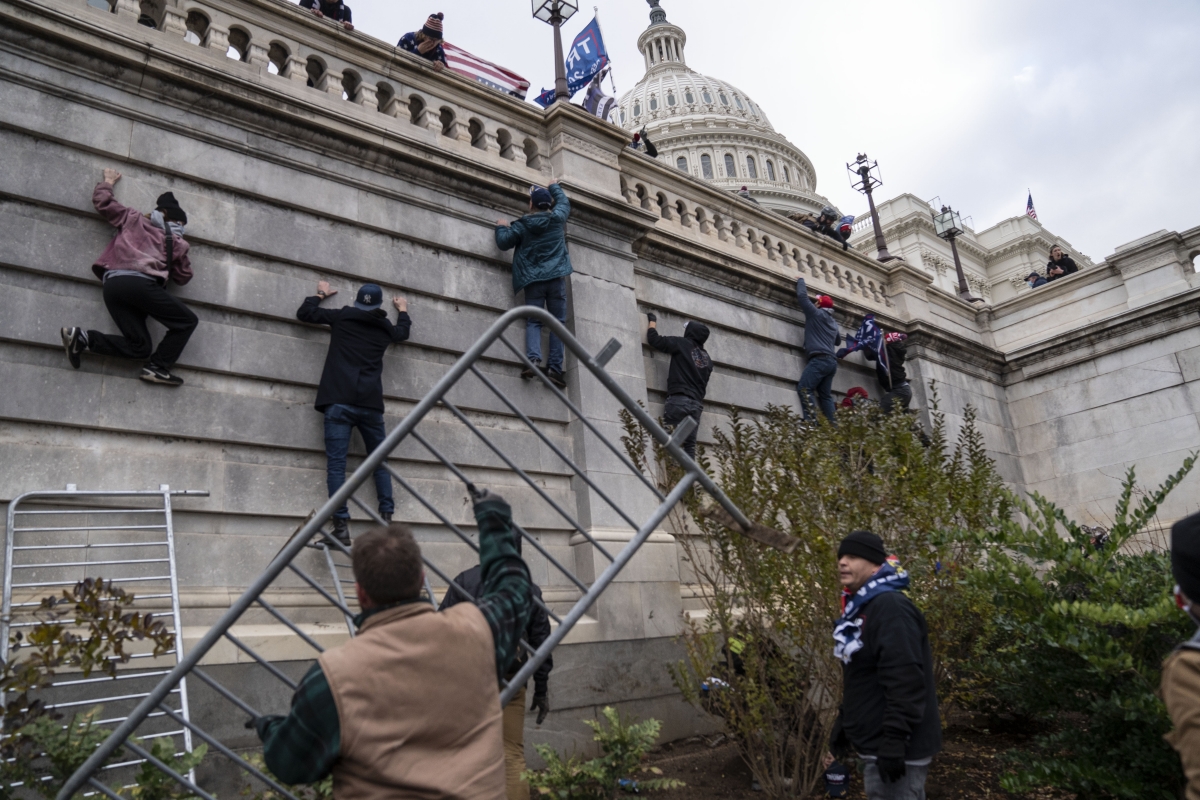
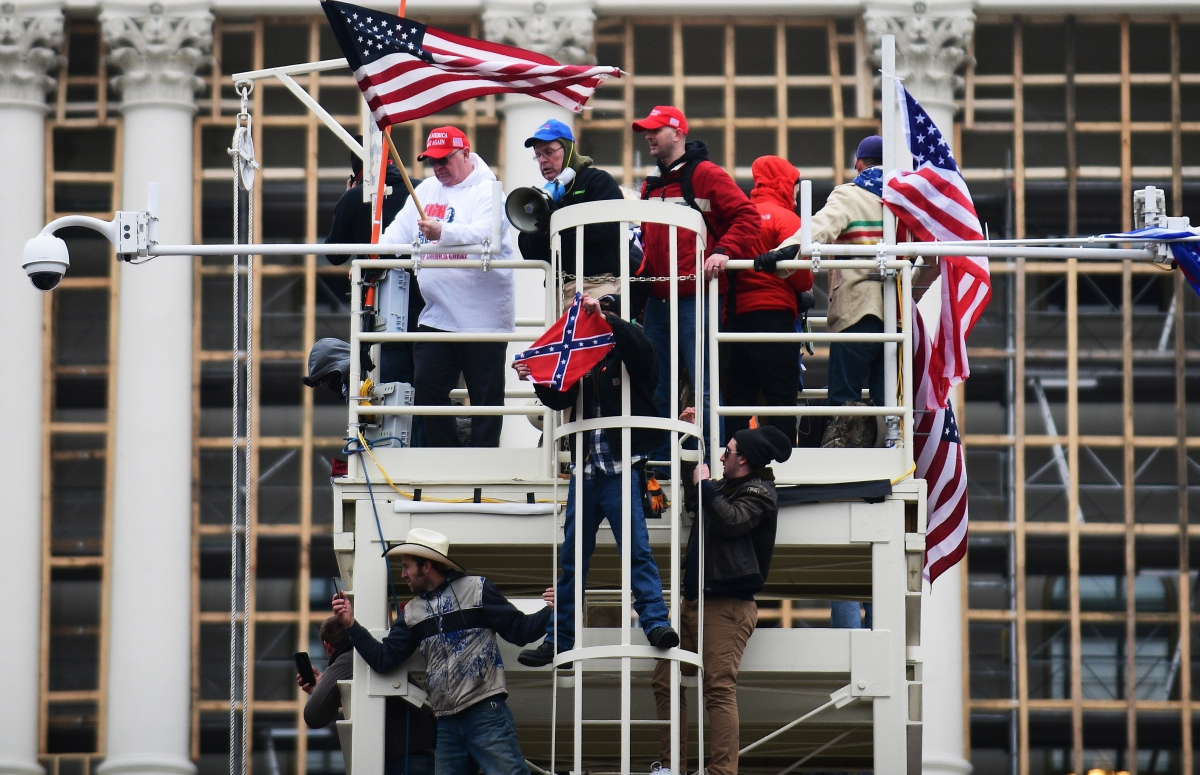
Trump supporters scale the walls on the Senate side of the Capitol on Wednesday, Jan. 6, 2021. MUST CREDIT: Washington Post photo by Michael Robinson Chavez—
People stand outside the Capitol on Wednesday, Jan. 6, 2021. MUST CREDIT: Photo for The Washington Post by Amanda Voisard
—
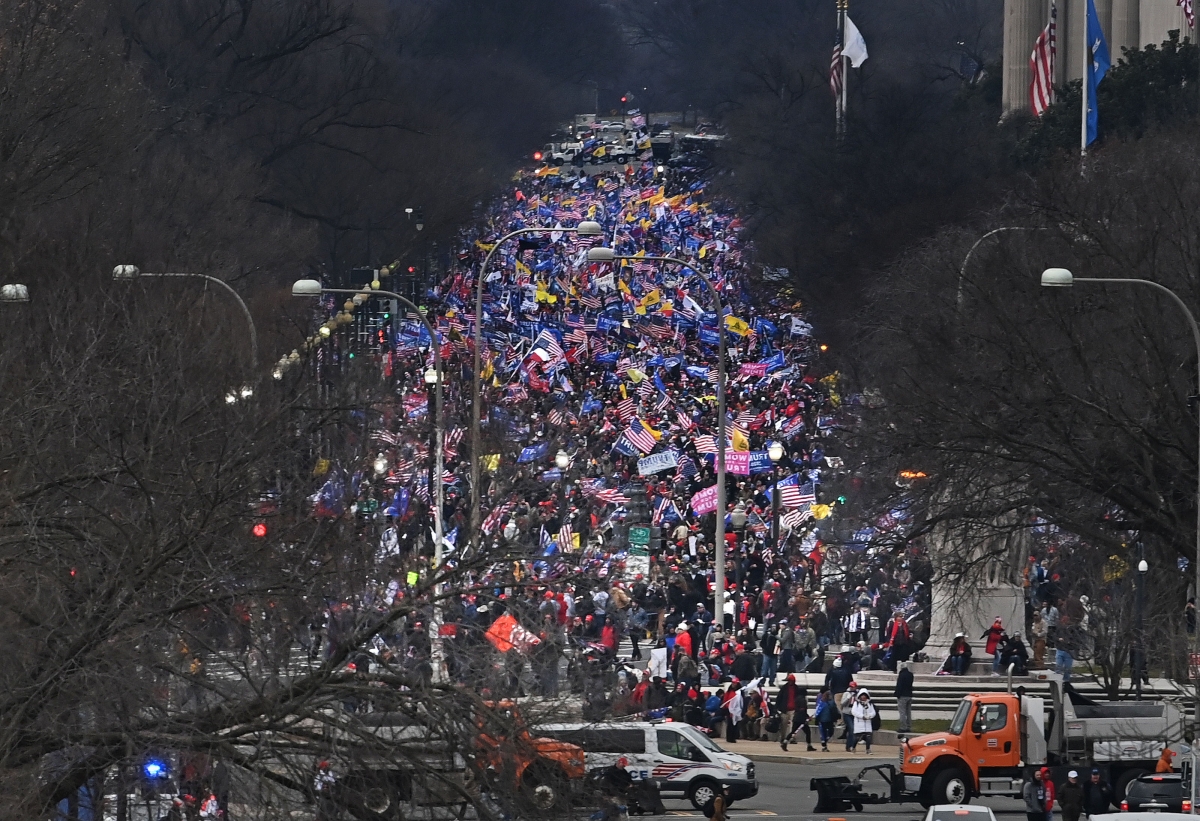
Trump supporters make their way up Constitution Avenue en route to the Capitol after the president gave a speech at the White House Ellipse on Wednesday, Jan. 6, 2021. MUST CREDIT: Washington Post photo by Michael S. Williamson
—
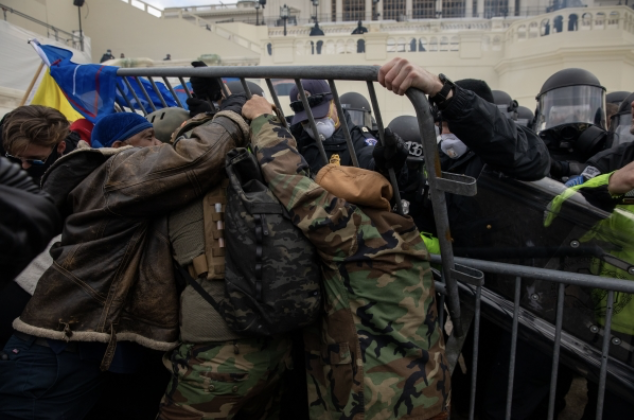
A mob of rioters push into Capitol police on Wednesday, Jan. 6, 2021. MUST CREDIT: Washington Post photo by Michael Robinson Chavez
—
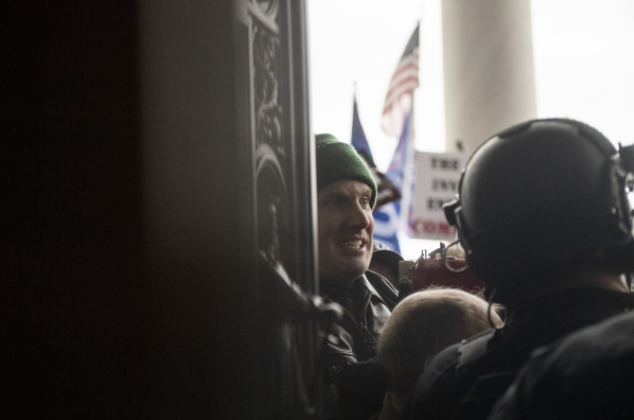
A mob of rioters bursts through a door at the Capitol on Wednesday, Jan. 6, 2021. MUST CREDIT: Photo for The Washington Post by Amanda Voisard
—
Congressional staff members are ushered out of the Capitol after a mob of rioters breached the building on Wednesday, Jan. 6, 2021. MUST CREDIT: Photo for The Washington Post by Amanda Voisard
—
A mob riots at the U.S. Capitol in support of President Donald Trump on Wednesday, Jan. 6, 2021. MUST CREDIT: Photo for The Washington Post by Astrid Reicken
—
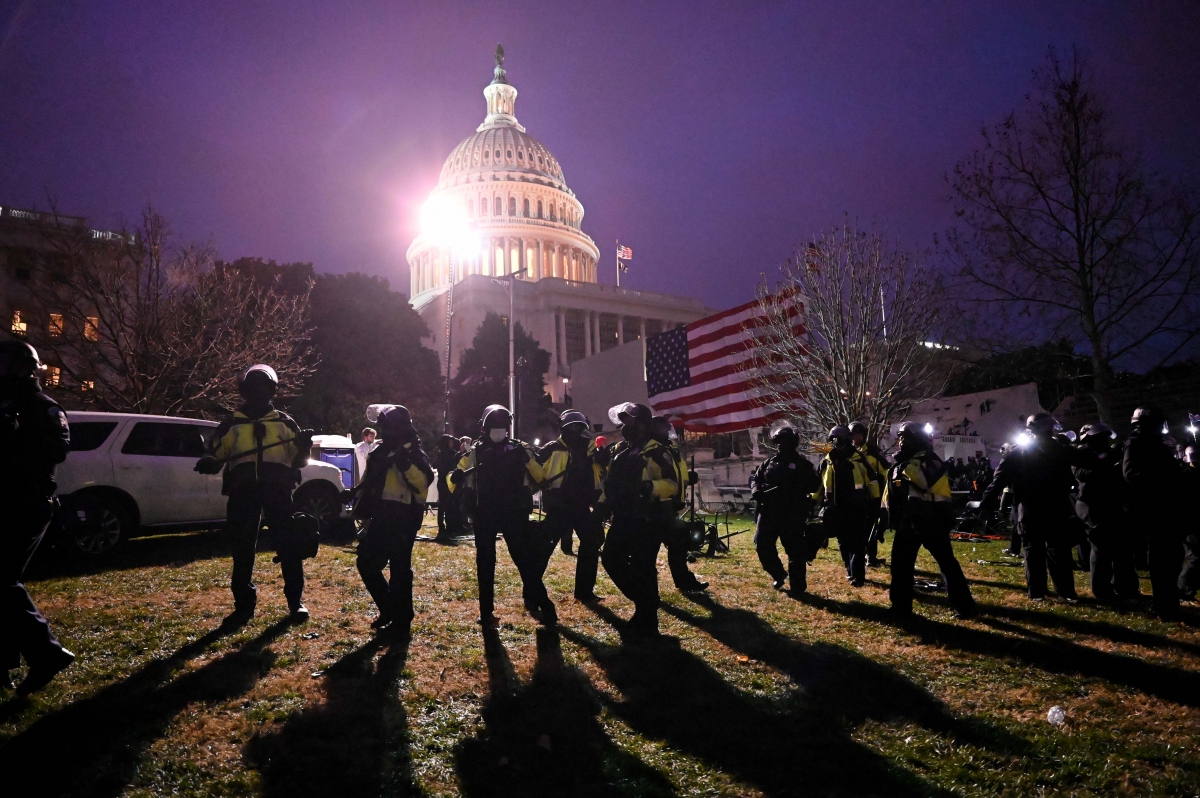
Police clear the U.S. Capitol grounds after a pro-Trump mob rioted there on Wednesday, Jan. 6, 2021. MUST CREDIT: Washington Post photo by Katherine Frey
Woman dies after being shot during mob rioting at Capitol; explosive devices found near DNC, RNC headquarters
InternationalJan 07. 2021Supporters of President Trump stand outside the east side of the Capitol. MUST CREDIT: Washington Post photo by Marissa J. Lang
By The Washington Post · Rebecca Tan, Peter Jamison, Rachel Chason, Marissa J. Lang, John Woodrow Cox
WASHINGTON – As President Donald Trump told a sprawling crowd outside the White House that they should never accept defeat, hundreds of his supporters stormed the U.S. Capitol in what amounted to an attempted coup that they hoped would overturn the election he lost.
The chaotic, violent scene – all of it incited by the president’s incendiary language – was like none other in modern American history, bringing to a sudden halt the congressional certification of Joe Biden’s free and fair electoral victory.
With poles bearing blue Trump flags, the mob bashed through Capitol doors and windows, forcing their way past police officers unprepared for the onslaught. Lawmakers were ushered away shortly before an armed standoff at the House doors. Canisters of tear gas were fired across the Rotunda’s white marble floor, and on the steps outside the building, rioters flew Confederate flags. At least one person, a woman, was shot and rushed to an ambulance outside the building. She later died.
“USA! USA!” chanted the would-be saboteurs of a 244-year-old democracy.
The Senate halted its proceedings, and the House doors were closed. In a notification, U.S. Capitol police said no entry or exit was permitted in the buildings as officers struggled to regain control. “Stay away from exterior windows, doors. If outside, seek cover,” police warned.
All 1,100 members of the D.C. National Guard were activated, and Mayor Muriel Bowser, a Democrat, imposed a citywide curfew. From 6 p.m. Wednesday to 6 a.m. Thursday, Bowser said no one other than essential personnel would be allowed outdoors in the city. The governors of Maryland and Virginia also activated state troopers and members of their Guards to help respond to the situation.
What appeared to be two realistic-looking homemade bombs were found near the Republican National Committee headquarters and the Democratic National Committee headquarters in downtown Washington, officials said, adding to the danger and disorder.
Rachel Ethridge and Mike Wyatt, who live in Missouri, stand near the Washington Monument on Wednesday. MUST CREDIT: Washington Post photo by Emily Davies
The suspected bomb outside the RNC was found next to a trash container, and was a metal pipe with metal end caps, with wires running from inside the pipe to a plastic kitchen timer, according to people familiar with the matter who spoke on the condition of anonymity to discuss ongoing investigations.
FBI explosives experts responded to both devices, and they were “rendered safe by the FBI and our law enforcement partners,” the bureau said in a statement. “The investigation is ongoing.”
In a statement, the RNC called the suspicious package outside their building an “explosive device that was successfully detonated.”
At 6 p.m., police were pushing the mob away from the Capitol and authorities said the interior of the Capitol had been secured, fully cleared of rioters.
Police announced to those still outside the Capitol shortly after 6 p.m., “A curfew is now in effect. All individuals must leave the U.S. Capitol grounds or be subject to arrest.” Hundreds of people slowly walked toward the mall as police in riot gear marched forward.
Scattered catcalls and curses met the police advance. “We’ll be back, traitors,” a man yelled. Chants of “U-S-A” continued to break out as the rioters dispersed.
Supporters of President Donald Trump gather near the Washington Monument on Wednesday. MUST CREDIT: Washington Post photo by Matt McClain
Protesters were far outnumbered by law enforcement, whom one man on a loudspeaker blamed for starting “the United States civil war.” “This is China,” said one man leaving the grounds, echoing shouts of “Tiananmen Square” that came when police cleared the grounds.
The mob had arrived hours earlier, charging past the metal barricades on the property’s outer edge. Hundreds, then thousands, followed them. Some scaled the Capitol’s walls to reach the entrances; others climbed over one another.
On the building’s east side, police initially pushed the pro-Trump demonstrators back, but were soon overpowered and fell back to the foot of the main steps. Within a half-hour, fights broke out again, and police retreated to the top of the steps as screaming Trump supporters surged closer. After the police perimeters were breached, the elated crowd began to sing the national anthem.
For an hour, they banged on the doors, chanting, “Let us in! Let us in!” Police inside fired pepper balls and smoke bombs into the crowd but failed to turn them away. After each volley, the rioters, who were mostly White men, would cluster around the doors again, yelling, arguing, pledging revolution.
Dozens soon broke their way inside, where they smashed windows and vandalized offices.
“MURDER THE MEDIA,” read a message written on one door.
“WE WILL NOT BACK DOWN,” read another left in House Speaker Nancy Pelosi’s office.
Just before 3 p.m., Trump supporters began running out of the southeastern entrance.
“They shot a girl!” someone yelled.
A supporter of President Donald Trump walks near the White House on Wednesday. MUST CREDIT: Washington Post photo by Matt McClain
A team of paramedics with a gurney soon arrived and a Capitol police officer stepped aside to let them pass. “White female, shot in the shoulder,” the officer said as they hurried past. They emerged minutes later.
On the gurney was a woman in jeans, gazing vacantly to one side, her torso and face covered in blood. As the gurney was loaded into the back of the ambulance, pro-Trump protesters swarmed around it, screaming, “Murderers!”
Capitol police officers with long guns pushed them back, and the ambulance drove off.
The woman’s name was not released.
Dustin Sternbeck, spokesman for the District of Columbia police, said Wednesday evening that the woman had died. He provided no further information as to the circumstances of the shooting.
At 3:30 p.m., more law enforcement in riot gear arrived at the Capitol.
“Traitors,” Trump supporters shouted. “What’s your oath?”
Biden condemned what he called an “unprecedented assault” on American democracy, “unlike anything we’ve seen in modern times.”
“This is not dissent. It’s disorder. It’s chaos,” he said. “It borders on sedition, and it must end now.”
For hours, the president made little effort to quell the violence he had instigated, sharing a video at 4:17 p.m. in which he told people to “go home” – while continuing to promote the lie that he had won the election.
“We love you,” he told them. “You’re very special.”
Those who made it inside the Capitol took on a celebrity status when they came back out. A woman who said she had footage on her phone of Capitol police pointing guns at rioters was circled by dozens who wanted to see it. People traded what information they had about the woman who was shot inside. Some called her a “martyr.”
After she was taken away, the mood soured, though many remained joyous. “We’re making history,” one woman said as she strolled down Independence Avenue with friends.
Beneath streaming flags, including some that read “F— Biden” and that depicted Trump as the movie character Rambo, people loudly exhorted Jesus and chanted “USA.”
Many called friends and family and took videos.
“We weren’t violent before, but we are now,” a middle-aged White man said, talking into his cellphone. “There’s no going back.”
Their compatriots online celebrated the chaos, cheering the violence across a wide array of social media sites and calling for bloodshed in the days ahead.
Supporters of President Donald Trump gather Wednesday near the White House with a spillover crowd extending to the Washington Monument. MUST CREDIT: Washington Post photo by Matt McClain
Trump, who has stoked fury over baseless allegations of a stolen election, called for calm on Twitter as the riots halted a process to tally the electoral college votes certifying Joe Biden as the next president of the United States. But Trump’s plea came in a video that was itself laced with disinformation, and he shared the message only after most of the mob had been pushed outside the building – leaving a trail of online and offline discord in his wake.
Facebook took the rare step of removing Trump’s video after hours of internal debate about his actions. Twitter similarly took aim at Trump, limiting the reach of a tweet he sent late Wednesday that again sent mixed messages about the events that had unfolded.
Some House Democrats on Wednesday night called for impeaching Trump for a second time in response to the siege of the Capitol they accuse him of fomenting.
“I am drawing up Articles of Impeachment,” Rep. Ilhan Omar, D-Minn., wrote on Twitter. “We can’t allow him to remain in office, it’s a matter of preserving our Republic.”
Omar is one of the most liberal Democrats in Congress. But the sentiment was shared in other corners of the party as well – including by members of House Speaker Nancy Pelosi’s, D-Calif., leadership team.
“This is outrageous, and the president caused it,” Rep. David Cicilline, D-R.I., said on Twitter. “We should impeach him tomorrow.”
Trump is scheduled to be in office for two more weeks, and has already been impeached once, in December 2019, on charges of abuse of power and obstruction of Congress related to his efforts to pressure the president of Ukraine to investigate the Biden family. But that waning tenure does not appear to have dissuaded Democrats from reserving impeachment as an option to be exercised in his final days in office.
Rep. Hakeem Jeffries, D-N.Y., the head of the House Democratic Caucus, was asked Wednesday by ABC News whether impeachment was an option. “When I say all options are on the table,” he answered, “I mean all options are on the table.”
World stunned by subversion of U.S. democracy after pro-Trump throng breaches Capitol
InternationalJan 07. 2021A mob riots at the U.S. Capitol in support of President Donald Trump on Wednesday, Jan. 6, 2021. MUST CREDIT: Photo for The Washington Post by Astrid Reicken
By The Washington Post · Siobhán O’Grady · NATIONAL, WORLD, POLITICS, WHITEHOUSE
WASHINGTON – The world watched with dismay as a surreal scene at the U.S. Capitol, like little else seen in its history, unfolded Wednesday.
Rioters loyal to President Donald Trump burst through police barricades and mobbed the building, disrupting at the 11th hour a vote to formalize Joe Biden’s presidential election victory. Shortly before the breach, Vice President Mike Pence had announced he would not reject the election results, as Trump had urged.
Many foreign observers, already glued to news of the final chapters of the election saga, reacted with alarm and grief, especially in allied countries that have looked to U.S. democracy for inspiration.
“The United States Congress has been the symbol of freedom and democracy around the world for centuries,” tweeted Armin Laschet, the leader of Germany’s most populous federal state. “The attacks on the Capitol by fanatical Trump supporters hurt every friend of the United States.”
Across much of Europe, top officials echoed these sentiments. British Prime Minister Boris Johnson called the scenes of chaos “disgraceful.” Canadian Prime Minister Justin Trudeau told Canada’s News 1130 radio station in Vancouver that his government is concerned and “following the situation minute by minute.”
“I think the American democratic institutions are strong, and hopefully everything will return to normal shortly,” he said.
The surge of reactions from allies and foreign observers illustrated one of the Trump era’s key consequences, which has become more apparent as it winds to a chaotic close: The beleaguered but persistent role of the United States as a model for democratic norms and institutions – in its own self-conception and in the eyes of friends – has been severely tarnished.
In the view of the world, the Trump era has provided no shortage of captivating spectacle, sometimes grim. Wednesday’s events went beyond that, into disconcerting territory: far-right attacks on democracy made literal.
The turmoil also gave an opening to countries with poor track records on human rights and democracy to lecture a superpower.
Turkey, a U.S. NATO ally that has been widely condemned for jailing thousands of critics, academics, journalists and artists and has seen its partnership with the United States deteriorate in recent years, called on “all parties in the U.S.A. to show restraint and common sense,” in a statement released by its foreign ministry.
In Venezuela – which has been embroiled in its own political and social crisis for years – Jorge Arreaza, foreign minister of authoritarian leader President Nicolas Maduro, issued a statement condemning “the political polarization and the spiral of violence that reflects the profound political and social crisis the United States is currently experiencing.”
One senior European diplomat compared the images to events in Kyrgyzstan, where protesters stormed the nation’s parliament in Bishkek in October. The diplomat spoke on the condition of anonymity to speak frankly about violence in an allied country.
Nicola Sturgeon, the first minister of Scotland, described the situation as “utterly horrifying” and called for “solidarity with those . . . on the side of democracy and the peaceful and constitutional transfer of power. Irish Prime Minister Micheál Martin tweeted that the people of Ireland have a “deep connection with the United States” and that “many, like me, will be watching the scenes unfolding in Washington DC with great concern and dismay.”
“Enemies of democracy will be happy to see these unbelievable pictures from #WashingtonDC. Riotous words turn into violent acts – on the steps of the Reichstag, and now in the #Capitol,” German Foreign Minister Heiko Maas tweeted, referring to far-right protesters who rushed the historic Parliament building in August. “The disdain for democratic institutions is devastating.”
Some foreign outlets, including the BBC and the Sydney Morning Herald, maintained live coverage of Wednesday’s developments in Washington as they unfolded.
Many eyes were already turned on the United States as foreign observers tracked the closely contested runoff Senate race in Georgia. By Wednesday afternoon, both Democratic candidates, Raphael Warnock and Jon Ossoff, had been declared winners – tipping the Senate to the Democrats and granting the party control of the White House and Congress.
“How I would like to be a voter of the #DekalbCounty in #Georgia! And vote #Ossoff,” former Italian prime minister Enrico Letta tweeted earlier in the day, referring to a Georgia county with a large number of Democratic voters.
“U. S. and international politics over the next few years will depend on his victory,” he wrote. “Those votes will affect us too.”
Letta has been a critic of Trump’s handling of the election. When Trump tweeted “STOP THE COUNT” the day after polls closed in November, Letta responded, “IT’S CALLED DEMOCRACY!”
Pentagon deploys entire D.C. National Guard after pro-Trump protesters storm Capitol
InternationalJan 07. 2021President Trump supporters scaled the walls at the Capitol during a massive protest on Jan. 6, 2021. MUST CREDIT: Washington Post photo by Michael Robinson Chavez
By The Washington Post · Paul Sonne, Dan Lamothe, Missy Ryan, Alex Horton · NATIONAL, POLITICS, NATIONAL-SECURITY
WASHINGTON – The Pentagon scrambled to deploy the entire D.C. National Guard on Wednesday after taking a subdued approach to the planned pro-Trump protests, which saw aggressive demonstrators storm the U.S. Capitol through thin defenses while lawmakers sheltered in place.
The D.C. National Guard will be fully activated on Wednesday, putting 1,100 guardsmen on duty after supporters of President Donald Trump overwhelmed the Capitol Police and breached the premises.
“We have fully activated the D.C. National Guard to assist federal and local law enforcement as they work to peacefully address the situation,” acting defense secretary Christopher Miller said in a statement. “We are prepared to provide additional support as necessary and appropriate as requested by local authorities. Our people are sworn to defend the constitution and our democratic form of government and they will act accordingly.”
The governors of Maryland and Virginia also activated state troopers and members of their National Guard to respond to the situation.
Pentagon spokesman Jonathan Rath Hoffman said in a statement that the Department of Justice would lead the law enforcement response.
Speaking at a news conference alongside D.C. Mayor Muriel Bowser, Army Secretary Ryan McCarthy said he fully mobilized the D.C. National Guard around 3 p.m., about 1,100 people. McCarthy said that there had been a requests for additional support on Wednesday from the Capitol Police but that confusion led to a delay. He said he responded by mobilizing the D.C. National Guard.
It was not immediately clear if the National Guard will be armed. Previously, they were assigned on the condition that they not carry firearms, as defense officials sought to limit how much the military was dragged into the political fray.
By early evening, the National Guard was ordered to reestablish a perimeter around the building.
The task of clearing the Capitol has now fallen primarily to federal law enforcement agents, with acting attorney general Jeff Rosen overseeing the response.
An FBI spokeswoman said agents have been “deployed to assist our U.S. Capitol Police partners as requested in protection of federal property and public safety,” and added the bureau is also investigating a number of suspicious packages reported around the city.
The full activation of the D.C. Guard represented an about-face for the Pentagon. Top defense officials had crafted a narrow role for the D.C. Guard in preparations for Wednesday’s events, after facing heated criticism last June over the Trump administration’s outsized and militarized response to protests in the District following the police killing of George Floyd in Minneapolis.
Because the District is not a state, the D.C. Guard answers to the president, but he has delegated authority to command the capital’s guardsmen to Miller and McCarthy – two of the top officials at the Pentagon. Guardsmen are specifically trained in riot control tactics to back up police faced with aggressive mobs.
While preparing for Wednesday’s demonstrations, Pentagon leaders were still smarting from criticism of the June response, which included the deployment of guardsmen from D.C. and 11 states, as well as the staging of active-duty troops outside the capital and the deployment of federal agents without insignia. Members of the National Guard were also on site at the White House when federal law enforcement cleared protesters in Lafayette Square with tear gas and rubber pellets, allowing Trump to cross the street to take a photograph with a Bible in front of St. John’s Church.
With criticism of those events in mind, top defense officials specifically ensured the D.C. Guard would stay away from the U.S. Capitol to avoid the poor optics of uniformed military personnel and Humvees once again returning to the streets of the District, even though guardsmen often backup police who are expecting large crowds during moments of civil unrest.
One senior U.S. official told The Washington Post on Tuesday ahead of the demonstrations that at the Pentagon “everyone has got a lot of scar tissue and a lot of PTSD from the domestic unrest of the summer” and didn’t want a repeat. The official added, “We’ve learned our lessons and will be absolutely nowhere near the Capitol Building.”
Now that decision is facing scrutiny.
“Questions will be asked about the adequacy of the planning by the various law enforcement organizations tasked with protecting the Capitol against violent disorder like this,” said Peter Feaver, a professor of political science and an expert in civil-military relations at Duke University.
Feaver said that given all the advance warning from Trump supporters about their willingness to escalate to violence, one would have expected authorities to have a robust plan in place with contingencies assessed and war games run, with the National Guard in a backup role.
“Given what happened in June, authorities are understandably wary about escalating to the National Guard,” Feaver said. “That said, no mature and secure democracy wants to see its legislative chambers taken over by violent mobs.”
The Pentagon’s initial reluctance to bolster Washington with soldiers contrasts with the response in June, when a pair of Guard helicopters roared over demonstrators, flying as low as 45 feet and prompting fierce criticism and an ongoing investigation.
“Here it seems it’s disproportionate force on the other side of the spectrum,” said Rachel E. Vanlandingham, a military law expert and professor at the Southwestern Law School in Los Angeles. “Now they seem to be underreacting.”
LONDON – A British judge on Wednesday refused to grant bail and release WikiLeaks founder Julian Assange, who will remain in a prison cell on the outskirts of London while the U.S. government pursues its case against him.
On Monday the same magistrate, District Judge Vanessa Baraitser, ruled that Assange should not be extradited to the United States to face charges of violating the Espionage Act, because he is at extreme risk of suicide and might not be protected from harming himself in a U.S. prison.
Assange – who has been held at London’s Belmarsh prison since the Ecuadoran Embassy revoked his political asylum two years ago – was in the courtroom for the bail hearing, but not shown on cameras providing a video link to reporters and observers, so his reaction to the setback was not seen.
British court rejects U.S. extradition request for WikiLeaks’ Julian Assange, saying he is at risk of suicide
Assange is charged with 18 federal crimes, including conspiring to obtain and disclose classified diplomatic cables and sensitive military reports from the wars in Iraq and Afghanistan.
Lawyers for the U.S. government said they will appeal to Britain’s High Court the judge’s ruling to halt the extradition, a process that could take several months. Prosecutors want Assange flown to northern Virginia to face the charges, which could lead to a life sentence in a maximum-security prison if he were convicted.
But a change in administrations in Washington might alter the course.
The lead prosecutor in the case, U.S. Attorney for the Eastern District of Virginia, G. Zachary Terwilliger, announced his resignation on Tuesday. He was appointed by President Donald Trump.
Terwilliger appeared to raise doubts about the government’s zeal to continue to pursue Assange, telling NPR, “it will be very interesting to see what happens with this case. There’ll be some decisions to be made. Some of this does come down to resources and where you’re going to focus your energies.”
In the bail hearing Wednesday, Assange’s attorney, Edward Fitzgerald, argued that his client was no longer a flight risk and that he would remain in London, closely monitored and under house arrest, to continue to mount his legal defense against the U.S. charges and request to have him extradited.
Fitzgerald said that conditions at Belmarsh prison undermine Assange’s fragile mental health. Experts previously testified that Assange suffers from severe depression, Asperger’s syndrome and suicidal thoughts. Fitzgerald also argued that prison life exposes him to infection by the coronavirus.
If he is freed, Fitzgerald said that Assange would live in a house in London with his fiancee, Stella Moris, and the couple’s two young sons. Moris is also Assange’s former lawyer and the two kept their relationship a secret until recently.
Outside the courtroom, Moris told reporters, “This is a huge disappointment. Julian should not be in Belmarsh prison in the first place. I urge the Department of Justice to drop the charges and the president of the United States to pardon Julian.”
In her ruling from the bench denying Assange’s bid for freedom, the judge recited some history, noting that Assange was granted bail by a British court in 2010 as he fought extradition to Sweden, where he was wanted for sexual assault. The Swedish case was later dropped.
The judge recalled how in June 2012 Assange fled from British justice and sought refuge in the Ecuadoran Embassy in London, which granted him asylum.
Assange spent almost seven years as a fugitive in the embassy, until Ecuador revoked his protection and British police arrested him in April 2019. Since then, he has been in Belmarsh.
Baraitser said that for Assange, “this case has not yet been won. The outcome of this appeal is not yet known. Mr. Assange still has an incentive to abscond.”
She added that Assange has “a huge support network available if he again chooses to go to ground,” and she mentioned whistleblower Edward Snowden’s flight to Russia.
Japan emergency may last months as critics say steps too narrow
InternationalJan 07. 2021Pedestrians wearing protective masks in Tokyo on Dec. 30, 2020. MUST CREDIT: Bloomberg photo by Noriko Hayashi.
By Syndication Washington Post, Bloomberg · Gearoid Reidy
Restrictions set to be imposed under Japan’s state of emergency could last months, with both government advisers and critics of its strategy calling for broader steps than current proposals.
Japan is set to declare an emergency as early as Thursday in Tokyo and three surrounding areas, with relatively narrow restrictions focused on reducing infections at bars and restaurants. But as in spring, the declaration may drag on if those moves fail to change people’s behavior, experts contend.
Lifting the state of emergency in less than a month would be “next to impossible,” Shigeru Omi, the head of the panel of experts advising the government, said on Tuesday. “It’ll need a little longer — March or April, I’m not sure.”
Cases nationwide topped 5,000 for the first time on Wednesday, with Tokyo among a host of regions that saw record one-day increases. The ongoing surge will pose further challenges to the effectiveness of the expected measures.
Prime Minister Yoshihide Suga has called for a more focused state of emergency than that which devastated the economy last spring. He’s seeking to tackle the spread of coronavirus infections at restaurants that have been a primary source of the current surge, while limiting the scope of the restrictions to reduce the economic harm.
Despite saying that a rerun of the spring emergency wasn’t necessary, Omi called for moves that would boost the effectiveness of restrictions on eateries, including encouraging remote work. Suga has at times given short shrift to the panel’s recommendations, particularly over a travel subsidy program that continued to run even as the current wave surged.
While restrictions are envisioned to last for a month, the government plans to set in advance the specific conditions for lifting the emergency, with areas needing to return to “Stage 3” on a tiered system that measures criteria such as infection numbers and hospital conditions, the Nikkei reported.
Omi’s calls were echoed by Hiroshi Nishiura, an expert in mathematical modeling of infectious diseases at Kyoto University who was instrumental in defining the “Three C’s” strategy to avoid the places infections were most likely to spread.
“At a minimum it will take close to two months” to bring things under control, he told public broadcaster NHK. Nishiura published a model predicting that limiting steps to bars and restaurants would not sufficiently reduce the transmission number and would instead keep cases at their current level. Steps similar to the first state of emergency would cut cases in Tokyo to fewer than 100 by the end of February, according to the model.
Kentaro Iwata, a Japanese infectious disease expert who has clashed heads with policy makers before, also said broader steps were required.
“The layers of infections have already spread too much, and intervening in restaurants isn’t an effective policy,” he wrote on Twitter. “The worst thing to do would be to have a watered-down state of emergency.”
Iwata drew headlines in February for suggesting Tokyo may become a “second Wuhan” and called for a full lockdown to control the virus in spring, a step which ultimately proved unnecessary.
While the government is keen to avoid those broader steps, in doing so it runs the same risk that countries in Europe found when attempting to impose a “lockdown lite” in autumn. Japan is entering the current state of emergency with infections in Tokyo averaging nearly 1,000 over the past seven days, though cases per capita are still less than a 10th of those seen in the U.K., which has also returned to its strictest lockdown.
Japan won praise for its early tackling of the virus, relying on public cooperation as its constitution makes European-style enforced lockdowns impossible. While critics at the time contended the steps were too light, the country ultimately exited the state of emergency in just six weeks, and avoided a second one during a summer surge.
Many factors this time are different. Japan left the first emergency just as the summer was beginning. But January and February are the coldest months of the year in the Tokyo region, making ventilation more difficult and providing a more preferable environment for the disease — something other nations such as South Korea have also had to contend with.
The country may also struggle to enlist public cooperation the same way it did in spring. Officials have fretted that public concern over the virus was dropping, while many bars and restaurants, already pushed to the edge over the past year, may be reluctant to cooperate with requests to close.

 Congressional staff members are ushered out of the Capitol Congressional staff members are evacuated Wednesday after rioters breached the U.S. Capitol, interrupting a joint congressional session to count the electoral college vote in Washington. MUST CREDIT: Photo for The Washington Post by Amanda Voisard
 The coastal plain of the Arctic National Wildlife Refuge, with the Brooks Range as a backdrop. MUST CREDIT: U.S. Fish & Wildlife Service photo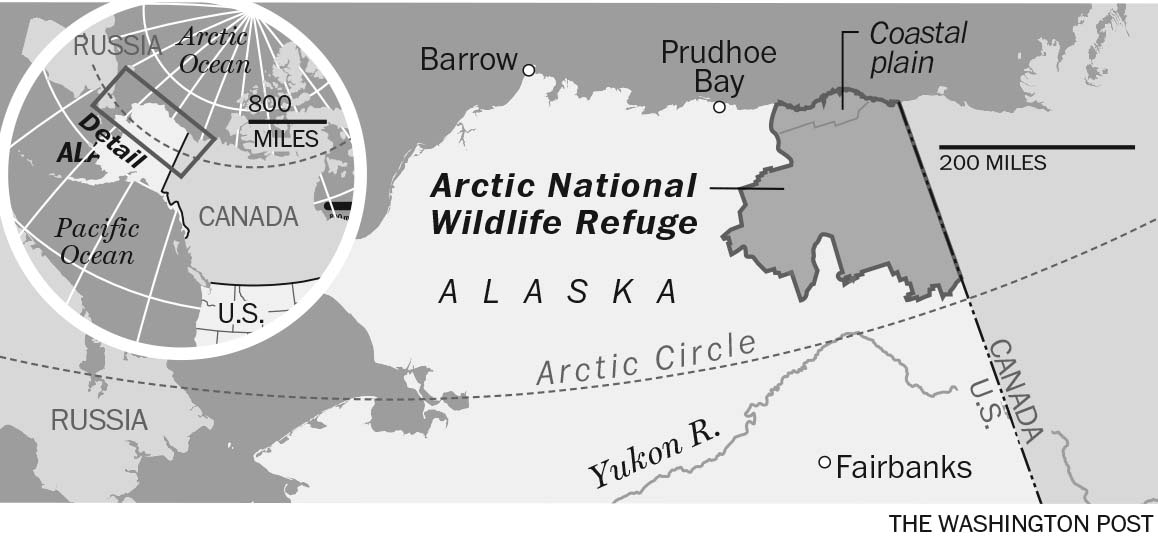
 Commuters wearing protective masks walk through Penn Station in New York on Aug. 3, 2020. MUST CREDIT: Bloomberg photo by Michael Nagle.
 Security officers point weapons at a House chamber door as a mob of rioters storms the Capitol on Wednesday, Jan. 6, 2021. MUST CREDIT: Washington Post photo by Bill O’Leary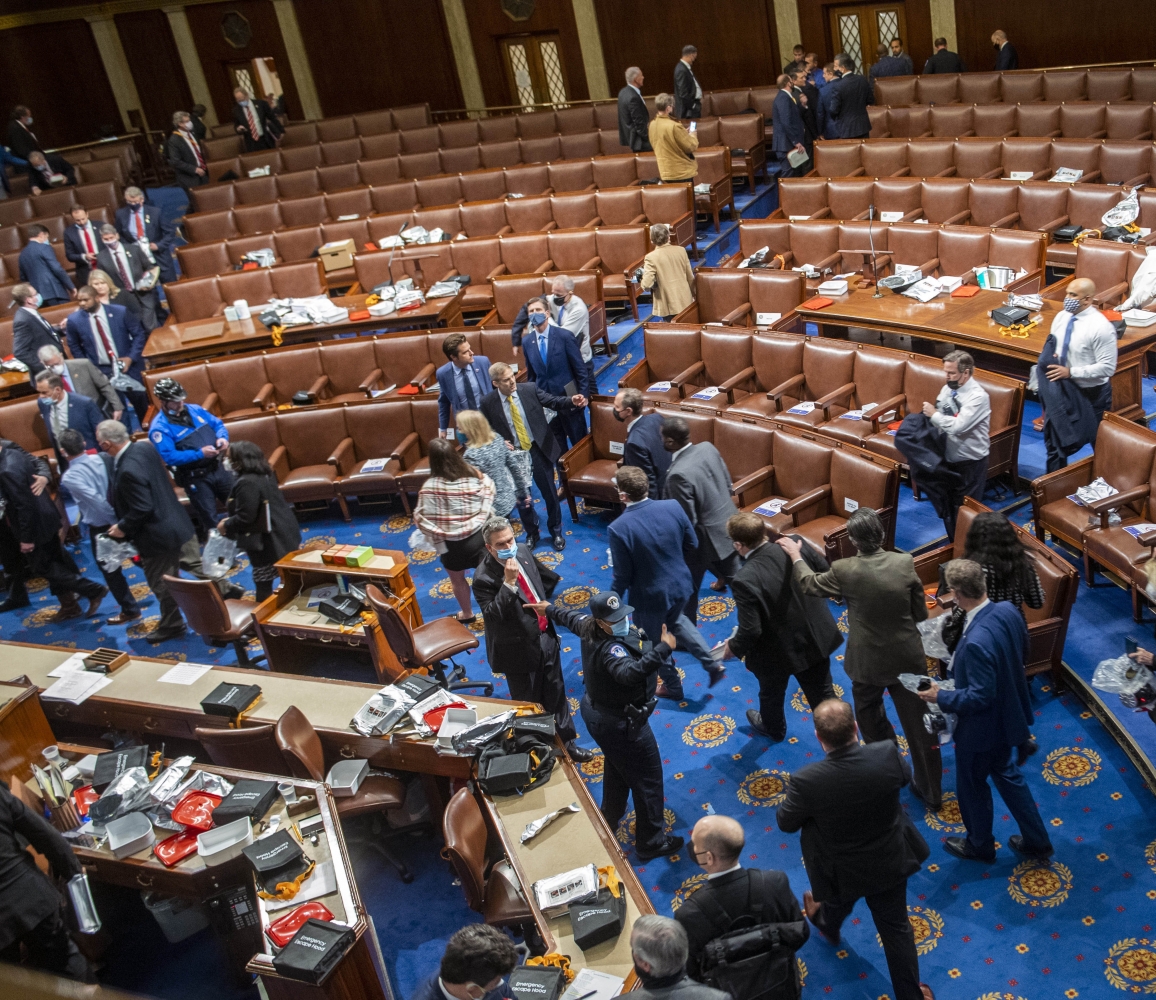
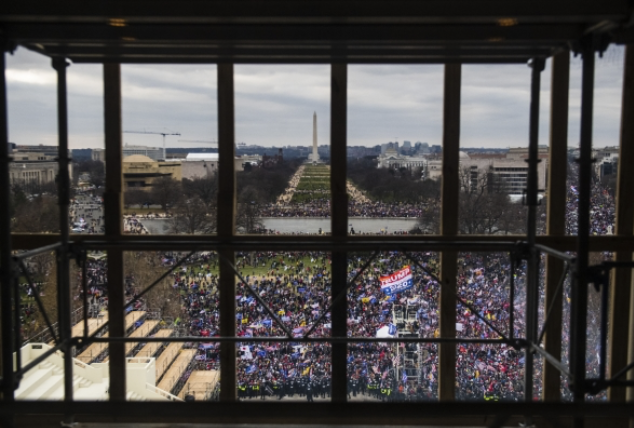
 Supporters of President Trump stand outside the east side of the Capitol. MUST CREDIT: Washington Post photo by Marissa J. Lang


 A mob riots at the U.S. Capitol in support of President Donald Trump on Wednesday, Jan. 6, 2021. MUST CREDIT: Photo for The Washington Post by Astrid Reicken
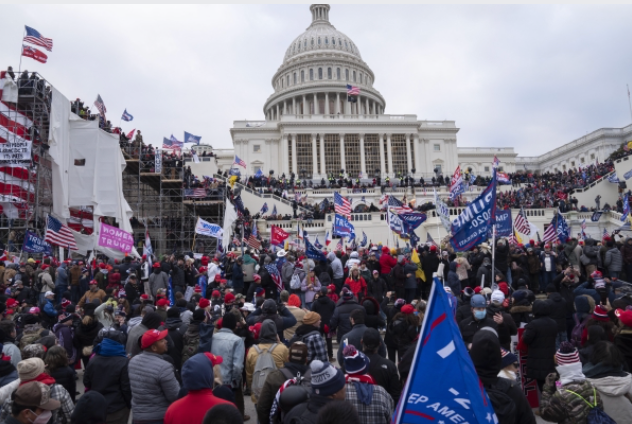 President Trump supporters scaled the walls at the Capitol during a massive protest on Jan. 6, 2021. MUST CREDIT: Washington Post photo by Michael Robinson Chavez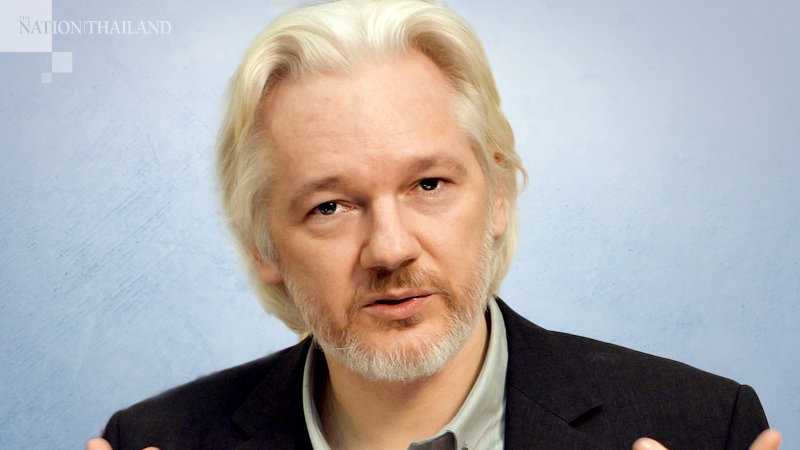
 Pedestrians wearing protective masks in Tokyo on Dec. 30, 2020. MUST CREDIT: Bloomberg photo by Noriko Hayashi.
