Was 2020 the worst year ever? Historians weigh in. #SootinClaimon.Com

#SootinClaimon.Com : ขอบคุณแหล่งข้อมูล : หนังสือพิมพ์ The Nation.

Was 2020 the worst year ever? Historians weigh in.

InternationalDec 31. 2020Twenty thousand chairs, each representing 10 deaths from the coronavirus pandemic in the United States, are lined up on the Ellipse south of the White House. MUST CREDIT: Washington Post photo by Katherine Frey.Twenty thousand chairs, each representing 10 deaths from the coronavirus pandemic in the United States, are lined up on the Ellipse south of the White House. MUST CREDIT: Washington Post photo by Katherine Frey.

By The Washington Post · Michael S. Rosenwald

So, just to recap, the following events occurred in 2020:

– The coronavirus pandemic swept the globe, killing more than 1.7 million people (so far), including more than 337,000 (so far) in the United States.

– The president of the United States was tried and acquitted, after being impeached at the end of 2019.

– Protests stemming from several police killings of unarmed Black Americans erupted throughout the country, including just outside the White House, where federal law enforcement officers used tear gas on U.S. citizens.

– Wildfires devastated the U.S. West Coast and Australia.

– The president of the United States contracted the coronavirus and then dismissed it.

– Kobe Bryant and his 13-year-old daughter died in a helicopter crash.

The president of the United States disputed the valid results of a peaceful election. (He lost.)

– Alex Trebek died.

– Prince Harry and Meghan, Duchess of Sussex, broke up with the royal family.

– Murder hornets arrived.

As the year finally, mercifully, comes to a close, the above events – and more – have inspired the Internet’s meme machine to declare that 2020 is the worst year ever.

But it’s not just the Internet meme machine that thinks 2020 was the worst year ever.

Earlier this month, Time magazine ran an extraordinary cover image with a big red X drawn over the number 2020. “THE WORST YEAR EVER,” the cover line read. Time certainly wasn’t alone. A recent headline from the Hill: “Why 2020 really was the worst year ever.” Even the York Daily Record of Pennsylvania wondered: “Was 2020 the worst year ever? With pandemic, social unrest, election chaos, it’s in the running.”

Historians demur.

In a clever bit of marketing, the self-therapy app Bloom recently asked 28 historians from Yale, Oxford, Stanford and other major universities to choose the worst year in history – or, as they put it, the most stressful. British historian Philip Parker led the effort. Following a depressing dive down the rabbit hole of historical misery, Parker compiled a list of the top worst/most stressful years in world, British and U.S. history. Then the historians made their picks.

The worst year in world history wasn’t even a close contest.

It was 1348, the height of the Black Death, during which as many as 200 million people died. That would be like wiping out about 65% of the U.S. population. The Holocaust in 1944 ranked second, followed by 1816, when a volcano eruption in Indonesia blocked out the sun, starving millions. 2020 ranked sixth.

In U.S. history, 2020 was well down the list at No. 8, just behind the 2001 terrorist attacks on Sept. 11, the Cuban missile crisis of 1962, the tumult of 1968’s riots and assassinations, the 1918 flu pandemic, the Trail of Tears of 1838, the 1929 stock market crash marking the beginning of the Great Depression, and at the very, very top, 1862.

That was, most historians say, the grimmest year of the Civil War, when the country’s total collapse seemed imminent.

“It’s a symbol of a time when the nation almost broke apart,” Parker said in an interview, “and that, really, goes to the essence of what it is to be a country and a society. It’s almost like a dagger to the heart of the country.”

In many ways, Parker said, we’re still too close to 2020 to understand what its real ranking will be, seen through the lens of time passed.

“As Chairman Mao is reputed to have said about the French Revolution,” Parker said, “it’s a little too early to say.”

Samsung heir faces nine years in jail as bribery trial wraps #SootinClaimon.Com

#SootinClaimon.Com : ขอบคุณแหล่งข้อมูล : หนังสือพิมพ์ The Nation.

Samsung heir faces nine years in jail as bribery trial wraps

InternationalDec 31. 2020Jay Y. Lee, center, arrives at the Seoul Central District Court in Seoul, South Korea, on Dec. 30, 2020. MUST CREDIT: Bloomberg photo by SeongJoo Cho.Jay Y. Lee, center, arrives at the Seoul Central District Court in Seoul, South Korea, on Dec. 30, 2020. MUST CREDIT: Bloomberg photo by SeongJoo Cho.

By Syndication Washington Post, Bloomberg · Sohee Kim, Heesu Lee, Shinhye Kang

South Korean prosecutors requested a nine-year prison term for Samsung Electronics Co.’s Jay Y. Lee, seeking to put the heir apparent back in jail in a bribery case that rocked the nation and ignited a backlash against its most powerful conglomerates.

Special prosecutors proposed the sentence during a Wednesday hearing at the Seoul High Court, which will make its ruling on the billionaire’s fate Jan. 18. “There’s no denying that it has made a lot of positive impact on our society,” according to a transcript of closing arguments from prosecutors, referring to Samsung. “But just because there’s been an economic contribution, there should be no hesitation in legal enforcement based on the rule of law.”

The 52-year-old billionaire is fighting allegations of graft in a retrial of a case that started four years ago and led to his imprisonment and the ouster of former President Park Geun-hye. The outcome of the case could snarl succession at Samsung, just as Lee is expected to formally take the helm of the mobile and electronics giant after the death of his father in October.

The executive stands accused of making gifts to cement his control over the world’s largest smartphone maker and smooth his ascension. Lee served a year in jail before his release in 2018 after an initial five-year prison term was halved and suspended by an appeals court. But in August, the Supreme Court voided that decision, thrusting the executive back before a judge. Lee faced a tougher sentence this time — a minimum of five years — because the amount of alleged bribery acknowledged by the top court increased.

Yet experts viewed a decreasing chance of imprisonment as the trial drew to a close. Judges at the high court asked Samsung and Lee to impose measures to prevent illegal activity and improve credibility among the group. Lee responded by setting up an independent compliance committee and issuing a personal apology in May over past wrongdoings related to the succession process. He also pledged publicly not to hand down leadership of the Korea’s largest conglomerate to his children. The compliance committee’s activities will be factored into Lee’s eventual sentencing.

“Even though it’s tough and difficult, I’ll walk on the right path,” the billionaire said Wednesday in prepared remarks before the court. “I promise that I’ll create a company with the highest level of transparency and morality.”

“I will make sure, again, my children will not be mentioned in relation to the succession of the company. Samsung will never get into controversy over these related matters,” he added.

The bribery allegations stem from a controversial merger in 2015 between two Samsung units, which helped Lee gain control over the group. Prosecutors argued that Samsung offered horses and financial contributions, via an intermediary, to a confidante of former president Park to try and win the government’s support for the deal.

Lee, who stepped down from an internal director post, remains the tech company’s vice chairman and de facto leader. Although his father and chairman Lee Kun-hee died in October, the Samsung scion has not been immediately crowned his successor. Samsung is likely to hold off on naming Lee to that role at least until the trial is completed.

Separately, Lee is embroiled in another case related to the controversial 2015 merger, with allegations ranging from violation of capital market laws to breach of duty. Prosecutors indicted Lee in September and hearings are set to resume on Jan. 14.

Swedish PM slammed for shopping tour amid latest covid surge #SootinClaimon.Com

#SootinClaimon.Com : ขอบคุณแหล่งข้อมูล : หนังสือพิมพ์ The Nation.

Swedish PM slammed for shopping tour amid latest covid surge

InternationalDec 31. 2020Stefan Lofven, Sweden's prime minister, at a European Union leaders summit in Brussels on Dec. 10, 2020. MUST CREDIT: Bloomberg photo by Geert Vanden Wijngaert.Stefan Lofven, Sweden’s prime minister, at a European Union leaders summit in Brussels on Dec. 10, 2020. MUST CREDIT: Bloomberg photo by Geert Vanden Wijngaert.


By Syndication Washington Post, Bloomberg · Rafaela Lindeberg

A number of the most senior members of Sweden’s government, including the prime minister, have been caught apparently ignoring their own covid guidelines.

Prime Minister Stefan Lofven and Justice Minister Morgan Johansson were among those named in Swedish media this week for seeming to flout restrictions they insist must be followed if the country is to rein in the coronavirus.

Lofven went Christmas shopping in a mall without a face mask after explicitly appealing to Swedes to avoid such excursions ahead of the festive season. His spokesman has acknowledged the trip took place, which he says was “carefully planned” to avoid unnecessary risks.

The development adds a layer of potential embarrassment to Sweden’s handling of the covid crisis. The country initially defended its no-lockdown strategy, before backtracking in recent weeks amid a resurgence of cases that threatens to overwhelm its health-care system. Lofven is now trying to persuade parliament to give him the power to impose a full lockdown.

The government has already seen confidence in its covid strategy sink, with even King Carl XVI Gustaf delivering a rare rebuke for Sweden’s failure to contain the death toll. About 8,500 Swedes have died of covid-19, roughly seven times as many as in neighboring Denmark.

Lofven’s shopping trip lit up Twitter, with several of Sweden’s best known political commentators warning that the incident risks denting his credibility among voters.

“Who should follow the rules if not even the Prime Minister and the Minister of Justice do so?” Dagens Nyheter, Sweden’s biggest morning newspaper, wrote in an editorial published Tuesday evening.

Other government members have also reportedly engaged in conduct that breached covid guidelines, including Sweden’s Finance Minister Magdalena Andersson, Aftonbladet reported on Wednesday. According to the newspaper, she was seen in a ski rental shop in the popular Swedish winter resort of Salen, which is on the list of destinations the National Health Authority has warned against visiting.

With infection rates spreading since the fall, Lofven has had to step up his rhetoric entreating his countrymen to “refrain from staying in indoor environments such as shops, shopping centers.” Last month, he reminded Swedes “how dangerous” such conduct is.

At a briefing this month, Lofven said, “I hope and I think that everyone in Sweden understands the seriousness” of the situation.

A spokesman for Lofven said his Christmas shopping tours included purchases of alcohol and a present for his wife. He also visited a shop that fixes watches and looked for spare parts for his razor. His most recent known shopping trip was on Dec. 23.

Germany’s new virus deaths surpass 1,000 for the first time #SootinClaimon.Com

#SootinClaimon.Com : ขอบคุณแหล่งข้อมูล : หนังสือพิมพ์ The Nation.

Germany’s new virus deaths surpass 1,000 for the first time

InternationalDec 31. 2020

By Syndication Washington Post, Bloomberg · Daniel Schaefer, Raymond Colitt

Germany’s daily coronavirus deaths surpassed 1,000 for the first time since the beginning of the pandemic, underscoring the urgency facing Europe’s leaders to slow the spread and roll out vaccines.

There were 1,122 fatalities in the 24 hours through Wednesday morning, according to data from Johns Hopkins University. Along with the mounting death toll, the number of Covid-19 patients in German intensive care units has risen steadily, prompting warnings that the health-care system could become overburdened.

Germany joined its European Union partners in rolling out vaccinations last weekend, but officials have said it will take months for the program to have a tangible impact on contagion rates. Europe’s largest economy has so far inoculated almost 42,000 people, according to data from the RKI public health institute.

On Tuesday, the EU agreed to trigger an option to buy an extra 100 million doses of the shot developed by Pfizer Inc. and BioNTech SE. Vaccines from other producers will follow once they’ve been approved, European Commission President Ursula von der Leyen said on Twitter.

Europe has become an epicenter of the pandemic, with more than 400,000 coronavirus-related deaths and 16.2 million infections.

The rise in Germany’s fatalities comes as Chancellor Angela Merkel’s government considers extending a hard shutdown that was imposed in December. Schools and non-essential stores remain shuttered until Jan. 10, but senior politicians have urged prolonging at least some of the measures.

Karl Lauterbach, a health expert for the ruling Social Democrats, on Wednesday warned that if the virus numbers aren’t slashed to around 25 per 100,000 people over 7 days, the risks will multiply. The current figure is 141.

If the situation doesn’t improve, “we’ll go from one lockdown to the next and then we have the risk of mutations against which vaccines may not work perfectly,” Lauterbach said on ZDF television.

While some countries in the region are gradually relaxing measures to contain the virus, others are still tightening curbs. Ireland’s government is set to announce new restrictions on Wednesday. Among the measures under consideration are the closure of non-essential retail and the reintroduction of a five-kilometer (three-mile) limit on travel from home. Bars and restaurants have already been shuttered.

Authorities are also grappling with ways to ensure widespread uptake of the Covid-19 vaccine. In Italy, where restrictions were severely tightened for most of the Christmas period, cases and deaths have declined sharply from the highs recorded in November. However, concerns are growing over delays and mishaps in the vaccination campaign.

Around 8,000 people have received the first dose of the Pfizer-BioNTech vaccine so far, and the country is behind schedule in hiring personnel and preparing the logistics for mass inoculation.

France is having even less success in the face of strong anti-vaccination sentiment across the country. Less than 100 people have been given a shot, according to the government. It’s target is to administer 1 million doses by the end of February, Health Minister Olivier Veran said late Tuesday.

On Monday, Spain became the fourth European country to record more than 50,000 coronavirus deaths. An initiative to track people who refuse to get inoculated could help the hard-hit country regain trust in its tourism sector, which was linked to the spread of the coronavirus after rules were relaxed in the summer.

For its part, Germany has recorded just over 32,000 deaths since the start of the pandemic. In the 24 hours through Wednesday morning, the number of infections rose by another 19,466, bringing the total to more than 1.69 million.

Britain grants emergency approval to coronavirus vaccine by Oxford and AstraZeneca #SootinClaimon.Com

#SootinClaimon.Com : ขอบคุณแหล่งข้อมูล : หนังสือพิมพ์ The Nation.

Britain grants emergency approval to coronavirus vaccine by Oxford and AstraZeneca

InternationalDec 31. 2020

By The Washington Post · William Booth, Karla Adam

LONDON – Britain on Wednesday became the first country to grant approval for a homegrown coronavirus vaccine from the University of Oxford and the British-Swedish pharmaceutical firm AstraZeneca, adding a second shot to the fight against a surging outbreak, driven here by a new, highly infectious variant of the virus.

British Health Minister Matt Hancock said clinical trials have proved the new vaccine is safe and effective, but he did not say how effective.

Although Hancock called the Oxford-AstraZeneca vaccine a “game-changer,” Britain’s Medicines and Healthcare products Regulatory Agency (MHRA), which approved the vaccine for distribution, did not immediately present its data.

Researchers from the Oxford-AstraZeneca team earlier this month published interim results from clinical trials that showed their vaccine was 62% effective for volunteers who were given two full doses and 90% effective for a smaller subgroup who received a half dose followed by a full dose.

Doubts have been raised over how robust the half-dose data is. The Oxford scientists said they were studying why the different regimens produced such different results.

Britain badly needs another vaccine to meet its ambitious goal to inoculate most of the country’s population by the spring.

With the virus spreading rapidly, and two-thirds of Britain now in near-lockdown, Hancock said Wednesday that the goal is to inject as many people as possible, as quickly as possible, with the first dose of AstraZeneca vaccine. A second dose will be given later, within three months. The idea is that the first dose provides enough protection to warrant waiting longer than the usual 21 days between shots.

“In the data, the scientists and the regulators have found the immunity comes from around two weeks after the first dose, and then the second dose should be taken up to 12 weeks later to give you that long-term protection,” Hancock said.

“This means we can spend the first three months vaccinating people with the first doses, getting them that immunity, getting people protection quicker than we possibly could have done otherwise,” he said.

Hancock said having two vaccines means the government now has “a very high degree of confidence that we can be out of this by spring.”

Britain earlier this month approved the coronavirus vaccine from pharmaceutical giant Pfizer and the German company BioNTech, becoming the first Western country to authorize mass inoculations.

The United Kingdom has injected some 600,000 people with the Pfizer vaccine, but experts say the government must ramp up quickly, to inoculate 2 million people a week – 10 times the current rate – if it wants to beat back the pandemic quickly.

Britain has ordered 100 million doses of the AstraZeneca vaccine. The company says it can deliver 40 million doses by the end of March, with a million doses arriving almost immediately.

The government plans to start inoculating people with the AstraZeneca vaccine on Monday, with residents of nursing homes, health-care workers and people over 80 at the front of the line. There are plans to deliver the vaccine in mass immunization centers, such as sporting arenas and convention halls.

“Today is an important day for millions of people in the U.K. who will get access to this new vaccine,” said Pascal Soriot, chief executive of AstraZeneca. “It has been shown to be effective, well-tolerated, simple to administer and is supplied by AstraZeneca at no profit.”

Soriot told BBC Radio that his company can deliver 2 million doses a week and that the vaccine produces a “good level of protection” after the first of two doses.

If Britain gives the second dose two to three months after the first, “that enables us to protect many more people,” Soriot said.

He said scientists believe the AstraZeneca vaccine will be effective against the new variant detected in Britain. Clinical trials, however, were carried out before new mutation was established in the population.

Public health officials say there is much to recommend the new vaccine, as it costs as little as $3 a dose, is relatively easy to manufacture at huge scale and does not require special handling or deep freezers to store or transport.

The Pfizer vaccine is 95% effective but requires special handling and must be kept in special freezers and dry ice at extremely low temperatures.

The health secretary conceded that the need to keep the Pfizer-BioNTech vaccine in special freezers has “made it more challenging to get out, especially to some of the smaller care homes, and those limitations aren’t there for this Oxford-AstraZeneca vaccine.”

Prime Minister Boris Johnson said the approval of the new vaccine was “truly fantastic news – and a triumph for British science,” adding that “we will now move to vaccinate as many people as quickly as possible.”

The news comes amid a spike in coronavirus cases driven by the new variant of the virus, which appears to be 50% more transmissible. British hospitals currently have more coronavirus patients than they did when the first wave gripped the country in April.

On Tuesday, Britain recorded more than 53,000 cases – the highest in a single day. Over 40% of the population is living under the highest tier of restrictions, and the government is expected to announce new restrictions later in the day.

Andrew Pollard, director of the Oxford Vaccine Group, told the BBC that the pandemic this year was “like being in a blizzard.”

“We’ve been really struggling uphill through snow drifts with this icy wind in our faces, and I think this morning we do have some respite with this good news and the warmth that that brings,” he said.

Earthquake aftershocks rock Croatia as teams search for survivors #SootinClaimon.Com

#SootinClaimon.Com : ขอบคุณแหล่งข้อมูล : หนังสือพิมพ์ The Nation.

Earthquake aftershocks rock Croatia as teams search for survivors

InternationalDec 31. 2020

By Syndication Washington Post, Bloomberg · Jasmina Kuzmanovic, Jan Bratanic

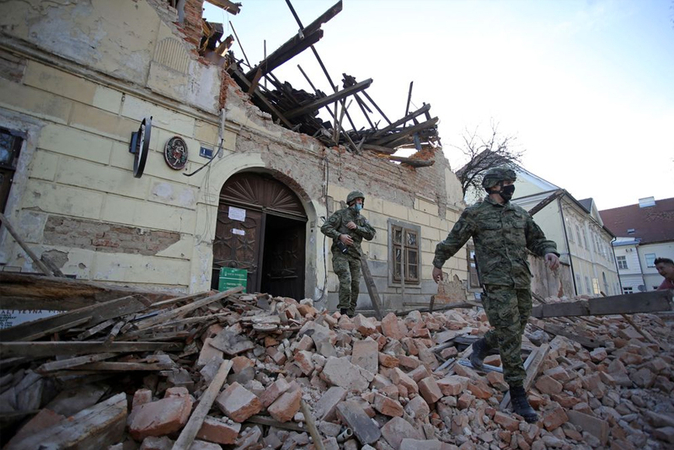
Rescuers raced to search for survivors amid strong aftershocks after Croatia’s worst earthquake in 140 years killed seven people and devastated cities and towns in one of the nation’s poorest regions.

The 6.3-magnitude tremor on Tuesday damaged most of the buildings near its epicenter in Petrinja, a town of 25,000 people, rendering them unusable and their inhabitants homeless, authorities said.

The victims included a 13-year-old girl and a father and son who died together. Twenty-six people were injured, Prime Minister Andrej Plenkovic said.

The temblor, which rattled Europeans as far away as Rome and Vienna, was more powerful than both a 5.2 quake on Monday and a similar-sized tremor that caused $6 billion in damage when it hit the capital of Zagreb in March.

Aftershocks, including two measuring 4.8 and 4.6, hit the area before dawn on Wednesday, according to the European-Mediterranean Seismological Centre.

“This morning we were hit by the third, if not the fourth earthquake,” Petrinja Mayor Darinko Dumbovic said on state TV’s Good Morning show. “Everything that has not yet fallen is falling from the ruins of Petrinja.”

The disaster adds to an already difficult year for the Adriatic European Union member state, which is still busy repairing the 20,000 buildings damaged during the March quake while also tackling one of the bloc’s worst surges in coronavirus cases and a record economic recession.

Plenkovic vowed the government will repair the damage, the extent of which hasn’t been estimated yet. While the government abolished a virus-triggered ban on movement between counties so those whose homes were destroyed could stay with relatives, he urged people to continue following social-distancing guidelines.

“We are appealing to people to stick to epidemiological measures,” Plenkovic told reporters. “We still have a problem with the coronavirus pandemic.”

Authorities evacuated the damaged hospital in the nearby city of Sisak, the region’s largest, taking patients to Zagreb. Buildings were also damaged in the capital, about 50-kilometers away.

Petrinja was demolished in the 1991-1995 war for independence from former Yugoslavia. The damage on Tuesday resulted in collapsed facades and caved-in roofs that resembled the damage from the war, as many citizens spent the night by open fires outside.

The U.S. Geological Survey said the temblor was the nation’s strongest since the advent of modern seismic instrumentation, which began to gain prevalence in the 1880s.

The government set aside an initial 120 million kuna ($19.4 million) in relief funds, Plenkovic said. Both Hungary and Slovenia said they were sending support, while Janez Lenarcic, the EU’s commissioner for disaster relief, will arrive in Croatia on Wednesday. He said the bloc was sending help today including winter tents, electric heaters, sleeping bags, and pre-made housing.

Coronavirus vaccine from China’s Sinopharm is 79% effective, company says #SootinClaimon.Com

#SootinClaimon.Com : ขอบคุณแหล่งข้อมูล : หนังสือพิมพ์ The Nation.

Coronavirus vaccine from China’s Sinopharm is 79% effective, company says

InternationalDec 31. 2020

A coronavirus model is displayed next to boxes for vaccines at an exhibit by Chinese pharmaceutical firm Sinopharm in Beijing on Sept. 5. (Mark Schiefelbein/AP)

A coronavirus model is displayed next to boxes for vaccines at an exhibit by Chinese pharmaceutical firm Sinopharm in Beijing on Sept. 5. (Mark Schiefelbein/AP)

By The Washington Post · Lily Kuo

TAIPEI, Taiwan – A coronavirus vaccine developed by Chinese drugmaker Sinopharm is 79.3% effective in protecting people from covid-19, according to interim data released by the company on Wednesday, paving the way for millions of Chinese vaccines to enter the global market.

China National Biotec Group (CNBG), a subsidiary of state-owned Sinopharm, said the results were based on interim analysis from Phase 3 trials. In a brief statement posted on the website of the CNBG unit, Beijing Institute of Biological Products, the company did not give key details, including the sample size tested or number of infections in the trial.

The company said the two-shot vaccine proved “safe” and that those who received it produced a high level of antibodies against the virus.

As coronavirus cases continue to surge globally, a massive emergency vaccination drive is underway with drug developers and governments racing to get their vaccines approved. On Wednesday, the British government said its regulator had approved a vaccine developed by the University of Oxford and AstraZeneca for emergency use.

The Sinopharm vaccine appears to be less effective than those developed by Moderna and Pfizer-BioNTech, which have shown an efficacy rate of 95%. The rate announced by Sinopharm is also lower than the 86% efficacy reported by officials in the United Arab Emirates after clinical trials of the vaccine conducted there.

The development bolsters China’s public health diplomacy drive. China has held up its vaccines as a key part of its partnerships with developing countries, many of which have struggled to buy supplies of other newly released vaccines.

“China’s attention is not on ‘vaccine race,’ let alone so-called ‘vaccine diplomacy,’ but on the common interests of all humanity,” the state-run Global Times said in a Dec. 14 editorial.

The Sinopharm vaccine uses an inactivated version of the virus to trigger an immune response, unlike the mRNA vaccines developed by Pfizer and Moderna that use new technology. It does not need to be frozen, making for easier storage and distribution.

Sinopharm has another vaccine in late-stage trials. Despite the lack of regulatory approval, its vaccines have already been used on hundreds of thousands of Chinese citizens under an emergency use program for high-risk groups since July.

Officials plan to vaccinate 50 million people in the country by the middle of next month, before the Lunar Near Year holiday when hundreds of millions crisscross the country.

Chinese state media reported last week that drug regulators had formally accepted an application from the company for use of its vaccine among the general public. Sinopharm submitted an application for regulatory approval in November.

Jobless benefits won’t lapse after Trump’s delay, Labor Department says #SootinClaimon.Com

#SootinClaimon.Com : ขอบคุณแหล่งข้อมูล : หนังสือพิมพ์ The Nation.

Jobless benefits won’t lapse after Trump’s delay, Labor Department says

InternationalDec 30. 2020

By Syndication Washington Post, Bloomberg · Laura Davison

Unemployed people claiming federal benefits won’t see a one-week gap in their payments despite the delay in President Donald Trump signing the program extension into law, according to the Department of Labor.

States are implementing the provisions as quickly as possible, and the Labor Department doesn’t anticipate that claimants will miss a week of benefits due to the timing of the new law’s enactment, a spokesman for the Department said in a statement Tuesday.

Trump signed a bipartisan stimulus and government funding bill, which included an 11-week extension of unemployment benefits, into law on Sunday, a day after benefits expired. That prompted concern that jobless Americans would lose out on benefits for the last week of December. Trump held off signing the bill for several days as he demanded bigger stimulus payments for individuals and action on two unrelated issues involving election security and removing a liability shield for technology companies.

The pandemic relief law provides a $300-a-week payment for jobless individuals and extends benefits for self-employed and gig workers through mid-March. The $300 federal payments are on top of benefits that state unemployment offices provide. The state benefits vary by income and jurisdiction, but the average state payment was $378 a week, according to Labor Department data.

The measure largely extends programs with few changes, meaning that existing guidance will continue to apply, making it easier for the states to implement, the Labor Department spokesman said.

“Millions of jobless workers will be able to breathe a sigh of relief, knowing that they will not lose a week’s worth of income,” Oregon Sen. Ron Wyden, the top Democrat on the Senate Finance Committee, said in a statement. “Now, Donald Trump’s needless delay in signing the relief bill still means unnecessary administrative headaches and late payments, but workers will not lose income.”

About 14 million Americans have been receiving benefits under the Pandemic Unemployment Assistance and Pandemic Emergency Unemployment Compensation programs extended in the law.

The uninterrupted jobless benefits could help bolster the economy that has struggled as consumer spending has been falling and unemployment claims remain at elevated levels.

Consumer spending, which accounts for a majority of the economy, dropped 0.4% in November — the first decline since April, according to Commerce Department data. Personal income decreased 1.1%, reflecting the winding down of several pandemic aid programs.

Fed extends Main Street program to process last submitted loans #SootinClaimon.Com

#SootinClaimon.Com : ขอบคุณแหล่งข้อมูล : หนังสือพิมพ์ The Nation.

Fed extends Main Street program to process last submitted loans

InternationalDec 30. 2020

By Syndication Washington Post, Bloomberg · Christopher Condon

The Federal Reserve has delayed the termination of the Main Street Lending Program to Jan. 8, from Dec. 31, in order to finish processing loans submitted by a Dec. 14 deadline to tap its funds.

The extension was approved by the secretary of the Treasury, the Fed said in a statement Tuesday.

The Treasury Department provoked controversy in November when it ordered the Fed to close Main Street and some other emergency pandemic lending programs by Dec. 31. Secretary Steven Mnuchin said the order was driven by lawmakers’ intent when they crafted the Cares Act in March, legislation that provided taxpayer money to support the programs. The Fed had asked that they all be extended into 2021.

Main Street has struggled to live up to its initial promise, although borrowing picked up somewhat as the deadline approached and stood at $14.5 billion as of Dec. 23. The program was designed to provide as much as $600 billion in credit to mid-sized U.S. companies damaged by covid-19.

Brexit deal offers scant solace to City of London under threat #SootinClaimon.Com

#SootinClaimon.Com : ขอบคุณแหล่งข้อมูล : หนังสือพิมพ์ The Nation.

Brexit deal offers scant solace to City of London under threat

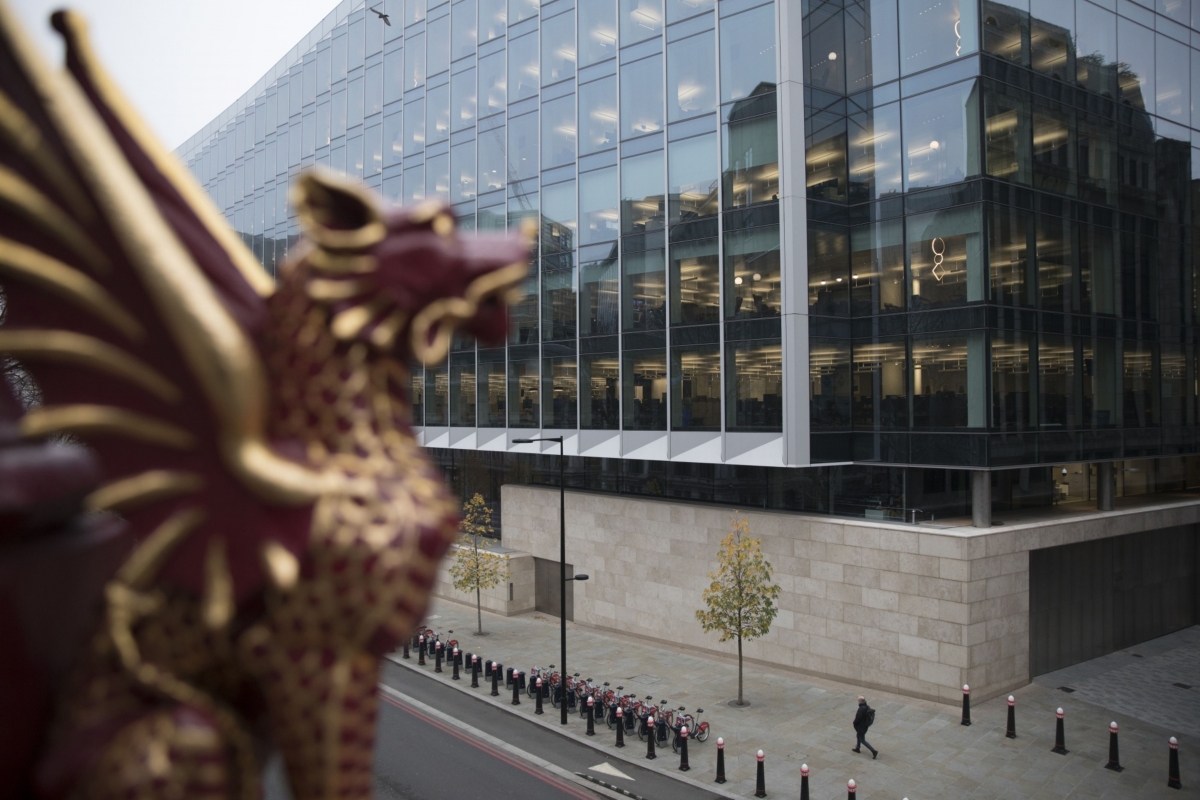
InternationalDec 30. 2020The City of London. MUST CREDIT: Bloomberg photo by Jason AldenThe City of London. MUST CREDIT: Bloomberg photo by Jason Alden
By Syndication Washington Post, Bloomberg · Viren Vaghela

The trade deal that both sides of the English Channel say reflects a new era of cooperation is essentially a sideshow for the City of London, which is still awaiting its own seal of approval from the European Union.

EU officials must rule separately that British financial regulations and oversight are strong enough to create a level playing field. Without that, a steady leakage of business – already underway in some areas – may become a daily reality for the U.K.’s finance industry.

Boris Johnson has already said in an interview with the Sunday Telegraph that, when it comes to financial services, the treaty “perhaps does not go as far as we would like.” Chancellor of the Exchequer Rishi Sunak said that discussions with Brussels over access for financial services will continue.

While there’s been progress in preventing Brexit from upending financial markets in the short term, there’s little consensus on the ultimate nature of the U.K. finance industry’s relationship with the EU, just days before it loses much of its longstanding access to the bloc.

“The dangerous bit is that you are seeing people moving assets, moving trading books to other locations,” Howard Davies, chairman of NatWest Group Plc, said in a Bloomberg Television interview this month. “The risk is that as that happens, then the staff follow over time.”

The hope among British bankers, regulators and politicians is that the trade deal helps unlock a separate agreement for finance. The industry is a key pillar of the U.K. economy, employing more than 1 million people and accounting for more than a tenth of all tax revenue.

“While a deal is welcome, financial and related professional services are clear-eyed about the need for both sides to continue to develop the relationship in services,” said Miles Celic, chief executive officer of TheCityUK, representing Britain’s finance hub.

Likewise, bankers in Europe are eager for clarity. The Association for Financial Markets in Europe, one of the region’s biggest industry lobby groups, called for an agreement on “equivalence” decisions which would smooth cross-border financial market access.

“We hope that this lays the foundation for further cooperation on financial services,” said Adam Farkas, AFME’s CEO. “It is important that the EU and the U.K. now urgently put in place outstanding equivalence decisions to mitigate disruption at the end of the transition period and ensure a smooth adaptation to the new relationship.”

Still, even the most optimistic financiers concede that the status quo, with London as the financial hub for an entire continent, is unlikely to hold.

European Commission President Ursula von der Leyen has vowed “all will change” in the City of London’s relationship with the EU. And in a sign of what’s to come, Bank of France Governor Francois Villeroy de Galhau warned Europe’s banks in October to prepare for a longer term shift away from using London clearinghouses, which underpin the multi-trillion dollar derivatives markets.

It goes “back to this core and fundamental question of where Europe wants to have its center of financial activity,” Mairead McGuinness, European commissioner for financial services, told Euronews in December. “It certainly will not, in the long term, continue to be the City of London.”

The Goldman Sachs offices in London. MUST CREDIT: Bloomberg photo by Jason Alden

The Goldman Sachs offices in London. MUST CREDIT: Bloomberg photo by Jason Alden

With Britain suffering its worst recession in more than three centuries, it can ill afford damage to the finance sector that paid about 75 billion pounds ($100 billion) in tax in 2018.

Despite that, financial services garnered little of the attention bestowed on fishing in the trade talks, even though every fisherman in the U.K. could fit in the City of London’s latest office tower.

“Nothing against fishermen, and I eat a lot of fish, but nonetheless the financial sector is a larger share of the economy than the fishing sector and yet we hear nothing,” Davies said in an October interview.

Companies including JPMorgan Chase & Co. and Goldman Sachs Group Inc. have recently started to shift more business to the bloc. The moves, which for JPMorgan included 200 billion euros ($230 billion) in assets and 200 staff, are just the “first wave,” Dorothee Blessing, the head of the firm’s Frankfurt unit, said in September.

Non-German lenders are in the process of moving 397 billion euros of holdings to Germany, taking their combined balance sheet there to 675 billion euros at the end of the year, the Bundesbank said in a presentation to reporters at the start of November. The European Central Bank has said banks have agreed to ultimately move a total of 1.3 trillion euros of assets to the euro area.

Elsewhere, more than half of stock trading in London is in shares of European companies and may migrate to EU venues. Last month, The 300-year-old London Stock Exchange Group Plc joined other trading venues in opening a platform in the EU because of the absence of a deal for finance.

For now, London has hardly been hollowed out and it holds formidable advantages that will take years, if not decades, to erode. Plenty see an opportunity for the City of London, whose global stature is testament to its long history of adaptation.

“London will reinvent itself to remain a hub,” said Ali Jamal, founder of wealth manager Azura, which has an office in Mayfair and manages about $3 billion. “No city in Europe can compete with London on three factors: language, legal system and infrastructure.”

Still, it has been hard preparing for a future that is both murky and very complex. The government arranged a webinar for finance firms in October, with a pre-recorded speech and slides on topics such as accounting, emblazoned with the branding “U.K.’s new start, let’s get going,” according to one attendee who asked not to be named. The content was too general to be useful, the person said.

The trade deal offers some certainty to the broader economy, which will indirectly help the banks. “Reaching a trade deal is important for our corporate clients as they will want to avoid the impacts of tariffs on cross border trade in goods,” said James Bardrick, head of the U.K. at Citigroup Inc.

And the deal may also help unlock what Bardrick and his peers want most: an EU declaration that U.K. regulations are robust, known as equivalence. This ruling would enable business to continue largely as usual – but it’s in the hands of the EU, which can also withdraw equivalence at short notice.

Over the long haul, much will depend on the course of political horse-trading for finance and what regulators and supervisors expect, according to Citigroup’s Bardrick. “We and the rest of the industry may need to evolve our plans and staffing levels to serve our clients in Europe effectively,” he said.

It’s that lingering uncertainty that is set to define the City of London’s future even as the U.K. begins to negotiate trade accords in earnest.

“Four years ago a nation decided to shoot itself in the foot and see if it could run a race,” said Michael Mainelli, executive chairman of finance consultancy Z/Yen, who was elected sheriff of the City of London in 2019. “Brexit is an unnecessary distraction. Nobody has shown me a single advantage economically in any shape or form.”